Friday mystery object #331 answer

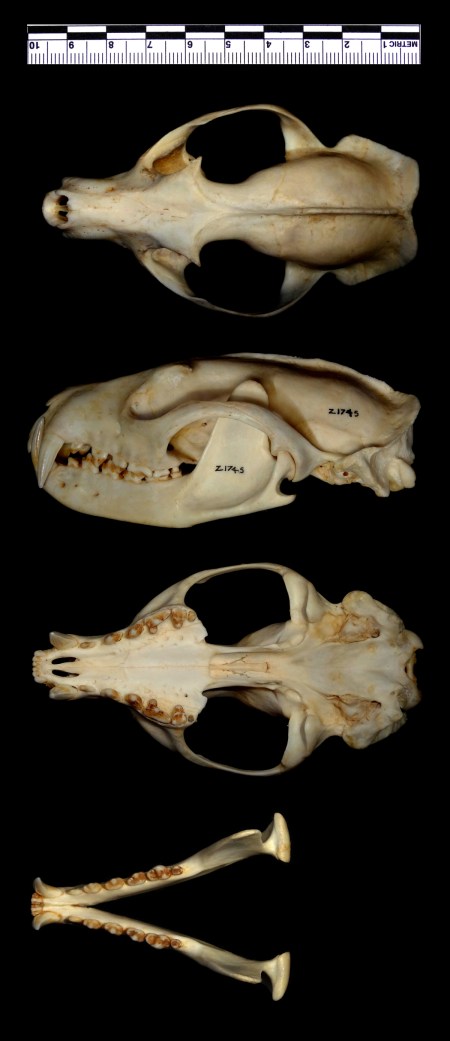
Last week I gave you these skulls from the collections of the Dead Zoo to have a go at identifying:

20180531_095749-0120180531_095713-0120180531_094905-0120180531_095122-01

The reason for picking these was because I had an enquiry challenging the label associated with a specimen that was on display, and on checking there had clearly been some kind of mix-up, because the first mystery object had been identified as a False Killer Whale Pseudorca crassidens Owen, 1846 – which was definitely wrong.

The second mystery specimen is in fact the False Killer Whale (an identification that palfreyman1414 got right, supported by Rémi), whose label had been mixed up. That left the first mystery object still to be solved. Obviously it’s a toothed whale of some sort and the scale suggests it’s not a porpoise (a bit big) and it’s clearly too small to be one of the bigger dolphins (like a Killer Whale or Pilot Whale).

Generally it takes a bit of time looking at dolphin skulls from a few angles before you can start to get your eye in for identification – they just look so weird compared to the skulls of other mammals. They can also photograph quite poorly due to the large size – by which I mean that the height, length and breadth of a specimen can be distorted considerably in an image depending on small changes in the angle it sits at and the distance between the camera and the specimen.

However, the things I always try to look out for are the shape of the rostrum (or snout), the slope of the forehead, the patterns made by sutures between the bones around the nares (nostrils) and sutures between the bones in the ‘cheek’ area.

In this case there’s a very steep forehead, with a small bump midway, an upward deflection of the posterior maxillary margin (it looks like it’s got a bit of a smirk) and the sutures around the nares and the general shape of the nares all adds up to make me think that this is a White-beaked Dolphin Lagenorhynchus albirostris (Gray, 1846).

Imagine how pleased I was when I discovered that there was a label with that name on it, hiding in a different case and missing a specimen!

Friday mystery object #331

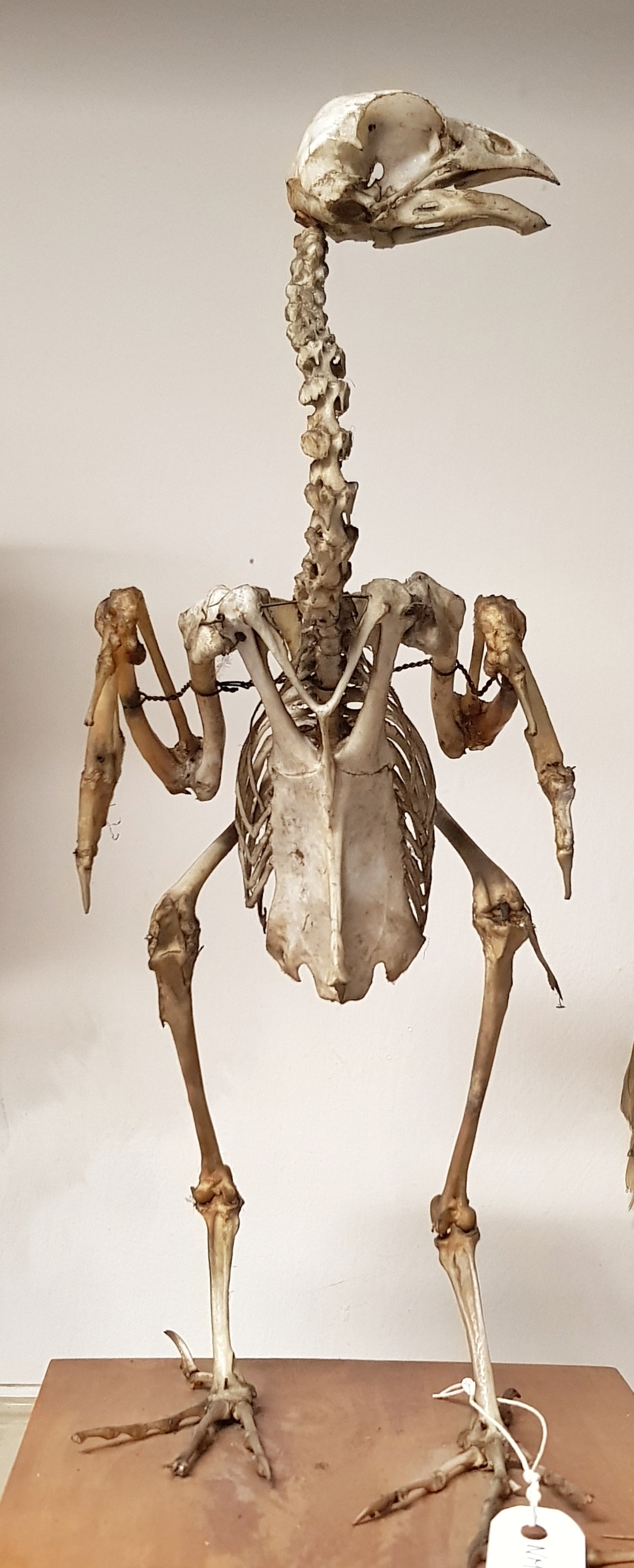
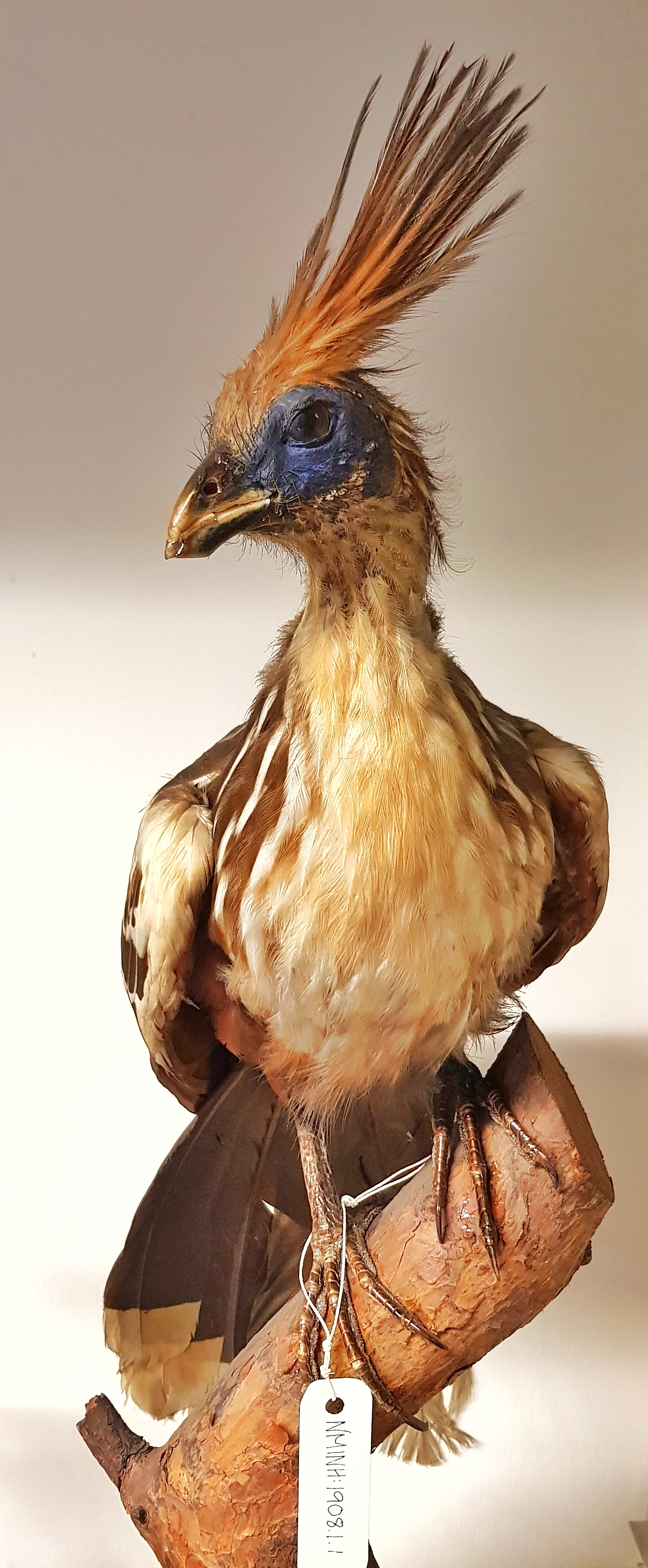
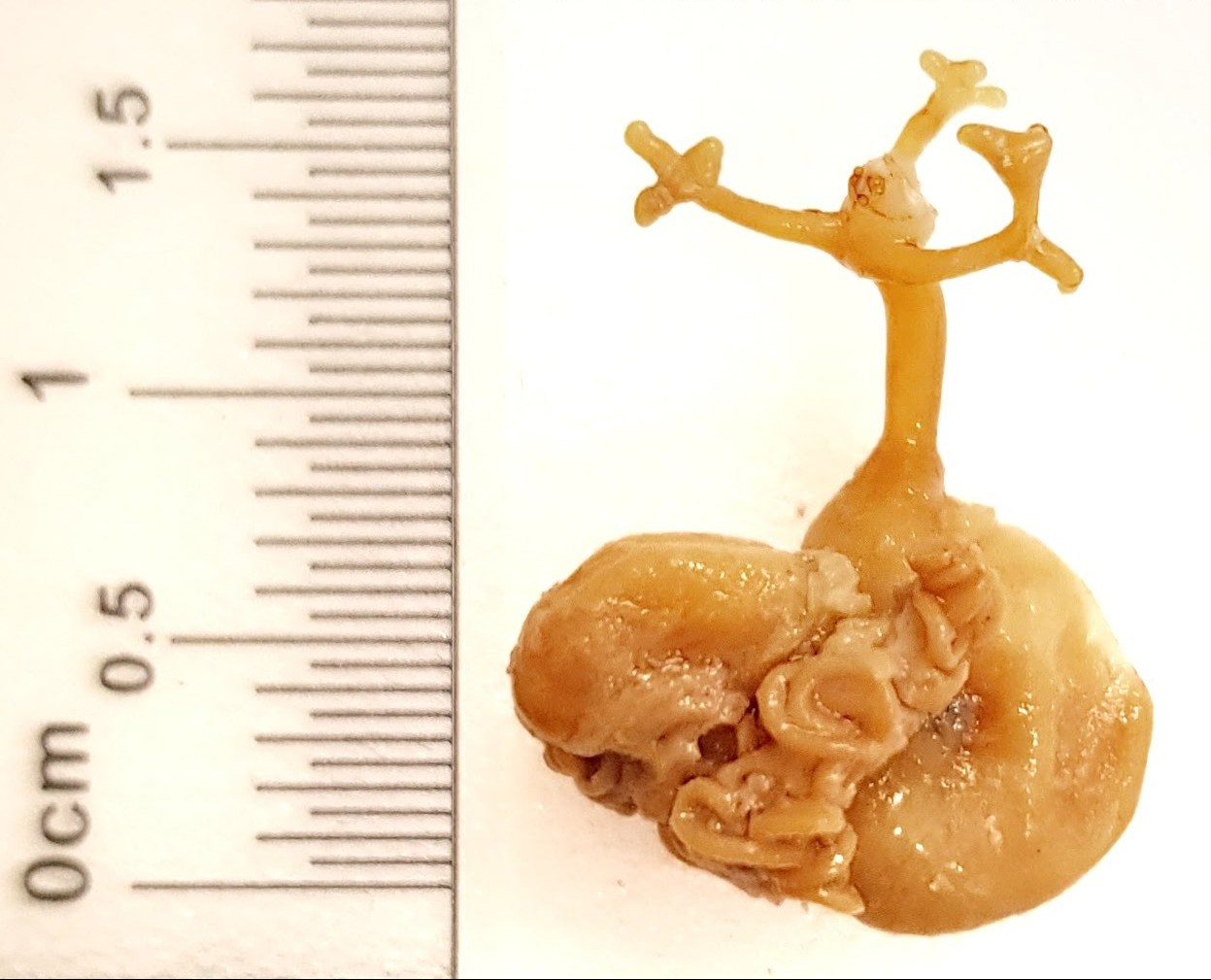
This week I have couple of specimens for you to have a go at identifying:

20180531_095749-0120180531_095713-0120180531_094905-0120180531_095122-01

I think these have been mislabelled and need their identifications checked to see if it’s a simple label swap or if it’s a deeper problem with the documentation. I won’t make it easier by providing the labels I’m suspect about – let’s see what you think working just from these images…

Have fun!

Friday mystery object #330 answer

Last week I gave you three guest mystery objects from The Écomusée du pays de Rennes to try your hand at identifying:

mystery330cmystery330bmyserty330a

Now these are genuine mysteries because in the words of Paul Offelman-Flohic, who provided these images: “No one really remembers how we get all of the specimens because some were donated by visitors, some we collected, some were donated by the agronomy school here in Rennes, Bretagne… In the pictures you will find things I found in the darkness of a cupboard that went through a fire (no joke) which might explain their bad condition.”

To give you an idea of what the specimens are used for, here’s what Paul says about the Museum:

“The Écomusée du pays de Rennes is installed in an old farm researchers dated back to the 15th century. 30 years ago, the City of Rennes bought the farm to create a museum interested in explaining the link between the network of farms surrounding the city and the evolution of lifestyle in both the city and the country. Related to that, the Écomusée presents livestock of local breeds and different orchard trees that our ancestors would have found around Rennes.

We welcome a lot of pupils and students and the specimens are really useful to us when we are working with our visitors (young and old).”

bones collection

Some of the specimens used in education at the Écomusée du pays de Rennes

This approach sounds like a fantastic way to integrate an understanding of how the human and natural world are entirely interlinked (unlike the interpretive approach of many museums, which treat natural history and human history as separate concepts) and it’s great that we can help add some identifications to these unlabelled specimens for the Écomusée.

As pointed out by Sergio, these specimens are all examples of Deyrolle didactic products (Deyrolle is a famous natural history emporium in Paris that has been selling educational scientific specimens and charts since 1831). These particular specimens show bony parts of two common species that have interesting and unique characteristics which are often referred to when teaching comparative and functional anatomy.

First up is the complete skeleton in a characteristic pose:

mystery330d

Several people suggested that this was a Toad Bufo bufo, but if you look closely at the skull you can just make out some teeth in the maxilla:

mystery330d-detail

This means it can’t be a Toad as they lack teeth – it seems more likely to be one of the toothed frogs in the family Ranidae, probably Rana temporaria Linnaeus, 1758.

This specimen demonstrates adaptations to jumping in the Anura (frogs and toads), with the long and folded hind limbs that provide a lot of propulsive power – also useful in the water, thanks to the large feet.

Next up is the skull, which looks a bit shrewy, but as Rémi pointed out, it has a zygomatic arch (which is absent from shrews), plus the teeth are wrong for a Hedgehog (which has a relatively shorter face and is generally more robust).

mystery330b-detail

This is the skull of a European Mole Talpa europaea, Linnaeus, 1758. Its long, tapered, cylindrical shape is ideal for an animal that lives in a tube of its own creation and those teeth are like meat grinders for dealing with earthworms.

Finally there was the very distinctive limb:

myserty330a-detail.jpg

The reason it’s so distinctive is largely down to the fact that it is remarkably broad and powerful and it has an extra ‘digit’, which is actually a bone from the wrist that’s been recruited to add more area to the big shovel-like hands. This helps this animal dig its way through soil in its hunt for earthworms. It is of course the forelimb of a European Mole.

I think that apart from a couple of mix ups between toads and fogs, everyone ended up getting the species, often with some nice puns, cryptic clues and even a poem (nice work joe band) so well done to Sergio, Chris, palfreyman1414, Wouter van Gestel, Allen Hazen, Rémi, jennifermaccaire, Wood, and salliereynolds.

More mysteries next week!

Friday mystery object #330

This week I have some guest mystery objects for you, provided by Paul Offelman-Flohic of the Écomusée du pays de Rennes. These are specimens that survived a fire, but lost their information, so let’s help fill in the blanks!

mystery330cmystery330dmystery330bmyserty330a

I recognise these specimens and I expect many of you will have a pretty good idea of what they are, so a bit of cryptic punnery (is that a word?) in the answers would be fun and will help avoid spoiling the challenge for everyone else. Amusez-vous bien!

Friday mystery object #329 answer

Last week I gave you this mystery object to have a go at identifying:

20180503_165758-01.jpeg

I expected most of the regulars to recognise that it’s a bird sternum, since I’ve talked about them quite a lot in the past – to the point of putting together images of a range of sterna from different bird families to help narrow down identifications:

However, this mystery sternum didn’t appear in my gallery, so I thought it would offer a bit of a challenge. Of course, that was before Wouter van Gestel (creator of the fantastic Skullsite resource) recognised it as being from a bird with a fascinating reproductive method based around carefully planned neglect. Yep, this is the sternum of a Common Cuckoo Cuculus canorus Linnaeus, 1758.

Cuckoos are visitors to Britain and Ireland, where they spend their summer holidays destroying the families of host birds (like Dunnocks and Reed Warblers) by removing an egg from the nests of a smaller species and laying their own egg. If the switch isn’t noticed (and most of the time it isn’t) the egg hatches and the Cuckoo chick turfs out the remaining eggs of the host birds, then demands vast quantities of food from the unwitting foster parents.

To help pull off this remarkable feat of irresponsible parenting (or brood parasitism as it’s more properly known), Cuckoos have become remarkable mimics. The male is similar in pattern, colour and flight style to a Eurasian Sparrowhawk – a notable predator of small songbirds.

Common cuckoo by Vogelartinfo, 2010

Common cuckoo in flight. Image by Vogelartinfo, 2010

He hangs around, scaring the host birds off their nest or acting as a distraction, so the female can sneak in and drop off an egg, which itself mimics the colouration of the host bird’s eggs. Different Cuckoos have different species of host bird that they specialise in parasitising, so their eggs are adapted to colour match those host eggs – which is important, since several host species have become wise to the Cuckoo’s tricks and will abandon or destroy any egg they recognise as different.

Reed Warbler nest with what looks like a sneaky impostor egg... Image by NottsExMiner, 2012

Reed Warbler nest with what looks like a sneaky impostor egg… Image by NottsExMiner, 2012

Bizarrely, after all this careful disguise and the danger of discovery, the Cuckoo chick that ends up being fed copious amounts of food by the foster parents rapidly becomes a behemoth that could by no means pass as the same species as its hosts, yet the foster parents carry on feeding it.

Reed Warbler feeding a Common Cuckoo chick in a nest. By Per Harald Olsen.

Reed Warbler feeding a Common Cuckoo chick in a nest. Image by Per Harald Olsen.

It’s remarkable to consider that the complex behaviours of Cuckoos must be entirely genetically determined, since they never meet their parents and never get to learn how to Cuckoo from another member of their own species.

With this as the mystery object, I was delighted last weekend when I heard my first Cuckoo of the year in County Clare – and I was even more excited when I saw one in flight. They may be sneaky destroyers of families, but they are also the heralds of summer in the countryside and it’s hard to not have a soft spot for their evocative call.

Belated Friday mystery object #328 answer

The other Friday I gave you this specimen to have a go at identifying, but alas when the time came to write an answer I was at the Natural Sciences Collections Association (normally just called NatSCA) conference (which has been referred to as “the highlight of the natural history curator’s year”) and as a result I didn’t get much of a chance to write an answer or even read the comments.

20180418_153947-01.jpeg

Now I’m back, buoyed up by the fantastic shared experience of the conference (take a look at the #NatSCA2018 hashtag to get an idea of what was going on) and I’ve finally have a chance to look at the specimen, read the comments and write an answer. I was delighted to find some great cryptic poetry, prose and comments – some requiring perhaps a little more intellectual prowess than I’m capable of commanding, especially after an intense few days of conferencing (sorry salliereynolds!)

This specimen has a somewhat thrush-like appearance, but the hooked tip of the bill doesn’t quite sit right for a member of the Turdidae (the family of true thrushes). This somewhat raptorial feature of the beak is seen more in birds like the Laniidae (shrikes) and some of the Saxicolinae (chats). It’s the chats that I’m interested in with regard to this specimen, although not the “typical” chats. The ones I’m interested in have been moved around taxonomically a fair bit.

A lot of birds with a thrush-like general appearance will have been called a “something-thrush” by Europeans and will have kept that in their common name even after taxonomy has moved on and that species has been moved out of the Turdidae. In the Saxicolinae there are a lot of birds that were once considered thrushes and one genus in particular tends towards being a fairly dark colour with blue elements – Myophonus or the whistling-thrushes.

The distribution of glossy blue feathers on members of Myophonus is variable and reasonably distinctive. Also, because these glossy feather colours are structural, they don’t tend to fade in old museum specimens like the colour from pigments. In this specimen the blue patch is fairly dull and confined to the shoulder (or epaulet) and the rest of the plumage is even more dull – possibly faded, but also possibly because it’s female (we all know that it’s usually the boys that are show-offs).

Keeping in mind the distinctive bill, overall size and pattern of colouration, a trawl through the epic Del Hoyo, et al. Handbook of the Birds of the World -Volume 10 yielded one description that fit rather well – that of the female Javan Whistling-thrush Myophonus glaucinus (Temminck, 1823).

These forest dwelling birds live in, you guessed it, Java. They feed on various invertebrates and frogs, a slightly ramped-up diet from thrushes, necessitating a hooked bill tip to keep the more jumpy morsels from getting away.

More mysteries to come this Friday!


Friday mystery object #328

This Friday I have a feathery object for you to have a go at identifying. I stumbled across this specimen in the Dead Zoo stores and noticed it didn’t have a species identification (and the genus name also looked dubious to me). Any ideas what species this might be?

20180418_153947-01.jpeg

20180418_153852-01.jpeg

As usual, you can put your thoughts, questions and suggestions in the comments box below. Cryptic clues are fun, poems are delightful but I do love a short story, so if you want to include the identification in a bit of short prose please give it a go!

Friday mystery object #327 answer

Last week I gave you this mystery bone to identify:

20171130_153340-01.jpeg

As I suspected, it was simultaneously easy and difficult: easy because it’s clearly an os penis or baculum; difficult because it can be hard to narrow down the species to which a baculum belongs without having specimens for comparison. For some reason people can be funny about penis bones and, despite the fact that male animals tend to be over-represented in museums, the baculum will often have been removed or not included in skeletal mounts.

That said, Steph came closest, getting the right family with the clue:

Bac to the bear-minimum I would guess?

If you remember one of my past posts I showed an image of the baculum mounted on the skeleton of a Giant Panda in Berlin (more about this below):

Panda_penis_bone

You can see that, although it differs slightly with a bit of a dip towards the tip, it’s rather similar in structure to the mystery object.

Oddly however, it appears that this baculum on the Berlin Panda specimen has been switched for that of a different bear species. Pandas have a very distinctive reduced baculum with wings (see below), that looks nothing like this, which is more similar to the os penis of a Spectacled Bear (or possibly a Polar Bear at a push).

The mystery object is actually the baculum of a Sloth Bear Melursus ursinus (Shaw, 1791).

20171130_153230

N.B. note that the writer of this label couldn’t quite bring themselves to write the full word “penis”

In future, should you ever find yourself with an unidentified bear penis on your hands, I suggest taking a look at this handy figure by Abella et al. 2013¹:

journal.pone.0073711.g001

Baculum in laterial view of: A Helarctos malayanus; B Ursus thibetanus; C Tremarctos ornatus; D Ursus americanus; E Melursus ursinus; F Ursus arctos; G Ursus maritimus; H Indarctos arctoides; I Ventral view of the Baculum of Ailuropoda melanoleuca; J Dorsal view of the baculum of Ailuropoda melanoleuca.

So in answering one mystery object we’ve uncovered a far bigger mystery – how did the Berlin Panda end up with the wrong penis?


¹Abella J, Valenciano A, Pérez-Ramos A, Montoya P, Morales J (2013) On the Socio-Sexual Behaviour of the Extinct Ursid Indarctos arctoides: An Approach Based on Its Baculum Size and Morphology. PLoS ONE 8(9): e73711. https://doi.org/10.1371/journal.pone.0073711

Friday mystery object #327

This week I have a mystery object for you that I expect you will find simultaneously easy and difficult:

20171130_153340-01.jpeg

If you’ve been following my blog for a while, I expect you’ll be able to work out what this bone is quite easily – however, you may struggle a bit more to work out which species it came from.

Cryptic answers are encouraged as always – but mainly have some fun with this one!

Friday mystery object #326 answer

Last week I gave you this dissected mandible to have a go at identifying:

20180322_162222-01.jpeg

I thought it might be fun to get a poetic response and I wasn’t disappointed. There were some great efforts and I thoroughly enjoyed unpicking the clues from the verses people crafted in response. Of course, a poetic soul is only so much use in this game – you also need to work out what it is.

Bob Church was the first with a bardic response that was unambiguously on target for the identity of the mystery specimen:

Though the bone’s a disaster
There’s enough left to answer
What this rolly polly animal could be
It might sound a bit funny
But mix a turtle and bunny
And you’ll find the bowled over family

Of course, if you mix a turtle and a bunny you get something that looks like the artistic creation by John Tenniel in 1865 to illustrate Lewis Caroll’s Mock Turtle from Alice’s Adventures in Wonderland:

alice_par_john_tenniel_34

Gryphon and Mock Turtle with Alice, by John Tenniel in 1865

The animal in question is actually remarkably similar in appearance:

9-banded Armadillo by Ereenegee, 2011

9-banded Armadillo by Ereenegee, 2011

It’s the Nine-banded Armadillo, Dasypus novemcinctus Linnaeus, 1758, a decidedly odd animal that lives in South, Central and southern parts of North America.

Most mammals have well differentiated teeth, so the homogeneity of these in shape (or homodont condition) suggested that you were dealing with something a bit unusual, with simple peg-like teeth, open roots and no enamel. That makes the mandible quite distinctive, even with some missing teeth.

The one slightly confusing thing about this half a jaw is that it appears to have tooth holes (or dental alveoli) for 10 teeth (as recognised by salliereynolds, who also got the identification right), but armadillos are only meant to have eight teeth in each side of their upper and lower jaws.

I thought this difference might throw you off the Armadillo scent a bit, but clearly I was wrong. The difference in this jaw will probably be because it comes from a young animal which still has milk teeth (or the alveoli for them) that aren’t all replaced by the adult teeth.

These insectivorous armoured animals are unusual in a variety of ways beyond their dental idiosyncrasies. They have imbricated bony nodules or plates embedded in their skin (or osteoderms) that forms a tough armour:

mysob3a

Dorsal view

mysob3b

Ventral view (width ~5cm)

They also consistently give birth to four offspring every time, originating from a single egg that splits into four. So every Nine-banded Armadillo has three identical siblings. I think this fact alone qualifies them as one of the weirder animals out there.

More mysteries next week!


*Juliette Kings may have got in with the first identification, with reference to the Armadillo’s habit of jumping straight up in the air when alarmed and occasionally screaming, but it sounded a bit more like she was suggesting Goat.

Friday mystery object #326

Yesterday I was doing some work in the gallery of the Dead Zoo and found a specimen that needs a little light repair work to stick teeth back into sockets. I thought it might make an interesting object for you to have a go at identifying:

20180322_162222-01.jpeg

Any idea what this piece of mandible might belong to? It’s probably a bit too easy for some of the mystery object veterans, so please keep your suggestions cryptic and, if you’re in the mood, poetic.

Have fun!

Friday mystery object #325 answer(ish)

Last week I gave you the challenge of identifying this bit of bone found in a rockpool in Kimmeridge by 7 year old Annie:

mystery325a

It’s not the easiest item to identify for a variety of reasons. First of all it’s broken, only showing one end and probably missing quite a lot of the element. Next, the images don’t show all of the angles you might want to see and because the object is small the images aren’t as clear as you might like.

However, there are a few angles visible (see below) and there is a scale, so the main requirements to get an approximate identification are in place. I say approximate, because with something like this I think you really need the object in your hand where you can compare it to other material in detail if you want to make a confident identification.

Excuses aside, let’s take a look and see what it might be…

The first thing to note is that the bone is hollow with thin walls. This rules out fish, reptiles, amphibians and mammals (including humans jennifermacaire) – leaving birds.

Weathered mammal bones may have a void in the bone where the marrow would have been, but the cortex (outside layer) will be thicker and near the articular surface it tends to be quite solid.

mystery325c

Hollow bone = bird (usually)

Next, the articular surface of the bone is concave, which palfreyman1414 picked up on:

As far as I recall (mentally running through images in my head) both ends of the proximal limb bones in tetrapods have convex ends?

This is accurate, but while the proximal (near end) of the limb bones are convex, the more distal (far end) limb bones tend to have concave ends, so that helps narrow down what this bony element might be.

mystery325b

Concave articulation

For me the give-away here is the fact that there’s no ridge within the concavity of the articular surface, which means that it will allow movement in several directions – something that the bones of bird feet don’t really need, which is why bird lower legs,  feet and toes have a raised ridge inside the articular surface that corresponds with a groove in the other surface, keeping the articulation of the joint tightly constrained.

20180315_143049-01.jpeg

Articulation of Shag phalanx showing raised ridge

However, bird wing need to make a wider range of motion (at least in some species), so the mystery object is most likely the distal end of a bird radius (the ulna tends to have a hook at the distal end). This is the conclusion that Wouter van Gestel and DrewM also came to (joe vans should’ve stuck to his guns).

20180315_143712-01.jpeg

Distal articulation if duck radius

Identifying the species of bird is a lot more complicated. The size suggests a pretty big bird, which narrows it down and the locality in which it was found makes some species more likely than others. I took a look at the radius of some species that are commonly found on the coast, like Guillemot, Herring Gull, Duck, Cormorant/Shag and Gannet, Skimmer, Pigeon and I also checked out Chicken, since their bones are probably the most commonly occurring on the planet.

20180315_142205-01.jpeg

Gannet radius with some distinctive structure around the articulation

Many of the species I checked had quite a distinctive structure around the distal radius articulation, but the gulls, ducks and chickens that I looked at had fairly unremarkable distal radius articulations, making it hard to definitively decide what the mystery object is based on the images.

20180316_072154.jpg

Herring Gull radius

20180315_143308-01.jpeg

Chicken radius


So with that somewhat disappointing conclusion I admit partial defeat, but I can say that it’s not from a Cormorant, Shag, Gannet, Pigeon or Guillemot. Sorry I can’t be more specific Annie!

Unfortunately that’s just how the identification game works sometimes… we’ll try again with something new next week!

Friday mystery object #325

This week I have a genuine mystery object for you passed on from my NatSCA colleague Holly, that was found in a rockpool in Kimmeridge by 7 year old Annie when she was out fossil hunting on the beach:

mystery325amystery325bmystery325c

Any idea what this object could possibly be?

I don’t think there’s any need for cryptic clues this time, as it’s a proper challenge and I’d love to hear what you think it is and what it’s from. Have fun!

Friday mystery object #324 answer

Last Friday I gave you this rather beautiful object to have a go at identifying:

mystery324

I thought it might prove fairly easy for some of you and I wasn’t disappointed. Both in the comments here and on social media there were lots of you who managed to work out what this is, largely from images or illustrations of the model that could be tracked down online.

This is a glass model of a sea-slug made by the Blaschka father-and-son team of lampworkers, who were based in Dresden in the second half of the 19th Century. They made a huge number and variety of models of marine organisms, based on illustrations they found in a variety of scientific publications, which they adapted to enable reproductions in glass.

Beccaria tricolor by Leopold Blaschka (between 1863-1886). From the collection of the Corning Museum of Glass and Digitized by Boston Photo Imaging May 2011

Design illustration of Beccaria tricolor by Leopold Blaschka. From the collection of the Corning Museum of Glass and Digitized by Boston Photo Imaging May 2011


Caliphylla mediterranea by S. Trinchese in Æolididae e famiglie affini del porto di Genova, Pt.1 (c.1877-1879)

Illustration of Caliphylla mediterranea by S. Trinchese in Æolididae e famiglie affini del porto di Genova, Pt.1 (c.1877-1879). Image from Harvard University, MCZ, Ernst Mayr Library, via Biodiversity Heritage Library

This particular specimen has the number 373 on its label, which corresponds with the number on the Blaschka design illustration above, so we can be confident that the design is for this model.

20180222_105117

Label for the specimen – note the National Museum of Ireland – Natural History (NMINH) number which starts with the year the specimen was acquired. This specimen arrived in August 1886 and cost the fairly modest sum of 3d (for  some context, an average UK farm labourer’s weekly wage in 1886 was 13s 4d*,  which would be enough to buy 53 of these models).

I should probably say the design is for this type of model, since the Blaschkas produced multiple versions of each design. These sold all around the world to museums and universities, who ordered them from a catalogue to be used in display and teaching in lieu of real specimens, which would often look like nothing more than tiny grey lumps once preserved in alcohol.

To give you an idea of what these creatures look like alive, here’s an image of an undetermined species of Caliphylla

Caliphylla sp. from Réunion, by Nathalie Rodrigues, 2015

Caliphylla sp. from Réunion, by Nathalie Rodrigues, 2015

As you might imagine, as soon as you take one of these animals out of water their complex frills start to stick together like a piece of damp fancy lettuce and it becomes hard to see their leafy structure.

And they really are leafy, because Calliphyla is one of the solar-powered Sacoglossa sea-slugs that steal chloroplasts from algae, which they then store in their bodies and can use to obtain energy from the sun. So all those leafy bits are a result of convergent evolution with plants, providing a large surface area for light to reach the chlorophyll. This means they also end up being well camouflaged against predators, although they may get nibbled by the occasional confused herbivore.

* British Labour Statistics: Historical Abstract 1886-1968 (Department of Employment and Productivity, 1971)

Friday mystery object #324

This week I’ve decided to give you a mystery invertebrate from the collections of the Dead Zoo:

mystery324

Now there are a variety of levels of identification for this object: species (obviously), materials, makers and if you really want to show off, you might even be able to provide a year and information about how much it cost at the time.

As always, I’d be delighted to see what you think and to hear about any similar specimens you might know about.

Have fun!

Friday mystery object #323 answer

Last week I gave you this incredibly cute mystery floofball to identify:

20180205_161623-01.jpg

It took approximately 10 minutes for palfreyman1414 to work out what it was and come up with an excellent cryptic clue as to the identity of the genus:

Right, best guess is that this is a genus of tiny anno domini public transportation.

Tiny (=micro) anno domini (=AD aka Christian/Common Era, abbreviated to CE) public transportation (=bus) which gives us Microcebus.

Microcebus É. Geoffroy, 1834 are commonly known as the Mouse Lemurs, a genus containing 24 currently recognised species of tiny Malagasy primates.

Lesser Mouse Lemur by Arjan Haverkamp, 2007

Lesser Mouse Lemur by Arjan Haverkamp, 2007

Normally I’d be looking for a species level identification, but that would be a real challenge, since the members of this diminutive genus are remarkably similar in appearance – especially if you only have a very faded 100+ year old specimen to work from.

In fact, before genetic analysis was available, only two species of Mouse Lemur were formally recognised, with another couple proposed but disputed. In the last 20 years there have been a further 20 new species recognised, meaning that despite the label on the Dead Zoo specimen saying it’s Microcebus murinus (Miller, 1777), it could well be something else – perhaps even a new species yet to be described.

I say that because even though researchers have been busy finding new species, they are mostly working in the field and several of the species being discovered are incredibly rare due to habitat loss in Madagsacar. When our specimen was collected it could easily have been from an area that was logged before researchers had a chance to do genetic work on the Mouse Lemurs present, so there may have been species there that were never discovered before they were lost.

This idea of species being lost before they’re discovered is a depressing, but very real one. Most taxonomists agree that there are around ten times as many species on Earth as have been described by science so far. More are being discovered all the time, but they tend to be from areas with fewer scientists (unsurprisingly), but not necessarily areas with less human impact.

Rainforests are a good example, where species diversity is incredibly high, but dams, logging and slash-and-burn agriculture to support soy, palm oil and cattle farming are gobbling up huge swathes of habitat before biologists have ever seen it.

To put that into some kind of perspective, England and Wales are much less diverse than a rainforest environment, but new species are still being found despite having a couple of centuries of extensive and systematic recording and collecting. The perspective comes from the fact that an area of rainforest the same size as England and Wales is destroyed every year, before it’s ever had a chance to be studied.

I talked about some of the issues of extinction on the Mooney Goes Wild radio programme recently, which you can listen to here if you’re interested.

More mysteries next week!

Friday mystery object #322 answer

Last week I gave you this new acquisition for the Dead Zoo to identify:

mystery322

It’s a detail of something large, and it had a lot of you stumped because it looks like a cross between a marble worktop and pork terrine.

However, if you look closely at the bottom left of the image, you may just be able to make out the shape of a sucker-covered arm, because this – as spotted by palfreyman1414 and jennifermacaire – is a big cephalopod.

When I say big, I mean it’s the second largest species after the Colossal Squid (that I’ve talked about before) – that’s right, it’s a view of part of a large ice cube containing a Giant Squid Architeuthis dux Steenstrup, 1857.

Squid holding sailor by Alphonse de Neuville & Édouard Riou, from Hetzel edition of 20000 Leagues Under the Sea, p. 400.

Squid holding sailor by Alphonse de Neuville & Édouard Riou, from Hetzel edition of 20000 Leagues Under the Sea, p. 400.

This individual isn’t actually particularly giant, measuring in at a meagre 5.8m, including its long thin feeding tentacles – quite big, but hardly Kraken-esque. It was caught 118 miles off the Kerry coast after it found its way into shallower waters than the abyssal depths they normally inhabit. You can see details of how it was caught and a photo of the specimen on the Irish Times website.

I haven’t started the process of preserving for the long term yet, as it will require a bit of time to release the kraken from the ice, a large tank and some nasty chemicals – namely a 10% formalin solution and various strengths of Industrial Methylated Spirits (IMS – which is adulterated alcohol), stepping up to 70% in 10-20% increments. I may also need include an alkali buffer in the tank (marble chips are commonly used) since Giant Squid use ammonium chloride in their tissues to increase their buoyancy and that can acidify the solution, leading to accelerated bleaching of the tissues and long-term damage to the specimen.

Even with good preservation it’s unlikely to ever go on display as a full specimen. I can probably find a big enough jar, but the specimen has been dissected and isn’t really looking its best. However, it may be worth showing some of the elements, like an eye, the beak or maybe an arm or tentacle. These may be in good enough condition to use on display to explain some of the interesting features of these denizens of the deep. The rest of the squid will be there for researchers interested in these large, but elusive, molluscs.