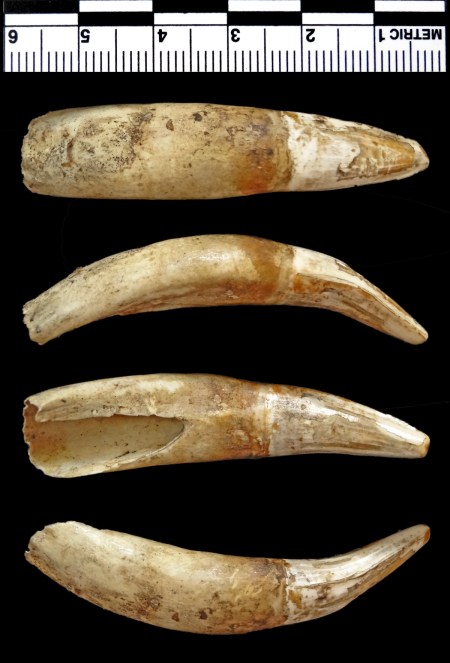
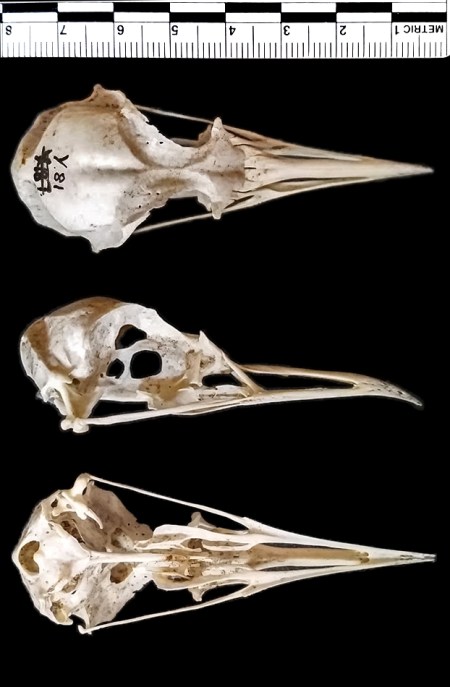
Friday mystery object #297

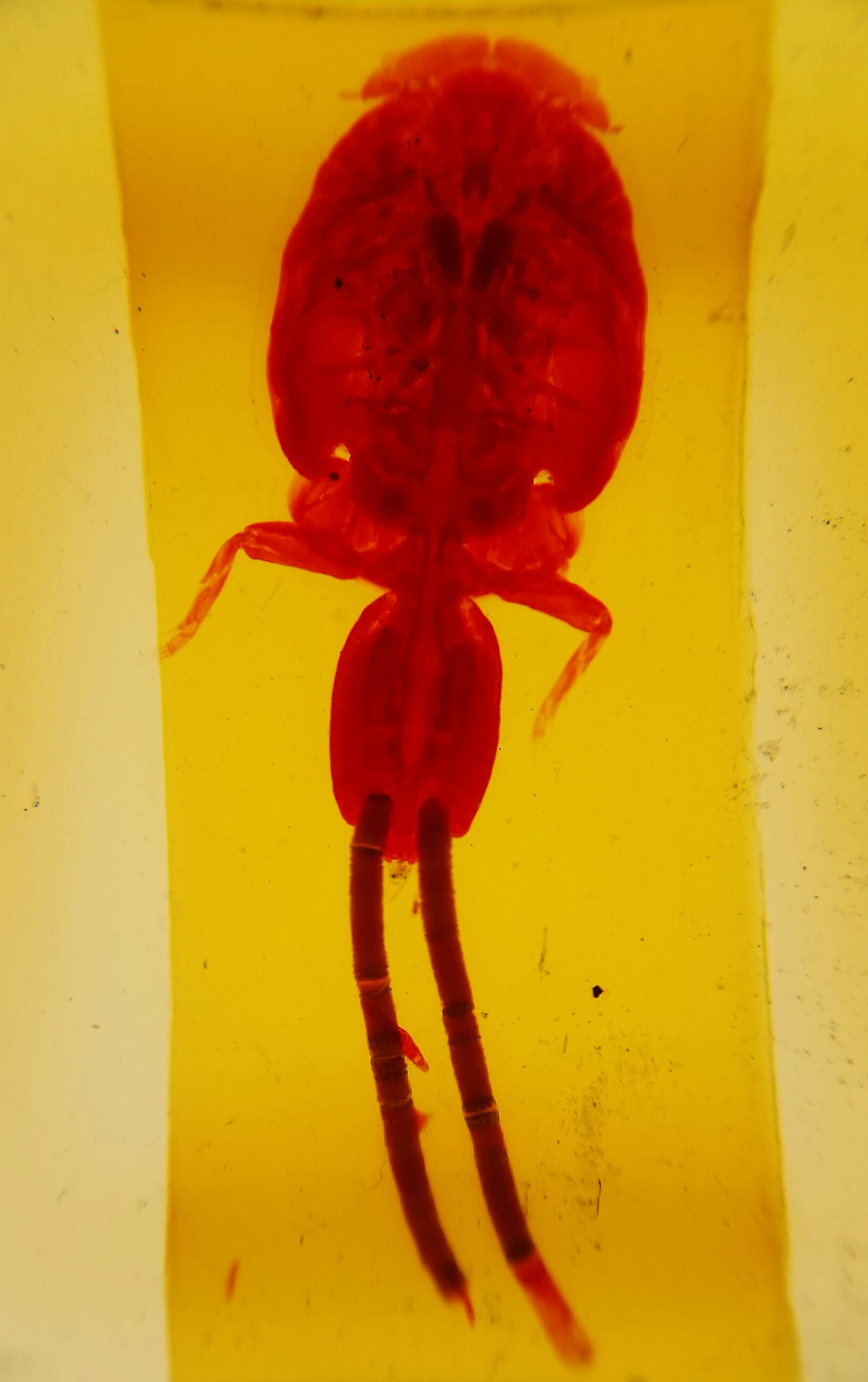
Happy Friday everyone! Once again it’s time for the mystery object and once again I’m in a different country and am relying on a photo I have on my phone to supply you with a specimen for identification. That means the photo isn’t ideal, but it does mean I have something a bit different from the usual skull or bone:

mystery297

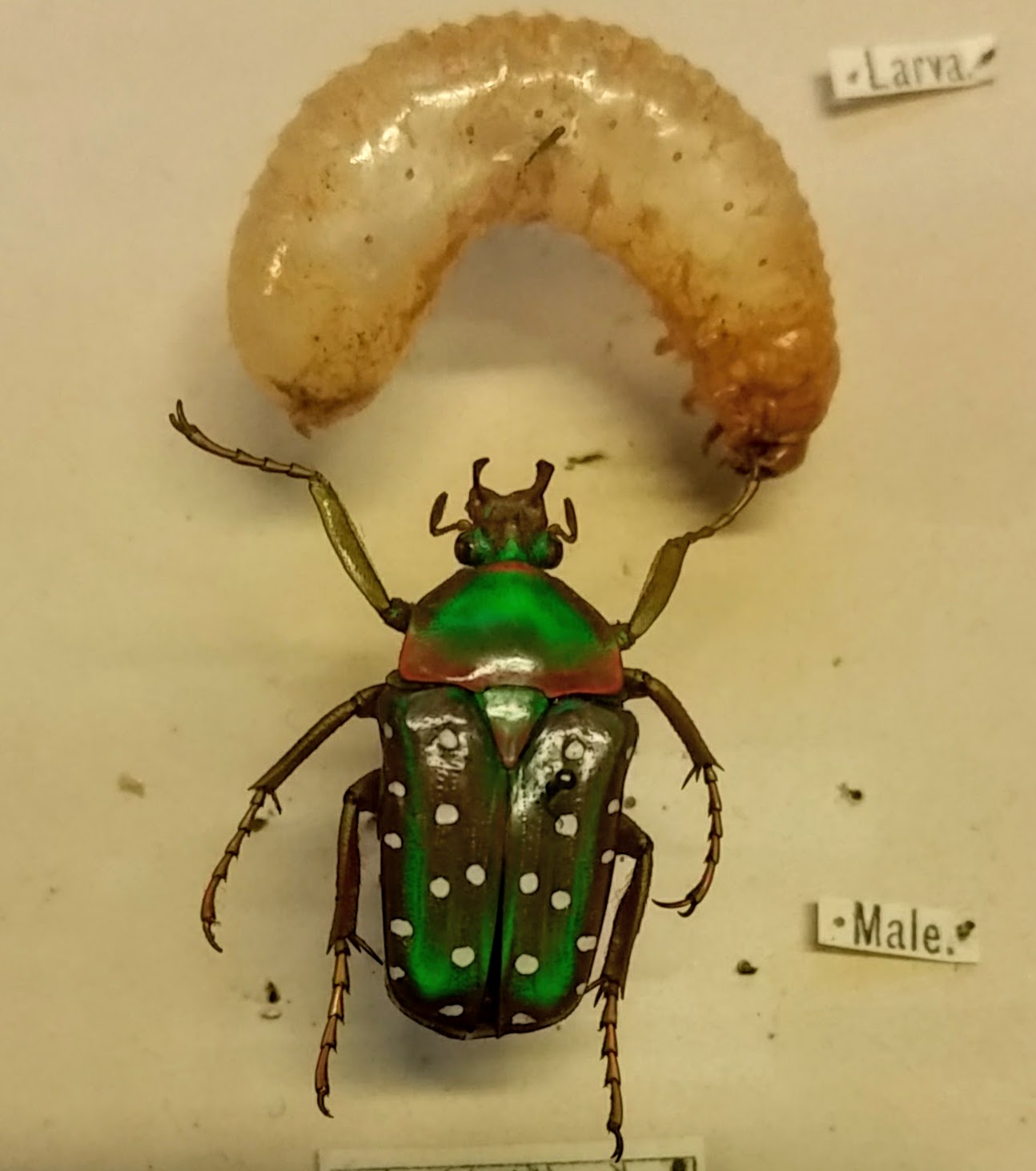
Any idea what species this colourful insect and its less lovely larva might be?

As always you can put your questions, observations and suggestions in the comments section below. Have fun!

Friday mystery object #296

This week I’ve been in the USA couriering a loan back from the stunning Corning Museum of Glass (I’ll write about that sometime soon). However, that means I’ve had limited access to specimens for this week’s mystery object and I’m restricted to what I’ve got on my phone. Fortunately, I have this non-vertebrate mystery object for you to try your hand at identifying to species:

mystery296

It’s quite a cool specimen and I’ll tell you why next week! Have fun!

Friday mystery object #295

For many of you, last week’s mystery object answer was a little disappointing, since I was unable to pin down what the specimen was. Normally with birds it’s not so difficult, because of useful resources like skullsite.com, but the fact is that some bird groups are still quite poorly represented in collections and finding comparative material is difficult, especially online.

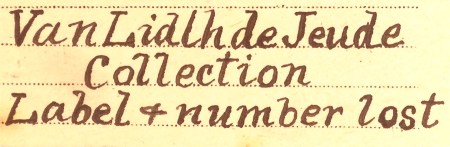
The most frustrating thing about last week’s object is that it did once have a label, but at some point in the past it was lost, so the only information with the specimen now is this:

mystery295_label

However, this label does offer a glimmer of hope, since it identifies the specimen as being from a particular collection and that can often mean there will be more information somewhere.

As it turns out, this specimen is one of several that were purchased in 1867 from an auction of the collections of Dutch anatomist Theodoor Gerard van Lidth de Jeude. This is helpful because auction catalogues can contain information like the species names of the specimens being sold. It is particularly helpful when you have the original catalogue with annotations about the specimens bought by your institution.

Fortunately, at the Dead Zoo we have the auction catalogues. Unfortunately we bought quite a lot of stuff, so working out which of the specimens our mystery object represents is still quite a lot of work.

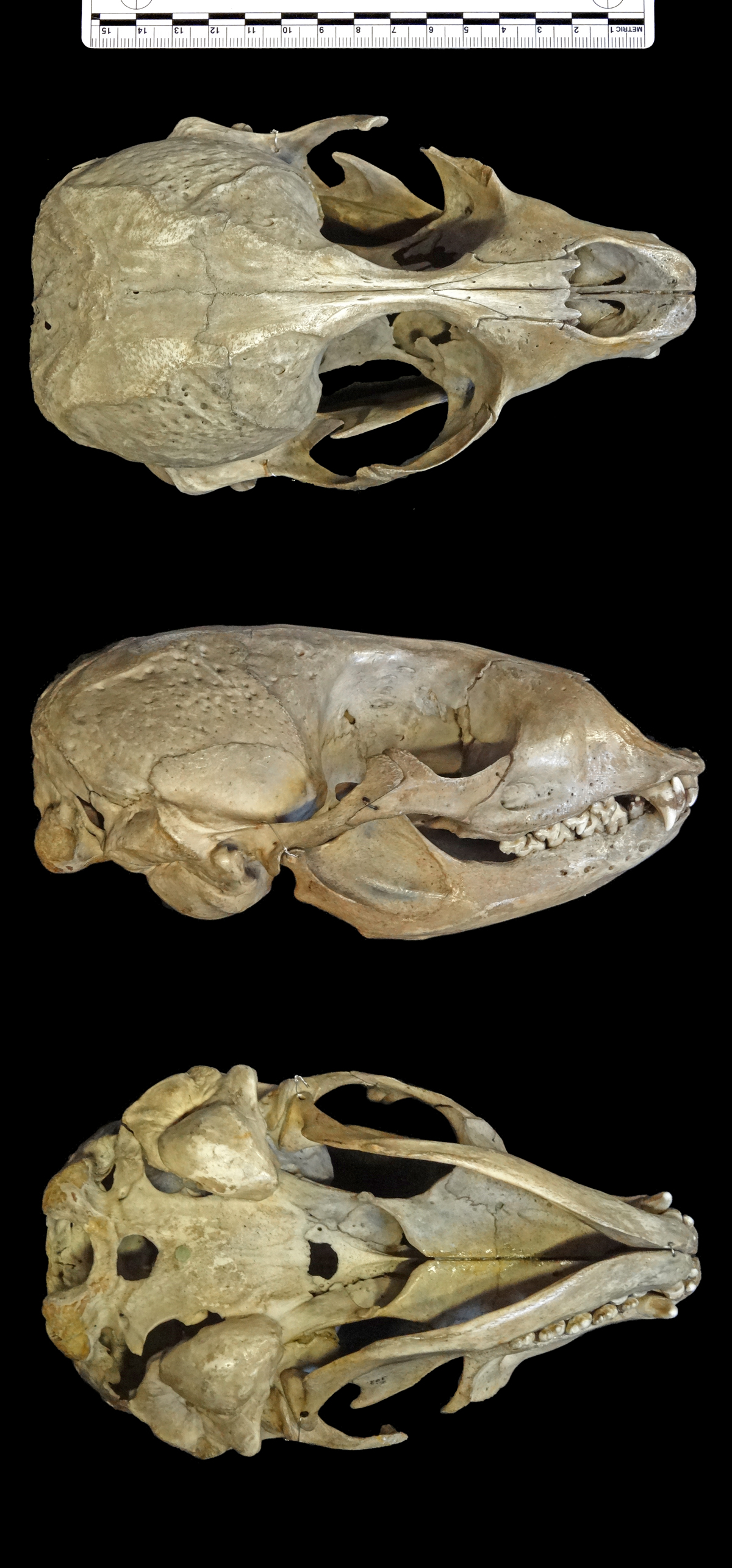
However, if other specimens from the auction have their names and numbers, it should be easier to narrow down the ones that lost their labels. It also can also help to have an identification of the specimen to track back to the catalogue, which is why I was keen to get your thoughts last time and why this week’s mystery object is from the same collection.

So can you help me work out what species this skull belonged to?

mystery295

No need for cryptic clues, but if you want to show off your taxonomic prowess you could always offer the 1860’s scientific name or the name of what you think it is in Dutch.

I hope you have fun with this one!

Friday mystery object #293 answer

Last Friday I gave you this unidentified specimen from Dublin’s Dead Zoo and asked you to help me work out what it was:

mystery293

The response was incredibly helpful and it was great to see that most of you were drawn by the morphology to make a similar identification to me.

The fact that it’s from the family Anatidae (the ducks, geese and swans) was immediately noticed, and from there the likely genus was quickly narrowed down to Branta, based on the morphology. This is the genus containing the ‘burnt’ geese (that’s what ‘branta’, derived from the Old Norse, means), which includes: the Brant Goose; Barnacle Goose; Canada Goose; Cackling Goose; Red-breasted Goose, and Hawaiian Goose.

However, the nominate examples of all these species (that means the ones derived from the type on which the species name is based) are either the wrong shape or a bit too large to have this skull, which you can see by checking them on the excellent Skullsite by Wouter van Gestel.

The closest species in terms of morphology are the Cackling Goose (B. hutchinsii), Canada Goose (B. canadensis) and Barnacle Goose (B. leucopsis), but it turns out that there are various subspecies of each and one (that was previously recognised as a subspecies of Canada Goose, but which is now considered a subspecies of Cackling Goose) is rather small, as flagged by the subspecies name minima.

This smallest subspecies seems to fit both the morphology and the size very well, so I’m quite confident to identify the mystery specimen as the Small Cackling Goose Branta hutchinsii minima (Ridgway, 1885).

640px-small_cackling_goose_brood

A family of Small Cackling Geese, by Tim Bowman, USFWS, 2003

So thanks to you all for helping me to narrow down where in the Anatidae to start looking! More mysteries from the Dead Zoo next week.

Friday mystery object #292 answer(ish)

Last week I gave you a final mystery object from the Grant Museum of Zoology to help me identify:

dsc06030

Part of the reason for that was because I knew I’d be starting my new job in Dublin where there is a great collection of comparative bird osteology that I thought I’d get a chance to look at in time to write this post.

Alas, I’ve had a whirlwind first week at Dublin’s Dead Zoo and although I’ve managed to take a look at a few sterna, I’ve not had much time to really think about them or consider the identification. I’ve also had limited opportunity to follow up on everyone’s very useful suggestions, although I have tried to use them as a guide to narrow down my perusal of the comparative collections.

However, I did get a chance to take some quick snaps of a range of bird sterna with my phone, so I’m going to provide you with a veritable feast of breast bones to compare the mystery specimen against:

You can click on each image to see a large version – hopefully this will prove useful for future identifications!

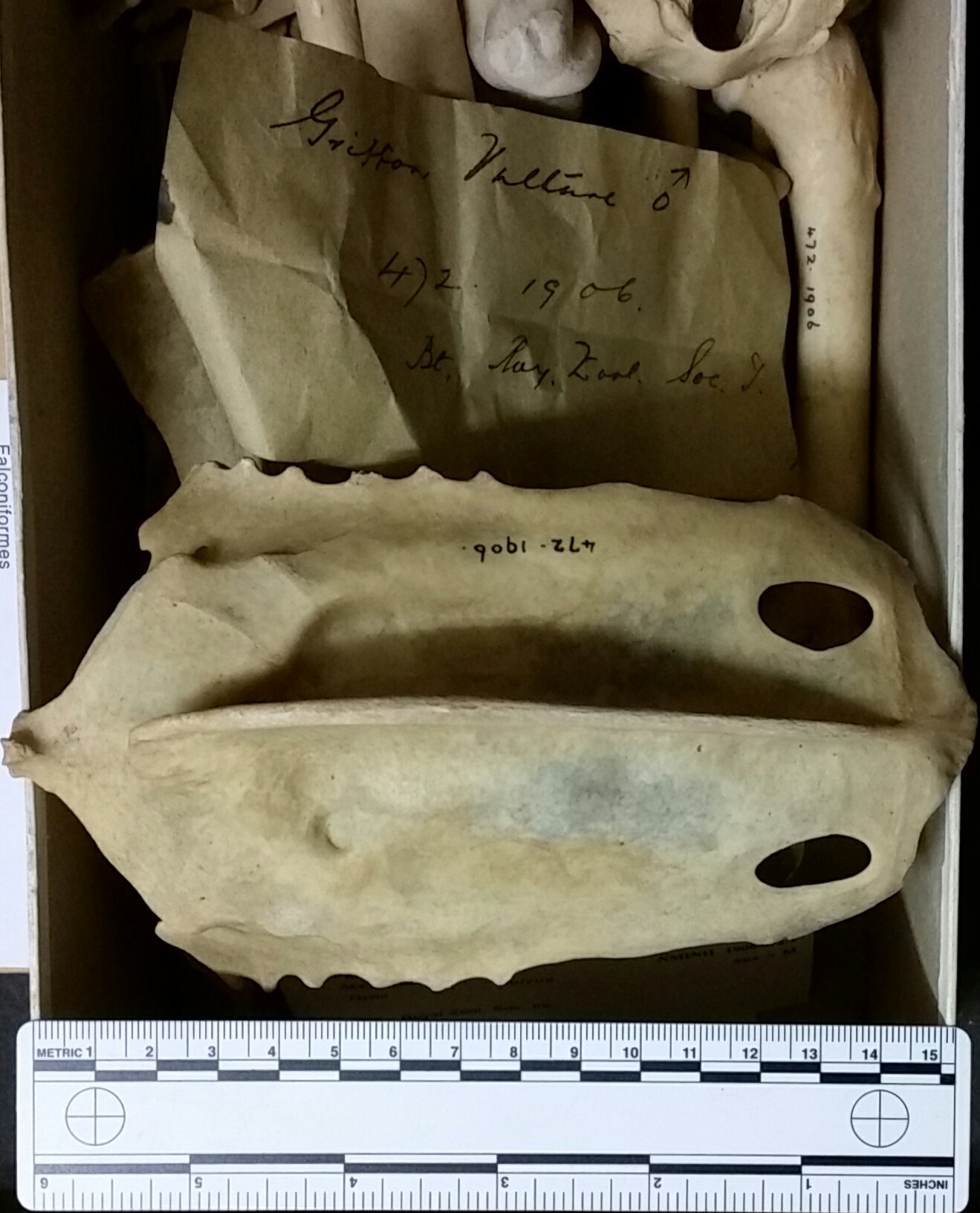
None of them quite match the combination of having perforations near the straight and truncated bottom of the mystery specimen, which sports a broad triangular flattening of the lower portion of the carina or keel. This may be a feature of the particular individual, or it might be diagnostic – herein lie the problem with using strongly functional features for identification, as a juvenile or zoo specimen may have differences due to developmental progress of lack of use of a feature. To illustrate, this keel from a Griffon Vulture from the Royal Zoological Society of Ireland shows a significant asymmetry (although it’s hard to see the deformation in the image due to the shadow – I’ll see if I can get a better image):

Griffon Vulture sternum

Griffon Vulture sternum

It’s also worth noting that the Grant specimen has had the top of the sternum cut off, so the overall shape is a little misleading. From comparing the sterna of a variety of bird groups I’m in agreement with the emerging group consensus that this is probably from a pretty large bird of prey.

Thanks for your input on this – I will check some more next week when I have a zooarchaeologist looking at the comparative bird collection and I’ll get the chance to dig out some more material.

Cheers!

Friday mystery object #291 answer

Last week I gave you this skull from the Grant Museum of Zoology to identify:

mystery291

I thought this would be a fairly easy one and so I wasn’t surprised when Chris was straight in with a correct identification, in a suitably cryptic manner of course.

The huge open sinuses inside the orbit and openings around the auditory bullae (as spotted by palfreyman1414) immediately suggest that this is an animal that dives deep underwater, as the large openings help prevent pressure from building up inside the skull. The shape of the teeth are another giveaway that this is a fish-catching mammal in the Order Carnivora. It is of course a seal.

But what kind of seal? There are 33 species of pinniped, so there are a few options, although the large and distinctive species like Walruses can be ruled out for obvious reasons. In this size range and with multicusped teeth like these we’re looking at one of the true seals (the Phocidae) at the medium to small end of the size range.

When you start looking at the skulls of seals in this range, you need to look  closely. It lacks the flat top of the head and steeply sloping profiles following the nares of a Grey Seal, plus the interorbital distance (the distance between the eyes) is much smaller.

It lacks the inflated nasal region of the cold water Bearded Seal, Ribbon Seal, Ringed Seal and Harp Seal, which need well developed nasal turbinates to help warm the air they breathe in. It also lacks the deflection of the zygomatic below the orbit that is seen in the smaller species like the Caspian and Baikal Seals.

Overall the morphology is most similar to either the Spotted Seal or Harbour Seal, but picking between the two is tricky, especially since the Harbour Seal has around five subspecies that vary somewhat in size and shape of things like the auditory bullae. There is a list of characters that can be used to distinguish between the skulls of the two species by John J. Burns in the Encyclopedia of Marine Mammals. Using that as a guide I think this is a Harbour Seal Phoca vitulina Linnaeus, 1758.

Thanks to everyone who had a go at identifying this – I hope you had fun with it!

Friday mystery object #291

Today’s mystery object is a fairly straightforward one from the Grant Museum, although I’m hoping that we’ll get a species identification for the specimen. Any idea what this is?

mystery291

As usual, a nice cryptic clue would be appreciated so that we can have some fun and not give away what it is too soon for those who are developing their identification skills. Enjoy!

Friday mystery object #289

This week I’ve decided to go for another mini mystery object from the Grant Museum Micrarium. Any idea what this is and what it’s from?

mystery289

As always, your thoughts, questions and suggestions can go in the comments box below.

Also, if you have any images of tiny things you can share them on Twitter with the hashtag  to win a signed copy the excellent new book by Ed Yong – it’s well worth a read!

Have fun!

Friday mystery object #288 answer

Last week I gave you this mystery object from the Grant Museum of Zoology to try your hand at identifying:

mystery288

Not the best photos, but they do show some of the key features I used to work out what it is.

There were a lot of comments with a variety of different groups of animal being mentioned, although everyone recognised this as a mammal immediately. The large broad tail was recognised by Allen Hazen as an adaptation to swimming, but its unusual proportions threw some people into thinking this was something quite basal, like a marsupial or member of the Pilosa. The presence of a clavicle supported that to some extent as many of the more recent mammal orders, like the Carnivora, have a reduced or absent clavicle.

The hind feet were also recognised as an adaptation to swimming by palfreyman1414, but he was sceptical that this specimen represented just one species, suggesting it might be a chimera. However, I wouldn’t do that to you (unless it was an April Fool prank) so the real animal remained to be identified.

Hiroto Nakatsubo raised the possibility of it being a rodent, but commented that it was on the big side. This could have pointed at Beaver, as many people suggested, except the specimen lacks the distinctive tail morphology. All of this followed my own though path for working out what it is – a medium large aquatic rodent that isn’t a Beaver.

That narrowed it down to Capybara, Muskrat, Coypu or monster Water Vole. Of these, only one has the size difference between fore and hind limbs, plus the distinctively weird acromion process on the shoulder – the Coypu Myocastor coypus Kerr, 1792. So Isaac Krone was the first to get the correct identification, which he hinted at with reference to the Coypu’s alternative common name Nutria and the genus name which means “mouse-beaver” in Greek. Well done to Isaac!

Coypu showing off its weird discrepancy in limb lengths. Image by José Reynaldo da Fonseca, 2006

Coypu showing off its weird discrepancy in limb lengths. Image by José Reynaldo da Fonseca, 2006


Friday mystery object #288

This week I have a mystery skeleton that emerged from the collections of the Grant Museum of Zoology recently and required identification:

mystery288

Apologies for the slightly rubbish photographs, but I’ve taken pics of the bits I found most useful in making my identification.

Any thoughts on what species this specimen represents? You can put your questions, thoughts and suggestions in the comments section below. Have fun with it!

Friday mystery object #283 answer

Last week I gave you this zoomed in picture of a specimen to have a go at identifying:

mystery283

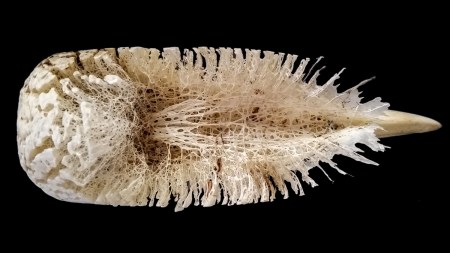
It was a bit tricky, so I also gave you this bonus clue to help:

mystery283_bonus

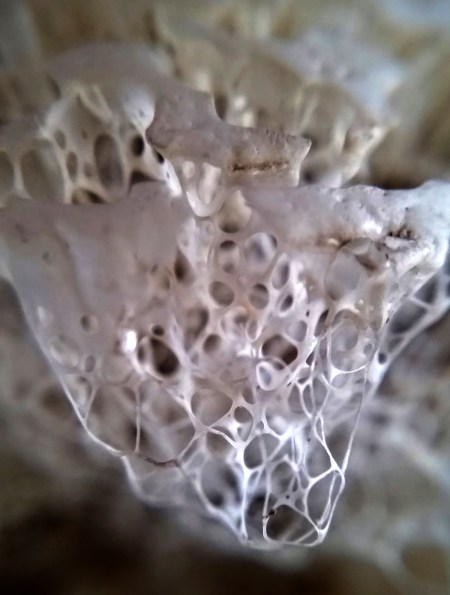
I was impressed to see that, despite the limited information available from the images provided, many of you managed to work out that this shows the lightweight ‘honeycomb’ structure that supports the casque of a hornbill.

That was the first challenge but, as ever, I was keen to see if you could get the identification to species – far more of a challenge considering the lack of a side view of the skull and lack of a scale. To make up for that I’ve decided to provide the necessary image here:

Ceratogymna atrata skull

I won’t say what species this is in this post, as I normally would, just to give some more of you a chance to make the identification yourself. However, what I will say is that the very first response by Wood contained a link to an image of the correct species and later to a blogpost featuring this very specimen. In that post there is a discussion about the appearance of the casque, with speculation about whether it had been damaged during preparation, resulting in its appearance. However, as Richard Lawrence pointed out, this appearance is actually normal for the skulls of several species of hornbill.

I will also say that the discussion between Daniel Calleri & Dan Jones and Richard Lawrence about whether it was a hornbill from a genus starting with A or B was interesting and I initially thought it was an A, but am now convinced that it’s a C.

If you’re desperate to know which species it’s from, here’s a link to the skullsite.com page about it.


Friday mystery object #283

This week I have a mystery object for you that’s a bit different from the usual. Any idea what this zoomed in picture is showing?

mystery283

It’s probably a bit of a tricky one, so if you want an extra image that makes it much easier you can click on this link for a bonus clue.

Please leave your suggestions in the comments below – I’d love to find out your thoughts and let me know if you needed the clue. Have fun!

Friday mystery object #282

This week I have a mystery specimen from Dr David Hone who showed me it when he came and spoke about Tyrannosaurus at PubSci the other night (if you want to see the talk take a look at the Periscope feed from the evening). Here it is:

mystery282

Do you have any ideas of what bone it is and from which family of animals? If you can work out the species I will be both surprised and very impressed.

As usual if you think it’s too easy, please be sure to leave a cryptic clue in the comments section below. I hope you have fun with this!

Friday mystery object #281 answer

Last week I asked for your opinion on this mystery object:
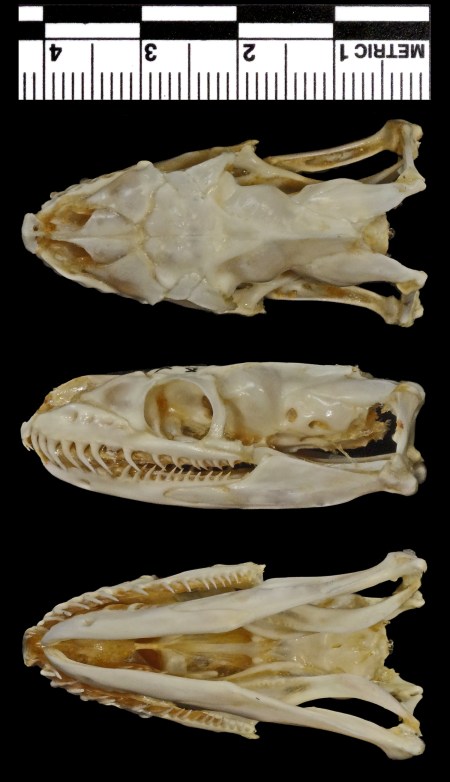
mystery281

It had originally been identified as Boa constrictor and then reidentified as Green Anaconda, but I didn’t believe either of those options.

There was some activity in the comments, from the initial observation that it’s a snake from Wood, to Andy Mills’ suggestion of Python, with palfreyman1414 and Daniel Jones and Daniel Calleri’s discussing how to tell whether it’s a boid or pythonid.

In fact, palfreyman1414 did some sterling work tracking down characteristics to help distinguish between these commonly confused groups, with this handy comment:

“The postfrontal bone, usually present, borders the orbit behind, rarely also above, and in the pythons a supraorbital bone is intercalated between it and the prefrontal bone.”

And..

“Boids are, however, distinguished from the pythons in that none has postfrontal bones or premaxillary teeth”

The character of the presence or absence of teeth in the premaxilla (the frontmost bone of the upper jaw in the midline of the skull) is particularly useful, although it’s not unusual for the premaxilla to fall out of snake skulls.

The postfrontal character is a bit less obvious and I’m not fully convinced by it – not because there isn’t an extra bone in the pythons compared to the boas (there is), it’s just whether it’s a postfrontal, a supraorbital or a post orbital. That depends on the reference you read. To help get an idea of the bits we’re talking about, I’ve highlighted them here (purple for premaxilla, pink for the bit missing in boids, call them what you like):

mystery281_bones

It’s probably worth mentioning that Anacondas are members of the boid family, so it’s clear that this specimen is a pythonid rather than a boid. But that doesn’t tell us what species it is (if you want to see a Boa constrictor skull there’s a video of one here).

Comparing overall skull shapes in snakes is not very effective, since the skull is very loosely articulated to allow it to deform when swallowing large prey, so when mounted they can be very variable in shape. Because of this you need to compare the shapes of the various bones that make up the skull to narrow it down.

There is a very helpful image resource called BioLib that has validated photos of skulls amongst other images, so it’s well worth checking out. Trawling through I didn’t manage to find a species with the same shapes in the nasals, prefrontals, frontals, parietals and supratemporal – but I did discover a specimen photo by Jean-Christophe Thiel that fit (not to mention a previous mystery object) – so I’m fairly confident that this is a Royal Python Python regius (Shaw, 1802).

Many thanks to everyone for their comments – it’s been a fun challenge where I know I’ve learned an awful lot. I hope you have too!

Friday mystery object #280

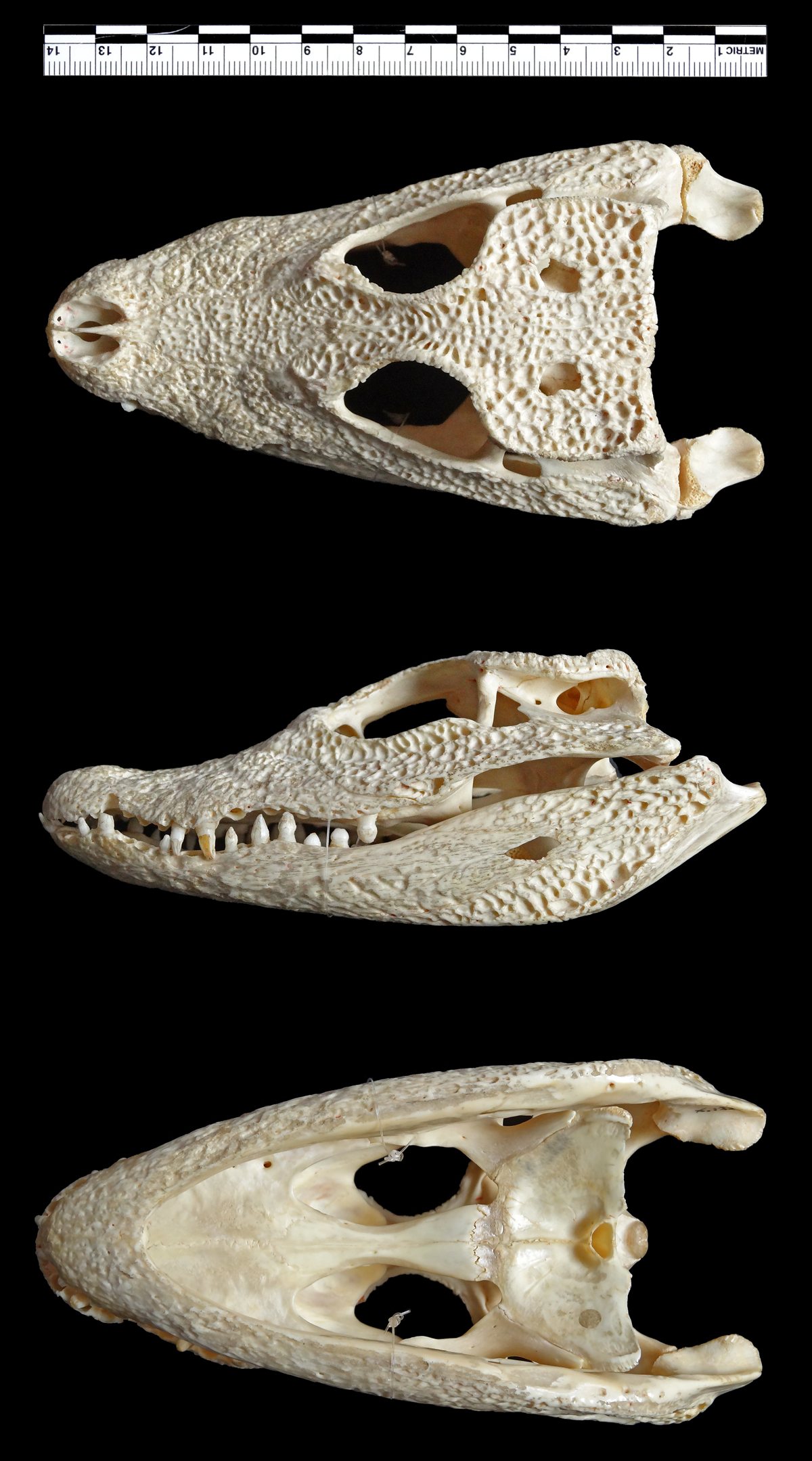
Last week the answer to the mystery object was a Gharial – a very weird crocodilian from India. I realised that I didn’t know much about identifying the Crocodyliformes, so I thought it might be fun to have a go at working out what this species might be:

mystery280

As always, I would love to hear your thoughts below and let’s see if we can find some good diagnostic features!
Friday mystery object #279 answer

Last week I gave you this mystery object to identify:

mystery279

It’s the kind of thing you find in museum collections quite often, but it will commonly be misidentified – especially in anthropology collections where (in my experience) it will commonly be referred to as a claw or big cat tooth.

However, nobody who commented went down that route, recognising that the hollow base and well defined crown indicates that it’s an open rooted tooth of some sort. In mammals an open root at this size that would suggest a pig tusk or perhaps a whale tooth, but this isn’t mammalian.

In fact, this tooth is from something even less cuddly than a whale, something crocodilian. This was recognised first by Carlos Grau, but others who came to the same conclusion included Jonathan Larwood, Daniel Jones, palfreyman1414, Wouter van Gestel and Charne. More specifically, this tooth is from a Gharial, Gavialis gangeticus (Gmelin, 1789). This Gharial from the Grant Museum of Zoology in fact:

mystery279_Gharial

Grant Museum of Zoology Specimen LDUCZ-Y215

Gharial teeth are a bit less conical than the teeth of most crocodiles and alligators. Presumably the curve helps prevent their main diet of fish from getting free when caught.

Gharials are sexually dimorphic, with the adult males bearing a big rounded bony  knob on the end of their rostrum, this is where the name Gharial comes from, as this feature resembles a local earthenware pot called a “ghara”. Sadly, these distinctive crocodilians are critically endangered, with just a few hundred left alive in the wild. They are affected by habitat loss, egg theft and use in traditional medicines.

More mysteries next week and if you fancy hearing me talking about animals you might be interested in coming to Animal Showoff at the Grant Museum of Zoology next Thursday evening!

Friday mystery object #279

This week I have the kind of mystery object that you find a lot of in museum collections. Sometimes they reside in the bottom of a box. Sometimes they sit in a cupboard. Sometimes they might even have a label, although that label than will often be vague and sometimes misleading.

Any idea what this is?

mystery279

As usual, you can leave your suggestions below and please try to keep them cryptic if you’re confident that you know what it is. Have fun!

Friday mystery object #275

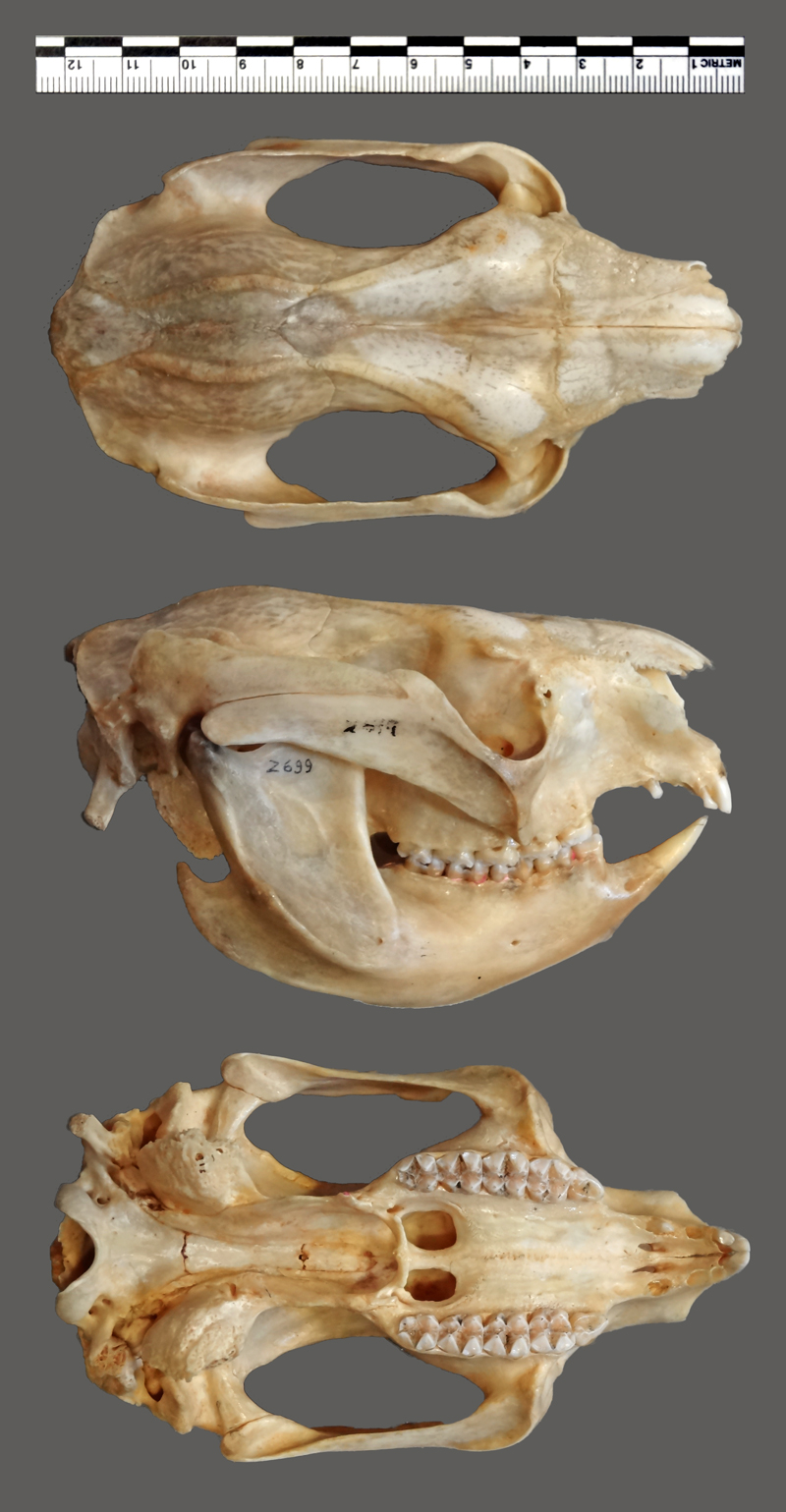
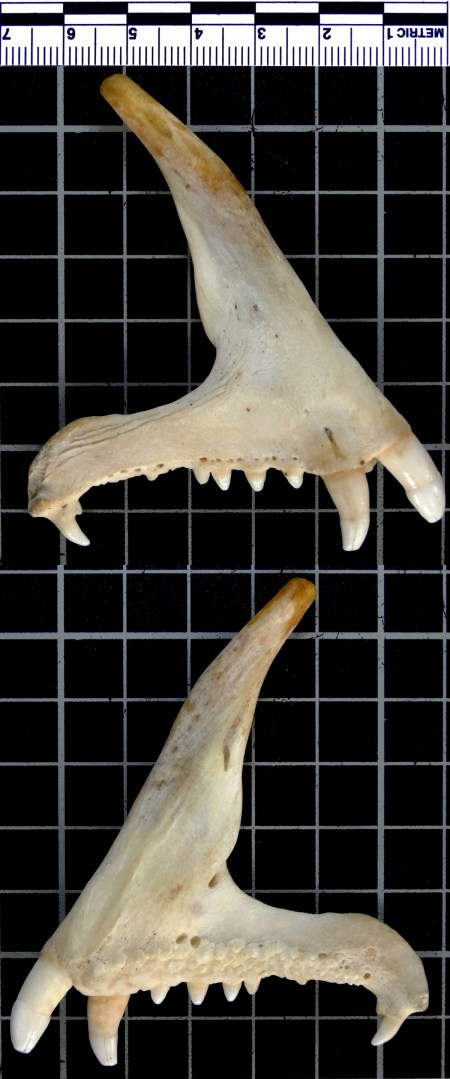
This week I have a genuine mystery skull for you to identify from the Grant Museum of Zoology:

mystery275

I think I know what it is, but I’d be keen to see if you agree with me.Probably a bit on the easy side, so please keep your answers cryptic to avoid spoiling the fun for others!

Oh and apologies for the substandard photos – I used my phone with a tripod, which sort of worked, but it’s not ideal. Hope it’s good enough for you to make an identification!