Friday mystery object #282

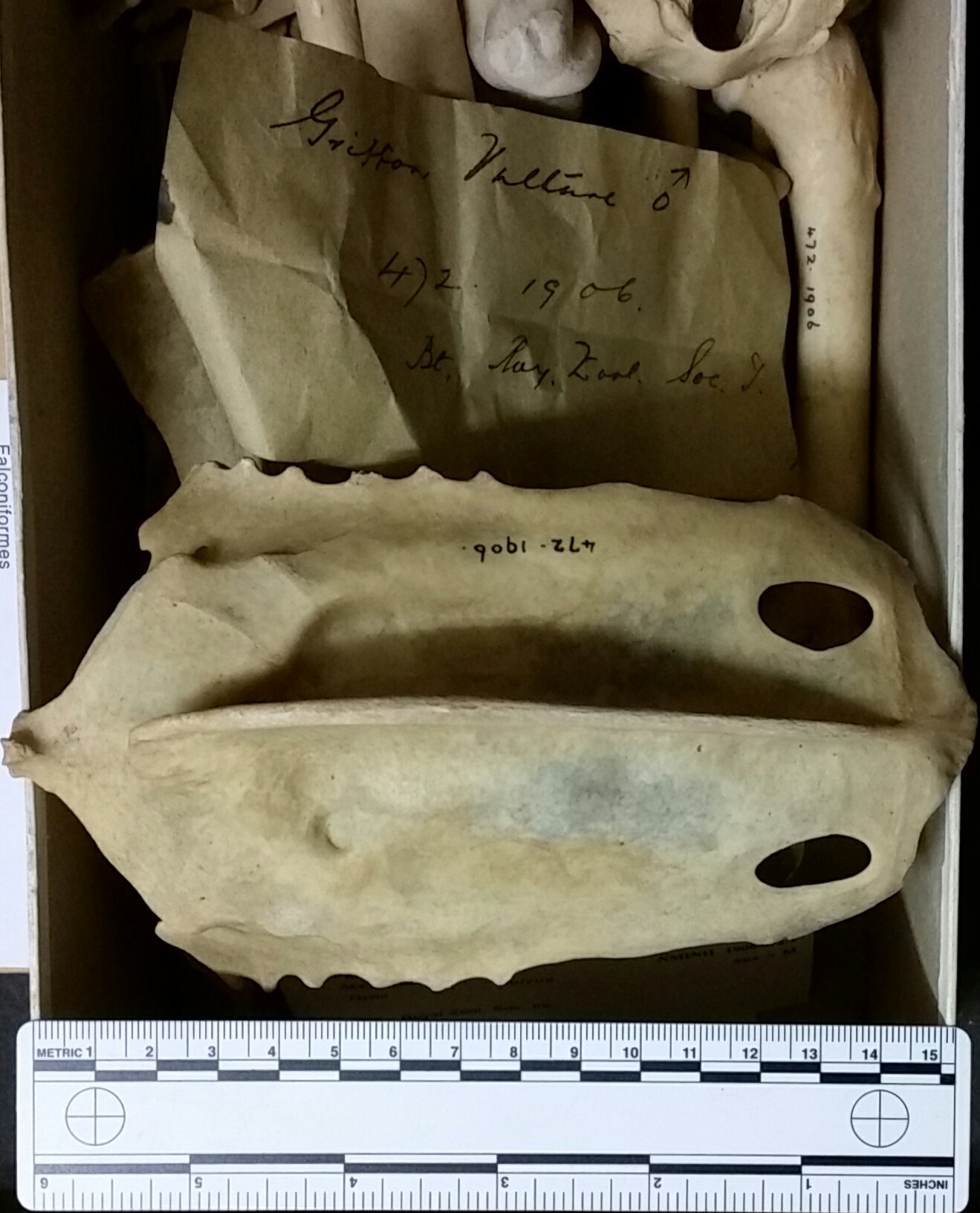
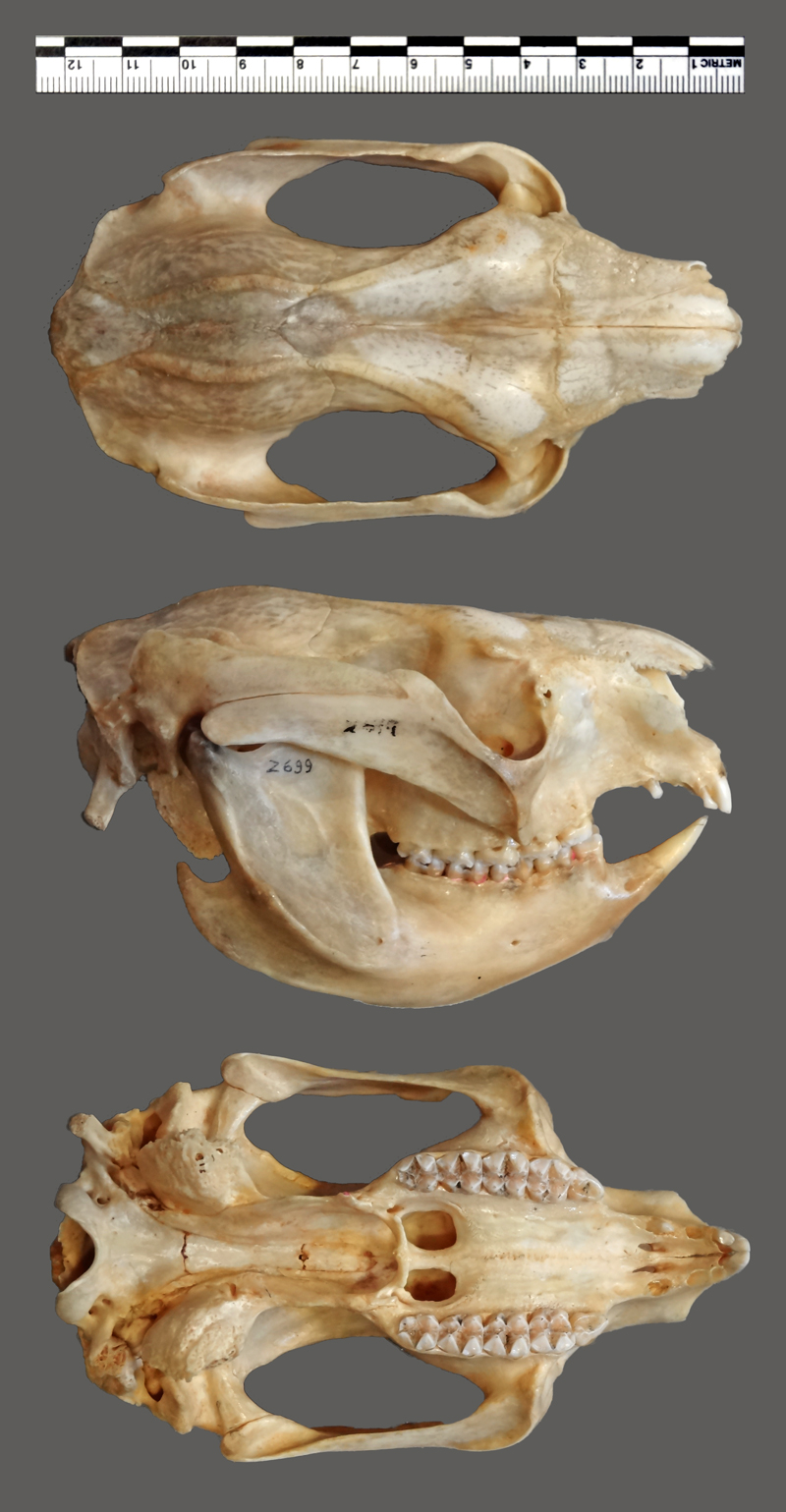
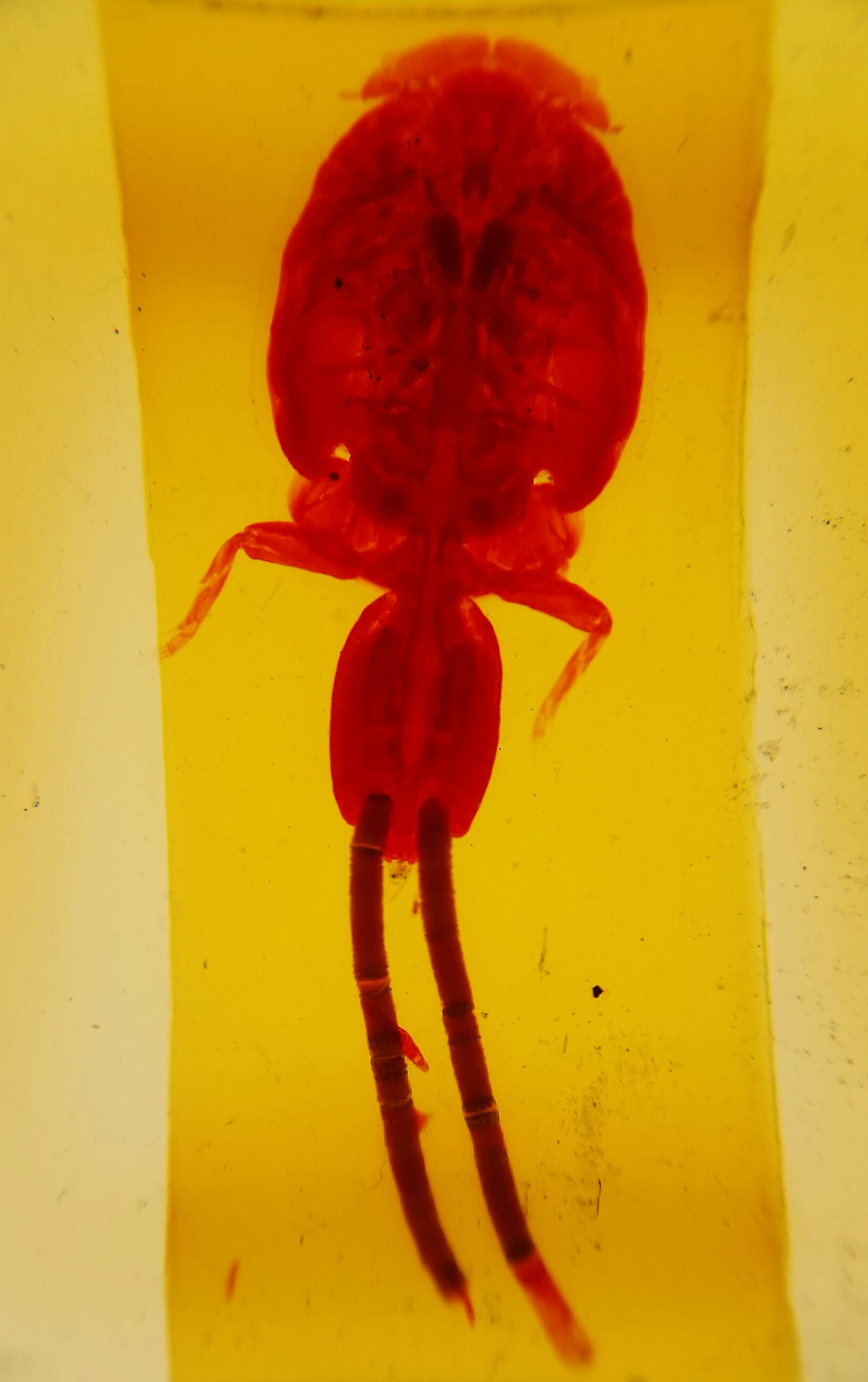
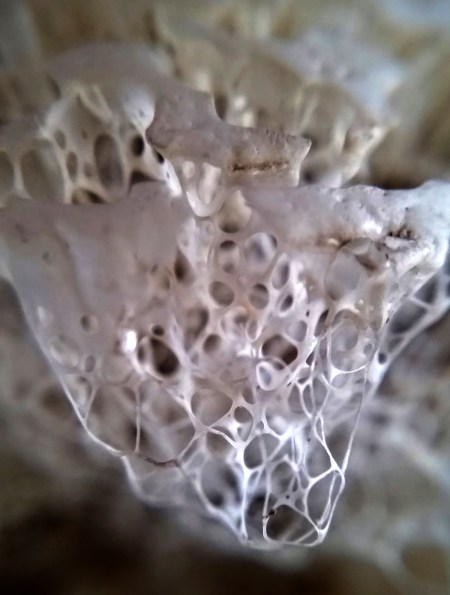
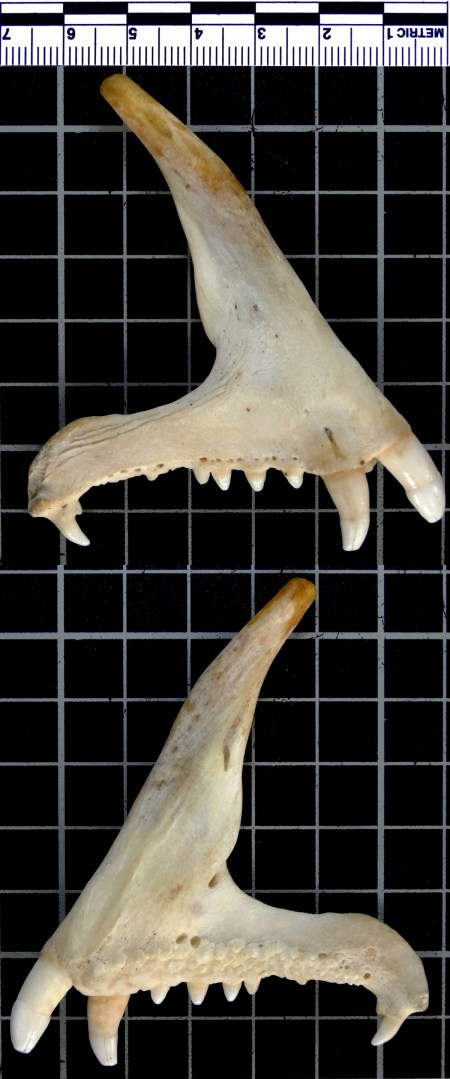
This week I have a mystery specimen from Dr David Hone who showed me it when he came and spoke about Tyrannosaurus at PubSci the other night (if you want to see the talk take a look at the Periscope feed from the evening). Here it is:

mystery282

Do you have any ideas of what bone it is and from which family of animals? If you can work out the species I will be both surprised and very impressed.

As usual if you think it’s too easy, please be sure to leave a cryptic clue in the comments section below. I hope you have fun with this!

Friday mystery object #281 answer

Last week I asked for your opinion on this mystery object:
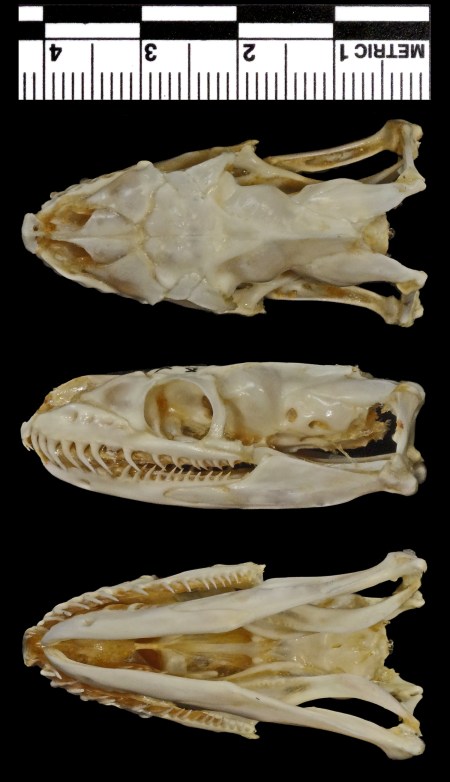
mystery281

It had originally been identified as Boa constrictor and then reidentified as Green Anaconda, but I didn’t believe either of those options.

There was some activity in the comments, from the initial observation that it’s a snake from Wood, to Andy Mills’ suggestion of Python, with palfreyman1414 and Daniel Jones and Daniel Calleri’s discussing how to tell whether it’s a boid or pythonid.

In fact, palfreyman1414 did some sterling work tracking down characteristics to help distinguish between these commonly confused groups, with this handy comment:

“The postfrontal bone, usually present, borders the orbit behind, rarely also above, and in the pythons a supraorbital bone is intercalated between it and the prefrontal bone.”

And..

“Boids are, however, distinguished from the pythons in that none has postfrontal bones or premaxillary teeth”

The character of the presence or absence of teeth in the premaxilla (the frontmost bone of the upper jaw in the midline of the skull) is particularly useful, although it’s not unusual for the premaxilla to fall out of snake skulls.

The postfrontal character is a bit less obvious and I’m not fully convinced by it – not because there isn’t an extra bone in the pythons compared to the boas (there is), it’s just whether it’s a postfrontal, a supraorbital or a post orbital. That depends on the reference you read. To help get an idea of the bits we’re talking about, I’ve highlighted them here (purple for premaxilla, pink for the bit missing in boids, call them what you like):

mystery281_bones

It’s probably worth mentioning that Anacondas are members of the boid family, so it’s clear that this specimen is a pythonid rather than a boid. But that doesn’t tell us what species it is (if you want to see a Boa constrictor skull there’s a video of one here).

Comparing overall skull shapes in snakes is not very effective, since the skull is very loosely articulated to allow it to deform when swallowing large prey, so when mounted they can be very variable in shape. Because of this you need to compare the shapes of the various bones that make up the skull to narrow it down.

There is a very helpful image resource called BioLib that has validated photos of skulls amongst other images, so it’s well worth checking out. Trawling through I didn’t manage to find a species with the same shapes in the nasals, prefrontals, frontals, parietals and supratemporal – but I did discover a specimen photo by Jean-Christophe Thiel that fit (not to mention a previous mystery object) – so I’m fairly confident that this is a Royal Python Python regius (Shaw, 1802).

Many thanks to everyone for their comments – it’s been a fun challenge where I know I’ve learned an awful lot. I hope you have too!

Friday mystery object #280

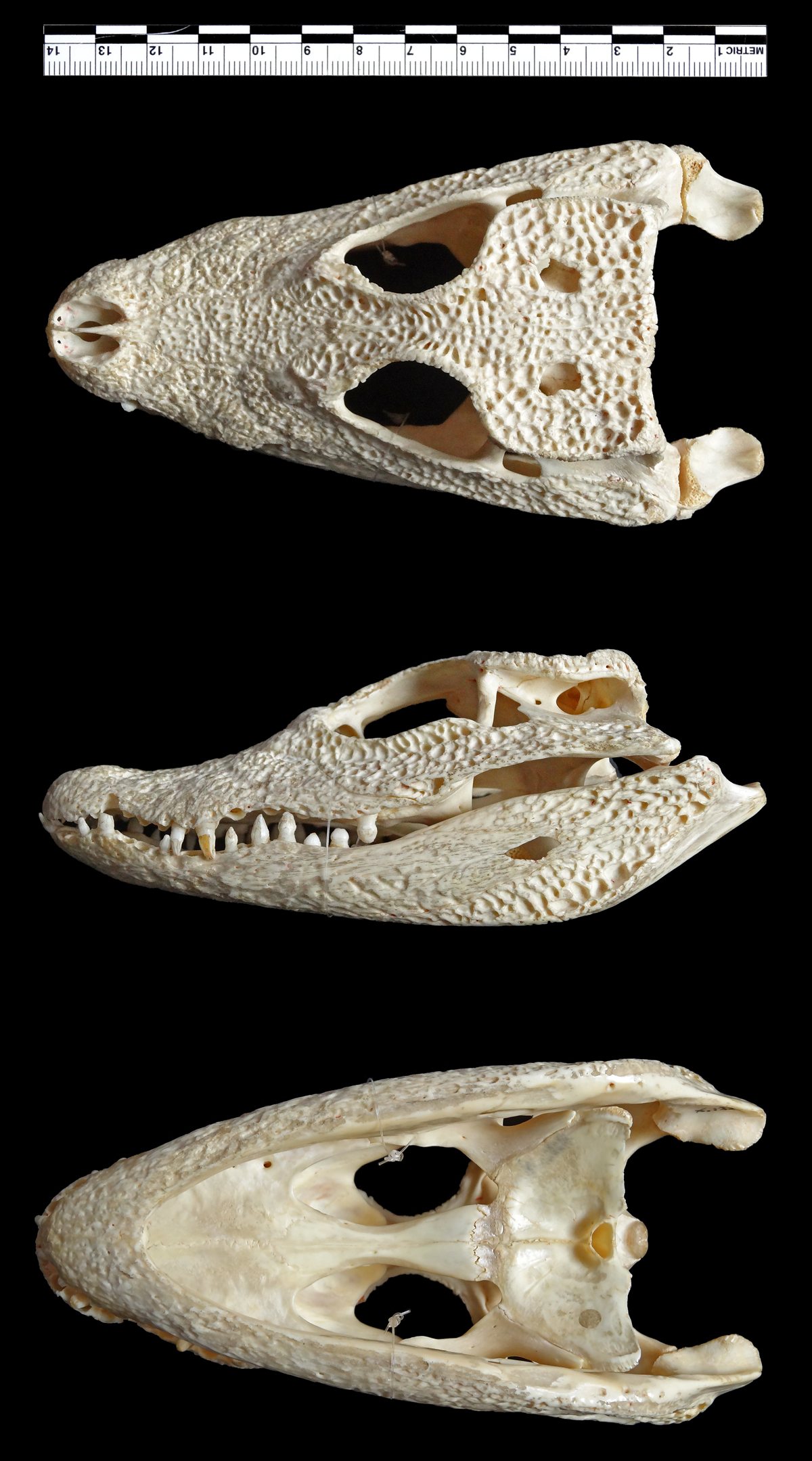
Last week the answer to the mystery object was a Gharial – a very weird crocodilian from India. I realised that I didn’t know much about identifying the Crocodyliformes, so I thought it might be fun to have a go at working out what this species might be:

mystery280

As always, I would love to hear your thoughts below and let’s see if we can find some good diagnostic features!
Friday mystery object #279 answer

Last week I gave you this mystery object to identify:

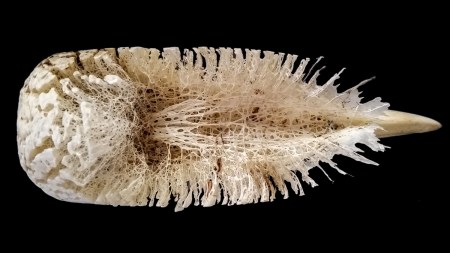
mystery279

It’s the kind of thing you find in museum collections quite often, but it will commonly be misidentified – especially in anthropology collections where (in my experience) it will commonly be referred to as a claw or big cat tooth.

However, nobody who commented went down that route, recognising that the hollow base and well defined crown indicates that it’s an open rooted tooth of some sort. In mammals an open root at this size that would suggest a pig tusk or perhaps a whale tooth, but this isn’t mammalian.

In fact, this tooth is from something even less cuddly than a whale, something crocodilian. This was recognised first by Carlos Grau, but others who came to the same conclusion included Jonathan Larwood, Daniel Jones, palfreyman1414, Wouter van Gestel and Charne. More specifically, this tooth is from a Gharial, Gavialis gangeticus (Gmelin, 1789). This Gharial from the Grant Museum of Zoology in fact:

mystery279_Gharial

Grant Museum of Zoology Specimen LDUCZ-Y215

Gharial teeth are a bit less conical than the teeth of most crocodiles and alligators. Presumably the curve helps prevent their main diet of fish from getting free when caught.

Gharials are sexually dimorphic, with the adult males bearing a big rounded bony  knob on the end of their rostrum, this is where the name Gharial comes from, as this feature resembles a local earthenware pot called a “ghara”. Sadly, these distinctive crocodilians are critically endangered, with just a few hundred left alive in the wild. They are affected by habitat loss, egg theft and use in traditional medicines.

More mysteries next week and if you fancy hearing me talking about animals you might be interested in coming to Animal Showoff at the Grant Museum of Zoology next Thursday evening!

Friday mystery object #279

This week I have the kind of mystery object that you find a lot of in museum collections. Sometimes they reside in the bottom of a box. Sometimes they sit in a cupboard. Sometimes they might even have a label, although that label than will often be vague and sometimes misleading.

Any idea what this is?

mystery279

As usual, you can leave your suggestions below and please try to keep them cryptic if you’re confident that you know what it is. Have fun!

Friday mystery object #275

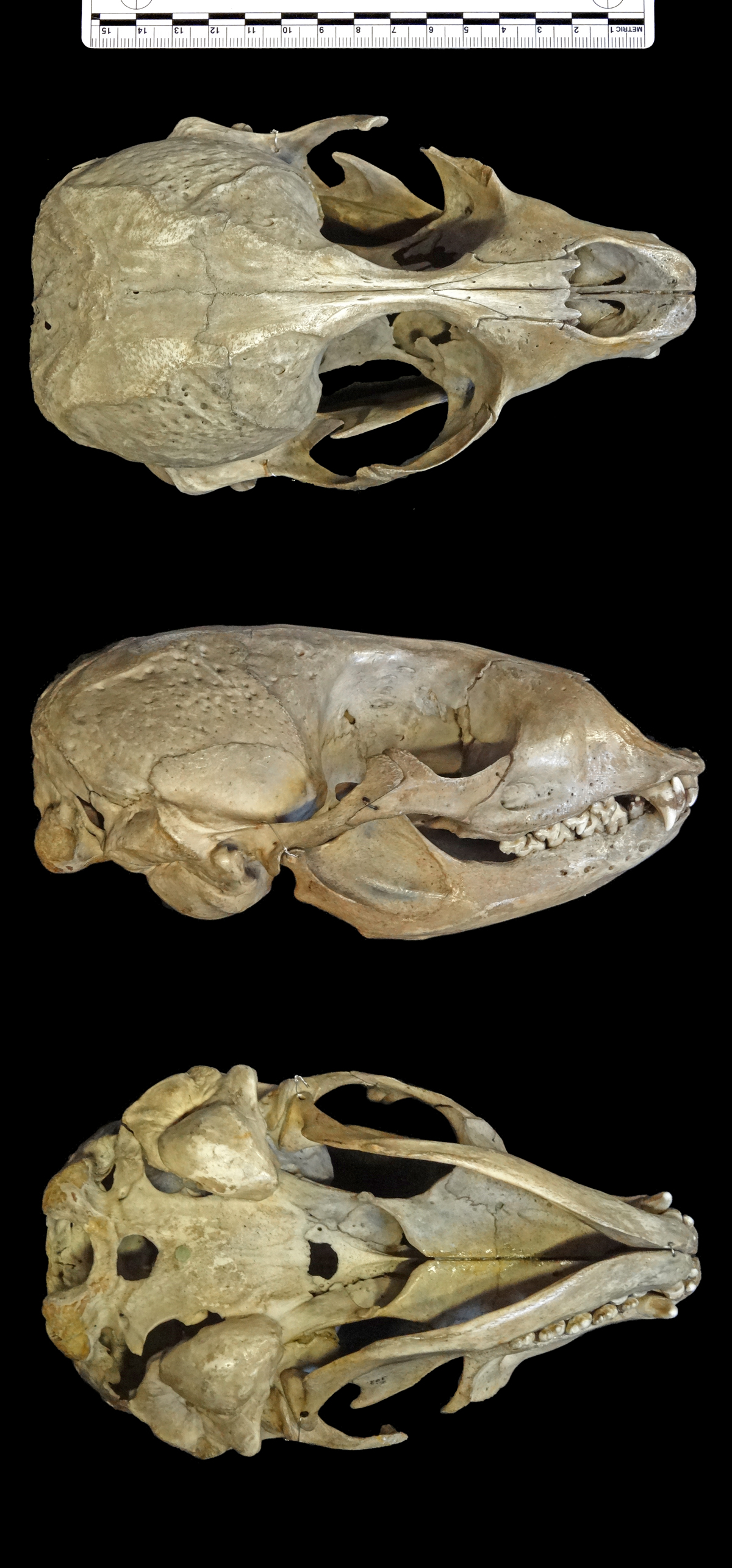
This week I have a genuine mystery skull for you to identify from the Grant Museum of Zoology:

mystery275

I think I know what it is, but I’d be keen to see if you agree with me.Probably a bit on the easy side, so please keep your answers cryptic to avoid spoiling the fun for others!

Oh and apologies for the substandard photos – I used my phone with a tripod, which sort of worked, but it’s not ideal. Hope it’s good enough for you to make an identification!

Friday mystery object #274 answer

Last week I gave you this ungulate skull to try your hand at identifying:

mystery274

It isn’t made any easier by the fact that it’s a female, so it lacks the horns or antlers that make identification easier. As with many ungulates it looks a bit sheepy (as I’ve mention before), but it has some clear indicators that helped you rule out what it’s not.

Jake spotted that the size was about right for a Roe Deer, but the auditory bullae (the bulbs on the underside of the skull that house the ear bones) are too massive and the proportions of the braincase are quite different.

Joe vans also ruled out deer, since it lacks lacrimal pits (large openings in front of the eyes that hold scent glands in cervids). Joe also noticed that the mandible is extremely pinched in just behind the incisors.

The incisors themselves caught the attention of Allen Hazen, who noted the extreme size of the first incisor, which he correctly recognised as being a bit of a giveaway to some people, although only when considered in the context of a variety of other features.

While Daniel Calleri summarised these odd features and added the observation of the decent sized occiptial condyl (the place where the atlas vertebra attaches to the skull) and small paracondylar processes (the bony extensions either side of the occipital condyl and just behind the auditory bullae).

These sorts of observations are exactly what are needed to differentiate between species that are very similar in overall morphology. However, without either an excellent reference collection, or even better, a well researched key, it’s almost impossible.

Fortunately, there is a skull key for a subset of Antelope that occur in Tanzania, created by the Field Museum and the mystery object this week happens to be from a genus present in Tanzania. I’d recommend having a go at using the key, but if you’d rather just find out the answer I’ve provided a link to what it is here. Have fun with the key and enjoy your Easter!

Friday mystery object #273 answer

Last week I gave you this mystery object to get your input on:

mystery273

It was labelled Ovis aries, which didn’t ring quite true for me, so I thought it would be good to see if you also had other ideas, since I’ve noticed that there is a tendency for ungulates of a certain size in museum collections to be assumed to be Sheep.

In other museums I’ve found female Red Deer, Gerenuk and on one occasion even a Badger skull that had been labelled “Sheep”.

mystery273-gerenuk

Labelled “Sheep” but actually a Gerenuk.

This is what a sheep looks like:

mystery273-sheep

You’ll probably notice the “Roman nose” that is quite distinctively sheepy, it also has no gaps between the premaxilla and maxilla and there is a small depression in front of the eye.

When you look underneath, one of the key things that jumps out is the difference in size of the auditory bullae (mystery on the left, sheep on the right):

mystery273-mystery_and_shee

So I’m pretty sure that the mystery object isn’t a sheep, but what is it?

There were lots of suggestions of exotic and interesting ungulates, but after looking at the skulls of a huge number of ungulates I can to the conclusion that Latinka Hristova and Jake were on the right track with the simple suggestion of Goat Capra hircus (Linnaeus, 1758).

Taking a look at Goat specimens on the incredibly useful Mammalian Crania Photographic Archive has convinced me that this is what the mystery object actually is. Not a million miles from Sheep I suppose, but they are different and it’s helpful finding some small differences that help distinguish between them.

Thanks for your input!

Friday mystery object #272 answer

Last Friday I gave you this skull to identify:

mystery272

It was a bit of mean one, because although the family is fairly distinctive, it has poor species representation in online resources or indeed the literature.

The cranium is quite low and long, with some similarities to an otter, but the rostrum (or muzzle) is a bit too narrow and the teeth aren’t quite the right shape. Also the orbits are orientated more vertically, whereas otters have orbit that are at more of an angle so the eyes are closer to the top of the head.

The overall shape, dental configuration and median lacerate foramen all suggest it’s a member of the Herpestidae.

Narrowing down the species was a step too far however, after all, there are around 34 species spread across Africa, Madagascar and Asia and Europe and they are generally quite similar in cranial morphology, with only a few species having good descriptions of the skull.

To help challenge the lack of images of mongoose crania online, I’m pleased to say that this specimen does have an identification – it’s a Ruddy Mongoose Herpestes smithii Gray, 1837. While the name Ruddy Mongoose makes it sound like it’s annoyed me, it actually refers to the reddish-brown of its coat.

A Ruddy mongoose from Daroji wildlife sanctuary in Karnataka, India. By Kalyanvarma, 2009

A Ruddy mongoose from Daroji wildlife sanctuary in Karnataka, India. By Kalyanvarma, 2009

This species is endemic to India and Sri Lanka, where it lives in dry, forested hills and feeds on pretty much anything it can get hold of, from snakes to bird eggs. As with other mongooses (or should that be mongeese?), they have a mutation that prevents snake neurotoxins from bonding at receptor sites, meaning that they are immune to some types of venom – pretty handy if you’re going to eat snakes!

Friday mystery object #272

This week I have another specimen from the Grant Museum of Zoology for you to try your hand at identifying:

mystery272

I have a feeling that it may be easy to get this identification to Family level, but species may prove a little bit more tricky.

I’d love to hear what you think it might be, so leave your suggestions in the comments box below. Have fun!

Friday mystery object #268

Merry Christmas mystery solvers!

This week I have an unusual object from the Grant Museum of Zoology for you to identify:

mystery268.jpg

It’s pretty distinctive, but I’ve not seen many of these, so hopefully it’ll make an interesting object to identify. As usual, if you think you know what it is, please leave a hint or cryptic clue rather than just writing down the answer – it makes it more fun for other people that way.

Have fun!

Friday mystery object #267 answer

Last Friday I gave you this specimen to identify:

mystery267

It was a pretty distinctive one, but a great specimen – and a nice robust example of this particular species.

The partially ossified palate and nasolacrimal (or tear) duct on the external border of the orbit shows that this is a marsupial, and the pointy, robust teeth suggest that it’s highly carnivorous with a penchant for carion, which narrows down the options pretty effectively.

As many of you recognised, this is a Tasmanian Devil Sarcophilus harrisii (Boitard, 1841) – so well done to Tone Hitchcock, Chris, Cindy Nelson-Viljoen, Ric Morris, henstridgesj, palfreyman1414, Lauren McCafferty, joe vans, Daniel Jones and Daniel Calleri, Allen Hazen and Michelle for getting this one right. The key was definitely in those marsupial characters, which immediately ruled out any of the highly diverse placental carnivores.

Tasmanian Devil (Sarcophilus harrisii), Tasmanian Devil Conservation Park, Taranna, Tasmania, Australia by JJ Harrison 2010.

As several of you alluded to, the Tasmanian Devil is undergoing a major decline in population at the moment, mainly due to a particulary nasty transmissible disease that causes tumours to develop on the face, preventing feeding. The tumours are spread between individuals when they bite each other, especially when feeding, which is pretty common Devilish behaviour.

In fact, Devils are pretty rough and tumble creatures in many of their behaviours. When breeding they have a large litter of up to 30 young, which have to compete for just 4 nipples in the pouch. Unsurprisingly, few of the litter survive and presumably those that do are pretty pushy.

Hopefully the Devils will survive their current population crash. There are some individuals who show some resistance to the facial tumour disease, which reflects the importance of genetic diversity within populations. It would be a great shame if the Devils went the same way as the other large marsupial carnivore, the Thylacine.

Friday mystery object #265

This week I have a specimen that I’ve been looking at recently that you might like to have a go at identifying:

Mystery monkey

Mystery monkey

This was being used in handling sessions and needed a tooth to be reattached (huzzah for Paraloid B72), but I noticed that it lacked an identification beyond ‘monkey’ and I thought that could be improved upon.

Here it is laid out more usefully for identification purposes:

mystery265I know what I’ve narrowed it down to, but I’d love to hear your thoughts in the comments section below!

Friday mystery object #264

As I’ve mentioned a few times, I have recently started a new job as Curator of the Grant Museum of Zoology at UCL. If you’ve never visited, you should pop by, and if you have visited then why not vote for us in the Time Out Love London Awards, preferably right now, since voting closes today. I’d love it if we could beat our heavyweight neighbour, the British Museum!

PV_micrarium_2

Moving on to the real subject of the blog, I have finally had a chance to start hunting for specimens in the Grant to see if there are any unidentified items tucked away that might make good mystery objects – and my new colleague Tannis knew just where to look:

Bag o-bones

This bag-o-bones came to us from the Royal Free Hospital and was completely sealed up, making it hard to see inside. For those of you who like a challenge I’ll leave you with just this image, but if you’d like a slightly less tricky image to work from, you can see the single most distinctive part of the specimen here.

Do you have any idea what it might be? It’s pretty easy if you check out the distinctive bit, so please keep your answers cryptic if you can!

Oh, and if you like skulls, you might be interested in my first Specimen of the Week on the Grant Museum blog.

Friday mystery object #263

It’s been a hectic couple of weeks and I almost forgot the mystery object again because I lost track of the days!

I was hoping to use an object from my new job at the Grant Museum of Zoology today, but I never got the chance as I’ve been zipping around all over the place. Yesterday for example I was at the lovely Royal Albert Memorial Museum (RAMM) in Exeter, delivering a training session on identifying natural materials.

There were a couple of items that curator Holly wanted me to look at while I was there and I thought one of them might be good for a mystery object. Apologies for the poor quality of the photo – I didn’t have my usual set-up to hand:

Mystery object at RAMM, Exeter

Mystery object at RAMM, Exeter

Any idea what this might be? If you want more information about it, just ask in the comments and I’ll do my best to reply. Have fun!

Friday mystery object #262

Last week I had an enjoyable trip to Berlin where (probably unsurprisingly) I visited the Museum für Naturkunde. The collections were fantastic, with specimens like this absolutely spectacular Archaeopteryx:

Archaeopteryx

but that’s a pretty obvious object, much too familiar to use for the Friday mystery object. So here’s something that might be a little less familiar to test your skills:

mystery262

It’s a pretty distinctive specimen, but hopefully it won’t be quite as familiar as the iconic Archaeopteryx.

If you recognise it straight away, please use your imagination and leave a cryptic answer so others get a chance to test their identification skills. Have fun!

Friday mystery object #261

This week I have a mystery object for you, that I stumbled across when preparing a talk for the Natural Sciences Collections Association’s Bone Day last week:

mystery261

It’s a bit of an odd one, so I’d love to hear what you think it might be. As usual, if you recognise what it is please give everyone else a chance by sharing your knowledge below in the guise of a rhyme or cryptic clue.

Have fun!

Friday mystery object #260

This Friday I have some news as well as a mystery object.

After eight enjoyable years at the Horniman Museum & Gardens, I have just accepted a new role as curator of the fantastic Grant Museum of Zoology at University College London, starting in October!

For those of you who don’t know the Grant, it’s named for Robert Edmond Grant, Professor of Comparative Anatomy at UCL from 1827-1874. It contains around 68,000 specimens, including a lot of fantastic osteology that I’ve featured on this blog before. I’ll be the fourteenth curator, with some big shoes to fill (information on my predecessors can be found in this series of posts).

I will of course be very sad to leave the Horniman, which has been a fantastic place to work, filled with wonderful people who I’ll miss. I’ll also miss helping out with identification of materials in the Horniman’s Anthropology and Musical Instrument collections, which is the inspiration of this mystery object:

mystery260

Any idea what this object is made from?

As usual you can leave your thoughts and suggestions in the comments box below.

Soon there will be a new collection for me to explore and I hope to be able to share the excitement of that process with you!