Friday mystery object #213 answer

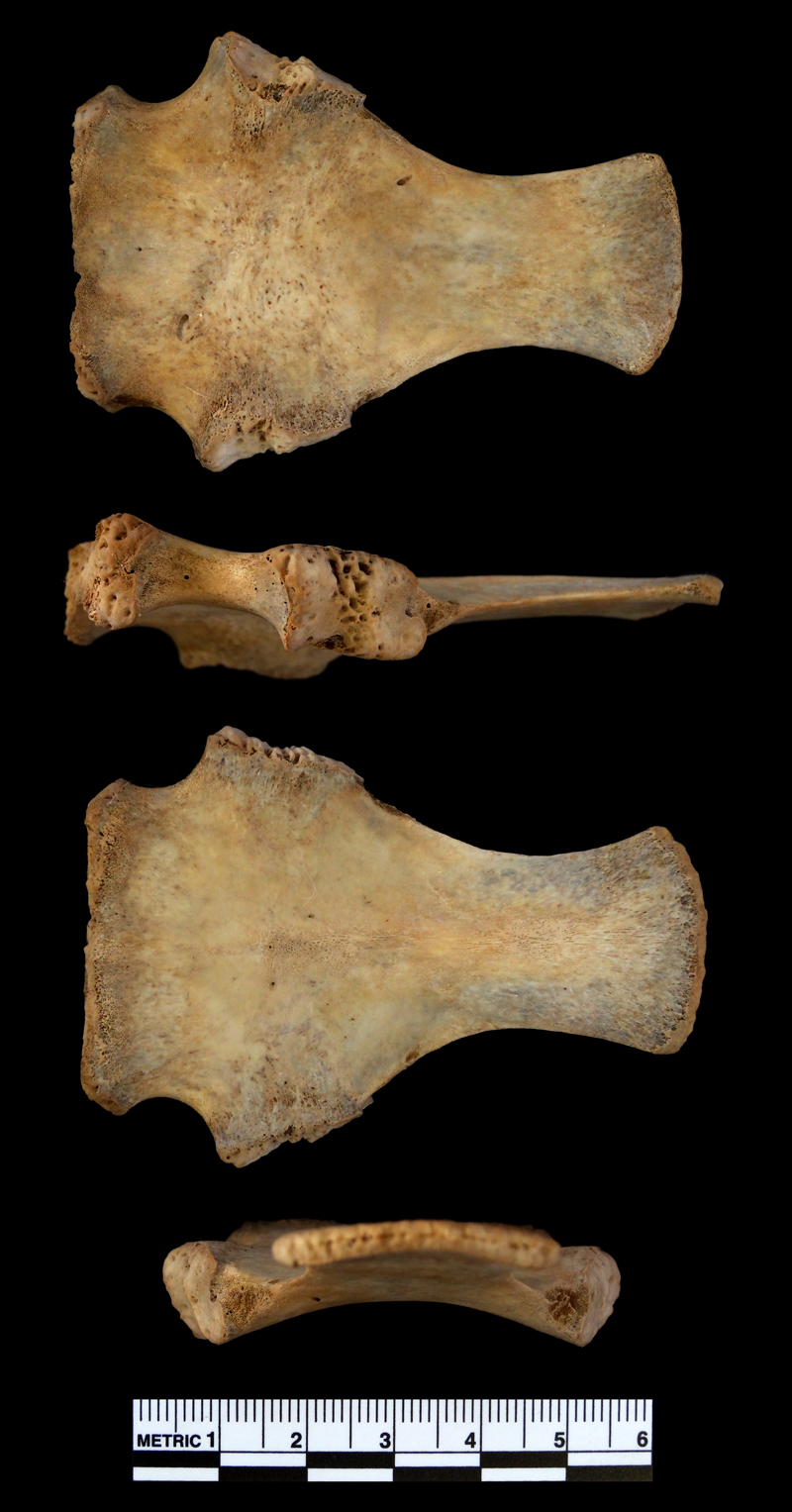
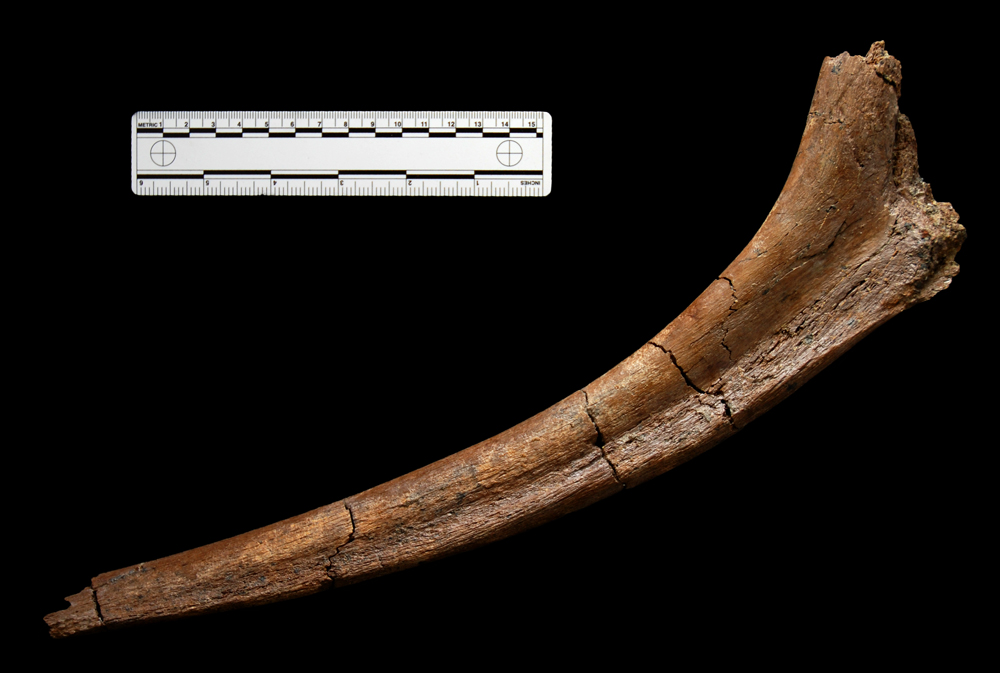
Last week I gave you this interestingly shaped piece of bone to identify:

mystery213

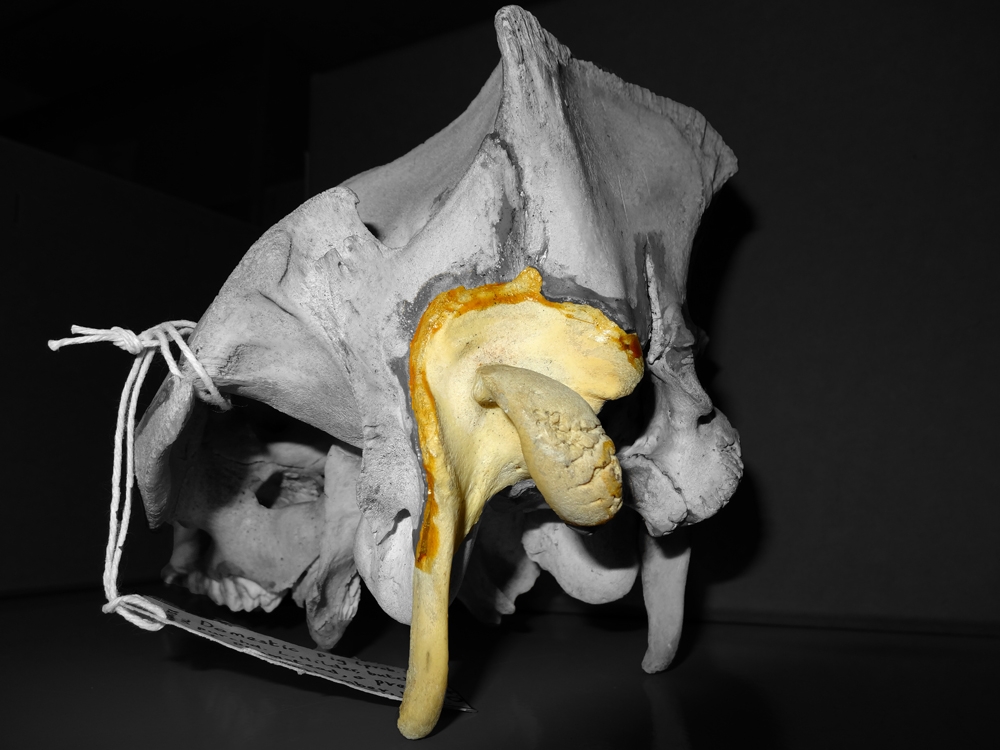
Jake, Elisa, henstridgesj, Hew Morrison, Robin Birrrdegg, Daniel Jones and Daniel Calleri all made a correct identification of this being part of a sternum, a sternebrae or more specifically a manubrium from a fairly large (yet possibly juvenile) ungulate. This was all correct and the final piece of the puzzle is the species, which is actually a smaller Deer than most people were expecting. It’s from an immature male Fallow Deer Dama dama (Linnaeus, 1758) collected from Knowle Park in Kent.

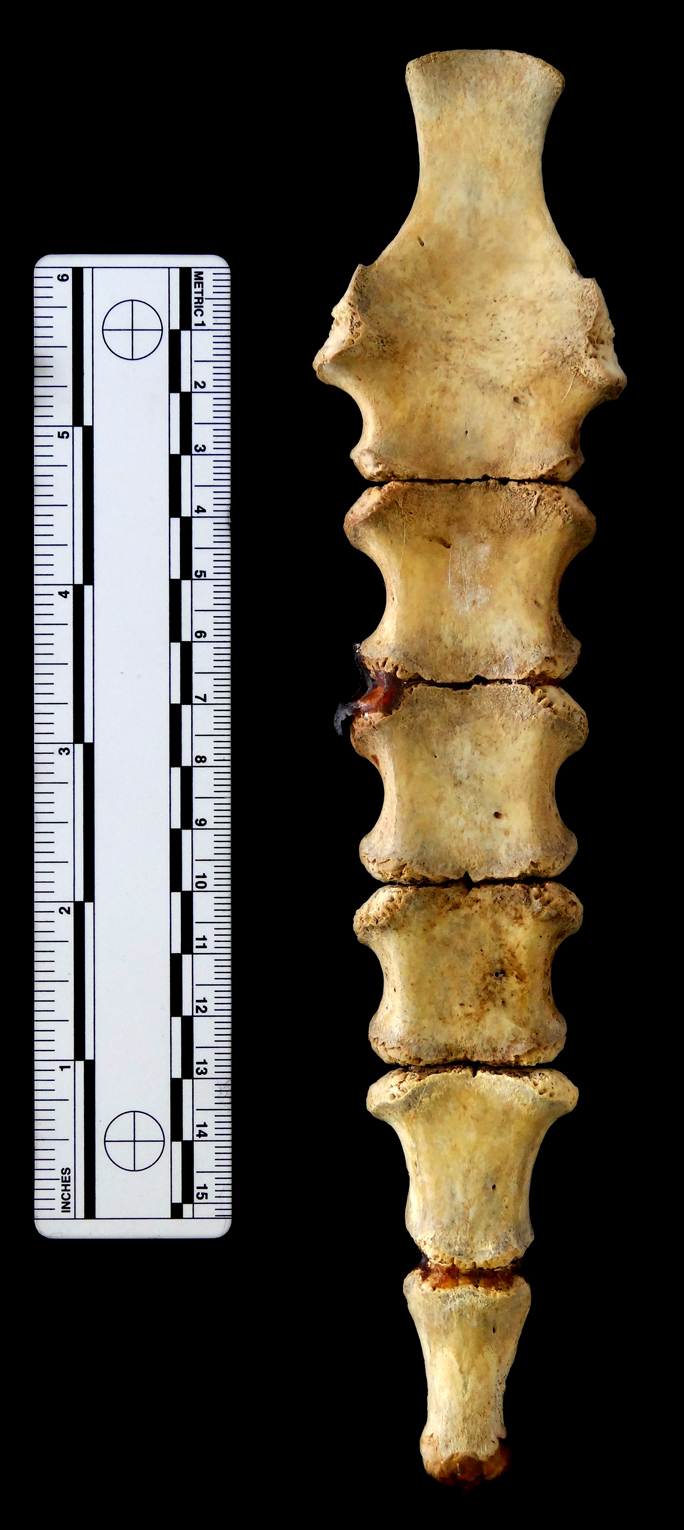
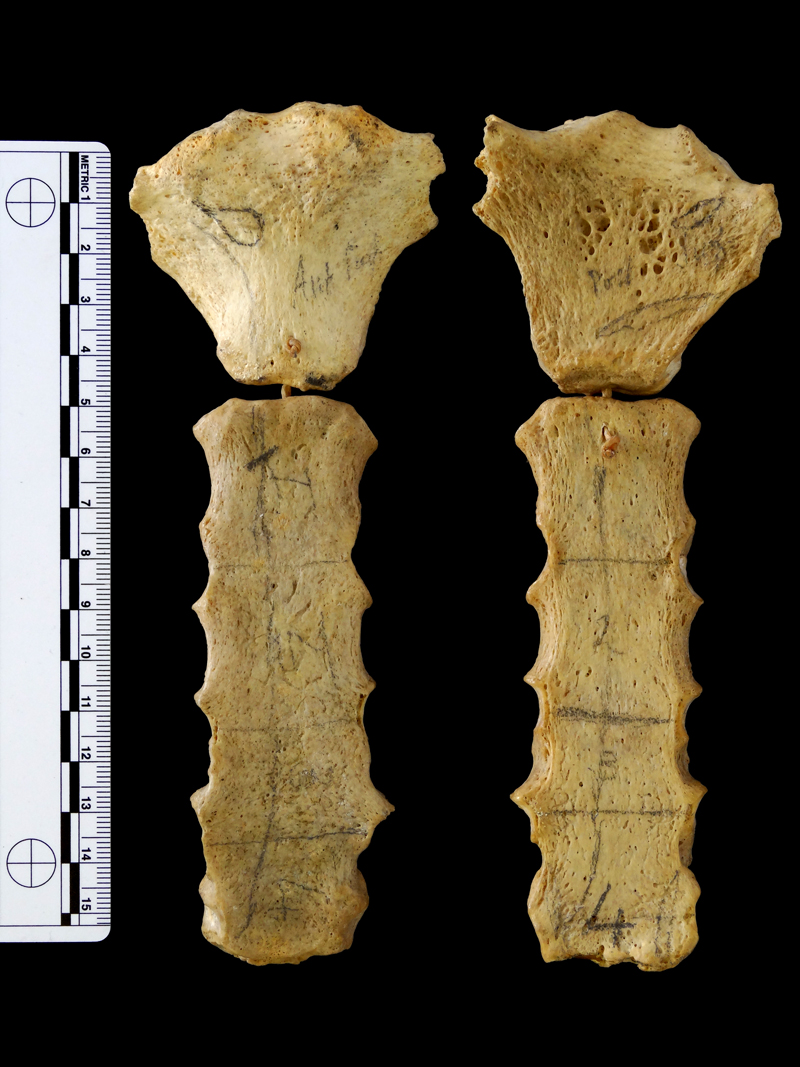
Here’s what it looks like with the rest of the sternebrae (which are the individual elements of bone that make up the sternum, like vertebrae make up the spine) that I could find for the specimen:

Sternum of immature male Fallow Deer Dama dama

Sternum of immature male Fallow Deer Dama dama

So it was indeed the manubrium – the top sternebra which in humans articulates with the top ribs and clavicles, but which here would only articulate with the top ribs, because ungulates don’t have clavicles (as I’ve discussed before). Here’s a human sternum for comparison:

Human sternum

Human sternum

So well done to everyone – I hope you enjoyed the challenge!


Geekwars?

After a weekend of discussion about the hashtag #bonegeeks for a crowd-sourced, social media based resource for images of bones, I have come to the conclusion that you can’t please all of the people all of the time.

The nub of the discussion centres on the word ‘geek’, which is a term that some people dislike and don’t identify with. This is fair enough – how one identifies with and adopts labels for themselves is a personal thing, a point that Alice Roberts made earlier in the year.

Language evolves and so terms take on new meanings to reflect common usage. To my mind this means that the term ‘geek’ has taken on a new and (to my mind) positive meaning as “someone who is interested in a subject (usually intellectual or complex) for its own sake“, so I am happy with that description for myself – but I can understand that others feel differently.

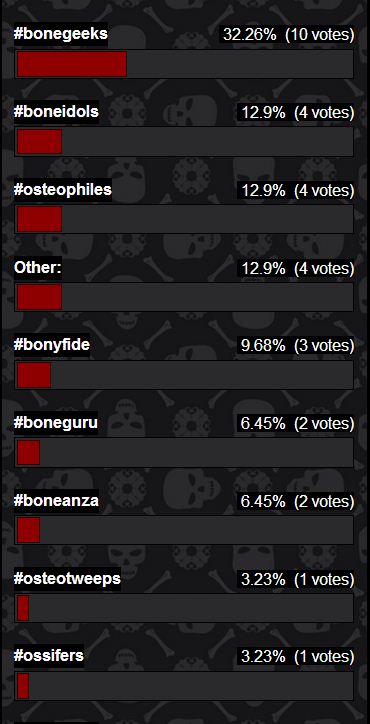
In order to try to come up with a better hastag for a bony resource I made a poll that included a range of suggestions, the most popular of which can be seen below:

poll

Now obviously #bonegeeks comes out on top – presumably due to input from other people who self-identify as geeks, but there are enough people voting for alternatives to raise a warning flag that several people may feel actively excluded by use of term ‘geek’. In light of this I am unwilling to stick with #bonegeeks, but the general lack of consensus on alternative names leads me to reject the other options.

Where to go from here? The obvious answer is to go back to what we are trying to achieve and to think of a hashtag that is descriptive of the outcome rather than the contributors, so I suggest we use #bonepics so that both #bonegeeks and every other brand of osteology enthusiast who doesn’t consider themselves a geek can get on with making something rather awesome…

#bonegeeks

There are some great resources online for finding images of comparative material for skulls, but the postcranial skeleton tends to be quite badly represented online even for common species. I’d love to change that, but it’s a big challenge for one person.

Paramastoid process of Pig (Sus scrofa)

Paramastoid process of Pig (Sus scrofa)

That’s why I’d like to set up #bonegeeks on Twitter (and maybe on other social media as well). The way I see it, people who have access to skeletal material could easily take snaps of bits of postcrania from known species (preferably with something for scale) using their phone and share the image to Twitter, Tumblr or Facebook with the name of the species and the bone (and perhaps where the specimen is held).

With the #bonegeeks tag it should be easy to collate images and hopefully start building up a comparative collection of images to make identifications easier.

It could start with a bone of the week to get the seldom depicted bones better represented and I’m sure #bonegeeks would be willing to respond to requests if there were particular bones that someone wanted to see.

I wonder if this could work… shall we give it a go and find out? Please add your thoughts on this idea in the comments section below or on Twitter using the #bonegeeks hashtag.

Oh and here’s how the idea got started: [View the story “#bonegeeks” on Storify]

Friday mystery object #212

This Friday I have an odd looking object from the Horniman’s collection that had been misidentified . Do you have any idea what it might be?

mystery212

I know that Jake will work out  what it is straight away, as he’s blogged about this type of bone before, nut you can put your suggestions in the comments section below and I’ll do my best to reply. Good luck!

Friday mystery object #211 answer

Last week I gave you this very unusual object to identify:

mystery211a

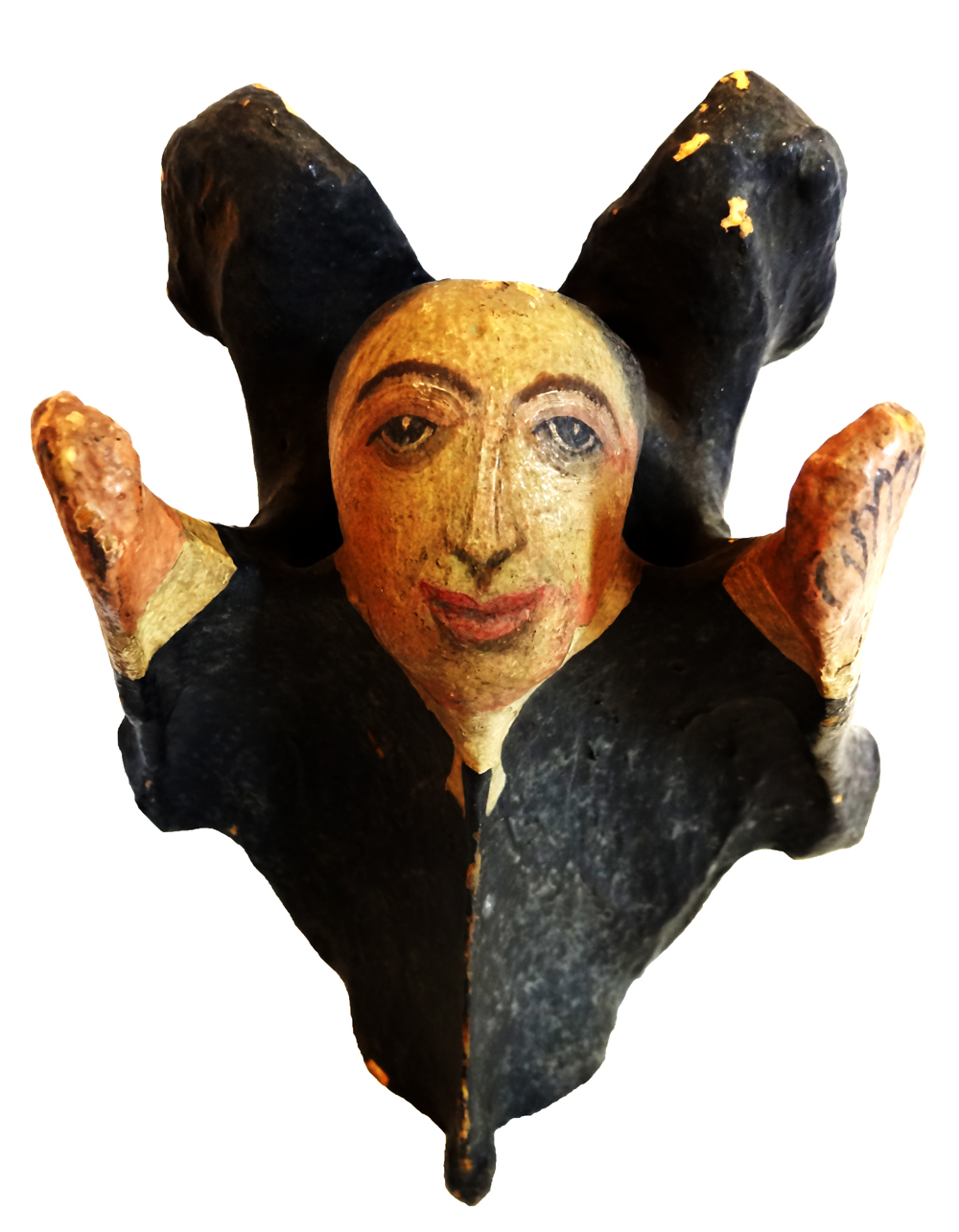
Plenty of you recognised this as a vicar of some sort, painted on the cervical vertebra (or neck bone) of a large mammal. There were some great ideas from neanth, Lewis Thompson, henstridgesj, Ze-Jeff, Jake, ermineofthenorth, Carlos, Daniel Jones, andy J, Natasha and Daniela.

In particular, Daniel Jones made some very interesting observations about which vertebra from which animal, while Tony Morgan managed to identify the preaching subject.

It seems that this object is a cervical vertebrae from a Heavy Horse (by which I mean something like a Shire-horse, not just a greedy nag). Looking at the relative proportions and the angles of the processes I think it’s probably the 4th cervical vertebra.

Meanwhile, the subject of the piece appears to be John Wesley, co-founder of the Methodist movement in the 18th Century. Apparently this sort of British folk depiction of John Wesley (and his brother Charles) was quite common in the late 18th and early-mid 19th Centuries, and there are several examples online (1, 2, 3).

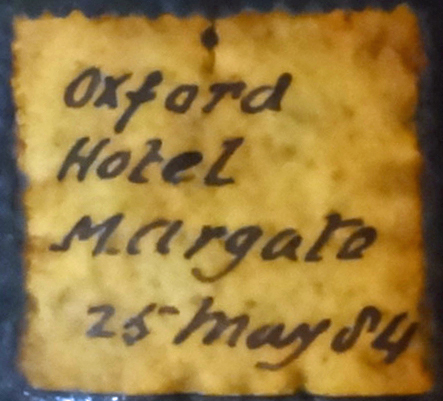
Finally there is a bit of a mystery attached in the form of  a label:
mystery211c

The date is written without the century, which is  a problem in collections that can be well over 100 years old. This could be from 1984 (unlikely), 1884 (the year Horniman started showing his collection, or 1784 (one of years in which John Wesley was active).

The handwriting looks familiar to me, so I’m going to go for 1884 and assume that this is a label that was added when the object was collected by Horniman, rather than it being a label added by the person who painted the vertebra – after all, who adds labels like this to their handiwork?

I hope this provides a good reason for why you should always write the year in full if you work in a museum.

Friday mystery object #211

The mystery object has been a bit boring recently, mainly because I’ve been tied up with other projects (like the After Life exhibition I’ve been curating with the excellent fine art photographer Sean Dooley) and haven’t been in the stores much. So this Friday I thought I’d give you a bit of a fun object that my brilliant colleagues at the Horniman (check out their Tumblr) came across when reviewing the Anthropology collections:

mystery211a

Any idea what this weird piece of art (a Vicar, or perhaps Nicholas Cage?) has been painted on to? I’ve added a few more images below to help you work it out.

As usual you can put your suggestions in the comments section below – I can’t wait to hear what you think!

mystery211b

Friday mystery object #210 answer

Last week I gave you this mystery object to have a go at identifying:

mystery210

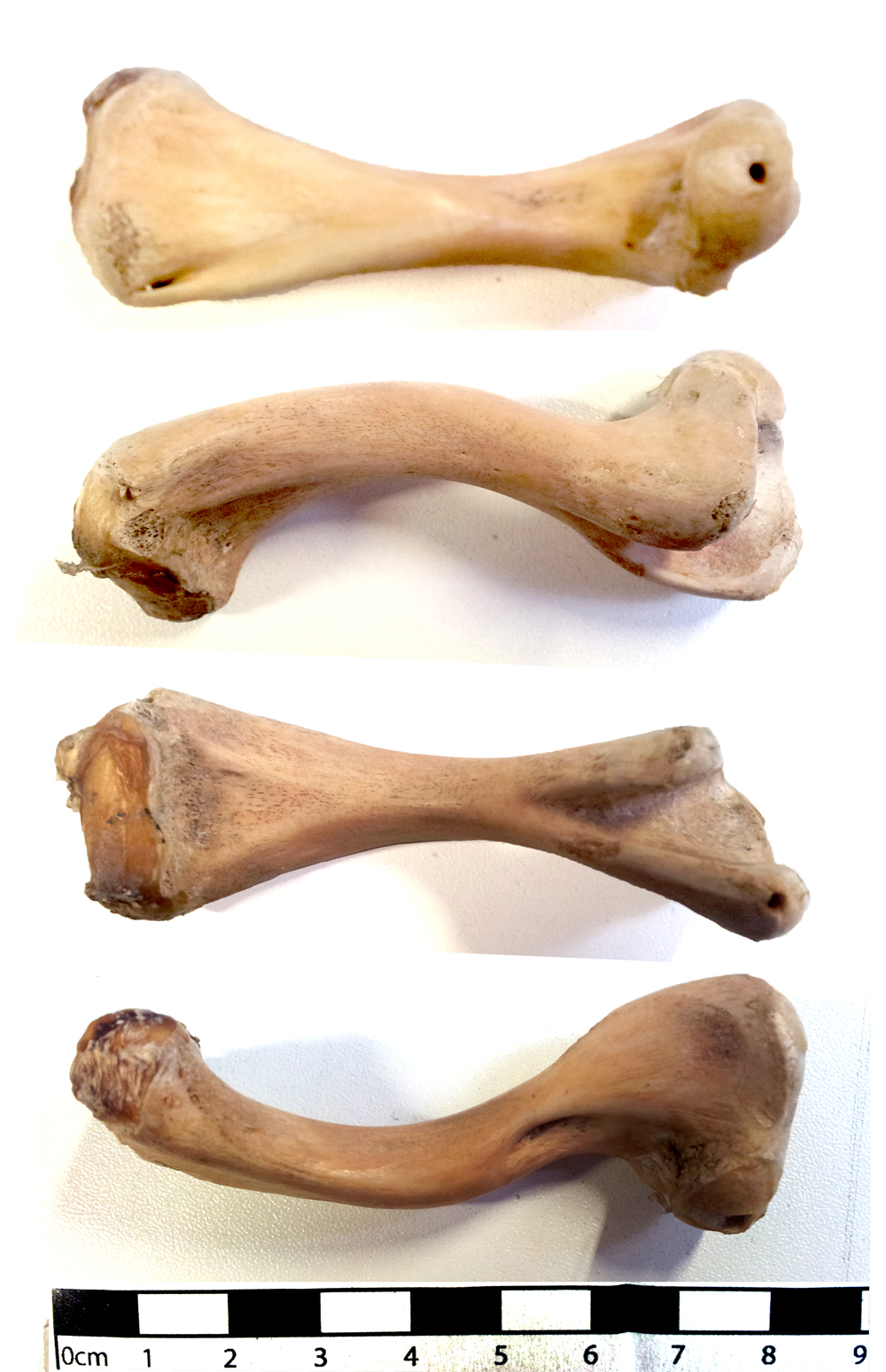
Jake was in like a flash, correctly identifying that the bone was a humerus – not an easy thing to spot considering the very strong curve and the deep groove at the head end. Jake also noticed that the humerus was adapted for something unusual, hence the weird shape.

There was a suggestion of pig by henstridgesj, which would have fitted the curve of the bone, but it was too small and the deep groove is at the wrong end.

Newcomer to the mystery object, Rute Branco, suggested that the object was the humerus of a (young) tortoise – a suggestion that I agree with (as does Daniella).

Tortoises have weird legs that need to carry quite a lot of weight, thanks to their bony carapace. They also need to get their legs inside their shell, so they have to be shaped for efficient retraction.

One of the differences between a terrestrial tortoise and an aquatic turtle humerus is the shape of the groove in the head, with terrestrial tortoises having a very steep and deep groove while swimming turtles have a slightly shallower and wider groove to allow a wider range of movement.

I can’t find enough comparative material to work out a species, or even genus of tortoise for this specimen, but I will keep my eyes peeled! Thanks for everyone’s input.

Friday mystery object #210

This week I have a mystery bone for you to have a go at identifying. Nothing is known about it (although I have some ideas), so all suggestions welcome. Any idea what this is and what it might be from? (Apologies for the poor image quality)

mystery210

As usual you can put your answers below and I’ll try my best to respond. Enjoy!

Friday mystery object #209 answer(ish)

It seems like an age ago that I gave you this mystery object:

mystery209

There were fantastic comments from everyone, but I’ve been bad about responding and writing an answer because I’ve been pretty swamped recently. Also, there are several things that confuse me about the specimen and I’ve not had the chance to take a really good look at comparative material.

The function of the object was correctly identified by Daniela, Paleotool and Jeanie – it is a bone whistle, in this case a fairly modern Navajo example. Our Keeper of Musical Instruments was keen to know if this was from an eagle and whether it might be covered by CITES.

At first I thought it might be the femur of one of the large American eagles, but it is far too long. If it was from any bird of prey it would be a Californian Condor based on the size but the tapering shape is wrong. I then considered the humerus – which is a better match for size, but the position of the groove for a tendon path on the underside is wrong. So it doesn’t seem to be from an eagle.

The slight curve and taper rule out a hollowed deer metapodial, which are very straight and uniform in width.

My best guess is that this may made from a section of the humerus of a species of swan – a guess partly informed by the opinion of the anatomical knowledge of Wouter van Gestel and the archaeological knowledge of Paleotool. The shape and few remaining anatomical features are about right, but there are other large birds that haven’t been ruled out.

Perhaps an unsatisfactory answer, but sometimes a good solid “I don’t know, but it’s reasonable to think it might be this” is the best answer you can get. Thanks for everyone’s input!

N.B. Here’s a side view: 20130912_125851

Friday mystery object #209

This week I thought I’d give you an object to identify that I was asked to look at by one of the other curators at the Horniman Museum:

mystery209

This object is pretty easy to identify in terms of function, but the trickier job is to work out what part of which animal has been used in its construction. Any ideas?

You can put your thoughts below and let’s see if you come to the same conclusions as me. Enjoy!

Friday mystery object #208 answer

Last Friday I gave you this mystery object to have a go at identifying:

mystery208

I wasn’t sure if it would be too easy but it turns out that no-one managed to identify it, so I guess not!

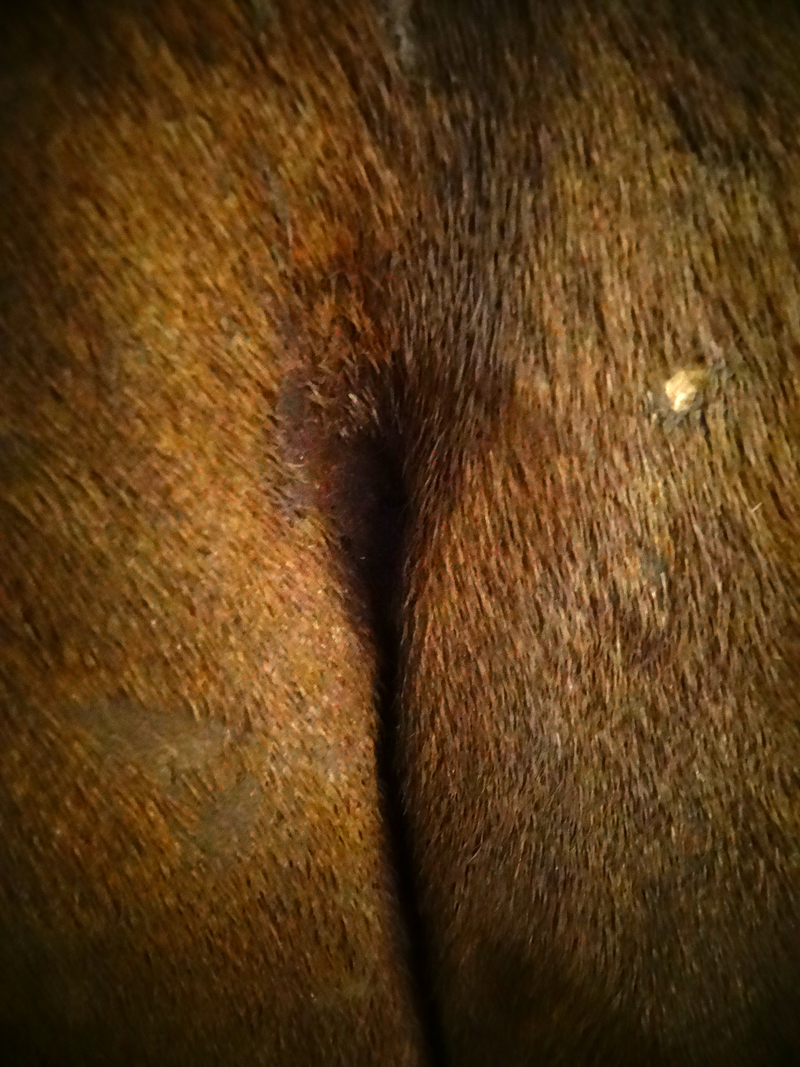
Lots of suggestions were made, from a bum (thanks Jake) or coco-de-mer to the join in a lip to the cleft between toes – but the closest suggestion came from newbie Daniela, who suggested an armpit.

The reason I thought you might find this easy is because it’s the armpit (or perhaps flipperpit is more accurate) of the Horniman’s infamous Walrus Odobenus rosmarus (Linnaeus, 1758). This fine, if portly, specimen will be back from his hols in Margate soon.

walrus

I expect the presence of the hair may have thrown people off the scent, as we don’t tend to think of Walruses as being hairy – but as we can see, they are. A bit.

Friday mystery object #208

Things are still very busy at the moment, but I managed to find this perplexing image in my camera, that I thought might make an interesting mystery object. Any idea what it is?

mystery208

You can put your comments, questions and suggestions below – but please keep them decent!

Friday mystery object #207 answer

A very late and brief answer to the last mystery object I’m afraid – hopefully I’ll get back on track soon, once everything has calmed down a bit!

I gave you this object to identify:

mystery207


It was a bit of a mean one, since these teeth are mostly broken with several missing. but there were some great answers.

Several of you recognised these as teeth from a juvenile Old World primate, so well done to henstridgesj, Jake and Jakob Ramlau. Jakob also alluded to dogs in his answer and I wonder if he managed to spot that the  primate was a Dog-faced Baboon Papio cynocephalus (Linnaeus, 1766) or Yellow Baboon as it’s also known.

mystery207_full

I’ll take some time to talk about deciduous teeth sometime soon, once I’m able to sit down and get back to blogging properly!


Friday mystery object #207

This week I have a difficult mystery object for you to have a go at identifying. It was found in a crate of stray teeth and bones that recently came to light and I’m afraid it’s not in the best condition. Any idea what this incomplete run of teeth may have come from?

mystery207

Click for a bigger image

As usual you can put your comments, questions and suggestions below and I’ll do my best to respond as quickly as possible. Good luck!

Friday mystery object #206 answer

Apologies for having such a belated answer to the belated mystery object from last week.

Things are really busy at the moment – I’m researching mermaids for a paper due to be submitted at the end of this month, curating an exhibition that’s due to open in September, double-checking the scientific accuracy in Jake’s book, doing talks, running PubSci, involved in recruitment for NatSCA, working on elements of the Horniman’s Bioblitz project and trying to write a grant application, on top of my more usual day-to-day work. That means I haven’t been able to spend the time on my blog that I would like. Hopefully everything will start getting back to normal in the next couple of weeks!

On to the answer – I’m afraid it will be brief… I asked what this bone was:

mystery206

Carlos recognised this as a rib and there were a variety of suggestions about what it might be from, ranging from a cetacean to a mammoth. Some good ideas, but Lena came closest with speculation about dinosaurs.

This is in fact the rib of a Triceratops Marsh 1889.

There is a lot that could be said about Triceratops and other horned dinosaurs, but since I’m pushed for time I will just leave you with a link to an article by Darren Naish who knows more about such things than me and this brilliant stop-motion video from the 1925 film of The Lost World, which is simply iconic:

Friday mystery object #206

A rather belated mystery object today – my excuse being that I forgot it’s Friday! Been too busy finishing my skeptic talk for the Nineworlds Geekfest this weekend.

Here is the object for you to have a go at identifying:

mystery206

As usual you can leave your comments, questions and suggestions below, but I apologise in advance that I probably won’t get a chance to reply until Sunday. Good luck!


Friday mystery object #205 answer

Last Friday I gave you these tiny bones to identify:

mystery205

Several suggestions were put forward with soph coming close with the suggestion of a broken furcula and Lena and henstridgesj correctly suggesting the clavicles (or collarbones) of a Cat Felis catus Linnaeus, 1758.

Cat clavicles, like the clavicles of a variety of other animals, are much reduced and are no longer connected to the scapulae (shoulder blades). This allows the scapulae to move much more freely during running, which can increase stride length and in the case of Cats it allows the animal to fit through holes big enough to get their heads through (assuming the Cat isn’t a bit too portly).

These sorts of vestigial structures are interesting from an evolutionary perspective, since they serve little or no direct function, but they still develop as a result of inheritance from ancestral forms that did use them.

In the case of Cats that form would have been around quite some time ago (probably 61.5 – 71.2 million years ago) since the closest related group to the Carnivora with a well-developed clavicle (that I can think of) would be the Chiroptera (bats), where it plays an important role in flight.

Since that divergence of the Chiroptera and the lineage giving rise to the Pangolins, Carnivora and Ungulata the clavicle has been pretty much completely lost, so it’s interesting that even a vestigial form occurs in Cats.

It’s funny to think how such small bones can raise questions that lead us through millions of years of evolution in search of answers, but that’s the nature of studying nature!

Friday mystery object #205

This Friday I have a mystery object inspired by something that might be making an appearance in Jake’s forthcoming book:

mystery205

Any idea what these little pieces of bone might be?

As usual, you can put your comments, questions and suggestions below and I’ll do my best to reply. Enjoy!

Friday mystery object #204 answer

Last Friday I gave you this unusual tooth to identify:

mystery204

It had me a bit stumped, as I couldn’t think of many things big enough for a tooth this size and I could think of even fewer with a tooth this shape.

My first thought was one of the smaller toothed whales, since this would be in the right size range and the open root is similar to what you see in a Sperm Whale:

Tooth of a Sperm Whale in a Hand by Lord Mountbatten

But the low and wide shape was all wrong for most of the whale teeth I can think of, except perhaps for the rather odd tusks found in the mandibles of some species of beaked whale.

In fact, I was thinking that it might be the tusk of a juvenile or female Gray’s Beaked Whale, given the shape of the male’s tusks.

However, Laura McCoy made a very useful observation (initially via ermineofthenorth) about the upper incisors (or premaxillary incisors) of the  Continue reading