Friday mystery object #71 answer

Part the first:

On Thursday I accidentally posted the Friday mystery object for a few moments and in that tiny window of opportunity SmallCasserole managed to correctly identify this organism:

As soon as it was posted properly this object also proved no challenge to several of the other regulars, with David Hone, CopilasDenis, David Craven and Dave Godfrey all spotting that it was a graptolite. Moreover, David Craven managed to correctly identify the species as  Continue reading

Friday mystery object #71

[N.B. I posted this early by accident and SmallCasserole got it immediately, so I feel that there should be an additional object this week to make amends for my mistake…]

This Friday I’ve decided to pull out something geological, since I have recently established links with the London Geodiversity Partnership and rocks are on my mind. Not any old rocks mind – this one has a fossil embedded in it:

Any idea what this fossil is?

Now for your bonus mystery object:

As usual you can put your suggestions, observations and questions in the comments section below and I will do my best to provide useful hints for both of them. Good luck!

Friday mystery object #70 answer

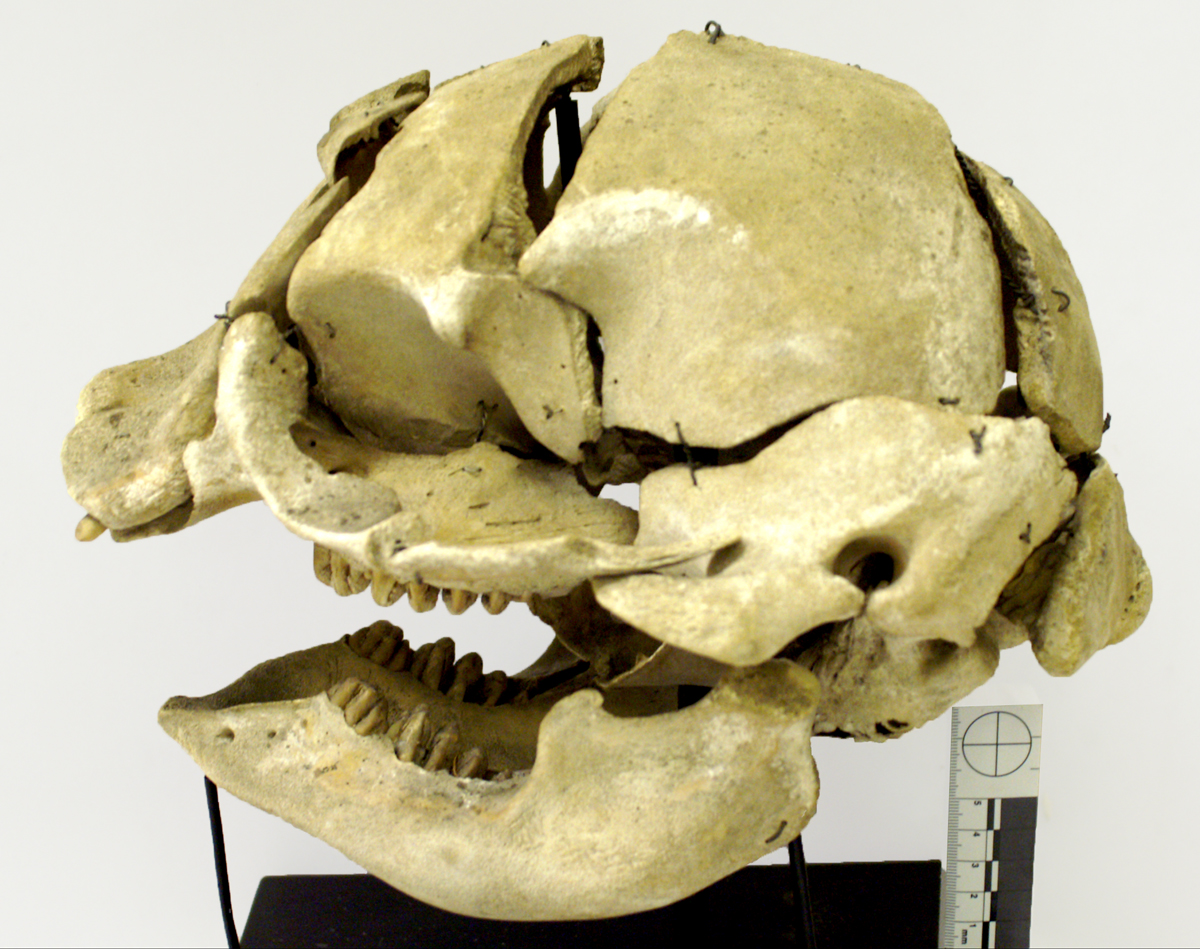
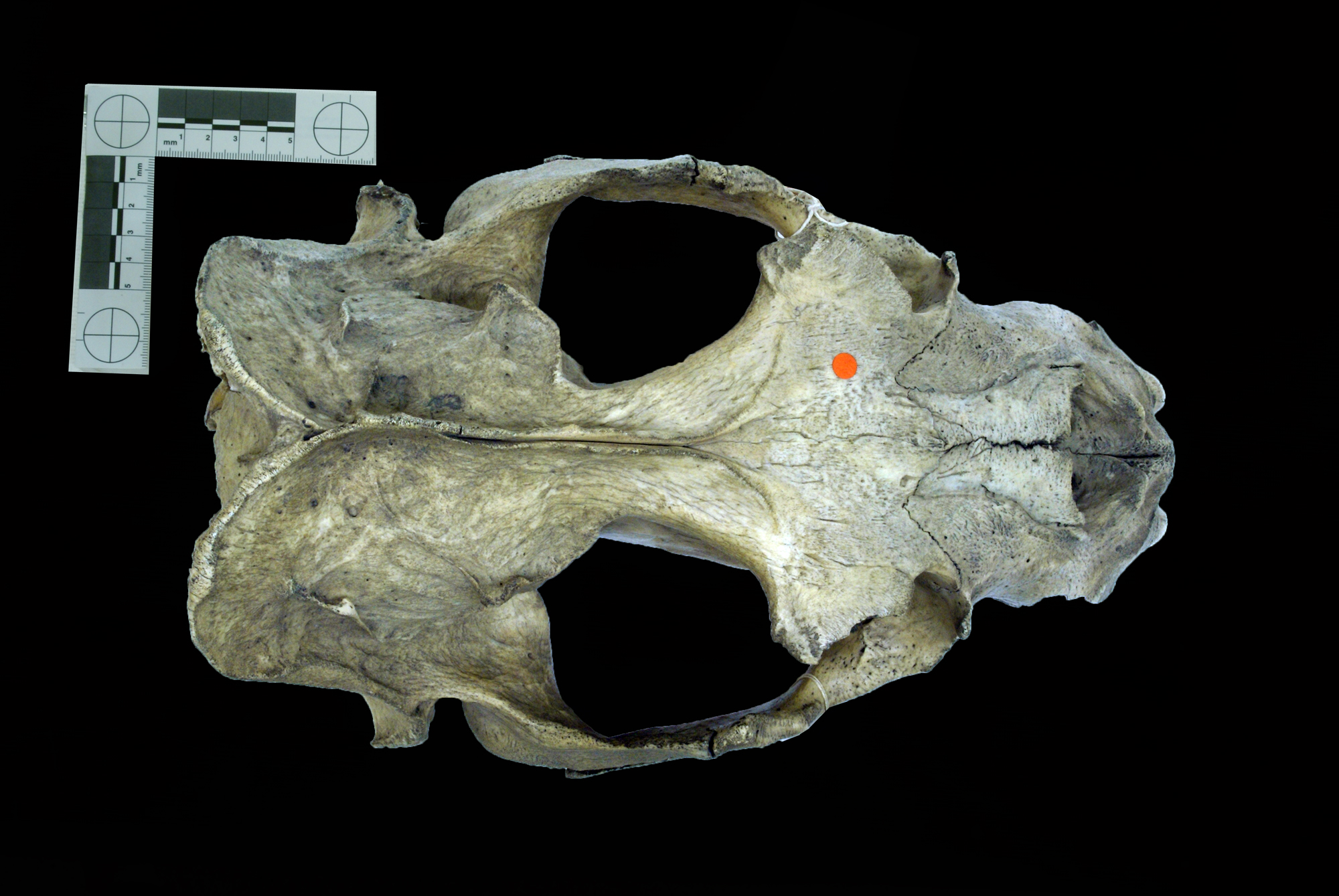
On Friday I gave you this skull to identify:

I deliberately didn’t provide a scale bar, partly because I wanted to demonstrate how important it can be to have a sense of scale when identifying a specimen and partly to make the specimen a bit more challenging to identify.

Nonetheless, most of you got a correct identification, with some very good subtle hints being used to communicate that fact. So well done to Jack Ashby, David Craven, CopilasDenis, Dave Godfrey and Manabu Sakomoto, who all hinted or explicitly stated that this was the skull of a  Continue reading

Friday mystery object #70

This Friday I am not going to provide any scale bar with the object. This is something that I have to deal with quite often, when members of the public email a photo of something for identification. Sometimes it’s not a big problem, particularly if the whole organism is in view and it’s has distinctive morphology (shape), but in some instances (particularly with bones) it can make identification very tricky indeed. Let’s see how you do:

Any idea what this might be?

Put your questions, comments and suggestions below and I’ll do my best to provide answers (except about size). Good luck!

The Mass Libel Reform Blog – Fight for Free Speech!

I meant to post this a few days ago, but it totally slipped my mind – which is a shame, since I think it’s very important:

This week is the first anniversary of the report Free Speech is Not for Sale, which highlighted the oppressive nature of English libel law. In short, the law is extremely hostile to writers, while being unreasonably friendly towards powerful corporations and individuals who want to silence critics.

The English libel law is particularly dangerous for bloggers, who are generally not backed by publishers, and who can end up being sued in London regardless of where the blog was posted. The internet allows bloggers to reach a global audience, but it also allows the High Court in London to have a global reach.

You can read more about the peculiar and grossly unfair nature of English libel law at the website of the Libel Reform Campaign. You will see that the campaign is not calling for the removal of libel law, but for a libel law that is fair and which would allow writers a reasonable opportunity to express their opinion and then defend it.

The good news is that the British Government has made a commitment to draft a bill that will reform libel, but it is essential that bloggers and their readers send a strong signal to politicians so that they follow through on this promise. You can do this by joining me and over 50,000 others who have signed the libel reform petition at
http://www.libelreform.org/sign

Remember, you can sign the petition whatever your nationality and wherever you live. Indeed, signatories from overseas remind British politicians that the English libel law is out of step with the rest of the free world.

If you have already signed the petition, then please encourage friends, family and colleagues to sign up. Moreover, if you have your own blog, you can join hundreds of other bloggers by posting this blog on your own site. There is a real chance that bloggers could help change the most censorious libel law in the democratic world.

We must speak out to defend free speech. Please sign the petition for libel reform at
http://www.libelreform.org/sign

Science relies on dissenting voices as a quality control mechanism and evidence should be relied on to defend against criticism rather than lawsuits. If you haven’t signed the petition, please do – help to make England’s libel laws fairer and more reasonable.

Friday mystery object #69 answer

On Friday I gave you an odd-looking skull to identify:

The fact it’s so odd-looking made it a pretty easy one to identify for most of you, with Cromercrox being the first to get the general identification, citing the very distinctive teeth as the characteristic that gave it away and Dave Godfrey getting the identification to species level.

Continue reading

Friday mystery object #69

Here’s an object I’ve been thinking about using for ages, but I’d forgotten I had a photo of it – even though it’s one of my favourite oddities from the collection:

Any idea what this weird skull might belong to?

As usual, questions, comments and suggestions below and I’ll do my best to provide answers and (not too obvious) clues. Good luck!

Friday mystery object #68 answer

On Friday I gave you this object to identify:

It’s one of my own specimens, found in 1997 and prepared using the simple method of suspending the body from a tree in a bucket with small holes drilled in the bottom to allow rainwater to drain. The specimen could have been bleached with a mild hydrogen peroxide solution, but the original intention was for it to provide an indication of the bone damage that may suggest insect activity, so I didn’t want to risk causing any additional chemical damage.

Everyone was on the right track with their suggestions – the hooked bill and large orbits making it clear that this was a predatory bird, with most people correctly opting for some kind of owl. However, Jake managed to get the species right in no time by using specimens from his own collection to inform his identification of  Continue reading

Friday mystery object #68

I’ve not been in our collections building for a couple of weeks now, so I am running short of specimens to use for the mystery object. However, there was one at my disposal, that I collected myself well over a decade ago – any idea what this is:

As usual, you can put your questions, comments and suggestions below and I’ll do my best to reply. Good luck!

Friday mystery object #67 answer

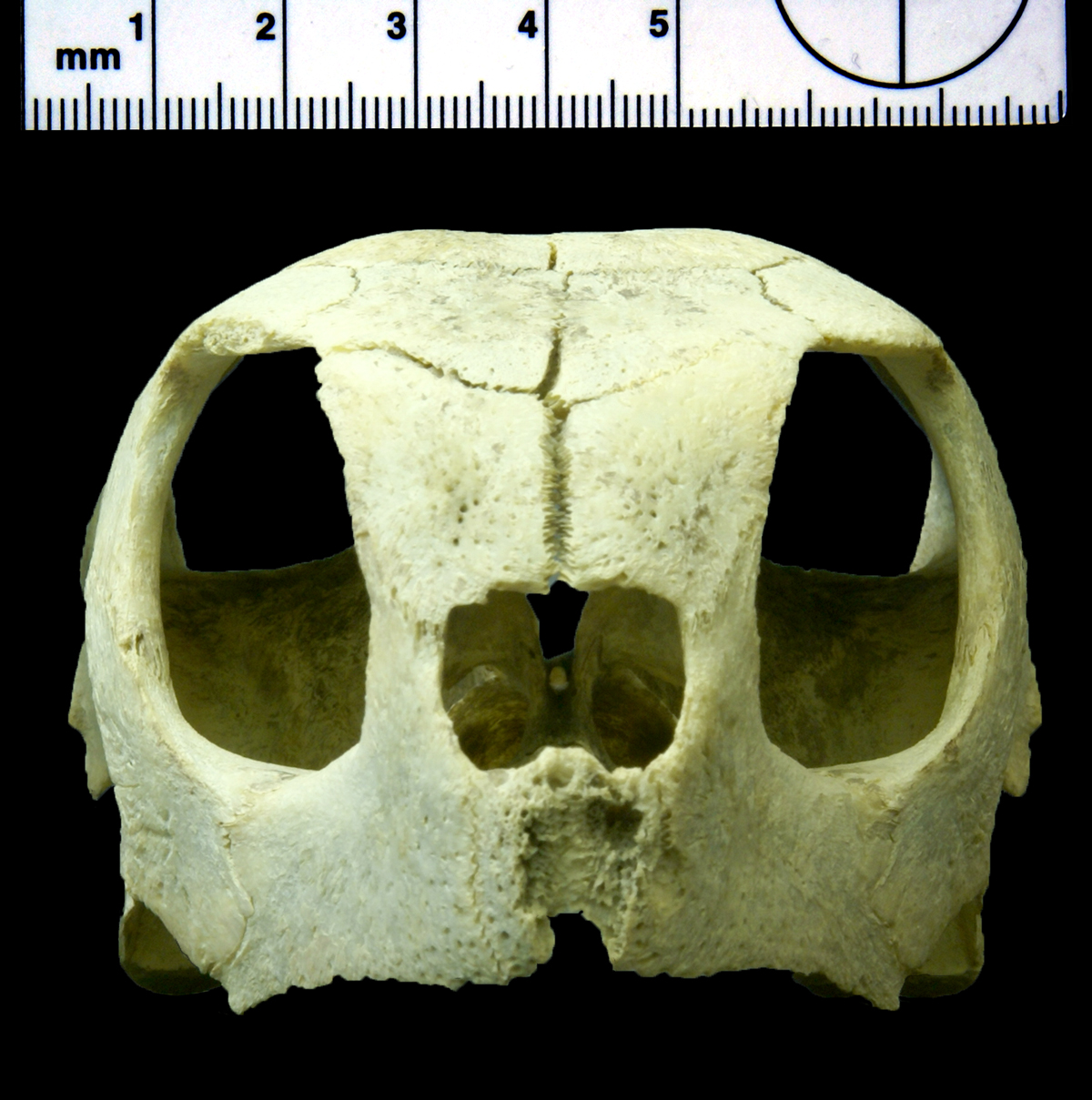
On Friday I gave you this object to identify:

As I suspected, you all worked out that it is the skull of a turtle, so well done all and particularly Jake, who got there first.

Turtle skulls are quite characteristic, in that they have a bill with no teeth and they have no openings apart from the obvious ones like the eye sockets and nose. Most other tetrapods have several openings in their skulls, something that is diagnostic for, and sometime provides the name for, major groups like the main ‘reptile’ group the Diapsida. This name that means two arches, which is a reference to two additional openings present in the skulls of this lineage (which includes the lizards, snakes, crocodiles and dinosaurs – including the birds). Turtles and tortoises are members of the Anapsida, which means without arches.

The characteristics of this skull are those of an Anapsid and the streamlined shape and quite large size (despite it being a youngish adult, as indicated by the unfused sutures) suggests that it is a sea-turtle. There are only 7 species of sea-turtle and the comments provide an example of features that can be used to distinguish this as a  Continue reading

Friday mystery object #67

Here’s a specimen without any identification from the Horniman’s collections. I thought I knew what it was straight-away, but then had to spend ages trying to confirm the identification. I just hope you all come to the same conclusion as I did!

As usual, put your questions, observations and suggestions in the comments section below and I’ll do my best to reply during the day. Good luck!

Friday mystery object #66 answer

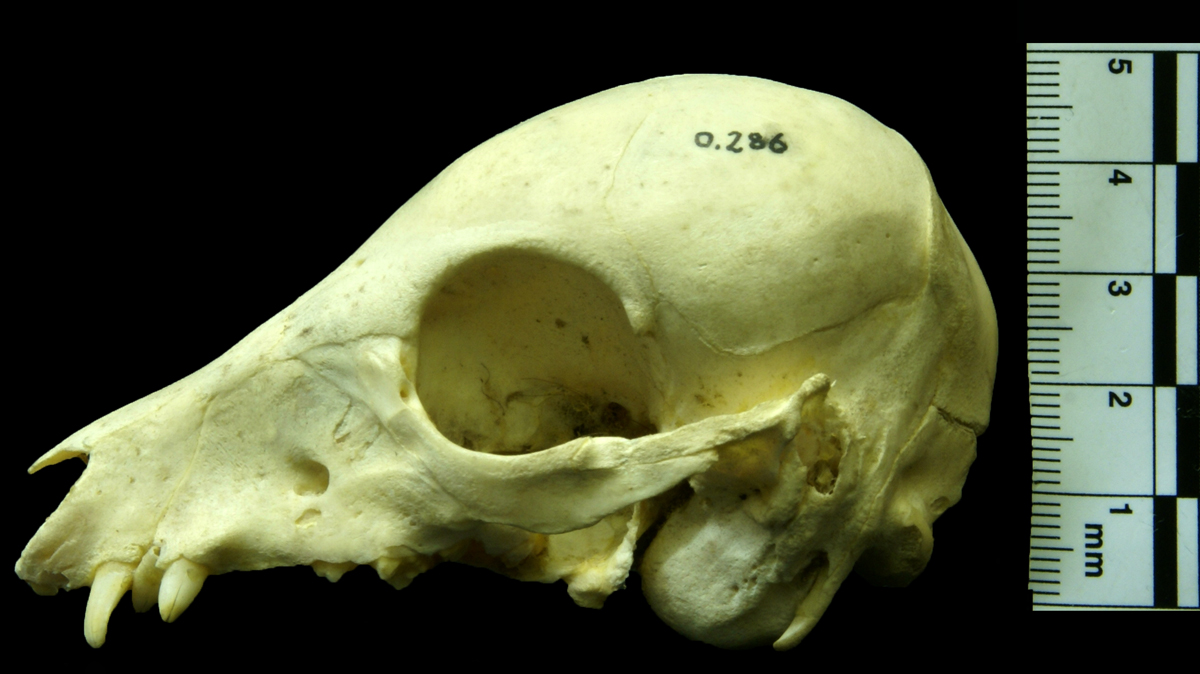
On Friday I gave you this mystery object:

I thought it would be too easy, but I hadn’t factored in that it is the skull of a juvenile, which makes it much harder to identify from just a photograph. I did drop a few hints about what it might be on Twitter when I said it was ‘easy as pie’ and I had a hard time restraining myself from making a give-away comment about it flying when Jake asked if it was a big bat.

Manabu Sakamoto spotted that it was a juvenile and that the canine-like teeth were quite distinctive of a particular group. Neil managed to convey that he knew the answer with a beautifully subtle comment:

After rooting around a bit I think that I have sussed out the answer.

The answer being  Continue reading

Friday mystery object #66

This Friday I have a lot on, so I’m giving you an easy one that the biology and bony types should be able to drop hints about for the less osteocentric amongst you:

I’m sure you’ll all get this in no time, but in case you don’t I’ll do my best to respond to any questions, observations or suggestions in the comments section below. Have fun!

Friday mystery object #65 answer

On Friday I gave you this bit of geology to identify:

I used this because I had it to hand on Thursday afternoon after doing a behind the scenes tour of the Horniman’s store for some of the attendees of TAM London. I also used it so I would have the chance to tell the story behind this innocuous looking, if pretty, bit of stone.

Before I get started on the story I must congratulate Steven D. Garber, PhD on spotting that one of the main components of this is serpentine (the other being calcite) and I have to hand a big dose of kudos to Dave Godfrey who got the answer spot-on when he suggested that this was a sample of  Continue reading

Friday mystery object #65

This week we held a behind the scenes tour for some of the attendees of TAM London, for which I cobbled together A History of the World in a handful of objects. Perhaps I should actually call it a History of the Earth, since my focus was on notable objects that represent key stages in the development of our understanding of our planet and the evolution of life upon it. One of the objects included was this:

Does anyone know what it might be?

As usual, put your questions, observations and questions in the comments section below and I’ll do my best to provide guidance during the day (without giving it away of course). Good luck!

Friday mystery object #64 answer

On Friday I gave you this anthropological object to identify (courtesy of the helpful staff and volunteers at the Horniman’s Study Collections Centre):

I asked you where it was from, what it was for and what it was made from. The first two questions were correctly answered quite quickly – Manabu Sakamoto correctly identified the seal on the side of the vessel as Chinese and Wildaker worked out that it was for holding tea (in leaf form I hasten to add). So, it’s a Chinese tea-caddy.

However, what it was made from was a much trickier issue. Suggestions ranged from Ostrich leather (by Prancing Papio) to knitted silk (by Wildaker). Zigg recognised that it was compressed into shape and that it was plant based, and ObenedO suggested it was made from rice or mushrooms, but nobody (except Melissa, my lovely wife) correctly recognised it as being made from  Continue reading

Friday mystery object #64

I promised an anthropological mystery object this week, so I begged the @MuseumGeekGirls to keep their eyes peeled for something interesting and here it is:

Many thanks to Laura, Pari, Helen and Nick for finding this and bringing it to my attention!

Simple questions – where’s it from, what’s it for and what’s it made of? It stumped me.

As usual you can put your suggestions, observations and questions in the comments section below and I’ll do my best to answer. Good luck!

Friday mystery object #63 answer

On Friday I gave you this weird-looking object to identify:

Steven D. Garber, PhD jumped straight in with the correct identification of what it is – the sternum keel and trachea of a bird. The more tricky part was working out what bird it came from. Dave Godfrey suggested that it was a large bird, possibly a gull, while Zinjanthropus suggested that it might have belonged to a Trumpeter Swan, with support from Carlos Grau (who suggested it could also have been from a pelican). Jonpaulkaiser proposed that it came from a penguin,  a suggestion seconded by Dave Godfrey on the basis of the shape.

So the identification became divided between the swan camp and the penguin camp. Jake joined the swan camp (bringing Zigg with him) and provided a link to a great piece by Darren Naish on his Tetrapod Zoology blog, which focussed on the bizarre tracheae (and sterna) of some birds – including swans, which related to the observation by Zinjanthropus:

Is it a trumpeter swan? They have large, convoluted trachea that goes through the sternal keel so that it can act as a resonating chamber.

It turns out that the swan  camp had the right of it, this sternum and trachea did in fact belong to a  Continue reading

Friday mystery object #63

On Monday I said I may try something cultural, but I’m afraid I lied. This bizarre looking thing caught my eye instead:

Any idea what this is and what it’s from?

As usual, suggestions, observations and questions in the comments section below and I will do my best to provide answers and guidance throughout the day. Good luck!

Friday mystery object #62 answer

On Friday I gave you this specimen and left you to work out what it was by yourselves (for which I humbly apologise):

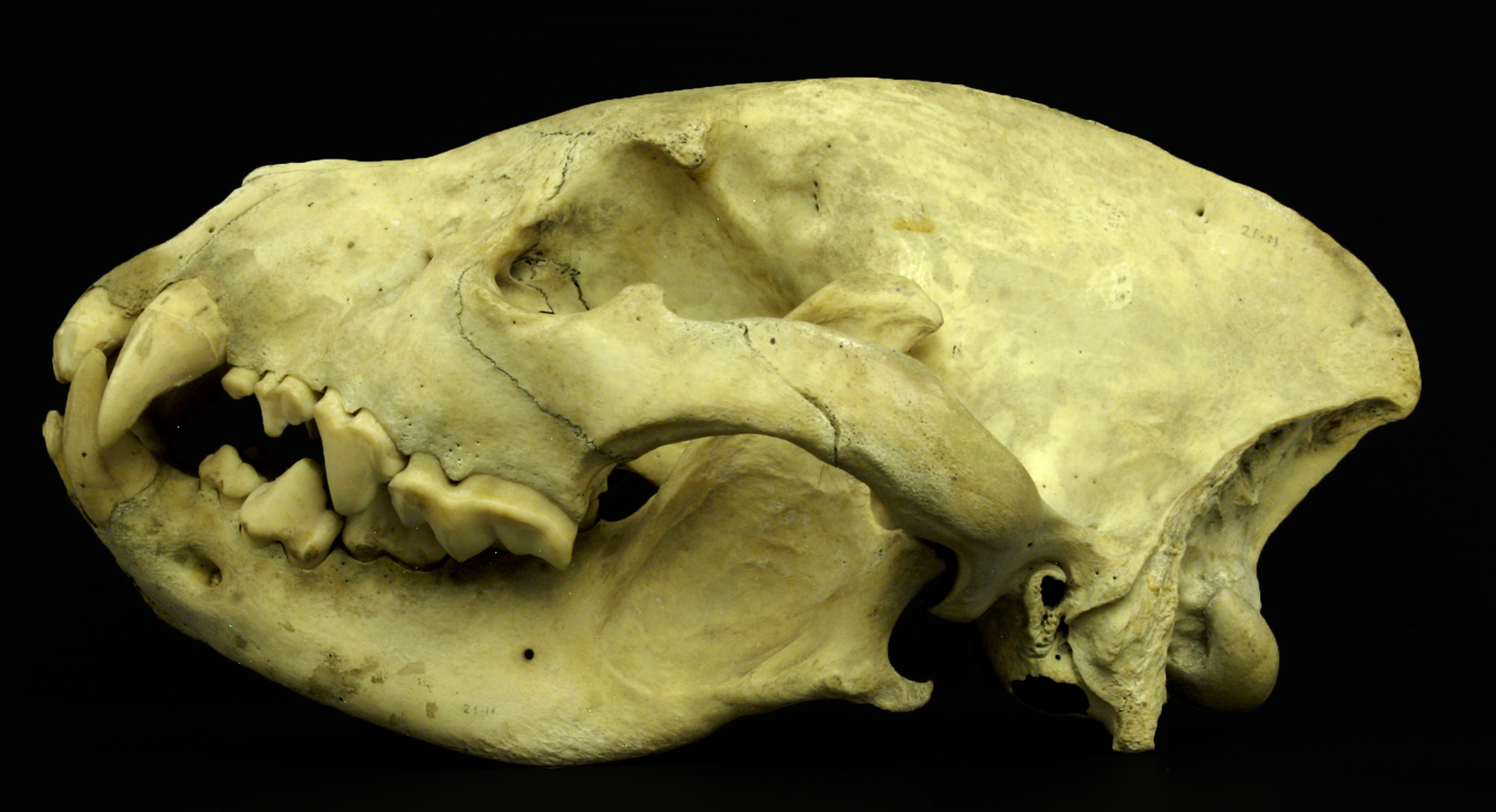
There were some great observations from the outset – Jake immediately spotted that it had strong jaws and looks like a carnivore and Manabu Sakamoto went on to explain the biomechanical reason for the strong jaws and recognised that it’s a marine mammal. Jake came close when he said that it’s something similar to a Leopard Seal and jonpaulkaiser came even closer with the suggestion of California Sea Lion. Neil subtly hinted that it might be a Stellar’s Sea Lion, but Zigg managed to work out that it is in fact the skull of a  Continue reading