Friday mystery object #195 answer

On Friday I gave you this mystery object from the collections at the Horniman Museum to identify:

mystery195

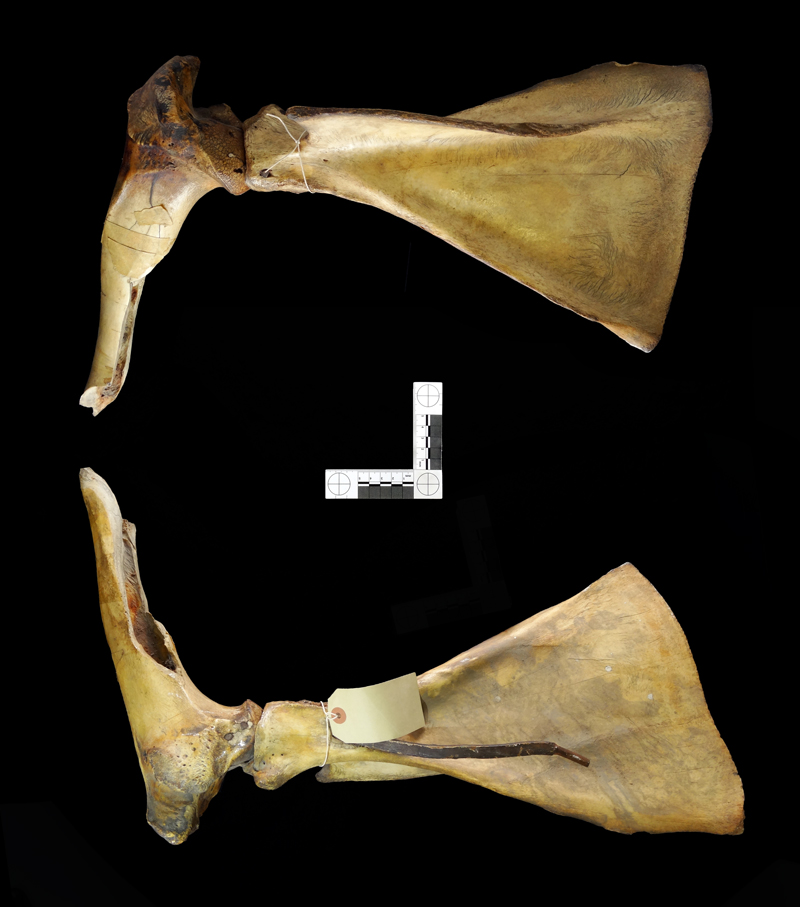
The bone is interesting because it was badly broken when the animal was alive. As Jake pointed out, the bone has healed without the attentions of a vet, so it hasn’t healed straight and there’s a lot of excess bone growth. This makes it harder to work out what the bone originally looked like.

Minioncat recognised that this is the humerus of a juvenile animal and although there were several species suggested on the basis of size, none seemed to quite fit.

Lena made a really helpful observation about the presence of a supracondylar foramen – which is the hole that can be clearly seen on the side of the bone in the top image, near the articulation on the right hand-side of the picture.

This foramen is something seen in some of the carnivores, like cats and mustelids, but the bone itself doesn’t really match any of the cat or mustelid bones that I compared it to.

When I first found this bone I though that it belonged to a tree-climbing (or arboreal) carnivore, because the head of the humerus would allow for a considerable range of movement (plus broken bones are common in arboreal animals). The only thing I could really think of that was likely was a small species of bear, since cat humeri are quite different from this.

However, on Twitter Raymond Vagell made the inspired suggestion that it could be the humerus of a Fossa Cryptoprocta ferox Bennett, 1833 – something that I never even considered.

Fossa (Cryptoprocta ferox) image by Ran Kirlian

I don’t have any Fossa postcrania for comparison and I can’t even find a good image of a Fossa humerus online, so it’s hard to check. There is a Fossa skeleton image on the Museum Victoria website, which shows that the humerus is pretty similar, but alas it’s a clear enough image to be more sure.

Once I started thinking about less commonly occurring carnivores I broadened my search and came across a paper with a comparative drawing of the humerus of a Binturong Arctictis binturong (Raffles, 1822), which is another tree-climbing mammal, with a similar humerus shape.

Binturong (Arctictis binturong) at Overloon, NL by Tassilo Rau

The long and short of it is that I still don’t know what specimen this mystery object came from, but I now have a fresh perspective for renewing my search, thanks to the people who get involved with the Friday mystery object. I will let you know if I get any further in my search for an identification, but I owe you all a big thanks for contributing!

Friday mystery object #195

Today I have a real challenge for you. This bone has a pathology that has significantly changed its appearance and it had no information associated when I found it. So far the best identification I have is very tenuous, so I thought it would be worth seeing if you had any ideas about what it came from:

mystery195

Feel free to put your thoughts, observations and suggestions below. No need for cryptic clues today I think – this specimen is cryptic enough!

Friday mystery object #194 answer

On Friday I gave you this rather unusual looking skull to identify:

mystery194

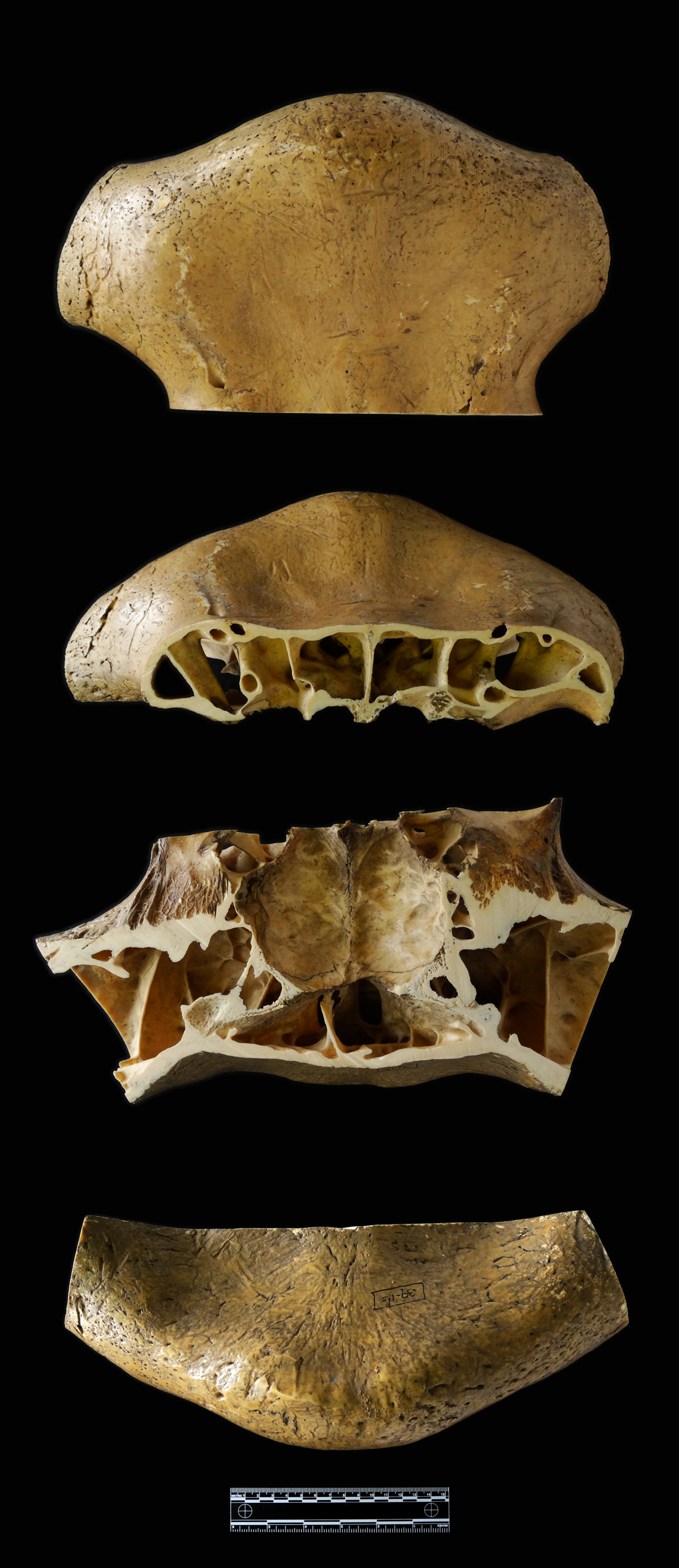
In fact, it’s so unusual that it doesn’t even look entirely like a skull, so it’s not surprising that the specimen proved a bit of a challenge.

Some elements (like the lower jaw) look a bit like they’re from a turtle, but other elements of the skull shape look more like they belong to an amphibian – from something like Necturus perhaps. Despite these similarities to some of the ‘basal’ tetrapods, the skull is actually from a fish.

The reason why it looks quite similar to a tetrapod skull and less like the average fish is because it belongs to a member of the Lobe-finned fish (Sarcopterygii) which are more closely related to the tetrapods than the more common and diverse Ray-finned fish (Actinopterygii). Despite the difficult identification, microecos managed to spot that this was a Lungfish and henstridgesj managed to identify the species as being the  Continue reading

Friday mystery object #193 answer

On Friday I gave you this specimen to identify:

mystery193

Unsurprisingly you all recognised it as a tortoise carapace. The species was a bit more difficult though as tortoises can display quite a lot of variation in their colour and shell structure within a species.

There were various good suggestions, but in the comments only Barbara Powell made reference to what Colin McCarthy and myself thought this was from, although Maggie J Watson also identified it in a tweet.

When we saw the specimen we thought that it was probably a  Continue reading

Friday mystery object #193

This week I’ve decided to give you an object to identify that came up in our collections review recently with the splendid Colin McCarthy. We have a lot of these in our collection, most of which were unidentified. Any idea which species this is from?

mystery193

You can leave your suggestions below and I’ll respond during the day. Enjoy the challenge and have a thoroughly enjoyable Easter break!

Friday mystery object #192 answer

On Friday I gave you this unidentified specimen from the Horniman’s collections to take a look at. I had already had a go at working out what it is, but it never hurts to get a second opinion.

mystery192

It’s actually a bit of a generic looking overall shape, perhaps reminiscent of a owl or a maybe a pheasant of some sort. However, the nares (nostrils) are very small and round and set in a bill that is sharp, shortish and very solidly constructed, which is something you only really see in a few passerines, some parrots and the falcons. The skull is too big for a passerine and the bill is totally the wrong overall shape for a parrot, which leaves us with a falcon – a fairly small one at that.

From there the shape of the palate and the proportions of the cranium led me to a species identification that I’m pleased to say agreed with that proposed by Tony Irwin and Wouter van Gestel (who eloquently explained the indicative characters that I mentioned above). We all think that this is the cranium of a  Continue reading

Friday mystery object #192

This week I have a skull with no data that I came across in the collections a little while back. I think I managed to get a decent identification on it, but I’d be interested to see if you all agree:

mystery192

What do you think it is? As usual you can put your suggestions below. Thanks for helping out!

Friday mystery object #191 answer

On Friday we had this skull submitted by Dr Ben Swift for identification:

mystery191amystery191c

Now this is quite obviously a primate, as it has a bony ring around the orbit, a bony back wall to the orbit and just eight incisors as opposed to the twelve that forms the basal condition for mammals. The teeth also tell us that this is an Old World Monkey (Cercopithecidae), since these primates only have eight premolars instead of the twelve you find in the New World Monkeys (Platyrrhini). The small canines suggest that this is the skull of a female.

From there it starts getting a bit more difficult. The fairly small size of the specimen ruled out a few genera, but the main features that helped narrow down the possibilities were the very flat face, the heavy bony rings around the orbits, the flaring of the zygomatic arches (cheekbones) and the short and rounded braincase. Effectively the only way to consider these features is to look at a lot of comparative specimens (the excellent Mammalian Crania Photographic Archive proved very useful for this).

After a lot of consideration I found myself in agreement with the suggestion of something from the genus  Continue reading

Friday mystery object #191

This week I have a skull for you to have a go at identifying that has been submitted by Dr Ben Swift. Any idea what species this belongs to?

mystery191a mystery191b mystery191c

I’ll be trying to get an identification on this specimen myself and I’m not the best at primates, so your suggestions and comments would be appreciated – let’s see if we can crowdsource an identification!

Friday mystery object #190 answer

On Friday I gave you this skull to identify:

mystery190

The animal it comes from is quite distinctive, with loads of character, so it’s no big surprise that so many of you managed to identify it.

So well done to Jake, Dave Godfrey, henstridgesjMieke Roth, Wouter van Gestel, Steven D. Garber and Crispin – this is indeed a  Continue reading

Friday mystery object #190

This week I have a skull with character for you to identify. It will probably prove to be little challenge to some of you, but if you know what it is please try to use cryptic clues so you don’t spoil the game for others:

mystery190

Put your thoughts below and I’ll be sure to make comments during the day. Enjoy!

Friday mystery object #189 answer

On Friday I gave you this skull to have a go at identifying:

mystery189

I didn’t do a very good job of responding to comments I’m afraid, as I was rather busy at day two of this year’s Natural Sciences Collections Association conference at the Yorkshire Museum. Nonetheless, you managed to work out what this specimen came from without any input from me.

Jake spotted that it was the skull of a big reptile, more importantly, a big reptile with heterodont dentition (meaning it’s teeth aren’t all the same shape). That narrowed down the possibilities considerably. From there henstridgesj, Wouter van Gestel and Barbara Powell came to the conclusion that this is the skull of a  Continue reading

Friday mystery object #189

This week I have another interesting skull that came up during one of our recent reviews:

mystery189

Any idea what animal this belonged to? You can put your suggestions below and I’ll do my best to reply, although I will be at the NatSCA conference today, so it will depend on the quality of internet access on my phone.

Friday mystery object #188 answer

On Friday I gave you this previously misidentified specimen to have a go at identifying:

mystery188

It turns out that you did a great job!

Jake and Mieke Roth immediately spotted that the skull belonged to a large turtle of some kind, henstridgesj narrowed it down to a fresh-water turtle and he and Steven D. Garber recognised that despite the large size, it wasn’t from one of the snapping turtles (which is what the original identification mistakenly had it as) and that it was more likely to be from one of the side-necked turtles. However, microecos went one better and managed to get a species identification for the specimen that agreed with the identification that our visiting reptile expert Dr Colin McCarthy who suggested  Continue reading

Friday mystery object #188

This week I have an object that came up in one of the Bioblitz collections reviews at the Horniman recently. It’s a great specimen, but it was misidentified by the preparators when it was purchased back in 1937 and that identification had never been corrected. Any idea what it should have been labelled as?

mystery188

You can put your suggestions, questions and observations below and I’ll do my best to reply. On Monday I’ll post the identification that our incredibly helpful specialist reviewer suggested, so you can see how you did. Good luck!

Friday mystery object #187 answer

On Friday I gave you this somewhat odd object to identify:

mystery187

My first thought when seeing it was Bowser from the Mario games:

Bowser. New Super Mario Bros. 2: © 2012 Nintendo

This probably isn’t the worst place to start the identification, since the animal with this feature was clearly big, scaly and toothy. This was obviously in the minds of Barbara Powell and Wouter van Gestel, who reached the correct conclusion that this is the structure from the tip of the snout of an adult male  Continue reading

Friday mystery object #186

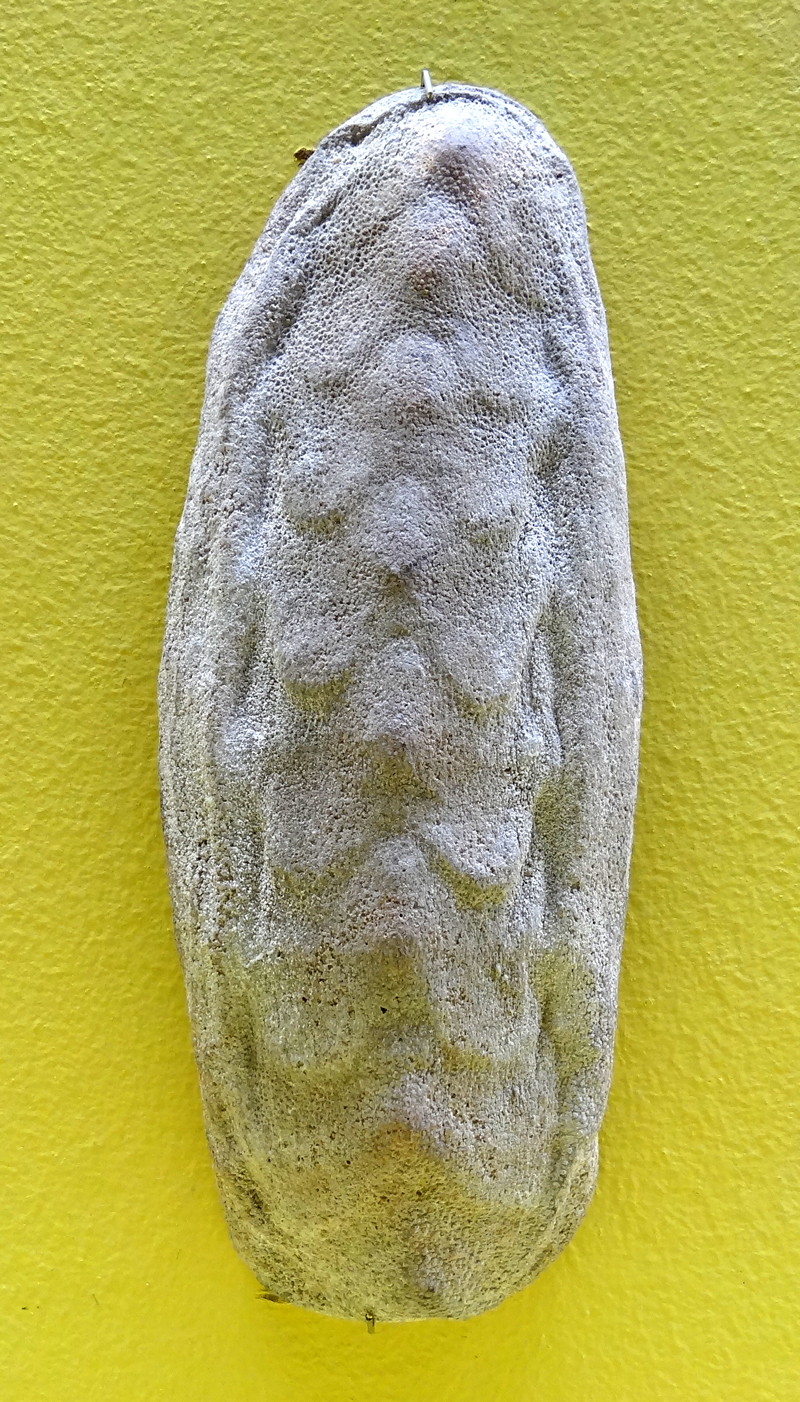
This week I have an object for you that came through as an enquiry from Mark Ribbands via William Vine. It’s 190mm long and was found in the forest of South Thailand:

mystery186amystery186bmystery186c

Any idea what it came from? As usual you can leave your suggestions below – I may not be able to respond during the day as I’m at a seminar on Natural Science Collections and the Law, but I’m sure that there will be some interesting discussion about this object from the regulars!

Friday mystery object #185 answer

On Friday I gave you this object to identify:

mystery185

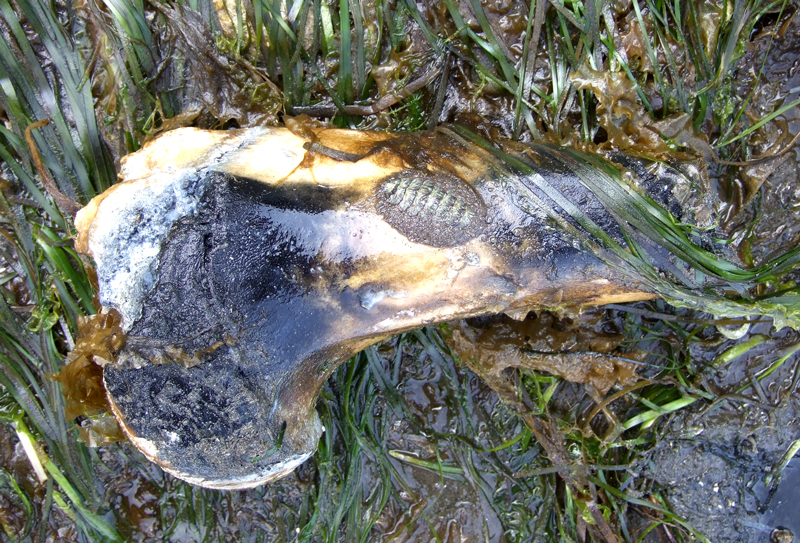
I thought it might have posed a bit of a challenge, since it’s part of a species of bird that you don’t find in Europe or North America. Of course, I was forgetting the skills of the Zygoma community. Everyone recognised it as the sternum of a bird with weak flight muscles and Wouter van Gestel spotted the species and was supported in his identification by Barbara Powell and Robin.

This is the sternum of a Continue reading