
Last week I gave you this guest mystery object from regular contributor Joe Vans:
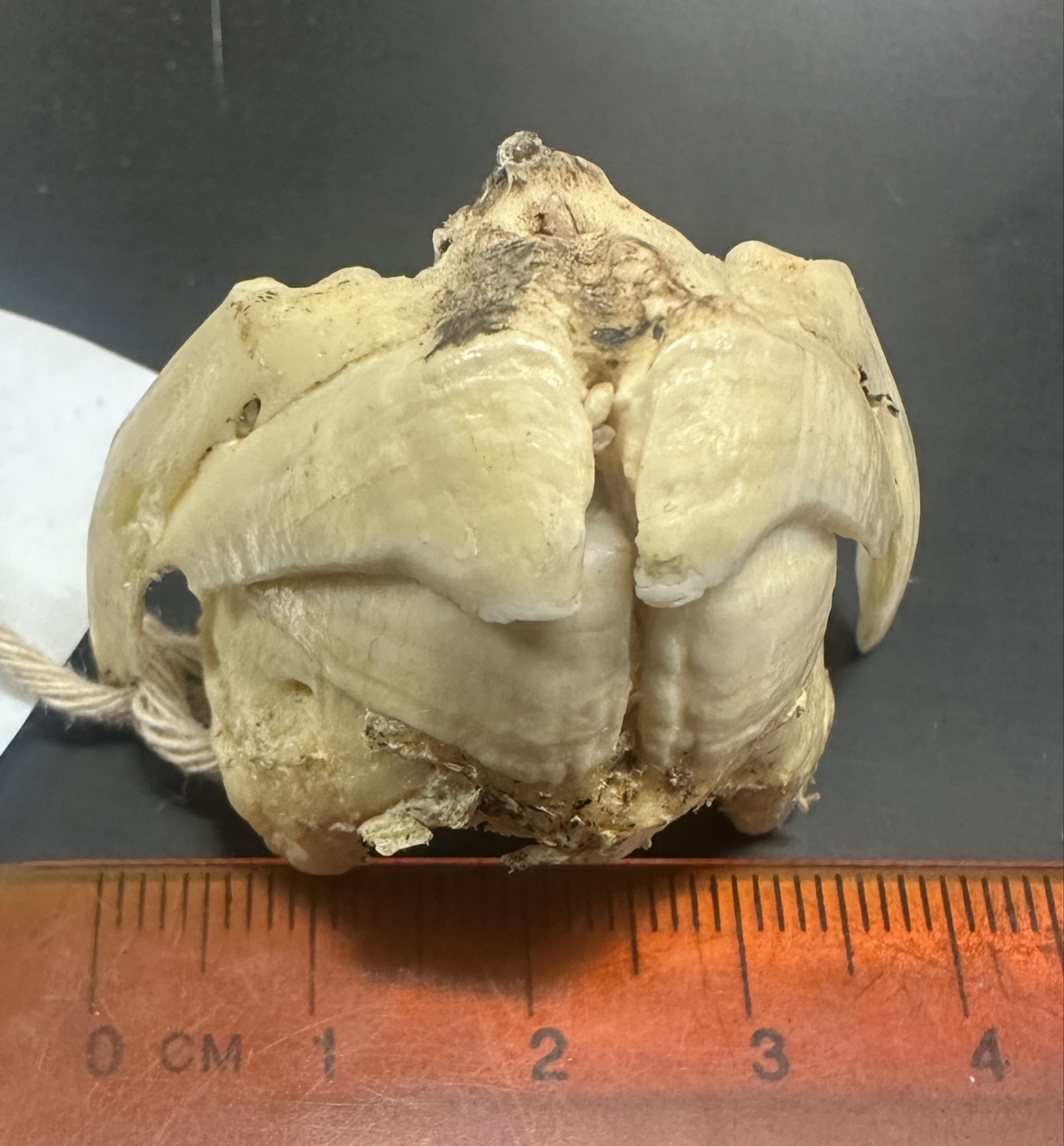
It does pose a real challenge to get to species level, but the Family is a lot more achievable with those distinctive four tooth plates that scream Tetraodontidae.
Joe kindly offered up locality information about where this specimen came from, which does help to narrow things down quite a bit:
mid-peninsula Baja California, gulf side.
With this information the possibilities drop substantially – as Adam Yates said:
I found a list of fish from the Gulf of California. It includes 7 species in the four-tooth family. We can immediately rule out the sharpnose because it has an adult body length of about 9 cm (too small for these jaws).
Narrowing it down further gets tricky, as you need comparative material – if you can find it. For me I spent a while trying to get some decent images for reference and I got lucky with the excellent Osteobase which is an incredible resource for finding fish bone images across many families, but unfortunately there isn’t huge coverage at species level (given the diversity of fish, that would be a mind-boggling undertaking).
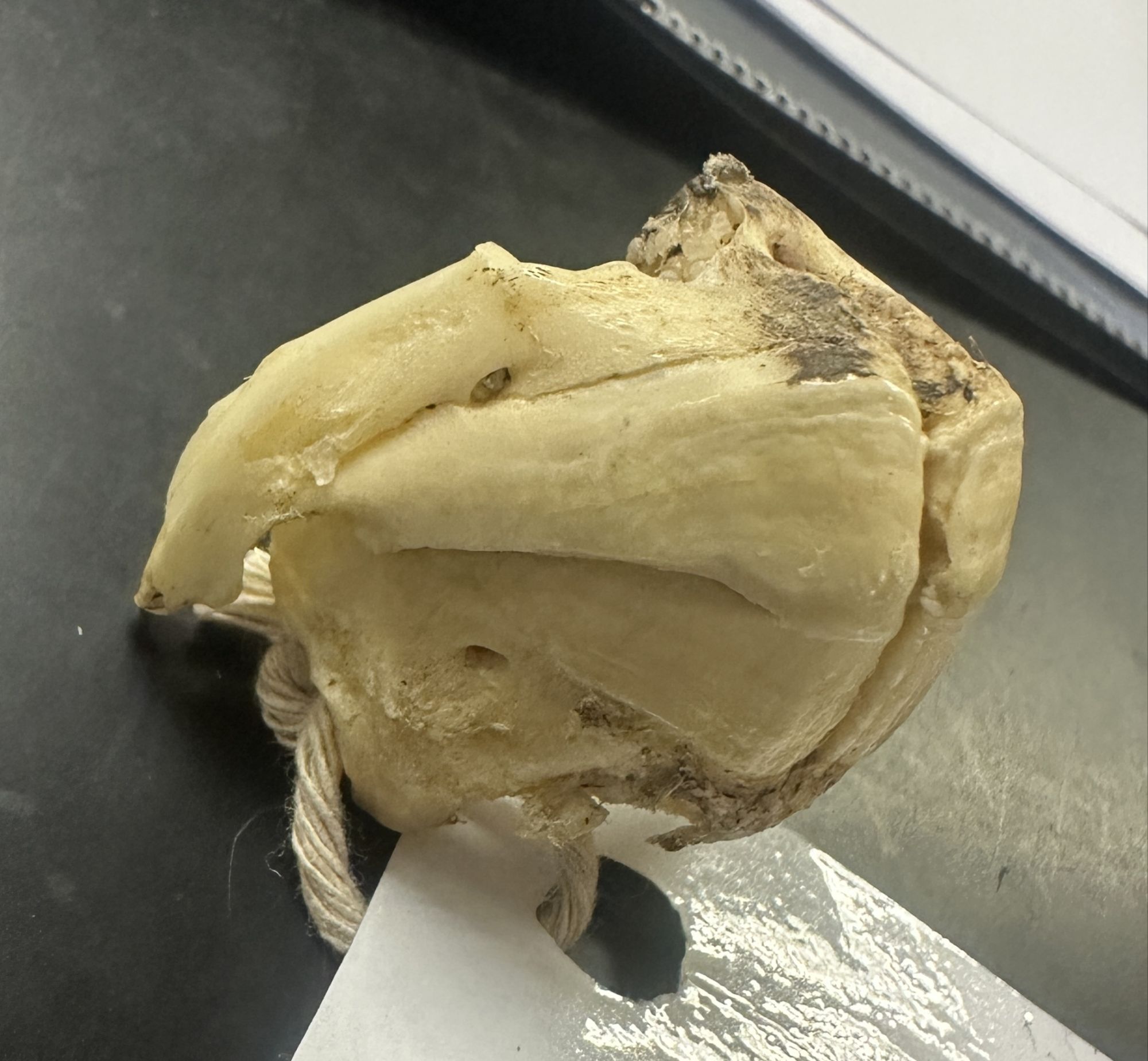
A good amount of scrutiny of the premaxillary, dentary and maxillary left me fairly happy that the one Tetraodontidae represented on Osteobase is in fact the same as this species – so I plumped for the Bullseye Puffer Sphoeroides annulatus (Jenyns, 1842).

Fortunately, Joe Vans saw this fish when there was a bit more to it, and he was able to confirm that this indeed what it is.
I hope you enjoyed delving into the deeps to figure out which pufferfish we were looking at. I don’t think anyone nailed it, but I’m not too surprised given how tricky it is to to find good comparisons. I’d like to pass on my thanks to Joe Vans for sharing his specimen!


I’m honored that Paolo selected this particular item from my natural history collection.
I caught this individual, on hook and line, in 1993. Ignorant of the poisonous nature of this family… I cleaned it, cooked it and ate it. I recall it was rather gelatinous and I did not finish it. Sometimes it’s better to be lucky than smart.
Thanks to Paolo!
PD: I’ll mention nearly 10 years ago another of my Baja finds was featured on this site: https://paoloviscardi.com/2017/10/13/friday-mystery-object-314-answerish/
Time flies!