Friday mystery object #198 answer

On Friday I gave you these two objects (with a third photo to show the end) to identify.

mystery198

The specimens had me a bit stumped. They are keratinous (keratin is the protein that makes up fingernail, hair and horn amongst other things) and perhaps unsurprisingly they had been labelled as “Artiodactyla horns” given their overall shape. Of course, if they were artiodactyl horns they would be from a bovid (antelope, sheep, cow, etc.), since the other artiodactyls don’t have unbranching horns.

There are nearly 150 bovid species, ranging from the gigantic Gaur to the miniature Royal Antelope, and so far I’ve not been able to find any with horns quite like this. Moreover, the very small size, pattern of growth and relatively shallow depth of the inside chamber of the sheath, don’t really agree with the identification.

My next thought was the spur of a galliform bird, like a Chicken. I compared these specimens to the spur of a male Chicken skeleton in the Horniman’s collection and they looked quite different and much too long, so I gave up on that idea.

Finally I started to consider claws of all sorts of animals, but this didn’t make much sense to me as claws aren’t usually round in cross-section and they have wear facets from being used to walk, climb or dig. You don’t have claws this big if you’re not going to use them and I couldn’t think of much use for a claw like this.

So that left me stumped.

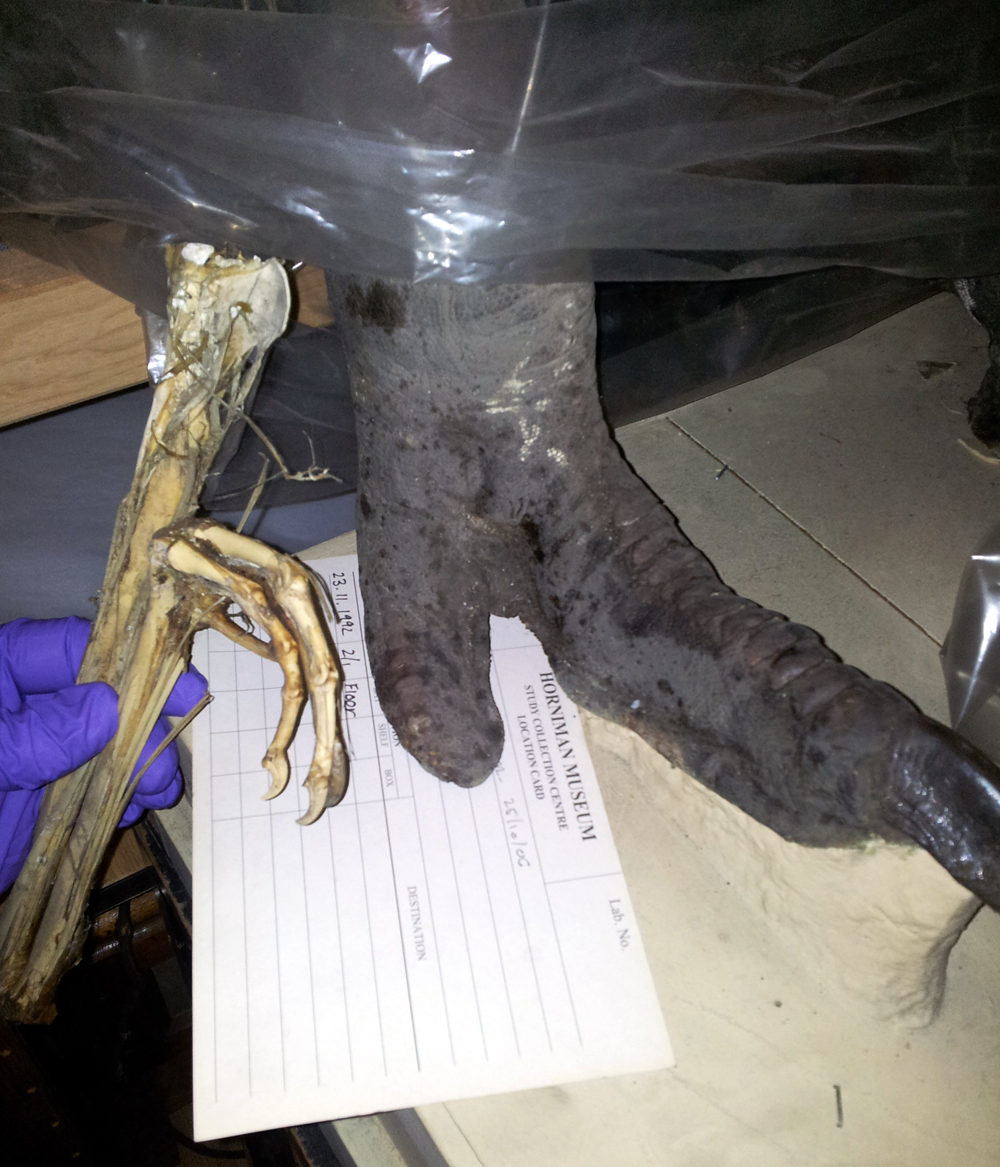
Fortunately, Mieke Roth came to my rescue and made me reassess the Chicken spur identification. It turns out that the Chicken I compared the spur to much have had his spur sheaths  removed and they’d hardly grown back.

As you can see, the spur identification fits perfectly!

Many thanks to everyone for their suggestions on this mystery object. It really helps to have fresh eyes looking at a problem and suggesting something you’ve discarded in error!

Friday mystery object #192 answer

On Friday I gave you this unidentified specimen from the Horniman’s collections to take a look at. I had already had a go at working out what it is, but it never hurts to get a second opinion.

mystery192

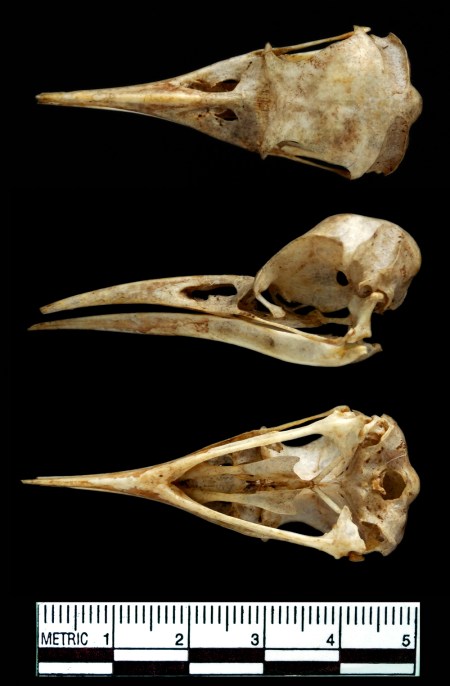
It’s actually a bit of a generic looking overall shape, perhaps reminiscent of a owl or a maybe a pheasant of some sort. However, the nares (nostrils) are very small and round and set in a bill that is sharp, shortish and very solidly constructed, which is something you only really see in a few passerines, some parrots and the falcons. The skull is too big for a passerine and the bill is totally the wrong overall shape for a parrot, which leaves us with a falcon – a fairly small one at that.

From there the shape of the palate and the proportions of the cranium led me to a species identification that I’m pleased to say agreed with that proposed by Tony Irwin and Wouter van Gestel (who eloquently explained the indicative characters that I mentioned above). We all think that this is the cranium of a  Continue reading

Friday mystery object #185 answer

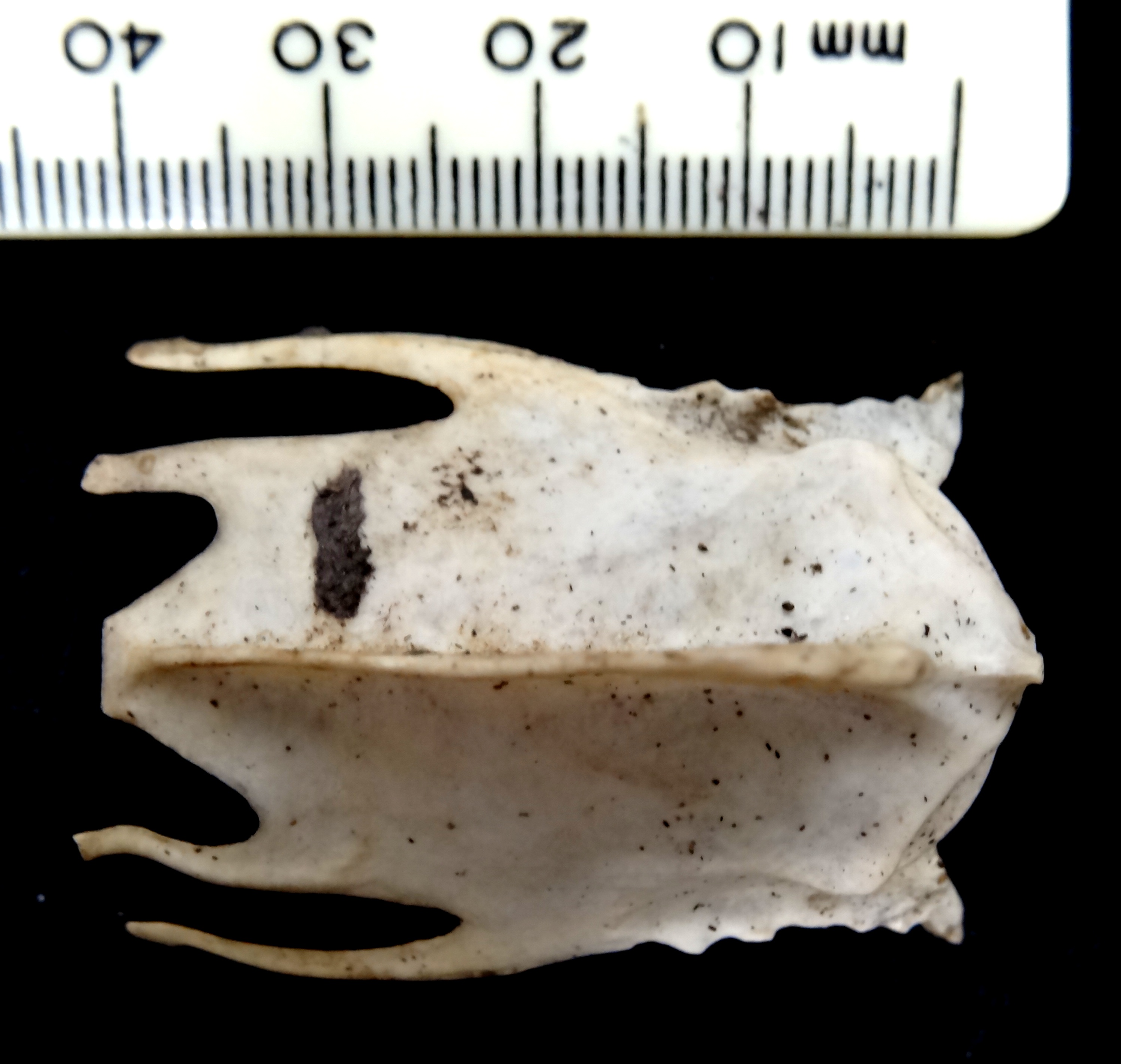
On Friday I gave you this object to identify:

mystery185

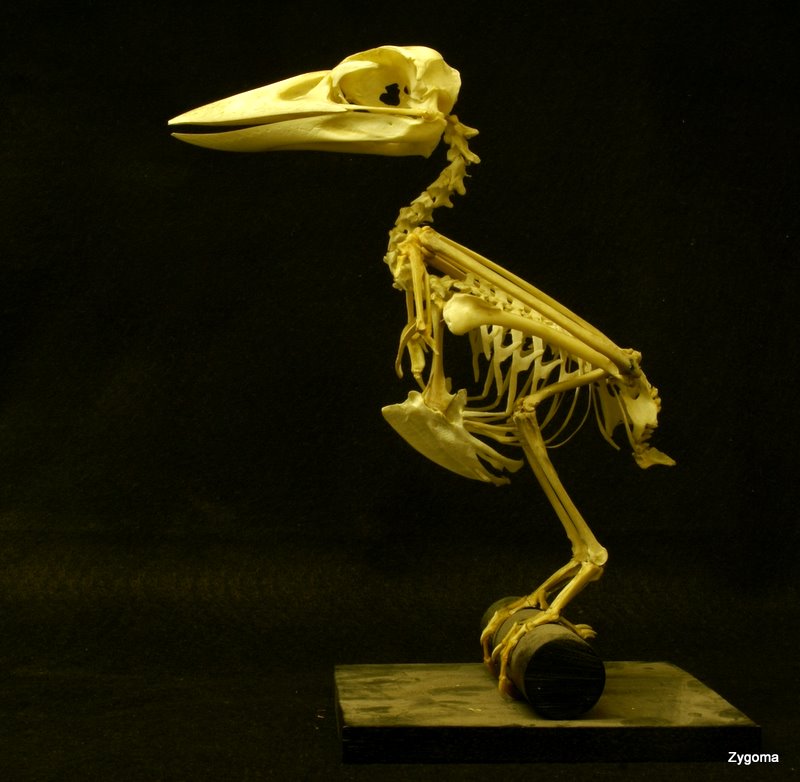
I thought it might have posed a bit of a challenge, since it’s part of a species of bird that you don’t find in Europe or North America. Of course, I was forgetting the skills of the Zygoma community. Everyone recognised it as the sternum of a bird with weak flight muscles and Wouter van Gestel spotted the species and was supported in his identification by Barbara Powell and Robin.

This is the sternum of a Continue reading

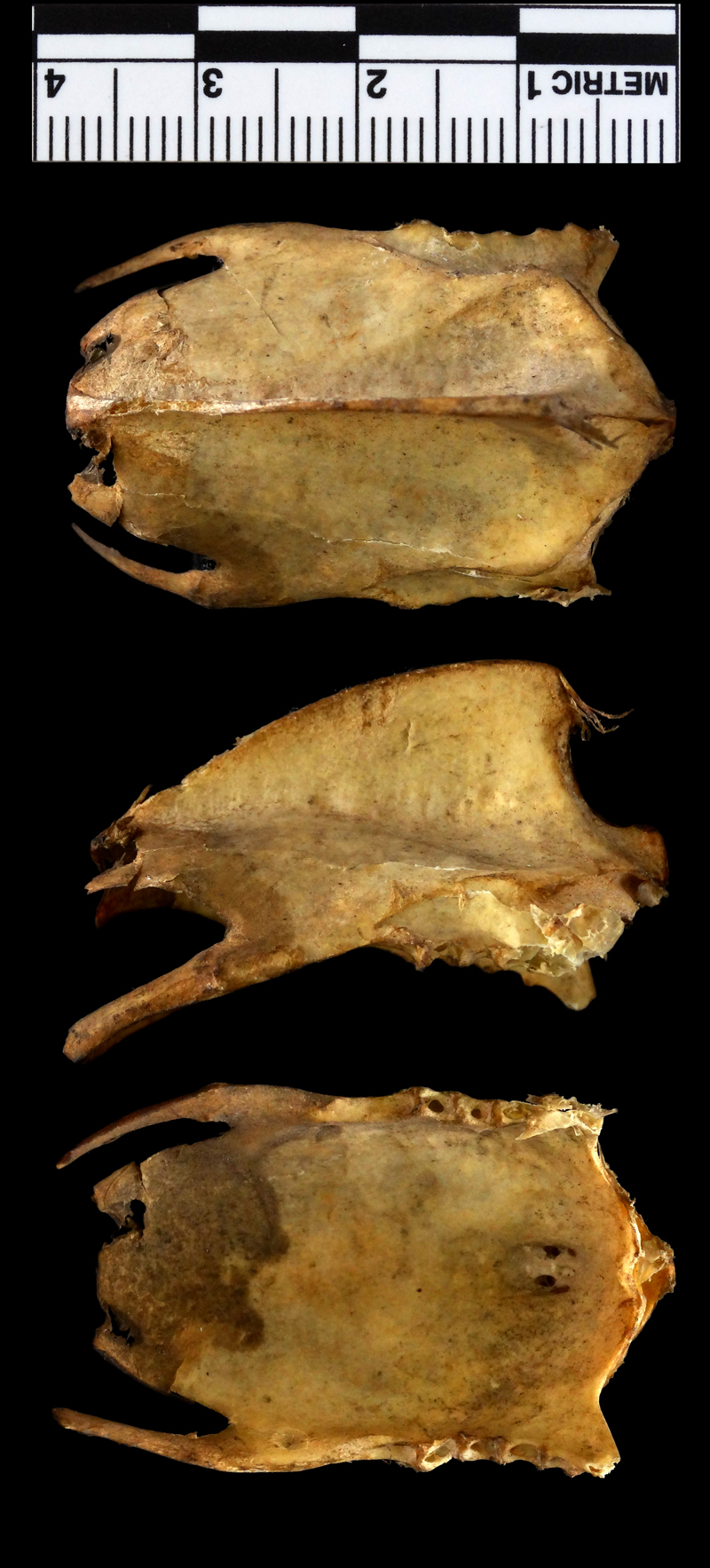
Friday mystery object #185

This week I have an interesting mystery object for you. It’s quite characteristic, but not necessarily very familiar, so it may prove a bit of a challenge:

mystery185

Any idea what this piece of bone is and what it came from? You can put your thoughts below and I’ll do my best to get back to you. Good luck!

Oddjects No.2

Some interesting things have been coming to light in the reviews going on at the Horniman. Here’s an object that our Anthropology review team uncovered and asked me to identify.

oddjects2a

It looks a bit like a bird of prey with a gimp mask, but it’s actually a charm from Nigeria.

Fortunately, I’d just gone through our bird skull collection and I immediately recognised this becowled bird skull as being from a Lappet-faced Vulture, so it was an easy identification – particularly since the skull is 18cm long and from Africa, which helped narrow down the possibilities considerably!

Here’s the Anthropology specimen compared directly to our Natural History specimen, so you can see what would be under the leather:

Oddject2

We’re also in the middle of our first collections Bioblitz at the moment, so expect to see a lot of activity on the @HornimanReviews Twitter feed!

Friday mystery object #183 answer

On Friday I asked for help with identifying an object that I came across while working on the Horniman’s bird collections for our forthcoming Bioblitz review:

mystery183a

I must say that I was surprised at how many people came and checked out this post and offered suggestions – largely following a retweet from the excellent QI Elves. Many thanks to everyone who offered their suggestions. In this post I’ll look at some of the suggestions and let you know what I’ve narrowed it down to.

Here’s an annotated version of the image to help make my terminology clear:

mystery183g

There were quite a few suggestions of Moa, Ostrich, Emu, Cassowary or Rhea (which are all Palaeognaths), but this leg is way too small and although the hallux is reduced it is definitely there, whereas in the Palaeognaths the hallux is absent. Here’s the specimen alongside an Ostrich foot:

mystery183f

A Secretarybird was another common suggestion and it was the first possibility that I thought of myself. Secretarybirds use their long legs to walk the plains of Africa in hunt of prey, which they stamp and kick to death. However, when compared to a Secretarybird in the Horniman’s collection it proved to be different in the relative proportions of the tibiotarsus and tarsometatarsus and the total length to the toes:

mystery183d

Seriemas were also suggested – these birds fill the same niche as the Secretarybirds, but in South America. They have one short digit with a sickle-like hunting claw, almost like a Velociraptor, however the mystery object has fairly equal length digits.

Owls were suggested, but this leg is far too long to have come from any species of Owl. Here’s the specimen compared to the biggest (or second biggest) species, the Eurasian Eagle Owl:

mystery183e

The suggestion of Owl probably arose because of the curved claw, which also looks a bit like it might belong to an Eagle or Vulture. However, the bones don’t seem to be robust enough for any of these kinds of birds. The claw confused me quite a bit, since most of the remaining possibilities are wading birds that don’t have big curved claws. This led me to reassess the claw by straightening out the digit of the mystery object in Photoshop to see if the apparent curve and size of the claw is actually a result of the postmortem clenching of the foot:

mystery183c

When viewed like this, the claw seems proportionally smaller and less likely to be from a predatory bird, especially considering that with flesh and skin on the bone the claw would seem even smaller.

This realisation made me reconsider the long-legged birds that I’d discounted at first – in particular the Herons, Storks and Cranes. I did consider Flamingo, but they have webbed feet and an even more reduced hallux than seen in the mystery object. Conversely, Herons could be excluded because they don’t have such a reduced hallux:

Heron Foot Detail by TexasEagle

Some Storks have limbs with the right sort of proportions – as helpfully summarised by henstridgesj:

The ‘FMO’: 1:0.73
Various Cranes: 1:0.7 – 1:0.8
Marabou Stork: 1:0.74
Maguari Stork: 1:0.75
Lappet-Faced Vulture: 1:0.63
Secretary Bird: 1:1
Flamingo: 1:0.84
Seriema: 1:0.87

But their claws seem too small and straight. That leaves the Cranes – as suggested by The Shonko Kid, André Rodenburghenstridgesj and Skullsite’s Wouter van Gestel. This would fit the proportions of the elements of the leg, the length of the hallux and the size and shape of the claws. It would also agree with the highly ossified tendons – a trait common to Cranes.

So, I don’t have a specific answer for you this week (that’s two weeks in a row!), but I think this leg probably belonged to one of the Cranes. Thanks for your help in getting that far!

Friday mystery object #183

This week I have another genuine mystery object for you to have a go at identifying. I found a pair of legs in the collection and although I can think of a few things that they don’t come from, I’m a bit stumped as to what they did come from. Here’s one to give you an idea of what they look like:

mystery183a


mystery183b

Any suggestions would be appreciated!

Friday mystery object #181 answer

On Friday I gave you this bird skull to identify:

mystery181

I thought it might prove a bit of a challenge, since it belongs to a bird that isn’t found in Europe or North America. However, the skull shape and size is quite unique and I was forgetting the impressive skills of the Zygoma readers, so it didn’t take too long for Barbara Powell, Wouter van Gestel (who I believe may be involved in SkullSite.com – one of my favourite web resources) and henstridgesj to narrow it down to the correct species.

This skull belongs to a member of the Cuculiformes, family Musophagidae (‘banana-eaters’) and to be specific it’s from a   Continue reading

Friday mystery object #181

This week I have yet another bird skull from the collections I’m working on that I thought you might find interesting:

mystery181

Any idea what this skull came from? As usual you can put your suggestions and questions below and I’ll do my best to reply during the day. Good luck!

Friday mystery object #180 answer

On Friday I gave you this skull to identify:

mystery180

It was pretty clear that it’s from a modern animal with a duck-like bill, so either a Platypus or a member of the Anatidae (the family containing ducks, geese and swans).

There are about 140 species within the Anatidae, so narrowing it down to species was the challenge. For me the main features that help identify this duck from all the other species were the concave profile and the width to length relationship of the bill, the shape of the lacrimal bones (the bits in front of the eyes) – with the supraorbital processes bordering the salt glands, and the shape of the palate – with its mid-point deflection and flare.

It seems that some of you spotted some of these features too, since henstridgesj, miekeroth and Barbara Powell came to very similar conclusions. This skull looks like it belonged to a Common Scoter Melanitta nigra (Linnaeus, 1758) and a female Common Scoter at that, since the males have a much more inflated bill than this specimen.

Female Common Scoter photographed by Hilary Chambers

Female Common Scoter photographed by Hilary Chambers

Common Scoters are sea ducks that dive for small crustaceans, molluscs and sometimes fish. They are migratory birds and although there only a few hundred breeding the UK, there are larger flocks of visiting birds over the winter, although they’re hard to spot since they are usually a fair distance out to sea for much of the time.

Friday mystery object #179 answer

On Friday I gave you this really tricky mystery object to identify:

mystery179

Despite it being one of the hardest so far, Barbara Powell managed to not only work out what piece of morphology this specimen represents, but the species it came from. Remarkable skills Barbara!

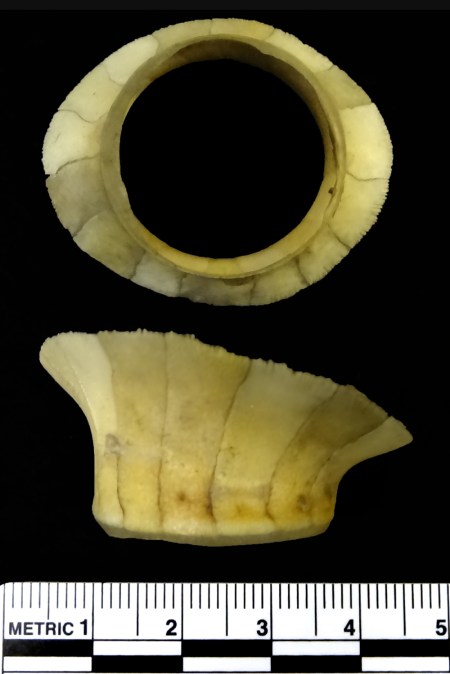
These plates of bone fit together to make a ring like this:

mystery179b

You probably have a better chance of identifying the structure when it’s assembled like this and the tubular shape is characteristic of a particular order of birds. This is the sclerotic ring of an  Continue reading

Friday mystery object #178 answer

On Friday I gave you this piece of a skeleton to identify, to help me track down the specimen it came from:

mystery178

It looks like a wing, but it’s quite oddly shaped. The humerus is strongly curved and the humeral head is small with a very limited area for muscle attachment. This suggests that it wasn’t much use for flying – it also wouldn’t have been much use for swimming underwater or any other kind of locomotion for that matter. This narrows down the possibilities quite a bit.

With these clues RH, henstridgesj and Lena all came to the same conclusion as I did – this wing is from a  Continue reading

Friday mystery object #176 answer

On Friday I gave you this specimen to have a go at identifying:

mystery176

It’s a specimen that I came across when sorting out the bird osteology collections in the Horniman stores.

Several of you came to the same conclusion as me about the type of bird, with Jake, palaeosam and henstridgesj all suggesting one of the  Continue reading

Friday mystery object #172

This week I have another bird skull for identification from my big box of assorted bone. It’s probably a bit too easy, but hopefully it’ll still be fun:

Any idea what it is?

As usual, you can put your comments, questions and suggestions below and I’ll do my best to respond. Good luck!

Friday mystery object #171 answer

On Friday I gave you this fragment of bill to identify:

It’s quite distinctive in shape, so I shouldn’t have been surprised when so many of you came to the same conclusion as I did about what it was from. As it is, everyone recognised this as being part of the bill from a member of the Phalacrocoracidae (Cormorant family). Well done everybody!

There are around 40 species of Cormorant, so getting this to species is a bit more tricky and a few possibilities were mooted. However, the two which best fit the shape and size of this bill are the Little Black Cormorant Phalacrocorax sulcirostris and the European Shag Phalacrocorax aristotelis. A quick comparison of the two on the excellent SkullSite.com (P. sulcirostris and P. aristotelis) show that the bill proportions and shape of the bony palate in the mystery specimen are closest to the  Continue reading

Friday mystery object #171

Apologies for the slightly late mystery object this week – blame Dara O’Briain, who I went to see in Hammersmith last night.

This week I have another specimen that came from the mixed box of bits for you to identify. Any idea what this beak is from?

As usual you can put your comments, questions and suggestions below and I’ll do my best to respond. Good luck!


Friday mystery object #170 answer

On Friday I gave you this pair of bones to identify:

It didn’t take long for the type of bone to be identified, with Anthony Wilkes immediately spotting that these are the quadrates of a bird. Then things got more tricky as the type of bird became the focus of the identification.

Robin was the first to recognise the family and likely type of bird, with henstridgesj concurring, with the agreement being on these quadrates being from a  Continue reading

Friday mystery object #168 answer

On Friday I gave you this specimen to identify:

As I suspected, the distinctive shape of the skull makes this specimen easily recognisable as an owl (family Strigiformes). However, there are a couple of hundred species of owl, so there were plenty of possibilities to make a more specific identification.

This specimen has quite a distinctive slope to the forehead in profile view and a very clear groove down the midline of the cranium, which combined with the length of around 58mm narrowed down the likely suspects considerably.

Jake was the first to suggest the species I think it’s most likely to be, with palaeosam suggesting the other possible option and RH cautiously suggesting both. This skull belongs to an owl in the genus  Continue reading