Friday mystery object #211 answer

Last week I gave you this very unusual object to identify:
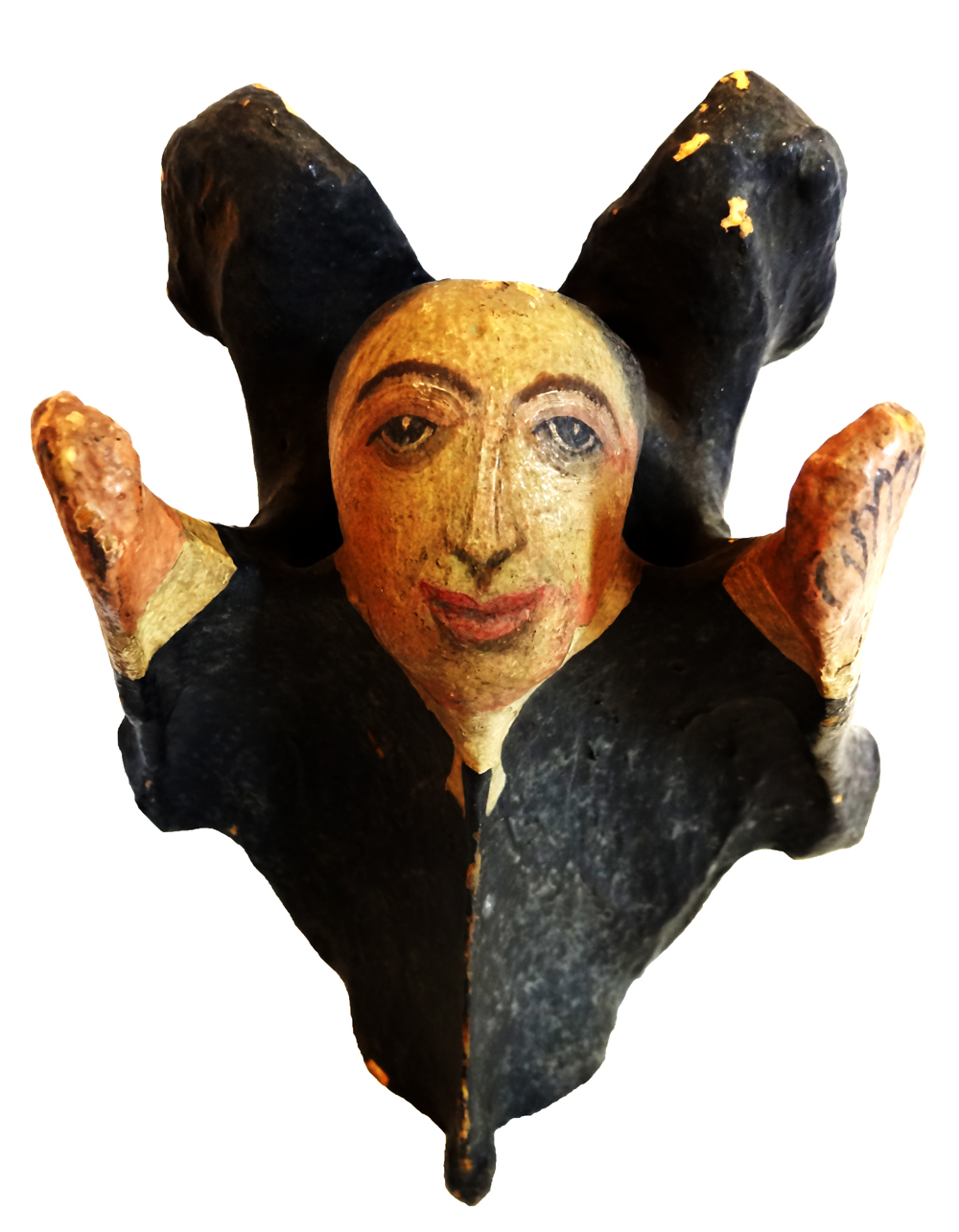
mystery211a

Plenty of you recognised this as a vicar of some sort, painted on the cervical vertebra (or neck bone) of a large mammal. There were some great ideas from neanth, Lewis Thompson, henstridgesj, Ze-Jeff, Jake, ermineofthenorth, Carlos, Daniel Jones, andy J, Natasha and Daniela.

In particular, Daniel Jones made some very interesting observations about which vertebra from which animal, while Tony Morgan managed to identify the preaching subject.

It seems that this object is a cervical vertebrae from a Heavy Horse (by which I mean something like a Shire-horse, not just a greedy nag). Looking at the relative proportions and the angles of the processes I think it’s probably the 4th cervical vertebra.

Meanwhile, the subject of the piece appears to be John Wesley, co-founder of the Methodist movement in the 18th Century. Apparently this sort of British folk depiction of John Wesley (and his brother Charles) was quite common in the late 18th and early-mid 19th Centuries, and there are several examples online (1, 2, 3).

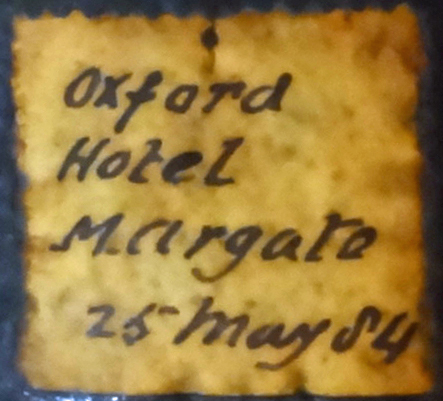
Finally there is a bit of a mystery attached in the form of  a label:
mystery211c

The date is written without the century, which is  a problem in collections that can be well over 100 years old. This could be from 1984 (unlikely), 1884 (the year Horniman started showing his collection, or 1784 (one of years in which John Wesley was active).

The handwriting looks familiar to me, so I’m going to go for 1884 and assume that this is a label that was added when the object was collected by Horniman, rather than it being a label added by the person who painted the vertebra – after all, who adds labels like this to their handiwork?

I hope this provides a good reason for why you should always write the year in full if you work in a museum.
Friday mystery object #210 answer

Last week I gave you this mystery object to have a go at identifying:

mystery210

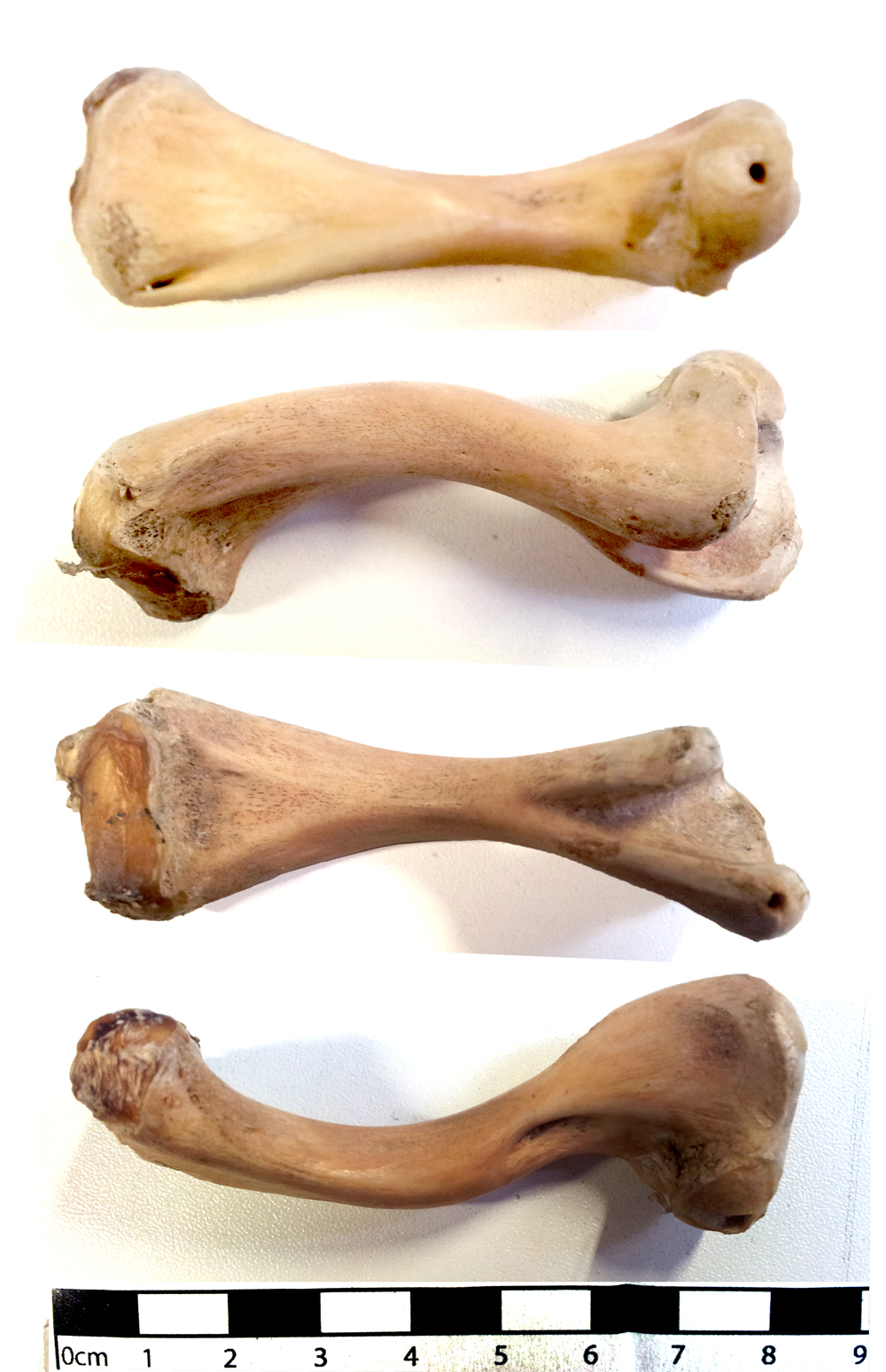
Jake was in like a flash, correctly identifying that the bone was a humerus – not an easy thing to spot considering the very strong curve and the deep groove at the head end. Jake also noticed that the humerus was adapted for something unusual, hence the weird shape.

There was a suggestion of pig by henstridgesj, which would have fitted the curve of the bone, but it was too small and the deep groove is at the wrong end.

Newcomer to the mystery object, Rute Branco, suggested that the object was the humerus of a (young) tortoise – a suggestion that I agree with (as does Daniella).

Tortoises have weird legs that need to carry quite a lot of weight, thanks to their bony carapace. They also need to get their legs inside their shell, so they have to be shaped for efficient retraction.

One of the differences between a terrestrial tortoise and an aquatic turtle humerus is the shape of the groove in the head, with terrestrial tortoises having a very steep and deep groove while swimming turtles have a slightly shallower and wider groove to allow a wider range of movement.

I can’t find enough comparative material to work out a species, or even genus of tortoise for this specimen, but I will keep my eyes peeled! Thanks for everyone’s input.

Friday mystery object #209 answer(ish)

It seems like an age ago that I gave you this mystery object:

mystery209

There were fantastic comments from everyone, but I’ve been bad about responding and writing an answer because I’ve been pretty swamped recently. Also, there are several things that confuse me about the specimen and I’ve not had the chance to take a really good look at comparative material.

The function of the object was correctly identified by Daniela, Paleotool and Jeanie – it is a bone whistle, in this case a fairly modern Navajo example. Our Keeper of Musical Instruments was keen to know if this was from an eagle and whether it might be covered by CITES.

At first I thought it might be the femur of one of the large American eagles, but it is far too long. If it was from any bird of prey it would be a Californian Condor based on the size but the tapering shape is wrong. I then considered the humerus – which is a better match for size, but the position of the groove for a tendon path on the underside is wrong. So it doesn’t seem to be from an eagle.

The slight curve and taper rule out a hollowed deer metapodial, which are very straight and uniform in width.

My best guess is that this may made from a section of the humerus of a species of swan – a guess partly informed by the opinion of the anatomical knowledge of Wouter van Gestel and the archaeological knowledge of Paleotool. The shape and few remaining anatomical features are about right, but there are other large birds that haven’t been ruled out.

Perhaps an unsatisfactory answer, but sometimes a good solid “I don’t know, but it’s reasonable to think it might be this” is the best answer you can get. Thanks for everyone’s input!

N.B. Here’s a side view: 20130912_125851

Friday mystery object #208 answer

Last Friday I gave you this mystery object to have a go at identifying:

mystery208

I wasn’t sure if it would be too easy but it turns out that no-one managed to identify it, so I guess not!

Lots of suggestions were made, from a bum (thanks Jake) or coco-de-mer to the join in a lip to the cleft between toes – but the closest suggestion came from newbie Daniela, who suggested an armpit.

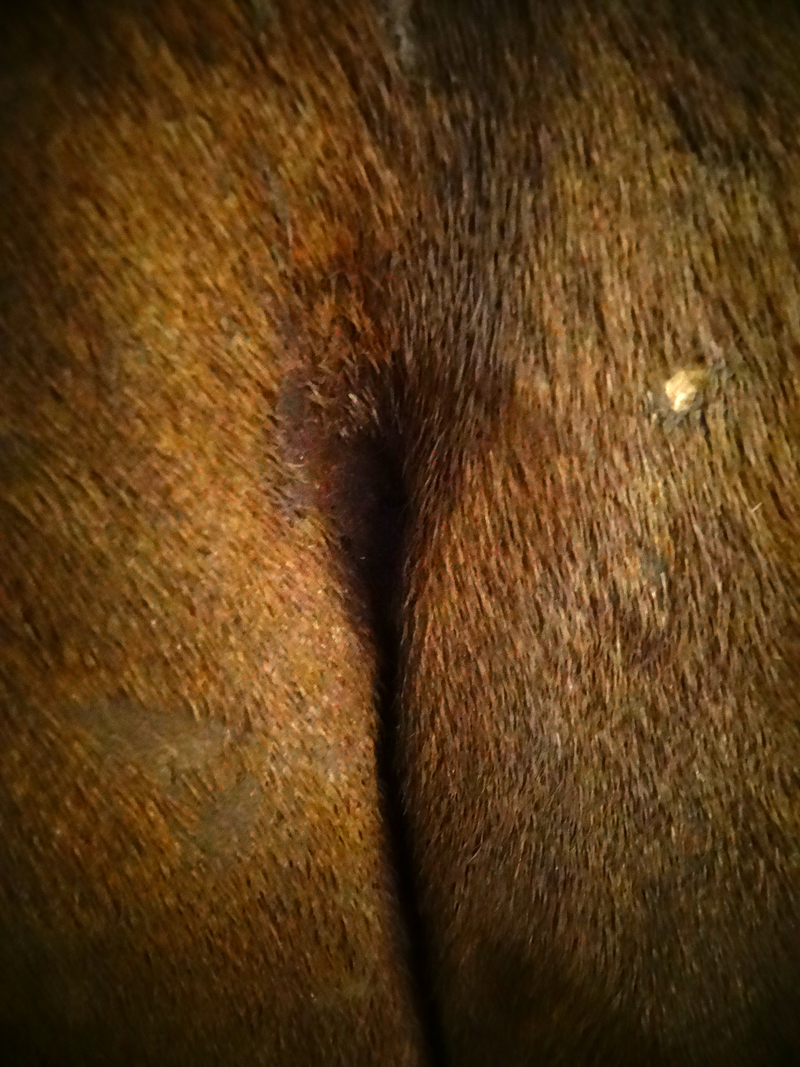
The reason I thought you might find this easy is because it’s the armpit (or perhaps flipperpit is more accurate) of the Horniman’s infamous Walrus Odobenus rosmarus (Linnaeus, 1758). This fine, if portly, specimen will be back from his hols in Margate soon.

walrus

I expect the presence of the hair may have thrown people off the scent, as we don’t tend to think of Walruses as being hairy – but as we can see, they are. A bit.

Friday mystery object #207 answer

A very late and brief answer to the last mystery object I’m afraid – hopefully I’ll get back on track soon, once everything has calmed down a bit!

I gave you this object to identify:

mystery207


It was a bit of a mean one, since these teeth are mostly broken with several missing. but there were some great answers.

Several of you recognised these as teeth from a juvenile Old World primate, so well done to henstridgesj, Jake and Jakob Ramlau. Jakob also alluded to dogs in his answer and I wonder if he managed to spot that the  primate was a Dog-faced Baboon Papio cynocephalus (Linnaeus, 1766) or Yellow Baboon as it’s also known.

mystery207_full

I’ll take some time to talk about deciduous teeth sometime soon, once I’m able to sit down and get back to blogging properly!


Friday mystery object #206 answer

Apologies for having such a belated answer to the belated mystery object from last week.

Things are really busy at the moment – I’m researching mermaids for a paper due to be submitted at the end of this month, curating an exhibition that’s due to open in September, double-checking the scientific accuracy in Jake’s book, doing talks, running PubSci, involved in recruitment for NatSCA, working on elements of the Horniman’s Bioblitz project and trying to write a grant application, on top of my more usual day-to-day work. That means I haven’t been able to spend the time on my blog that I would like. Hopefully everything will start getting back to normal in the next couple of weeks!

On to the answer – I’m afraid it will be brief… I asked what this bone was:

mystery206

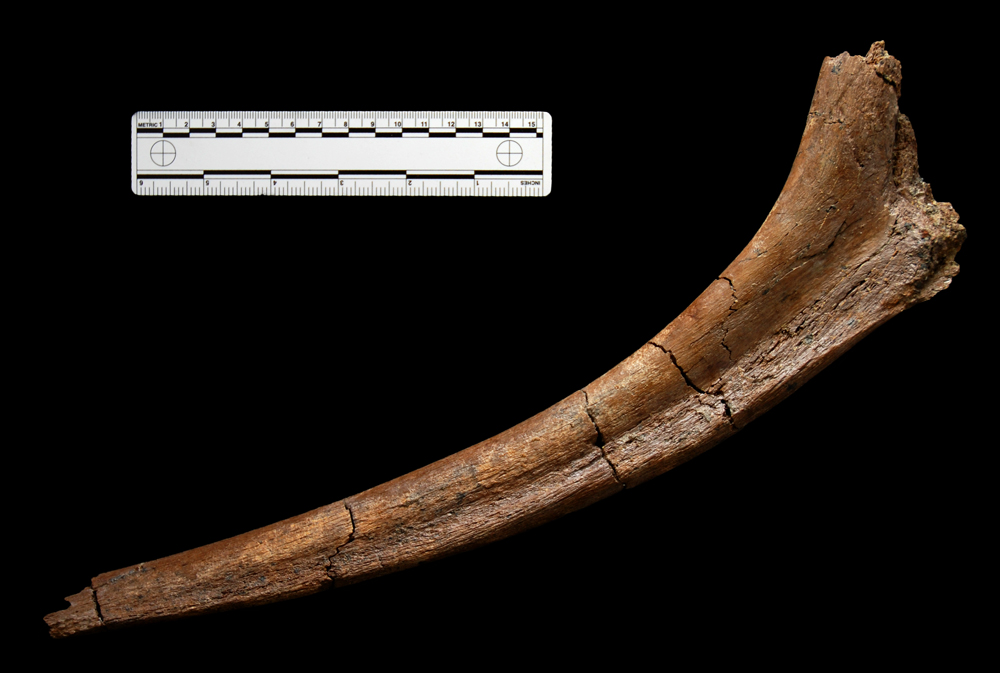
Carlos recognised this as a rib and there were a variety of suggestions about what it might be from, ranging from a cetacean to a mammoth. Some good ideas, but Lena came closest with speculation about dinosaurs.

This is in fact the rib of a Triceratops Marsh 1889.

There is a lot that could be said about Triceratops and other horned dinosaurs, but since I’m pushed for time I will just leave you with a link to an article by Darren Naish who knows more about such things than me and this brilliant stop-motion video from the 1925 film of The Lost World, which is simply iconic:

Friday mystery object #205 answer

Last Friday I gave you these tiny bones to identify:

mystery205

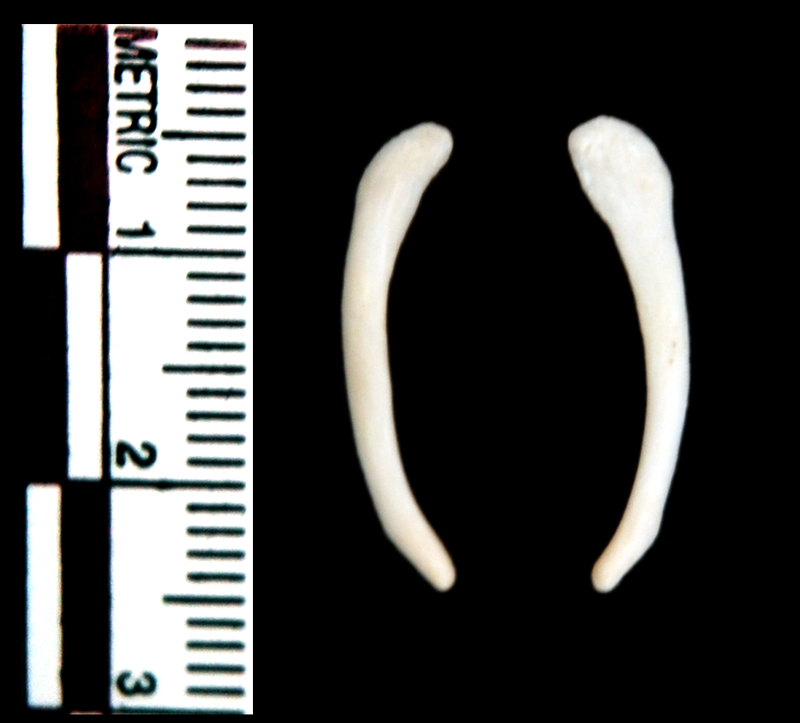
Several suggestions were put forward with soph coming close with the suggestion of a broken furcula and Lena and henstridgesj correctly suggesting the clavicles (or collarbones) of a Cat Felis catus Linnaeus, 1758.

Cat clavicles, like the clavicles of a variety of other animals, are much reduced and are no longer connected to the scapulae (shoulder blades). This allows the scapulae to move much more freely during running, which can increase stride length and in the case of Cats it allows the animal to fit through holes big enough to get their heads through (assuming the Cat isn’t a bit too portly).

These sorts of vestigial structures are interesting from an evolutionary perspective, since they serve little or no direct function, but they still develop as a result of inheritance from ancestral forms that did use them.

In the case of Cats that form would have been around quite some time ago (probably 61.5 – 71.2 million years ago) since the closest related group to the Carnivora with a well-developed clavicle (that I can think of) would be the Chiroptera (bats), where it plays an important role in flight.

Since that divergence of the Chiroptera and the lineage giving rise to the Pangolins, Carnivora and Ungulata the clavicle has been pretty much completely lost, so it’s interesting that even a vestigial form occurs in Cats.

It’s funny to think how such small bones can raise questions that lead us through millions of years of evolution in search of answers, but that’s the nature of studying nature!

Friday mystery object #204 answer

Last Friday I gave you this unusual tooth to identify:

mystery204

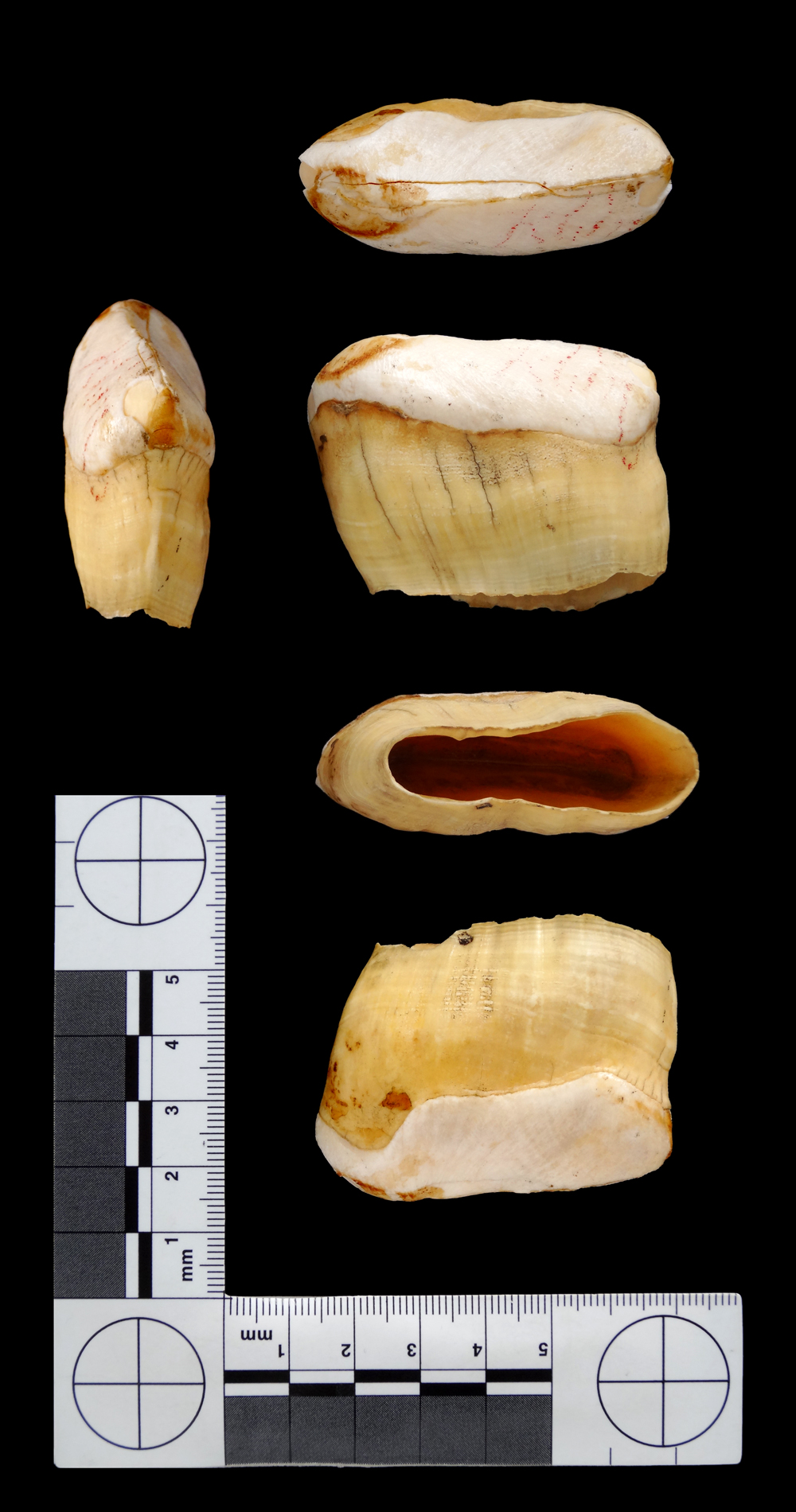
It had me a bit stumped, as I couldn’t think of many things big enough for a tooth this size and I could think of even fewer with a tooth this shape.

My first thought was one of the smaller toothed whales, since this would be in the right size range and the open root is similar to what you see in a Sperm Whale:

Tooth of a Sperm Whale in a Hand by Lord Mountbatten

But the low and wide shape was all wrong for most of the whale teeth I can think of, except perhaps for the rather odd tusks found in the mandibles of some species of beaked whale.

In fact, I was thinking that it might be the tusk of a juvenile or female Gray’s Beaked Whale, given the shape of the male’s tusks.

However, Laura McCoy made a very useful observation (initially via ermineofthenorth) about the upper incisors (or premaxillary incisors) of the  Continue reading

Friday mystery object #203 answer

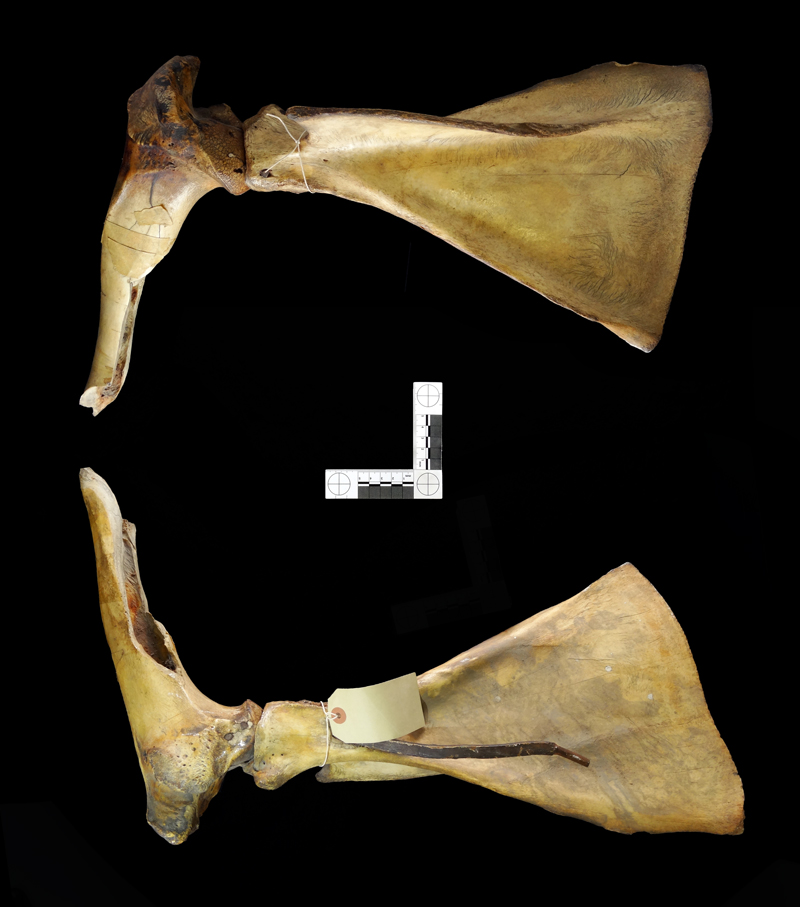
Last Friday I gave you this rather large scapula that I discovered in a crate in the Horniman’s stores to identify:

mystery203

It wasn’t an easy one, since there are relatively few distinctive features on a scapula compared to something like a skull.

Jake has talked about scapulae on his blog before and that provides a good place to see that this specimen is most likely from an ungulate – but an ungulate much bigger than a Red Deer. This led to suggestions for Cow, Horse, Aurochs and one of the larger species of deer. 

Outside the comments section on Zygoma there were also suggestions of Giraffe and Giant Irish Deer and I wondered about Camel.

All in all, there were a lot of suggestions, but none of these looked quite right when I searched for comparative material – although finding good images of scapulae online wasn’t easy. I did, however, find a useful video explaining the differences between Horse, Cow (or Ox) and Camel scapulae:

This was enough for me to rule out each of those animals, although the closest was the Cow – in particular the relative sizes of the two faces (called fossae) on either side of the raised ridge called the spine. However, the shape of the acromion (the hooked bit of the raised spine that points towards the shoulder joint) didn’t seem blunt enough for a Cow.

The size differences in the fossae turn out to be about the same in Sheep and deer as in Cow, which led me back in the direction of Jake’s deer scapulae, which seemed to most closely match the shape, if not the absolute size.

Taking the size into account I realised that this animal must stand almost twice the height of a Red Deer, which narrows it down to just one modern species – the Moose or Eurasian Elk Alces alces (Linnaeus, 1758), which can stand at over 2m at the shoulder compared to the Scottish Red Deer’s (still imposing) 1.22m.

Bull Chukotka Moose by Beloki

I still need to double-check my identification against a confirmed Moose scapula, but from looking at some images of Moose skeletons online it seems that the shape of both the fossae and the acromion fit well.

So a big thanks to everyone for their help in identifying this and special props to newcomer Jeanie who seems to have been spot-on about this being from a cervid. Thanks!

Friday mystery object #202 answer

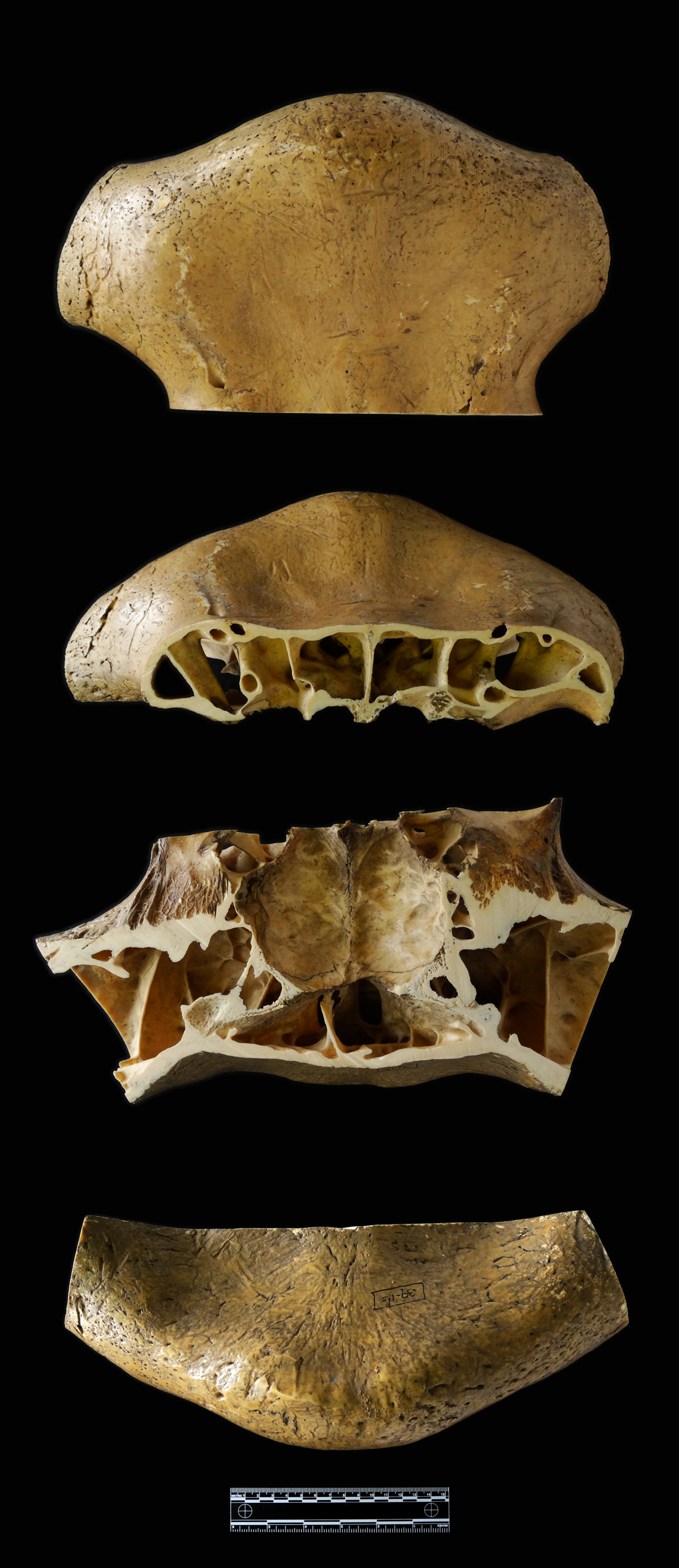
Last Friday I gave you this big chunk of bone to identify:

mystery202

I was hoping that it might be a little bit of a challenge because it doesn’t seem to have any really diagnostic characters, but your shape-matching skills were good and several of you managed to get a close identification.

Heather was straight in with the suggestion of it being the back part of the frontal bone (the bit that makes up the front and top of the skull) of an Aurochs – the very large, extinct ancestor of modern Cows. Wouter van Gestel also suggested one of the large bovids – the Asian Water Buffalo, and Ben Gruwier agreed with both Heather and Wouter in saying that it was from a large bovid.

This was as far as I had managed to get with the identification myself, however the specimen had a number (39.16), which I was able to check against the natural history registers. The first part of the number told me to check in the register for the year 1939 and it was the 16th entry for that year, so it was easy to find (unlike with some numbering systems with museum specimens).

It turns out that this specimen is in fact the frontal bone of a Gaur or Indian Bison Bos gaurus Smith,1827, and it turns out that the Gaur has a distinctive ridge between the horns, which is what this specimen is showing, so I should have been able to work it out from the morphology (I will be able to in future).

Gaur bull at Nagarhole National Park, India. By Dineshkannambadi

Bull Gaur can weigh up to 1.5 tonnes and stand 2.2m (7’2″) to the shoulder – they’re enormous. Their only natural predators are the Tigers and large Crocodiles they share their Southeast Asian forest habitat with, but even then Gaur have been known to kill Tigers by trampling and goring them.

Perhaps unsurprisingly these animals are far more risk from humans and have been hunted for meat and trophies until they have become threatened. They are protected by CITES (the Convention on International Trade in Endangered Species), but illegal trade continues and their forest habitats are constantly being lost due to human encroachment.

It’s disheartening that so many of my mystery objects end with a comment about human activities driving a species towards extinction, but unfortunately it’s a massive problem in the world we live in. I wonder if there will be any wild Gaur left in 2039, just 100 years after this specimen was collected?

Friday mystery object #201 answer

Last Friday I gave you this object to have a go at identifying:

mystery201

It was not an easy one and I was hoping that nobody would work out what it was, but as usual some of you managed to figure it out. So, big congratulations to cackhandedkate and Jake who suggested the surface of a tongue and henstridgesj for working out that these 2mm hooks are from the tongue of a cat – a BIG cat.

These are in fact the barbs or aculei  from the tongue of a young Tiger Panthera tigris (Linnaeus, 1758)

aculei_tiger_tongue

This small sealed box has no date associated, but the style of the label and the number suggest that it probably one of the early specimens acquired by Frederick Horniman before he built the Horniman Museum, dating to 1886 or perhaps earlier.

The aculei on cat tongues are interesting adaptations not seen in other carnivores (at least none that I can find any information for). The rows of hooks are ideal for grooming – like a stiff brush, but they are also a useful tool for removing meat from bones.

This is particularly handy when you have a relatively short face with incisors that form a broad straight row for clamping windpipes shut, unlike the narrower incisor row that you find in the dogs, which act a bit like like tweezers for removing meat on bone.

Photo of Tiger grooming by Tennessee Wanderer on Flickr

Photo of Tiger grooming by Tennessee Wanderer on Flickr

The aculei are made of keratin, the same protein that claws, hair and horns are made from. It may seem quite difficult to evolve lots of small claws on your tongue, but you might be surprised to know that the cells that secrete keratin (called keratinocytes) are the the most common cells on the surface of your skin (including your tongue) where they play an important role in fighting infection and repairing damage.

In order for these cells to secrete enough keratin to grow a small claw, they need to get a bit bigger so they can secrete more of the protein. They also need a simple mechanism that gives the resulting structure a useful shape.

Mammalian tongues are already covered in little structures called ‘papilla’, with three types containing taste buds and one type, the filiform papilla, that provide grip on the surface of the tongue, making it easier to eat ice-cream. It’s these filiform papilla that have adapted in the cats to make a structure with enough grip to lick the meat off a bone.

I’m actually a bit surprised that more mammals don’t have tongue barbs like cats, although there are other animals out there that have specialised tongues with other keratinous structures, like the horny tips of Woodpecker tongues and the tiny bristles of some Fruitbats.

Still, nothing says ‘obligate carnivore’ like a tongue covered in sharp hooks. Considering the length of the aculei I wouldn’t fancy being licked by a Tiger – their tongue looks like it could take human skin right off. However, it has given me an idea for how to quickly and easily remove wallpaper using a Tiger and a bucket or two of Bovril.

Friday mystery object #199 answer

On Friday I gave you this rather beautiful object to identify,which came to light during our mollusc Bioblitz last week:

mystery199

It turns out that it didn’t prove much of a challenge and was identified to species level in no time. So well done to Kevin, Anna Pike, @benharvey1 and Carlos Grau!

In fact, Carlos went a step further than identifying the specimen and told the very story I was planning to tell in this post. It’s great to hear stories like this about specimens or species, so I’ll share it with you in Carlos’ words:

This picture immediately brought back memories of my old seashell-collecting guide I had when I was about 12 and haven’t looked at for years and years (I will look for it next time I’m at my parent’s). The book said that this species was considered so valuable that fakes were made in rice paste by Chinese artisans, and that the counterfeits are now more rare and valuable than the actual shell! I remember finding that bit of information amazing.

It’s been so long I had to Google the book, it’s “Guide to Seashells of the World” by R. Tucker Abbott.

The animal is… Continue reading

Friday mystery object #198 answer

On Friday I gave you these two objects (with a third photo to show the end) to identify.

mystery198

The specimens had me a bit stumped. They are keratinous (keratin is the protein that makes up fingernail, hair and horn amongst other things) and perhaps unsurprisingly they had been labelled as “Artiodactyla horns” given their overall shape. Of course, if they were artiodactyl horns they would be from a bovid (antelope, sheep, cow, etc.), since the other artiodactyls don’t have unbranching horns.

There are nearly 150 bovid species, ranging from the gigantic Gaur to the miniature Royal Antelope, and so far I’ve not been able to find any with horns quite like this. Moreover, the very small size, pattern of growth and relatively shallow depth of the inside chamber of the sheath, don’t really agree with the identification.

My next thought was the spur of a galliform bird, like a Chicken. I compared these specimens to the spur of a male Chicken skeleton in the Horniman’s collection and they looked quite different and much too long, so I gave up on that idea.

Finally I started to consider claws of all sorts of animals, but this didn’t make much sense to me as claws aren’t usually round in cross-section and they have wear facets from being used to walk, climb or dig. You don’t have claws this big if you’re not going to use them and I couldn’t think of much use for a claw like this.

So that left me stumped.

Fortunately, Mieke Roth came to my rescue and made me reassess the Chicken spur identification. It turns out that the Chicken I compared the spur to much have had his spur sheaths  removed and they’d hardly grown back.

As you can see, the spur identification fits perfectly!

Many thanks to everyone for their suggestions on this mystery object. It really helps to have fresh eyes looking at a problem and suggesting something you’ve discarded in error!

Friday mystery object #197 answer

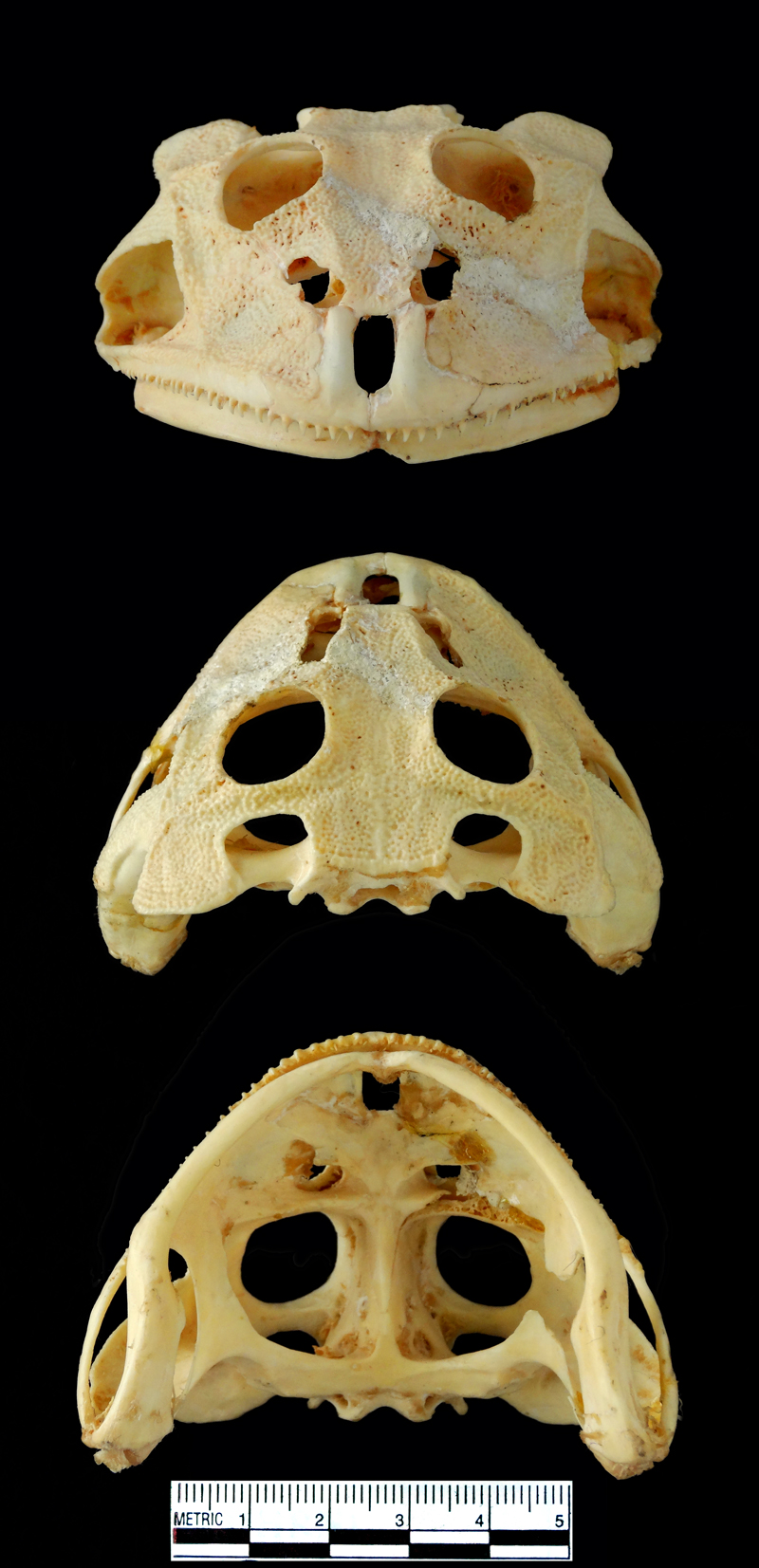
On Friday I gave you this skull to identify:

mystery197

As I suspected, it wasn’t too much of a challenge. Jake got in quick with the suggestion of a Sri Lankan Python, with Gina Allnatt, Kevin and Rhina Duque-Thues all agreeing with a generic Python sp. identification. Nicola Newton also suggested Python, but she was of the opinion that it was probably a Royal Python or Carpet Python on the basis of the size.

I agree with Nicola and think that this is most likely the skull of a Royal (or Ball) Python Python regius (Shaw, 1802), based on the size of the specimen and the shape of the supratemporal and frontal bones compared to other Pythons I was able to find images for (if you don’t know which bones I mean you can see what I mean on a handy annotated picture of a Python skull from the Digimorph website).

Pet ball python - normal phase, probably an import (rescue). By Mokele

The skull is one of several similar specimens from the old King’s College teaching collection, so it’s a pretty good bet that the skulls came from either research animals or pets. The Royal Python is a fairly small African Python that is commonly sold as a pet because it has a mild temperament – so that helps offer a bit of support for the identification, although what’s really needed is a detailed identification key for Python skulls or access to good comparative material.

The lack of good resources for identifying the skulls of snakes is a bit frustrating. After working with bird and mammal skulls, where there are some amazing resources like Skullsite and the Mammalian Crania Photographic Archive I’m still searching for something similar for reptiles. Perhaps the Deep Scaly Project will deliver the goods one day… here’s hoping!

Friday mystery object #196 answer (well, not really)

On Friday I asked you to help me identify this mystery object:

mystery196

Many thanks to everyone who made suggestions about what this sacrum and caudal vertebrae (the bones that make up the tail) could be from. There were some useful ideas that I intend to follow up on, but alas I must apologise to you all because I’ve still not managed to make a confident identification (as yet).

I always struggle with the identification of vertebrae without having good comparative material. Skulls are straightforward to identify as they tend to contain lots of diagnostic features, but with vertebrae there are fewer distinctive feature that allow a straightforward species level identification.

In this case I’m still not sure whether this tail is from a marsupial, a monkey or a mustelid, although I’m pretty certain it’s from a mammal.

I think I may have to mop up some of the loose ends of mystery objects that I’ve not been able to confidently identify at some point, by making a trip to another museum with a bigger collection of postcranial material than I have available at the Horniman.

Of course, sometimes you just have to accept that there isn’t enough information associated with a specimen to make a confident identification at all. Sometimes you also need to ask whether it’s worth the extra time and resources trying to get a good identification for a specimen with no other good data about where, when and by whom it was collected.

This kind of information can turn an interesting display or teaching specimen into an even more useful research specimen, that can be used to address questions about species distribution, population genetics and evolution – amongst other things.

With a specimen that lacks these kinds of data – and which isn’t particularly visually exciting for display – it becomes more difficult to justify going to special efforts to identify it. Nonetheless, I know this specimen will bug me until I work out what it is!

Friday mystery object #195 answer

On Friday I gave you this mystery object from the collections at the Horniman Museum to identify:

mystery195

The bone is interesting because it was badly broken when the animal was alive. As Jake pointed out, the bone has healed without the attentions of a vet, so it hasn’t healed straight and there’s a lot of excess bone growth. This makes it harder to work out what the bone originally looked like.

Minioncat recognised that this is the humerus of a juvenile animal and although there were several species suggested on the basis of size, none seemed to quite fit.

Lena made a really helpful observation about the presence of a supracondylar foramen – which is the hole that can be clearly seen on the side of the bone in the top image, near the articulation on the right hand-side of the picture.

This foramen is something seen in some of the carnivores, like cats and mustelids, but the bone itself doesn’t really match any of the cat or mustelid bones that I compared it to.

When I first found this bone I though that it belonged to a tree-climbing (or arboreal) carnivore, because the head of the humerus would allow for a considerable range of movement (plus broken bones are common in arboreal animals). The only thing I could really think of that was likely was a small species of bear, since cat humeri are quite different from this.

However, on Twitter Raymond Vagell made the inspired suggestion that it could be the humerus of a Fossa Cryptoprocta ferox Bennett, 1833 – something that I never even considered.

Fossa (Cryptoprocta ferox) image by Ran Kirlian

I don’t have any Fossa postcrania for comparison and I can’t even find a good image of a Fossa humerus online, so it’s hard to check. There is a Fossa skeleton image on the Museum Victoria website, which shows that the humerus is pretty similar, but alas it’s a clear enough image to be more sure.

Once I started thinking about less commonly occurring carnivores I broadened my search and came across a paper with a comparative drawing of the humerus of a Binturong Arctictis binturong (Raffles, 1822), which is another tree-climbing mammal, with a similar humerus shape.

Binturong (Arctictis binturong) at Overloon, NL by Tassilo Rau

The long and short of it is that I still don’t know what specimen this mystery object came from, but I now have a fresh perspective for renewing my search, thanks to the people who get involved with the Friday mystery object. I will let you know if I get any further in my search for an identification, but I owe you all a big thanks for contributing!

Friday mystery object #194 answer

On Friday I gave you this rather unusual looking skull to identify:

mystery194

In fact, it’s so unusual that it doesn’t even look entirely like a skull, so it’s not surprising that the specimen proved a bit of a challenge.

Some elements (like the lower jaw) look a bit like they’re from a turtle, but other elements of the skull shape look more like they belong to an amphibian – from something like Necturus perhaps. Despite these similarities to some of the ‘basal’ tetrapods, the skull is actually from a fish.

The reason why it looks quite similar to a tetrapod skull and less like the average fish is because it belongs to a member of the Lobe-finned fish (Sarcopterygii) which are more closely related to the tetrapods than the more common and diverse Ray-finned fish (Actinopterygii). Despite the difficult identification, microecos managed to spot that this was a Lungfish and henstridgesj managed to identify the species as being the  Continue reading

Friday mystery object #193 answer

On Friday I gave you this specimen to identify:

mystery193

Unsurprisingly you all recognised it as a tortoise carapace. The species was a bit more difficult though as tortoises can display quite a lot of variation in their colour and shell structure within a species.

There were various good suggestions, but in the comments only Barbara Powell made reference to what Colin McCarthy and myself thought this was from, although Maggie J Watson also identified it in a tweet.

When we saw the specimen we thought that it was probably a  Continue reading

Friday mystery object #192 answer

On Friday I gave you this unidentified specimen from the Horniman’s collections to take a look at. I had already had a go at working out what it is, but it never hurts to get a second opinion.

mystery192

It’s actually a bit of a generic looking overall shape, perhaps reminiscent of a owl or a maybe a pheasant of some sort. However, the nares (nostrils) are very small and round and set in a bill that is sharp, shortish and very solidly constructed, which is something you only really see in a few passerines, some parrots and the falcons. The skull is too big for a passerine and the bill is totally the wrong overall shape for a parrot, which leaves us with a falcon – a fairly small one at that.

From there the shape of the palate and the proportions of the cranium led me to a species identification that I’m pleased to say agreed with that proposed by Tony Irwin and Wouter van Gestel (who eloquently explained the indicative characters that I mentioned above). We all think that this is the cranium of a  Continue reading

Friday mystery object #190 answer

On Friday I gave you this skull to identify:

mystery190

The animal it comes from is quite distinctive, with loads of character, so it’s no big surprise that so many of you managed to identify it.

So well done to Jake, Dave Godfrey, henstridgesjMieke Roth, Wouter van Gestel, Steven D. Garber and Crispin – this is indeed a  Continue reading