On Friday I gave you this skull to identify:
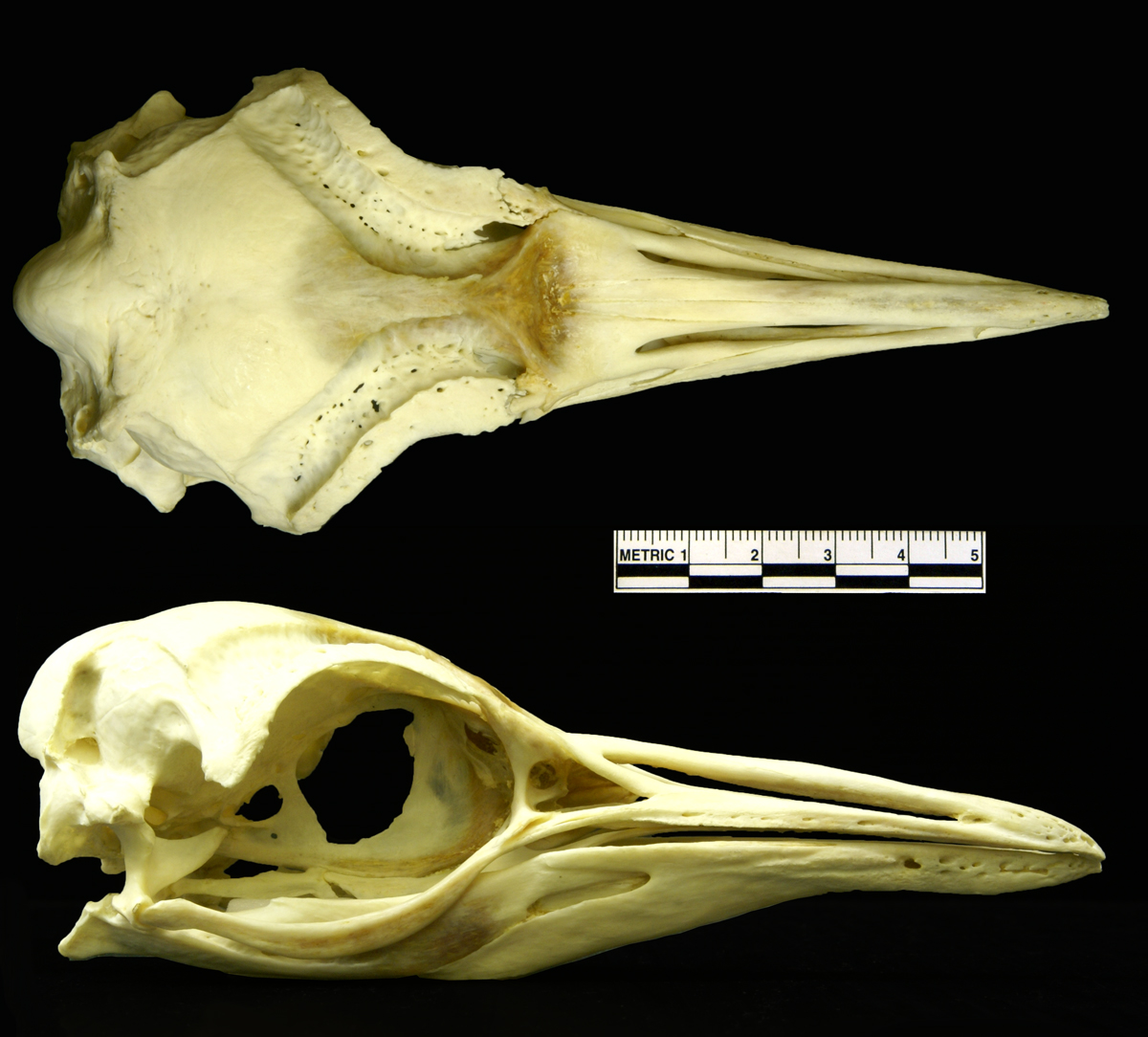
It obviously belonged to a bird, but what kind? If you look at the top image you’ll see two deep scars on top of the head above the eyesockets – these are the areas where salt glands were located when the animal was alive. This is the first thing I look for when I have a bird skull to identify, because they tell you whether the bird was marine.
I’ll explain – marine birds don’t have regular access to fresh water and they need a way to remove excess salts from their system, which is what the salt glands are for. Generally, the bigger and deeper the scars for the salt gland, the more marine the bird is in its habitat, so clearly this bird spent an awful lot of time at sea.
There are plenty of marine birds out there, but only a few have such well-developed salt glands and even fewer have such a distinctive bill shape – just look at that mandible. This is of course a Continue reading