Friday mystery object #68 answer

On Friday I gave you this object to identify:

It’s one of my own specimens, found in 1997 and prepared using the simple method of suspending the body from a tree in a bucket with small holes drilled in the bottom to allow rainwater to drain. The specimen could have been bleached with a mild hydrogen peroxide solution, but the original intention was for it to provide an indication of the bone damage that may suggest insect activity, so I didn’t want to risk causing any additional chemical damage.

Everyone was on the right track with their suggestions – the hooked bill and large orbits making it clear that this was a predatory bird, with most people correctly opting for some kind of owl. However, Jake managed to get the species right in no time by using specimens from his own collection to inform his identification of  Continue reading

Friday mystery object #68

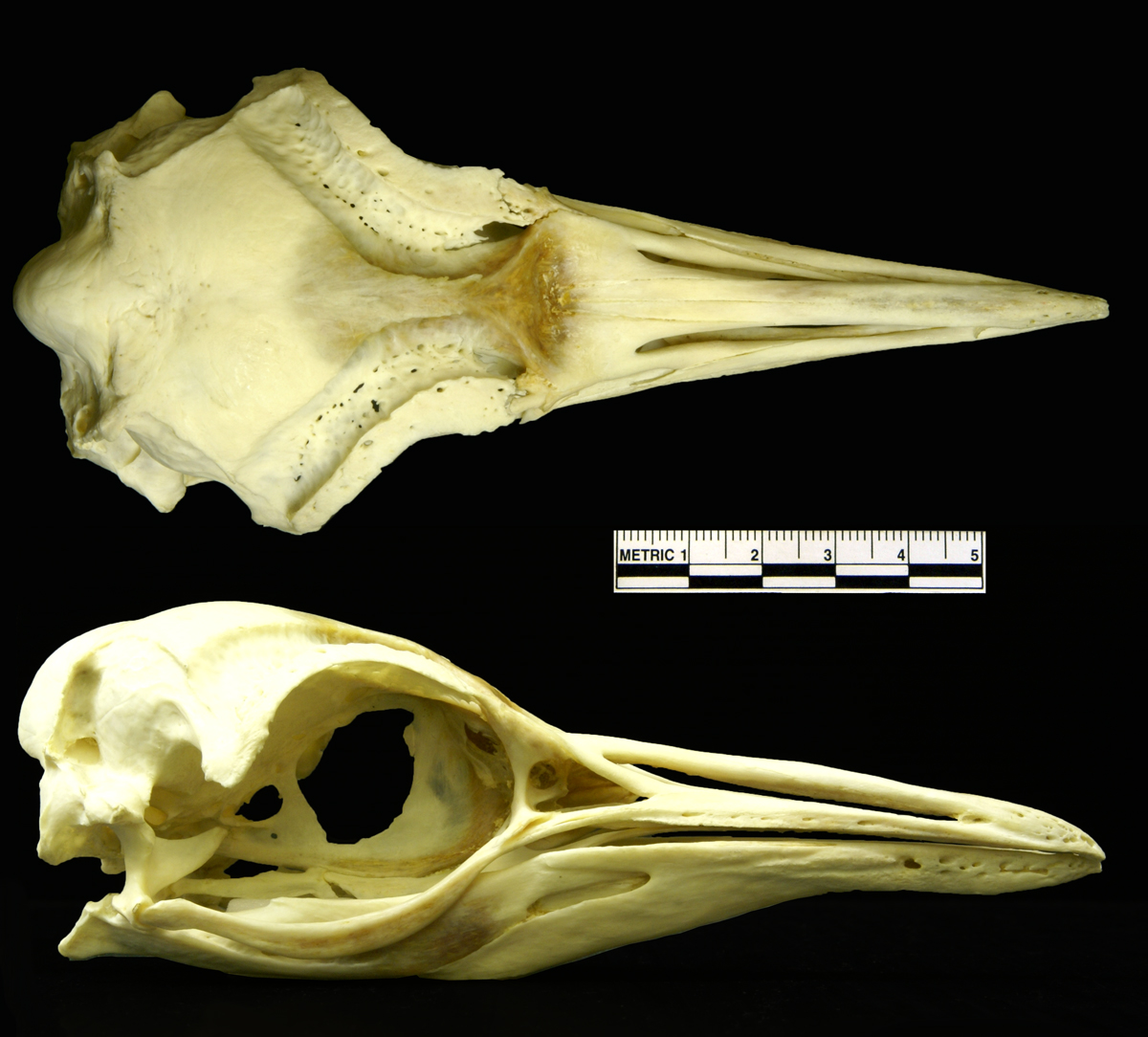
I’ve not been in our collections building for a couple of weeks now, so I am running short of specimens to use for the mystery object. However, there was one at my disposal, that I collected myself well over a decade ago – any idea what this is:

As usual, you can put your questions, comments and suggestions below and I’ll do my best to reply. Good luck!

Friday mystery object #67 answer

On Friday I gave you this object to identify:

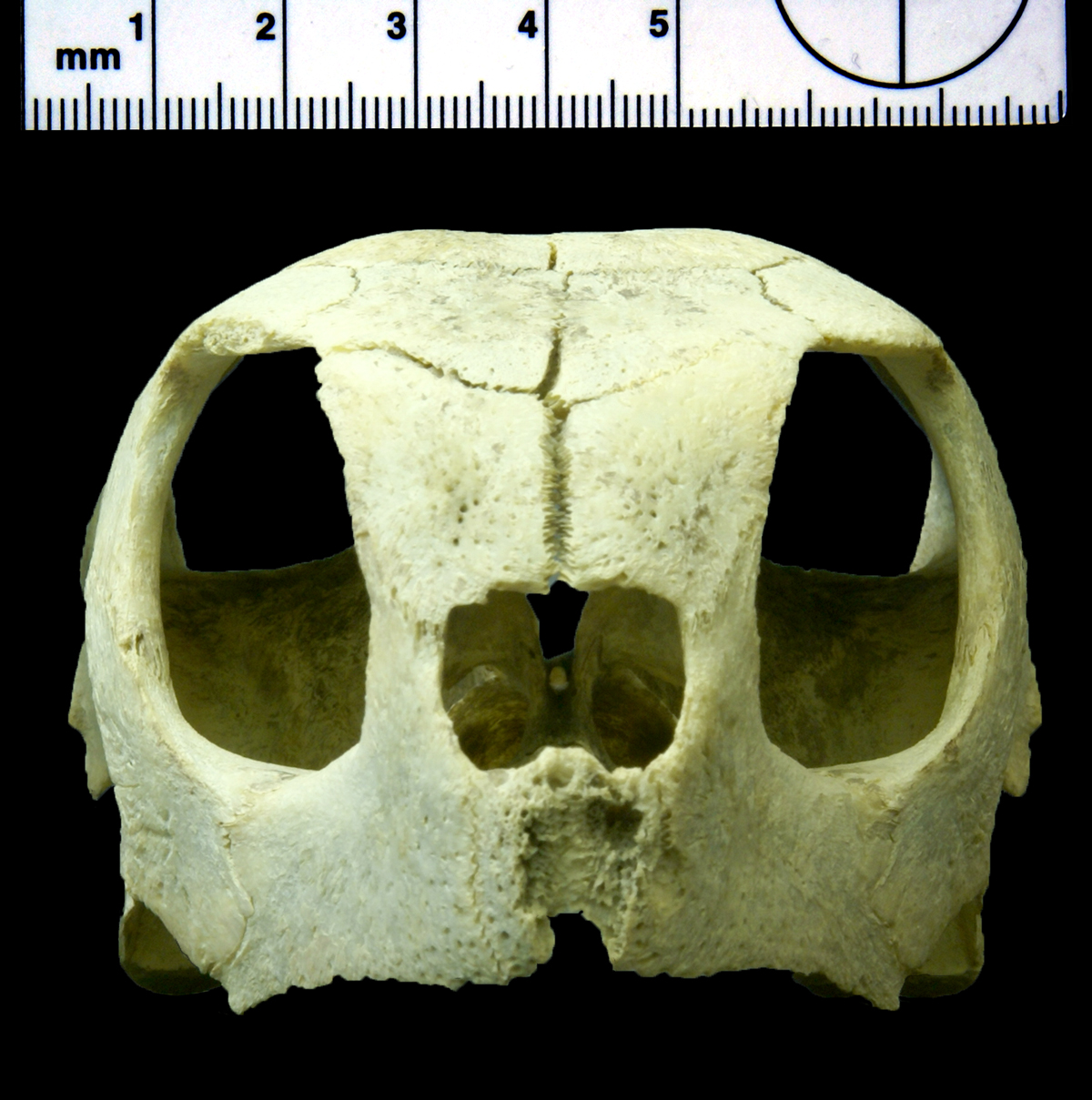
As I suspected, you all worked out that it is the skull of a turtle, so well done all and particularly Jake, who got there first.

Turtle skulls are quite characteristic, in that they have a bill with no teeth and they have no openings apart from the obvious ones like the eye sockets and nose. Most other tetrapods have several openings in their skulls, something that is diagnostic for, and sometime provides the name for, major groups like the main ‘reptile’ group the Diapsida. This name that means two arches, which is a reference to two additional openings present in the skulls of this lineage (which includes the lizards, snakes, crocodiles and dinosaurs – including the birds). Turtles and tortoises are members of the Anapsida, which means without arches.

The characteristics of this skull are those of an Anapsid and the streamlined shape and quite large size (despite it being a youngish adult, as indicated by the unfused sutures) suggests that it is a sea-turtle. There are only 7 species of sea-turtle and the comments provide an example of features that can be used to distinguish this as a  Continue reading

Friday mystery object #67

Here’s a specimen without any identification from the Horniman’s collections. I thought I knew what it was straight-away, but then had to spend ages trying to confirm the identification. I just hope you all come to the same conclusion as I did!

As usual, put your questions, observations and suggestions in the comments section below and I’ll do my best to reply during the day. Good luck!

Friday mystery object #66 answer

On Friday I gave you this mystery object:

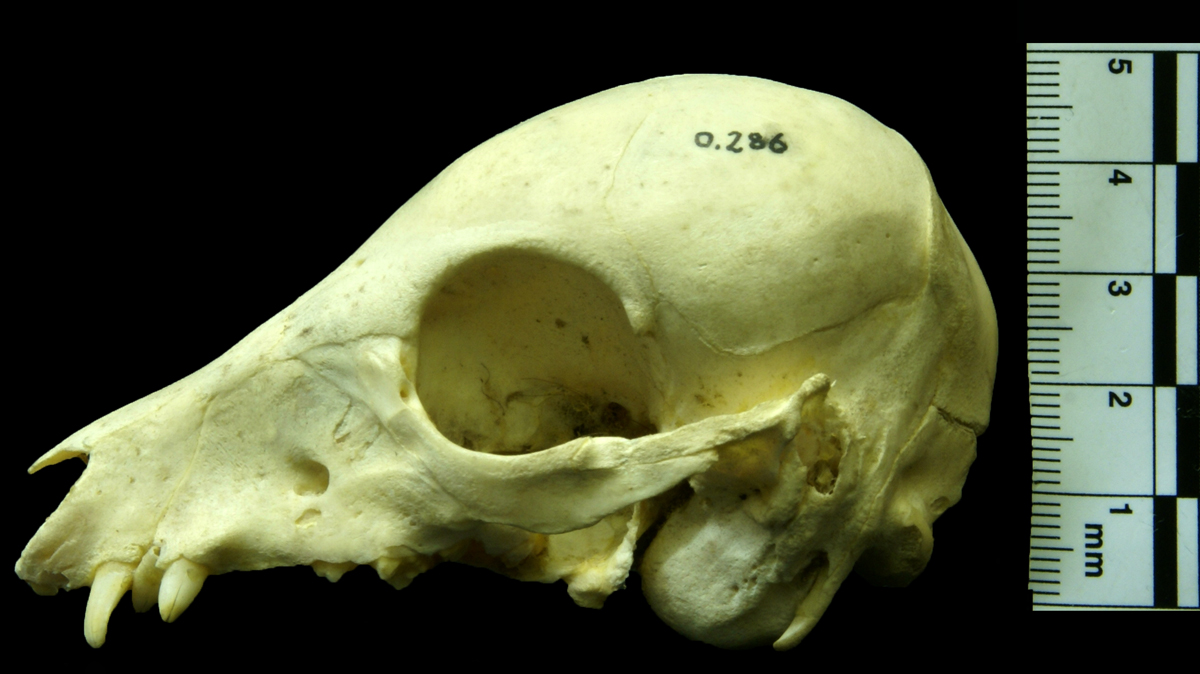
I thought it would be too easy, but I hadn’t factored in that it is the skull of a juvenile, which makes it much harder to identify from just a photograph. I did drop a few hints about what it might be on Twitter when I said it was ‘easy as pie’ and I had a hard time restraining myself from making a give-away comment about it flying when Jake asked if it was a big bat.

Manabu Sakamoto spotted that it was a juvenile and that the canine-like teeth were quite distinctive of a particular group. Neil managed to convey that he knew the answer with a beautifully subtle comment:

After rooting around a bit I think that I have sussed out the answer.

The answer being  Continue reading

Friday mystery object #66

This Friday I have a lot on, so I’m giving you an easy one that the biology and bony types should be able to drop hints about for the less osteocentric amongst you:

I’m sure you’ll all get this in no time, but in case you don’t I’ll do my best to respond to any questions, observations or suggestions in the comments section below. Have fun!

Friday mystery object #62 answer

On Friday I gave you this specimen and left you to work out what it was by yourselves (for which I humbly apologise):

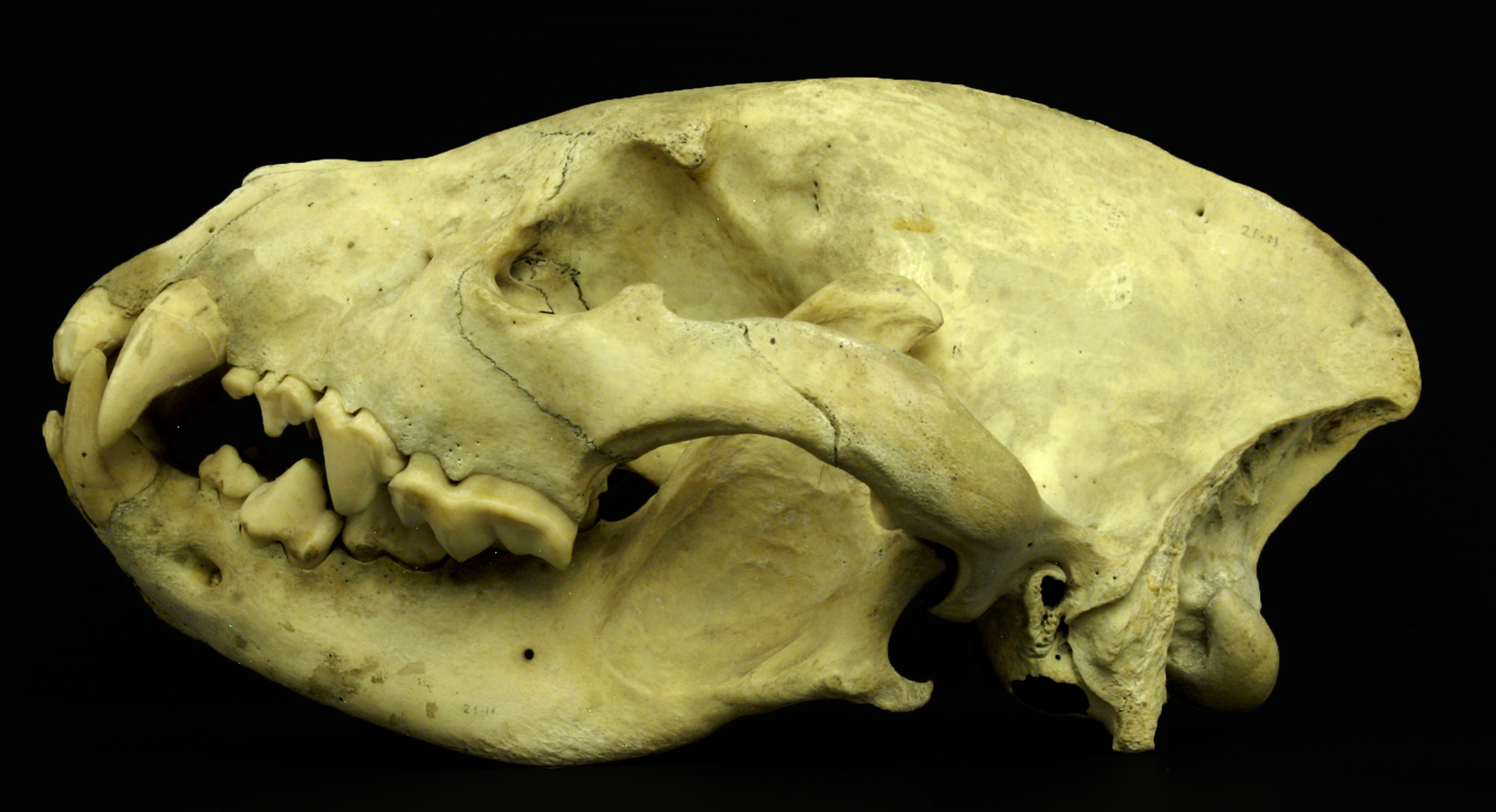
There were some great observations from the outset – Jake immediately spotted that it had strong jaws and looks like a carnivore and Manabu Sakamoto went on to explain the biomechanical reason for the strong jaws and recognised that it’s a marine mammal. Jake came close when he said that it’s something similar to a Leopard Seal and jonpaulkaiser came even closer with the suggestion of California Sea Lion. Neil subtly hinted that it might be a Stellar’s Sea Lion, but Zigg managed to work out that it is in fact the skull of a  Continue reading

Friday mystery object #62

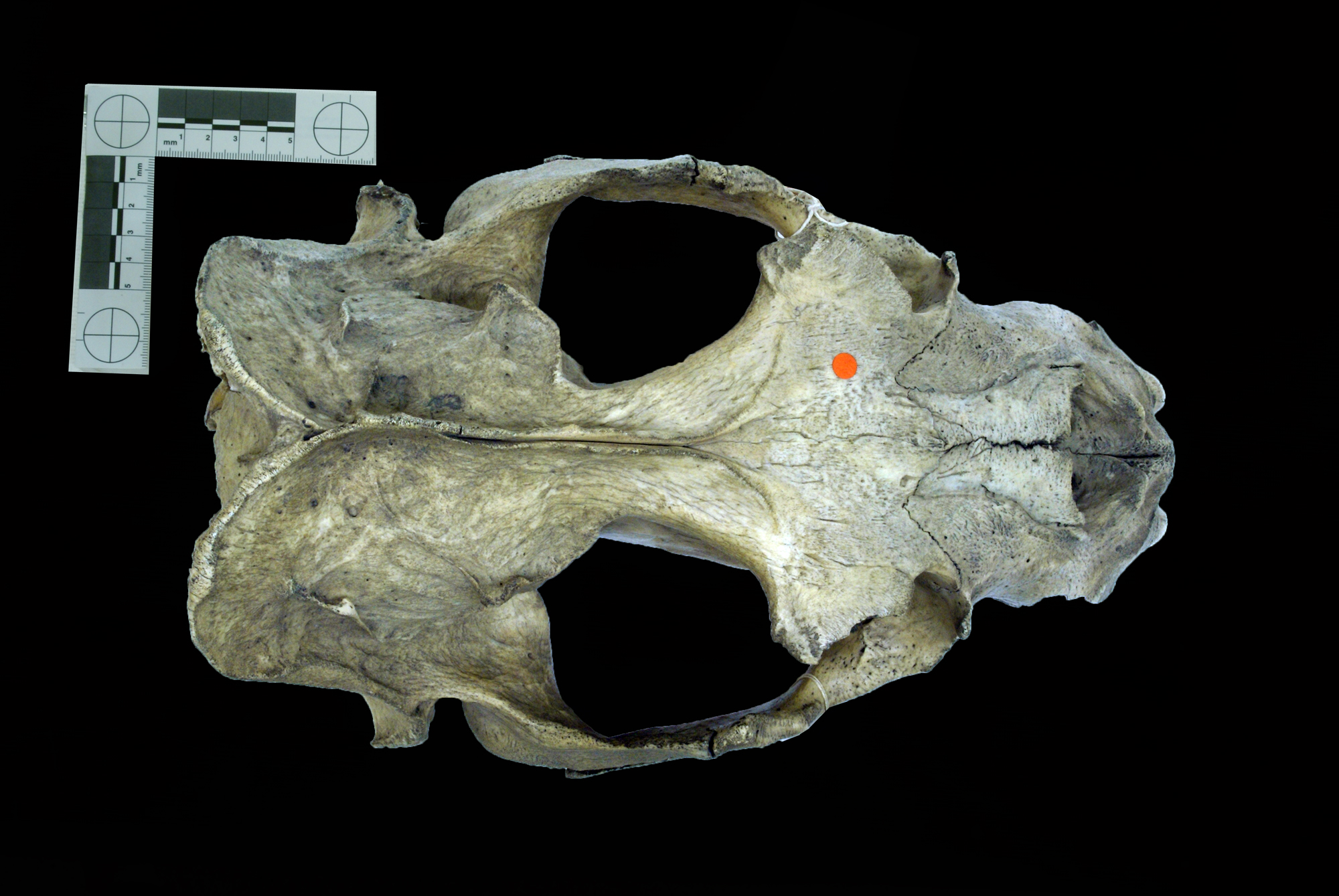
This Friday I’m returning to skulls (with thanks to Rebecca) – an easy one for those in the biology fold, but hopefully an interesting one:

I’m unlikely to be able to answer questions as regularly as usual, since there is a meeting of NatSCA at the NHM today, where I will be firmly ensconced, although I’ll answer what I can, when I can, so don’t be shy about leaving comments below – and for the biology types who might find this easy, perhaps you could have a go at guiding the less osteologically minded? Good luck!

Friday mystery object #60 answer

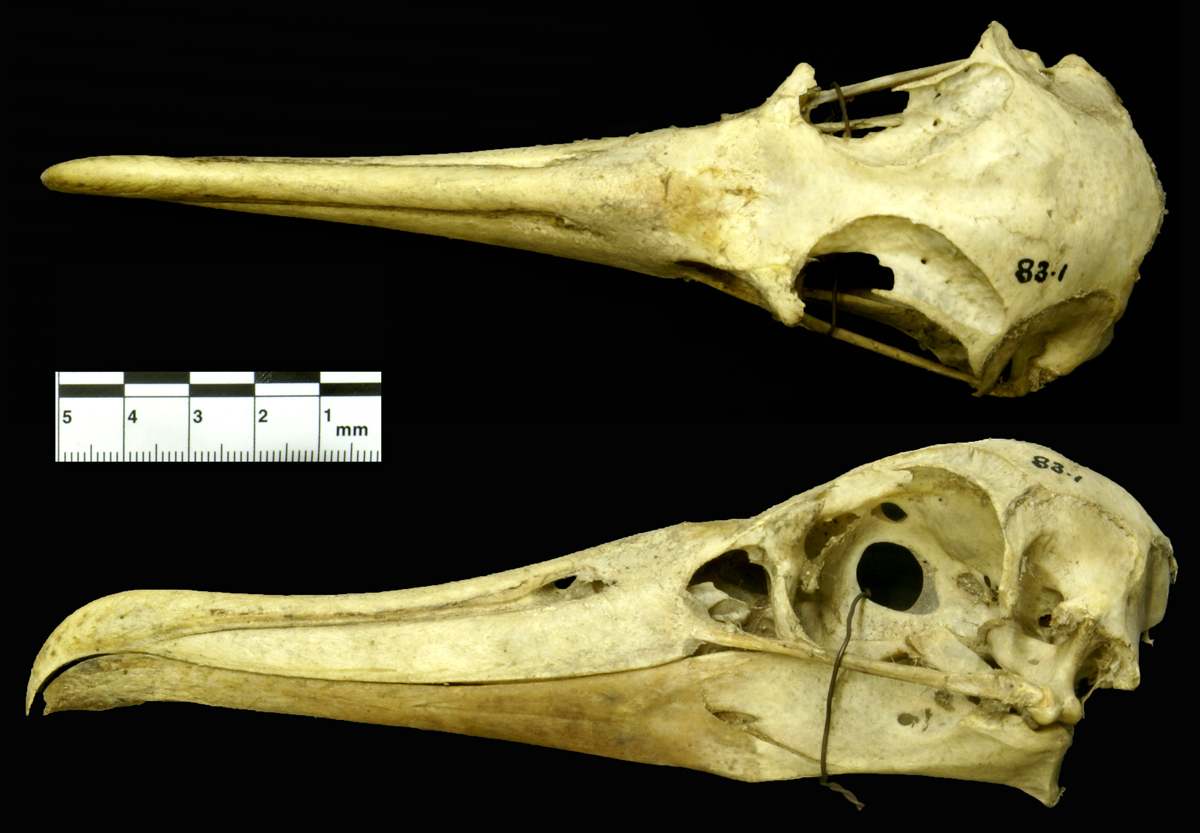
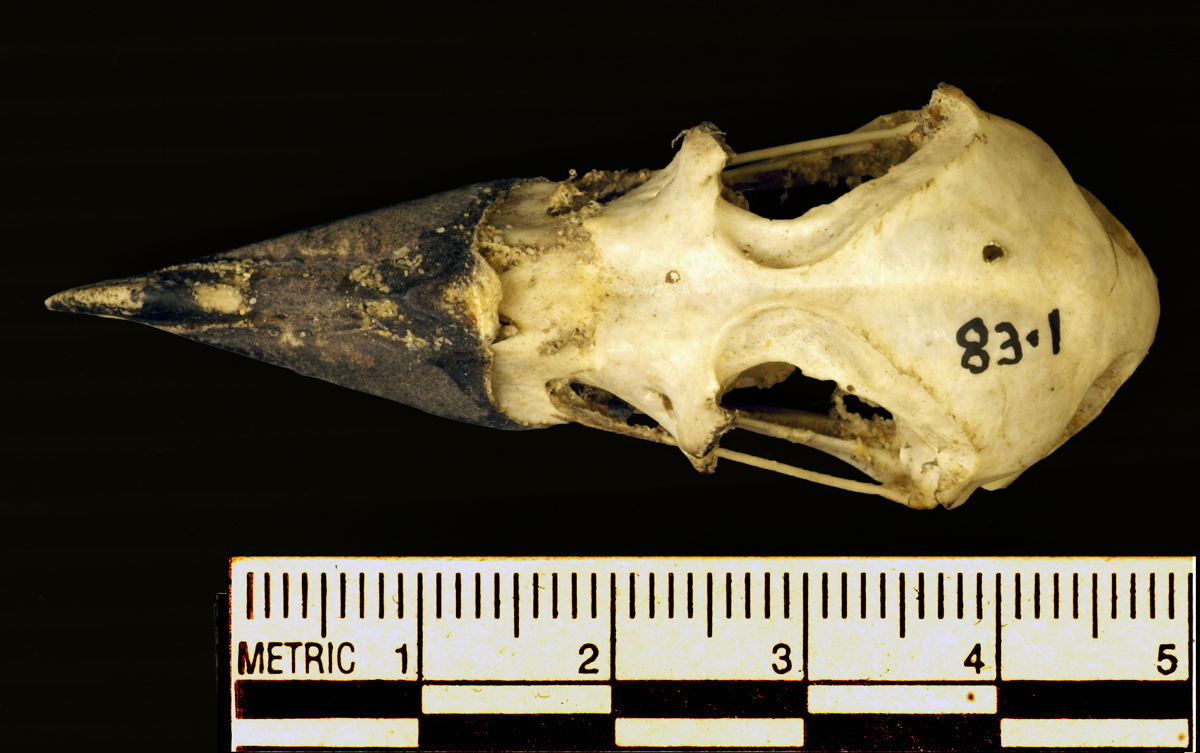
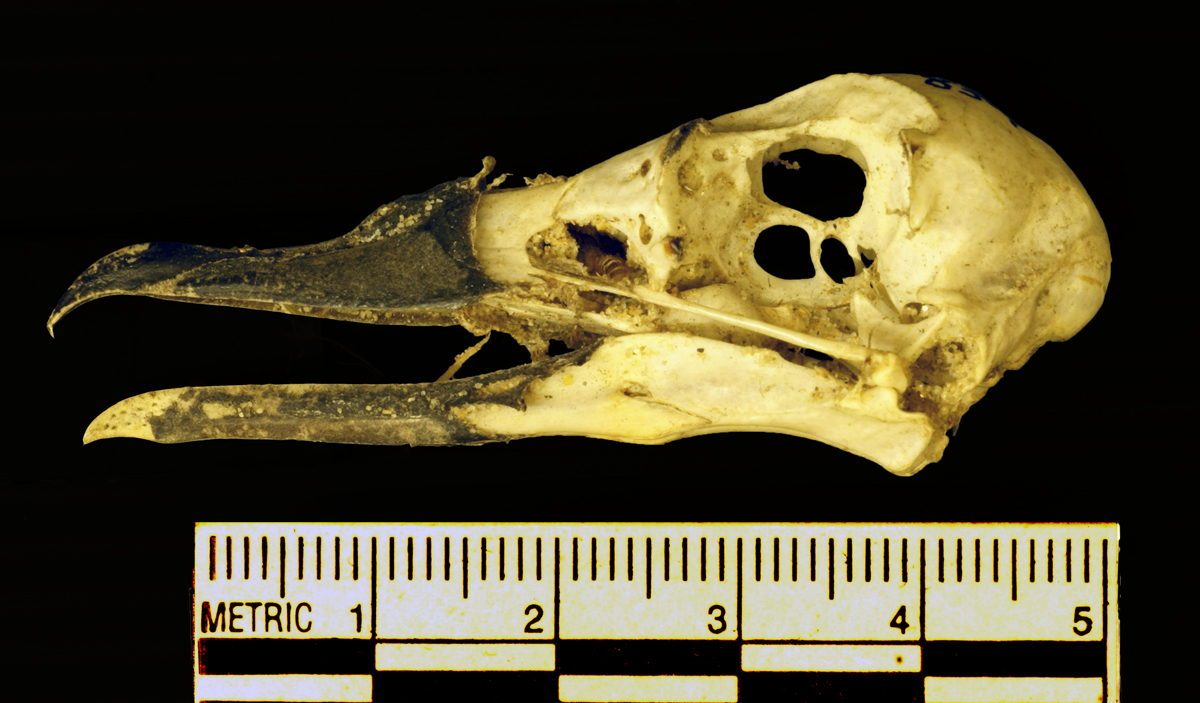
On Friday I gave you this skull to identify from box NH.83.1:

Unfortunately I’ve not been able to respond to comments and this answer is a little late (and short) because I’ve been at a wedding in Ireland (for anyone who knows what this entails you will understand…). I will take the time to respond to comments and elaborate on answers when I get back home and have managed to get more than a couple of hours sleep.

For now I will say that Steven D. Garber, PhD suggested that this was a petrel skull, probably for the reason posited by Cromercrox – it has a tube nose and is therefore from the Order Procellariiformes. David Craven noticed that the skull is too small for an albatross and the beak is too broad at the base to belong to a storm-petrel – both being excellent observations, but the concluding suggestion of something from the Pterodroma was slightly out – they’re a bit too big. A-M (via KateV) and Prancing Papio, FCD also went for species that are a bit too big, but Rachel managed to get something the right size and shape (and distribution working with SmallCasserole’s observation about the other specimens from the same collection). She suggested   Continue reading

Friday mystery object #60

Mystery objects are usually items that I come across whilst working my way through the collections in storage at the Horniman Museum. This means you usually end up with a bit of mammal skull, since that’s what I’ve mostly been working with for the last year. Every now and again I stumble across a real mixed bag (or rather box) of specimens that need identification, so here’s another specimen from one of the boxes labelled NH.83.1 that provided mystery object #57 (click on the images for larger versions): 

I would like to take this opportunity to thank Cack-handed Kate for the loan of her camera and particularly for including the macro lens with it, which has already proved very useful indeed!

As usual, put your observations and suggestions below – but in a break from normal form I’m afraid I won’t be able to answer any questions today, as I am at a wedding and it would be frowned upon for me to be playing with my phone!

Friday mystery object #59 answer

On Friday I gave you this mystery object dragged from the cold, dead grasp of my old camera:

It was immediately identified as an ‘insectivore’ of some sort – which narrowed it down slightly. Although ‘insectivore’ doesn’t have quite the same meaning as it used to.

Once the Insectivora was a bit of a waste-basket taxonomic group that included a wide range of small insectivorous mammals, including moles, golden moles, hedgehogs, shrews, tree shrews, elephant shrews, tenrecs, colugos and solenodons. However, the group was fragmented on the basis of molecular studies and now the Insectivora no longer exists as a taxonomic group.

Despite this taxonomic shake-up the use of ‘insectivore’ still works as a descriptive term for the numerous small invertebrate eating mammals out there. Of which this is one.

But which?

The moles were ruled out straight away by Dave Godfrey, then the hedgehogs were ruled out by cromercrox, before Prancing Papio slammed in with the correct identification of  Continue reading

Maneaters

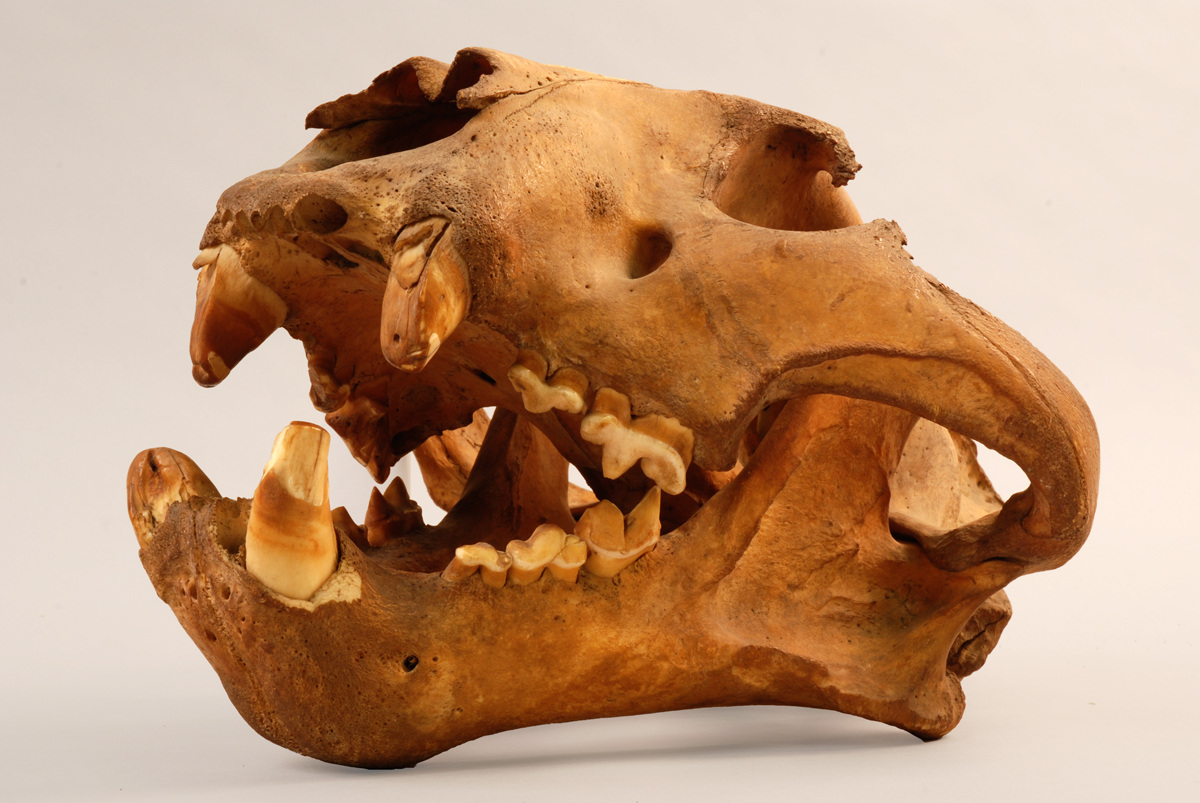
Skull of maneating tiger, Horniman Museum NH.74.11.19

Tool use, technology and cooperation have allowed humans to claw their way to the top of the predatory heap. As a species we can and do kill anything and everything. Sometimes we kill for food, sometimes for profit and sometimes for fun. Very occasionally we also kill for self protection.

Humans have been largely off the menu for quite some time – and although people are still killed and eaten by large predators with some regularity (perhaps a hundred or so a year), humans are not the first prey of choice for any species of carnivore – it’s just that some individuals within a species will develop a taste for human. When there are attacks on people it will usually be because there has been a blurring of borders between a human habitat and the habitat of the predator. The most obvious example of this is when humans are occasionally taken by sharks whilst in the sea or by crocodiles in lakes and rivers.

Staying on land, the blurring of borders between predators and people is linked with habitat loss  and the encroachment of human development, agriculture and habitation, with the associated issues of deforestation and re-purposing of land. The development of infrastructure brings humans into wilderness, such as with the Tsavo bridge project in Kenya, where a pair of lions terrorised construction workers for ten months in 1898, eating about 35 and possibly killing around 135.

As habitat is lost, predators are faced with fewer natural prey and they are thrust into close proximity with domesticated animals – with obvious consequences.  Where you have livestock being killed you also have people trying to protect their livelihood and this is where the conflict really heats up, taking its toll on both the people and the predators. There can be no winners. Continue reading

Friday mystery object #59

This week I have seen an awful lot of mystery objects at work as I’ve been sorting through some of the boxes of unidentified bone with my volunteers Cat and Jahcob. Mostly we seem to have hundreds of unlabelled sheep vertebrae, but there have been some genuinely interesting objects too.

Alas, without my camera I’ve not been able to take photos of any of this miscellanea – maybe next week… However, I do have a photo of a skull, taken before the death of my camera, that I think is pretty cool (if perhaps a little obvious for some of you):

So, do you have any idea what this beastie might be?

As usual put your questions, suggestions and observations in the comments section below, which I will do my best to respond to. Good luck!

Friday mystery object #58 answer

On Friday I gave you this skull as a mystery object, dredged as it was from the memory card of my severely concussed camera:

This was a slightly sneaky object, because I had a feeling that quite a few of you would make the same mistake as I did when I first saw this skull, by assuming that it’s from a large rodent. The large front teeth (the incisors) support this, since enlarged first incisors are a feature of the rodents.

Rodents also have a large gap behind those incisors called a ‘diastema’ – which this skull has for the lower jaw (or mandible), but you may notice that the upper jaw has three incisors in the pre-maxilla (that’s bone in the front bit of the upper jaw) before the diastema. This is easier to see in a side (or lateral) view:

You might notice that there’s a small tooth behind the third incisor in the upper jaw – that’s a canine. You might also notice the faint wiggly line in the bone of the jaw just above the canine – that’s the junction (or suture) between the maxilla and the pre-maxilla bones. The canine is the first tooth in the maxilla and all the incisors are in the pre-maxilla (this is the same for all mammal teeth).

Rodents only have two teeth in the pre-maxilla, not six. They also have no canine teeth in the maxilla. That means this mystery object cannot be a rodent. Here’s what a rodent’s diastema looks like (the suture between maxilla and pre-maxilla is really clear in this photo):

Lagomorphs (rabbits and hares) have teeth similar to rodents, except they have an extra pair of incisors behind the front pair in the maxilla – these are called ‘peg teeth’:

Rabbit_peg-teeth

Peg-teeth in a Rabbit skull

Clearly the mystery object has more incisors than this, plus those canines, so it can’t be a lagomorph either.

So what beastie has six upper and two lower incisors? Several of you worked out that this was a marsupial from the dentition (namely Cromercrox, jonpaulkaiser, David Craven and Zigg), but only Prancing Papio and Jamie Revell managed to get it to species, namely the  Continue reading

Friday mystery object #57 answer

On Friday I gave you a specimen that I had to identify myself earlier in the week:

The first steps of this identification are quite straight-forward – in the words of Jake it “Looks a bit sheepy and a bit deery” which pins this firmly in the order BovidaeDave Godfrey neatly summarised what makes it look sheepy and deery – “Diastema, lack of upper incisors, and the shape of the teeth“. Rob went a step further and ruled out deer, sheep, goats and camelids – coming to the conclusion that this is an African bovid of some kind. Then David Craven blasted through the narrowing-down process and hit upon the same species as I had concluded it was, namely a  Continue reading

Friday mystery object #57

This Friday I’m taking the mystery object back to its roots, with unidentified specimens that I’ve found in the collections at the Horniman Museum where I am a curator. Yesterday myself and my trusty volunteer Cat came across two boxes labelled NH.83.1, which between them contain twenty unidentified skulls from a variety of different animals, ranging from fish to birds and mammals. This box had been in the collections since the 1930’s and there was little information to help make identifications – perfect material for mystery objects! Here’s one of the specimens I managed to identify – I’d like to see what you come up with…

As usual, put your observations, suggestions and questions in the comments section below and I’ll do my best to give you what information I can. Good luck!

Friday mystery object #56 answer

On Friday I gave you this object to identify:

I must admit that I thought it would be a tricky one, but I was surprised by the number of correct answers that came in, with the first by Prancing Papio who immediately got it to species. Neil made a subtle comment (“Looks like it could go both ways“) that almost passed me by, but which indicated that he knew which group this skull belonged to (see below for elucidation), whilst David Craven and Jamie Revell both pinned it down to species as well. That identification was  Continue reading

Friday mystery object #54 answer

On Friday I gave you this skull to identify:

I was impressed by the efficiency with which the possibilities were whittled down and the correct species identified, since this isn’t an animal that’s very well known by most people (in the UK at least). Dave Godfrey immediately recognised this as being a member of the Carnivora and a dog-like one at that, an opinion supported by Matthew Partridge’s observations.

This line of investigation was somewhat derailed by Gimpy’s suggestion that this was a Tasmanian devil skull, an observation that was incorrect, yet very pertinent, since there are quite striking similarities between this and a Tasmanian devil skull as a result of convergent evolution. It’s strange to think that two species can look so similar and yet be separated by at least 124 million years of divergence (check out the placental-marsupial divergence node using the awesome University of Bristol Date-a-Clade webpage). That’s what similarities in environment and lifestyle will do to organisms with similar ancestral skeletal bodyplans.

Debi Linton then came to the rescue with some astute observations about the teeth of this animal and after trawling the Skulls Unlimited site (which appears to be much-used by people hunting for the answer to the FMO) she hit upon the correct answer of Continue reading

Friday mystery object #54

The Friday mystery object for this week is a skull specimen from the Horniman collections. Some weeks ago I suggested that I put together a guide to help with identifying skulls, which I have been doing as the opportunity arises (it should be ready soon). Since this guide will hopefully make it easier for you to identify skulls I thought I should make the most of my last opportunity to get one past you. So here it is:

As usual, you can put your suggestions, questions and general musings in the comments section below and I’ll do my best to respond. Meanwhile I will be thinking of a more anthropological object for next week (in line with suggestions made last week – see I was listening).

Good luck!