I was working in the collections this week when I came across this odd-looking critter:
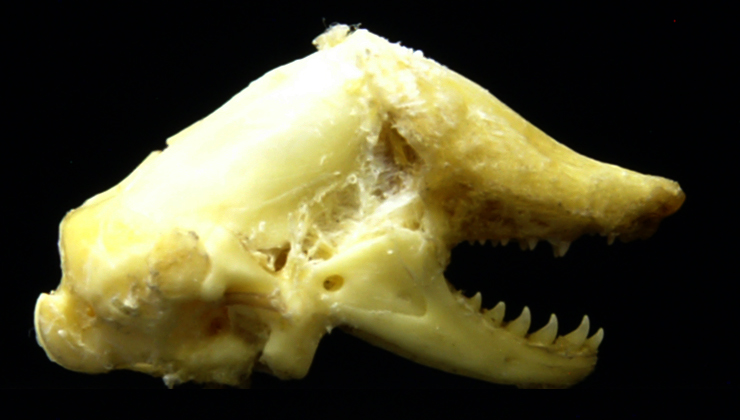 Do you have any idea what it is?
As usual please put your observations, questions and suggestions in the comments section below. Good luck!

I was working in the collections this week when I came across this odd-looking critter:
Do you have any idea what it is?
As usual please put your observations, questions and suggestions in the comments section below. Good luck!
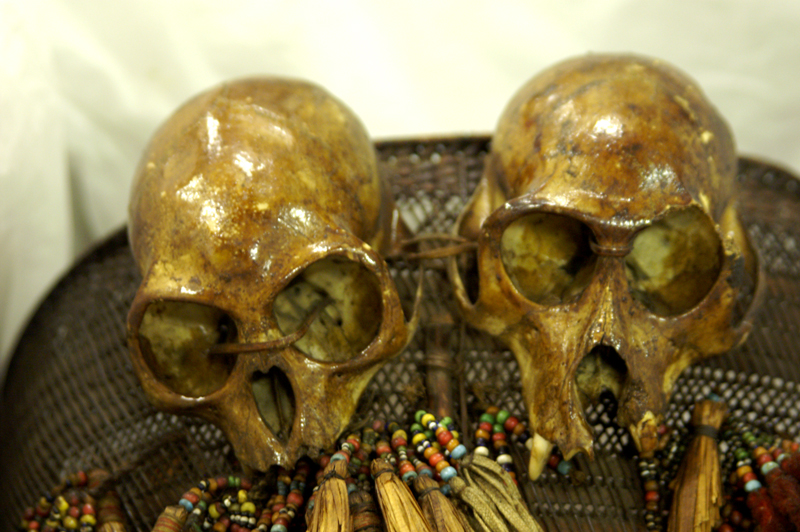
On Friday I presented you with this anthropological mystery object:

I wanted to know what it is, what it’s used for and where/what culture it’s from. Since there are skulls on it I thought it would be a good idea to ask you to identify them while you were at it. No small task then.
Alistair was first to notice that the skulls belonged to monkeys, then Smallcasserole made the comment:
It’s the Predator’s earthly trophy bag with human skulls!
Which although not entirely accurate, is correct in identifying what this object is used for – it’s for carrying trophies. Moreover it’s for carrying the same trophies that the Predator might be out collecting…
Jonquil and Dave Godfrey worked out that it’s a basket rather than a bag and then Jonquil came through with a tribe in the right culture and place. I can’t be sure of the particular tribe this is from, but the culture is that of the Naga from the Northeastern part of India (Assam in this instance), who were renowned for the practise of head-hunting (and I don’t mean in the recruitment sense) until quite recently.
As to the monkey skulls, jonpaulkaiser suggested one may be from a Macaque and Jonquil suggested Gray Langur, while Dave Godfrey suggested Macaque and Gibbon. David Craven then provided a remarkably coherent and accurate answer:
Looks like a head-hunting bag, as used by the Naga (I couldn’t give a specific tribe). Still a very fraught part of the world unfortunately.
So, what sorts of monkeys do we have in that part of India?
Loads of Macaques, but others have said Macaque without being censored. Unless that’s too general to be censored…Okay.
I’ll say Capped Langur on the left (I also considered Hoolock Gibbon).
Macaque on the right? Hard to find good images of macaque skulls for some reason, so I have to shoot in the dark a little. Stump-tailed Macaque.
I think this is about as good an answer as I could hope for, partly because it reflects the levels of uncertainty that we are often stuck with in the museum world. The basket/bag came from Assam and it entered the collections around 1903 judging by its label. There was no tribe name associated, so that information would prove difficult (if not impossible) to track down. The primate skulls are damaged and they are attached to the bag, making them difficult to inspect in the kind of detail needed to make a certain identification.
I was personally leaning towards the skull on the left being that of a Hoolock Gibbon Hoolock hoolock (Harlan, 1834) based on the distance between the eyes, but I’m not convinced that this is reliable and the shape of the nasal opening (long and heart-shaped) doesn’t quite fit with this idea. It could indeed be a female Capped Langur Trachypithecus pileatus (Blythe, 1843) but probably not a Gray Langur Semnopithecus sp. Desmarest, 1822 because their range doesn’t quite fit. It could even be a female Macaque of some sort (although the width between the eyes looks too big for that).
The skull on the right looks like a male Macaque, probably a Rhesus Macaque Macaca mulatta (Zimmermann, 1780) or a Stump-tailed Macaque Macaca arctoides (I. Geoffroy, 1831) – with my preference being the more common and widely distributed Rhesus (compare 1 & 2). I am keen to see David Craven’s reasoning, to see what I may have missed.
Many thanks to everyone for their comments and suggestions. I particularly liked the idea by cackhandedkate that the basket was one of Lady Gaga’s costumes – something that I would not be surprised by.
For this week’s mystery object I am going to try something for everyone – a bit of Anthropology with some Natural History thrown in. So what is this, what’s it used for and where/what culture is it from – your bonus question is of course what species did the attached skulls belong to:
As usual questions, suggestions and observations in the comments section below, I’ll do my best to answer as the day goes on. Good luck!
On Friday I gave you this skull to identify:

I was impressed by the efficiency with which the possibilities were whittled down and the correct species identified, since this isn’t an animal that’s very well known by most people (in the UK at least). Dave Godfrey immediately recognised this as being a member of the Carnivora and a dog-like one at that, an opinion supported by Matthew Partridge’s observations.
This line of investigation was somewhat derailed by Gimpy’s suggestion that this was a Tasmanian devil skull, an observation that was incorrect, yet very pertinent, since there are quite striking similarities between this and a Tasmanian devil skull as a result of convergent evolution. It’s strange to think that two species can look so similar and yet be separated by at least 124 million years of divergence (check out the placental-marsupial divergence node using the awesome University of Bristol Date-a-Clade webpage). That’s what similarities in environment and lifestyle will do to organisms with similar ancestral skeletal bodyplans.
Debi Linton then came to the rescue with some astute observations about the teeth of this animal and after trawling the Skulls Unlimited site (which appears to be much-used by people hunting for the answer to the FMO) she hit upon the correct answer of Continue reading
The Friday mystery object for this week is a skull specimen from the Horniman collections. Some weeks ago I suggested that I put together a guide to help with identifying skulls, which I have been doing as the opportunity arises (it should be ready soon). Since this guide will hopefully make it easier for you to identify skulls I thought I should make the most of my last opportunity to get one past you. So here it is:
As usual, you can put your suggestions, questions and general musings in the comments section below and I’ll do my best to respond. Meanwhile I will be thinking of a more anthropological object for next week (in line with suggestions made last week – see I was listening).
Good luck!
Well, it’s been a year. Fifty-two mystery objects have been and gone with varying levels of confusion, information and interest. The first anniversary seems like a good opportunity to reassess the Friday mystery object, in particular whether it should continue and if so should it change?
Obviously the information for that reassessment needs to come from you – my audience, so please give me feedback in the comments section below – particularly about what needs to change to make the mystery object more interesting for you (a bit about yourself might be useful too – what kind of background do you have, what are you interested in and what other blogs do you follow)?
On to the anniversary object I have for you, it’s one of the Horniman’s more bizarre objects and it’s a favourite of mine for its sheer repulsiveness (click pictures for bigger images):
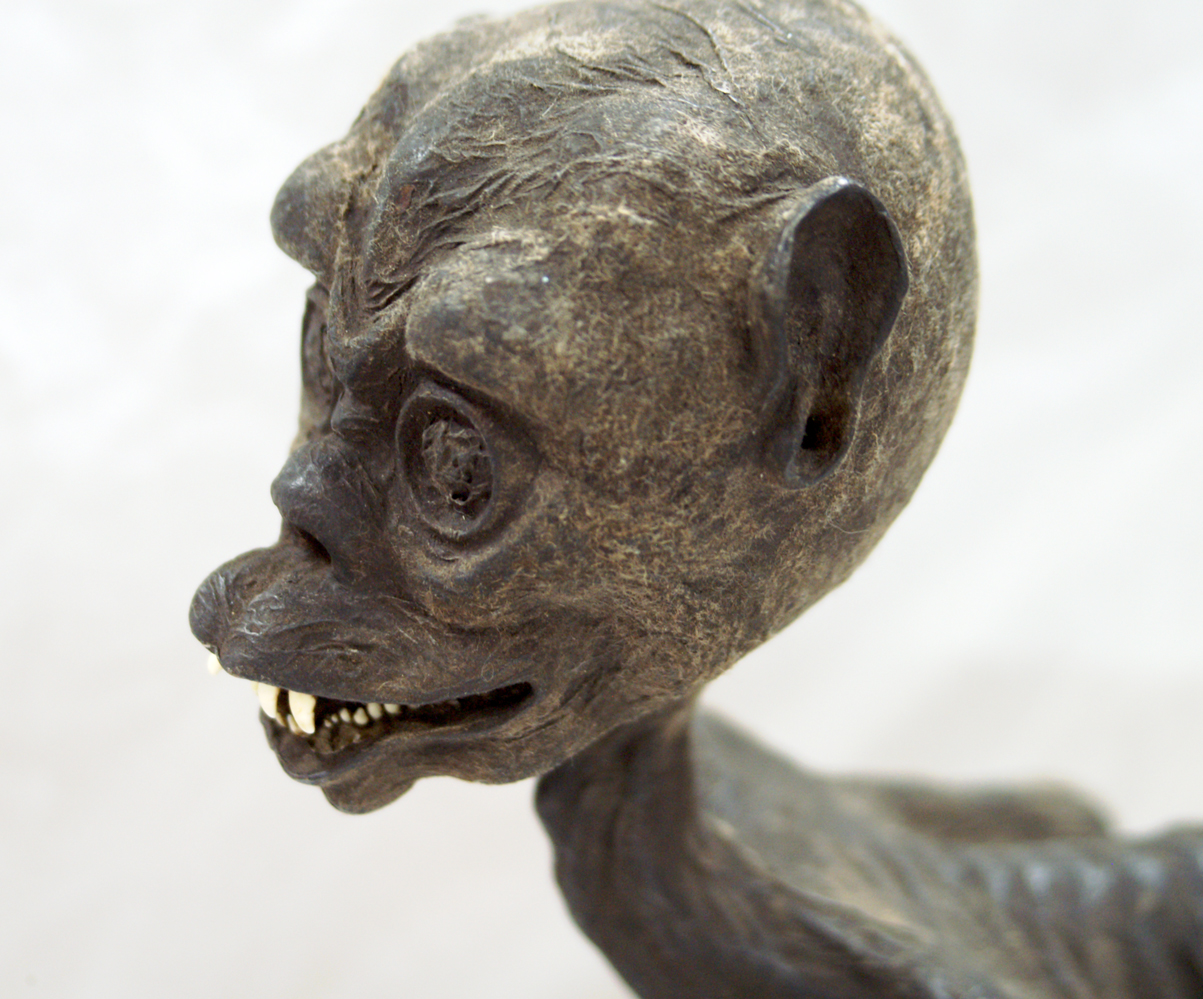
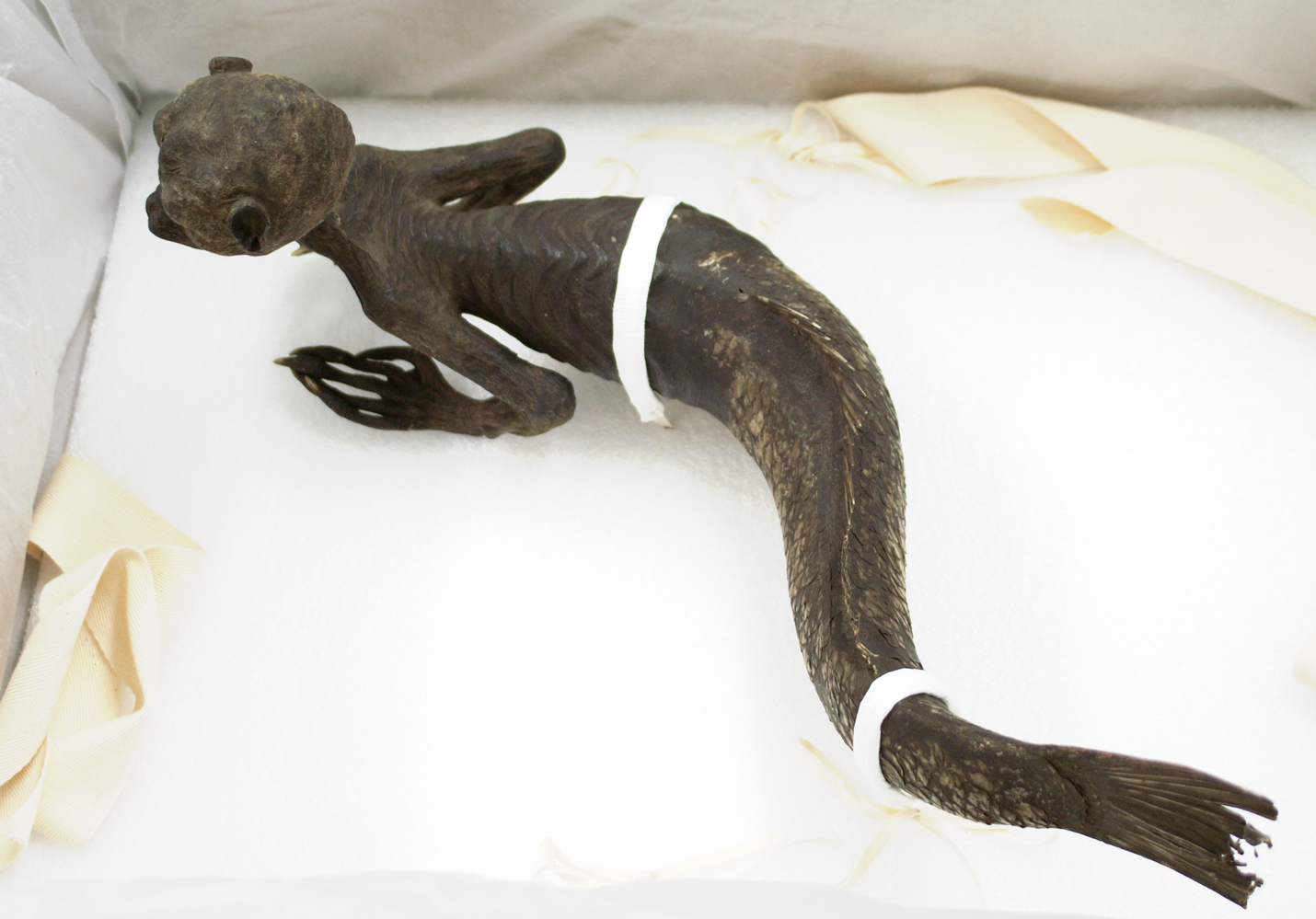
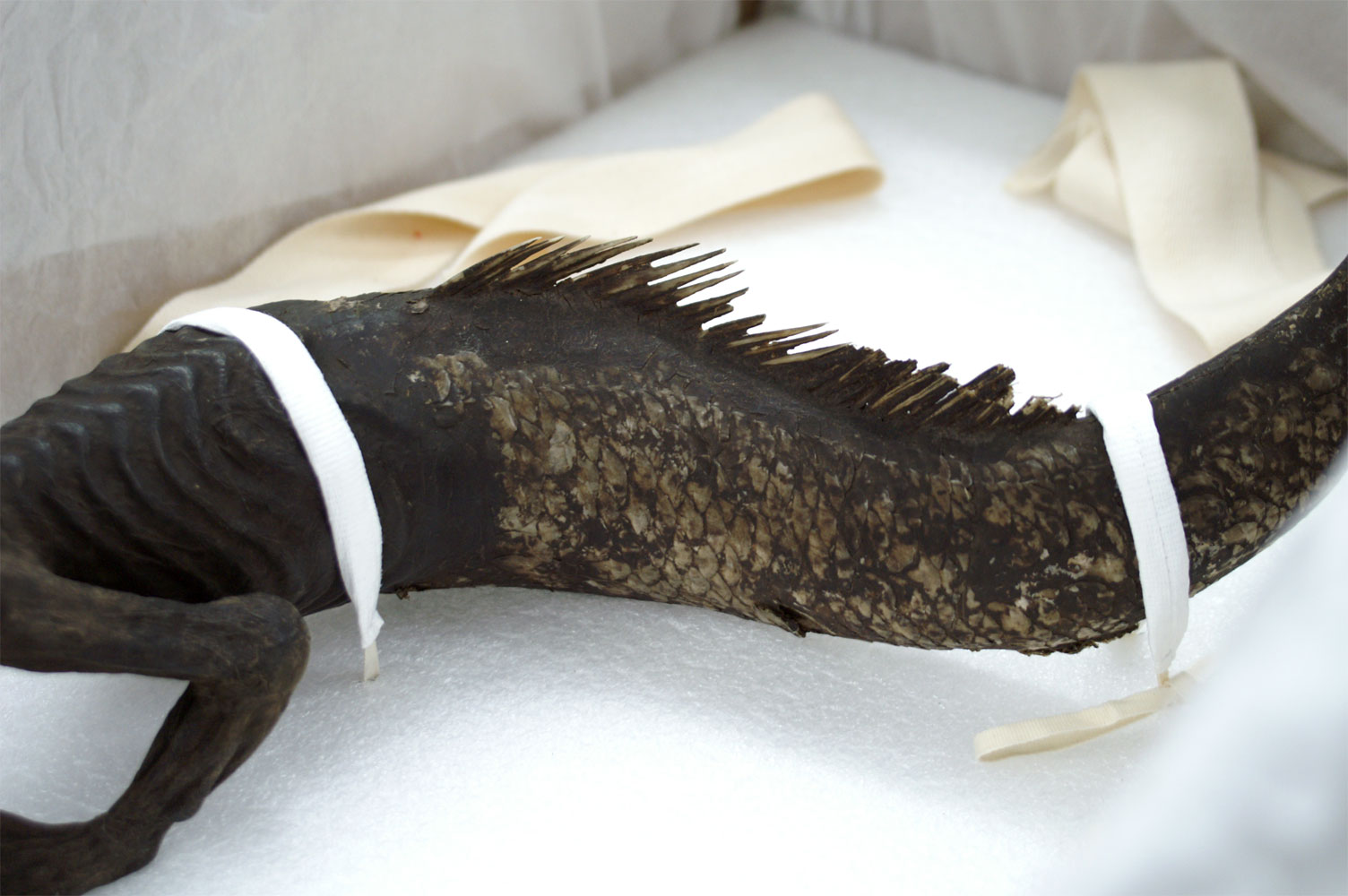
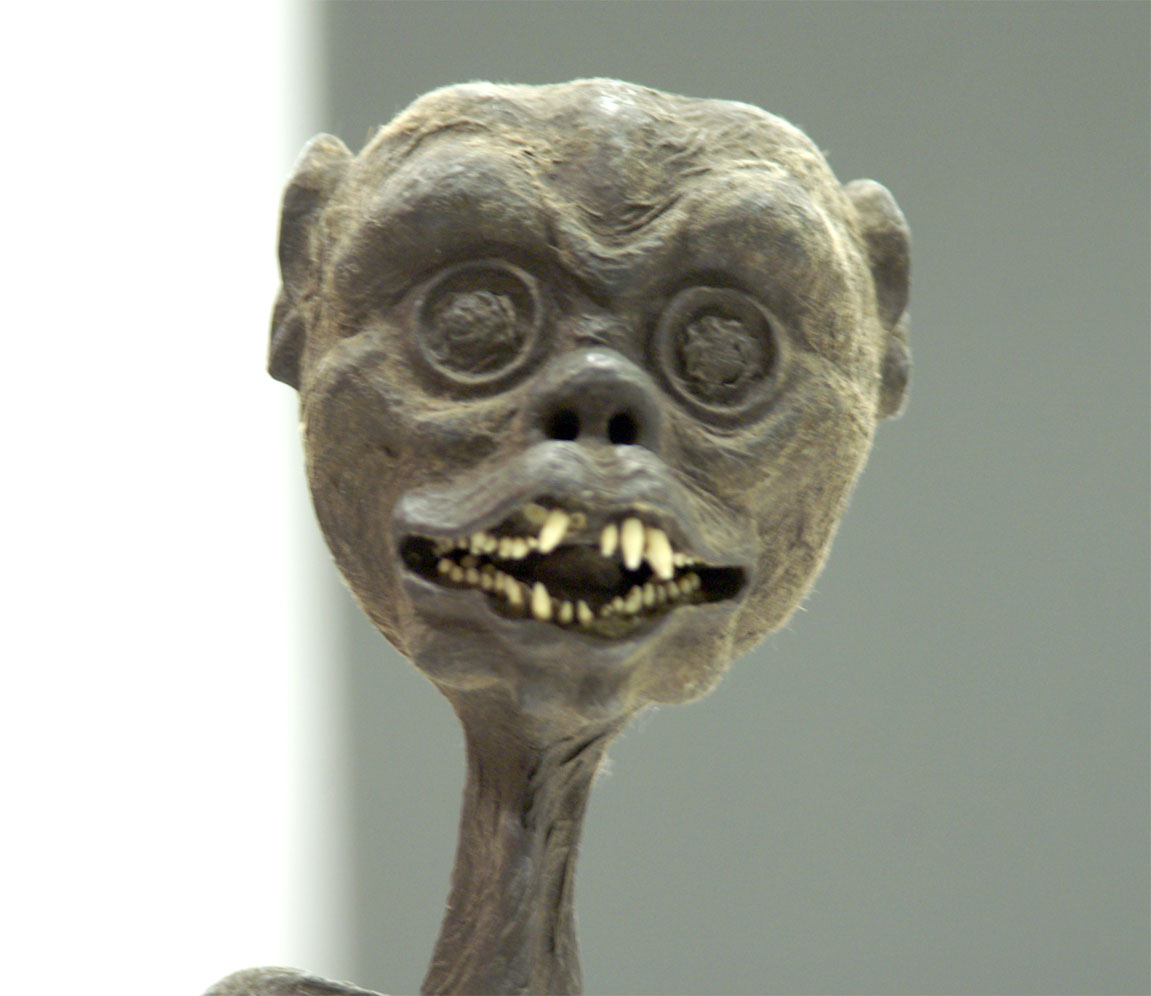
Now, I’m pretty sure you can all work out what it’s supposed to be, but the question that’s bugging me is what is it made from? In fact, in order to answer that question we recently took this object to the Saad Centre for Radiography where it was CT scanned so we could take a look inside without damaging the specimen. It was an awesome experience, which I will report for you in the answer to this object, although I am afraid that the answer may have to wait until a bit later than usual whilst the images are processed and I seek other expert opinions on what we’re seeing.
Of course, the keen eyes and vast brains of my audience are valuable resources that I would love to exploit, so please take the time to leave your thoughts, ideas and anecdotes in the comments section below. Whilst researching this sort of thing it’s the human responses, more than the materials, that make it fascinating for me – I hope you think so too!
On Friday I gave you a different mystery object to the one I had originally planned, after my memory stick let me down. Nonetheless, it seems to have been an interesting one given the number of questions.

The first correct identification by Robert Grant was cleverly phrased, so as not to give the game away. Indeed, it seems as though the allusion to the song Alouette led many people off down the wrong track, due to its reference to skylarks. This combined with the object’s similarity to the shape of a whistle, identified early on by Jake, brought many of you to the conclusion that the object was a used as a musical instrument, whistle or game calling device. The string attached to the specimen certainly offers support that this object served a functional role for humans, although it may simply be part of the mounting for the original display of this object.
As it turns out, the reference to Alouette was a phonetic rendering of the taxonomic name for the genus to which this specimen belongs, which is Continue reading
I was getting excited about this being the first anniversary of the Friday mystery object, but I just realised that will be next week with number 53 (and I have something made of awesome lined up for that). Instead I will see my first year of mystery objects out with something hastily chosen from some old images I had on my hard drive, because my USB memory stick let me down. Don’t get me wrong though, this is an elegant structure that is deceptively simple and is worthy of mystery object status. So here it is:
So, do you have any idea what this is?
As usual you can put your suggestions, thoughts and questions (and random guesses) below and I will do my best to answer. Good luck!
On Friday I gave you a fairly straightforward mystery object to identify – at least straightforward in that it wasn’t an odd section or a fragment of bone, instead it was a very characteristic skull:

As a result a good number of you correctly identified this, with zinjanthropus first past the post with a general identification, Neil with the correct genus and David Craven with the full species identification. So well done everyone, this specimen is indeed the skull of a Continue reading
Happy Friday everyone! This week’s mystery object is a nice simple one. What is this:
As usual, questions, suggestions and comments below and I will do my best to answer.
Good luck!
On Friday I gave you a multipart mystery object from the wonderful Grant Museum of Zoology:
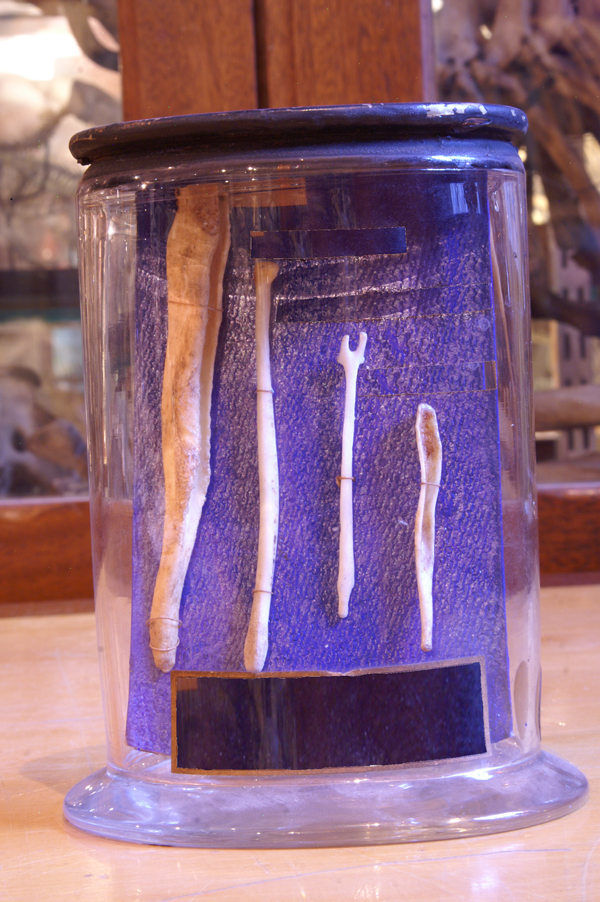 This was easy in part and horribly difficult in part. The bones themselves were quickly identified as being bacula (plural of baculum) or os penes (penis bones) by Shane and SmallCasserole, but then there was confusion about which species they might belong to. Matthew Partridge got one right, but after that the guesses went a bit wide. Here’s an unedited image that has the labels attached: Continue reading
Crikey, it’s my 50th mystery object already – in two weeks that means it will have been running for a full year. How time flies. To mark the half century of these posts I’m giving you a real challenge supplied by the excellent Grant Museum of Zoology, which has just closed its doors in order to be relocated whilst building works take place. The museum will be closed to the public until next February, when it will reopen in a new location. So here’s the challenge:
Any idea what these are, and (here’s the incredibly trick bit) which four species they might belong to? Can I request that those of you with a biological background concentrate on the harder question, as it will give my non-specialist audience an opportunity to work out what these bits are.
As usual, answers, observations and questions in the comments section below. Good luck!
On Friday I gave you one of the specimens on display at the Horniman Museum, photographed from an unusual angle, as the mystery object:
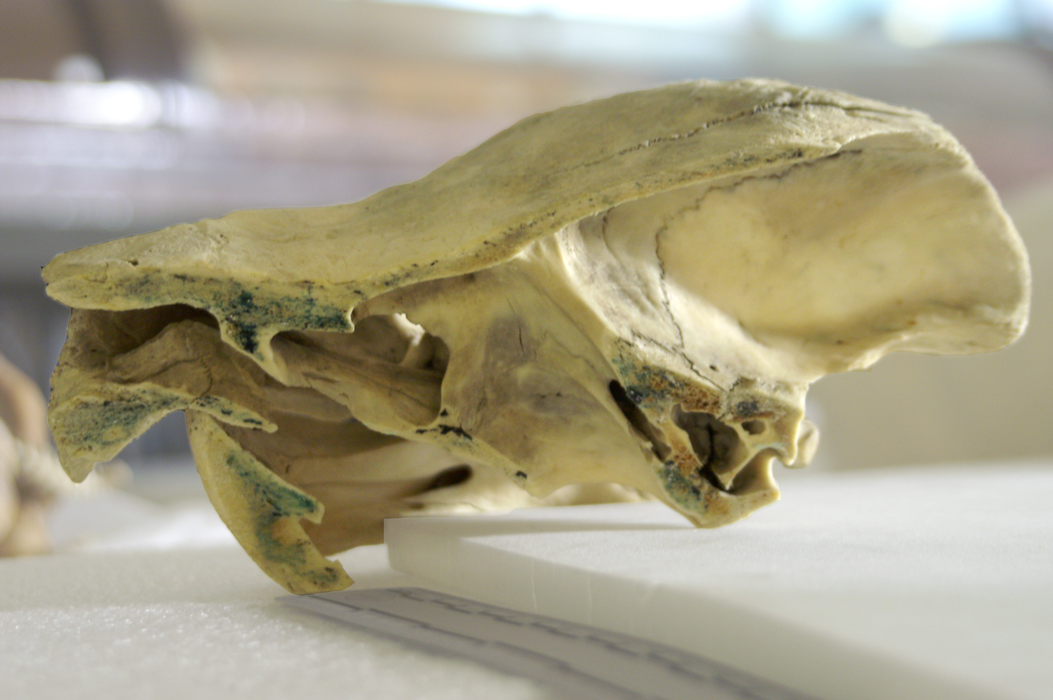
I thought it might prove tricky, but jonpaulkaiser managed to identify it within 16 minutes of it being posted. Impressive stuff! Matt King also managed to spot what general type of beastie this bit of bone belonged to; a Continue reading
The Natural History Gallery at the Horniman has been undergoing a bit of a spring clean. The lighting in the cases has been upgraded and during the process the cases and specimens have been dusted (very carefully mind). During the process I’ve spotted a few of our display specimens from unusual angles and out of their usual context. Here is an example of a nice one that I thought might make a nice mystery object:
So any ideas what this is?
Put your suggestions and questions in the comments section below and I will do my best to point you in the right direction without giving too much away. Have fun with it!
On Friday I gave you this lovely skull to identify:

It seems to have been a bit more tricky than I had expected. It was immediately identified as a carnivore, which is spot-on, but from there it got a bit murky. I must admit that I could have been a bit more generous with clues, particularly when David Craven asked if this was a viverrid (the family containing the civets) – I took the question at the family level, so I said ‘no’, but I should probably have asked for clarification since this skull belongs to a member of a family that falls into the infraorder Viverroidea (according to some sources).
This is in fact the skull of a Continue reading
This Friday I’ve taken bit more effort than usual to get a decent picture of a specimen for the mystery object. It’s amazing the difference it makes when you use a tripod and allow a good long exposure. I’m sure you’ll all identify this in no time, but hopefully you’ll enjoy the image while you’re at it – there are few things quite as beautiful as bones:
Feel free to ask questions, make suggestions or just leave your thoughts in the comments section below – I’ll do my best to answer or drop hints as the day goes on. Good luck and I hope you enjoy!
It’s Friday again (huzzah!) so that means it must be time for my mystery object. This week I’m going to give you something that is being moved from the Natural History offices at the Horniman to our Study Collection Centre, where our reserve collection is housed. The delicate bony structure of this object really caught my eye and I hope you find it as interesting as I do (click on image for higher resolution):

As always, feel free to ask questions about the object or make suggestions about what you think it looks like – I’ll do my best to answer or respond, although I’m at a conference, so apologies if my answers are sporadic and perhaps a little brief. Good luck!
Last Friday Mark Carnall from the Grant Museum of Zoology provided a guest mystery object in the rather unpleasant looking form of this:
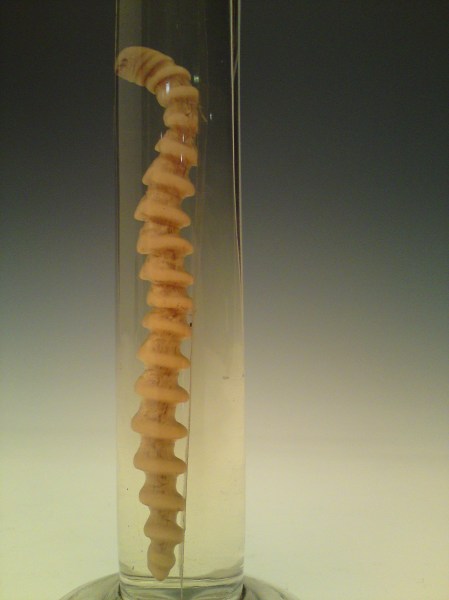
It looks a bit like part of a spinal column, but it isn’t. It looks like a worm of some kind, but it isn’t. So what is it?
David Craven and Dave Godfrey came through with the goods on this one. It is a parasitic crustacean related to the tongue worms (a misnomer because they are not worms at all) and it is in the genus Continue reading
This Friday we have a guest mystery object, supplied by the curator of the excellent Grant Museum of Zoology, Mark Carnall (the man who threatened the whole of humanity with the doomsday virus in Back from Extinction). Any idea what this fluid preserved specimen might be?

Given the general look of it and Mark’s history of terrormongery I wouldn’t be surprised if it was a body-snatching alien, if such things were in general circulation. If you’d like to see this critter from a different angle click here.
As usual, suggestions and questions below in the comments section and I’ll do what I can to point you in the right direction. Good luck!
On Friday, whilst I was in the lovely friendly town of Portaferry catching up with some old friends, I gave you this mystery object to identify:
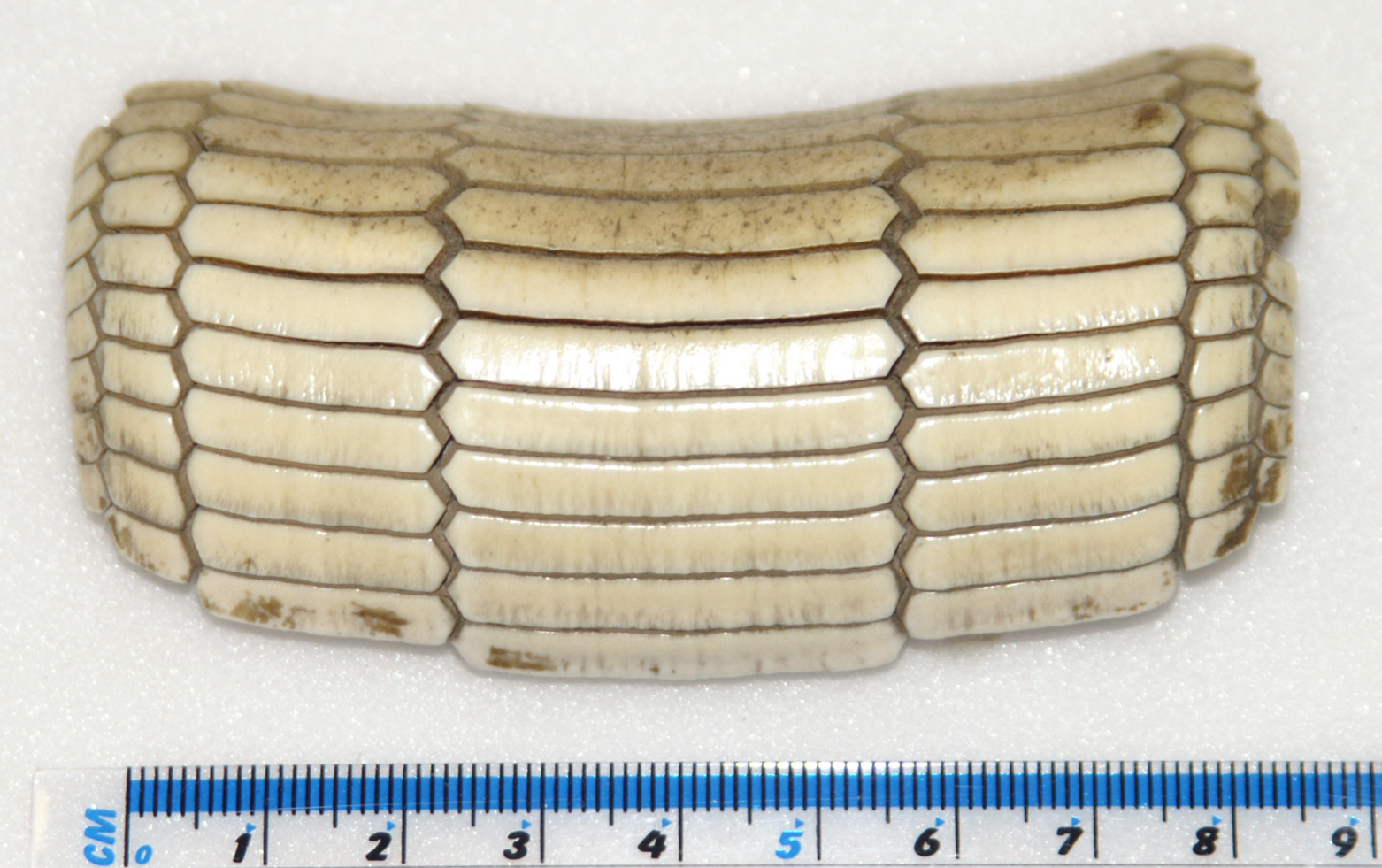
Unfortunately my phone seemed reticent to work properly, making it hard to respond to everyone’s questions, so thanks to Debi Linton for fielding some of the questions/suggestions. This object is one of those that is so characteristic in its structure that once you’ve seen one you will probably be able to spot another with ease, even though they have a huge variety of shapes, as pointed out by Benjamin Brooks in his comment (which provides a link to an image hosted by the Oceans of Kansas Paleontology site who incidentally have a mystery object of their own).
If you click on the image I provided you’ll see more detail, which makes it very clear that this is something composed of interlocking units that look like shiny bone. Shiny bone (that looks like a piece of ceramic) usually means bone with an enamel layer, which usually means teeth. These teeth are arrayed in a plate and if you look at the top of the plate you’ll see that it is discoloured, pitted and well worn. Clearly only this top part of the plate has seen much use and that use has been heavy, given the wear.
So why have all the rest of the tooth plate if it isn’t being used? Of course, the rest of the plate will be used, it just hasn’t moved into position yet – so what animal has teeth that move like a conveyor belt and are constantly being replaced? Sharks are the first things to come to my mind, but they don’t tend to have big flat plates, so think of something related to sharks that might need big flat plates for crushing something that very hard, probably marine molluscs.
If you haven’t worked it out already, this is a tooth plate from a Continue reading
 Zygoma