This week I have a mystery object for you to have a go at identifying which may be tricky (or it might be easy – let’s find out):
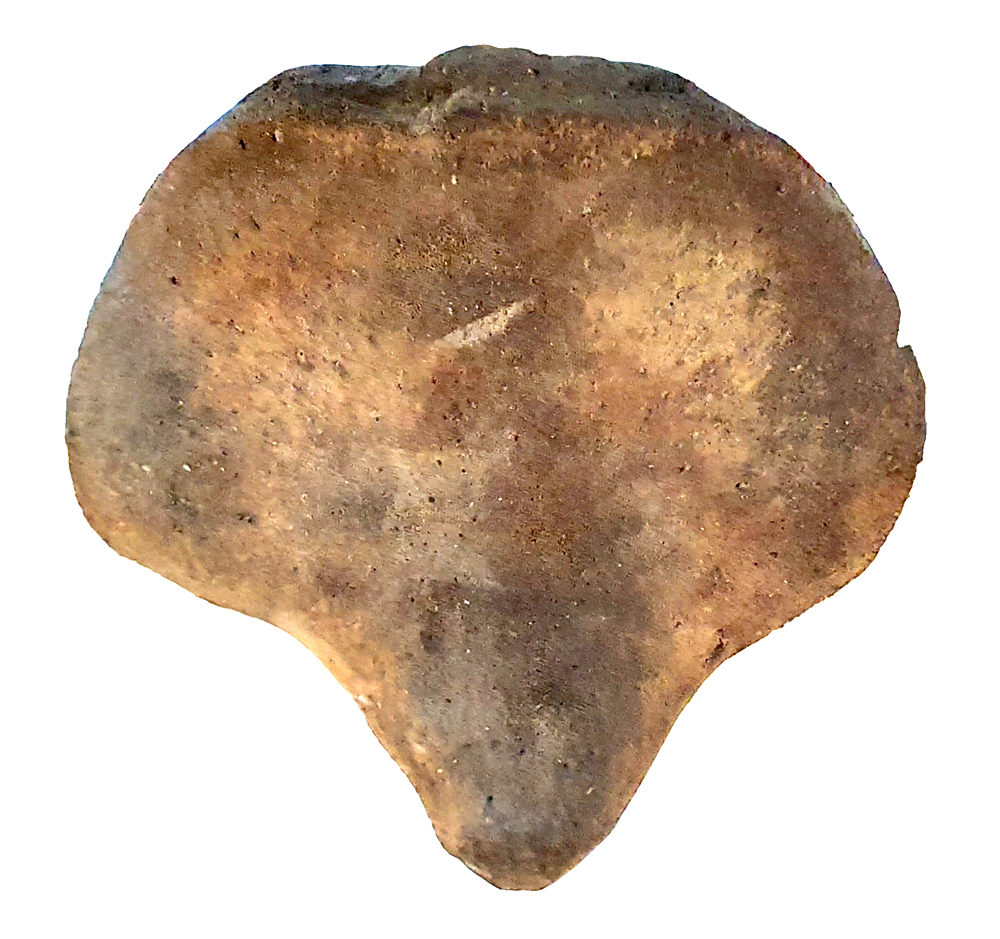
Any ideas what it might be and what it might be from?

This week I have a mystery object for you to have a go at identifying which may be tricky (or it might be easy – let’s find out):
Any ideas what it might be and what it might be from?
Last week I gave you a bit of a mean mystery object to have a go at identifying:
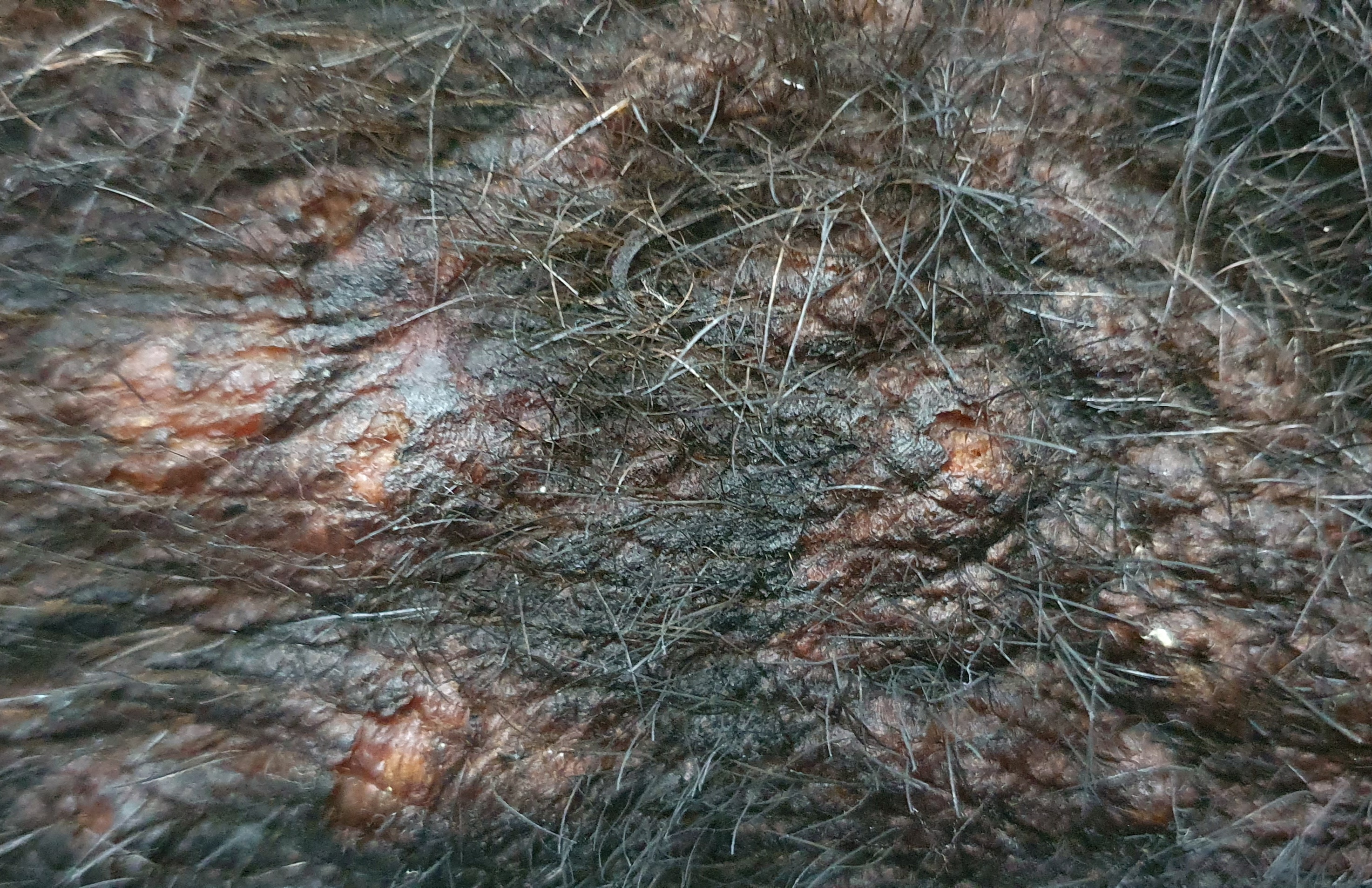
I’m not surprised that very few people worked out what it is, since there’s not much to go by, and what there is, may be a little misleading.
This scrubby-looking piece of hairy skin is not from a battle-scarred Tasmanian Devil, nor is it from a rough patch on a Badger or member of the pig family and it most certainly is not from an ape of any description.
This is, in fact, from a Walrus Odobenus rosmarus (Linnaeus, 1758). This Walrus from the Dead Zoo in fact:
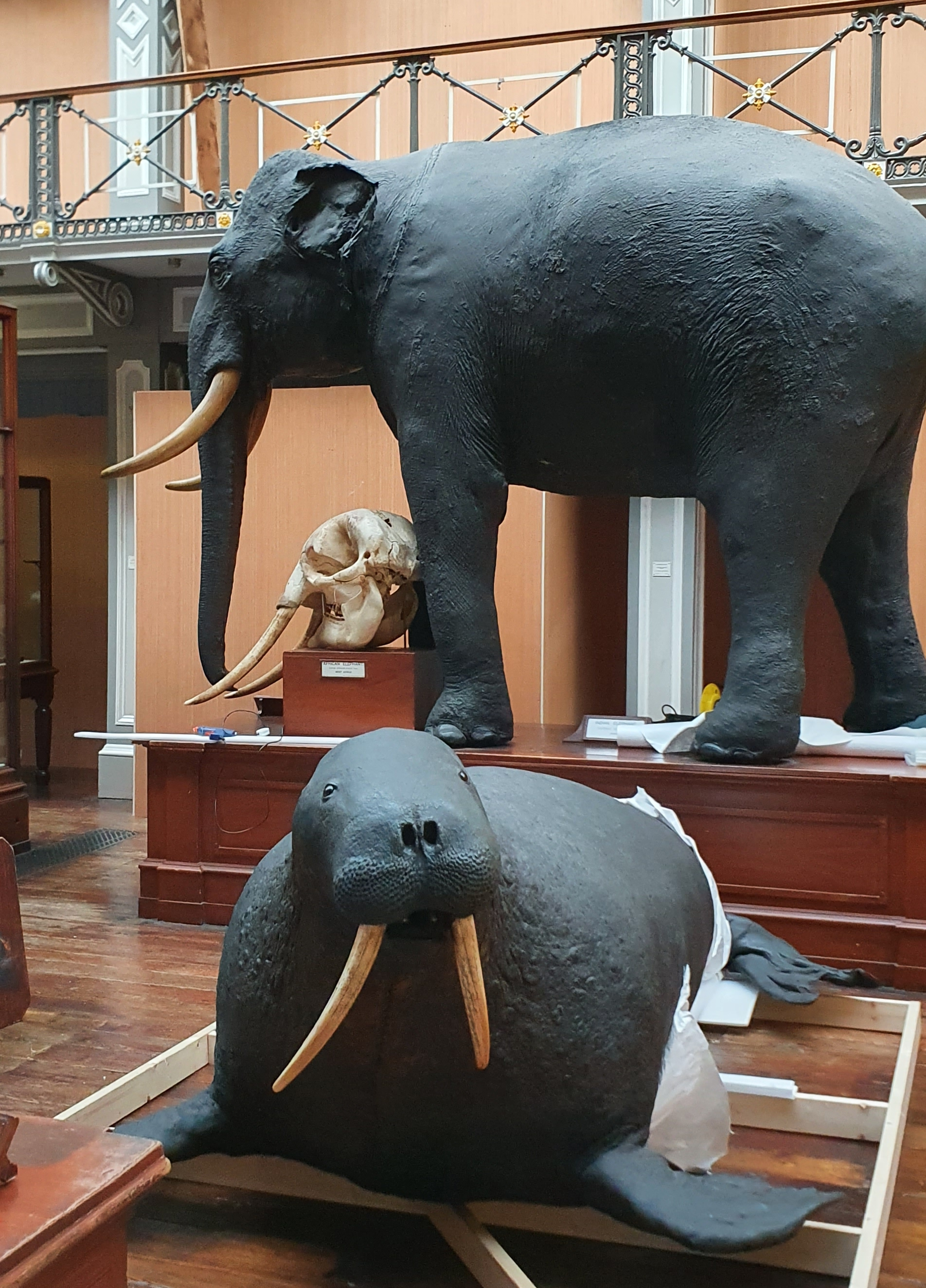
People don’t think of walruses as being particularly hairy – and this one is quite definitely bald on top (I’m familiar with that feeling…). However, last week we moved this specimen and when we flipped it on its side to squeeze between some cases, we discovered a rather hairy belly (again, I know the feeling…)
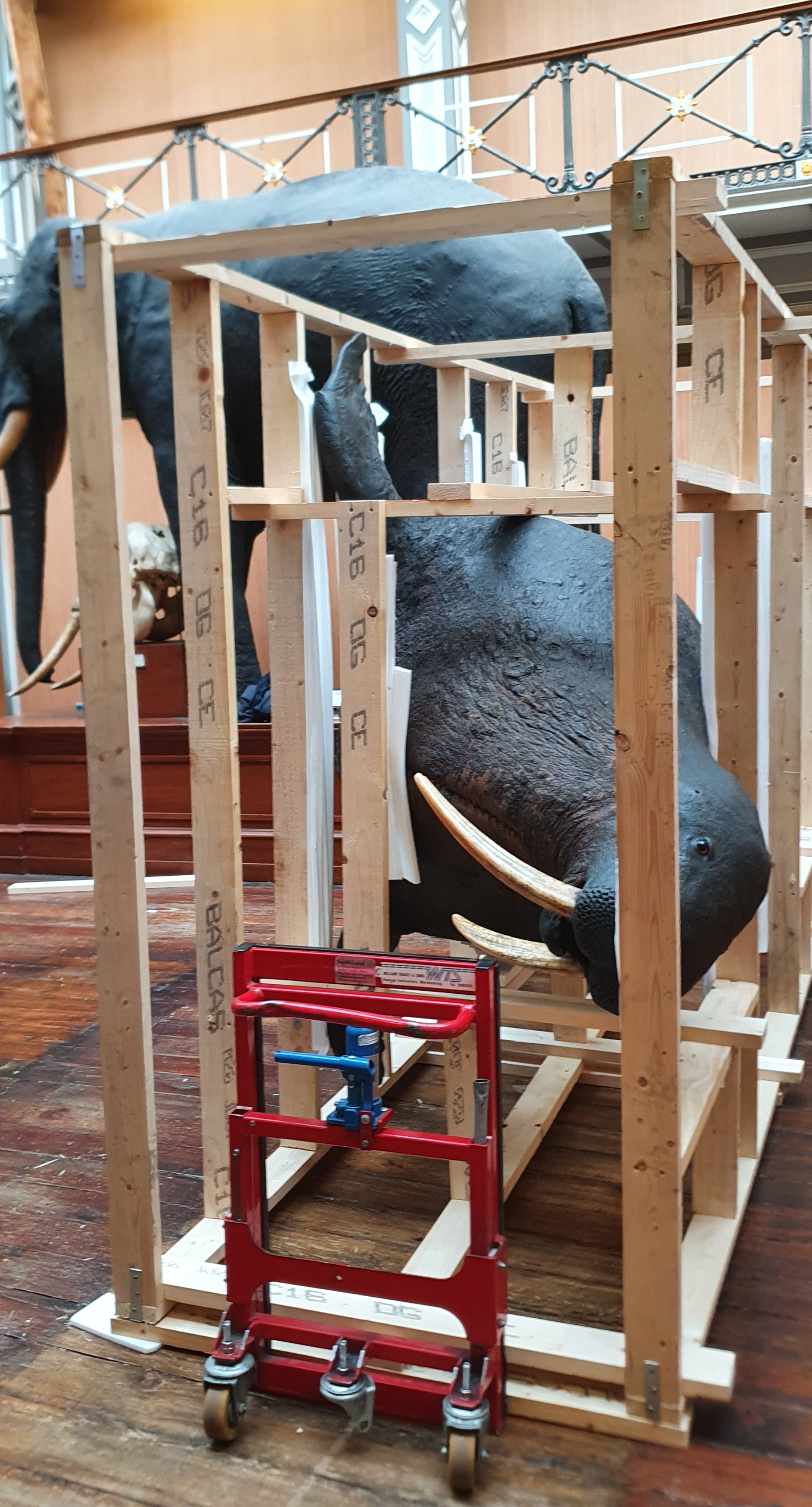
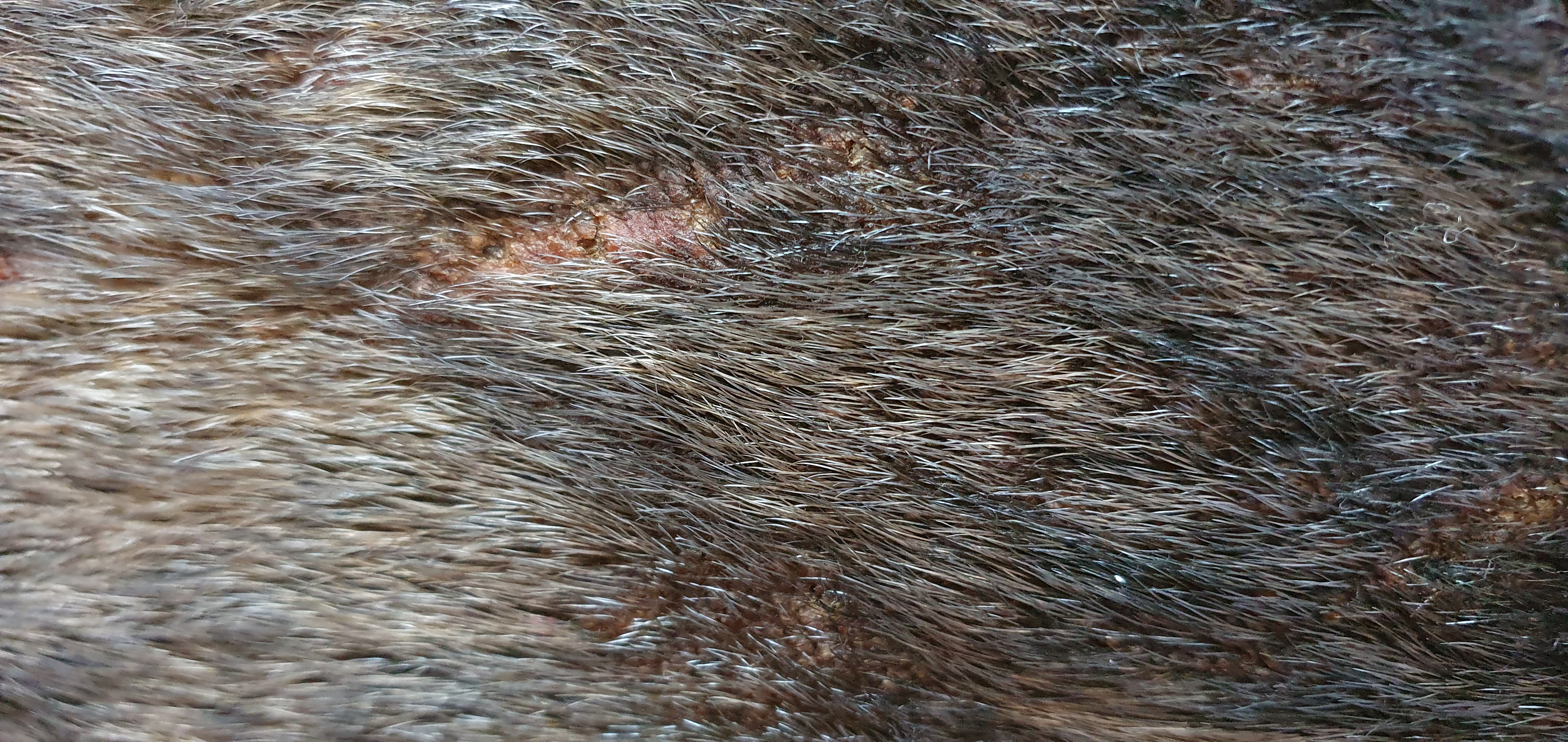
Walrus hair tends to get less dense as the animals age (insert gag here). After a century or so on open display, with members of the public who most definitely have not read the “DO NOT TOUCH” signs, and with technicians with buckets of creosote, that natural balding had a helping hand – up top.
Underneath, the hair was left untouched and in places it’s quite dense. I’m not sure if this is entirely due to people not being able to touch the specimen, or if Walrus belly hair is more dense and plentiful than on the rest of the body, to help insulate them when sitting on ice floes.
Either way, it was fascinating to be able to see a hidden part of this specimen – a nice reward for all the effort of moving it. If you want to see more of this kind of thing, check out the #DeadZooDiary!
This week I have a detail for you to have a go at identifying:
Any idea what this hairy critter might be?
I look forward to hearing your suggestions!
This week I have a cute specimen from the Dead Zoo for you to have a go at identifying:

Not the easiest specimen to identify, but I reckon someone will work it out. Have fun!
Last week I gave you this unusual looking skull to have a go at identifying:

That low and elongated shape, combined with the large number of teeth and absence of a zygomatic arch – all within the context of the relatively large (but still quite small) size – all combine to narrow this down to just a few possible options.
There are a bunch of critters in what used to be called the “Insectivora“, back in the dim and distant days of my undergraduate studies. This wastebasket for things that look like they should be chasing acorns in a cartoon was rightly broken up into more meaningful cladistic groups during the great molecular taxonomic revolution in the dying days of the last century.

Scrat, a fictional sabre-toothed squirrel that looks like every third member of the old ‘Insectivora’
To be fair, there’s a reason why the “Insectivora” lasted as long as it did and why it took molecular research to finally tease the various groups apart. They don’t have many strong distinguishing anatomical features that are seperate them into clear higher level groupings. Sure, they look a bit different at the family level, but any higher than that and they smoosh into bunch of small toothy critters, many with no cheekbones to speak of.
However, some do have a zygomatic arch, such as the talpid moles and desmans, so it’s not one of them:

Skull of European mole Talpa europaea Linnaeus, 1758
It also lacks the large orbits of something like a Sengi or Elephant Shrew:

Skull of a North African Sengi Elephantulus rozeti (Duvernoy, 1833).
It also lacks the well-developed sagittal and nuchal crest you’d associate with the Malagasy tenrecs:

Skull of a Tail-less Tenrec Tenrec ecaudatus Lacépède, 1799.
It also lacks the backwards projecting nuchal crest of a solenodon and it’s just too big for one of the true shrews – the largest of which is the Asian House Shrew with a skull length of around 38mm.
So this specimen isn’t as hard to recognise as it could be. The very flat top to the skull with the nostrils up high is a bit of a clue – something often (although not always) associated with aquatic animals. On closer inspection there are two likely suspects – the Web-footed Tenrec or one of the Otter Shrews (which are neither otters nor shrews).
The area around the occipital is a dead give-away here. The Malagasy Web-footed Tenrec Limnogale mergulus (Major, 1896) has an occipital region that’s hard to see in a side view, because the parietals extend down quite low, whereas the Otter Shrews have much higher parietal margin that exposes the occipital region – just like we see in the mystery object.
Finally, the size is give-away. As many of you recognised and hinted at (occasionally with some dodgy puns – I’m looking at you Tony), this is a Giant Otter Shrew Potomogale velox (Du Chaillu, 1860). These semiaquatic relatives of the tenrecs are unusual in how they swim, lacking webbed feet and relying on a laterally flattened tail to swim using a fish-like undulation. So well done to Jane, Tony Irwin, katedmonson, Allen Hazen, Rémi and everyone else who managed to work out this weird mystery.
This week I have a skull for you to have a go at identifying:
Just the side view this time as the skull is still attached to the rest of the skeleton, which I think might make it a bit too easy.
Any idea which species this skull comes from? As ever you can leave your thoughts, questions and suggestions in the comments below. Have fun!
This week I have a fragment of jaw for you to have a go at identifying:
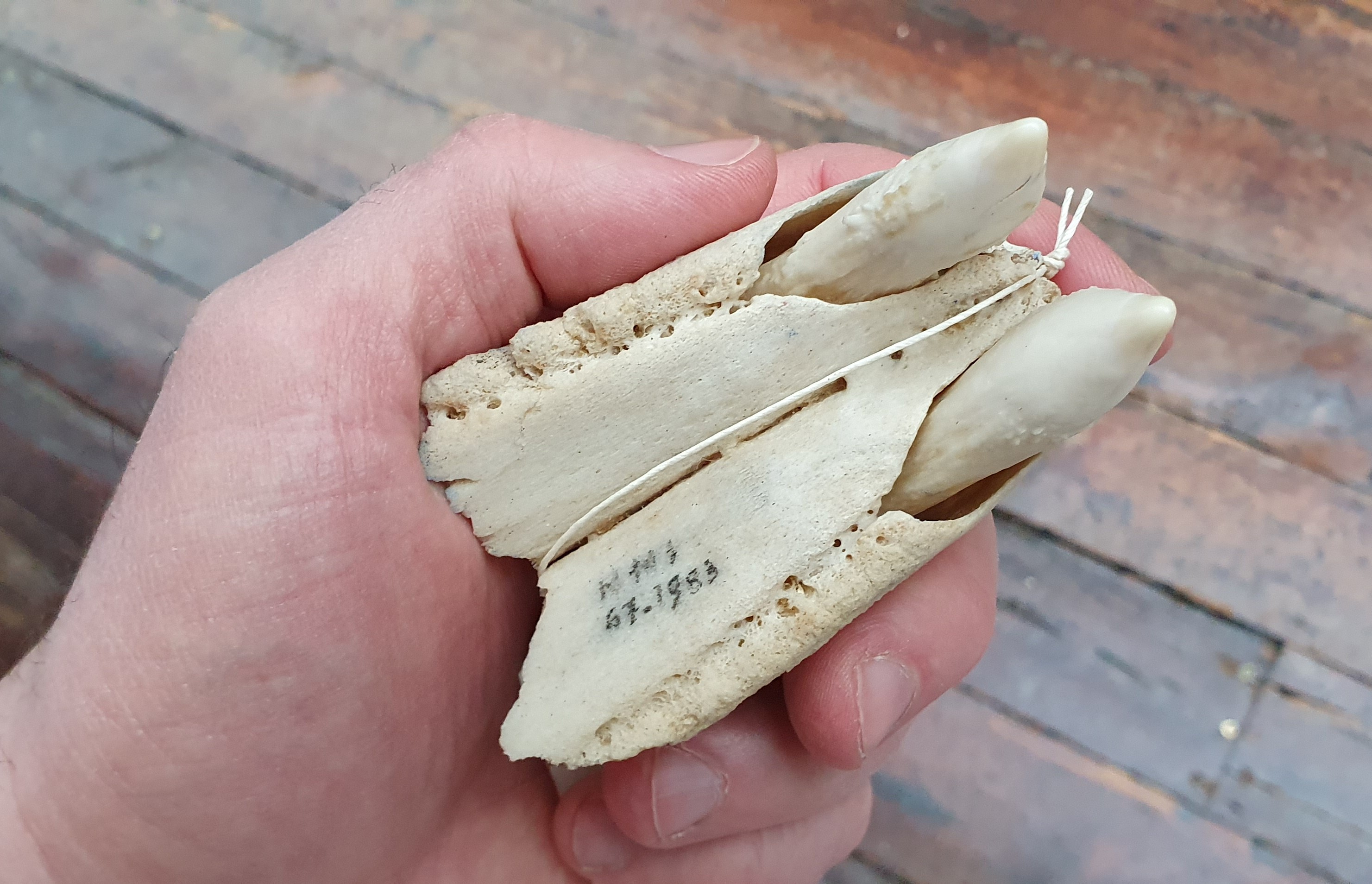
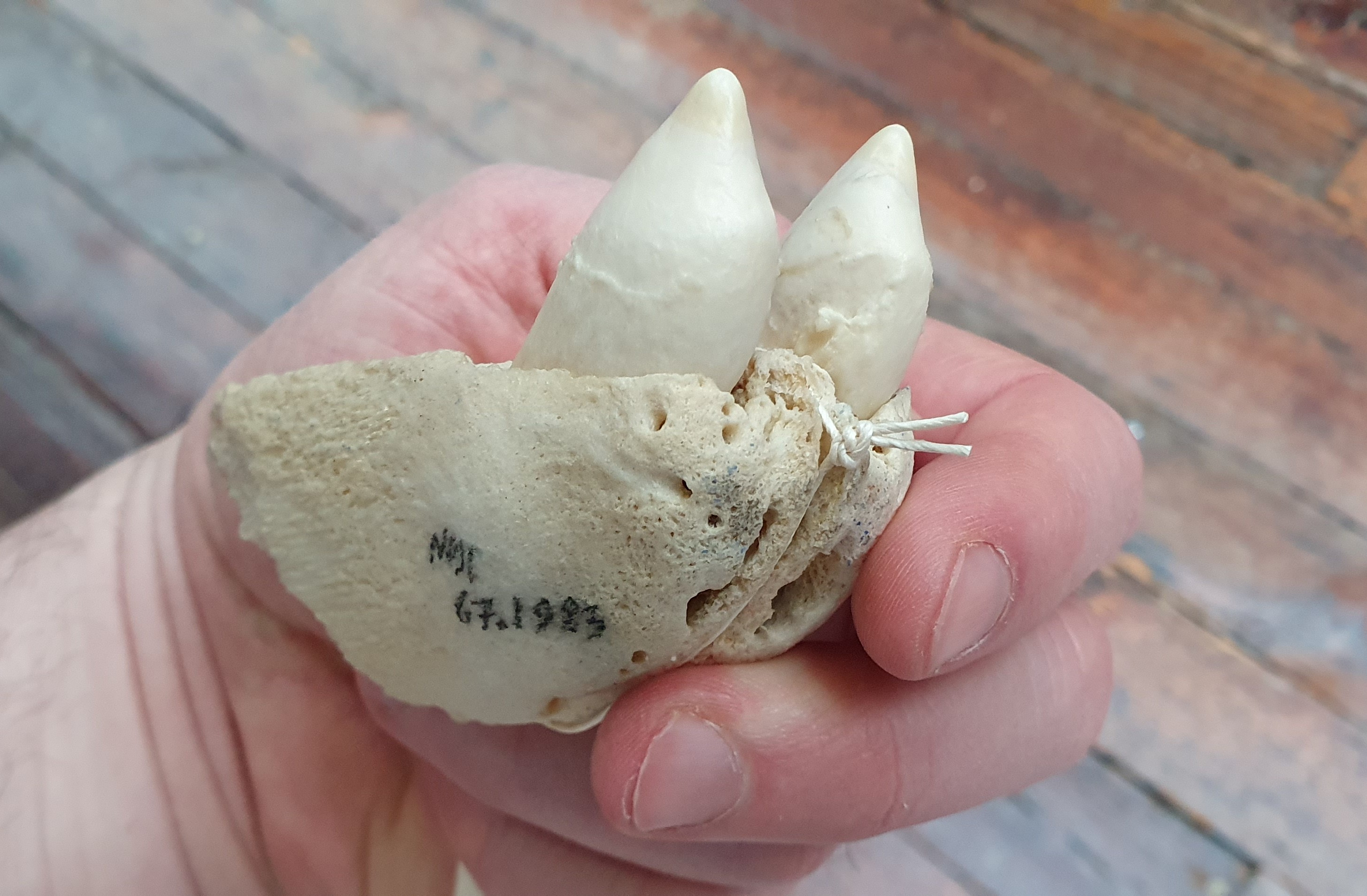
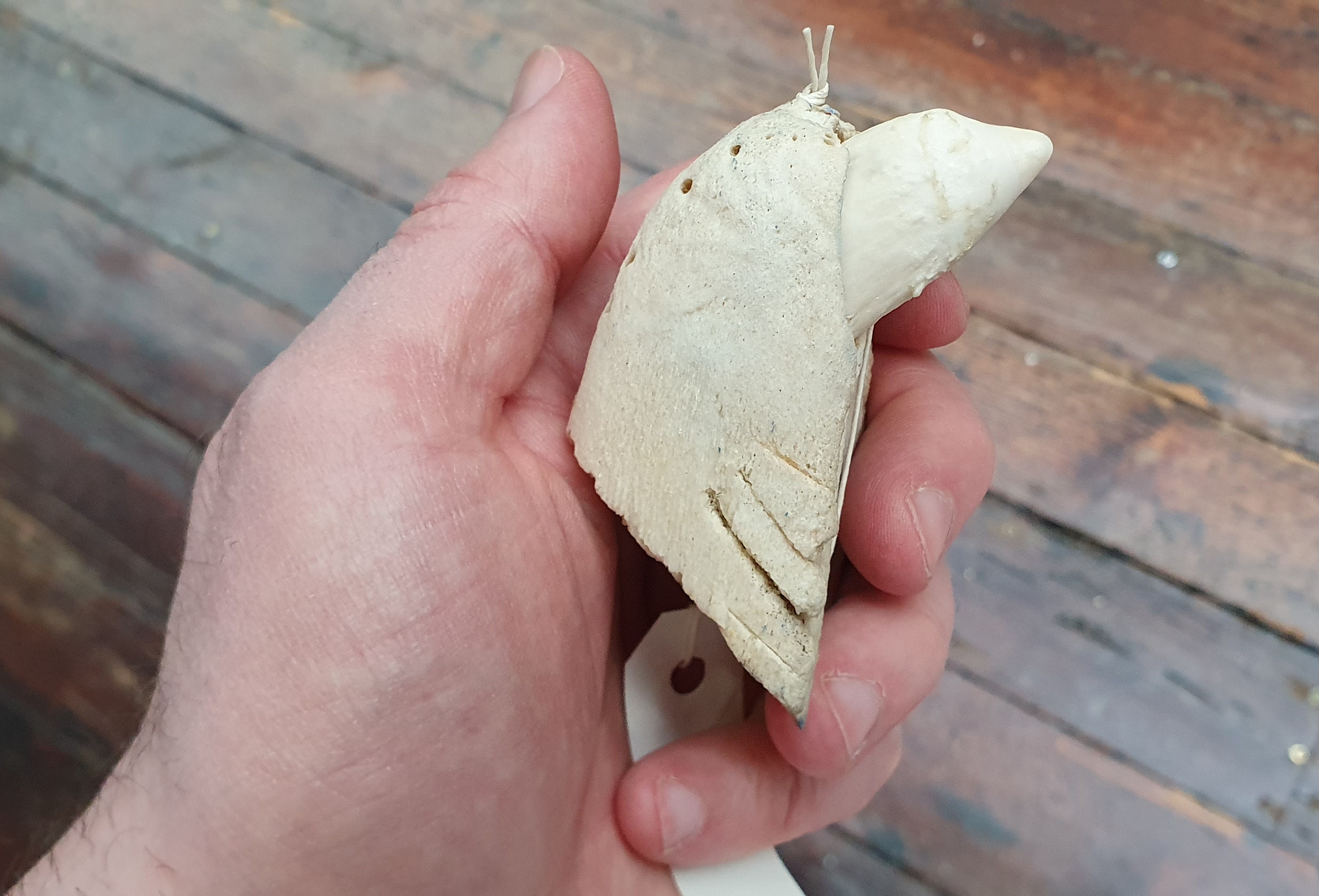
Any idea what these tusky teeth might belong to?
Usual rules apply – if you think it’s easy then please drop your thoughts in cryptic form or, even better, perhaps as a ditty or snippet of verse in the comments section below. Have fun!
This week I have bird skull for you to have a go at identifying:
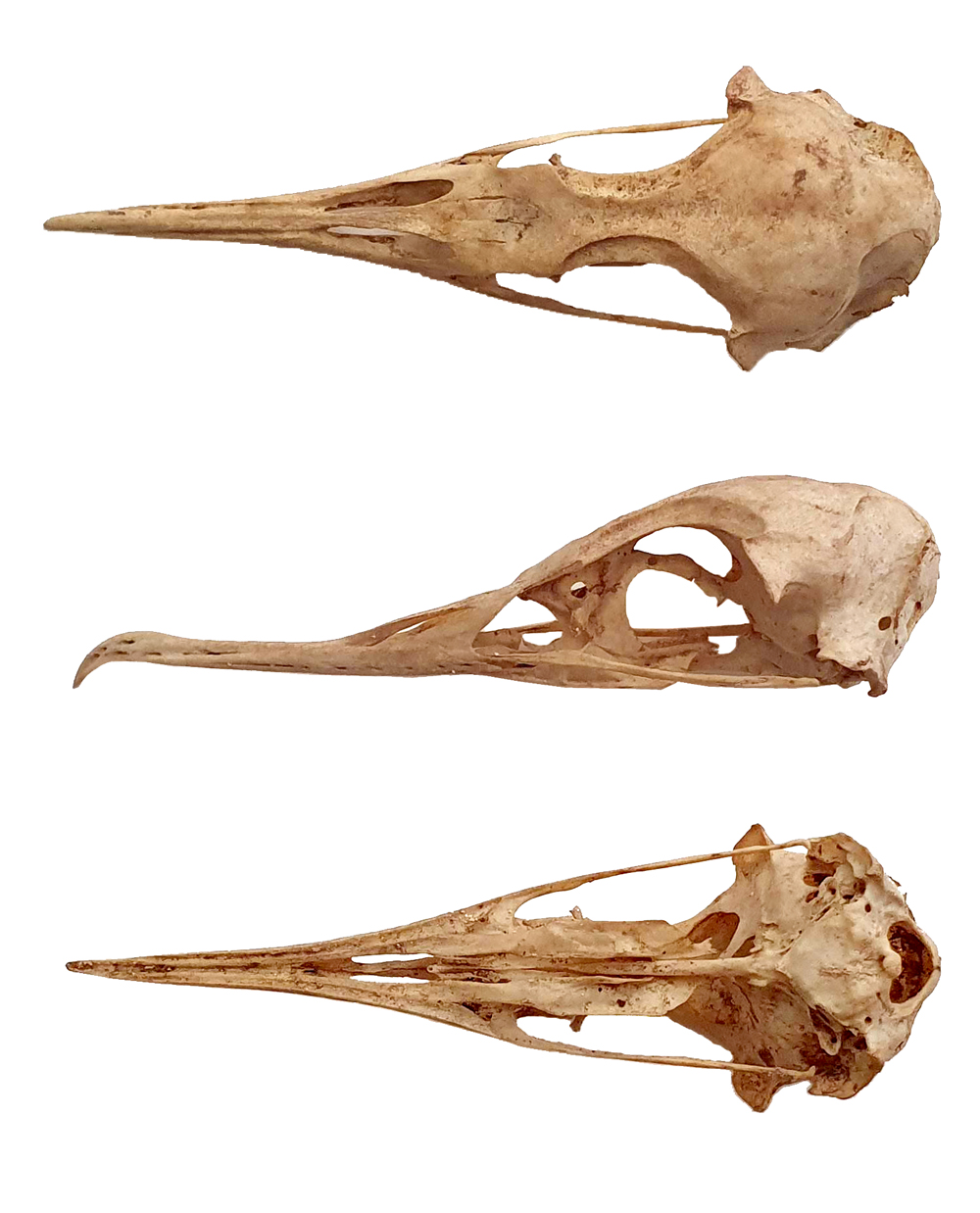
Any idea what it might be? This specimen is 77mm long and was found in the UK, in case that helps.
As always, you can leave your thoughts, questions and suggestions in the comments section below. Have fun!
This week I have another skull from Dublin Dead Zoo’s dreaded “Unidentified” drawer:
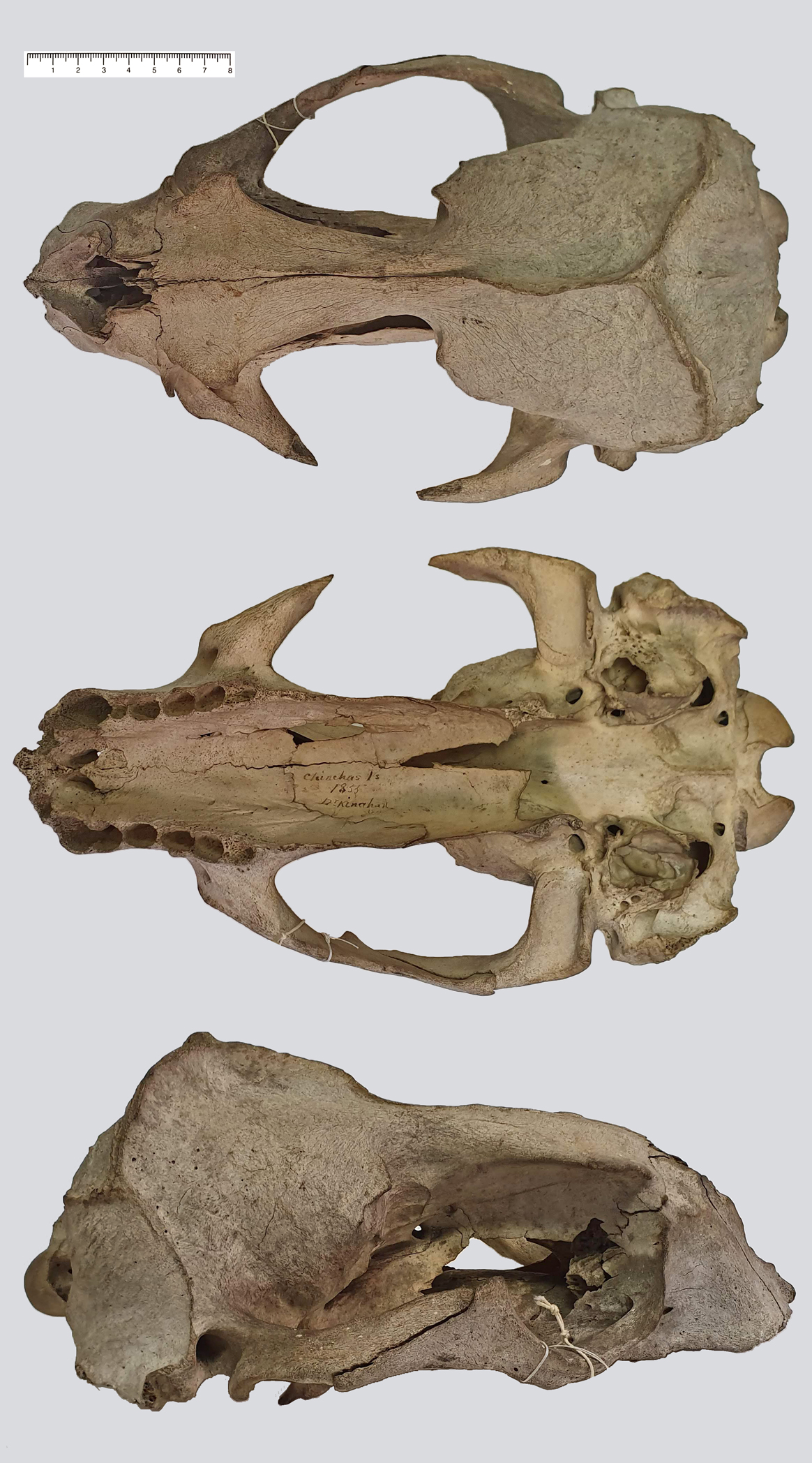
It’s toothless, a bit battered and pretty old, but I’m sure you’ll be able to work out what species this cranium came from. I hope you enjoy the challenge!
This week I have a skull from the collections of the Dead Zoo that was in the “Unidentified” drawer I discovered a while back:

Any idea which species this comes from?
Cryptic clues are welcome, as I think some of you might recognise this fairly quickly. Have fun!
Last week I gave you this rather nice, but somewhat tricky mystery object to have a go at identifying:
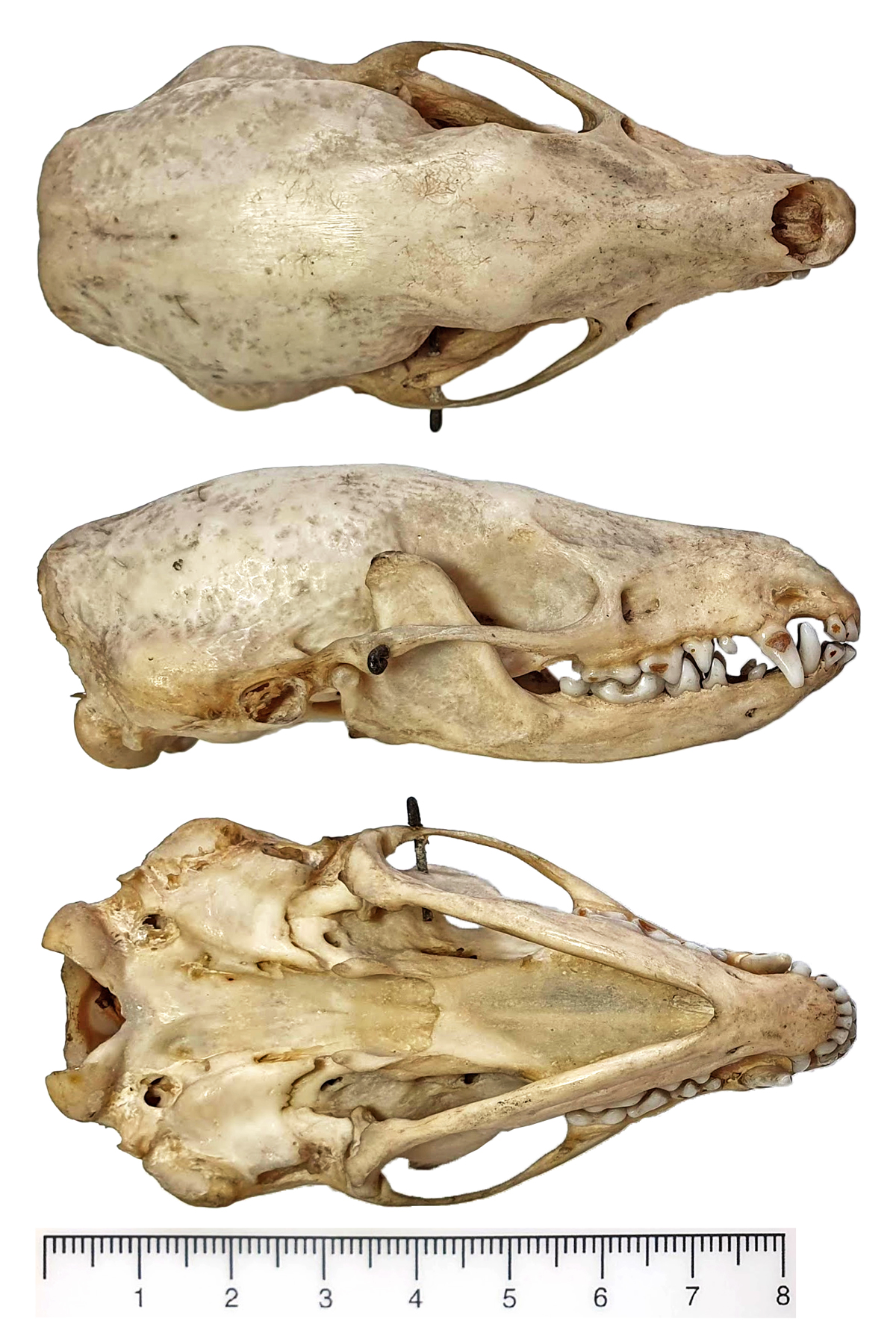
As well as here on Zygoma, people were checking this out on Twitter, where it was shared under the #GuessTheSkull hashtag started by @Yara_Haridy. I strongly recommend checking it out if you’re on Twitter and also giving Yara a follow as she does some great stuff.
As to this specimen, despite the difficulty, several of you managed to work it out down to species level – which I think deserves a round of applause, because this critter is not very well-known and there are few resources out there with examples of their skulls.
So, working through the options, despite having a whiff of possum about it, it can’t be a marsupial because it doesn’t have holes in the roof of the mouth (aka palatal vacuities), a shelf on the inside of the mandible or a tearduct on the outside of the orbit (aka external lacrimal duct) – all of which are marsupial traits as illustrated on this Tasmanian Devil skull below.

The teeth are those of a carnivore (or perhaps I should say Carnivore) and the auditory bulla is single chambered, so it’s one of the caniform carnivores, rather than one of the feliforms (that long snout suggests the same). This rules out the cats, hyaenas, mongooses and the weird Malagasy carnivores like the Fossa.
From that point on it gets more difficult. Some people thought it was a bit foxy, but the lack of a well-defined post orbital process rules out any of the dogs and it’s clearly not a bear, seal or sealion. That leaves the members of the Superfamily Musteloidea, which includes mustelids, racoons, the Red Panda, and the skunks.
Quite a lot of people got busy searching through possibilities in the largest of those groups – the mustelids. However, most of this family have fairly short, broad skulls. Only the ferret badger skulls come close to this specimen and even they aren’t as narrow. Similarly, the raccoons and Red Panda’s have fairly broad and short skulls.
So that leaves the skunks and relatives in the family Mephitidae. That makes life much easier, since there are only four genera in the family and three of those have wider skulls than this. So that leaves one genus that only contains two species – Mydaus or the Stink Badgers.
That’s where it gets really hard. A few folks on Twitter and Allen Hazen on the blog comments managed to get it to genus (Allen also worked out that it’s female), but I was especially impressed by the efforts of Rémi and katedmonson who went that step further and managed to get the identification to species. Here are the features:
katedmonson said:
…Comparing the two, M.j. has the slender snout, and a larger infraorbital foramen than the M.m. The big decider for me was the tympanic bulla. They seem to match the M.j. but not the smoother M.m. Also, females in the M.j. are known to lack a sagittal crest, so my best guess is female M. javanensis. About 4 years old. That had just eaten 6 earthworms and two beetles. And she had a limp on her left hind limb. (just kidding about the 6 earthworms, it was only 3)
I’m not sure about the earthworms, beetles or limp and I personally think the age would be a little younger – maybe 2.5 to 3 years since the earthworms have a large amount of grit in their gut and that significantly increases dental wear in animals that eat them. However, I think the rest is spot on – this is indeed the skull of a female Sunda Stink Badger Mydaus javanensis (Desmarest, 1820).

Mydaus javanensis specimen at Museum of Natural History in Vienna. By U.Name.Me, 2018
These odd looking animals have habits similar to the European Badger, foraging on the ground and in the surface of the soil for invertebrates and small prey, and sleeping in burrows during the day. However, while Badgers can be a bit whiffy, these guys have a full-on skunk-like noxious spray from their anal glands.
I hope you enjoyed that challenge, there will be another next Friday and if you want some extra mystery skulls, don’t forget to check out #GuessTheSkull onTwitter.
Have a great Easter!
This week I have a rather nice skull from the Dead Zoo for you to have a go at identifying:
Any idea what this might be from? As always you can leave your answers in the comments below and I’ll give you the answer next Friday. Have fun!
This week I have another unidentified specimen from the Dead Zoo collection for you to help identify:
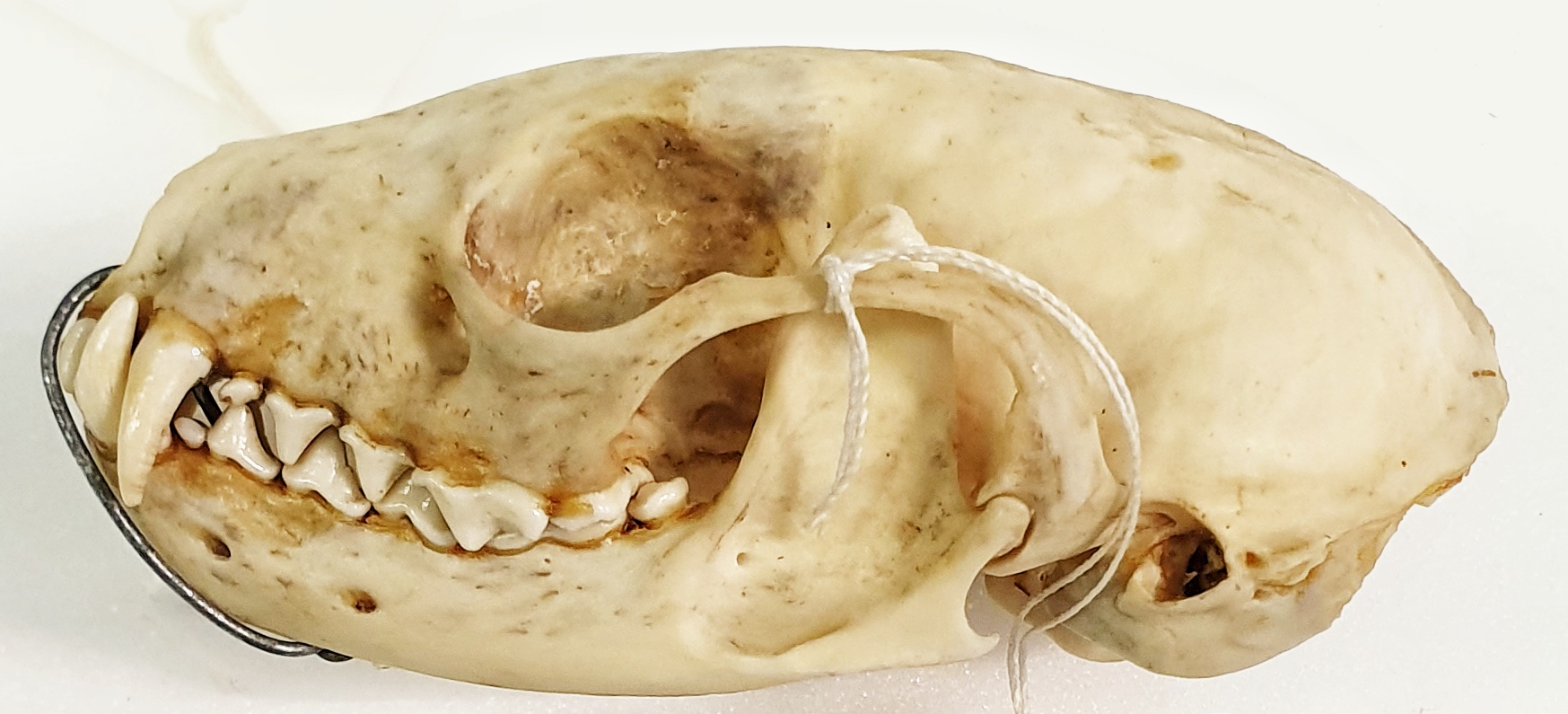
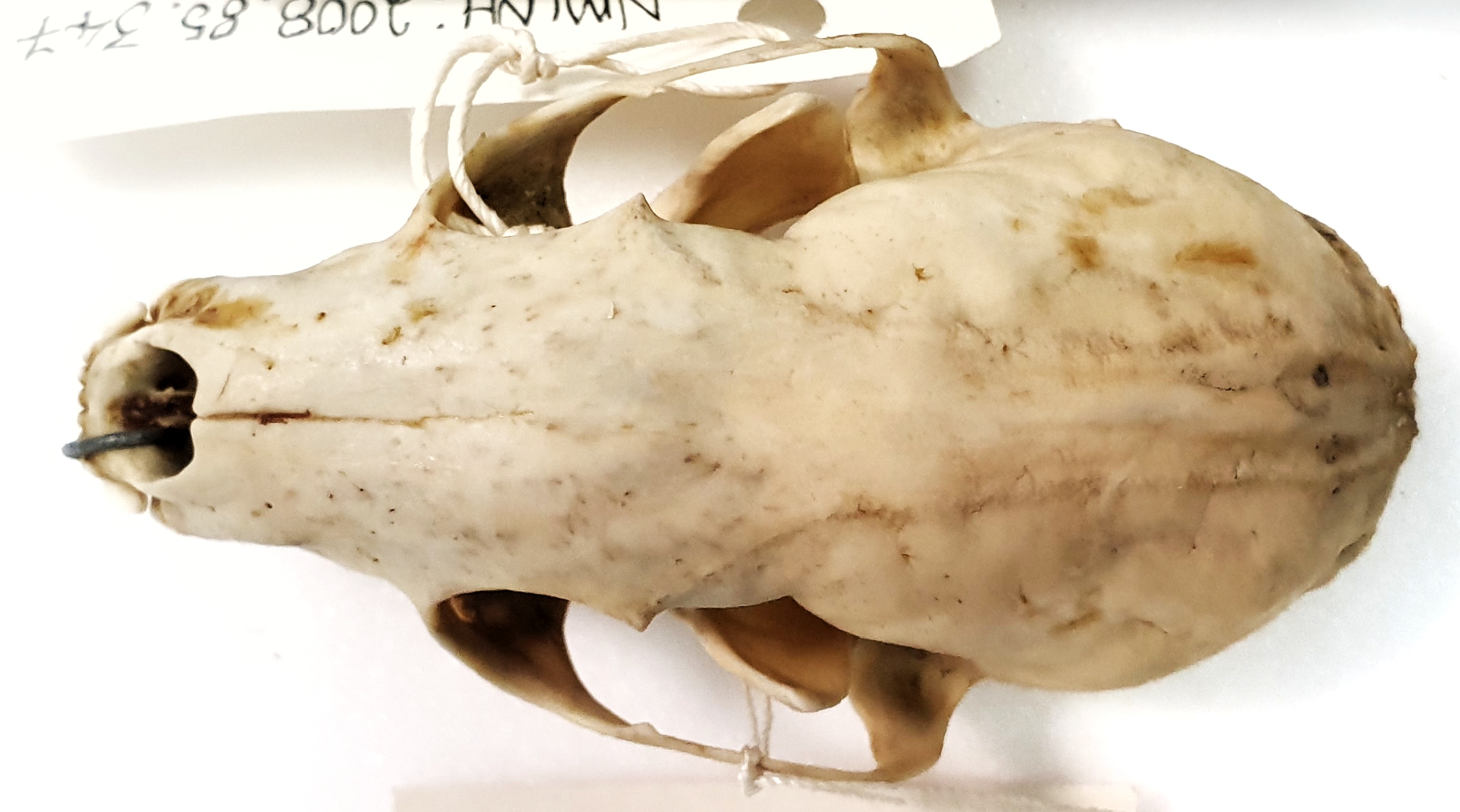

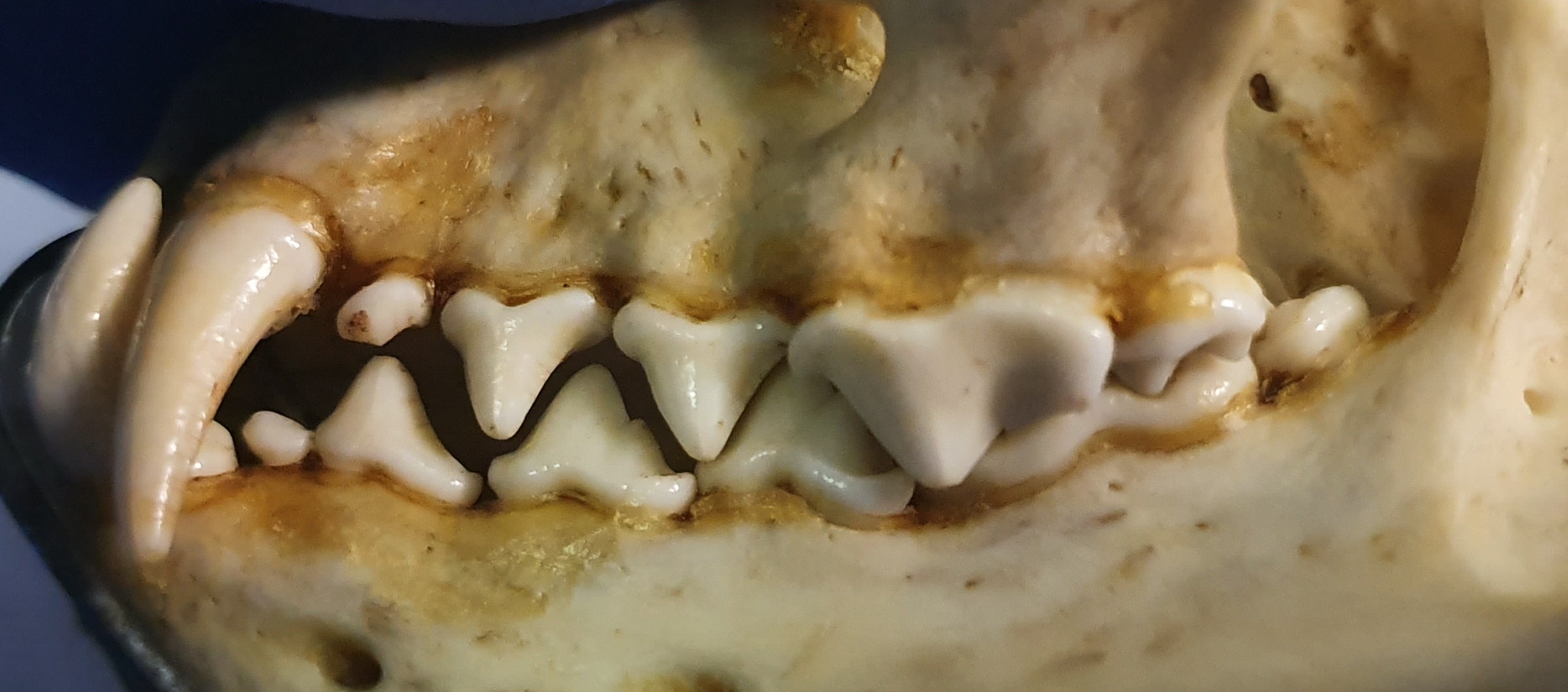
The skull is 8cm long, so not a huge critter. Any ideas what it might be?
Have fun!
Last week I gave you this unidentified skull from the collections of the Dead Zoo in Dublin to have a go at identifying:
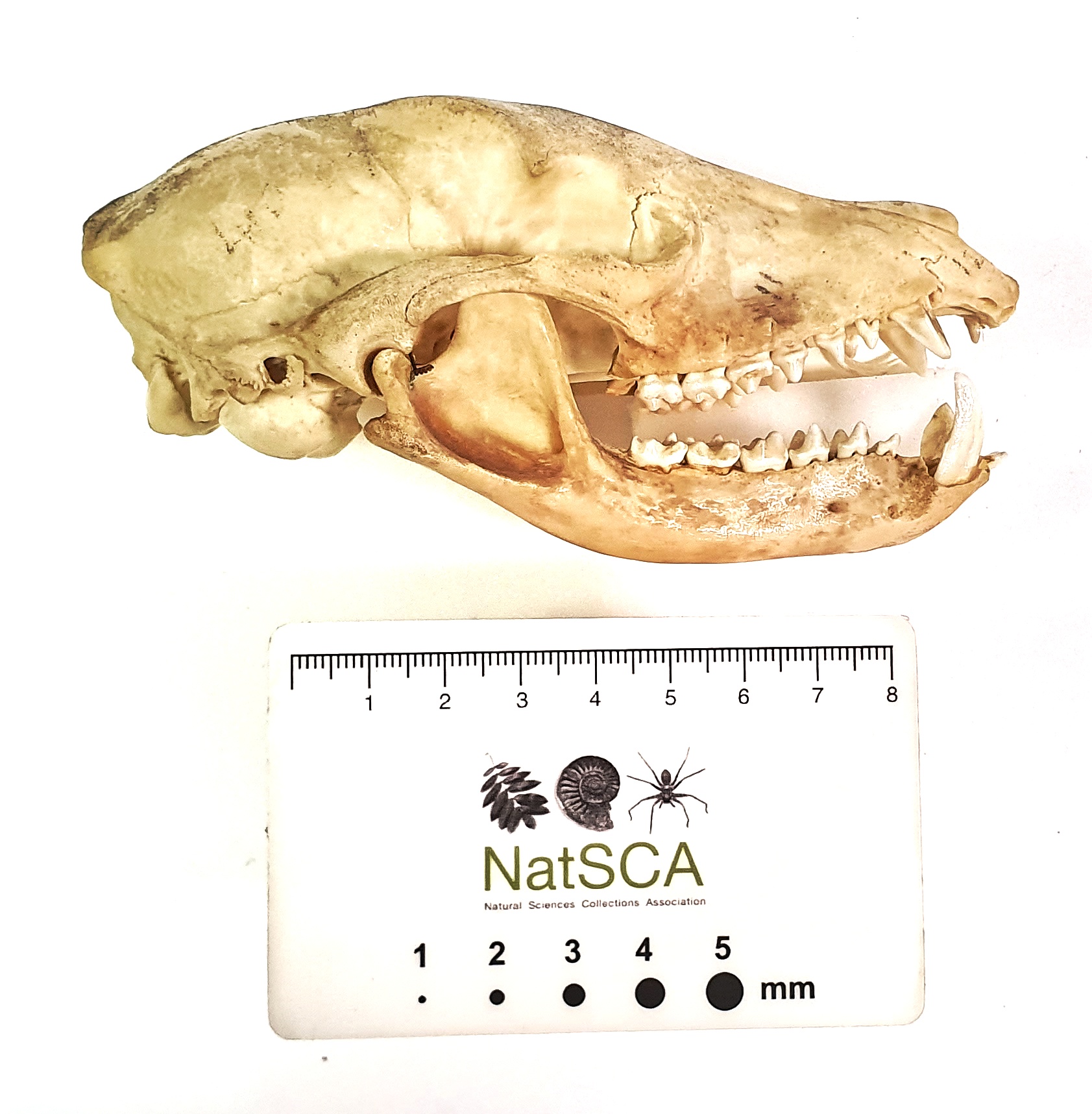
I wasn’t sure how difficult this would be – I know carnivore skulls can be a bit of a challenge, but this is a critter that’s come up as a mystery object a couple of times before. As such, I did expect a few of the regulars to recognise this, but it proved more difficult than I thought.
That said, nobody got it. Well, somebody got it, but that person was nobody with the simple statement:
I’m guessing coati 🤔
Of course, there’s more than one kind of coati, in fact there are four: the Ring-tailed, the White-nosed (or Coatimundi), the Eastern mountain and the Western mountain.
The mountain coatis are in the Genus Nasuella and they have a very narrow and gracile rostrum (that’s the muzzle area) – so this is not one of them. The other two are in the Genus Nasua and they are recognisable by their upward tilted nasal area and their upper canines which are very tusk-like – projecting forward and triangular. The mature adults of both species have a big sagittal crest, which this lacks, but that’s probably because it’s not a mature adult.
Differentiating between the two species can be tricky, but the region around the auditory bullae can be useful in this. The Animal Diversity Web has some very useful images that can help.
The slightly more inflated auditory bullae and the angle of the mastoid process (where the muscles that control the movements of the outer part of the ear attach to the skull) tells me that this is most likely to be the White-nosed coati Nasua narica (Linnaeus, 1766).
I hope that helps in case you need to identify another of these any time soon.
This week I have an insect specimen from the Dead Zoo for you to have a go at identifying. I picked it because it definitely falls into the festive end of the colour spectrum:

Looking forward to hearing your thoughts on what this might be.
The answer will be forthcoming in the New Year – I hope you all enjoy seeing it in!
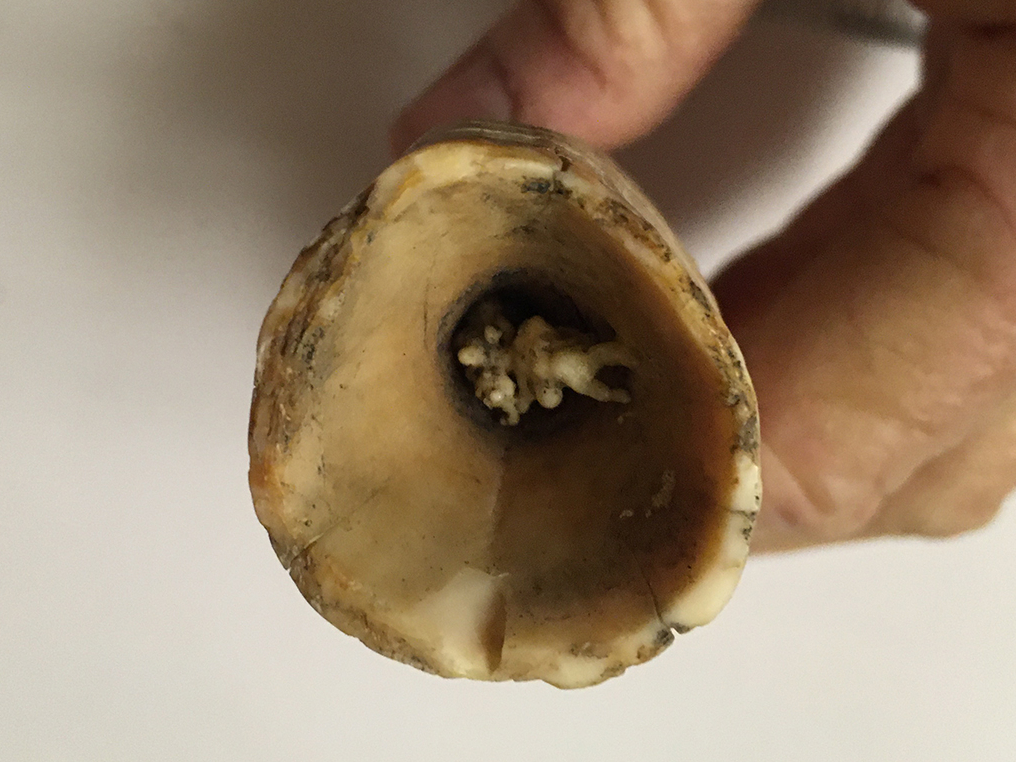
This week I have a couple of guest mystery objects for you to have a go at identifying. Here’s the first:

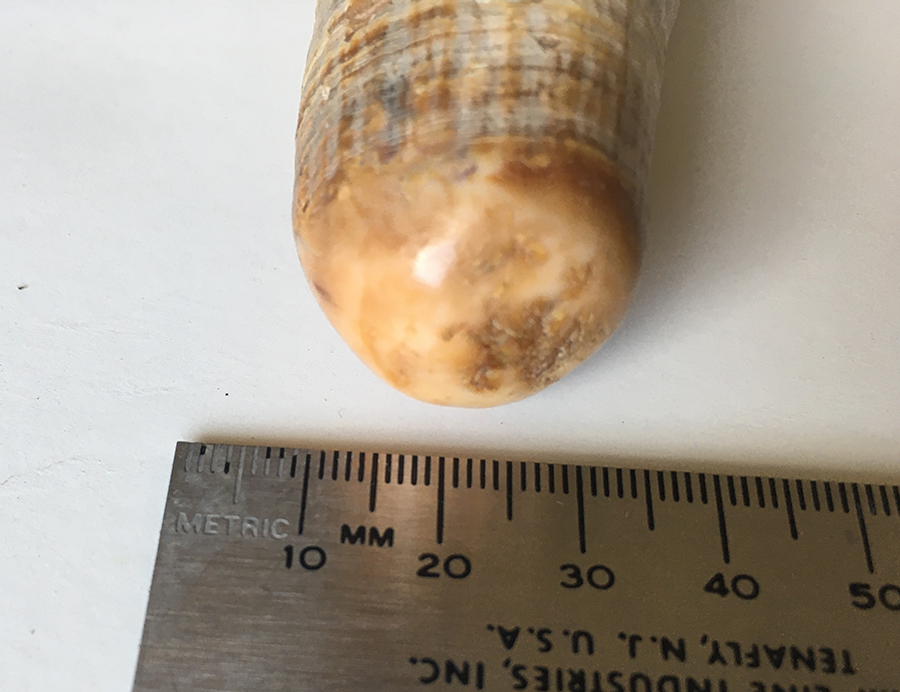
And this is the second mystery object:
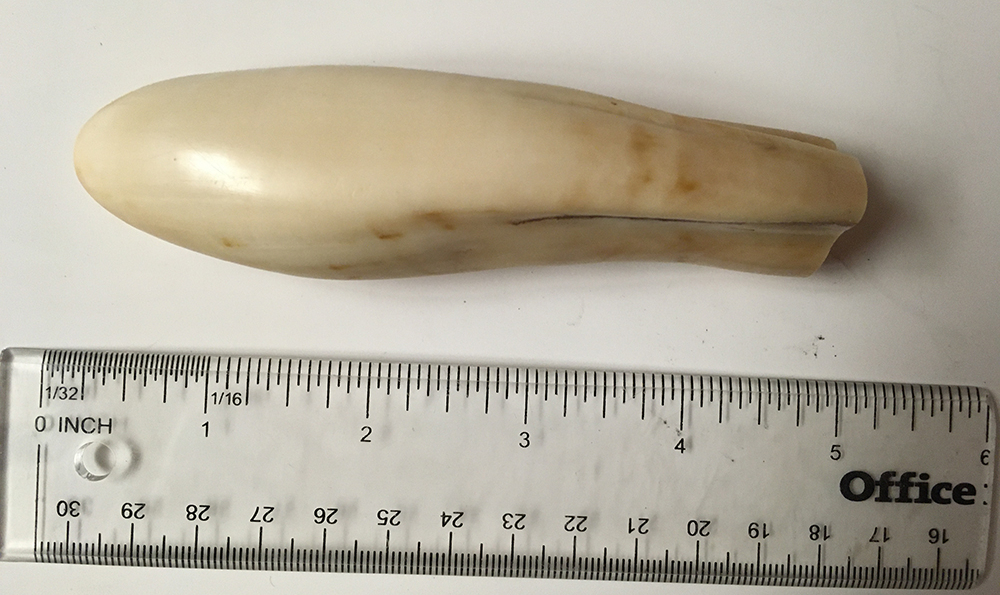

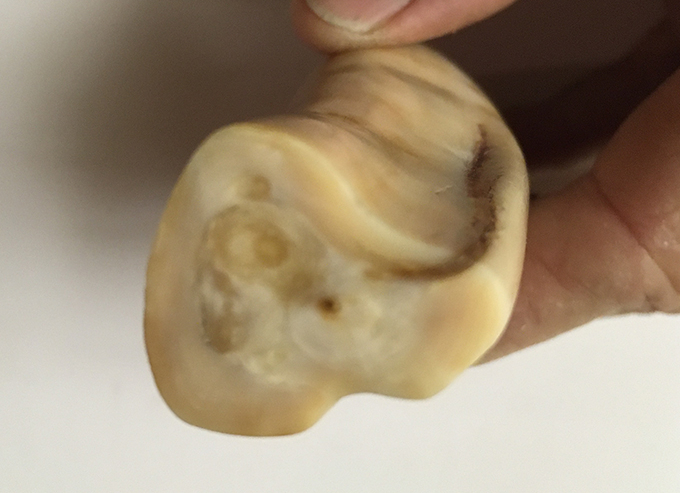
These photos are from Katharine Edmonson and they’re real mysteries, so no need for cryptic clues or hints – let’s see if we can work out what these are using our collective knowledge. Should be fun!
Last week I gave you this really nice skull from the Dead Zoo to have a go at identifying:
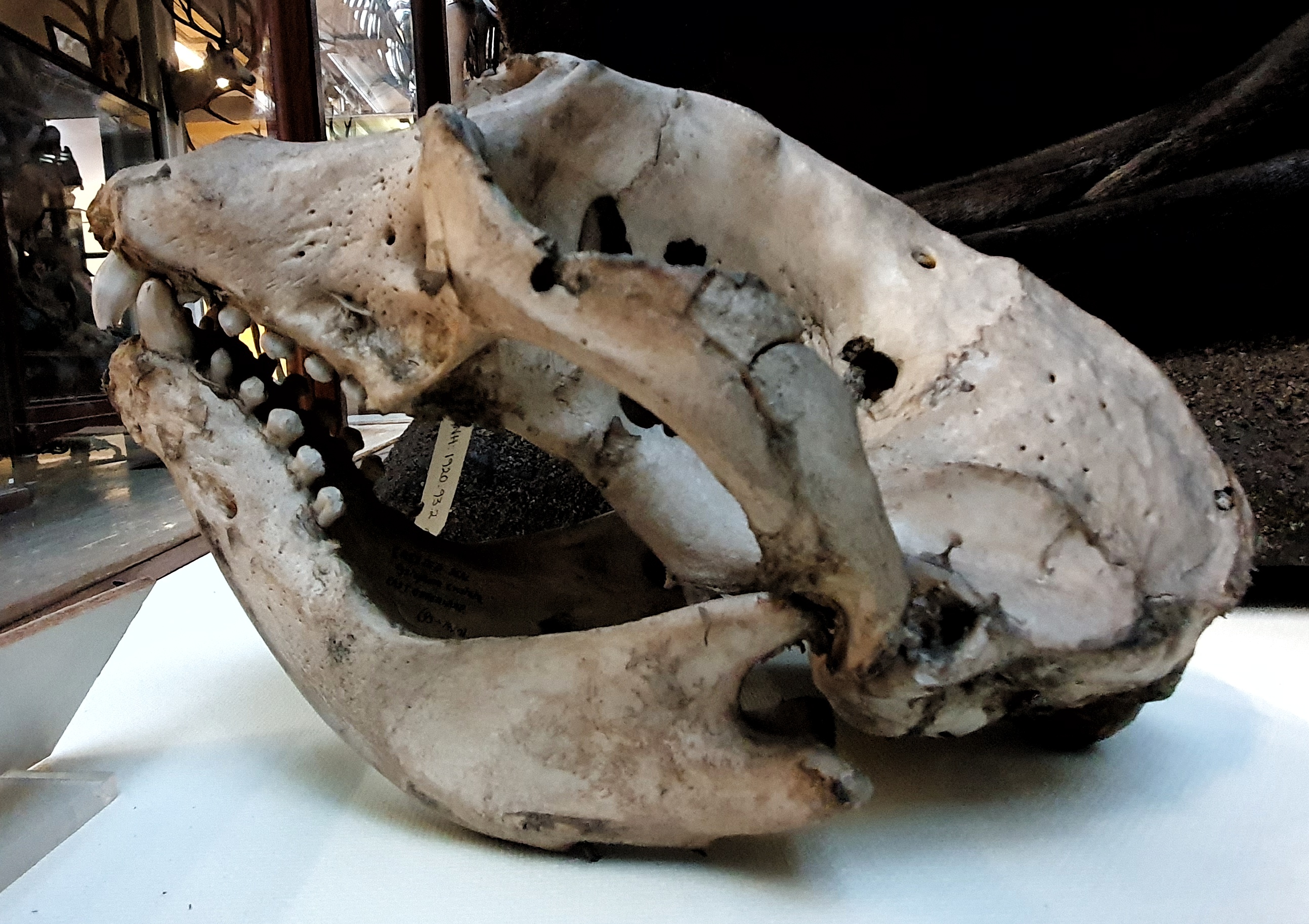
It proved a little more tricky than I thought it would, but I shouldn’t have been surprised given the poor quality of the photo and the fact that the cranium isn’t properly seated on the mandible (as pointed out by Allen Hazen).
Of course, that didn’t keep you all confused for too long. The large sinuses and relatively undifferentiated and widely-spaced teeth – except for those large canines – suggest that this is the skull of a some kind of seal.
Jeanie and salliereynolds noted the large, depressed opening over the nasal region, which is definitely one of the most distinctive features of this species. However, it also misled in the first place, with discussion of the possibility of it being from an Elephant Seal taking over for a while.
However, salliereynolds got back on the right track, while on Twitter Ray Chatterji was on the right track from the start with his suggestion:
Hooded seal?
— Ray Chatterji (@ray_chatterji) November 29, 2019
The Hooded Seal Cystophora cristata (Erxleben, 1777) is really weird – well, the male is. He has an inflatable bladder on its head and one nostril contains a membrane that he can inflate to show off to other Hooded Seals.
I find it hard to think of this as anything other than nature’s attempt at making slightly disgusting balloon animals.
Well done to everyone who worked it out – I have a couple of fun guest mystery objects for you next week!
Last week I gave you this weird, but rather nice object to have a go at identifying:
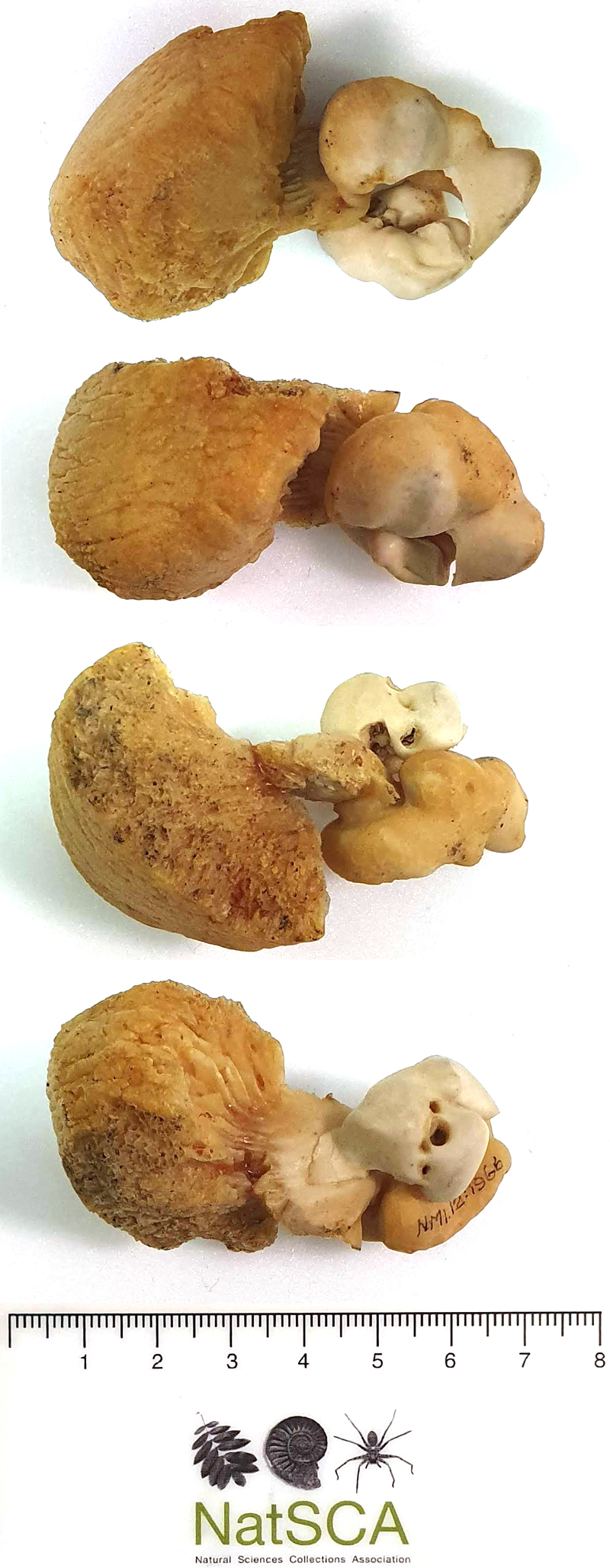
Most people seemed to recognise it as the tympanic region (that’s the bony ear-related region) of a whale. But of course, I’m demanding when it comes to getting an identification and there are plenty of species of whale to rule out.
The size immediately narrowed down the possibilities – this is pretty small for a whale. But what really gives it away for the small number of people intimate with the cranial anatomy of whales (which goes beyond even my bone-nerdery), is the spongy bone attached to the tympanic bulla (that’s the bulb-shaped bit of bone that houses the inner ear).
This feature is proposed as a possible pressure receptor that’s found in the Pygmy Sperm Whale Kogia breviceps Blainville, 1838. Amazingly, Conor Ryan identified this on Twitter – his handle of @whale_nerd explains everything you need to know.

Kogia breviceps by George Brown Goode, 1887
These toothed whales only grow to around 3.5m, which is pretty small for a whale. They share some features with their much larger Sperm Whale cousins, particularly in relation to adaptations for echolocation.
I was fortunate enough to meet Conor Ryan at the weekend at the Irish Whale and Dolphin Group conference. There were plenty of whale enthusiasts around and it was fantastic to get a chance to learn more about this incredible group of animals from a lovely bunch of passionate people.
While I was there, I also picked up some useful tips on differentiating between species of dolphin, so I may have to share those with you soon…
This week I have a nice mystery object for you to have a go at identifying, with views from four angles to help you work out what it is and a nifty NatSCA scalebar to give a clear idea of the size:
If you have any ideas what it might be, you can leave your thoughts, questions and suggestions in the comments section below. Have fun!
Last week I gave you this rather exciting new specimen from County Kerry, Ireland to have a go at identifying:

Perhaps unsurprisingly, it was recognised by pretty much everyone. For people based in the Americas it’s not that unusual a species and for people on the other side of the Atlantic, especially those with an interest in birds, there has been a bit of a stir in the press about this specimen.
This bird is clearly a member of the heron family – the Ardeidae – with its distinctive spear-shaped bill, relatively long legs and long and somewhat kinked neck. But it’s tiny. In fact, this is one of the smallest members of the Ardeidae, perhaps a bit longer in the body than a Dwarf Bittern, but just a bit lighter and quite different in plumage.
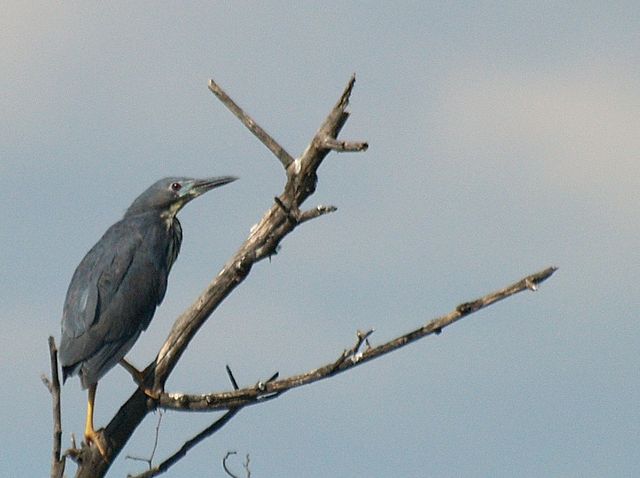
Dwarf Bittern in South Africa. Image by Mark Tittley, 2011
And this particular specimen is very light indeed. Sadly it was probably undertaking a migration south from its North American breeding grounds, when it got caught up in hurricane Lorenzo, which blew it off course, forcing it across the Atlantic Ocean, where it finally made landfall in Farranfore in County Kerry, on the west coast of Ireland on 7th October this year.
Exhausted, emaciated and severely dehydrated, the poor bird lasted less than an hour in Ireland, despite efforts to keep it going by John O’Donoghue, the owner of the garden it ended up in. John and his neighbour Anthony O’Connor recognised that it wasn’t a bird normally found in Ireland, so they got in touch with BirdWatch Ireland to find out what it was and let people know about their unfortunate visitor.
Brian Burke and colleagues from BirdWatch Ireland identified the specimen as being a Least Bittern Ixobrychus exilis (Gmelin, 1789) and they got in touch with me at the Dead Zoo about getting the specimen added to the collections, since it’s a first record of this species occurring in Ireland – and only the 10th known to have made it across the Atlantic.
Of course, I was delighted to accept on behalf of the Museum and John arranged to get the bird to me in Dublin via his local Teachta Dála (the Irish equivalent of a Member of Parliament). Now the bird is safely stowed in the Museum’s freezer awaiting assessment by a taxidermist, to see whether it’s in good enough condition to be mounted, or if I’ll need to find another way of preserving the specimen as part of the permanent collection.
If not as taxidermy, this might be as a study skin, a fluid preserved specimen or even a skeleton – each offers different information for future use. But however it gets preserved, it will provide an important physical record of an unusual visitor to the Nation for future scientists and members of the public. After all, that’s a huge part of what collections are for.
 Zygoma