Last week I gave you this guest mystery object from Andy Taylor:
Image by Andy Taylor, 2023
Those paired incisors and the large diastema (or gap) behind them are characteristic of a rodent, so that narrows down the possible options by not very much, since there are well over 2250 species.
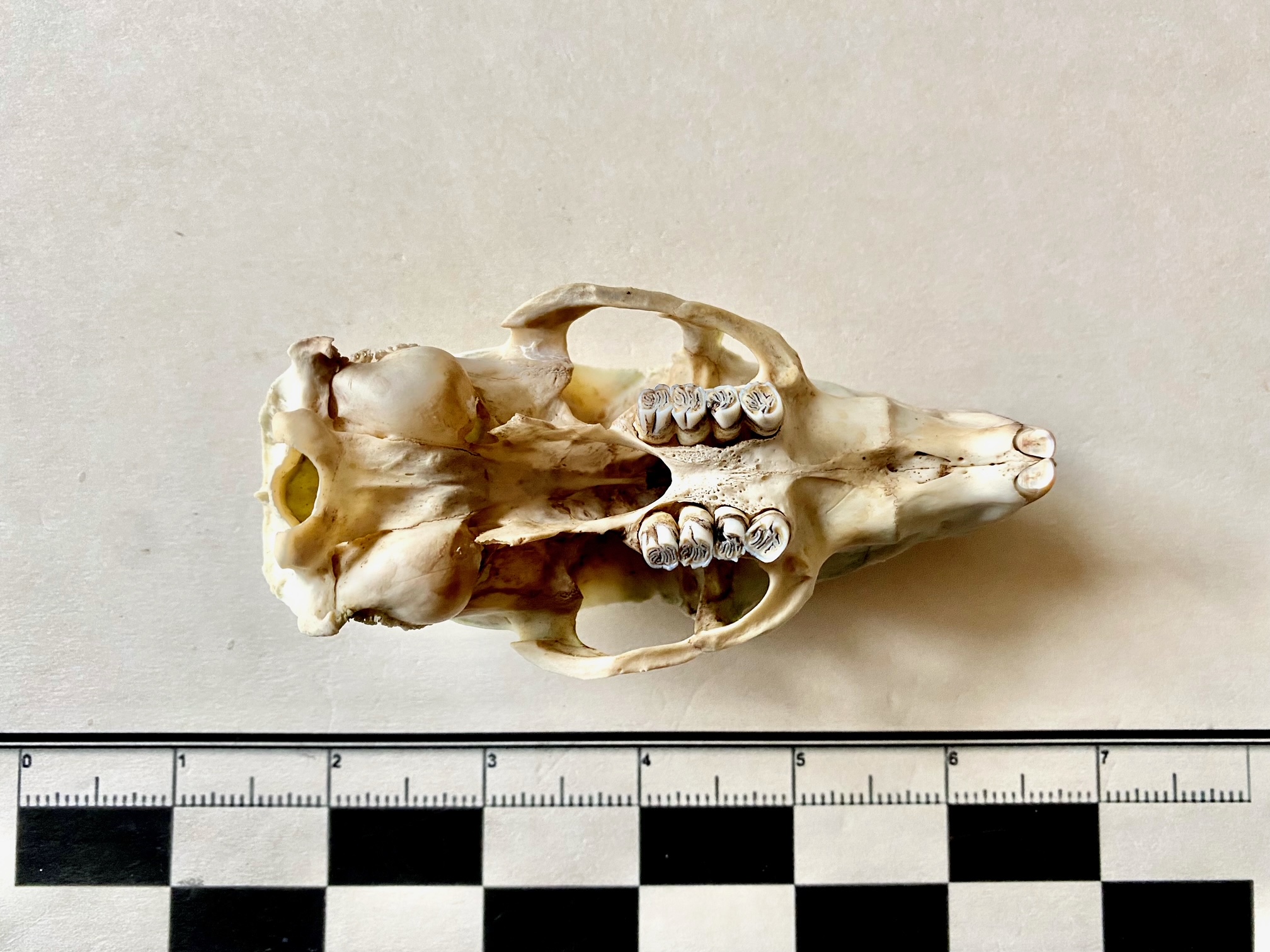
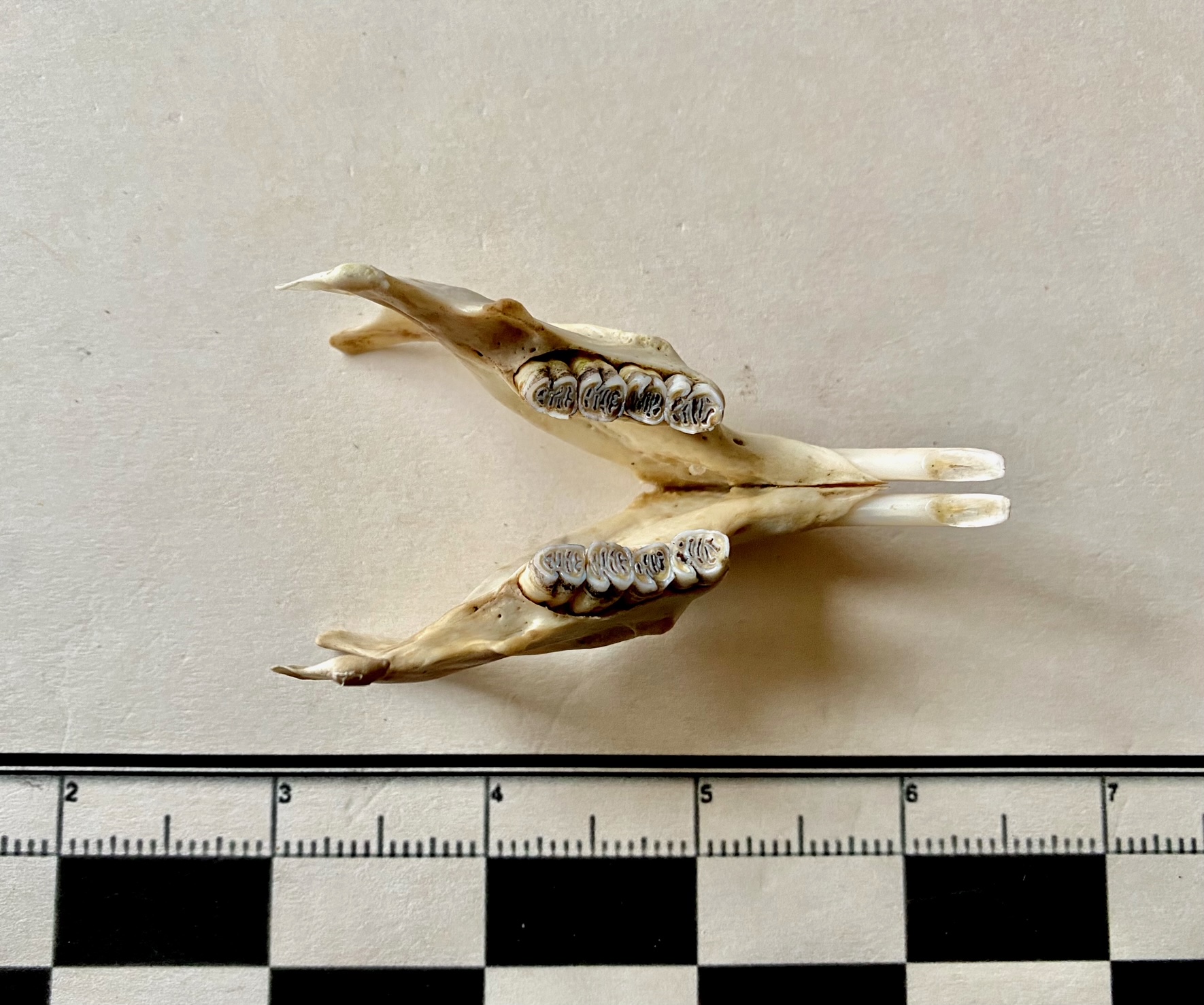
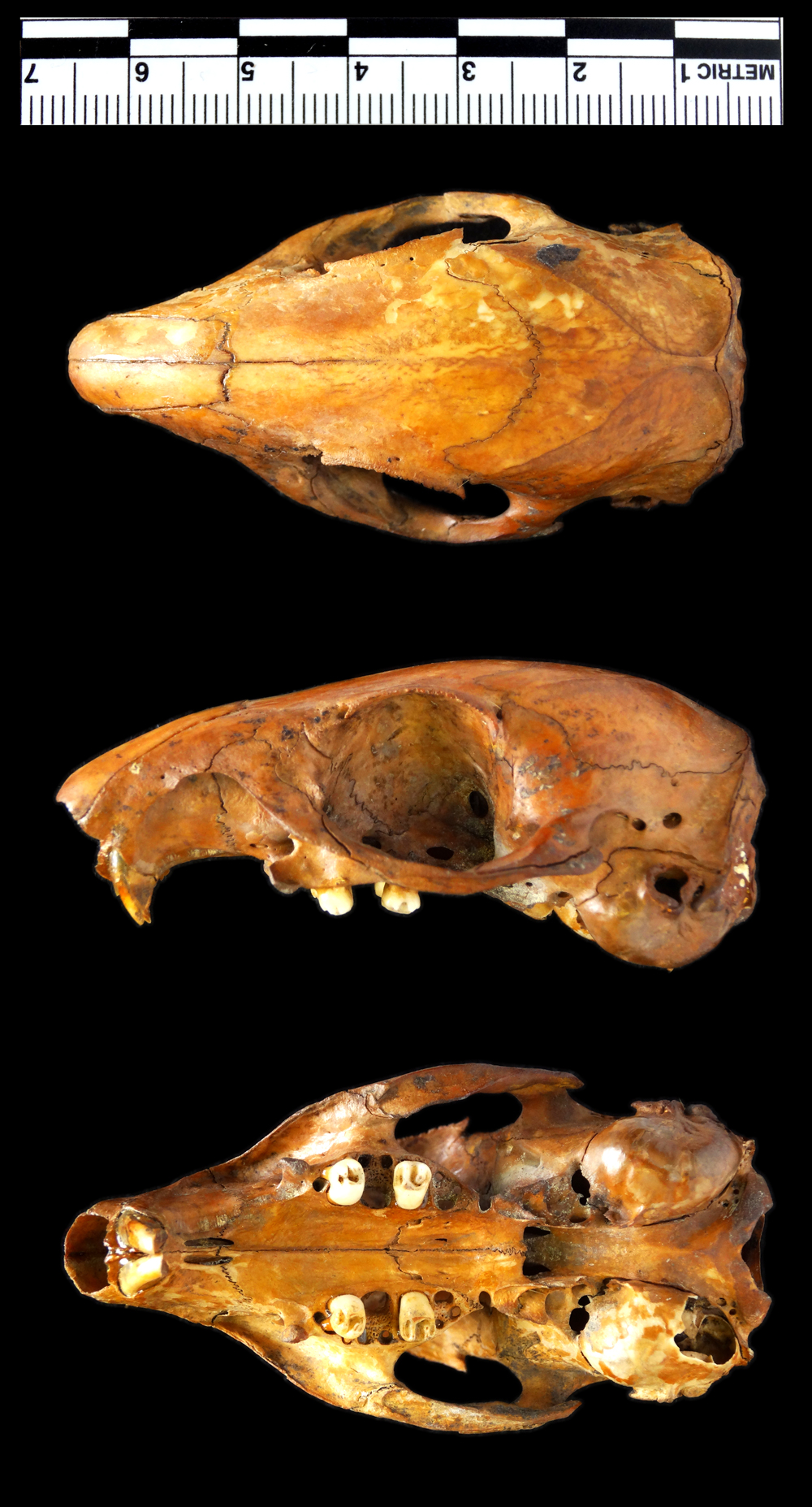
However, this specimen also has a very large infraorbital canal (that big forward-facing hole in front of the eye socket), which is a feature of the hystricomorphs – the group containing capybaras, porcupines, chinchillas, guinea pigs, hutias and suchlike. The teeth are an additional give-away for the group, with their discrete little patterns on the grinding surfaces:
Image by Andy Taylor, 2023
Image by Andy Taylor, 2023
The scale of this specimen threw me a little at first, as I’m used to dealing with metric, but this scalebar has 16 subdivisions, so it muct be imperial. Which really helps, as it means this skull is quite large for a rodent – somewhere in the region of 5 inches or 12.7cm. That immediately narrows things down a lot more.
An additional clue is in the narrow skull profile:
Image by Andy Taylor, 2023
A lot of rodents have a lower and broader skull and this kind of shape is what I expect to see from a species that moves through dense undergrowth rather than climbing, digging or swimming. This, combined with all the other clues, led me to the agoutis.
There are 12 species of agouti, so we’re still not quite there with the identification. Most species that I can find comparative material for have a significantly longer rostrum than this specimen (relative to the rest of the skull), but there are some species I’ve not been able to find a really reliable reference skull to compare against.
There is one species where I couldn’t find a great skull comparison, but which appears in living individuals to have a relatively short snout and the skull image I could find also appears to be less nasally advantaged than most agoutis. That was the Brazilian or Red-rumped Agiouti Dasyprocta leporina (Linnaeus, 1758).
I’d be keen to take a further look with some good quality reference material, but I’m reasonably happy with this. The advantage of good comparative material is that it really helps make those detailed observations about particular shapes and sizes that can be hard to properly recognise from a photo.
In a strange, but very welcome cooincidence, I had the good fortune to meet up with Andy last Friday evening. I was at the NatSCA conference in the UK – which was held just a short journey from where Andy lives. It offered a great chance to chat with a fellow bone geek and natural history fanatic and I hope to have some more guest objects from Andy and his amazing collection in the future!
This week I am have a great guest mystery object from Andy Taylor for you to have a go at identifying:
Image by Andy Taylor, 2023
Image by Andy Taylor, 2023
Image by Andy Taylor, 2023
Image by Andy Taylor, 2023
Here’s what Andy says about the specimen:
On Sunday, myself and Sophie Bagshaw were working through specimens that were donated to me from a person who had been given them by a zoological park. The specimen in question was part of a huge shipment of almost 140 frozen specimens that were in various states of preparation and were mostly head specimens. … I have a large rodent skull that I’m struggling to ID
Andy and Sophie have been doing great stuff with osteology for educational purposes for a while now, so it was a real pleasure to get a question like this, and it seems like a perfect opportunity for the community here to add their thoughts.
Last week I gave you this skull from the collections of the Dead Zoo, which had been misidentified and that came to light when Dr George Argyros was doing some research on the carnivore skeletons:
The label attached to this specimen indicated that this is the skull of a Leopard, which is clearly wrong. The label also identified the specimen as having been collected in East Africa by Major A.W.V. Plunkett.
Labels like this worry me. Not because they contain a misidentification, but because they may indicate that someone in the past has mixed up the specimen labels. This is a much bigger problem than a simple misidentification, as it can mean the real specimen has become dissociated from its information.
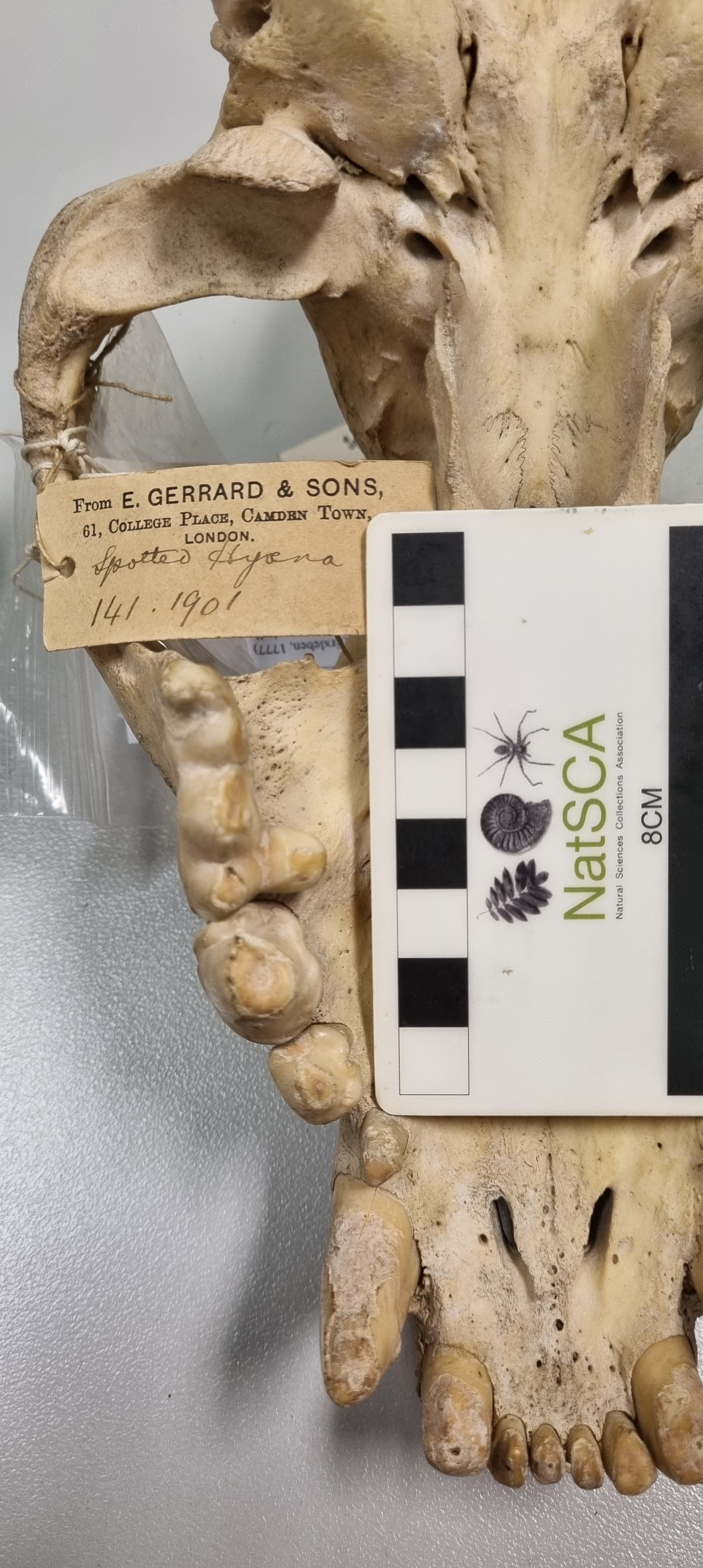
The huge, robust teeth of this specimen should make it fairly clear that it belongs to one of those specialist bone-crushers – the hyenas:
However, there are three species of hyena to choose from (I’m leaving the Aardwolf of this, since they don’t match this dental morphology even remotely).
My first thought was that this specimen is on the small side for a Spotted Hyena:
Striped Hyena on left, Spotted Hyena on right
Size is seldom a definitive feature, especially in species that display sexual dimorphism, but what is more useful is the detail of the tiny molar at the back of the maxillary toothrow. This is absent in Spotted Hyenas, but it occurs in both Striped and Brown Hyenas.
So you might ask, how do we distinguish between Striped and Brown Hyenas? This is a good question. For starters, it’s hard to find enough reliable good images of the Brown Hyena’s skull online that show the details needed to distinguish between the species.
However, a bit of searching highlighted that the Brown Hyena has a shorter and more robust angular process of the mandible than the Striped – and the mystery object.
Image of Brown Hyena skull by David J. Stang, 2005.
This long angular process was spotted by katedmonson, but Adam Yates was the first with the identification of Striped Hyena Hyaena hyaena (Linnaeus, 1758).
This one proved a little trickier than I thought at first, due to the similarities between the Brown and the Striped species. But I’m a little relieved that the consensus fell on Striped, both here on the blog, and between myself and George, since the Striped Hyena is found in East Africa, whereas the Brown is limited to South Africa.
This at least agrees with the locality on the label, so it may well have simply been misidentified when the specimen was acquired – especially since it looks like it was skeletonised naturally, so it may have been found dead and already defleshed, making it harder to identify.
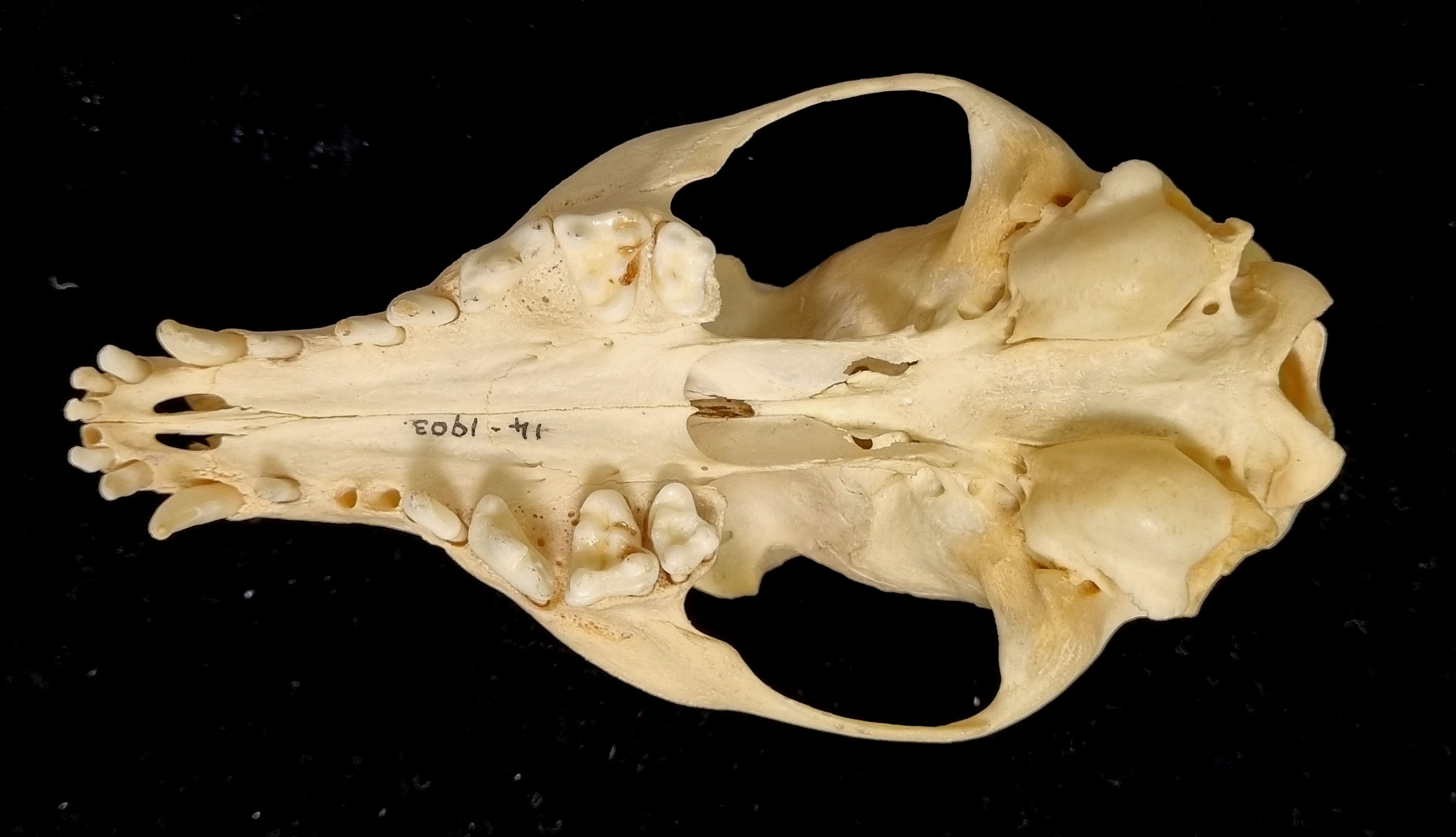
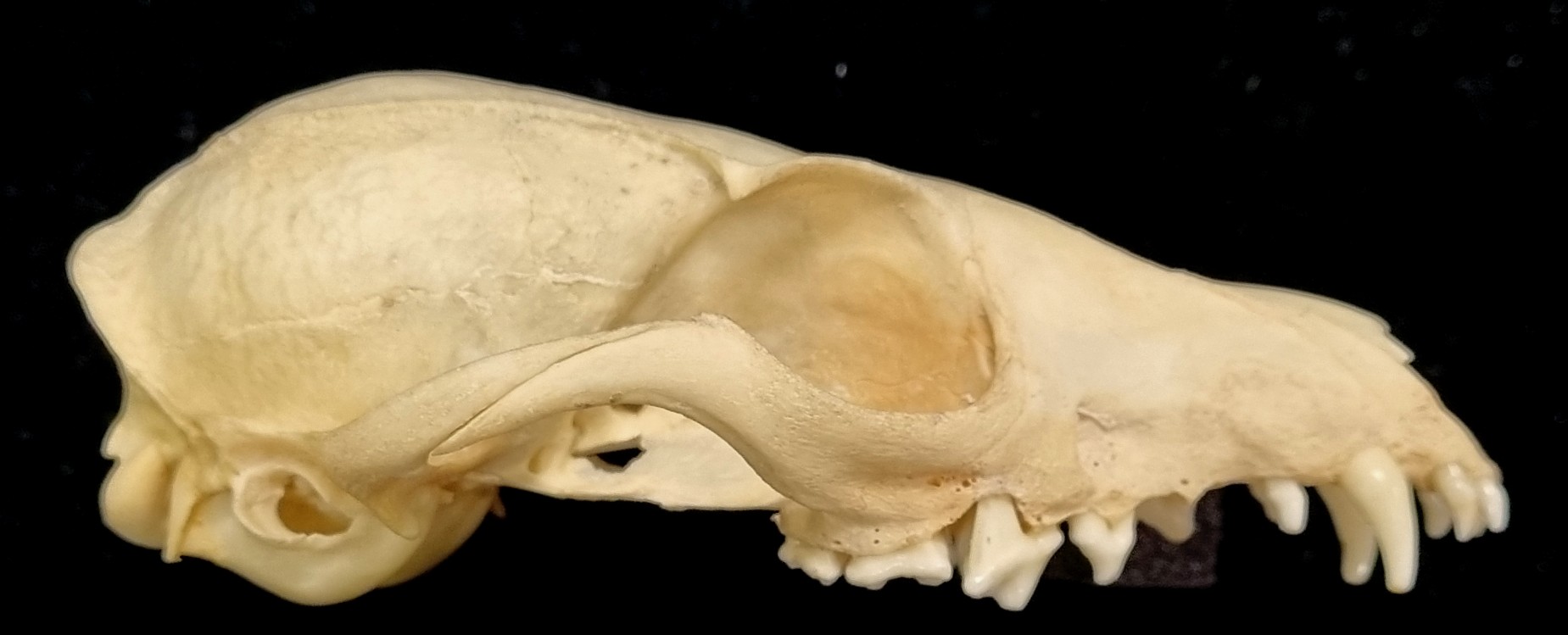
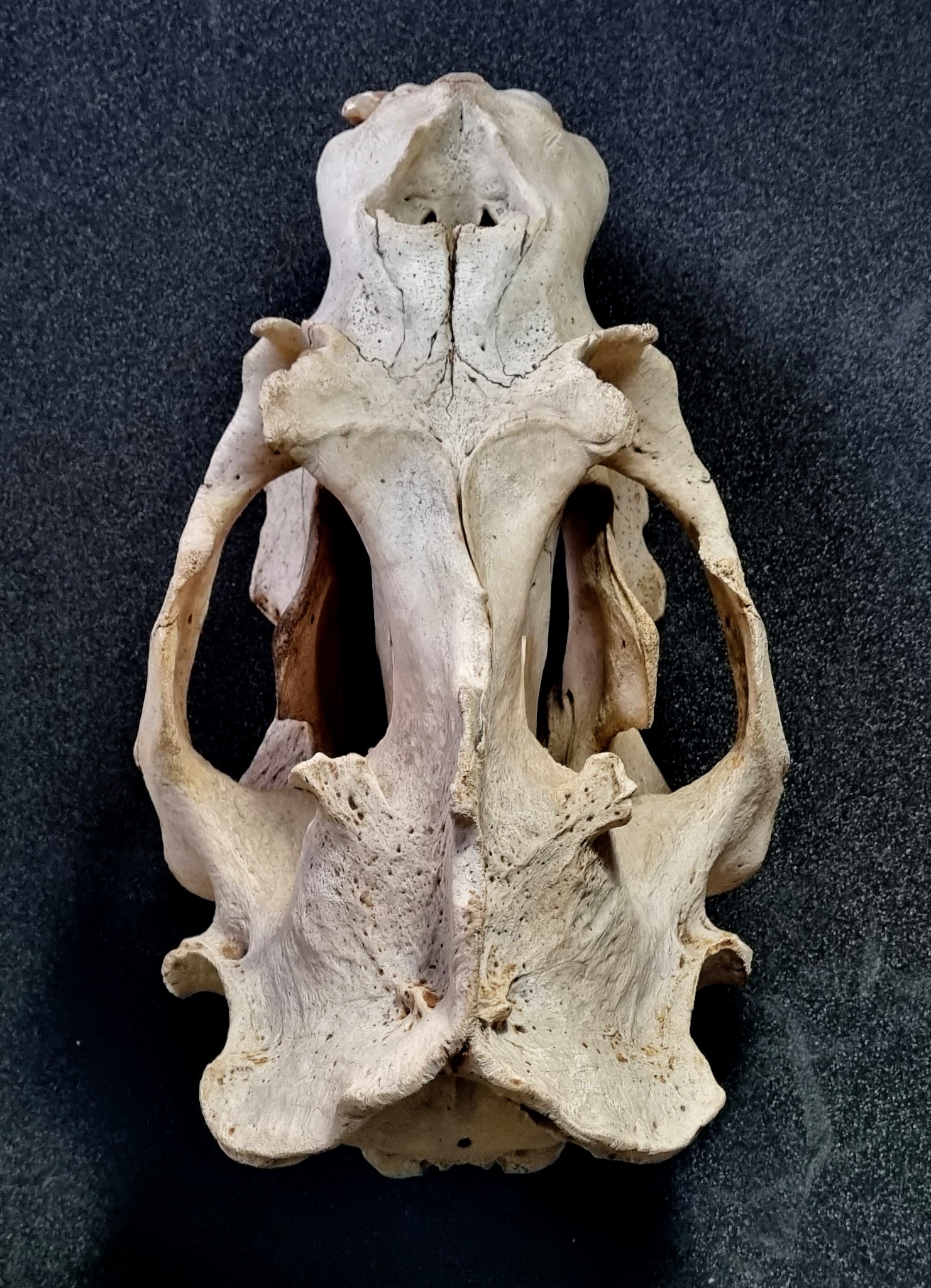
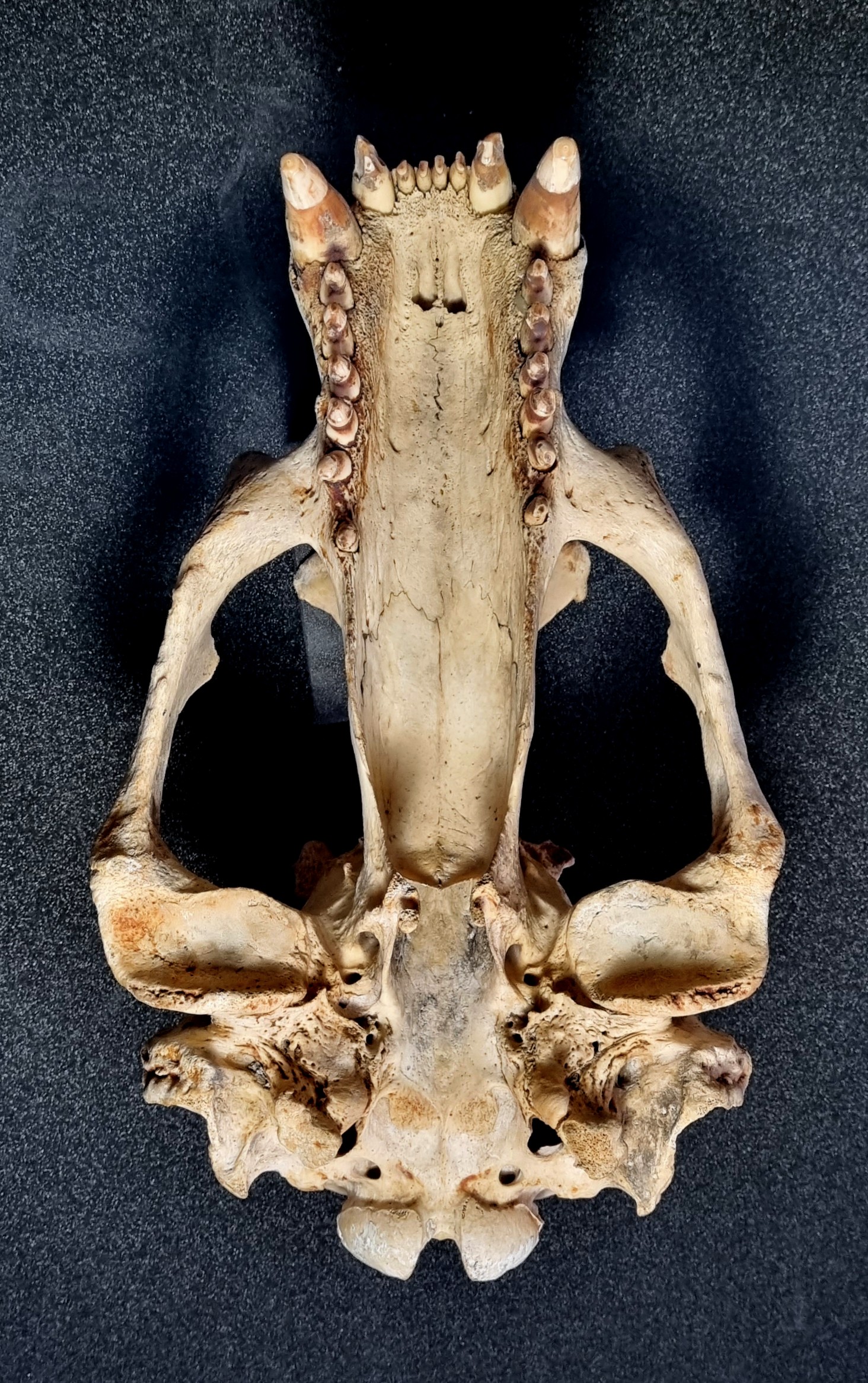
Since everyone seemed to have fun with last week’s mystery skull, I have another that was misidentified in the Dead Zoo’s collections and which came to light during Dr George Argyros’ recent research visit:
Do you recognise this species from its skull?
As usual, you can ask questions or leave suggestion in the comments box below. If you do know what it is, then please try to keep your answers cryptic, so everyone can have a go at working it out. Have fun!
Last week I gave you this skull from the collections of the Dead Zoo to have a go at identifying:
This specimen came to light during some research being carried out on carnivore bones by Dr George Argyros, a Professor visiting us from Emory & Henry College, Virginia. It was identified as Vulpes on the label, but both George and myself were doubtful.
The specimen’s spurious identification can be tracked back to when it was named in the Museum’s register as Vulpes fulva argentata or Silver Fox. This identification was assigned to the specimen when it was given to the Royal Zoological Society by N.H.P. Vickers in March 1900 (see page 127 of the monthly Irish Naturalist covering March 1900):
The Museum bought the specimen in skeletal form from the Royal Zoological Society of Ireland in 1903 and the name Silver Fox was kept until a later review of the taxonomic hierarchy in our database, which ‘corrected’ the name to Red Fox Vulpes vulpes.
However, this name change was not based on the morphology of the specimen. The characteristic lyre-shaped sagittal crest1 immediately made both myself and George think Urocyon and the small size of the specimen made both of us converge on an identification of Island Fox Urocyon littoralis (Baird, 1857) after independent bouts of measuring.
So I offer a hearty congratulations to everyone who spotted that this skull is from the genus Urocyon, although I think most people were thinking of the Grey Fox, Urocyon cinereoargenteus.
1It probably shouldn’t really be referred to as that, since it isn’t actually sagittal, except perhaps where the two ridges meet at the very back of the skull – but you know what I mean.
This week I have a nice skull from the Dead Zoo for you to have a go at identifying:
This specimen came to light as being misidentified when a visiting researcher was taking a look through the collection. We both agreed on what we thought it was, but I’d love to hear your thoughts.
I suspect that this may be easy for some of you, so as ever, please try to keep your answers cryptic, to give everyone a chance to work out what it is. Have fun!
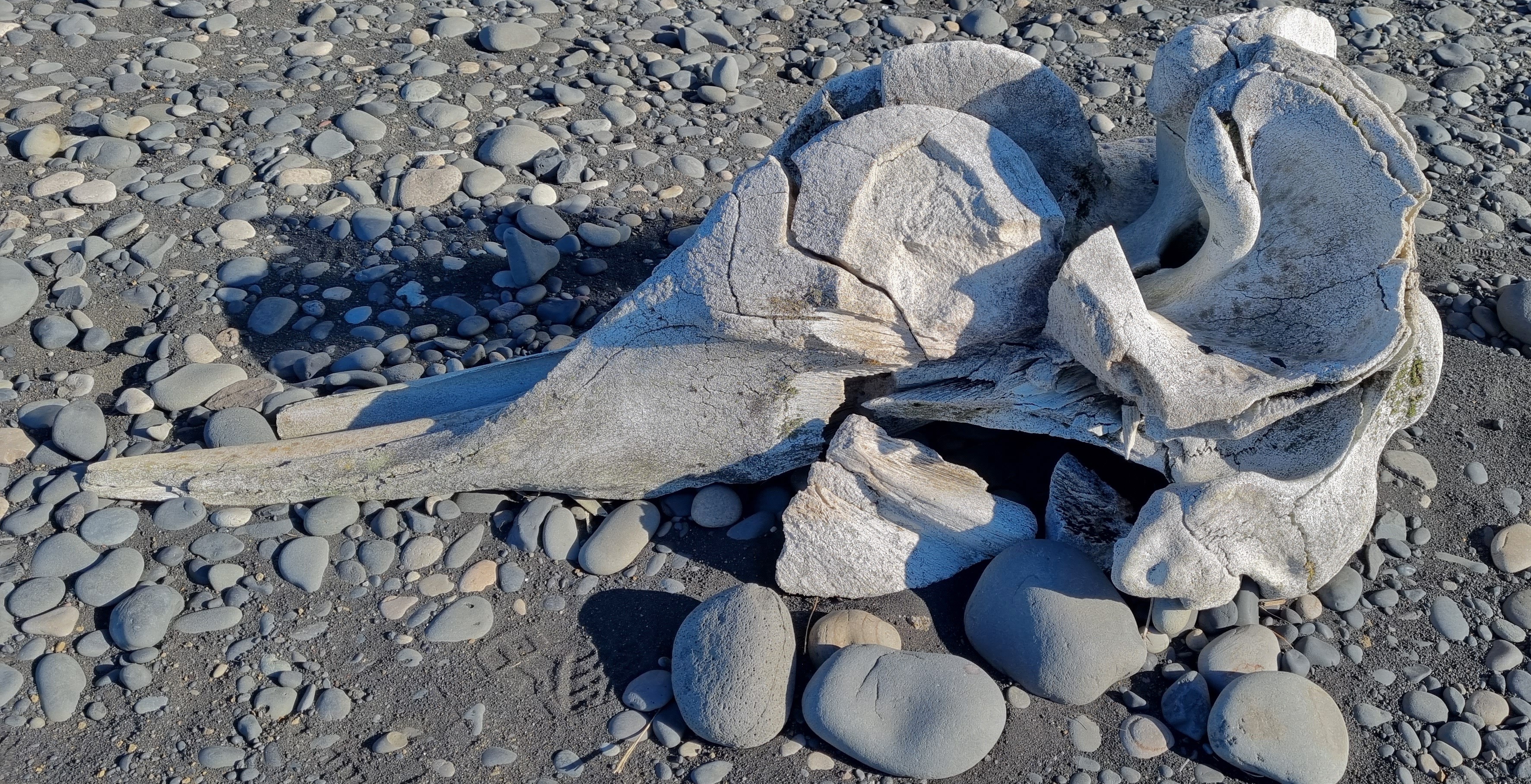
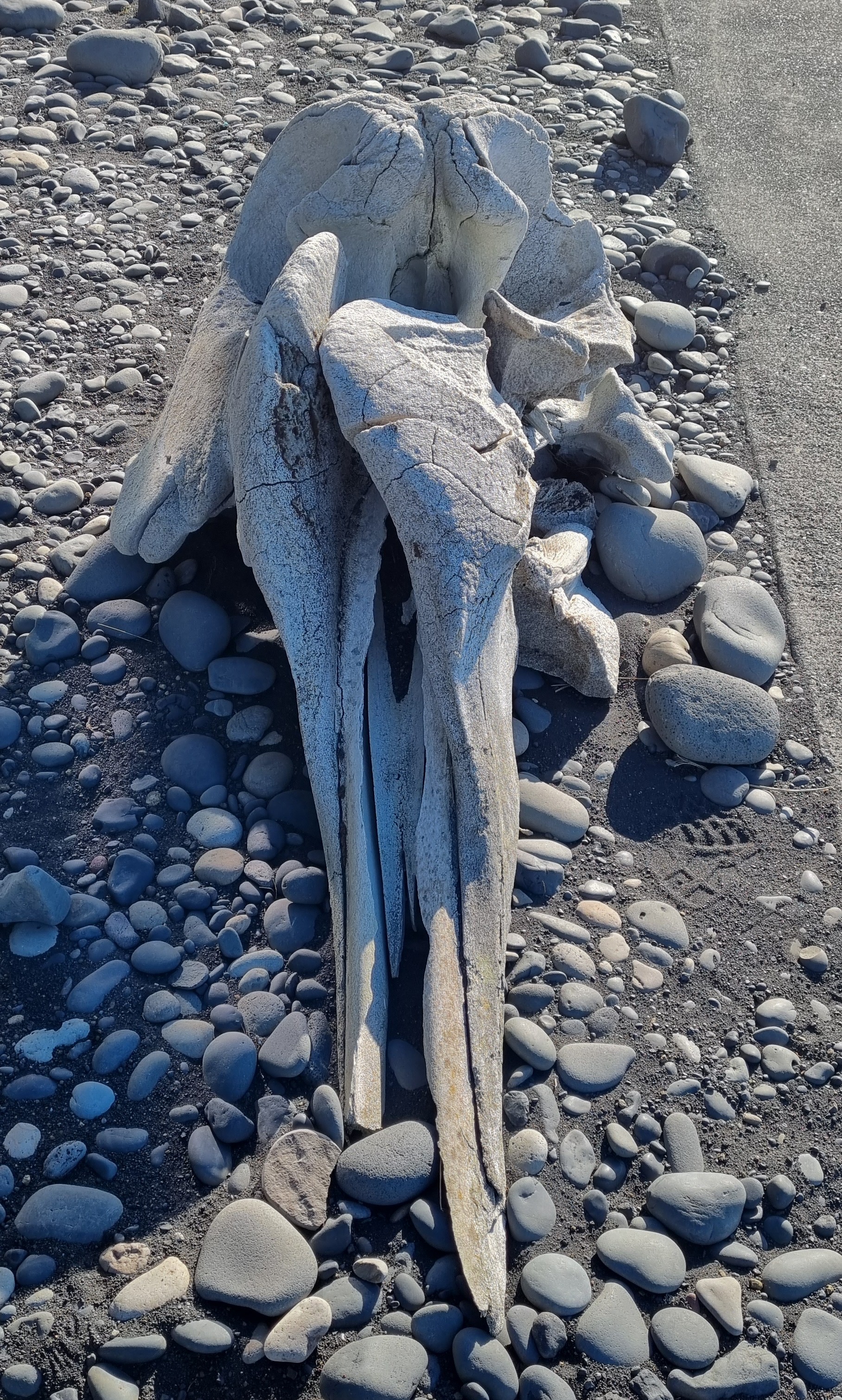
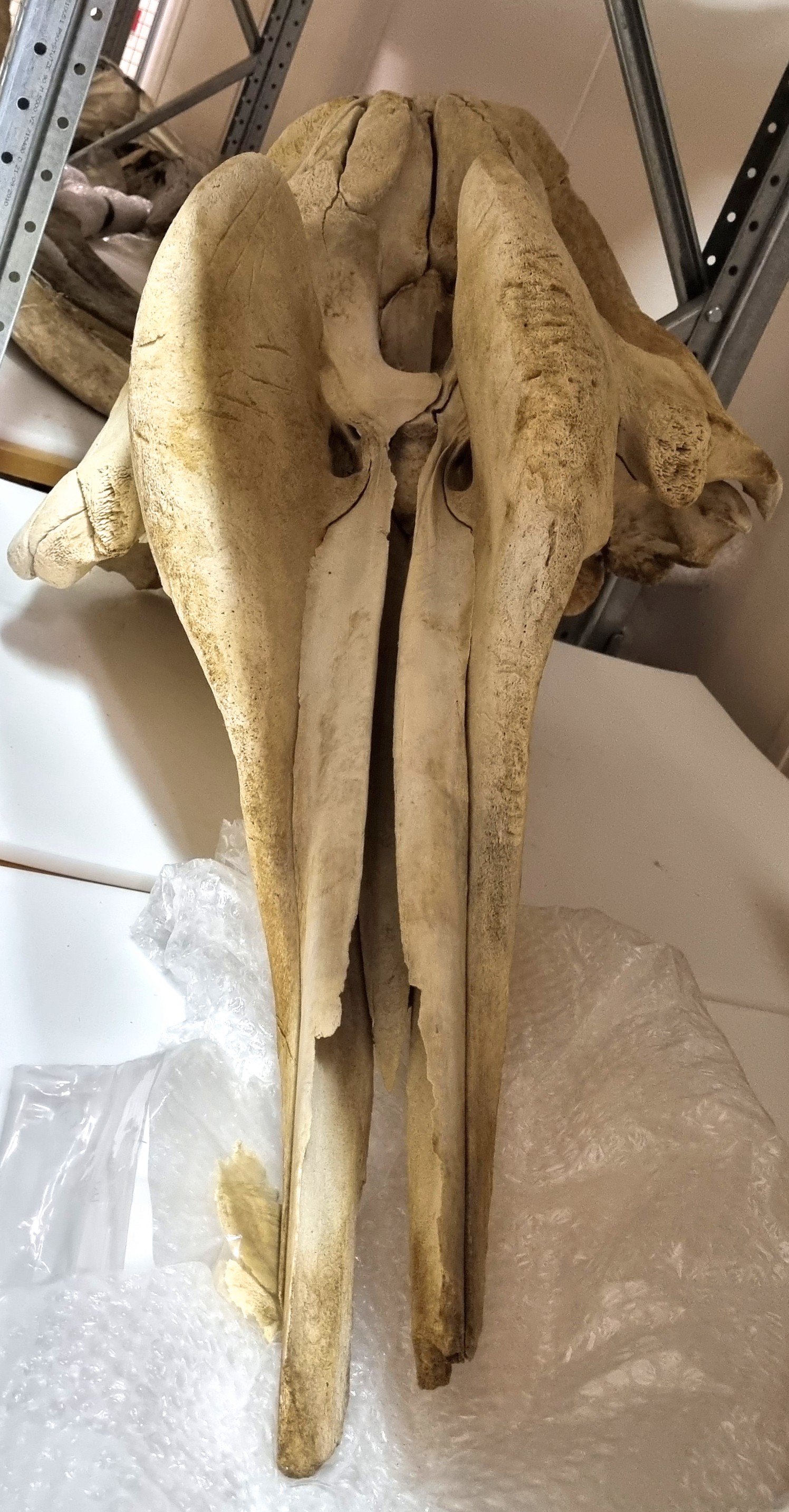
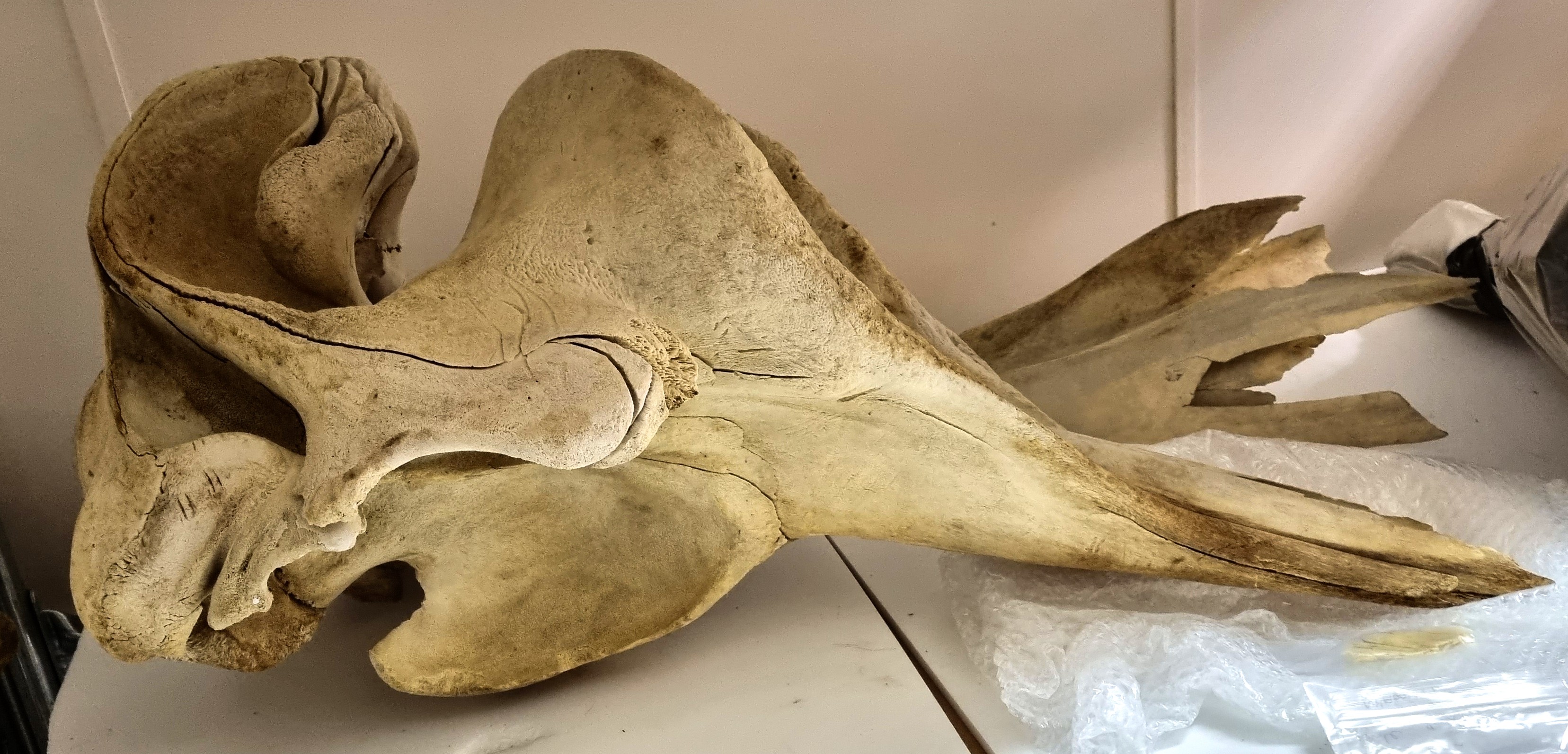
Last week I gave you this rugged skull, from a rugged place, to have a go at identifying:
As everyone spotted, this is a whale of some sort (what else has a skull that weird-looking?), but the question is, which species?
The location led to a few suggestions of Arctic / sub-Arctic species like Narwhal or Beluga, but they have a much flatter top section of the skull. In fact, those huge vertical lobes of the maxillae seen here is pretty unusual and quite distinctive (even if it is a ittle weathered and broken):
This reminded me of a specimen in the collections of the Dead Zoo and which I had to check, just to be sure of my identification:
As spotted immediately by Chris and not too long afterwards by Adam Yates and Wouter van Gestel, this is the skull of a Northern Bottlenose Whale Hyperoodon ampullatus (Forster, 1770).
This sub-Arctic species has a distribution across much of the North Atlantic. They tend to stick to quite deep water, which makes sense in the case of the specimen I shared from Iceland, since the Reynisfjara beach is infamously dangerous because it shelves off very steeply into very deep water, making the waves that break along the beach behave in an unusual (and frankly terrifying) way.
Occasionally this species will come into shallower waters, in one (somewhat tragic) case a female Bottlenose Whale swam up the Thames (and is now in NHM, London). Our specimen came from an animal stranded on the Irish coast and there are theories that maritime sound pollution is connected to them being driven into shallower waters.
Well done to everyone who worked out which species this skull is from – hope you’re ready for another mystery next week!
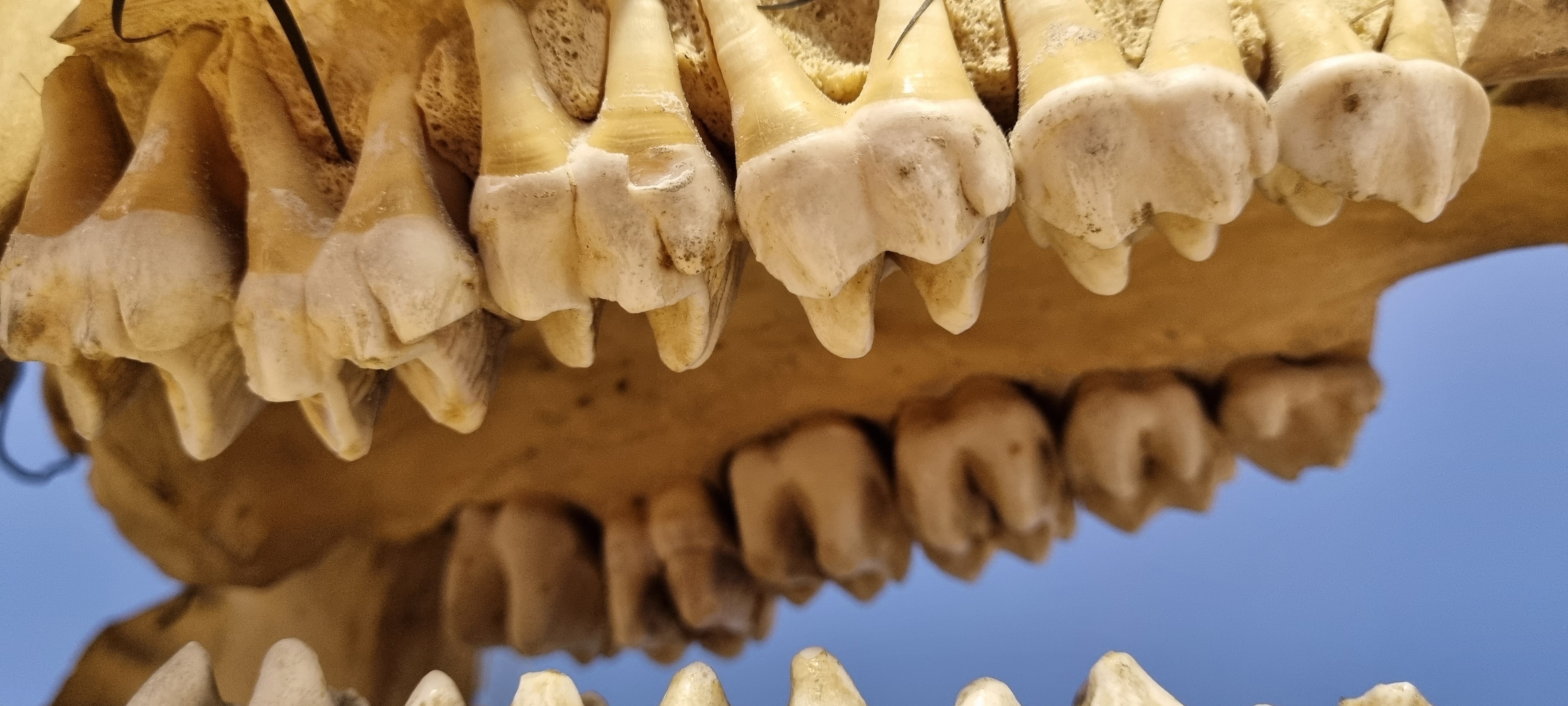
Last week I gave you a challenge to get your teeth into:
As I suspected, everyone managed to figure out what type of animal this is, since these teeth are quite distinctive (as mammal teeth often are).
To start with, there are canines and incisors in the premaxilla (the top jaw). These are missing from things like cows, sheep and deer. So it’s not one of them. The premolars are adapted to grinding rather than cutting, so it’s not some kind of pig or carnivore.
The molar teeth are low-crowned, unlike the teeth of grazers like horses which are high crowned, to cope with the wear and tear of silica-toughened grasses. This suggests an animal that browses on softer vegetation. Also, the lophs (those ridges of enamel that join the tooth cusps) are well defined and quite distinctive in their shape. That rules out most other herbivores, including the camels and their relatives.
I think it’s understandable that nobody got the correct species, since the specimen is a subadult (check out the molar in the jaw that’s still developing) which will somewhat alter the proportions compared to an an adult – especially considering the photos I gave you were restricted to the teeth and missed all the useful features of the rest of the skull.
So well done to everyone who worked out that the teeth belonged to a tapir!
At the Dead Zoo we get quite a lot of enquiries asking for identifications, and many of these requests are for teeth. Mammal teeth are usually quite distinctive – for instance, tooth morphology underpins a lot of small mammal palaeontology as teeth preserve well and can be identified to genus/species with reasonable accuracy. Additionally, they can often give a good indication of diet.
With that in mind, I took a photo of some teeth that I found in the collections, to see if you can work out which species they belong to:
For the mammal fans among you this is probably way too easy, so please try to keep your answers a little bit cryptic, just so that everyone has a chance to figure it out for themselves. Have fun!
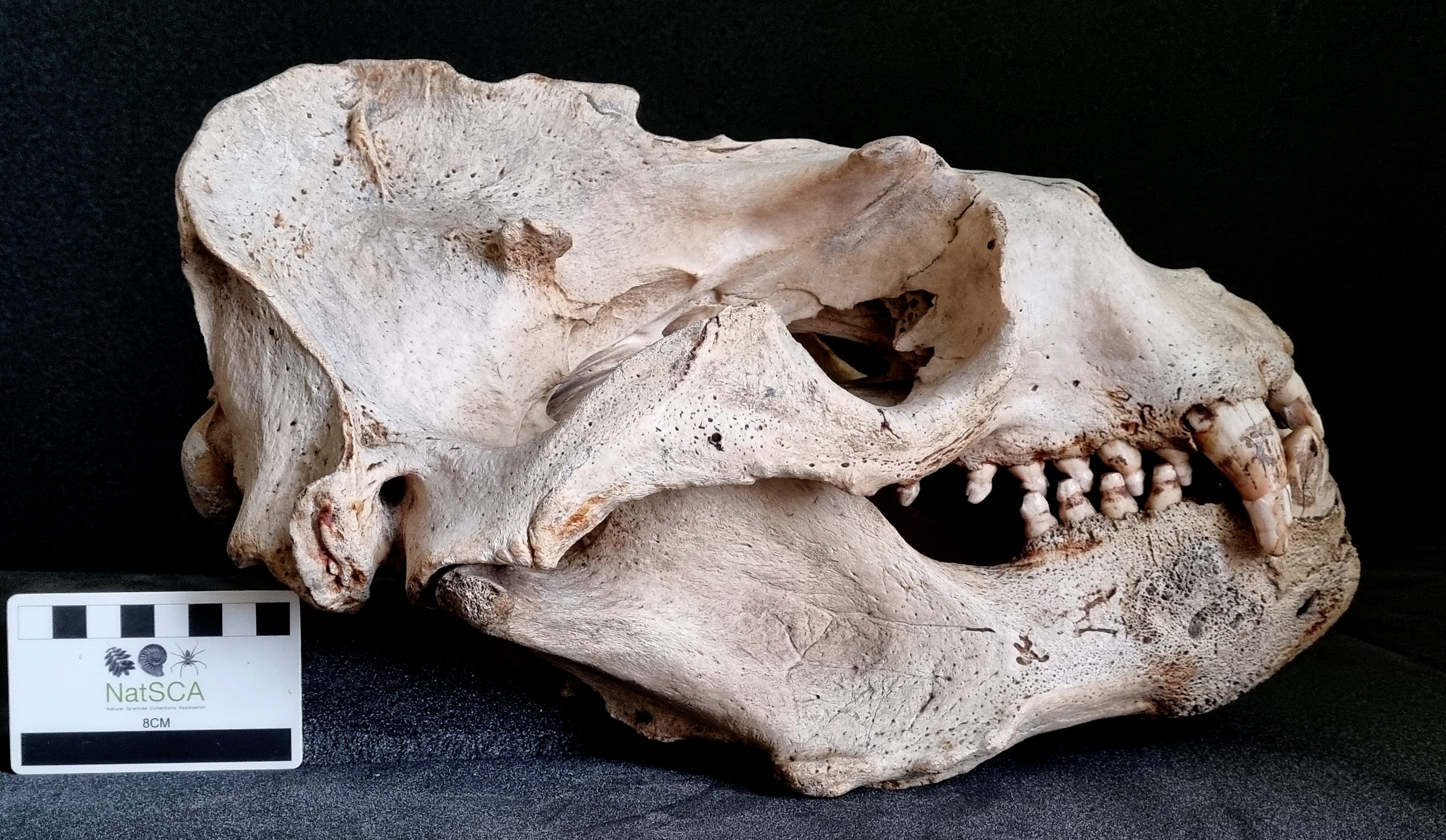
Last week I gave you this nice robust skull to have a go at identifying:
It proved a little bit more of a challenge than I originally expected, at least in terms of getting a species level identification.
So despite a somewhat ursine (bear-like) overall appearance, that may have confused a few people at first, this has all the features you’d expect to see in a male sea lion. In that it’s big, craggy, has huge open sinuses opening into the orbital region (nobody wants their eyes to be overly pressurised when they’re diving) and the teeth are relatively undifferentiated in the back part of the mouth, but they’re well adapted for fighting up front.
However, it turns out that there aren’t a huge number of resources online to see and compare the skulls of these beasties (and the ones that do exist aren’t necessarily the easiest to navigate). So while almost everyone figured out the sea lion bit, the species choice went a bit off track.
Most people plumped for the Steller’s Sea Lion, which (it must be admitted) looks very similar. But this is actually the skull of a Southern Sea Lion Otaria flavescens (Shaw, 1800).
I talked about this species before on Zygoma (many years ago now), with a specimen from the Horniman Museum, where I provided some links to the Marine Species Identification Portal. Sadly, that resource has been retired, but fortunately Naturalis Biodiversity Centre rescued the content and has kept it available online. It provides drawings of the skulls of both Steller’s and Southern Sea Lions and if you take a look at few key features you’ll spot the differences.
One major indication is the length and shape of the palate. The Southern Sea Lion has a very long palate, which terminates almost in line with the mandibular articulation, whereas the Steller’s terminates further forward. There are a few other features, but that one is the most immediately obvious.
So, a hearty congratulations to a variety of folks on Twitter who spotted that this was the Southern Sea Lion, but there’s no shame in not getting the correct species if you picked Steller’s, given how few resources there are that allow a really good comparison. I hope you enjoyed the challenge!
This week I’m back onto skulls for the mystery object – it’s been a while! Any idea what this handsome fellow from the Dead Zoo might be?
I’m sure that this won’t pose too much of a challenge for the more seasoned bone geeks among you, so why not try to keep the answers cryptic, so everyone can have a go at working it out. Have fun!
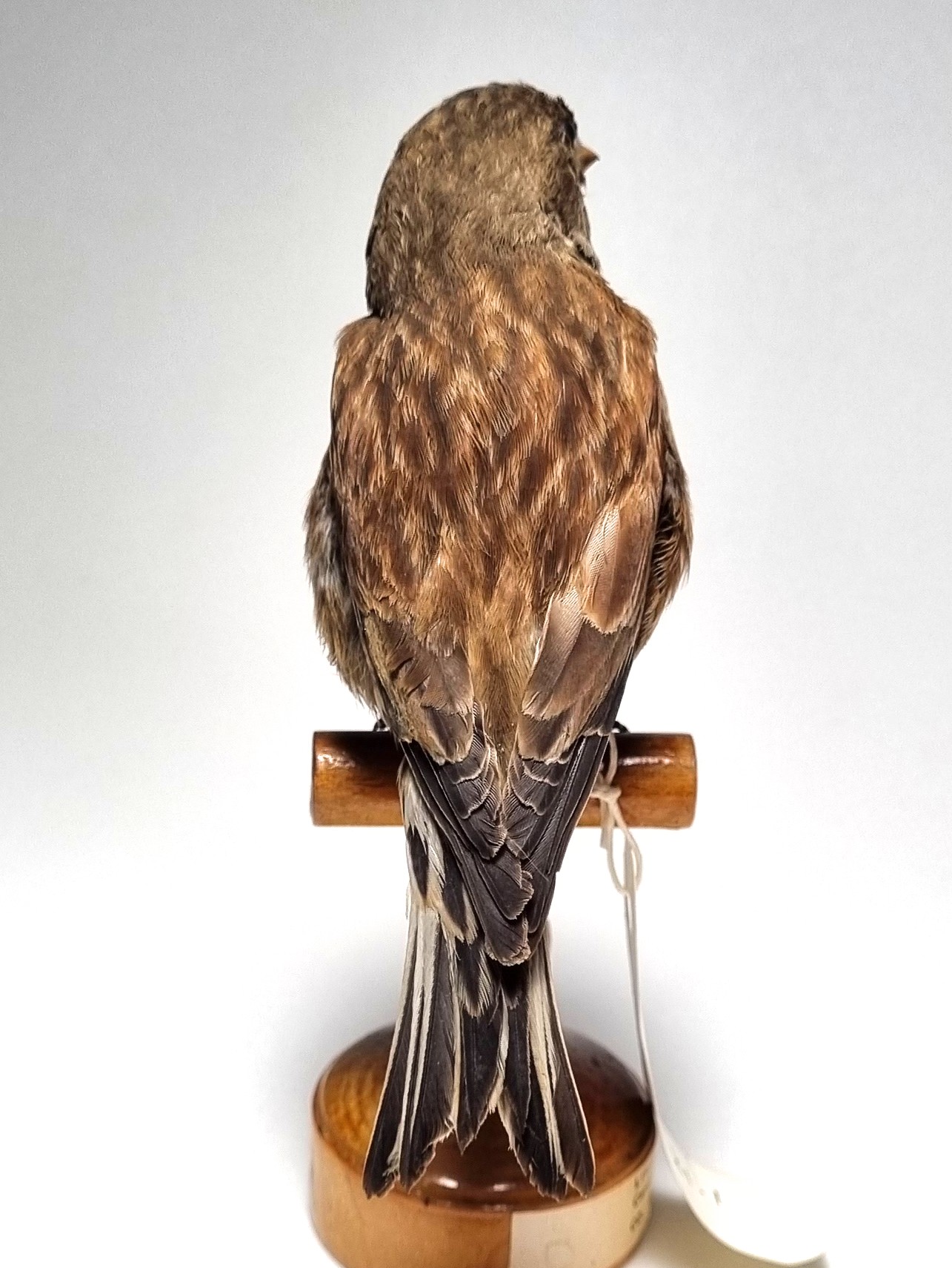
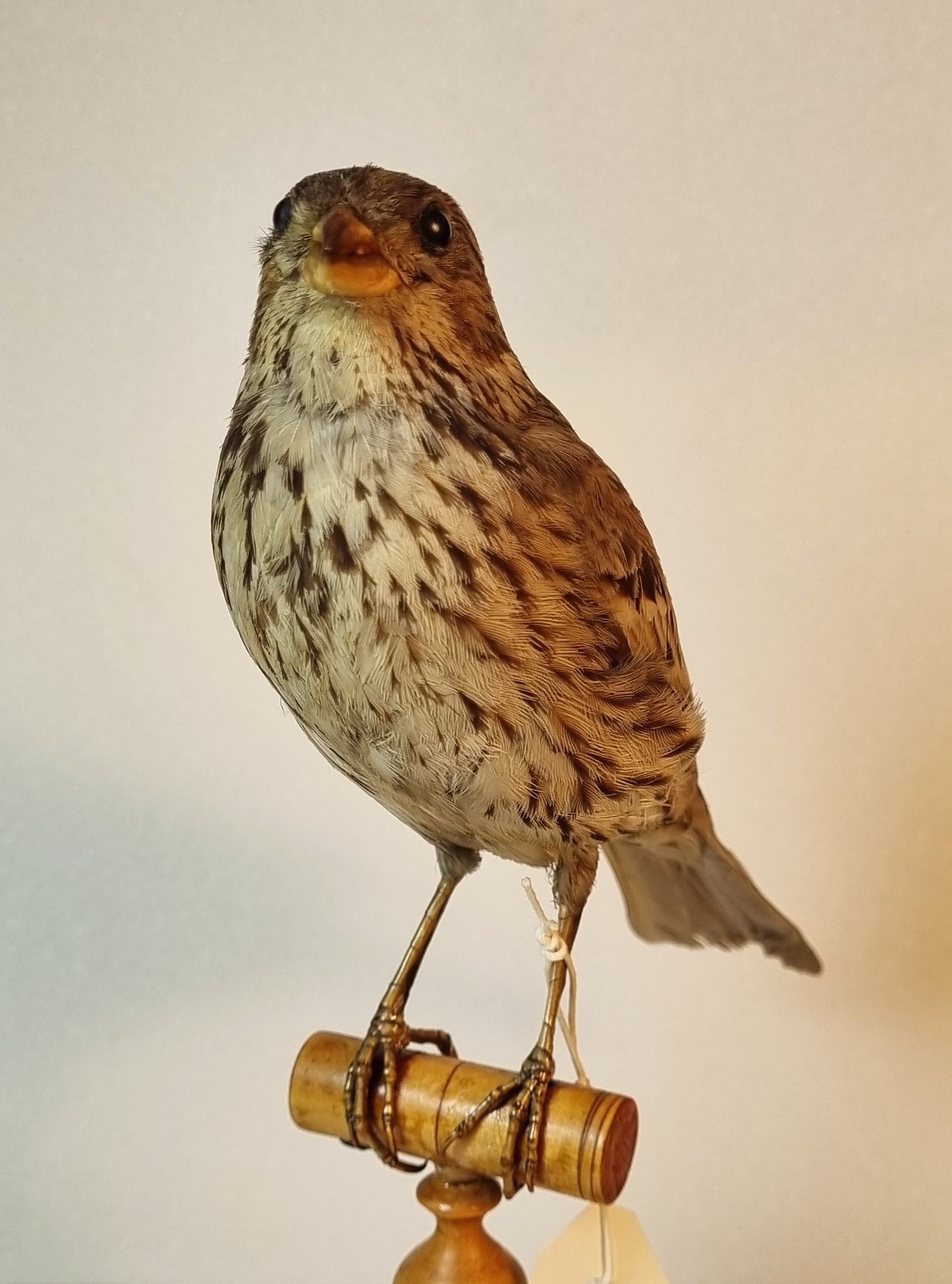
Last week I gave you this LBJ (Little Brown Job) to have a go at identifying:
This is one of those birds that can be hard to identify in the field when it’s alive, but it can be even harder after spending over 100 years on display in a Museum.
I’ve mentioned this before – when dealing with taxidermy, damage to the pigments in fur and feathers caused by light exposure can significantly alter the colour of a specimen. This it will often happen preferentially – so you might find that black and red is affected more noticeably than brown for example, creating misleading colour combinations. This fading also happens on bills and claws, sometimes changing them to a light brown or yellow.
Another common issue with specimens is that on death the colour of skin can rapidly fade. This means that some common colour features that may be used in identification (e.g. yellow legs) may cease to be reliable. Some taxidermists paint these colour features back in, but some don’t.
All of this adds to the challenge, but when you have an inkling that you’re dealing with a faded specimen you can make some mental adjustments about how to interpret the appearance. This usually means putting greater emphasis on size, shape and pattern of features rather than on colour.
In the case of this specimen, most people narrowed it down to a member of the genus Linaria, but the issue with fading meant that the species that almost everyone opted for was the Twite, whereas the specimen is actually a male Common Linnet Linaria cannabina (Linnaeus, 1758), which I assume is in its winter plumage, unless the fading is REALLY bad (in the summer the males have quite a lot of red on the head and breast). The specimen was collected in Dublin and given to the Dead Zoo in 1915.
A useful feature for distinguishing between the species without relying on colour is the bill, which in the Twite is relatively small. Twites also have heavy streaking of the plumage, which should be somewhat apparent even in a faded specimen. Neither of these are apparent in this specimen.
There is a useful video guide made by the British Trust for Ornithology for distinguishing between Linnets and Twites in the field. It doesn’t extend to museum specimens, but it’s an excellent place to start!
This week I’ve decided to give you another LBJ from the Dead Zoo to have a go at identifying:
The last LBJ I gave you was harder than I expected, so I hope this one proves to offer a nice level of challenge! As ever, you can leave your questions, thoughts and suggestions in the comments box below. Have fun!
Last week I gave you this guest mystery object from the comparative anatomy collection of the Harry Brookes Allen Museum of Anatomy and Pathology at the University of Melbourne, courtesy of Rohan Long:
Image by Yijie Cheng, 2023
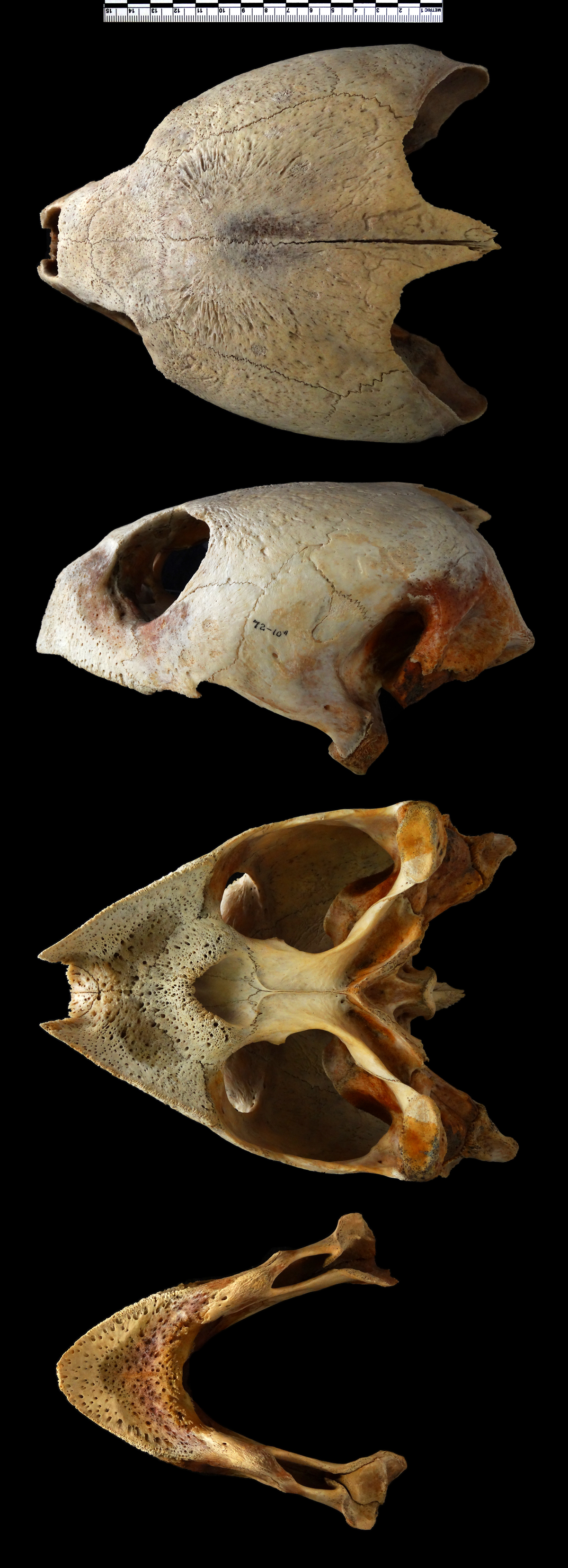
This is one of those specimens that it can take a while to get your head around, as most of the key features are entirely missing. From the top, the skull almost looks mammalian. Perhaps a little like a large rodent missing part of its zygomatic arches:
Skull of a Striped Ground Squirrel
Even from the side there are some similarities, although it looks a bit more like a turtle:
Image by Yijie Cheng, 2023
Skull of a Loggerhead Turtle
If you look closely at the underside of the skull, you’ll notice that it has a single occipital condyle, which is something you see in reptiles and birds, but that view of the underside also becomes clear that the front section of the mystery object doesn’t taper to create a bill, like you’d see in a turtle:
Image by Yijie Cheng, 2023
In fact, a bill is the most diagnostic feature that’s missing, and that’s because it’s fallen off.
Those cervical vertebrae are quite distinctively avian – and from a long-necked avian at that. Once you realise that this is the braincase of a fairly large long-necked bird, the next task thing is to look at birds with a bulbous and cleft region on the head, just at the base of the bill (most bird skulls taper down to the bill).
For me that indicates one species above all others – the Mute Swan Cygnus olor (Gmelin, JF, 1789).
Mute swan skulls “Cygnus olor”. Technique of bone maceration on display at the Museum of Veterinary Anatomy, FMVZ USP.
I’d like to offer a hearty ‘bravo’ to Adam Yates, who was the first to comment and correctly identify this with a great cryptic clue:
It is an anseriform for sure the large oval basipterygoid articulations are a give away. With that profile, i’d lose my voice while trying to say the name of a certain Western Australian River.
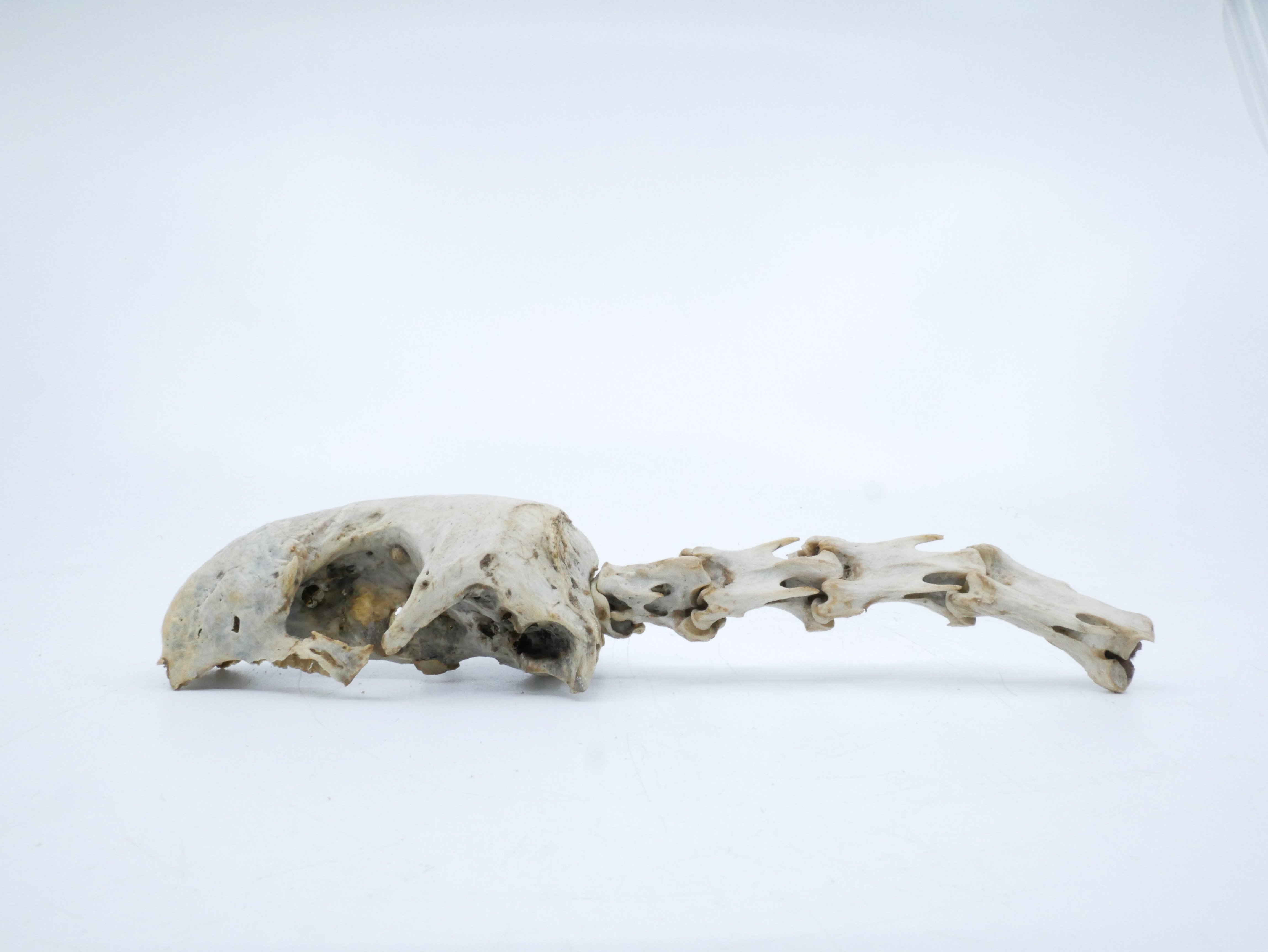
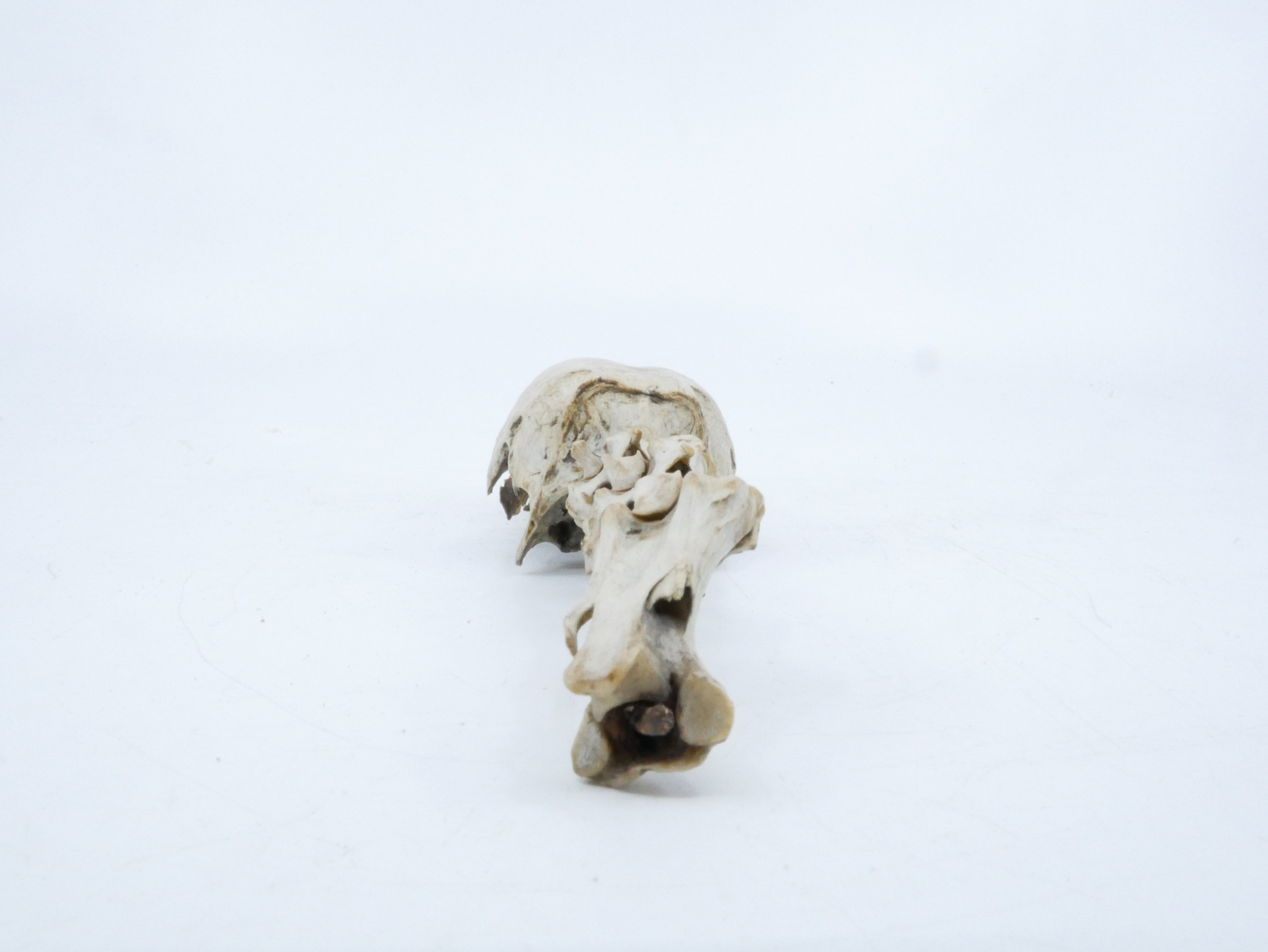
This week I have a guest mystery object for you to have a go at identifying, courtesy of Rohan Long:
Here’s another specimen from the comparative anatomy collection of the Harry Brookes Allen Museum of Anatomy and Pathology at the University of Melbourne.
I have identified and documented almost the whole collection of almost 500 specimens, except for a few dozen that I have so far been unable to identify – the “box of shame”. These specimens mostly comprise fragmentary or isolated elements.
However, one of these problematic specimens comprises a partial skull articulated with four cervical vertebrae. Despite these particular skeletal elements usually enabling ready identification, this specimen has confounded me for months. I have had various hypotheses as to whom the skull could belong to, but nothing has been quite right.
I have googled images, I have visited our zoology museum, I have looked at books, and I have not been able to find the identity of this skull. Can you solve this osteological enigma?
Image by Yijie Cheng, 2023Image by Yijie Cheng, 2023Image by Yijie Cheng, 2023Image by Yijie Cheng, 2023Image by Yijie Cheng, 2023Image by Yijie Cheng, 2023
By the way, we have a brand new online database where you can explore our comparative anatomy specimens, along with our other public collections. It’s the first time in about a century that this significant collection has been accessible to people outside of our Anatomy Department.
I think I may know what this is, but both myself and Rohan would love to hear your thoughts!
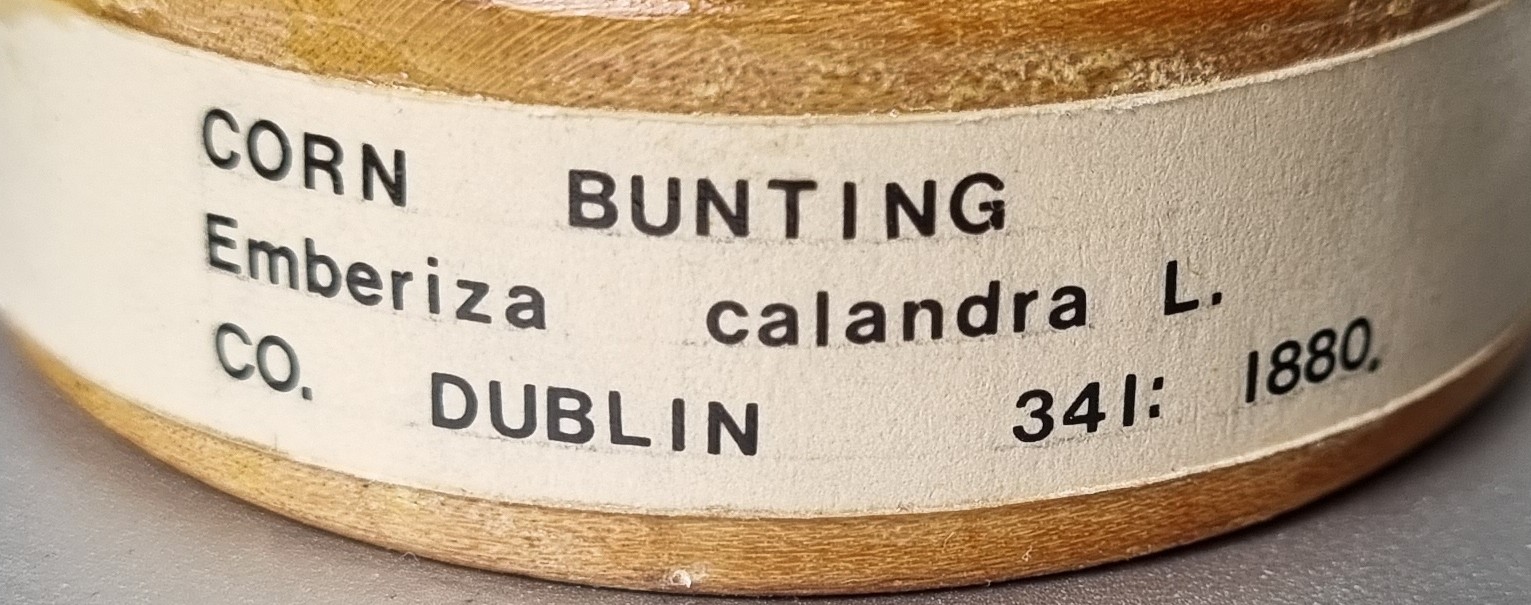
Last week I gave you this bird specimen to have a go at identifying:
In the ornithological community, birds like this are sometimes referred to as an LBB / LBJ (Little Brown Bird / Job), because they are small, brown and hard to identify (especially in the field) due to the large number of similar looking species.
This specimen has a robust, conical bill and grey-streaked breast, which led some of you to think it could be a juvenile Crossbill or perhaps a female Grosbeak. However, as indicated by Wouter van Gestel in an excellent cryptic clue (and by Tim Dixon in a rather rude one), this is a Corn Bunting Emberiza calandra Linnaeus, 1758. It was collected in County Dublin and donated to the Dead Zoo in 1880.
These seed-eating passerines were widespread in arable farmland across Ireland in the 19th and early 20th centuries. However, changing land use practices reduced the available habitat until they became locally extinct as a breeding species in the late 1990s – well within living memory for many people.
2023 has started off with a bit of a bang. The Dead Zoo has been given the go-ahead for the next phase of a major redevelopment project, and yesterday I signed an employment contract accepting the position of Keeper of Natural History at the National Museum of Ireland, so it looks like I have a busy few years ahead!
But that has nothing much to do with the mystery object, so here’s the specimen I have for you to identify:
It’s probably a bit on the easy side for anyone with an interest in ornithology, so if you know what this is, please keep your answer cryptic to give everyone else a chance. If not, I hope you enjoy the challenge!
Last week I gave you this mystery object to have a go at identifying:
Perhaps not the most festive of objects to consider over the Christmas weekend, but it’s a very interesting one that is on display in the Museo Nacional de Ciencias Naturales in Madrid.
I had a pretty good idea of what this was likely to be as soon as I saw it, based on my memory of a badly pest damaged taxidermy specimen of this species I saw about 12 years ago. But, the skull shap alone is distinctive, and the fringe of feather stumps around the eyes makes this fairly staraightforward to work it out – and a lot of you did just that.
This is the partially mummified skeleton of a Barn Owl Tyto alba (Scopoli, 1769).
That fringe around the orbits is made up of the nibbled down rachides (the stiff central vane of the feather is called a rachis and rachides is plural) of the feathers that created the facial disc. This structure acts a bit like a radar dish to help channel sound into the auditory openings (AKA earholes), and it’s what gives owls that distinctive flat-looking face, belying the shape of the underlying skull. The skull itself is particularly long and low for an owl, which is what screams Barn Owl to me, as other owls have a higher domed skull and relatively shorter bill.























 Zygoma