Friday mystery object #147 answer

On Friday I gave you this object to identify:

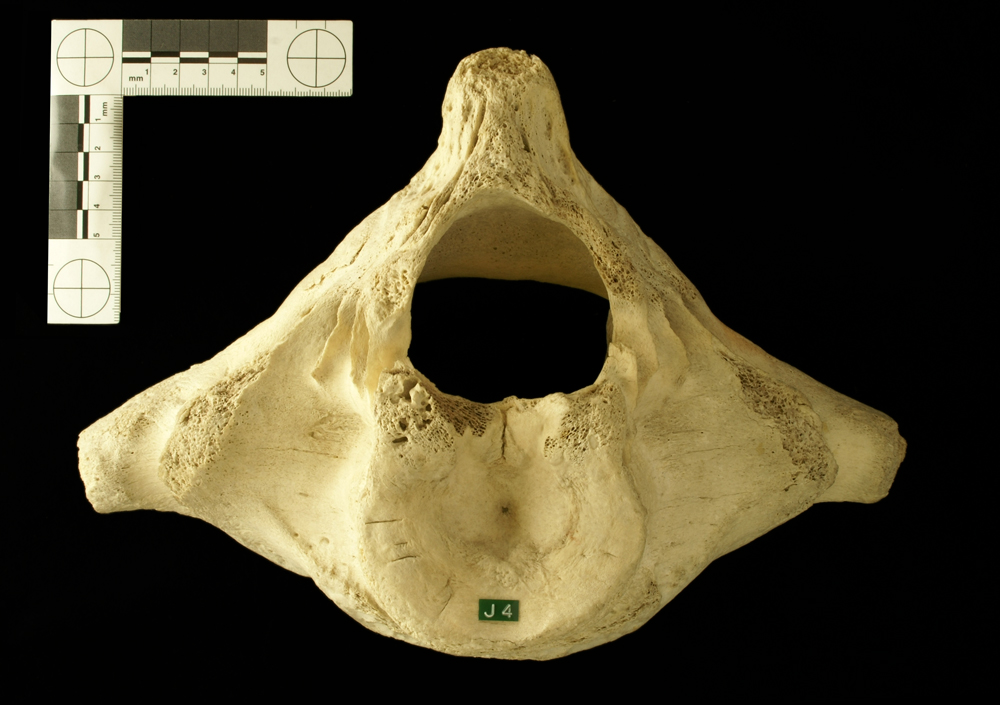
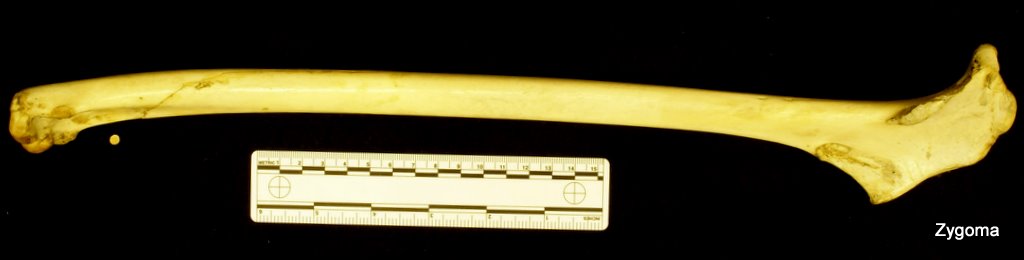
I chose this object because it gave me a chance to take a photo using my new phone camera and a hand lens (inspired by an article by Nigel Larkin in the latest NatSCA News). I thought it might be a bit of a challenge, but I was proven wrong once again, as Jake tentatively identified the part of the skeleton this bone is from straight away – it is indeed a baculum or os penis (that’s the Latin for penis bone).

The species was a bit more difficult, but Barbara Powell was quick to identify that it came from a Mustelid and then there was a bit of disagreement between Barbara, Ric Morris and Dawn about whether it was from a  Continue reading

Friday mystery object #144 answer

On Friday I gave you another genuine mystery object from the Horniman’s collections:
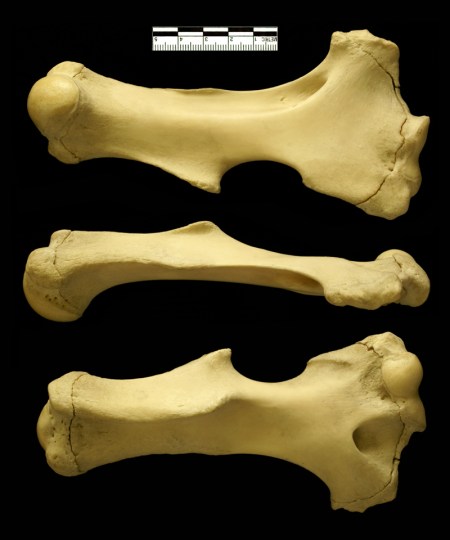
It was in a box of unidentified and unlabelled bones which I’m pretty sure came from the King’s College teaching collection in the 1980s, when King’s merged with Chelsea College. Quite a large amount of material came to the Museum and unfortunately much of it was jumbled up, missing labels and quite often different parts from the same specimen had become separated.

I have been kept busy trying to make sense of it all, which is no small task, as the collection was mainly used for comparative anatomy meaning it is very diverse. The specimens in the collection could be from anything and from anywhere in the world – which makes it rather difficult to narrow down the options.

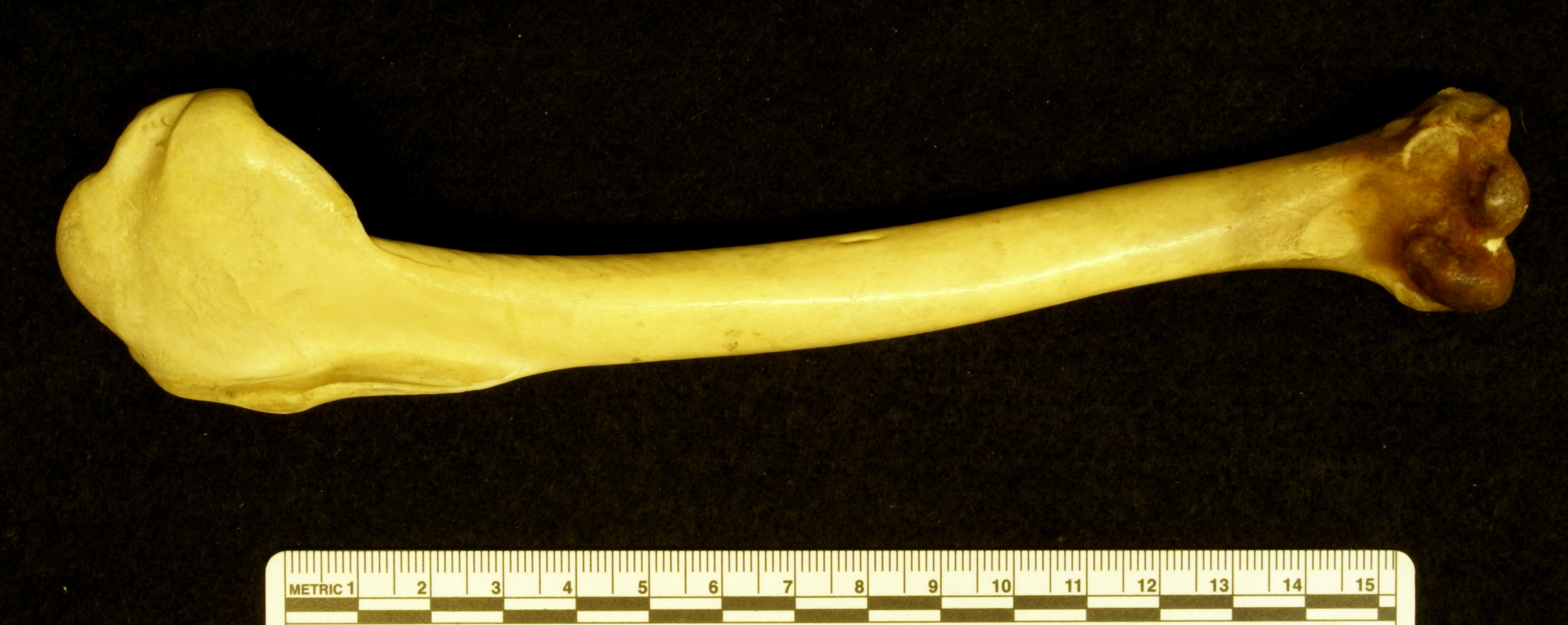
This specimen was a bit of a puzzle, since although it is clearly from a fairly large animal, it is quite hard to work out what the full adult size would be, as this bone is from a juvenile (as spotted by Kevin). This is apparent from the unfused ends of the bone (called the epiphyses).

One possibility that occurred to me (and Rhea) was that it may be the bone of an aquatic mammal, such as a seal. However, in aquatic mammals the humeri need to rotate, meaning that they tend to be flattened in two different planes at the proximal and distal ends. This bone is just flattened in one plane, meaning it wouldn’t be great for use in swimming efficiently and it wouldn’t be great for bearing large amounts of weight/force during locomotion – a more rounded cross-section of bone is better for that.

In fact, the general shape of the bone is wide and flat with large tuberosities for muscle attachment – almost like the humerus of a mole:
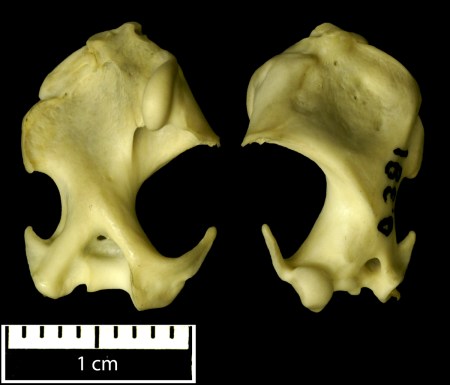
This is something that  Richard Forrest seems to have picked up on when he suggested that it is the humerus of a fossorial [digging] animal. This narrows down the options quite nicely, as there are only a few large fossorial animals.

The Pangolin was suggested by Dave Godfrey, but the bone is too large. Dave also suggested the Aardvark, which is a good contender, although not quite right. I personally have a different animal in mind –  Continue reading

Friday mystery object #142 answer

On Friday I gave you this unidentified object from the Horniman’s collections and asked for your help in identifying it:

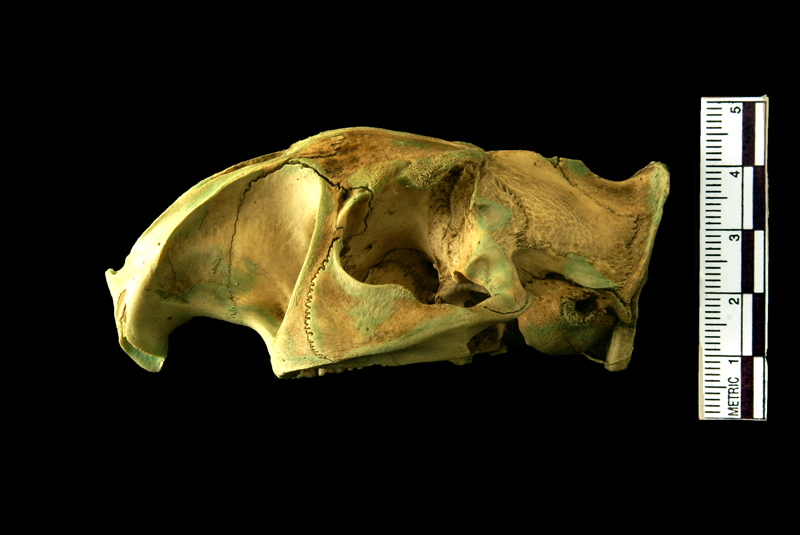
Suggestions ranged from the Easter Bunny (topical) to Dangermouse (fantastic), but there was a remarkably fast convergence of opinion on what this is.

Jamie Revell, Barbara Powell, henstridgesj and Jake all came to the conclusion that this is the skull of a  Continue reading

Friday mystery object #142

This week I have a genuine mystery object for you. I just stumbled across a couple of big boxes of unidentified skulls and bits of bone, so you can help me work out what some of these things might be from. To start with we have this skull:

Please put your suggestions, comments and questions below and I’ll do my best to respond. Enjoy – and have a nice Easter!

Friday mystery object #141 answer

On Friday I was in rather a rush as I was involved in co-organising this year’s Natural Science Collections Association (or NatSCA) conference. It was a very enjoyable (if hectic) few days of natural history nerdery, but left me limited time to select an object from the FMO. I took my opportunity at the drinks reception at the Grant Museum of Zoology where I tried out the camera on my new phone to get an image of this specimen:

Now it was a fairly easy one to identify as the skull of these animals is very distinctive. Nonetheless, if you haven’t seen the skull of one of these animals before it is a bit of an oddity, with that spike in the face and the apparently strongly protruding maxilla and mandible (which is actually due to unusually elevated frontals). Continue reading

Friday mystery object #140 answer

On Friday I gave you this skull to identify:

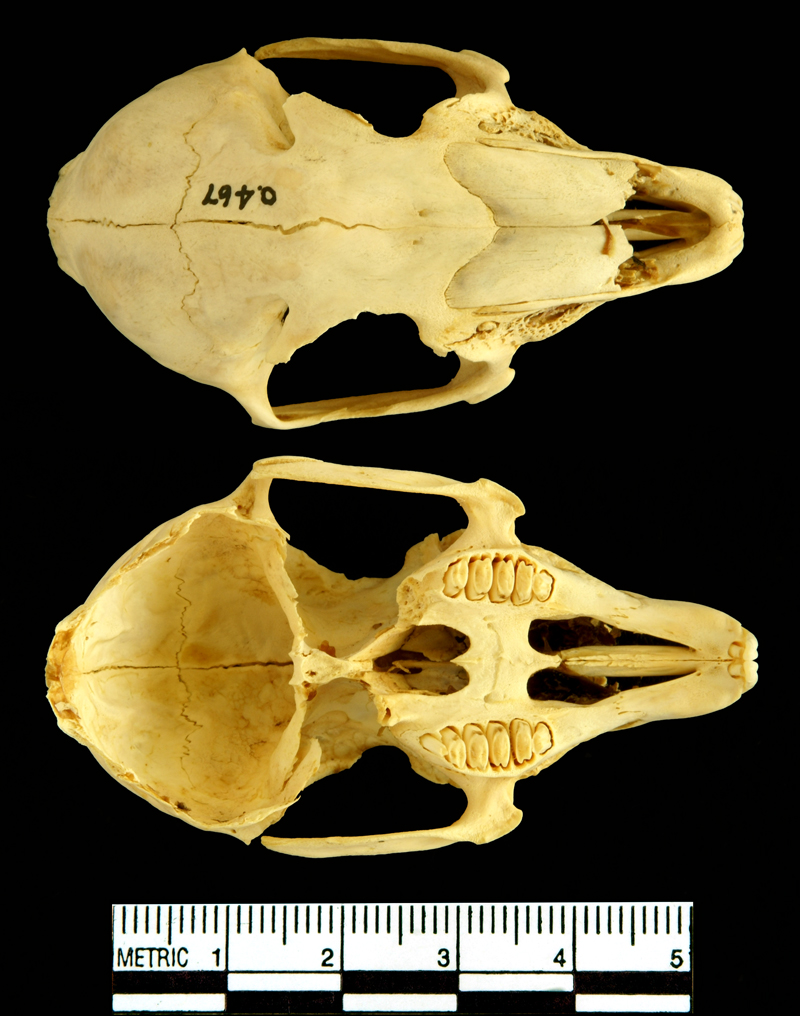
I thought it would be an easy one and I wasn’t wrong, although several of you seemed to second-guess my intentions and assumed that I was trying to trick you because it seemed too easy.

The small second incisors (or peg-teeth) just behind the big first incisors were a complete give-away for the group of animals this skull came from – the Lagomorphs, which Jake spotted immediately.

Henstridgesj, Jamie Revell, Debi Linton and Jake all suggested that it came from a  Continue reading

Friday mystery object #138 answer

On Friday I gave you this object to identify:

The idea was to provide a sense of how tricky it can be to identify bits of postcranial bone, even fairly characteristic bits like the humerus (which is what this is).

There were various suggestions, with sheep, goat and deer all getting a mention, but henstridgesj and Jake both got the same identification as the collector when they suggested  Continue reading

Friday mystery object #138

Postcranial bones are found more often than skulls, but they can be harder to identify since they don’t have such diagnostic characteristics (like teeth). So, any idea what this piece of postcranial skeleton is and what it comes from?

As usual you can put your answers below and I will do my best to respond (within my technological and temporal constraints). I’m sure some of the other biology types will be willing and able to give guidance. Good luck!

Friday mystery object #137 answer

On Friday I gave you this mystery object to identify:

Unfortunately I was unable to respond to comments on Friday, as my laptop had to go in for repairs and my phone has reached the end of its useful life as an internet device after 4 years faithful service. For the answer this week I had to drag out my old laptop, which has meant 2 hours of twiddling thumbs as the machine started up and dealt with various updates…

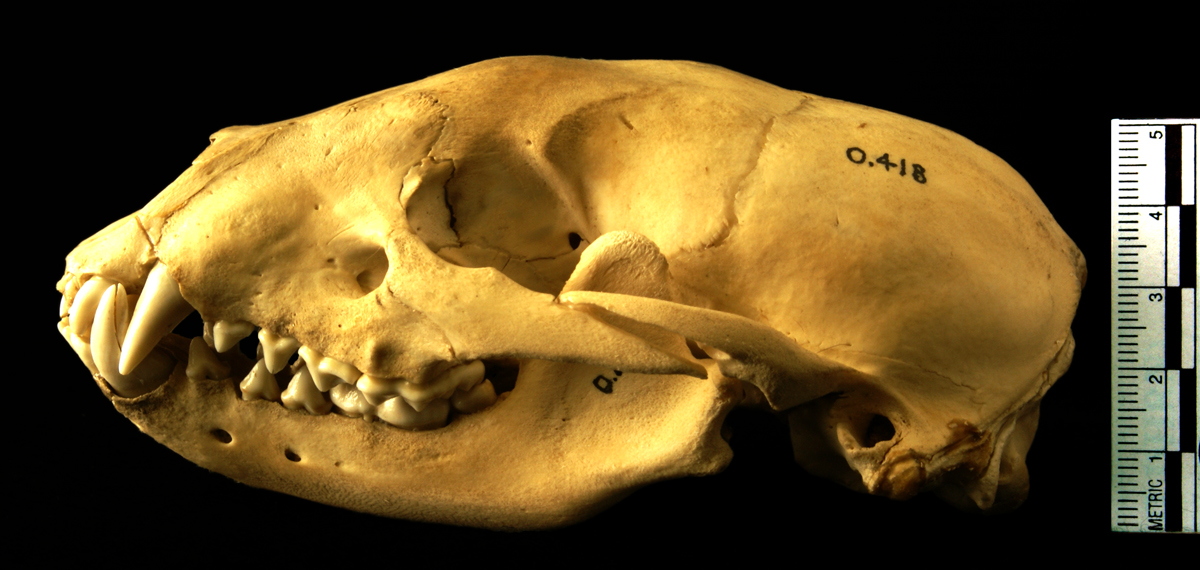
In some ways it was a good thing that I wasn’t able to comment, since it would have ruined the fun from the outset. Jake was straight in there, wondering if it was really as easy as it looked – and it was. Rachel, Jack Ashby and Barbara Powell also plumped for the right answer, while several others came very close when they went for a greedy relative. This is in fact the skull of a juvenile  Continue reading

Friday mystery object #135 answer

On Friday I gave you this object to identify:

I thought it might prove quite tricky, yet several of you managed to work out what it was and which animal it came from.

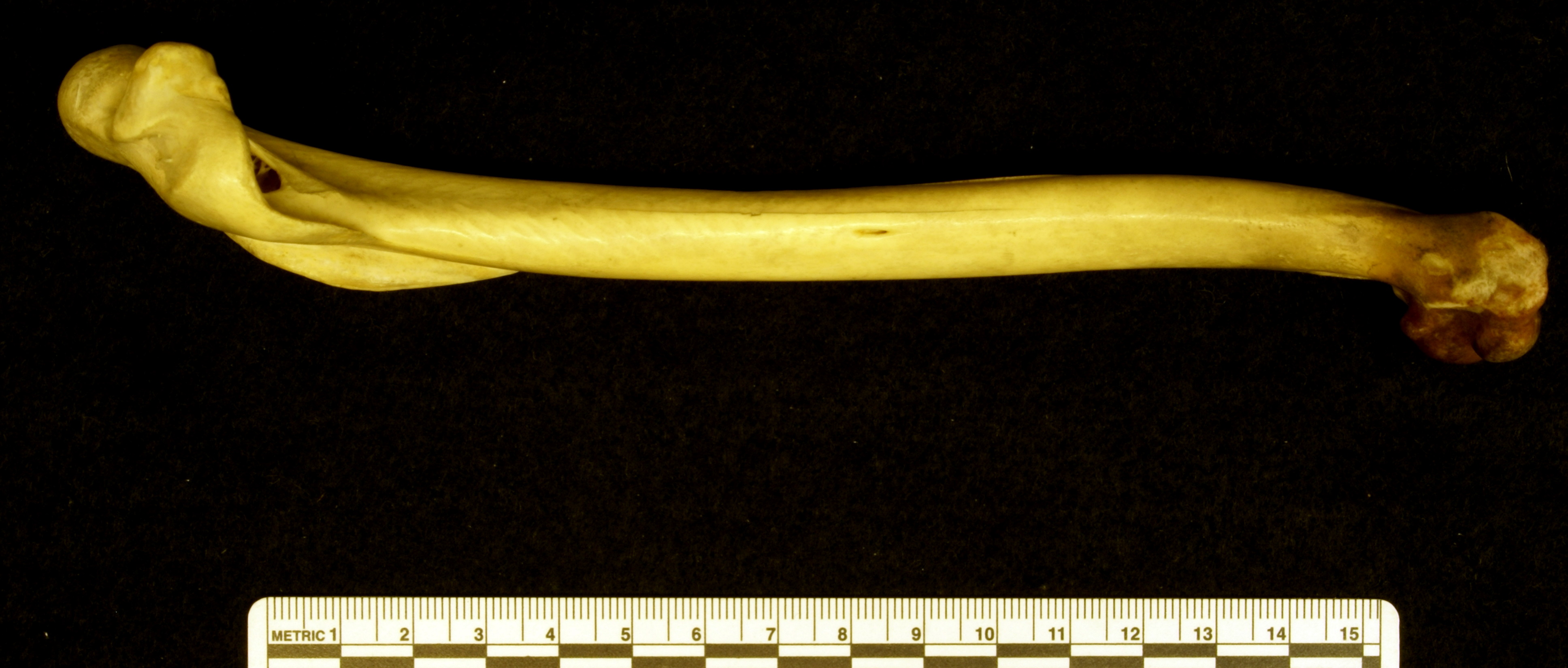
Jake spotted that it was from a young animal – as you can see from the unfused ends of the bone. He also noticed that it was a bit of a strange shape, a bit like a tibia, but actually a radius.

Barbara Powell suggested that it belonged to an animal built for power rather than speed and henstridgesj suggested one such critter – the Aardvark. Although that wasn’t right, or even close in terms of evolutionary relationships, it was very close from the perspective of functional adaptations.

After that it was a short step to the same answer that I decided on when I had to identify this piece of bone. Barabara Powell, henstridgesj and Steven D. Garber, PhD all converged on the answer of  Continue reading

Friday mystery object #134 answer

On Friday I gave you a very nice specimen from the Horniman Museum to identify:

I chose this partly because it’s a great mount and partly because I needed to check the identification, which was out of date.

You all did a great job of breaking down the various options – and there were a few. Jake made the comment:

Is it dippy or a bit ruff ?

This I took as a question about whether the specimen was a Kangaroo Rat (of the genus Dipodomys) or a Rufous Rat-kangaroo (Aepyprymnus rufescens). There was another interpretation that fit with the dippy clue – the correct Family name, which is Dipodidae.

Barbara Powell and Jamie Revell were in the right area and henstridgesj suggested J.j. which was pretty much there, assuming he meant Jaculus jaculus. It is in fact the skeleton of the  Continue reading

Friday mystery object #133 answer

Friday’s mystery object was meant to be a bit of a challenge:

Post-cranial bones can be tricky to identify, especially if you don’t have much comparative material available.

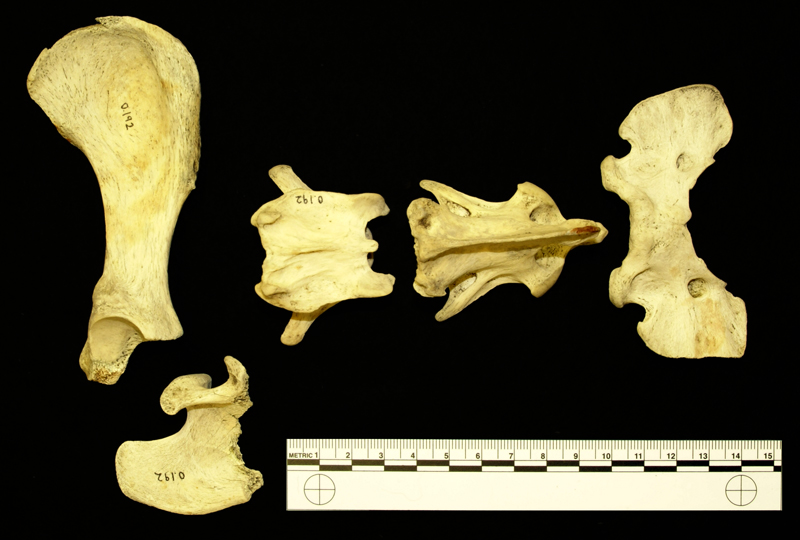
The first challenge was to work out which bits of bone are present – something that Rhea and Jake managed very well. This particular specimen is composed of a broken portion of right mandible (showing the coronoid process, condyloid process and angular process), the left ilium, and the first three cervical vertebrae (which include the axis and atlas bones).

Identifying the species was a bit more tricky using just these few bits of bone, but several of you managed to get there. Henstridgesj was the first to suggest  Continue reading

Friday mystery object #129 answer

On Friday I gave you this object to identify:

This type of bone can prove tricky to identify, and we often have queries about them on Ask A Biologist. With a large example like this one there will often be a suspicion that it comes from a human

However, this is in fact the humerus of a bird – the large flange at the proximal end (the bit nearest the body) makes it hard to spot the rounded point where it articulates with the scapula, coracoid and furcula bones that make up the shoulder joint. The flange itself provides a large attachment area for the tendons and muscle needed to power and control flight.

Here are some images of a (much smaller) goose humerus that show the general structure of the bone more clearly:

Once you’ve recognised the mystery object as the humerus of a bird, the length of about 45cm (17.7 inches) immediately narrows down the species it could come from.

Jack Ashby was the first to recognise what this humerus belonged to and he found support from Rachel, Carlos, Julie Doyle and initially Barbara Powell (although she later opted for another possibility). It’s the humerus of an   Continue reading

Friday mystery object #127 answer

Apologies for a somewhat belated answer to last week’s mystery object – Christmas and all that…

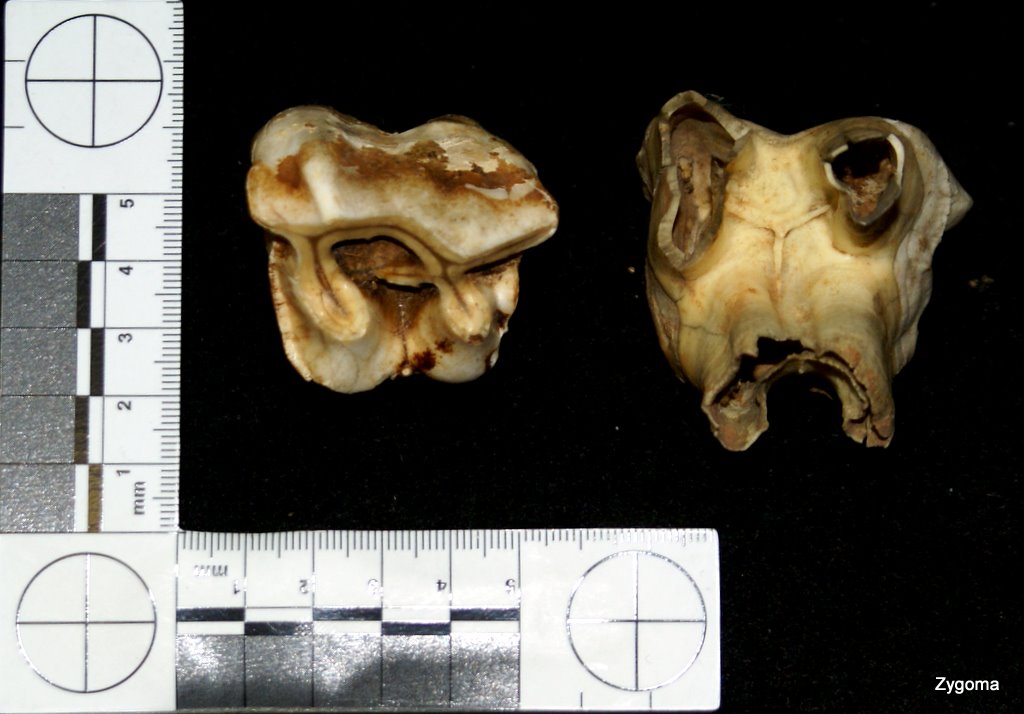
I gave you these two unidentified objects from the Horniman Museum collections, so you could have a go at identifying them:

I was not disappointed either – Jake recognised that they were upper molars or premolars from a grazing animal and Rhea identified the animal in this cryptic clue:

If the owner of these teeth could market and sell a coffee, would it be interested in a label with a *unicorn* mascot that comes in the sumatran or javan blends? Continue reading

Friday mystery object #126 answer

On Friday I gave you a bit of a tricky mystery object in the shape of this partial skull:

I wasn’t expecting anyone to get it without some clues, but I underestimated my talented audience!

Jake spotted that it was a mammal based on the ear morphology and then worked out what kind of animal based on clues from henstridgesj who suggested seal and Julie Doyle, who managed to not only identify the species, but drop this lovely cryptic clue to convey that information:

Not a lot to phocus on, but……. I’m harboring an idea about who it might be. Continue reading