Friday mystery object #45 answer

On Friday, whilst I was in the lovely friendly town of Portaferry catching up with some old friends,  I gave you this mystery object to identify:
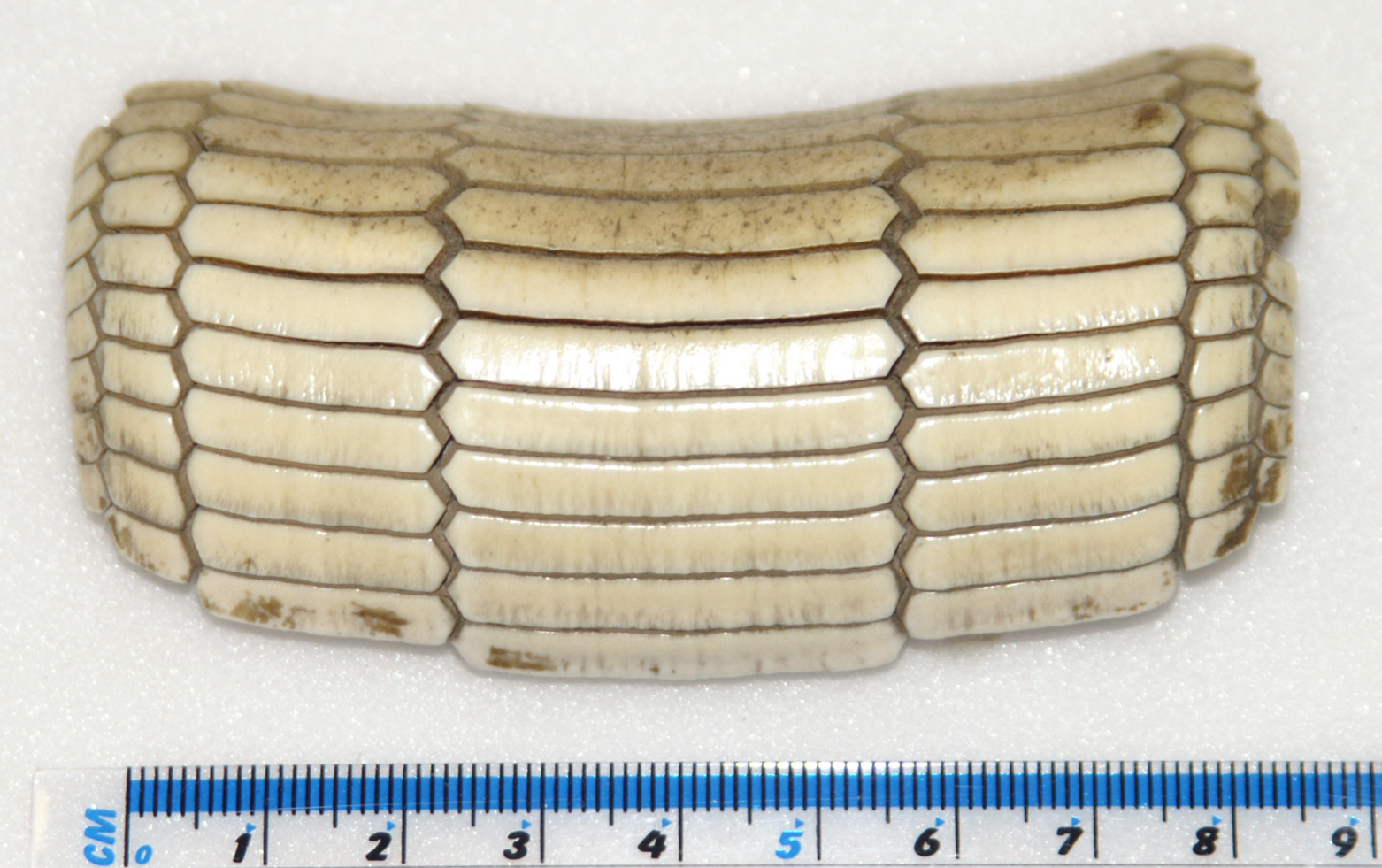
Unfortunately my phone seemed reticent to work properly, making it hard to respond to everyone’s questions, so thanks to Debi Linton for fielding some of the questions/suggestions. This object is one of those that is so characteristic in its structure that once you’ve seen one you will probably be able to spot another with ease, even though they have a huge variety of shapes, as pointed out by Benjamin Brooks in his comment (which provides a link to an image hosted by the Oceans of Kansas Paleontology site who incidentally have a mystery object of their own).

If you click on the image I provided you’ll see more detail, which makes it very clear that this is something composed of interlocking units that look like shiny bone. Shiny bone (that looks like a piece of ceramic) usually means bone with an enamel layer, which usually means teeth. These teeth are arrayed in a plate and if you look at the top of the plate you’ll see that it is discoloured, pitted and well worn. Clearly only this top part of the plate has seen much use and that use has been heavy, given the wear.

So why have all the rest of the tooth plate if it isn’t being used? Of course, the rest of the plate will be used, it just hasn’t moved into position yet – so what animal has teeth that move like a conveyor belt and are constantly being replaced? Sharks are the first things to come to my mind, but they don’t tend to have big flat plates, so think of something related to sharks that might need big flat plates for crushing something that very hard, probably marine molluscs.

If you haven’t worked it out already, this is a tooth plate from a  Continue reading

Friday mystery object #43 answer

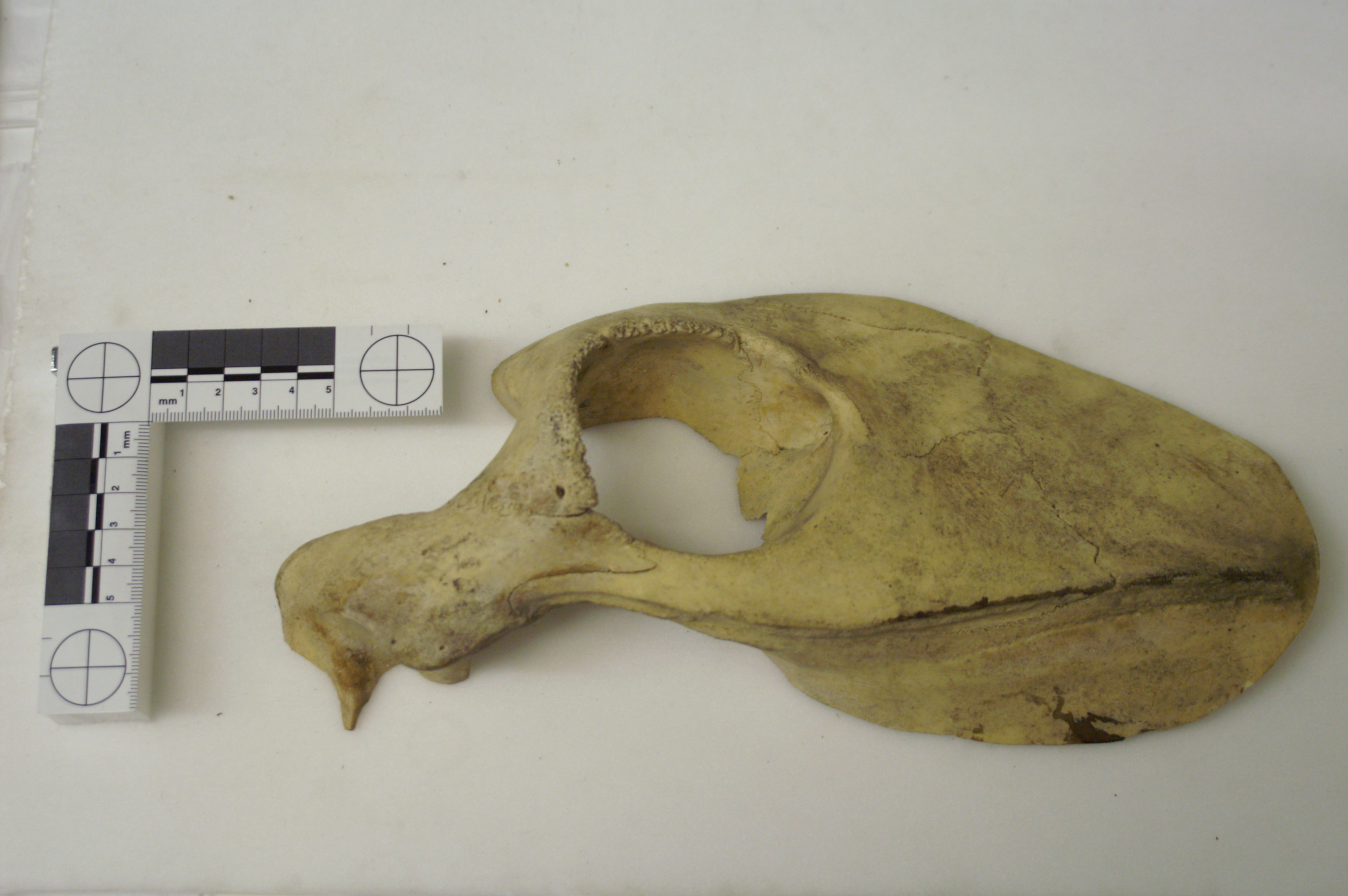
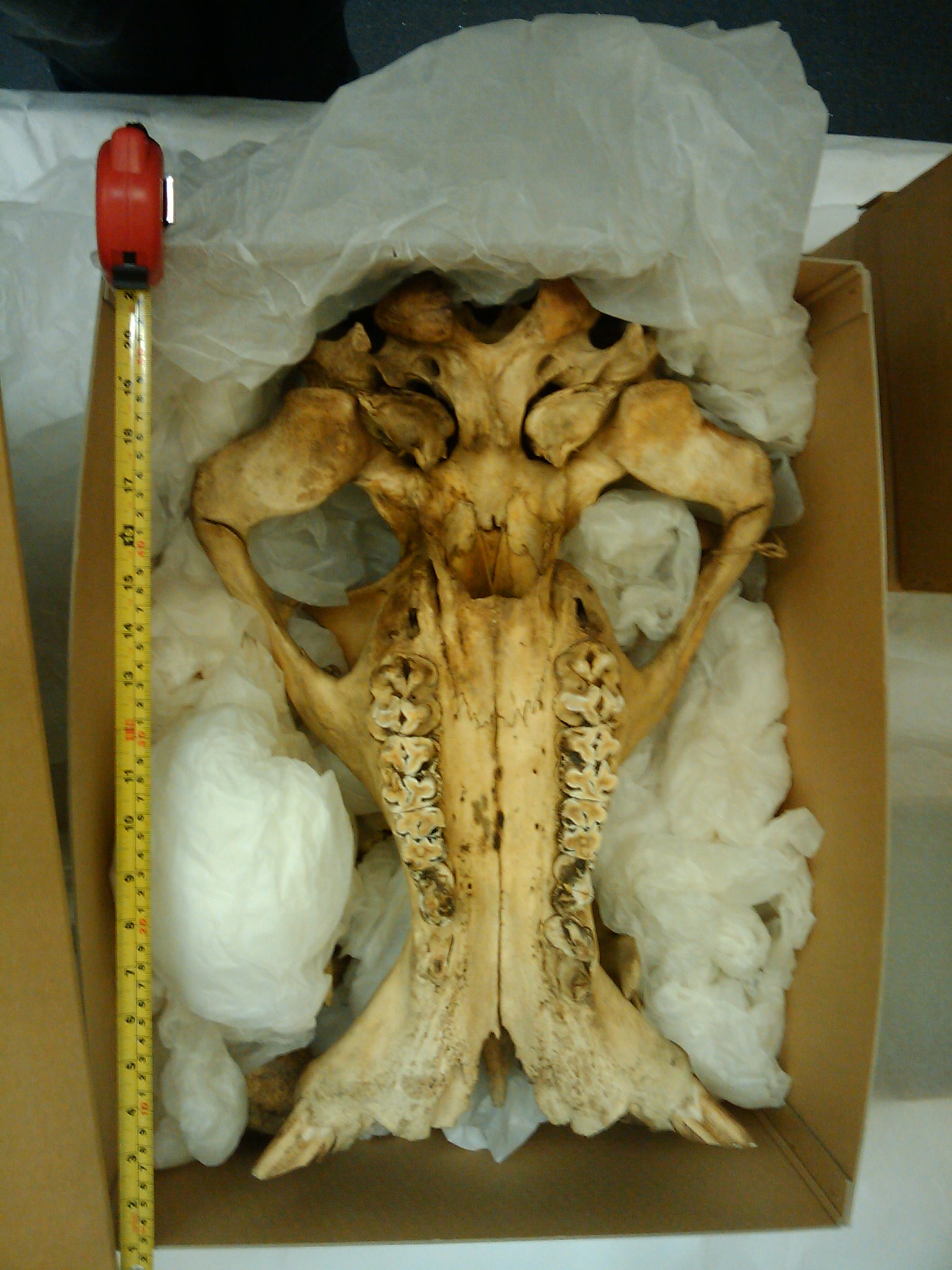
On Friday I gave you this skull to identify:

I used this skull because the shape really appealed to me when I stumbled across it in one of my office drawers – here are another couple of views of the same specimen:

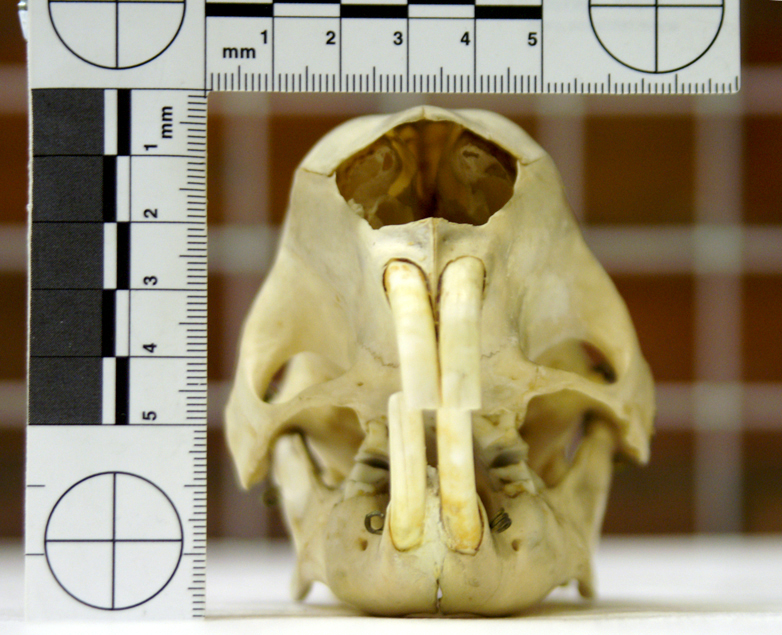
Most of you quickly worked out that this skull belongs to a rodent – and a big rodent at that.  The inflated nasal region was also quickly picked up by some of you and I think that’s what led Jonpaulkaiser to the correct answer first, followed by Neil who also managed a species level identification. Well done to everyone though, there were lots of very close attempts, with several of you missing out by a quill’s breadth – if you’ll excuse the frankly awful pun. This is of course (if you didn’t guess from the bad pun) a Continue reading

Friday mystery object #42 answer

On Friday I was at the NatSCA conference, hosted by the Plymouth City Museum and Art Gallery. The conference was excellent (thanks Jan and Helen) and I really enjoyed the natural history collections on display – particularly this piece of partially made taxidermy:

I asked you to identify what species of bird this mannequin is intended to represent. The only actual bits of the bird are the legs, head and wings, so these are the bits you should have concentrated on.

I was a bit surprised that no-one managed to get this. Most people went down the line of thinking that it was a fairly long-legged and long-necked bird, but that is without taking into account that the feathers are missing! Feathers considerably alter the shape of a bird, smoothing the contours of the neck (which has a strong curvature in life which shortens it) and providing a substantial amount of insulation. Feathers also layer quite densely on top of one another, with a stiff rachis down the middle of each, which provides structural support, changing the outline.

In the end there was one person who came close – Neil, who correctly identified that it was a corvid of some description and his suggestion was supported by Bob O’H. It is in fact a Continue reading

Friday mystery object #41 answer

On Friday I gave you this formidable looking object to identify:

Many  suggestions related to the saw-like appearance of this object, proposing either a human-made saw or the rostrum (nose) of a saw-fish (which are endangered cartilaginous fish of the genus Pristis). The closest answers all made reference to the articulation at the end of this object, which is the significant clue as to what this object is – the “teeth” are just secondary details.

Jake was the first to come close, followed by Kevin the epic and KateV, who gave a sensible mechanical breakdown of the likely use of this element. I’m not all that surprised to say that this week no-one worked out that the mystery object is a Continue reading

Friday mystery object #40 answer

On Friday I gave you this skeleton to identify:

It looks a bit like a snake, but there are a couple of give-aways that mean it must be something else. First of all, snakes may look like they’re all tail, but actually they have quite short tails in relation to their body length (hint – the tail starts just after the ribs end) and second, a snake’s skull has a very open light structure (as I’ve discussed before). Both of these snaky features can be seen in this image taken by dbking:

Viperid snake skeleton (image by dbking)

Viperid snake skeleton (image by dbking)

So, if it’s not a snake, what is it? There are quite a few animals that have a long slim body with no limbs, from eels to caecilians to a variety of lizards (including, but not restricted to snakes, which are a discrete subgroup within the lizards). However, this is not an eel because their ribs don’t form a cage – they form vertical projections for their muscles to work against, it’s not a caecilian because they have even shorter tails than snakes, which leaves us with the non-snaky legless lizards (as recognised by Gimpy).

Legless lizards crop up in at least three major groups of lizard (not counting snakes) so there is a fair amount of choice out there. The Amphisbaenia are really weird and the mystery object doesn’t have the right skull shape to be one of them. The Pygopodidae are legless members of the same group as the geckos – and the mystery object could probably be one of them, except it’s not. It is in fact a member of the Anguoidea (more particularly the Anguidae) and it was identified correctly by Jim (and seconded by Neil) as being a  Continue reading

Friday mystery object #39 answer

On Friday I deviated from my usual natural history theme when I gave you this object:

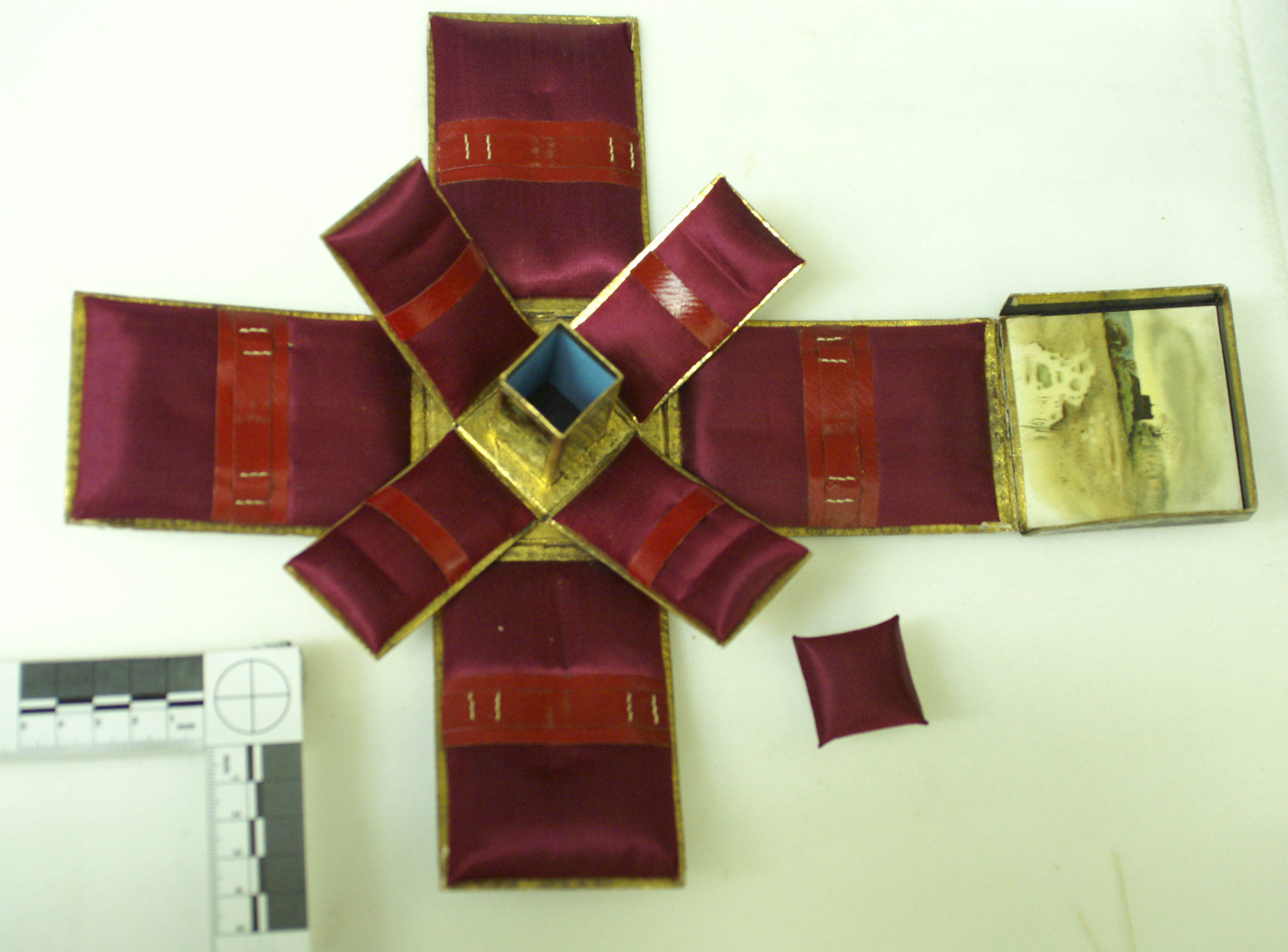
There were a host of suggestions, from a tea caddy to part of the Large Hadron Collider, however, one person managed to identify that this is actually a pin cushion – here it is folded out in all its glory:

So well done to KateV (who is also known as mum by me)!

This particular pincushion is European and made of cardboard and fabric – I would tell you more, but out database doesn’t seem to be responding this morning, so any additional information will have to follow once that’s up and running, since I am a total ignoramus about such cultural items. Hopefully more to follow…

Friday mystery object #38 answer

Friday’s object was this exploded skull:
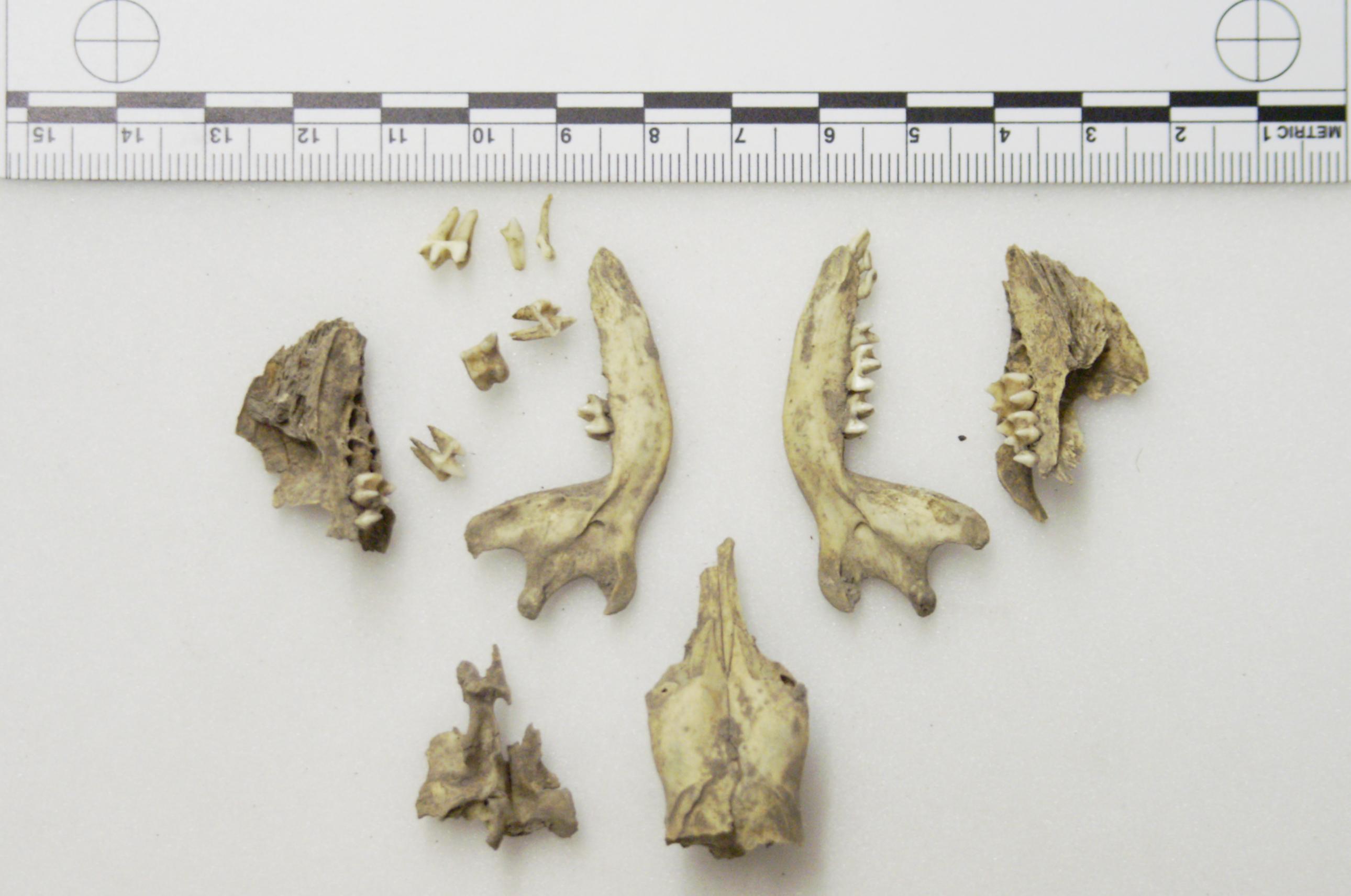
I identified it as a hedgehog, Erinaceus europaeus Linnaeus, 1758 based on comparison with the skull (particularly the lower jaw) of a specimen that I had as a mystery object last August:

My guess is that the specimen was probably a fairly young adult, since most of the fragmentation of the skull is along suture lines. However, the disarticulation is greater than would be expected simply from a poorly fused specimen, so it looks like damage has also been sustained. Since the delicate nasal turbinates are still intact and in place, I expect the damage probably happened when they were still protected by soft tissue – making me suspect that it happened before the animal was skeletonised. Given the susceptibility of hedgehogs to getting run over, I expect that this individual was killed on the road by a glancing blow to the head that loosened teeth and sutures. I’m pleased to say that Jake agreed with my identification and cause of death for this specimen, so a hearty congratulations to him!

Friday mystery object #37 answer

On Good Friday I provided a series of eggs in a mystery Easter egg hunt. I will list the answers at the end of this post with a reference to the people who made a correct identification, but first I want to discuss the issue of eggs.

I had reservations about putting together last Friday’s post, because eggs are a delicate subject matter – and by that I don’t mean I was concerned about possible damage to the eggs (I’m trained to deal with such things after all), I mean that the issue of eggs is ethically and legally delicate. I checked the Wildlife and Countryside Act  1981 and associated legislation to ensure that both myself and the Museum were on legally firm ground with respect to the eggs and I am now fulfilling the ethical requirement (as I perceive it) by attempting to clarify the position on collecting, keeping and trading bird eggs in England and Wales (slightly different rules apply in Scotland).

Collecting wild bird eggs is illegal. It makes no difference if the bird is a golden eagle or a wood pigeon.

Selling wild bird eggs is illegal. As one auctioneer found to his cost recently.

It is illegal to possess bird eggs unless you can prove they were obtained legally. This means that you need evidence that the eggs were collected prior to The Protection of Birds Act 1954 – and of course evidence means documentation.

Egg collecting used to be a common hobby, usually associated with young lads. Unfortunately collecting can be quite addictive and when someone of a collecting mindset wants to fill holes in their collection they will sometimes go to extraordinary lengths to do it – breaking the Law included. This means that there are still quite a few people out there who collect and deal in eggs – something that has to be taken seriously. It needs to be taken seriously because collectors tend to target those eggs that are rare – precisely the ones that are needed for rare bird populations to survive and recover.

Museums have a bit of a hard time with people offering egg collections. Often when someone passes away their family will find a shoebox of eggs in the loft that was collected when the deceased was a child. Usually, such collections were collected prior to 1954, but they lack any documentation. This means that the family is left holding an illegal egg collection that they are keen to get rid of, but which they don’t want to destroy – so they offer it to museums. Of course, museums are bound by the Law, so they too can be prosecuted for holding egg collections that cannot be proved to pre-date 1954. This means that museums will turn away egg collections that lack proper documentation and associated data – and the best course of action is probably for the families to contact DEFRA for advice (they’re very approachable and they aren’t looking for unwitting innocents to prosecute). The advice I would give is that if the collection has no documentation and associated data (like species names, place collected and all-importantly date of collection) it is probably best to dispose of the eggs. If it does have data and documentation then a museum may be willing to take it as a donation – but bear in mind that most museums are very wary of egg collections and don’t be surprised if they decline your offer.

On to the answers! Continue reading

Friday mystery object #36 answer

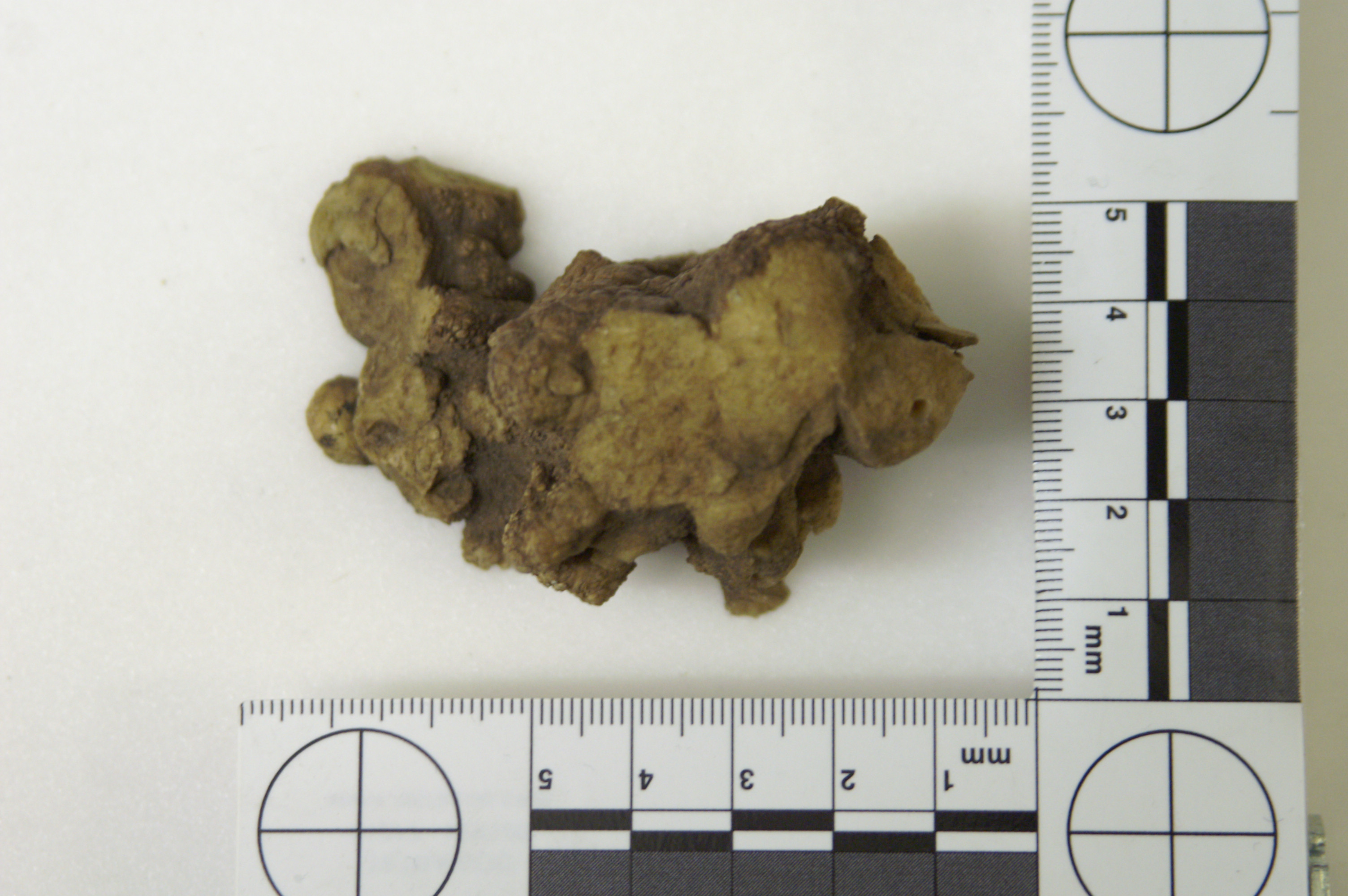
Crumbs – rather inundated with comments about last Friday’s mystery object! Apologies for not answering all of the questions, the sudden leap in comments coincided with a particularly hectic day where I had virtually no computer access. The comments were wide ranging, from cannonballs to turtle eggs, truffles to coprolites (fossil dung), burnt cooking/toys to a bezoar. One of my favourites was the fossilised fist of a wood elf – and I can sort of see the similarity:

However, I am almost sad to say that it is none of the above. There were a few answers that came close, Don C suggested a concretion, Solius suggested mineral crystals, SmallCasserole identified that it was mineralised with a radial pattern, but one person had this hammered – Jeremy was spot on with with an identification of Continue reading

Friday mystery object #35 answer

Last Friday’s mystery object was this formidable looking lower jaw chosen by my volunteer Cat:

I asked you to tell me what this was from and you haven’t disappointed! Cromercrox led the charge by deftly discounting it as being from a tetrapod – and even after an attempt at obfuscation on my part he identified that it was from “some mutha of a fish”. Jack Ashby jumped in with the correct suggestion that it was from a perciform fish and Jim slammed home with the correct answer of Continue reading

Friday mystery object #34 answer

Friday’s mystery object was a tricky one:

Suggestions for an identification ranged from earwax to fungi, from a monstrous gall stone to diseased bone. The first ranging shot from Gimpy (It looks like bone that has been calcified or has some sort of tumour growing on it. It also seems to have … no internal blood vessels or marrow) was actually very close and I thought this would be nailed in short order, but perhaps my evasive answer put people off the scent more effectively than I had intended. Eventually the one person who has managed to guess all of the correct elements is Jake – so a hearty round of applause to our youngest contributor! It is in fact a section of Continue reading

Friday mystery object #33 answer

The mystery object on Friday was chosen by Taylor, a work experience student who assisted me in the collections last week. He picked a particularly tricky specimen:

However, I am pleased to say that Jake immediately spotted that it was a skull that had been sectioned and after some questions and some close guesstimates by Henry Gee (who was working through the various families within the Carnivora),  it was eventually correctly identified by Jeremy, who worked out that it was in fact from a Continue reading

Friday mystery object #32 answer

On Friday Dr David Waterhouse presented a guest mystery object from a beach on the Norfolk coast near Cromer:

There were some interesting ideas about what it might be, ranging from oil-spill residue (Gimpy) to shark egg-case (SmallCasserole), but Henry Gee managed to correctly identify the specimen as being a Continue reading
Friday mystery object #31 answer

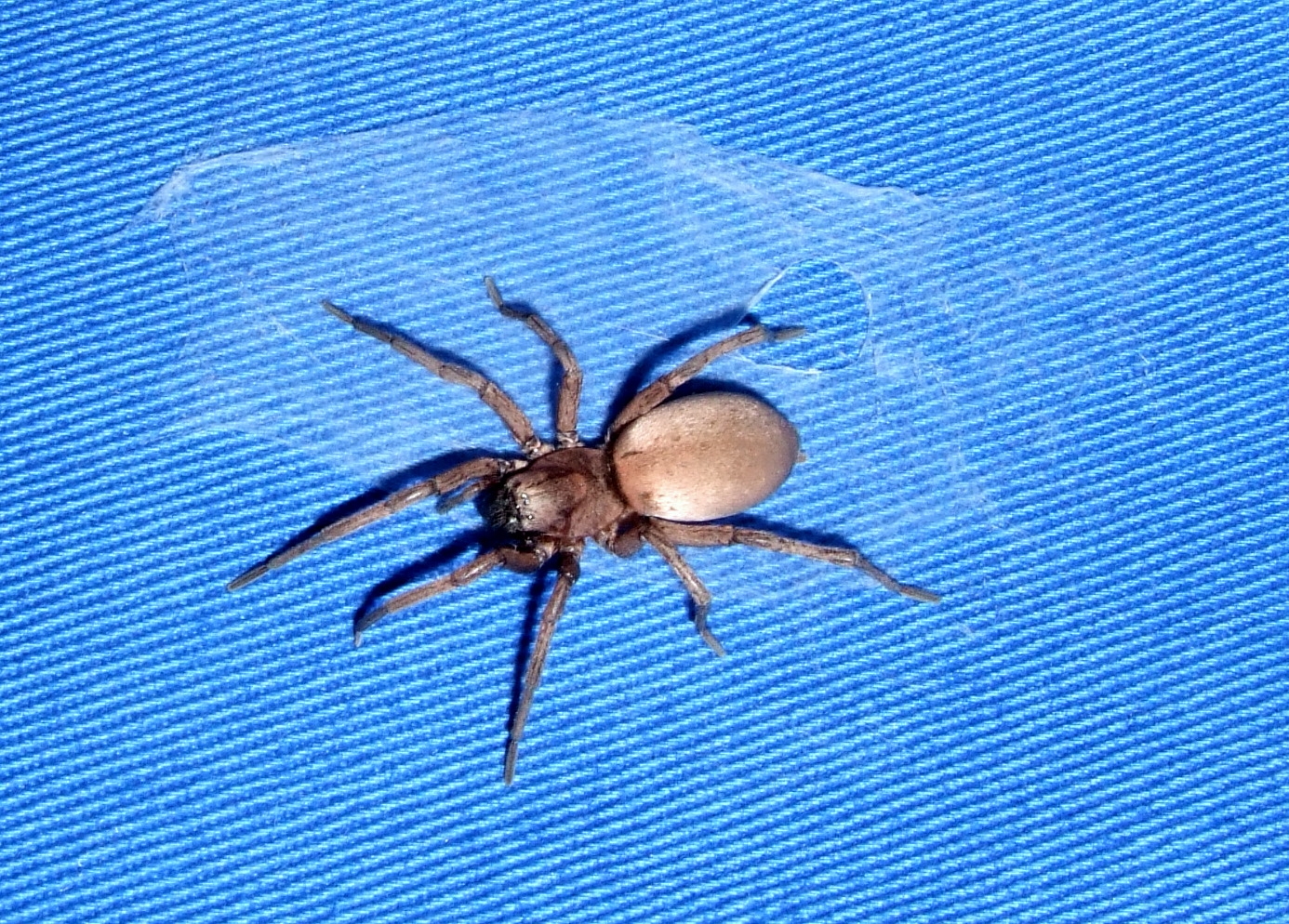
On Friday I showed you a photo of one of my house guests from last year and asked you what it was:

Body approx. 2cm long

Obviously it’s a spider; the eight legs, two body segments and massive chelicera are a dead give-away, but what kind of spider is it? Jim identified it immediately (typical of a know-it-all biologist) as a Continue reading

Friday mystery object #28 answer

On Friday I presented you with this mystery object:

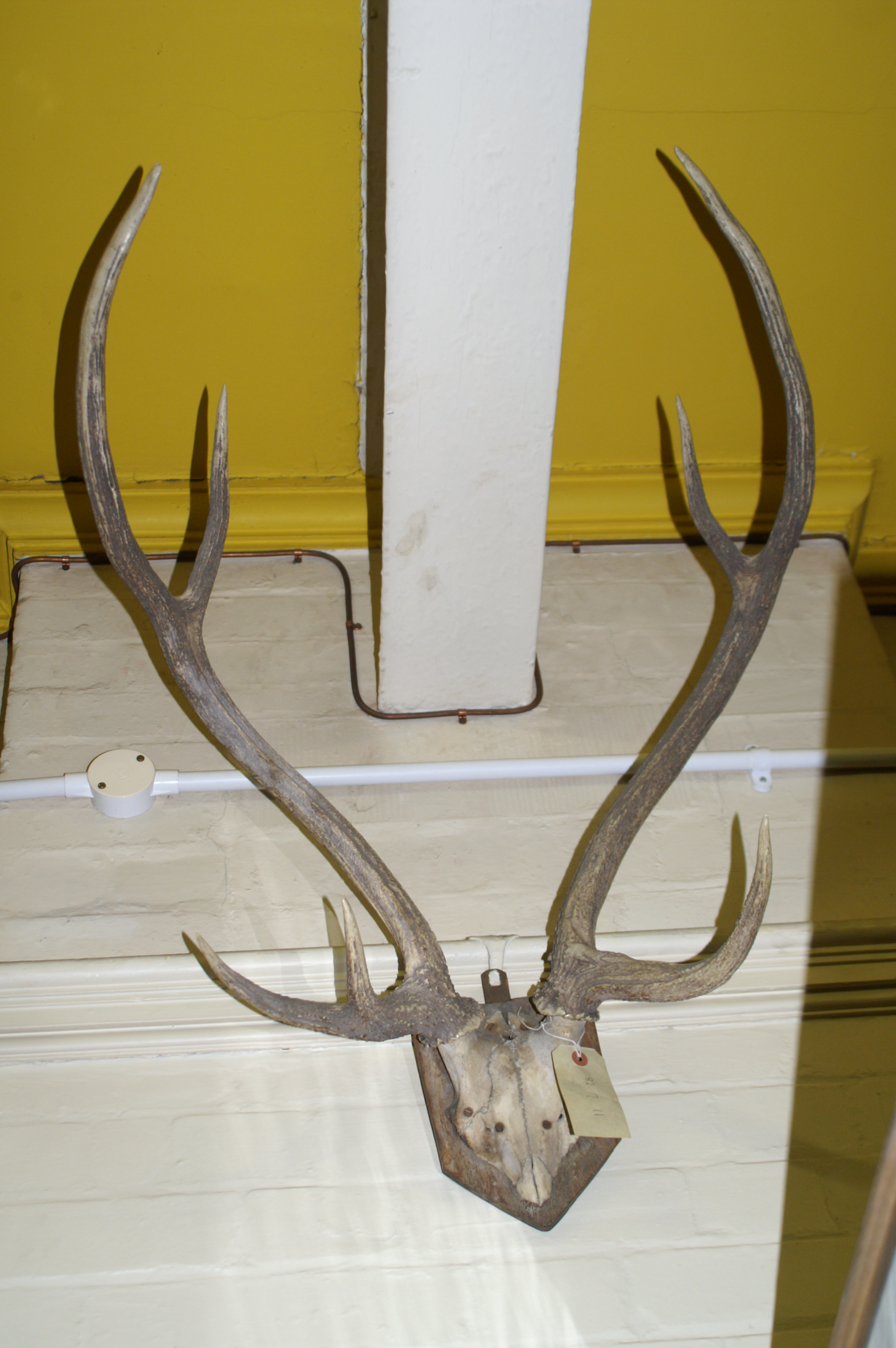
This specimen is one of 14 of the same species that we have in the Study Collections Centre at the Horniman Museum. Myself and a collegue (Steve, king of knots) recently remounted all of our trophy plates on steel mesh, using steel S-hooks, plastazote foam and archival tape restraints and supports. The outcome has been very satifactory:

Unfortunately, most of these specimens have been donated from private collections where the information has not been retained with the specimen, so I have had to identify pretty much all of these trophies. The one I showed you on Friday is most likely to be a Continue reading

Friday mystery object #27 answer

On Friday I gave you this scrawny looking bird to identify:

The beak (and feet) gave away that it is a parrot (or psittaciform as the parrots are known to ornithologists and the taxonomically minded), which was immediately recognised by SmallCasserole shortly followed by Debi Linton. SmallCasserole suggested “parakeet” which I suppose could be accepted as a correct identification since they are called “parakeets” by Americans, but it took Jim to identify it more specifically – it is of course a Continue reading

Friday mystery object #25 answer

It seems that the change of tack on the mystery object was a welcome variation – record views and far more comments than usual as everybody strove to find the answer. Given that favourable response I will try to include a more diverse theme for the choice of Friday mystery objects in future!

Here is the object in question:

You were also given a couple of detail images and asked to work out a) what is it, b) what animal bits it’s made from and c) where it’s from. I thought this would be fairly easy, which is why I didn’t include the photo below, which would probably have given the game away immediately:

Clearly this is a Continue reading