Greetings Scientopians and Happy Birthday Charles Darwin

I’m going to be at Scientopia as a guest blogger for the next couple of weeks, so I hope you enjoy my scribblings about my interests and my work as a scientist in a cultural institution – an incongruous but rewarding experience.

The Friday Mystery Object will continue as usual and I will mirror much of the content here. My first post is just a brief introduction and a belated ‘Happy two hundred and second Birthday’ to Charles Darwin for yesterday – check it out here.


The Mass Libel Reform Blog – Fight for Free Speech!

I meant to post this a few days ago, but it totally slipped my mind – which is a shame, since I think it’s very important:

This week is the first anniversary of the report Free Speech is Not for Sale, which highlighted the oppressive nature of English libel law. In short, the law is extremely hostile to writers, while being unreasonably friendly towards powerful corporations and individuals who want to silence critics.

The English libel law is particularly dangerous for bloggers, who are generally not backed by publishers, and who can end up being sued in London regardless of where the blog was posted. The internet allows bloggers to reach a global audience, but it also allows the High Court in London to have a global reach.

You can read more about the peculiar and grossly unfair nature of English libel law at the website of the Libel Reform Campaign. You will see that the campaign is not calling for the removal of libel law, but for a libel law that is fair and which would allow writers a reasonable opportunity to express their opinion and then defend it.

The good news is that the British Government has made a commitment to draft a bill that will reform libel, but it is essential that bloggers and their readers send a strong signal to politicians so that they follow through on this promise. You can do this by joining me and over 50,000 others who have signed the libel reform petition at
http://www.libelreform.org/sign

Remember, you can sign the petition whatever your nationality and wherever you live. Indeed, signatories from overseas remind British politicians that the English libel law is out of step with the rest of the free world.

If you have already signed the petition, then please encourage friends, family and colleagues to sign up. Moreover, if you have your own blog, you can join hundreds of other bloggers by posting this blog on your own site. There is a real chance that bloggers could help change the most censorious libel law in the democratic world.

We must speak out to defend free speech. Please sign the petition for libel reform at
http://www.libelreform.org/sign

Science relies on dissenting voices as a quality control mechanism and evidence should be relied on to defend against criticism rather than lawsuits. If you haven’t signed the petition, please do – help to make England’s libel laws fairer and more reasonable.

Maneaters

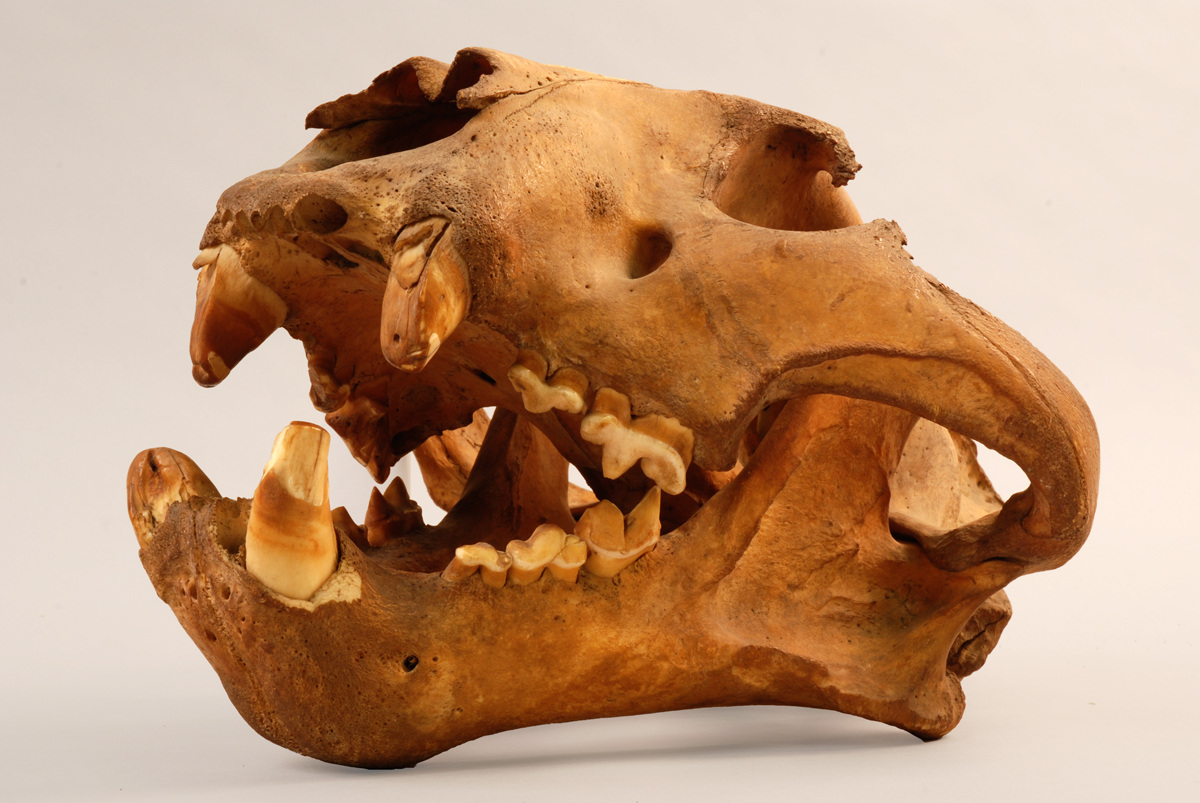
Skull of maneating tiger, Horniman Museum NH.74.11.19

Tool use, technology and cooperation have allowed humans to claw their way to the top of the predatory heap. As a species we can and do kill anything and everything. Sometimes we kill for food, sometimes for profit and sometimes for fun. Very occasionally we also kill for self protection.

Humans have been largely off the menu for quite some time – and although people are still killed and eaten by large predators with some regularity (perhaps a hundred or so a year), humans are not the first prey of choice for any species of carnivore – it’s just that some individuals within a species will develop a taste for human. When there are attacks on people it will usually be because there has been a blurring of borders between a human habitat and the habitat of the predator. The most obvious example of this is when humans are occasionally taken by sharks whilst in the sea or by crocodiles in lakes and rivers.

Staying on land, the blurring of borders between predators and people is linked with habitat loss  and the encroachment of human development, agriculture and habitation, with the associated issues of deforestation and re-purposing of land. The development of infrastructure brings humans into wilderness, such as with the Tsavo bridge project in Kenya, where a pair of lions terrorised construction workers for ten months in 1898, eating about 35 and possibly killing around 135.

As habitat is lost, predators are faced with fewer natural prey and they are thrust into close proximity with domesticated animals – with obvious consequences.  Where you have livestock being killed you also have people trying to protect their livelihood and this is where the conflict really heats up, taking its toll on both the people and the predators. There can be no winners. Continue reading

Friday mystery object #17

I can’t believe it’s Friday again – it’s all a bit hectic at the moment, so apologies for the late posting of this week’s mystery object.

 Here’s a rather odd object from the Horniman’s collections – any idea what it might be?

 mystery17

As usual, post your answers below and if you have any questions I’ll do my best to answer them!

Friday mystery object #14 answer

On Friday I gave you a bit of a change from museum specimens and presented you with this:

mystery14bEveryone managed to get the identification to at least within the Order level (it’s in the Orthoptera), which is good going when dealing with insects. The hard bit came down to whether it was a cricket or grasshopper. Now, the photo does not show the most important feature for distinguish between these two types of orthopteran: it’s the antennae length that gives it away (grasshoppers have short antennae, crickets have long antennae). Colour is not really important (sorry KateKatV).

That said, the vivid green colour, speckled appearance, lack of wings and characteristics shape of the ovipositor (curved bit at the back which means this is a female) are a give-away for those who are familiar with this particular beastie (and for those who use Google image to help with their identifications). It is in fact a Continue reading

Friday mystery object #14

Last week I let Harrison pick an object that proved a bit too difficult (although perhaps I could have been more generous with the clues I gave…). This week I am giving you something that is actually alive and commonly found in gardens in the UK – so it should be a doddle to identify:

mystery14b

Simple questions – what species is it (binomial name gets you kudos) and what sex is it?

Answers in the comments section below – but I’m afraid I won’t be able to respond to comments this week. Good luck!

Friday mystery object #13 answer

Crumbs, it appears that last Friday’s object stumped everyone! Harrison certainly chose a difficult one…

mystery13aSmallCasserole came closest, asking:

Is it antler or horn?

but my response:

Antler or horn that thick?

was perhaps too ambiguous – because there is a horn out there that is this thick, that of a Continue reading

Friday mystery object #13

Today’s mystery object has been selected by a very helpful work experience volunteer who was assisting me in the collections yesterday, so my thanks to Harrison! He is rather more cruel than me, so there’s no multiple choice on this – we just want you to see if you can work out what it is. I will attempt to answer any questions (time permitting) since our broadband seems to have been sorted out at home.

So here it is:

mystery13a

Continue reading

Friday mystery object #12 answer

Still no internet, so this is drafted on my phone. Well done to those of you who worked out that Friday’s object was indeed a rattle-snake’s tail.

I will expand on this answer, once I can use a computer to type comfortably!

Right, internet is finally working again, so here’s a (slightly) fuller answer to what this is:

mystery12b

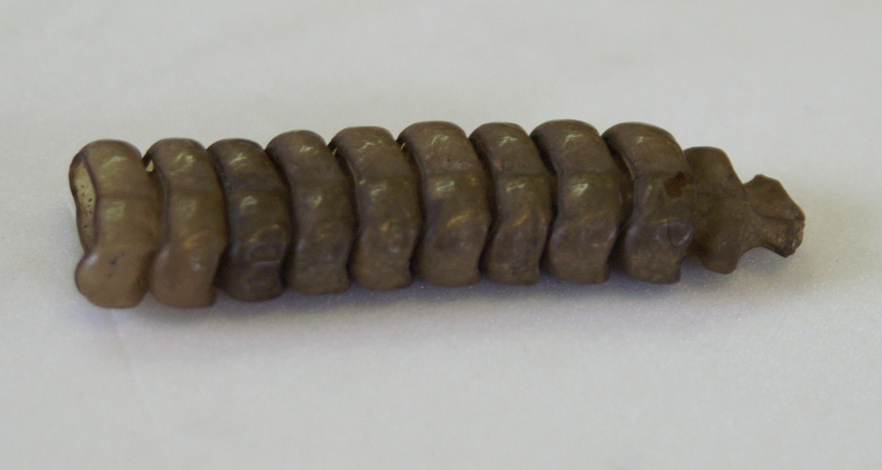
As was mentioned before, this is indeed a rattlesnake’s tail. Rattlesnakes have a bad reputation for being aggressive and dangerous, but it should be remembered that they have a rattle in their tail to warn off predators and large unwary animals that might trample them – so at least they give fair warning.

There are quite a few species of snakes that make use of a rattle on their tail and this one comes (apparently) from Crotalus durissus, a South American pitviper that is quite dangerous due to their powerful neurotoxic venom (unlike the cytotoxic venom of the North American diamondback rattlesnake).

The rattle is formed when the snake sheds its skin – a section of the old skin Continue reading

Friday mystery object #12

I am still without internet at home, so apologies for slow responses to comments and the lower quality of my recent posts.

This Friday’s mystery object is pretty straight-forward, a simple case of ‘what is it?’

mystery12amystery12b

If you think you know what this is just leave a comment below – I will attempt to respond to any questions when (and if) I am able, but I can’t make any guarantees I’m afraid.

Good luck!

Friday mystery object #11

My internet is still down at home, but here’s a Friday Mystery Object anyway!

This time I just want you to work out what group of animals this ribcage comes from:

mystery11a

Here’s a close-up that you might find useful:

mystery11b

Now you don’t need to be an expert to work this out – just work out how this ribcage is similar to the ribcage of other animals and certain features should start standing out to make the answer obvious – a real case of deductive power!

To assist, I will point you in the direction of some useful comparative material and I urge you to consider how function and inheritence both shape bones used in movement.

Feel free to ask questions in the comments section below – I will reply whenever possible. I hope you enjoy the detective work!

Friday mystery object #10 answer

On Friday I presented two mystery objects after a frantic search through the photos on my phone whilst at the SVP conference in Bristol:

Name the source of this leather seat cover

Name the source of this leather seat cover

2009-09-04 10.21.29

 As it is you performed remarkably well, SmallCasserole spotted that the leather was Continue reading

Friday mystery object #10

Currently in my apartment in Bristol frantically searching for a suitable mystery object whilst also trying to plan the talks I want to attend at SVP.

I get the feeling skulls are getting boring for some of you, so perhaps it’s time I introduced an object that isn’t directly related to what I’m doing at work. In the pub yesterday, a natural history curator friend  of mine (David Waterhouse from Norwich Castle Museum) queried the type of leather on the seat of his chair (it’s the kind of thing we do). We think we know, but can you work it out?

Name the source of this leather seat cover

Name the source of this leather seat cover

Not an easy one, particularly without any clues, but I will attempt to answer any questions go help you on your way – just post them below in the comments section.

Good luck! Continue reading

Friday mystery object #9

It’s Friday again, we all know what that means – Mystery Object time!

Last week I gave you a really tricky one, that you managed to work out with some clues. I liked the Q&A format, but unfortunately I am between ISP’s at the moment, so I don’t think I will have the chance to have as much input this week. Instead there is a poll (although comments are always welcome!) and I will return to my favourite objects – skulls.

mystery9a

So, what is this the skull of? Choose an answer from the poll below (don’t forget to hit “vote”): Continue reading

Friday mystery object #8

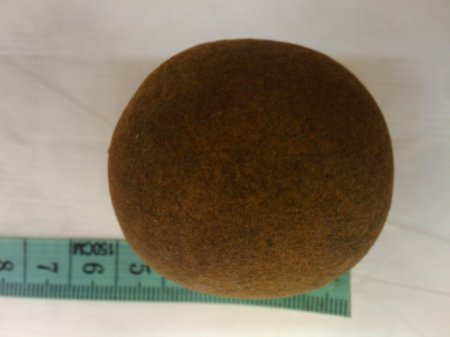
Well, after last week’s impressiveness on your collective parts, I think I’d better step up to the plate and deliver something truly taxing. This one I guarantee you won’t get without some extra clues.

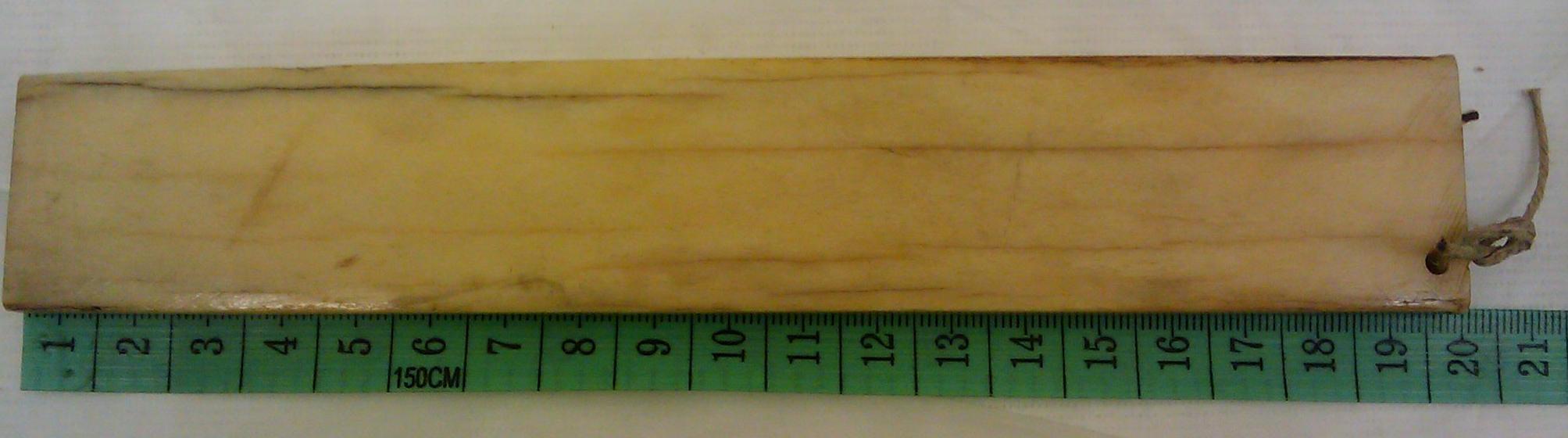
Here it is:

Scale in cm
Scale in cm

(click on image to enlarge)

It’s a tall order I know, but what do you think it is?

Put your answers in the comments section below and if you need some clues (or ask some sensible questions) I will respond accordingly.

Good luck (I have a feeling you’ll need it!)

What is science?

N.B. If you’re after a quick answer then see here, if you want an in-depth outline see here or if you want to know how science works see here– this blog is more concerned with the broader conceptual framework within which science fits.

Knowledge is an interesting concept – how can we really “know” anything? How do we determine truth from untruth? Does knowledge even require what is “known” to be true? I don’t think so – I think it merely needs to appear true.

The human brain looks for explanations – being able to identify cause and effect is a powerful capability, after all, it underpins all human achievement. For example, if our ancestors were unable to identify that seeds grow into plants, we could never have established agriculture (and subsequently civilisation).

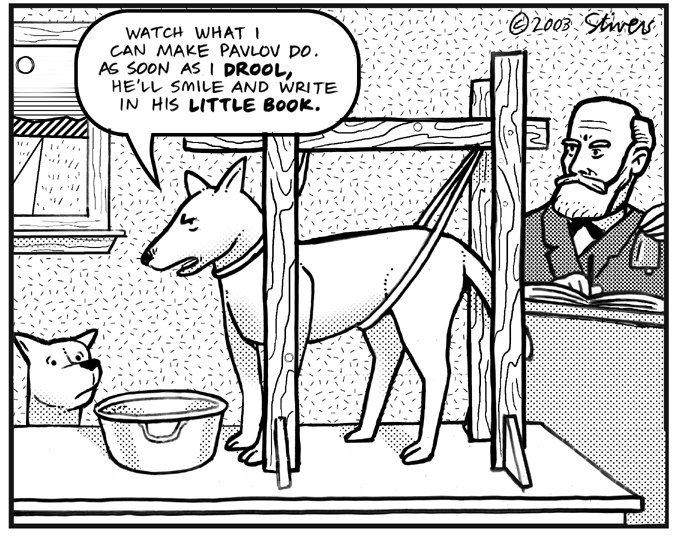
There are a variety of ways in which we make links between cause and effect, from straightforward reflexive Pavlovian classical conditioning, through more complex methods of identifying concept-based causation, to the rigourous statistical analysis of double-blind randomised controlled trials of modern biomedical research (which marks our current best attempt at linking cause to effect, whilst minimising the influence of coincidental factors). However, one of the most common ways in which we find explanations is by relating an observed occurance with an observed outcome – we look for a correlation.

Of course, the trouble with correlations is that you will often be spotting a relationship that doesn’t really exist. Factor A might occur at the same time or increase at the same rate as factor B, but it could be due to factors 1,2 and 3. For example, seasonal sales of ice-cream in the UK can be directly correlated with seasonal umbrella sales in Australia – obviously they are not directly related to each other, but they share the factor of seasonality in their respective hemispheres. So a summer in the Northern Hemisphere sees more ice-cream being bought, whilst in the Southern Hemisphere it is winter and people are buying umbrellas to keep off the rain. This is a simple illustration that is intended to be clear, but unfortunately most of the time we find it very difficult to identify what the factors involved in a correlation actually are – but that doesn’t stop us drawing conclusions from what we see, or think we see.

Identifying cause and effect?

Identifying cause and effect?

So what else do we use as a way of acquiring knowledge Continue reading

Friday mystery object #7 answer

Here’s what I said on Friday, just before 7am:

Just posted the Friday Mystery Object. Not a skull, no options and just one clue (for now): http://wp.me/pvJGH-6M You’ll never get it! #FMO

[PaoloViscardi on Twitter, Friday 4th September]

Of course, I was hoping to be proved wrong, but Gimpy managed to prove me wrong in record time (about an hour). So well done to Gimpy, although I now can’t help but hate you just a little bit for ruining my fun… (is this how the woo merchants feel?). Clearly the clue I left was far too much of a give-away (I should have listened to Melissa).

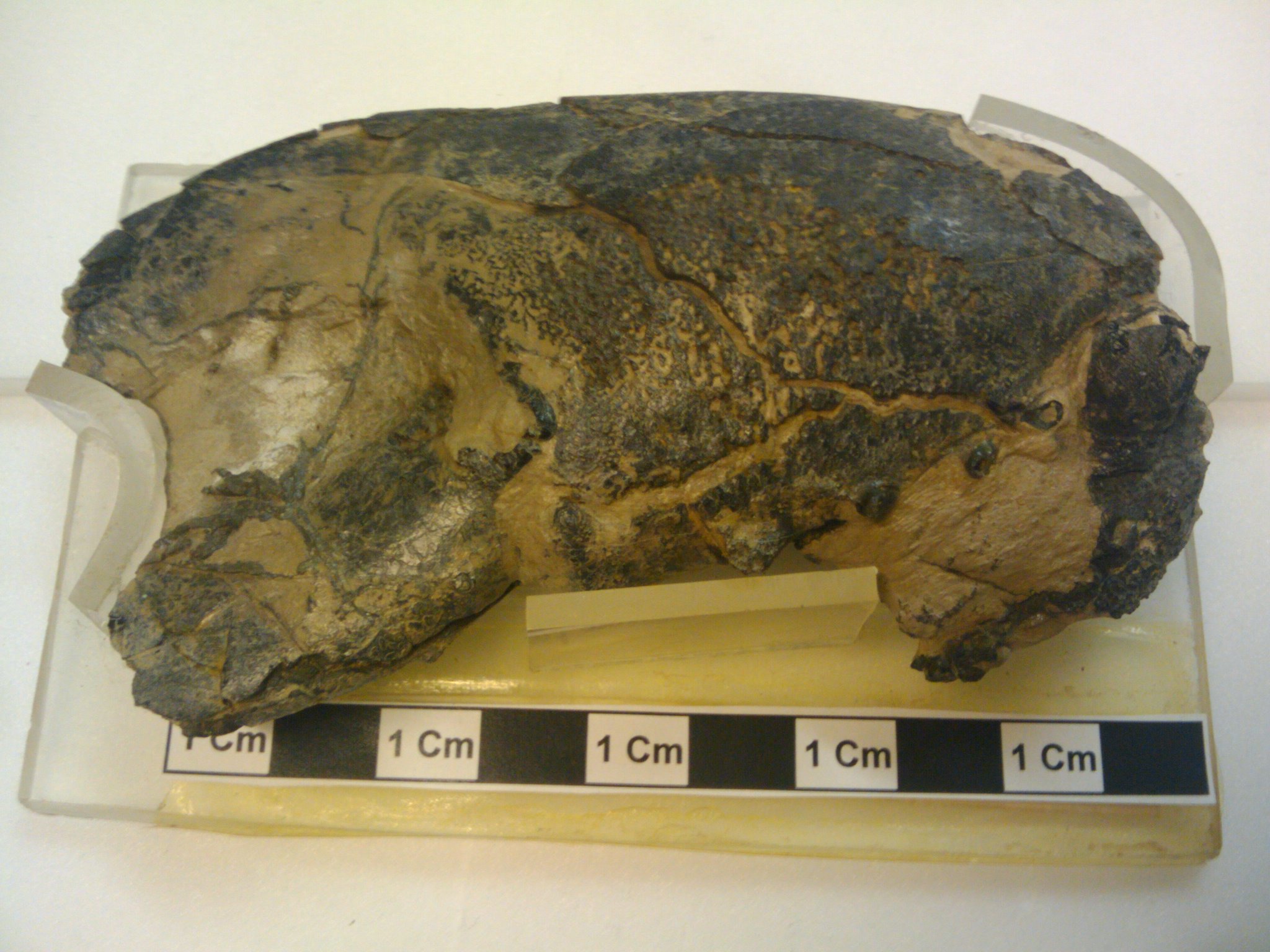
The question was “what is it and what’s it made of?” and it referred to this:

Scale in cm

Scale in cm

If you read the comments you probably worked out that it is indeed a Continue reading