
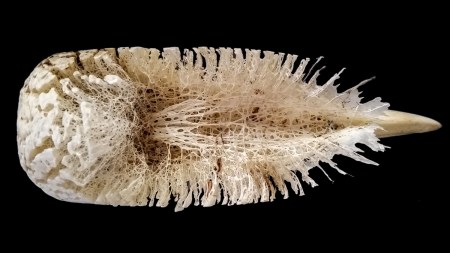
Last week I gave you a final mystery object from the Grant Museum of Zoology to help me identify:

Part of the reason for that was because I knew I’d be starting my new job in Dublin where there is a great collection of comparative bird osteology that I thought I’d get a chance to look at in time to write this post.
Alas, I’ve had a whirlwind first week at Dublin’s Dead Zoo and although I’ve managed to take a look at a few sterna, I’ve not had much time to really think about them or consider the identification. I’ve also had limited opportunity to follow up on everyone’s very useful suggestions, although I have tried to use them as a guide to narrow down my perusal of the comparative collections.
However, I did get a chance to take some quick snaps of a range of bird sterna with my phone, so I’m going to provide you with a veritable feast of breast bones to compare the mystery specimen against:


You can click on each image to see a large version – hopefully this will prove useful for future identifications!
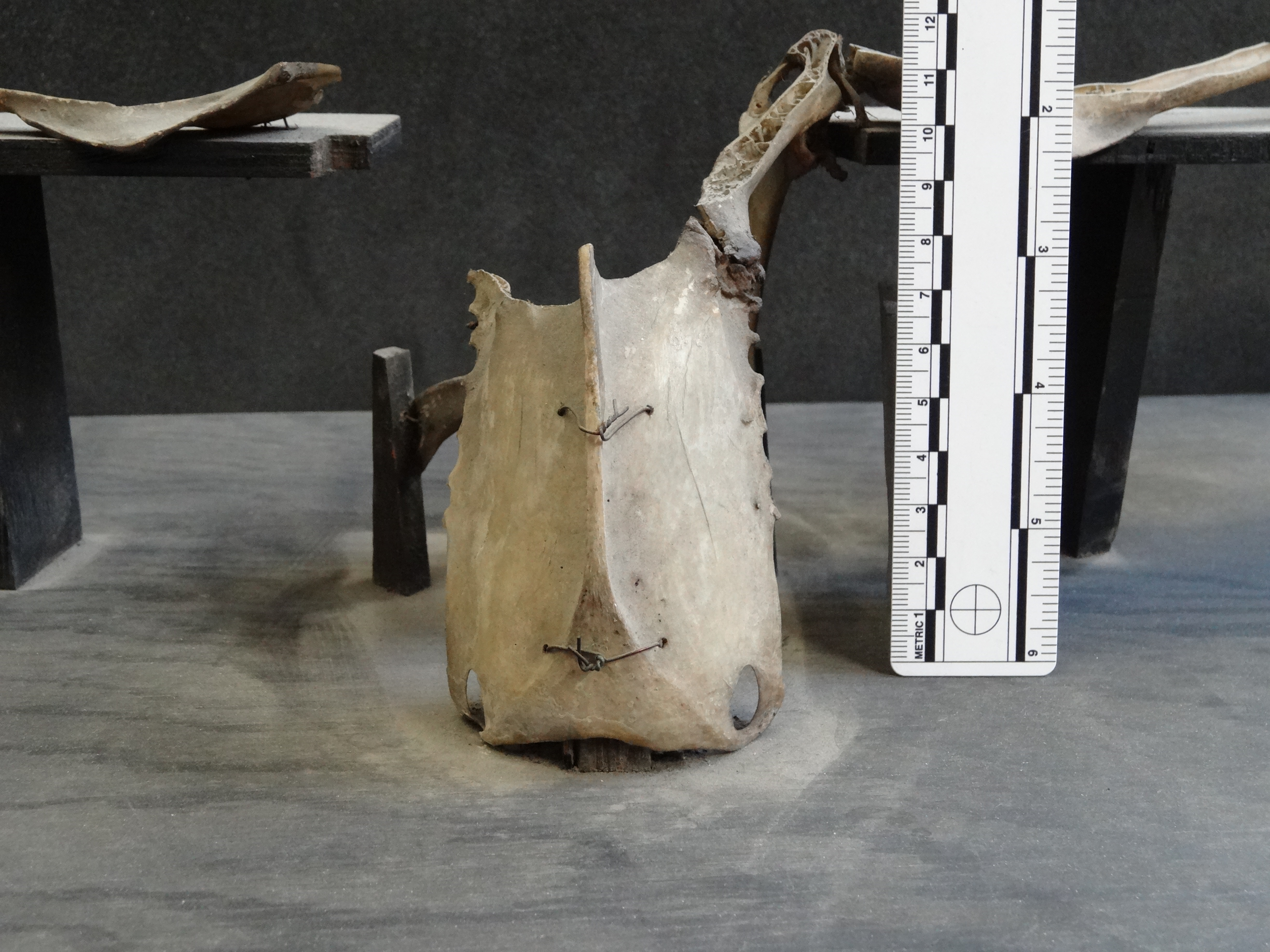
None of them quite match the combination of having perforations near the straight and truncated bottom of the mystery specimen, which sports a broad triangular flattening of the lower portion of the carina or keel. This may be a feature of the particular individual, or it might be diagnostic – herein lie the problem with using strongly functional features for identification, as a juvenile or zoo specimen may have differences due to developmental progress of lack of use of a feature. To illustrate, this keel from a Griffon Vulture from the Royal Zoological Society of Ireland shows a significant asymmetry (although it’s hard to see the deformation in the image due to the shadow – I’ll see if I can get a better image):
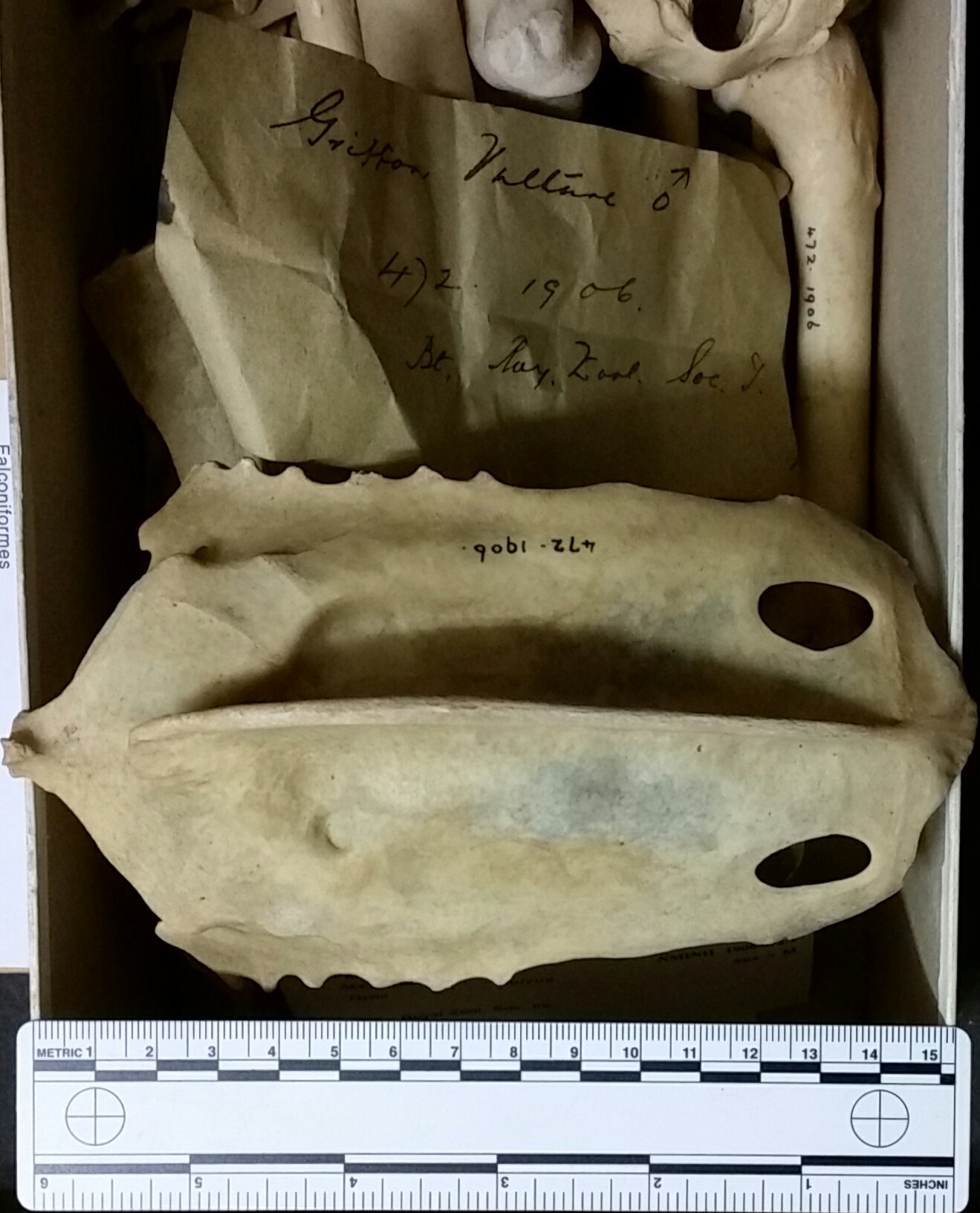
Griffon Vulture sternum
It’s also worth noting that the Grant specimen has had the top of the sternum cut off, so the overall shape is a little misleading. From comparing the sterna of a variety of bird groups I’m in agreement with the emerging group consensus that this is probably from a pretty large bird of prey.
Thanks for your input on this – I will check some more next week when I have a zooarchaeologist looking at the comparative bird collection and I’ll get the chance to dig out some more material.
Cheers!









 Zygoma