On Friday I gave you two pictures of a specimen from the Horniman Museum and asked you what it was:


Some good answers popped up but three of you managed to identify it as a Continue reading

On Friday I gave you two pictures of a specimen from the Horniman Museum and asked you what it was:
Some good answers popped up but three of you managed to identify it as a Continue reading
Friday again, so it’s time for another mystery object. Any idea what this is?
As usual, feel free to ask questions in the comments section below – I will do my best to answer. Good luck!
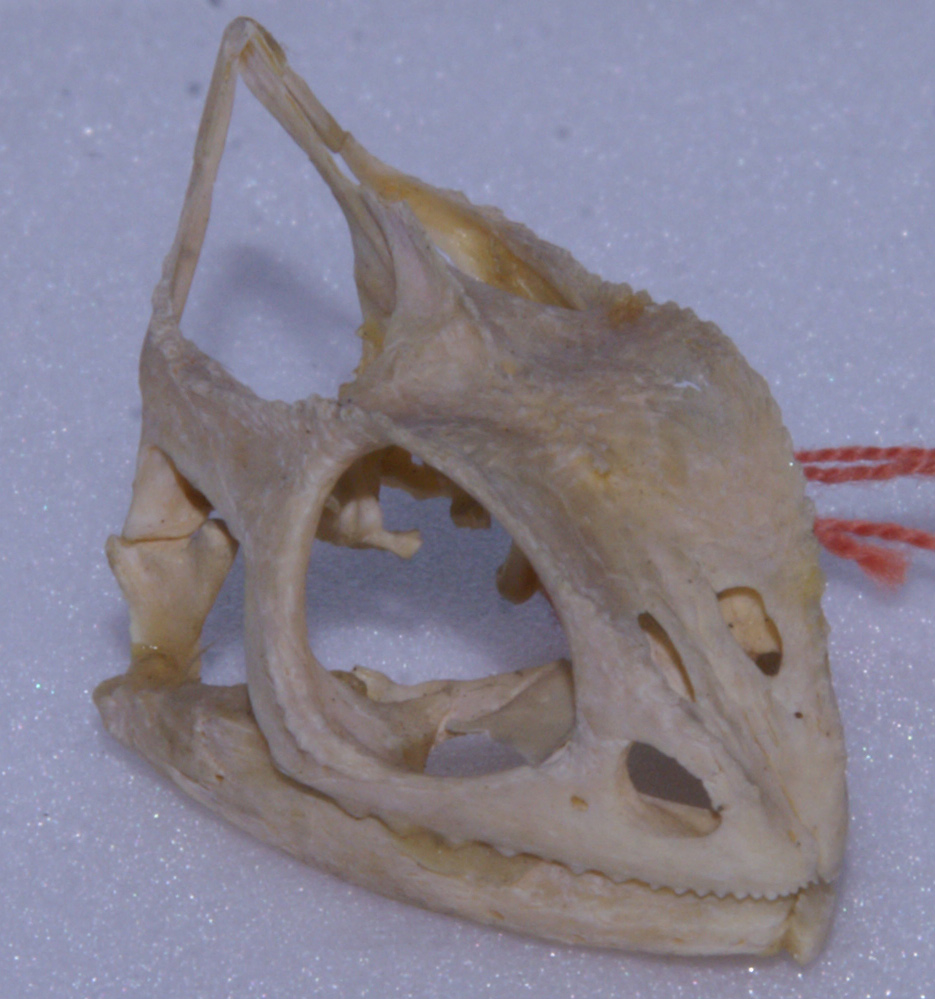
On Friday I presented you with this delightful looking creature’s skull:

Total length 2.5cm
and asked you what it was. SmallCasserole and Jim vied to reach the correct answer, with the physicist narrowly beating the biologist to the solution using brute force of reasoning (rather than attempting a comparative approach). However, Jim did step up and suggest a more specific answer – which despite some research over the weekend I am still not able to confirm. I need access to some more comparative material.
We know it is a Continue reading
Last week’s mystery object turned out to be very easy for most of you, so this week I have decided to give you something a bit more taxing:
Total length 2.5cm
What do you think this freaky looking skull belongs to? As usual, suggestions and any questions below in the comments section – I will try to provide useful responses.
Good luck!
For the sake of clarity, ‘inspiration’ is here defined as: ‘arousal of the mind to special unusual activity or creativity‘.
Inspiration is important; after all, every human cultural advance or achievement is the result of someone being inspired to do something new. I want to explore some of the ways in which people are inspired to undertake scientific investigation, but I also want to consider how the outcomes of science feed back and inspire broader culture.
Darwin himself was inspired by a wide variety of factors: people (family, friends, mentors, colleagues); books (e.g. White’s “The Natural History of Selborne“, Paley’s “Natural Theology“, Herschel‘s “Preliminary Discourse on the Study of Natural Philosophy“, Malthus’ “Essay on the Principle of Population“); cultural institutions (Museums, the Royal Institution, the Linnean Society, Zoological Gardens); places (Santiago, the Falkland Islands, Quiriquina, the Galapagos, Downe); hobbies (shooting, fishing, insect collecting, gardening, chemistry), and of course his experiences with nature (from earthquakes to earthworms, tropical forests to his Bromley garden). Interestingly he was not inspired by his schooling (neither at Mr Case’s grammar school nor Shrewsbury Grammar School) or University education (both in Edinburgh and Cambridge); for example, Darwin initially dismissed geology as dull based on his experiences at Edinburgh University under the tutelege of Professor Robert Jameson, yet 5 years later under the guidance of Professor Adam Sedgwick he became an avid geologist. Facts alone seldom inspire; it is how they are presented and how they can help us understand and formulate new ideas that can make them inspirational.
I’ve discussed fact-based science before (more than once), with the take-home message that it provides the best method that currently exists for checking what we think is true. Science is all about asking questions and finding ways to answer them by observation of the world around us (preferably in the controlled conditions of an experiment); the initial questions that scientists ask need to be inspired by something and answering that question takes motivation. Of course, absolutely anything might motivate a person to pursue a question, but some things will be more motivational than others.
Necessity is the mother of invention, which is why need will often provide the inspiration and motivation required for science to address a problem. Life and death situations are a prime example of how science has often found its inspiration and motivation – just look at the funding in science and it immediately becomes obvious that health, the military and agriculture are way up there. These things are directly relevant to people’s everyday survival – they are necessities.
However, there is more to science than catering to basic needs – science is about understanding our universe and thereby allowing us to better address the bigger questions that our over complicated human brains enjoy cooking up. Where once we had to make do with simple explanations that didn’t really work (like echoes are spirits shouting back at you, schizophrenics are possessed by demons, rainbows are Gods way of reminding himself not to flood the world again) now we can delve into the causes and reasons for the odd things we witness and we can turn that to our advantage. Understanding the deeper mysteries of the universe requires a lot of imagination, so it’s little wonder that the fringe of science tends to be populated by people who extrapolate beyond the fringe (this is where science fiction is born) or are being pushed back as the fringe expands (which is where homeopaths, psychics and those with a deep-rooted fear of change still linger).
Of course, each new development in science does more than push back a theoretical fringe; it inspires new ideas that lead to further developments. Science and technology move quickly and are seldom permitted to stagnate – which is good, because stagnation of ideas is what gives rise to dogma and suppression of alternative viewpoints.
For something to be inspirational it needs to open someone’s mind to a previously unknown world of possibilities, a conceptual space ripe for exploration. It needs to spark the imagination – with the possibility that the spark will ignite the interest and enthusiasm needed to fuel the exploration and investigation of the wider universe, of which we are a tiny part.
Happy Monday one and all! Last Friday was a busy day for me as it was the day of the prize-giving event for the winners of the photographic competition that was part of the series of Darwin bicentenary events I have been heading up at the Horniman. I expect I will blog about that in the very near future, but for now I will drop links to the BBC news and Guardian websites which are hosting slideshows of the winning and commended entries. As a result of all my busyness I had little time to field questions, but thankfully I didn’t really need to, since most people worked it out without much trouble.
This little fella is indeed a Continue reading
It’s Friday and that means it’s time for my 18th mystery object. This week I have picked a skull (I can hear the groans already), but it’s a cute one and when I asked Melissa (who is not a biologist) what it is she got it in three guesses. I asked her how she worked it out and her reply was “I thought about it and it worked”, which speaks volumes about the principles behind identification methods.
So, I invite you to think about this and see if you too can make it work:
So, what is it? Answers in the comments section below – I’ll also do my best to respond to any questions, but tomorrow is a busy day for me, so I might not get much opportunity. Remember – think about it and it might just work.
P.S. if you get it early on I might turn your answer white to give others a chance of working it out for themselves.
On Friday I gave you this mystery object:
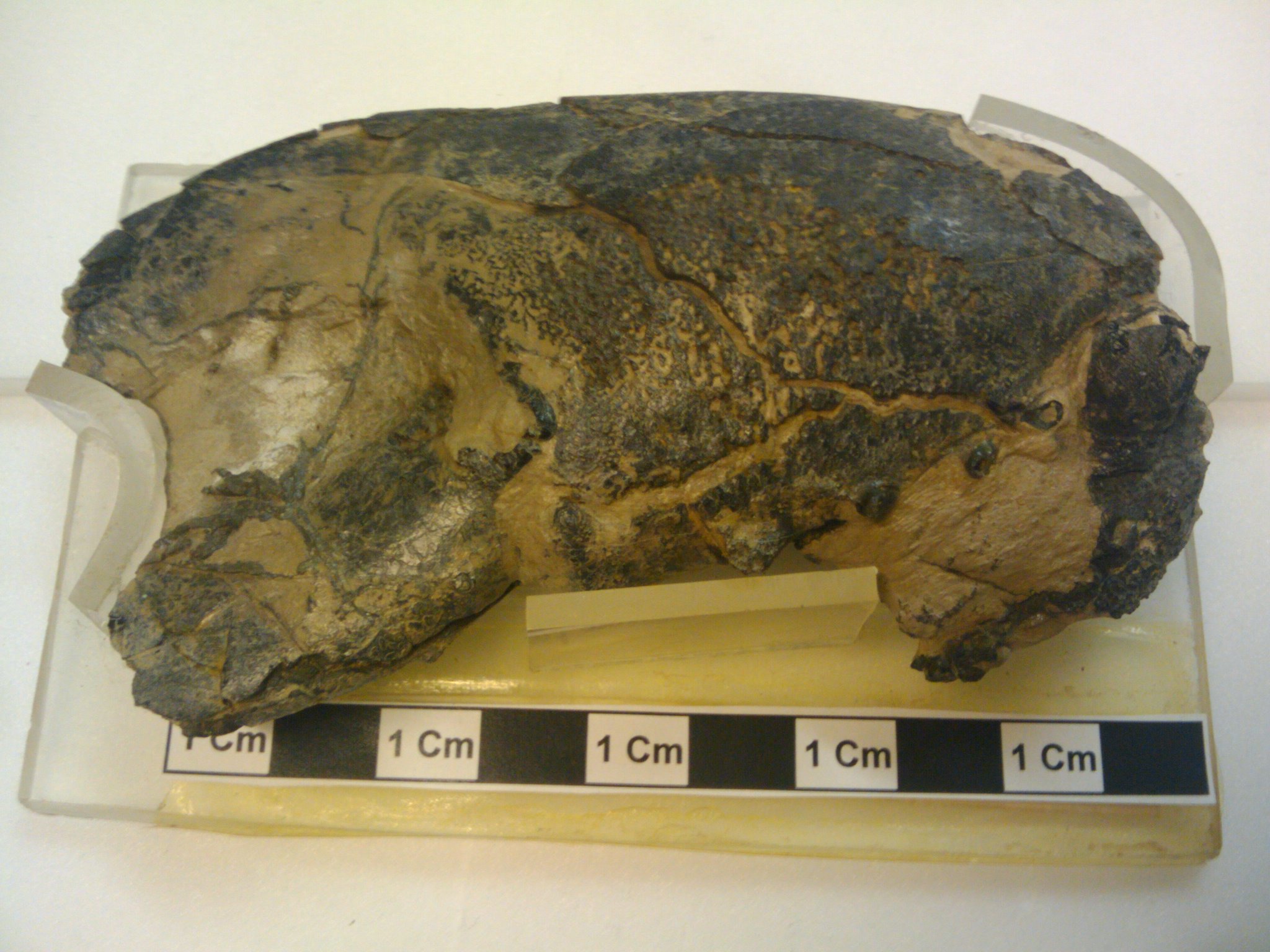
and after a long bout of Q&A Fia managed to get the correct answer – it is indeed a Continue reading
I can’t believe it’s Friday again – it’s all a bit hectic at the moment, so apologies for the late posting of this week’s mystery object.
Here’s a rather odd object from the Horniman’s collections – any idea what it might be?
As usual, post your answers below and if you have any questions I’ll do my best to answer them!
On Friday I gave you this image and asked you to identify what it is:
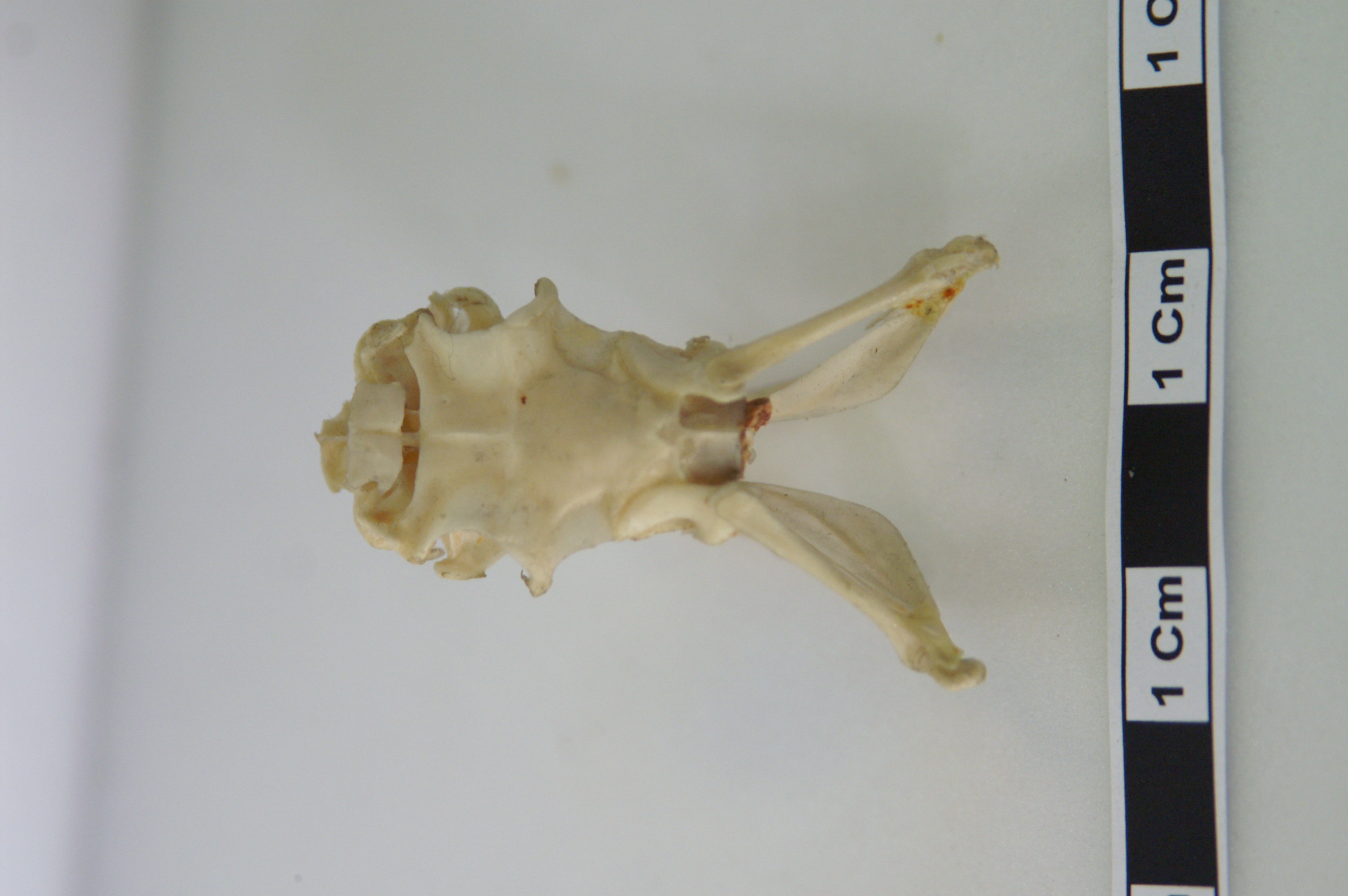
I am pleased to say that it led you a merry chase before we got to the correct answer – but very well done to Debi, Jim and especially Woolgatherer for getting there! It is indeed a Continue reading
I’ll keep it simple today and leave you free to ask questions about this week’s mystery object. Quite simply, can you work out what this is:
Comments and questions below – I will provide answers as I am able.
Good luck!
On Friday I gave you a palaeontological mystery object and asked you to choose what you thought it was from a poll:
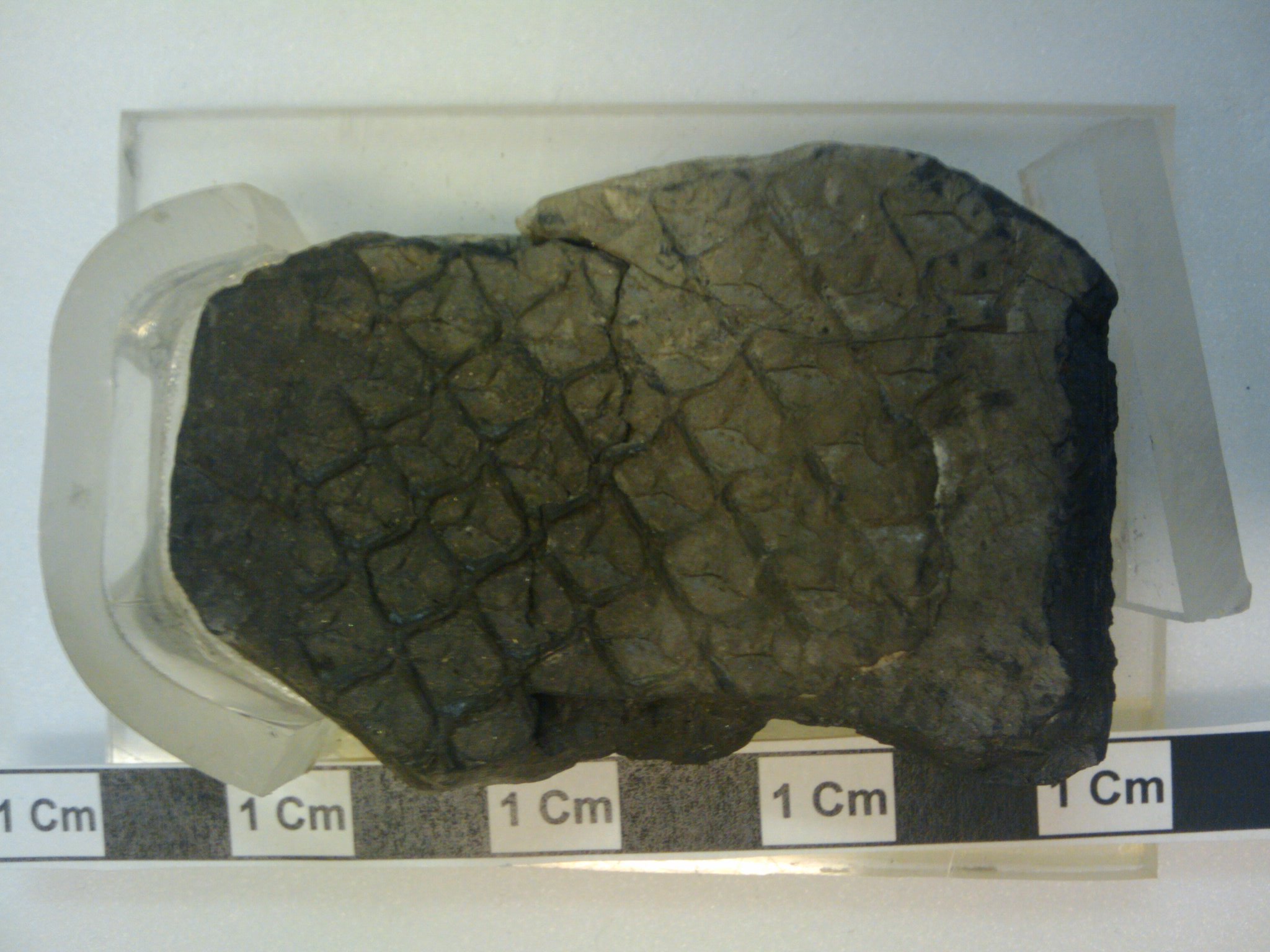
As it turns out, you did pretty well, with 60% of you selecting the correct category (with a couple of you making comments which went into greater detail). The object in indeed a piece of fossil Continue reading
It’s Friday again and I feel it may be time to introduce an object from the area of my original training (that’s palaeontology). Imagine that you’re me, searching through the drawers in a museum and you come across this:
What is it from? It looks scaly, but that’s about all you can tell from looking at it. Based on the scales, what do you think this is most likely to be?
Make your selection in the poll below – if you think you can give a more detailed description that those offered in the poll please add it in the comments section below.
Good luck everyone!
On Friday I gave you a bit of a change from museum specimens and presented you with this:
 Everyone managed to get the identification to at least within the Order level (it’s in the Orthoptera), which is good going when dealing with insects. The hard bit came down to whether it was a cricket or grasshopper. Now, the photo does not show the most important feature for distinguish between these two types of orthopteran: it’s the antennae length that gives it away (grasshoppers have short antennae, crickets have long antennae). Colour is not really important (sorry KateKatV).
That said, the vivid green colour, speckled appearance, lack of wings and characteristics shape of the ovipositor (curved bit at the back which means this is a female) are a give-away for those who are familiar with this particular beastie (and for those who use Google image to help with their identifications). It is in fact a Continue reading
Last week I let Harrison pick an object that proved a bit too difficult (although perhaps I could have been more generous with the clues I gave…). This week I am giving you something that is actually alive and commonly found in gardens in the UK – so it should be a doddle to identify:
Simple questions – what species is it (binomial name gets you kudos) and what sex is it?
Answers in the comments section below – but I’m afraid I won’t be able to respond to comments this week. Good luck!
Crumbs, it appears that last Friday’s object stumped everyone! Harrison certainly chose a difficult one…
 SmallCasserole came closest, asking:
Is it antler or horn?
but my response:
Antler or horn that thick?
was perhaps too ambiguous – because there is a horn out there that is this thick, that of a Continue reading
Today’s mystery object has been selected by a very helpful work experience volunteer who was assisting me in the collections yesterday, so my thanks to Harrison! He is rather more cruel than me, so there’s no multiple choice on this – we just want you to see if you can work out what it is. I will attempt to answer any questions (time permitting) since our broadband seems to have been sorted out at home.
So here it is:
Still no internet, so this is drafted on my phone. Well done to those of you who worked out that Friday’s object was indeed a rattle-snake’s tail.
I will expand on this answer, once I can use a computer to type comfortably!
Right, internet is finally working again, so here’s a (slightly) fuller answer to what this is:

As was mentioned before, this is indeed a rattlesnake’s tail. Rattlesnakes have a bad reputation for being aggressive and dangerous, but it should be remembered that they have a rattle in their tail to warn off predators and large unwary animals that might trample them – so at least they give fair warning.
There are quite a few species of snakes that make use of a rattle on their tail and this one comes (apparently) from Crotalus durissus, a South American pitviper that is quite dangerous due to their powerful neurotoxic venom (unlike the cytotoxic venom of the North American diamondback rattlesnake).
The rattle is formed when the snake sheds its skin – a section of the old skin Continue reading
I am still without internet at home, so apologies for slow responses to comments and the lower quality of my recent posts.
This Friday’s mystery object is pretty straight-forward, a simple case of ‘what is it?’
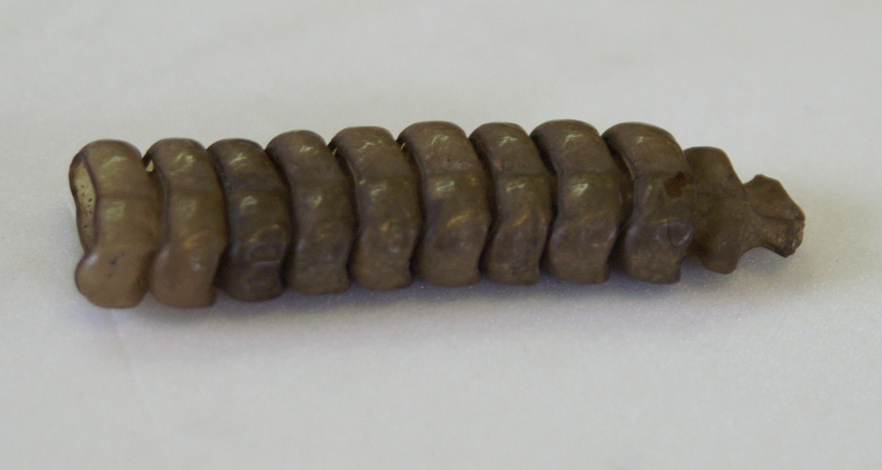
If you think you know what this is just leave a comment below – I will attempt to respond to any questions when (and if) I am able, but I can’t make any guarantees I’m afraid.
Good luck!
Last week I gave you some detective work – I asked to work out what this was:

Unsurprisingly to me, most of you worked it out pretty quickly – it is indeed a Continue reading
 Zygoma
