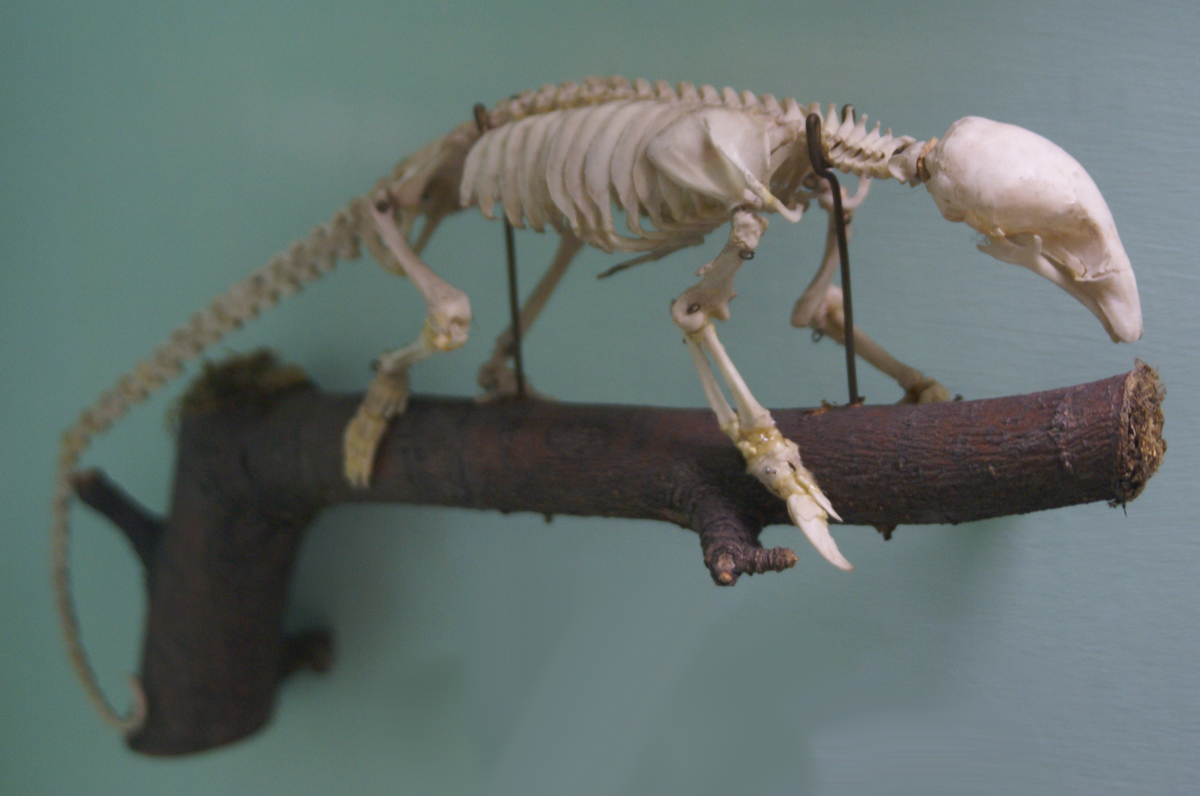
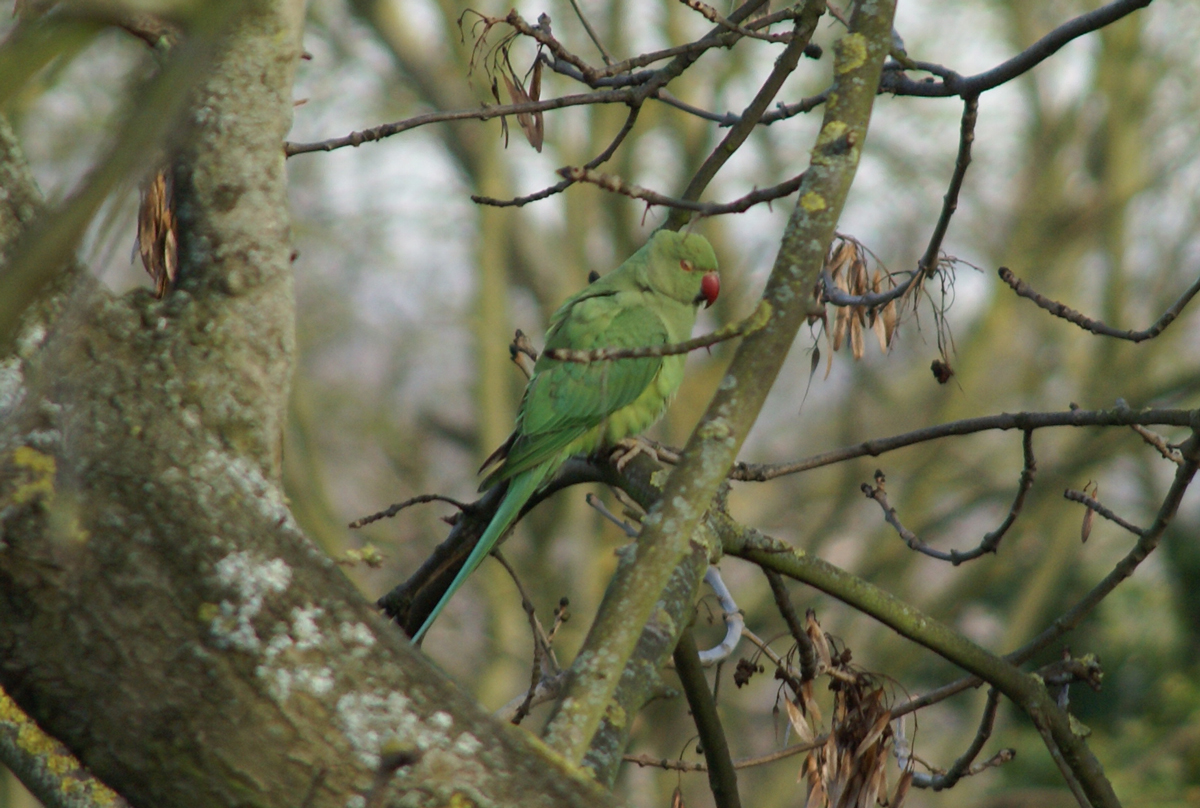
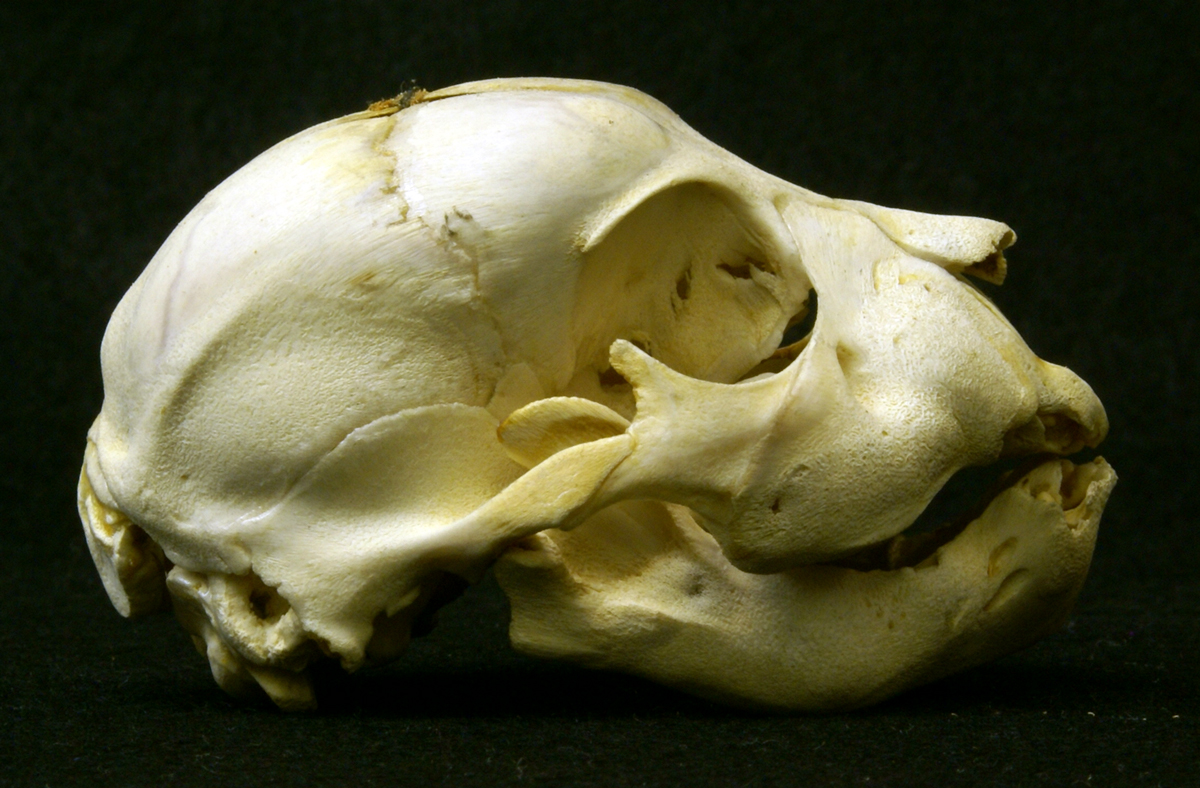
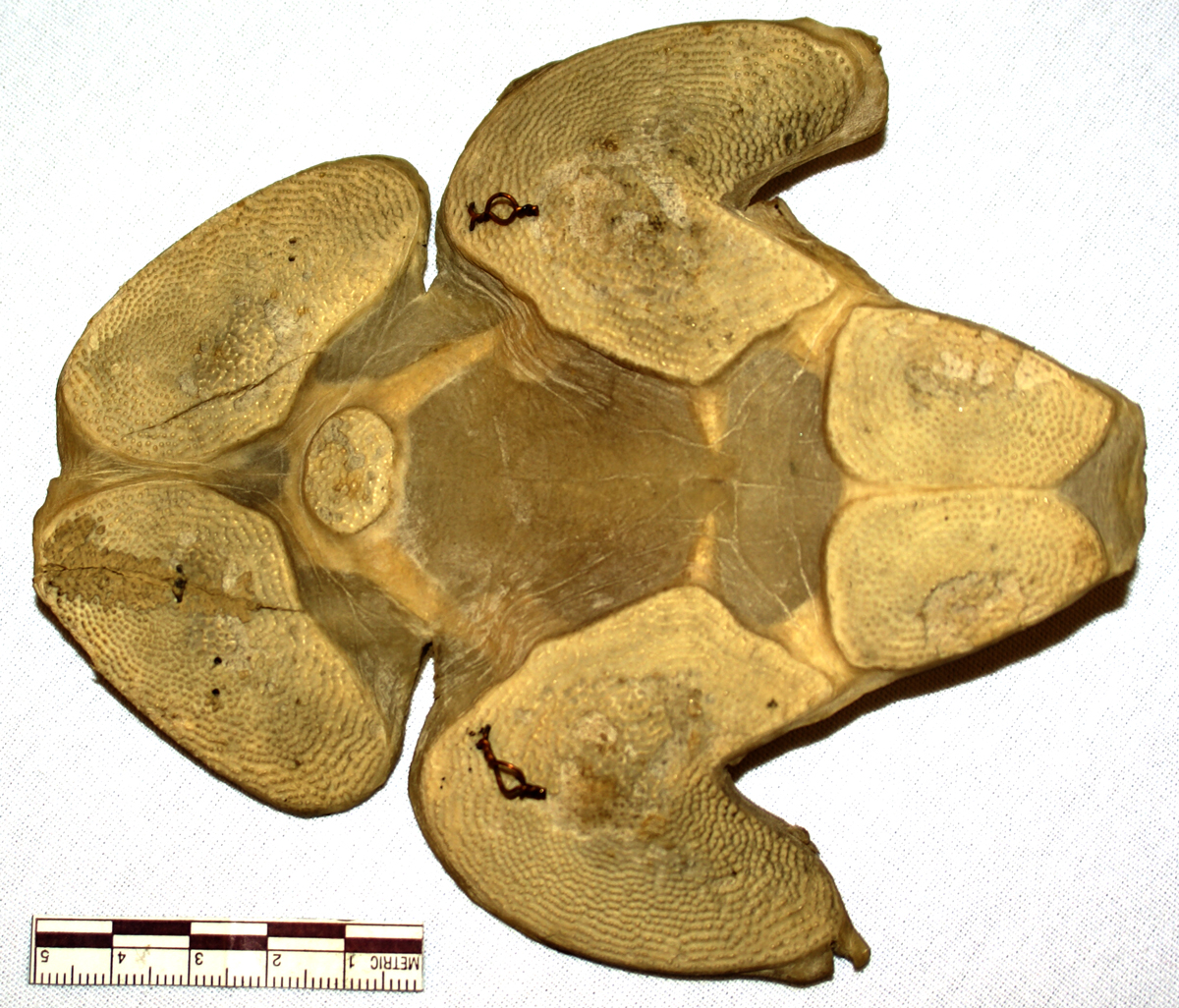
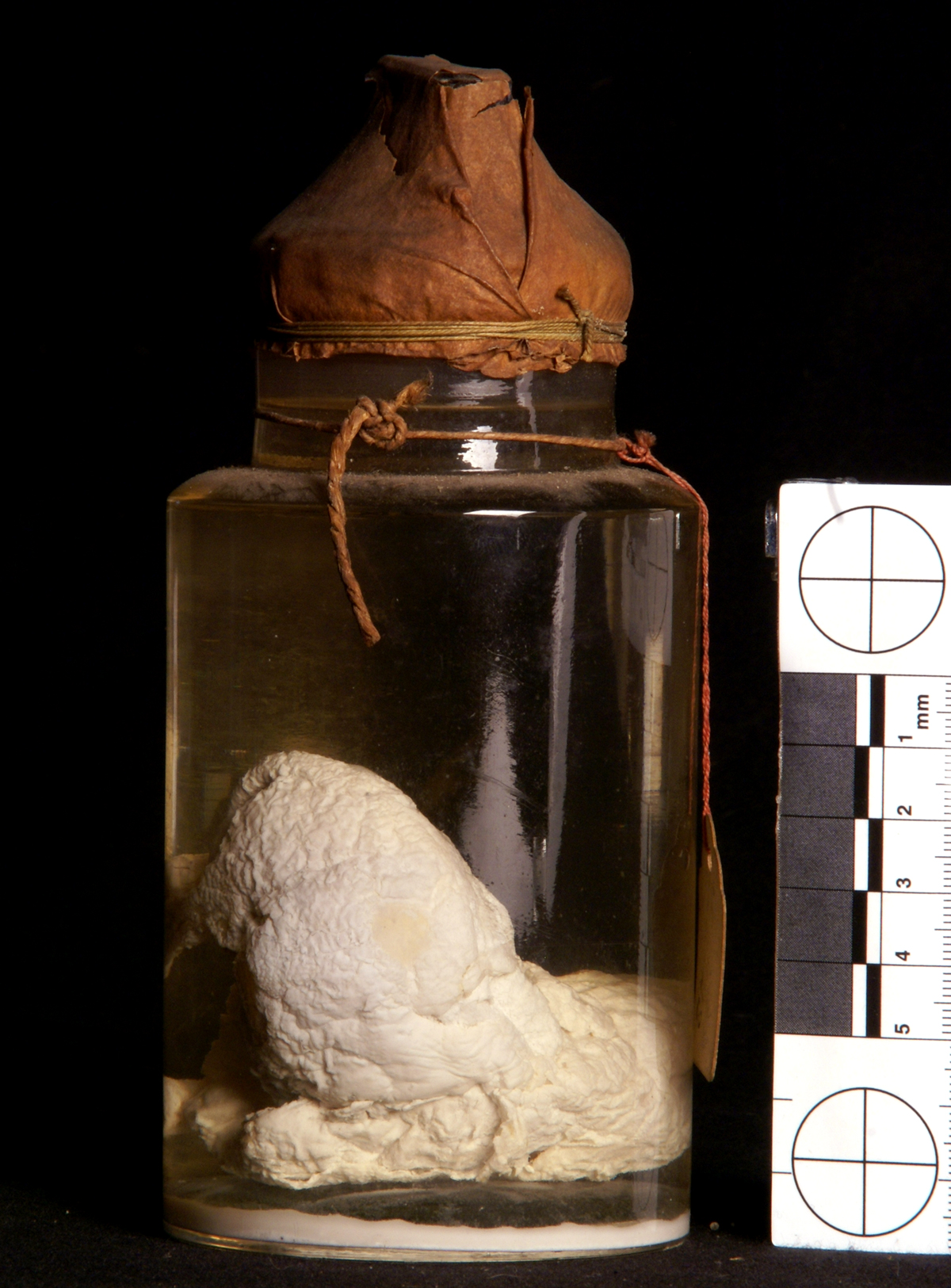
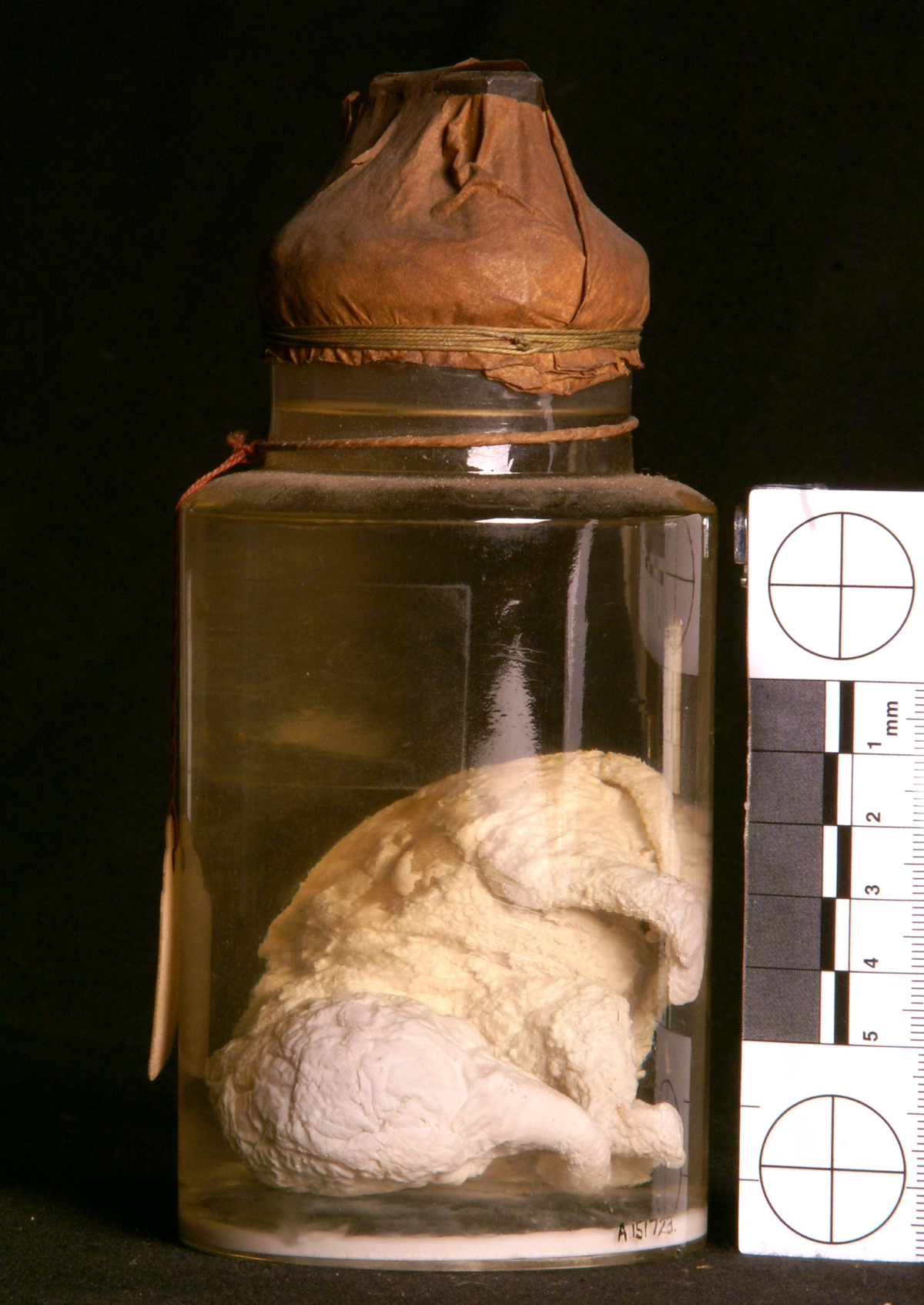
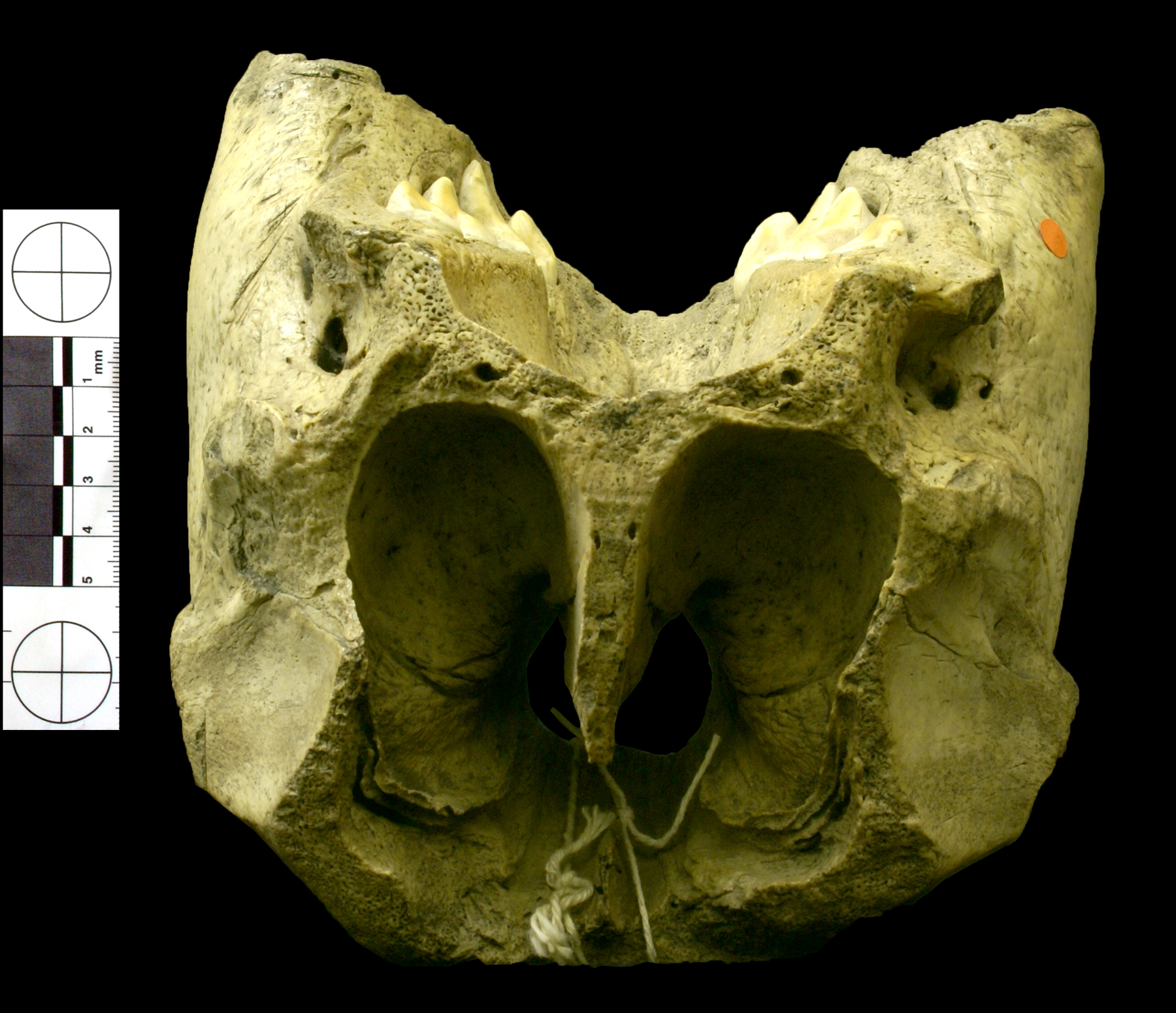
Friday mystery object #84

This week I have a really tough one for you. It’s a specimen I found in our collections with a tentative identification that I was unconvinced by. I followed my instincts and they led me not only to a more accurate identification, but also to the rest of the specimen, from which it had been separated before they even arrived at the Horniman. Can you work out what it is?

Please feel free to ask questions and make observations or suggestions in the comments section below and I’ll do my best to respond. Good luck!

Friday mystery object #83 answer

I apologise in advance for providing a slightly short answer to this week’s mystery object – I found myself a bit strapped for time between responding to Intelligent Design types trolling my blog here and at Scientopia, writing a talk for Skeptics In the Pub tomorrow evening and trying to sort out my laptop power lead after it broke (now fixed thanks to the helpful staff at Maplins who gave me the parts I needed to make repairs).

On Friday I gave you this object to identify, thinking that it might be a fun challenge:

As it turns out it seems to have been a good one, since most of you managed to work out what it’s from. There were some great hints dropped and I think that the comments proved to be a useful resource for those who weren’t sure, but they didn’t detract too much from the fun of working it out. Thanks to everyone for being awesome!

The first to correctly identify both the type of bone and the species it came from was Cromercrox, who gave a great rationale for his suggestion: Continue reading

Evolving Ideas and Intelligent Design

Well, it seems that my earlier post on Darwin has ruffled some feathers in the Intelligent Design (ID) camp, so they’ve been trolling the comments section on my personal blog. This post started out as a response, but I decided to expand it to include some of the context surrounding Darwin’s work.

A comment by VMartin

…One wonders why no one noticed “natural selection” before. And there were ingenous minds in the history! One answer might be this – it was never observed because it doesn’t exist. Darwin implanted this speculation there. And “On the origin of species” reads sometimes like comedy. One should try to count how many times Darwin used words like “which seems to me extremely perplexing” etc….

One reason why some scientific theories have been slow to come to light

One reason why some scientific theories may have been slow to come to light

It’s interesting how ‘simple’ natural mechanisms and systems can take longer to be acknowledged than one might have thought. Heliocentrism is another example of something that now seems very obvious, but was historically slow to be recognised (and is still not recognised or not known about by some). It’s easy to blame organised religion for the suppression of such observational truths about the universe, since challenges to traditional belief were seen as heresy and dealt with accordingly, but there’s far more to it than that.

Let’s set the scene – Darwin’s formative years were tumultuous with regard to sociopolitical events. The Napoleonic wars drew to an end with the Battle of Waterloo when Darwin was six years old, the Peterloo Massacre occurred and the Six Acts were drawn up by the Tories to suppress radical reformers when he was ten – reflecting the ongoing social division between the establishment and the public. When Darwin was in his twenties the power of the strongly traditional British establishment finally began to wane, when the Whigs came to government allowing the 1832 Reform Act and the 1833 Slavery Abolition Act to be passed. There was also the devastating Great Famine in Ireland when Darwin was in his thirties and all of this was set against a background of the Industrial Revolution, which was providing the impetus for science to play an increasingly important role in society.

Peterloo Massacre

This meant that Darwin’s work was by no means formulated in intellectual isolation. Theories of evolution had been proposed 2,400 years previously, but they were poorly developed. Natural philosophers like Darwin’s own grandfather Erasmus and Jean-Baptiste Lamarck raised the issue of evolution at around the time of Darwin’s birth, but the mechanisms for evolution were either ignored or flawed. Evolution was an established topic of discussion and publication by the time Charles Darwin came onto the scene, with people like Robert Grant being more radical on the subject than Darwin found palatable in his early manhood. Despite this interest, the mechanism of evolution remained elusive – perhaps unsurprisingly, since the academic community addressing natural sciences was largely composed of members of the clergy and the natural theology of the time was seen as being mechanism enough.

But a literature base that was to inspire non-traditional hypotheses was also developing at the time – Vestiges of the Natural History of Creation in particular offered an alternative view that was seen as too radical by many – clearing a path for subsequent works that challenged orthodox views.  Given this context, it is perhaps unsurprising that Darwin and Alfred Russell Wallace converged on the same premise at the same time. In short, the ideas evolved to fit the intellectual and social environment. The same has been true of other discoveries and inventions where there was a requirement for the right intellectual groundwork to be laid in advance. This groundwork is required before a robust theory can take root – and Natural Selection is a component of the robust theory of Descent with modification.

Intelligent Design

The Intelligent Design agenda

The critiques I have seen of evolutionary theory  have come from people who quite clearly don’t understand it – and such critiques tend to rely on statements of incredulity rather than a strong factual base. No well-supported alternative hypotheses have been constructed or presented and a lack of understanding hardly counts as a robust refutation of a well supported theory.

An accusation by IDers is that ‘Darwinists’ (N.B. I don’t know anyone who would call themselves a Darwinists following the New Synthesis) stick with Natural Selection because they are atheist. I think I see the real agenda emerging here, particularly when you see evolution as a theory being conflated with just one of the mechanisms involved. After all, Natural Selection is not the only mechanism involved in evolutionary adaptation and speciation – there are also other factors like hybridisation, horizontal gene transfergenetic drift, perhaps some epigenetic influences and artefacts of EvoDevo processes. But these factors are still constrained by the simple fact that if they are selected against, they will not be perpetuated.

John A. Davison left this comment on a previous post:

Natural selection is a powerful force in nature. It has but one function which is to prevent change. That is why every chickadee looks like every other chickadee and sounds like every other chickadee – chickadee-dee- dee, chickadee-dee-dee. Sooner or later natural selection has always failed leading to the extinction of nearly all early forms of life. They were replaced by other more prefected forms over the millions of years that creative evolution ws in progress…

Salamander ring species (picture from Thelander, 1994)

Salamander ring species

First and foremost, the suggestion that Natural Selection prevents change is erroneous – change will occur if there is a change in the environment and/or if beneficial mutations arise in a population (tell me that mutations don’t happen – I dare you…). The obvious response to the next statement is that I can think of six different ‘chickadee’ species, with an additional three subspecies (and this is ignoring numerous other very similar members of the Paridae), all are similar, but all are different – so the statement makes no sense as it stands. Getting to the meat of what is being implied about the Creationist interpretation of species, another bird provides a good example to the contrary. The Greenish Warbler shows a distinct pattern of hybridising subspecies across their vast range, until they form reproductively isolated species at the extreme ends of their range, where they happen to overlap yet not hybridise (a classic ring species [pdf of Greenish Warbler paper]). This is a well-known example of how genetic variation can accrue and give rise to new species without any supernatural intercession.

Another comment by VMartin

…But no wonder that Darwin considered “natural selection” for such a complicated force. Even nowadays Dawkins speculates that NS operates on genes, whereas E.O.Wilson has brushed up “group selection” recently (citing of course Darwin as debeatur est .

So may we “uncredulous” ask on which level “natural selection” operates?

As to this question about the level on which Natural Selection operates, I thought the answer was pretty obvious – it operates at every level. Change the focus of Natural Selection from passing on genes to the only alternative outcome – the inability to pass on genes. It doesn’t really matter which level this occurs at or why – be it a reduction in reproductive success when not in a group, or a deleterious single point mutation – if it happens then Natural Selection can be said to have occurred. Being ‘fit’ simply means that an organism has not been selected against.

There’s a lot more to modern evolutionary thought than Darwin’s key early contribution, but Darwin is still respected because he was the first to provide a viable mechanism by which evolution is driven. This mechanism has helped make sense of an awful lot of observations that were previously unaccounted for and, moreover, evolution has been observed and documented on numerous occasions [here’s a pdf summary of some good examples].

I fail to see why Intelligent Design has been taken seriously by some people – it relies on huge assumptions about supernatural interference (so it fails to be a science) and I have as yet never seen a single piece of evidence that actually supports ID claims. The only research I have seen mentioned by proponents of ID are old, cherry-picked studies that report a null result from an evolutionary study – this is not the same thing as support for ID, as anyone who can spot the logical fallacies of false dichotomy and Non sequitur (in particular the fallacy of denying a conjunct) will tell you.

Intelligent design as a scientific idea

Intelligent design as a scientific idea

I like to keep an open mind, but as soon as I see logical fallacies being wheeled out I lose interest in getting involved in the discussion. This may be a failing on my part, because I should probably challenge misinformation, but quite frankly I don’t have the time or the patience – much as I hate to stoop to an ad hominem, my feelings on this are best summed up by the paraphrase:

when you argue with the ID lot, the best outcome you can hope for is to win an argument with the ID lot

and my time is far too precious to waste arguing with people who ignore the arguments of others and construct Straw man arguments based on cherry-picked and deliberately misrepresented information. I have no problem with other people believing in a god, but please don’t try to bring any god into science (and heaven-forbid the classroom) – since it is neither necessary nor appropriate.

Friday mystery object #83

This Friday I’ve decided to give you a challenge in the form of one of my favourite interesting animal bits. This mystery object is one that a few people in the know will identify immediately, because it is so distinctive, but anyone who hasn’t seen one before is likely to struggle a bit.

Do you have any idea what type of bone this is and which species it came from? (N.B. it’s the same bone photographed from different sides.)

For those few that are in the know perhaps you could drop hints rather than blurting out the answer and for the rest of you, please feel free to ask for clues – I will do my best to offer guidance throughout the day.

Good luck!

Friday mystery object #82 answer

Apologies for the late posting of this answer – I was travelling back from Ireland yesterday and didn’t manage to get this post anywhere near as complete as I was hoping.

On Friday I gave you this mystery object to identify:

Pretty much everyone recognised it as being the skull of a dog or dog-like animal, but the large size of this skull (27cm long) caused some confusion. Quite a variety of breeds were suggested, but Rachel, Jamie Revell and Jake all ended up going for it being a   Continue reading

Greetings Scientopians and Happy Birthday Charles Darwin

I’m going to be at Scientopia as a guest blogger for the next couple of weeks, so I hope you enjoy my scribblings about my interests and my work as a scientist in a cultural institution – an incongruous but rewarding experience.

The Friday Mystery Object will continue as usual and I will mirror much of the content here. My first post is just a brief introduction and a belated ‘Happy two hundred and second Birthday’ to Charles Darwin for yesterday – check it out here.


Friday mystery object #82

This Friday I’m going for a mystery object that I’m sure you will all identify to species without any problem – it’s pretty big and pretty distinctive. Hopefully this object will give me a chance to write an interesting answer on Monday, so I can use it as a stand-alone post for a guest blogging spot I’m doing for Scientopia for a couple of weeks starting on Sunday. I’m intending to use this guest-spot to get myself motivated to tackle the various posts I’ve been wanting to cover for some time now.

Unfortunately, I’ve managed to time this slot quite badly, since I also need to prepare for a SITP talk that I’m giving on Monday 21st Feb and a Cafe Scientifique on the evening of Thurday 24th Feb (if you missed the last one, here’s the write-up). It’s going to be a busy couple of weeks…

On to the reason you came here – the Friday mystery object:

Any idea what this is?

As usual you can put your suggestions, comments and questions below and I’ll do my best to offer guidance. Good luck!

Friday mystery object #81 answer

On Friday I gave you this object to identify:

I thought it would prove quite straightforward for my astute audience and I was not disappointed. As usual Jake was the first to comment and he was spot on when he said:

I think it is some sort of big bird, it’s the braincase and […] the ear

The big bird Jake suggested was an Emu, which was slightly off as was CopilasDenis‘ suggestion of Cassowary and Cromercrox‘ suggestion of Rhea (although they all correctly spotted that this piece of skull was from a ratite). But Dave Godfrey finally picked the last remaining living ratite and the correct answer when he suggested it was  Continue reading

Friday mystery object #81

This Friday I am going to give you what I consider a fairly easy one, because I stumbled across it on Thursday in a box of ‘miscellaneous bone’ and I instantly thought I knew what it was. Having checked my hunch I thought I’d give you the opportunity to have a go at working it out:

Of course, I will be here to offer some guidance if you run into any difficulties (after all, not many of you have reference material to hand) – so put your questions, comments and suggestions in the box below and I’ll do my best to answer. Good luck!

Friday mystery object #80 answer

On Friday I gave you this sectioned bit of a critter as the mystery object:

A slightly trickier one than usual, so I wasn’t surprised at the range of suggestions – ranging from a vertebra to a Narwhal tusk. Jack Ashby got in first with a tentative stab at the right answer when he said ‘sawfish maybe?‘ a suggestion supported by Carlos Grau. It is indeed part of the rostrum (beak or nose) of a  Continue reading

Friday mystery object #79 answer

On Friday I gave you this anthropological mystery object to identify, asking you to tell me what it is, where it’s from and what it’s made of:

Well, OdenedO worked out that it is a skirt (or apron) and Sam Kelly and Julie Doyle both correctly suggested that it was African in origin. Jake and Julie Doyle suggested that it could be ivory and Sam Kelly specified that it could be Hippopotamus teeth (although this suggestion was discarded in favour of horn).

So a bit of a group effort, but you pretty much got there – it’s an African (Ethiopian in fact) skirt/apron made using ivory, probably Hippopotamus incisors. That’s my current preferred hypothesis based on the photo – but I need to check the specimen myself to be entirely sure.

Ivory (teeth as a workable material) is an interesting area for us in the museum trade, since most kinds are controlled by the Convention on International Trade in Endangered Species of Wild Fauna and Flora (CITES). This means that objects made of certain types of ivory need to have licenses for import and export, or for any commercial use, unless they can be shown to have been made before 1st June 1947.

There are various characteristics that can help identify different ivories – the best known being the presence of Schreger lines in Elephant ivory:

But there are other clues that can indicate which species an ivory has come from – unfortunately I don’t have time or the appropriate images to go into detail here, so I will pull together a post on identifying ivory as soon as I can. For now, here’s a link to a useful pdf article on this very topic.

Back to the skirt/apron – anthropology isn’t my area of expertise, but to the best of my knowledge this sort of attire is largely an indicator of status rather than a practical piece of clothing. In other African cultures beaded aprons are given to young women when they marry, so this may fulfil a similar purpose. I will try to track down some more on this – I think it may be included in one of the Horniman’s planned exhibitions in the next couple of years, so there may be a lot more information forthcoming. I’ll keep you posted.

Friday mystery object #79

This week I’m going to give you a break from skulls, here’s an Anthropological mystery object for you to identify (as suggested by Emilia, who is one of our excellent Conservators):

Any idea what it is, where it’s from and what it’s made of?

As usual you can leave your suggestions, observations and questions in the comments section below and I’ll do my best to respond. Good luck!

Friday mystery object #78

This week I’m sticking with small skulls. Rather different to the last one – any idea what it might have belonged to?

As always, you can click on the image for a larger sized version that may help. Speaking of help I will also do my best to answer any questions you may have – just put your comments below. Good luck!

Friday mystery object #77

After a few weeks away from the Horniman’s store, I’m finally back amongst the collections and working with the skulls. That means that this week I can give you a nice mammal skull to identify:

Any idea what this skull belonged to?

As usual you can put your questions, observations and suggestions in the comments section below. Good luck!

Friday mystery object #76 answer

Happy New Year!

On Friday I gave you these two bones to compare, asking whether you thought they were from the same species.

There were some excellent responses with useful observations reflecting some of the difficulties faced when trying to identify postcrania. Unlike skulls which are composed of several bones forming a composite structure, including highly diagnostic elements (teeth for example), postcrania tend to be a bit more limited in the number of diagnostic characters visible. That said, the shape of the articulation points, the grooves and crests from tendons and ligaments, the scars from muscle attachments and the holes from nerves and blood vessels can all provide clues as to what a bone belonged to.

Size can also provide a clue, but as pointed out by Debi Linton:

…there’s a size differential, that could nevertheless be intraspecific variation…

This is a valid point – size can vary within a species for all sorts of reasons, the most obvious being the age or sex of the animal. However, in this instance the size difference is accompanied by quite a substantial set of differences in shape that go beyond what you would expect to find within a species. So well done to Dave Godfrey, Jamie Revell and Jake for making that deductive leap! That said, Debi also deserves congratulations for identifying the differences and then exercising caution in the light of insufficient information – it may be unsatisfying to say I’m not sure, but it’s often the only truly correct answer available.

That said, I’m a little surprised that nobody worked out what these femurs were from. The bottom one (B) has a small area of damage on the proximal end (the end nearest the body), which shows a honey-comb structure in the bone beneath. Jake also spotted that the angle at which these femurs would articulate with the hip would be unlike a deer – or other mammal in fact. These are the femurs of two species of bird – very big birds for that.

Any idea which species?

2010 in review

The stats helper monkeys at WordPress.com mulled over how this blog did in 2010, and here’s a high level summary of its overall blog health:

Healthy blog!

The Blog-Health-o-Meter™ reads Wow.

Crunchy numbers

Featured image

About 3 million people visit the Taj Mahal every year. This blog was viewed about 29,000 times in 2010. If it were the Taj Mahal, it would take about 4 days for that many people to see it.

In 2010, there were 121 new posts, growing the total archive of this blog to 192 posts. There were 137 pictures uploaded, taking up a total of 118mb. That’s about 3 pictures per week.

The busiest day of the year was March 26th with 2,158 views. The most popular post that day was Friday mystery object #36.

Where did they come from?

The top referring sites in 2010 were twitter.com, facebook.com, Google Reader, iconfactory.com, and mail.live.com.

Some visitors came searching, mostly for zygoma, king kong, zygoma paolo, classical conditioning cartoon, and conclusions.

Attractions in 2010

These are the posts and pages that got the most views in 2010.

1

Friday mystery object #36 March 2010
47 comments

2

Back from extinction March 2010
3 comments and 1 Like on WordPress.com,

3

Friday mystery object #53 July 2010
74 comments

4

Friday mystery object #52 July 2010
50 comments

5

What is science? September 2009
3 comments

Friday mystery object #76

It’s the last day of 2010, so I thought I’d see the old year out by trying something a little bit different for this week’s mystery object. Rather than giving you one object and asking for an identification, I’m giving you two and asking whether they are from two individuals of the same species or if they are from two different species. Obviously there is kudos riding on identifying the species involved as well.

So here you go – can you spot any differences between A and B and are they enough to suggest that A and B are from different species?

As usual, please add your observations, questions and suggestions below and I’ll do my best to provide what information I deem appropriate. Good luck and a very Happy New Year!