Friday mystery object #218 answer

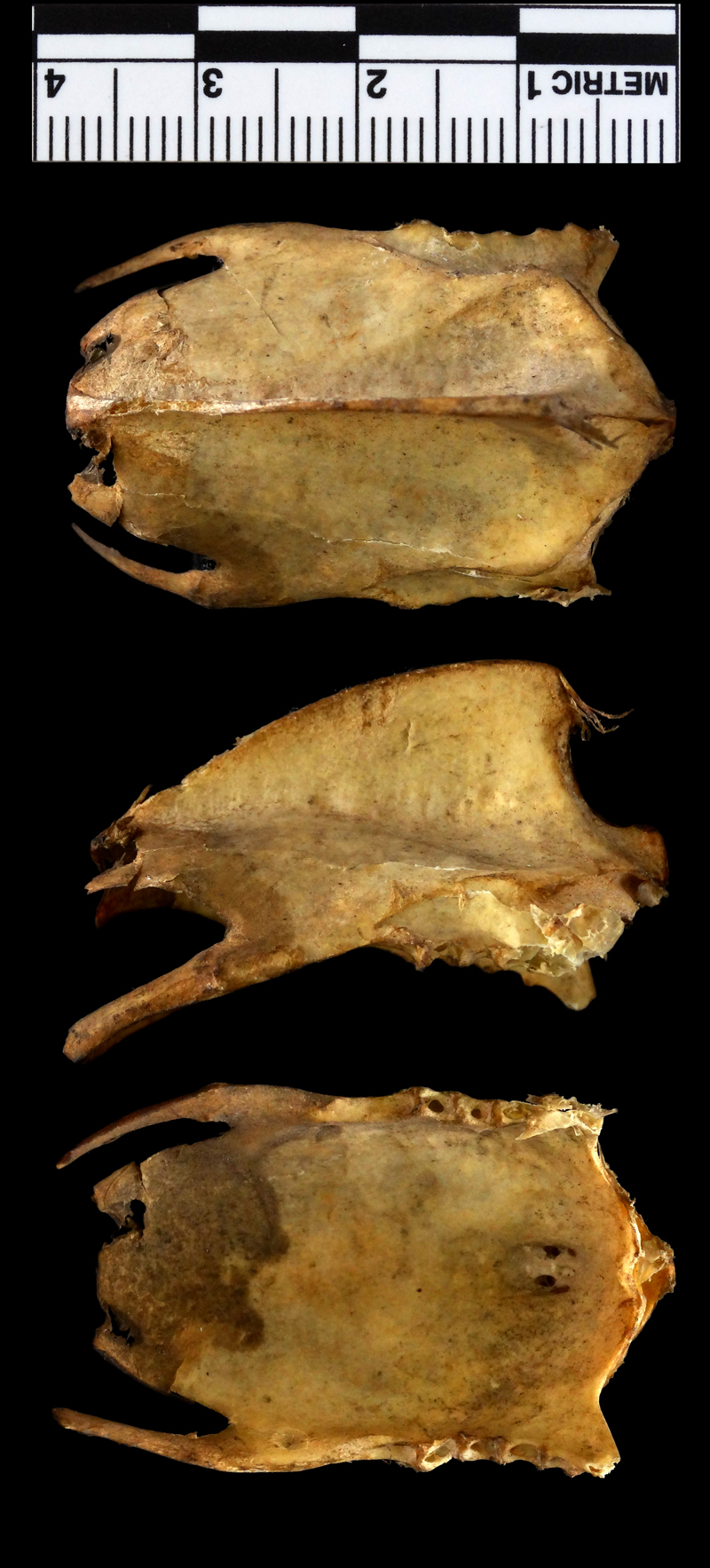
Last Friday I gave you this skull to identify:

mystery218

There was strong consensus on this being a mustelid – which is good, because that’s what it is. There was also good agreement on it being one of the Martens, which is where things become a bit more difficult.

After looking at a lot of different Marten skulls online without much success in finding a way of telling them apart, this diagram  proved quite helpful.

Images compiled by Mariomassone

Skulls in the sequence: M. zibellina, M. martes, M. foina

If you look at the skull in the middle of the top and centre rows, the auditory bullae (the rounded bones under the skull that house the anatomy used in hearing) have quite distinctive shapes in the three species pictured.

In addition, the the little nub of bone (called the mastoid process) that sticks out behind the ear hole (or external auditory meatus as it’s also known) is very differently developed in the three species. Looking at this character and checking back against other Marten skulls online the clues suggested that the mystery object is the skull of a Pine Marten Martes martes (Linnaeus, 1758).

So well done to everyone who commented – particularly Jake who got the ball rolling with a Martes identification from the start!

Friday mystery object #217 answer

Last Friday I gave you this lovely skull to identify:

mystery217

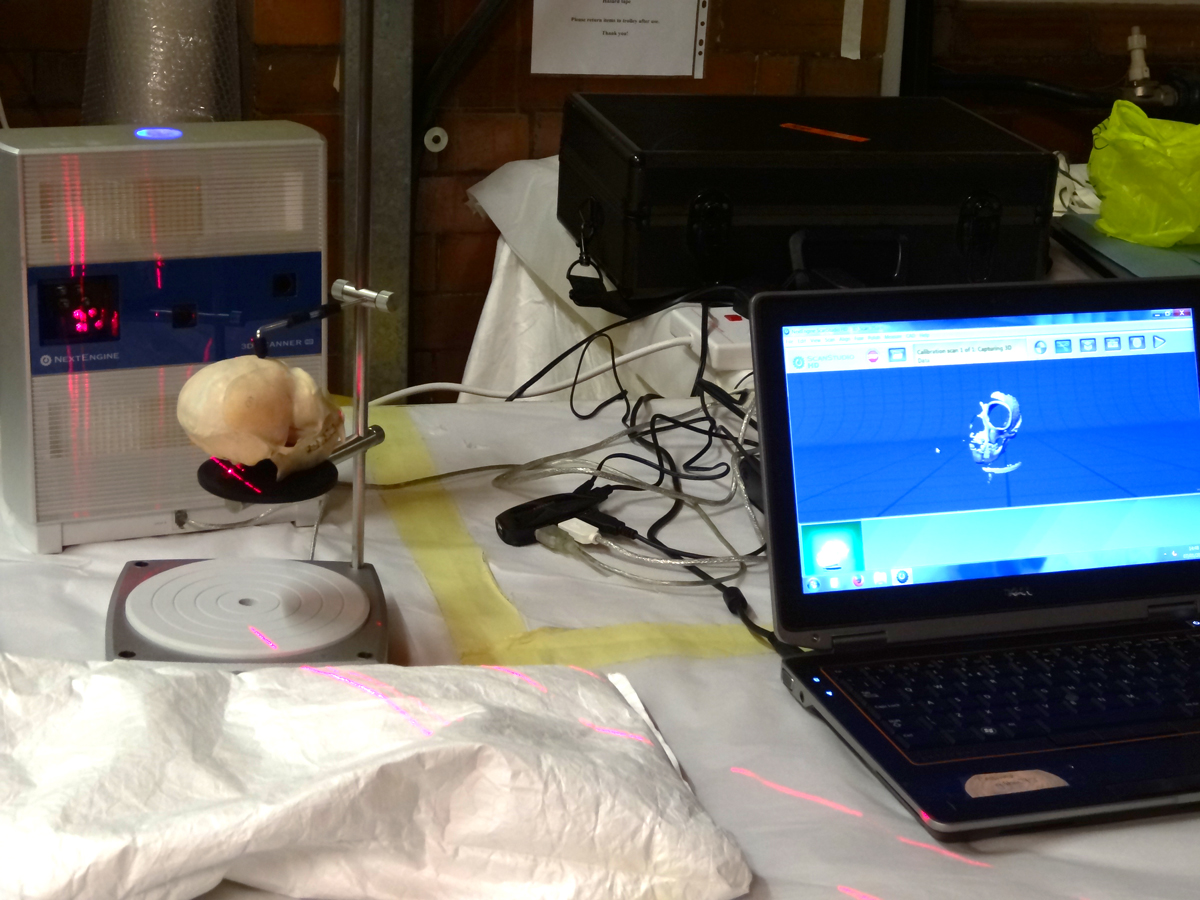
I chose it because it was being used for an interesting project by a student at UCL, involving 3D surface laser scanning of the specimen to identify landmark characters of the skeletal structure of the faces of this family of primates:

mystery217scan

This is a specimen that we actually have a fair amount of information about. It’s a male Grey Gibbon Hylobates muelleri Martin, 1841 collected before 1909, from Melian on the Hanta River in North Borneo. So of all the suggestions, Crispin (@brainketchup) was the closest (with agreement from henstridgesj) when he suggested White-handed Gibbon.

It turns out that this skull also has a taxidermy skin associated with it (which Jake has mentioned before), which shows a common feature of taxidermy specimens where the skull has been prepared separately – it’s mouth is stitched shut:

GreyGibbon

This makes for slightly dodgy taxidermy, but at least it means the skull is available for future research, instead of being stuck in a specimen intended mainly for display.

The skin of this specimen has also seen recent use, but for art rather than science. Artist Paul Robinson has used it as the basis of this somewhat freaky, but striking piece of work:

GIBBON by Paul Robinson

GIBBON by Paul Robinson

It goes to show that specimens in museums can find themselves being used in all sorts of interesting ways. To my mind this is really what museum collections are for – being used by people.

Friday mystery object #216 answer

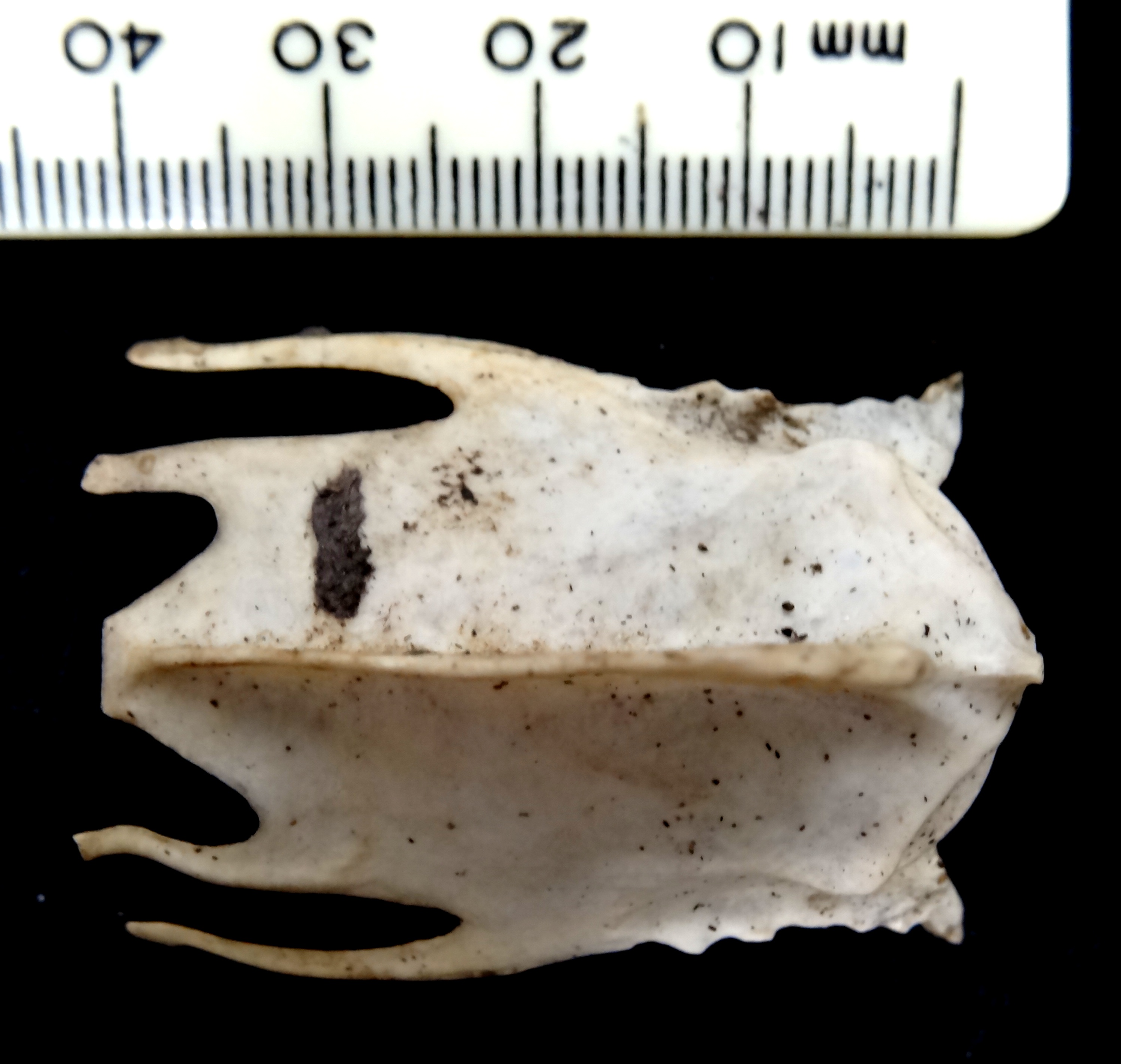
Last Friday I gave you this mystery sternum to identify:

mystery216

I had a rough idea of the family, but I was less certain about the species. As it turns out I’m now less sure of the family than I was before, in light of some useful comments.

At first I thought this was the sternum of a member of the Strigidae or the ‘True Owls’ – something that Jake also thought with his suggestion of Tawny Owl Strix aluco, but henstridgesj and Daniel Jones raised the possibility of it being from a seabird and Daniel Calleri suggested it could also be from a member of the Halcyonidae or the ‘Tree Kingfisher’ family.

With the Christmas and New Year break I haven’t had a chance to get to our stores to check specimens, but there is a very useful website that deals with seabird osteology (helpfully called Seabird Osteology) which has some images of sterna. Several of the Procellariiformes (the order containing the Albatrosses, Petrels, Shearwaters, etc.) have a similarly short sternum with a double notched bottom margin, as do some of the Laridae or the Gull family.

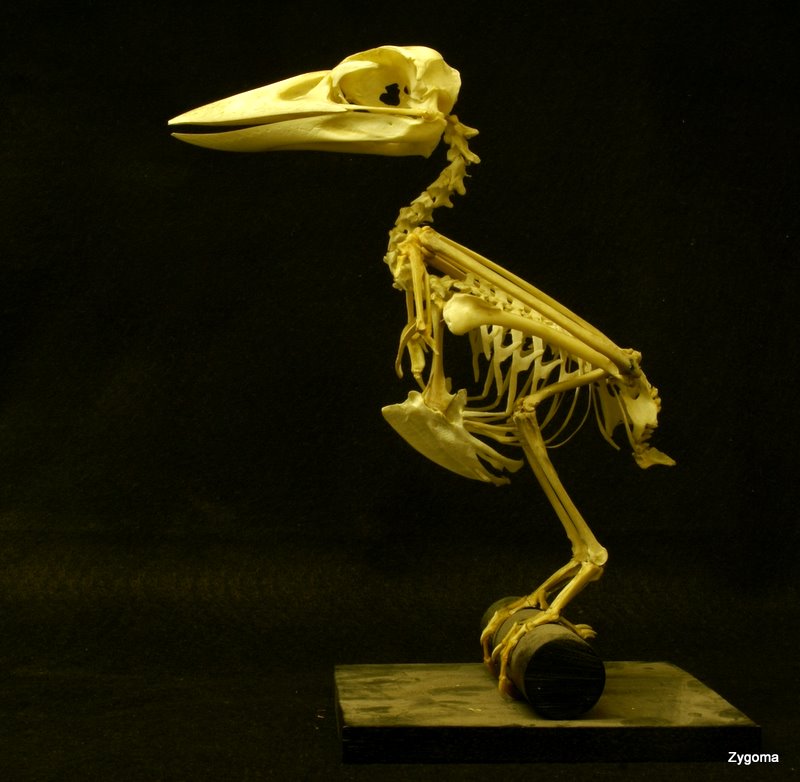
I also checked an image of a Kookaburra from a previous mystery object, which doesn’t show the sternum well, but which does hint at a double notched bottom margin:

Laughing Kookaburra Dacelo novaeguineae skeleton

Laughing Kookaburra (Dacelo novaeguineae) skeleton

This has left me slightly less confident that last week’s mystery object is from an owl, but here are a couple of other owl sterna for comparison:

Barn Owl Tyto alba sternum and coracoid

Barn Owl (Tyto alba) sternum and coracoid

As you can see, the Barn Owl sternum above doesn’t quite have the double notch, although the size is about right. The Eurasian Eagle Owl sternum below (ignore the coracoids and other bits of the pectoral girdle) is a much closer fit, although substantially larger.

Bubo_bubo_sternum_coracoid

Eurasian Eagle Owl (Bubo bubo) sternum, coracoid, furcula and scapula

I’ll see if I can find a Tawny Owl sternum to check against, because the shape does seem pretty good for one of the Strigidae and the size is about the same as a Barn Owl, which is in a different family, but has a size range that overlaps with the Tawny Owl. Of course, it could also be from one of the other medium sized owls, like the Long-eared or Short-eared Owls… more to come!

UPDATE 14:30 on 3rd January 2014

Here’s a Tawny Owl sternum!

Tawny Owl (Strix aluco) sternum

It’s pretty close, but the notches seem a bit deeper, so perhaps one of the Asioninae (Eared Owls) might be a better match for the mystery object?