Friday mystery object #179 answer

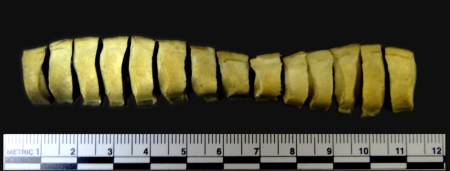
On Friday I gave you this really tricky mystery object to identify:

mystery179

Despite it being one of the hardest so far, Barbara Powell managed to not only work out what piece of morphology this specimen represents, but the species it came from. Remarkable skills Barbara!

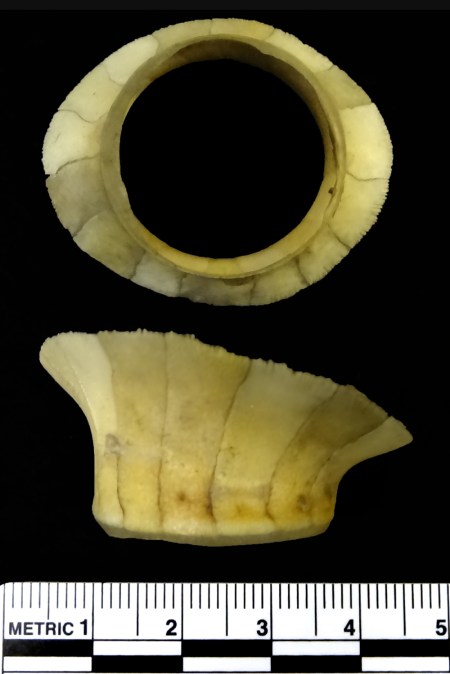
These plates of bone fit together to make a ring like this:

mystery179b

You probably have a better chance of identifying the structure when it’s assembled like this and the tubular shape is characteristic of a particular order of birds. This is the sclerotic ring of an  Continue reading

Friday mystery object #178 answer

On Friday I gave you this piece of a skeleton to identify, to help me track down the specimen it came from:

mystery178

It looks like a wing, but it’s quite oddly shaped. The humerus is strongly curved and the humeral head is small with a very limited area for muscle attachment. This suggests that it wasn’t much use for flying – it also wouldn’t have been much use for swimming underwater or any other kind of locomotion for that matter. This narrows down the possibilities quite a bit.

With these clues RH, henstridgesj and Lena all came to the same conclusion as I did – this wing is from a  Continue reading

Friday mystery object #177 answer

On Friday I gave you this scrappy bit of bone to identify:
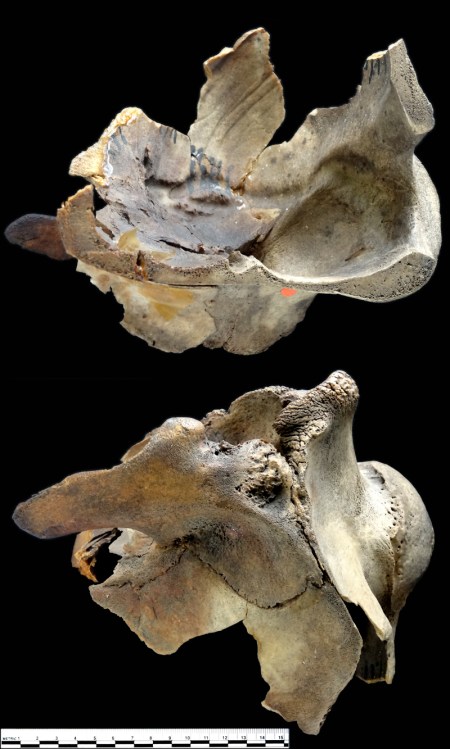
mystery177

It came into the Horniman collections from King’s College in the 1980s and it was tentatively identified as a piece of ungulate bone. I’m pleased to say that you managed to do a better job of identifying the specimen than was done originally! In particular Jake managed to narrow it down to being part of the braincase of a cetacean, possibly a species of dolphin or porpoise, with henstridgesj and RH also thinking along the same lines.

When I first saw this piece of bone I also thought it belonged to one of the smaller toothed whales and so moved it from its place among the ungulates to a place in the collection with other cetaceans. This proved to be a fruitful move, since I was checking through the various bit of whale at work the other day and suddenly realised that there was a broken piece of whale rostrum also from the King’s College collection. When I put them together, this is what I got:

mystery177b

A perfect fit! This meant that the identification of toothed whale was confirmed and even better the specimen could be identified as being from a  Continue reading

Friday mystery object #176 answer

On Friday I gave you this specimen to have a go at identifying:

mystery176

It’s a specimen that I came across when sorting out the bird osteology collections in the Horniman stores.

Several of you came to the same conclusion as me about the type of bird, with Jake, palaeosam and henstridgesj all suggesting one of the  Continue reading

Friday mystery object #175 answer

On Friday I gave you this anthropological mystery object to identify:

I asked you what the teeth might have belonged to and where in the world might this necklace be from.

It’s always a bit tricky to identify worked material as it will often be different from what you’d see or expect in the wild state and you lose the context of the rest of the specimen. Nonetheless, these teeth are quite distinctive to a particular group of animals.

Barbara Powell, 23thorns and Robin got the right general area with suggestions of Islands in the South Pacific, in particular New Guinea. 23thorns also nailed the animal group with his suggestion of  Continue reading

Friday mystery object #175

This Friday I have a bit of a change for you – an anthropological mystery object made from animal bits. This specimen was being looked at as part of a review project that we have going on at the Horniman Museum. Any idea what these teeth might belong to and where in the world this necklace might come from?

As usual you can put your suggestions, observations and questions below and I’ll do my best to respond. Good luck!

Friday mystery object #173 answer

On Friday I gave you this odd-looking piece of bone to identify:

It’s something I tentatively identified a couple of weeks ago and thought you might be able to add your ideas, to make sure I wasn’t missing something. Jake was quick off the mark in suggesting it was the ear bone of a Whale, which is what I thought when I first saw it. This fitted with the large size and high density of the bone, but on closer inspection it doesn’t quite match any of the Whales.

There were a few other ideas, but none that really matched the specimen, except for a suggestion from henstridgesj that it may come from a member of the Trichechidae, which agreed with my identification of  Continue reading

Friday mystery object #172 answer

Apologies for the late posting of the mystery object answer, I’m at  a conference in Edinburgh and I didn’t get a chance to write until now.

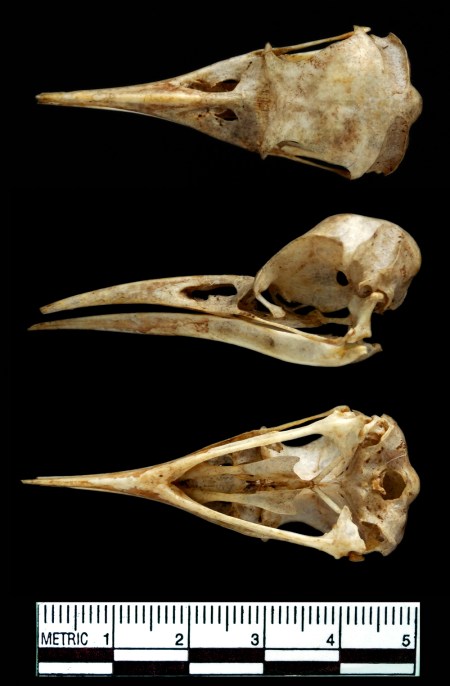
On Friday I gave you this bird skull to identify:

I thought it might be an easy one, but I was hoping to catch a few people out, which use exactly what happened.

This skull is a nice example of morphological convergence – looking a lot like a Pigeon skull, but it is actually the skull of a  Continue reading

Friday mystery object #172

This week I have another bird skull for identification from my big box of assorted bone. It’s probably a bit too easy, but hopefully it’ll still be fun:

Any idea what it is?

As usual, you can put your comments, questions and suggestions below and I’ll do my best to respond. Good luck!

Friday mystery object #171 answer

On Friday I gave you this fragment of bill to identify:

It’s quite distinctive in shape, so I shouldn’t have been surprised when so many of you came to the same conclusion as I did about what it was from. As it is, everyone recognised this as being part of the bill from a member of the Phalacrocoracidae (Cormorant family). Well done everybody!

There are around 40 species of Cormorant, so getting this to species is a bit more tricky and a few possibilities were mooted. However, the two which best fit the shape and size of this bill are the Little Black Cormorant Phalacrocorax sulcirostris and the European Shag Phalacrocorax aristotelis. A quick comparison of the two on the excellent SkullSite.com (P. sulcirostris and P. aristotelis) show that the bill proportions and shape of the bony palate in the mystery specimen are closest to the  Continue reading

Friday mystery object #171

Apologies for the slightly late mystery object this week – blame Dara O’Briain, who I went to see in Hammersmith last night.

This week I have another specimen that came from the mixed box of bits for you to identify. Any idea what this beak is from?

As usual you can put your comments, questions and suggestions below and I’ll do my best to respond. Good luck!


Friday mystery object #170 answer

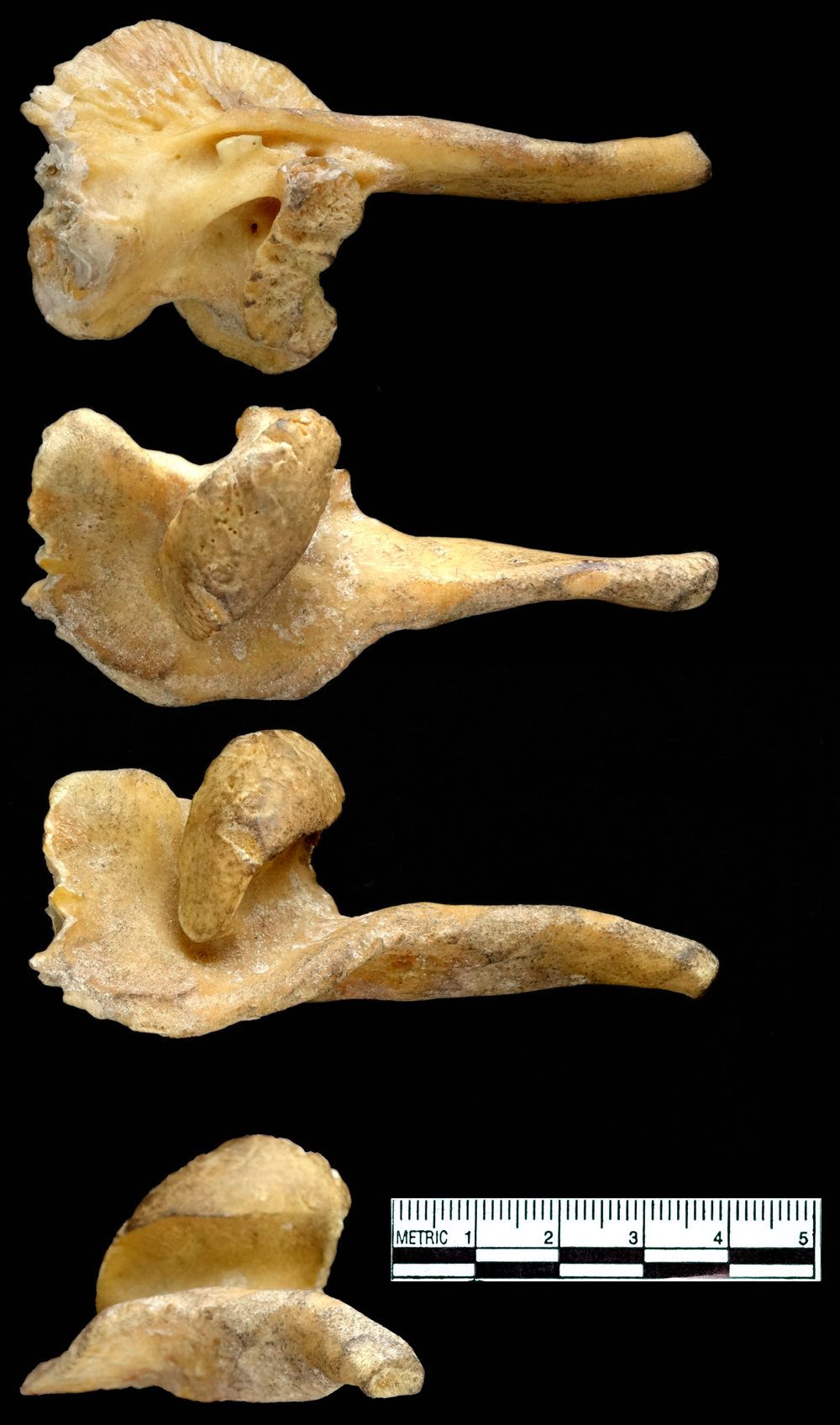
On Friday I gave you this pair of bones to identify:

It didn’t take long for the type of bone to be identified, with Anthony Wilkes immediately spotting that these are the quadrates of a bird. Then things got more tricky as the type of bird became the focus of the identification.

Robin was the first to recognise the family and likely type of bird, with henstridgesj concurring, with the agreement being on these quadrates being from a  Continue reading

Friday mystery object #170

This week I’ve got two bits of bone (photographed to show the shape from each side) that I identified at work last week – can you work out what these are and what animal they’re from?

As usual you can put your suggestions, comments and questions below and I’ll do my best to respond. Good luck!

Friday mystery object #169 answer

On Friday I gave you this specimen to identify:

It was one of those specimens that if you’d seen one before it was easy, if not it’s quite hard to work out.

In gross shape the skull has some similarities to that of a reptile, perhaps something like a Monitor lizard (albeit a little narrower). However, it actually belongs to a fish.

Cam Weir recognised this and managed to identify the kind of fish to genus and then species level, along with henstridgesj, 23thorns, Barbara Powell and Robin. Leigh and Ethan were also in the right ball-park with their identifications. This is the skull of the  Continue reading