Friday mystery object #229 answer

Last Friday I was at the SPHNHC, NatSCA and GCG joint conference in Cardiff, which provided a fantastic opportunity to catch up with natural science curators, conservators and collections managers from all over the world, but which gave me limited time to spend on the mystery object.

As a result you ended up with an object that made an appearance in a ‘feely box’ at a fun pub quiz organised by guys at the Oxford Museum of Natural History.

Feely boxes in action

Feely boxes in action

Lurking within...

Lurking within…

It’s not the prettiest object but it’s characteristic shape and structure makes it readily identifiable using touch.

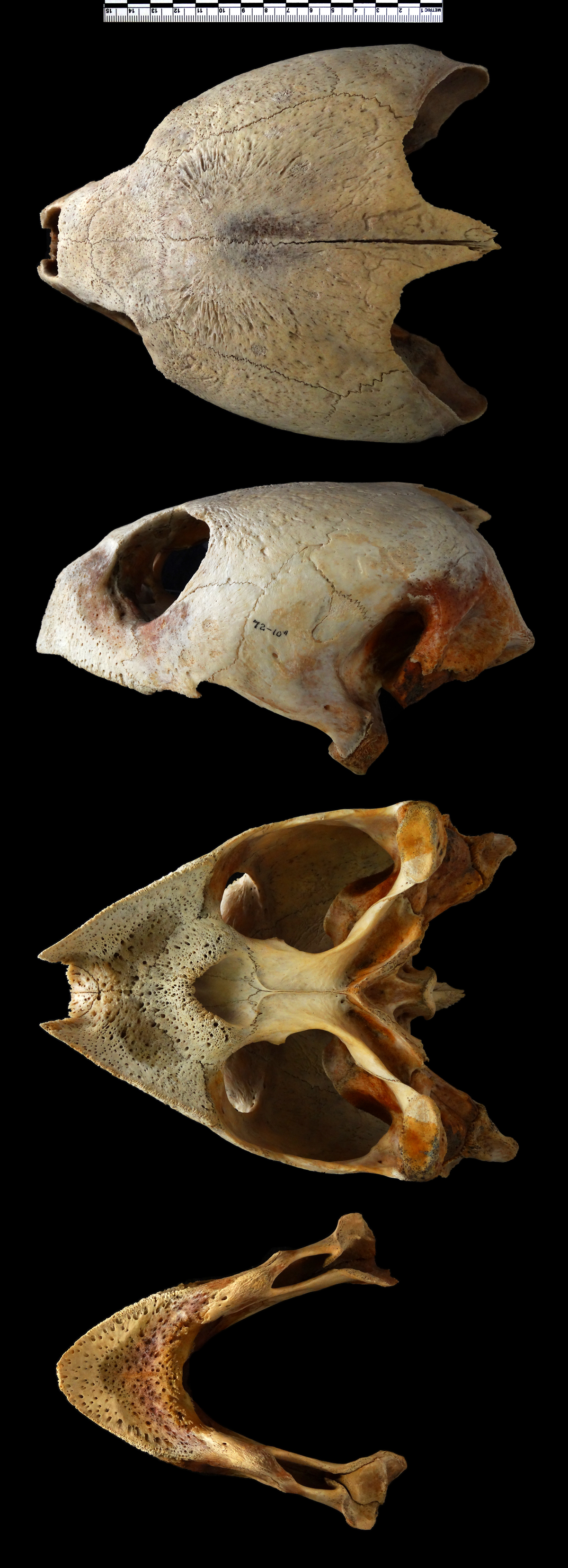
Jake spotted that it was a horizontal section through a skull, including the palate and Maxine and Julie Howard recognised the tusk alveoli extending from the maxilla, and correctly suggested Pumbaa, or Warthog Phacochoerus africanus (Gmelin, 1788).

Touch is an often under-appreciated sense in science, but it can be used to identify some specimens and provide a new perspective on the evolution of forms in nature. This is something I came to realise when working at the National Museum of Ireland – Natural History in Dublin, where I was fortunate enough to meet evolutionary biologist Dr Geerat Vermeij, who has been blind since birth, yet is able to identify shells to species and read part of their life history from touch alone.

Geerat Vermeij, Evolutionary Biologist, Reading A Shell’s Story from Shape of Life on Vimeo.


Bonus mystery object

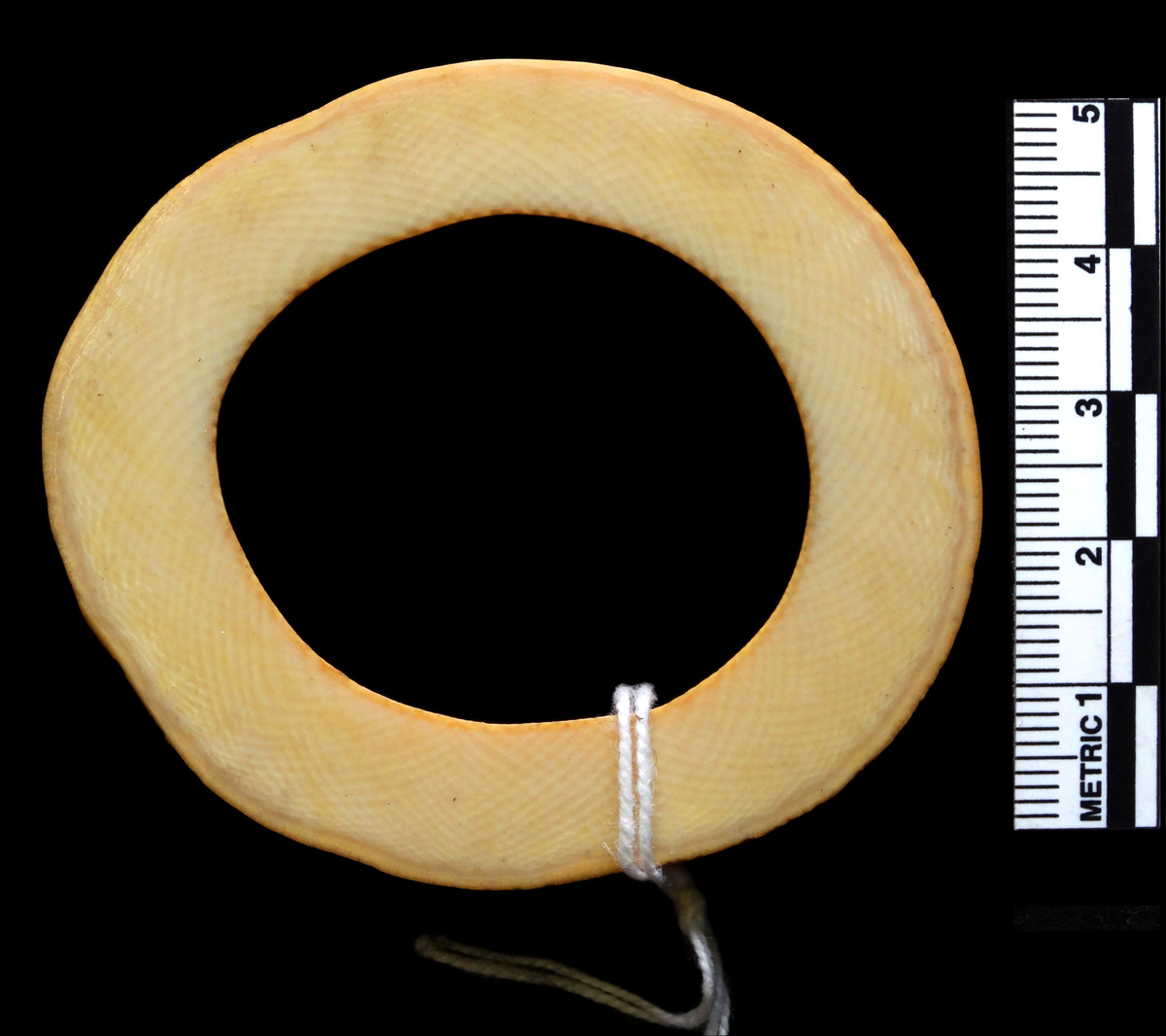
I usually offer up a mystery object on Friday, but here’ a bonus object that landed on my desk this morning.

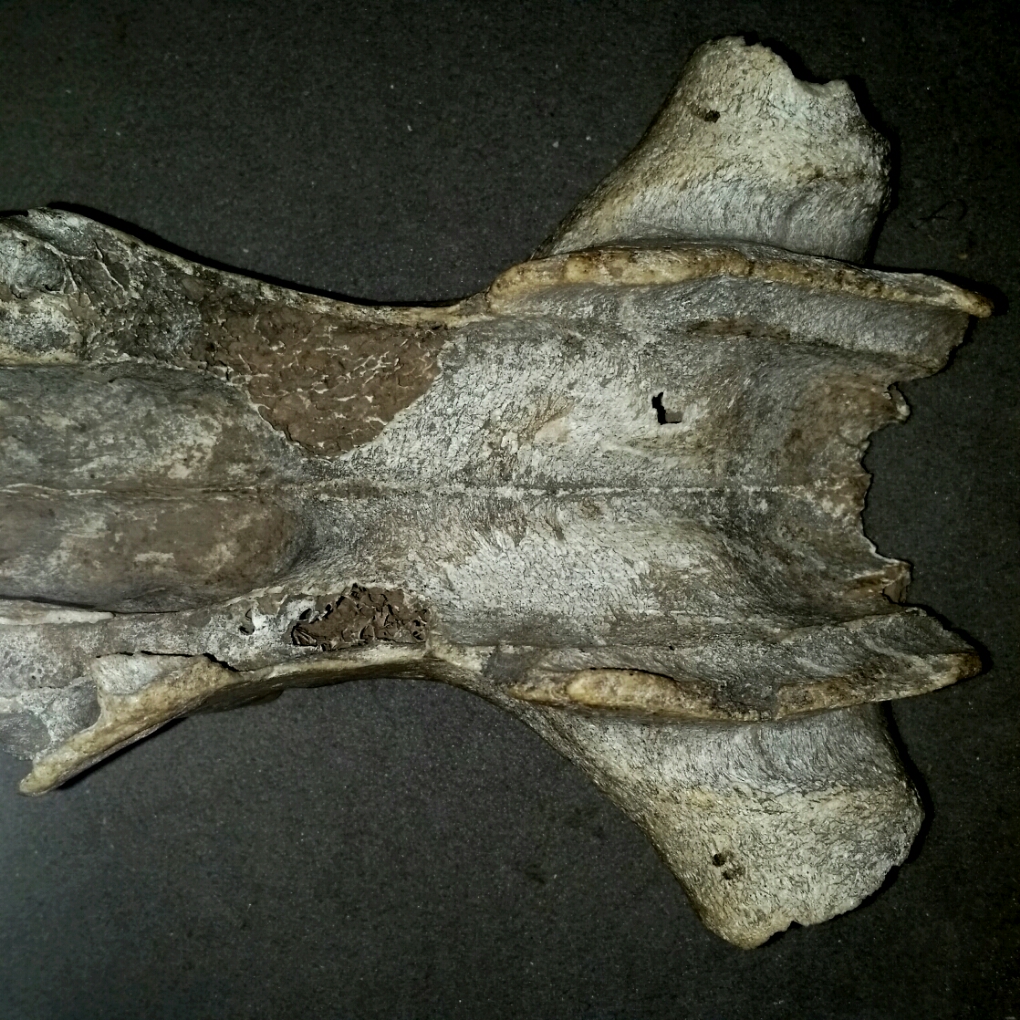
image

Apparently it was found in a horsefield in Kent, I have narrowed down the likely species of the animal that ‘donated’ the bone to a couple of options, but thought you might like to have a go as well, before the specimen is handed over to our Anthropologists to inspect the engraved designs.

As usual can can leave your comments below. Have fun!

Friday mystery object #228 answer

Last Friday I gave you these bits of mystery forelimb (scapula and humerus) to identify:

mystery228

I thought it would be an easy one, since it’s from a very common species with a near global distribution – plus the humerus has quite a characteristic crest along the proximal end, from the shoulder articulation to the middle of the bone.

Most people who commented noticed this crest and Jake suggested that it had adaptive features (along with the scapula), maybe for a specialised way of life.

As it turns out, these bones come from an animal that is probably best described as a specialist generalist – a Brown Rat Rattus norvegicus (Berkenhout, 1769).

Rattus norvegicus, the Brown Rat. Image by National Park Service

These versatile and intelligent animals are very good climbers and brilliant swimmers, using their forelimbs to both get around and manipulate food.

This particular rat was a male pet rat purchased from Harrods in October 1960 – I get the impression it didn’t survive for that long, since the humerus head hasn’t fully fused. You can’t buy pets from Harrods any more, so this specimen not only shows us what a rat’s humerus and scapula look like, but it also represents a teeny-tiny piece of British history.

Friday mystery object #228

This week’s mystery object is a bit of a break from the cat skulls. Any idea what these two bones are and what species they’re from?

mystery228

As always, you can put your thoughts and suggestions in the comments section below, but if you think it’s easy please try to be a bit cryptic in your response, to give other people a chance. Enjoy!

Friday mystery object #227 answer

On Friday I asked you to spot the differences between these two cat skulls and I wondered whether anyone could identify them:

mystery227

Both henstridgesj and Allen Hazen made some good observations, the first being about the difference in size, then about morphological features that I’ve marked on this image:

comparing_cats

Now henstridgesj also correctly identified one of the skulls – the one on the right of the image is from a Domestic Cat Felis catus Linnaeus, 1758.

As it turns out, this was a bit of a trick mystery object, since BOTH of the skulls belong to Domestic Cats, so this gives us a useful idea of the kind of variation we might expect within a species.

I think that the main cause of variation between these two animals is probably sex, with the male on the left and the female on the right. There may also be differences based on age (although I don’t think that’s a major factor), breed and perhaps disease (the larger specimen looks like it had an infection that affected the surface of the bone).

After taking various measurements, the most useful difference I’ve found between the two skulls is shown with the yellow line. I think that the ratio of these two measurements may provide a way to tell the difference between a male and female cat (in the male it’s around 1 or less than 1, in the female it’s greater than 1) but I’ll need to make a LOT more measurements to test this.

Two other ideas that could be tested were suggested by henstridgesj and Allen Hazen. Allen said: “My impression is that the presence and development of sagital crests, among felidae, correlates pretty strictly with size” and henstridges said: “It seems that if the species of cats are arranged in increasing size order, then the anterior half of the skull (forward of the frontal-parietal suture) seems to increase in size more than the posterior half”.

I’d better take a look to see if this has been tested before…

Friday mystery object #227

This week I thought I should mop up the last of the smaller cats as a spot-the-difference:

mystery227

What do you think are the diagnostic features that separate these two skulls (bonus points for species identifications)?

I’m really keen to get your thoughts on this, so please put your observations in the comments section below. Thanks!

Friday mystery object #226 answer

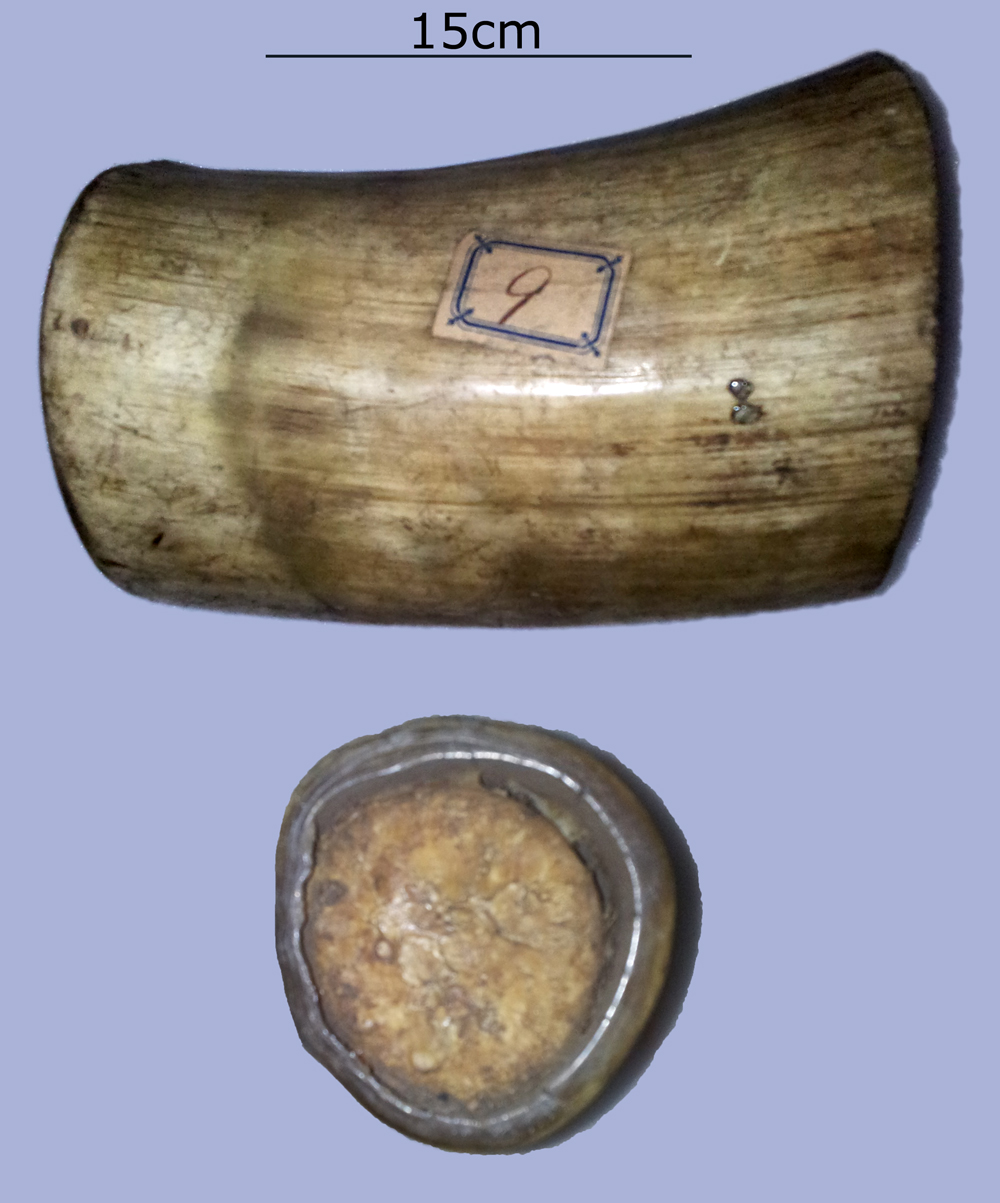
Last week I gave you this rough and ready mystery object to identify:

mystery226

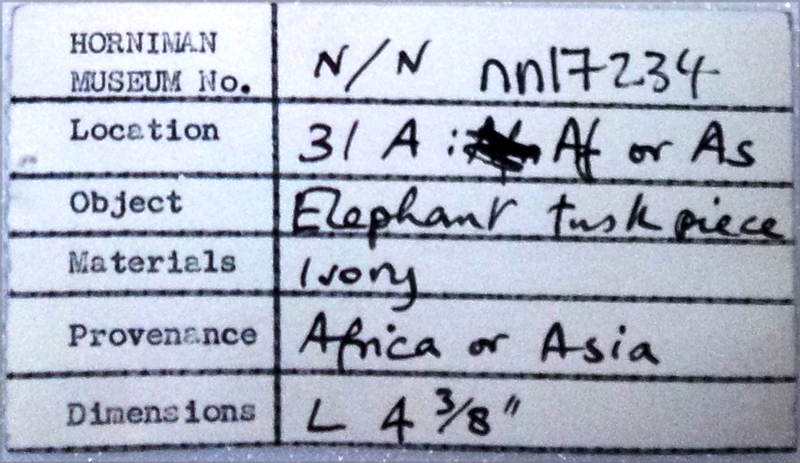
I thought it might be a bit of a challenge as it had originally been misidentified as a piece of elephant tusk by someone in the museum, many years ago, so it was obviously not a straight-forward identification.

mystery226-label


One of the key identifying characteristics of ivory are the Schreger lines, as pointed out by Carlos and rachel. These lines are an optical effect caused by light interacting with the dentinal tubules that provide the structure of the tusk:

Schreger_lines

Tusk section showing Schreger lines

However, these lines aren’t always visible and it will depend on the angle of the cut of the tusk and the angle and intensity of the light.

Another factor to keep in mind is the nature of the material. If you look at a cut section of elephant tusk you note that you get clean edges, because the tusk is quite hard and keeps its structure when cut. It can also show faint growth rings, radiating from the pulp cavity (nearer the tip the cavity is filled in):

elephant_tusk_section

Section of elephant tusk showing clean edges

Instead, the mystery object has a very rounded edge and no clear structure. This suggests to me that it’s horn that has been treated with heat to mould it into shape (keratin that makes horn and hair has thermoplastic properties, which is why hair straighteners work).

So what this mystery object appears to be is a piece of bovine horn – probably cow – that has been melted and shaped at one end to form a cup. The superficial similarity to elephant tusk may or may not have been accidental, after all, elephant ivory is a much sought after material.


Friday mystery object #226

A rushed mystery object today I’m afraid, as I was doing talks at a late event last night and I have a painfully early start this morning – plus I’ve not been in the stores this week, so no opportunity to get a good mystery object to photograph!

So here’s an object that I was asked to identify a while back, that I took some snaps of on my phone. Apologies for the poor image quality:

mystery226

Any idea what this might be? As usual you can put your observations, questions and suggestions in the comments section below.


Friday mystery object #225 answer

Last Friday I gave you this felid skull to identify:

mystery225

As with the other cats over the last few weeks, it’s been difficult to find really clear diagnostic features.

The size helps narrow down the possibilities and the lack of divided auditory bullae rules out some of the species of Lynx, as does the presence of the small first premolar.

However, beyond that there isn’t much to really differentiate this cat from other species, apart from general features of relative proportion (height vs width vs length) and perhaps the angle of the rear part of the sagittal crest (which will probably vary between individuals).

Nonetheless, henstridgesj managed to correctly identify this as an Ocelot Leopardus pardalis (Linnaeus, 1758), one of the largest of the small cats in South America.

Ocelot, 2003 from US Fish & Wildlife Service, Image Archive

My challenge is going to be find a way to pull together the variety of cat skulls we’ve had for the last few weeks, to help make cat skulls a little easier to identify in the future – if that’s even possible. No pressure…

Friday mystery object #224 answer

Last Friday I gave you this felid skull to have a go at identifying:

mystery224

The size was larger than the previous cat skulls I’ve shown you, which helped reduce the possibilities a bit – after all, there are more smaller cats than bigger ones.

As it turns out, Sam Misan and henstridgesj both managed to work out that this is the skull of a Serval Leptailurus serval (Schreber, 1776).

A Serval cat at Serengeti National Park, Tanzania, by Bob, 2007

A Serval cat at Serengeti National Park, Tanzania, by Bob, 2007

These long-legged cats have a relatively small head, but huge ears – and the large external auditory meatus (ear hole) with a very pronounced ridge above for attachment of the muscles of the pinna (the fleshy part of the ear) helps reflect that.

The long legs and the big ears are key to the Serval’s hunting technique in the long grasses of the African savannah, where they listen for the movement of rodents which they dramatically leap on. Probably easier to appreciate this method by seeing it:

Friday mystery object #224

For the last few weeks I’ve been using cat skulls as mystery objects, because they are really hard to tell apart and I was hoping that some useful distinguishing features might get spotted when you try to identify them.

I certainly feel like I’ve learned something, but I’m pleased to say that there aren’t too many more skulls to go, because it’s really difficult. This next one should hopefully be a bit easier than some of the recent cats:

mystery224

Any idea what fine felid this skull comes from?

As usual I would really appreciate your thoughts in the comments section below – let’s see if we can crack this!

Friday mystery object #223 answer

Last Friday I gave you this fine feline to have a go at identifying:

mystery223

I was a little suspicious of the identification attached to the specimen, but Al Klein suggested the same species – the Jaguarundi Puma yagouaroundi (É. Geoffroy Saint-Hilaire, 1803) [link opens pdf].

My reasons for suspicion were the nature of the post-orbital constriction (the narrowing of the braincase behind the eyes), the nature of the zygomaticotemporal suture between the temporal process of the zygomatic and the zygomatic process of the temporal bone (the bit where two bones meet to make the arch of the cheek) and the shape of the nasal bones where they meet the frontals (the V shaped bones above the nose area).

The observation by henstridgesj that the skull was similar to the previous mystery object (Leopardus tigrinus) was a good one, so I decided to research the genus Leopardus in a bit more detail, to see if there was a better match.

It turns out that the skull I found that matched this one most closely – especially with regard to the relative lack of a post-orbital constriction and the nasal-frontal junction – was the highly arboreal Margay Leopardus wiedii (Schinz, 1821) [link opens pdf].

Margay - Leopardus wiedii, Summit Municipal Parque, Panama. By Brian Gratwicke.

I’m always a bit reticent to re-identify specimens that have original labels from the supplier attached as this one does, but this comes from suppliers (Dr.s Schlüter & Mass) that I know have seriously misidentified or mislabelled specimens in the past (e.g. labelling a African Lappet-faced Vulture as an Andean Condor from Bolivia).

Of course, the real identification may be even more complicated, since the South American cats have a bit of a track record for hybridising to the point of masking distinct species, so any identification I make will be laden with disclaimers and caveats. The joy of real-world animals when contrasted against nice simple biological concepts…

Friday mystery object #223

I hope you’re not all fed up with cats yet, because here’s another:

mystery223

I have concerns about the identification attached to this one, so let’s see if your thoughts agree with what I have written on the label.

As always, you can put your thoughts below and they will be very welcome!

The Mermaid

As you may already know, I’ve been doing a lot of work on a mermaid specimen in the collections of the Horniman Museum & Gardens over the last few years.

The upshot of all that activity is that I have a paper written in a journal that will be hitting the bookshelves any day now. As you may have heard me say before, the specimen is not made of a monkey attached to a fish – I know that after undertaking painstaking examination of the specimen using CT scanning equipment and DNA sampling and good old fashioned anatomical investigation.

IMGP0507

OLYMPUS DIGITAL CAMERA

OLYMPUS DIGITAL CAMERA

Instead it appears to be a real creature of uncertain taxonomic affiliation. The teeth suggest a link to the Wrasse family, the tail to the Carp and the torso to no known living group, so I have designated this specimen as the type for its species and have named it Pseudosiren paradoxoides. Full details can be found in the paper which is due out next week in the Journal of Museum Ethnography – I’m so excited!

Friday mystery object #222 answer

Last Friday I gave you this fabulous feline skull to have a go at identifying:

mystery222

No one got quite the right species, but several people (Crispin, manwhohunts, Maxine and Alex Klein) managed to narrow it down to the correct genus.

The flat frontals give the forehead a slope rather than the usual curve we’ve seen in previous cats of this size, making the cranium appear very domed in contrast. The post orbital processes are quite short and gracile (slender). The jaw is quite short while maxilla bone above the canines appears pinched in and the nasals are steep and protruding somewhat.  These are features that appear in the genus Leopardus – the South and Central American small spotted cats.

How to distinguish between different species of Leopadus is more of a problem. Daniel Jones picked up on the incredibly robust bone margin of the foramen magnum (the hole the spinal chord goes into), which may be distinctive, but so far I’ve not seen the underside of other small Leopardus species skulls, so I can’t be sure.

All I know is that this is the skull of an Oncilla Leopardus tigrinus (Schreber, 1775), a small and mainly ground-hunting South American forest cat. I’ve said it before and I’ll say it again, cats are so difficult to identify!


Oz carnivores

Here’s an handy guide to the skulls of the carnivores found in Oz, just in case you find yourself in the area and stumble across a large carnivore skull. Natch.

Oz_Carnivores

They are arranged in the order left to right, top to bottom and they follow the sequence of the wild animals of Oz song. If you don’t know the song, it’s here:

Enjoy that little earworm!

What is a curator?

What is a curator?

Every so often I’ll meet someone who asks me what I do; this draws the response “I’m a natural history curator”*. Sometimes I will then be faced with the dreaded follow-up question “what does that mean?”

I hate it when this happens, because the curatorial role involves lots of different things and it can be hard to summarise them in any kind of concise and intelligible way. Different museums expect different things from curators, which will usually depend on the rest of the staffing structure. So when I answer I can only really answer for myself and what I think MY curatorial role entails.

DSC02587

The most obvious responsibility is “curating collections”, which is not actually an explanation in any meaningful way. To curate more or less means to “take care of”, but these days the museum sector has become professionalised and there are other specialists who take on much of the duty of care; conservators, collections managers, documentalists and so on.

What I bring to the care side of things overlaps with these roles, but my spin is to bring subject specialist knowledge to the mix.

This allows me to help other departments by providing them with useful information. For example, non-specialist staff will largely have to go by what’s written on an object label, whereas I am expected to check that information and challenge old taxonomy and misidentifications. I may also provide additional or new information about objects by researching their history or identifying parts of their composition.

A nice illustration of this can be seen in these two objects – one from the Horniman Museum & Gardens‘ Anthropology collection (top) and one from the Natural History collection (bottom):

Oddject2

The Natural History specimen had originally been mislabelled by the original supplier as the skull of an Andean Condor from Bolivia, which I had spotted and corrected to Lappet-faced Vulture (a species from Africa) after a bit of research. The Anthropology specimen was originally identified as being an  ‘eagle skull’ charm from Nigeria and it was simple to provide a more detailed species identification after having done the work on the Natural History specimen.

This sort of fact-checking and enrichment of data is essential for museums if we are to provide an accurate, reliable and authoritative resource for our audiences.

The same need for fact-checking also applies to quality television programmes, so it is perhaps unsurprising that museum curators will often be involved in documentaries, either as a presenter (like George McGavin or Richard Fortey), an expert that gets wheeled in to provide context (I think all curators have done this!), or as a shadowy figure behind the scenes baby-sitting an object or advising on content (I was scientific advisor for Ben Garrod’s excellent Secrets of Bones for example and I have fond memories of fiercely guarding an Indian Elephant leg at the filming of the Royal Institution’s Christmas Lecture “Why Elephant’s Can’t Dance“).

elephantleg1

An Elephant leg that I had to babysit for 14 hours (with no comfort break) for the filming of a Royal Institution Christmas Lecture

I’m all for getting collections used like this, since I think that the real value of collections lies in their use. This may be scientific, educational or artistic use – it doesn’t matter which, as long as the use doesn’t significantly compromise the objects and contributes to a wider understanding or appreciation of the world. In some cases you can manage both – a project I’ve been involved in with fine art photographer Sean Dooley is a good example of this.

Another large part of what I do is science communication. Museums were one of the earliest methods by which the general population could access decent quality information about the wider world and, despite the rise of the telly, museums still serve as an important interface between the academic world and the public.

This means that I get to research topics (in varying amounts of detail) that are relevant to our collections and audiences and produce exhibitions, give talks and write articles communicating that research. Sometimes this will be somewhat on the dry side (like a methodological paper about measuring skulls), while other times it will be a bit more fun, like my stint as #ExtremeCurator:

For me science communication and museum advocacy goes beyond the museum walls and 9-5 working hours, so I also organise free monthly science-related events in a London pub, I’m a trustee of the Natural Sciences Collections Association, I do evening talks all around the UK, I tweet and of course I am a #MuseumBlogger here at Zygoma.

This last activity has been both hard work and incredibly enjoyable. The hard work comes from the discipline required to organise and write a weekly blogpost, while the enjoyment has come from the fantastic community that has developed around the Friday Mystery Object posts (which have now been running for about five years). I’ve found that my knowledge has increased a huge amount and I’ve been able to encourage and help support other people in their interest.

My favourite example of this is Jake, who has been reading my blog since he was seven! Now he’s twelve and has already published an incredible book on bones that I was lucky enough to be able to help with. It’s the unexpected things like this that make blogging so worthwhile and which make my job the best job in the world!

20140204_111255

*my job title is actually “Deputy Keeper of Natural History”, but that’s a term even less familiar than “curator”.

Friday mystery object #221 answer

Last Friday I gave you this cat skull to identify:

mystery221

It is about the same size as a Domestic Cat and is very similar in morphology. But it’s not a Domestic Cat. 

The auditory bullae (the bulbs under the skull that hold the hearing apparatus) and the external auditory meatus (ear holes) are a bit bigger, the skull is a bit broader and the interpterygoid notch (the gap at the back of the palate that the airway emerges from) is squarer and has a slight ridge in front of it on the palate (and I’m not sure that ANY of these are particularly significant).

There were plenty of suggestions about what this skull might belong to, but only henstridgesj hit the nail on the head with a correct identification of Southern African Wildcat Felis silvestris cafra Desmarest, 1822. So well done Stephen!

Southern African Wildcat (Felis silvestris cafra) in Kgalagadi Transfrontier Park. Image taken by on  Johann du Preez 24 December 2007

Southern African Wildcat (Felis silvestris cafra) by Johann du Preez 2008