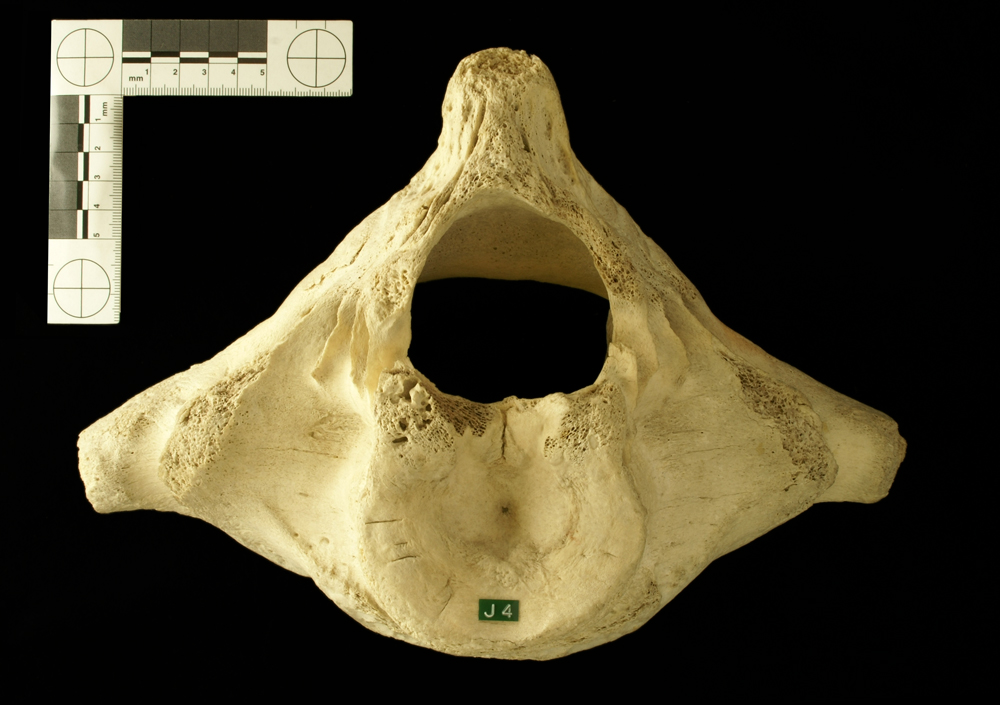
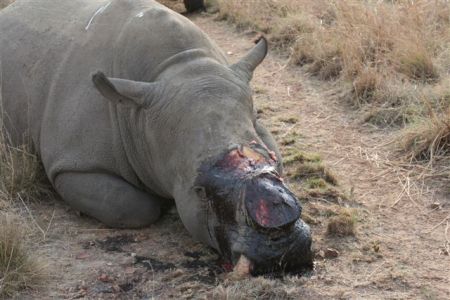
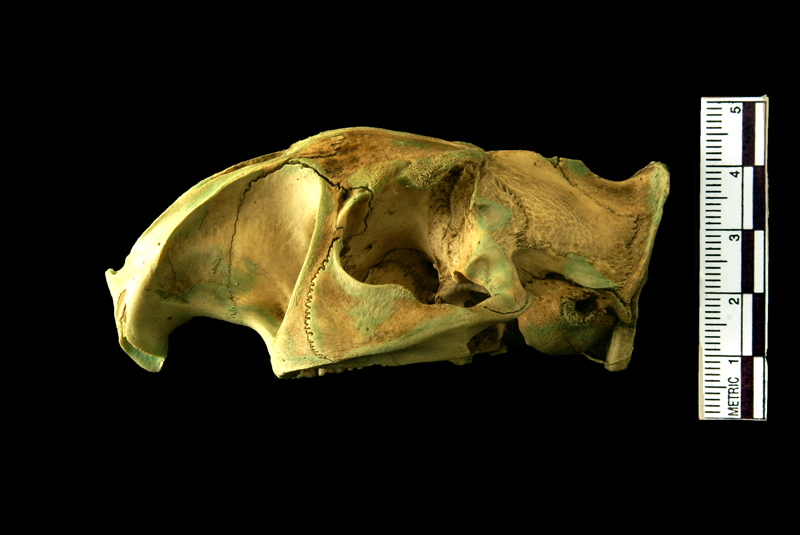
This week I thought I’d give you a skull to identify – probably a bit too easy, but it’s a nice specimen!
Pop you questions comments and suggestions below and I’ll do my best to respond. Good luck!
On Friday I gave you this object to identify:
The idea was to provide a sense of how tricky it can be to identify bits of postcranial bone, even fairly characteristic bits like the humerus (which is what this is).
There were various suggestions, with sheep, goat and deer all getting a mention, but henstridgesj and Jake both got the same identification as the collector when they suggested Continue reading
Postcranial bones are found more often than skulls, but they can be harder to identify since they don’t have such diagnostic characteristics (like teeth). So, any idea what this piece of postcranial skeleton is and what it comes from?
As usual you can put your answers below and I will do my best to respond (within my technological and temporal constraints). I’m sure some of the other biology types will be willing and able to give guidance. Good luck!
Following new government plans for gay marriage, Catholic commentators have crawled out of the woodwork to bitch and moan to anyone who’ll listen, despite the fact that marriage has been around for far longer than the Catholic Church and it has only taken on a strongly religious context after the Church spotted the money-making opportunities in the 12th Century.
Cardinal Keith O’Brien called the plans a “grotesque subversion of a universally accepted human right” and went on to say that “It would create a society which deliberately chooses to deprive a child of either a mother or a father“. (N.B. O’Brien’s claims about gay marriage breaching human rights stem from a misinterpretation of the Universal Declaration of Human Rights)
O’Brien’s comments were described as “a bit rich” by Paolo Viscardi, who went on to say “The need for both a father and mother is a biological one that ends with conception. Further, a human right is only meaningful when enforceable, yet the loss of a parent or parents is impossible to prevent in many instances, thereby making the ‘right’ for a child to have both a mother and father meaningless”.
Viscardi went on to say “There is no reason to suppose that a loving same-sex couple would fail in their care of children – indeed I believe they would do a far better job than, for example, a Catholic orphanage. O’Brien should check John 8:7. Members of the Catholic clergy have committed a host of human rights abuses against children and such abuse has been endemic in parts of the Catholic Church. O’Brien may have apologised for such abuses in the past, but to claim that the loving union of a same-sex couple is an abuse of human rights twists the meaning of that section of the Declaration of Human Rights and it throws the self-deluded sense of sexual morality held by the Catholic clergy into stark relief.”
*Notably, more priests have stepped up to condemn gay marriage than have gone on record condemning child abuse by members of the Catholic clergy. The Irish Cardinal Jack Hackett, suggested that this was because many priests believe that “Sex is a sin unless it is intended to bring forth new life in the agonies of the woman as God intended. By abusing children the Catholic clergy are teaching them that sex is a dirty business that causes great suffering.”
Cardinal Jack Hackett finished by saying “Gays have too much fun to get married. Marriage is not about having fun, it’s about having babies and being miserable for the glory of God“.
*N.B. This last section may not be entirely true, but it paraphrases the jist of several arguments I’ve heard in the past.
If you disagree with the Catholic Church’s stance on gay marriage, and if you live in the UK, perhaps you would like to sign the Coalition For Equal Marriage’s petition to show your support.
On Friday I gave you this mystery object to identify:
Unfortunately I was unable to respond to comments on Friday, as my laptop had to go in for repairs and my phone has reached the end of its useful life as an internet device after 4 years faithful service. For the answer this week I had to drag out my old laptop, which has meant 2 hours of twiddling thumbs as the machine started up and dealt with various updates…
In some ways it was a good thing that I wasn’t able to comment, since it would have ruined the fun from the outset. Jake was straight in there, wondering if it was really as easy as it looked – and it was. Rachel, Jack Ashby and Barbara Powell also plumped for the right answer, while several others came very close when they went for a greedy relative. This is in fact the skull of a juvenile Continue reading
On Friday I gave you this skull to identify:
I think the oddly inflated and positioned auditory bullae make this look like Gary Oldman in his role as Dracula. Because of this characteristically odd feature the specimen was fairly easy to identify. Of course, that supposes that most people have seen the skull of one of these animals before…
Here is the skull in better detail (for future reference):
The front teeth were a good indication that it was a rodent (we’ve talked about that before) and with the big and upward pointing external auditory meatus (better known as ear-hole) it suggested a very big-eared rodent.
With a skull length of about 7cm the number of possible rodents decreased quite rapidly, as most are much too small to have such a big skull, so I wasn’t surprised when Barbara Powell and David Craven hinted that they had the answer. From then on I started getting cryptic answers about warm fur and cold faces as more of you worked out that this is the skull of a Continue reading
[N.B. The answer to the mystery object will be a little late this week, as I won’t have internet access – expect the answer on Tuesday!]
This week I have a mystery object that will probably prove very easy to identify, since it has quite a distinctive shape:
It looks a bit like Gary Oldman’s portrayal of Dracula to me, but do you know what species this skull is from?
As usual you can put your questions, comments and suggestions below. Good luck!
On Friday I gave you this object to identify:
I thought it might prove quite tricky, yet several of you managed to work out what it was and which animal it came from.
Jake spotted that it was from a young animal – as you can see from the unfused ends of the bone. He also noticed that it was a bit of a strange shape, a bit like a tibia, but actually a radius.
Barbara Powell suggested that it belonged to an animal built for power rather than speed and henstridgesj suggested one such critter – the Aardvark. Although that wasn’t right, or even close in terms of evolutionary relationships, it was very close from the perspective of functional adaptations.
After that it was a short step to the same answer that I decided on when I had to identify this piece of bone. Barabara Powell, henstridgesj and Steven D. Garber, PhD all converged on the answer of Continue reading
This Friday I’ve decided to really challenge your identification skills with a single bone that I found in the Horniman’s collections.
There was no information of any kind with this specimen, although the material it shared a box with was acquired from the King’s College Comparative Zoology collection. That means that it could be from pretty much any animal on the planet. What do you think it is? (N.B. since it is tricky I’ve given you an image from every angle.)
As usual, you can put your questions, comments and suggestions below and I’ll do my best to respond during the day. Good luck (I think you may need it).
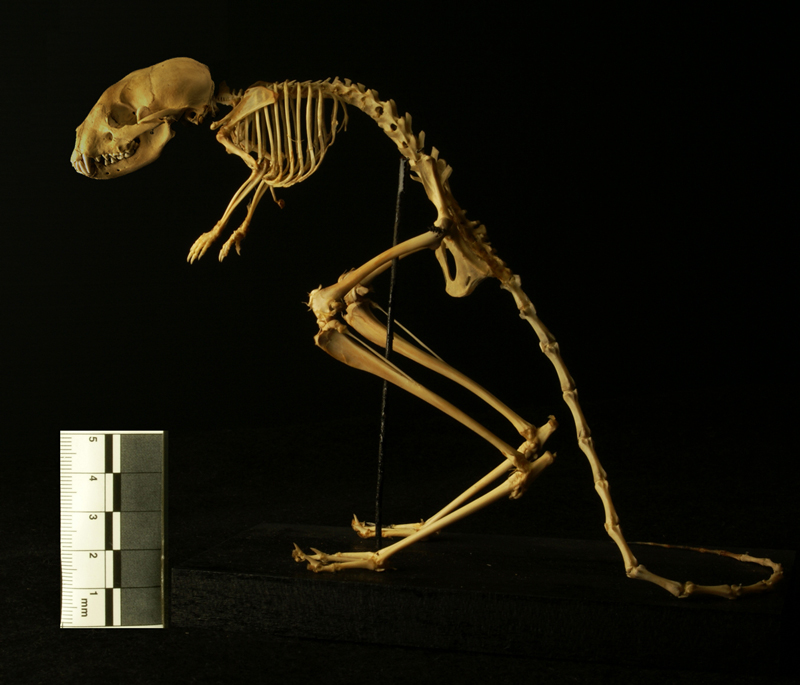
On Friday I gave you a very nice specimen from the Horniman Museum to identify:
I chose this partly because it’s a great mount and partly because I needed to check the identification, which was out of date.
You all did a great job of breaking down the various options – and there were a few. Jake made the comment:
Is it dippy or a bit ruff ?
This I took as a question about whether the specimen was a Kangaroo Rat (of the genus Dipodomys) or a Rufous Rat-kangaroo (Aepyprymnus rufescens). There was another interpretation that fit with the dippy clue – the correct Family name, which is Dipodidae.
Barbara Powell and Jamie Revell were in the right area and henstridgesj suggested J.j. which was pretty much there, assuming he meant Jaculus jaculus. It is in fact the skeleton of the Continue reading
Friday’s mystery object was meant to be a bit of a challenge:
Post-cranial bones can be tricky to identify, especially if you don’t have much comparative material available.
The first challenge was to work out which bits of bone are present – something that Rhea and Jake managed very well. This particular specimen is composed of a broken portion of right mandible (showing the coronoid process, condyloid process and angular process), the left ilium, and the first three cervical vertebrae (which include the axis and atlas bones).
Identifying the species was a bit more tricky using just these few bits of bone, but several of you managed to get there. Henstridgesj was the first to suggest Continue reading
On Friday I gave you these objects to identify:
I expected you to work out what these came from pretty easily – and you proved me right. In fact, I think this was probably the easiest mystery object so far, given that everyone managed to get a correct identification of Continue reading
I know Christmas has been and gone, so this post is far from breaking news, but I’ve been meaning to write it ever since I saw this advertisement on a local bus stop:
Now although I’m an atheist, I really don’t have a problem with the advertisement for any reason beyond the utter banality of the message. It’s a bit like saying this:
For both there is an etymological root linking a supernatural figure to the name of a day – it’s very common, just think of other supernatural figures that lend their names to days, like Tiw, Wodin and Freyja. I wonder if we should also remember these deities on their appropriate days? That seems to be the logical implication of the Christian advert.
But then, what should be done about Easter? Maintaining the logic of the Christian advertising around Christmas, it would seem that we should remember that Easter is named for the pagan goddess Ēostre. This seems doubly reasonable since there is hardly any difference between the Christian celebration and the Pagan fertility festival, with all it’s rampant rabbits and eggy delights.
The fact is that by following the logic of the advertising we should either be utterly ignoring the etymological root of Christmas, as we do for Easter and Tuesday, or we should be acknowledging the etymological root for all days named after supernatural beings.
I’ve decided to make sure I remember that Christmas is about Christ, Easter is about Ēostre and Thursday is most definitely about Thor, which is presumably what constitutes hammer time:
On Friday I showed you some specimens that I had to identify in the museum last week, and I asked if you had any idea what they might be:
Perhaps unsurprisingly, several of you did have a very good idea.
They look a bit bony, but they’re not bone. They look a bit toothy, but they’re not teeth. They look a scutey, but they’re not scutes. They are in fact from an animal that doesn’t have bones, teeth or scutes.
Denis Copilas, Matt king, henstridgesj, Barbara Powell and David all managed to spot that these are the hooks from a very large Continue reading
This week I have some mystery objects that I had to identify earlier this week. Any idea what these things might be?
I’m going to be in Buxton for the day, looking at a mermaid (as is my wont), so I may not be able to respond to comments as usual. That said, I will try, so put your suggestions, observations and questions below – I will respond eventually.
Good luck!