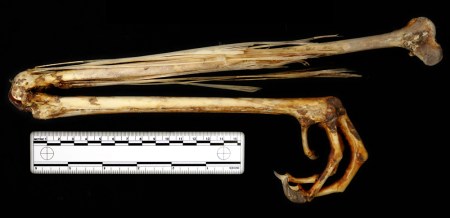
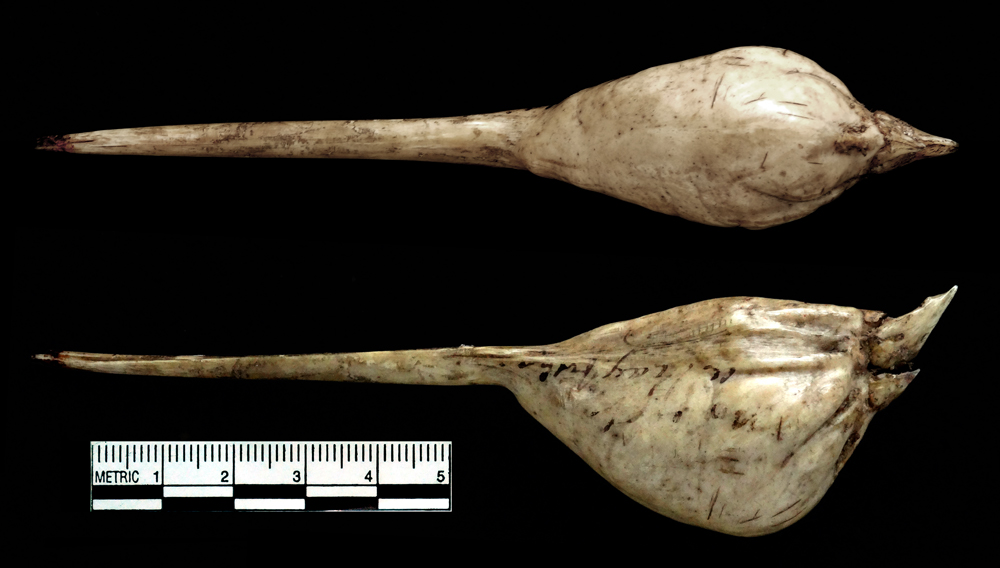
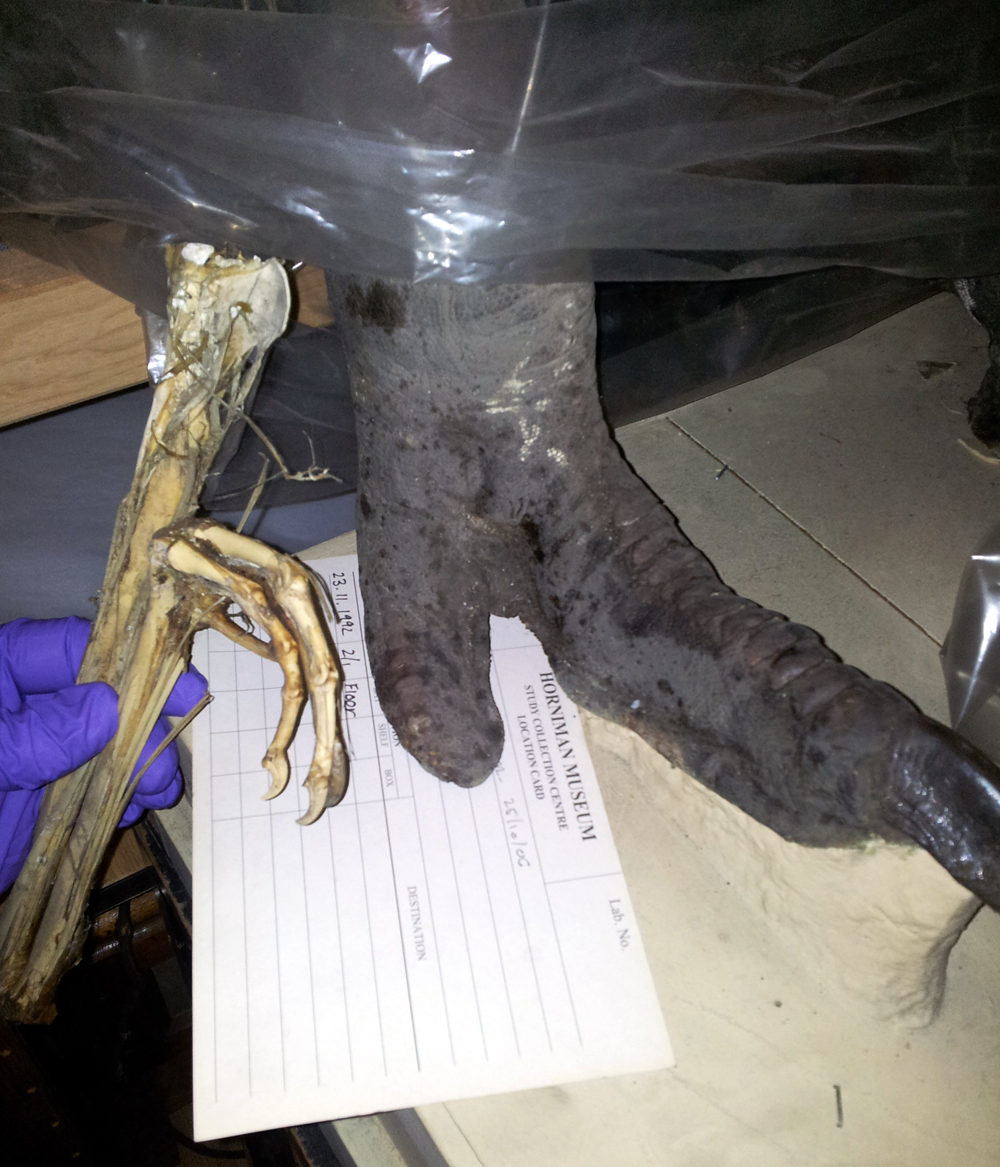
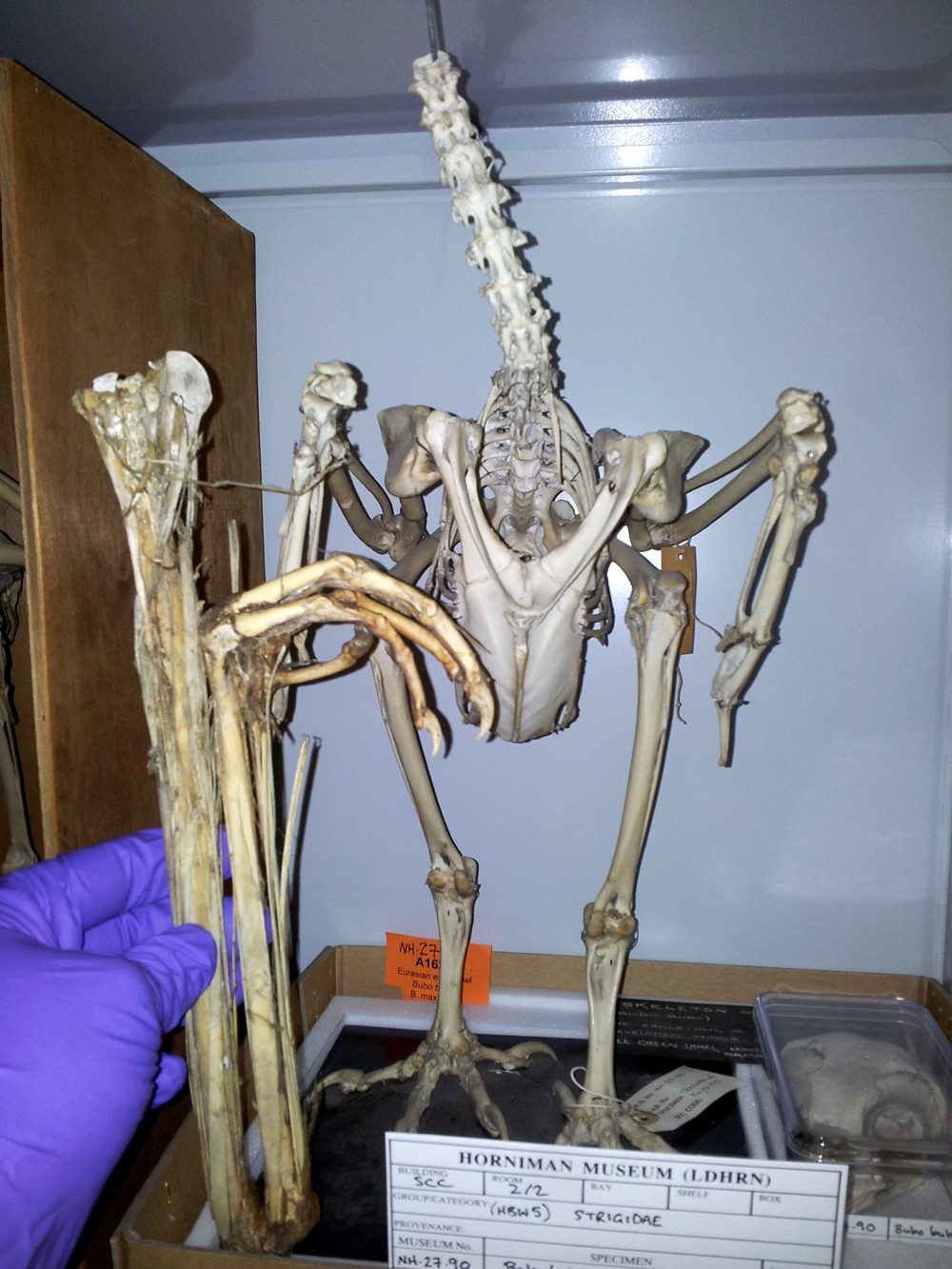
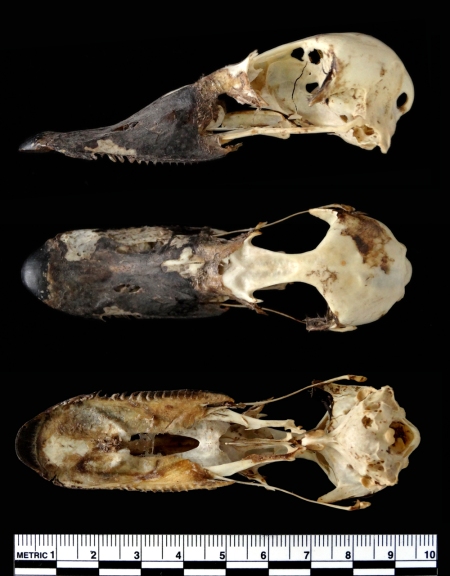
Since I’ve largely been working on the birds recently, I thought I’d give you a specimen that I had to identify earlier this week:
Any thoughts on what this skull might be from? I’d appreciate your input!
On Friday I gave you this anthropological mystery object to identify:
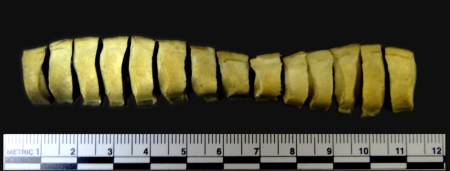
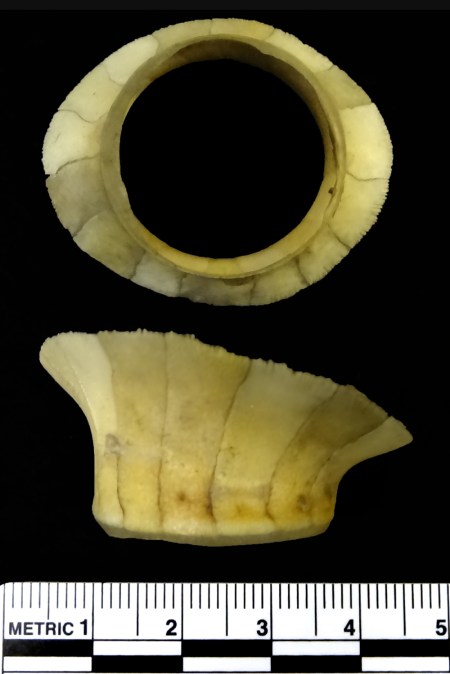
I asked you what the teeth might have belonged to and where in the world might this necklace be from.
It’s always a bit tricky to identify worked material as it will often be different from what you’d see or expect in the wild state and you lose the context of the rest of the specimen. Nonetheless, these teeth are quite distinctive to a particular group of animals.
Barbara Powell, 23thorns and Robin got the right general area with suggestions of Islands in the South Pacific, in particular New Guinea. 23thorns also nailed the animal group with his suggestion of Continue reading
This Friday I have a bit of a change for you – an anthropological mystery object made from animal bits. This specimen was being looked at as part of a review project that we have going on at the Horniman Museum. Any idea what these teeth might belong to and where in the world this necklace might come from?
As usual you can put your suggestions, observations and questions below and I’ll do my best to respond. Good luck!
On Friday I gave you a bit of a tricky mystery object to identify:
I thought it might prove a tricky one and judging by many of the responses I wasn’t wrong. However, I was impressed by the speed with which the archaeologists managed to work it out – in particular Lena, Pocki and Robin.
This piece of bone is the Continue reading
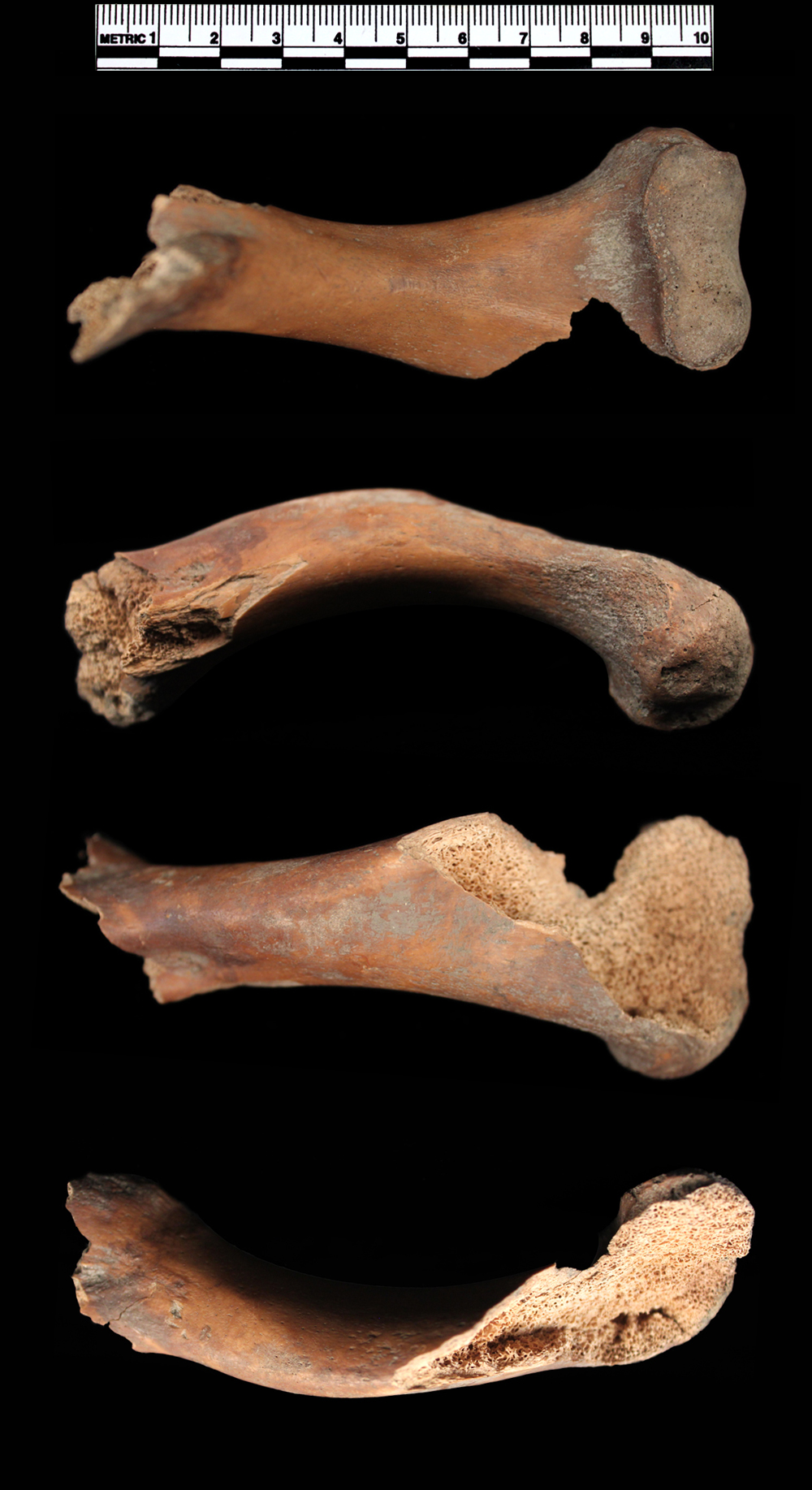
On Friday I gave you this odd-looking piece of bone to identify:
It’s something I tentatively identified a couple of weeks ago and thought you might be able to add your ideas, to make sure I wasn’t missing something. Jake was quick off the mark in suggesting it was the ear bone of a Whale, which is what I thought when I first saw it. This fitted with the large size and high density of the bone, but on closer inspection it doesn’t quite match any of the Whales.
There were a few other ideas, but none that really matched the specimen, except for a suggestion from henstridgesj that it may come from a member of the Trichechidae, which agreed with my identification of Continue reading
Apologies for the late posting of the mystery object answer, I’m at a conference in Edinburgh and I didn’t get a chance to write until now.
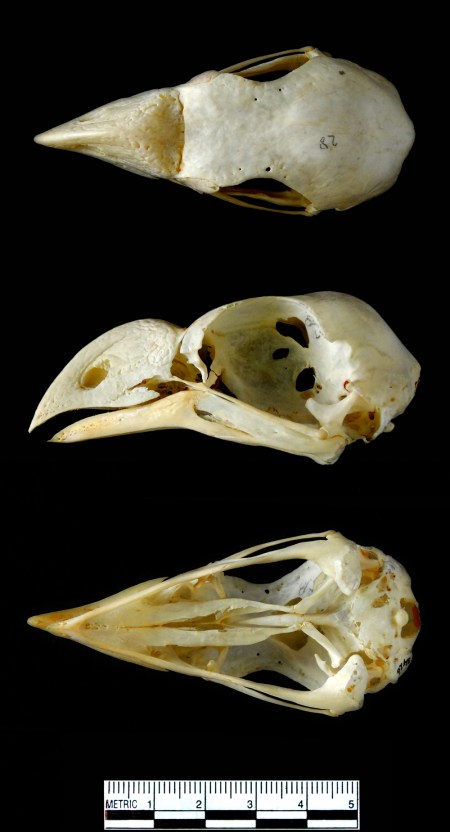
On Friday I gave you this bird skull to identify:
I thought it might be an easy one, but I was hoping to catch a few people out, which use exactly what happened.
This skull is a nice example of morphological convergence – looking a lot like a Pigeon skull, but it is actually the skull of a Continue reading
On Friday I gave you this fragment of bill to identify:
It’s quite distinctive in shape, so I shouldn’t have been surprised when so many of you came to the same conclusion as I did about what it was from. As it is, everyone recognised this as being part of the bill from a member of the Phalacrocoracidae (Cormorant family). Well done everybody!
There are around 40 species of Cormorant, so getting this to species is a bit more tricky and a few possibilities were mooted. However, the two which best fit the shape and size of this bill are the Little Black Cormorant Phalacrocorax sulcirostris and the European Shag Phalacrocorax aristotelis. A quick comparison of the two on the excellent SkullSite.com (P. sulcirostris and P. aristotelis) show that the bill proportions and shape of the bony palate in the mystery specimen are closest to the Continue reading
Apologies for the slightly late mystery object this week – blame Dara O’Briain, who I went to see in Hammersmith last night.
This week I have another specimen that came from the mixed box of bits for you to identify. Any idea what this beak is from?
As usual you can put your comments, questions and suggestions below and I’ll do my best to respond. Good luck!
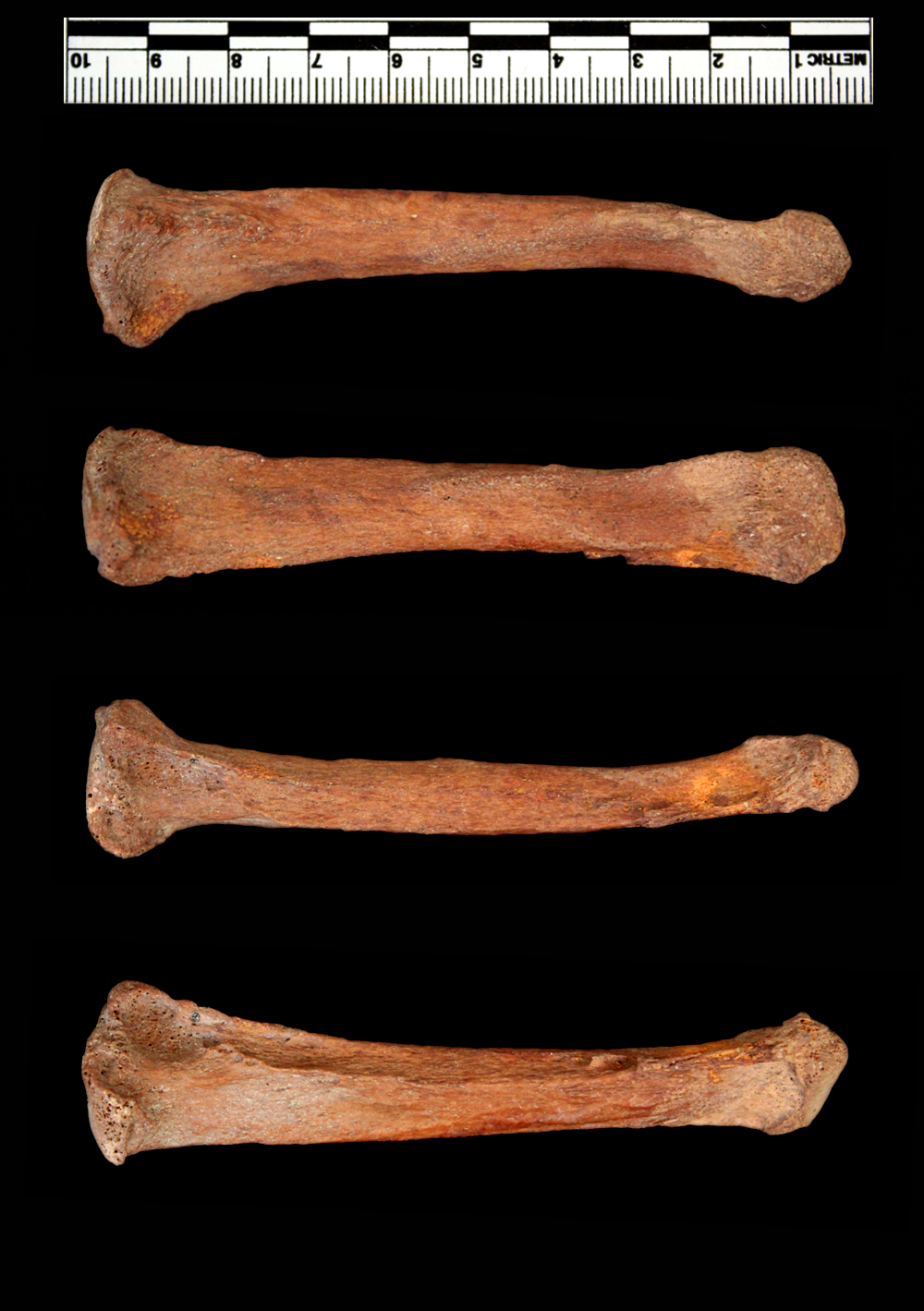
On Friday I gave you this pair of bones to identify:
It didn’t take long for the type of bone to be identified, with Anthony Wilkes immediately spotting that these are the quadrates of a bird. Then things got more tricky as the type of bird became the focus of the identification.
Robin was the first to recognise the family and likely type of bird, with henstridgesj concurring, with the agreement being on these quadrates being from a Continue reading
On Friday I gave you this specimen to identify:
It was one of those specimens that if you’d seen one before it was easy, if not it’s quite hard to work out.
In gross shape the skull has some similarities to that of a reptile, perhaps something like a Monitor lizard (albeit a little narrower). However, it actually belongs to a fish.
Cam Weir recognised this and managed to identify the kind of fish to genus and then species level, along with henstridgesj, 23thorns, Barbara Powell and Robin. Leigh and Ethan were also in the right ball-park with their identifications. This is the skull of the Continue reading
On Friday I gave you this specimen to identify:
As I suspected, the distinctive shape of the skull makes this specimen easily recognisable as an owl (family Strigiformes). However, there are a couple of hundred species of owl, so there were plenty of possibilities to make a more specific identification.
This specimen has quite a distinctive slope to the forehead in profile view and a very clear groove down the midline of the cranium, which combined with the length of around 58mm narrowed down the likely suspects considerably.
Jake was the first to suggest the species I think it’s most likely to be, with palaeosam suggesting the other possible option and RH cautiously suggesting both. This skull belongs to an owl in the genus Continue reading
This week I’ve been doing identifications from boxes of old specimens that haven’t been looked at for some time. Here’s one of the specimens that came out:
It should be a fairly straightforward one to identify to family level, but can you work out what species it is? Cryptic answers appreciated, to keep the game fun for everyone. Good luck!
On Friday I gave you this object to identify:
It was a bit of a tricky one at first, because there wasn’t much context to help identify it. Suggestions included a section through the skull of a horse or whale, but skullguy, henstridgesj and Jake managed to spot enough clues to work out that it’s a section through the bill of a Continue reading
On Friday I gave you this great skull from the Grant Museum of Zoology to identify:
A big list of you (Mieke Roth, Jake, mcarnall, Anthony wilkes, 23thorns, Cam Weir, henstridgesj, Rhea, leigh and Robin) managed to work out what this specimen was from and there were some really interesting explanations about how you came to your conclusions in response to Steven D. Garber’s comment:
Now, I’d like it even more if people explained why this skull looks the way it does.
This is a really interesting thing to consider, as it underlies the process of recognition and identification. As a biologist I might start by saying that the lacrimal foramina is on the edge of the orbit (as henstridgesj pointed out) which is indicative of a marsupial and that the dentition is indicative of a carnivorous mammal that isn’t a member of the placental Carnivora as it lacks carnassials, plus the dental formula appears to be ‘primitive’ from the photo ?.1.3.4/?.1.2.4 which narrows down the possibilities to just a few marsupial carnivores, and given the scale of the skull there is just one that fits the bill.
However, if I’m honest I’d say that the overall shape and robust structure of this specimen is very similar to specimens I’ve seen before belonging to the Continue reading