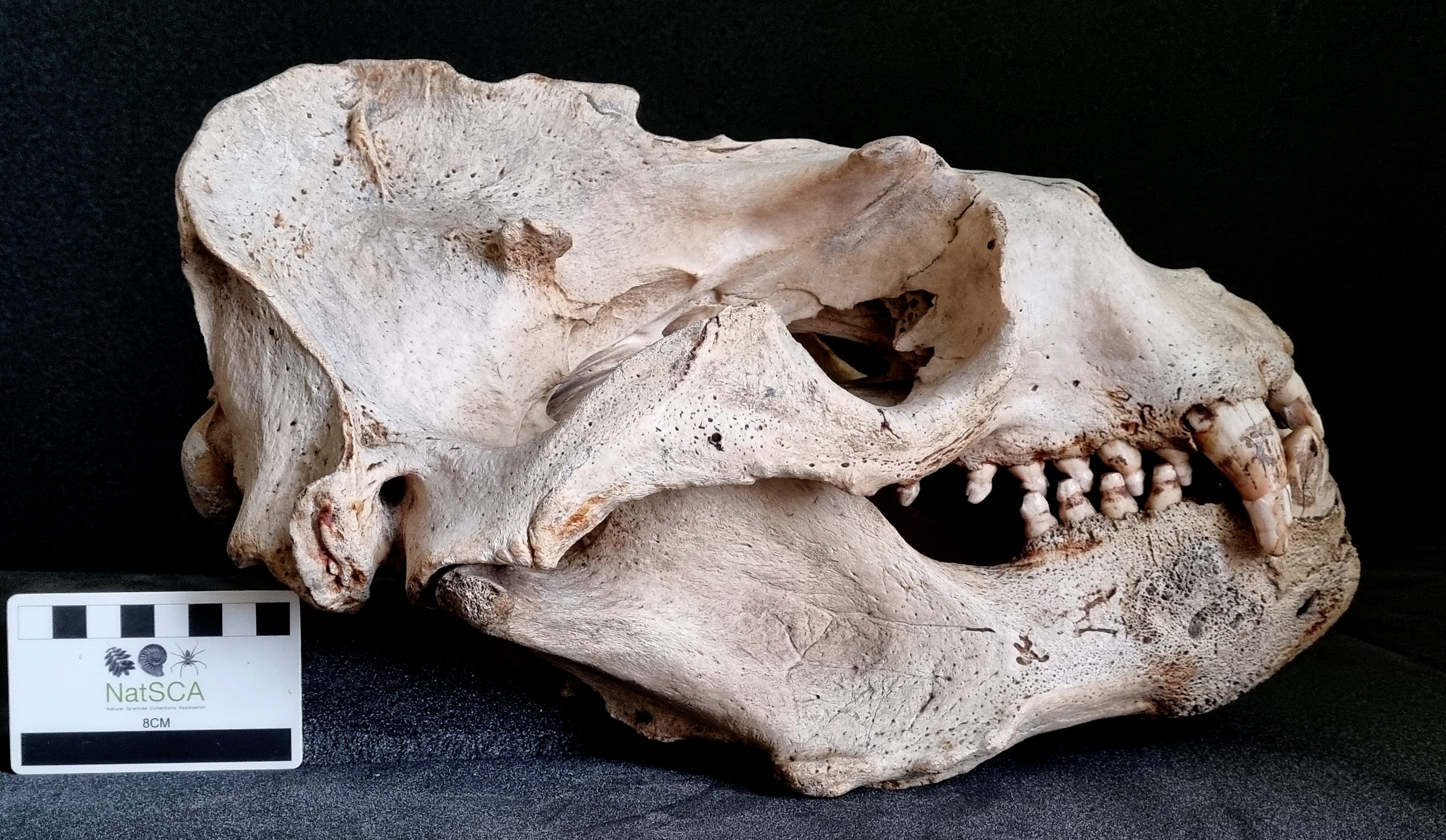
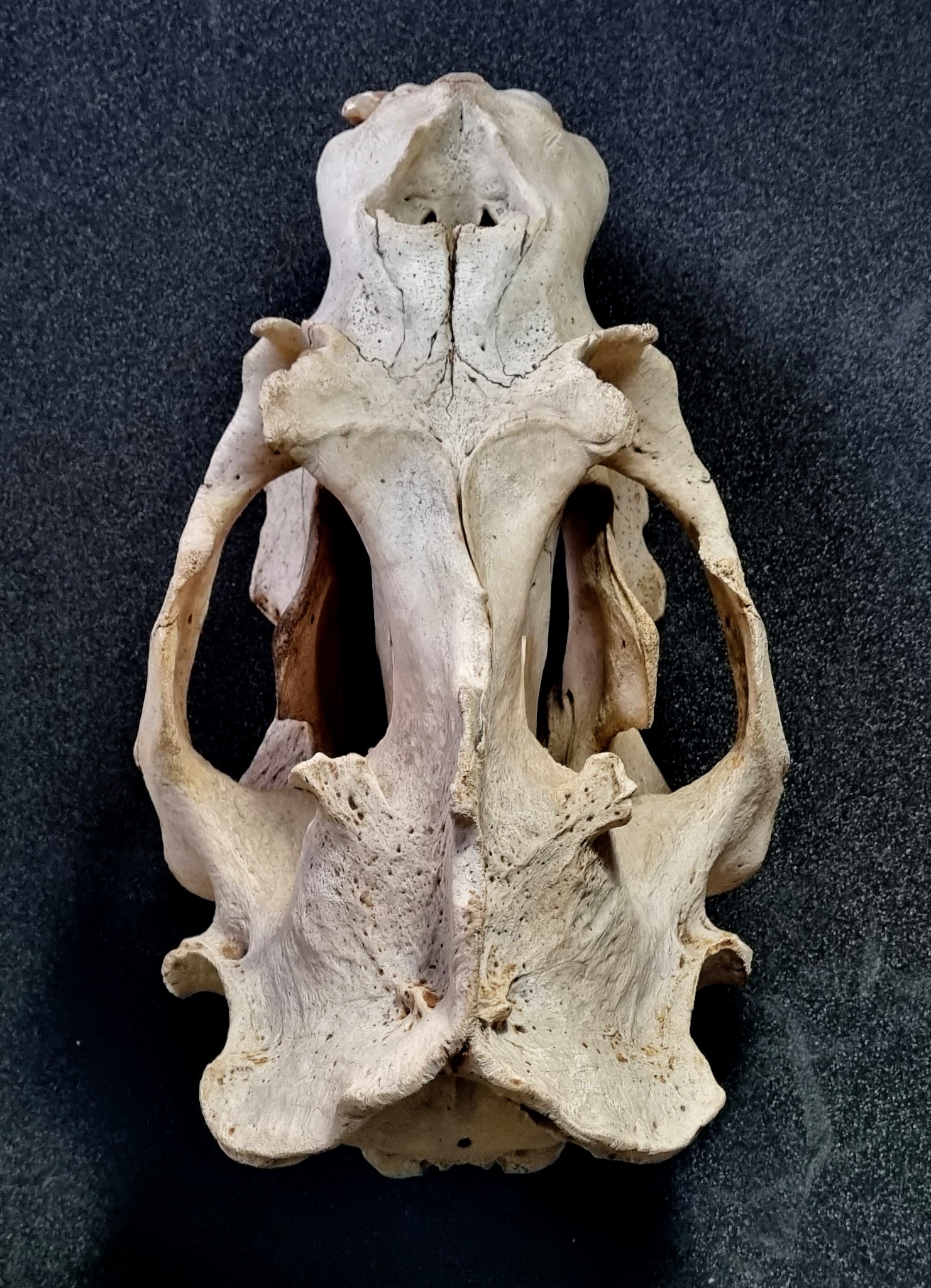
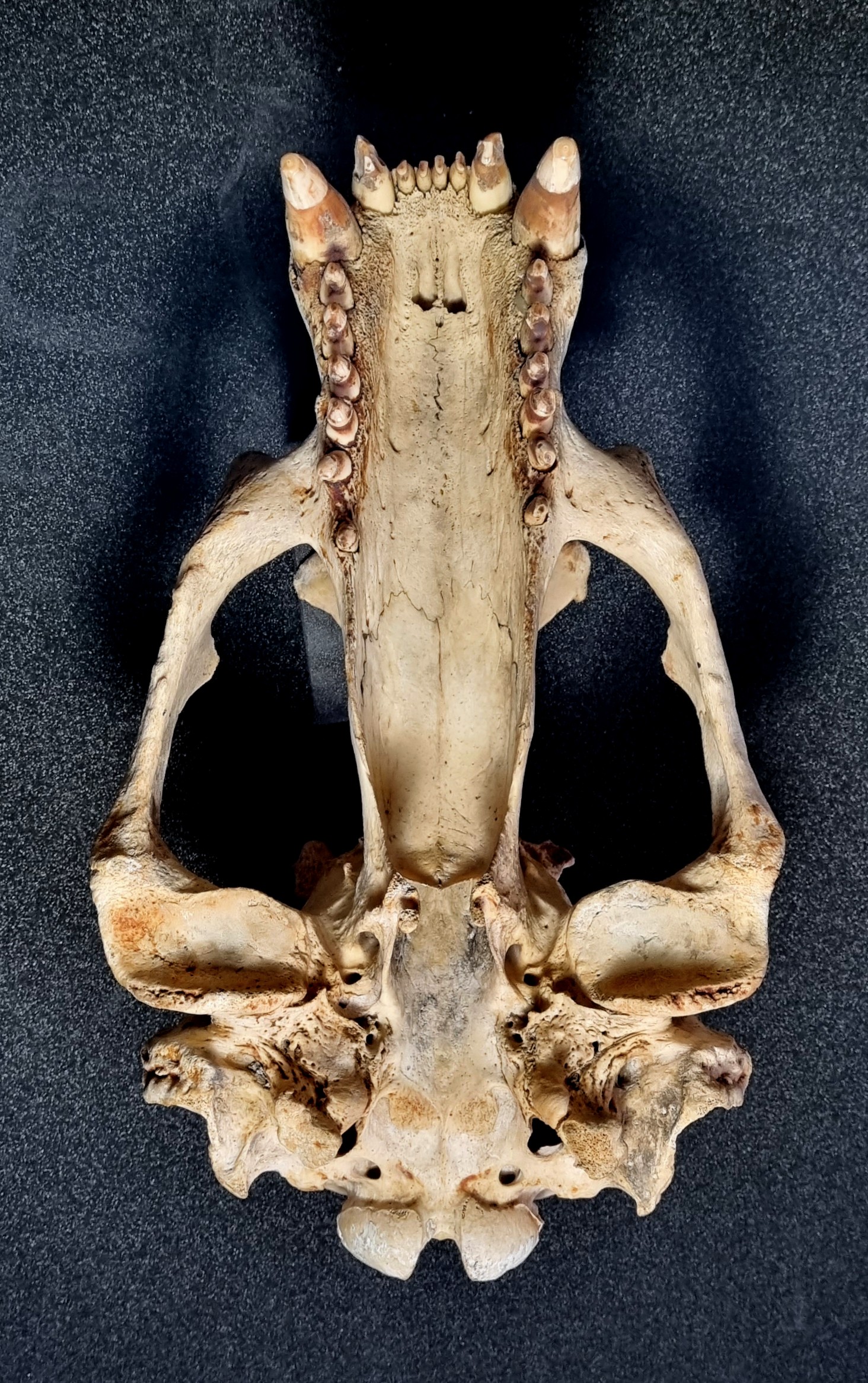
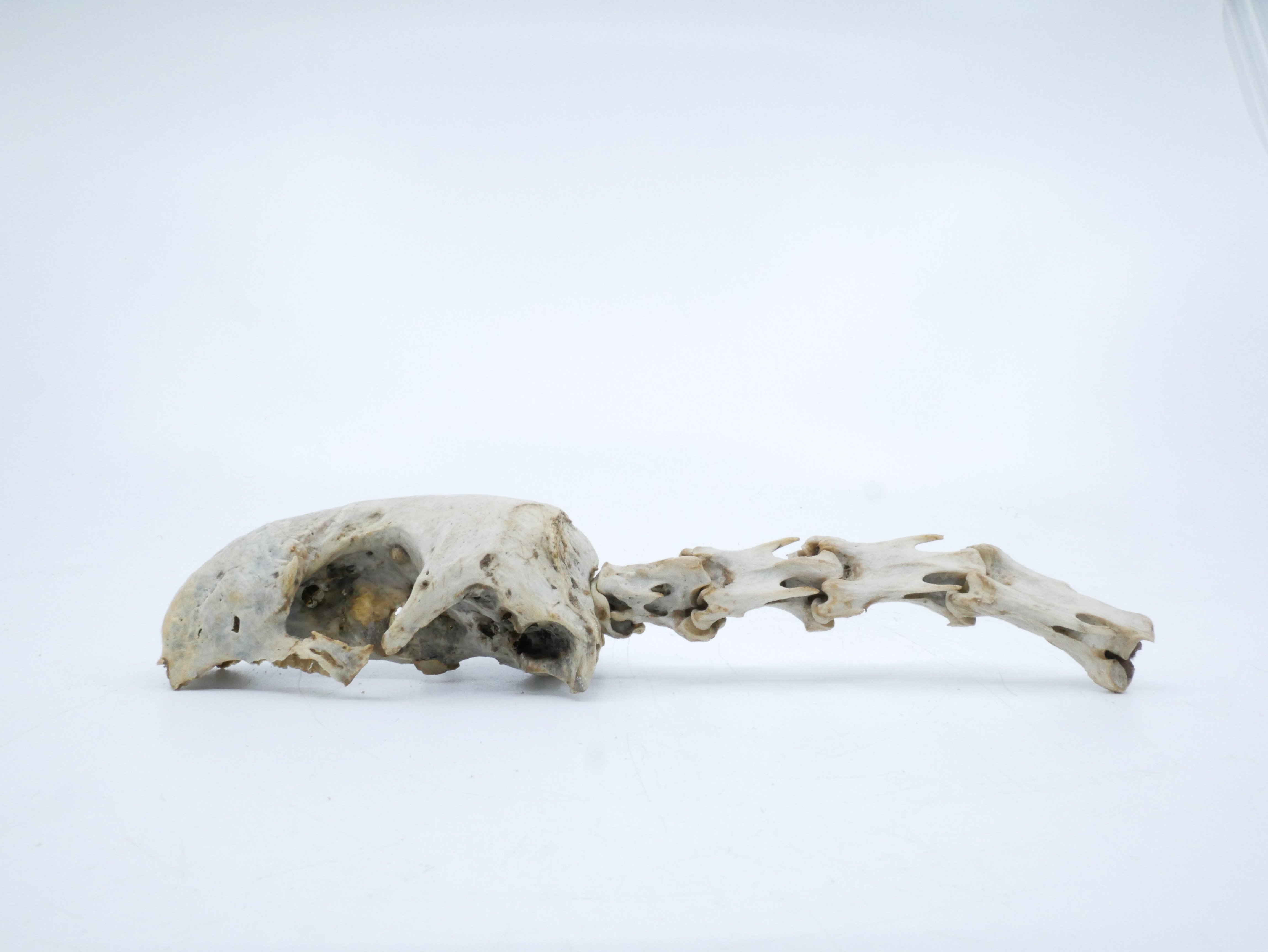
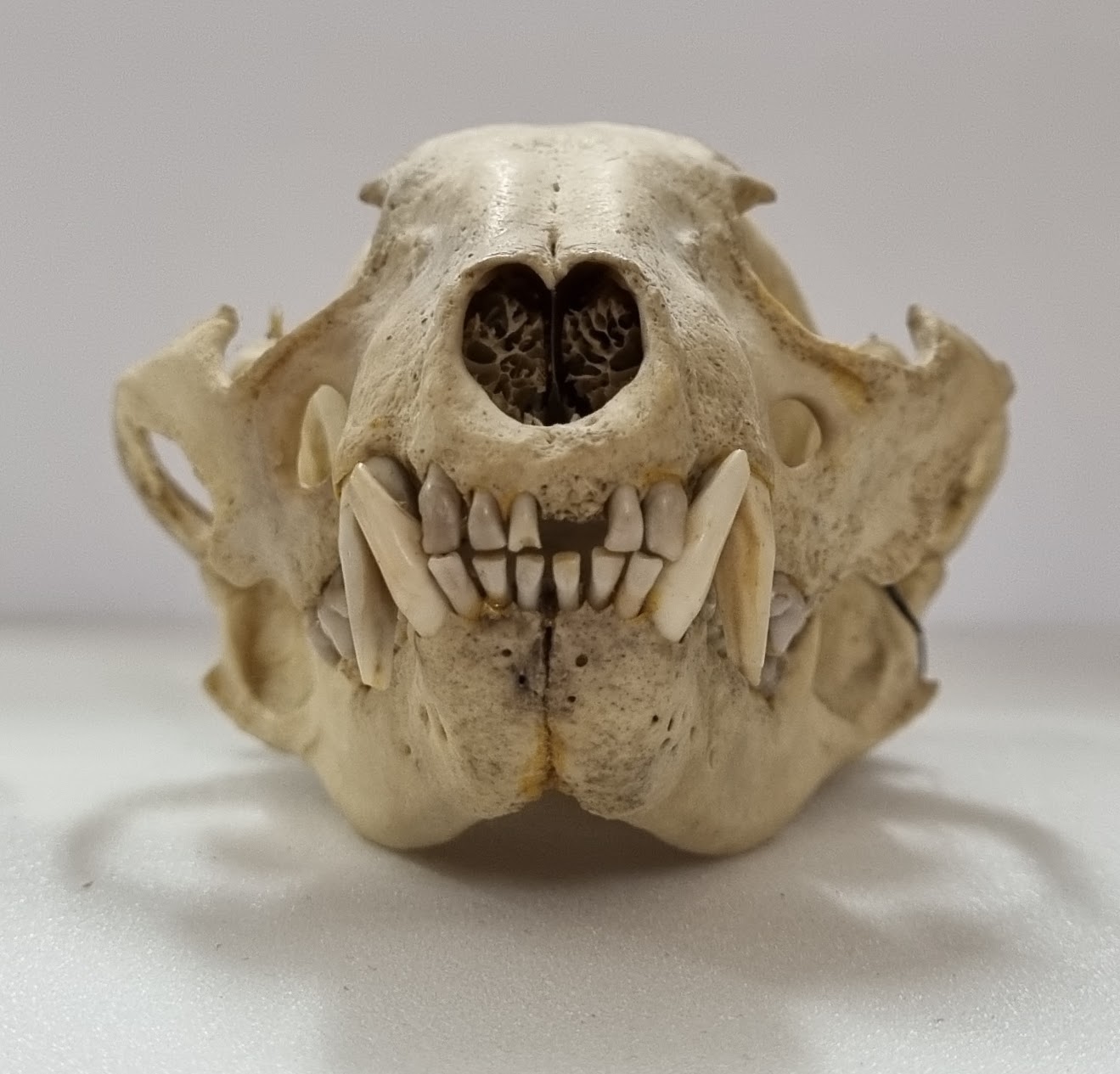
This week I’m back onto skulls for the mystery object – it’s been a while! Any idea what this handsome fellow from the Dead Zoo might be?
I’m sure that this won’t pose too much of a challenge for the more seasoned bone geeks among you, so why not try to keep the answers cryptic, so everyone can have a go at working it out. Have fun!
Last week I gave you this guest mystery object from the comparative anatomy collection of the Harry Brookes Allen Museum of Anatomy and Pathology at the University of Melbourne, courtesy of Rohan Long:
Image by Yijie Cheng, 2023
This is one of those specimens that it can take a while to get your head around, as most of the key features are entirely missing. From the top, the skull almost looks mammalian. Perhaps a little like a large rodent missing part of its zygomatic arches:
Skull of a Striped Ground Squirrel
Even from the side there are some similarities, although it looks a bit more like a turtle:
Image by Yijie Cheng, 2023
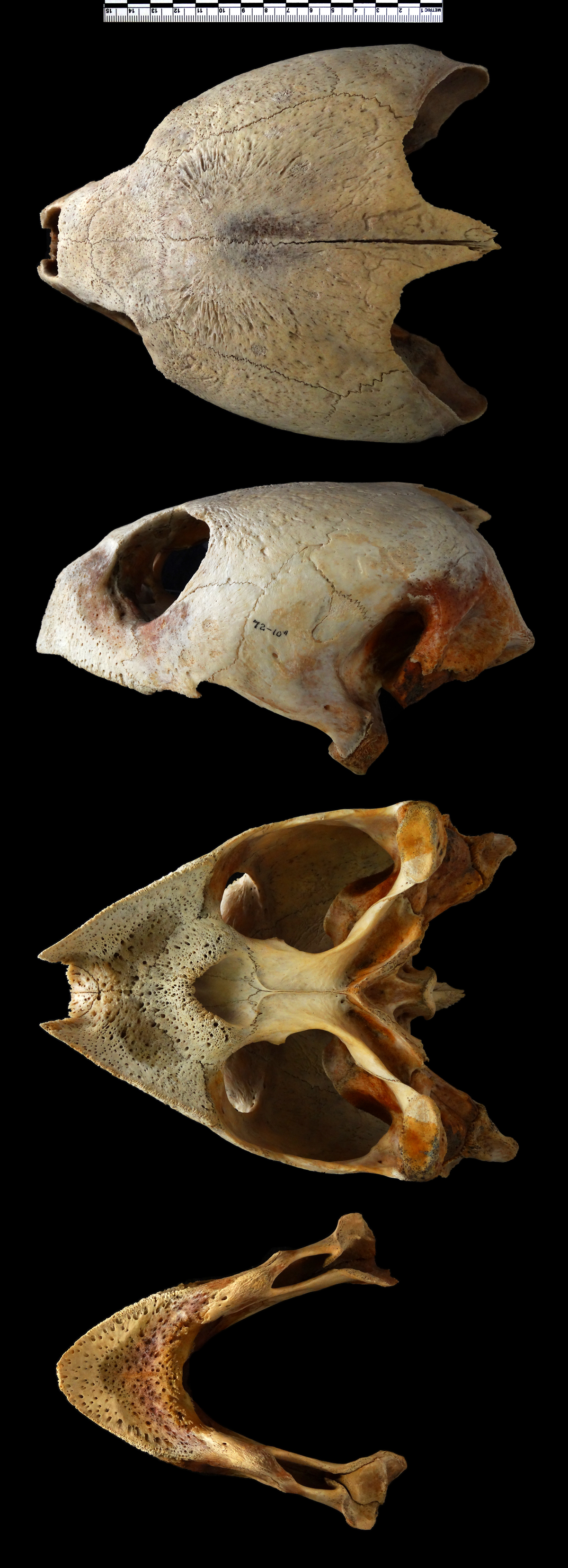
Skull of a Loggerhead Turtle
If you look closely at the underside of the skull, you’ll notice that it has a single occipital condyle, which is something you see in reptiles and birds, but that view of the underside also becomes clear that the front section of the mystery object doesn’t taper to create a bill, like you’d see in a turtle:
Image by Yijie Cheng, 2023
In fact, a bill is the most diagnostic feature that’s missing, and that’s because it’s fallen off.
Those cervical vertebrae are quite distinctively avian – and from a long-necked avian at that. Once you realise that this is the braincase of a fairly large long-necked bird, the next task thing is to look at birds with a bulbous and cleft region on the head, just at the base of the bill (most bird skulls taper down to the bill).
For me that indicates one species above all others – the Mute Swan Cygnus olor (Gmelin, JF, 1789).
Mute swan skulls “Cygnus olor”. Technique of bone maceration on display at the Museum of Veterinary Anatomy, FMVZ USP.
I’d like to offer a hearty ‘bravo’ to Adam Yates, who was the first to comment and correctly identify this with a great cryptic clue:
It is an anseriform for sure the large oval basipterygoid articulations are a give away. With that profile, i’d lose my voice while trying to say the name of a certain Western Australian River.
Last week I gave you this mystery object to have a go at identifying:
Perhaps not the most festive of objects to consider over the Christmas weekend, but it’s a very interesting one that is on display in the Museo Nacional de Ciencias Naturales in Madrid.
I had a pretty good idea of what this was likely to be as soon as I saw it, based on my memory of a badly pest damaged taxidermy specimen of this species I saw about 12 years ago. But, the skull shap alone is distinctive, and the fringe of feather stumps around the eyes makes this fairly staraightforward to work it out – and a lot of you did just that.
This is the partially mummified skeleton of a Barn Owl Tyto alba (Scopoli, 1769).
That fringe around the orbits is made up of the nibbled down rachides (the stiff central vane of the feather is called a rachis and rachides is plural) of the feathers that created the facial disc. This structure acts a bit like a radar dish to help channel sound into the auditory openings (AKA earholes), and it’s what gives owls that distinctive flat-looking face, belying the shape of the underlying skull. The skull itself is particularly long and low for an owl, which is what screams Barn Owl to me, as other owls have a higher domed skull and relatively shorter bill.
This specimen is part of an exhibition showing some of the historical cabinet type displays from the early formation of the Museum. I couldn’t find a species identification, but I think I know what it is. The question for today is, do you?
Let me know what you think in the comments below – I’d be fascinated to hear your thoughts.
Last week I gave you this mystery skull to have a go at identifying:
I didn’t think it would pose as much of a challenge as it did, but as I hinted when setting the question, this specimen is on the chunky side and I think the robustness threw some of you off the scent.
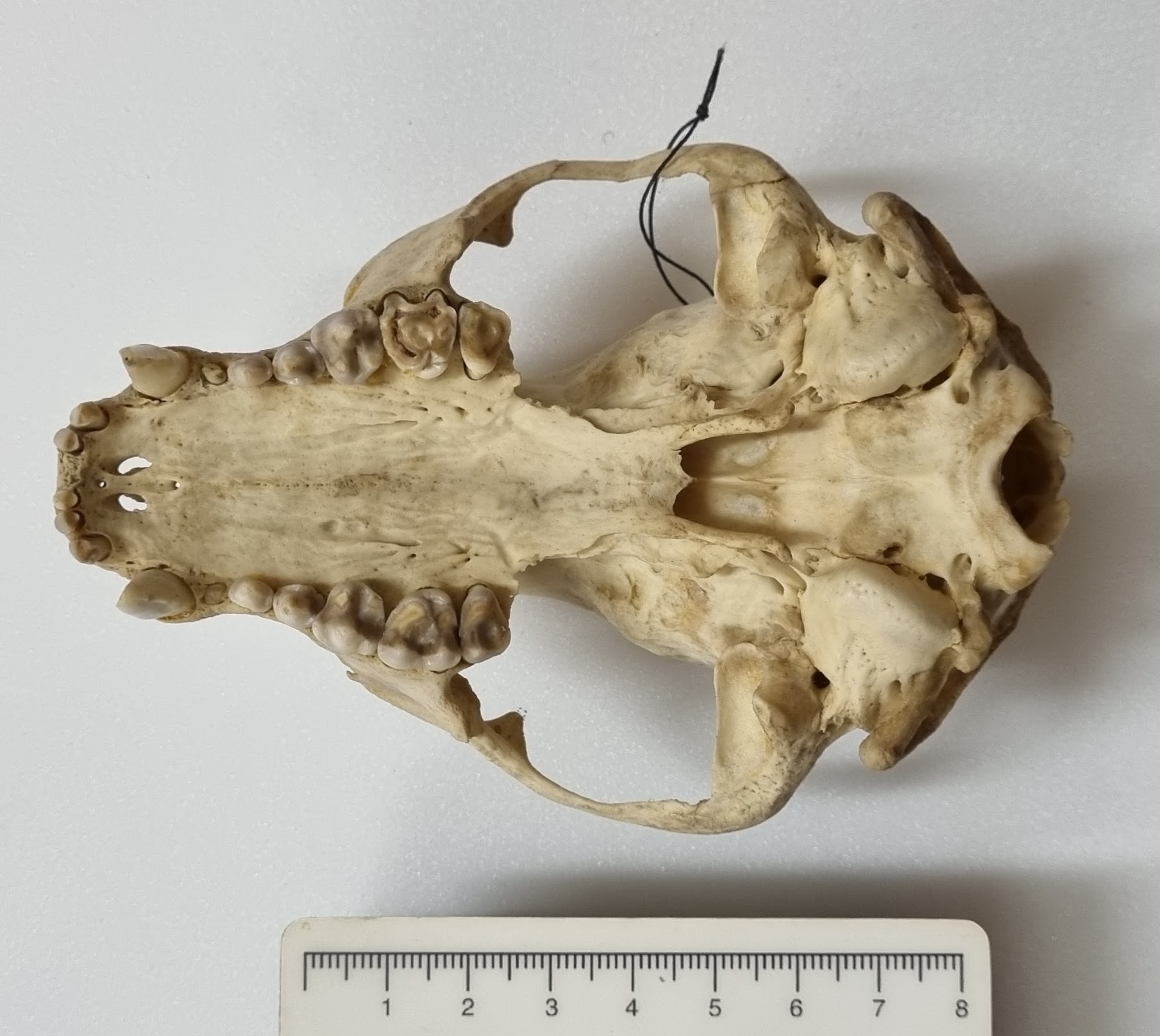
Allen Hazen offered a suite of great observations and considerations (which is well worth a read), but katedmonson and Adam Yates were on the right track from the get-go in the comments and the Twitterati twigged pretty quickly. This skull is from a Raccoon Procyon lotor (Linnaeus, 1758).
Most Raccoon skulls I’ve seen have been smaller and a lot more gracile than this chunkster, so when I first spotted this specimen it took me a moment to recognise the species. In particular, this specimen has very well-developed muscle scars around the zygomatic arches (cheekbones) and sagittal crest (the ridge along the midline of the braincase) compared to the younger specimens that I tend to see, such as this one from my handling collection:
This robustness in the mystery object changes the profile of the skull to some extent, making it more rounded on top and wider across the cheeks. The canines are also larger and the various suture lines are more fully fused, making it seem to be from a more formidable animal than a Raccoon – like a Wolverine or Honey-badger (both of which were suggested on Twitter).
This sort of cranial variation within a species is always interesting to me, since it reflects the biomechanical forces acting on the bone during the animal’s life. It will be influenced by the sex and age of the animal as well, so it illustrates why it’s important for collections to hold several examples of any species, with different sexes and developmental stages represented.
Thanks to everyone for their comments on this – it’s always interesting to get an insight into your thought processes!
Last week I gave you a couple of skulls from the collections in the Dead Zoo to have a go at identifying:
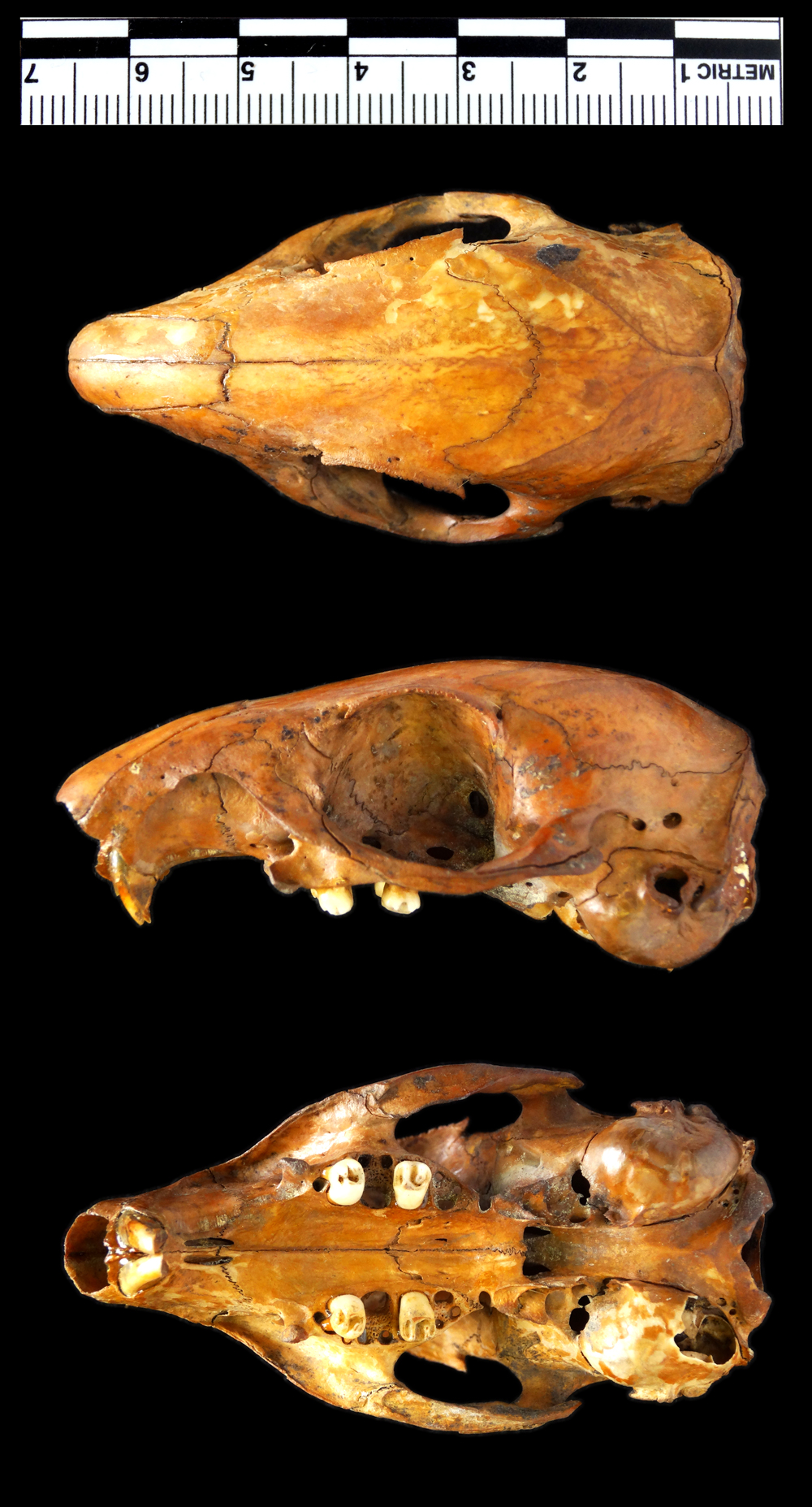
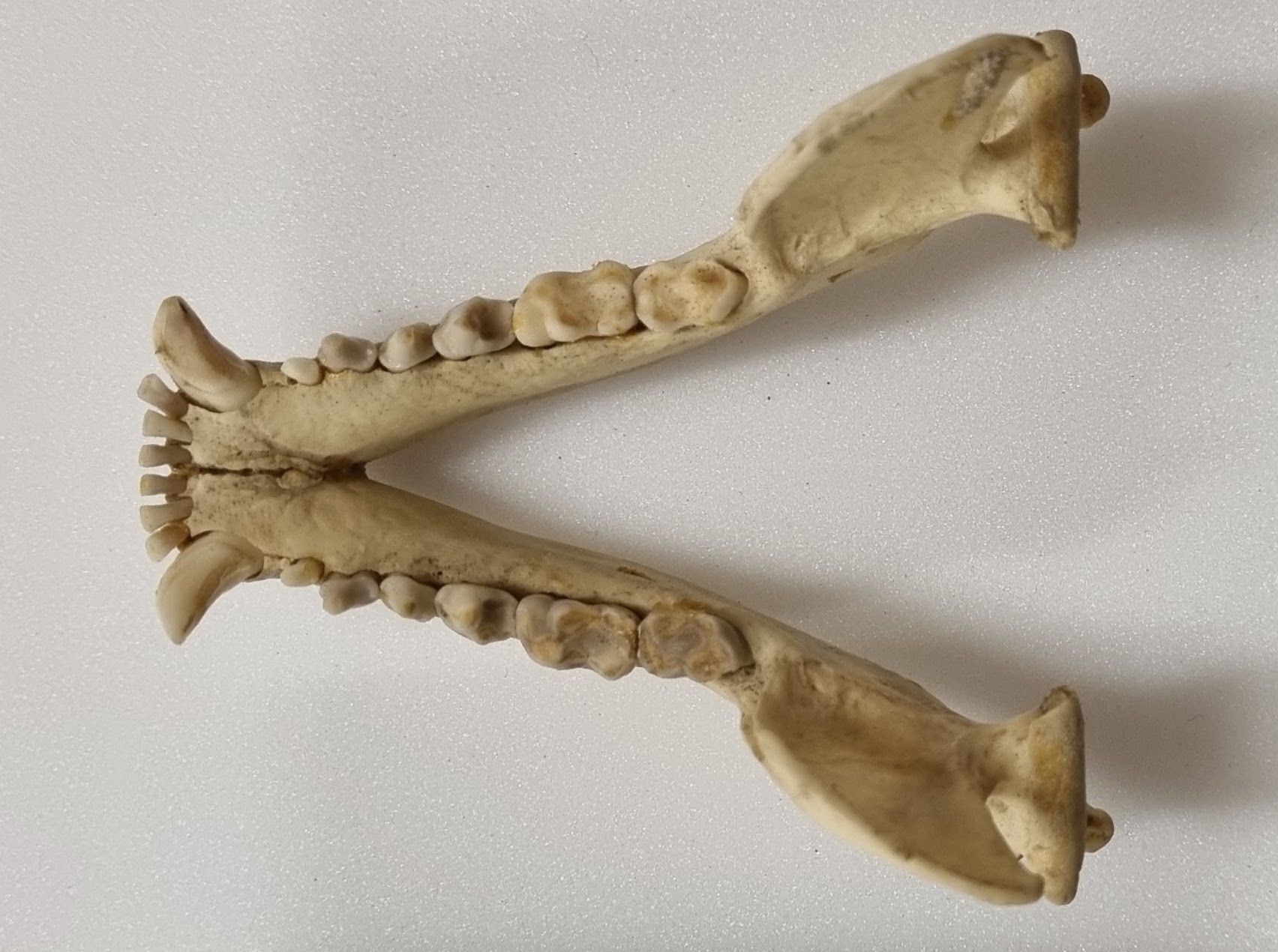
It’s pretty obvious that they are rodents, based on those paired incisors. But there are a lot of rodent species out there…
These are small and, based on the size, we can immediately rule out all anything bigger than a Brown Rat. The anterior portion of zygomatic process, where it meets the maxilla (the front parts of the cheek bones) are broad and triangular, narrowing to very fine arches where it meets the temporal porocess (the rear part of the arch of the cheek bone). This is something I associate with voles.
The teeth are also distinctively ‘voley’ with their zig-zagging cusps.
There are still a lot of vole species out there, but if you’re familiar with identifying specimens from owl pellets in the UK you’ll probably recognise that the specimen on the left has a very distinctive second molar, with a small fifth cusp. This is a tell-tale indicator of the Short-tailed Field Vole Microtus agrestis (Linnaeus, 1761), while the more rounded cusps of the specimen on the right are more in keeping with a Bank Vole Myodes glareolus (Schreber, 1780).
So congratulations to Chris Jarvis in the comments, and to the Scarborough Museum and Galleries Collections Team on Twitter, who managed to leave sufficiently clear but cryptic clues to the identity of these skulls:
This week I finally had a chance to look at some skulls in the Dead Zoo collections, and I thought I’d share the joy of that with you here:
Do you have any idea which two species these skulls might be from?
As ever you can leave your thoughts, questions and suggestions in comments box below. If you find this too easy, maybe make your answer cryptic, to give other people a chance to work it out for themselves. Enjoy!
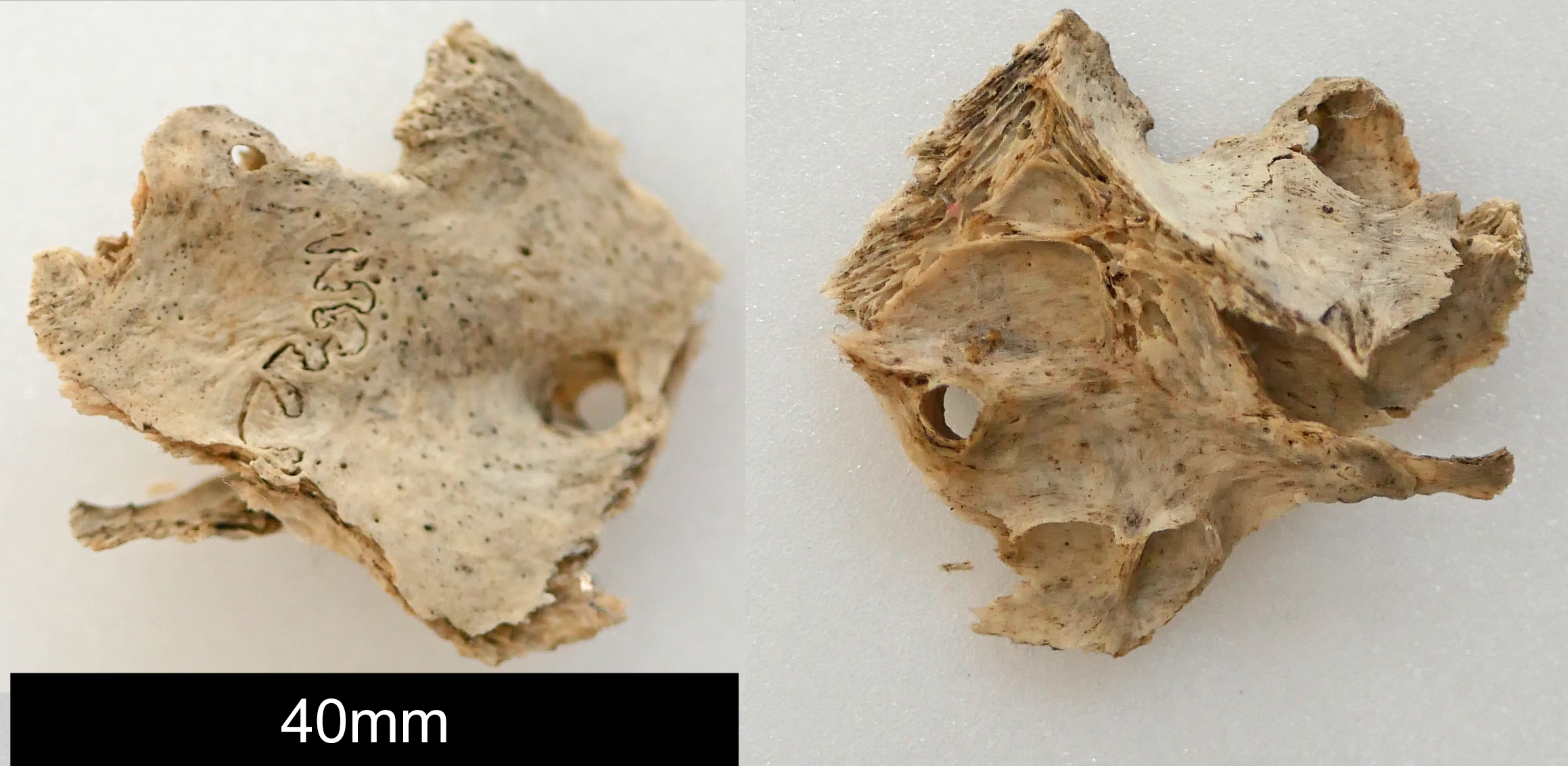
Last week I gave you this piece of bone to have a go at identifying:
It was a particularly difficult challenge and I’m still not 100% sure of what it is, but I was very interested to hear your thoughts.
There was a general leaning towards one of the (many) bones of the skull – although since there’s a suture running through the middle of this, it must consist of at least two different bones that have fused.
This feels right to me, since there aren’t many other parts of the skeleton consisting of fused bony plates containing foramina. But as to which bones of the skull and which animal, that’s a much more difficult identification prospect.
Unfortunately this kind of identification usually depends on a combination of familiarity with a range of skulls and comparative collections to figure it out and, I’m sad to say, that I’ve had very little opportunity to immerse myself in cranial collections for several years now and I rarely get a chance to work on comparative material these days.
The best I could come up with is this being a section from the upper internal portion of the orbit of a Sheep Ovis aries Linnaeus, 1758 (or something quite similar).
I’m thinking this partly due to the V-shaped notch in the margin of the bone, which can be hard to spot in the initial photos, so here it is from the side:
I hope that wasn’t too disappointing as a challenge, and I apologise for not offering a definitive answer, but if I manage to track down some old specimen that is missing this exact section of bone, I’ll be sure to share it here!
In the meantime, please feel free to offer more suggestions and, if you have comparative material of your own, maybe see what you think? Thanks everyone!
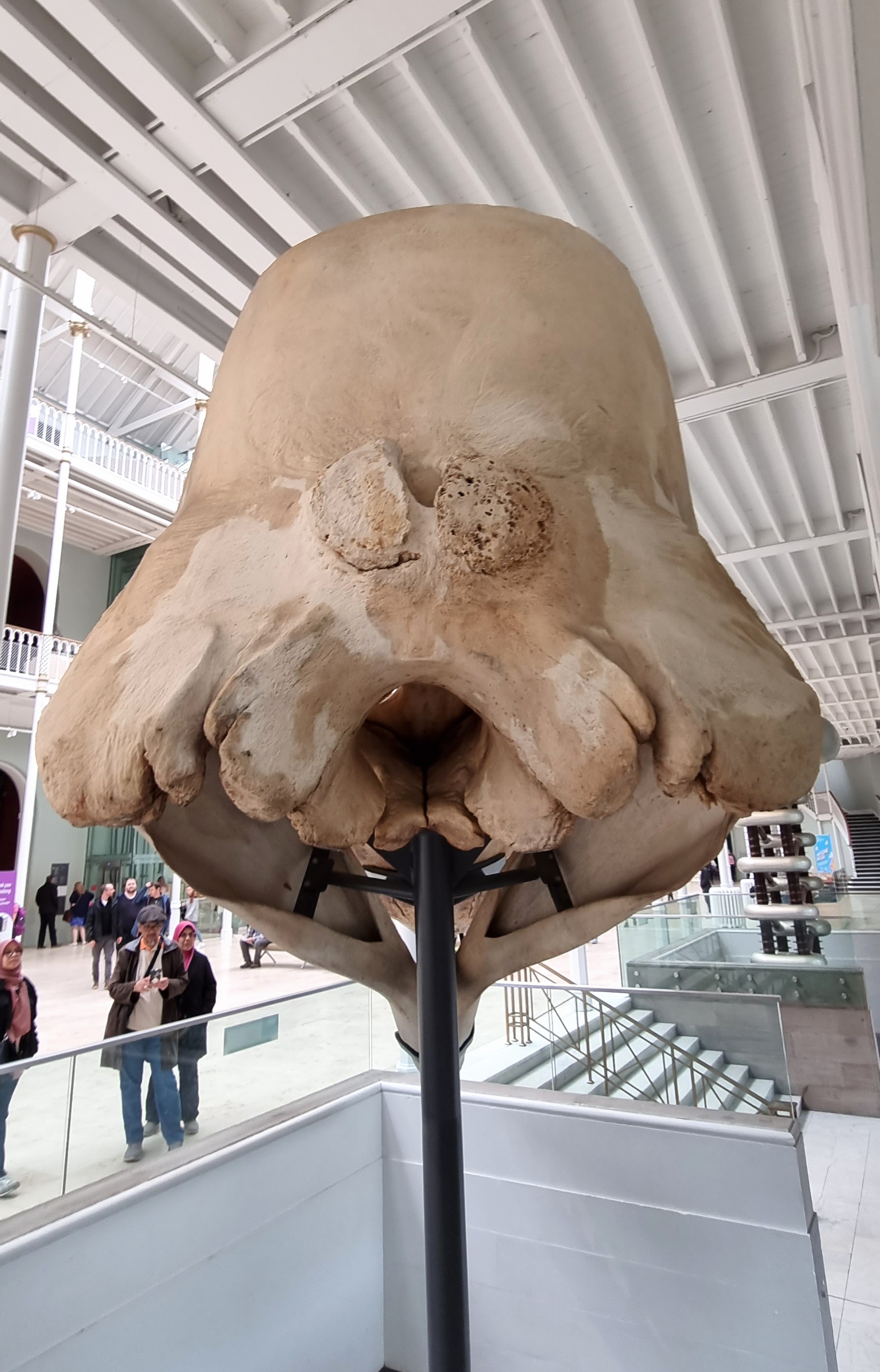
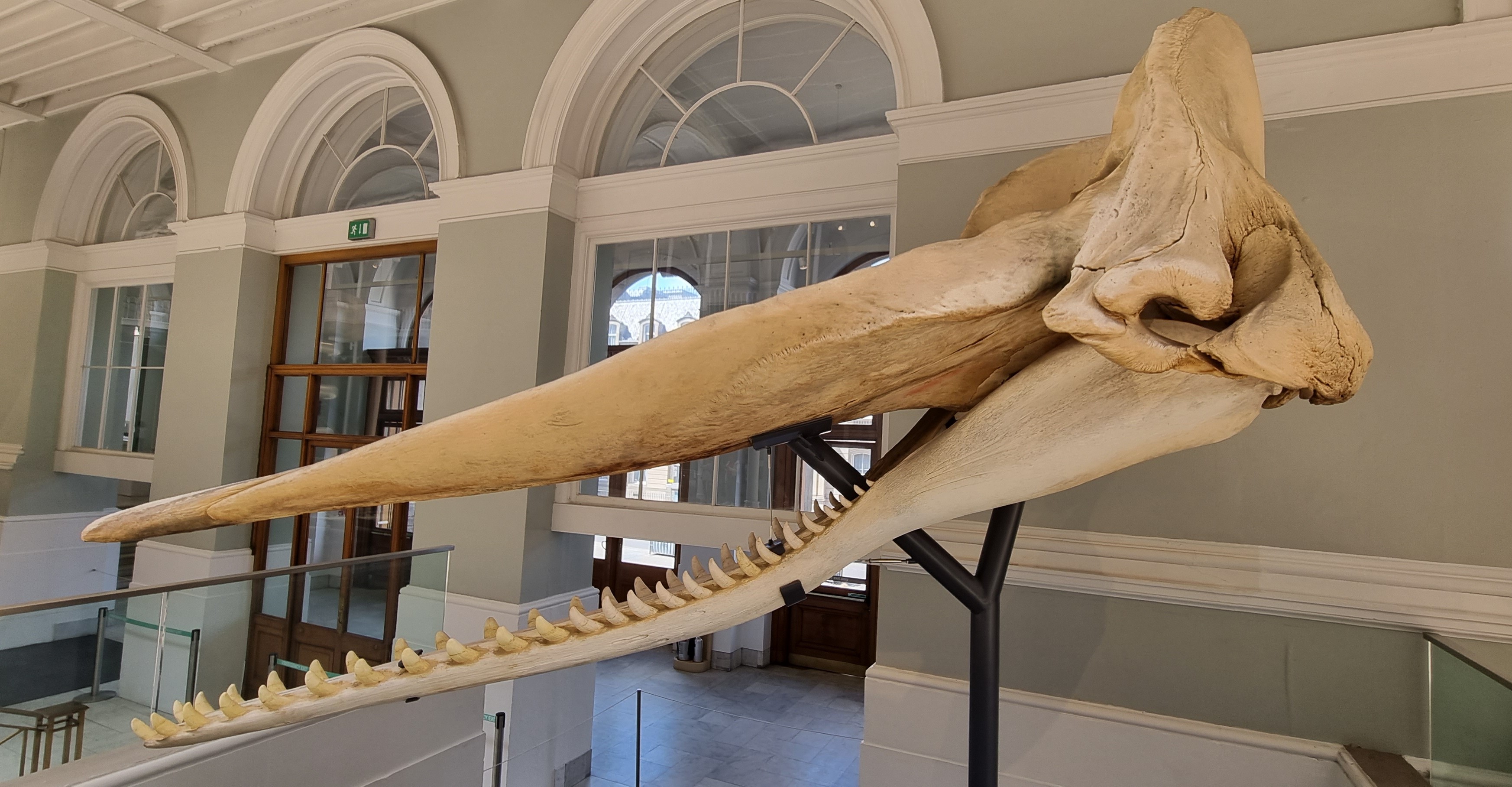
Last week I was in the lovely city of Edinburgh, catching up with many of my wonderful natural history colleagues from around the world at the Society for the Preservation of Natural History Collections (SPNHC) conference. While I was there, I spotted this object and thought it might pose an interesting mystery object:
Interesting perhaps, but clearly not very challenging, since I think everyone managed to figure out what it is, despite the unusual viewing angle. Well done to Wouter van Gestel for being the first to comment.
Here’s an image of the same object from a couple of different (and somewhat more common) angles:
The large size and that very distinctive lower jaw, where the two halves of the mandible meet and run parallel for over half the length of the jaw, are unmistakeable (as noticed by Adam Yates). This is the skull of a Sperm Whale Physeter macrocephalus Linnaeus, 1758.
Nearby, I noticed a much smaller version of this specimen, housed in a much smaller version of the National Museums Scotland, which definitely deserves a mention:
The teeth of a Lego whale are probably not as efficient at keeping hold of a squid as the robust curved teeth of the real animal, and the skull is a bit less impressively huge, but it certainly has charm.
If you get a chance to visit Edinburgh I definitely recommend a trip to National Museums Scotland – not just for the Sperm Whale and the Lego, but also for one of the most impressive taxidermy dioramas I’ve ever seen. Here’s a small section to give you an idea:
It’s been a fantastic opportunity to catch up with natural history colleagues from around the world and to learn what everyone has been busy doing over the last few years. I also got to see some fantastic specimens held by NMS and I thought I’d set one of them as this week’s mystery object:
Do you have any idea what this might be?
As ever, you can leave your thoughts in the comments box below. Have fun!
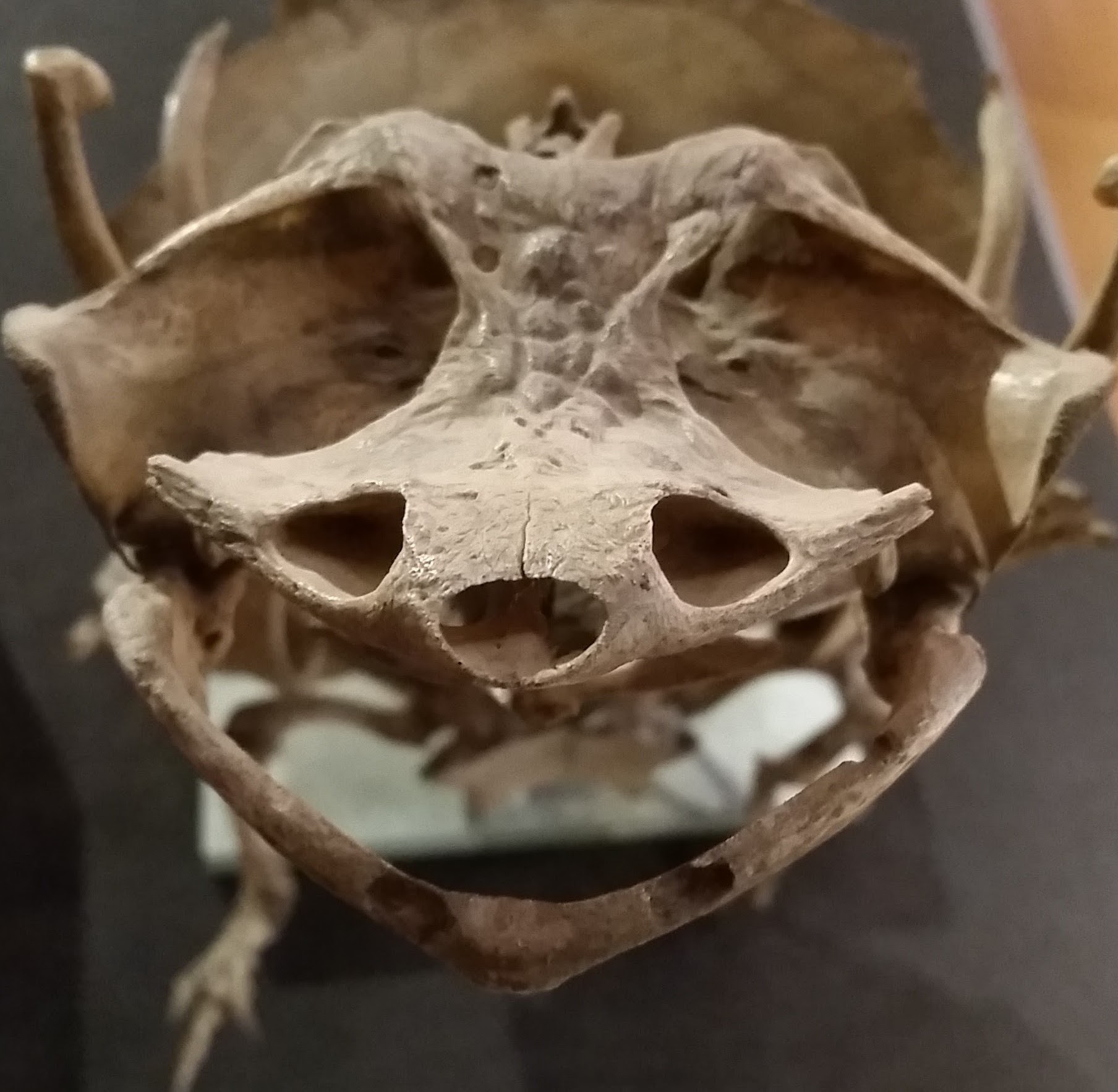
Last week I gave you a mystery object from the Grant Museum of Zoology, UCL, with this old photo from my time as the Curator there:
This is one of those species that I have a bit of a soft spot for, due to the general weirdness of the skull. That does however make it quite recognisable as a specimen, even in a photo that hasn’t been taken for the purposes of identification – like this one.
Everyone who commented recognised that this is some sort of turtle, and thanks to that very flat skull with all the features towards the very front end, most people worked out that it’s a from a Mata-mata Chelus sp. Duméril, 1806.
Any extra information is useful when trying to identify fish, since there are so many species, but sometimes a bit of familiarity is what you really need to start narrowing down options, which makes the Zygoma community a helpful resource when dealing with an identification like this. And you did not disappoint!
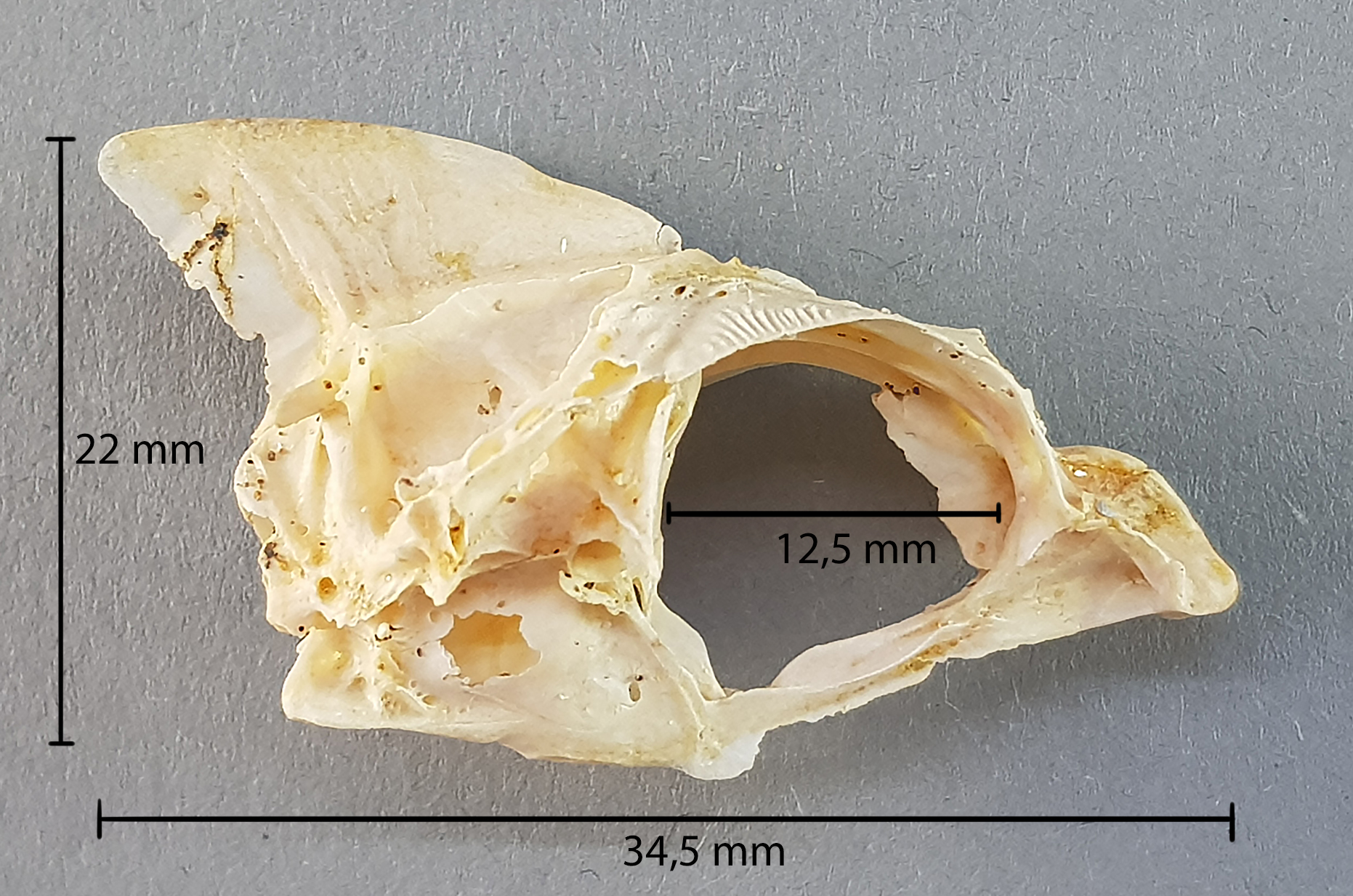
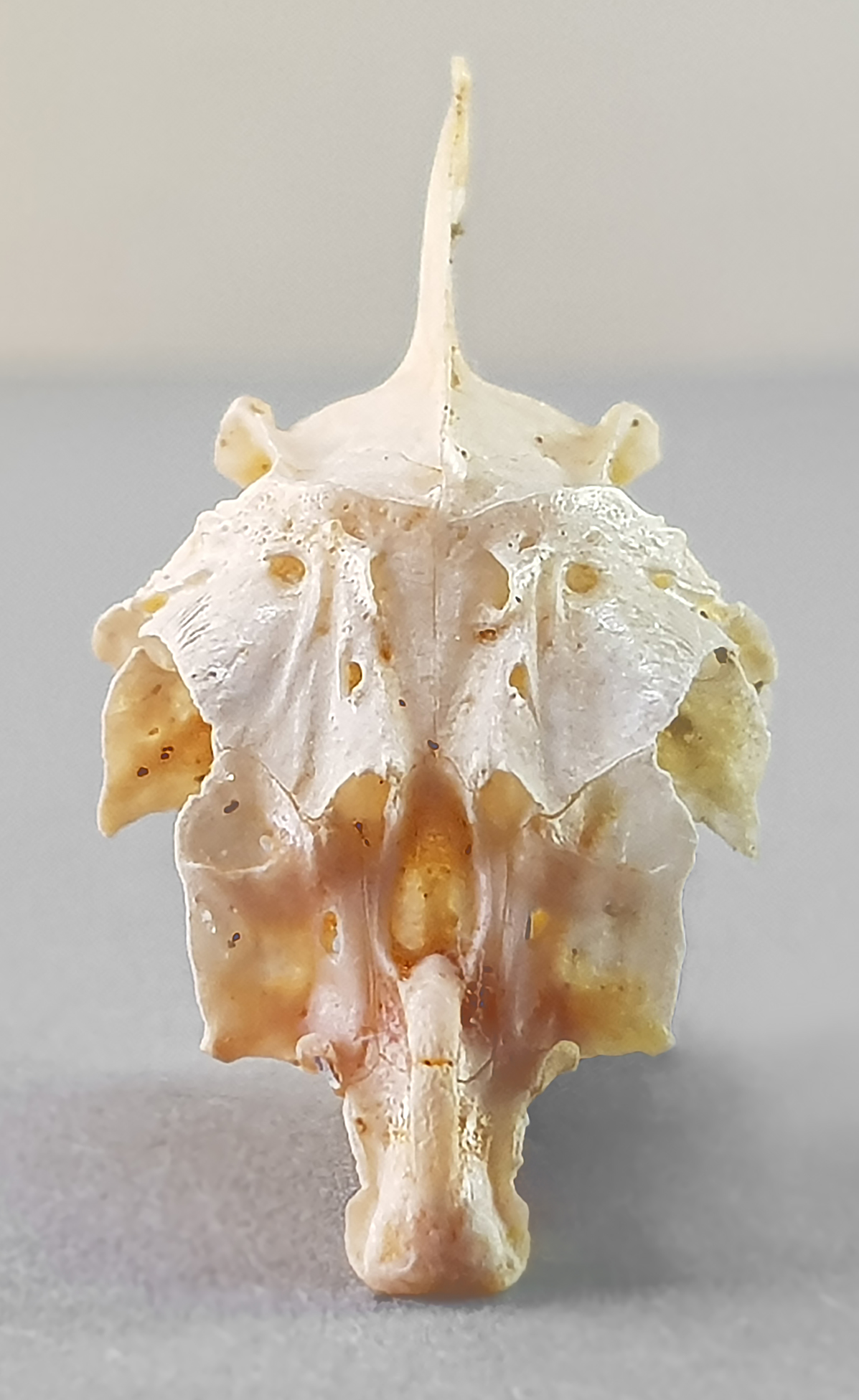
Tony Irwin, jennifermacaire and Wouter van Gestel all came through with excellent observations on the species. This object is a neurocranium (we’ve talked about these before) with a very pronounced supraoccipital crest (the big fin-like crest on top), which combined with the overall shape of the neurocranium suggests it’s a member of the Sparidae (the family containing the Porgies and Seabreams).
Knowing this, and having the Fishbase list, makes it much easier to narrow down the likely species. Unfortunately, there is no single resource to make comparison easy, but a lot of trawling through a variety of images of skulls and neurocrania will yield results (Flickr has some useful images for example).
Image by Paula Burdiel, 2022
From my searches, the shape of the supraoccipital, vomer/prevomer (the beaky-looking bit) and that impressive set of supraorbital crests (those frills of bone above the eye sockets) suggest that this mystery object is probably the species suggested by Tony Irwin – the Gilt-head Seabream Sparus aurata Linnaeus, 1758. I’m not 100% sure of this identification, but it’s the best fit I can find.
Thanks to Paula for sharing this object and thanks to eveyone for your thoughts on this specimen – it’s always valuable to get your input!
This week I have another guest mystery object for you to have a go at identifying, this time it’s from Paula Burdiel, who found the specimen in summer 2020 while beachcombing in Islantilla, Huelva (Spain):
Image by Paula Burdiel, 2022
Image by Paula Burdiel, 2022
Image by Paula Burdiel, 2022
Image by Paula Burdiel, 2022
Image by Paula Burdiel, 2022
Image by Paula Burdiel, 2022
With this fantastic array of images and clear locality information, I’m hoping that we can figure out which species we have here. Let’s hear what you think it might be in the comments below – between us I think we can identify this fishy mystery object!
Last week we had a second guest mystery object from Rohan Long, who is based at the Harry Brookes Allen Museum of Anatomy and Pathology at the University of Melbourne.
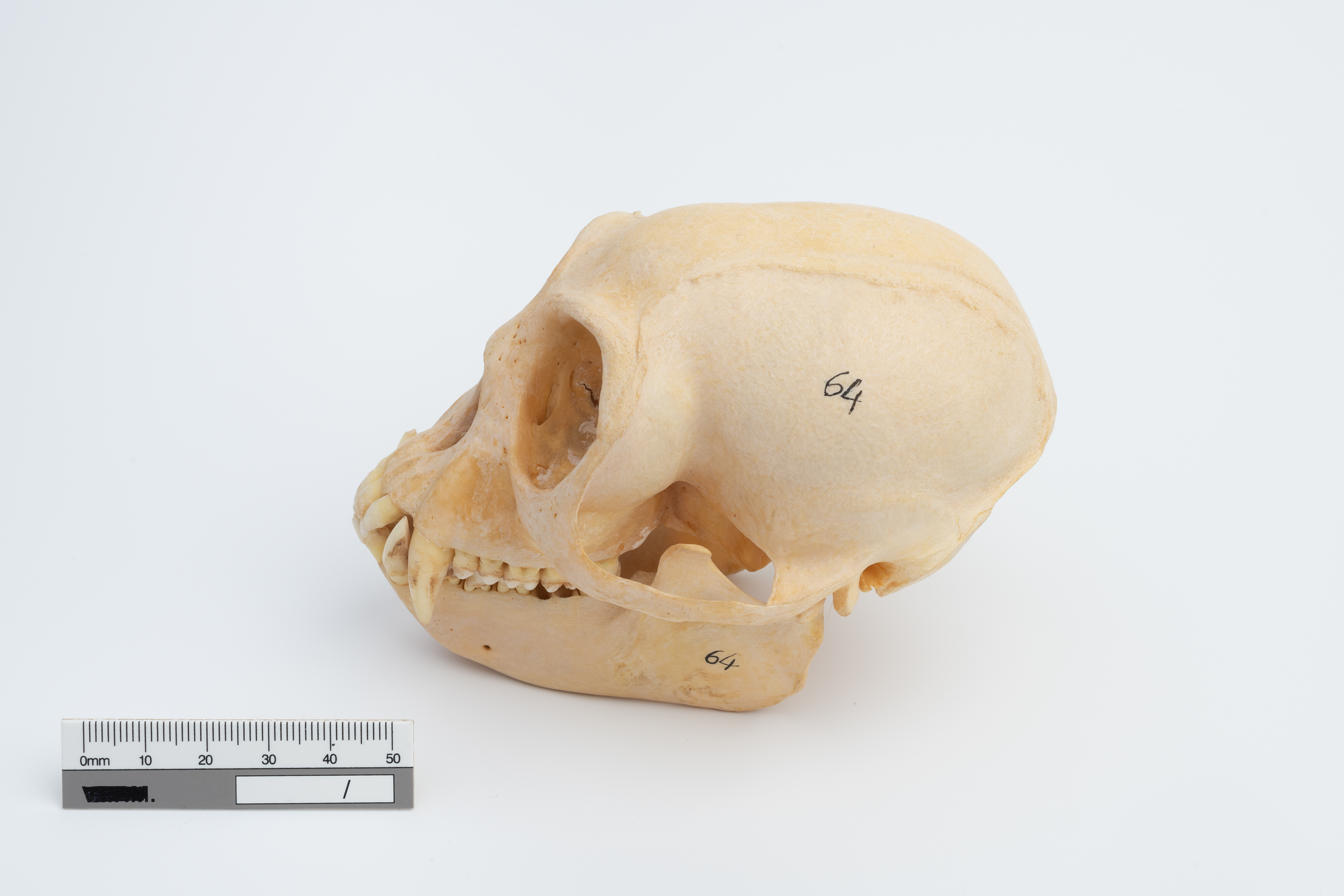
The teeth tell us that the mystery object is from one of the Cercopithecidae (Old World Monkeys) since there are only two premolars instead of the three that you find in the Platyrrhini (New World Monkeys). That helps a bit, but there are still over 150 species in the Cercopithecidae to consider.
Some can be ruled out fairly easily, such as members of the Papionini, like baboons and macaques, which have adults that are more prognathic (their jaws jut forward) that this specimen. This is less true for juveniles (jaws jut more as the animal grows and matures), but we can ignore that here, since the mystery specimen has well-fused sutures and visible wear on the teeth, so we know it’s an adult.
Image by Gavan Mitchell, 2022
One thing that can be useful to consider when trying to identify primate skulls is the shape and position of the nasal opening. This can vary within species and it can be a feature sensitive to the angle at which a photograph is taken (making it more difficult to assess from images), but overall it can help narrow down possibilities without having to get into too much fine detail early in the identification process.
Image by Gavan Mitchell, 2022
The Mammalian Crania Picture Archive has well standardised images, including a reasonable variety of primates with males, females and animals of different ages represented. They also provide some measurements for each specimen, that may be useful when making comparisons. The primate page is here in case you’re not familiar with this very valuable resource.
Over the last week I’ve taken a look through a wide variety of skulls from different primate taxa and I’m confident that the mystery specimen is from the Colobinae. I think the position of the nasal opening (especially the top part of the opening in relation to the eyesockets) is helpful in distinguishing possible species within the subfamily. This makes sense when you consider that a third of the genera in the Colobinae are in a group known as the “odd-nosed monkeys”.
In this specimen the nasal opening forms a shield shaped hole with a flat top that starts quite high in relation to the eye sockets. In most species it starts lower, sometimes well below the line of the bottom margin of the eye socket. The Red Colobus is superficially quite similar, but when you look at other features it doesn’t look right – for example, if you look at the underside of the skull it has several different features, include a differently shaped incisor arcade and the pterygoids (the wing-shaped bits of bone that spread to either side, just behind the palate) are a different shape.
However, I did find a species which matches much better, so I am tentatively suggesting that the mystery object may be a Black-crested Sumatran Langur (AKA Mitred Leaf Monkey or Sumatran Surili) Presbytis melalophos (Raffles, 1821). If not that species I think the mystery specimen will be in the same Genus. There will undoubtedly be additional species with similar skulls that I’ve not seen, but within the limits of the resources at my disposal I don’t think I can do any better than that.
My thanks to everyone for your suggestions and many thanks to Rohan for sharing this mystery object. It’s been an interesting one and has reinforced my conclusion that primate skull identification can be REALLY difficult!
This week we have another guest mystery object from Rohan Long:
Today’s mystery object is another item from the Harry Brookes Allen Museum of Anatomy and Pathology at the University of Melbourne. In contrast to our last offering – a partial skull with most of the diagnostic features frustratingly absent – this is a full skeleton of a small primate. We have many classroom sets in our collection comprising complete, disarticulated skeletons of mammals, mostly marsupials and primates. The primate sets overwhelmingly consist of macaques (Macaca sp.) which I presume were lab animals from the University. Additionally, there are sets of a few baboons, a few chimpanzees, and one Sacred Langur (Semnopithecus entellus). Then there’s this one.
Image by Gavan Mitchell, 2022Image by Gavan Mitchell, 2022Image by Gavan Mitchell, 2022Image by Gavan Mitchell, 2022Image by Gavan Mitchell, 2022Image by Gavan Mitchell, 2022
I had originally described it as, “large macaque”, but after cataloguing dozens of macaque skeletons, it stood out as something different. It kept bugging me, and I had committed myself to giving every specimen in our comparative anatomy collection a proper identification. I had found some previous blog posts by Paolo while researching how to identify primate specimens, and that’s what prompted me to initially get in touch. In regards to provenance, our comparative anatomy collection was mostly amassed in the early 20th century, and many specimens are associated with Frederic Wood Jones, Anatomy Department Head from 1930-1937. Wood Jones and his colleagues had strong international networks, and there are species in this collection from all over the world.
As ever you can leave your observations, thoughts and suggestions about which species this might be in the comments section below. Have fun with this one!
Last week we had a guest mystery object from Rohan Long, Curator of the Harry Brookes Allen Museum of Anatomy & Pathology at the University of Melbourne:
Image by Gavan Mitchell, 2022
Image by Gavan Mitchell, 2022
Image by Gavan Mitchell, 2022
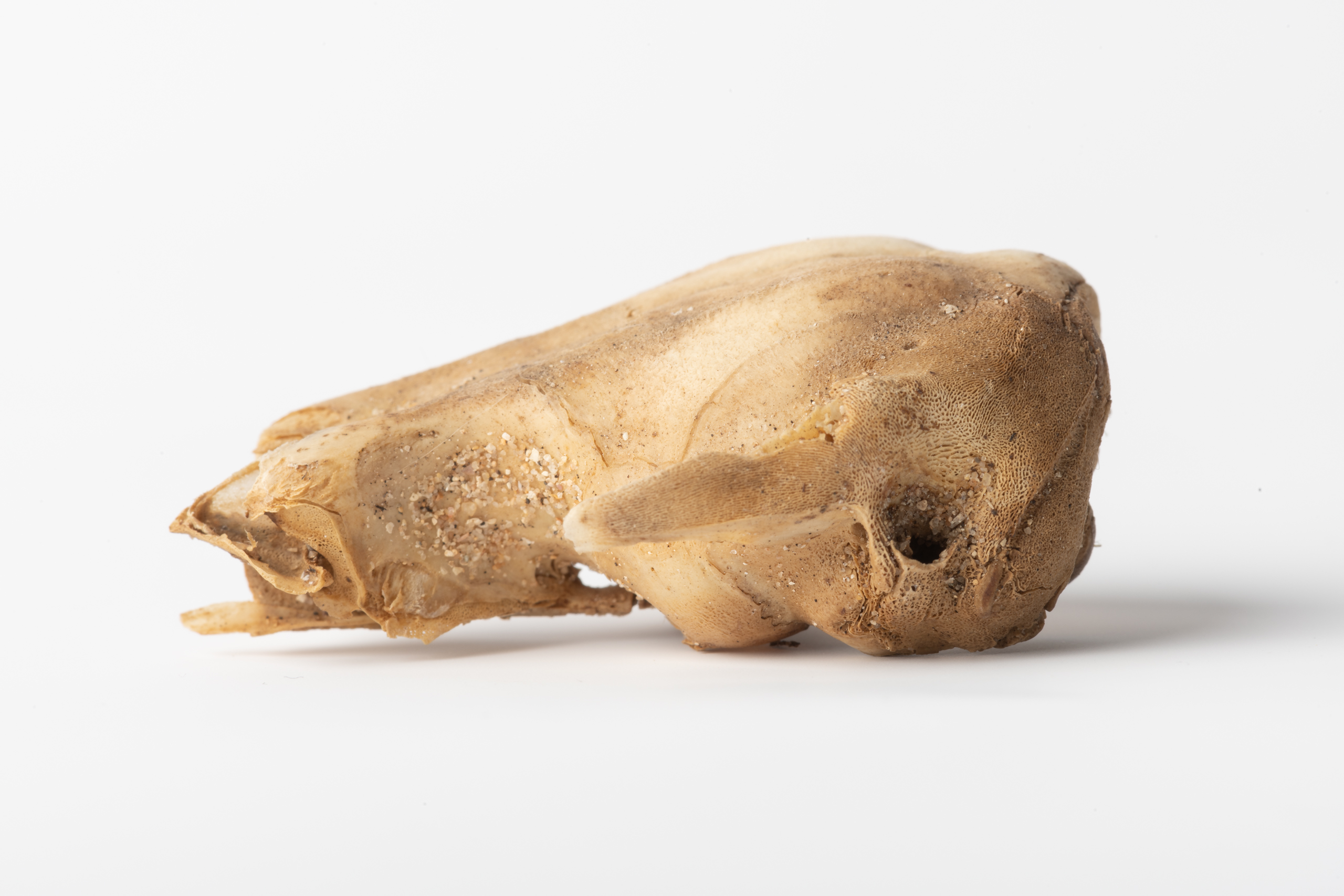
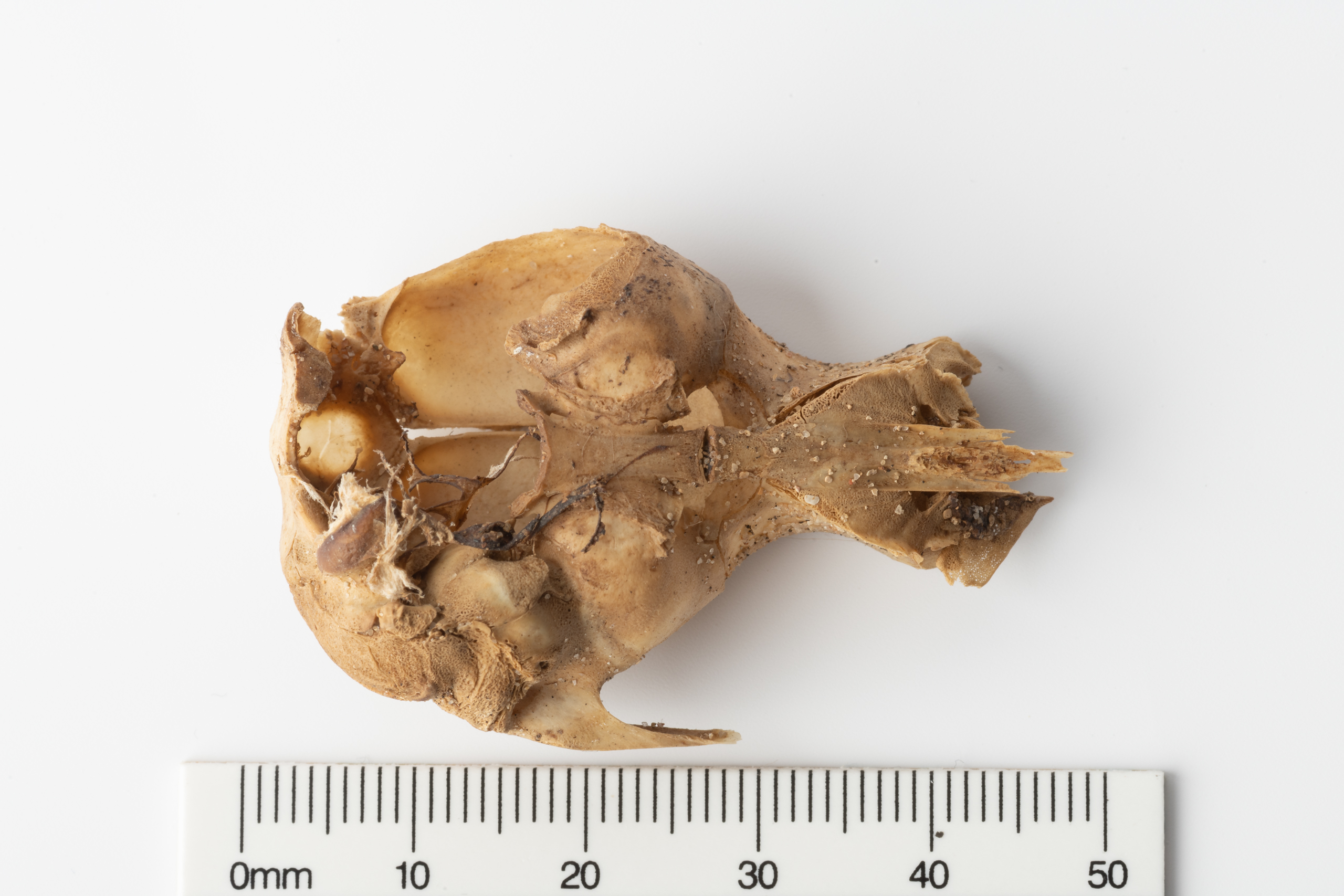
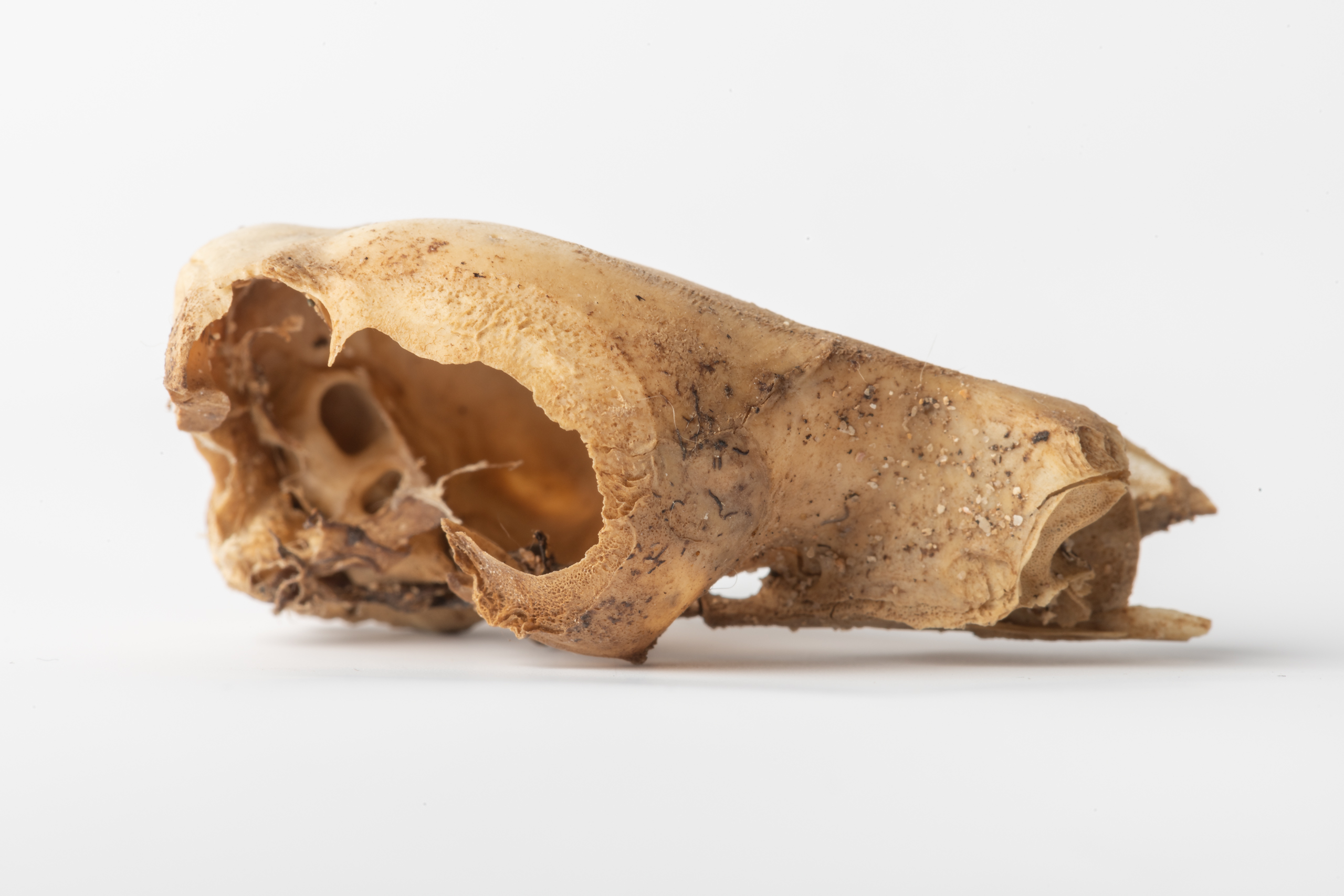
It is not an easy one. This part of the mammalian skull contains very few helpful diagnostic features – as pointed out by Kenny Travouillon:
But that is the part of the skull with the least amount of diagnostic character. That’s just mean!
Plus this is from a juvenile animal, and we all know how that can cause problems when making an identification.
Thanks to everyone for your comments – Rohan was keeping and eye on them here and on Twitter, so I’ll hand over to him to wrap this one up:
Well, it’s been a week, and many identifications for the mystery skull were offered on Twitter and in the Zygoma comments. Some suggestions were silky anteater, marsupial mole, pangolin, armadillo – but the focus quickly turned to marsupials. On Twitter, mammal curator Kenny Travouillon said it was not peramelemorphian or macropod, zooarchaeologist Jillian Garvey said that it could be macropod. Early on, biology lecturer Robin Beck said that it was definitely a phalangerid, and that it was probably a juvenile common brushtail possum (Trichosurus vulpecula). Robin identified the specimen as phalangerid based on the restriction of the mastoid exposure to a ventral strip on the occiput, and then narrowed down to trichosurine, rather than a phalangerine, due to the relatively flat dorsal profile of the skull. The bone texture indicates a juvenile specimen. (Richard came to the same conclusion in the Zygoma comments.)
I went digging around in our comparative anatomy collection to investigate this and then clouded matters a bit, as I found a partial skull of a juvenile common ringtail possum (Pseudocheirus peregrinus) which was superficially similar to the mystery skull. I thought this was the real identity of the skull, but Robin pointed out that the ventrally restricted mastoid exposure, more recessed stylomastoid foramen, and a well-developed pterygoid fossa all point to Trichosurus rather than Pseudocheirus.
I think this partial skull is conclusively identified to genus. I have already identified a number of (less ambiguous) Trichosurus specimens within the comparative anatomy collections. Although it would take more work to definitively ID the species, I think it is likely to be vulpecula – a very common and widely distributed species in Australia. As you may have noticed from the original images, the specimen has sand grains adhering to it. Based on this, I’d say that this was collected in the field, probably by Frederic Wood Jones (or members of the McCoy Society for Research and Investigation, which he founded) in the 1930s.
Thank you all for your suggestions and discussion!
Finally, I’d like to add my thanks to Rohan for giving us this mystery object to mull over. If anyone else fancies doing a guest mystery object, please do get in touch.
This week I’m delighted to have a guest mystery object for you, presented by Rohan Long, Curator of the Harry Brookes Allen Museum of Anatomy & Pathology at the University of Melbourne (who is on Twitter as @zoologyrohan) and photographed beautifully by his colleague Gavan Mitchell:
This is a skull from the Harry Brookes Allen Museum of Anatomy and Pathology at the University of Melbourne. Although the focus of our museum is on human anatomy, we have a significant comparative anatomy collection, which comprises hundreds of specimens of vertebrate animals – skeletal material, skulls, and potted specimens. Occasionally, I’ve encountered animal specimens that are very difficult to definitively ID, and this partial skull is one of them.
Image by Gavan Mitchell, 2022Image by Gavan Mitchell, 2022Image by Gavan Mitchell, 2022Image by Gavan Mitchell, 2022
Our comparative anatomy collections date from the earliest 20th century and are predominantly native Australian mammals and domestic animal species. However, the academics at the University have always had international networks, and there are species represented in the collection from all over the world. Many have been prepared in a lab for class specimens, many have been collected in the field. The latter are assumed to have been associated with Frederic Wood Jones, a British anatomist with a fondness for comparative anatomy and island collecting trips who was head of our Anatomy Department from 1930 to 1937.
Do you have any ideas what this portion of skull might be from? I don’t think we need cryptic answers for this one. Rohan will be keeping a close eye on the comments, so do feel free to ask questions.
Last week I gave you a nice skull to have a go at identifying:
It proved to be more tricky than I thought, but I think that may be because there is a skull image on Wikimedia that may have misled people searching for a comparative skull of this species.
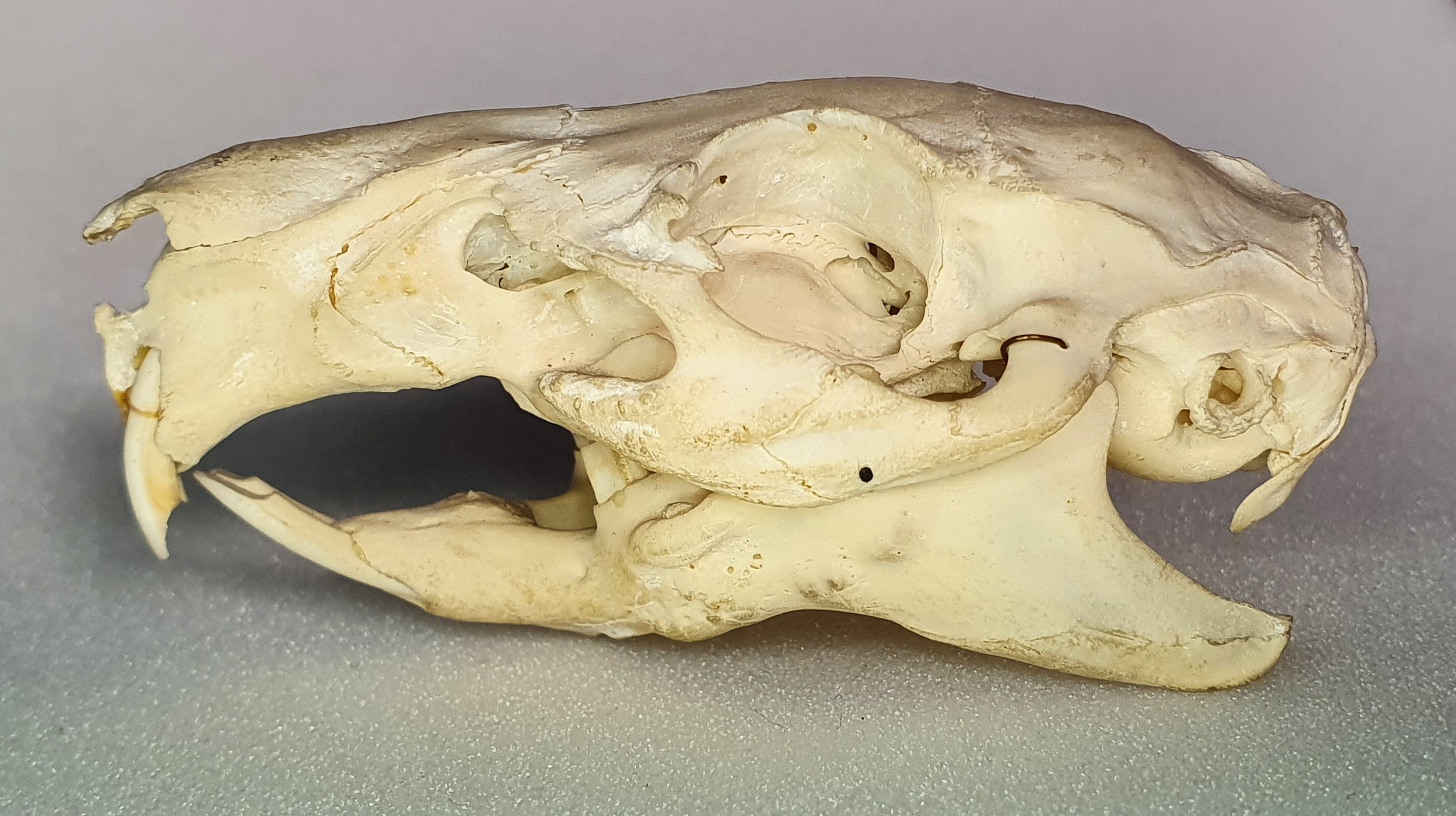
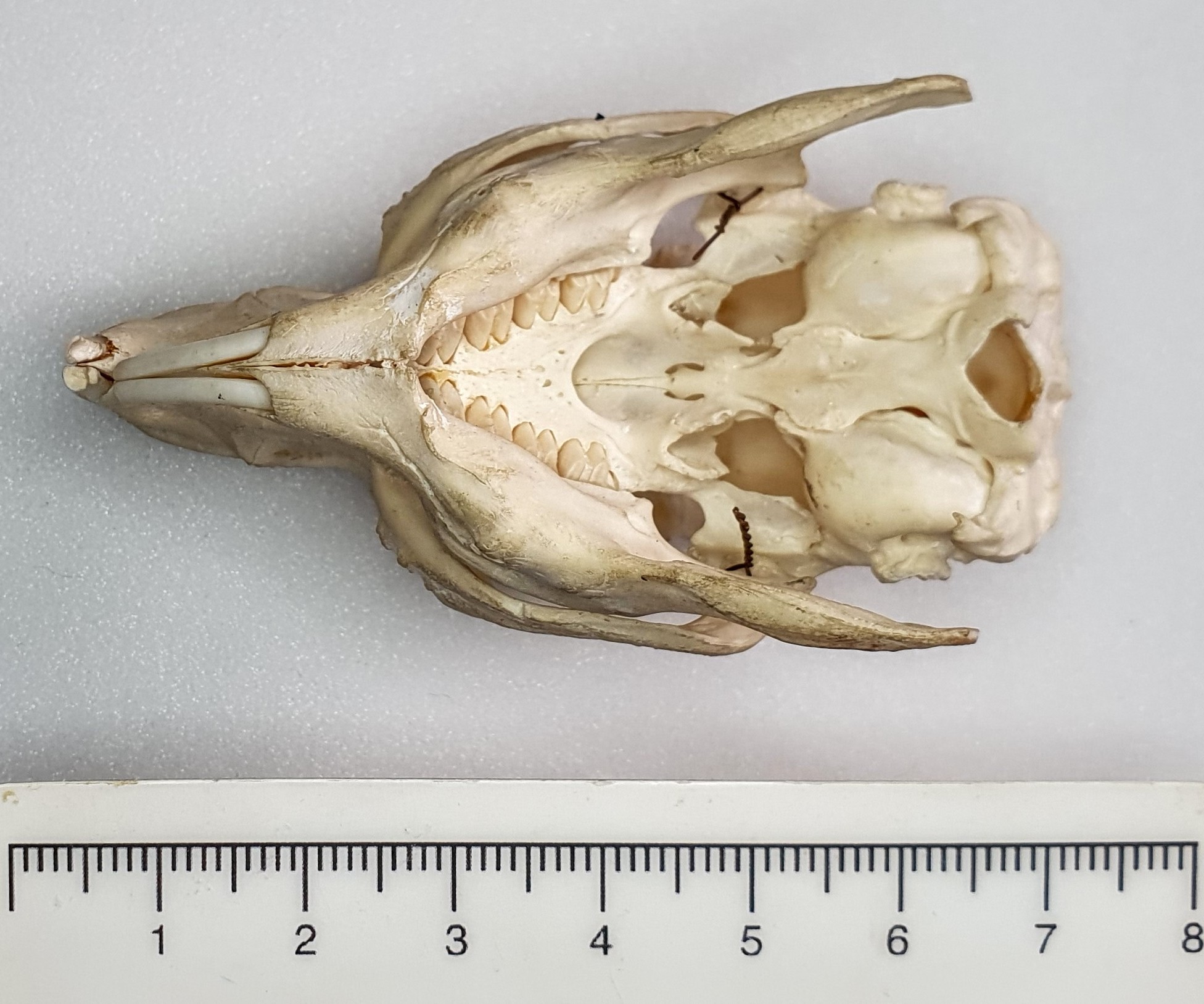
This is the skull of the humble Guinea Pig Cavia porcellus (Linnaeus, 1758), but if you tried searching for Guinea Pig skull, you may have seen this image:
Clearly this is not the same species as our mystery object – the incisors alone are an absolute give-away, with their striking orange enamel and the their much greater size. Those big incisors also bed deeply into the mandible, creating a pronounced ridge at the base of the mandible that props the entire skull at an angle. This one is the skull of a Coypu, regardless of the Guinea Pig identification given on the Wikimedia page.
There were also quite a few suggestions that the mystery object might be a Capybara, or one of several other South American rodents. The size suggests it’s not Capybara – I suppose a very young Capybara might just about be small enough, although they would certainly have less pronounced muscle scars and more open sutures.
There are plenty of other South American rodents, but most of those of a similar size and overall shape have a much more V-shaped exit to the nasal passage in the palate, rather than this very open and U-shaped structure.





















 Zygoma