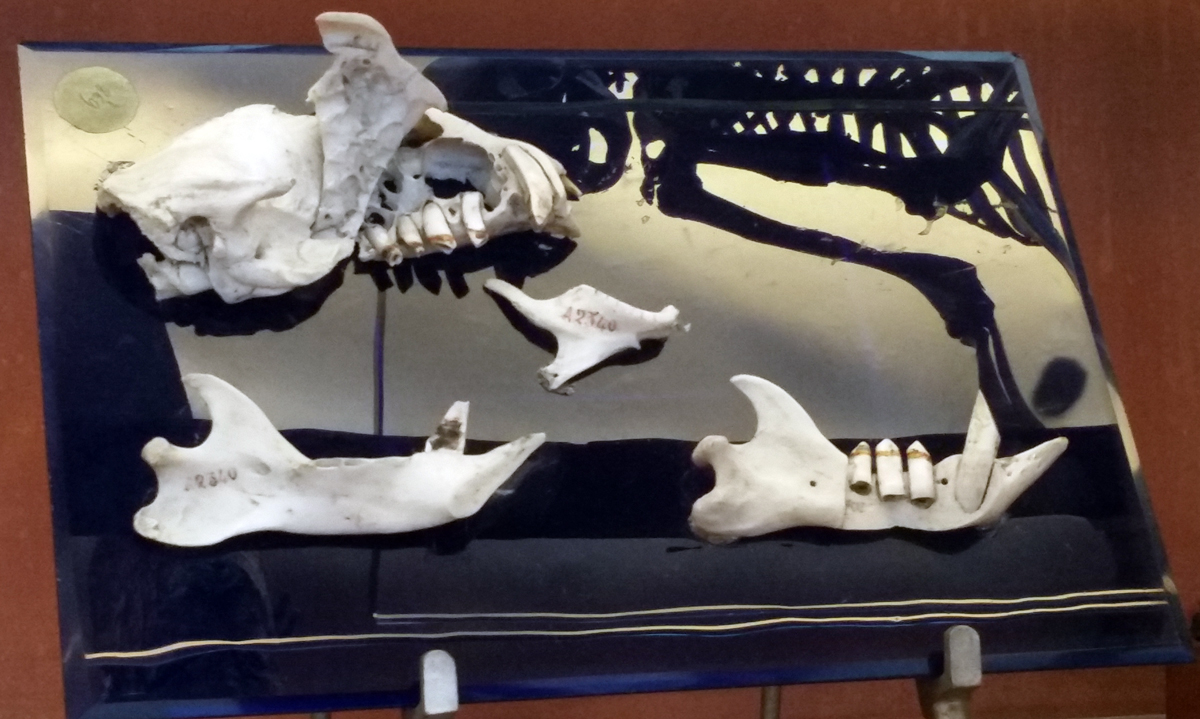
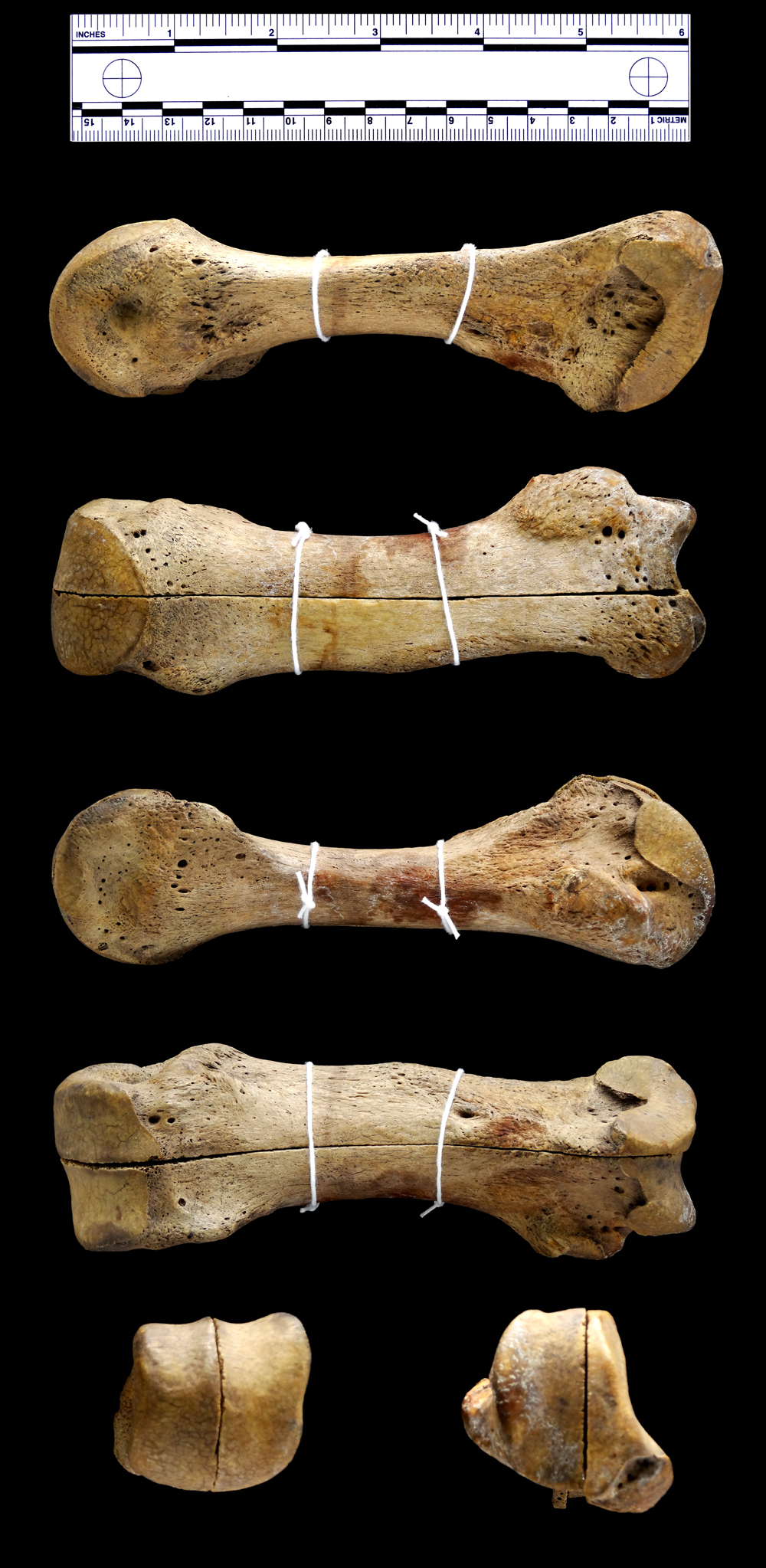
Friday mystery object #272

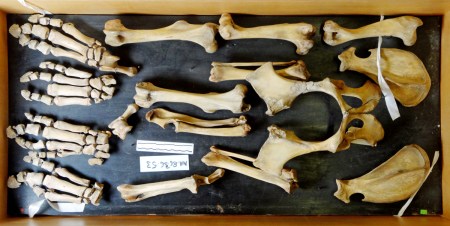
This week I have another specimen from the Grant Museum of Zoology for you to try your hand at identifying:

mystery272

I have a feeling that it may be easy to get this identification to Family level, but species may prove a little bit more tricky.

I’d love to hear what you think it might be, so leave your suggestions in the comments box below. Have fun!

Friday mystery object #271 answer

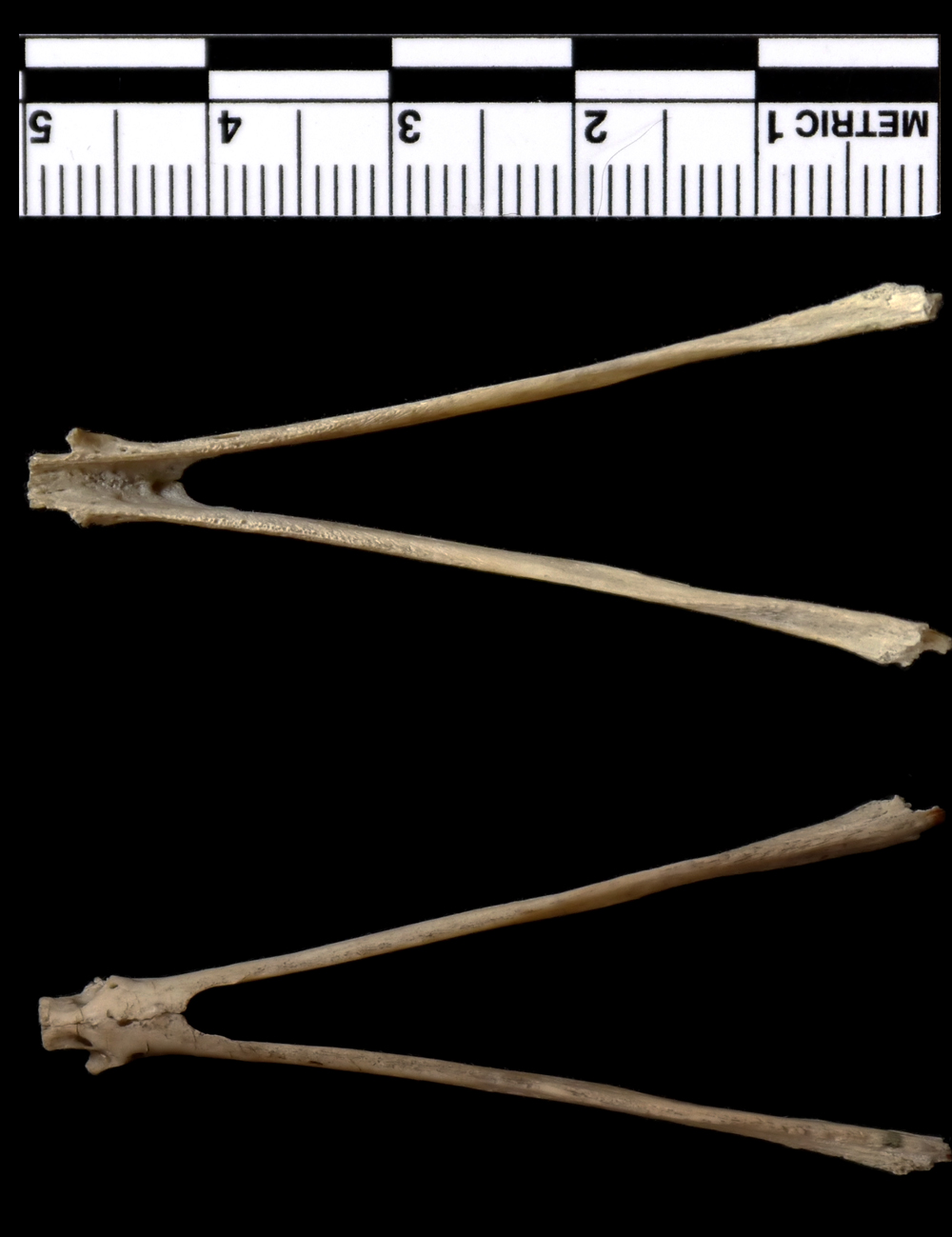
Last Friday I gave you this odd looking V-shaped bone to identify:

mystery271a

It led to a lot of speculation on Facebook and Twitter, with ideas including a bird wishbone, hyoid or mandible. However, the comments on the blog tended to be a little more focussed in the area of the mandible of an ant-eating mammal.

The two little prongs at the anterior of this lower jaw are a bit of a give-away about which type of ant-eating mammal it is, as they are only seen on one family. When you look at the additional image I provided it becomes even easier to work out which:

mystery271b

As most of you correctly worked out, this is a specimen of Pangolin, of which there are four species in the genus Manis (thanks Allen Hazen for the correction – there are more like eight species in the family). I found this nice illustration of the skulls of the various species, to help narrow it down even further:

Anatomical and zoological researches: comprising an account of the zoological results of the two expeditions to western Yunnan in 1868 and 1875; and a monograph of the two cetacean genera, Platanista and Orcella. John Anderson, 1878.

Anatomical and zoological researches: comprising an account of the zoological results of the two expeditions to western Yunnan in 1868 and 1875; and a monograph of the two cetacean genera, Platanista and Orcella. John Anderson, 1878.

So it appears from the morphology of the premaxilla, zygomatic region and nasals that this is a Sunda Pangolin, Manis javanica Desmarest, 1822.

Manis javanica by Piekfrosch, 2006

Manis javanica by Piekfrosch, 2006

These unusual scaly insectivores are critically endangered due to poaching for their meat, skin and scales for the Chinese market, with their population suspected to have declined by 80% in the last 20 years, despite having a protected status. Sad to say that their ability to roll into an armoured ball does nothing to protect them from people.

Friday mystery object #271

This week I have a mystery object for you from the Grant Museum of Zoology that’s either a bit too easy, or a bit mean:

mystery271a

If you’re not a fully paid-up bonegeek, you might like to have a bit of an additional clue; if so, click here.

Please keep your answers in the comments section cryptic, so everyone gets a chance to have a go at working it out without spoilers. Have fun!

Friday mystery object #269 answer

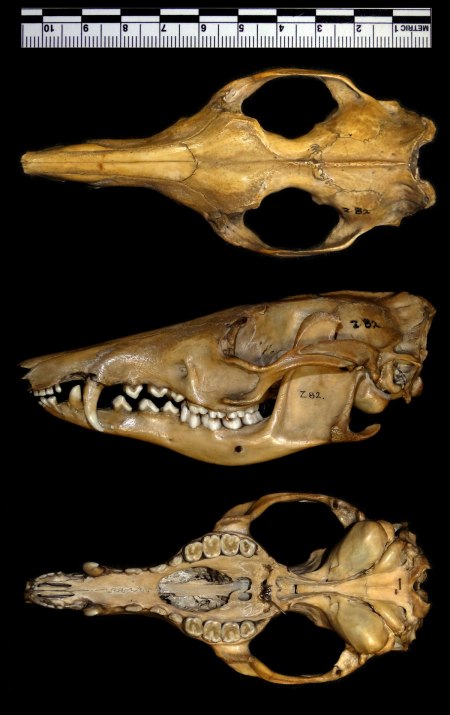
Last week I gave you this mystery object from the Grant Museum of Zoology to have a go at identifying:

mystery269

If you’ve been checking the mystery object recently you’ll notice that this specimen has a feature of the palate that I made reference to in the answer to mystery object #267 – the Tasmanian Devil. It’s incompletely ossified, which is a characteristic of marsupials.

The large curved canines and pointed premolars suggest some predatory activity, while the flattened molars suggest some grinding of vegetation, making this one of the marsupial omnivores, in the Order Peramelemorphia.

The large size of the skull and the long curved canines make this specimen rather distinctive – as first spotted by Richard Lawrence, this is indeed a Continue reading

Friday mystery object #264

As I’ve mentioned a few times, I have recently started a new job as Curator of the Grant Museum of Zoology at UCL. If you’ve never visited, you should pop by, and if you have visited then why not vote for us in the Time Out Love London Awards, preferably right now, since voting closes today. I’d love it if we could beat our heavyweight neighbour, the British Museum!

PV_micrarium_2

Moving on to the real subject of the blog, I have finally had a chance to start hunting for specimens in the Grant to see if there are any unidentified items tucked away that might make good mystery objects – and my new colleague Tannis knew just where to look:

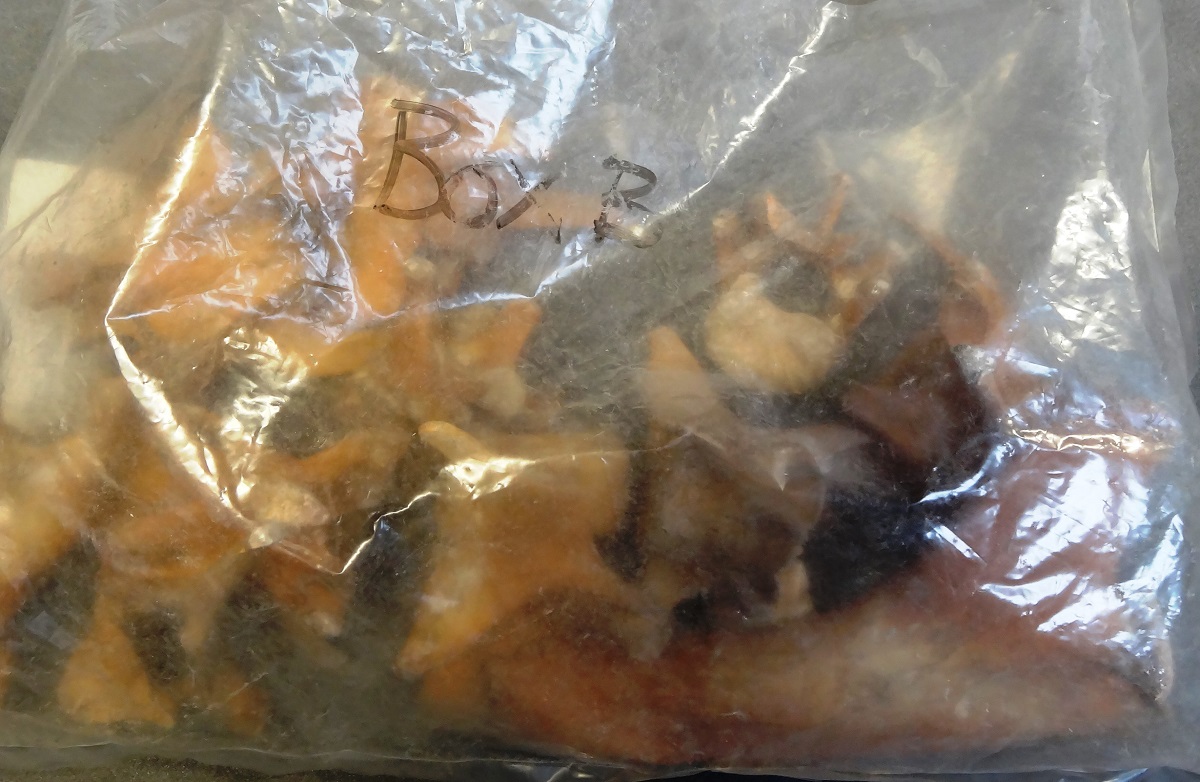
Bag o-bones

This bag-o-bones came to us from the Royal Free Hospital and was completely sealed up, making it hard to see inside. For those of you who like a challenge I’ll leave you with just this image, but if you’d like a slightly less tricky image to work from, you can see the single most distinctive part of the specimen here.

Do you have any idea what it might be? It’s pretty easy if you check out the distinctive bit, so please keep your answers cryptic if you can!

Oh, and if you like skulls, you might be interested in my first Specimen of the Week on the Grant Museum blog.

Friday mystery object #260 answer

Last week I broke the news that in October I’ll be taking on the role of curator at the Grant Museum of Zoology at UCL. Many thanks to everyone for their congratulations and kind comments – it’s wonderful to have so much support!

I’m excited to get started in my new role, but I will be sad to no longer be the go-to person for identifying materials used in the Horniman’s Anthropology collections. This gave me the chance to see some lovely objects, like this little statue:
mystery260
I asked if you had any thoughts on what it might be, and you gave some great answers, mostly involving an ungulate canon bone or metacarpal / metatarsal. However, palaeosam and palfreyman1414 spotted that this isn’t made of bone, while Chris went one better by making a nice reference to ‘Horsing around near the river’ – a reference to the meaning of the name Hippopotamus.

The key to identifying this is to look at the curve of the statue and the view from underneath. That cavity shape (plus the gentle curve) is exactly what you’d expect from the upper canine of Hippopotamus amphibius Linnaeus, 1758 – so well done Chris!

There’s a helpful guide to identification of ivories by the US Fish & Wildlife Service, which is well worth a look to help with this sort of thing. Hopefully that’ll be a helpful resource for my colleagues at the Horniman in my absence… although they know where to find me if they need help in future!

Friday mystery object #258 answer

Last Friday I gave you this object to identify:
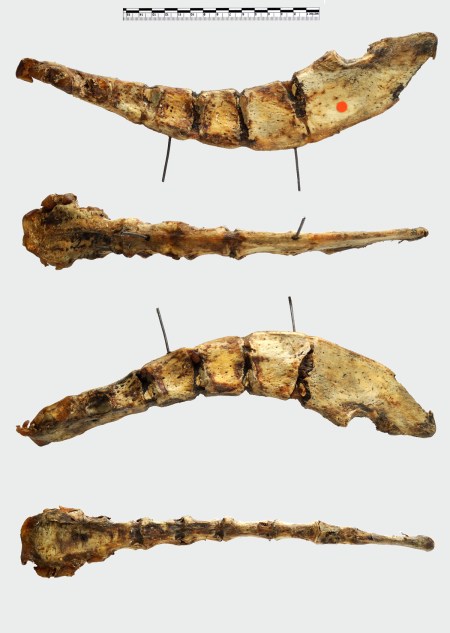
mystery258

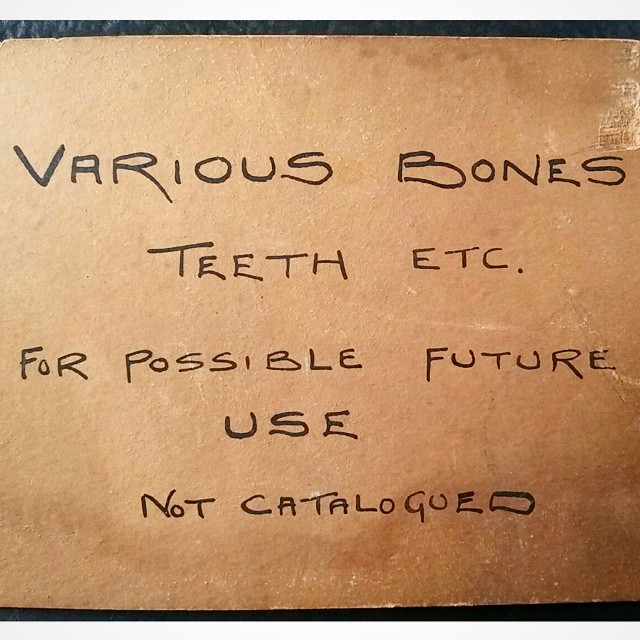
It already had an identification of sorts on a label, but I didn’t believe it for a moment:
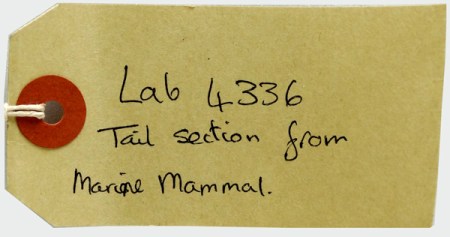
mystery258_label

I’m pleased to say that neither did any of you and Jake got the ball rolling by identifying it as a sternum rather than a tail.

This didn’t necessarily make the identification much easier, since different sterna shapes are not really all that familiar for many of us and there is relatively little comparative material available.

Despite this, there were some good attempts, ranging from Polar Bear to Horse (via the mysterious clue “Losing voice we hear?” by Flick Baker, which for some reason I struggled to figure out… to my shame I have never been any good at cryptic crosswords).

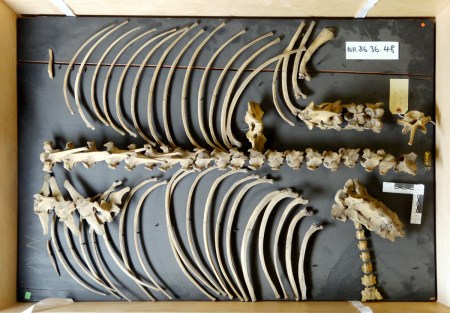
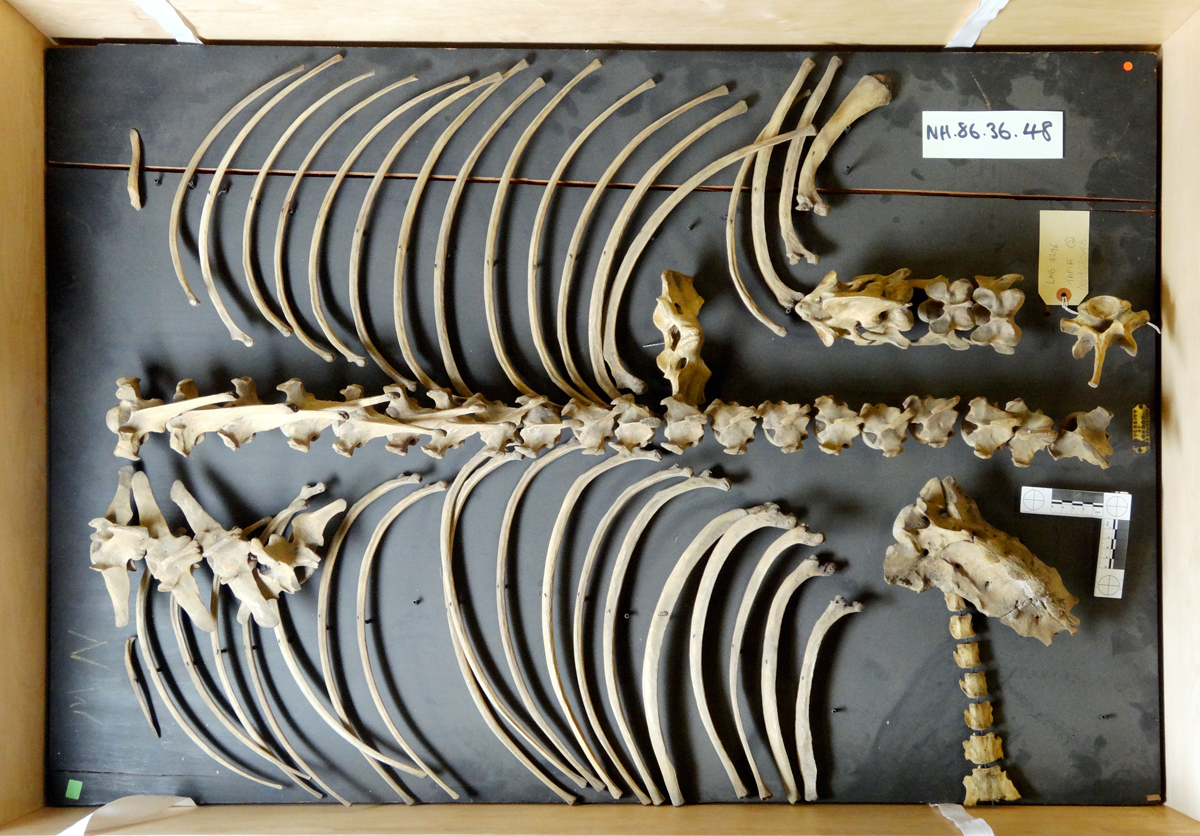
I had a bit of an advantage in identifying this object, because I had some insider curatorial information. The metal rods sticking out of the specimen make it clear that it has been mounted in a somewhat unusual way, characteristic of some laid-out skeletons that we acquired from King’s College in 1986 and the Lab number (added by our Conservation team when they treated it) was in the same range as other King’s College specimens.

One such specimen included this Tapir, which as you may notice, is lacking its sternum:
Tapir_apendicular_skeleton Tapir_axial_skeleton

This inspired me to take a look at some Tapir sterna, and I was pleased to find that they matched this mystery object very well indeed – so it looks like Flick was pretty close with her perissodactyltastic suggestion.

Malayan Tapir at the San Diego Zoo, by Sepht, 2006.

Malayan Tapir at the San Diego Zoo, by Sepht, 2006.

I have talked about Tapirs before, so I won’t bore you with more about them right now, except to issue a warning: Tapirs may look comedic and a bit harmless, but they are perfectly capable of biting a human arm clean off. So it’s probably safest to avoid messing with Tapirs, unless they’re in a museum.

Friday mystery object #258

This week I have a mystery object that had been sitting a box for about 30 years with the tenuous description:

Tail section from marine mammal

Here it is:

mystery258

I don’t believe it – do you have any thoughts on what it might be?

As usual, you can put your thoughts, questions and suggestions in the comments section below. Hope you have fun with this one!

Friday mystery object #256 answer

Last week I gave you an object to identify that I found hiding in a box of Ostrich bones:

mystery256

I’m pleased to say that Laura McCoy, Michelle, Joey Williams and Lena worked out that it’s the right femur of a Perissodactyl, but there was a lack of agreement about which kind of Perissodactyl it might be.

Rhino’s weren’t considered, since their femurs are distinctively massive, but both Tapirs and Equids were suggested (which could include Horse, Donkey, Zebra, maybe even Quagga).

My first thought was Horse, mainly because it looks very much like a Horse femur and they are quite common in collections – but that’s not really good enough for the purposes of real identification.

On inspection of images of a Tapir femur in a veterinary manual (link opens pdf) I had to have a rethink and now I am really not sure about the identification, particularly since I know that there is a big box of Tapir postcrania that came into the Horniman from the same collection as the Ostrich. Other specimens from that acquisition have also been mixed up, for example a box of Lion postcrania I was working in today had Manatee atlas and axis vertebrae and a Pig femur in the same box, while the box of Pig postcrania held the Lion atlas and axis.

Lion postcrania, with some unexpected additions

Lion postcrania, with some unexpected additions

Now I need to get back into the collections to see if this bone does belong to the Tapir, or if it is indeed Horse. So I’m sorry to say that the answer is not really an answer, but stay tuned and it will be resolved…

Friday mystery object #256

I was working my way through a box of large ratite bone the other day and stumbled across this out-of-place object: mystery256 Any ideas on what it might have come from and why it might have been in a box of Ostrich bits? As usual, you can put your questions, thoughts and suggestions below – if you think it’s easy then maybe try using a clue to give other people a chance of working it out for themselves. Have fun!

Friday mystery object #255 answer

Last Friday I gave you this rather interesting looking object to identify, preferably using a rhyme:

wpid-img_20150626_095757-1_20150626095918070.jpg

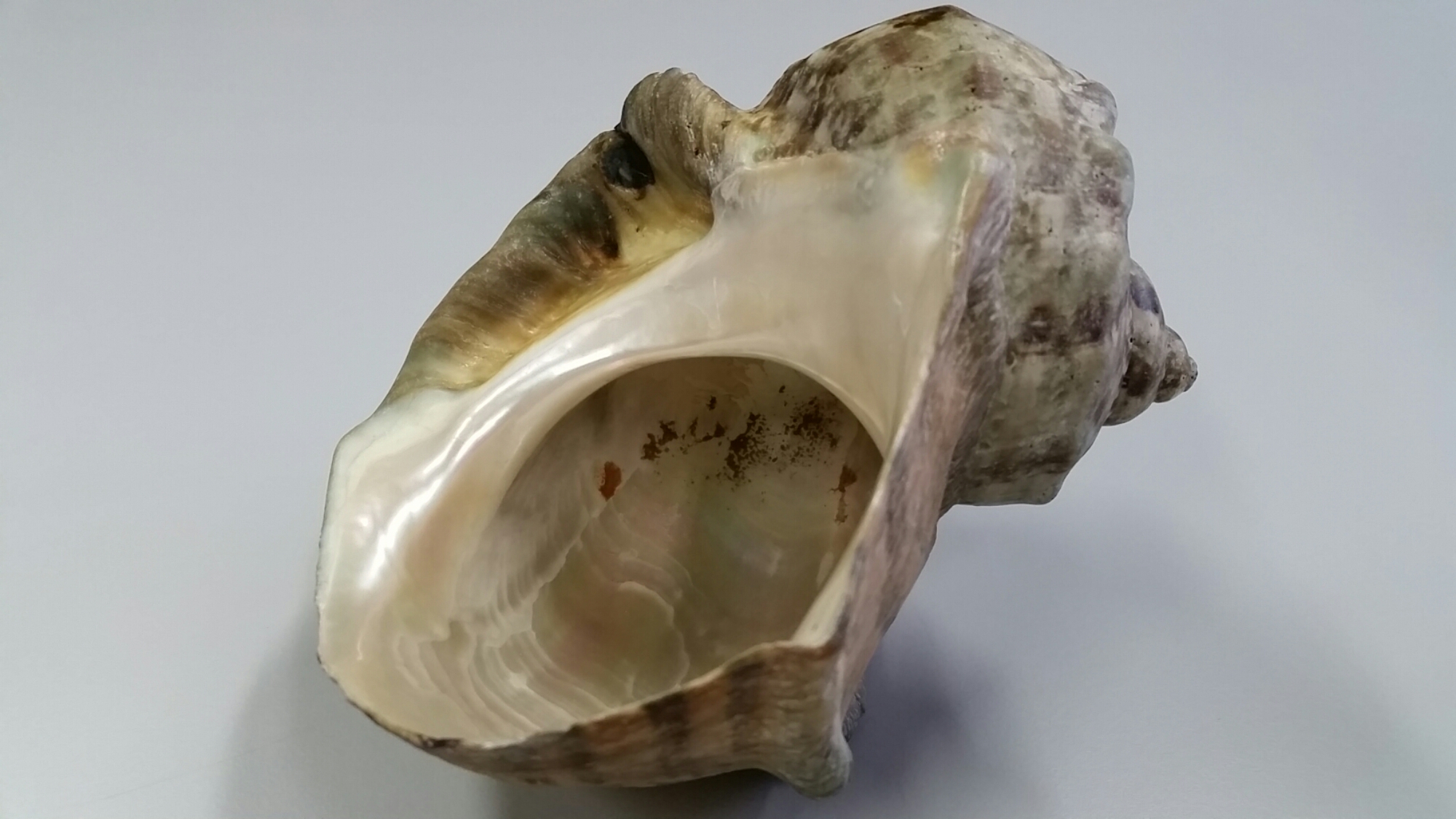
Believe it or not the photographs show either side of the same object – on one side it just looks like a rugose lump and on the other it shows a rather nice natural spiral.

Aside from some great humorous comments by 4utu and Henrik Nielsen, there were some of you who worked out that this is the operculum from a marine snail and even managed to explain that in rhyme – so very well done to Barbara, Chris and especially Lee Post who upped the ante by writing a full verse:

oh purr Q lum from foreign shores
possibly from a near ites door
side door -back door does not exist
main door -strong door , built to resist

Flick Baker went a step further (taxonomically) by identifying that this operculum is from a snail in the genus Turbo with the rhyme: “Gives your engine serious puff, even when she’s running rough“.

Green Turban Shell (Turbo marmoratus) showing aperture closed by the operculum

Green Turban Shell (Turbo marmoratus) showing aperture closed by the operculum

More specifically, this operculum is from the South African Turban Shell Turbo sarmaticus Linnaeus, 1758.

The operculum is a part of many snails that is often forgotten about – it forms a protective trapdoor that the snail closes behind itself when it retreats inside its shell (‘operculum’ means ‘cover’ or ‘lid’ in Latin). This trapdoor helps prevent desiccation in land snails and helps protect against predators in marine snails.

When the animal dies the operculum will often fall off as the body of the animal decays or is eaten, so often it won’t find its way into a museum collection with the rest of the shell. However, opercula can be quite distinctive and are sometimes more useful for identifying a species than the rest of the shell – a handy point to remember.

Friday mystery object #254 answer

Last Friday I gave you this odd bit of bone (or should I say bones) from a box of mixed objects to identify:

mystery254

As Ellen Going immediately recognised, it’s a scapula and clavicle – which in itself tells us that it can’t be from a Carnivore or Ungulate, since they lack a well-developed clavicle.

The open articulation with large acromial and coracoid processes and the symmetrical, blade-like scapula body suggest that this is an animal with a lot of movement in the shoulder, and reciprocal movement at that (hence the symmetry). This suggests a flapping animal, but without the extreme clavicle adaptation (i.e. the wishbone) seen in birds.

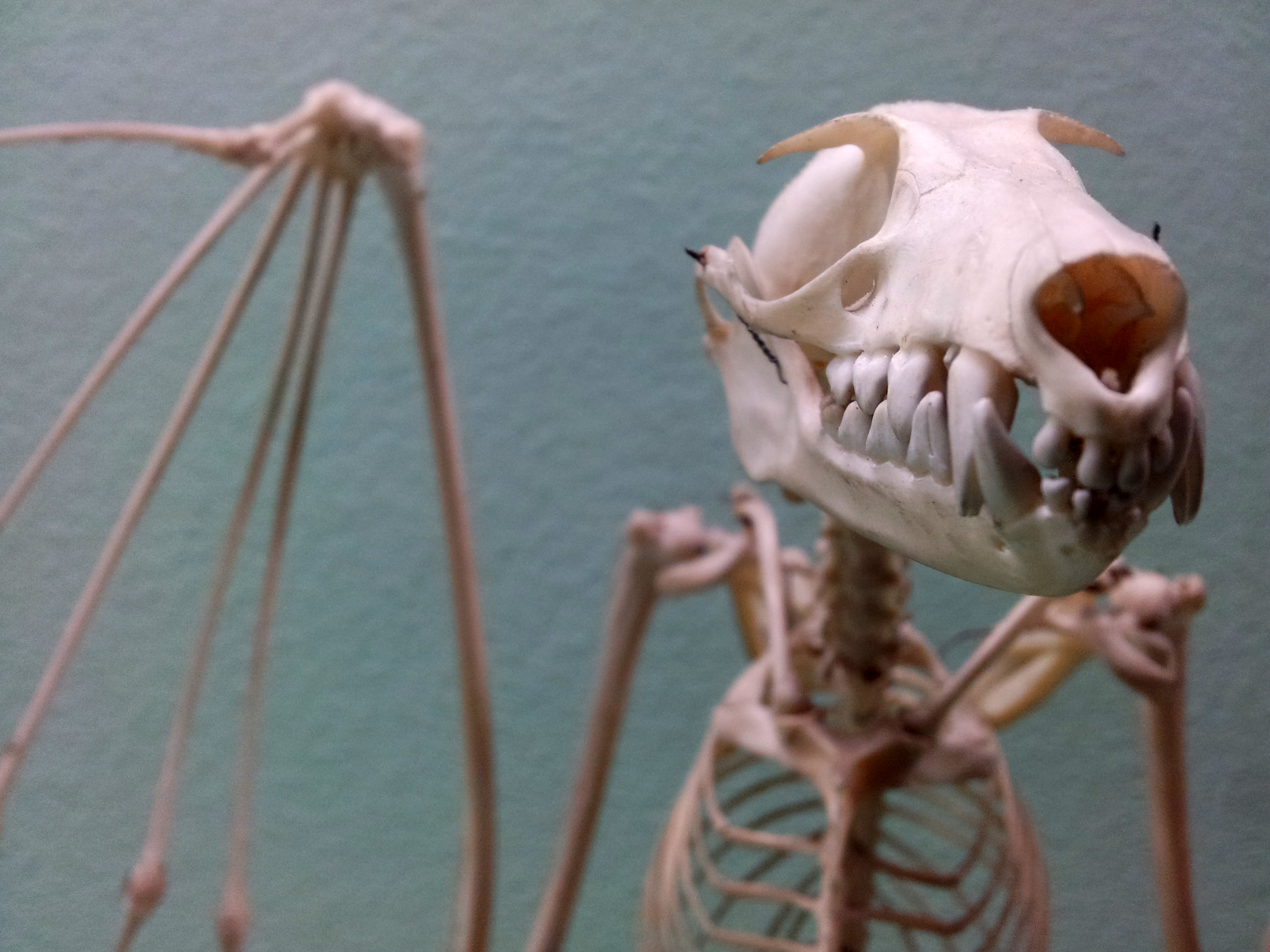
So as Flick Baker, Ric Morris and Joey Williams all realised, this is the shoulder and clavicle of a large fruit bat, in the family Pteropodidae. Good work!

fruitbat-processed

Friday mystery object #251 answer

Last week I gave you this object to have a go at identifying:

mystery251

I thought it looked a bit like an Ewok’s weapon, but fairly obviously it’s a bit of some critter’s leg. The question is, which critter?

In comments by David M WatsonDavid Honetaihaku and palfreyman1414  it was quickly recognised as being from a ratite (the group of flightless birds that include Emus, Cassowaries, Kiwis, Rheas and Ostriches – plus some extinct examples like Moas and Elephant Birds), but it was henstridgesj who narrowed it down to a tarsometatarsus (fused ankle and foot bones) of the correct ratite – the Ostrich Struthio camelus Linnaeus, 1758.

The size is a bit smaller than you’d expect for an adult Ostrich and the top of the bone (the bit on the left) is less well fused, so it appears to be from a subadult individual. The reason it can be distinguished from some of the other suggested ratites is all down to the number of trochlea (the rounded and grooved end bits that the toes attach to). Ostriches only have two toes, whereas the other ratites have three or four and this is reflected in those trochlea.

Ostrich foot by Tony Wills, 2007

Ostrich foot showing the two toes. Image by Tony Wills (2007)

So well done to everyone who took part, especially henstridgesj who was spot on!

Friday mystery object #251

This week I have a specimen for you to have a go at identifying, that has come from a box of “mixed bones” that I’ve been working through:

mystery251

It may look like some sort of Ewok weapon, but I’m pretty sure it’s also part of an animal. Any idea what critter this might be from?

As usual, you can leave your thoughts, comments and suggestions below. Have fun!

Friday mystery object #250

This week I have a mystery object for you that had me stumped for a little while recently, after it didn’t match the comparative material I had to hand. I managed to work out what it is, but I thought that it might make for a fun challenge as the 250th Friday mystery object:

mystery250

Any idea what this is and what species it comes from?

As usual you can leave your (preferably cryptic) observations, questions and suggestions in the comments section below. Have fun!

Friday mystery object #249 answer

Last Friday I gave you this exploded skull from the incredible Galerie d’anatomie comparée et de Paléontologie in Paris:

mystery249

As I suspected, it was a bit of an easy one for many of you, but that provided the chance for some cryptic clue fun.

So my thanks to Agata Stachowiak, Chris, Allen Hazen, henstridgesjClaire Miles and witcharachne who all hinted at an identification of Sloth, more specifically a Two-toed Sloth, I think of the species Choloepus hoffmanni Peters, 1858 as opposed to C. didactylus Linnaeus, 1758, which appears to have a smaller angular process on the mandible and a less broad zygomatic region.

A two-toed sloth (Choloepus hoffmanni) at La Selva Biological Station, Sarapiqui, Costa Rica. By Geoff Gallice

A two-toed sloth (Choloepus hoffmanni) at La Selva Biological Station, Sarapiqui, Costa Rica. By Geoff Gallice

The teeth of Sloths are fascinating, due to their fairly simple rooting and their impressively sharp premolars that look like canines.

These Sloths have an interesting feature of their hair, which has a groove to help support algae, which help keep the Sloth camouflaged. This is pretty handy given the Sloth’s notorious lack of speed with which to escape predators. This may help explain the need for those sharp premolars as well!

Friday mystery object #247 answer

Last Friday I gave you this unidentified object to get your opinions on:

mystery247

This specimen has puzzled me quite a bit. The internal structure is a dense honeycomb, that seems too tightly compacted to belong to a bird – plus it’s so big that the only birds it could possibly belong to would be a Moa, Elephant Bird or maybe Ostrich at a push, and I compared this against two of these three possibilities:

mystery247b

So, it’s mammalian and large. It’s also clearly a metatarsal or metacarpal, based on the shape of the articular surfaces.

It’s not shaped quite right for a one or two toed animal so the it seems that the variety of suggestions along those lines of Hippopotamus, Rhinoceros and Elephant are most likely to be in the right area.

I did compare this to Hippo feet and an Elephant hindfoot and drew a blank, so that leaves an Elephant forefoot or a Rhinoceros foot. My best guess would be the 4th metacarpal of a Rhino, although Elephant is still a contender – I will try to find some comparative material to confirm.

A massive ‘thank you’ to everyone who contributed ideas – it’s great to have some fresh perspectives and new directions to explore when you’re stumped!