Last week’s bird was so popular I thought I’d give you another to identify this week. It’s a bit harder than last week’s Kookaburra and I’ll be very impressed indeed if anyone gets it to species, but I’m sure many of you will manage to identify it to family level.
I will be teaching young folk about skulls and mermaids at Camp Quest in Somerset this Friday, so I might not get a chance to respond to comments, although I’ll do my best.
I was a bit taken aback by the response to the second anniversary mystery object last Friday. There were a huge number of comments and unfortunately I was tied up all day and was unable to respond – my sincere apologies!
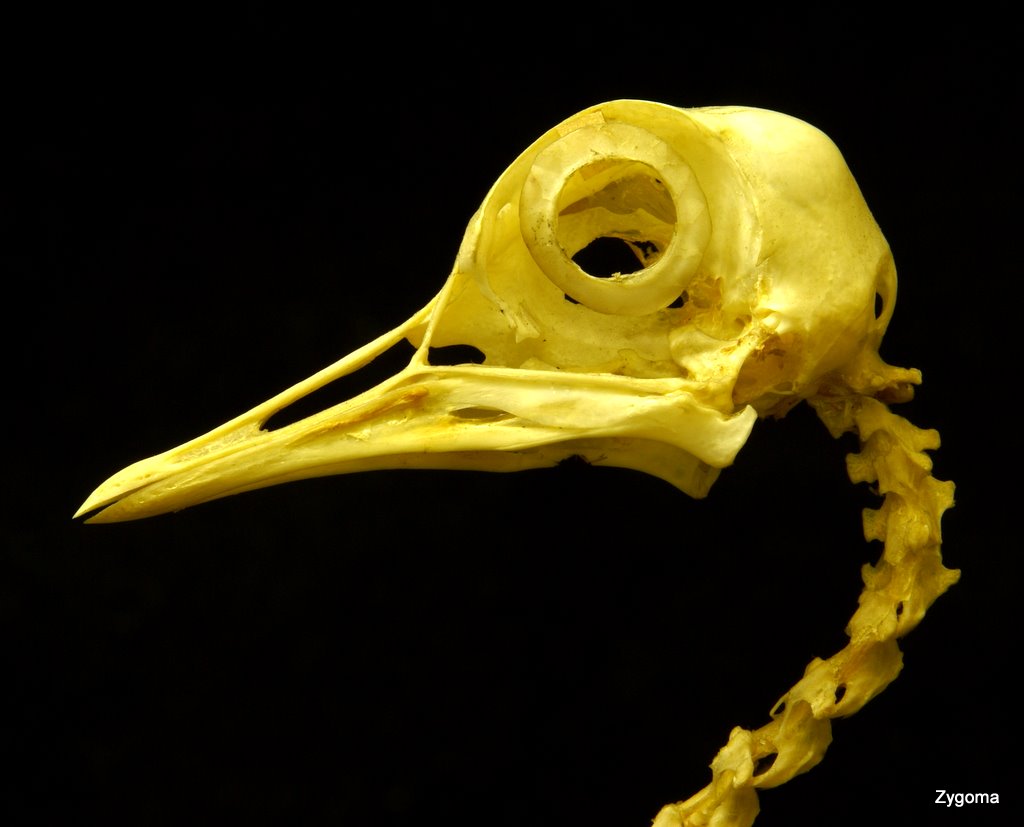
To give you a change from the usual mammal skulls I gave you this bird to identify:
It’s quite a characteristic bird, so I decided to make it more of a challenge by leaving out the usual scale bar – if you’re interested the head of this specimen is about 10cm long.
Obviously the comparatively large head and massive bill were key features that were picked up on, giving the following answers:
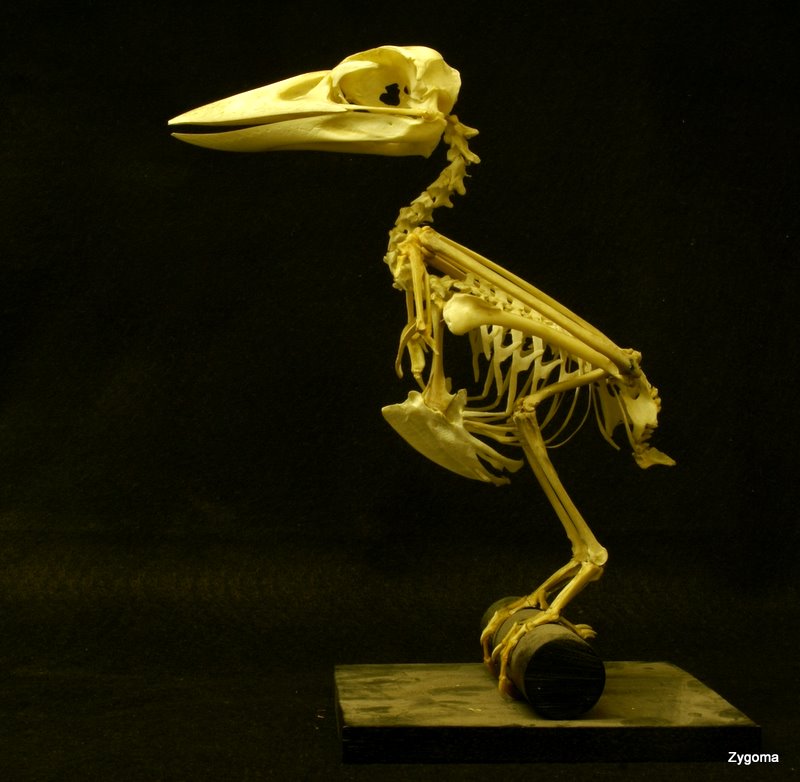
I’m pleased to say that the vast majority of you managed to get the correct identification; it is indeed the skeleton of a Kookaburra, more specifically the Laughing Kookaburra Dacelo novaeguineae (Hermann, 1783).
Laughing Kookaburra perched in a eucalypt tree. Taken in December 2008 in Victoria, Australia by Fir0002
These large antipodean kingfishers have a very distinctive call, which sounds to me like the laugh of a clown from a nightmare. In fact, I expect these birds are a bit of a nightmare for any small critters that live in their vicinity. That big robust bill is powerful and they use it to eat a wide range of animals including worms, snakes, rats and even some fairly decent sized birds.
They aren’t subtle about their hunting either. They simply grab their prey in their bill and smash it on the ground, on a branch or on a rock then swallow it whole. Often they keep smashing it for quite a while – after all, swallowing a live snake or rat probably isn’t a great idea.
If you look at the skull you might notice a deep groove around the back and a deep indentation on the lower jaw or mandible:
These are muscle scars and it’s quite unusual to find such impressive areas for muscle attachment in bird skulls, but then most birds don’t rely quite as much on brute force to catch and subdue their prey. Kookaburras mean business.
As promised, here’s a quick answer to last Friday’s mystery object:
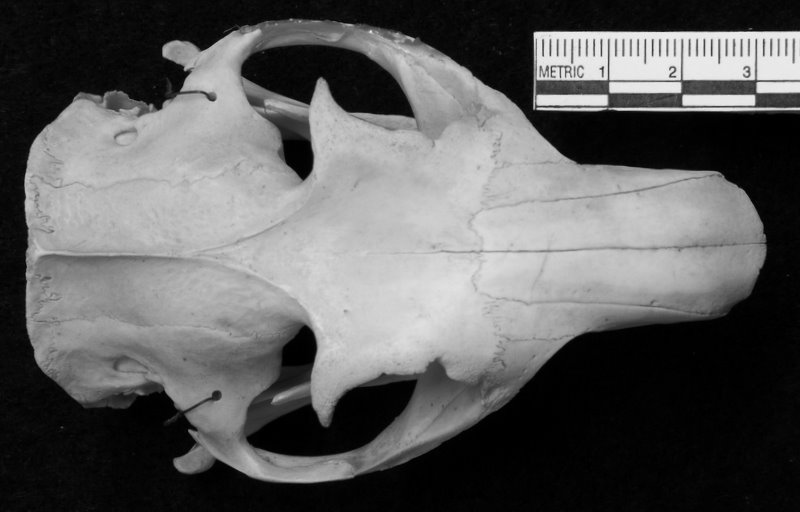
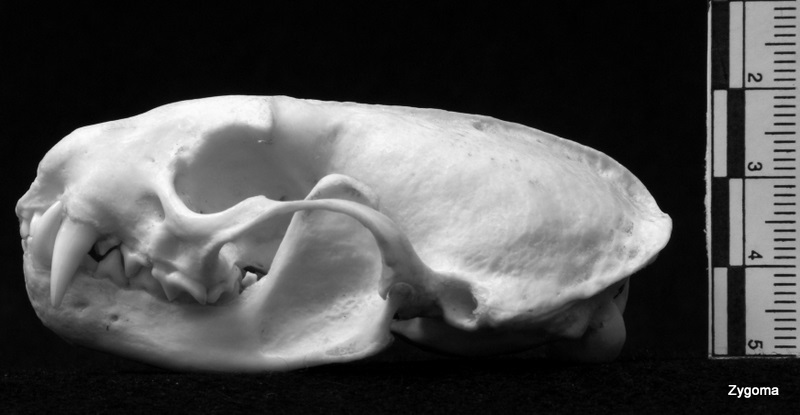
The big nuchal crest (ridge running along the back of the skull that meets the sagittal crest) points to this being a carnivore.
The large auditory bullae (the bulbous bits on the underside of the skull which relate to hearing) and very rounded notch in the occipital condyles (the bit of the skull that attaches to the atlas vertebra of the neck) suggest a cat, since dogs have a more V shaped notch and smaller bullae.
Friday was the 100th mystery object and I am considering making it the last one, since I’m finding it hard to come up with new objects every week. Moreover, I find that I don’t have time to keep up with all the other things I want/need to do.
However, I may keep FMO running for a bit longer with a slightly different format for the answer (since they’re what take the most time to write). So here’s the quick answer to Friday’s object, or should I say objects.
So congratulations to everyone who had a stab at identifying these mandibles – since all of you got some of them right.
If you have any thoughts on the continuation of the Friday mystery object, please feel free to let me know in the comments section below. Perhaps I should do a monthly mystery object or have them in a more ad hoc way as I find interesting objects? Your input would be of great help.
It’s the one hundredth mystery object and I’ve decided to give you a challenge that I had to deal with at work this week.
I found a box of mandibles with no data, I identified them and checked them against their respective specimen types in the Horniman collections (that I’ve worked hard to organise for such a purpose).
The whole process took me half a morning and 5 of the 6 specimens were successfully reunited with the skulls they were separated from over 70 years ago – a satisfying outcome for a curator (our fun is cheap).
Now it’s your turn to identify the mystery mandibles (click image for bigger version):
From top to bottom: A, B, C, D, E, F
Put your suggestions and questions in the (newly organised) comments section below and I’ll do my best to respond.
Everyone spotted that it was from a monkey, perhaps unsurprisingly since monkeys have a very characteristic appearance, with a globular braincase and forward-facing eyes. The orbit is enclosed by a solid bony ring and there is a post-orbital wall made up of the sphenoid and ethmoid bones, that produces a cup-shaped eye socket.
But there are a lot of different monkey species – around 286 if you include the Apes (as you should). We can see that this specimen belongs to the Catarrhini clade (the Old World Monkeys and Apes) since it only has 2 premolars instead of the 3 premolars you’d expect in a New World Monkey (N.B. some extinct Catarrhines known from fossils have 3 premolars, so this useful distinction doesn’t actually help define the clade).
The size of the skull and the the shape of the nose region and the mandible isn’t quite right for an Ape, or a typical Cheek-pouch Monkey (like Macaques or Baboons), leaving us with the Colobinae (which includes Colobus Monkeys, Doucs, Langurs, Leaf Monkeys, Proboscis Monkeys, Snub-nosed Monkeys and Surelis).
Once we get this far it becomes rather more tricky to identify what species we’re dealing with (and it doesn’t help that the names are applied somewhat inconsistently), so I must offer congratulations to Jake, jonpaulkaiser, curatorialtrainee, henstridgesj, carlos grau and Steven D. Garber, PhD – all of whom suggested perfectly possible candidates amongst the Langurs and Snub-nosed Monkeys.
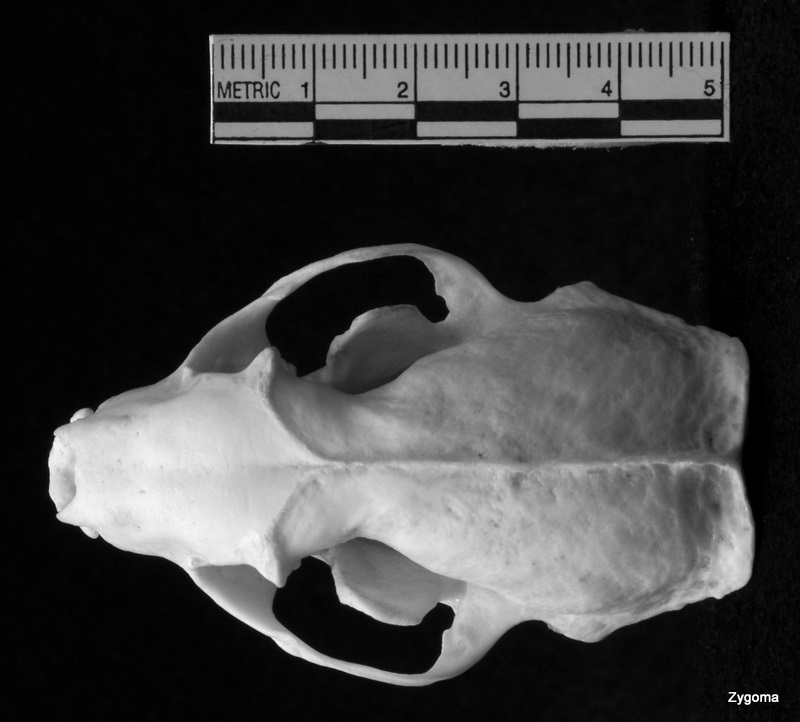
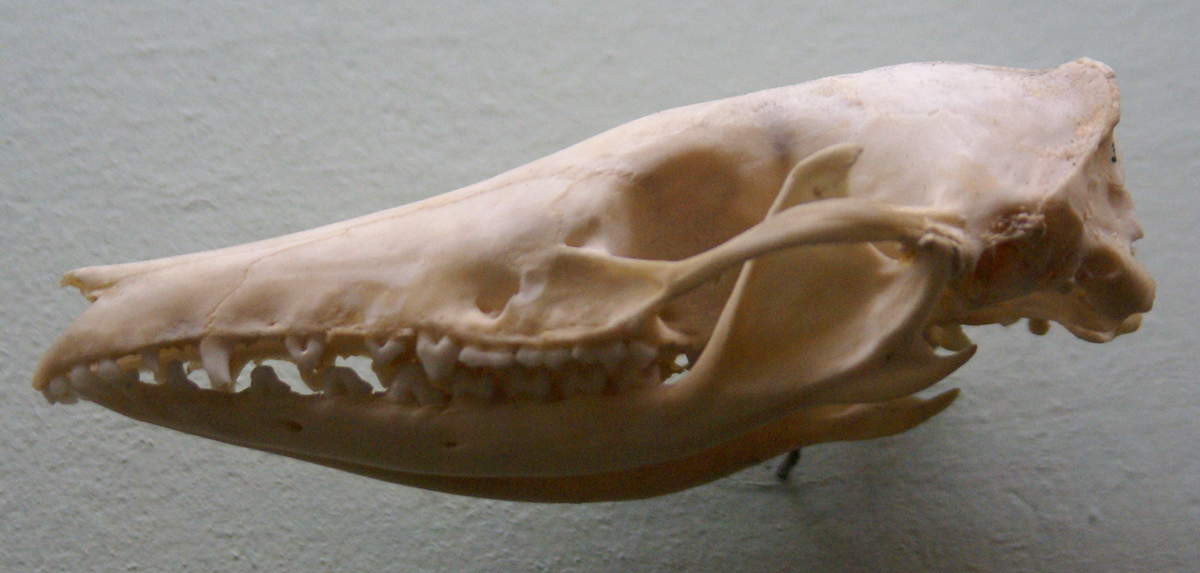
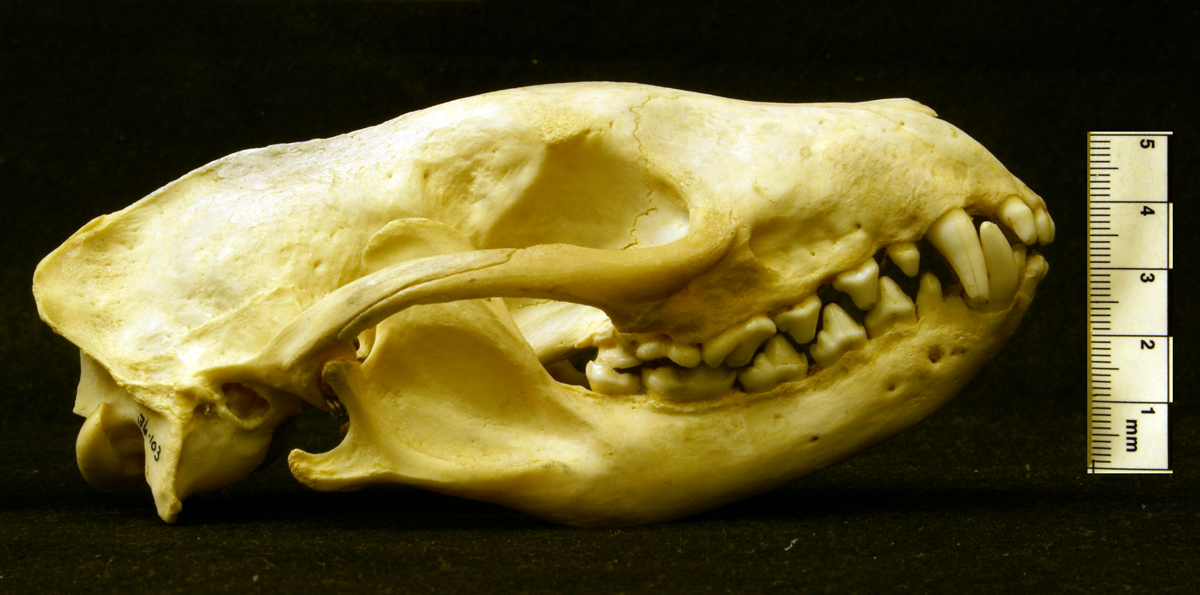
This week I have a tricky mystery object for you to identify. It’s from a group with a number of members that are a similar size and shape, which makes identification a bit tricky. Any idea what this skull belongs to:
I’ll try to answer any questions, but I can’t guarantee I’ll have access to a computer, so apologies if I don’t respond for a while (that’s why I’m a bit late posting this morning).
I was going to give you a clue about what this animal might be, but the only clue I could think of was a complete stinker, so I’m afraid it falls to your abilities to identify this animal. Best of luck!
On Good Friday I gave you this object and asked ‘Any idea what this skull belongs to?‘
Given the levels of pedantism on the Internet, I’m surprised that no-one said ‘the Horniman Museum‘, which would have been a correct answer to the question, since this specimen was bought in 1936 from the German natural history supply company Schlüter and Mass and it therefore belongs to the Museum.
However, you all clearly knew I meant belonged, since you did a great job of working out which species this skull came from.
Jake immediately ruled out the large British native carnivores (Fox and Badger) and several questions later had Jamie Revell hot on the trail, only to be pipped to the post by David Craven. Kudos also goes to Carlos Grau and Gina who both came very close.
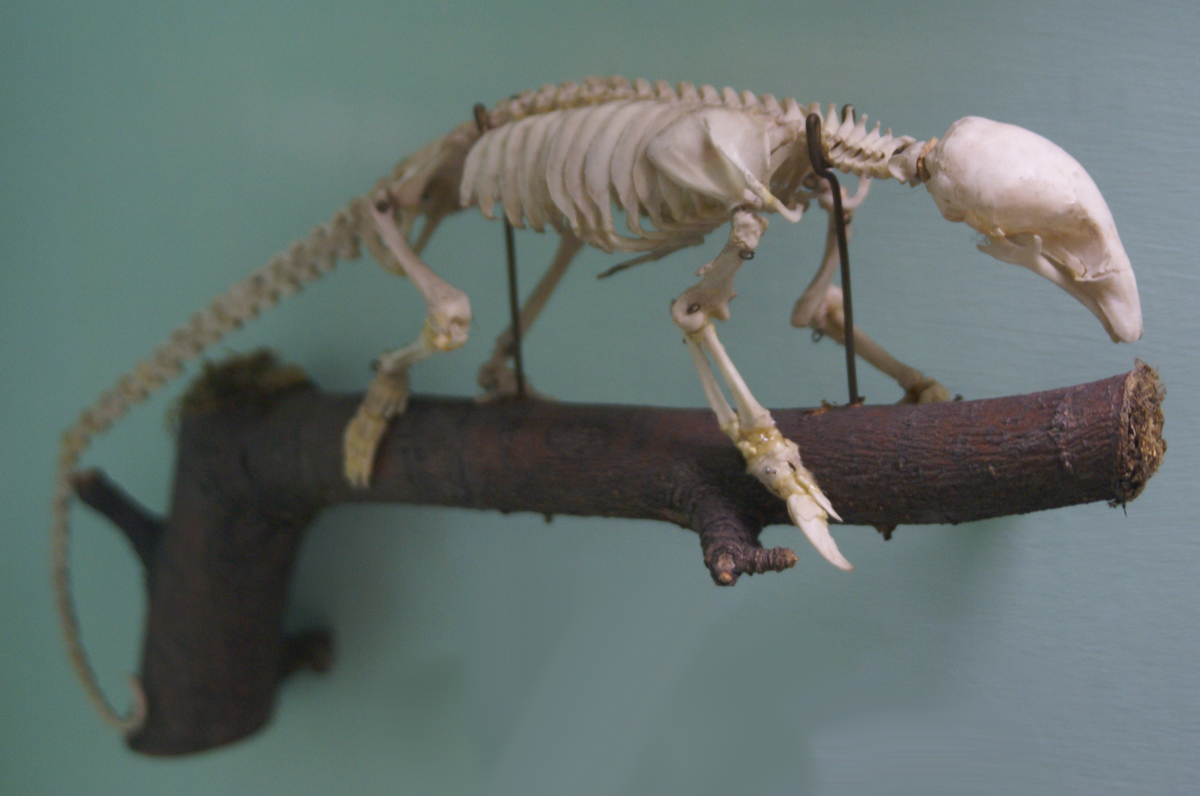
This week I’m going to give you an object that’s on display at the Horniman Museum. Whenever I see this specimen I’m reminded of the diversity of life that is out there in the wider world, that we never consider normally. Any idea what this skeleton belongs to?
As usual, I will do my best to reply to your questions, observations and suggestions in the comments section below.
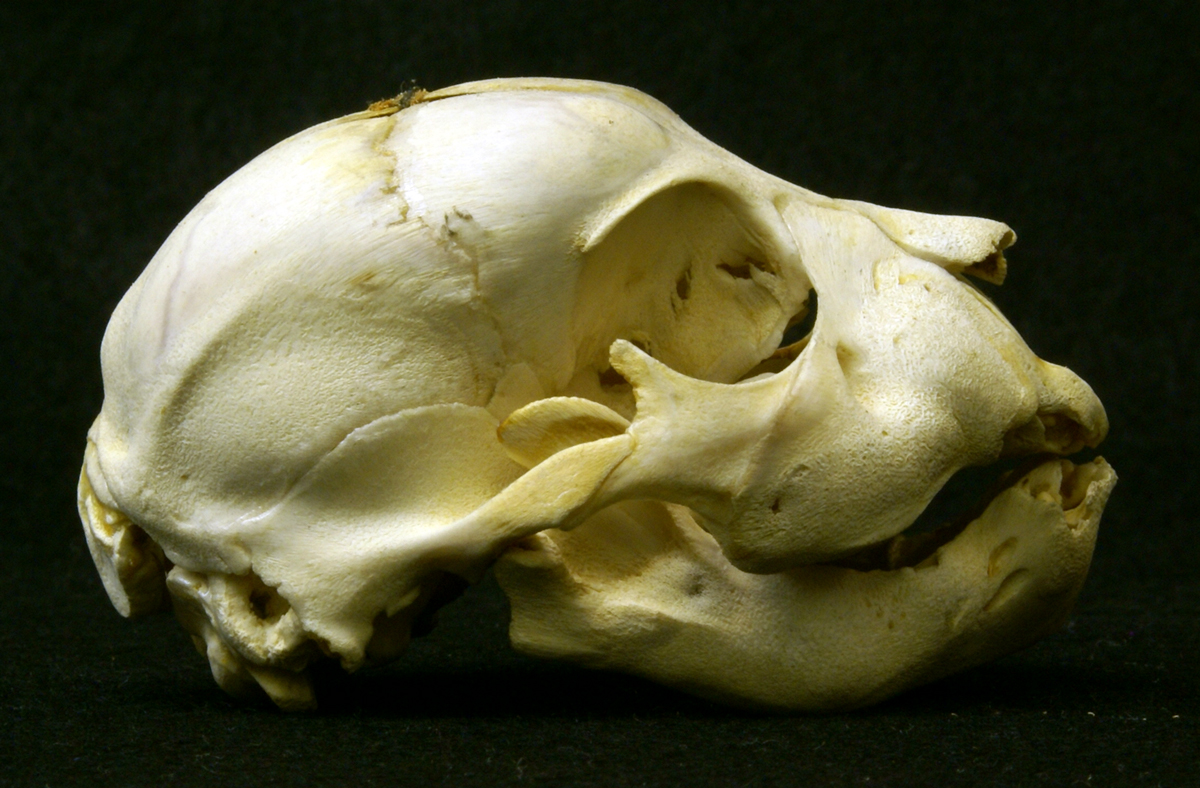
I’d like to begin by apologising for providing misleading information about Friday’s mystery object – I omitted a scale bar and then described the skull as being 4cm long. It goes to show how even a small amount of time can addle one’s memory, since this skull is in fact 7cm long:
I thought it would prove an easy one to identify, since it’s from a very well known species that I have talked about before – but the identification was made more difficult because it is a very young individual. This fact is clear from the lack of fusion of the bones and the lack of teeth. CopilasDenis and David Craven both spotted this and they also picked up on the fact that this skull is from a carnivore – as did ObenedO.
As to what species this skull comes from, no-one really came very close. In fact I was surprised when Jake said:
It doesn’t look catty or doggy or sheepy or deery.
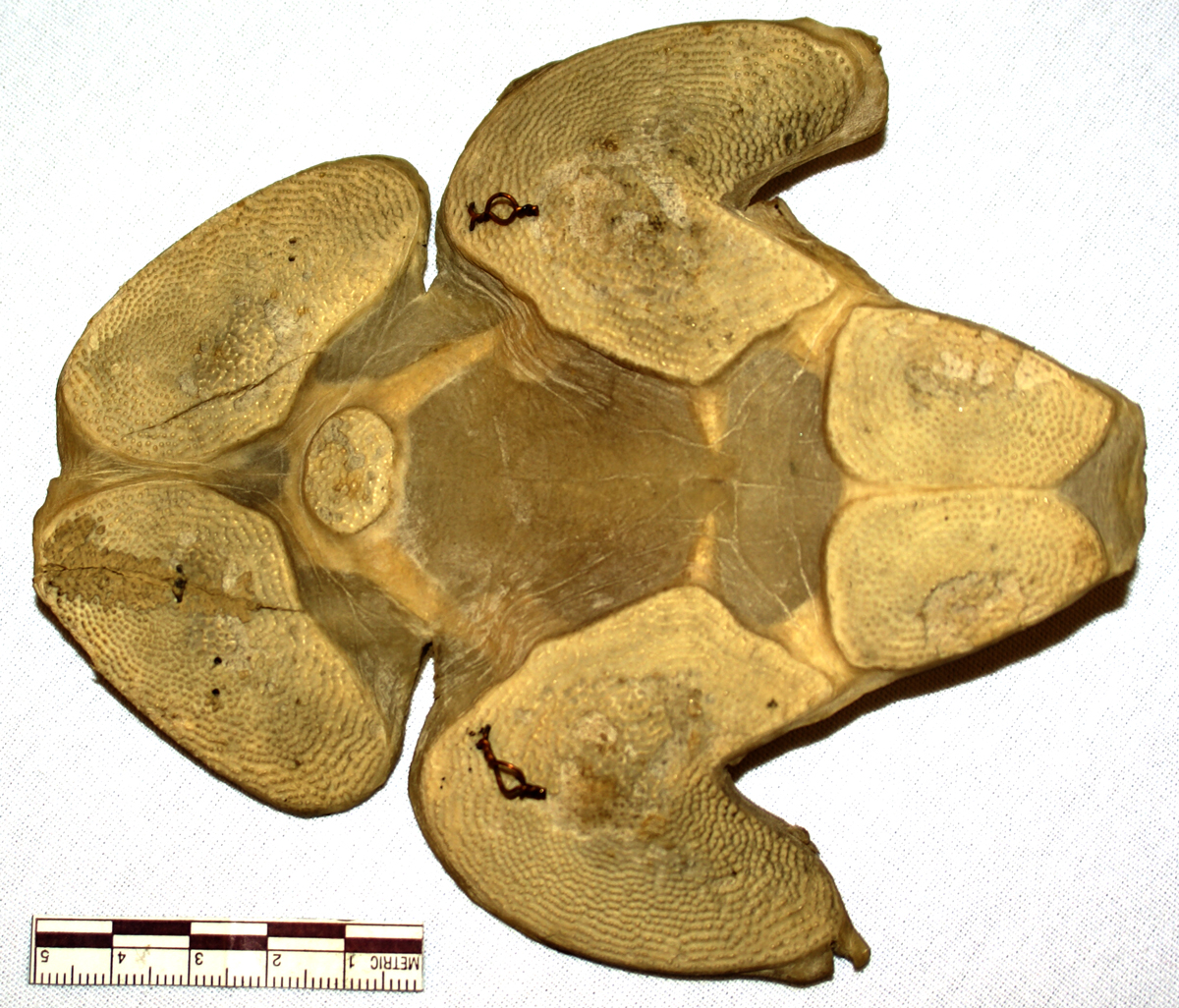
On Friday the mystery object was provided by Mark Carnall, the curator of the newly reopened Grant Museum of Zoology:
It’s not been an easy one to work out – I thought it was part of a fish skull when I first saw it and comments have ranged from a squashed frog to Yoda’s foot.
I apologise in advance for providing a slightly short answer to this week’s mystery object – I found myself a bit strapped for time between responding to Intelligent Design types trolling my blog here and at Scientopia, writing a talk for Skeptics In the Pub tomorrow evening and trying to sort out my laptop power lead after it broke (now fixed thanks to the helpful staff at Maplins who gave me the parts I needed to make repairs).
On Friday I gave you this object to identify, thinking that it might be a fun challenge:
As it turns out it seems to have been a good one, since most of you managed to work out what it’s from. There were some great hints dropped and I think that the comments proved to be a useful resource for those who weren’t sure, but they didn’t detract too much from the fun of working it out. Thanks to everyone for being awesome!
The first to correctly identify both the type of bone and the species it came from was Cromercrox, who gave a great rationale for his suggestion: Continue reading →
Apologies for the late posting of this answer – I was travelling back from Ireland yesterday and didn’t manage to get this post anywhere near as complete as I was hoping.
On Friday I gave you this mystery object to identify:
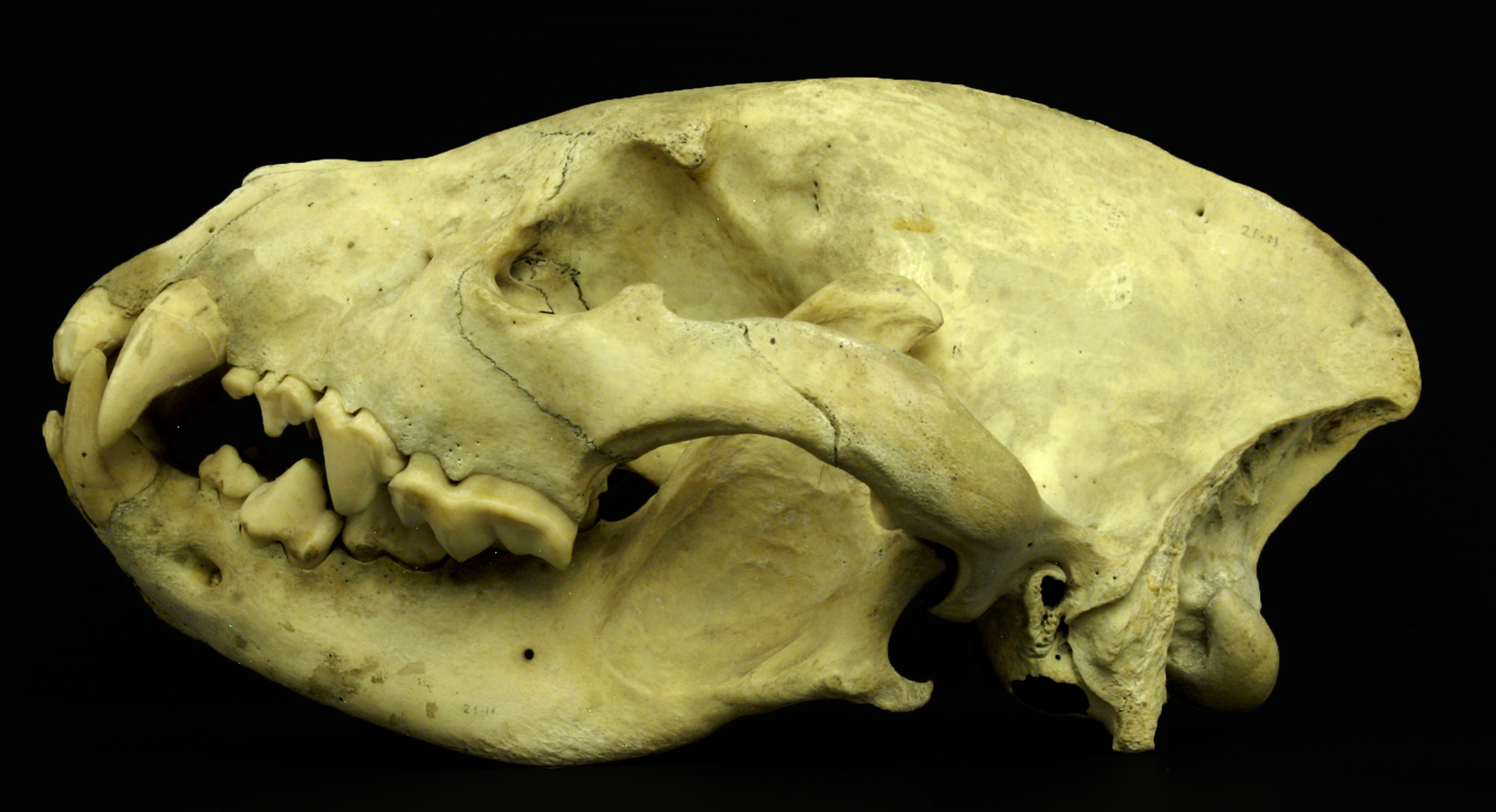
Pretty much everyone recognised it as being the skull of a dog or dog-like animal, but the large size of this skull (27cm long) caused some confusion. Quite a variety of breeds were suggested, but Rachel, Jamie Revell and Jake all ended up going for it being a Continue reading →
I thought it would prove quite straightforward for my astute audience and I was not disappointed. As usual Jake was the first to comment and he was spot on when he said:
I think it is some sort of big bird, it’s the braincase and […] the ear
The big bird Jake suggested was an Emu, which was slightly off as was CopilasDenis‘ suggestion of Cassowary and Cromercrox‘ suggestion of Rhea (although they all correctly spotted that this piece of skull was from a ratite). But Dave Godfrey finally picked the last remaining living ratite and the correct answer when he suggested it was Continue reading →
On Friday I gave you these two bones to compare, asking whether you thought they were from the same species.
There were some excellent responses with useful observations reflecting some of the difficulties faced when trying to identify postcrania. Unlike skulls which are composed of several bones forming a composite structure, including highly diagnostic elements (teeth for example), postcrania tend to be a bit more limited in the number of diagnostic characters visible. That said, the shape of the articulation points, the grooves and crests from tendons and ligaments, the scars from muscle attachments and the holes from nerves and blood vessels can all provide clues as to what a bone belonged to.
Size can also provide a clue, but as pointed out by Debi Linton:
…there’s a size differential, that could nevertheless be intraspecific variation…
This is a valid point – size can vary within a species for all sorts of reasons, the most obvious being the age or sex of the animal. However, in this instance the size difference is accompanied by quite a substantial set of differences in shape that go beyond what you would expect to find within a species. So well done to Dave Godfrey, Jamie Revell and Jake for making that deductive leap! That said, Debi also deserves congratulations for identifying the differences and then exercising caution in the light of insufficient information – it may be unsatisfying to say I’m not sure, but it’s often the only truly correct answer available.
That said, I’m a little surprised that nobody worked out what these femurs were from. The bottom one (B) has a small area of damage on the proximal end (the end nearest the body), which shows a honey-comb structure in the bone beneath. Jake also spotted that the angle at which these femurs would articulate with the hip would be unlike a deer – or other mammal in fact. These are the femurs of two species of bird – very big birds for that.
It’s the last day of 2010, so I thought I’d see the old year out by trying something a little bit different for this week’s mystery object. Rather than giving you one object and asking for an identification, I’m giving you two and asking whether they are from two individuals of the same species or if they are from two different species. Obviously there is kudos riding on identifying the species involved as well.
So here you go – can you spot any differences between A and B and are they enough to suggest that A and B are from different species?
As usual, please add your observations, questions and suggestions below and I’ll do my best to provide what information I deem appropriate. Good luck and a very Happy New Year!
I deliberately didn’t provide a scale bar, partly because I wanted to demonstrate how important it can be to have a sense of scale when identifying a specimen and partly to make the specimen a bit more challenging to identify.
Nonetheless, most of you got a correct identification, with some very good subtle hints being used to communicate that fact. So well done to Jack Ashby, David Craven, CopilasDenis, Dave Godfrey and Manabu Sakomoto, who all hinted or explicitly stated that this was the skull of a Continue reading →








 Zygoma