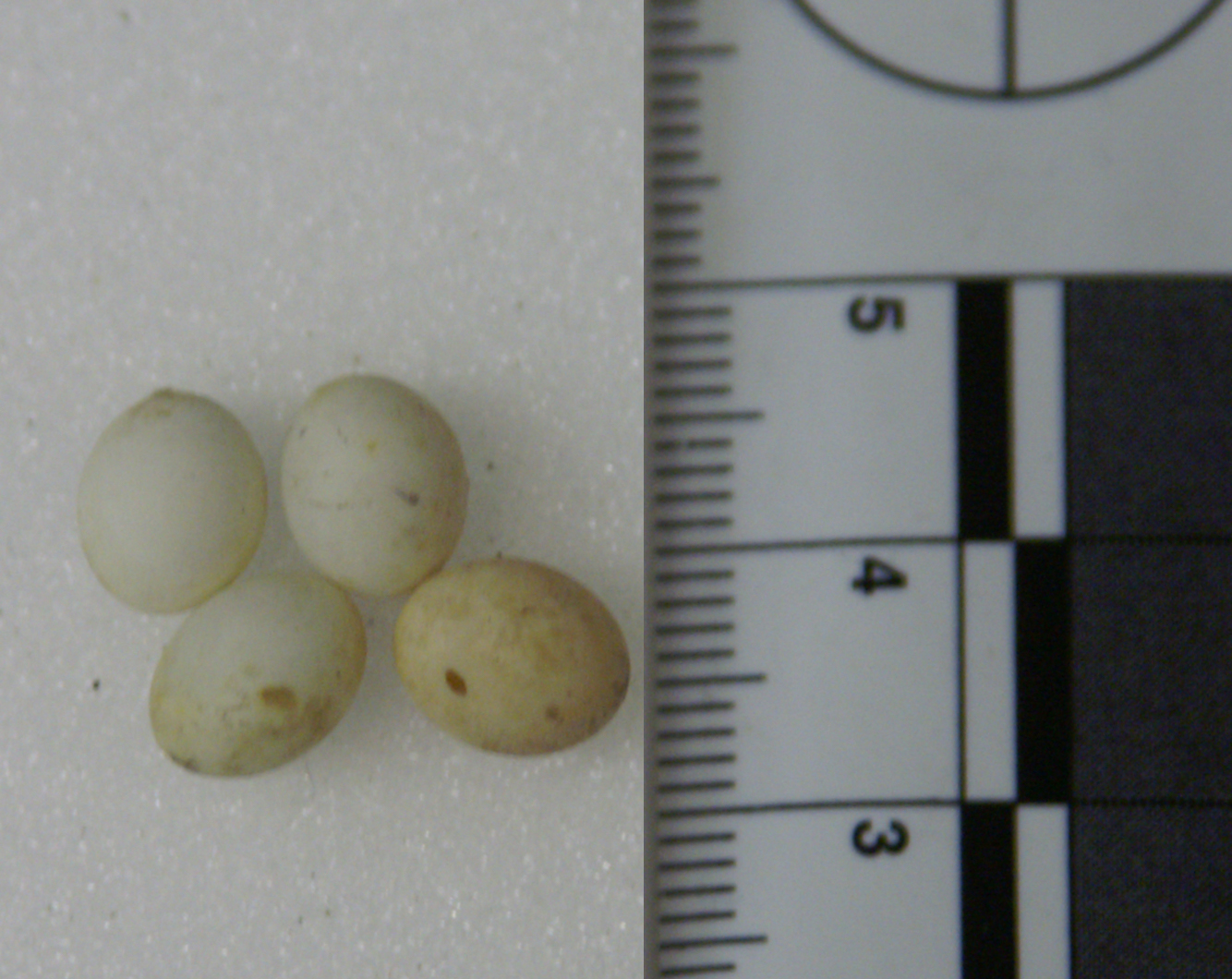
It’s time for the Good Friday mystery object (the Good relating to the name of the Friday, rather than the quality of the object…). Jumping on board the festive bandwagon, here’s an Easter themed object for you to identify:
I know they’re eggs, but can you work out what laid them?
As usual, put your suggestions and questions in the comments section below and I will do my best to answer.
Going through a small private collection that we recently acquired I came across this incredible specimen:
It looks like a pachypleurosaur with a difference – it appears to have had wings. This is probably a preservational artifact, but having seen the original specimen with my own eyes it really doesn’t look like the fossil or the matrix around it has been faked.
There have been (and still are) lots of unusual gliding lizards out there, from Sharovipteryx to Draco volans, but this one is different in seeming to have specialised structures for the wings that are not adaptations of existing body parts. I will describe this in more detail, but for now I tentatively propose the name Aprilpleurosaurus primus.
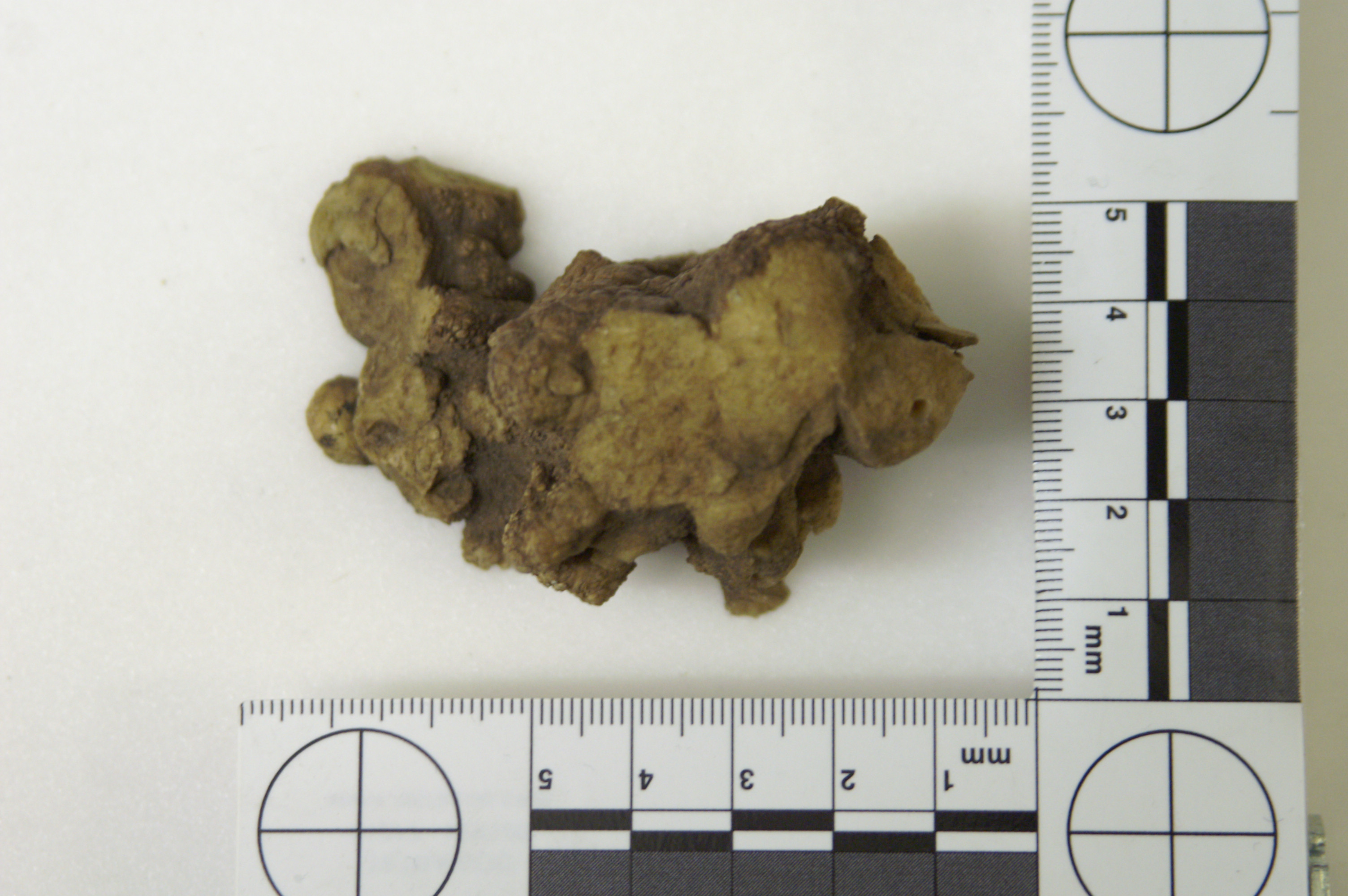
Crumbs – rather inundated with comments about last Friday’s mystery object! Apologies for not answering all of the questions, the sudden leap in comments coincided with a particularly hectic day where I had virtually no computer access. The comments were wide ranging, from cannonballs to turtle eggs, truffles to coprolites (fossil dung), burnt cooking/toys to a bezoar. One of my favourites was the fossilised fist of a wood elf – and I can sort of see the similarity:
However, I am almost sad to say that it is none of the above. There were a few answers that came close, Don C suggested a concretion, Solius suggested mineral crystals, SmallCasserole identified that it was mineralised with a radial pattern, but one person had this hammered – Jeremy was spot on with with an identification of Continue reading →
Dr. David “Norwegian Blue” Waterhouse (from Norwich Castle Museum) has come through once again with a challenging mystery object. This was found in Thetford Forest about 20 years ago – do you have any idea what it might be? Continue reading →
Spring is in the air and the burgeoning of new life all around us is not restricted to daffodils and baby birds, it also includes some less welcome organisms. Working in a museum means you really need to be aware of pests. A serious infestation can reduce objects to piles of dust in a worryingly short time. Every museum has pests, as does every house – they are impossible to eradicate completely and it’s a waste of time trying since they are mobile and can reappear just a few days (or even hours) after you’ve just finished exterminating their predecessors. Pest populations require constant management rather than blitzkrieg if they are to be kept at levels where they don’t pose a problem. In museums this is called Integrated Pest Management (IPM), at home it’s called housekeeping.
The majority of IPM is making sure that there isn’t enough food lying around to provide pests with the rations they need to explore your museum or home. If the pests can’t find food, they have no reason to hang around. Most of the food that pests find will be in the form of small edible particles (crumbs from your lunch, hair, skin cells, dead flies, pet food, etc.). This means that foodstuffs should be restricted to easily cleaned areas that are separated from areas containing vulnerable objects. Regular cleaning also needs to take place everywhere to remove the accumulation of organic waste that constantly builds up. Sometimes this isn’t easy, especially when buildings have been designed without pest prevention in mind:
Security grill in front of a window, making the sill difficult to clean
Of course, our museums and homes also have a standing supply of food for pests in the form of taxidermy, wool, paper, wood, dried goods, carpets, clothes, etc. This is what we are trying to protect, so we can’t simply remove it all. Instead, we need to keep a lookout for tell-tale signs that pests are busy munching away at these items, so that particular infestations can be dealt with before they spread.
Vigilance is key – everyone working in a museum or living in a house should be aware of what constitutes a pest and they should know where to report any sightings of pests (be it to Collections Management, Facilities Management, Conservation, or mum/dad). Whoever is in charge of dealing with pests should also be making sure that they carry out a bit of extra work, either by using monitoring traps to keep track of pest distributions so hot spots can be detected, and/or by keeping an eye on windowsills – a prime location for spotting pests of the insect kind. It is also useful to keep an eye open for the little signs that pests leave lying around – droppings, frass and characteristic damage.
Although some pests may have had a population in your building for as long as you’ve been there (or longer), most will have found their way in more recently. Points of entry are varied and often uncontrollable (you can’t check the coats or bags of every visitor for hitch-hiking beetles and moths), but where possible there should be checks in place that reduce the ability of pests to get into a building. A quarantine area is ideal (dare I say essential) for controlling pests that can be transported on museum objects, but at home it may simply be a case of checking that your newly purchased bunch of flowers or bag of flour isn’t crawling with beetles.
Various holes, vents and chimneys are excellent entry points for pests so it’s good to keep an eye on them – block up the ones that don’t belong there (like broken windows or holes in ceilings) and make sure that the ones that do belong (like air vents and chimneys) are kept clean and, where practical, protected with a mesh on the outside.
Rats
Part of what inspired me to start writing this was an incident at home that Melissa and I recently dealt with. We live in a basement flat, which means that we are likely to have certain types of pest finding their way into our home quite easily. In this case it was one of the most unpleasant pests you can get – we had a rat in our kitchen.
We knew that there was a rat in the garden, because we had seen it before. In fact, we have an entertaining video of it chasing magpies right under the nose of a disinterested local fox one Sunday morning:
However, a rat in the garden and a rat in the kitchen are two different things. Rats carry a host of nasty diseases and they are incredibly destructive because of their droppings, urine and need to gnaw – rats gnawing wires are a common cause of fire. There’s some useful information about problems caused by rats here. Our rat appears to have entered through a hole in the wall that takes the waste pipe from our washing machine – unfortunately the hole is much bigger than the pipe and the rat must have squeezed through the gap, something that rats are very good at.
We had a suspicion that a something was amiss when Melissa heard rustling and caught movement out of the corner of her eye one evening. The next day I also saw something fleeing behind the fridge when I walked into the kitchen and I thought it looked a bit too big to be a mouse – I was also fairly sure I had seen a long scaly tail. That clinched it, so we immediately did a fairly deep clean of the kitchen and we cleared out all the boxes and bags crammed into our airing cupboard, which is in one corner of the kitchen. On removing everything from there I spotted that the insulation around the boiler had started being gnawed to make what looked like nesting material. There were also droppings that were too big for a mouse (between 10-15mm):
Rat dropping
Whilst clearing out the airing cupboard our unwelcome guest was spotted as it dashed for cover, reconfirming the evidence that it was a rat. Obviously we were not pleased. Once everything edible was secured in containers in upper wall mounted cupboards or hanging from wall hooks, we shut the kitchen door and hoped the rat would stay put until it could be dealt with. Fat chance – we found fresh droppings in the hall after the rat had squeezed under the kitchen door. Our deep cleaning had probably removed enough accessible food from the kitchen to force the rat to roam further afield.
The advantage of this was that it suggested the rat was hungry and that there was enough disruption from our activities to have forced the rat out of its comfort zone. That discomfiture of the rat was an important, since rats are neophobic – they don’t like new things in their environment. Reducing the available food meant that the rat was forced to explore further and by altering its environment (i.e. removing most of the cover it relied on) we were forcing it to deal with changes, which meant that it would probably become familiarised more quickly with the traps we baited and put down at around the same time.
We chose break-back traps over poison for several reasons:
some rats have learned to avoid poison (although some are also trap shy)
there is no control over where the rat dies, so it could expire in an inaccessible place and then stink the flat out for weeks while it decomposed, incidentally providing a source of food for insect pests
if the poisoned rat went back outside it could well be eaten by something else, which could be harmed
neither of us are happy having poison hanging around the house, particularly in case we are visited by friends and family with younger children
I have ethical concerns about the suffering an animal experiences before it dies – I think a quick death is preferable to a slow one, and I consider poison to be too slow
A good strong break-back trap seemed to be the best option, since there is greater control of where the rat is killed and a trap is far more easily disarmed and tidied up than poison – it’s also a quick death for the rat (though see below). Live traps can also be used, although for rats I think they are inappropriate since releasing a rat in a new location strikes me as being irresponsible to residents of the area in which it’s released, and it’s pretty stressful for the rat.
Glue boards are also available for trapping rats – these are obviously a slow way for the rat to die, unless they are checked frequently and you are willing to kill the rat yourself. We did use a sticky board under the kitchen door when it was shut (I had a rubber mallet ready to despatch the rat), but that was more as an effort to reduce the rat’s movements within the house than to trap it.
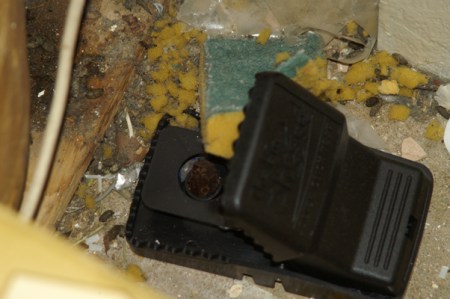
I should make sure I mention that break-back traps need to be checked regularly – sometimes they can go off without killing the rat, merely trapping it (and injuring it) and sometimes the bait can be removed or material from ratty activities can jam the mechanism, making it less effective. Although I was aware of this, I was a bit surprised when I first checked the trap and found a scouring sponge right in the jaws near the hinge:
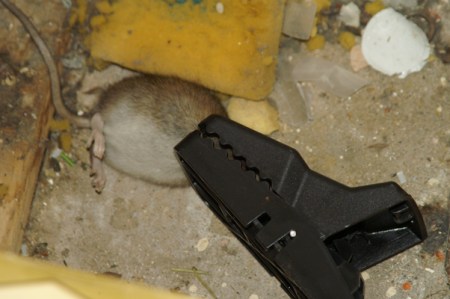
The snap trap was initially baited with chocolate (rats really like chocolate), but that was switched to nuts and raisins as soon as I realised that bitter dark chocolate that we had in the house was probably not quite the sugary, fatty confectionery treat that a rat would be after. The change of bait seemed to work out well, because we had the rat in the trap a few hours later:
Since the rat was a bit crushed from the powerful jaws of the trap I decided not to bother skeletonising it or getting it taxidermied. Instead I checked the local council website to find out what their disposal requirement was – double bagging and putting it in with the household waste – so that’s what I did.
All in all an unpleasant business, but it only took two days from the first sighting for the rat to be dealt with. Our next action is to contact our landlord to get the hole sealed up properly and we will probably clear out the crumbs from the toaster and bread-board a bit more often, since that’s what the rat seemed to be subsisting on.
If you have a rat then I recommend that you clean and disinfect thoroughly, make food as inaccessible as possible (easier said than done since rats can get through tiny holes, climb well and gnaw through plastic, wood and even concrete with ease), check where the blighters are getting in and work out where they are going, so that you can take steps to stop them. Most councils offer a pest control service to deal with rats (often it’s free), so if you don’t feel up to dealing with the rats then you’re probably best off contacting them. That said, I personally find it’s more effort to deal with contractors in my home than it is to kill a rat.
Last Friday’s mystery object was this formidable looking lower jaw chosen by my volunteer Cat:
I asked you to tell me what this was from and you haven’t disappointed! Cromercrox led the charge by deftly discounting it as being from a tetrapod – and even after an attempt at obfuscation on my part he identified that it was from “some mutha of a fish”. Jack Ashby jumped in with the correct suggestion that it was from a perciform fish and Jim slammed home with the correct answer of Continue reading →
After last week’s exceptionally tricky object I’ve decided to give you something that should prove a challenge, but which will hopefully be a bit more straightforward than the last one: Continue reading →
Suggestions for an identification ranged from earwax to fungi, from a monstrous gall stone to diseased bone. The first ranging shot from Gimpy (It looks like bone that has been calcified or has some sort of tumour growing on it. It also seems to have … no internal blood vessels or marrow) was actually very close and I thought this would be nailed in short order, but perhaps my evasive answer put people off the scent more effectively than I had intended. Eventually the one person who has managed to guess all of the correct elements is Jake – so a hearty round of applause to our youngest contributor! It is in fact a section of Continue reading →
This Friday I have a real identification challenge that I came across in the collections at the Horniman that I would like to share with you: Continue reading →
Imagine if you could bring a species back from extinction – what would you choose and why would you choose it? There are so many factors to take into consideration it all becomes a bit bewildering – do you choose something on the basis of how well it would reintegrate with existing ecosystems, how useful it might be, how much novel information we could learn from it, how plausible it would be to actually carry out the resurrection process, or simply how awesome it would be to see something that hasn’t walked the Earth for millions of years?
I recently asked four palaeontologists what species they would choose to resurrect and their responses were presented at a Café Scientifique balloon debate at the Horniman Museum, as part of the International Year of Biodiversity activities in conjunction with the Royal Society (who are celebrating their 350th anniversary!). The result was a very enjoyable evening for all involved and an insight into some of the considerations that should be taken into account when contemplating resurrecting extinct species.
The mystery object on Friday was chosen by Taylor, a work experience student who assisted me in the collections last week. He picked a particularly tricky specimen:
However, I am pleased to say that Jake immediately spotted that it was a skull that had been sectioned and after some questions and some close guesstimates by Henry Gee (who was working through the various families within the Carnivora), it was eventually correctly identified by Jeremy, who worked out that it was in fact from a Continue reading →
Once again it is Friday (where did the week go?) so that means it must be time for another mystery object! This week’s object was chosen by a work experience student who helped me in the collections earlier in the week (and proved to be very capable and enthusiastic). So here’s the challenge set by Taylor: Continue reading →
On Friday Dr David Waterhouse presented a guest mystery object from a beach on the Norfolk coast near Cromer:
There were some interesting ideas about what it might be, ranging from oil-spill residue (Gimpy) to shark egg-case (SmallCasserole), but Henry Gee managed to correctly identify the specimen as being a Continue reading →
Friday is upon us once again. This week I am handing over to my esteemed colleague Dr. Dave Waterhouse from the Norwich Castle Museum to provide the mystery object for this week… Continue reading →
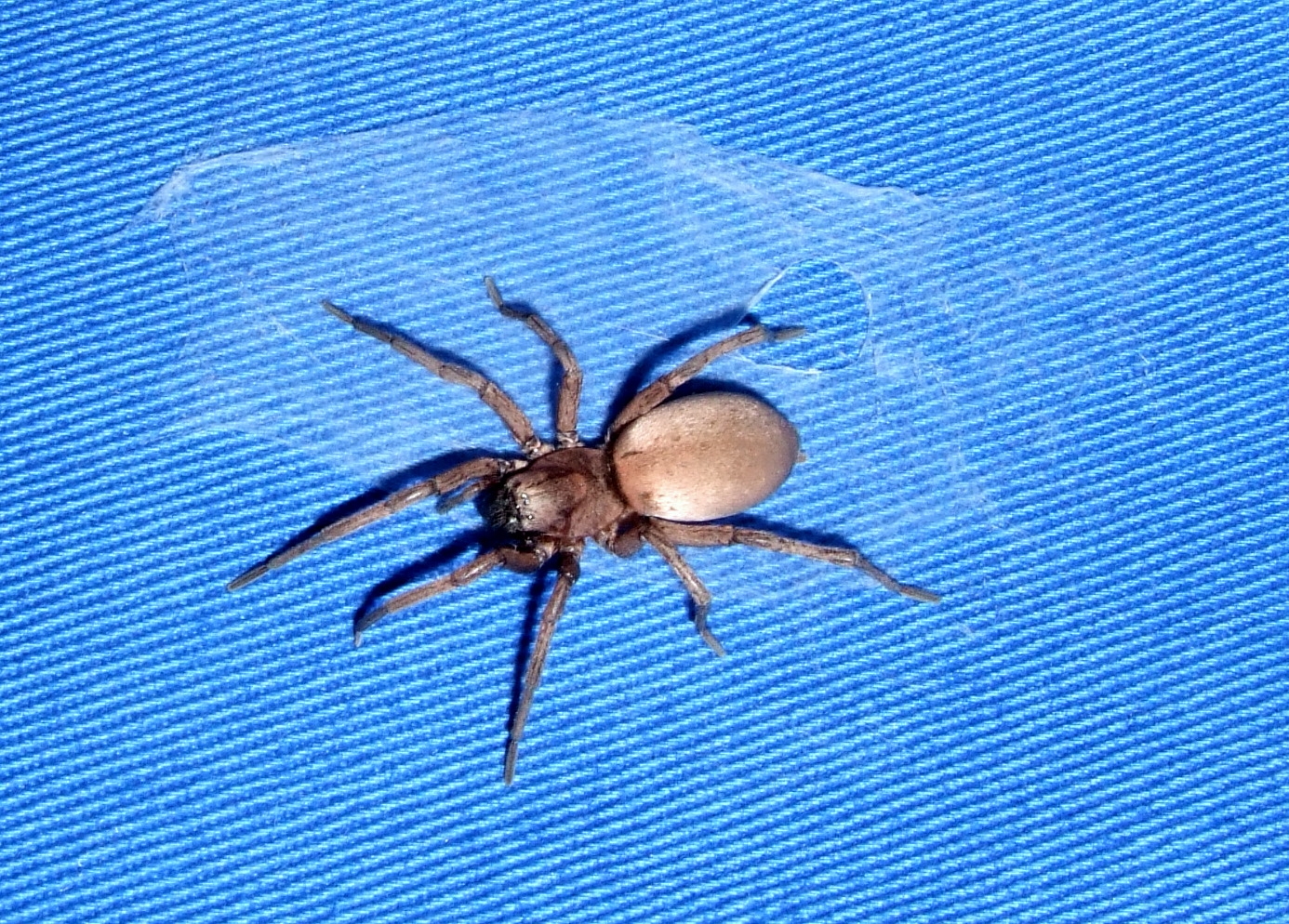
On Friday I showed you a photo of one of my house guests from last year and asked you what it was:
Body approx. 2cm long
Obviously it’s a spider; the eight legs, two body segments and massive chelicera are a dead give-away, but what kind of spider is it? Jim identified it immediately (typical of a know-it-all biologist) as a Continue reading →
Since I am on holiday this week, my mystery object is not from the museum, but from home (albeit from last June). I got a bit of a shock when I pulled shut the bedroom curtains and found this staring back at me: Continue reading →
This is a post which berates Dr. Evan Harris MP for all manner of misdemeanours, not least his strong and vocal position against homeopathy. The blogger (one Sue Young) goes so far as to quote two articles from the GMC code that she feels Dr. Harris is contravening through his activities [update 14th Feb 2010 – apparently the blog post was based on a letter written by Lionel Milgrom, see Gimpy’s blog for details]. I wrote a comment relating to the fact that the overriding focus of the GMC guidelines is care to patients and it seems that Dr. Harris is fulfilling his duty to the GMC by attempting to “protect and promote the health of patients and the public” by illuminating the lack of evidence for the efficacy of homeopathy. It appears (unsurprisingly) that my comment did not make it through the comment review process, so I have posted it (and my follow-up) below.
It is not the berating of Dr. Harris that struck me as odd, nor the call to boycott the Liberal Democrats – it is the use of the term “if you love homeopathy”. This is a bit incongruous. I can understand someone loving what they do; after all I love my job, but I wouldn’t think to rely on my (admittedly irrational) fondness for dead animals as a way of motivating people to see things from my perspective. Moreover, “love” has some important connotations – not least unconditional acceptance or bias. It is here that we begin to see where the problem with homeopathy really lies.
I have said before (a couple of times) that homeopaths are believers in a 200 year old doctrine – which is why homeopathy has not changed appreciably in those two centuries. It is the inability to see past their love for their discipline that has meant that it has not been allowed to adapt and evolve. As a result homeopaths keep practicing their art with complete faith in its efficacy, despite the fact that evidence has repeatedly shown that homeopathy does not work appreciably beyond placebo (unless the studies assessing it are of low quality). Even where studies conclude that homeopathy is not effective, there are examples of homeopaths cherry-picking statements and citing them as support.
Rather like a parent is biased towards their child because of their love, homeopaths are biased towards their discipline. Evidence against the efficacy of homeopathy merely makes homeopaths feel more defensive. Logical refutation of the principles of homeopathy leads homeopaths to doubt well established facts about physics and biology rather than change their assumptions about homeopathy. It’s like a parent being confronted with video footage of their child shoplifting and responding by saying “but my child would never do that – you must be mistaken”. This is not how science works. This is certainly not how medicine should work.
Until homeopaths can put aside their love of homeopathy they simply cannot be trusted to work with the best interests of their patients in mind. Ignoring or twisting evidence to make it fit what is already believed is not beneficial. If homeopathy is ever going to be more than a dogmatic anachronism it needs to start accepting criticism and more to the point it needs to start recognising the inherent bias introduced by those that love homeopathy.
My comments:
It should be pointed out here that article 46 and 47 is not intended to defend the actions of colleagues who do not fulfil the duties of a doctor registered with the General Medical Council:
“Patients must be able to trust doctors with their lives and health. To justify that trust you must show respect for human life and you must:
Make the care of your patient your first concern
Protect and promote the health of patients and the public
Provide a good standard of practice and care
Keep your professional knowledge and skills up to date
Recognise and work within the limits of your competence
Work with colleagues in the ways that best serve patients’ interests“
It seems that Dr. Harris is fulfilling his duty to the GMC by attempting to “protect and promote the health of patients and the public” by illuminating the lack of evidence for the efficacy of homeopathy.
My follow up comment:
I see that you only publish comments that support your opinion. How wonderfully hypocritical in a blog about bias, but I suppose it’s only to be expected that a homeopath will cherry-pick what they want to hear.
Friday again and here is another peak at some of the funky stuff I get to work with behind the scenes at the Horniman Museum. This is a specimen without a label from one of our cupboards – any idea what it might be?
As usual suggestions in the comments section below – I will do my best to answer any questions, but since my Google phone has died I can only respond when in front of a computer, so patience may be required. Good luck!
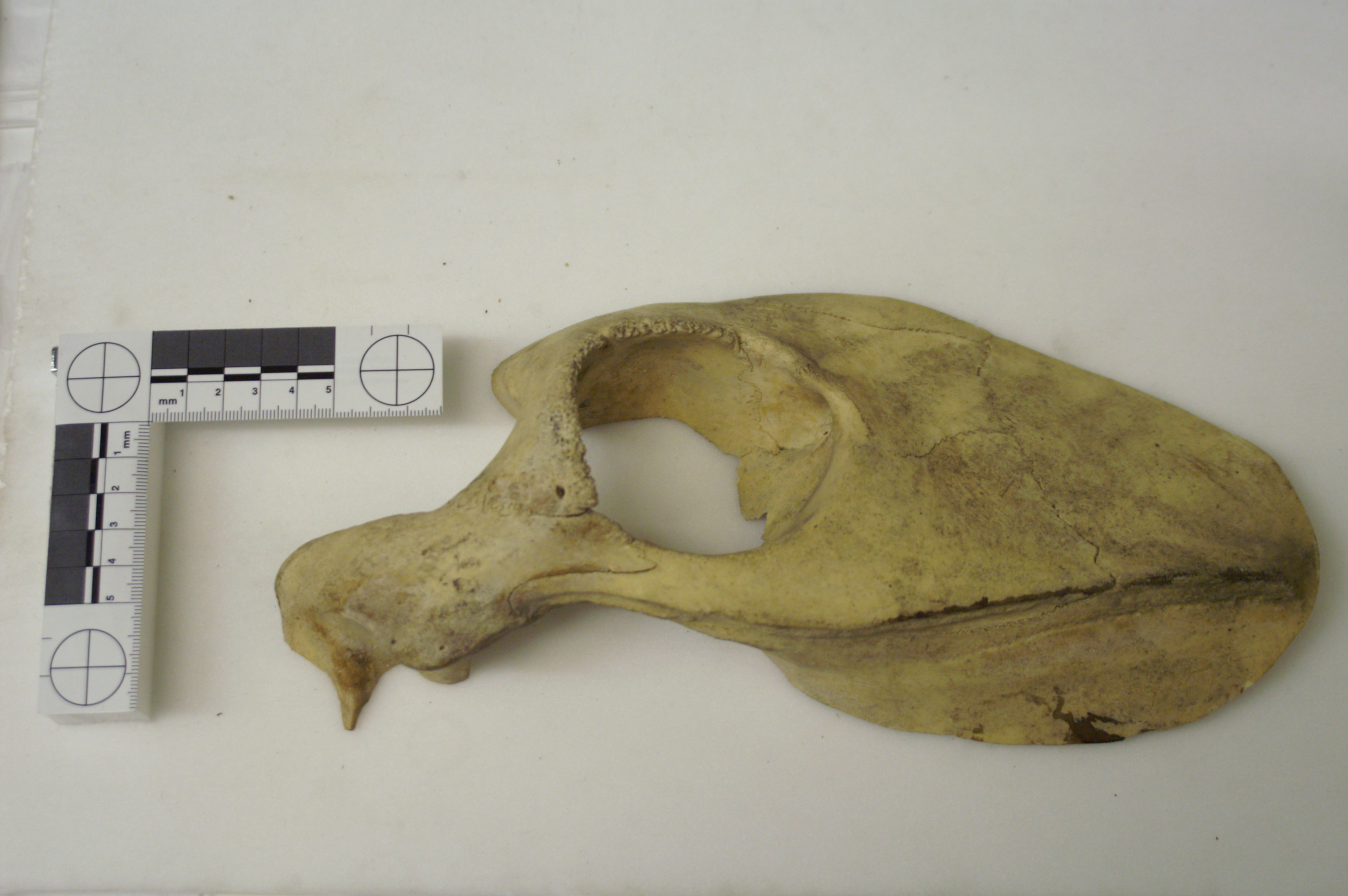
On Friday I gave you this tricky mystery object to identify:
It presented quite a challenge for everyone, but eventually Dave Godfrey managed to get the correct identification. Believe it or not, this is part of the skull of a Continue reading →







 Zygoma