Friday mystery object #41 answer

On Friday I gave you this formidable looking object to identify:

Many  suggestions related to the saw-like appearance of this object, proposing either a human-made saw or the rostrum (nose) of a saw-fish (which are endangered cartilaginous fish of the genus Pristis). The closest answers all made reference to the articulation at the end of this object, which is the significant clue as to what this object is – the “teeth” are just secondary details.

Jake was the first to come close, followed by Kevin the epic and KateV, who gave a sensible mechanical breakdown of the likely use of this element. I’m not all that surprised to say that this week no-one worked out that the mystery object is a Continue reading

Friday mystery object #41

It’s hard to believe that it’s a year ago today that I started this blog – how time flies! The mystery object didn’t start until four months in and I strongly feel that it provides the backbone of the blog. So here is my forty-first mystery object – I hope you enjoy trying to work out what it is (whatever it might be, it looks pretty vicious):

As usual put your suggestions and questions below and I will do my best to answer (without giving it away). The answer will be posted on Monday.

Good luck!

Friday mystery object #40 answer

On Friday I gave you this skeleton to identify:

It looks a bit like a snake, but there are a couple of give-aways that mean it must be something else. First of all, snakes may look like they’re all tail, but actually they have quite short tails in relation to their body length (hint – the tail starts just after the ribs end) and second, a snake’s skull has a very open light structure (as I’ve discussed before). Both of these snaky features can be seen in this image taken by dbking:

Viperid snake skeleton (image by dbking)

Viperid snake skeleton (image by dbking)

So, if it’s not a snake, what is it? There are quite a few animals that have a long slim body with no limbs, from eels to caecilians to a variety of lizards (including, but not restricted to snakes, which are a discrete subgroup within the lizards). However, this is not an eel because their ribs don’t form a cage – they form vertical projections for their muscles to work against, it’s not a caecilian because they have even shorter tails than snakes, which leaves us with the non-snaky legless lizards (as recognised by Gimpy).

Legless lizards crop up in at least three major groups of lizard (not counting snakes) so there is a fair amount of choice out there. The Amphisbaenia are really weird and the mystery object doesn’t have the right skull shape to be one of them. The Pygopodidae are legless members of the same group as the geckos – and the mystery object could probably be one of them, except it’s not. It is in fact a member of the Anguoidea (more particularly the Anguidae) and it was identified correctly by Jim (and seconded by Neil) as being a  Continue reading

Friday mystery object #40

Last week’s object was totally unrelated to natural history, but this week I am returning to my area of interest. Any idea what this might be:

(Length across specimen approx 45cm)

It’s a bit of an easy one, but next week I’ll make up for it with something a more difficult.

As usual you can ask questions or make your suggestions in the comments section below – I’ll do my best to answer, but I won’t be in the office for most of the day, so I can’t guarantee a rapid response. Good luck!

Friday mystery object #39 answer

On Friday I deviated from my usual natural history theme when I gave you this object:

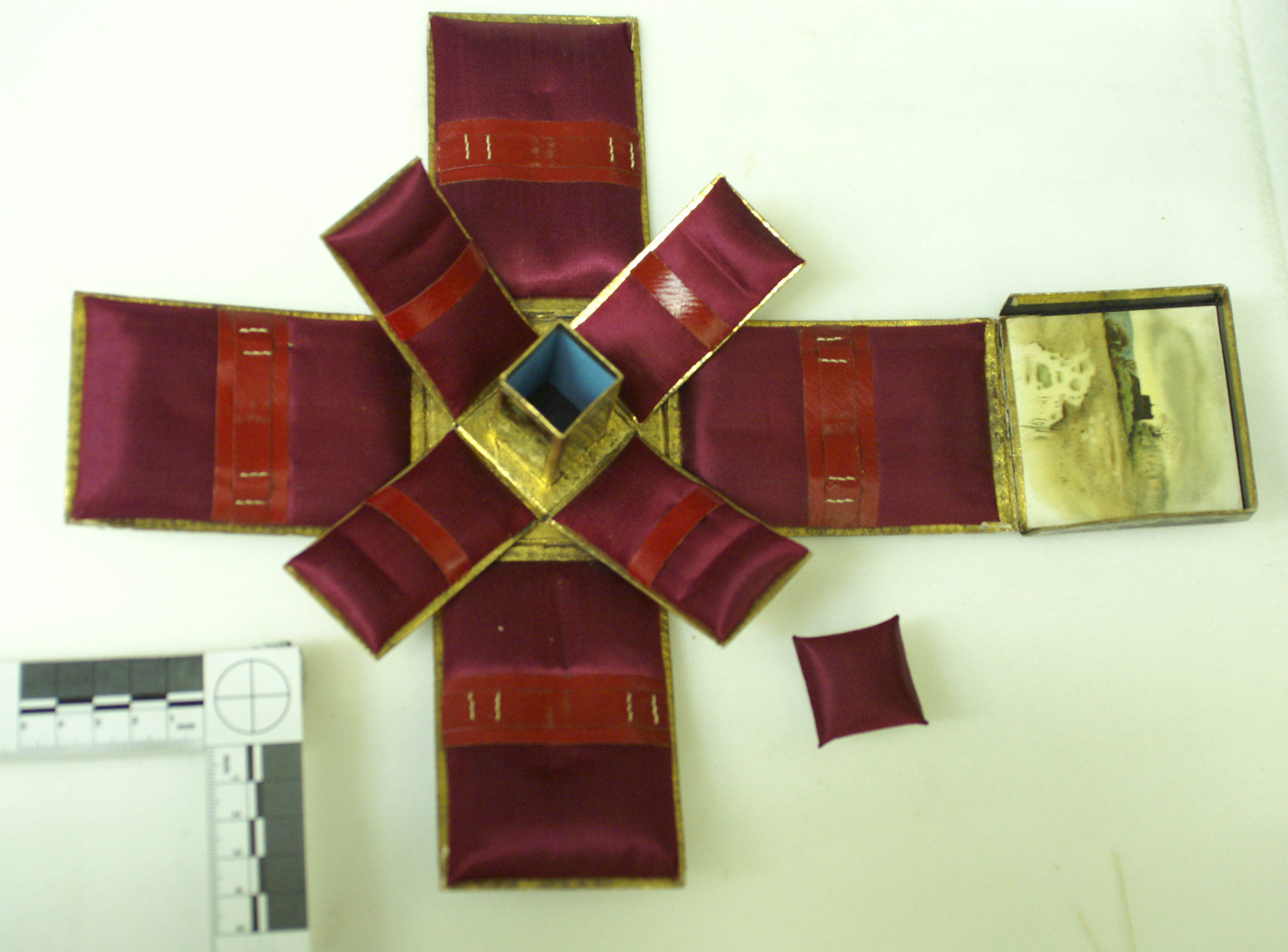
There were a host of suggestions, from a tea caddy to part of the Large Hadron Collider, however, one person managed to identify that this is actually a pin cushion – here it is folded out in all its glory:

So well done to KateV (who is also known as mum by me)!

This particular pincushion is European and made of cardboard and fabric – I would tell you more, but out database doesn’t seem to be responding this morning, so any additional information will have to follow once that’s up and running, since I am a total ignoramus about such cultural items. Hopefully more to follow…

Friday mystery object #38 answer

Friday’s object was this exploded skull:
I identified it as a hedgehog, Erinaceus europaeus Linnaeus, 1758 based on comparison with the skull (particularly the lower jaw) of a specimen that I had as a mystery object last August:

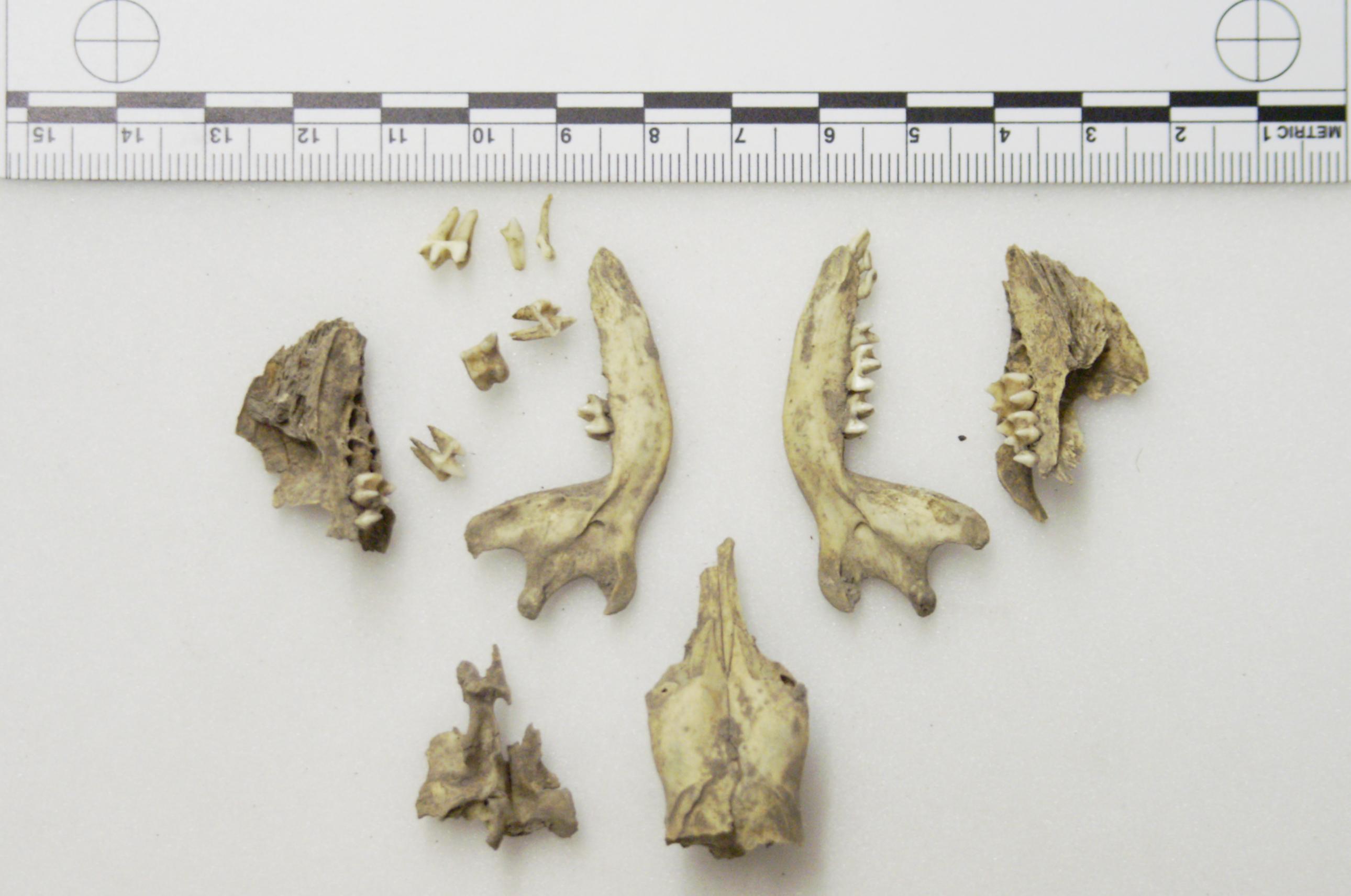
My guess is that the specimen was probably a fairly young adult, since most of the fragmentation of the skull is along suture lines. However, the disarticulation is greater than would be expected simply from a poorly fused specimen, so it looks like damage has also been sustained. Since the delicate nasal turbinates are still intact and in place, I expect the damage probably happened when they were still protected by soft tissue – making me suspect that it happened before the animal was skeletonised. Given the susceptibility of hedgehogs to getting run over, I expect that this individual was killed on the road by a glancing blow to the head that loosened teeth and sutures. I’m pleased to say that Jake agreed with my identification and cause of death for this specimen, so a hearty congratulations to him!

Friday mystery object #38

This week I am going to give you a genuine mystery object – something from the collections of the museum that has no identification. I have been dealing with a few of these sorts of things recently whilst organising the osteological (that’s bone) store.

Often specimens have been acquired in a big batch, which invariably means that there will be a box left at the end which contains the jumbled and broken bits and pieces that have lost information or have been separated from the rest of a specimen during the move from their old home, or at sometime in the distant past.

Here’s one such specimen:

(click for larger image)

Do you have any idea what this exploded skull might belong to – and why it might be exploded?

As usual post your suggestions below. I might not be able to answer any questions this week, because I’m off to Norway to visit a good friend I don’t see often enough in Trondheim. Who knows, next week I may have a Norwegian mystery object for you to identify… Good luck!

Friday mystery object #37 answer

On Good Friday I provided a series of eggs in a mystery Easter egg hunt. I will list the answers at the end of this post with a reference to the people who made a correct identification, but first I want to discuss the issue of eggs.

I had reservations about putting together last Friday’s post, because eggs are a delicate subject matter – and by that I don’t mean I was concerned about possible damage to the eggs (I’m trained to deal with such things after all), I mean that the issue of eggs is ethically and legally delicate. I checked the Wildlife and Countryside Act  1981 and associated legislation to ensure that both myself and the Museum were on legally firm ground with respect to the eggs and I am now fulfilling the ethical requirement (as I perceive it) by attempting to clarify the position on collecting, keeping and trading bird eggs in England and Wales (slightly different rules apply in Scotland).

Collecting wild bird eggs is illegal. It makes no difference if the bird is a golden eagle or a wood pigeon.

Selling wild bird eggs is illegal. As one auctioneer found to his cost recently.

It is illegal to possess bird eggs unless you can prove they were obtained legally. This means that you need evidence that the eggs were collected prior to The Protection of Birds Act 1954 – and of course evidence means documentation.

Egg collecting used to be a common hobby, usually associated with young lads. Unfortunately collecting can be quite addictive and when someone of a collecting mindset wants to fill holes in their collection they will sometimes go to extraordinary lengths to do it – breaking the Law included. This means that there are still quite a few people out there who collect and deal in eggs – something that has to be taken seriously. It needs to be taken seriously because collectors tend to target those eggs that are rare – precisely the ones that are needed for rare bird populations to survive and recover.

Museums have a bit of a hard time with people offering egg collections. Often when someone passes away their family will find a shoebox of eggs in the loft that was collected when the deceased was a child. Usually, such collections were collected prior to 1954, but they lack any documentation. This means that the family is left holding an illegal egg collection that they are keen to get rid of, but which they don’t want to destroy – so they offer it to museums. Of course, museums are bound by the Law, so they too can be prosecuted for holding egg collections that cannot be proved to pre-date 1954. This means that museums will turn away egg collections that lack proper documentation and associated data – and the best course of action is probably for the families to contact DEFRA for advice (they’re very approachable and they aren’t looking for unwitting innocents to prosecute). The advice I would give is that if the collection has no documentation and associated data (like species names, place collected and all-importantly date of collection) it is probably best to dispose of the eggs. If it does have data and documentation then a museum may be willing to take it as a donation – but bear in mind that most museums are very wary of egg collections and don’t be surprised if they decline your offer.

On to the answers! Continue reading

Friday mystery object #37b

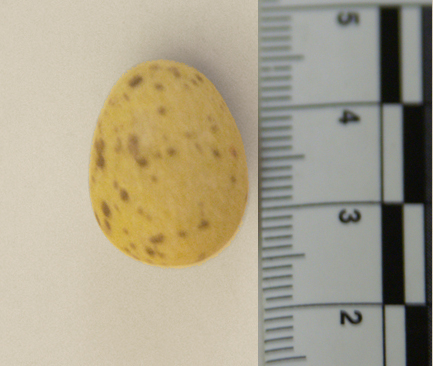
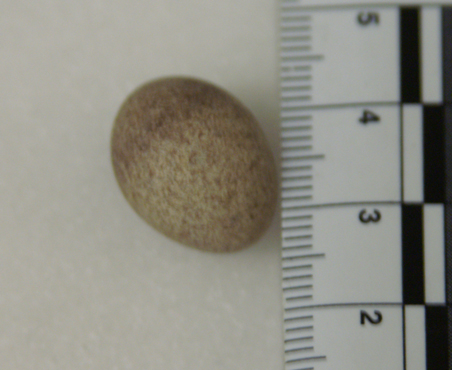
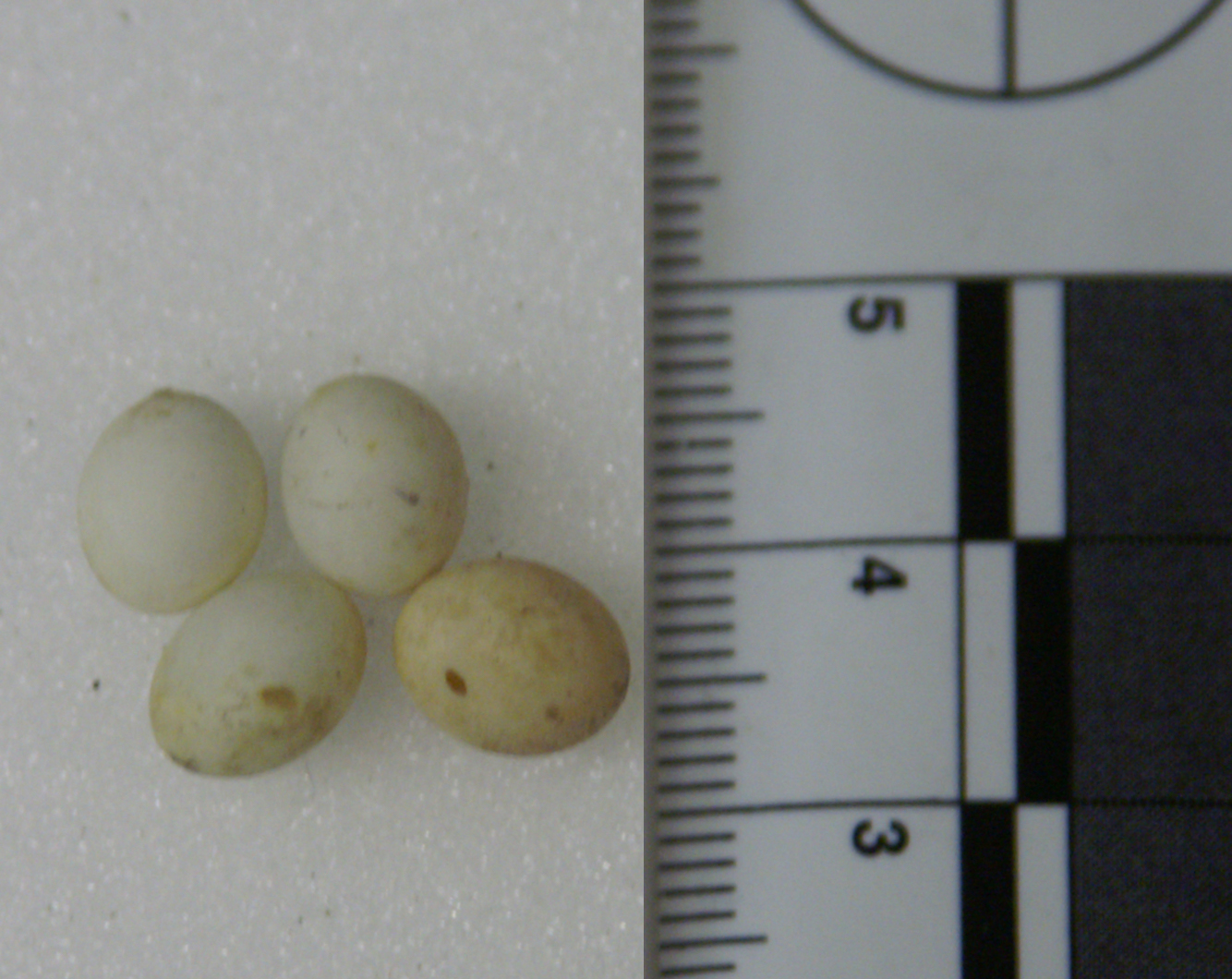
Since it’s Easter I’ve decided to make the Good Friday mystery object a bit more of an Easter egg hunt, so expect a posts during the day every few hours with new eggs for you to identify. So what about this:

I will try to answer questions requesting clarification about an aspect of the natural history of the animal that produced the various eggs, but I won’t let on if the answers are correct. I hope you enjoy this slight twist on my usual format!

Friday mystery object #37a

It’s time for the Good Friday mystery object (the Good relating to the name of the Friday, rather than the quality of the object…). Jumping on board the festive bandwagon, here’s an Easter themed object for you to identify:

I know they’re eggs, but can you work out what laid them?

As usual, put your suggestions and questions in the comments section below and I will do my best to answer.

Good luck!

Friday mystery object #36 answer

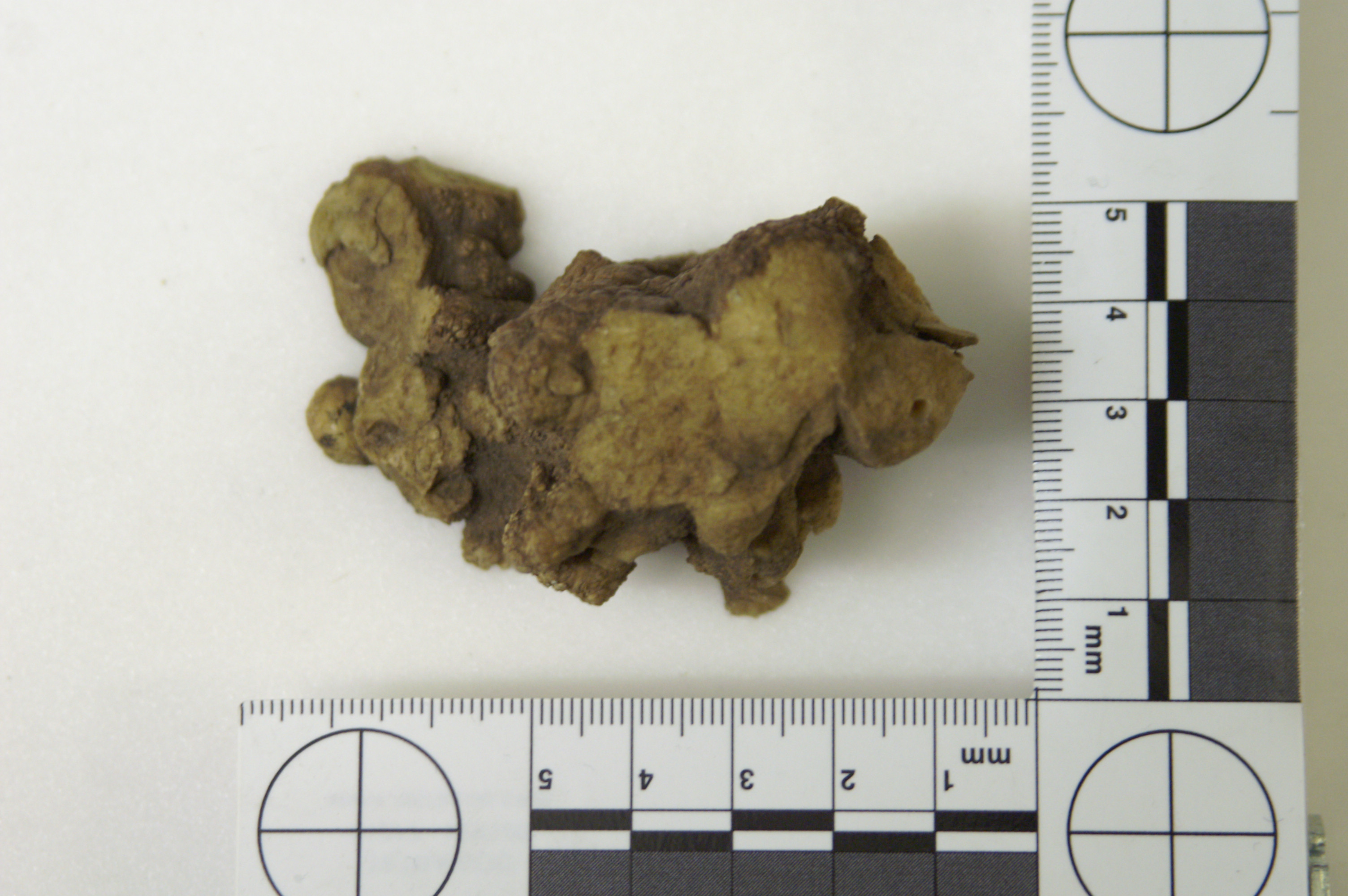
Crumbs – rather inundated with comments about last Friday’s mystery object! Apologies for not answering all of the questions, the sudden leap in comments coincided with a particularly hectic day where I had virtually no computer access. The comments were wide ranging, from cannonballs to turtle eggs, truffles to coprolites (fossil dung), burnt cooking/toys to a bezoar. One of my favourites was the fossilised fist of a wood elf – and I can sort of see the similarity:

However, I am almost sad to say that it is none of the above. There were a few answers that came close, Don C suggested a concretion, Solius suggested mineral crystals, SmallCasserole identified that it was mineralised with a radial pattern, but one person had this hammered – Jeremy was spot on with with an identification of Continue reading

Friday mystery object #35 answer

Last Friday’s mystery object was this formidable looking lower jaw chosen by my volunteer Cat:

I asked you to tell me what this was from and you haven’t disappointed! Cromercrox led the charge by deftly discounting it as being from a tetrapod – and even after an attempt at obfuscation on my part he identified that it was from “some mutha of a fish”. Jack Ashby jumped in with the correct suggestion that it was from a perciform fish and Jim slammed home with the correct answer of Continue reading

Friday mystery object #34 answer

Friday’s mystery object was a tricky one:

Suggestions for an identification ranged from earwax to fungi, from a monstrous gall stone to diseased bone. The first ranging shot from Gimpy (It looks like bone that has been calcified or has some sort of tumour growing on it. It also seems to have … no internal blood vessels or marrow) was actually very close and I thought this would be nailed in short order, but perhaps my evasive answer put people off the scent more effectively than I had intended. Eventually the one person who has managed to guess all of the correct elements is Jake – so a hearty round of applause to our youngest contributor! It is in fact a section of Continue reading