This week I have a rather nice specimen for you to identify:

Any idea what this skeleton comes from?
As usual you can leave your suggestions, comments and questions below and I’ll do my best to respond. Good luck!

This week I have a rather nice specimen for you to identify:
Any idea what this skeleton comes from?
As usual you can leave your suggestions, comments and questions below and I’ll do my best to respond. Good luck!
Friday’s mystery object was meant to be a bit of a challenge:
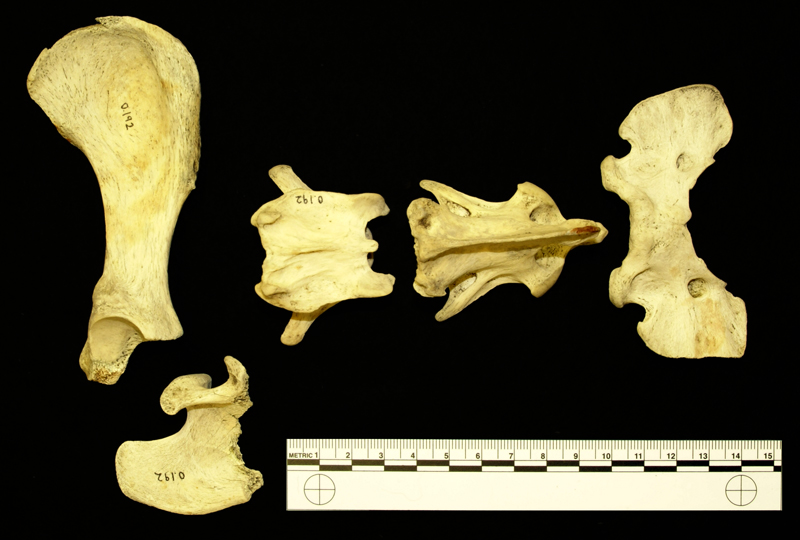
Post-cranial bones can be tricky to identify, especially if you don’t have much comparative material available.
The first challenge was to work out which bits of bone are present – something that Rhea and Jake managed very well. This particular specimen is composed of a broken portion of right mandible (showing the coronoid process, condyloid process and angular process), the left ilium, and the first three cervical vertebrae (which include the axis and atlas bones).
Identifying the species was a bit more tricky using just these few bits of bone, but several of you managed to get there. Henstridgesj was the first to suggest Continue reading
Last week’s mystery object was a bit too easy, so this week I’m giving you more of a challenge:
Can you work out what these bones are and which animal they’re from?
I’ll do my best to respond to your questions, comments and suggestions if you put them below. Good luck!
On Friday I gave you these objects to identify:

I expected you to work out what these came from pretty easily – and you proved me right. In fact, I think this was probably the easiest mystery object so far, given that everyone managed to get a correct identification of Continue reading
This week I have some objects I expect you’ll identify pretty easily, but I think they’re interesting and hopefully you will as well:
As usual, you can put your suggestions, comments and questions below and I’ll do my best to respond. Good luck!
On Friday I showed you some specimens that I had to identify in the museum last week, and I asked if you had any idea what they might be:

Perhaps unsurprisingly, several of you did have a very good idea.
They look a bit bony, but they’re not bone. They look a bit toothy, but they’re not teeth. They look a scutey, but they’re not scutes. They are in fact from an animal that doesn’t have bones, teeth or scutes.
Denis Copilas, Matt king, henstridgesj, Barbara Powell and David all managed to spot that these are the hooks from a very large Continue reading
This week I have some mystery objects that I had to identify earlier this week. Any idea what these things might be?
I’m going to be in Buxton for the day, looking at a mermaid (as is my wont), so I may not be able to respond to comments as usual. That said, I will try, so put your suggestions, observations and questions below – I will respond eventually.
Good luck!
On Friday I gave you this specimen to identify:
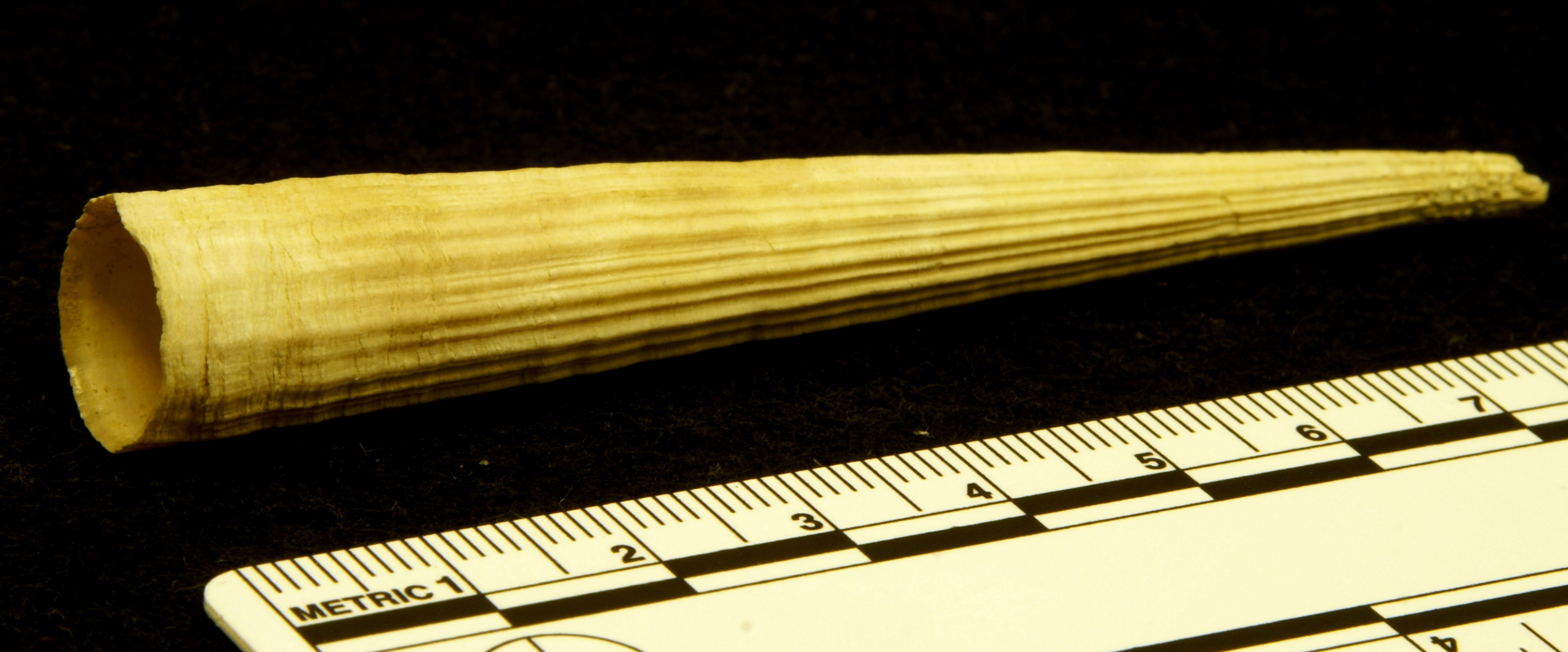
I thought that some of you might find it a bit tricky, since this is a shell from a group of animals that aren’t that familiar to most people.
Barbara Powell was the first to spot what this shell came from and her identification was supported by Dave Godfrey, Julie Doyle and henstridgesj. It’s a Continue reading
On Friday I gave you this object to identify:
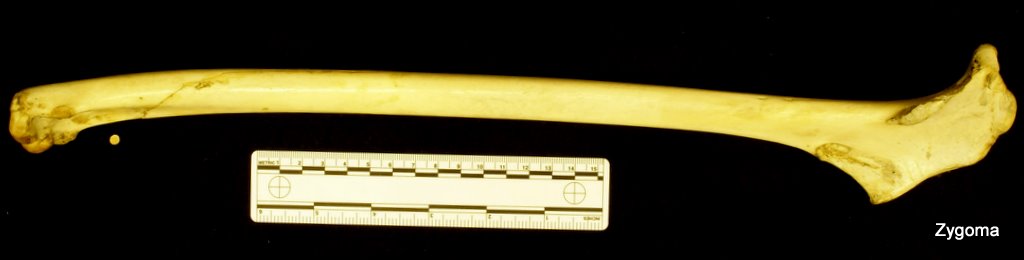
This type of bone can prove tricky to identify, and we often have queries about them on Ask A Biologist. With a large example like this one there will often be a suspicion that it comes from a human.
However, this is in fact the humerus of a bird – the large flange at the proximal end (the bit nearest the body) makes it hard to spot the rounded point where it articulates with the scapula, coracoid and furcula bones that make up the shoulder joint. The flange itself provides a large attachment area for the tendons and muscle needed to power and control flight.
Here are some images of a (much smaller) goose humerus that show the general structure of the bone more clearly:
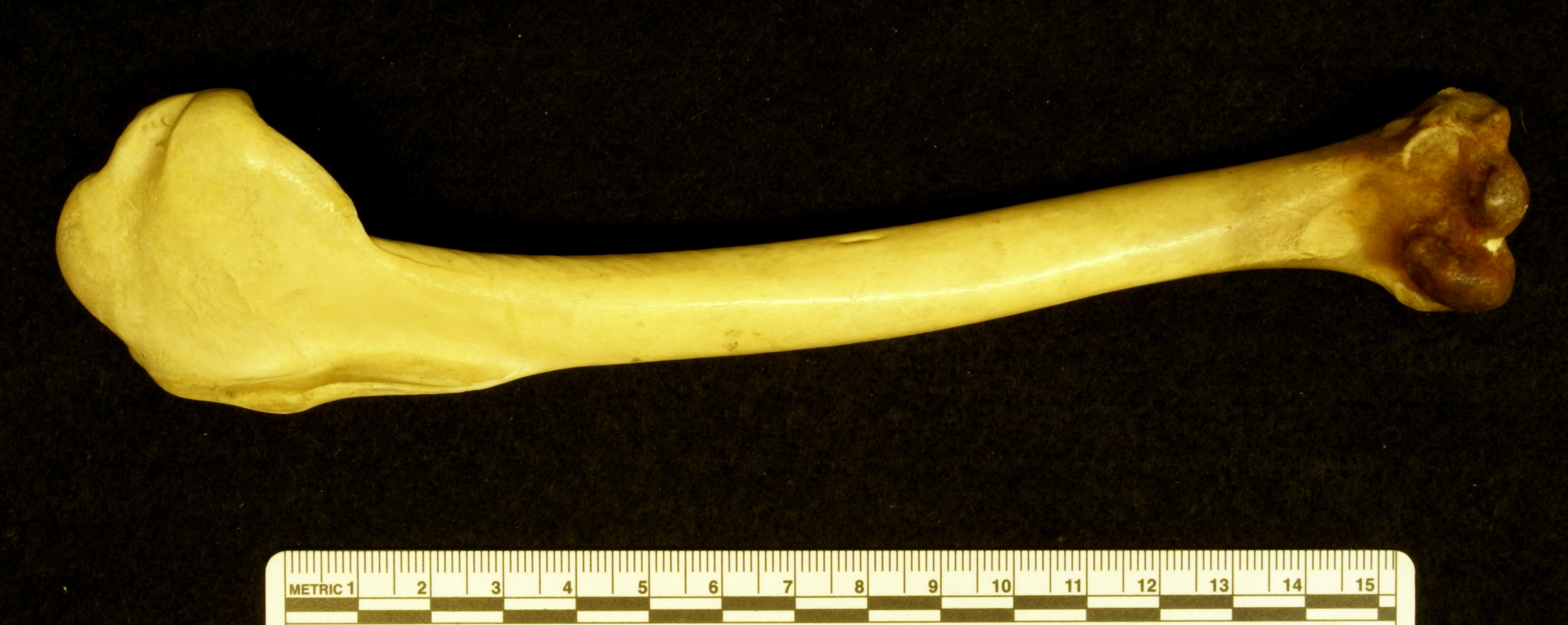

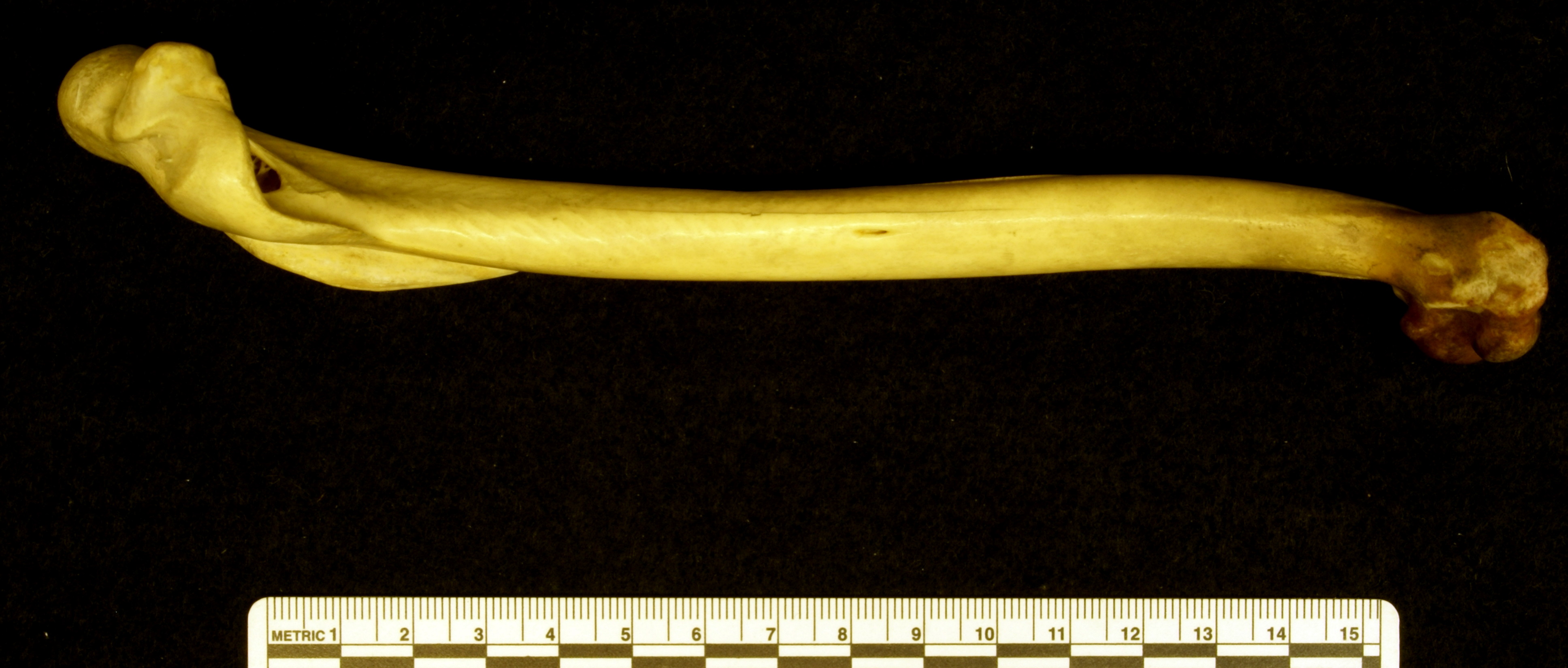
Once you’ve recognised the mystery object as the humerus of a bird, the length of about 45cm (17.7 inches) immediately narrows down the species it could come from.
Jack Ashby was the first to recognise what this humerus belonged to and he found support from Rachel, Carlos, Julie Doyle and initially Barbara Powell (although she later opted for another possibility). It’s the humerus of an Continue reading
This week’s mystery object is one that seems to perplex a lot of members of the public when they come across it, so I thought it might be a good test of your identification skills:
Any idea what this bone is and what it belonged to? You can put your suggestions, comments and questions below and I’ll try to respond during the day. Good luck!
Happy New Year!
On Friday I gave you this piece of an animal to identify:

As expected, you managed to work out what it is in fairly short order.
Jake recognised it as skin, Denis Copilas as scales and Rhea as carapace – all of which are right at least in part. Henstridgesj and Barbara Powell’s friend Alison spotted that the section of carapace came from a Cowfish or Boxfish. There wasn’t really enough information available to identify it any further than that.
Fortunately this specimen had a label associated with it, so I can tell you that the section of carapace is from the Continue reading
This week I’m giving you a mystery object that I think will be fairly straightforward to identify, although it might take a few attempts to get the right species:
Let me know what you think in the comments box below – I’ll do my best to reply to any questions. Good luck!
Apologies for a somewhat belated answer to last week’s mystery object – Christmas and all that…
I gave you these two unidentified objects from the Horniman Museum collections, so you could have a go at identifying them:
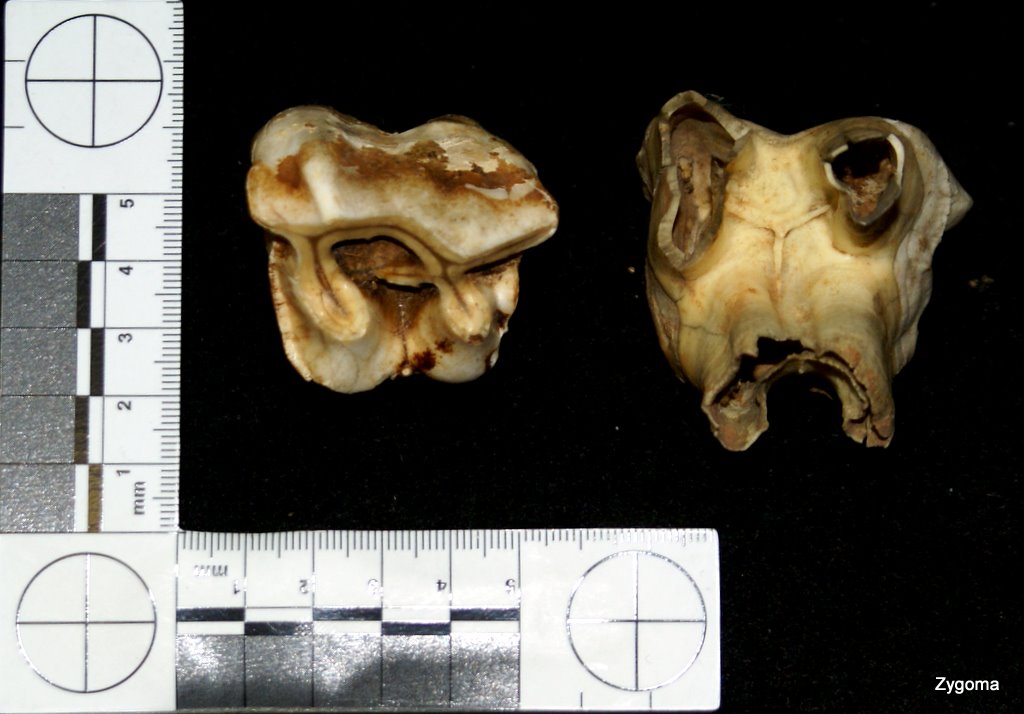
I was not disappointed either – Jake recognised that they were upper molars or premolars from a grazing animal and Rhea identified the animal in this cryptic clue:
If the owner of these teeth could market and sell a coffee, would it be interested in a label with a *unicorn* mascot that comes in the sumatran or javan blends? Continue reading
This week’s mystery objects were found in the collections with no data. See if you can work out what they belong to:
As usual, you can put your questions, comments and suggestions below. Good luck!
On Friday I gave you a bit of a tricky mystery object in the shape of this partial skull:


I wasn’t expecting anyone to get it without some clues, but I underestimated my talented audience!
Jake spotted that it was a mammal based on the ear morphology and then worked out what kind of animal based on clues from henstridgesj who suggested seal and Julie Doyle, who managed to not only identify the species, but drop this lovely cryptic clue to convey that information:
Not a lot to phocus on, but……. I’m harboring an idea about who it might be. Continue reading
It’s been a while since I gave you something partial to identify, so here’s something to be going on with:
As usual you can put your suggestions, comments and questions below and I’ll do my best to respond. Good luck (I have a feeling you might need it)!
On Friday I gave you a bit of a tricky mystery object:

Jackashby spotted that the skull is from a bat and Rob Hinkley did a bit of research while on a trip to the Horniman and was able to identify what the specimen is labelled as. Apparently it’s a Continue reading
Apologies for the slightly late posting today – it was out Xmas Party last night and an early start was simply beyond me. Another skull, but a bit trickier than last week:
I will try to answer questions and respond to your suggestions during the day, so put them below. Good luck!
On Friday I gave you this very easy, but hopefully interesting object:

Unsurprisingly most of you managed to identify this as being the skull of a juvenile or more accurately neonate (new born) Continue reading
This week I probably won’t be able to respond to comments on the mystery object as I’m in Liverpool at a conference about Dinosaurs (yay!), but I have a feeling you’ll get this without any help from me, as it’s pretty distinctive:
Good luck!

