Friday mystery object #53 answer(ish)

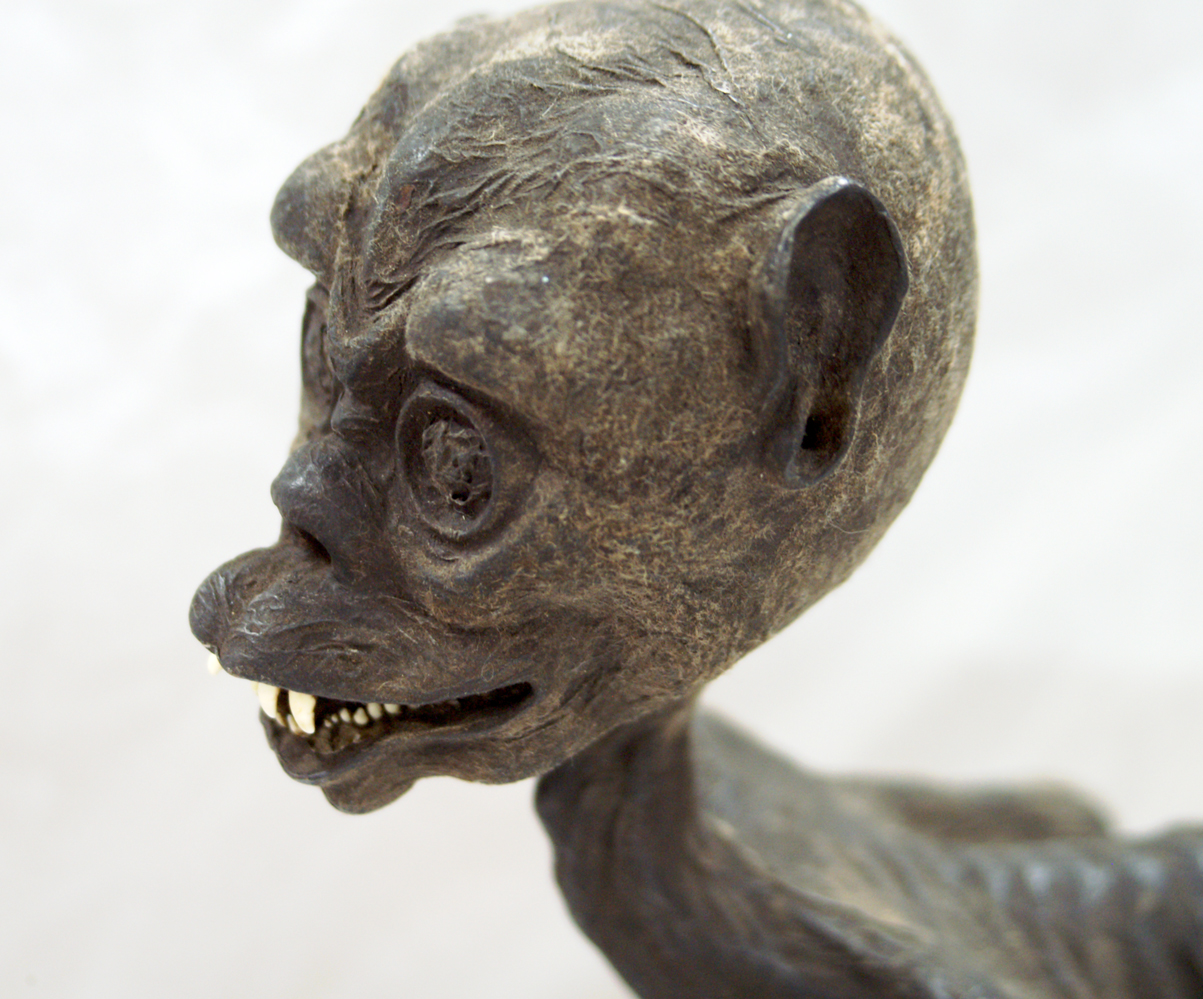
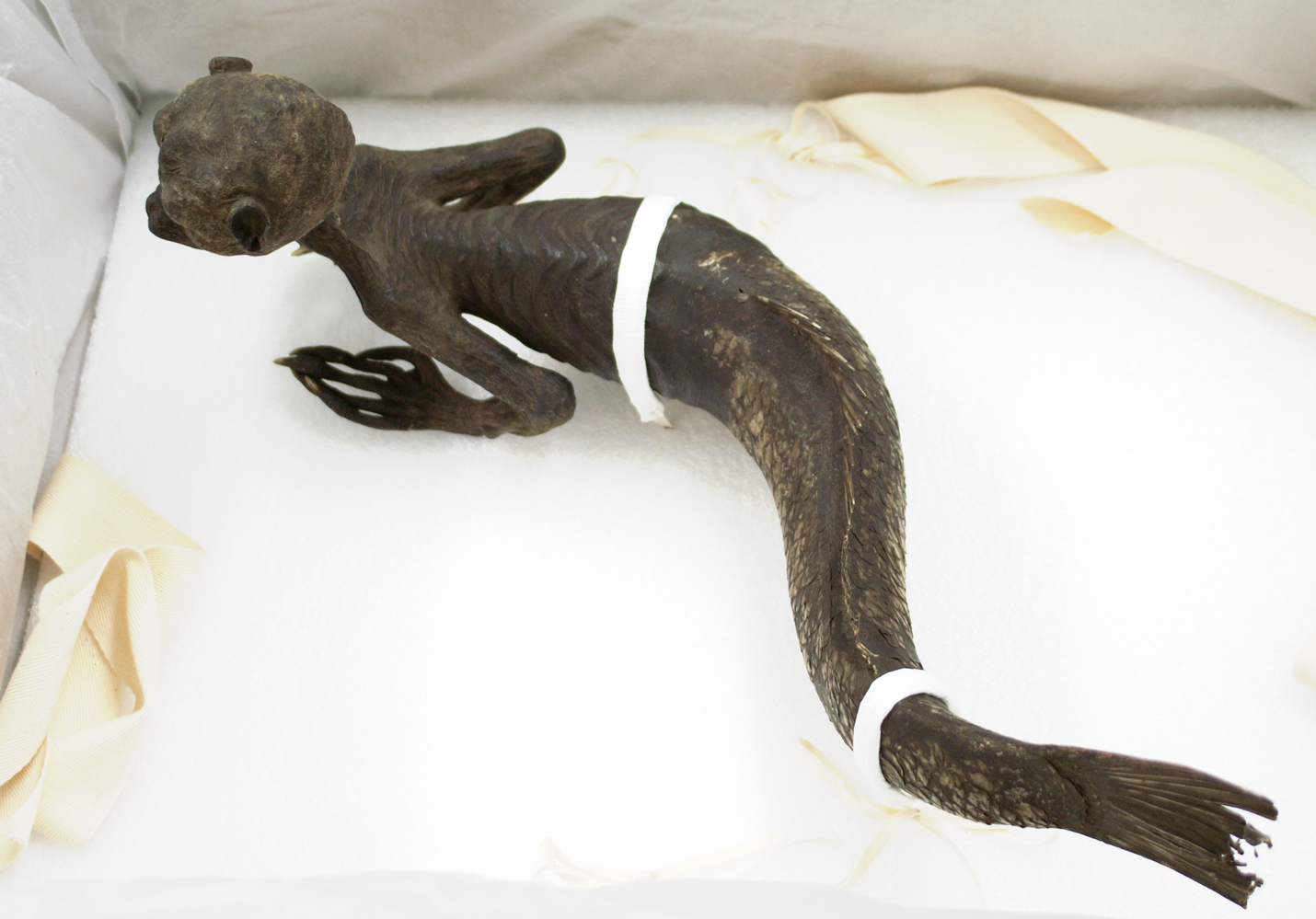
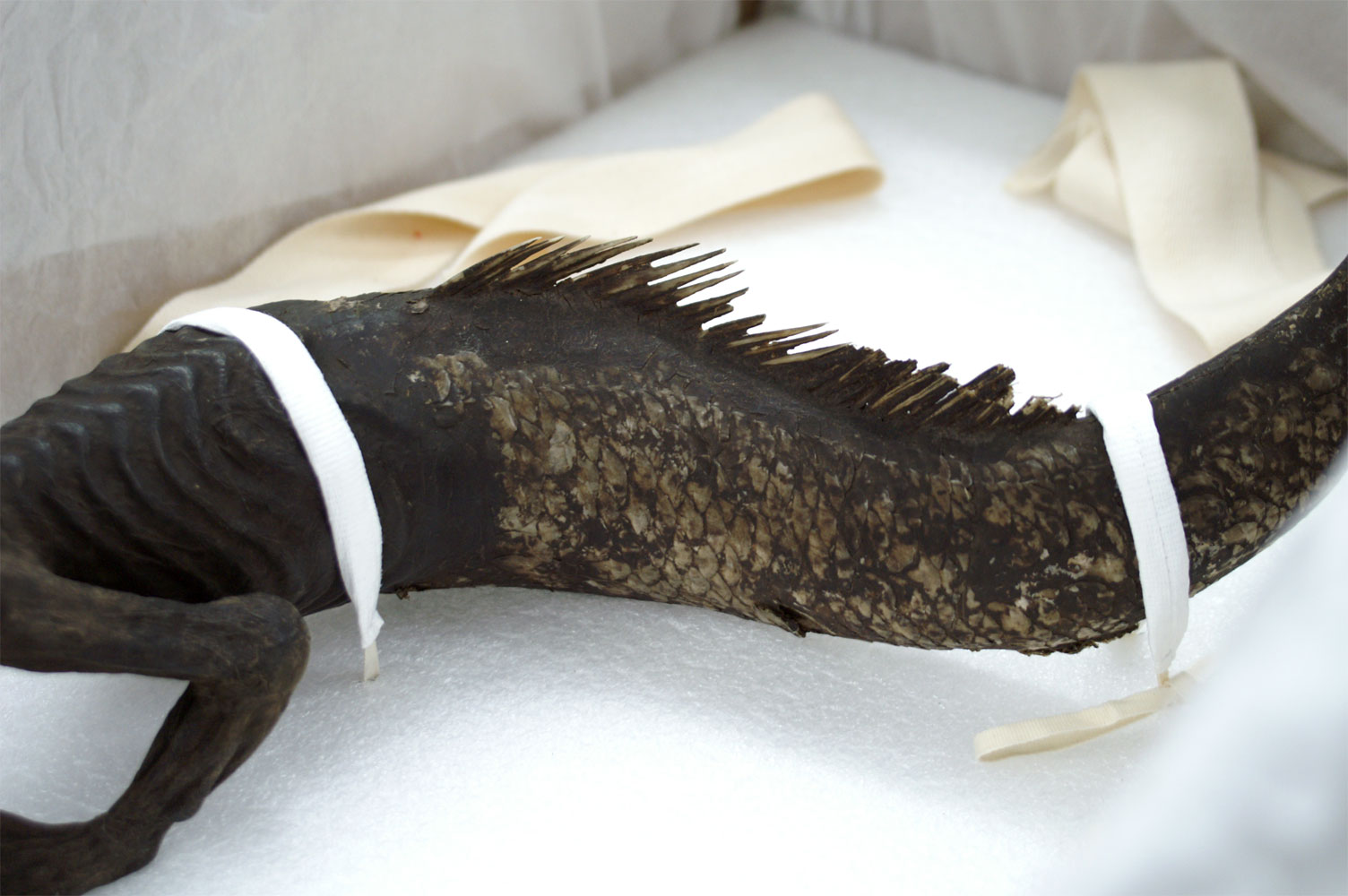
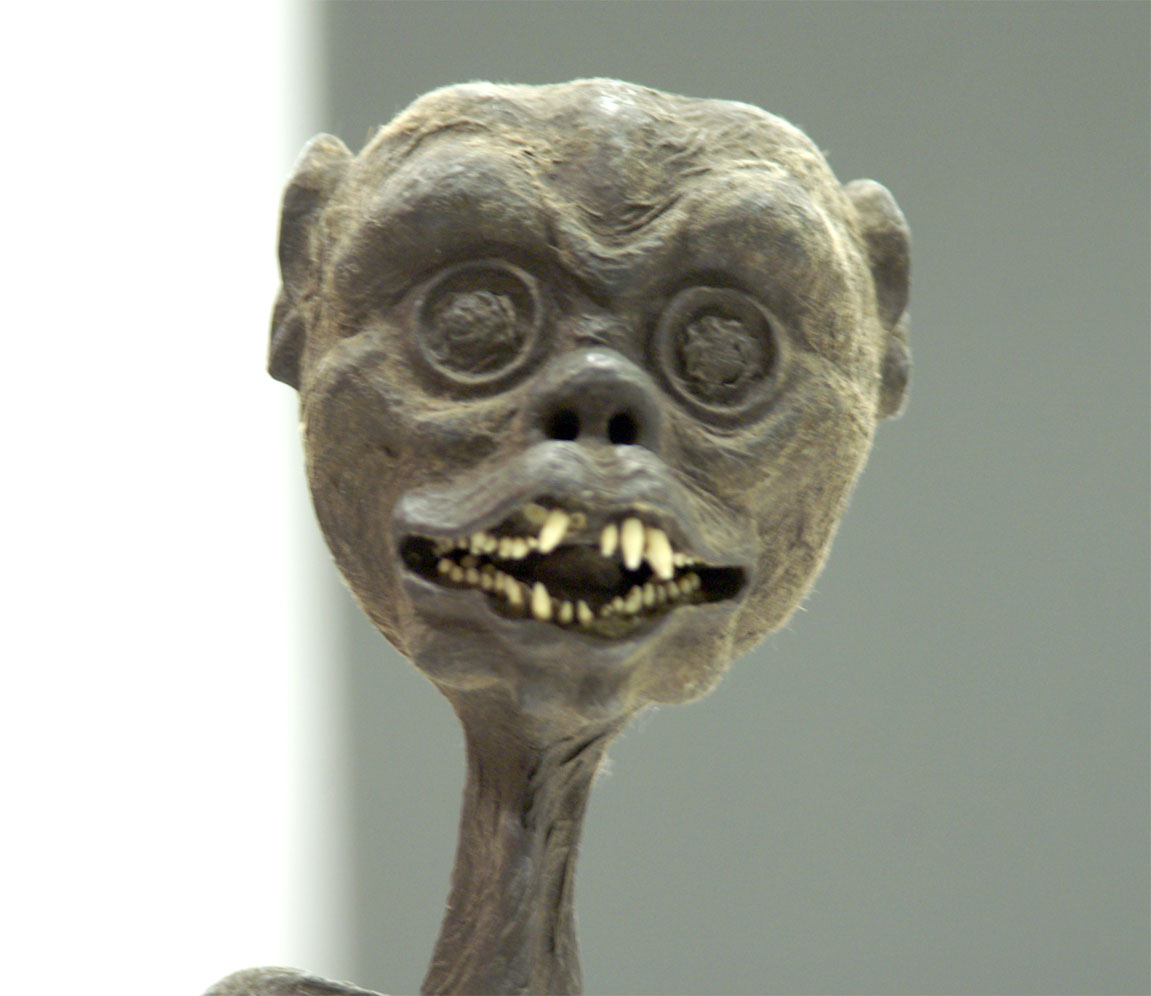
This will be my first (an hopefully only) mystery object answer that doesn’t really provide much of an answer. As I mentioned on Friday I am currently researching the construction of this object:

So far I have made good headway in working out what it’s not made of, but there are still a wide range of possible materials that could make it up. The specimen was CT scanned in an effort to get to the bottom of this issue, but it takes time for data to be processed and we may be waiting another week or two before I have the snazzy results needed to reconstruct how this is put together. Needless to say I will provide a full detailed post once the results are in.

Nonetheless, I have been able to work out some things about the specimen, much of which has been picked up by my eagle-eyed readers. The specimen is a Feejee mermaid (or a Japanese Monkey Fish) as spotted by Jake, these gaffs have been in circulation for a long time, although I’ll have more to say on their history when I dedicate a full-blown ‘blessay’ to this bizarre object. For now I will simply say that the tail is indeed from a fish (species yet to be ascertained) and the torso and skull are not from a monkey. I think the jaws may be from something like a wolf fish, based on the structure of the front teeth, but the 3D model derived from the CT scan will hopefully provide the information to make a more confident identification. Needless to say it’s not a real mermaid.

I apologise for not having a more informative answer this week, but rest assured that I will more than make up for it once the CT data come through. All that remains for now is to thank everyone for their comments, which are incredibly heartening and helpful – I will certainly be following up some of your suggestions, so this will be a bit of online community curation when finished. Please feel free to keep making suggestions – I will make sure that due credit is given where I follow up on an interesting observation.

More generally I will keep the Friday mystery object running and I’ll certainly try to include a broader range of objects. Thanks for all of your support!

Friday mystery object #53

Well, it’s been a year. Fifty-two mystery objects have been and gone with varying levels of confusion, information and interest. The first anniversary seems like a good opportunity to reassess the Friday mystery object, in particular whether it should continue and if so should it change?

Obviously the information for that reassessment needs to come from you – my audience, so please give me feedback in the comments section below – particularly about what needs to change to make the mystery object more interesting for you (a bit about yourself might be useful too – what kind of background do you have, what are you interested in and what other blogs do you follow)?

On to the anniversary object I have for you, it’s one of the Horniman’s more bizarre objects and it’s a favourite of mine for its sheer repulsiveness (click pictures for bigger images):

Now, I’m pretty sure you can all work out what it’s supposed to be, but the question that’s bugging me is what is it made from? In fact, in order to answer that question we recently took this object to the Saad Centre for Radiography where it was CT scanned so we could take a look inside without damaging the specimen. It was an awesome experience, which I will report for you in the answer to this object, although I am afraid that the answer may have to wait until a bit later than usual whilst the images are processed and I seek other expert opinions on what we’re seeing.

Of course, the keen eyes and vast brains of my audience are valuable resources that I would love to exploit, so please take the time to leave your thoughts, ideas and anecdotes in the comments section below. Whilst researching this sort of thing it’s the human responses, more than the materials, that make it fascinating for me – I hope you think so too!

Friday mystery object #52 answer

On Friday I gave you a different mystery object to the one I had originally planned, after my memory stick let me down. Nonetheless, it seems to have been an interesting one given the number of questions.

The first correct identification by Robert Grant was cleverly phrased, so as not to give the game away. Indeed, it seems as though the allusion to the song Alouette led many people off down the wrong track, due to its reference to skylarks. This combined with the object’s similarity to the shape of a whistle, identified early on by Jake, brought many of you to the conclusion that the object was a used as a musical instrument, whistle or game calling device. The string attached to the specimen certainly offers support that this object served a functional role for humans, although it may simply be part of the mounting for the original display of this object.

As it turns out, the reference to Alouette was a phonetic rendering of the taxonomic name for the genus to which this specimen belongs, which is Continue reading

Friday mystery object #52

I was getting excited about this being the first anniversary of the Friday mystery object, but I just realised that will be next week with number 53 (and I have something made of awesome lined up for that). Instead I will see my first year of mystery objects out with something hastily chosen from some old images I had on my hard drive, because my USB memory stick let me down. Don’t get me wrong though, this is an elegant structure that is deceptively simple and is worthy of mystery object status. So here it is:

So, do you have any idea what this is?

As usual you can put your suggestions, thoughts and questions (and random guesses) below and I will do my best to answer. Good luck!

Friday mystery object #51 answer

On Friday I gave you a fairly straightforward mystery object to identify – at least straightforward in that it wasn’t an odd section or a fragment of bone, instead it was a very characteristic skull:

As a result a good number of you correctly identified this, with zinjanthropus first past the post with a general identification, Neil with the correct genus and David Craven with the full species identification. So well done everyone, this specimen is indeed the skull of a Continue reading

Friday mystery object #50 answer

On Friday I gave you a multipart mystery object from the wonderful Grant Museum of Zoology:

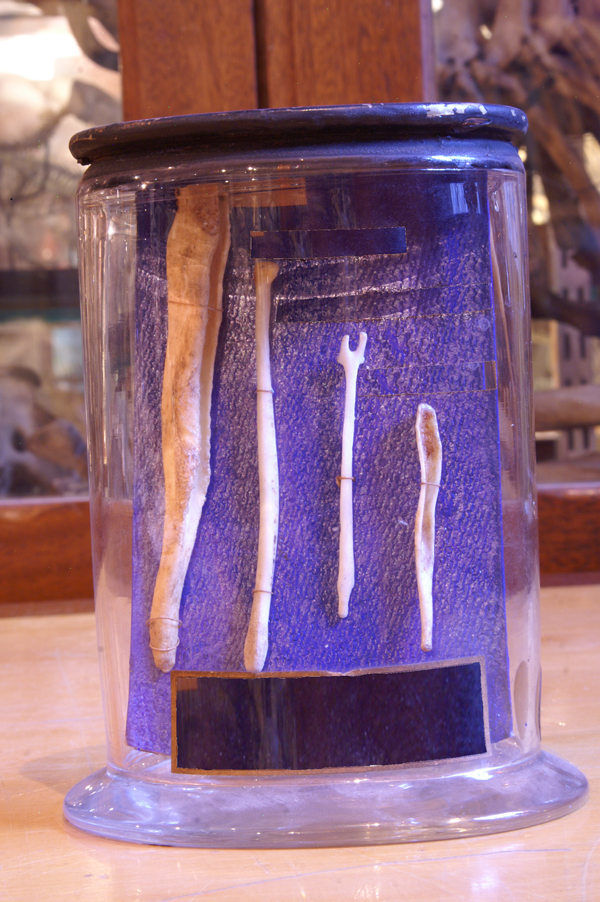
This was easy in part and horribly difficult in part. The bones themselves were quickly identified as being bacula (plural of baculum) or os penes (penis bones) by Shane and SmallCasserole, but then there was confusion about which species they might  belong to. Matthew Partridge got one right, but after that the guesses went a bit wide. Here’s an unedited image that has the labels attached: Continue reading

Friday mystery object #50

Crikey, it’s my 50th mystery object already – in two weeks that means it will have been running for a full year. How time flies. To mark the half century of these posts I’m giving you a real challenge supplied by the excellent Grant Museum of Zoology, which has just closed its doors in order to be relocated whilst building works take place. The museum will be closed to the public until next February, when it will reopen in a new location. So here’s the challenge:

Any idea what these are, and (here’s the incredibly trick bit) which four species they might belong to? Can I request that those of you with a biological background concentrate on the harder question, as it will give my non-specialist audience an opportunity to work out what these bits are.

As usual, answers, observations and questions in the comments section below. Good luck!

Friday mystery object #49 answer

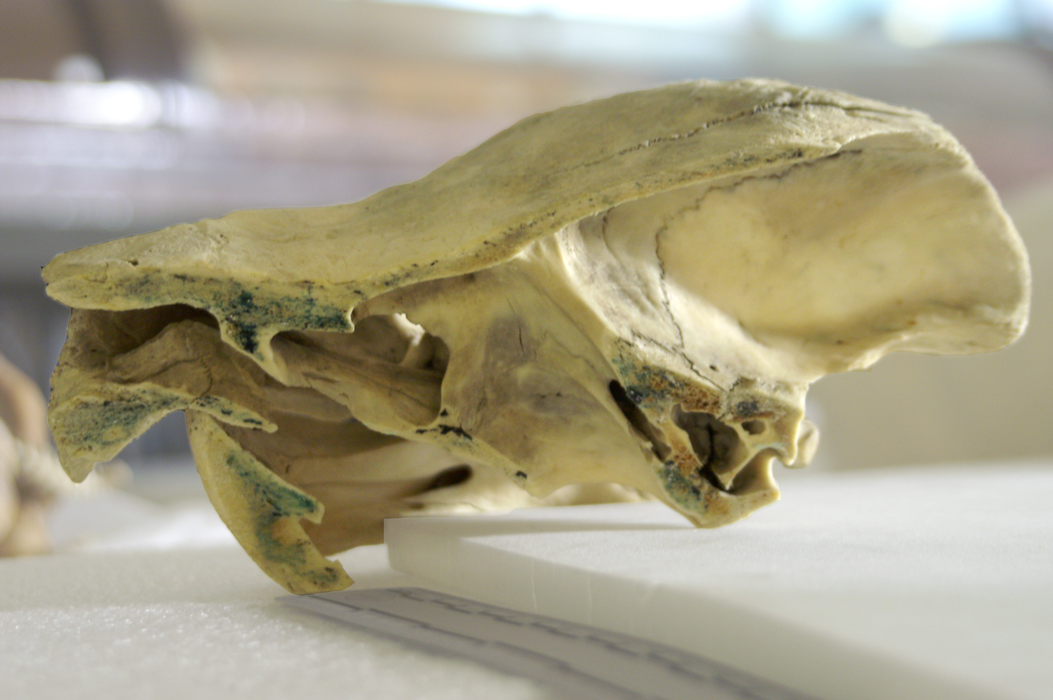
On Friday I gave you one of the specimens on display at the Horniman Museum, photographed from an unusual angle, as the mystery object:

I thought it might prove tricky, but jonpaulkaiser managed to identify it within 16 minutes of it being posted. Impressive stuff! Matt King also managed to spot what general type of beastie this bit of bone belonged to; a Continue reading

Friday mystery object #49

The Natural History Gallery at the Horniman has been undergoing a bit of a spring clean. The lighting in the cases has been upgraded and during the process the cases and specimens have been dusted (very carefully mind). During the process I’ve spotted a few of our display specimens from unusual angles and out of their usual context. Here is an example of a nice one that I thought might make a nice mystery object:

So any ideas what this is?

Put your suggestions and questions in the comments section below and I will do my best to point you in the right direction without giving too much away. Have fun with it!

Friday mystery object #48 answer

On Friday I gave you this lovely skull to identify:

It seems to have been a bit more tricky than I had expected. It was immediately identified as a carnivore, which is spot-on, but from there it got a bit murky. I must admit that I could have been a bit more generous with clues, particularly when David Craven asked if this was a viverrid (the family containing the civets) – I took the question at the family level, so I said ‘no’, but I should probably have asked for clarification since this skull belongs to a member of a family that falls into the infraorder Viverroidea (according to some sources).

This is in fact the skull of a Continue reading

Friday mystery object #48

This Friday I’ve taken bit more effort than usual to get a decent picture of a specimen for the mystery object. It’s amazing the difference it makes when you use a tripod and allow a good long exposure. I’m sure you’ll all identify this in no time, but hopefully you’ll enjoy the image while you’re at it – there are few things quite as beautiful as bones:

Feel free to ask questions, make suggestions or just leave your thoughts in the comments section below – I’ll do my best to answer or drop hints as the day goes on. Good luck and I hope you enjoy!

Friday mystery object #47 answer

On Friday I gave you what I consider to be a rather interesting mystery object:

I must apologise for my tardy responses to the excellent questions asked, on Friday I was at a fascinating conference about using DNA from natural history collections for research, hosted by the NHM, and I didn’t get an opportunity to address the questions until quite late.

The questions were astute from the outset, with Bob O’H asking if it was a bird – no doubt inspired by the lightweight structure of the bone. SmallCasserole suggested that it was the sectioned skull of a Cassowary, based on the presence of the bony crest (or more accurately the casque) – an opinion that was widely supported. However, Dave Godfrey raised the possibility that this skull belonged to a hornbill, a suggestion that Neil developed to arrive at the correct genus with David Craven delivered the coup de grace with the correct species identification of Continue reading

UK homeopathy awareness week

June 14th – 21st 2010 [and 2012] is the UK homeopathy awareness week, so I thought it might be a good idea to try and raise awareness of homeopathy.

Cinchona

Homeopathy is based on the principle of similia similibus curantur (likes are cured by likes). The hypothesis is that symptoms of illness are caused by a derangement of the ‘vital force‘ assumed to be present in a living organism and substances which elicit the same derangement (i.e. symptoms) will rid the body of the illness. This was originally identified in the context of homeopathy by Hahnemann with reference to cinchona bark (source of quinine) and malaria. The previous proposed mechanism of effectiveness of quinine against malaria was its bitterness, but Hahnemann sensibly identified that other bitter substances did not offer the same protection. Instead, after taking cinchona and experiencing a reaction similar to the reaction he associated with malaria, he hypothesised that it was this similarity in symptoms that made cinchona bark effective.

Modern homeopaths still use a similar method to identify their treatments. When in a healthy state they try a preparation and keep a detailed diary of any effects that they feel the treatment has on them. This is called ‘proving’ although what it is supposed to prove is hard to determine since there are no rigorous controls in place and the results are not statistically tested to see if they are anything other than random. Consider the perceived effects of taking peregrine falcon blood for example:

Short statement on peregrine falcons:

The Peregrine Falcon is widely renowned for its incredible speed. Estimates vary, but commonly cited top velocities are in the range of 290-320 km/h (180-200 mph), achieved only during the characteristic swoop (hunting dive)…the Peregrine Falcon is the fastest creature on earth.

Observation during proving:

‘Drove back from the party (had some wine but not so much) quite fast but well, changing speed as necessary. It seemed faster to the others in the car than to me.’

I heartily recommend reading the entire page about the proving of peregrine falcon blood – it is an education into how homeopaths derive their information about the treatments they prescribe (and it is ludicrous to the point of hilarity). Is this really a rigorous approach to testing healthcare products or is this more about symbolism, appeal to the mystical and delusion?

Evidence based medicine occasionally does use elements of  similia similbus curantur such as with inoculation and vaccination – where a small or denatured dose of a disease causing agent is introduced with the intent of stimulating an autoimmune response that will prevent the full blown disease from becoming established should the person come into contact with a large active dose of the pathogen.

Foxglove

Also, many physiologically active compounds have medicinal uses because they act on particular organs and metabolic pathways via a biochemical route that can have apparent similarities to the illness being treated. For example, digoxin is a cardiac glycoside found in foxgloves that decreases heart rate and increases force of heart contraction – fatal in large doses, but useful for treating atrial fibrillation in small doses – so at a very gross level this could be considered ‘like treating (rather than curing) like’. It is also vaguely plausible that a substance which elicits a physiological response which mimics symptoms of an illness that arise as part of the body’s  immune response (such as raising temperature) may have the effect of fighting an infection (although I have not seen any evidence for this).

Hahnemann’s experience with cinchona happened in 1790 when the medical community of the time was still dominated by the miasma theory and humourism of the Middle Ages. Vitalism was a standard of the medical profession at the time, with good health being dependent on balancing the four vital humours. The idea of a biochemical autoimmune system did not take shape until a century later, but when it did it revolutionised the medical field, bringing about treatments with previously unprecedented success (eradication of smallpox anyone?). Hahnemann had no idea about the mechanism by which the body actually heals itself, he also had no idea that malaria was not caused by a miasma, but by a microscopic parasitic protist of the genus Plasmodium.

Plasmodium falciparum – the protozoan that causes malaria

In short Hahnemann was trying to fit his limited observations into a theoretical framework consistent with the body of assumed knowledge available at the time. The same way that scientists have always worked. However, over time the body of knowledge has changed – vitalism has been rejected as evidence has been amassed which demonstrates that all of the functions historically proposed for vital energy are demonstrably biochemical in nature. Disease is now well recognised as being caused by bacteria, viruses, proteins and biochemical abnormalities rather than by derangement of ‘vital energy’. The idea of a vitalistic treatment for a biochemical problem seems rather at odds with the facts, particularly since there is no evidence to suggest that vital energy even exists. Sticking with malaria, we now know that the antimalarial component of cinchona is quinine, which is no longer effective as an antimalarial due to the resistance evolved by Plasmodium – how such immunity might have evolved in response to vital energy is hard to fathom.

Homeopathy also subscribes to the principle that the smaller the dose, the more effective it is at influencing the vital energy – to the point where homeopathic remedies are diluted until they no longer contain even one molecule of their active ingredient. Indeed it would take a ball of water the size of the solar system to contain one molecule of active ingredient in the more ‘potent’ homeopathic remedies – making them even less tangible than the Emperor’s new clothes. Of course this idea of smaller doses having a bigger effect flies in the face of everything that is demonstrated in evidence based medicine, where dose dependent effects increase with increasing dose size, through a therapeutic window until a plateau is reached or there is an overdose.  The Ten23 campaign was all about this misplaced faith in super-dilution.

If homeopaths were able to demonstrate that vital energy exists then homeopathy might have a theoretical leg to stand on, as would chiropractic and a suite of Ayruvedic medicines, but without any evidence for vital energy they remain theoretically unfounded. Interestingly, mainstream medicine was once based on the concept of vital energy, which has only been discarded due to improvements in experimental methods. Vital energy is one of those strange forces in nature that becomes harder to see the harder you look for it – probably because it only exists as a cultural concept that has no relevance in the physical world. This erosion of evidence for vital energy not only leaves homeopathic theory unfounded, but necessarily rejected.

Headstone for 9 month-old girl who died because her parents chose homeopathy over conventional treatments

Theory aside, if there was strong evidence for efficacy of homeopathic remedies then there would be very good reason to question the laws of physics and our current understanding of biology and medicine. However, there is no persuasive evidence for homeopathy’s efficacy. As such it seems bizarre that people still hold on to this outdated and superseded faith-based system of medicine; but then again there are still Flat EarthersFaith healers and people who drink their own pee, so I suppose it’s no great surprise. There are dangers however – if people choose to use homeopathy in place of medicines that have evidence of efficacy, they run the risk of harm or even death – and I think that’s something everyone should be aware of.

Friday mystery object #47

It’s Friday again (huzzah!) so that means it must be time for my mystery object. This week I’m going to give you something that is being moved from the Natural History offices at the Horniman to our Study Collection Centre, where our reserve collection is housed. The delicate bony structure of this object really caught my eye and I hope you find it as interesting as I do (click on image for higher resolution):

As always, feel free to ask questions about the object or make suggestions about what you think it looks like – I’ll do my best to answer or respond, although I’m at a conference, so apologies if my answers are sporadic and perhaps a little brief. Good luck!

Friday mystery object #46 answer

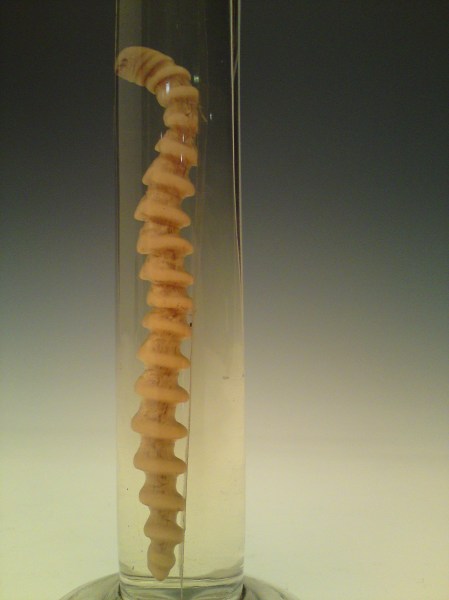
Last Friday Mark Carnall from the Grant Museum of Zoology provided a guest mystery object in the rather unpleasant looking form of this:

It looks a bit like part of a spinal column, but it isn’t. It looks like a worm of some kind, but it isn’t. So what is it?

David Craven and Dave Godfrey came through with the goods on this one. It is a parasitic crustacean related to the tongue worms (a misnomer because they are not worms at all) and it is in the genus Continue reading

Friday mystery object #46

This Friday we have a guest mystery object, supplied by the curator of the excellent Grant Museum of Zoology, Mark Carnall (the man who threatened the whole of humanity with the doomsday virus in Back from Extinction). Any idea what this fluid preserved specimen might be?

Given the general look of it and Mark’s history of terrormongery I wouldn’t be surprised if it was a body-snatching alien, if such things were in general circulation. If you’d like to see this critter  from a different angle click here.

As usual, suggestions and questions below in the comments section and I’ll do what I can to point you in the right direction. Good luck!

Friday mystery object #45 answer

On Friday, whilst I was in the lovely friendly town of Portaferry catching up with some old friends,  I gave you this mystery object to identify:

Unfortunately my phone seemed reticent to work properly, making it hard to respond to everyone’s questions, so thanks to Debi Linton for fielding some of the questions/suggestions. This object is one of those that is so characteristic in its structure that once you’ve seen one you will probably be able to spot another with ease, even though they have a huge variety of shapes, as pointed out by Benjamin Brooks in his comment (which provides a link to an image hosted by the Oceans of Kansas Paleontology site who incidentally have a mystery object of their own).

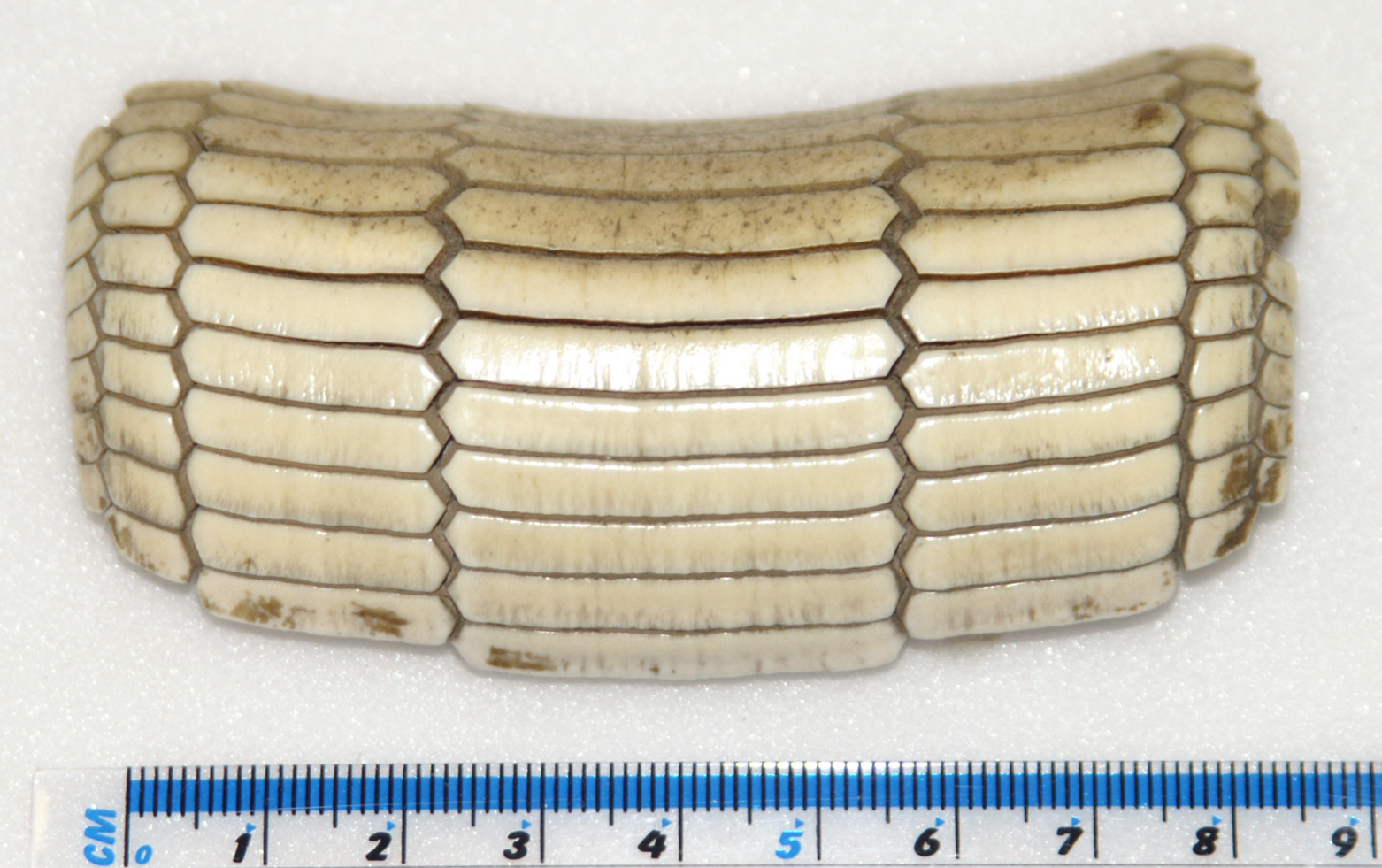
If you click on the image I provided you’ll see more detail, which makes it very clear that this is something composed of interlocking units that look like shiny bone. Shiny bone (that looks like a piece of ceramic) usually means bone with an enamel layer, which usually means teeth. These teeth are arrayed in a plate and if you look at the top of the plate you’ll see that it is discoloured, pitted and well worn. Clearly only this top part of the plate has seen much use and that use has been heavy, given the wear.

So why have all the rest of the tooth plate if it isn’t being used? Of course, the rest of the plate will be used, it just hasn’t moved into position yet – so what animal has teeth that move like a conveyor belt and are constantly being replaced? Sharks are the first things to come to my mind, but they don’t tend to have big flat plates, so think of something related to sharks that might need big flat plates for crushing something that very hard, probably marine molluscs.

If you haven’t worked it out already, this is a tooth plate from a  Continue reading

Friday mystery object #45

This Friday’s mystery object is one of those that you immediately recognise, or are immediately puzzled by. However, with appropriate questions and a bit of reasoning you can probably work out what this is (click image for bigger): 

If you are one of the people that recognises what it is immediately, can I request that you try to provide an answer using a bit of ingenuity (riddles, poetry, links), so it gives others a chance to work it out for themselves?

As usual I will do my best to answer any questions, although I am in Northern Ireland down by Strangford Lough for a long weekend, so I can’t guarantee reception on my phone – I will do my best though. Best of luck!

Friday mystery object #44 answer

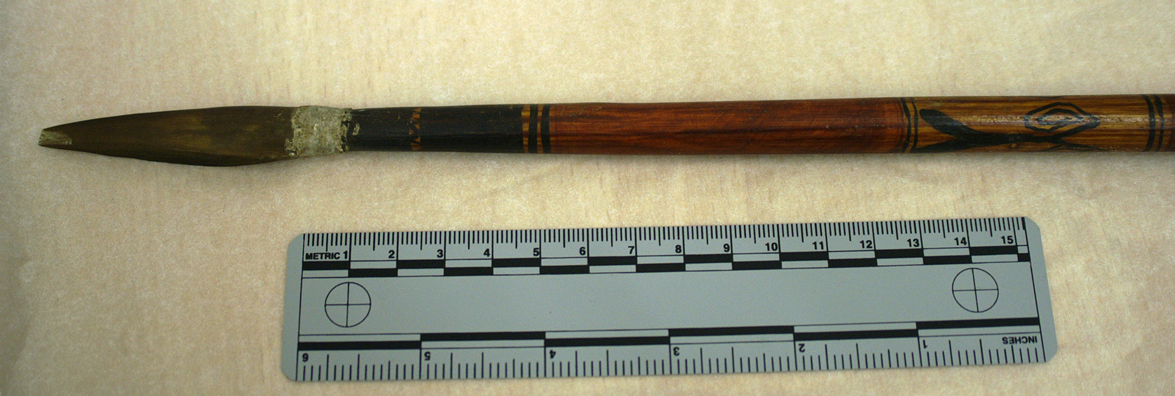
On Friday I gave you an Anthropological mystery object for a bit of a change:

I asked what it was, what the head is made from and where is it from and I got some great answers, including the (more or less) correct one. The fact that this is a projectile weapon was quickly identified, although there was some wavering between spear and arrow.

The locality was harder to pin down and the composition of the head was a real challenge. In the end, Neil managed to get it right (apart from the spear vs arrow issue) – it’s an Continue reading