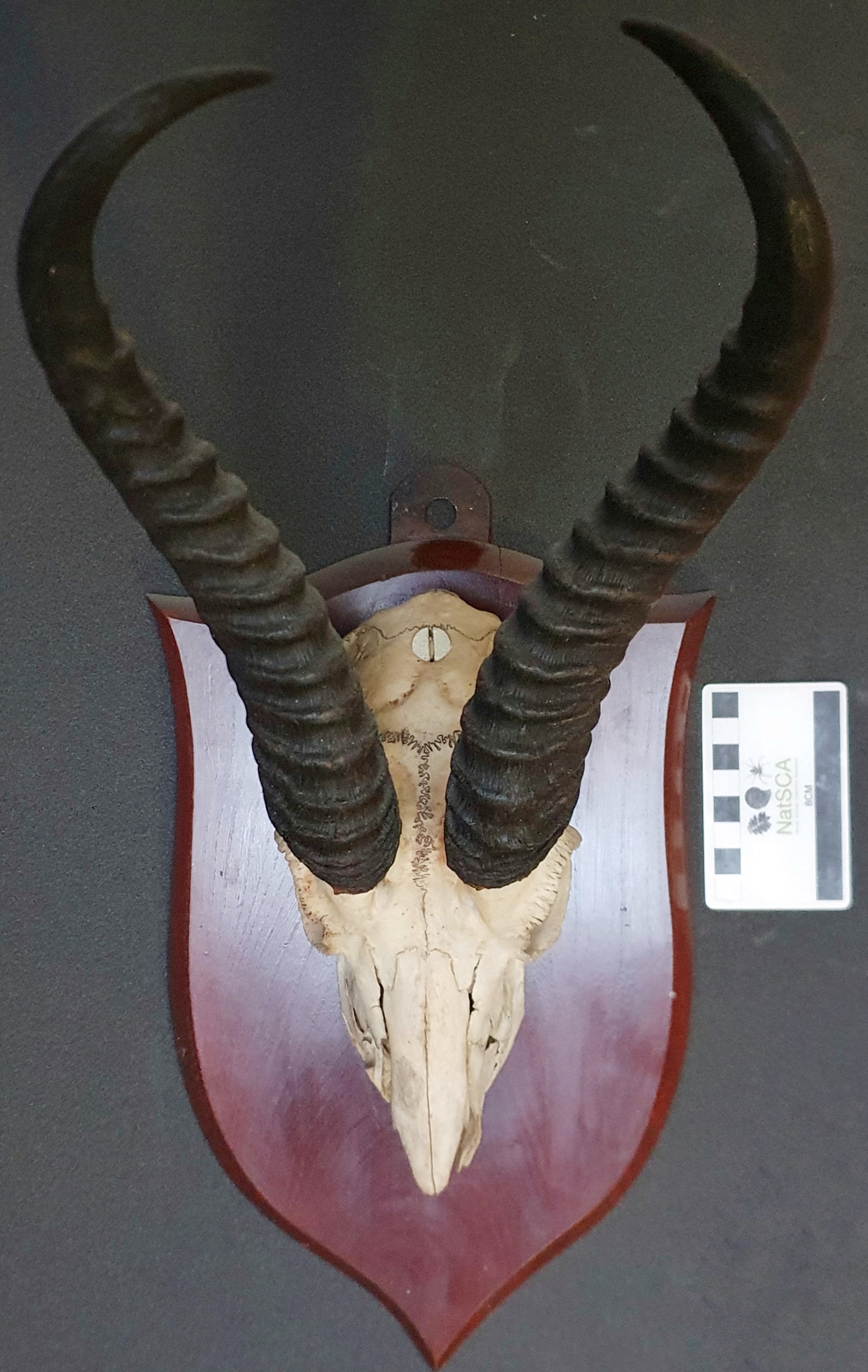
Merry Christmas everyone!
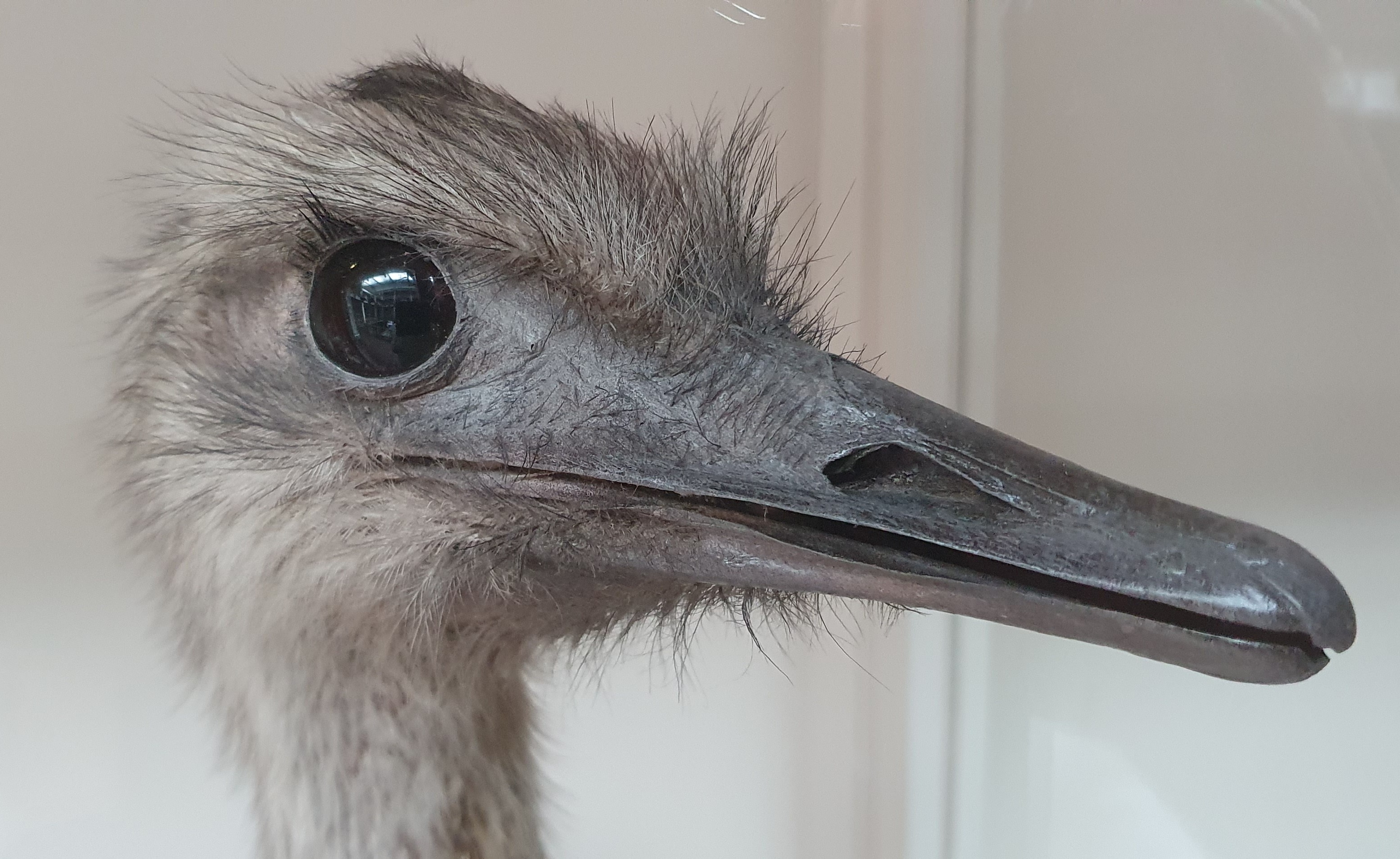
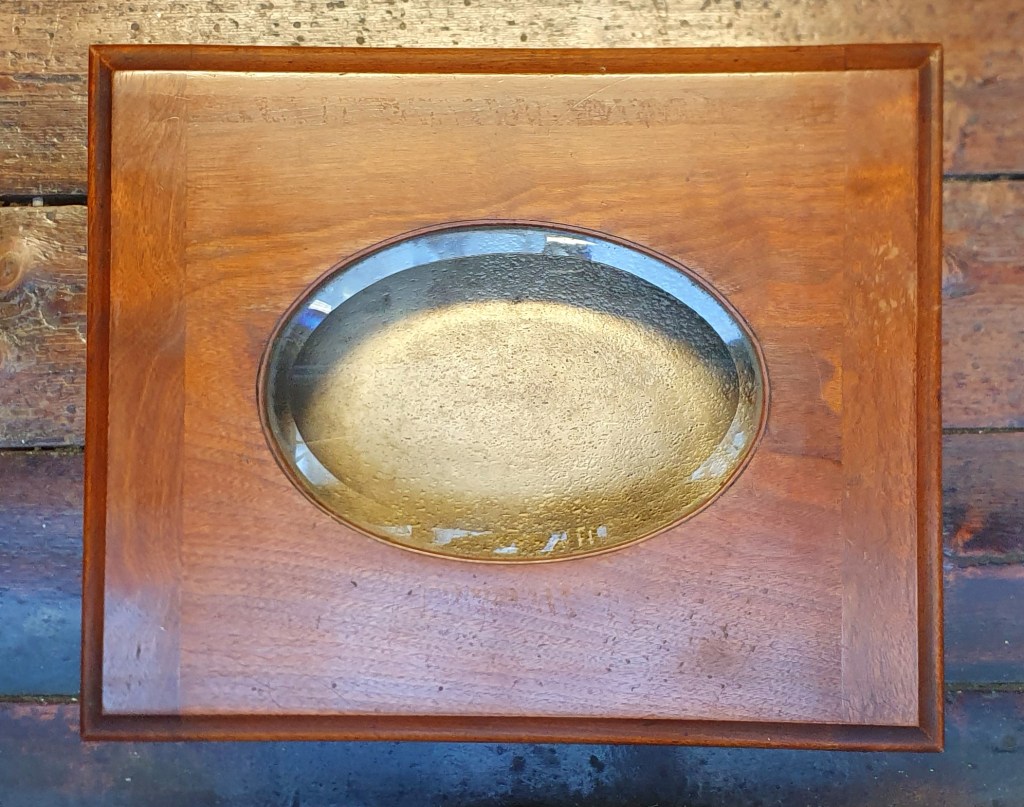
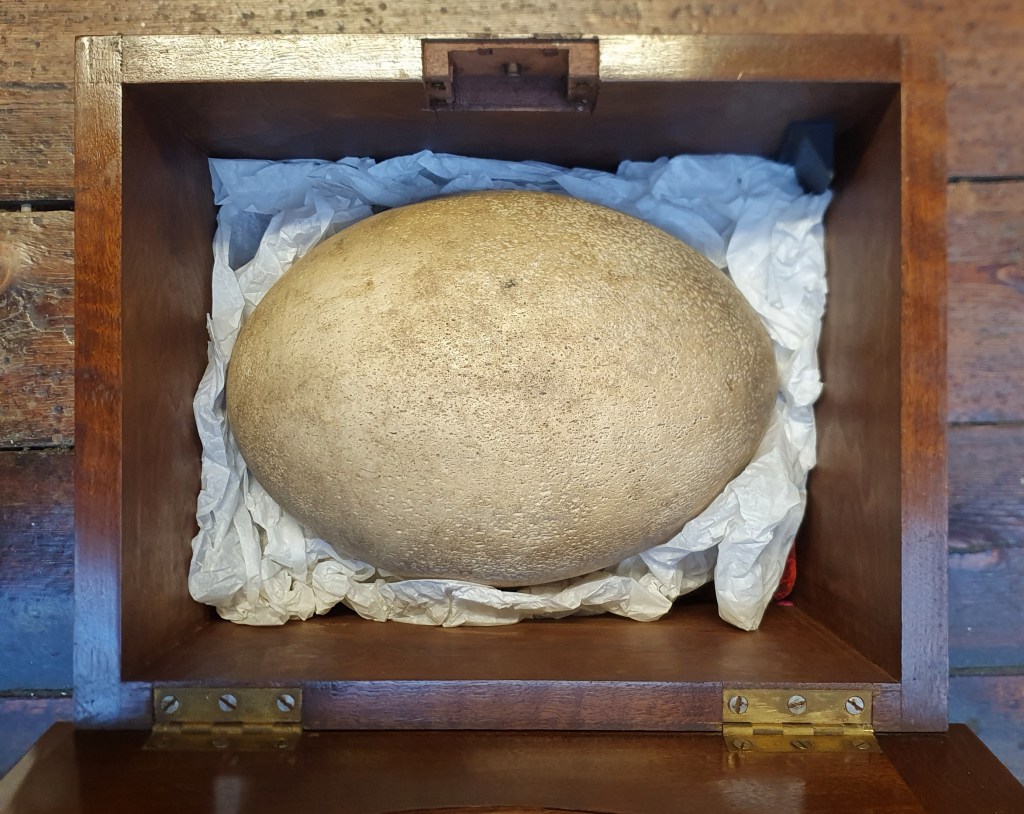
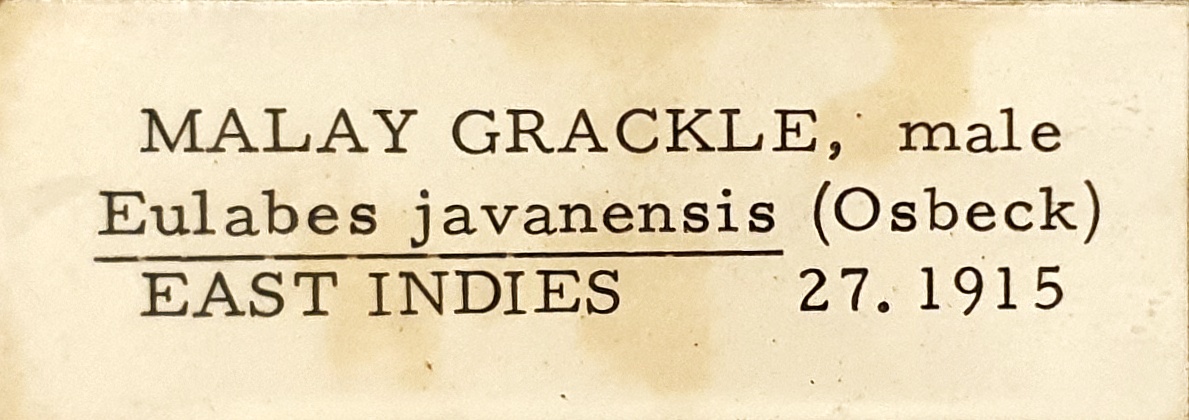
I thought I’d continue the theme of bony birds for this festive Friday mystery object.

Any idea which species this could be? Looking forward to hearing some interesting nogg-fuelled suggestions.
Have fun!
Merry Christmas everyone!
I thought I’d continue the theme of bony birds for this festive Friday mystery object.

Any idea which species this could be? Looking forward to hearing some interesting nogg-fuelled suggestions.
Have fun!
I’m going to start this week’s blog mystery object with an apology – it’s going to be a short one, as I’m in the final throes of taking down our Fin whale, which means I’m exhausted after several long weeks of hard graft. Check out the #DeadZooDiary hashtag on Twitter if you want to get an idea of what’s involved.
Last week I gave you this somewhat smaller skeleton from the Dead Zoo to have a go at identifying:
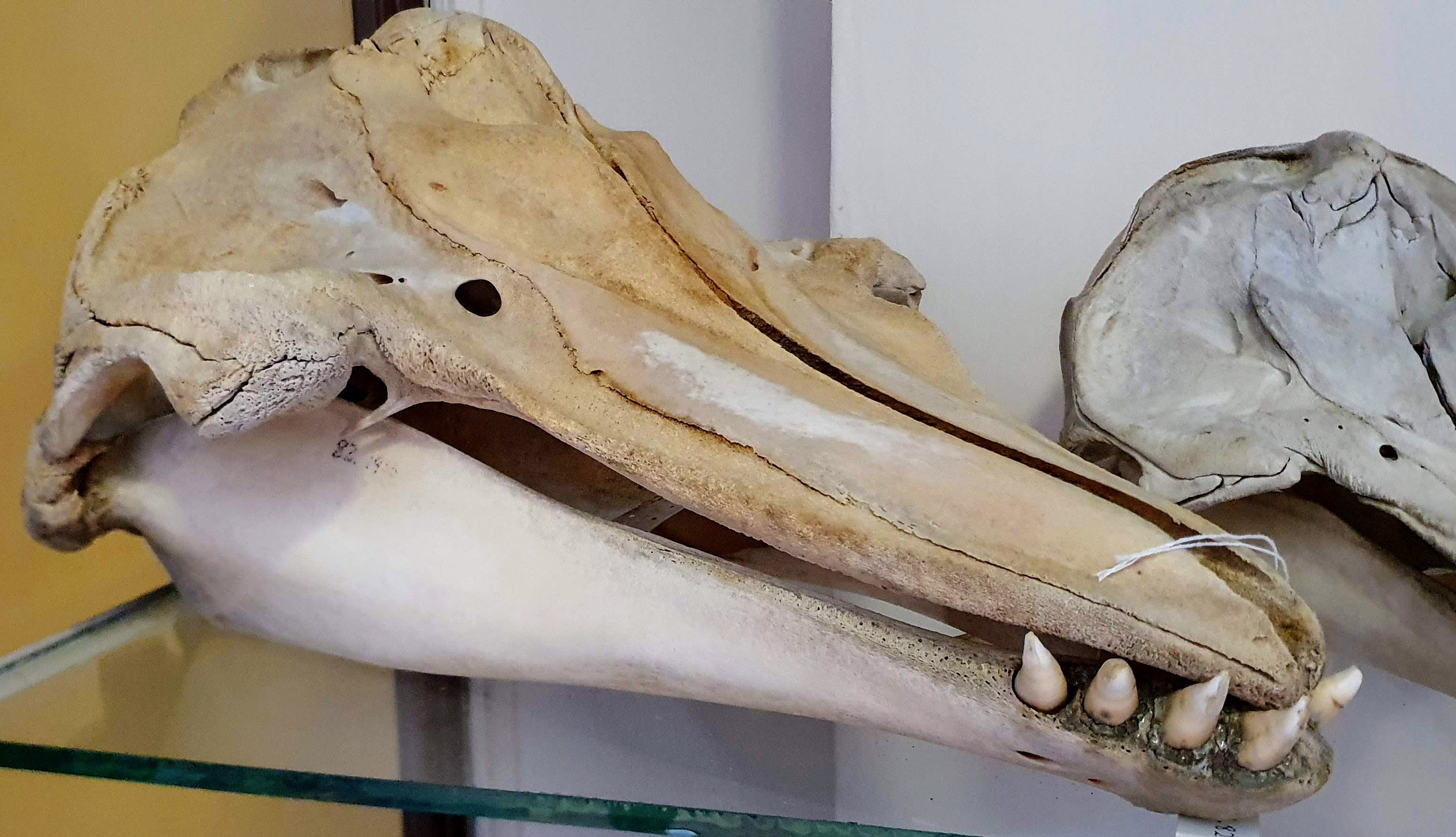
It wasn’t too difficult to narrow it down to one of a few species, thanks to the very distinctive knee region.
There are only a small number of birds that have adopted this extreme elongation of the cnemial crest on their tibiotarsus and patela. These are all specialist foot-propelled swimmers that need that long lever to help power their diving strokes. This is a feature limited to just the grebes and the loons/divers.
Most people figured out that this is the skeleton of one of the loons. The skull provides some clues, but unfortunately the angle of the photo doesn’t make it easy to figure out which of the five species it is.
The scale does rule out the larger of the species (Gavia immer or G. pacifica), but there are three other possibilities. For me the postorbital region suggests that this is the Arctic Loon Gavia arctica (Linnaeus, 1758), which fortunately matches the label.
I hope you enjoyed this weird kneed bird – congratulations to Goatlips and everyone else who figured it out!
Last week I gave you this bumpy little critter to identify:

I think everyone recognised the mystery object as some kind of Nudibranchia or sea slug. The general type of sea slug is identifiable by that ring of gill filaments known as a branchial plume that you can see at the top of the specimen. This is characteristic of the suborder Euctenidiacea, also known as the dorids.
I called it bumpy, but if you look closely you’ll see that the bumps are pinched at the base and actually look rather warty. There’s a clue in that – and several of you spotted it.
There were a number of wart-related nudibranch suggestions that were close, but jennifermacaire was spot on with her comment:
Doris has warts?
This is indeed a Warty Dorid or Doris verrucosa Linnaeus, 1758.
This specimen isn’t quite as faded as everyone expected – they’re usually a fairly muted orange, yellow or a greenish colour, not too different to the mystery object. This probably serves as camouflage against the background of the Warty Dorid’s favourite food, the Crumb-of-bread Sponge, which also varies in colour from bright yellow to darker shades depending on the depth of the water in which they live.
More mystery objects next week!
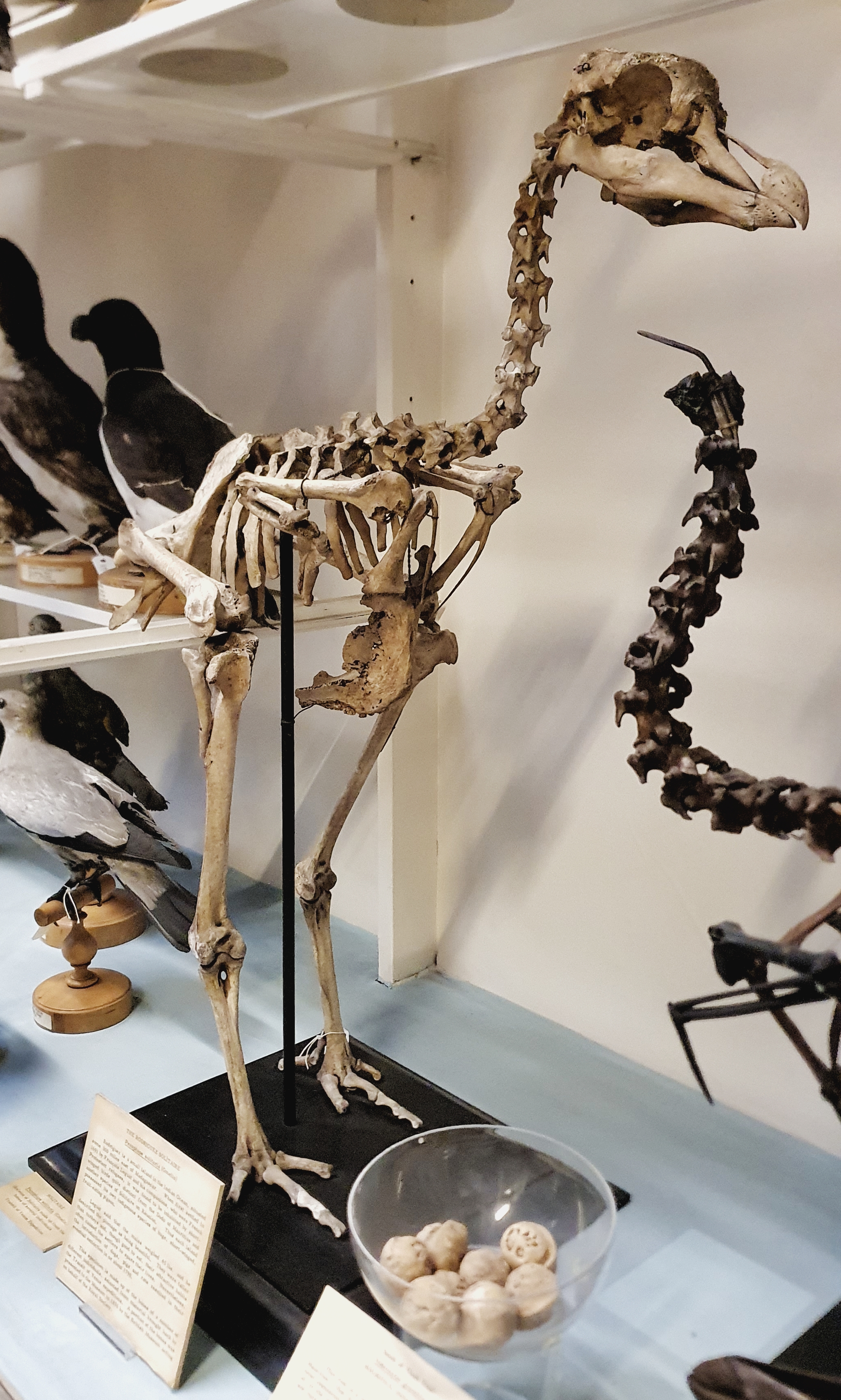
Last week I gave you this specimen from the Dead Zoo to have a go at identifying:


There were some great suggestions, some alluding to the tusk-like shape and structure, but the first person with a correct identification was Tony Irwin with an anagram of “Kuphus“. If you’re not familiar with the Giant Shipworm Kuphus polythalamius (Linnaeus, 1758), it’s a genus of boring mollusc that has proved to be rather interesting.
It’s in the shipworm family, but until recently it was only known to science from large, empty tubes like this one that washed up on a few beaches in the Philippines. That all changed 2016 when some live specimens were found and researchers were able to take a closer look at the biology of these surprising animals.
Unlike other shipworm, it turns out that Kuphus doesn’t eat wood. Instead it burrows into sediment and has a symbiotic relationship with bacteria that live in its gills, which metabolise hydrogen sulphide. This is quite a big deal, since it seems to provide an example of one set of symbionts (those able to digest cellulose in other shipworms) being replaced by a very different set capable of metabolising inorganic chemicals.
This change in relationship allows Kuphus to utilise in a different habitat type and may provide a clue as to how some of the organisms present along mid-ocean ridges have managed to adapt to a habitat far away from sunlight and largely removed from normal organic inputs.
It’s odd to consider that this specimen has been in the Dead Zoo since 1879, but we never knew just how interesting the species is until so recently. I wonder what other revelations we’ll come across as we carry on with our decant?
Last week I gave you this mystery object to have a go at identifying:

Clearly it’s some kind of sea-star, but there are a LOT of different species .
Remarkably, that doesn’t seem to have posed a problem. The five stumpy arms narrowed it down to one of the cushionstars or biscuitstars and it seems that was more than enough for some of you.
Salliereynolds flagged one of the diagnostic features and dropped a hint to the species name:
“Six lumps to a side? From down under?”
But Goatlips took the mystery object to a whole new level with a biscuit recreation:
This specimen is a Southern Biscuit Star Tosia australis Gray, 1840. Probably not as tasty as an actual biscuit, but certainly very biscuity in appearance.
A short answer today I’m afraid, but it’s been a difficult week and there’s a lot to do in the Dead Zoo this Friday!
Last week I gave you this specimen from the Dead Zoo to have a go at identifying:

It was a bit mean of me to not include a scale, but several of you managed to work it out regardless.
The overall group is fairly easy to spot, since it has 10 legs, the front pair bearing claws (or chela if you want to get technical) and the main body area is rounded. So it’s a crab.
In addition, the long legs and small body give it an overall shape reminiscent of a spider, so it’s a good bet that it’s some kind of spider crab.
Now, there are quite a lot of types of spider crab out there, but that sub-triangular body shape and those long legs help narrow down the possibilities further. In fact, it does share some similarities to the gigantic Japanese Spider Crab.

Unlike the Japanese Spider Crab (which was suggested), this doesn’t have extremely elongated chela. So not one of them. It’s also way too small, although my lack of a scale bar doesn’t make that obvious – sorry! However, the mystery object is in the same family (the Inachidae).
Once you start looking at the genera in the Inachidae there’s only one that matches the mystery object’s proportions, and that’s the Macropodia. Once you get that far, it becomes a case of discounting possibilities based on much more detailed features.
The Marine Species Identification Portal is a fantastic resource for checking this finer level identification. Going through the various species descriptions in there helps spot the key features for distinction between species.
In this case, the mystery object is particularly similar to M. tenuirostris and M. rostrata and it’s mainly the shape of the carapace around the ‘shoulders’ where the chela attach to the body that help confirm this to be the Long-legged Spider Crab Macropodia rostrata (Linnaeus, 1761).
So it was a good effort for everyone who managed to get this to family level, I congratulate those who worked this out to the genus and I doff my hat to anyone who managed to identify it to species. So jennifermacaire, my hat is doffed!
Last week I gave you this specimen from the Dead Zoo to have a go at identifying:

I don’t often do molluscan mystery objects, but the unexpected spike on this shell really caught my eye.
It is very distinctive, so I wasn’t overly surprised by the correct answers from several people – Tony Irwin even managed a nice cryptic clue playing on the scientific name for this species:
“Could be a young wizard’s spell to make something not quite round, perhaps using a wand made from a bit of blackthorn?”
This is of course alluding to Elliptio spinosa (I. Lea, 1836), known more commonly as the Altamaha or Georgia Spinymussel.
These freshwater mussels are endemic to America and are limited to large, fast-flowing rivers in Georgia. They are currently endangered, partly due to changes in their river habitat (such as increasing ammonia pollution in water) and partly due to a decline in the species of fish that they rely on as hosts for their parasitic larval stage.
I’m not certain what the spines are for, but since these mussels live in the sediment of fast-flowing rivers, they may simply act as anchors to help prevent them from being dislodged.
A bit of a short answer this week, but I’m typing one-handed due to an injury and I need some rest. I will endeavour to have another mystery object for you next week though!
The last few months have been busy in the Dead Zoo. If you’ve been following the #DeadZooDiary hastag on Twitter you will have seen that the smaller of our two suspended whales has been taken down and now we’re doing the groundwork to get the larger of them decanted.
But while all of that is going on, we also have a team of art handlers packing and wrapping another 10,000+ specimens that also need to leave the building for upcoming roof replacement works. This week’s mystery object is just one of these specimens:

Any idea what this shell is from? As ever, you can leave your observations, questions and suggestions in the comments box below – I’ll do my best to respond, but I apologise in advance if I don’t get a chance. Have fun!
Last week I gave you this skull from the Dead Zoo to have a go at identifying:

I think it’s quite a distinctive skull, so I didn’t provide a scale and I asked for cryptic clues to avoid spoiling the challenge.
The overall skull shape is fairly standard for an Artiodactyl, but while this specimen has no incisors in the upper jaw, there are fairly obviously empty alveoli that show where the teeth used to be. That means it’s not a member of the Ruminantia (the deer, antelope, cattle, giraffes and weird deery-antelopey type critters like chevrotains) since they all lack upper incisors.
That leaves the pigs, hippos and camels – and it’s clearly not one of the pigs or hippos.
The camel family is a bit odd. There are three wild species, but then an additional four entirely domesticated species. The proportions of this skull are a bit long for a Llama, Guanaco, Alpaca or Vicuña. That leaves the Dromedary, Wild Bactrian or Domesticated Bactrian camel as possibilities.
Dromedary skulls tend to have a horizontal nasal region then a steep rise to the braincase immediately behind the orbits, but this specimen has a more gentle slope running from the nose to the top of the braincase, so it’s Bactrian.
Unfortunately the Wild Bactrian camel is critically endangered and poorly represented in collections, so it’s hard to find enough comparative material to differentiate the wild and domestic Bactrians.
Well done to everyone who figured out that this is one of the double-humped ships of the desert. There were some great clues in the answers!
This week I have a nice and simple mystery object for you to identify:

Any idea what this skull belongs to?
I think it’s straightforward enough to merit no scale bar and perhaps some cryptic clues in the answers.
Have fun!
Last week I gave you this specimen from the Dead Zoo to have a go at identifying:


It came from a cabinet of cave bones, but Nigel Monaghan (Keeper of the Dead Zoo) wasn’t convinced that this specimen was actually found in a cave.
Partly that’s because it’s a fairly fragile specimen with poorly fused sutures – these don’t usually stay connected in cave deposits, but also because it’s from a species that you wouldn’t expect to find in the kind of caves that the rest of these collections came from. So what is the species?
I don’t think this is a very difficult one since I’ve done very similar specimens before (regular visitors should have had an advantage), so I was looking for cryptic or entertaining answers – and I was not disappointed. Tony Irwin got a great clue in, with a pun that reflected the genus:
I think we need to focus (did I spell that right?) on the shape.
It is of course the skull of a seal in the genus Phoca – and the blunt shape of the anterior portion of the auditory bulla suggests to me that it’s a Harbour Seal Phoca vitulina Linnaeus, 1758 rather than the very similar Spotted Seal, which has a slightly more accute angle on the anterior auditory bulla.
So well done to everyone who figured it out! Now we just need to figure out how it either got into a cave or (possibly more likely) got put into the wrong cabinet.
This week I have a mystery object that my boss, mentor and the Keeper of the Dead Zoo, Nigel Monaghan, found while working on a collection of cave bones:


Now Nigel has already worked out what it is thanks to a website that has images of skulls with id tips that you may have seen before (yep, this one), but do you recognise what this is?
I think this is a nice straightforward object, so maybe a good one for some fun cryptic or otherwise entertaining answers? Have fun!
Last week I have this mystery object from the Dead Zoo:

I made it a bit harder than necessary by not including a scale, but then that’s part of the fun – and I think a scale might have made it all a bit too easy.
There were a lot of suggestions about what it might be, mostly referencing some kind of seat / saddle or a patella. It’s probably just about big enough to sit on, although I’m not sure it would be comfortable.
But quite a few of you did figure out what bone it is and more or less what kind of animal. It’s the manubrium (part of the sternum) of a young Humpback Whale Megaptera novaeangliae Borowski, 1781.


Here’s the specimen with our Conservator Silvia for scale next to the manubrium (it’s a little hidden by the bar supporting the mandible here). Silvia’s been busy cleaning the whale, ready for it to be dismantled in the next few weeks.
All the activity around this whale work has been keeping me busy, so I apologise for tardy replies to questions and slightly sparse answers. If you want to see what we’ve been up to, check out the #DeadZooDiary!
This week I have a mystery object for you to have a go at identifying which may be tricky (or it might be easy – let’s find out):

Any ideas what it might be and what it might be from?
Last week I gave you a bit of a mean mystery object to have a go at identifying:

I’m not surprised that very few people worked out what it is, since there’s not much to go by, and what there is, may be a little misleading.
This scrubby-looking piece of hairy skin is not from a battle-scarred Tasmanian Devil, nor is it from a rough patch on a Badger or member of the pig family and it most certainly is not from an ape of any description.
This is, in fact, from a Walrus Odobenus rosmarus (Linnaeus, 1758). This Walrus from the Dead Zoo in fact:

People don’t think of walruses as being particularly hairy – and this one is quite definitely bald on top (I’m familiar with that feeling…). However, last week we moved this specimen and when we flipped it on its side to squeeze between some cases, we discovered a rather hairy belly (again, I know the feeling…)


Walrus hair tends to get less dense as the animals age (insert gag here). After a century or so on open display, with members of the public who most definitely have not read the “DO NOT TOUCH” signs, and with technicians with buckets of creosote, that natural balding had a helping hand – up top.
Underneath, the hair was left untouched and in places it’s quite dense. I’m not sure if this is entirely due to people not being able to touch the specimen, or if Walrus belly hair is more dense and plentiful than on the rest of the body, to help insulate them when sitting on ice floes.
Either way, it was fascinating to be able to see a hidden part of this specimen – a nice reward for all the effort of moving it. If you want to see more of this kind of thing, check out the #DeadZooDiary!