Friday mystery object #259 answer

Last Friday I gave you this section of an object that I found in an unmarked box during a reshuffle of the Horniman’s bone room:

mystery259

The reshuffle is part of a project to make space for temporarily housing specimens while our taxidermy storage space is upgraded. This is a fairly big undertaking, since it means finding enough nooks and crannies to accommodate a full room’s worth of stuffed critters, to allow the room they came from to be fitted out with long span shelving and roller racking – which should double its capacity.
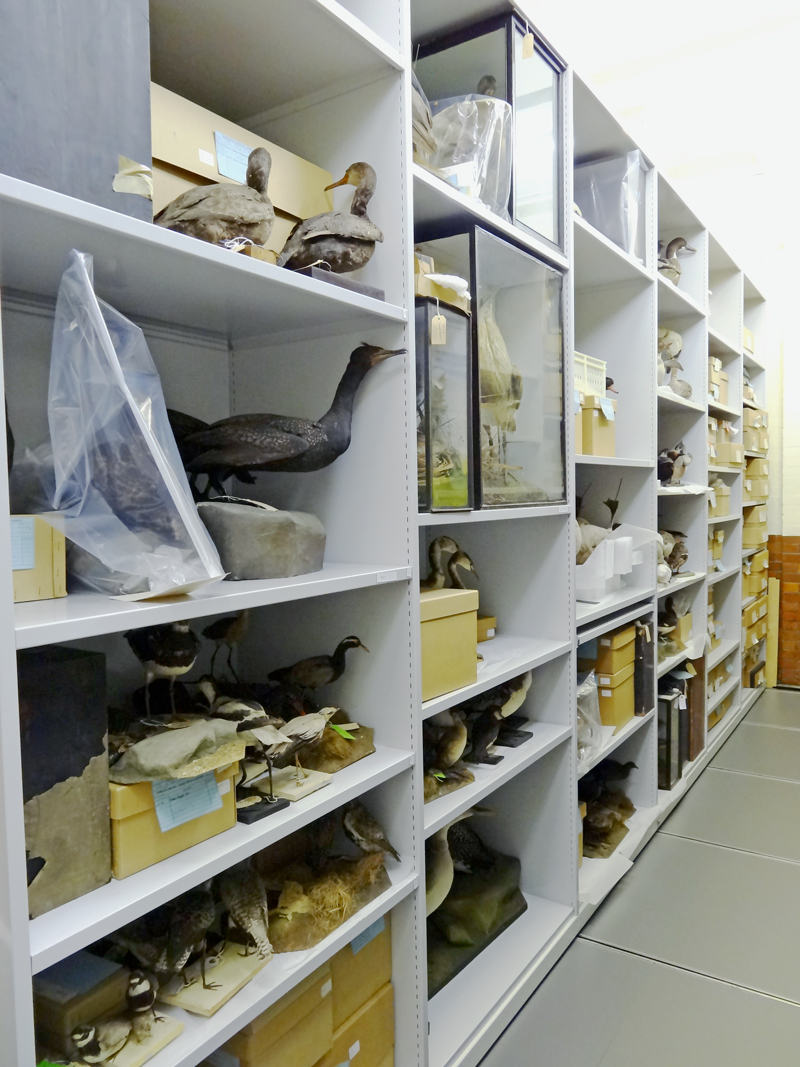
taxidermy_storage

Bone room invaded by taxidermy birds

This reshuffle has also given me the opportunity to dig through the shrinking number of boxes of unidentified fragmentary material to see if any more can be matched back to specimens or rehoused in smaller boxes, thereby saving space. That’s where the mystery object comes in.

It has quite a distinctive shape, with a robust zygomatic arch (cheekbone), inflated tympanic bulla (bony bulb that houses the earbones) and thin squamosal (a bone of the side of the the skull – all of these parts fused together like this can also be called the temporal bone).

The structure of the glenoid fossa (joint where the mandible articulates) suggests it’s a carnivore of some sort, since herbivores tend to have a more open articulation that allows their mandible to move freely in order to grind tough vegetation more effectively. Carnivores need a more precise bite, to cut or clamp their food, which requires a tighter articulation.

However, the thin bone of the squamosal is less usual in a carnivore of this size, since this region normally deals with large bite forces and needs to be reinforced. This suggests an animal that isn’t relying on a powerful bite. The tympanic bulla is also quite open in structure, which I would associate with an animal that dives underwater and needs to be able to equalise differences in internal pressure effectively. These clues suggest that this piece of bone is from a seal of some sort.

Figuring this out let me compare the mystery object to seal specimens, to see if any were missing the temporal region. As it turns out I did indeed find a fragmentary seal specimen that fit the bill:

seal

This specimen was acquired in 1912 and had been sawn up in order to mount the other half for display on the Natural History Balcony at the Horniman:

Seal_NH.12.37

In the register it was recorded as “Skull of Seal (Phoca annulata)” which is an out-of-date name for the Ringed Seal Pusa hispida (Schreber, 1775), but I have my doubts about this identification after consulting this useful piece of research on identification of archaeological seal remains by Hodgetts, 1999 [opens as pdf]. The tympanic bulla, mandible and dentition (plus the suture on the zygomatic arch) make me think that this may in fact be a Harp Seal Pagophilus groenlandicus (Erxleben, 1777).

So well done to henstridgesj, Ric Morris, Bobby Boessenecker and Lee Post, who all worked out that the mystery object was from a seal. Please feel free to add more thoughts on whether you agree with my identification of Harp Seal!

Friday mystery object #253 answer

Last Friday I gave you this lovely specimen from the King’s College Museum of Life Sciences to try your hand at identifying:

mystery253

It wasn’t easy, since there were limited views, so the dentition wasn’t entirely visible and the bones of the palate are not shown. Also, there was no scale bar – something that Ric Morris gently reprimanded me for.

Despite these limitations, many of you correctly managed to work out that this is the skull of a Mongoose of some sort. So congratulations to bugblokenzFlick Bakerhenstridgesj, Michelle and Allen Hazen for recognising that this is a member of the Herpestidae.

Narrowing it down beyond that is more of a challenge and without better images it’s a bit unfair to expect a species level identification – but I’m going to have a go.

Scouring through Mongoose skulls in collections and various images online (especially using the fantastic Animal Diversity Web resource, the ever helpful Skulls Unlimited and the brilliant Mammals of Tanzania Skull Key), I came to realise that the teeth are visible enough to discount many Mongoose species. Also, the shape of the zygomatic region and facial profile was quite distinctive (most Mongooses have cheekbones that are flat under the eye sockets – but not this chap).

Excluding the options that didn’t quite fit, left me with a few that did – the Egyptian Mongoose Herpestes ichneumon, Slender Mongoose Herpestes sanguinea, and White-tailed Mongoose Ichneumia albicauda.

Not a clear-cut identification, but better than nothing, and it might be possible to refine it by looking at the specimen in the flesh… as it were.

Friday mystery object #253

This week I have a lovely specimen from the hidden gem that is the King’s College Museum of Life Sciences for you to try your hand at identifying:

mystery253

Any idea what this specimen might be? As usual you can put your questions, observations and suggestions below – let’s see if we can work out what this is!

Friday mystery object #250 answer

For my 250th mystery object I gave you this object from the collections of the Horniman Museum & Gardens to identify:

mystery250

It gave me a bit of a challenge, but eventually I managed to work it out – and it looks like something similar happened in the comments!

We went from ribs, to hind limbs to jaws, which is where it started getting close to the mark. The suggestion of “Part of the zygomatic arch of something large?” by henstridgesj was on the money.

Allen Hazen broke down the observation a bit further, with an astute observation about the components of the zygomatic arch that are present “The jugal and squamosal components of the zygomatic arch (I’d say its the squamosal that has been cut open here)“. Allen also speculated that it may be from a Dugong – which was my preferred identification for a while.

However, Crispin and henstridgesj worked out that it was from an Asian Elephant Elephas maximus Linnaeus, 1758 – the same species that I had also concluded that it belonged to.

By narrowing down the identification to species I was able to search through the museum’s collections management database to find out whether this sliced-off piece of bone might be part of another object. As it turns out, it was!

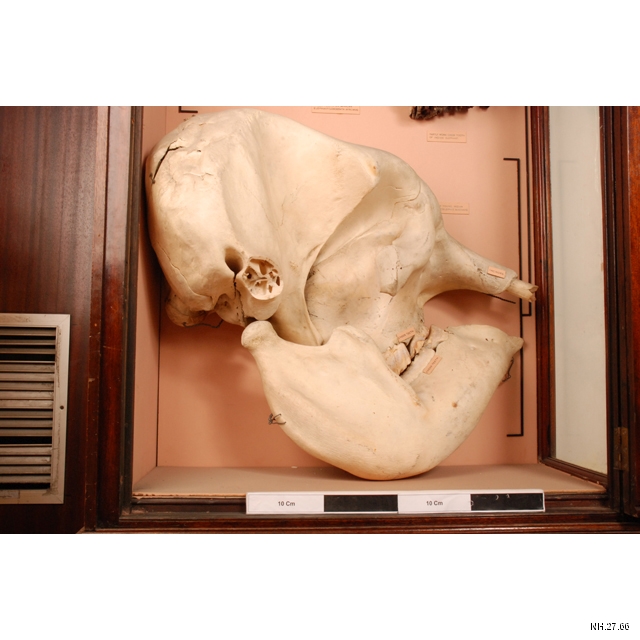
NH.27.66 Elephas maximus on display at the Horniman

NH.27.66 Elephas maximus on display at the Horniman

So by being able to identify this piece of bone it could be reassociated with the specimen that it originally came from and now there is a record for it in our database, so that if the skull ever comes off display it can be reunited with its cheekbone.

It also made an apt object for my 250th mystery object for Zygoma!

Friday mystery object #249 answer

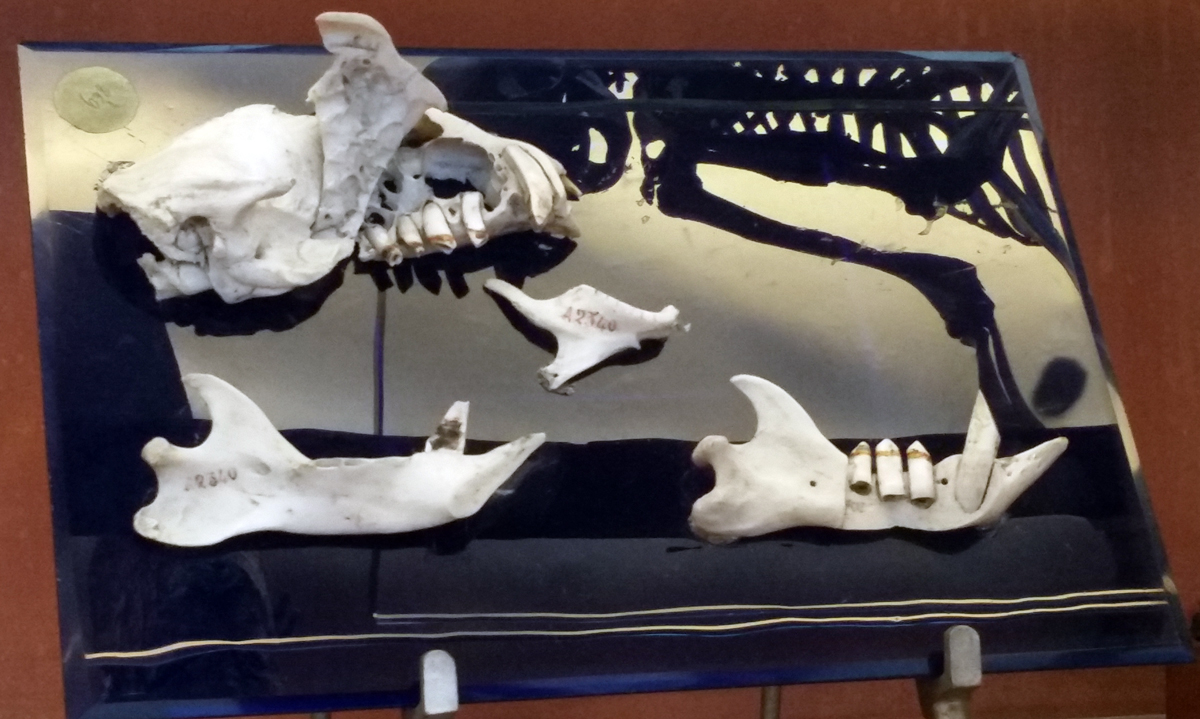
Last Friday I gave you this exploded skull from the incredible Galerie d’anatomie comparée et de Paléontologie in Paris:

mystery249

As I suspected, it was a bit of an easy one for many of you, but that provided the chance for some cryptic clue fun.

So my thanks to Agata Stachowiak, Chris, Allen Hazen, henstridgesjClaire Miles and witcharachne who all hinted at an identification of Sloth, more specifically a Two-toed Sloth, I think of the species Choloepus hoffmanni Peters, 1858 as opposed to C. didactylus Linnaeus, 1758, which appears to have a smaller angular process on the mandible and a less broad zygomatic region.

A two-toed sloth (Choloepus hoffmanni) at La Selva Biological Station, Sarapiqui, Costa Rica. By Geoff Gallice

A two-toed sloth (Choloepus hoffmanni) at La Selva Biological Station, Sarapiqui, Costa Rica. By Geoff Gallice

The teeth of Sloths are fascinating, due to their fairly simple rooting and their impressively sharp premolars that look like canines.

These Sloths have an interesting feature of their hair, which has a groove to help support algae, which help keep the Sloth camouflaged. This is pretty handy given the Sloth’s notorious lack of speed with which to escape predators. This may help explain the need for those sharp premolars as well!

Friday mystery object #246 answer

Last week I gave you this mystery skull from the stunning Galerie d’anatomie comparée et de Paléontologie in Paris:

mystery246

I was struck by the cat-like dentition and general shape, but as many of you worked out, that’s no cat.

It is in fact a specimen of a Fossa Cryptoprocta ferox Bennett, 1833, as correctly identified by Charne, Manabu Sakamoto, Nigel Monaghan, SMerjeevski – good skills!

Fossa by Ran Kirlian

Fossa by Ran Kirlian

This carnivore is endemic to Madagascar and is the foremost natural predator of lemurs. They are well adapted to climbing in order to catch their tree-dwelling main course, with rotating ankles a bit like a Margay.

Madagascar is an amazing place for biology. It separated from Africa around 20 million years ago and has had its own unique wildlife evolving there ever since. This means that the familiar cats that fill niches in (relatively) nearby Africa are missing, since they didn’t really exist when Madagascar started drifting off. The Fossa fills that catty niche.

There may be more mystery objects to come from the  Galerie d’anatomie comparée et de Paléontologie, since the whole place blew me away!

Wow

Friday mystery object #246

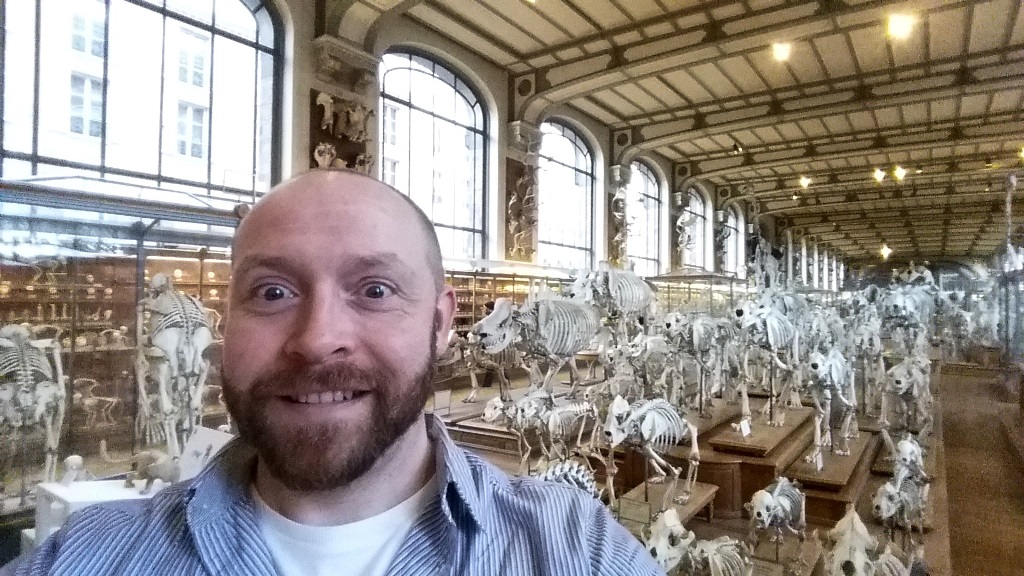
Last weekend I had a fantastic visit to Paris and my wonderful wife gave me the best Valentines Day gift in the world, by taking me to the spectacular Galerie d’anatomie comparée et de Paléontologie.

Paris_Comparative_Anatomy_G

As you might have guessed, I was in bone heaven and had to be dragged out by security at closing time – but not before taking hundreds of photos of the incredible collections.

So this week’s mystery object comes courtesy of Georges Pouchet, the comparative anatomist who established the Gallery:

mystery246

Any idea what this might be?

As usual you can put your suggestions, thoughts and questions in the comments box below. I hope you enjoy the challenge!

Friday mystery object #245 answer

Last Friday I gave you this guest mystery object from Dr Nick Crumpton at the NHM:
mystery245
Here’s what Nick had to say about it:
So when I first picked it up I thought – embarrassingly now – that perhaps it was something a bit pinniped-like but then the teeth didn’t match that idea at all so I reverted to thinking it was a bit more doggy.
Irritatingly, it was a juvenile so that scuppered size-based guesses, and ruled out taking too much information from the posterior, mandibular teeth. Also, the skull was darn cute, with a shorter snout than an adult would possess.
I had a couple of ideas from looking at the width of the zygomatic arches, but that lack of a parasagittal crest got me all twisted around. And time was tight for what we needed it for!
My esteemed colleague Mr Garrod was the first to push me in the direction of a wolverine, but I’ll leave it to Paolo to show how he managed to ID the little critter and save the day – although it looks like a bunch of people on here already managed that! Love the bone-banter. 😀
We’ve discussed in the past how the skulls of juvenile animals can be misleading and for this species a number of the features you would immediately recognise in the adult are absent in this juvenile. Therefore I’m not that surprised the suggestions in included Arctic Fox, Sea Otter, Common Seal and Spectacled Bear, in addition to the possibility of Wolverine.
Wolverine cranium

Wolverine cranium for comparison

Despite the juvenile dentition, the blade-like molar and 3rd premolar, and robust second molar were indicative of a carnivore with a specialisation for eating bone and the breadth across the zygomatic arches indicated something with a powerful bite force.
Wolverine dentition is remarkably robust, since they often scavenge bone and in the winter they need to feed on meat that has frozen solid. They have a wide skull (see above), but the relatively large upper molar is at right angles to the 4th premolar, which has a cleft that the 3rd premolar nestles into.
This is rather different to the much straighter dentition of the mystery animal, which is distinctly more cat-like, albeit with too many teeth. That narrows it down to one of the Hyenas. From there it becomes a bit more difficult and the fact it’s a juvenile throws a bit of a spanner in the works, but if pushed I’d probably opt for Spotted Hyaena Crocuta crocuta (Erxleben, 1777).
So well done to Chris, Lena, palfreyman1414, Allen Hazen and henstridgesj who all came to the same conclusion.
Finally, a big ‘thank you!’ to Nick for posing a decent challenge!

Friday mystery object #245

This week I have a guest mystery object for you from Dr Nick Crumpton at the NHM.

Hello Zygoma fans. Nick Crumpton here from across the way at the Natural History Museum in South Ken.

Well, this fellow completely stumped me for a few hours this week on finding it in our teaching collection:

mystery245

Until, that is, I called on the always helpful advice of Mr Viscardi (OK, and a certain Mr Garrod too…)

I’d love to see whether anyone can work out what it is, and how they figured it out!

You can leave your suggestions and thoughts in the comments section below – enjoy!

Friday mystery object #243 answer

Last week I gave you this nightmarish looking mystery object to identify:

mystery243

There were lots of great suggestions about what it might be, with most of you in the right area of the animal kingdom with a legless critter in mind. In particular a fairly primitive type, with aglyphous or ‘groove-less’ teeth (as opposed to snakes characterised by having opsithoglyphous or ‘backward grooved’, proteroglyphous or ‘forward grooved’ and solenglyphous or ‘pipe grooved’ teeth).

There were several suggestions of Boa constrictor – specifically the right maxilla (upper jaw), but they have a straighter top to the maxilla and a differently shaped process that connects with the frontal and ectopterygoid bones (check out Udo Savalli’s snake skull anatomy page to see what those terms mean).

Anaconda was also suggested, but the anterior (front) part of  the maxilla is not squared off enough.

Nicola Newton, rachel and Alex Kleine all suggested Python, which is what I think it is. I’m not certain of the species, but it’s definitely a big one – I’m leaning towards the Reticulated Python Python reticulatus (Schneider, 1801).

Just to give you a better idea of which bone it is, here it is compared to the skull of another large Python skull from the Horniman’s collection:

mystery243b

and to give a better sense of scale, here it is with my (fairly large) hand for comparison:

mystery243a

My very rough estimate of the length of the animal, based on other skeletal material I’ve seen, is around 5m – that’s one snake I wouldn’t want to get on the wrong side of!

Friday mystery object #241 answer

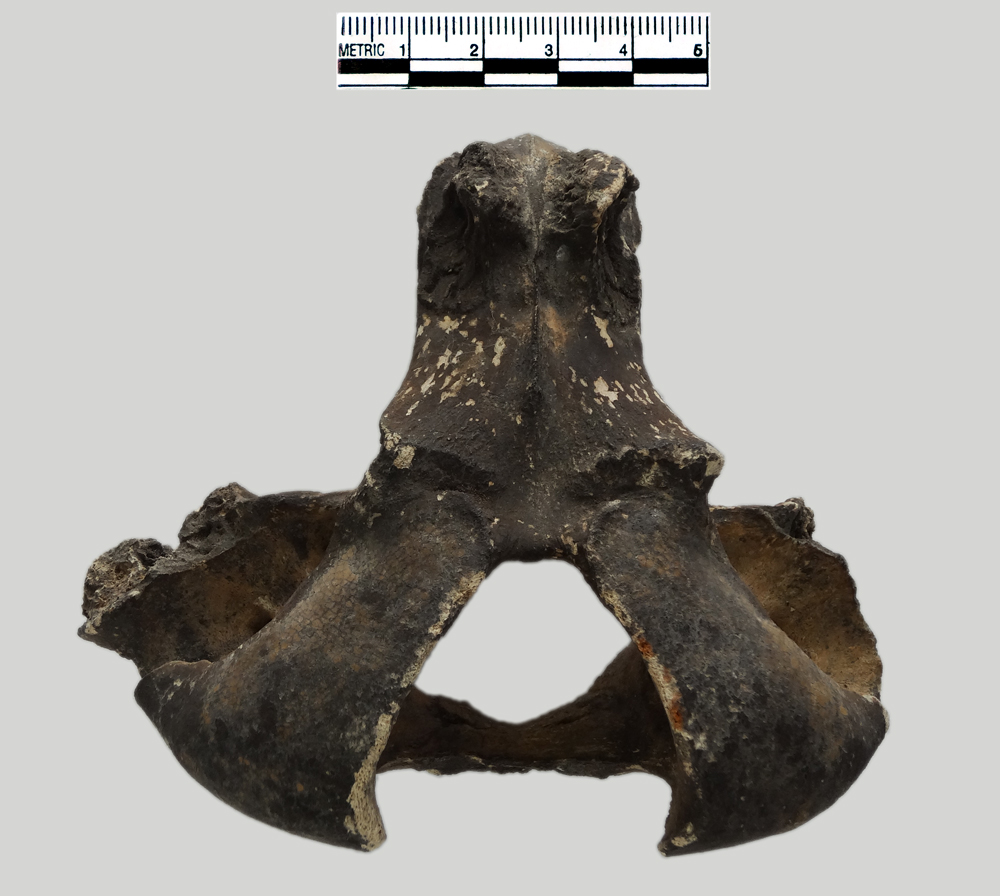
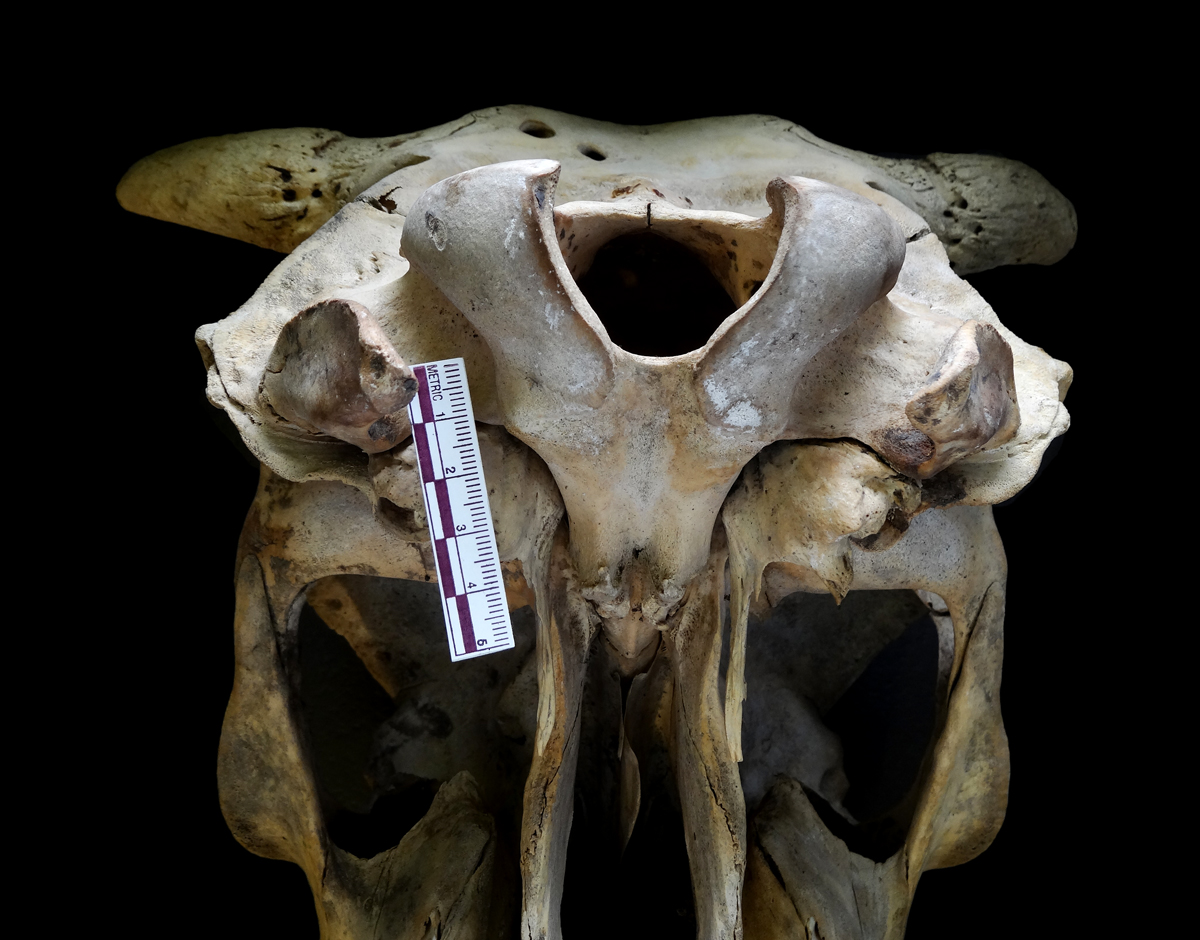
Last Friday I gave you this object, that I’ve been working on, to identify:

mystery241

Ric Morris was straight in with the nicely disguised correct answer of occipital bone viewed from the basal aspect, correctly suggesting something bovine as the source.

mystery241b

This is the kind of object that you often come across from archaeological sites, where material may have been dug up from a butchery site, kitchen midden or similar assemblage.

Fragmentary bits can be quite hard to identify compared to complete skulls, but when you get a fairly complete chunk like this it makes things a bit more straightforward. In particular the hole of the foramen magnum and bordering occipital condyles provide a clear indication of where in the body it comes from. The shape and size of the condyles also helps narrow down the species.

Expect some more burnt and broken bits of bone in future mystery objects!

Friday mystery object #240

After the last mystery object, which was really difficult, I have an easier one for you to identify:

mystery240

Apologies for the rather odd-looking set of images – the specimen proved quite hard to get level for photography.

As usual for easy objects, please try to be a bit discrete with your answer so everyone gets a chance to test their identification skills. I look forward to some interesting answers!

Friday mystery object #237 answer

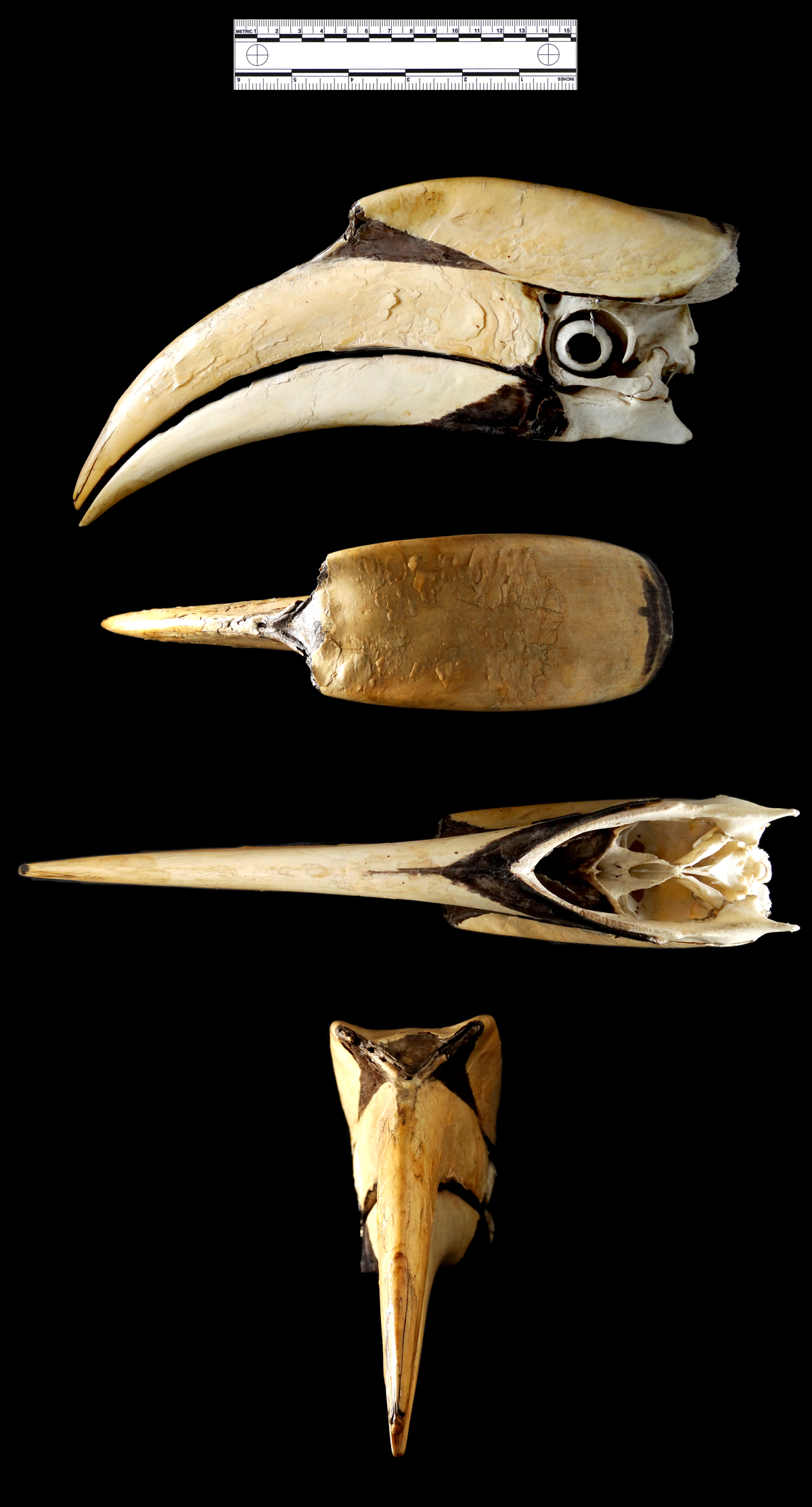
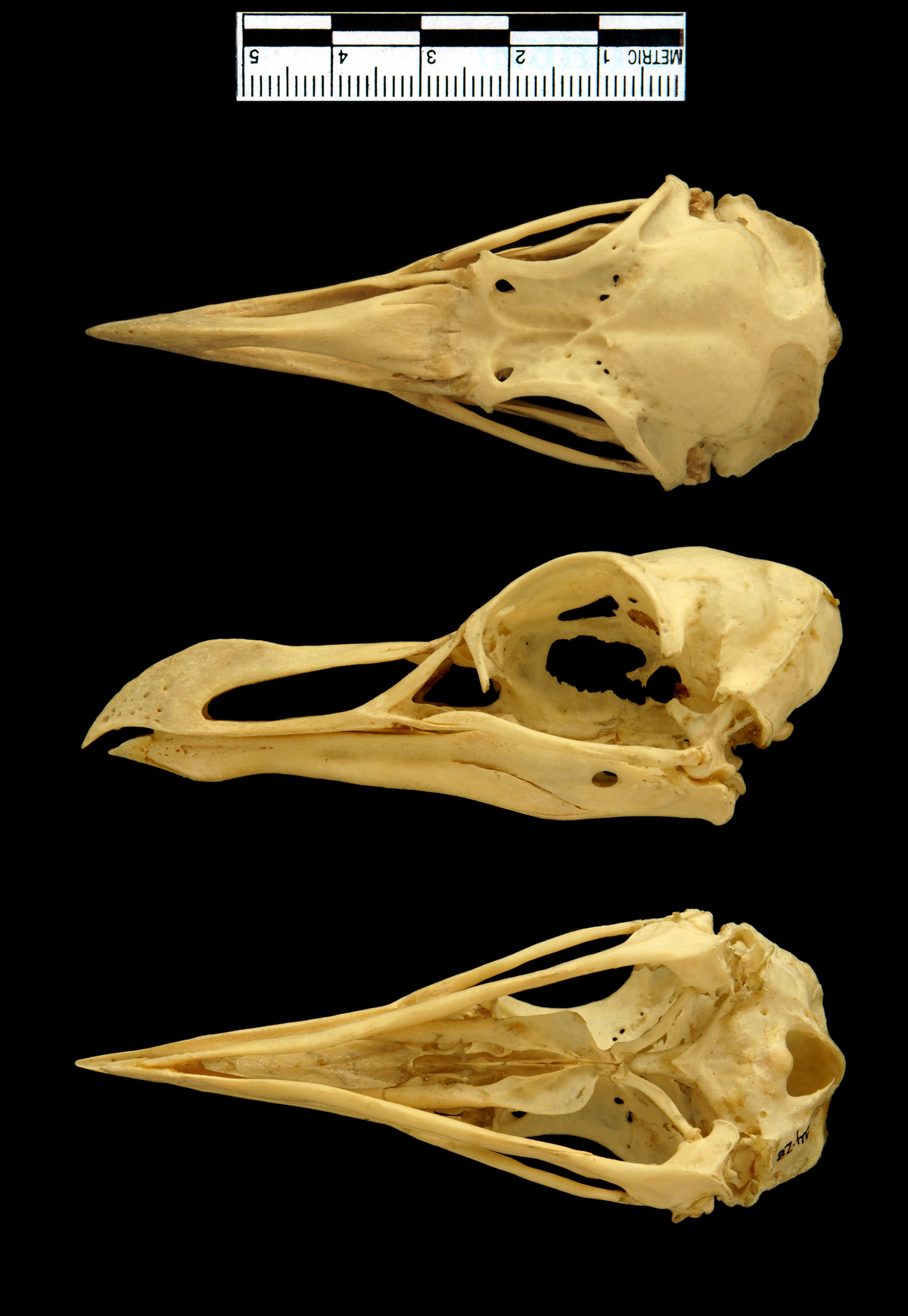
Last Friday I gave you this sound and skull combination to have a go at identifying:

mystery237

As many of you worked out, the skull and call belong to quite different species that share a love of the seaside.

The call belongs to the somewhat enigmatic Common Eider Somateria mollissima (Linnaeus, 1758) as identified by mark b, Chris, Melanie, Henry McGhieAnne Åslaug Holder and stuart petch.

A male Somateria mollissima (Common Eider) at the London Wetland Centre, Barnes, UK. By Diliff, 2013

A male Somateria mollissima (Common Eider) at the London Wetland Centre, Barnes, UK. By Diliff, 2013

These large marine ducks are at home on the water, where they feed on molluscs and crustaceans. They are probably best known for their super-soft downy breast feathers, that the females use to line their nests and humans use to fill their pillows.

The skull belongs to a Razorbill Alca torda Linnaeus, 1758, as identified by Ric Morris, mark b, Chris, MelanieHenry McGhieAnne Åslaug Holder and stuart petch.

Razorbill at bird cliff in Westfjords, Iceland. By Gsd97jks, 2005

Razorbill at bird cliff in Westfjords, Iceland. By Gsd97jks, 2005

These birds are great divers, using their wings to ‘fly’ underwater. They feed on small fish and other slippery critters, caught using that characteristic bill.

Congratulations to everyone who managed to work out what the two species were – there’ll be a final mystery sound from the British Library Wildlife Sound Archive to identify next week, courtesy of curator Cheryl Tipp!

Friday mystery object #237

This week I have another mystery sound from Cheryl Tipp at the British Library Wildlife Sound Archive and skull from the Horniman Museum & Gardens:

mystery237

Do you think the sound and the skull are from the same species, and can you recognise which species?

You can send your answers on a postcard, or if you prefer just pop them in the comments section below… Have fun!

Friday mystery object #236 answer

Last week I gave you this mystery sound and skull to identify, with a the additional challenge of asking whether they belong to the same species:

mystery236

As it turns out several of you managed to get the bird in question. The wide variation and complexity of the song suggested a passerine bird, with a high degree of control of its syrinx. In fact, this species is named for its ability to produce loud and intricate calls containing a range of phrases (incidentally including mimicry of noises it has heard) – it’s a Song Thrush Turdus philomelos Brehm, 1831.

Song Thrush singing a song in a tree. By Taco Meeuwsen 2006

Song Thrush singing a song in a tree. By Taco Meeuwsen 2006

So well done to mark b, Mieke Roth and Melissa Harrison, who all managed to get the right bird. A big thanks also goes to Cheryl Tipp, curator of the Wildlife Sound Archive at the British Library, for supplying the song. I’d heartily recommend checking out the ‘language of birds‘ pages for more information on birdsong!


Friday mystery object #236

This week I have a double mystery for you.  There is a sound recording from the British Library SOund Archive, courtesy of curator Cheryl Tipp and there is also a skull for you to identify:

mystery236

Do you think that the sound and the skull belong to the same species, or do you think I’m trying to trick you?

You can put your thoughts, questions and suggestions in the comments section below. Have fun!

Friday mystery object #234 answer

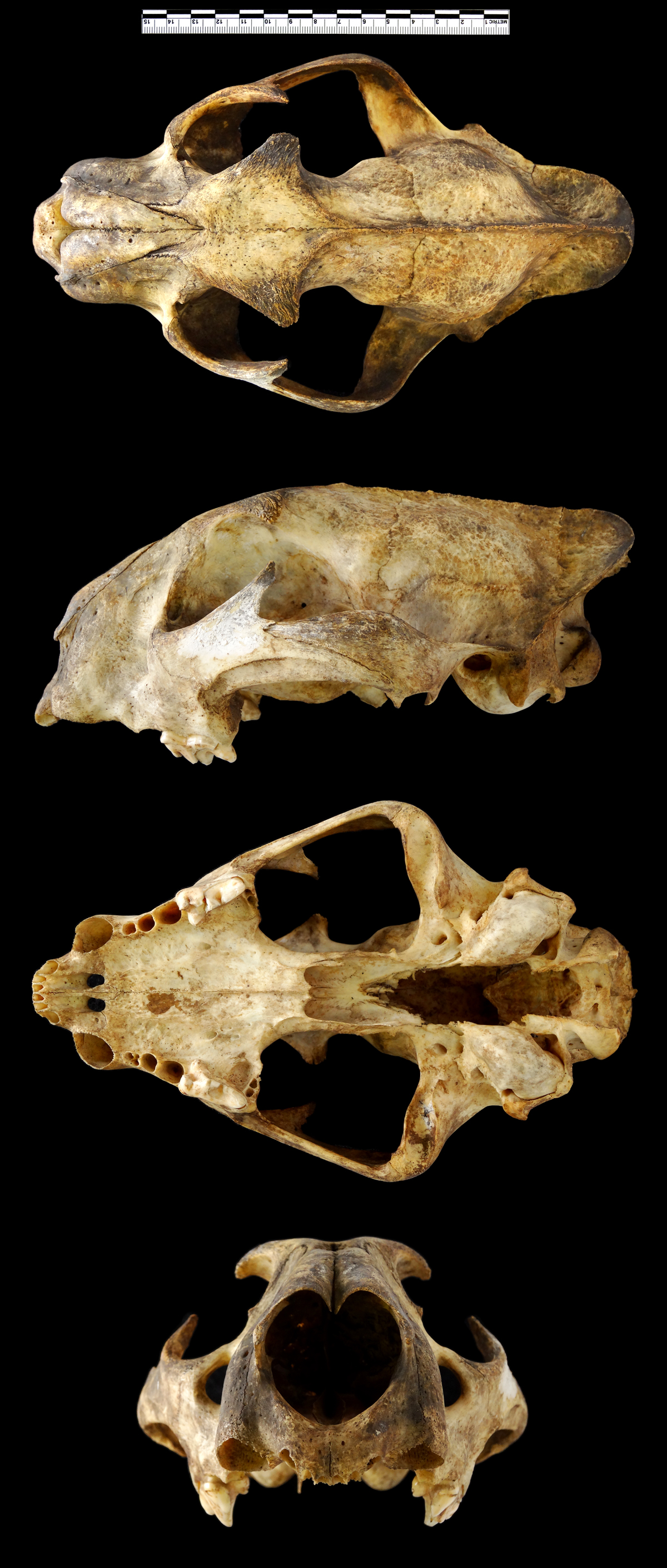
Last Friday I gave you this mystery skull to identify, which I discovered in a box of unidentified bits and bobs:

mystery234

It was pretty obvious that it was the skull of a big cat of some kind, with most of you suggesting a Jaguar or Cheetah (either of which would make me very happy as we have the skull of neither in the Horniman collection). Unfortunately it appears to belong to neither.

As I’ve mentioned  before, cats are quite difficult to differentiate from each other as they haven’t been diverging for all that long and their widespread distributions can mean that populations within a particular species can be quite variable in morphology. Leopards are a good example of this, with a (once continuous) range from Korea to South Africa.

Global distribution of the leopard (Panthera pardus) by Tommyknocker

Global distribution of the leopard (Panthera pardus) by Tommyknocker

As it turns out, this specimen is most likely from a Leopard Panthera pardus (Linnaeus, 1758), since it’s from an adult animal (as is clear from the well formed sagittal crest) but is on the small side for a Lion or Tiger and too big for a Cougar or Cheetah. It also lacks the broad post orbital region seen in the Cheetah and Snow Leopard, and it lacks the concave profile of both the Snow Leopard and Jaguar. All of these identification pointers can be found in this handy pdf by Margaret “Cookie” Sims.

Just to show you what I mean about the variability within a species, here’s a second skull from the same box, that also matches the Leopard identification.

Leopards

I expect the big difference in size is largely down to sexual dimorphism, but as you can see the overall proportions are quite different as well. This may be a difference between widely separated populations, or it could just be individual variation – either way it goes to show that cats are hard to identify.

Friday mystery object #234

This week I have a mystery skull from the collections of the Horniman Museum & Gardens for you to have a go at identifying:

mystery234

The family it belongs to may be easy to work out, but as we’ve experienced in the past, the species can be more difficult to establish.

Cryptic answers would be much appreciated, to give the less experienced a chance to work it out. Have fun!

Friday mystery object #233 answer

Last Friday I gave you a variety of mandibles to have a go at identifying. They lacked a scale bar and represented a range of different species that have similarities in mandible shape.

There were some great cryptic suggestions of identities, but it must be said that Jake came through with a really clear and pretty much spot-on list of suggestions. So here are the answers in a handy form that might be useful for reference:

mystery233b

The Sheep and Cow have a distinctive upward inflexion at the end of the mandible, with the Cow’s being so strong that the incisors start above the level of the top of the molar tooth row – unlike the Sheep’s.

This inflexion is much less marked in the Red Deer, which has a narrower body of the mandible, presumably relating to the less intensive chewing of a browser compared to grazers (grass is tough stuff). The Deer also has a notch along the bottom of the jaw, which Jake pointed out as a useful feature.

The Pig mandible tapers less overall, but is thicker at the end with the articulation – presumably because the omnivorous Pig is chewing differently, using the temporal muscles more than the masseter muscles and therefore needing a different area of the jaw for muscle attachment. The teeth are also pretty distinctive. Like the Pig, the Donkey mandible lacks the long and hooked coronoid process, but is also very triangular in shape with quite squared teeth – features typical of an equid.

So hopefully that gives you some pointers for telling some common herbivore mandibles apart when you don’t have a scale bar – a more common problem for some of us than you might think…