Friday mystery object #241 answer

Last Friday I gave you this object, that I’ve been working on, to identify:

mystery241

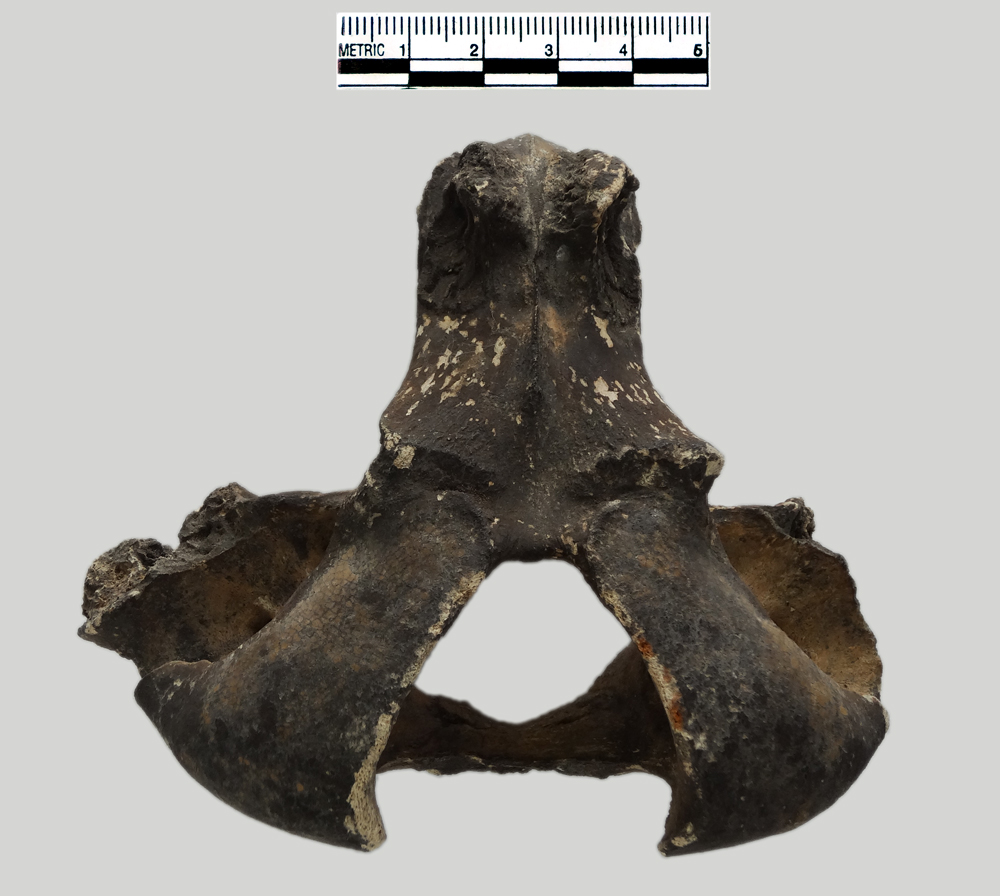
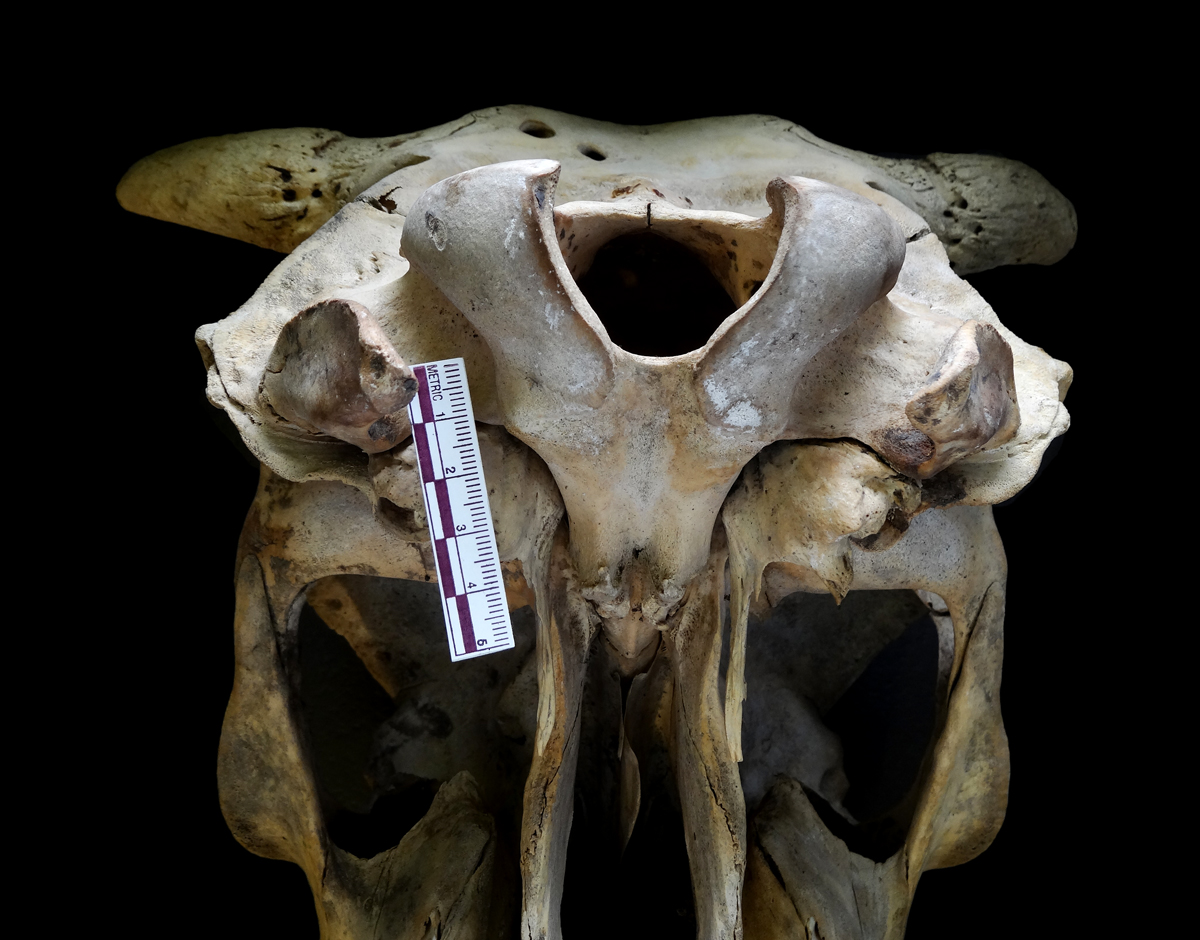
Ric Morris was straight in with the nicely disguised correct answer of occipital bone viewed from the basal aspect, correctly suggesting something bovine as the source.

mystery241b

This is the kind of object that you often come across from archaeological sites, where material may have been dug up from a butchery site, kitchen midden or similar assemblage.

Fragmentary bits can be quite hard to identify compared to complete skulls, but when you get a fairly complete chunk like this it makes things a bit more straightforward. In particular the hole of the foramen magnum and bordering occipital condyles provide a clear indication of where in the body it comes from. The shape and size of the condyles also helps narrow down the species.

Expect some more burnt and broken bits of bone in future mystery objects!

Friday mystery object #240

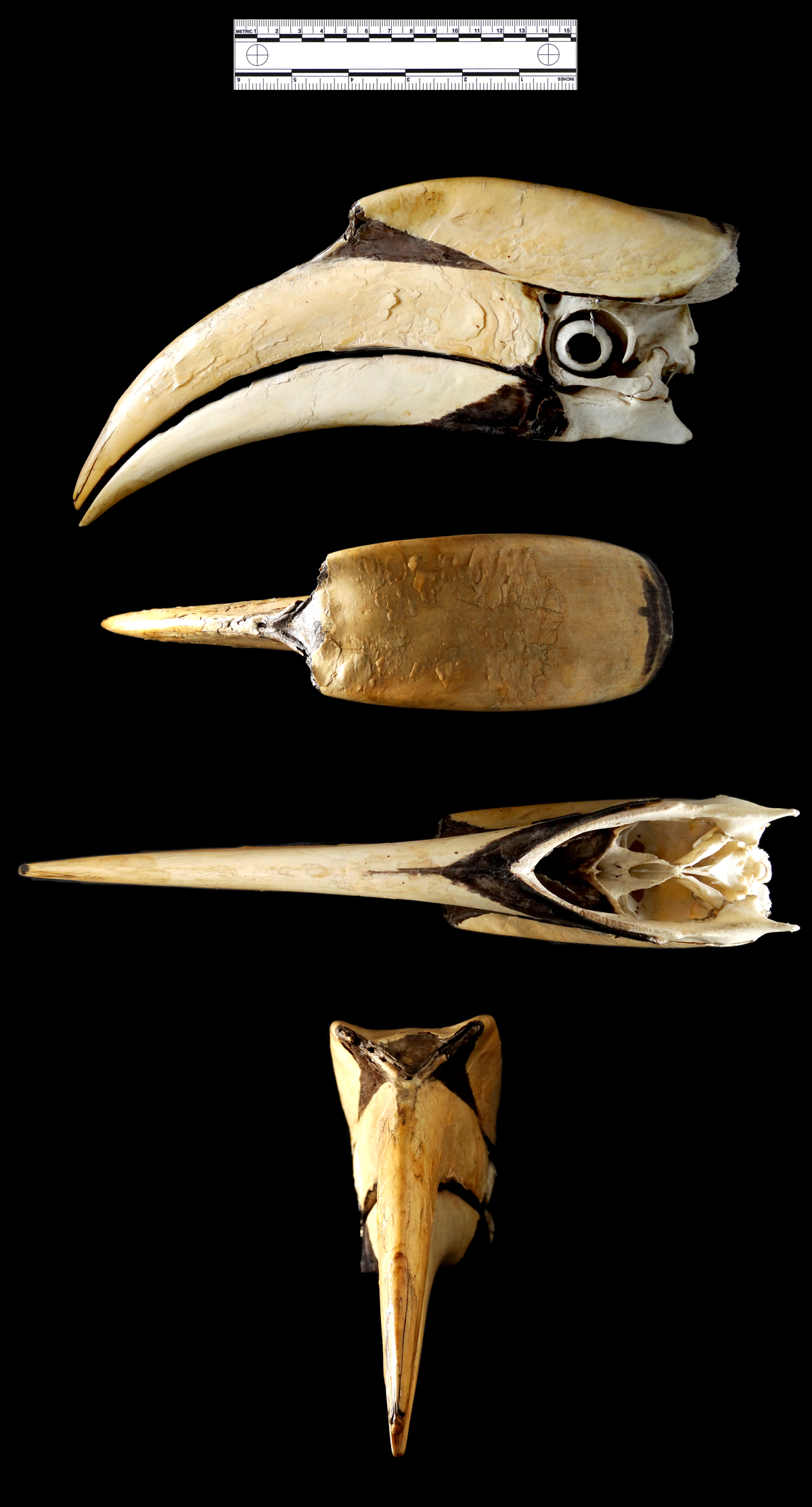
After the last mystery object, which was really difficult, I have an easier one for you to identify:

mystery240

Apologies for the rather odd-looking set of images – the specimen proved quite hard to get level for photography.

As usual for easy objects, please try to be a bit discrete with your answer so everyone gets a chance to test their identification skills. I look forward to some interesting answers!

Friday mystery object #237 answer

Last Friday I gave you this sound and skull combination to have a go at identifying:

mystery237

As many of you worked out, the skull and call belong to quite different species that share a love of the seaside.

The call belongs to the somewhat enigmatic Common Eider Somateria mollissima (Linnaeus, 1758) as identified by mark b, Chris, Melanie, Henry McGhie, Anne Åslaug Holder and stuart petch.

A male Somateria mollissima (Common Eider) at the London Wetland Centre, Barnes, UK. By Diliff, 2013

A male Somateria mollissima (Common Eider) at the London Wetland Centre, Barnes, UK. By Diliff, 2013

These large marine ducks are at home on the water, where they feed on molluscs and crustaceans. They are probably best known for their super-soft downy breast feathers, that the females use to line their nests and humans use to fill their pillows.

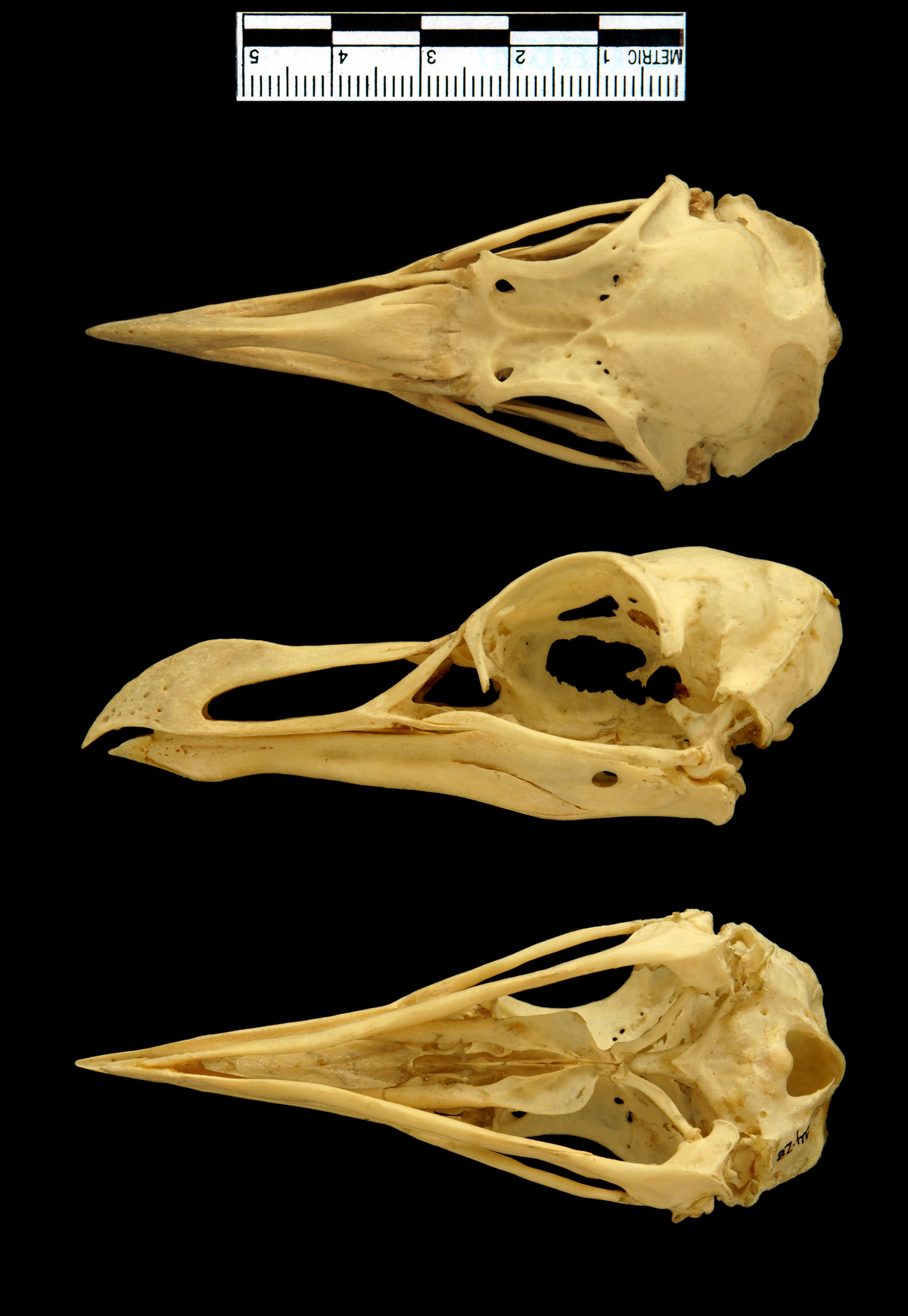
The skull belongs to a Razorbill Alca torda Linnaeus, 1758, as identified by Ric Morris, mark b, Chris, Melanie, Henry McGhie, Anne Åslaug Holder and stuart petch.

Razorbill at bird cliff in Westfjords, Iceland. By Gsd97jks, 2005

Razorbill at bird cliff in Westfjords, Iceland. By Gsd97jks, 2005

These birds are great divers, using their wings to ‘fly’ underwater. They feed on small fish and other slippery critters, caught using that characteristic bill.

Congratulations to everyone who managed to work out what the two species were – there’ll be a final mystery sound from the British Library Wildlife Sound Archive to identify next week, courtesy of curator Cheryl Tipp!

Friday mystery object #237

This week I have another mystery sound from Cheryl Tipp at the British Library Wildlife Sound Archive and skull from the Horniman Museum & Gardens:

mystery237

Do you think the sound and the skull are from the same species, and can you recognise which species?

You can send your answers on a postcard, or if you prefer just pop them in the comments section below… Have fun!

Friday mystery object #236 answer

Last week I gave you this mystery sound and skull to identify, with a the additional challenge of asking whether they belong to the same species:

mystery236

As it turns out several of you managed to get the bird in question. The wide variation and complexity of the song suggested a passerine bird, with a high degree of control of its syrinx. In fact, this species is named for its ability to produce loud and intricate calls containing a range of phrases (incidentally including mimicry of noises it has heard) – it’s a Song Thrush Turdus philomelos Brehm, 1831.

Song Thrush singing a song in a tree. By Taco Meeuwsen 2006

Song Thrush singing a song in a tree. By Taco Meeuwsen 2006

So well done to mark b, Mieke Roth and Melissa Harrison, who all managed to get the right bird. A big thanks also goes to Cheryl Tipp, curator of the Wildlife Sound Archive at the British Library, for supplying the song. I’d heartily recommend checking out the ‘language of birds‘ pages for more information on birdsong!


Friday mystery object #236

This week I have a double mystery for you.  There is a sound recording from the British Library SOund Archive, courtesy of curator Cheryl Tipp and there is also a skull for you to identify:

mystery236

Do you think that the sound and the skull belong to the same species, or do you think I’m trying to trick you?

You can put your thoughts, questions and suggestions in the comments section below. Have fun!

Friday mystery object #234 answer

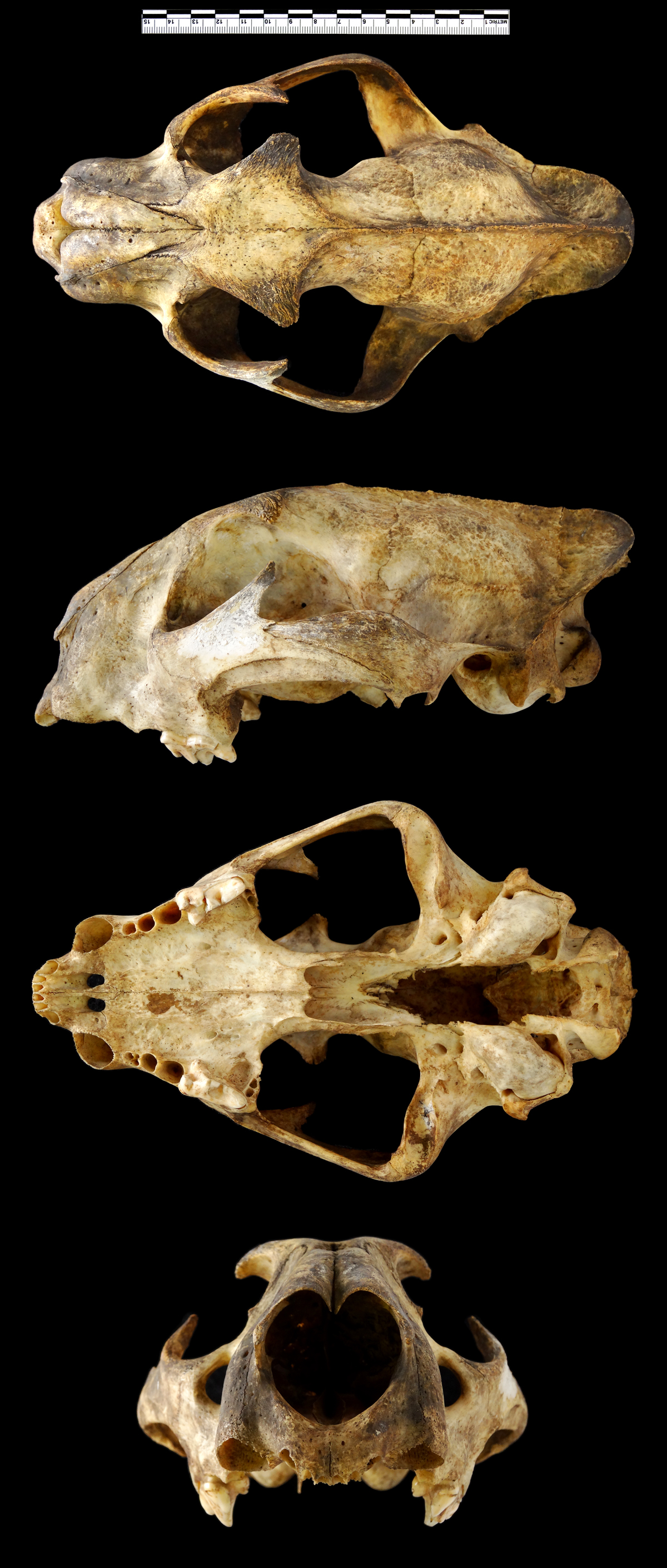
Last Friday I gave you this mystery skull to identify, which I discovered in a box of unidentified bits and bobs:

mystery234

It was pretty obvious that it was the skull of a big cat of some kind, with most of you suggesting a Jaguar or Cheetah (either of which would make me very happy as we have the skull of neither in the Horniman collection). Unfortunately it appears to belong to neither.

As I’ve mentioned  before, cats are quite difficult to differentiate from each other as they haven’t been diverging for all that long and their widespread distributions can mean that populations within a particular species can be quite variable in morphology. Leopards are a good example of this, with a (once continuous) range from Korea to South Africa.

Global distribution of the leopard (Panthera pardus) by Tommyknocker

Global distribution of the leopard (Panthera pardus) by Tommyknocker

As it turns out, this specimen is most likely from a Leopard Panthera pardus (Linnaeus, 1758), since it’s from an adult animal (as is clear from the well formed sagittal crest) but is on the small side for a Lion or Tiger and too big for a Cougar or Cheetah. It also lacks the broad post orbital region seen in the Cheetah and Snow Leopard, and it lacks the concave profile of both the Snow Leopard and Jaguar. All of these identification pointers can be found in this handy pdf by Margaret “Cookie” Sims.

Just to show you what I mean about the variability within a species, here’s a second skull from the same box, that also matches the Leopard identification.

Leopards

I expect the big difference in size is largely down to sexual dimorphism, but as you can see the overall proportions are quite different as well. This may be a difference between widely separated populations, or it could just be individual variation – either way it goes to show that cats are hard to identify.

Friday mystery object #234

This week I have a mystery skull from the collections of the Horniman Museum & Gardens for you to have a go at identifying:

mystery234

The family it belongs to may be easy to work out, but as we’ve experienced in the past, the species can be more difficult to establish.

Cryptic answers would be much appreciated, to give the less experienced a chance to work it out. Have fun!

Friday mystery object #233 answer

Last Friday I gave you a variety of mandibles to have a go at identifying. They lacked a scale bar and represented a range of different species that have similarities in mandible shape.

There were some great cryptic suggestions of identities, but it must be said that Jake came through with a really clear and pretty much spot-on list of suggestions. So here are the answers in a handy form that might be useful for reference:

mystery233b

The Sheep and Cow have a distinctive upward inflexion at the end of the mandible, with the Cow’s being so strong that the incisors start above the level of the top of the molar tooth row – unlike the Sheep’s.

This inflexion is much less marked in the Red Deer, which has a narrower body of the mandible, presumably relating to the less intensive chewing of a browser compared to grazers (grass is tough stuff). The Deer also has a notch along the bottom of the jaw, which Jake pointed out as a useful feature.

The Pig mandible tapers less overall, but is thicker at the end with the articulation – presumably because the omnivorous Pig is chewing differently, using the temporal muscles more than the masseter muscles and therefore needing a different area of the jaw for muscle attachment. The teeth are also pretty distinctive. Like the Pig, the Donkey mandible lacks the long and hooked coronoid process, but is also very triangular in shape with quite squared teeth – features typical of an equid.

So hopefully that gives you some pointers for telling some common herbivore mandibles apart when you don’t have a scale bar – a more common problem for some of us than you might think…

Friday mystery object #232 answer

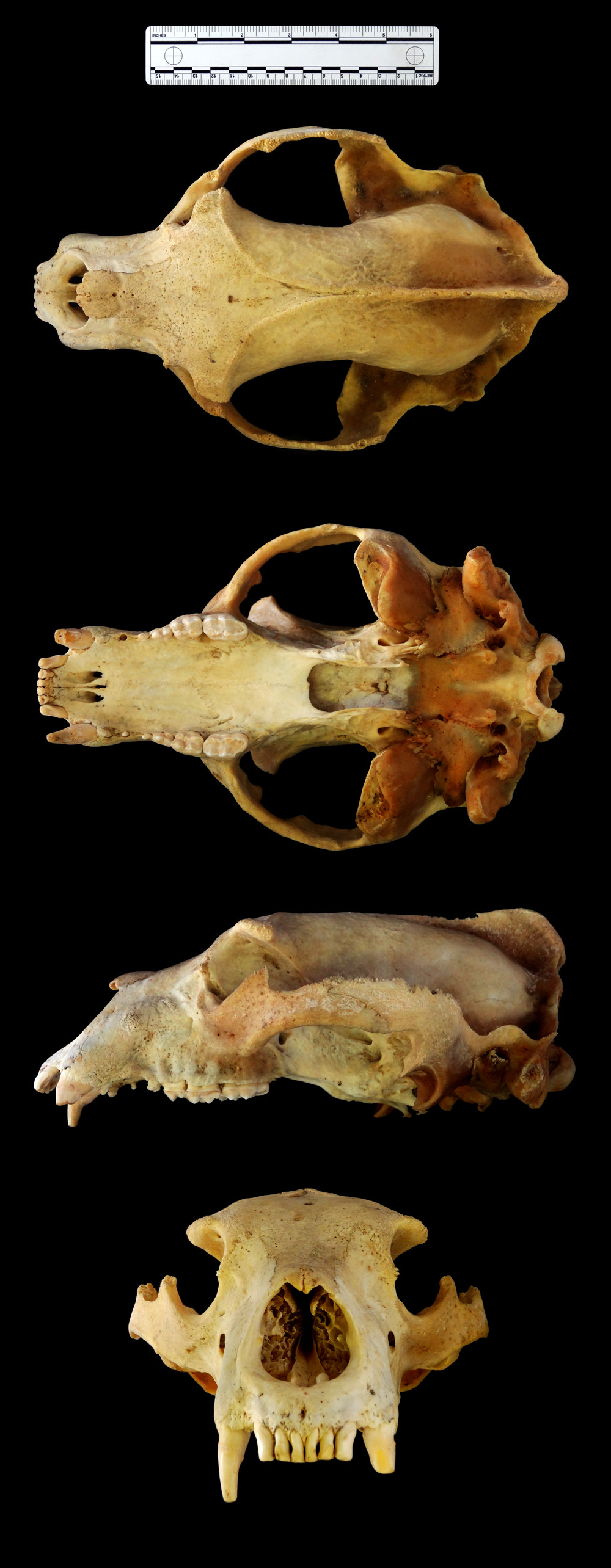
Last Friday I gave you this nice robust skull to identify:

mystery232

There was a healthy discussion about possible identifications, with the importance of scale mentioned more than once (by Jake, palaeosam, Lena and Robin Birrrdegg). Not only is this a robust skull, it’s also quite large, ruling out the British carnivores – and it clearly is a carnivore judging by the canines and the well-defined sagittal crest.

The lack of cutting and puncturing premolars and molars means that cats, dogs, hyaenas and other very carnivorous large carnivores can be ruled out, narrowing down the likely options in the right size range to the bears, as recognised by palaeosam, Ric Morris, Robin Birrrdegg, Will Viscardi, cromercrox, cackhandedkate, Lena, Daniel Calleri, henstridgesj and Carlos.

The species is a bit more difficult to work out, but the big sagittal crest and fused sutures suggests that this is not an juvenile bear, meaning it’s too small for a bear of the Brown  or Polar variety. That still leaves quite a range of other possible bears, but the pronounced forehead and long square muzzle rules out the Giant Panda, Sun Bear, Spectacled Bear and Asiatic Black Bear, while the big robust incisors rule out the Sloth Bear. That leaves the American Black Bear Ursus americanus Pallas, 1780.

Ursus americanus by Mike Bender/U.S. Fish and Wildlife Service, 2008

Ursus americanus by Mike Bender/U.S. Fish and Wildlife Service, 2008

So well done to cromercrox, Carlos and Robin Birdeggg who all got the species correct!

Friday mystery object #231 answer

Last Friday I gave you this distinctive skull to identify:

mystery231

I knew it would be a bit of an easy one, given the highly unusual teeth, but it seemed too interesting a specimen to not use.

As cryptically suggested by many of you (Jamie Revell, Nigel Monaghan, henstridgesj, rachel, cromercrox, Robin Birrrdegg, Allen Hazen and Crispin), this is indeed the skull of a Crabeater Seal Lobodon carcinophaga (Hombron & Jacquinot, 1842).

Jerzy Strzelecki, 2000

These seals are specialised for catching krill, hence the strange shape and tightly fitting nature of their teeth, which act as a filter to strain the tiny crustaceans from ocean water.

Because these seals live in the waters all around the Antarctic, monitoring their population is particularly difficult, so estimates of their numbers vary considerably, from 2 million to 12 million (which is the more likely figure).

As with most abundant animals they have predators, in particular Leopard Seals. Apparently 78% of adult Crabeaters bear scars of Leopard Seal attacks, which can be seen clearly on the live individual in the image above. Most of the attacks happen before the Crabeaters reach a year old and get a bit too big to be easy prey, but in that first year there is apparently a huge mortality rate, with only 20% of seals making it to their first birthday. Good old Mother Nature is never one for sentiment.

Friday mystery object #231

This week I have a very distinctive skull for you to identify:

mystery231

Because I expect some of you to work out what it is straight away, can you make your answer cryptic please, to give other people an opportunity to work it out.

I look forward seeing some cunning and clever hints at what this is!


Friday mystery object #230 answer

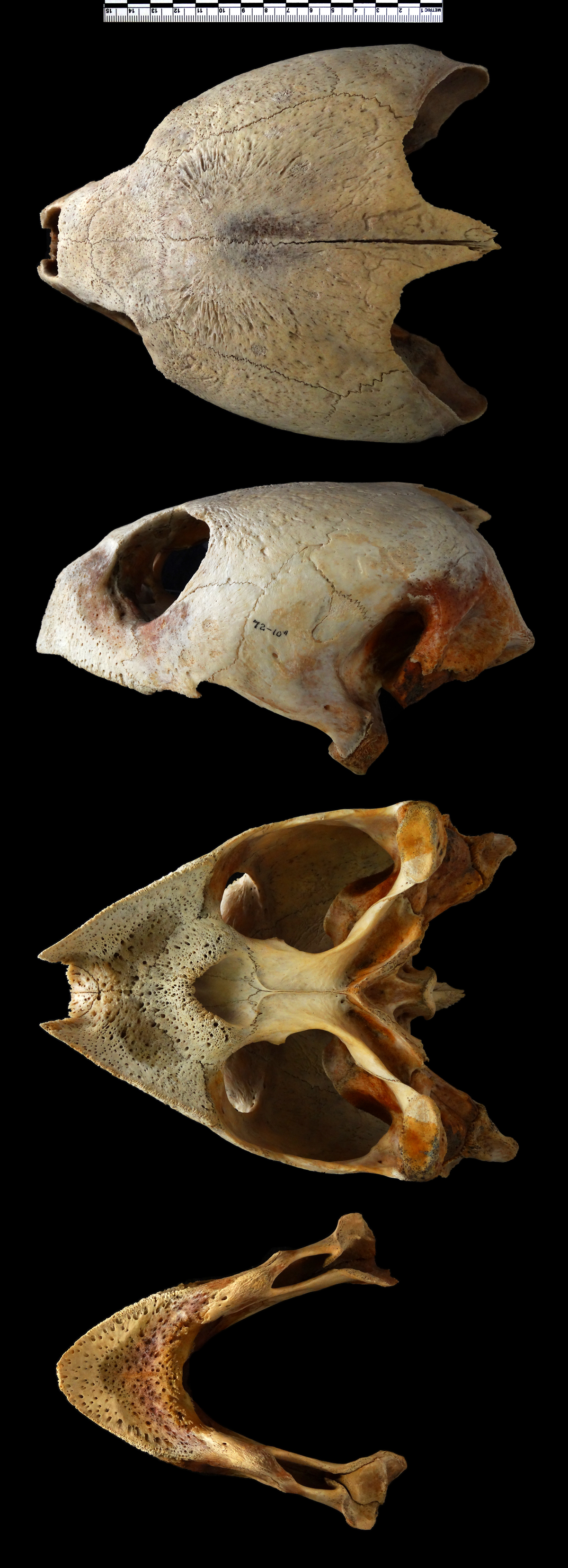
Last Friday I gave you this skull to identify:

mystery230

It was obvious to everyone who had a go at answering that it was the skull of a marine turtle of some sort, but that’s where it got a bit more tricky. There are only seven species of marine turtle, but their skulls all look quite similar to the untrained eye – mine included.

However, when I found this specimen I decided to improve my skills and I searched for a decent identification guide for turtle skulls, which I was fortunate to find hosted by Florida Atlantic University.

Checking through the characters I discovered that the palate of turtles can be very helpful in identifications, so here’s a colour coded and labelled diagram prepared from the image above that should help illustrate a key diagnostic feature:

Loggerhead_palate

As some of you may have noticed, the maxilla (tinted red) on either side of the palate meet in the middle, which is a characteristic only seen the Loggerhead Caretta caretta Rafinesque, 1814. The other turtles have the maxilla separated by the vomer (tinted green). Well done to  mark b, cromercrox and donald who managed to get the right turtle species!

Loggerhead Turtle. Photo by ukanda, 2006

Loggerhead Turtle. Photo by ukanda, 2006

These large marine turtles will eat pretty much anything they can find, from jellyfish to crabs and sponges. Unfortunately that includes things like plastic, which causes all sort of problems for their digestive system. Just one problem that they face, on top of getting tangled up in fishing tackle and poor survival of their young due to predation from pretty much everything (from foxes to crabs and gulls to sharks). Sadly, it’s not much fun being a turtle.

Friday mystery object #227 answer

On Friday I asked you to spot the differences between these two cat skulls and I wondered whether anyone could identify them:

mystery227

Both henstridgesj and Allen Hazen made some good observations, the first being about the difference in size, then about morphological features that I’ve marked on this image:

comparing_cats

Now henstridgesj also correctly identified one of the skulls – the one on the right of the image is from a Domestic Cat Felis catus Linnaeus, 1758.

As it turns out, this was a bit of a trick mystery object, since BOTH of the skulls belong to Domestic Cats, so this gives us a useful idea of the kind of variation we might expect within a species.

I think that the main cause of variation between these two animals is probably sex, with the male on the left and the female on the right. There may also be differences based on age (although I don’t think that’s a major factor), breed and perhaps disease (the larger specimen looks like it had an infection that affected the surface of the bone).

After taking various measurements, the most useful difference I’ve found between the two skulls is shown with the yellow line. I think that the ratio of these two measurements may provide a way to tell the difference between a male and female cat (in the male it’s around 1 or less than 1, in the female it’s greater than 1) but I’ll need to make a LOT more measurements to test this.

Two other ideas that could be tested were suggested by henstridgesj and Allen Hazen. Allen said: “My impression is that the presence and development of sagital crests, among felidae, correlates pretty strictly with size” and henstridges said: “It seems that if the species of cats are arranged in increasing size order, then the anterior half of the skull (forward of the frontal-parietal suture) seems to increase in size more than the posterior half”.

I’d better take a look to see if this has been tested before…

Friday mystery object #227

This week I thought I should mop up the last of the smaller cats as a spot-the-difference:

mystery227

What do you think are the diagnostic features that separate these two skulls (bonus points for species identifications)?

I’m really keen to get your thoughts on this, so please put your observations in the comments section below. Thanks!

Friday mystery object #225 answer

Last Friday I gave you this felid skull to identify:

mystery225

As with the other cats over the last few weeks, it’s been difficult to find really clear diagnostic features.

The size helps narrow down the possibilities and the lack of divided auditory bullae rules out some of the species of Lynx, as does the presence of the small first premolar.

However, beyond that there isn’t much to really differentiate this cat from other species, apart from general features of relative proportion (height vs width vs length) and perhaps the angle of the rear part of the sagittal crest (which will probably vary between individuals).

Nonetheless, henstridgesj managed to correctly identify this as an Ocelot Leopardus pardalis (Linnaeus, 1758), one of the largest of the small cats in South America.

Ocelot, 2003 from US Fish & Wildlife Service, Image Archive

My challenge is going to be find a way to pull together the variety of cat skulls we’ve had for the last few weeks, to help make cat skulls a little easier to identify in the future – if that’s even possible. No pressure…

Friday mystery object #224 answer

Last Friday I gave you this felid skull to have a go at identifying:

mystery224

The size was larger than the previous cat skulls I’ve shown you, which helped reduce the possibilities a bit – after all, there are more smaller cats than bigger ones.

As it turns out, Sam Misan and henstridgesj both managed to work out that this is the skull of a Serval Leptailurus serval (Schreber, 1776).

A Serval cat at Serengeti National Park, Tanzania, by Bob, 2007

A Serval cat at Serengeti National Park, Tanzania, by Bob, 2007

These long-legged cats have a relatively small head, but huge ears – and the large external auditory meatus (ear hole) with a very pronounced ridge above for attachment of the muscles of the pinna (the fleshy part of the ear) helps reflect that.

The long legs and the big ears are key to the Serval’s hunting technique in the long grasses of the African savannah, where they listen for the movement of rodents which they dramatically leap on. Probably easier to appreciate this method by seeing it: