Friday mystery object #178 answer

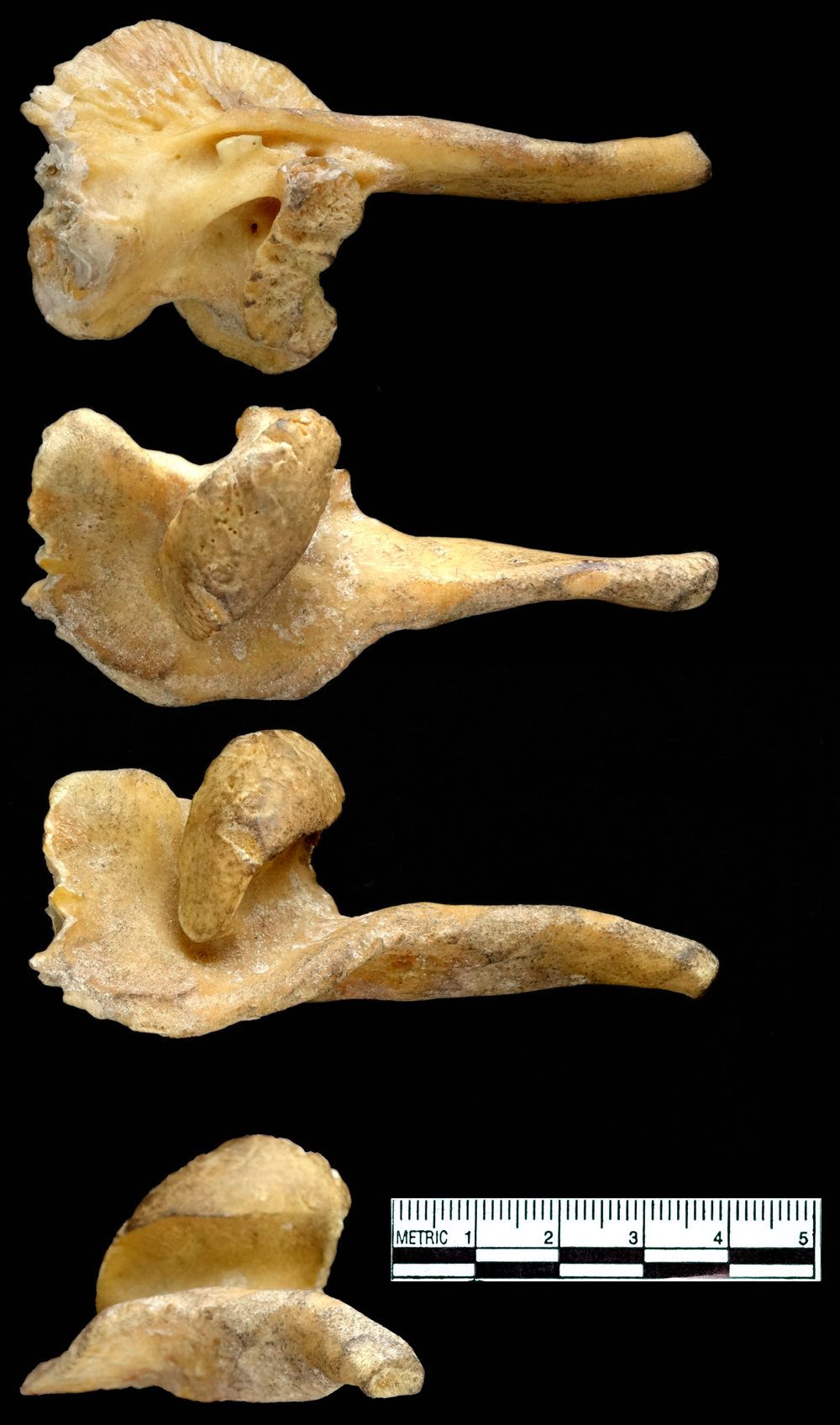
On Friday I gave you this piece of a skeleton to identify, to help me track down the specimen it came from:

mystery178

It looks like a wing, but it’s quite oddly shaped. The humerus is strongly curved and the humeral head is small with a very limited area for muscle attachment. This suggests that it wasn’t much use for flying – it also wouldn’t have been much use for swimming underwater or any other kind of locomotion for that matter. This narrows down the possibilities quite a bit.

With these clues RH, henstridgesj and Lena all came to the same conclusion as I did – this wing is from a  Continue reading

Friday mystery object #175 answer

On Friday I gave you this anthropological mystery object to identify:

I asked you what the teeth might have belonged to and where in the world might this necklace be from.

It’s always a bit tricky to identify worked material as it will often be different from what you’d see or expect in the wild state and you lose the context of the rest of the specimen. Nonetheless, these teeth are quite distinctive to a particular group of animals.

Barbara Powell, 23thorns and Robin got the right general area with suggestions of Islands in the South Pacific, in particular New Guinea. 23thorns also nailed the animal group with his suggestion of  Continue reading

Friday mystery object #174 answer

On Friday I gave you a bit of a tricky mystery object to identify:

I thought it might prove a tricky one and judging by many of the responses I wasn’t wrong. However, I was impressed by the speed with which the archaeologists managed to work it out – in particular Lena, Pocki and Robin.

This piece of bone is the  Continue reading

Friday mystery object #152 answer

Apologies for the late posting  today – I’m on holiday and haven’t had a chance to post until now.

On Friday I gave you this object to identify:

It was immediately recognised as a primate by everyone, which is unsurprising, given the very characteristic enclosed bony orbits and set of four incisors in the premaxilla and mandible. The teeth were also commented upon by henstridgesj, who recognised that this is an Old World Monkey (Cercopithecidae), with two premolars on each side in both the maxilla and mandible.

Some people might argue with the classification of this specimen as a member of the Cercopithecidae, since the lack of a tail suggests that it’s an Ape of some sort, but the Hominoidea form a smaller clade within the wider Cercopithecidae clade, which means that this is both an Ape and an Old World Monkey.

The kind of Ape is a more tricky question, although the shape of the teeth and the size of the braincase in relation to the facial region rules out any adult Great Apes (Hominidae) – it could be a juvenile, but the degree of fusion of the bones says not. That leaves the ‘Lesser Apes’ (Hylobatidae) or Continue reading

Friday mystery object #118 answer

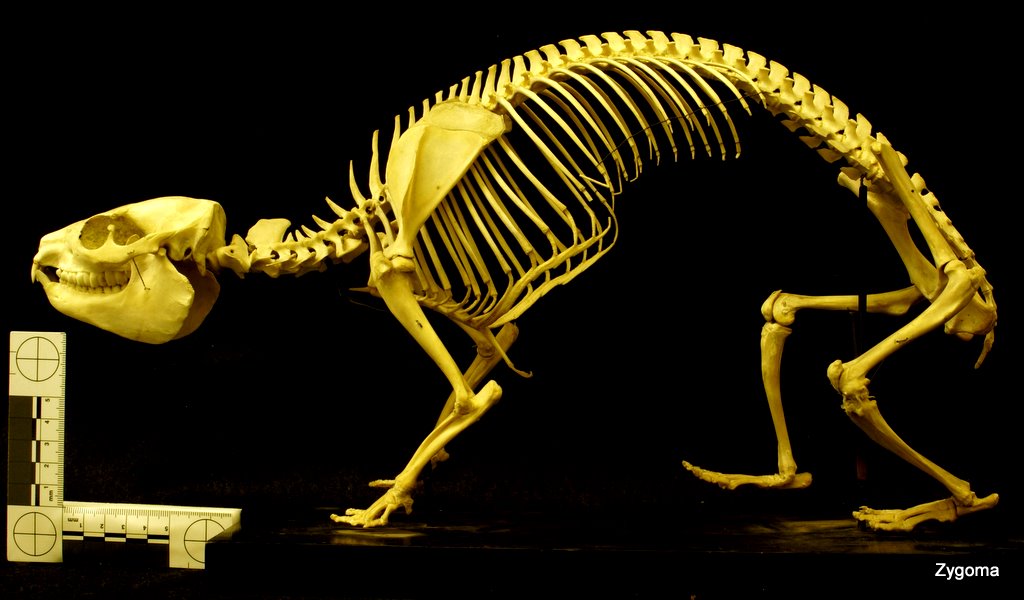
On Friday I gave you this complete skeleton to identify:

As I expected, you managed to identify it in no time, with excellent use of hints and clues to get the answer across without spoiling the fun.

John the Hutch was the first to get it right (and was in fact the first to respond) with Carlos, henstridgesj, JakeHenry Gee and Julie Doyle also recognising that this was the skeleton of a  Continue reading

Friday mystery object #118

This Friday I have a pretty straightforward mystery object for you. I was going to make it difficult by giving you an image of the specimen without the skull attached, but I am at a NatSCA meeting in Leeds today, so I probably won’t get much chance to provide clues during the day (although I will do my best).

So what is this the skeleton of?

As usual you can put your answers below (using clever clues if possible) – I will try my best to respond. Good luck!

Friday mystery object #105

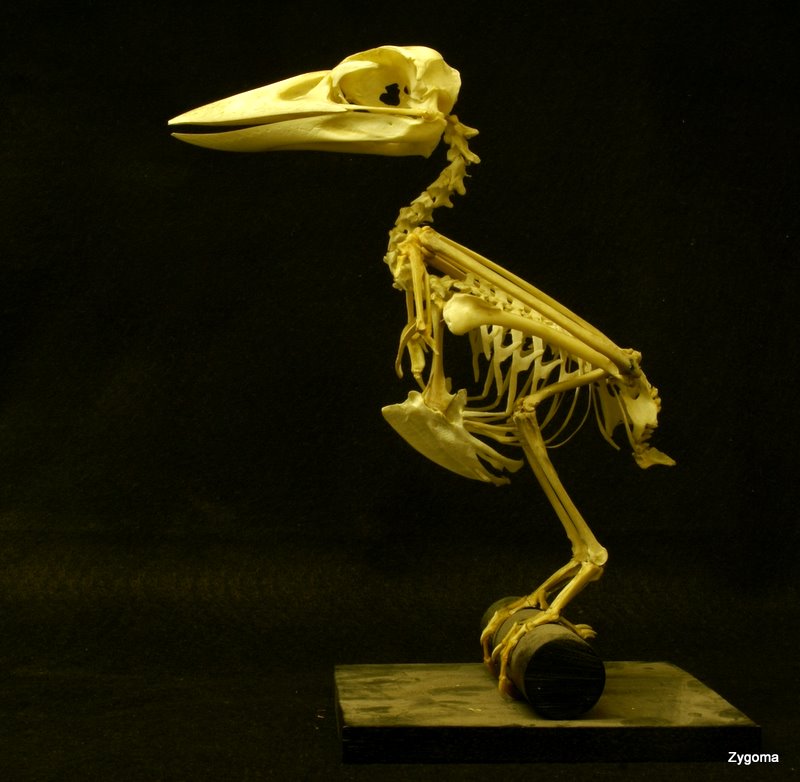
Well, it’s the second anniversary of the Friday Mystery Object – how time flies! Speaking of flying, I’ve decided to give you a bird skeleton to identify this week. Any idea what this is:

Comments below as usual – I’m sure that some of you will work it out straight-away, so please drop hints rather than give-away the answer to those less familiar with the anatomy of our feathered friends.

Best of luck!