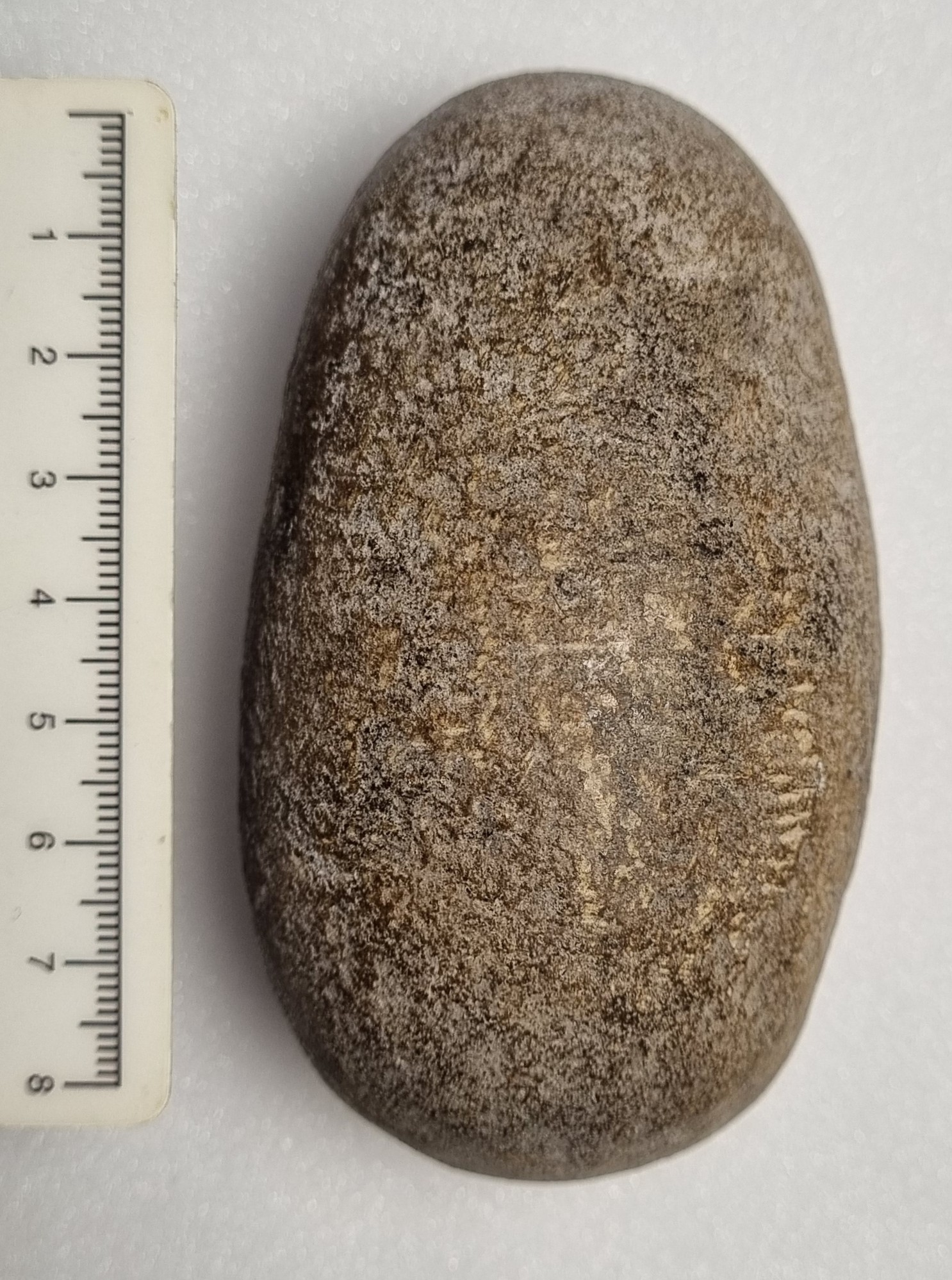
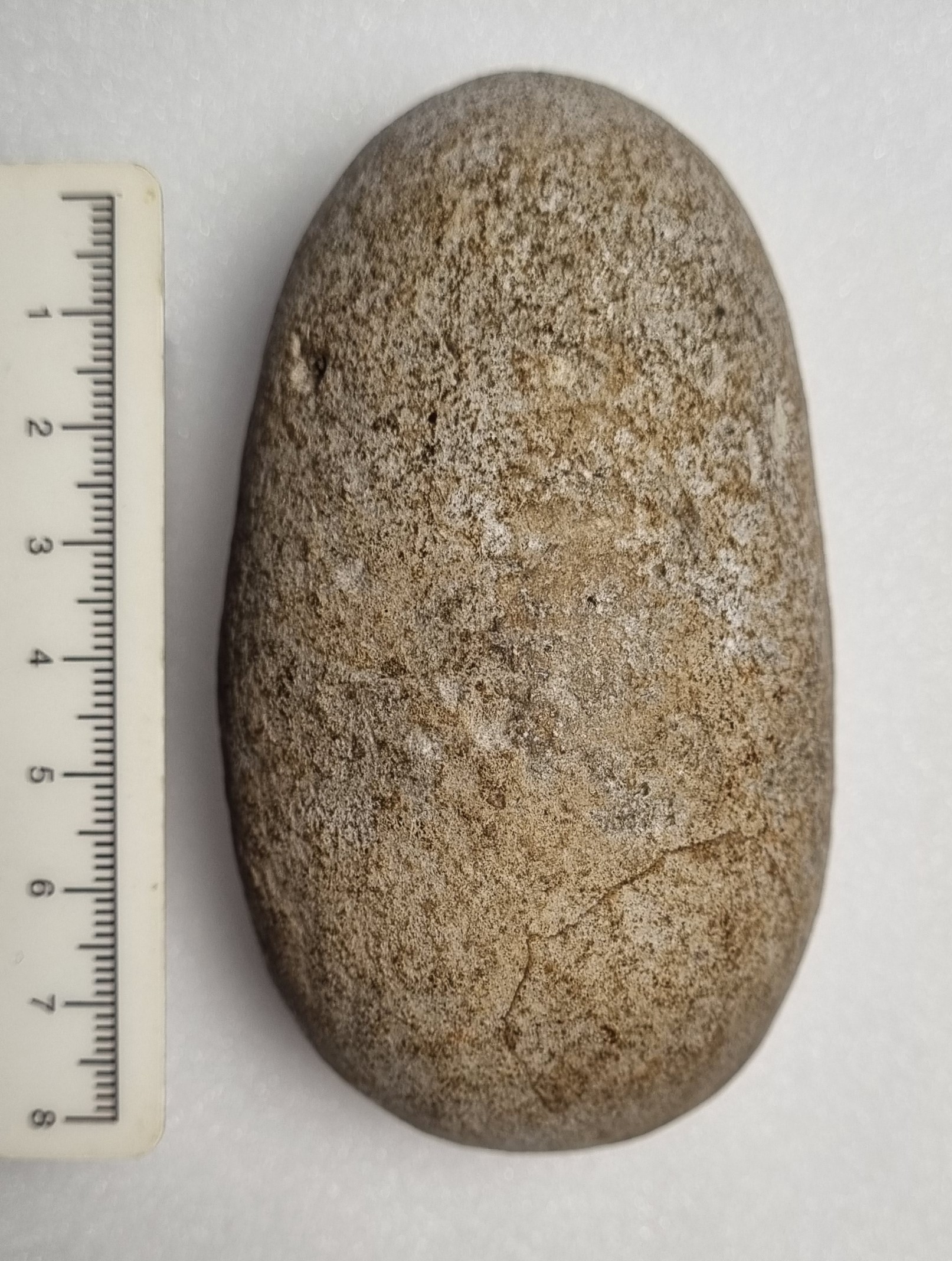
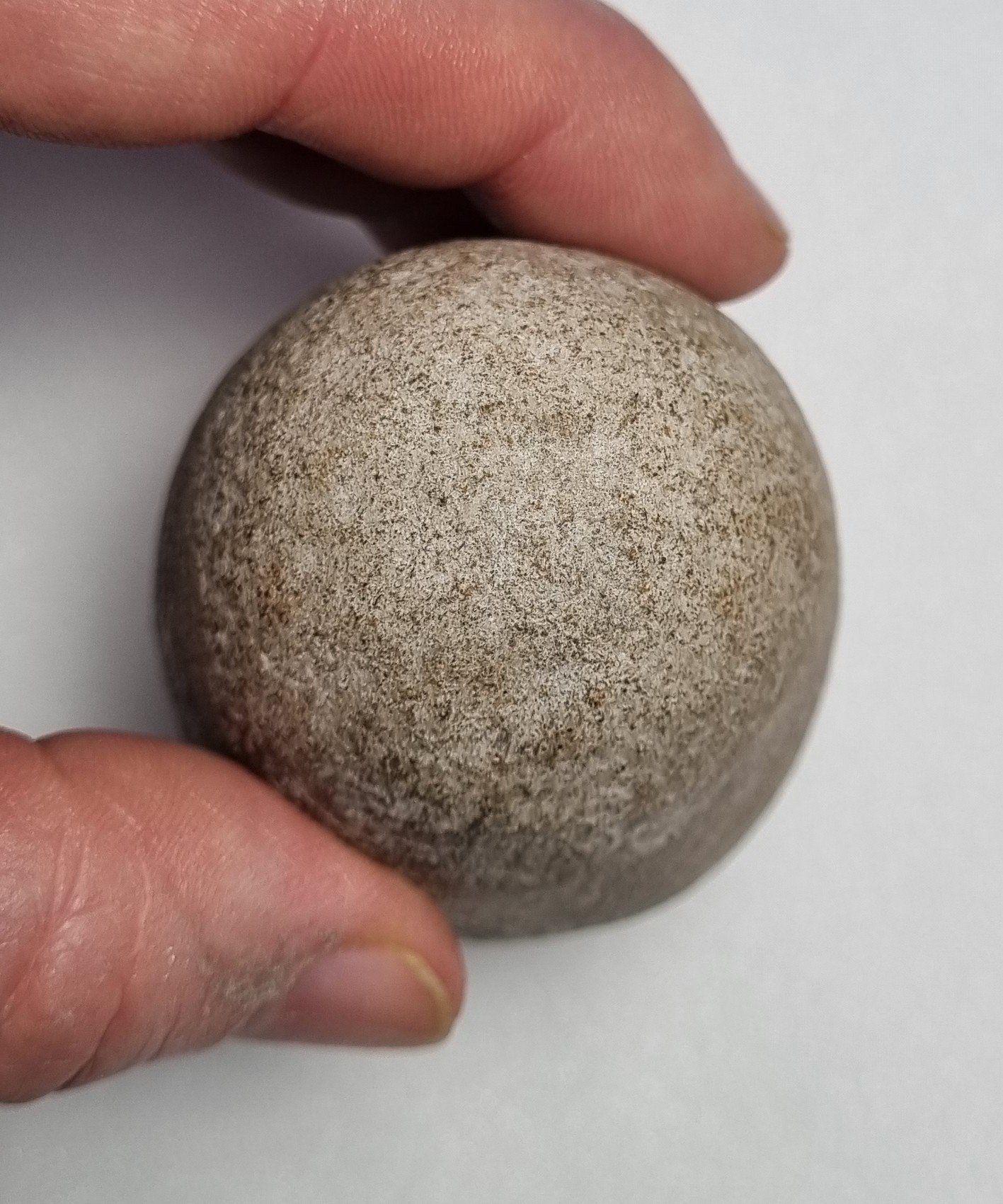
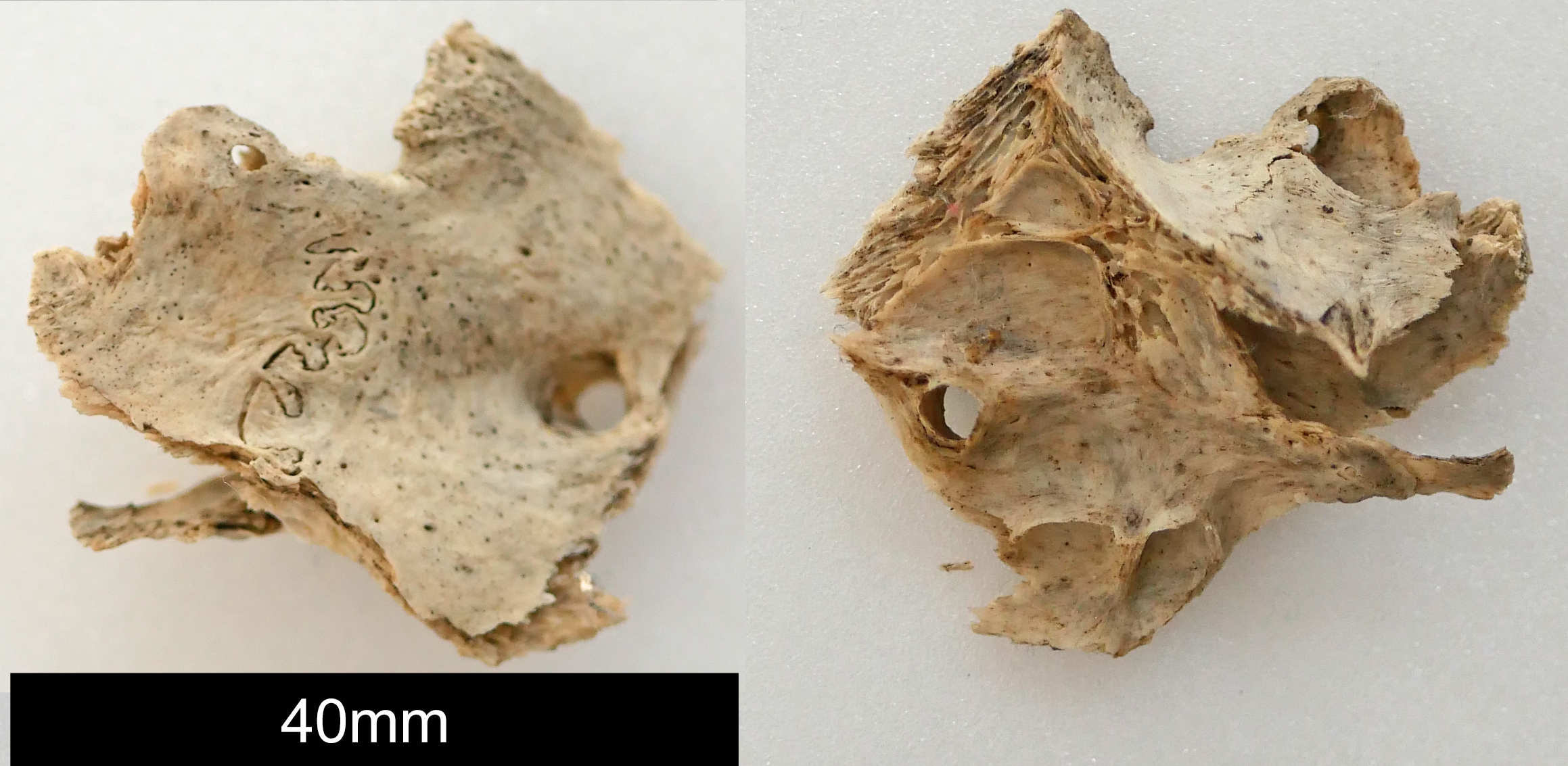
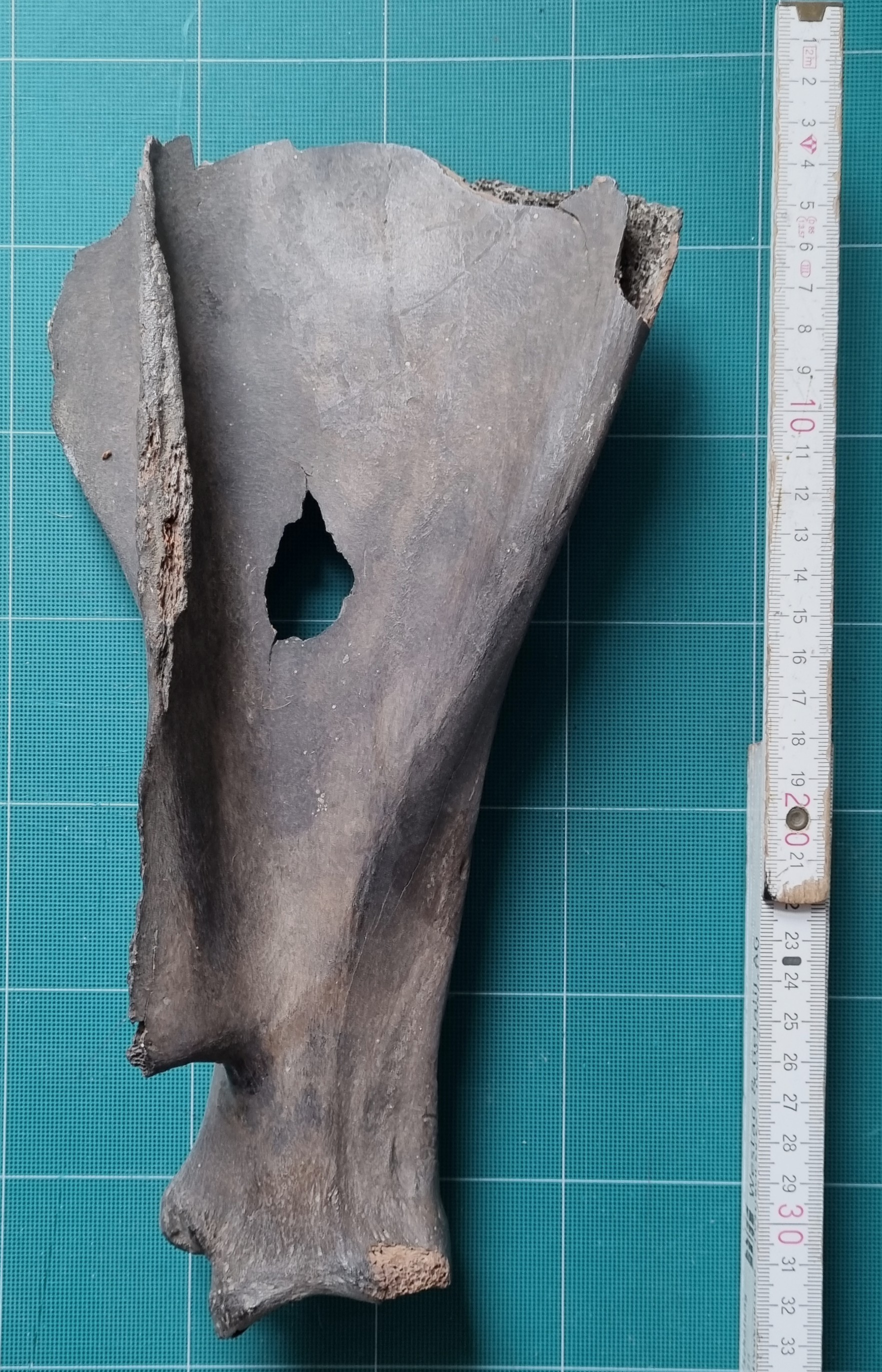
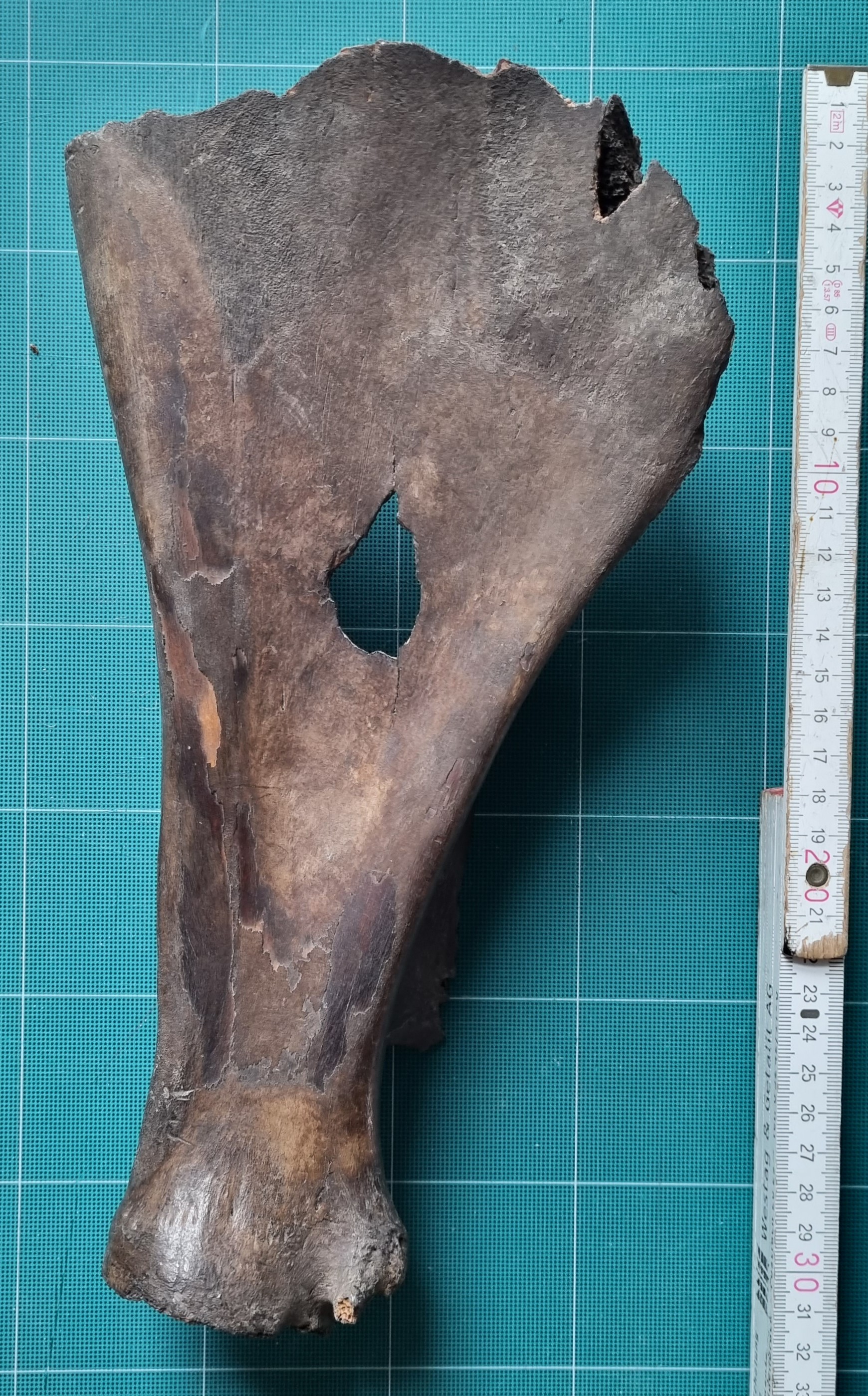
This week I have an object that was found in Ireland, in a field, near a river. I was asked to identify it, since the same location had yielded some interesting archaeological finds and this object’s surprisingly light weight made it clear it wasn’t just an ordinary pebble:
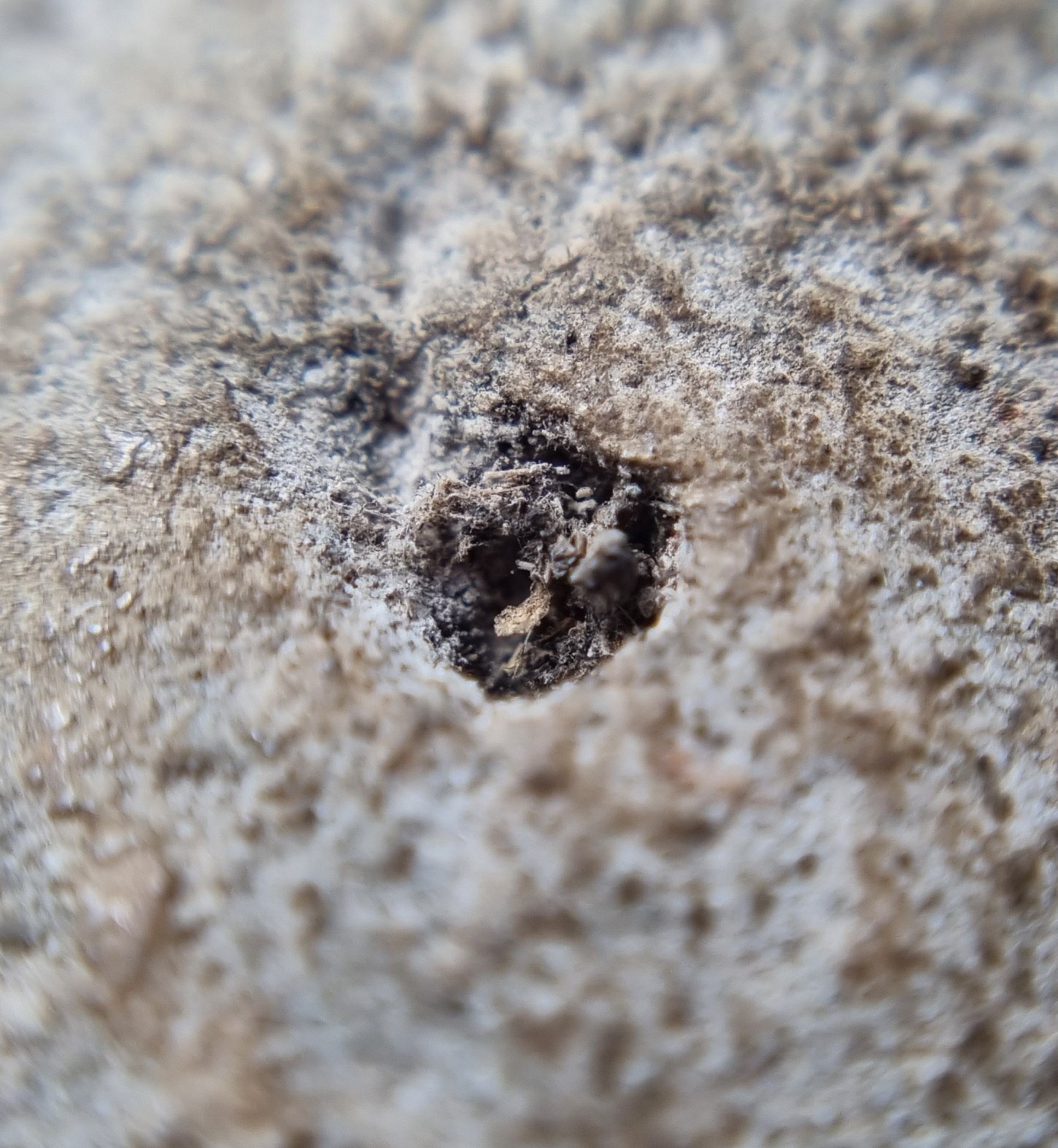
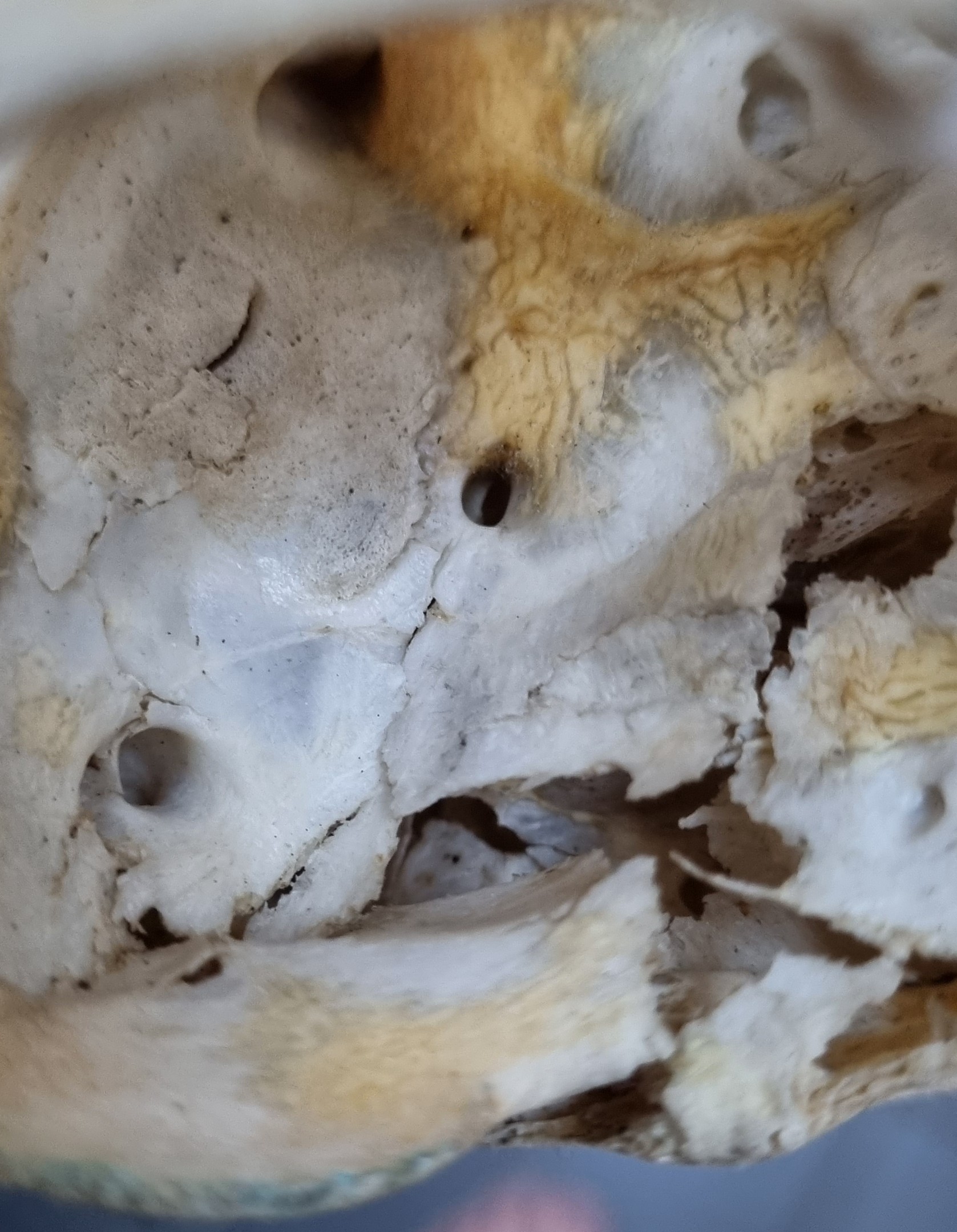
Detail of small hole in surface of the object
Any idea what this could be?
As ever you can leave your thoughts, questions and suggestions in the comments box below – I hope you have fun with this one!
Last week I gave you this piece of bone to have a go at identifying:
It was a particularly difficult challenge and I’m still not 100% sure of what it is, but I was very interested to hear your thoughts.
There was a general leaning towards one of the (many) bones of the skull – although since there’s a suture running through the middle of this, it must consist of at least two different bones that have fused.
This feels right to me, since there aren’t many other parts of the skeleton consisting of fused bony plates containing foramina. But as to which bones of the skull and which animal, that’s a much more difficult identification prospect.
Unfortunately this kind of identification usually depends on a combination of familiarity with a range of skulls and comparative collections to figure it out and, I’m sad to say, that I’ve had very little opportunity to immerse myself in cranial collections for several years now and I rarely get a chance to work on comparative material these days.
The best I could come up with is this being a section from the upper internal portion of the orbit of a Sheep Ovis aries Linnaeus, 1758 (or something quite similar).
I’m thinking this partly due to the V-shaped notch in the margin of the bone, which can be hard to spot in the initial photos, so here it is from the side:
I hope that wasn’t too disappointing as a challenge, and I apologise for not offering a definitive answer, but if I manage to track down some old specimen that is missing this exact section of bone, I’ll be sure to share it here!
In the meantime, please feel free to offer more suggestions and, if you have comparative material of your own, maybe see what you think? Thanks everyone!
This week I have some news to accompany the mystery object.
After two years of hard work we have reopened the Dead Zoo. As part of that process, we came across this small piece of bone, which was caught in the historic furniture for several decades before jolting loose during some of the moves that have happened recently in the Museum:
A top tier challenge for a seasoned bone geek by the looks of it. So do you have any thoughts on what it might be from?
Last week I gave you this little crab to have a go at identifying:
I wasn’t sure if it would be an impossible task based on just this image, but I thought I’d see how you fared. There weren’t many comments on the blog, but Twitter yielded some very astute observations, with Pete Liptrot getting the correct Family and Tim identifying it to species:
I picked this Floating Crab Planes minutus (Linnaeus, 1758) because I spotted it whilst working in the Irish Room of the Dead Zoo and I didn’t recognise it myself. The specimen was collected from Dingle Bay on the 2nd July 1974, where it was found with stalked barnacles on drifting float.
These crabs are pelagic hitchhikers, relying on floating substrates (e.g. seaweed, turtles, ocean rubbish) to rest on between short forays to catch food, such as krill and very small fish. They are present in the North Atlantic, occasionally turning up along the west coast of Ireland and southwestern Britain.
So well done to Tim for that impressive identification. I’m afraid that I haven’t had a chance to figure out the diagnostic characteristics for this small, but well formed crab to share, because I’ve been too busy trying to get the Dead Zoo ready to reopen. If you want to see some of what’s been going on as part of that, check out the #DeadZooDiary.
Last week I gave you this closeup of a mystery object from the Dead Zoo:
I thought it might be a bit too easy, so I asked for cryptic clues – and I was neither wrong, nor disappointed.
There were a variety of comments both here on the blog and on Twitter, and it was fairly clear that some key ideas emerged. Termites and ants were mentioned a lot (in relation to diet), but it was one of the seven deadly sins that was most often referenced. Clearly this sin is Sloth, but the animal is also clearly not a Sloth, since it has five claws and not just two or three. Plus, Sloths eat leaves rather than invertebrates.
However, there is of course a termite hunting critter with five toes and “Sloth” in its name – the Sloth Bear Melursus ursinus (Shaw, 1791).
Like their cousin the Giant Panda, the Sloth Bear has veered off the quite generalist diet of most bear species and focused on something locally abundant and easy to access – assuming you have the right equipment. In this case the equipment is a set of absolutely MASSIVE claws, long lips and tongue and no teeth in their upper jaw.
Sloth Bears are somewhat lanky looking compared to their similarly-sized Black Bear cousins and while they are less carnivorous, they can be quite formidable when faced with another predator thanks to a their large canine teeth and those impressive claws.
This particular specimen has been displaced from its usual location thanks to building works taking place in the Dead Zoo. Unfortunately, the wild living population is also being displaced due to habitat loss and degradation.
My thanks to everyone who commented on the mystery object – there were some great cryptic answers and while I’m a bit put out because so many of you figured it out, I’m happy that so many of you clearly know about these somewhat odd – but in my opinion, very interesting – members of the bear family.
This week I have a bony mystery object for you to have a go at identifying:
Any idea what animal this might be from?
As ever, you can leave your thoughts in the comments section below – if you think it’s easy then please keep your answer cryptic, so other people can enjoy the challenge.
It’s been a fantastic opportunity to catch up with natural history colleagues from around the world and to learn what everyone has been busy doing over the last few years. I also got to see some fantastic specimens held by NMS and I thought I’d set one of them as this week’s mystery object:
Do you have any idea what this might be?
As ever, you can leave your thoughts in the comments box below. Have fun!
Last week I tried something a bit different for the Friday mystery object. Instead of giving you a few different views of a skull or whole animal, I offered just a small detail:
I hope the challenge proved fun for everyone who tried to figure this out. There were quite a few correct answers, although I think it was quite a challenge.
In fact, it was a challenge issued to the 5th class of St. Laurence’s National School by the Sallins Biodiversity Group in their excellent #MapOfLife2022 project.
Here’s what Gavin Brangan has to say about it:
For many children, the Dead Zoo is their first experience of being struck by the wonder of nature up close and in person.
In #MapOfLife2022 wanted to bring as many facets of that experience to the school and local community. On Wednesday, 5th Class in St Laurence’s had a video tour and workshop given by the education department of National Museum of Ireland – Go Extinct!
Joanne Murray, a local artist, based her art workshops with Senior Infants and 3rd class in the school on the specimen drawers containing insects. To cap it all, we’ve invited the children to find Paolo’s mystery object on the ground floor of the virtual tour of the museum.
If you’ve been following this blog for any length of time, you’ll know that one of the reasons I’ve kept it going for so long (this is its 13th year!) is the community that has developed here and the opportunities the blog offers to help people engage with objects from the natural world and the stories they can tell.
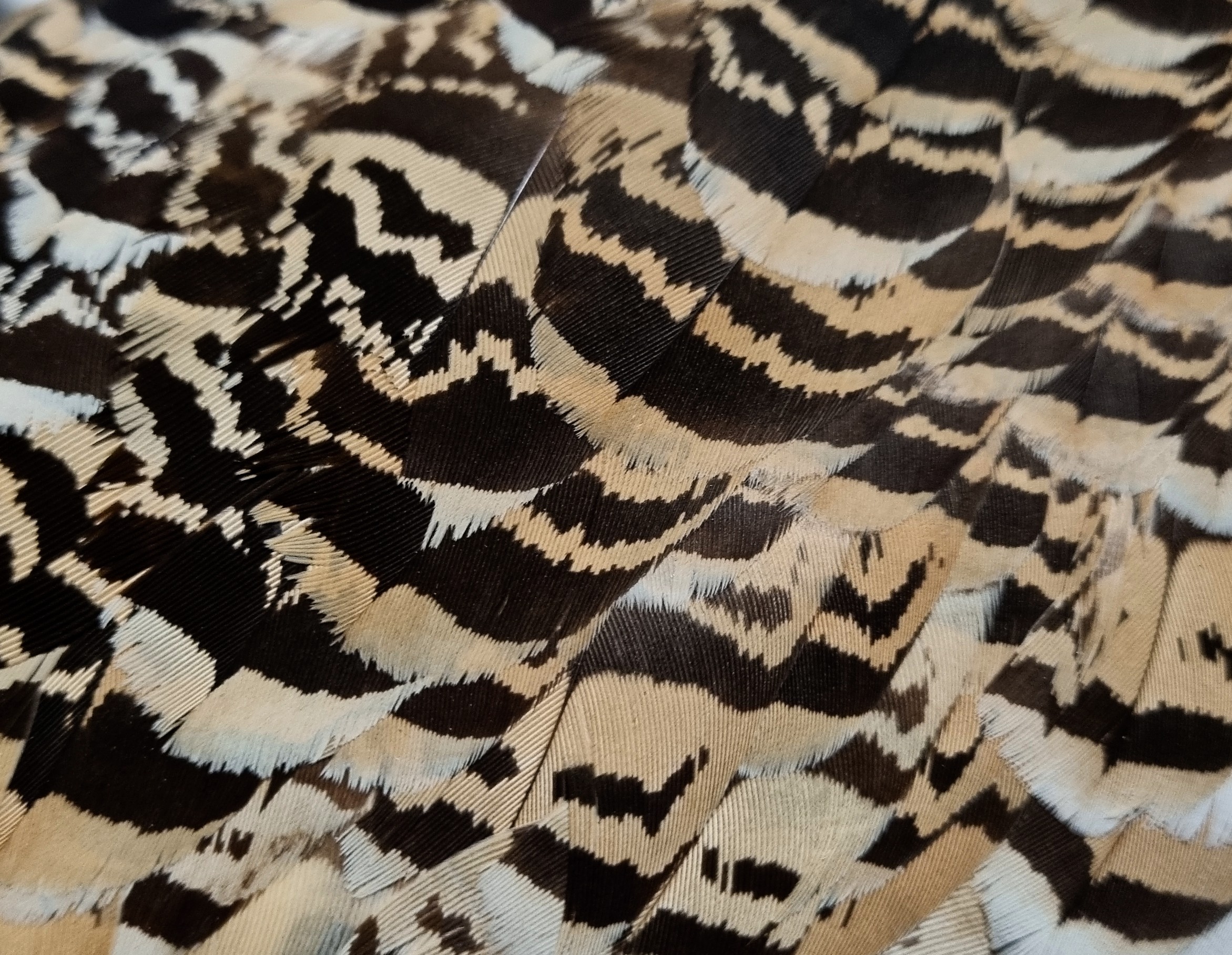
In this case, I thought sharing this beautiful feather pattern would help me tell the story of an extremely rare visitor to Ireland – the Great Bustard Otis tarda Linnaeus, 1758.
This particular bird is a female that somehow ended up in Castletown, Berehaven, Co. Cork in the winter of 1925. At this point in time the Great Bustard had been extinct in Britain for over 90 years and was not to be seen again until they were reintroduced to Salisbury Plain around 2007, so it couldn’t have come from Ireland’s closest neighbour.
It’s more likely to have come from France, Spain or Portugal, meaning it was off course by over 1,000km. I haven’t found any records of particularly big storms in the winter of 1925, but often it will be something like that which brings a migrating bird so far off track.
These birds like dry open grassland, with plenty of insects to feed on. Ireland is probably too wet for them to become established, although with a changing world climate that could possibly change in the future.
This is the interesting thing about nature – it changes constantly. What we think of as being normal is actually just what we’re used to seeing in the span of our lives. This is why it is so important to understand biodiversity over time – to see how it’s changing and to work out why it’s changing.
Museums like the Dead Zoo have specimens collected by people over the last 250 years and the activities of community groups doing projects like #MapOfLife2022 can help feed into that preserved knowledge and add a new level of understanding of the natural world today.
I think it’s especially important for young people to have an opportunity to get involved with this sort of thing, since they will be our future naturalists, life scientists and museum curators. This is why the efforts of people like Gavin, and teachers like Ms Hennessy and Ms Scott are incredibly important and deserve recognition.
This week I’m going for a slightly different approach to the mystery object. Normally I give you as much information as I have available to let you figure out what you’re looking at, but today I thought I’d give you a snippet from a specimen that I think you’ll find distinctive, but which might offer a bit of a challenge.
All of that being said, here’s this week’s mystery object:
Any idea which animal this pretty pattern might belong to?
As ever, you can leave your observations, questions and suggestions in the comments section below. Happy hunting!
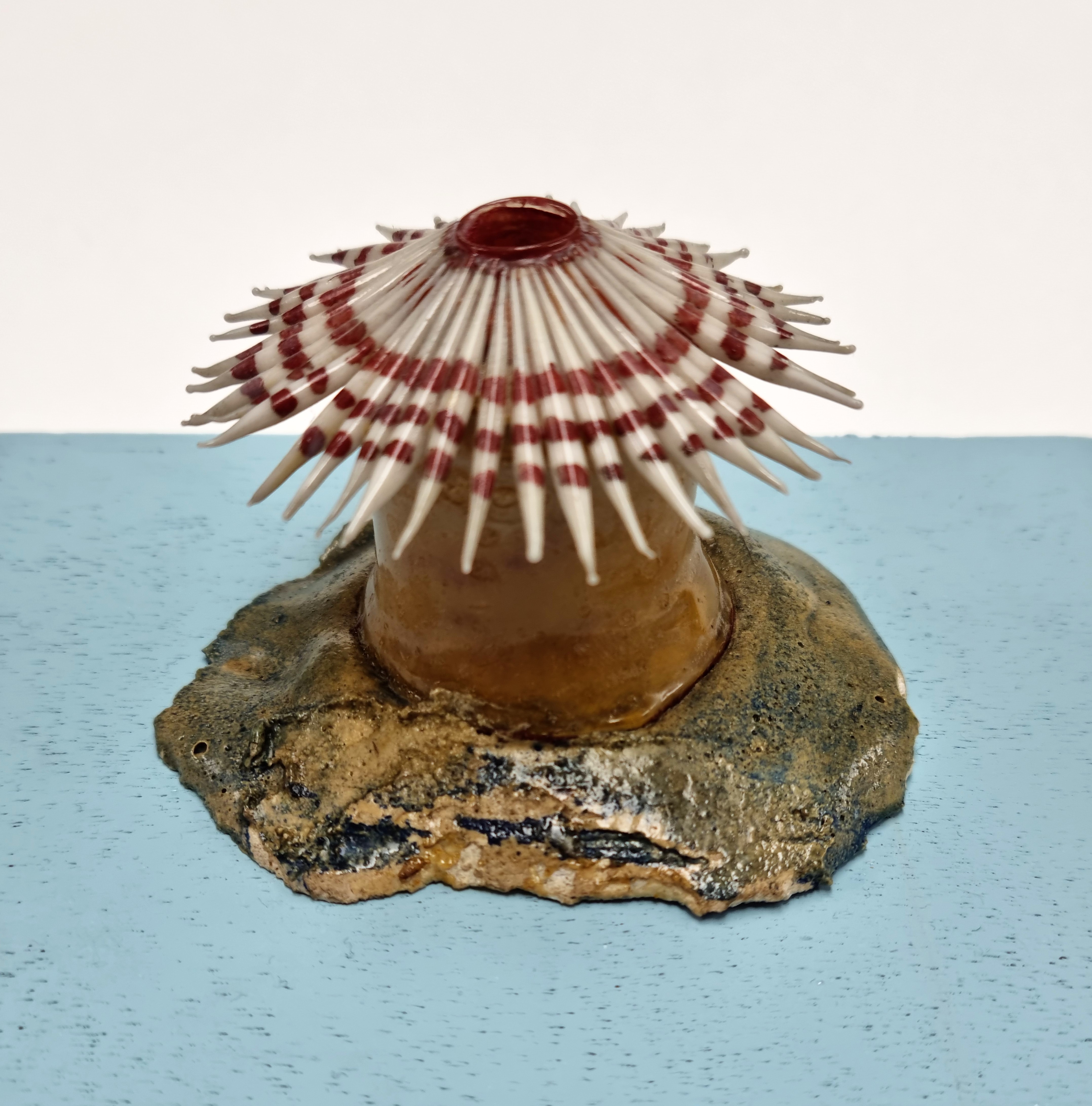
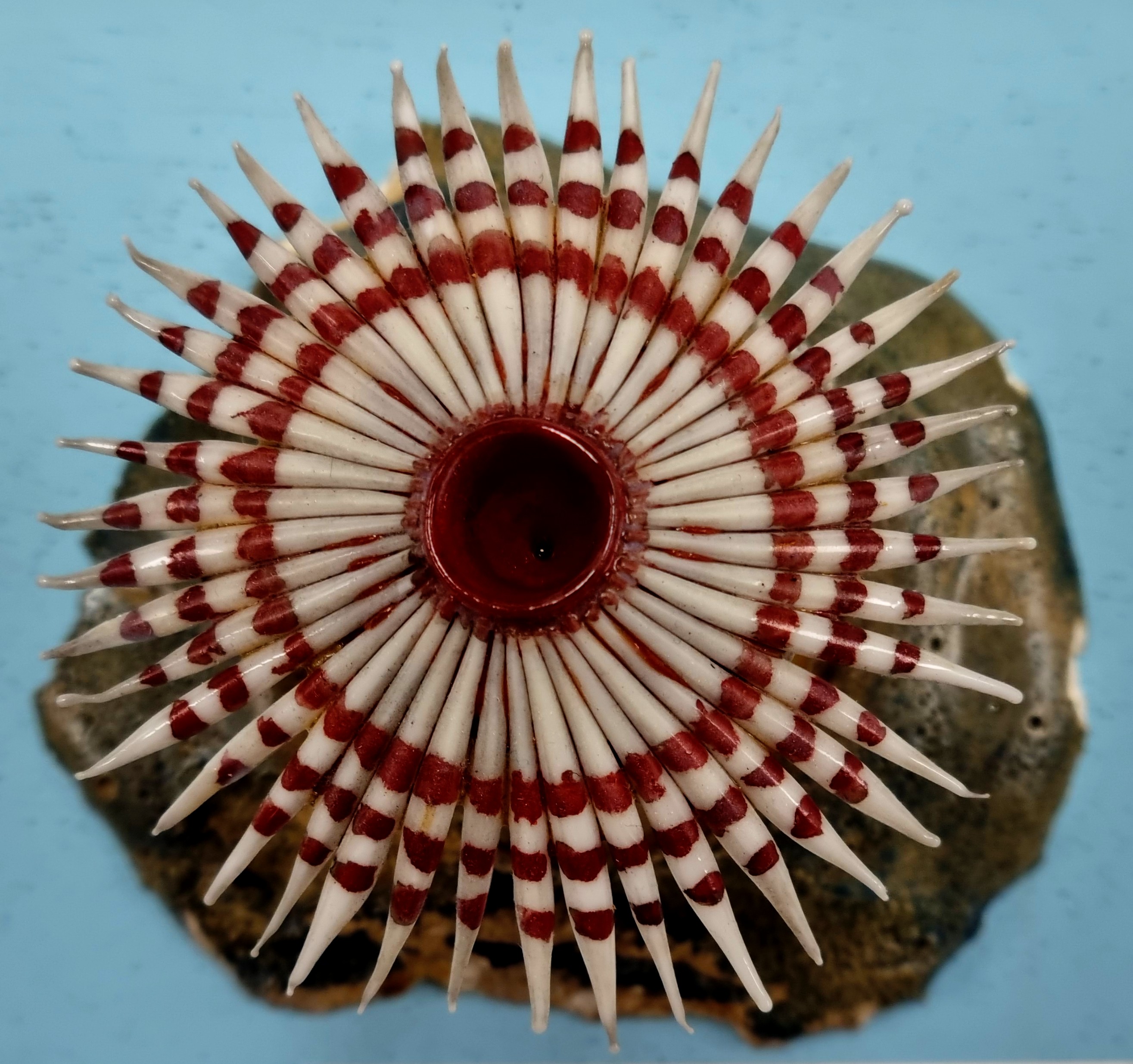
Last week I gave you a Blaschka glass model from the Dead Zoo to have a go at identifying:
As you are probably aware from some of my previous posts on these rather fascinating objects, there can be quite a big difference between what the specimen was sold as in the Blaschka catalogue and what we might call the species today. In fact, this is a fairly common theme with many of the mystery objects, given the relentless progress being made in taxonomy since many museum collections were established.
In the case of Blaschka models this can cause a lot of confusion, since in some collections the names have been updated to match modern taxonomy, whereas in others the original name is still used. Most confusing is where the taxonomy was updated historically (and badly) so it no longer bears much relation to either the original name or the current name. That’s why the ordering numbers used by Ward are so useful, as it allows specimens to be tracked back to the catalogue (as long as the original number has survived).
As identified on Twitter by Ann Lingard and in the comments by Cam, the mystery object is of course Gosse’s Stomphia Churchiae or more recently Stomphia coccinea (Müller, 1776).
This is one of those times when it’s a real shame that the species has been synonymised, since Gosse named the species Churchiae in honour of Miss Anne Church, who had sent him a written description and figures of the species after recovering a specimen from a turbot net in Loch Long, Scotland. Thanks to Ann Lingard for sharing a link to an interesting blogpost on “The anemonizers of Scotland” touching on this (see also p.233 of Actinologia britannica).
Finally, with the original name, the number from the Ward catalogue comes easily, which in this instance is Nr.108.
I hope you enjoyed this diversion into the world of the Blaschkas – no doubt there will be more to come in future as I’ll be talking about them at a glass conference in a month’s time.
It’s been a while since I shared one of the Dead Zoo’s Blaschka models, so I thought it might be time to bring out another:
The usual Blaschka rules apply – for those of you who aren’t familiar with what that means, you get full points* for the name and order catalogue number used by the Blaschkas (the catalogue can be found here) and bonus points for the current name for whatever this model depicts (if the taxonomy has changed). There may be extra points if you find some additional information about this model – I’m sure someone will be able to surprise me!
last week I gave you a slightly misleading mystery object to identify:
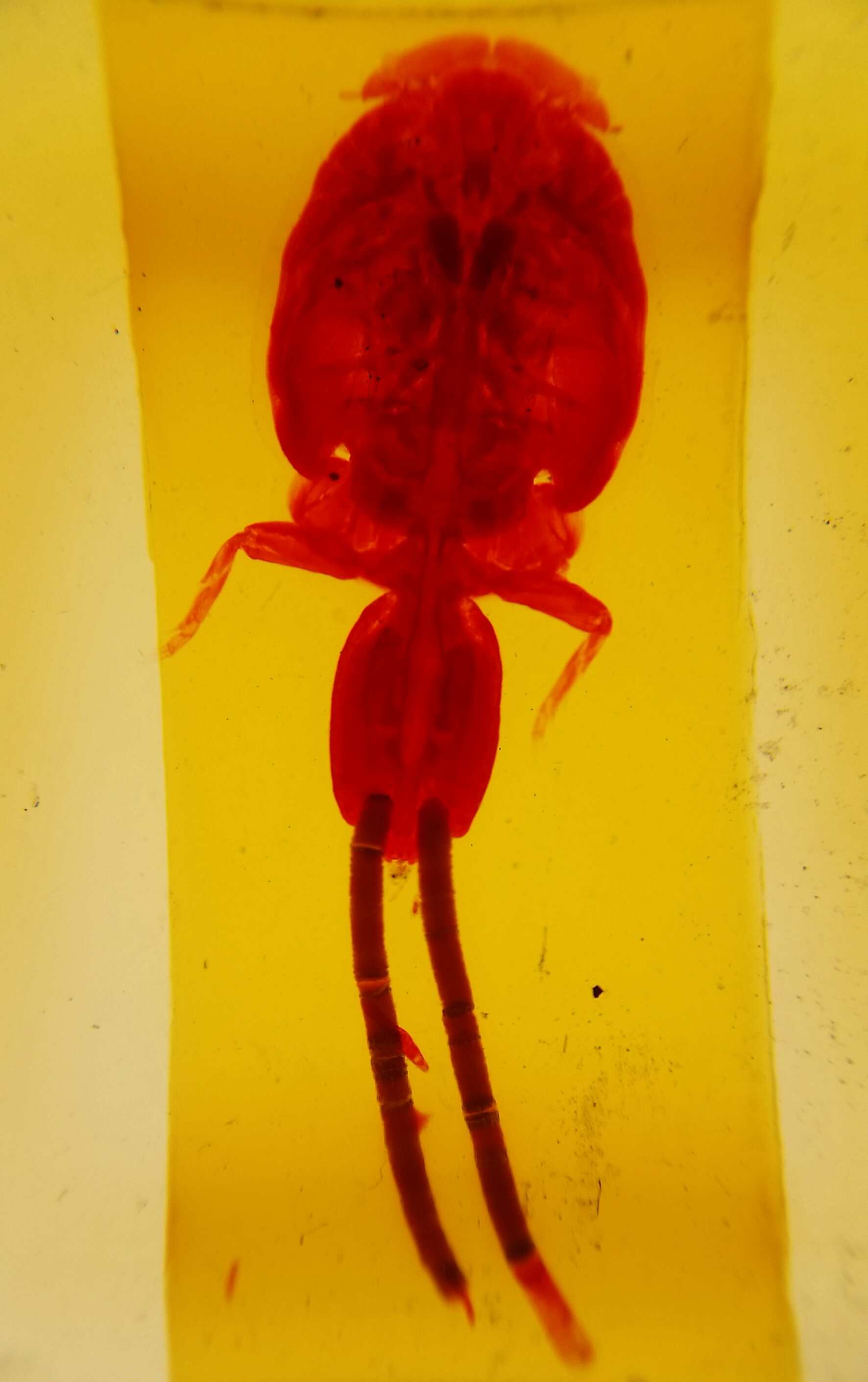
The European Sprat Sprattus sprattus (Linnaeus, 1758) was the obvious object in the image, but I was actually interested in the parasite attached to its eye:
Friday mystery object #287 Lepeophtheirus hippoglossi (Krøyer, 1837) from the Grant Museum of Zoology, UCL.
If you can remember that far back, you may remember that fish parasite was a member of the Copepoda, which is a group within the Crustacea. Most (although not all) copepods that parasitise fish are members of the Siphonostomatoidae and this week’s mystery object is part of that same Order.
For this particular specimen you don’t really need to get too bogged down in the taxonomy to work out what it is, especially if you recognise the host fish. A quick web search for “Sprat eye parasite” will take you straight to the correct species, although if you search for “fish eye parasite” you’ll eventually find it, after trawling through some fascinating information about the body-snatching eye fluke Diplostomum, which alters its host’s behaviour to make it less, and then more likely to be eaten by predators. And who wouldn’t want to take that informational detour?
So as most people figured out, this is charmingly named Sprat Eye-maggot Lernaeenicus sprattae (Sowerby, 1806).
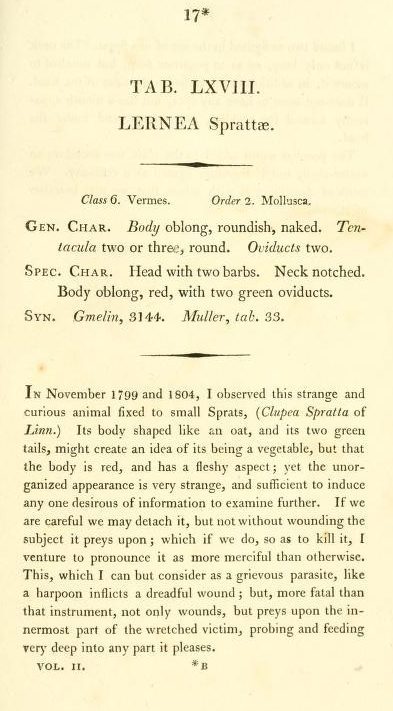
While we’re taking informational detours, I thought you might appreciate the initial species account for this delightful critter:
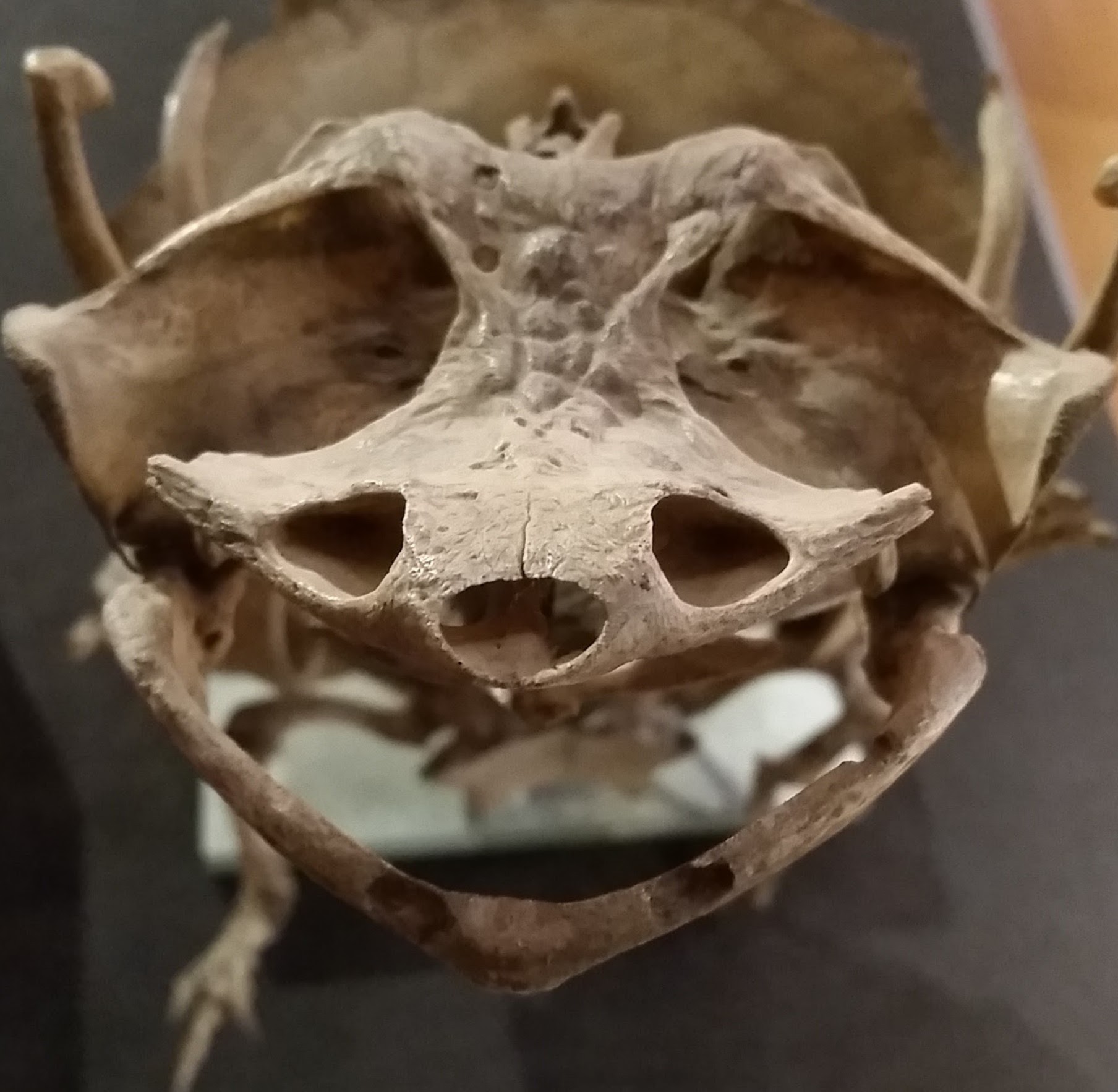
Last week I gave you a mystery object from the Grant Museum of Zoology, UCL, with this old photo from my time as the Curator there:
This is one of those species that I have a bit of a soft spot for, due to the general weirdness of the skull. That does however make it quite recognisable as a specimen, even in a photo that hasn’t been taken for the purposes of identification – like this one.
Everyone who commented recognised that this is some sort of turtle, and thanks to that very flat skull with all the features towards the very front end, most people worked out that it’s a from a Mata-mata Chelus sp. Duméril, 1806.
Any extra information is useful when trying to identify fish, since there are so many species, but sometimes a bit of familiarity is what you really need to start narrowing down options, which makes the Zygoma community a helpful resource when dealing with an identification like this. And you did not disappoint!
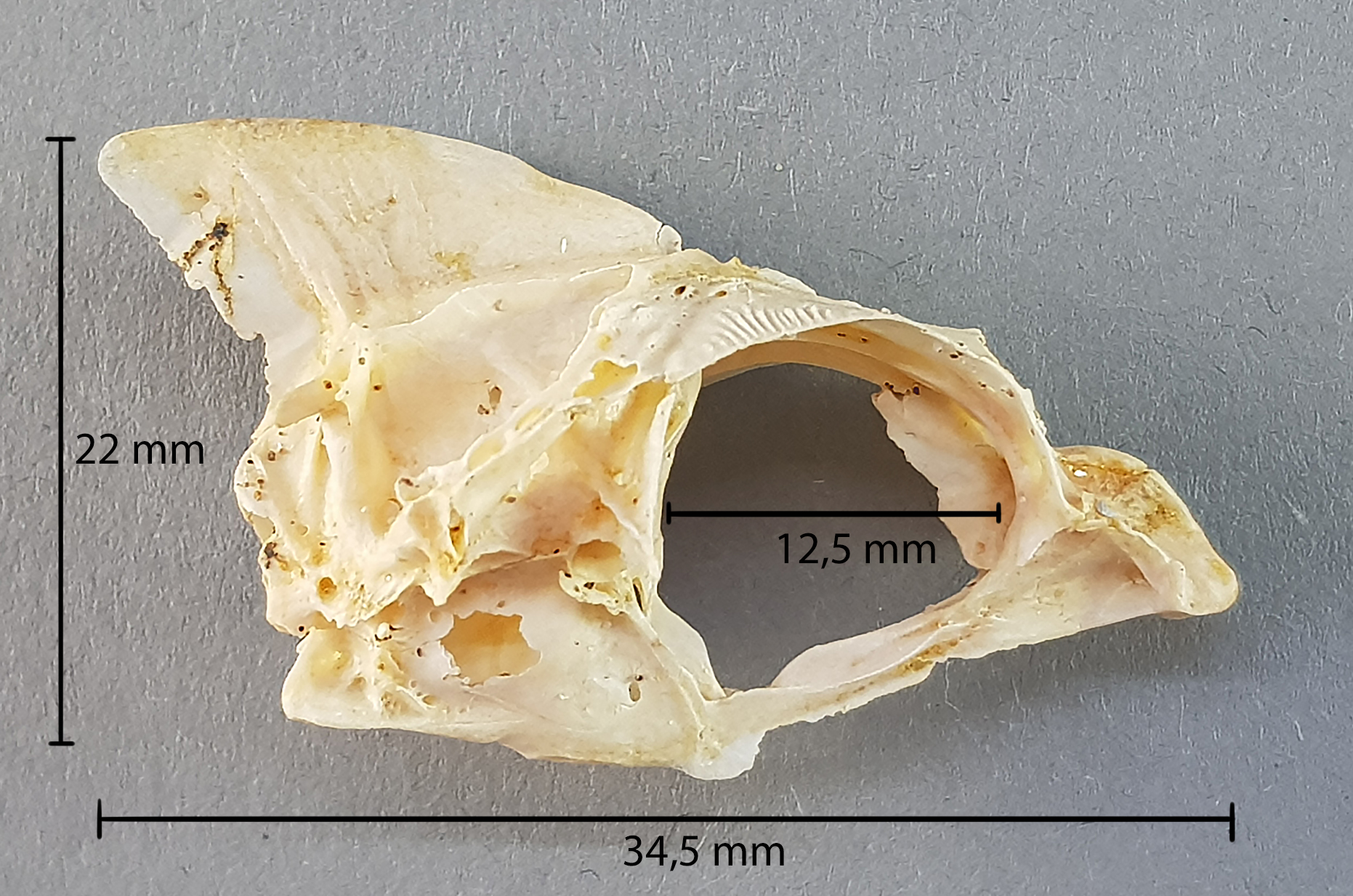
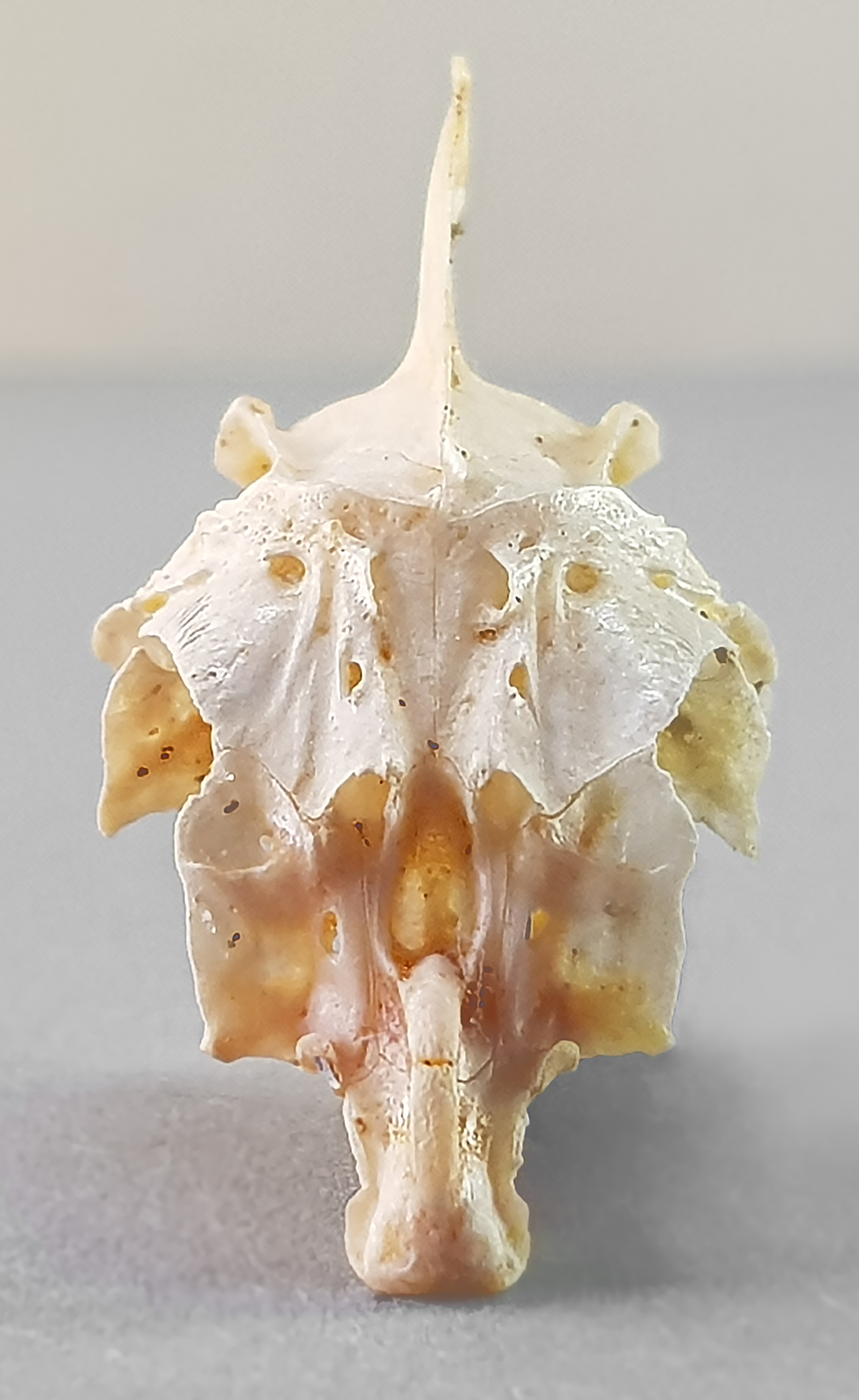
Tony Irwin, jennifermacaire and Wouter van Gestel all came through with excellent observations on the species. This object is a neurocranium (we’ve talked about these before) with a very pronounced supraoccipital crest (the big fin-like crest on top), which combined with the overall shape of the neurocranium suggests it’s a member of the Sparidae (the family containing the Porgies and Seabreams).
Knowing this, and having the Fishbase list, makes it much easier to narrow down the likely species. Unfortunately, there is no single resource to make comparison easy, but a lot of trawling through a variety of images of skulls and neurocrania will yield results (Flickr has some useful images for example).
Image by Paula Burdiel, 2022
From my searches, the shape of the supraoccipital, vomer/prevomer (the beaky-looking bit) and that impressive set of supraorbital crests (those frills of bone above the eye sockets) suggest that this mystery object is probably the species suggested by Tony Irwin – the Gilt-head Seabream Sparus aurata Linnaeus, 1758. I’m not 100% sure of this identification, but it’s the best fit I can find.
Thanks to Paula for sharing this object and thanks to eveyone for your thoughts on this specimen – it’s always valuable to get your input!
This week I have another guest mystery object for you to have a go at identifying, this time it’s from Paula Burdiel, who found the specimen in summer 2020 while beachcombing in Islantilla, Huelva (Spain):
Image by Paula Burdiel, 2022
Image by Paula Burdiel, 2022
Image by Paula Burdiel, 2022
Image by Paula Burdiel, 2022
Image by Paula Burdiel, 2022
Image by Paula Burdiel, 2022
With this fantastic array of images and clear locality information, I’m hoping that we can figure out which species we have here. Let’s hear what you think it might be in the comments below – between us I think we can identify this fishy mystery object!