This week I have an invertebrate for you to have a go at identifying for a change:
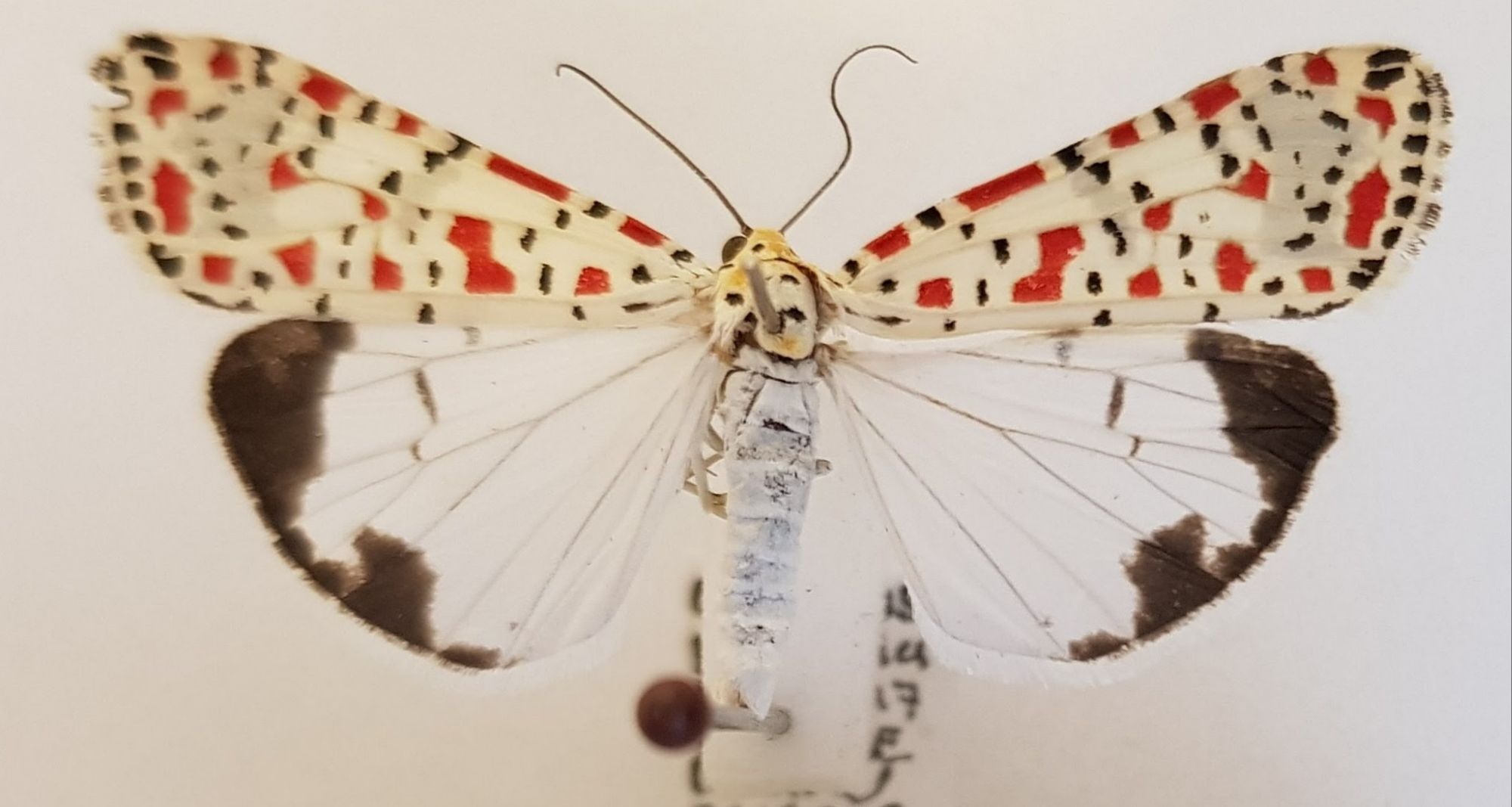
Any idea what this rather beautiful beastie might be?
Let me know what you think it might be in the comments below. I hope you have fun working it out!

This week I have an invertebrate for you to have a go at identifying for a change:
Any idea what this rather beautiful beastie might be?
Let me know what you think it might be in the comments below. I hope you have fun working it out!
Last week I gave you this mystery object that I found dead in the street when visiting Copenhagen earlier this year:

Clearly this is a species of insect in the Order Odonata, which are the dragonflies and damselflies. Damselflies are much slimmer than this, and their wings fold back along their body at rest, so this one is a dragonfly.
Everyone who commented had worked out the species, since the metallic green-bronze body and fuzzy body are quite distinctive.

This is an example of a Downy Emerald Cordulia aenea (Linnaeus, 1758) which is a species that is fairly widespread across northern Europe. While this species does occurs in Ireland, it has only been recorded from a few localities.
We only have one example of this species in the collections of the Dead Zoo, collected in 1978 from County Cork. I was a little surprised that it wasn’t collected by Madame Dragonfly herself, Cynthia Longfield (1896-1991), since she lived in Cork in the 1970s and was a hugely experienced and prolific expert on dragonflies.
Longfield was an adventurous and trailblazing female scientist – the first woman to be a member of the Royal Entomological Society, with expeditions in the 1920s to the Andes, Amazon, Galapagos, Egypt and a host of other localities that she undertook as part of a team from London Zoo, collecting specimens for the Natural History Museum in London, where she later became a voluntary cataloguer and was credited with saving the Museum from fire following bombing during WWII thanks to her actions as part of the Auxillary Fire Service.
Most of Longfield’s collections are held in the NHM, London, but we do have specimens collected by her in the National Museum of Ireland, donated after her retirement and move from South Kensington to Cloyne in County Cork. The Downy Emerald is not one of the specimens we received, but her specimens include new records for Ireland and a number of Paratypes of African species that she collected on her adventures both near and far.
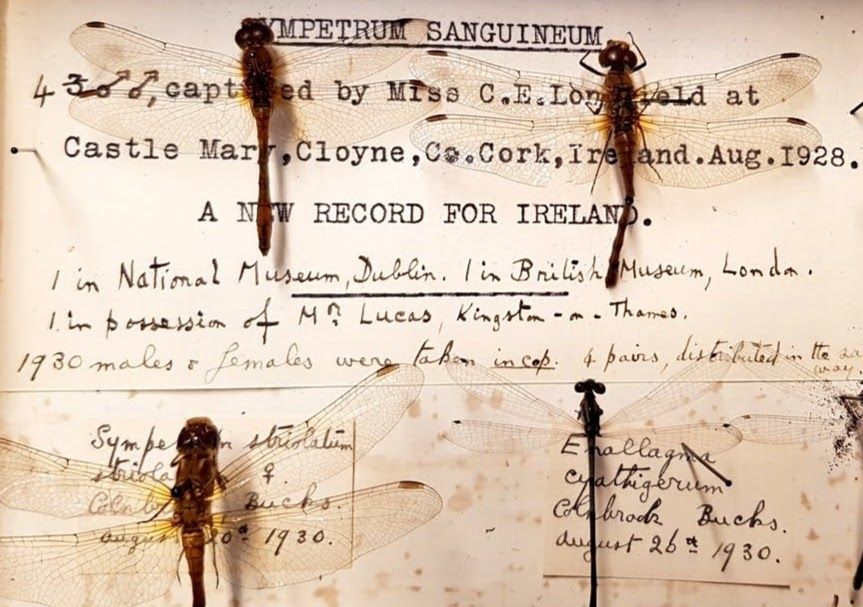
This week I have a mystery object I spotted when I was visiting Copenhagen earlier this year:
I’d love to hear your thoughts on which species this big specimen could be. I hop you have fun with it!
N.B. if you click the images, they should open in a larger size.
Last week I gave you this fuzzy little fella to have a go at identifying:
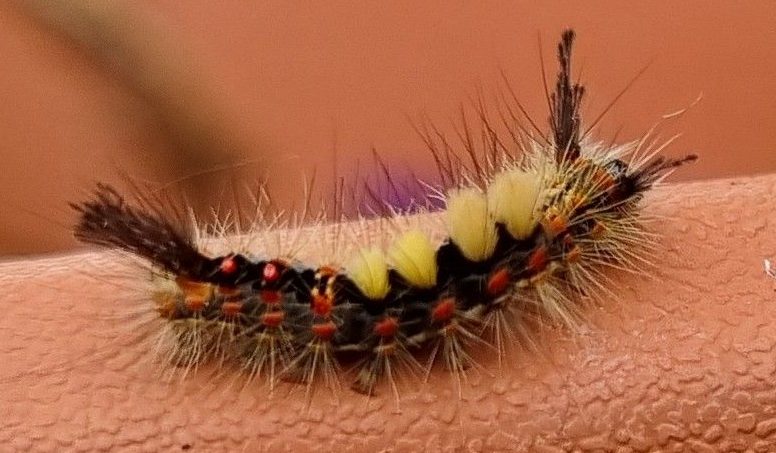
It’s a very distinctive caterpillar and I had a feeling it wouldn’t prove much of a challenge (correctly it turns it). Those tufts of hair, “horns” and bristles are a dead give-away.
As everyone who commented recognised, this is the larva of a Vapourer Moth, also known as a Rusty Tussock Moth Orgyia antiqua (Linneaus, 1758).
This day (and night) flying moth is fascinating, as the adults demonstrate quite extreme sexual dimorphism, with the female being almost wingless and the males flying around seeking her out by detecting her “vapours” – the pheromones she secretes that give these moths the name “Vapourer”.

The name Orgyia is apparently meant to derive from the ancient Greek word “órgyia” meaning “outstretched arms” – referencing the front legs of these moths, which splay out in front of them. However, knowing how much taxonomists enjoy a bit of wordplay, I wonder whether the clouds of males attracted to the vapouring females inspired the name for a different reason…
These moths are quite widespread, occurring in Ireland, the UK, across Europe and they are well established in America. They feed on a wide variety of different plants, but generally don’t cause many issues for gardeners as they tend to not be around in very high densities.
This may be a bit surprising, considering the flightless females can carry and lay large numbers of eggs, since they don’t have to worry about maintaining flight weight. But, numbers of moth eggs laid rarely equate to the number of surviving offspring, due to predation and the actions of parasitoid wasps.
I hope you enjoyed working out the identity of this mystery object, and maybe finding out more about a pretty interesting insect.
This week I have a fuzzy mystery object for you to identify:
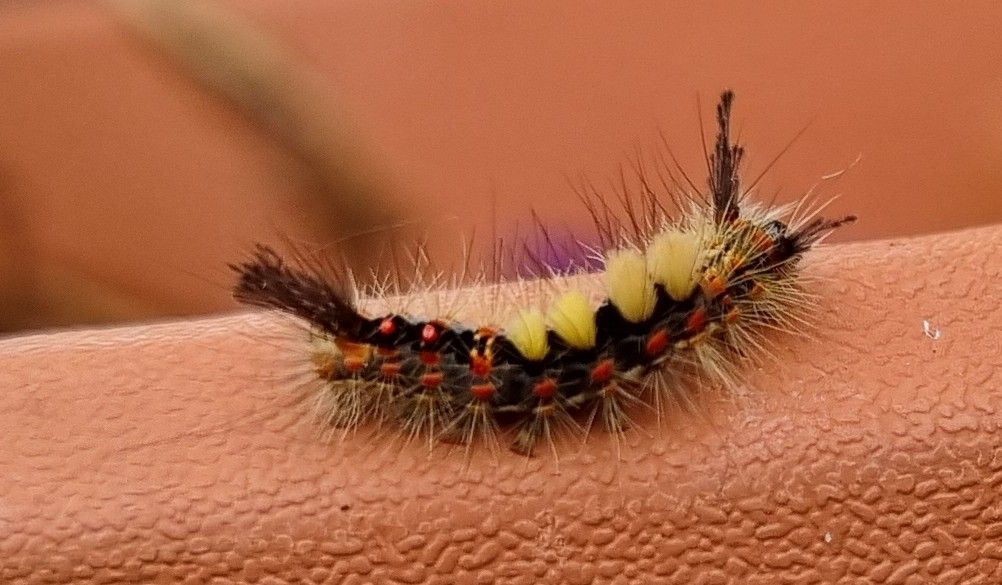
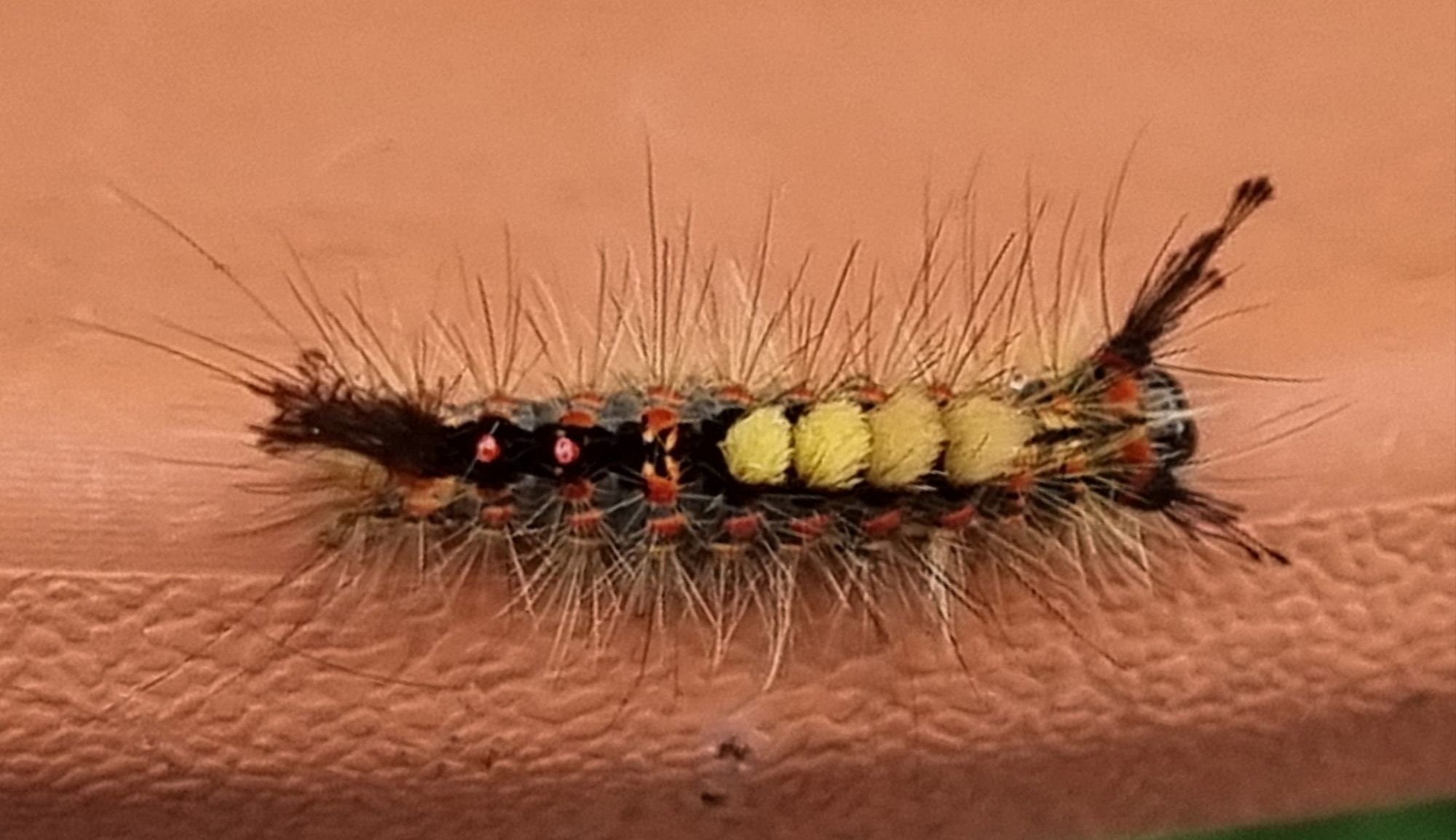

Any idea what this colourful little critter could be? I look forward to hearing your thoughts, questions and suggestions in the comments section below. Have fun!
Last week I gave you an entomological mystery to solve, in the triangular(ish) shape of this moth:

For the real insect aficionados out there, this probably wasn’t too much of a challenge (I’m looking at you Tim), but for the rest of us it wasn’t quite so easy.
The overall appearance of this moth, with its size, shape (especially wing position), and fuzzy wing fringes is what you expect from a member of the family Noctuidae – the Owlet Moths. However, it’s a big family, with almost 12,000 species. A lot of the species also look similar to each other and some have a wide variety of different colour morphs – just to make things more complicated.
Context helps us out here, since although there are of lot of Noctuidae species in the world, there are far fewer found in Ireland and there are helpful resources that illustrate them.
Even with helpful visual resources, with good photos of the different Irish species, it can be hard to work out what the diagnostic features might be. For some species of moths you have to get into the fine detail of the genitals, but thankfully there are wing patterns that are distinctive in this instance.
In this case, the wing pattern of interest is the small triangular black mark on the lower portion of the leading edge of the upper wing.
That’s it.
The rest of the colour and pattern of the upper wing is very variable in this species, so you can’t rely on any of those features as a reliable indicator. Of course, if the specimen was alive and had its wings open, it would be a much easier identification:

This is, of course, a Large Yellow Underwing Noctua pronuba (Linnaeus, 1758), which is pretty obvious once the underwing is visible. So well done to everyone who worked it out from just the upper wings.
This week’s mystery object was found in the Dead Zoo, but not in the collections. I came across this specimen on the stairs on my way into work this morning:

Any idea which species this might be?
Probably a bit on the easy side for the entomologically inclined amongst you, so maybe keep your answers cryptic if you can.
Have fun!
Last week I gave you this (somewhat dusty) mystery object to try your hand at identifying:
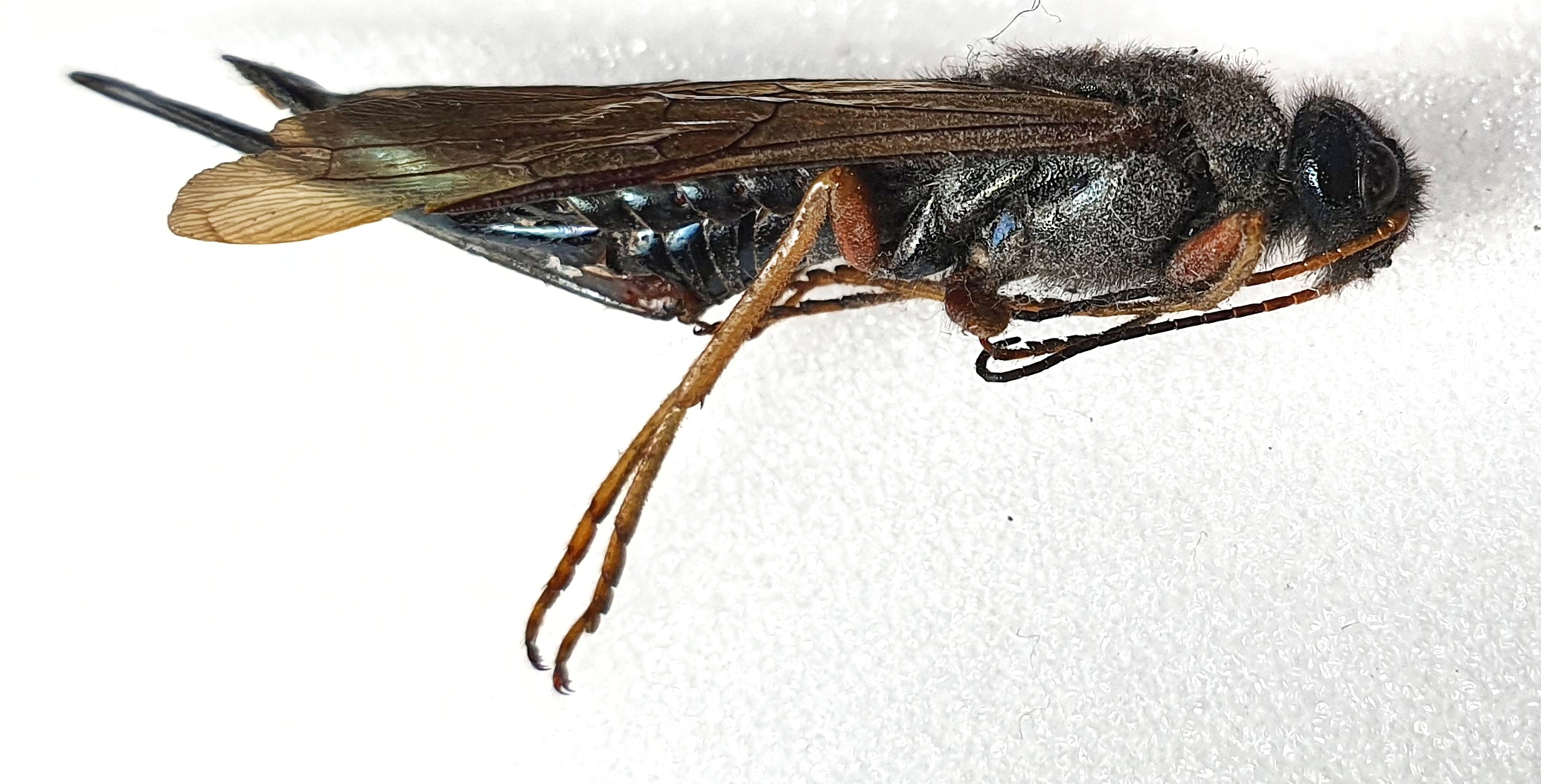
I know that insects aren’t a frequent occurence on the blog, so this was a bit of an unfamiliar one for many of the regular Zygoma commenters. Of course, that didn’t prevent some astute observations.
Chris Jarvis immediately spotted that this is a wood wasp or sawfly, while palfreyman1414 flagged that it looks more like a fly (barring the long ovipositor). That’s because wood wasps, despite being members of the Hymenoptera, lack that characteristic wasp-waist that makes the Apocrita (the hymenopteran Suborder containing wasps, bees and ants) so distinctive.

The Symphyta is the Suborder containing the sawflies and there are thousands of different species. However, narrowing it down wasn’t really that hard, since sawflies specialise in using their ovipositor to lay eggs in the stem of quite specific host plants and the only sawflies in this size range are in the family Siricidae, which are the ones that pick on trees (which is pretty interesting, since they form a symbiotic relationship with wood-digesting fungi in order to feed on wood as larvae).

Of course, being insects, there are still around 150 to choose from, but between ruling out taxa that have adopted Batesian mimicry and those that are a very different size or shape, it becomes easier to narrow down the possible contenders – especially when you consider that this one turned up in Dublin, Ireland (although as pests of wood they can emerge from pine timbers a long way away from their point of origin – this one probably got into the Dead Zoo in some of the timber being used for our big decant project). The best fit for this specimen lies in the Genus Sirex.
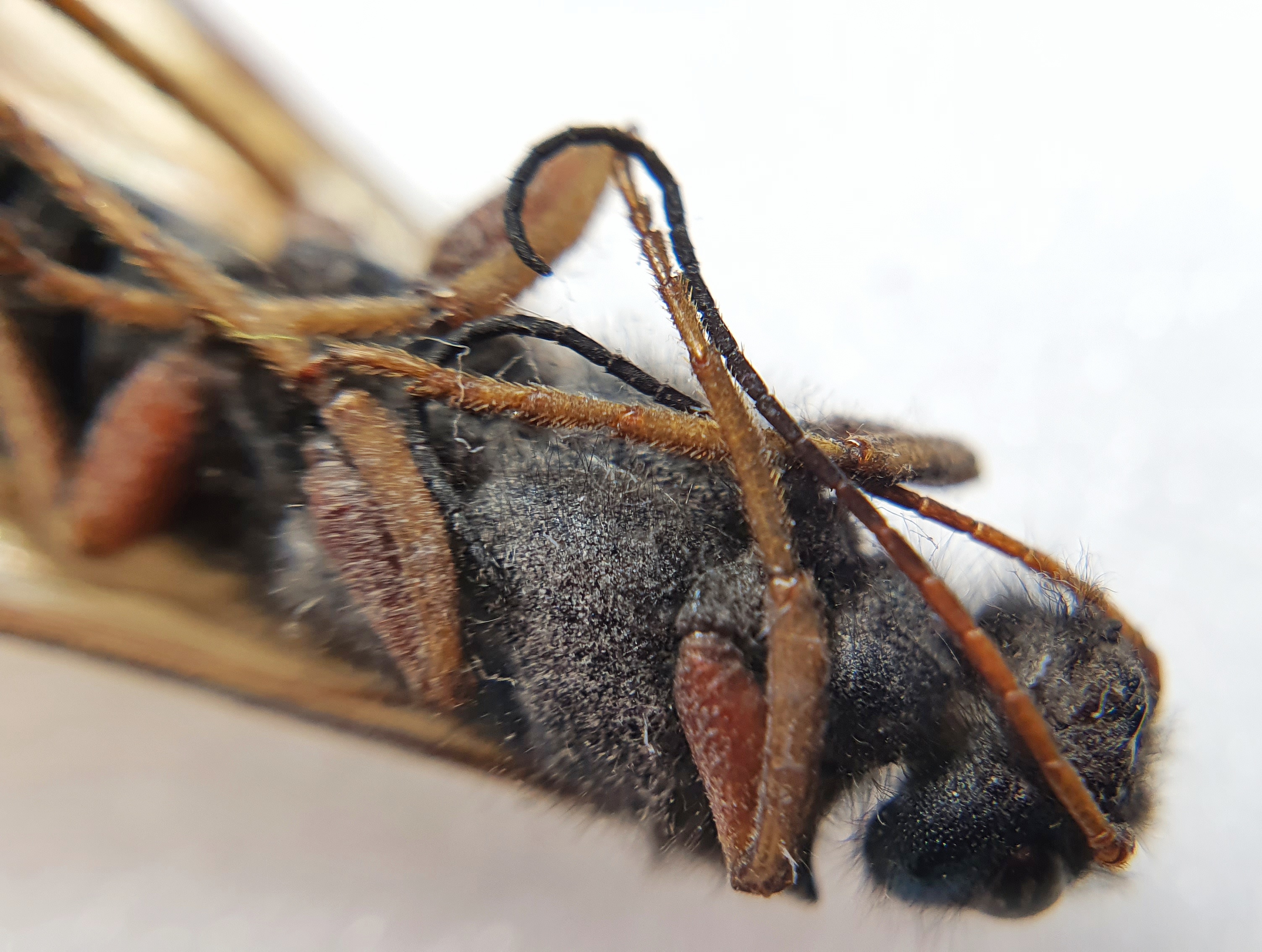
When tryingto to distinguish between members of Sirex it’s important to pay attention to colour details of the legs and antennae. In this case it has red legs and black-and-red antennae. If you spend a while checking through the very helpful Sawfly GenUS resource you’ll find that the best fit for the mystery specimen is a female Sirex juvencus (Linnaeus, 1758).
Of course, the entomologists out there managed to figure all this out without any problems, both on Twitter and in the comments.
So well done to Jaswinder and Russell Stebbings for getting a species level identification – I would say that you got it right, but since I’m not an entomologist I think I should just be pleased that your more informed opinions happen to support my best guess. Thanks!
Stay tuned for another mystery object next Friday. Have a great weekend everybody!
*not a Bug – the True Bugs are Hemiptera and have nothing to do with this.
This week I’m mixing things up by throwing an insect into the mystery object mix:

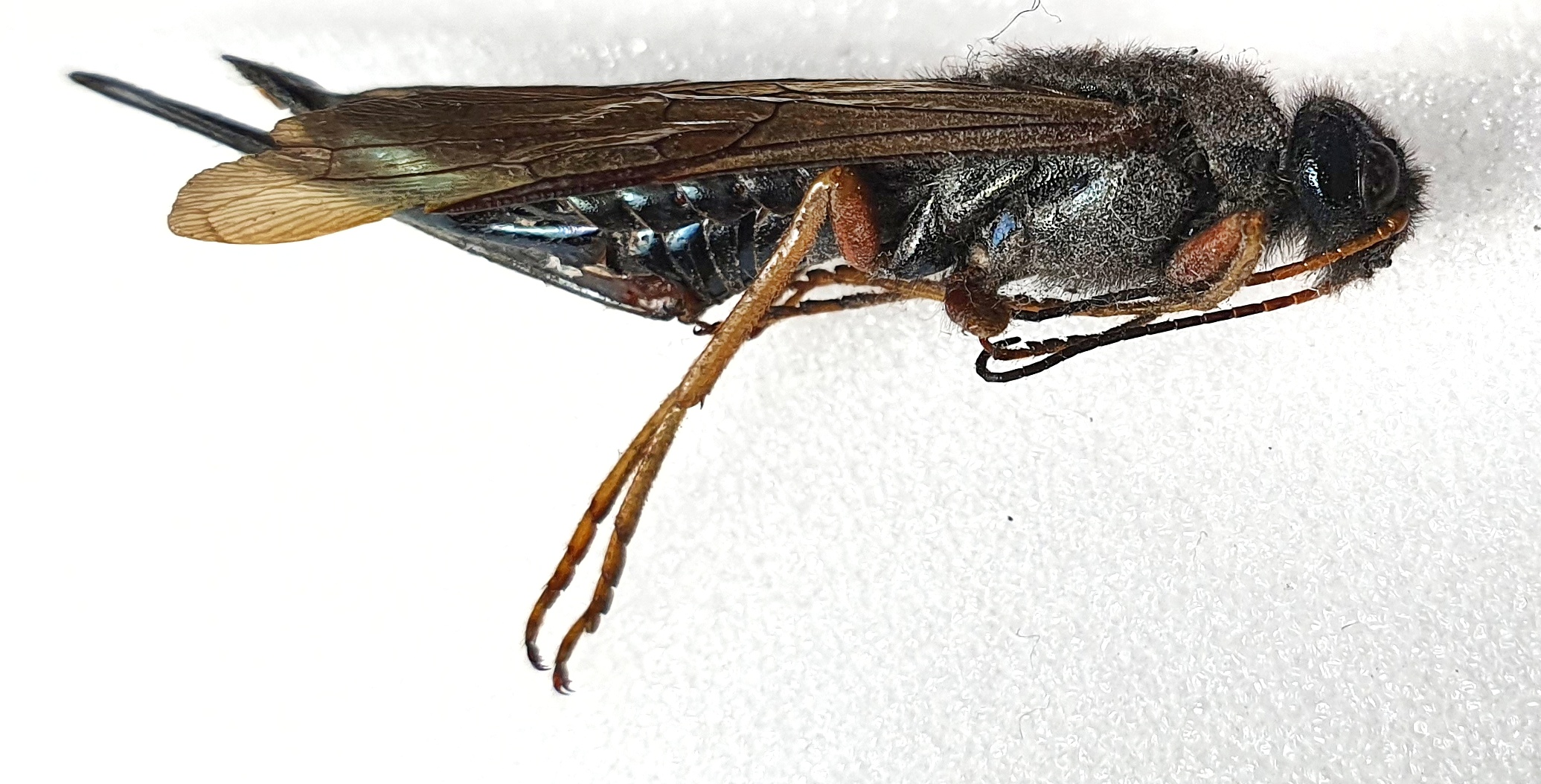


This dusty critter turned up in the Dead Zoo (of her own volition). Any idea of the species?
Have fun!
First of all, I’d like to wish you a very happy and healthy 2020!
Last year I gave you this festive-looking beetle to try your hand at identifying:

It was a bit of a tricky one to get to species, since beetles are notorious for their huge diversity, plus they can vary in appearance quite significantly within a species.
James Bryant recognised this as a member of the Buprestidae, which is a family of wood-boring beetles that are commonly known as Jewel Beetles due to their metallic and iridescent colours. In fact, the wing cases (or elytra) of some of the most colourful of these beetles have been used in traditional beetlewing jewellery in the parts of Asia where they are found.
Going beyond the family, the identification katedmonson provided through a great cryptic clue was spot-on (assuming I understood it properly). This particular specimen is an example of Chrysochroa rajah Gory, 1840, but in the collection it is still labelled under the synonym C. chinensis.
This species is one of those with a wide distribution, several subspecies and a variety of different colours and patterns, which can make it hard to identify based on just an image of the overall body (or habitus as it’s referred to by entomologists). Just to give you an idea of what I mean, here’s an example of the same species in the National Museum, Prague:

Blue and green form of Chrysochroa rajah from southern China. Photo by Hectonichus 2010
So well done to katedmonson for getting this tricky identification. Look out for another mystery next week!
This week I have an insect specimen from the Dead Zoo for you to have a go at identifying. I picked it because it definitely falls into the festive end of the colour spectrum:
Looking forward to hearing your thoughts on what this might be.
The answer will be forthcoming in the New Year – I hope you all enjoy seeing it in!
Last week I gave you this impressive insect to have a go at identifying:
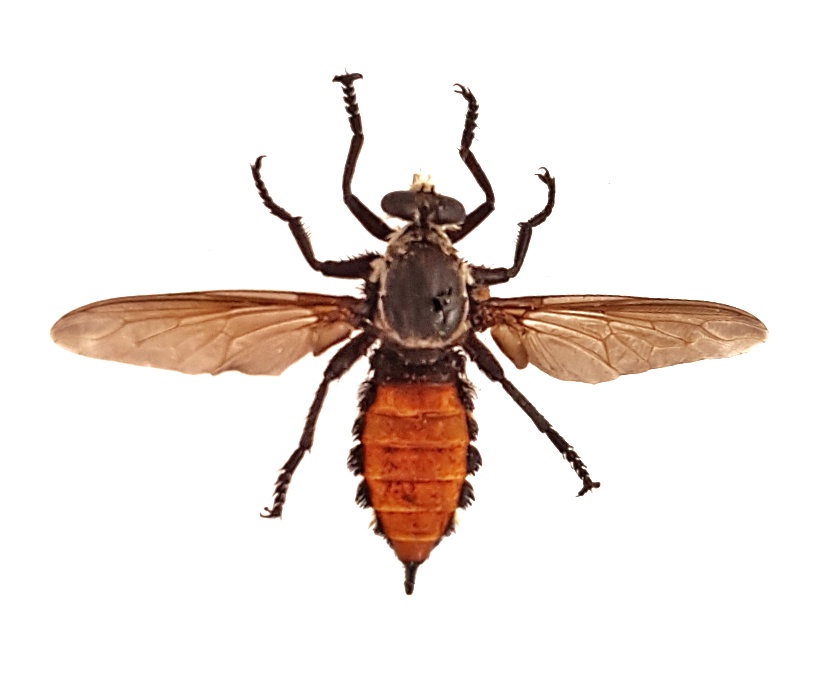
No scale for this, but it’s probably safe to say it’s bigger than you’d be comfortable with.
By not giving the scale I was being a bit mean by holding back a useful clue. This fly (as recognised by palfreyman1414, Richard Blackmore and joe vans) is around 45mm long, making it one of the biggest of its kind – its kind being one of the Asilidae or robber flies.
The species is from Australia and it’s called the Giant Yellow Robber Fly Blepharotes coriarius (Wiedemann, 1830). They’re active hunters that prey on other insects, grabbing them in flight and carrying them off to a perch where they suck out their victim’s internal organs. Nice.
Apologies for the short answer this week – I’m just in the process of installing an exhibition and this specimen is one that is going on display to represent the Diptera. Hopefully I’ll be able to share some images of what I’ve been working on next week.
Last week I gave you this impressive beetle to try your hand at identifying:
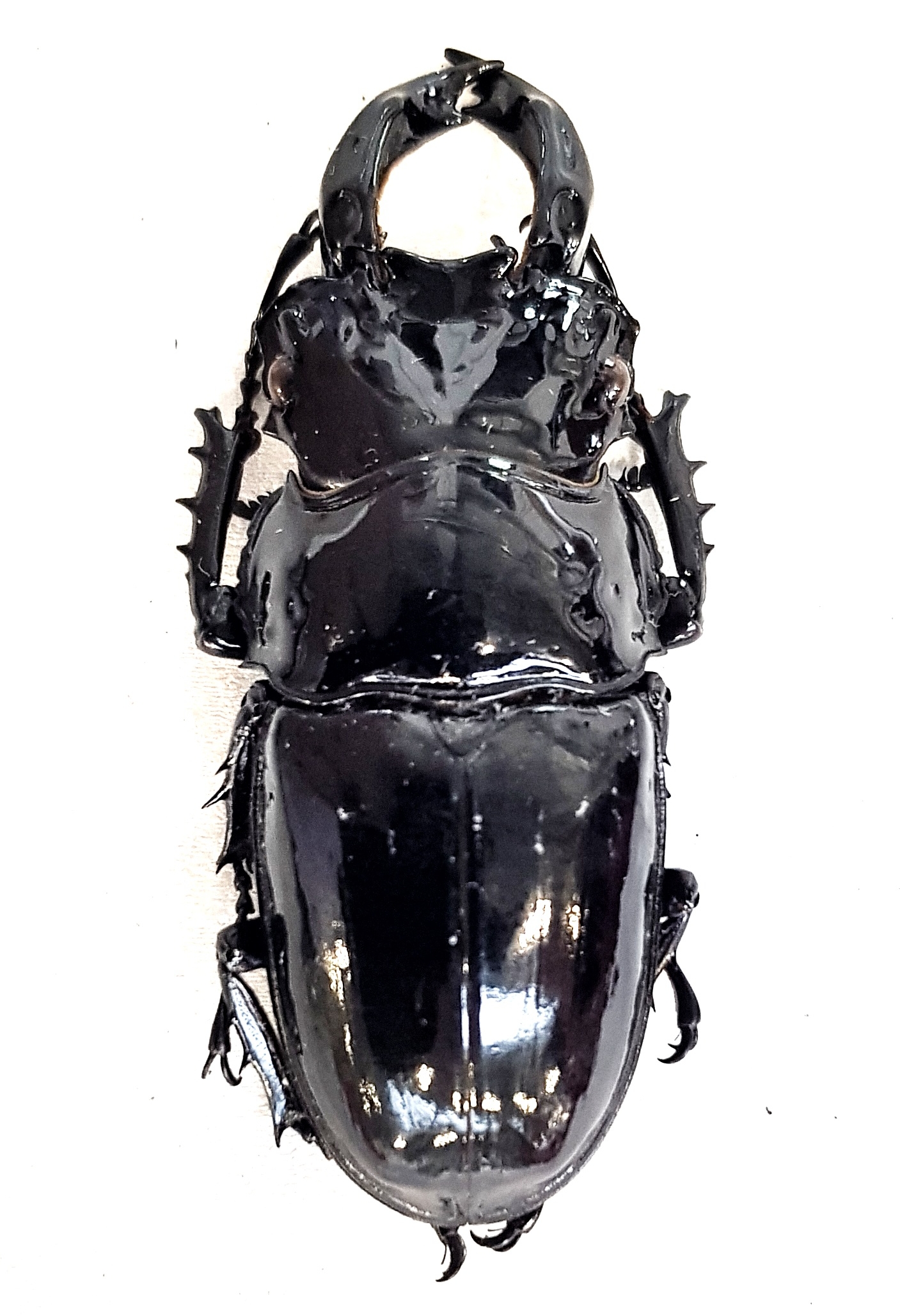

Now although it’s big and showy, beetles can be hard to identify because there are just so many of them and closely related species can be very hard to tell apart.
This one has distinctive elongated jaws that mark it as being one of the stag beetles (family Lucanidae), which narrows it down, although there are well over a thousand species in the family. This one is a little bigger than most and the jaws are relatively unbranched, with a cleft at the end of a relatively squared-off and downward deflected ‘antler’.
Those ‘antlers’ are used by the males to wrestle for access to females, who have much more sensibly sized jaws and are smaller. Effectively they’re doing the same thing as deer and this is a good example of how evolution can lead to similar trends in behaviour and even sexual dimorphism across very different animal groups.
I think this is Mesotopus tarandus Swederus, 1787 which is a species from West Africa that is becoming increasingly popular in the pet trade. It has slightly shorter ‘antlers’ than the other species (or possibly subspecies) in the same genus, M. regius.
As you probably know, I’m more familiar with vertebrate identification than insects, so I was fortunate to have my intern Esmeralda, who is a keen coleopterist helping narrow this down, although I’m pleased to congratulate jennifermacaire who was on the same track with her identification.
Another mystery next week!
Happy Friday 13th! This week I have another diminutive animal (it’s a little under 4mm long) for you to have a go at identifying:

I’m all too familiar with what this is and I’m sure that some of you have been unlucky enough to encounter them before, so cryptic clues as to the identity of this insect would be appreciated, for the sake of those lucky folk who avoided the attentions of this wee beastie.
Last week I gave you this insect to have a go at identifying:
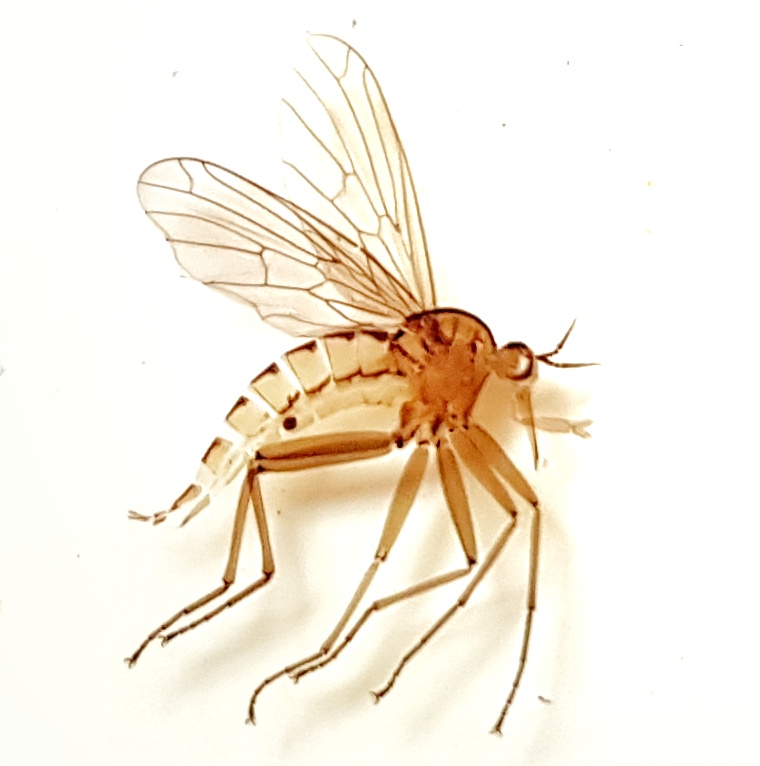
I decided that this didn’t need a cryptic answer, since species in the Order of insects that this belongs to can be quite tricky to identify. The Order is of course the Diptera as this has two wings rather than the four most insects have – that means it’s a true fly (as palfreyman1414 pointed out).
Those pointy but sturdy mouthparts (unlike the pointy and skinny mouthparts of things like mosquitoes) give the family that this fly belongs to one of their common names – this is a type of “dagger fly” in the family Empididae – which you can tell from the antennae structure (three segments with the segment at the end being the longest). That helps narrow it down a little, but after that it’s a case of checking against things like wing veination and pattern – note the black line along the back.
Very well done to Emmanuel and James Bryant who noted these features and hit upon the correct genus. This specimen is Empis stercorea Linnaeus, 1761.
This specimen is actually mounted on a microscope slide, which makes it look a little weird:

The label gives us the species, the sex (female) and the common name of “Corn-fly”, which I’ve seen used for a variety of fly species, but not for one of the Empididae. A bit of searching shows that this name is an old one used for Empis sp. in US catalogues for microscope equipment and mounted insects in the 18th Century.
There’s also a circular mark bearing a Wyvern (a two legged winged dragon), which is presumably a makers mark, although I’ve not yet managed to track down who the maker is.
More mysteries next week!
This week I have an insect for you to have a go at identifying for a change:
Any idea what this diminutive critter might be? No need to be coy for this one – let me hear what you think in the comments section below. Have fun!
Last week I gave you this big bug to identify:
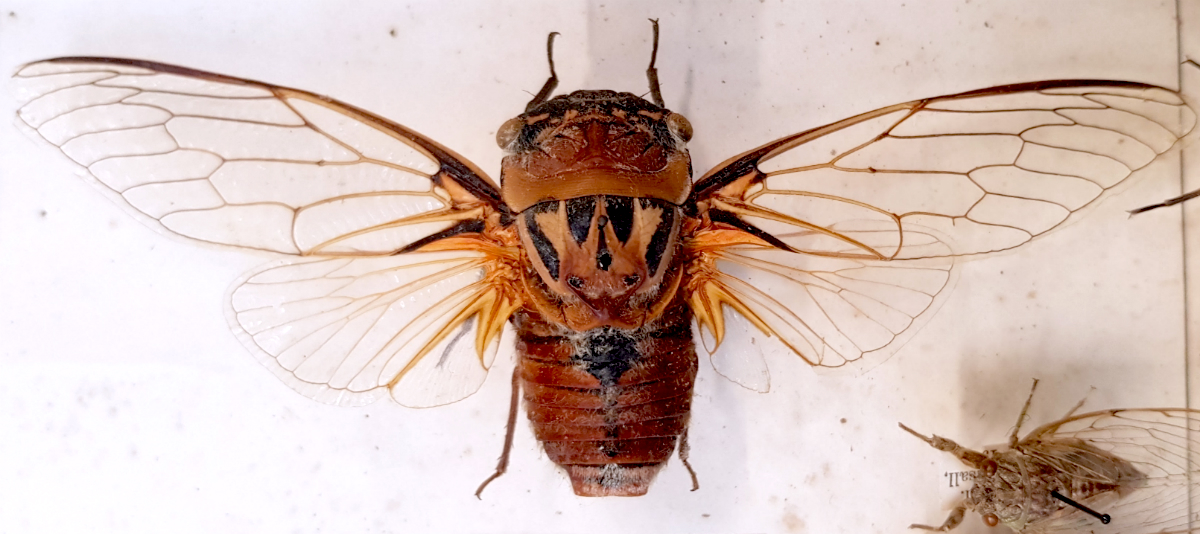
I had a feeling it would be fairly straightforward for some of you, since insects as big as this are reasonably distinctive, and I was therefore not disappointed with the flurry of correct identifications.
The first with a correct identification in the comments was Chris, who hinted at the scientific name with this suggestion:
Trying to identify this Cic-sac? Tho phar, Tho good! (Excuth the lithp!)
On social media people made suggestions relating to the common name for the species, mostly pointing out that it’s very loud. Putting the various hints together gives you the Double-drummer Cicada Thopha saccata (Fabricius, 1803).
Cicadas are weird. They’re in the Order Hemiptera (the true bugs) and the Suborder Homoptera (although that’s disputed and it’s probably safer to say Auchenorrhyncha). Best known for being noisy and having some species with synchronised emergence times that vary between every year and up to every 17 years, or somewhere in-between depending on species and environment. They have widely spaced eyes and a blunt head that is pretty distinctive.
As jennifermacaire pointed out regarding cicadas:
According to Plato, “[This species] used to be human beings who lived before the birth of the Muses. When the Muses were born and song was created for the first time, some of the people of that time were so overwhelmed with the pleasure of singing that they forgot to eat or drink; so they died without even realizing it. It is from them that the race of the [these insects] came into being; and, as a gift from the Muses, they have no need of nourishment once they are born. Instead, they immediately burst into song, without food or drink, until it is time for them to die. After they die, they go to the Muses and tell each one of them which mortals have honored her.”
– Phaedrus
The implications of this is that adult cicadas have a general inability to feed, although this isn’t quite true, since adult cicadas may still feed on sap.
This particular cicada is Australian and is one of the loudest insects on the planet, able to produce a call of over 120 decibels – loud enough to cause permanent hearing damage if right up against a human ear.
The abdomen is fairly hollow in the males of these insects, creating a resonating chamber, but sadly the last segment of this specimen has fallen off, making it hard to be sure of the gender on the basis of the genitals. However, the males have a couple of resonating sacs behind the hind-wing that is missing from this specimen, suggesting that it’s a female.
As far as noisy neighbours go, these insects are an occasional disruption, popping up every 4-6 years and making a noise that is apparently similar to high-pitched bagpipes.
It doesn’t sound great to me, so I’m (not so) secretly glad that I only have to deal with dead examples of these fascinating insects.
More mystery object fun next week!
It’s been another week of working with the Dead Zoo insect collection for me, so I thought I’d give you one of them to have a go at identifying:
A big bug at around 135mm wingtip to wingtip
I don’t think it’ll be particularly difficult for some of you, so please try to offer cryptic suggestions if you know what is, to keep it challenging for others who aren’t as familiar with these impressive invertebrates.
Have fun!
A slightly late mystery object this week, so apologies!
Here’s a critter that was sent in for identification that was fished out of someone’s toilet bowl:

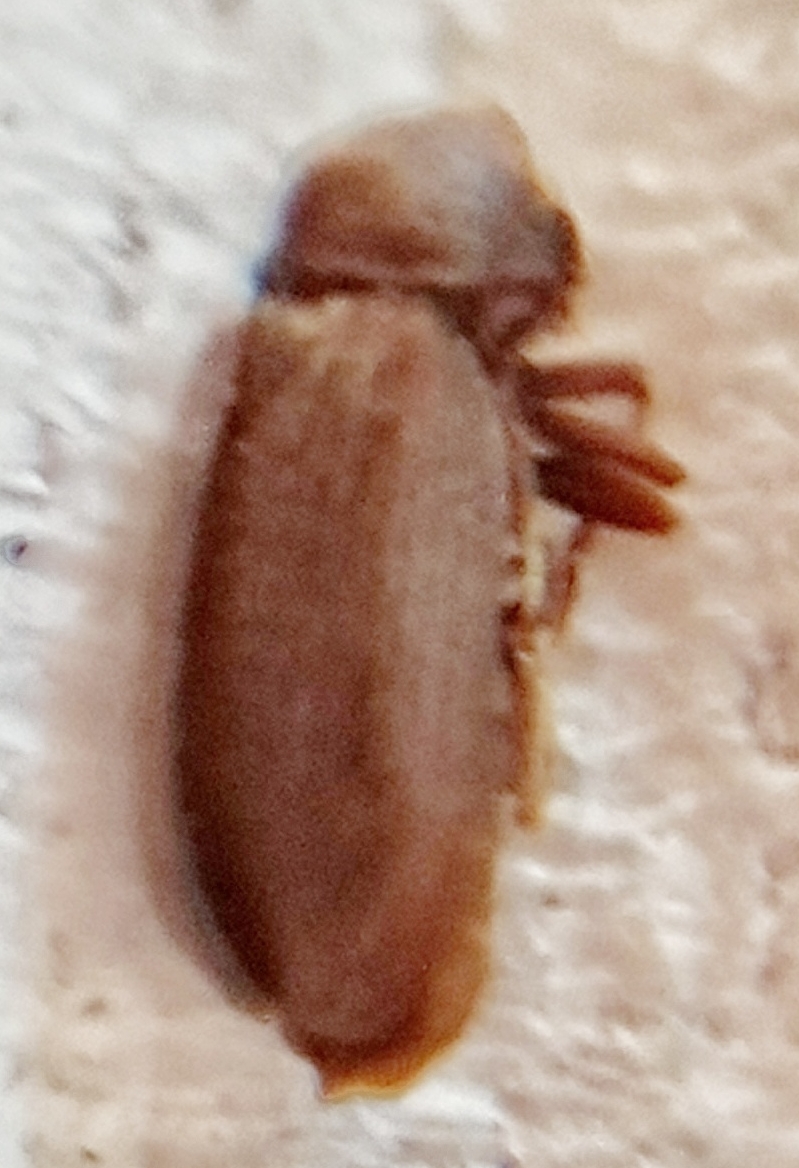
Any idea what it is?
As usual you can put suggestions, ideas and any questions in comments box below.
Have fun!
For the last couple of weeks I’ve been offering up what has been affectionately nicknamed ‘cave snot’ for identification:

The initial goop was a bit too difficult to identify from a photo, so I dug in and pulled out the critter responsible:
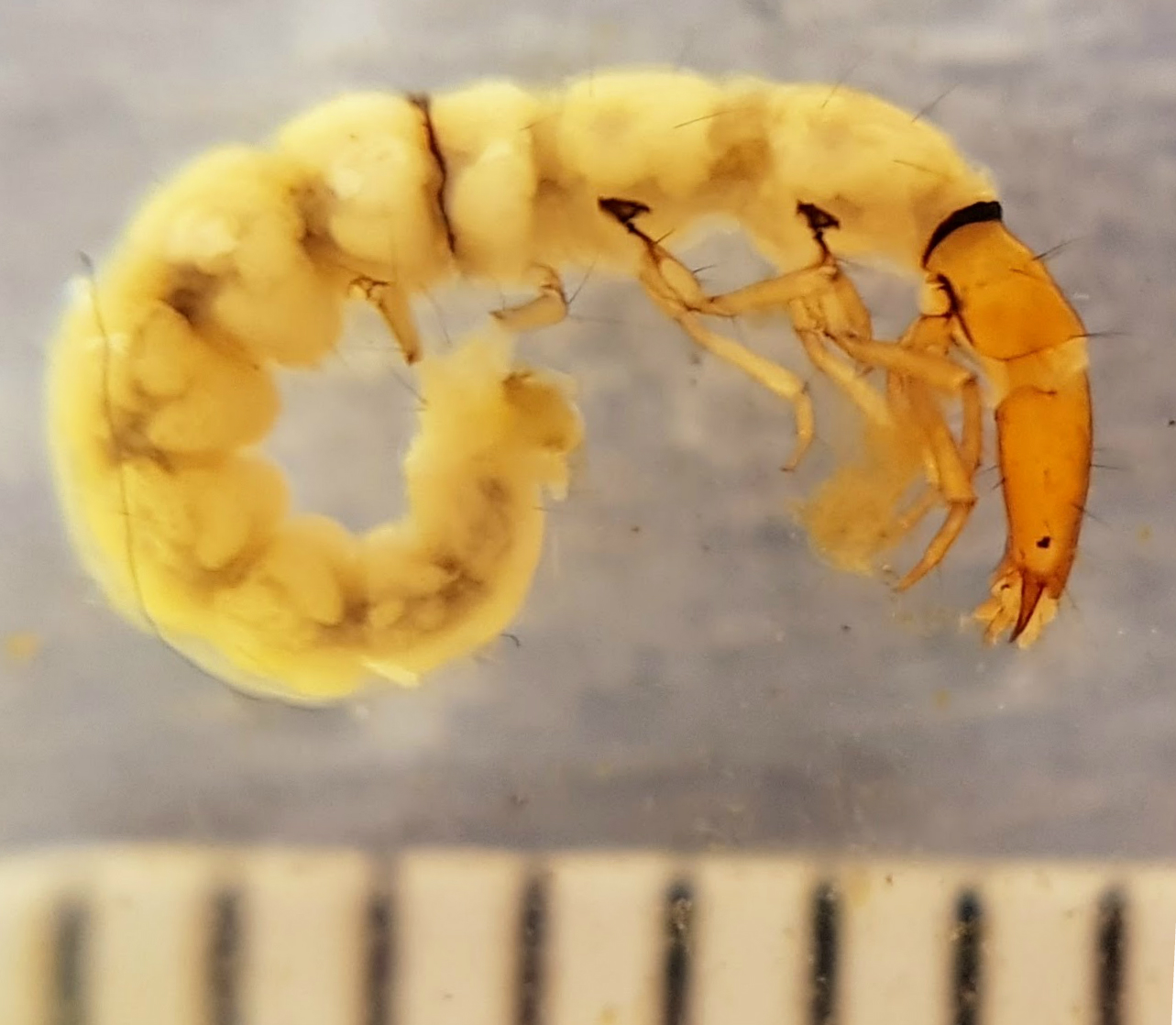
This proved much more identifiable, with Chris immediately recognising that it’s the larva of a Caddisfly (not really a fly, but a more moth-like insect in the Order Trichoptera – which means ‘hairy wings’ as palfreyman1414 mentioned). Natalia Maas went one better by alluding to the family – the Philopotamidae or Finger-net Caddis, explaining the goop, which is actually made up of little silk nets shaped like fingers (hence the common name for the family). These nets are used to collect organic detritus and diatoms from flowing water, which the larvae then feed on.
I provided a couple of extra images to help narrow down the identification, since there are only five species in three genera of Finger-net Caddis in Ireland (and England for that matter), which are able to be differentiated from the anterior margin of their frontoclypeus (see the diagram below if you’re not sure what that is).

There’s an excellent website looking at Trichoptera in Ireland, descriptively called TrichopteraIreland, where you can find the details of how to tell the larvae of different genera apart, but the short version is to look at the frontoclypeus and if it has a deep U-shaped notch in it you have a Chimarra marginata, if it has a shallow V-shaped notch in it then you have Philopotamus montanus and if it’s a smooth curve then you have a species in the genus Wormaldia (which could be W. subnigra, W. mediana or W. occipitalis).
Unfortunately you can’t readily tell Wormaldia species apart when they’re larvae, so unless I’m missing a well-hidden notch in the frontoclypeus, we can’t identify this to anything better than genus level – but that’s still a substantial improvement on simply calling it cave snot.
I’ll be taking the specimen to the previous Entomology curator of the Museum, since his area of specialist interest is Caddis, so I’m sure he’ll be able to confirm the identification and I expect there may be some interest in where it came from.
More mysteries next week!
 Zygoma