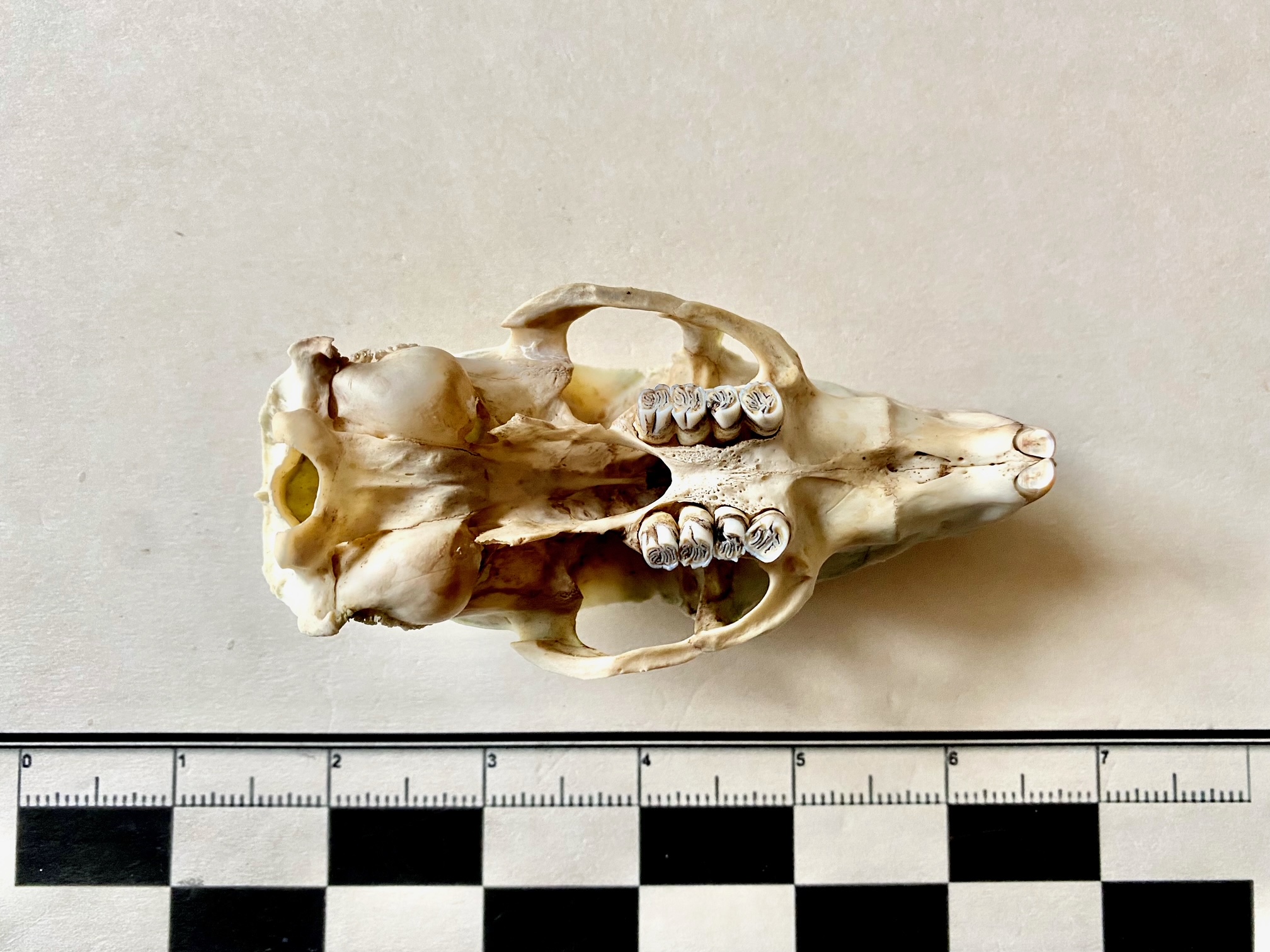
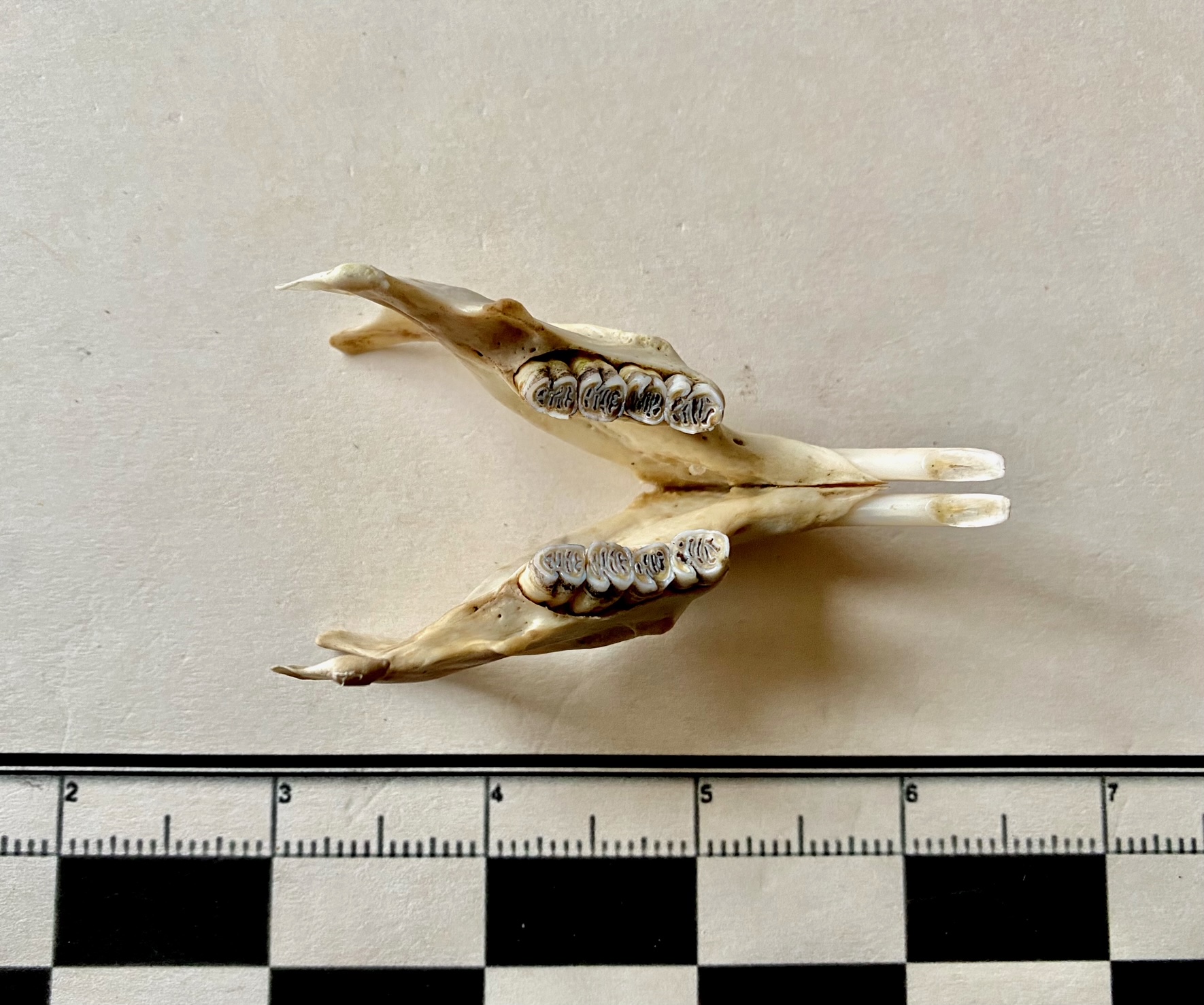
This week I am have a great guest mystery object from Andy Taylor for you to have a go at identifying:
Image by Andy Taylor, 2023
Image by Andy Taylor, 2023
Image by Andy Taylor, 2023
Image by Andy Taylor, 2023
Here’s what Andy says about the specimen:
On Sunday, myself and Sophie Bagshaw were working through specimens that were donated to me from a person who had been given them by a zoological park. The specimen in question was part of a huge shipment of almost 140 frozen specimens that were in various states of preparation and were mostly head specimens. … I have a large rodent skull that I’m struggling to ID
Andy and Sophie have been doing great stuff with osteology for educational purposes for a while now, so it was a real pleasure to get a question like this, and it seems like a perfect opportunity for the community here to add their thoughts.
Last week I gave you this skull from the collections of the Dead Zoo, which had been misidentified and that came to light when Dr George Argyros was doing some research on the carnivore skeletons:
The label attached to this specimen indicated that this is the skull of a Leopard, which is clearly wrong. The label also identified the specimen as having been collected in East Africa by Major A.W.V. Plunkett.
Labels like this worry me. Not because they contain a misidentification, but because they may indicate that someone in the past has mixed up the specimen labels. This is a much bigger problem than a simple misidentification, as it can mean the real specimen has become dissociated from its information.
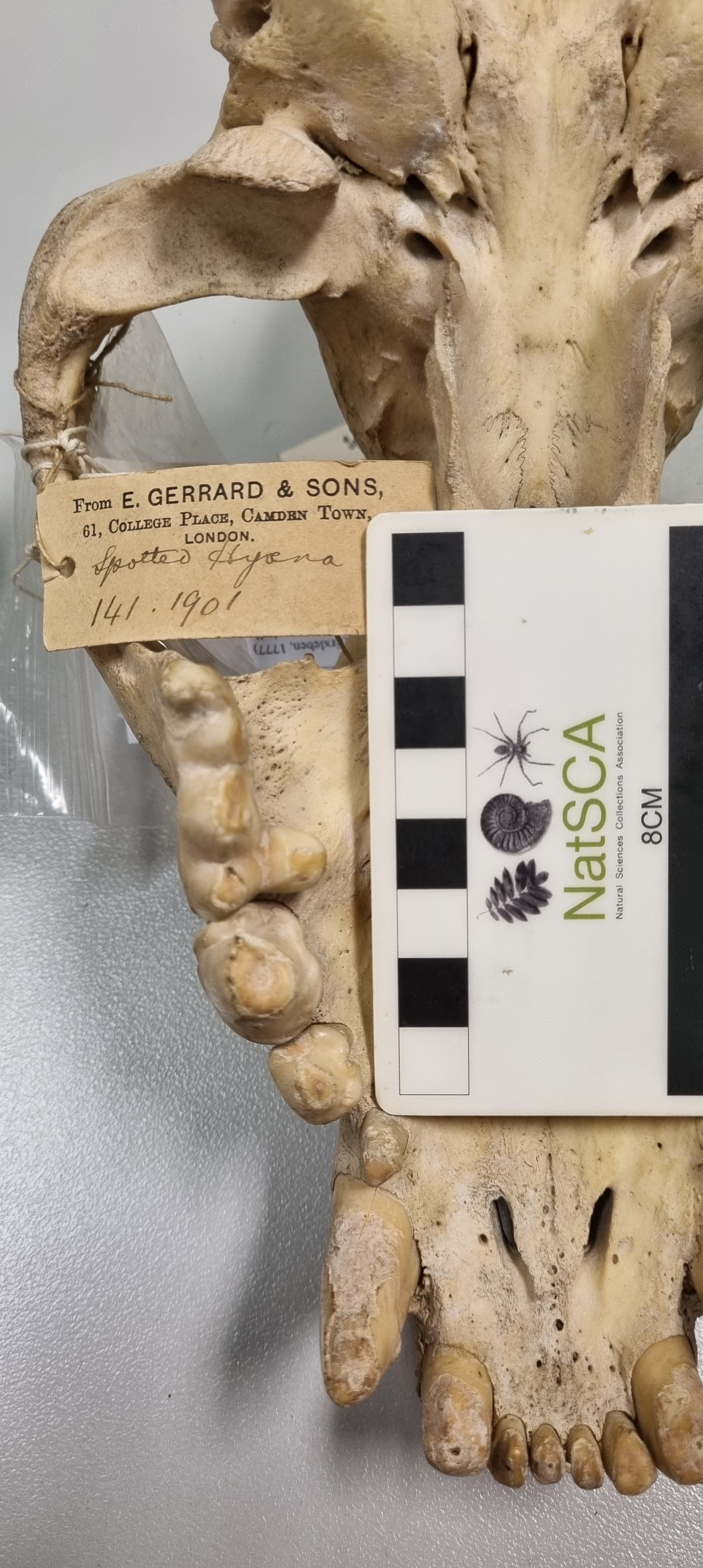
The huge, robust teeth of this specimen should make it fairly clear that it belongs to one of those specialist bone-crushers – the hyenas:
However, there are three species of hyena to choose from (I’m leaving the Aardwolf of this, since they don’t match this dental morphology even remotely).
My first thought was that this specimen is on the small side for a Spotted Hyena:
Striped Hyena on left, Spotted Hyena on right
Size is seldom a definitive feature, especially in species that display sexual dimorphism, but what is more useful is the detail of the tiny molar at the back of the maxillary toothrow. This is absent in Spotted Hyenas, but it occurs in both Striped and Brown Hyenas.
So you might ask, how do we distinguish between Striped and Brown Hyenas? This is a good question. For starters, it’s hard to find enough reliable good images of the Brown Hyena’s skull online that show the details needed to distinguish between the species.
However, a bit of searching highlighted that the Brown Hyena has a shorter and more robust angular process of the mandible than the Striped – and the mystery object.
Image of Brown Hyena skull by David J. Stang, 2005.
This long angular process was spotted by katedmonson, but Adam Yates was the first with the identification of Striped Hyena Hyaena hyaena (Linnaeus, 1758).
This one proved a little trickier than I thought at first, due to the similarities between the Brown and the Striped species. But I’m a little relieved that the consensus fell on Striped, both here on the blog, and between myself and George, since the Striped Hyena is found in East Africa, whereas the Brown is limited to South Africa.
This at least agrees with the locality on the label, so it may well have simply been misidentified when the specimen was acquired – especially since it looks like it was skeletonised naturally, so it may have been found dead and already defleshed, making it harder to identify.
Since everyone seemed to have fun with last week’s mystery skull, I have another that was misidentified in the Dead Zoo’s collections and which came to light during Dr George Argyros’ recent research visit:
Do you recognise this species from its skull?
As usual, you can ask questions or leave suggestion in the comments box below. If you do know what it is, then please try to keep your answers cryptic, so everyone can have a go at working it out. Have fun!
Last week I gave you this skull from the collections of the Dead Zoo to have a go at identifying:
This specimen came to light during some research being carried out on carnivore bones by Dr George Argyros, a Professor visiting us from Emory & Henry College, Virginia. It was identified as Vulpes on the label, but both George and myself were doubtful.
The specimen’s spurious identification can be tracked back to when it was named in the Museum’s register as Vulpes fulva argentata or Silver Fox. This identification was assigned to the specimen when it was given to the Royal Zoological Society by N.H.P. Vickers in March 1900 (see page 127 of the monthly Irish Naturalist covering March 1900):
The Museum bought the specimen in skeletal form from the Royal Zoological Society of Ireland in 1903 and the name Silver Fox was kept until a later review of the taxonomic hierarchy in our database, which ‘corrected’ the name to Red Fox Vulpes vulpes.
However, this name change was not based on the morphology of the specimen. The characteristic lyre-shaped sagittal crest1 immediately made both myself and George think Urocyon and the small size of the specimen made both of us converge on an identification of Island Fox Urocyon littoralis (Baird, 1857) after independent bouts of measuring.
So I offer a hearty congratulations to everyone who spotted that this skull is from the genus Urocyon, although I think most people were thinking of the Grey Fox, Urocyon cinereoargenteus.
1It probably shouldn’t really be referred to as that, since it isn’t actually sagittal, except perhaps where the two ridges meet at the very back of the skull – but you know what I mean.






 Zygoma