Dinosaur Eggshibition!

It’s been a while since I last wrote much on my blog, apart from the regular Friday mystery object. Mainly that’s because I’ve been busy getting to grips with a new collection at the Grant Museum of Zoology, where I am now the Curator. Just before I left my previous job at the Horniman Museum & Gardens I curated an exhibition that has a nice Eastery link (which will become apparent), that I thought might be worth writing about.

The exhibition is a touring show developed under the title Hatching The Past, which was brought to my attention by palaeontologist, science blogger and old friend Dr Dave Hone who’s a lecturer at Queen Mary University of London. I went to the Città della Scienza in Naples with some colleagues from the Horniman to take a look (which is an interesting story in its own right, since the main part of the museum had been burned down by the Mafia in 2013).

Despite the suboptimal exhibition space in Naples (thanks to the fact that the building it was meant to be displayed in was a pile of charcoal), the quality of the science, the objects in the exhibition and the vibrant and exciting artwork by the awesome palaeoartist Luis Rey made it well worth considering for the Horniman, which tries to get in a blockbuster temporary exhibition every year.

This exhibition focuses on the eggs, offspring and parental care of dinosaurs. A family focus is right up the Horniman’s street, and that’s what led to the change in the exhibition title, to bring more focus on that family element, without losing sight of the DINOSAURS!

Tarbosaurus

Star of the exhibition

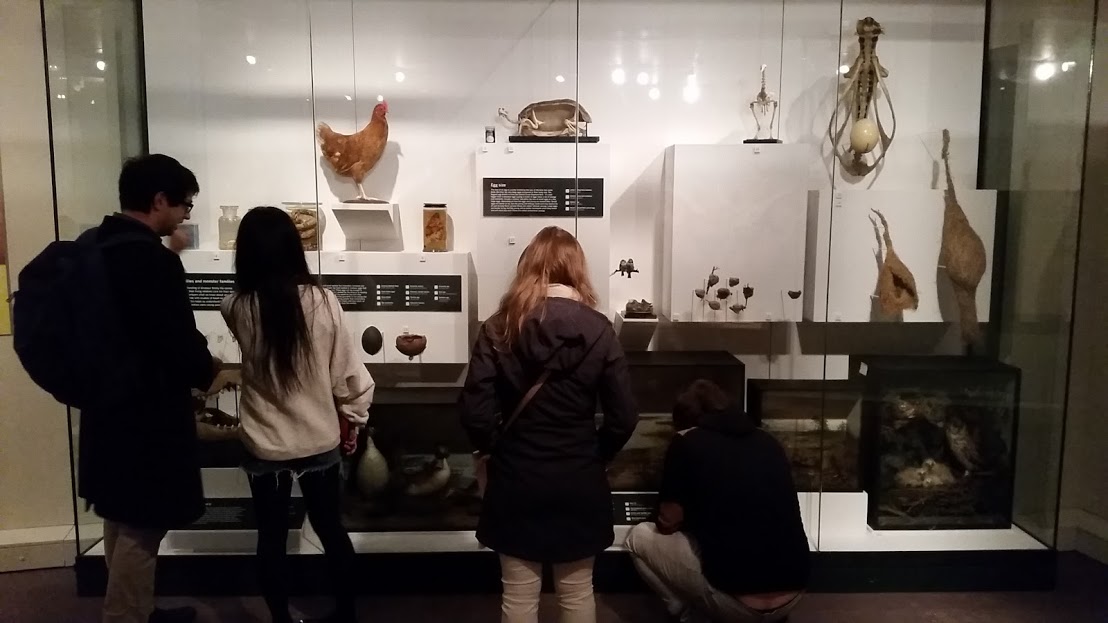
Of course, making an exhibition intellectually fit into a museum takes more than just changing the name, so the temporary exhibitions at the Horniman include objects from the permanent collection, with links to activities and other content. So while working out my notice from the Horniman I was feverishly selecting objects and writing text to help build that link before I left.
Horniman_case

It has to be said that seeing members of the public engaging with your work is incredibly satisfying, so when the exhibition opened in February I was delighted to see people reading my text and really getting interested in the objects I’d picked to tell the story of parental care in living animal groups.
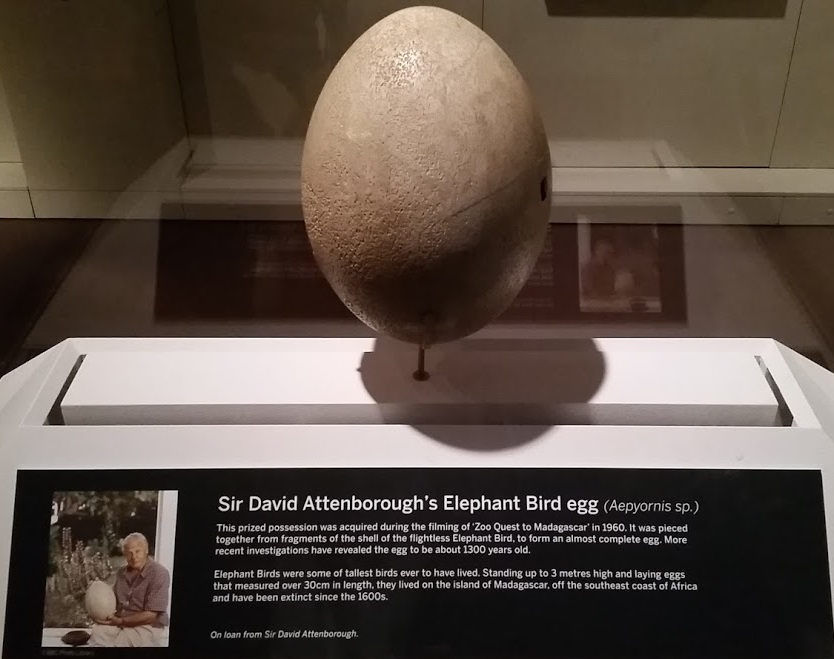
Aepyornis_egg

I was also keen to take the opportunity to help the Horniman build closer links with one of their patrons (and a living legend for pretty much every naturalist out there), Sir David Attenborough, who kindly agreed to loan the Elephant Bird egg he found when filming Zoo Quest in Madagascar. This for me is the ultimate version of an egg hunt.

Have a great Easter weekend – I hope you get all the eggs you could ask for!

Friday mystery object #274 answer

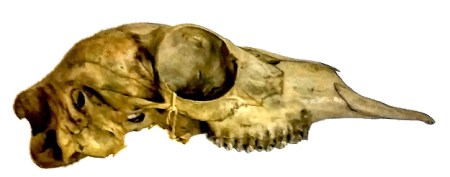
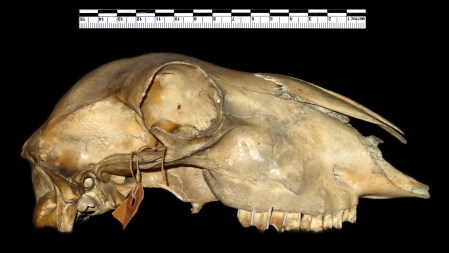
Last week I gave you this ungulate skull to try your hand at identifying:

mystery274

It isn’t made any easier by the fact that it’s a female, so it lacks the horns or antlers that make identification easier. As with many ungulates it looks a bit sheepy (as I’ve mention before), but it has some clear indicators that helped you rule out what it’s not.

Jake spotted that the size was about right for a Roe Deer, but the auditory bullae (the bulbs on the underside of the skull that house the ear bones) are too massive and the proportions of the braincase are quite different.

Joe vans also ruled out deer, since it lacks lacrimal pits (large openings in front of the eyes that hold scent glands in cervids). Joe also noticed that the mandible is extremely pinched in just behind the incisors.

The incisors themselves caught the attention of Allen Hazen, who noted the extreme size of the first incisor, which he correctly recognised as being a bit of a giveaway to some people, although only when considered in the context of a variety of other features.

While Daniel Calleri summarised these odd features and added the observation of the decent sized occiptial condyl (the place where the atlas vertebra attaches to the skull) and small paracondylar processes (the bony extensions either side of the occipital condyl and just behind the auditory bullae).

These sorts of observations are exactly what are needed to differentiate between species that are very similar in overall morphology. However, without either an excellent reference collection, or even better, a well researched key, it’s almost impossible.

Fortunately, there is a skull key for a subset of Antelope that occur in Tanzania, created by the Field Museum and the mystery object this week happens to be from a genus present in Tanzania. I’d recommend having a go at using the key, but if you’d rather just find out the answer I’ve provided a link to what it is here. Have fun with the key and enjoy your Easter!

Friday mystery object #274

Last week I talked about ungulates in collections being incorrectly identified as sheep. This week I have a specimen for you that is also not a sheep, although it does look a bit sheepish. Can you work out what it is?

mystery274

You can leave your thoughts in the comments section below – I’m not sure they need to be cryptic, but it certainly adds to the fun!

Friday mystery object #273 answer

Last week I gave you this mystery object to get your input on:

mystery273

It was labelled Ovis aries, which didn’t ring quite true for me, so I thought it would be good to see if you also had other ideas, since I’ve noticed that there is a tendency for ungulates of a certain size in museum collections to be assumed to be Sheep.

In other museums I’ve found female Red Deer, Gerenuk and on one occasion even a Badger skull that had been labelled “Sheep”.

mystery273-gerenuk

Labelled “Sheep” but actually a Gerenuk.

This is what a sheep looks like:

mystery273-sheep

You’ll probably notice the “Roman nose” that is quite distinctively sheepy, it also has no gaps between the premaxilla and maxilla and there is a small depression in front of the eye.

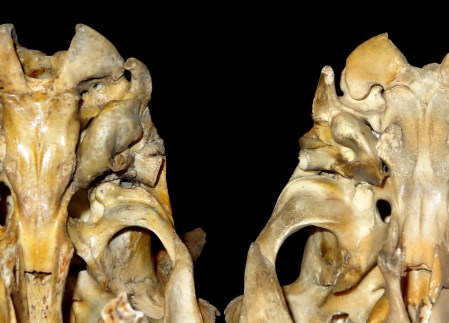
When you look underneath, one of the key things that jumps out is the difference in size of the auditory bullae (mystery on the left, sheep on the right):

mystery273-mystery_and_shee

So I’m pretty sure that the mystery object isn’t a sheep, but what is it?

There were lots of suggestions of exotic and interesting ungulates, but after looking at the skulls of a huge number of ungulates I can to the conclusion that Latinka Hristova and Jake were on the right track with the simple suggestion of Goat Capra hircus (Linnaeus, 1758).

Taking a look at Goat specimens on the incredibly useful Mammalian Crania Photographic Archive has convinced me that this is what the mystery object actually is. Not a million miles from Sheep I suppose, but they are different and it’s helpful finding some small differences that help distinguish between them.

Thanks for your input!