Friday mystery object #54

The Friday mystery object for this week is a skull specimen from the Horniman collections. Some weeks ago I suggested that I put together a guide to help with identifying skulls, which I have been doing as the opportunity arises (it should be ready soon). Since this guide will hopefully make it easier for you to identify skulls I thought I should make the most of my last opportunity to get one past you. So here it is:

As usual, you can put your suggestions, questions and general musings in the comments section below and I’ll do my best to respond. Meanwhile I will be thinking of a more anthropological object for next week (in line with suggestions made last week – see I was listening).

Good luck!

Friday mystery object #53 answer(ish)

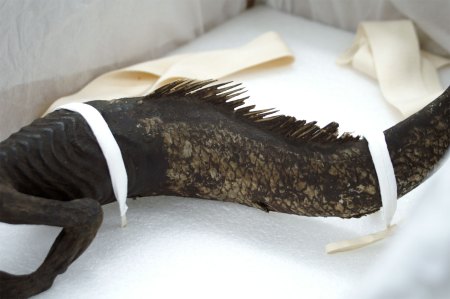
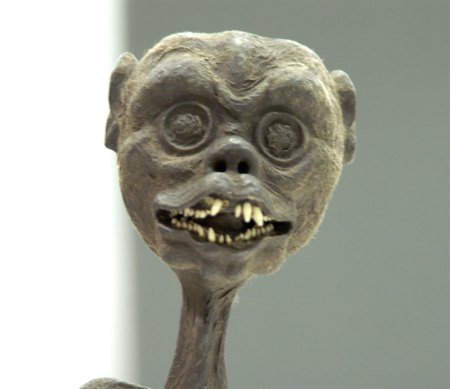
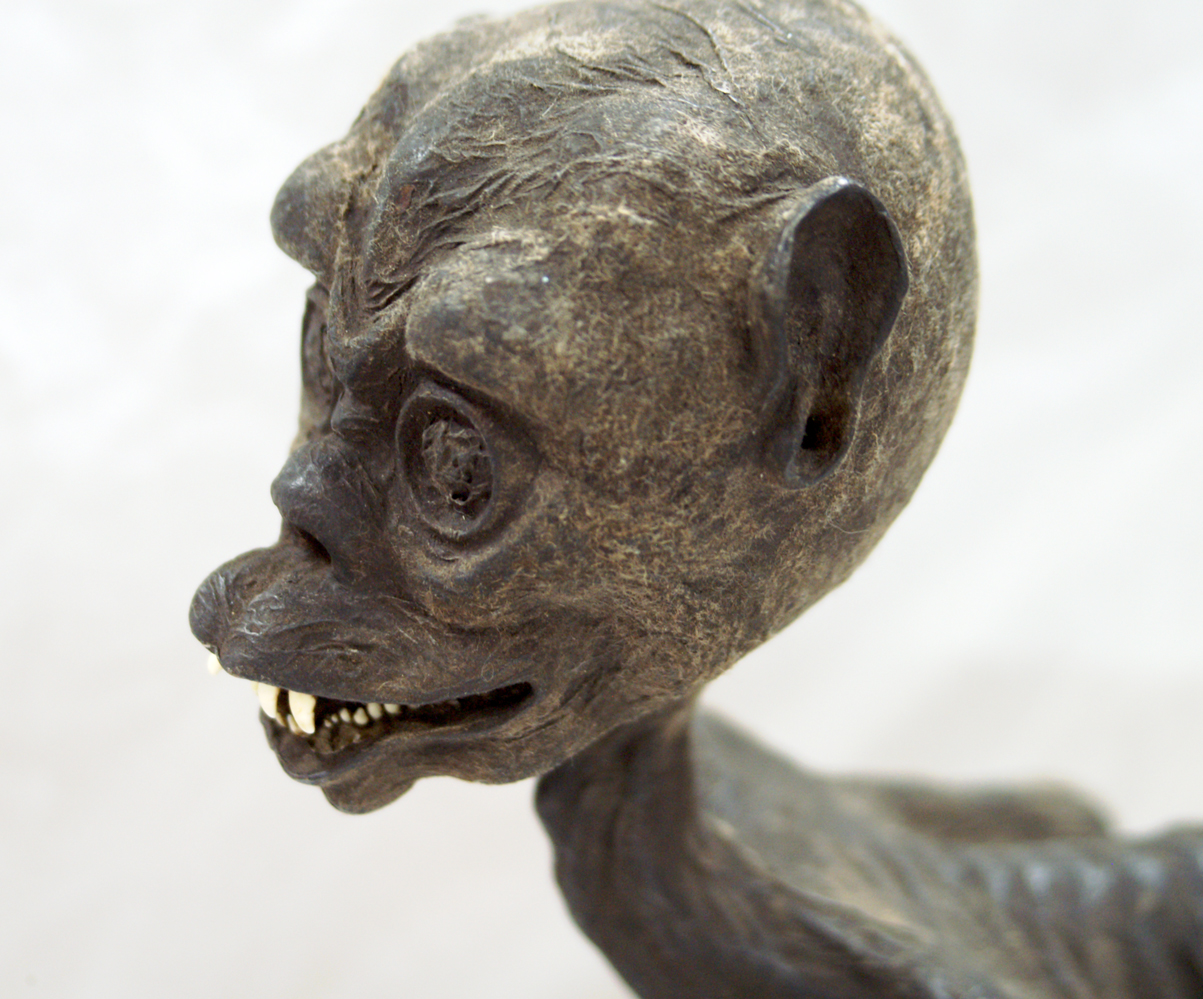
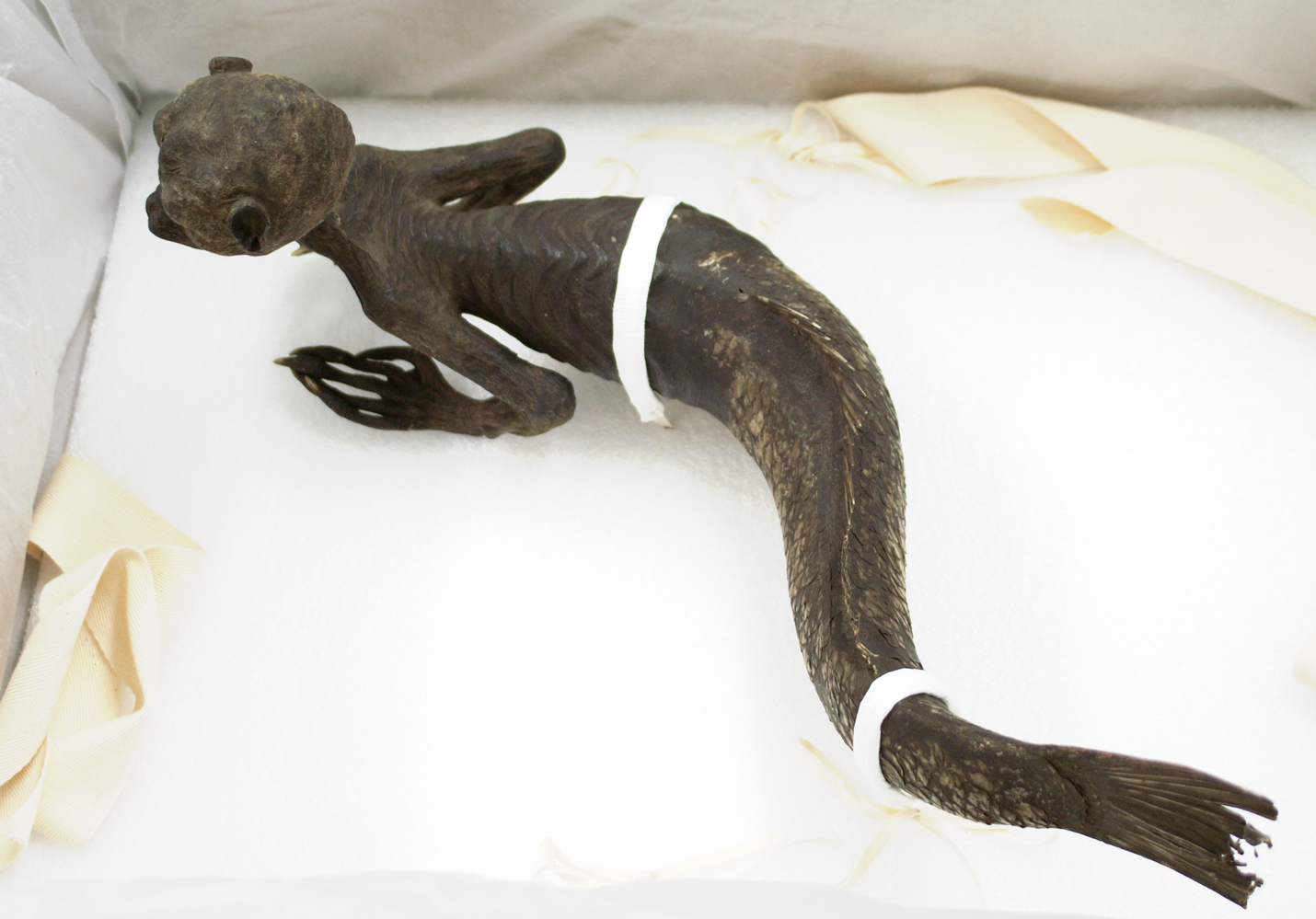
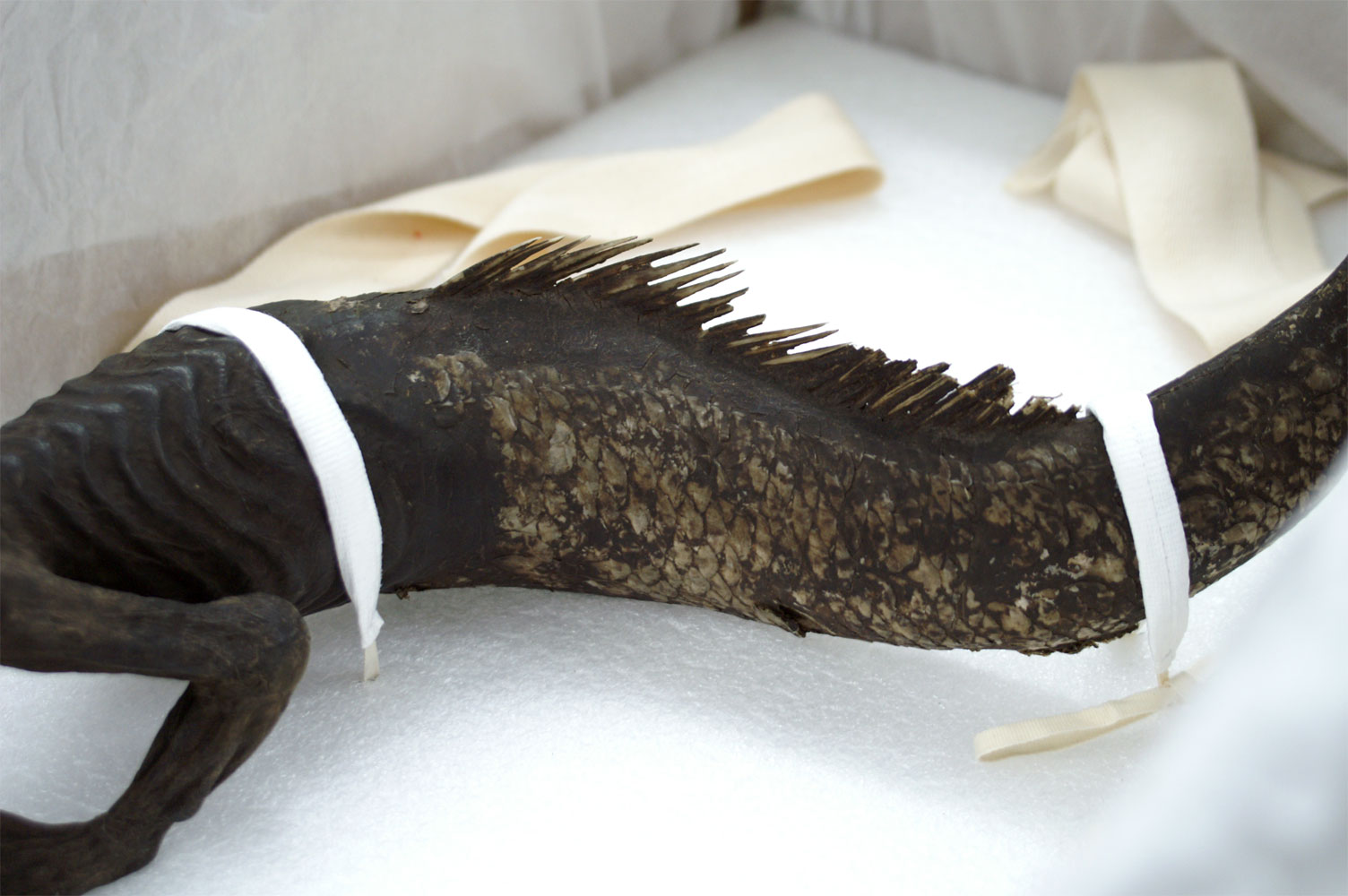
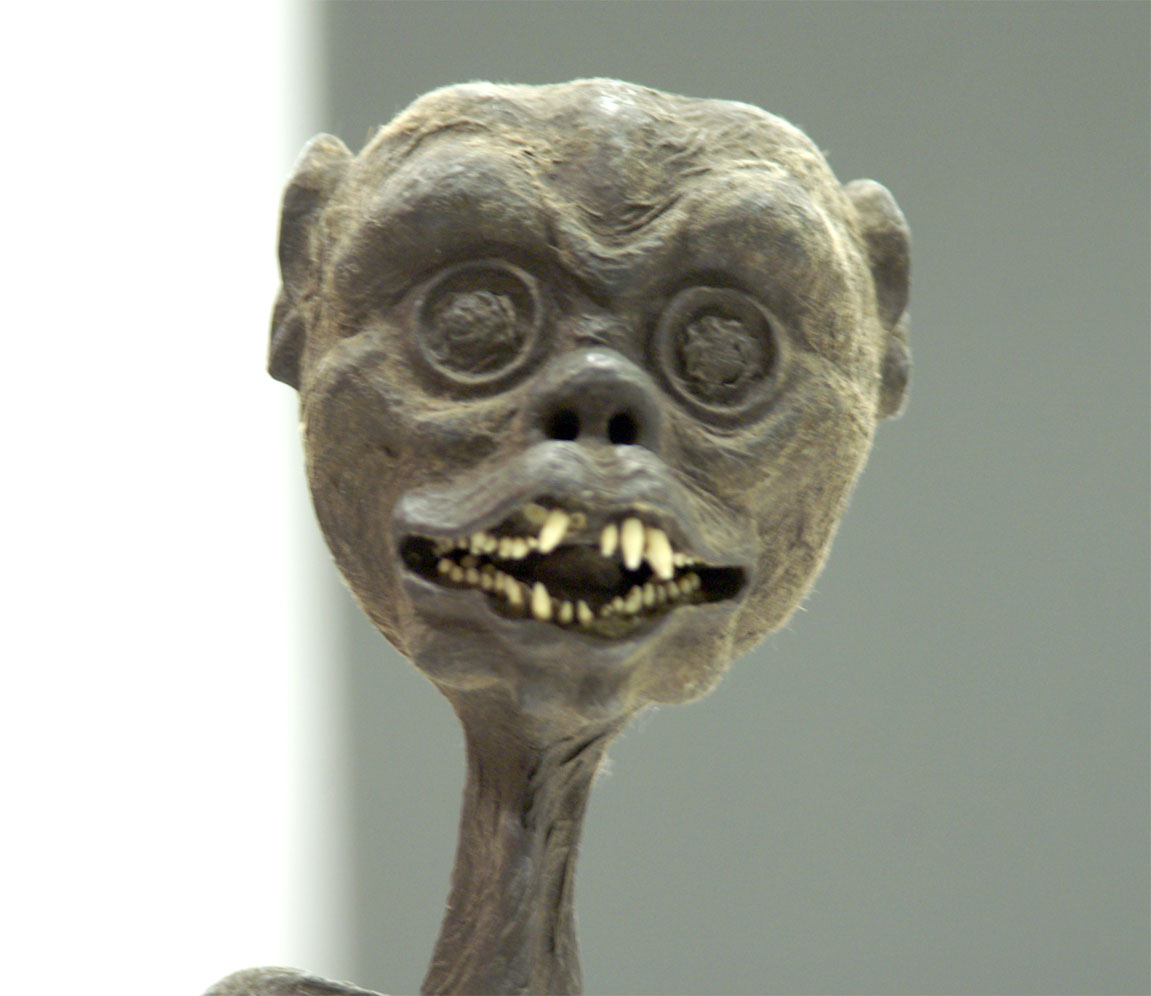
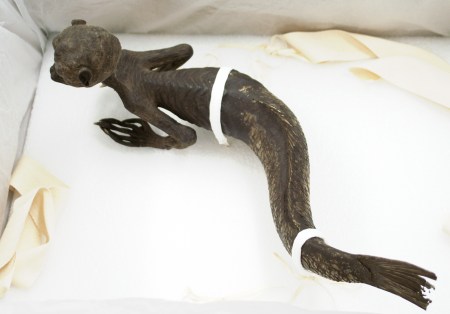
This will be my first (an hopefully only) mystery object answer that doesn’t really provide much of an answer. As I mentioned on Friday I am currently researching the construction of this object:

So far I have made good headway in working out what it’s not made of, but there are still a wide range of possible materials that could make it up. The specimen was CT scanned in an effort to get to the bottom of this issue, but it takes time for data to be processed and we may be waiting another week or two before I have the snazzy results needed to reconstruct how this is put together. Needless to say I will provide a full detailed post once the results are in.

Nonetheless, I have been able to work out some things about the specimen, much of which has been picked up by my eagle-eyed readers. The specimen is a Feejee mermaid (or a Japanese Monkey Fish) as spotted by Jake, these gaffs have been in circulation for a long time, although I’ll have more to say on their history when I dedicate a full-blown ‘blessay’ to this bizarre object. For now I will simply say that the tail is indeed from a fish (species yet to be ascertained) and the torso and skull are not from a monkey. I think the jaws may be from something like a wolf fish, based on the structure of the front teeth, but the 3D model derived from the CT scan will hopefully provide the information to make a more confident identification. Needless to say it’s not a real mermaid.

I apologise for not having a more informative answer this week, but rest assured that I will more than make up for it once the CT data come through. All that remains for now is to thank everyone for their comments, which are incredibly heartening and helpful – I will certainly be following up some of your suggestions, so this will be a bit of online community curation when finished. Please feel free to keep making suggestions – I will make sure that due credit is given where I follow up on an interesting observation.

More generally I will keep the Friday mystery object running and I’ll certainly try to include a broader range of objects. Thanks for all of your support!

Friday mystery object #53

Well, it’s been a year. Fifty-two mystery objects have been and gone with varying levels of confusion, information and interest. The first anniversary seems like a good opportunity to reassess the Friday mystery object, in particular whether it should continue and if so should it change?

Obviously the information for that reassessment needs to come from you – my audience, so please give me feedback in the comments section below – particularly about what needs to change to make the mystery object more interesting for you (a bit about yourself might be useful too – what kind of background do you have, what are you interested in and what other blogs do you follow)?

On to the anniversary object I have for you, it’s one of the Horniman’s more bizarre objects and it’s a favourite of mine for its sheer repulsiveness (click pictures for bigger images):
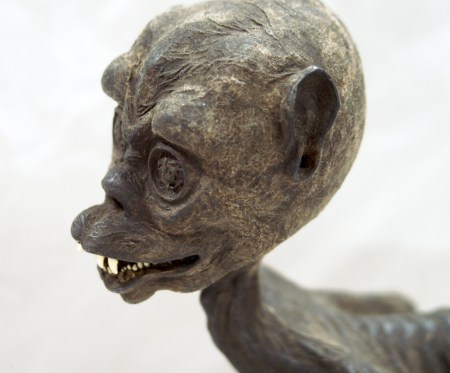
Now, I’m pretty sure you can all work out what it’s supposed to be, but the question that’s bugging me is what is it made from? In fact, in order to answer that question we recently took this object to the Saad Centre for Radiography where it was CT scanned so we could take a look inside without damaging the specimen. It was an awesome experience, which I will report for you in the answer to this object, although I am afraid that the answer may have to wait until a bit later than usual whilst the images are processed and I seek other expert opinions on what we’re seeing.

Of course, the keen eyes and vast brains of my audience are valuable resources that I would love to exploit, so please take the time to leave your thoughts, ideas and anecdotes in the comments section below. Whilst researching this sort of thing it’s the human responses, more than the materials, that make it fascinating for me – I hope you think so too!

Friday mystery object #52 answer

On Friday I gave you a different mystery object to the one I had originally planned, after my memory stick let me down. Nonetheless, it seems to have been an interesting one given the number of questions.

The first correct identification by Robert Grant was cleverly phrased, so as not to give the game away. Indeed, it seems as though the allusion to the song Alouette led many people off down the wrong track, due to its reference to skylarks. This combined with the object’s similarity to the shape of a whistle, identified early on by Jake, brought many of you to the conclusion that the object was a used as a musical instrument, whistle or game calling device. The string attached to the specimen certainly offers support that this object served a functional role for humans, although it may simply be part of the mounting for the original display of this object.

As it turns out, the reference to Alouette was a phonetic rendering of the taxonomic name for the genus to which this specimen belongs, which is Continue reading

Friday mystery object #52

I was getting excited about this being the first anniversary of the Friday mystery object, but I just realised that will be next week with number 53 (and I have something made of awesome lined up for that). Instead I will see my first year of mystery objects out with something hastily chosen from some old images I had on my hard drive, because my USB memory stick let me down. Don’t get me wrong though, this is an elegant structure that is deceptively simple and is worthy of mystery object status. So here it is:

So, do you have any idea what this is?

As usual you can put your suggestions, thoughts and questions (and random guesses) below and I will do my best to answer. Good luck!

Friday mystery object #51 answer

On Friday I gave you a fairly straightforward mystery object to identify – at least straightforward in that it wasn’t an odd section or a fragment of bone, instead it was a very characteristic skull:

As a result a good number of you correctly identified this, with zinjanthropus first past the post with a general identification, Neil with the correct genus and David Craven with the full species identification. So well done everyone, this specimen is indeed the skull of a Continue reading

Friday mystery object #50 answer

On Friday I gave you a multipart mystery object from the wonderful Grant Museum of Zoology:

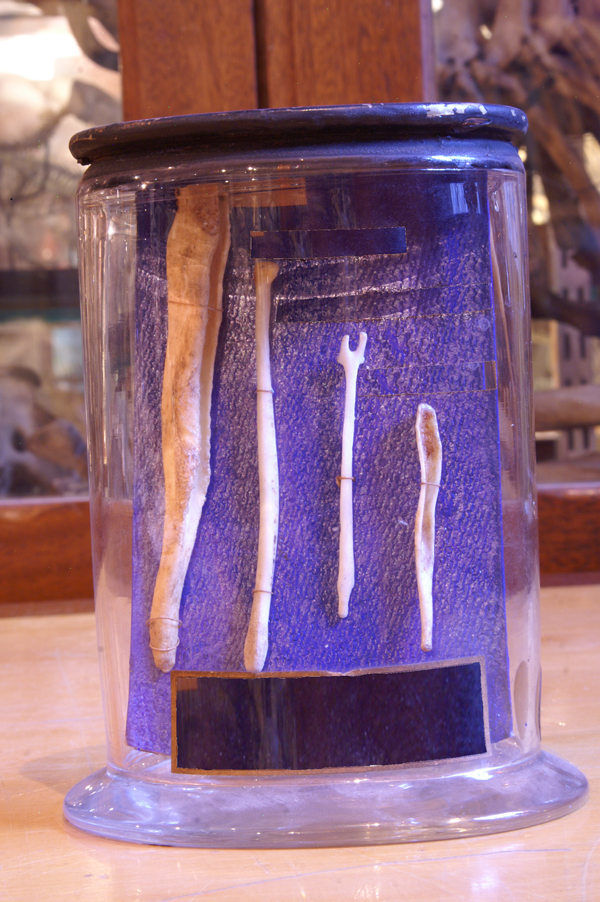
This was easy in part and horribly difficult in part. The bones themselves were quickly identified as being bacula (plural of baculum) or os penes (penis bones) by Shane and SmallCasserole, but then there was confusion about which species they might  belong to. Matthew Partridge got one right, but after that the guesses went a bit wide. Here’s an unedited image that has the labels attached: Continue reading

Friday mystery object #50

Crikey, it’s my 50th mystery object already – in two weeks that means it will have been running for a full year. How time flies. To mark the half century of these posts I’m giving you a real challenge supplied by the excellent Grant Museum of Zoology, which has just closed its doors in order to be relocated whilst building works take place. The museum will be closed to the public until next February, when it will reopen in a new location. So here’s the challenge:

Any idea what these are, and (here’s the incredibly trick bit) which four species they might belong to? Can I request that those of you with a biological background concentrate on the harder question, as it will give my non-specialist audience an opportunity to work out what these bits are.

As usual, answers, observations and questions in the comments section below. Good luck!