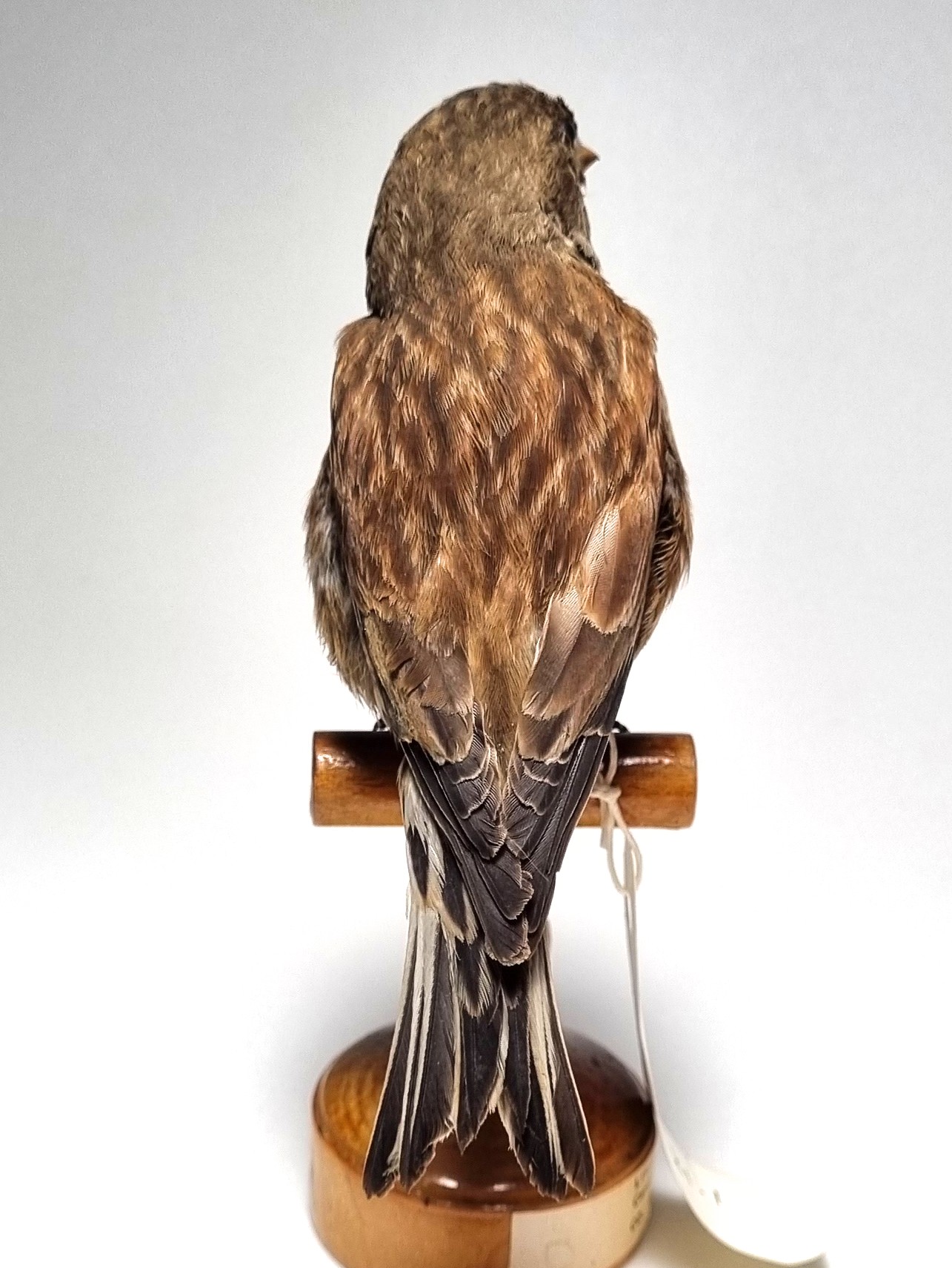
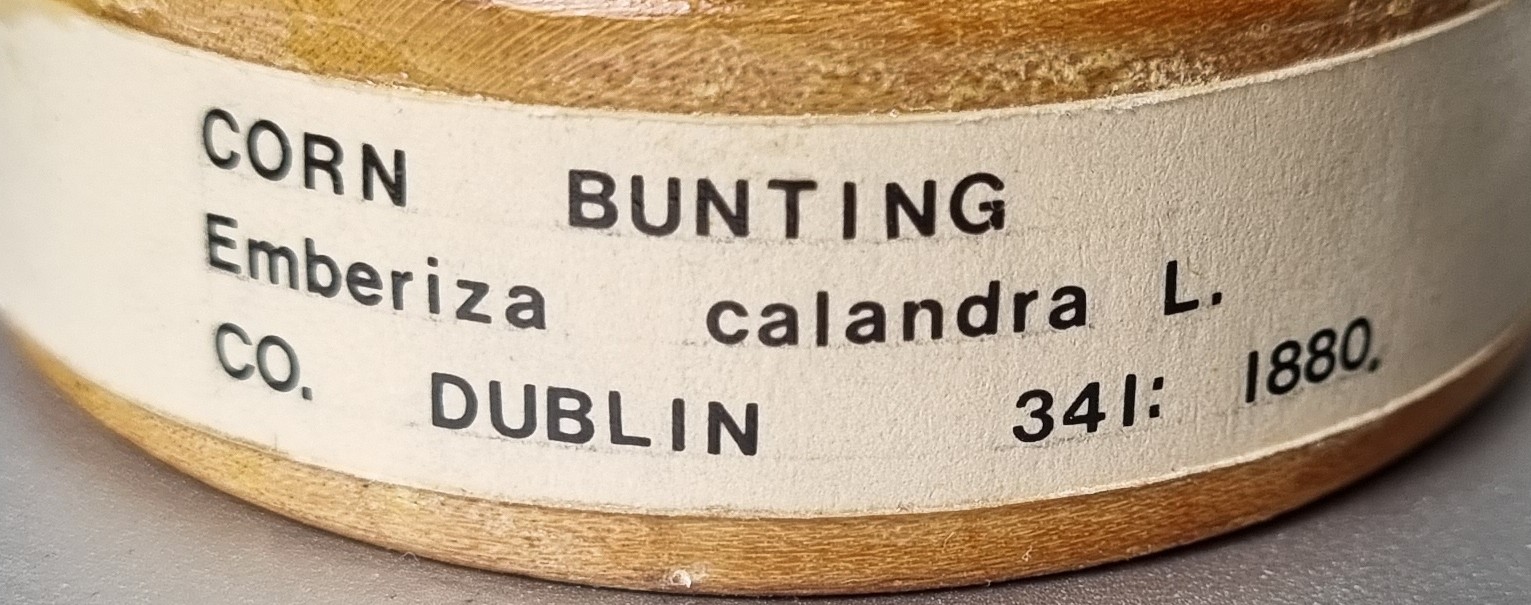
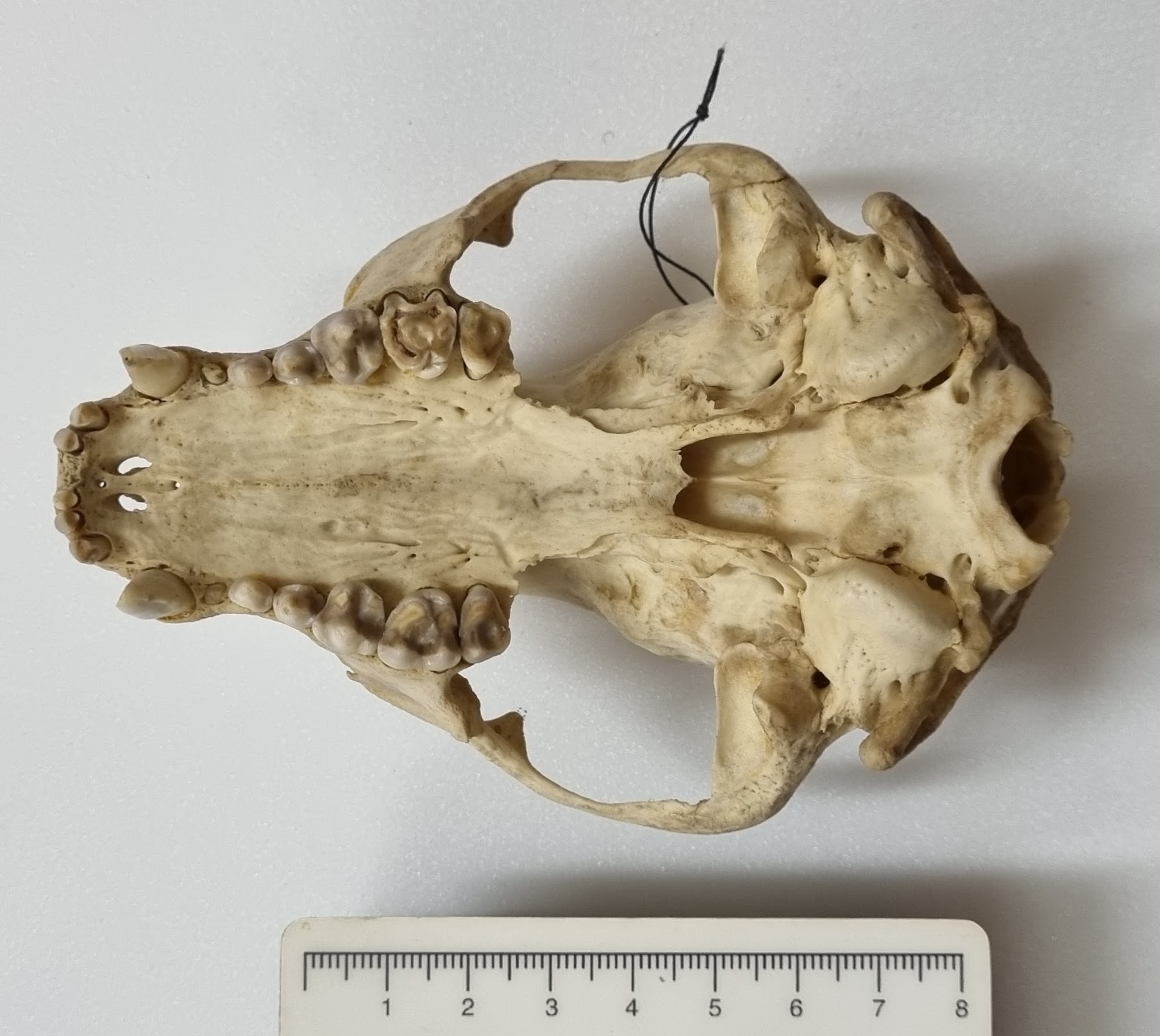
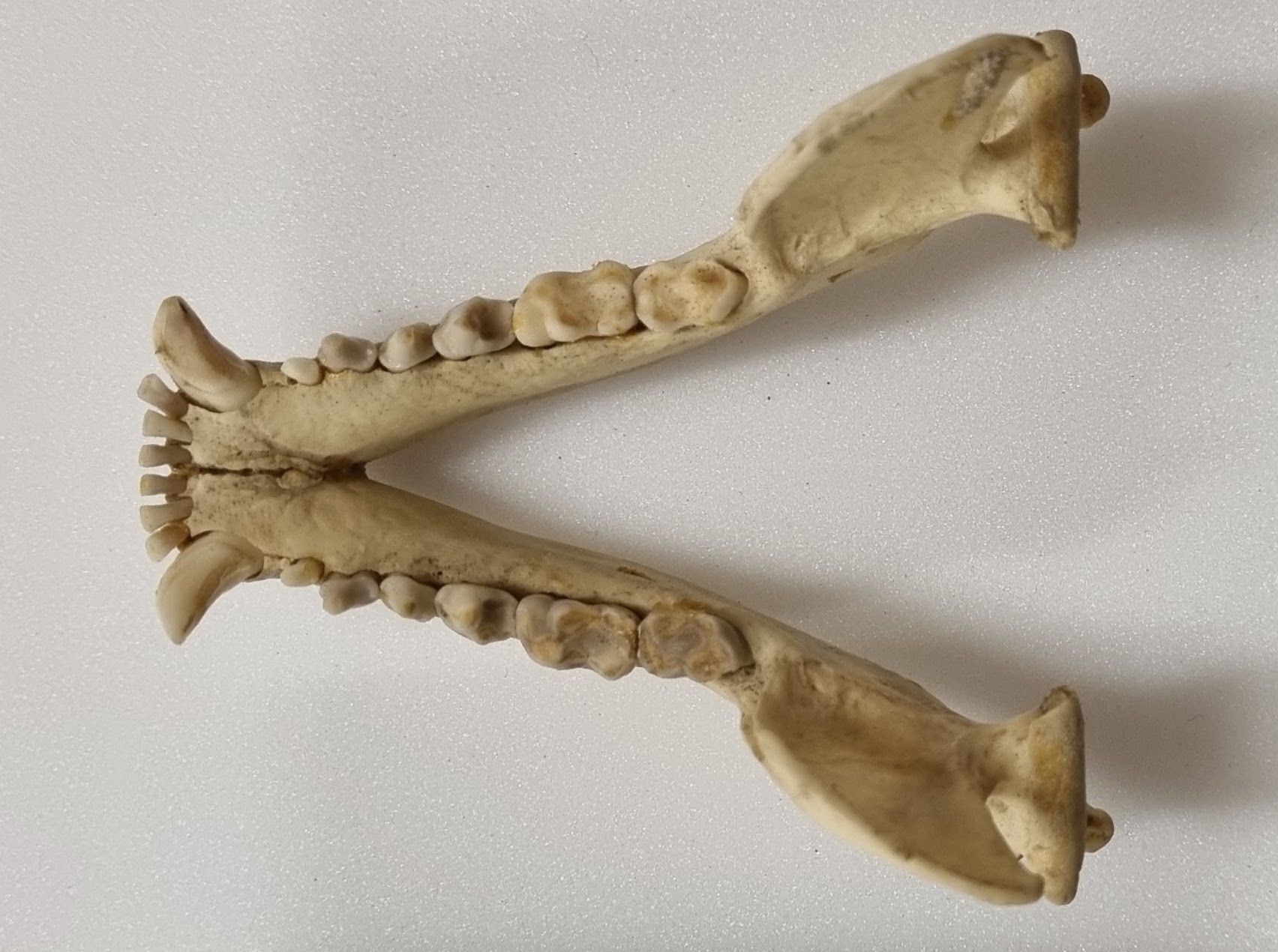
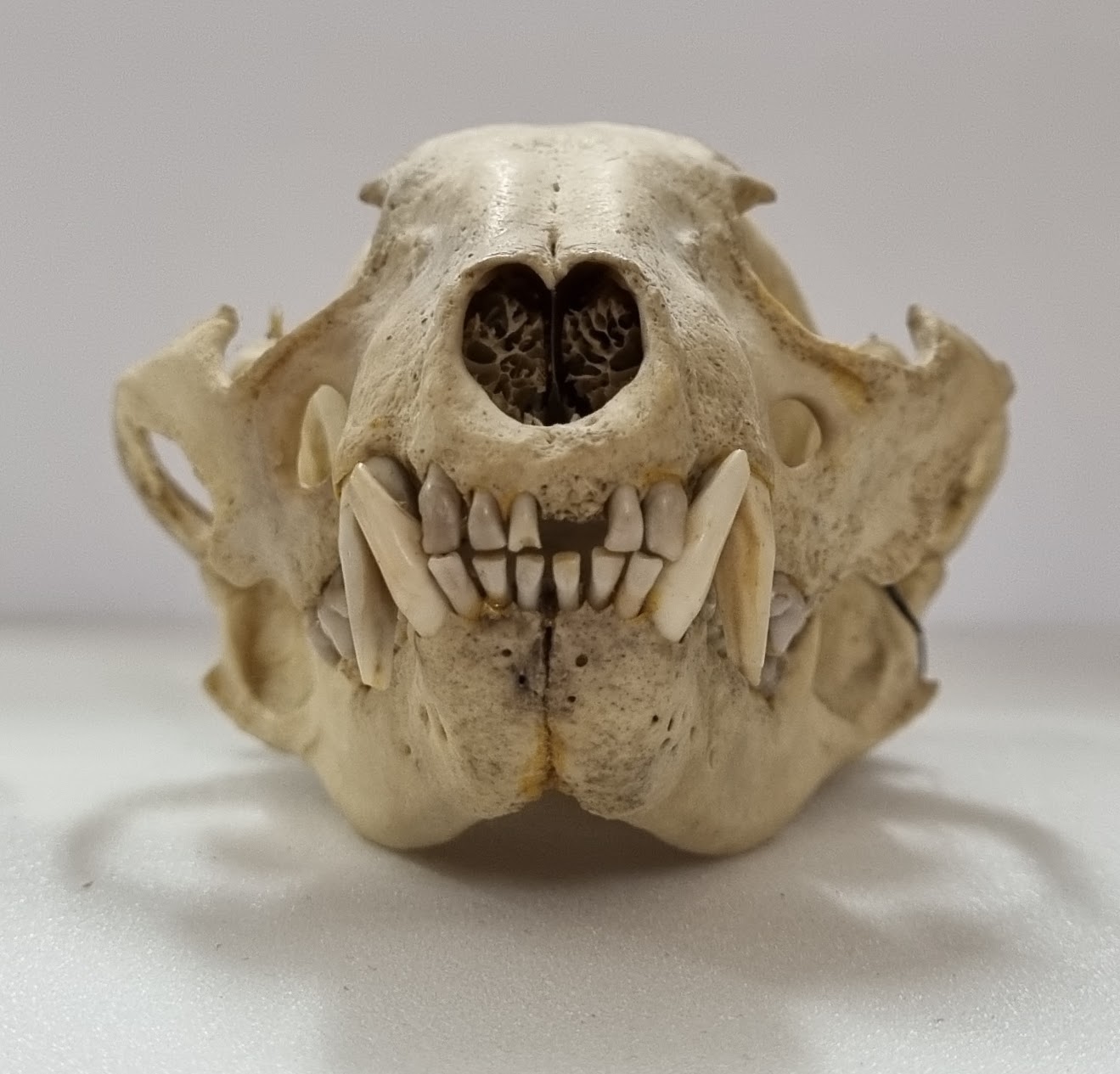
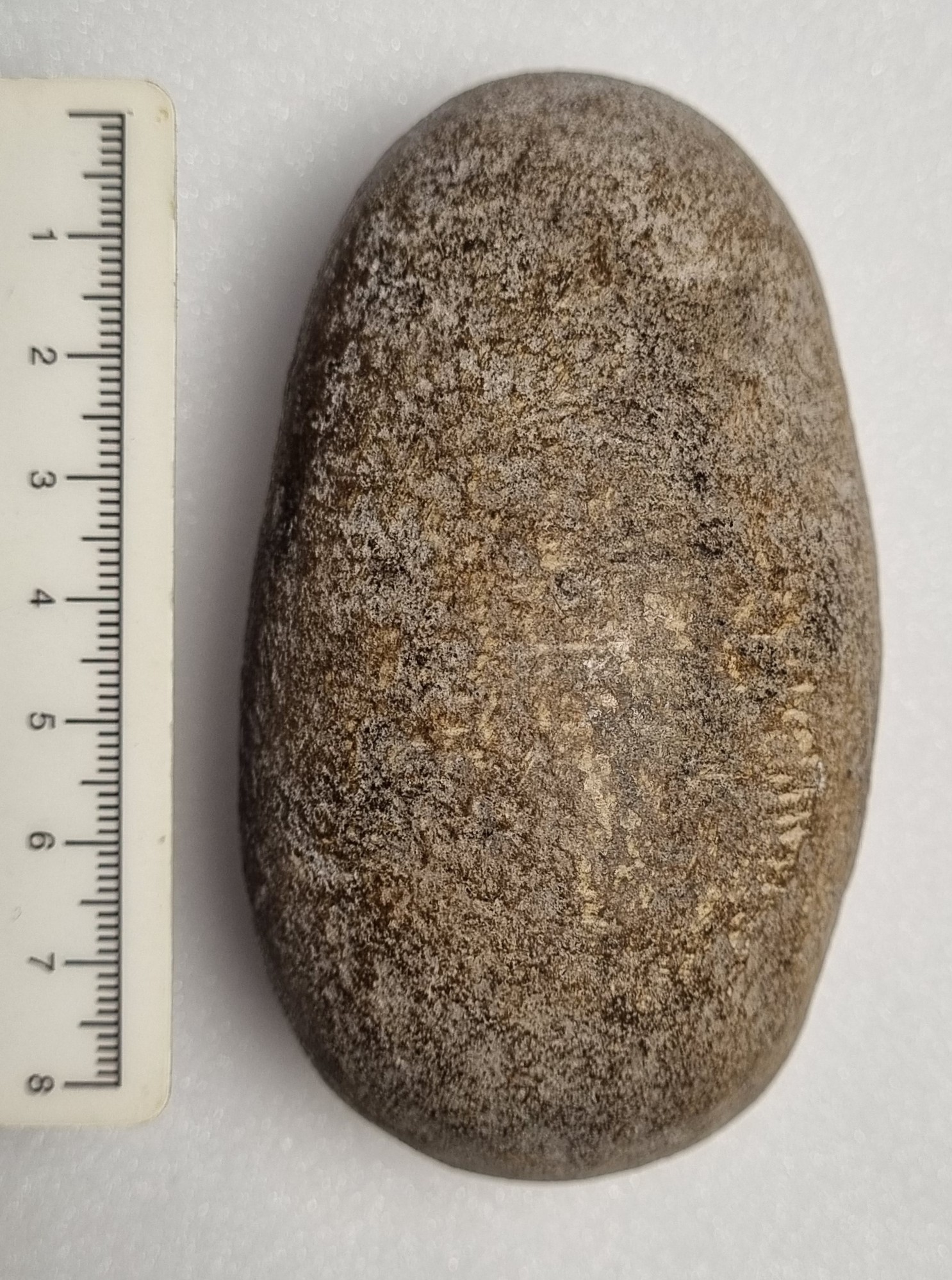
Friday mystery object #451

Happy New Year!
2023 has started off with a bit of a bang. The Dead Zoo has been given the go-ahead for the next phase of a major redevelopment project, and yesterday I signed an employment contract accepting the position of Keeper of Natural History at the National Museum of Ireland, so it looks like I have a busy few years ahead!

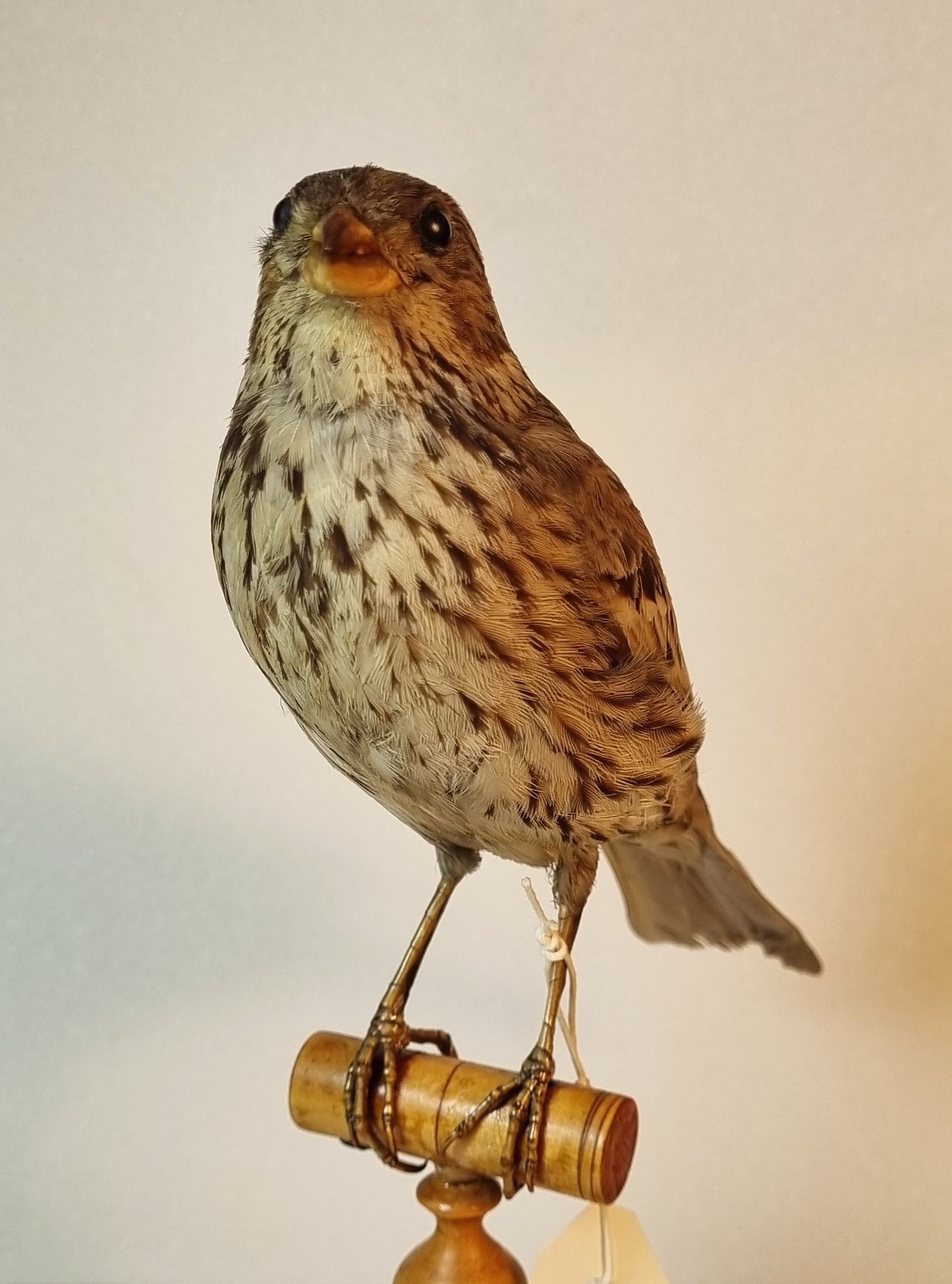
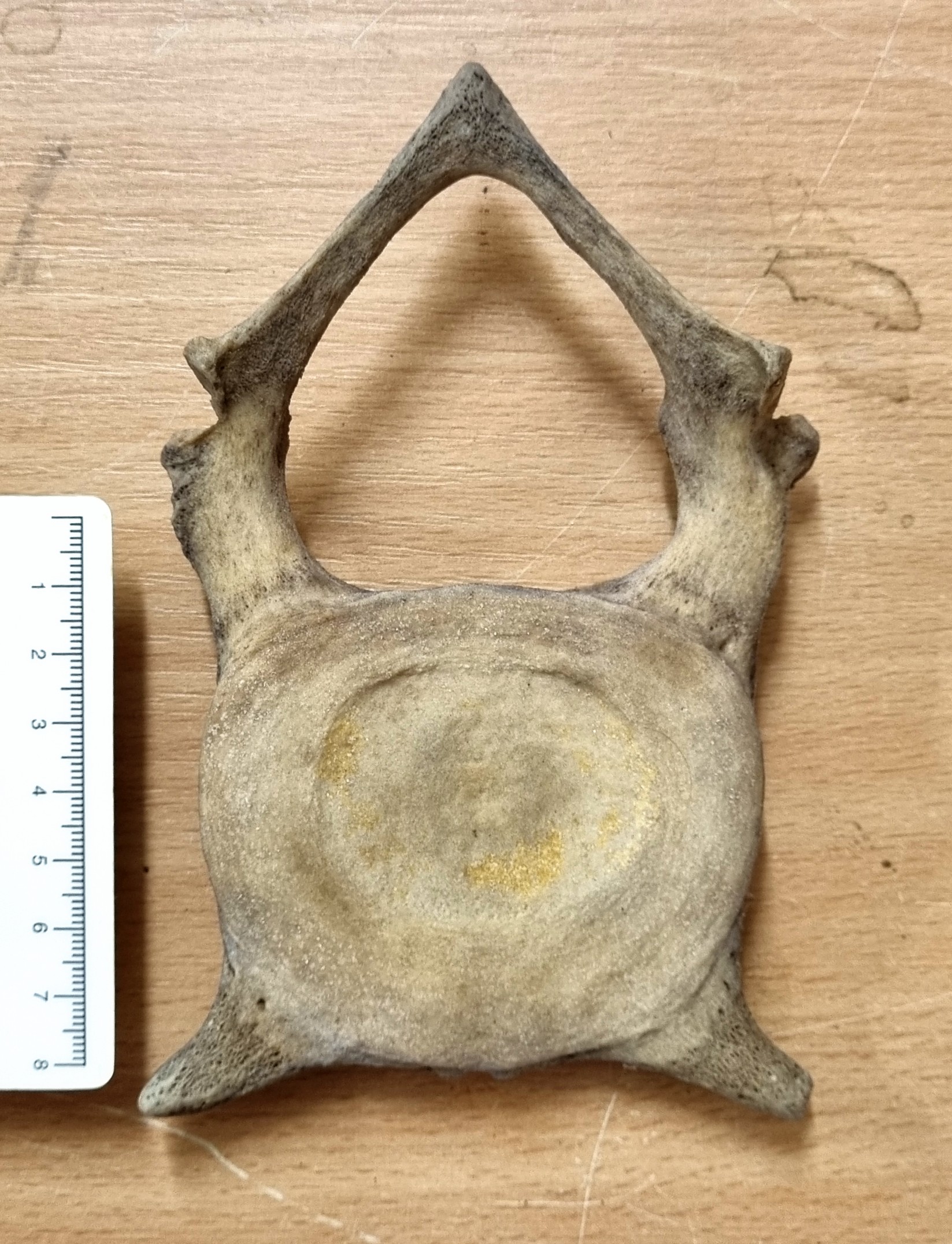
But that has nothing much to do with the mystery object, so here’s the specimen I have for you to identify:

It’s probably a bit on the easy side for anyone with an interest in ornithology, so if you know what this is, please keep your answer cryptic to give everyone else a chance. If not, I hope you enjoy the challenge!

Friday mystery object #450 answer

Last week I gave you this mystery object to have a go at identifying:

Perhaps not the most festive of objects to consider over the Christmas weekend, but it’s a very interesting one that is on display in the Museo Nacional de Ciencias Naturales in Madrid.

I had a pretty good idea of what this was likely to be as soon as I saw it, based on my memory of a badly pest damaged taxidermy specimen of this species I saw about 12 years ago. But, the skull shap alone is distinctive, and the fringe of feather stumps around the eyes makes this fairly staraightforward to work it out – and a lot of you did just that.

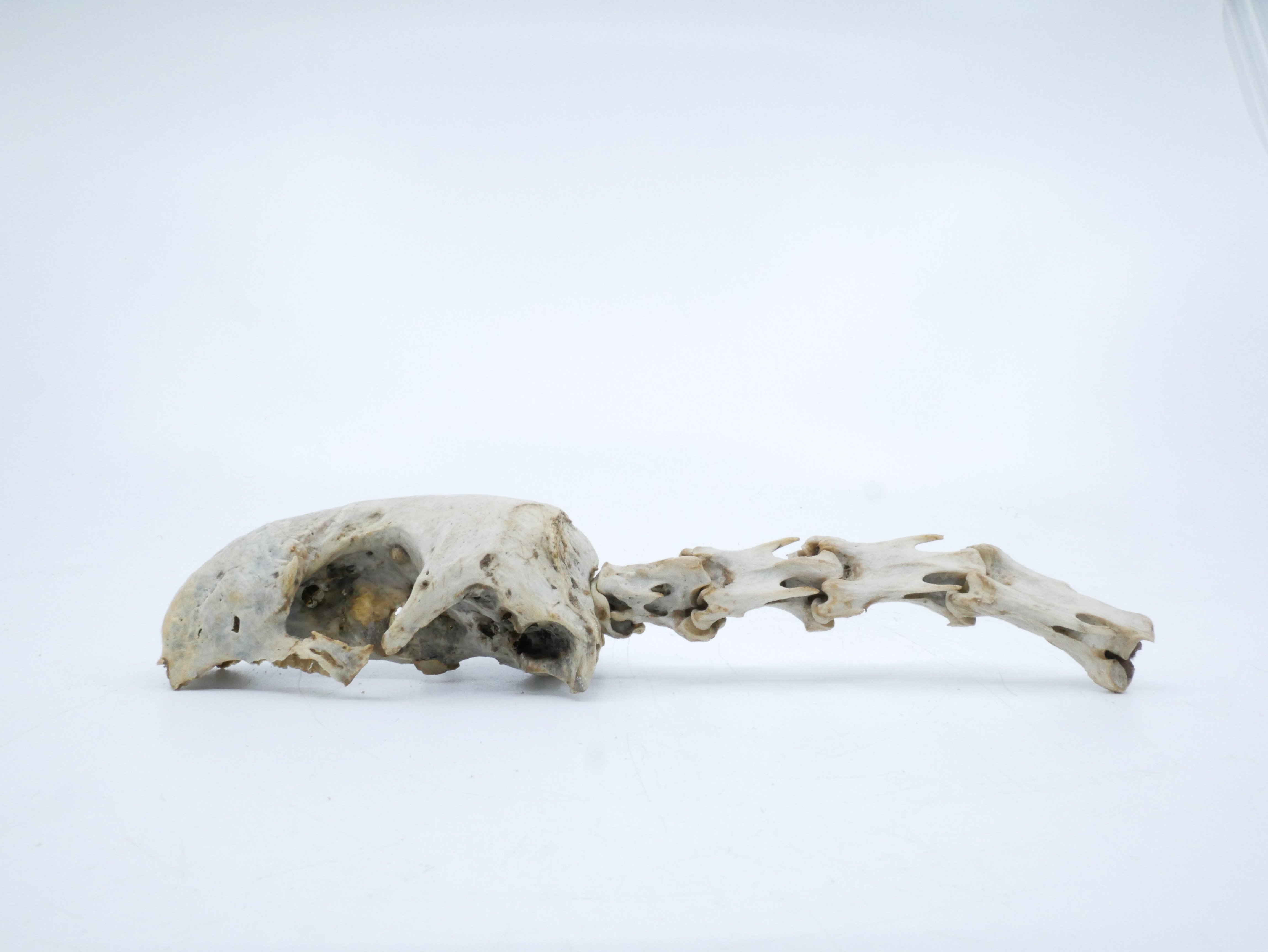
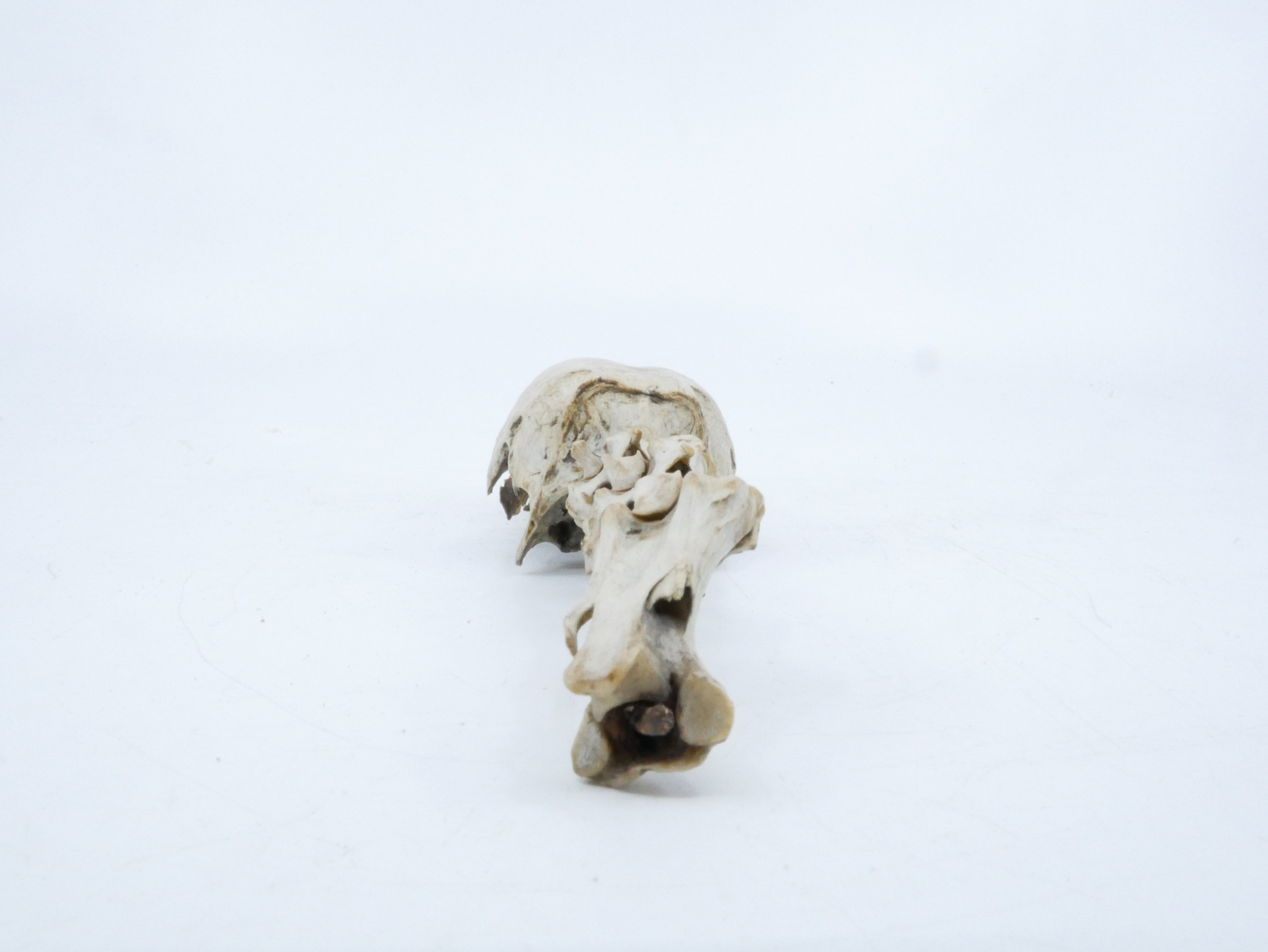
This is the partially mummified skeleton of a Barn Owl Tyto alba (Scopoli, 1769).

That fringe around the orbits is made up of the nibbled down rachides (the stiff central vane of the feather is called a rachis and rachides is plural) of the feathers that created the facial disc. This structure acts a bit like a radar dish to help channel sound into the auditory openings (AKA earholes), and it’s what gives owls that distinctive flat-looking face, belying the shape of the underlying skull. The skull itself is particularly long and low for an owl, which is what screams Barn Owl to me, as other owls have a higher domed skull and relatively shorter bill.

You may have seen images of a similar looking specimen in the last couple of years, as a photo of a specimen on display as part of a special exhibition in Museum Natur und Mensch (Museum of nature and man) in Freiburg, Germany did the rounds on Twitter. Unfortunately I missed that exhibiton, but Markus Bühler did visit and wrote about it on his blog, which I strongly recommend taking a look at.

I hope you enjoyed the Christmas mystery object this year – let’s see what I can find for you in 2023. Have a very happy New Year!

Friday mystery object #450

This festive-feeling Friday, I have a mystery object for you that I spotted in Museo Nacional de Ciencias Naturales in Madrid earlier this year:

This specimen is part of an exhibition showing some of the historical cabinet type displays from the early formation of the Museum. I couldn’t find a species identification, but I think I know what it is. The question for today is, do you?

Let me know what you think in the comments below – I’d be fascinated to hear your thoughts.

Have an enjoyable festive season!

Friday mystery object #449 answer

Last week I gave you this fairly distinctive mystery object to identify:

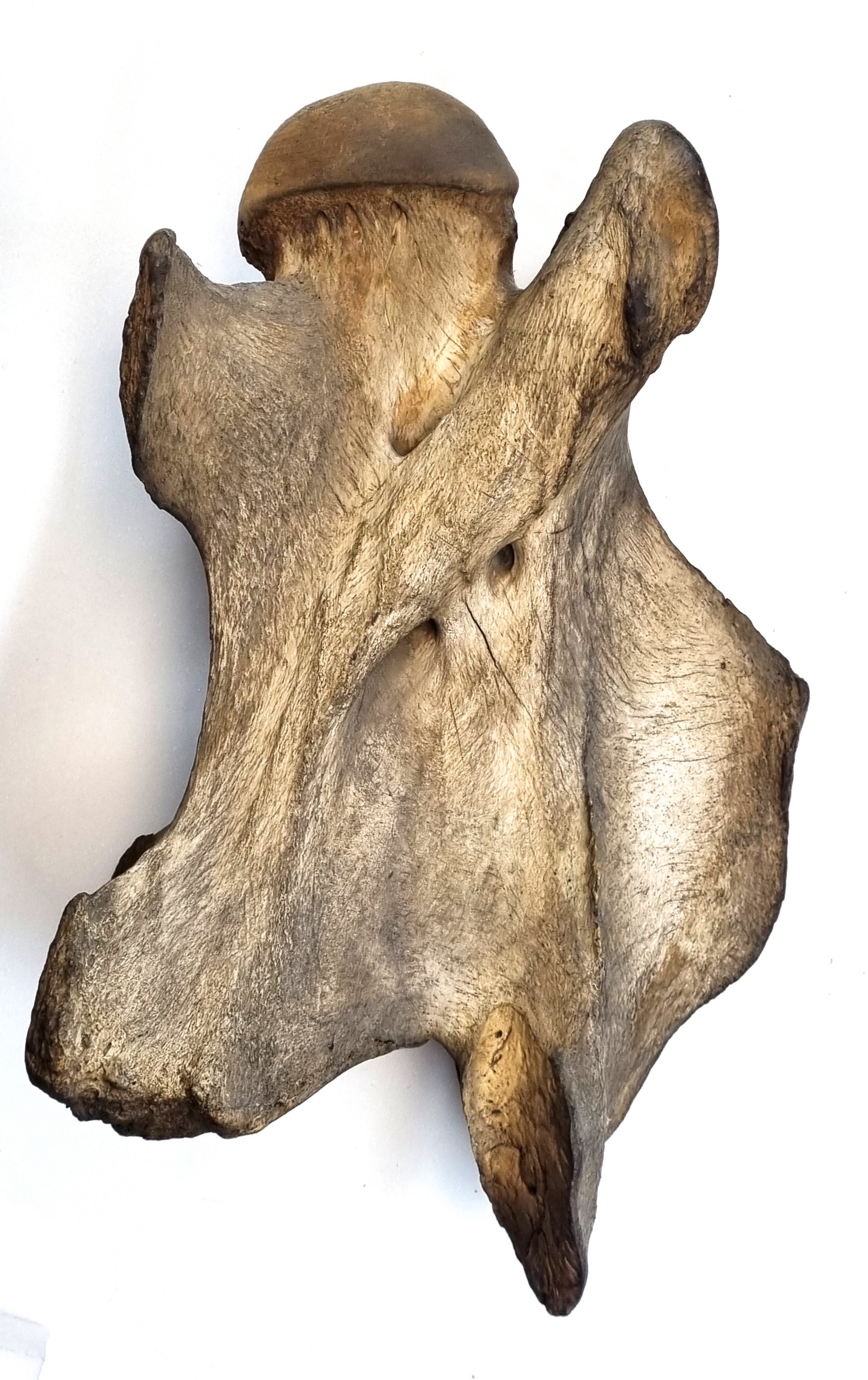
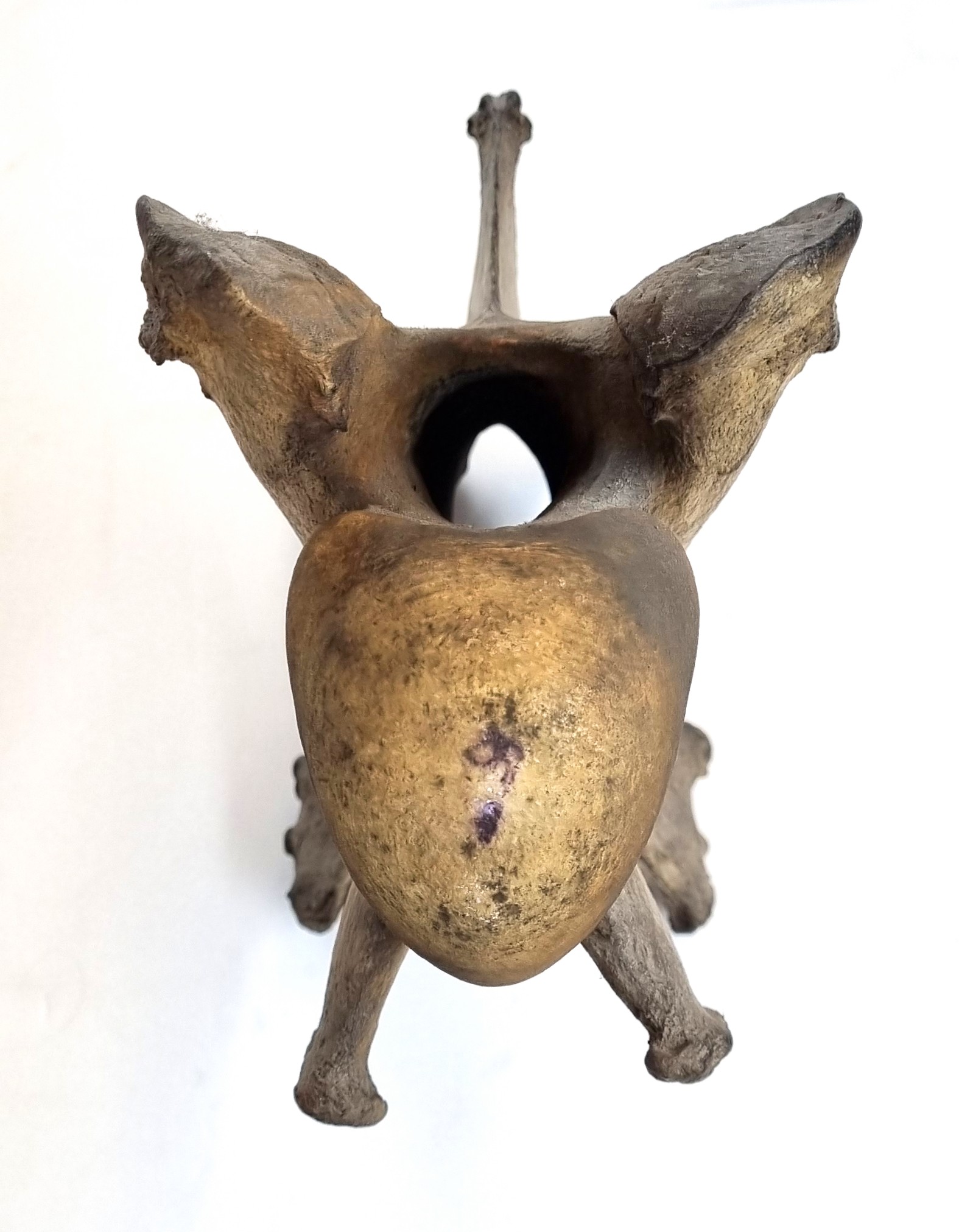
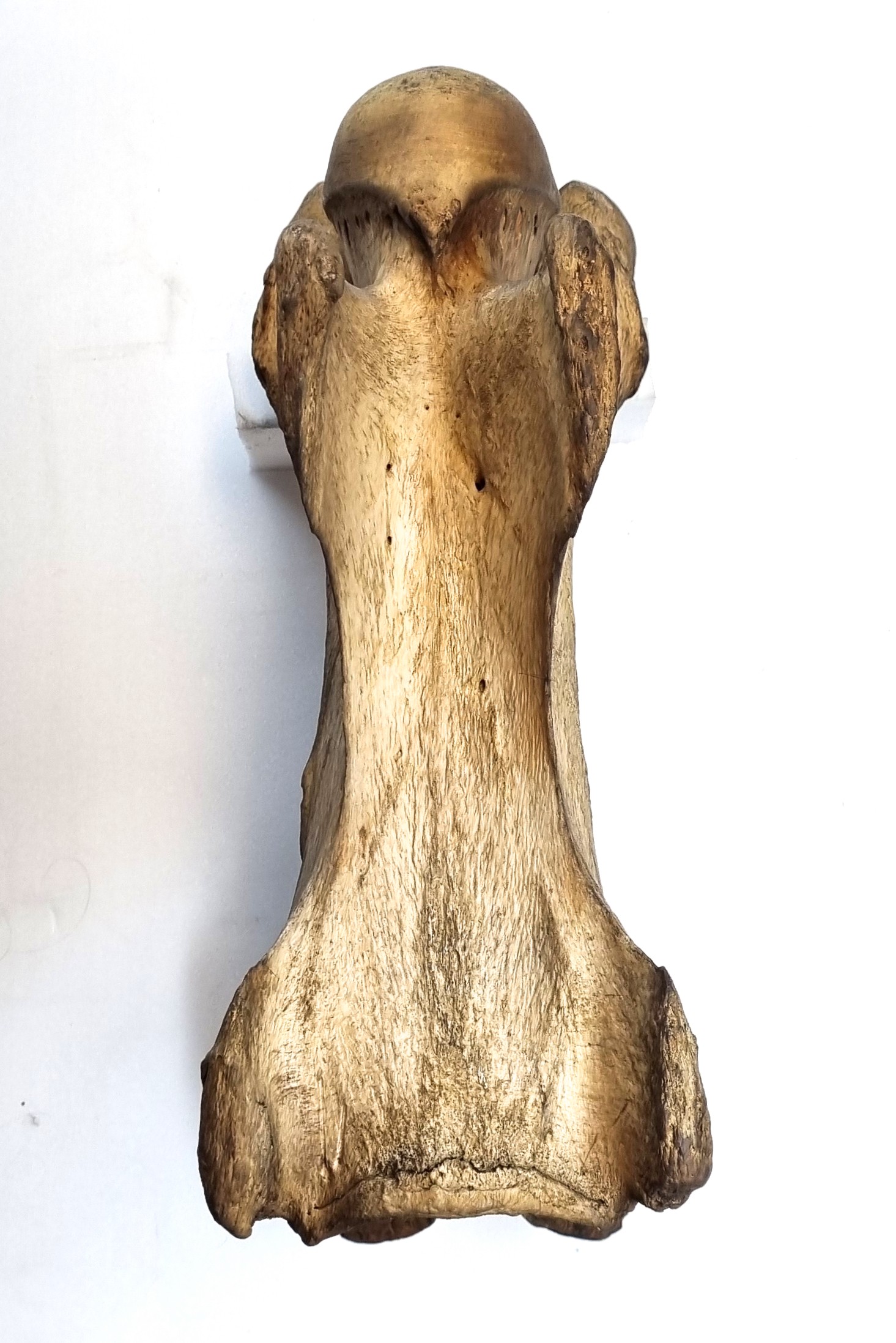
It’s a vertebra, it’s big and it’s very long. Perhaps unsurprisingly, that made it a fairly easy mystery to solve and most people correctly identified the species, although James Bryant went one better and recognised this as the sixth cervical vertebra of a Giraffe Giraffa camelopardalis Linnaeus, 1758. James also went on to share an interesting paper comparing the cervical vertebrae of the Giraffe and its closest living relative, the Okapi.

I found this specimen quite interesting beyond the extreme elongation, as it demonstrates quite a lot of asymmetry, which is a little unusual for vertebrae:

My guess is that this reflects a degree of “handedness” when fighting – and if you’re not familiar with what that looks like, you can see what I’m talking about here:

As it turns out, a preference for a particular side when fighting in Giraffes has been observed and was reported in a paper published by Granweiler et al. in 2021, so this asymmetry may indeed have a functional cause (perhaps testing this could be a nice student research project for someone?)

This ability of collections to inspire and help answer new questions, that help us better understand our natural world, is a huge part of why I love working in museums. It’s also why I enjoy sharing some of these objects with you here, so I get a chance to hear your thoughts – it means I learn something new every time. Thanks!

Friday mystery object #448 answer

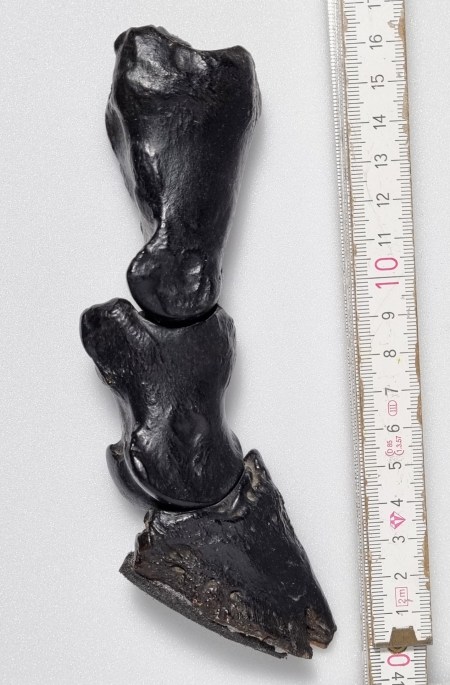
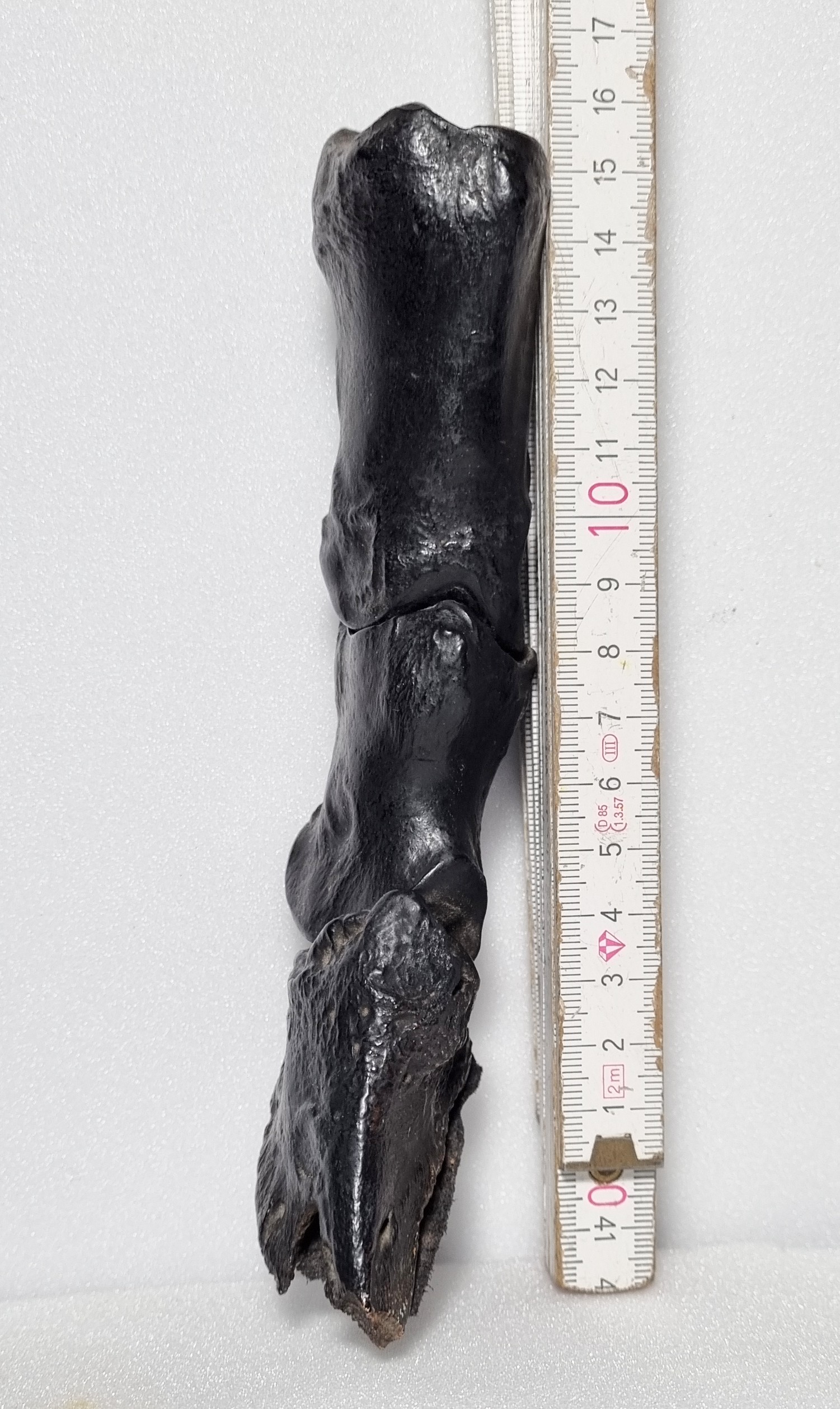
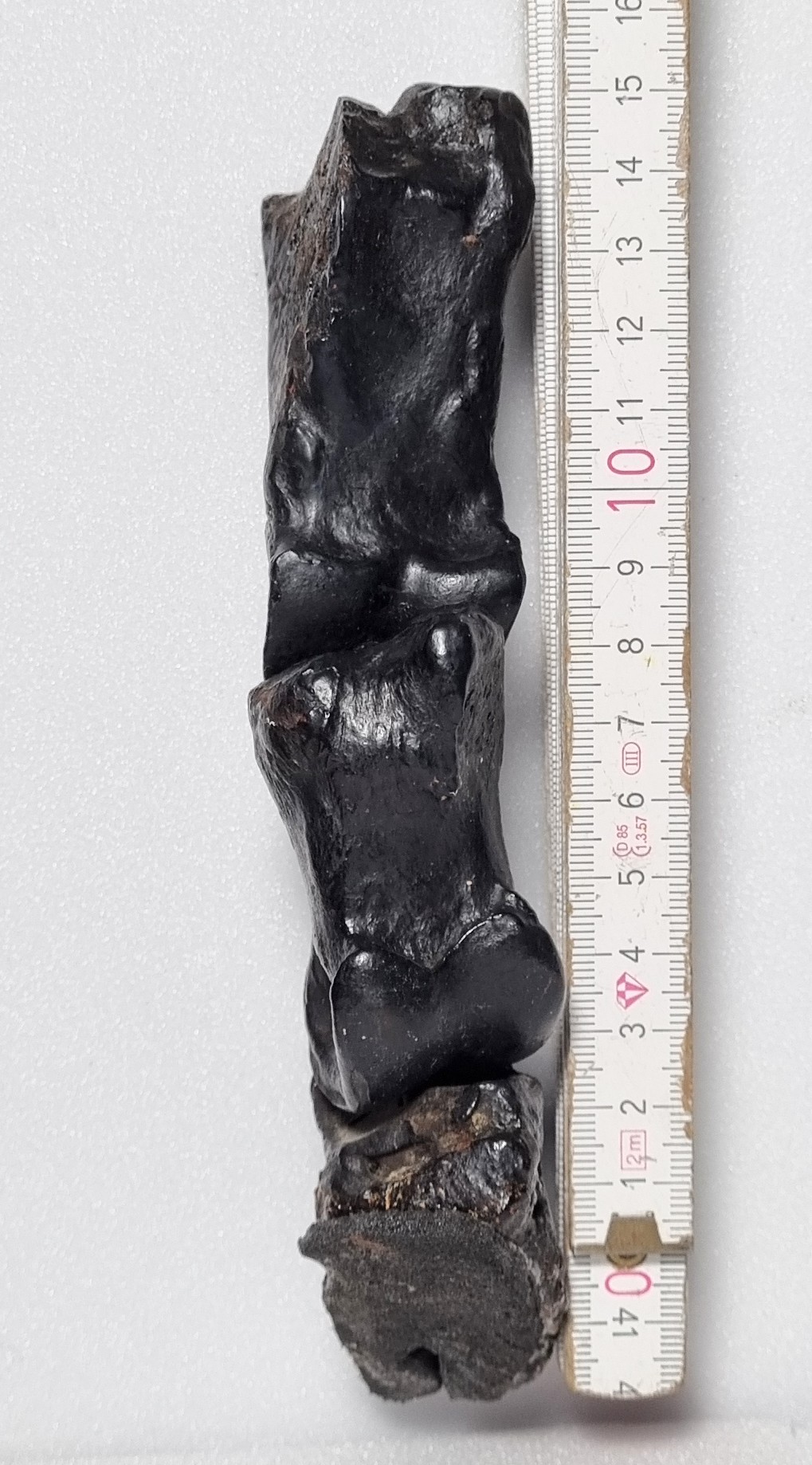
Last week I gave you these bones to have a go at identifying:

These are of course three toe bones (AKA phalanges) from a large artiodactyly. The staining of the bone suggests that it’s a fossil and the fact that I work at the Dead Zoo in Dublin might have offered a contextual clue…

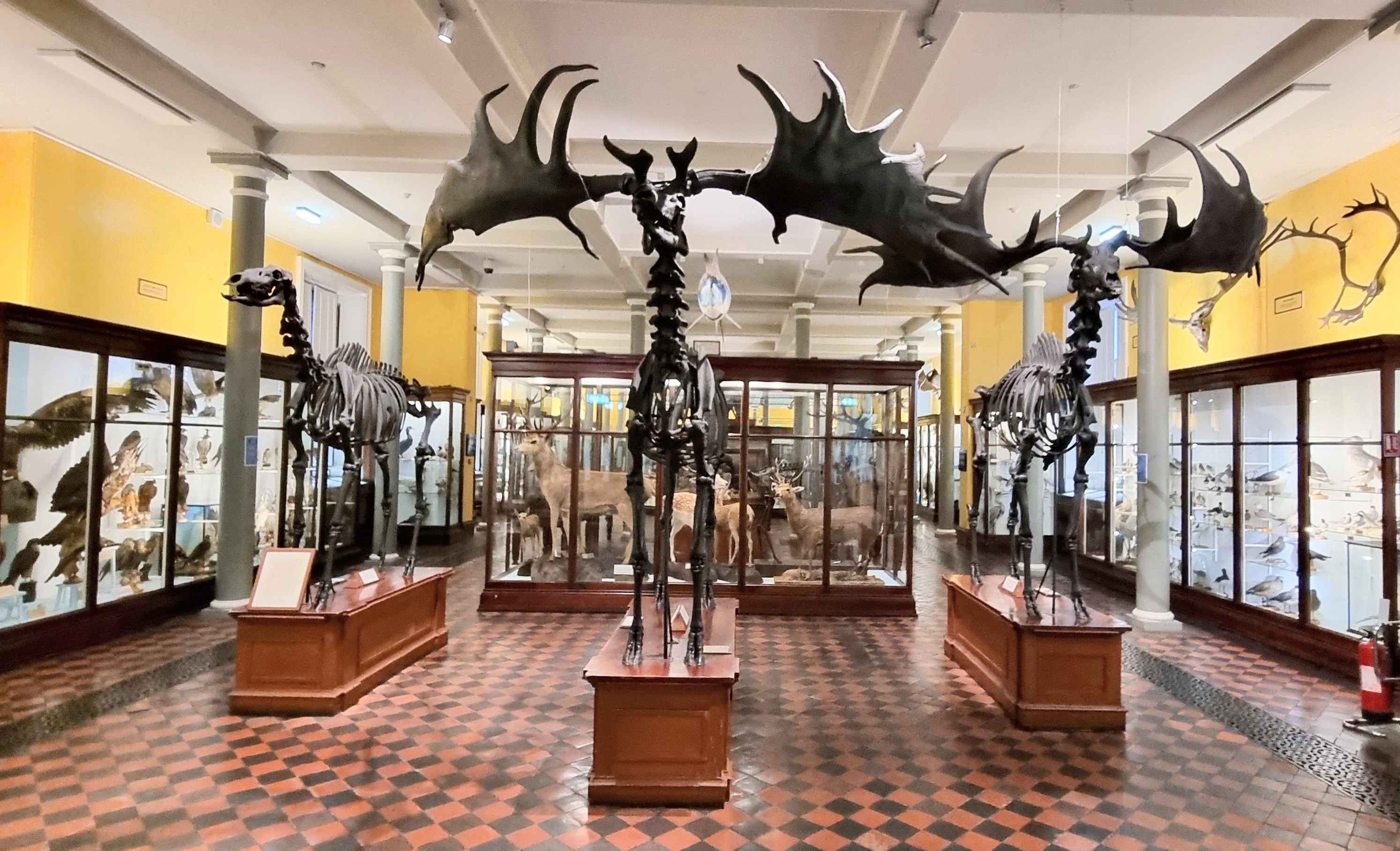
Three Giant Deer (female and two males) at the entrance to the Dead Zoo Irish Room gallery.

This is of course the proximal, medial and distal phalanx (the distal phalanx also being known as the ungual) from the outer side of the right hind leg of an Irish Giant Deer Megaloceros giganteus (Blumenbach, 1799). Well done to all of you who worked that out (to any degree of accuracy!)

We have quite a lot of Giant Deer in the collections of the Dead Zoo, with over 600 records on our database, ranging from individual bones to complete skeletons. This offers an unusually large sample for researchers and artists wanting to work on these huge, extinct cervids.

This toe came from the female skeleton on display in the Irish Room of the Museum. The wire armature running through holes drilled through the bones that held it in place failed. This is likely due to a combination of factors, since the skeletons were mounted well over a century ago, and the armature is made of iron, which will have been gradually corroding over time.

I suspect there may also have been an element of ‘messing’ by a member of the public, since the skeletons are on open display and these toes were well within reach of young children or even in the bashing zone of a backpack if some decided to sit on the specimen’s plinth. Obviously we try to discourage this sort of thing, but on a busy day it can be hard to keep track of everyone in the space.

It’s a shame this happened recently, as we undertook an overhaul of the Giant Deer on display before we reopened the Museum earlier this year. Fossil preparator and conservator Remmert Schouten worked with me to build new sections of armature to remount a skull, he cleaned the specimens, and undertook a variety of small repairs (including replacement of an ungual on one of the other specimens) to get all of the Giant Deer looking their best.

I’ll leave you with some of the photos and a couple of videos, one with Remmert talking about the work and one with me setting the context and overview of the project. It was an intense week of work onsite, but very satisfying to see the transformation of the specimens!

Friday mystery object #448

This week I have a bony mystery object for you to have a go at identifying:

Scale in cm

Do you have any ideas what is?

As ever, you can leave your observations, questions and suggestions in the comments box below, and I’ll do my best to respond. Of course, if you think this is easy, take the time to come up with a cryptic answer, to keep the game fresh for other people – not everyone is a bonegeek!

Friday mystery object #447 answer

Last week I gave you this mystery skull to have a go at identifying:

I didn’t think it would pose as much of a challenge as it did, but as I hinted when setting the question, this specimen is on the chunky side and I think the robustness threw some of you off the scent.

Allen Hazen offered a suite of great observations and considerations (which is well worth a read), but katedmonson and Adam Yates were on the right track from the get-go in the comments and the Twitterati twigged pretty quickly. This skull is from a Raccoon Procyon lotor (Linnaeus, 1758).

Most Raccoon skulls I’ve seen have been smaller and a lot more gracile than this chunkster, so when I first spotted this specimen it took me a moment to recognise the species. In particular, this specimen has very well-developed muscle scars around the zygomatic arches (cheekbones) and sagittal crest (the ridge along the midline of the braincase) compared to the younger specimens that I tend to see, such as this one from my handling collection:

This robustness in the mystery object changes the profile of the skull to some extent, making it more rounded on top and wider across the cheeks. The canines are also larger and the various suture lines are more fully fused, making it seem to be from a more formidable animal than a Raccoon – like a Wolverine or Honey-badger (both of which were suggested on Twitter).

This sort of cranial variation within a species is always interesting to me, since it reflects the biomechanical forces acting on the bone during the animal’s life. It will be influenced by the sex and age of the animal as well, so it illustrates why it’s important for collections to hold several examples of any species, with different sexes and developmental stages represented.

Thanks to everyone for their comments on this – it’s always interesting to get an insight into your thought processes!

Friday mystery object #446

Earlier this week I had a chance to look through some specimens that were recently donated to the Dead Zoo. Most were well identified and labelled by the gifted naturalist who collected them, the late Dr Don Cotton, but this specimen was lacking a label:

Do you have any thoughts about what it might be from? As usual you can leave your observations, questions and suggestions in the comments box below. Have fun!

Friday mystery object #445 answer

Last week I gave you this mystery object, which was hanging on the wall in a cocktail bar in Granada:

This is clearly a Testudine (AKA a tortoise or turtle), but there are over 350 species, so there’s a bit of work still to do. However, this one has some pretty distinctive features in the three well-defined keels on the carapace and well developed serrations on its rear margin.

There are a few species that have some similarities in their carapace, including the Alligator Snapping Turtle – as suggested by E on Twitter – but the finer details of the scutes and carapace keel shapes suggest it’s something else.

The fairly steep convergence of the external keels towards the midline at the front of the carapace is quite distinctive and the relatively smooth overlapping scutes in the forward section, but more jagged scutes to the rear ring a bell for me.

I think this is the carapace of a Keeled Box Turtle AKA Jagged Shelled-turtle AKA Mouhot’s Turtle Cuora mouhotii Gray, 1862. Several other people (like Chris, Allen Hazen, the SMG Collections Team and Colin McCarthy) seem to have agreed, both in the comments on the blog and on Twitter.

This species is from Southeast Asia and, due to a variety of pressures from the pet trade, collecting for food and habitat loss it’s now endangered, particularly in Vietnam. I’m not sure how this specimen managed to end up on the wall of a Spanish cocktail bar, but my guess would be that it either came in as a holiday souveneir from a visit to Southeast Asia or from an animal that came into the country via the pet trade.

Friday mystery object #444 answer

Last week I gave you a couple of skulls from the collections in the Dead Zoo to have a go at identifying:

It’s pretty obvious that they are rodents, based on those paired incisors. But there are a lot of rodent species out there…

These are small and, based on the size, we can immediately rule out all anything bigger than a Brown Rat. The anterior portion of zygomatic process, where it meets the maxilla (the front parts of the cheek bones) are broad and triangular, narrowing to very fine arches where it meets the temporal porocess (the rear part of the arch of the cheek bone). This is something I associate with voles.

The teeth are also distinctively ‘voley’ with their zig-zagging cusps.

There are still a lot of vole species out there, but if you’re familiar with identifying specimens from owl pellets in the UK you’ll probably recognise that the specimen on the left has a very distinctive second molar, with a small fifth cusp. This is a tell-tale indicator of the Short-tailed Field Vole Microtus agrestis (Linnaeus, 1761), while the more rounded cusps of the specimen on the right are more in keeping with a Bank Vole Myodes glareolus (Schreber, 1780).

So congratulations to Chris Jarvis in the comments, and to the Scarborough Museum and Galleries Collections Team on Twitter, who managed to leave sufficiently clear but cryptic clues to the identity of these skulls:

I hope you enjoyed these smol skulls and the pointers provided to separate them.

Friday mystery object #444

This week I finally had a chance to look at some skulls in the Dead Zoo collections, and I thought I’d share the joy of that with you here:

Do you have any idea which two species these skulls might be from?

As ever you can leave your thoughts, questions and suggestions in comments box below. If you find this too easy, maybe make your answer cryptic, to give other people a chance to work it out for themselves. Enjoy!

Friday mystery object #443 answer

Last week I gave you this cute little fuzzball to have a go at identifying:

Everyone spotted that this is one of the New World porcupines (AKA the Erethizontidae), but there are 18 species to choose from. Some have quite short hairs between their quills, giving a spiky appearance, but this specimen has definite floof. The tail is quite short and the body is small – as several people noticed in the comments.

With a relatively small number of species, and with a few distinctive features to look for, you might expect that scanning through images of the various different species could help get an identification. It turns out that this method worked a bit too well, since this very specimen happens to be used for the image used to depict the species on Wikipedia – as spotted by Allen Hazen.

This mystery object is a Brown Hairy Dwarf Porcupine Coendou vestitus, Thomas, 1899. The reason our specimen has been used to depict the species is probably because there are very few other images of this animal dead or alive – which suggests that it’s probably rather rare (apparently nobody recorded seeing one for over 75 years).

This specimen has a few question marks for me – in particular the collection locality, which is listed as Chiriqui, Central America. This doesn’t sound right, considering the species is considered endemic to the Eastern Cordillera in the Colombian Andes – over 1,000km away. It’s probably down to a data mix up, but if not, it raises some interesting questions.

Friday mystery object #442

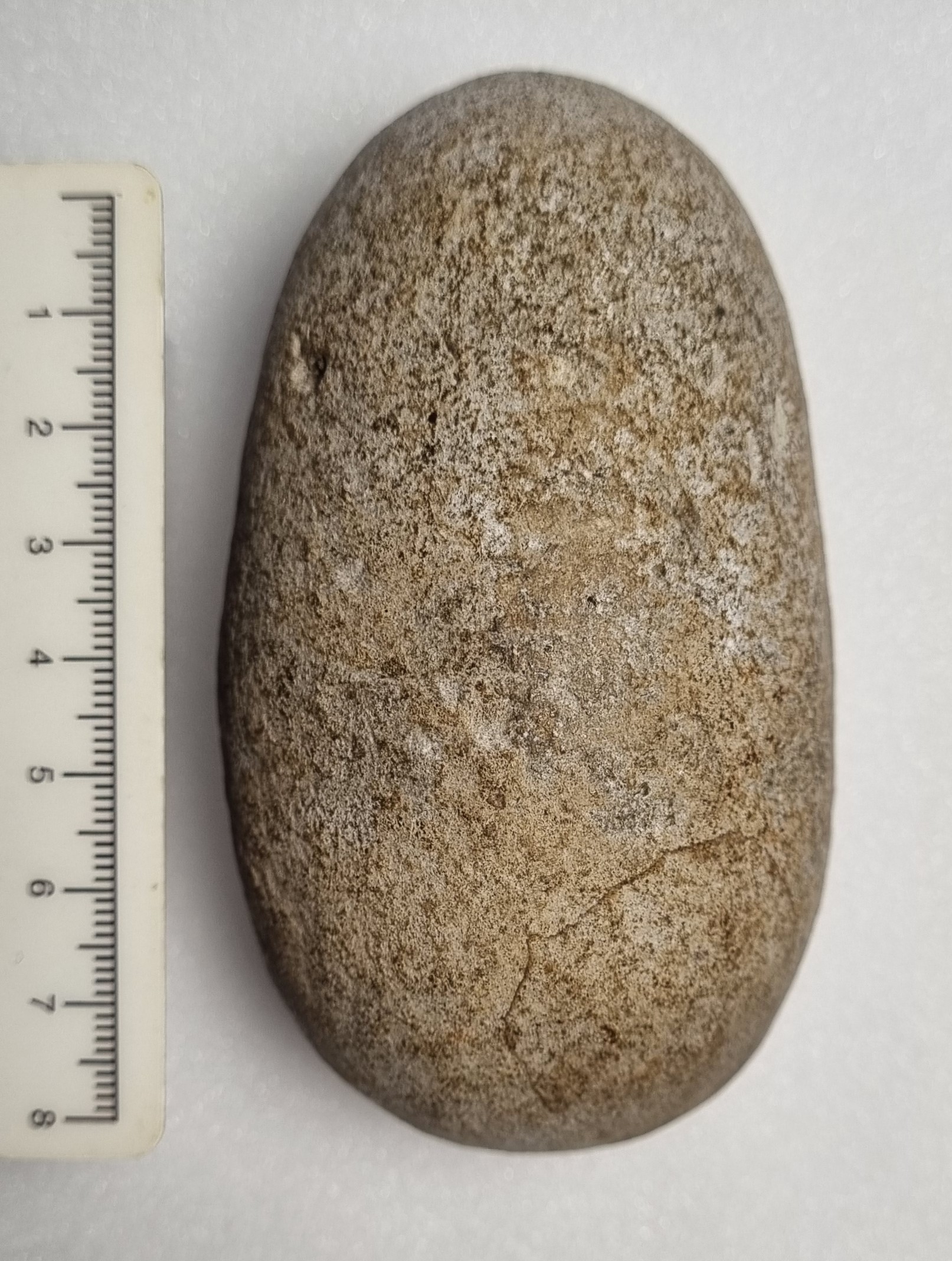
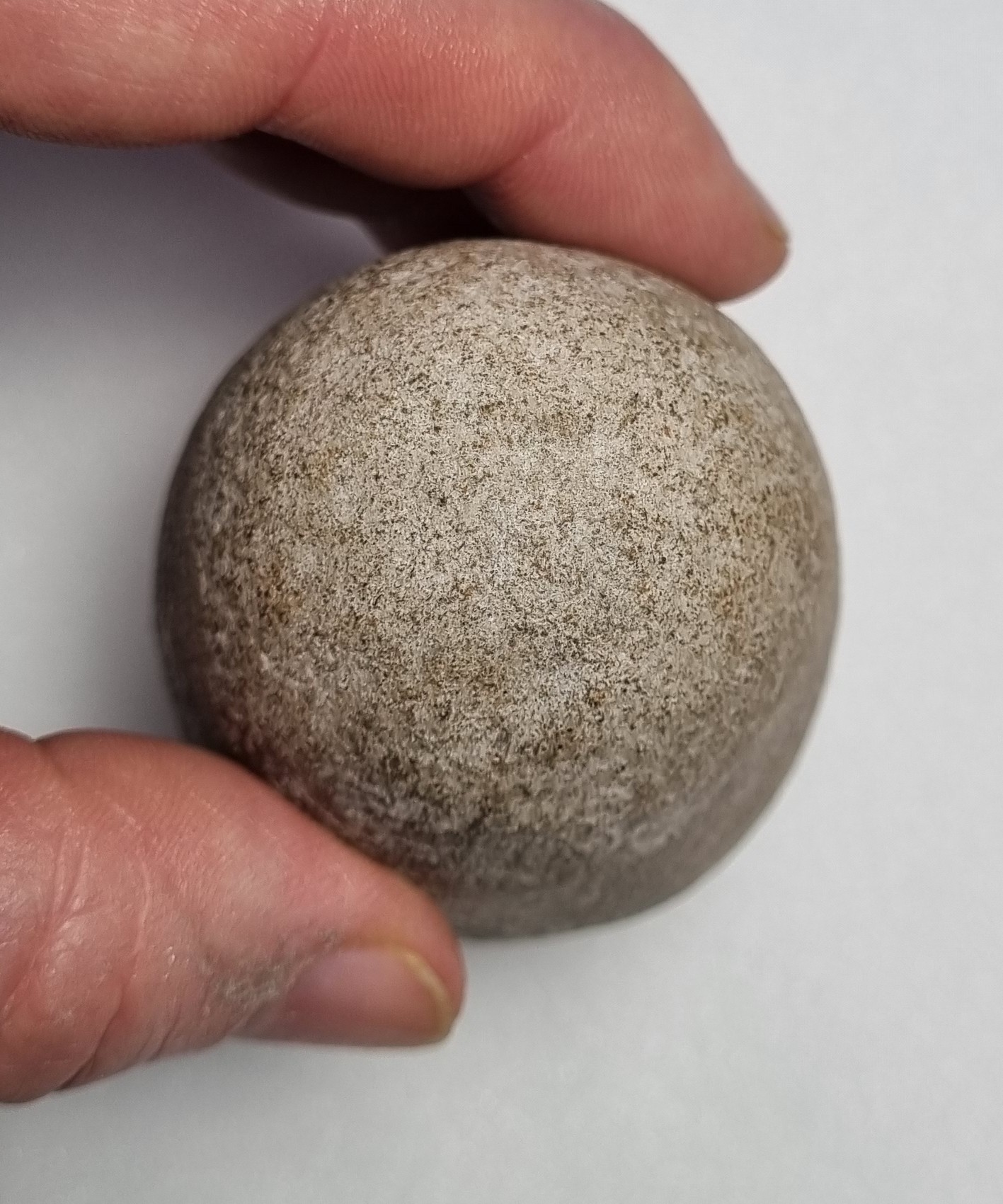
This week I have an object that was found in Ireland, in a field, near a river. I was asked to identify it, since the same location had yielded some interesting archaeological finds and this object’s surprisingly light weight made it clear it wasn’t just an ordinary pebble:

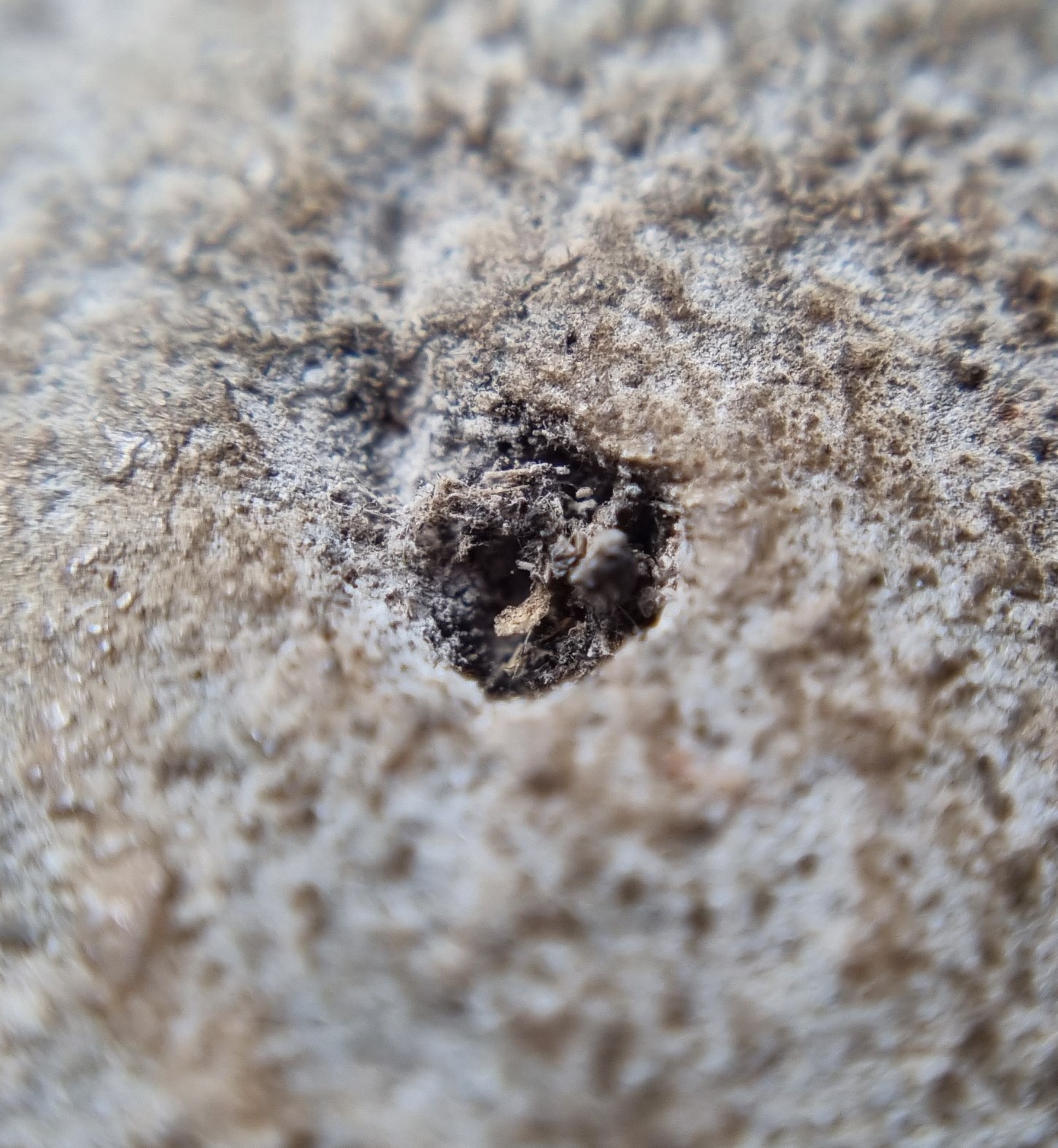
Detail of small hole in surface of the object

Any idea what this could be?

As ever you can leave your thoughts, questions and suggestions in the comments box below – I hope you have fun with this one!

Friday mystery object #440 answer

Last week I gave you this piece of bone to have a go at identifying:

It was a particularly difficult challenge and I’m still not 100% sure of what it is, but I was very interested to hear your thoughts.

There was a general leaning towards one of the (many) bones of the skull – although since there’s a suture running through the middle of this, it must consist of at least two different bones that have fused.

This feels right to me, since there aren’t many other parts of the skeleton consisting of fused bony plates containing foramina. But as to which bones of the skull and which animal, that’s a much more difficult identification prospect.

Unfortunately this kind of identification usually depends on a combination of familiarity with a range of skulls and comparative collections to figure it out and, I’m sad to say, that I’ve had very little opportunity to immerse myself in cranial collections for several years now and I rarely get a chance to work on comparative material these days.

The best I could come up with is this being a section from the upper internal portion of the orbit of a Sheep Ovis aries Linnaeus, 1758 (or something quite similar).

I’m thinking this partly due to the V-shaped notch in the margin of the bone, which can be hard to spot in the initial photos, so here it is from the side:

This notch is something I think of as being present in some (but by no means all) Sheep specimens (e.g. take a look at the dorsal view in Mike Taylor’s fantatsic SV-POW! blogpost featuring a very helpful Sheep skull multiview). When I checked with a couple of my own specimens, I think I can just make out where this mystery section might sit – but it’s very hard to be sure since the region is quite variable between individuals (or perhaps breed) by the looks of my specimens:

I hope that wasn’t too disappointing as a challenge, and I apologise for not offering a definitive answer, but if I manage to track down some old specimen that is missing this exact section of bone, I’ll be sure to share it here!

In the meantime, please feel free to offer more suggestions and, if you have comparative material of your own, maybe see what you think? Thanks everyone!

Friday mystery object #440

This week I have some news to accompany the mystery object.

After two years of hard work we have reopened the Dead Zoo. As part of that process, we came across this small piece of bone, which was caught in the historic furniture for several decades before jolting loose during some of the moves that have happened recently in the Museum:

A top tier challenge for a seasoned bone geek by the looks of it. So do you have any thoughts on what it might be from?

Oh, and in case you’re in Ireland (or have a VPN) you might be interested in this documentary that was aired on Monday, which follows the work I did on our whale specimens back in 2020. There’s a trailer for it here:

I hope you enjoy!

Friday mystery object #439 answer

Last week I gave you this little crab to have a go at identifying:

I wasn’t sure if it would be an impossible task based on just this image, but I thought I’d see how you fared. There weren’t many comments on the blog, but Twitter yielded some very astute observations, with Pete Liptrot getting the correct Family and Tim identifying it to species:

Most impressive!

I picked this Floating Crab Planes minutus (Linnaeus, 1758) because I spotted it whilst working in the Irish Room of the Dead Zoo and I didn’t recognise it myself. The specimen was collected from Dingle Bay on the 2nd July 1974, where it was found with stalked barnacles on drifting float.

These crabs are pelagic hitchhikers, relying on floating substrates (e.g. seaweed, turtles, ocean rubbish) to rest on between short forays to catch food, such as krill and very small fish. They are present in the North Atlantic, occasionally turning up along the west coast of Ireland and southwestern Britain.

So well done to Tim for that impressive identification. I’m afraid that I haven’t had a chance to figure out the diagnostic characteristics for this small, but well formed crab to share, because I’ve been too busy trying to get the Dead Zoo ready to reopen. If you want to see some of what’s been going on as part of that, check out the #DeadZooDiary.

More exciting news to come, but that can wait 😉