Friday mystery object #476 answer

Last week I gave you some festive-looking specimens to have a go at identifying:

Image by Charles Fisher, published in Microfauna–Macrofauna Interaction in the Seafloor: Lessons from the Tubeworm. Boetius A PLoS Biology Vol. 3/3/2005, e102 doi:10.1371/journal.pbio.0030102
I thought these were some specimens in the care of Andy Taylor, FLS, but this was my error – Andy sent me the images to suggest the species as mystery objects, but I didn’t realise that he hadn’t photographed his specimens to use at that point. These images are actually from a paper (referenced above) that discusses the species and the blue-green colour is a stain added to allow the growth rate of the tubeworms to be calculated (spoiler alert – it’s very slow).
Here are Andy’s specimens:

Image by Andy Taylor FLS, 2023.

A bit less colourful, but the tubes retain the same structure, with those clearly defined rings.

As Adam Yates said in the comments, these are specimens of Lamellibrachia luymesi van der Land & Nørrevang, 1975. They have similarities to other genera, such as Hilary Blagbrough’s suggestion of Ridgeia and katedmonson’s suggestion of Riftia.

Image of Ridgeia specimens by Andy Taylor FLS, 2023.
Image of Riftia pachyptila specimen by Andy Taylor FLS, 2023.

Species like Riftia pachyptila are from hydrothermal vents and that nutrient rich and high temperature environment gives their symbiotic bacteria a boost that allows Riftia to be the fastest growing invertebrate, reaching around 1.5m long in just a couple of years. This is useful as it allows rapid colonisation of these ephemeral volcanic environments that occur at mid-ocean ridges.

On the flip side, Lamellibrachia luymesi tubeworms live in cold seeps of hydrocarbons in the deep ocean, where their symbiotic bacteria have to work at temperatures of 4°C or less, making their energy production a slow process. Consequently, L. luymesi are one of the slowest growing invertabrates, taking around 125 years to reach 1.5m long. Cold seeps are much more stable than the hydrothermal vents however, so L. luymesi have been found to continue growing up to 3m, taking around 250 years, and therefore being among the longest lived invertebrates (and indeed animals) on the planet.

Some might suggest that there’s a lesson to be learned here about “slow and steady winning the race”, but slow growth would be disastrous for a species that relies on a rapidly changing environment. Both species are remarkably adapted to their environment and neither would do well in the other’s place.

It’s worth noting that both of these remarkable organisms are only as successful as their symbionts allow them to be, so if there’s any lesson to be shared, it’s probably that the value of teamwork should never be underestimated.

On that (somewhat cheesy) note, I would like to thank Andy once again for sharing his collections. I’ll be back in the New Year with another Mystery Object – I hope you enjoy the celebrations!

Friday mystery object #475 answer

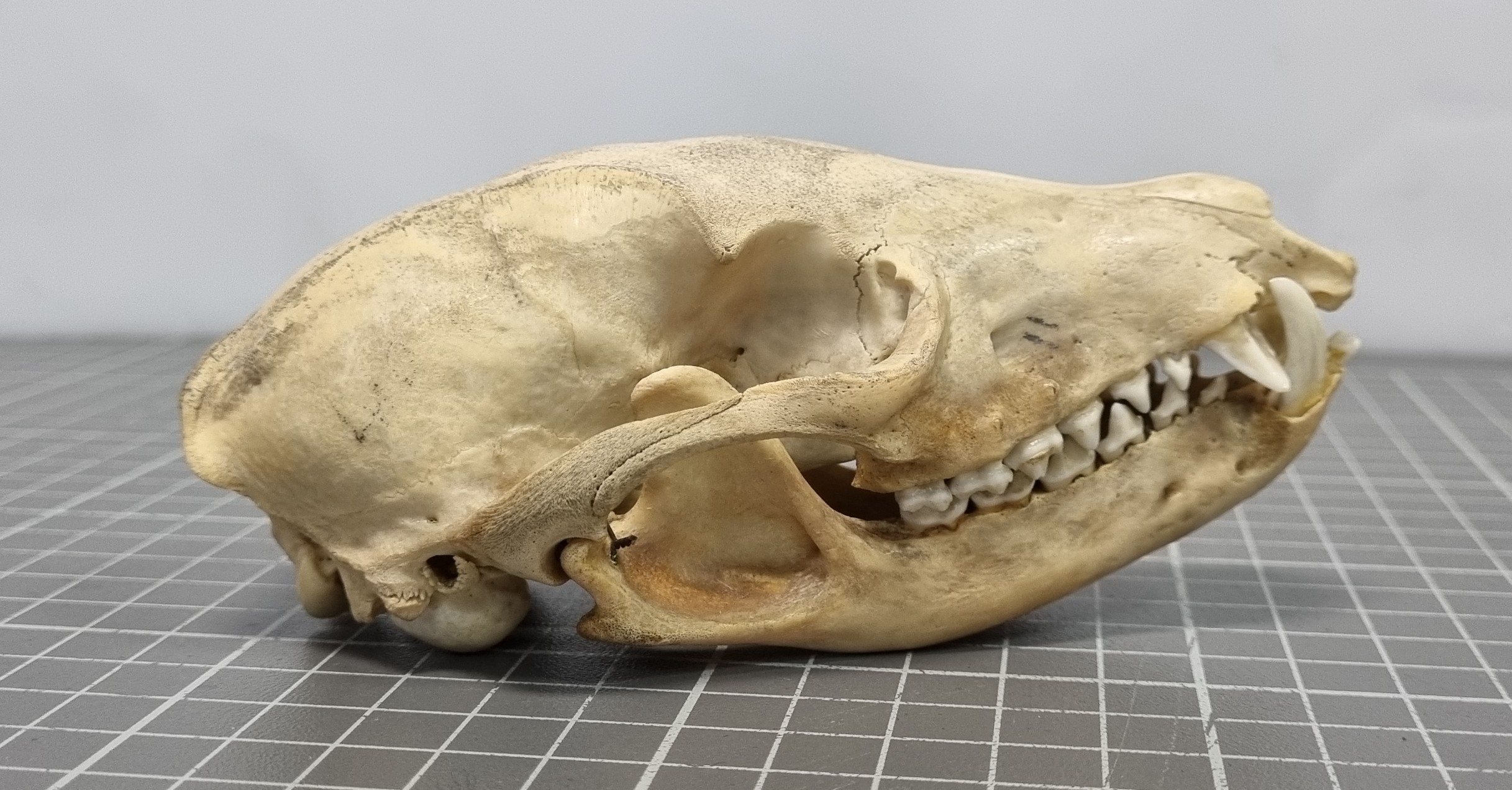
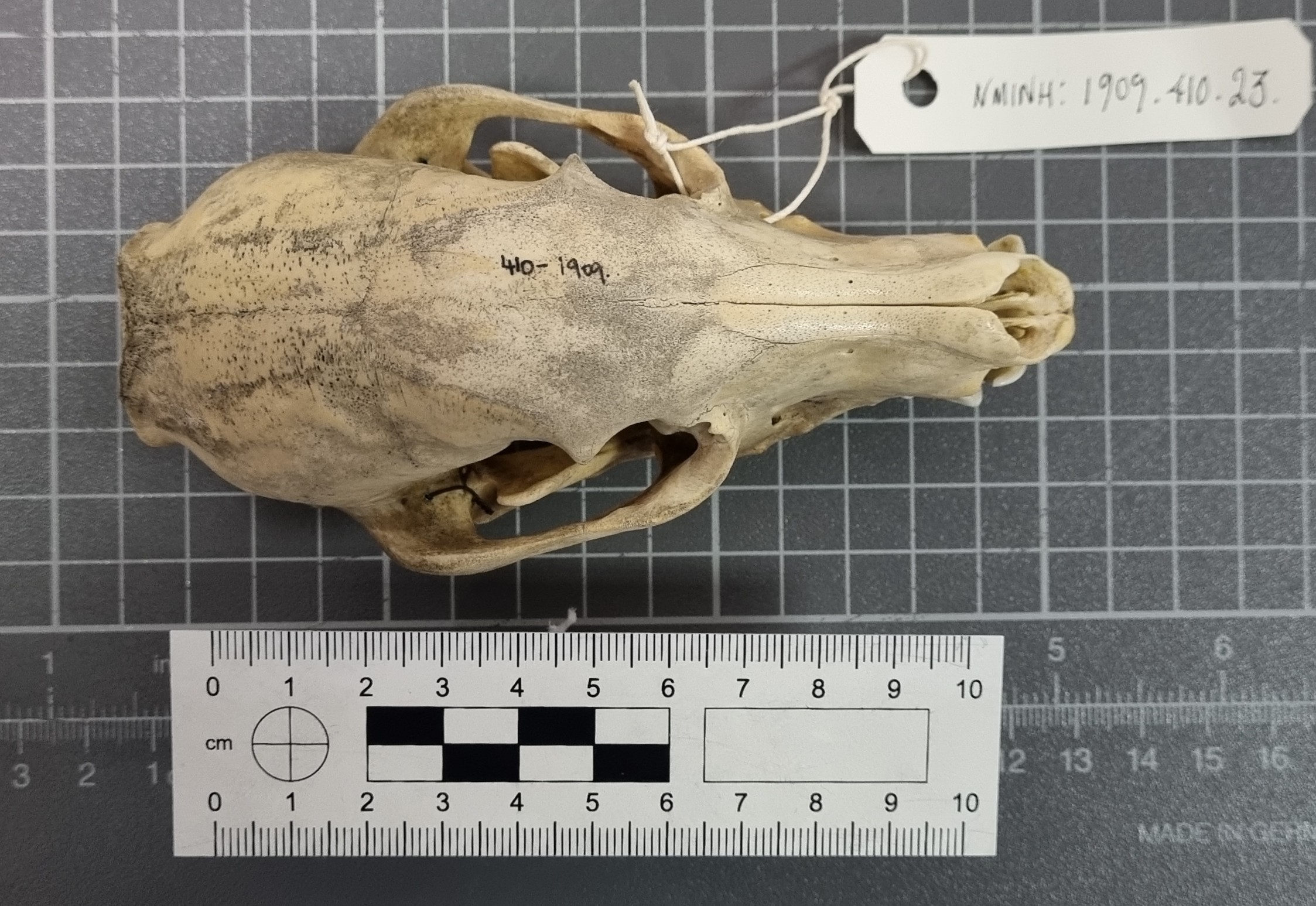
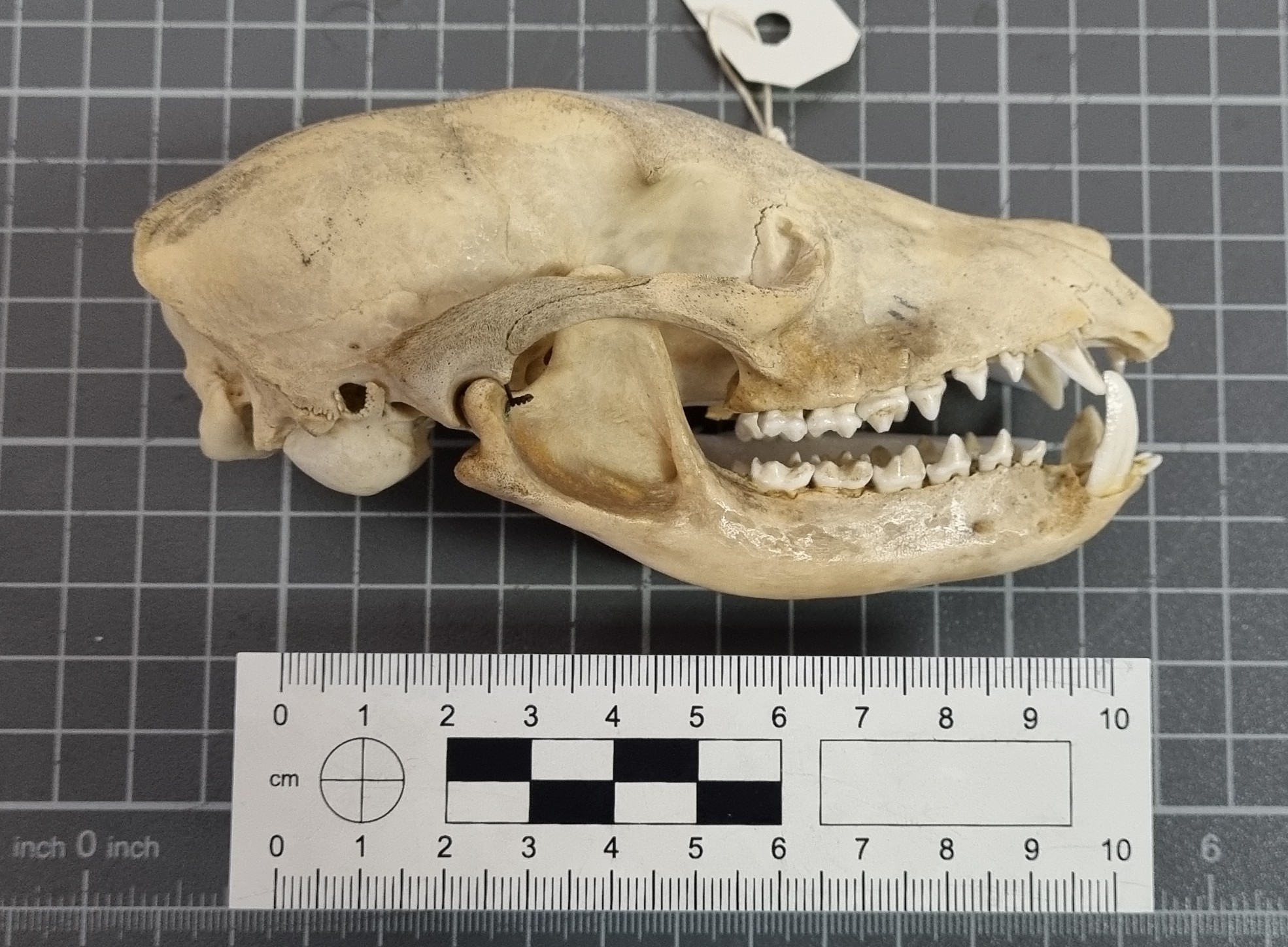
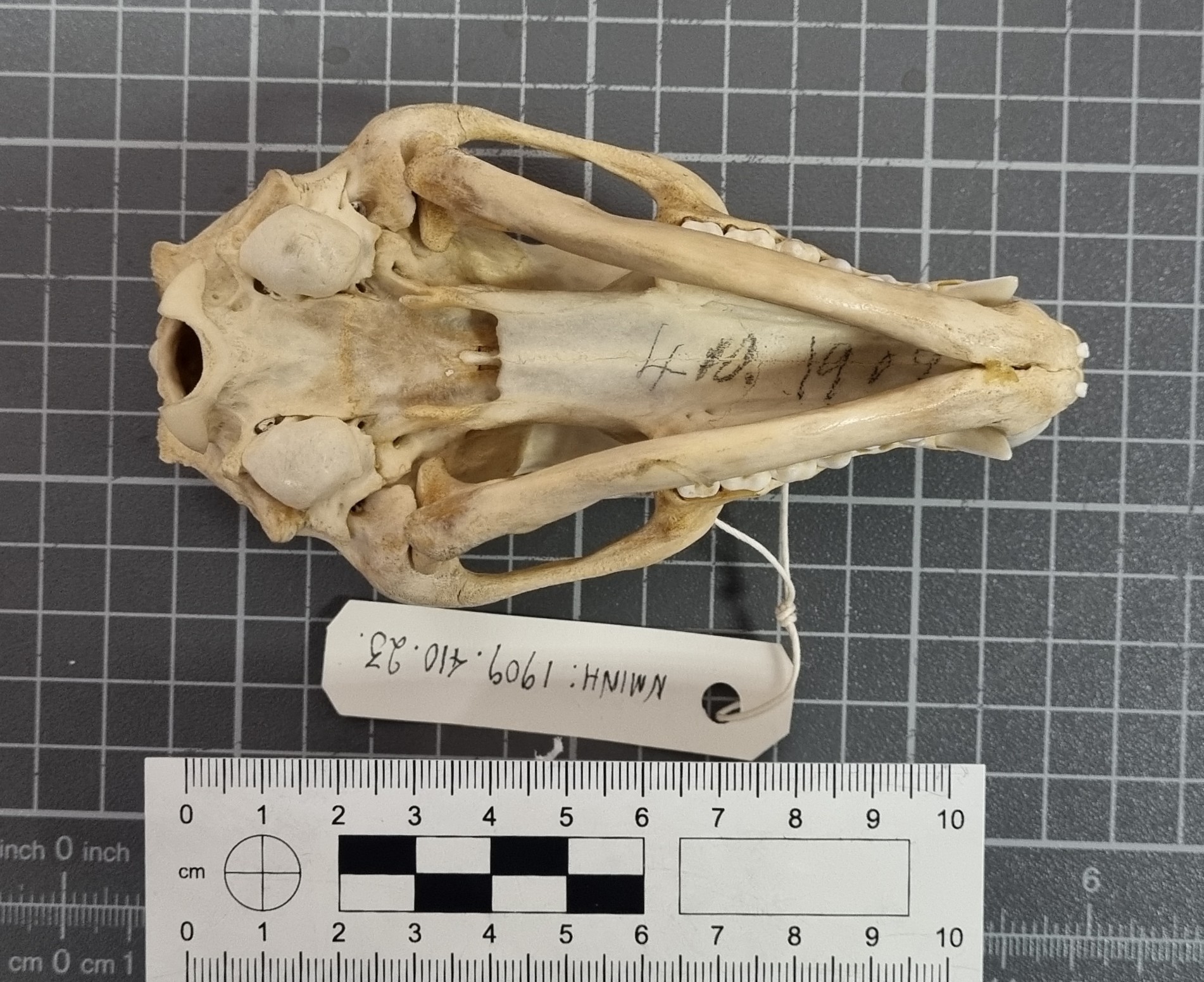
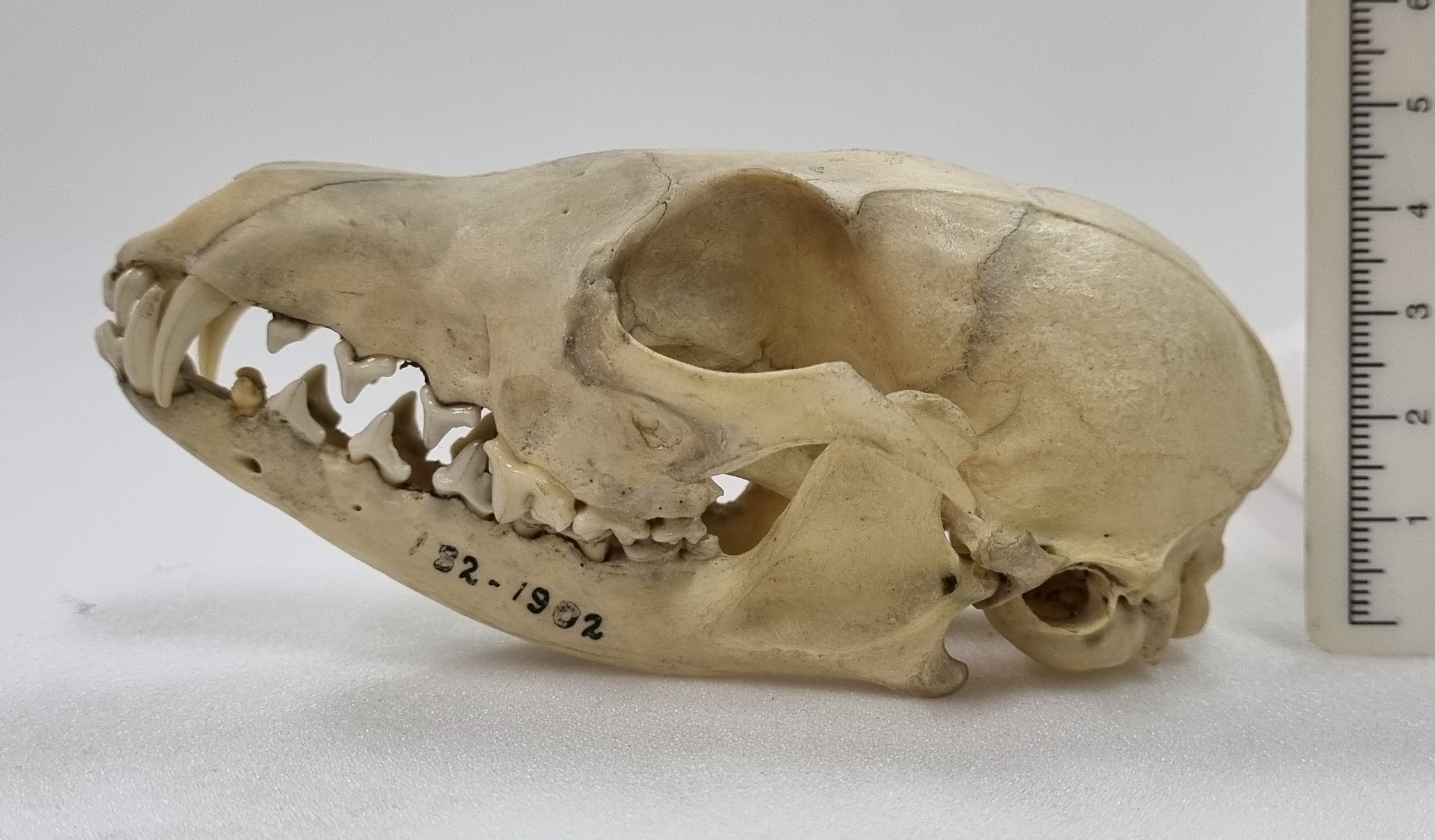
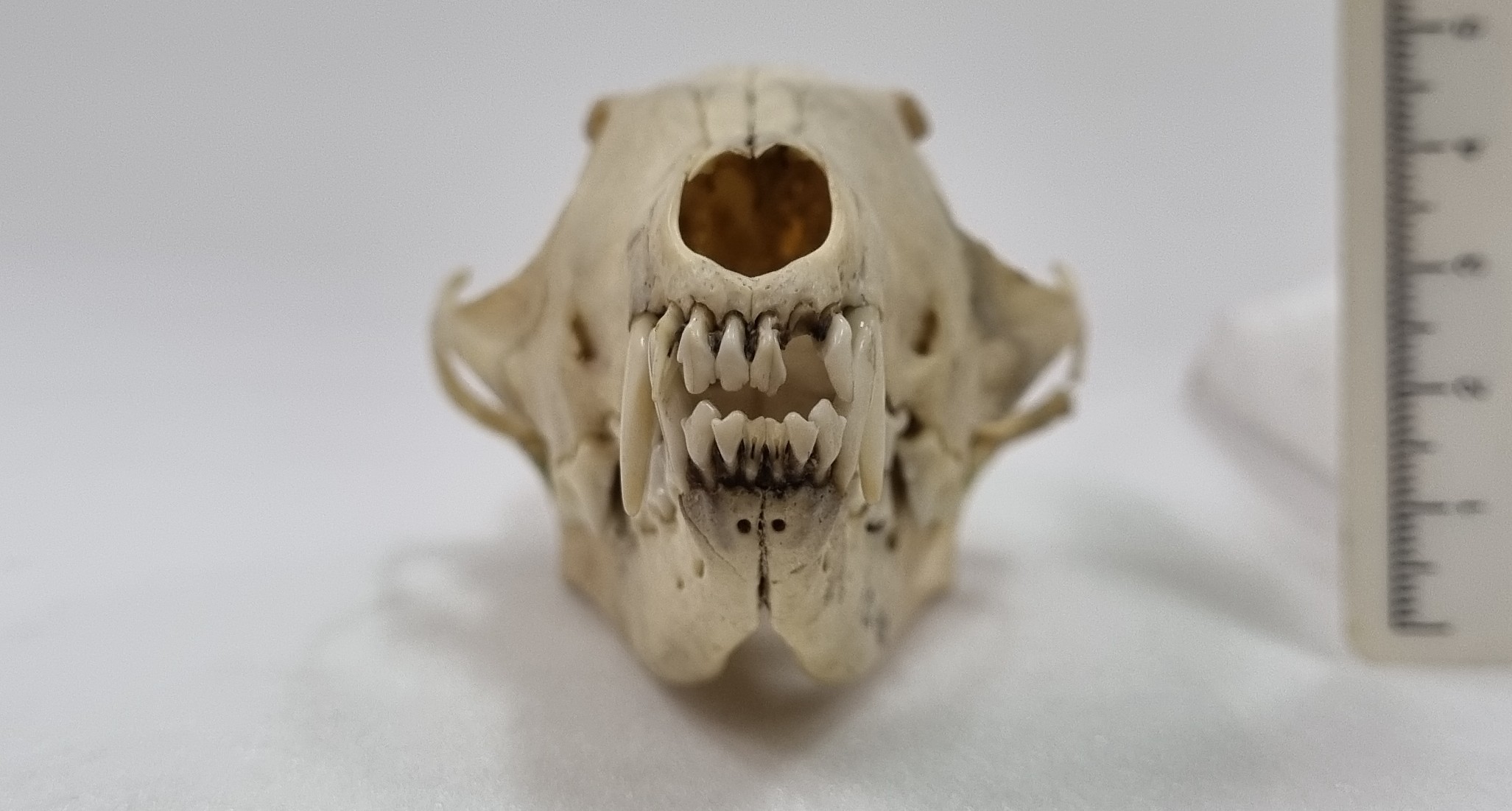
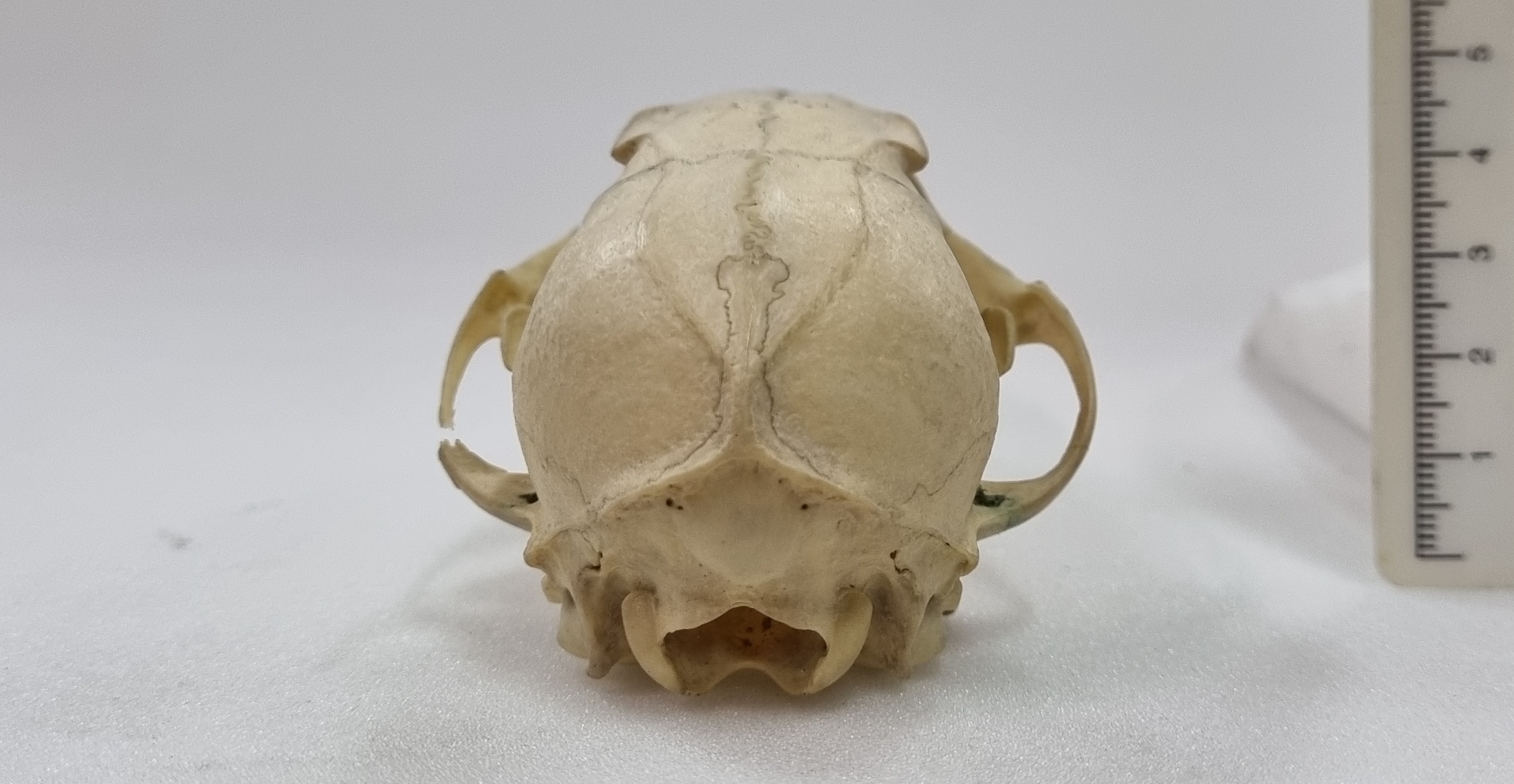
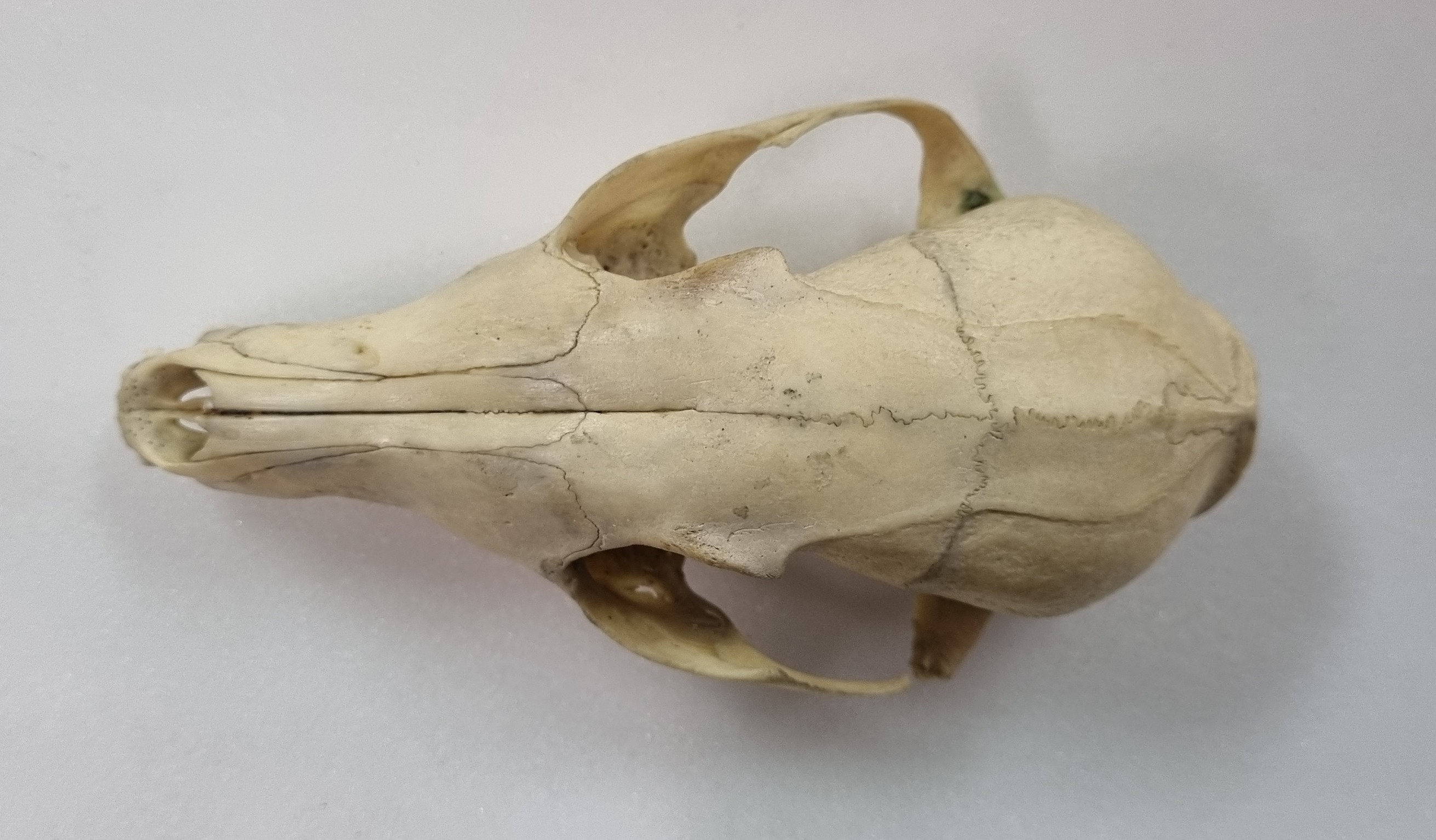
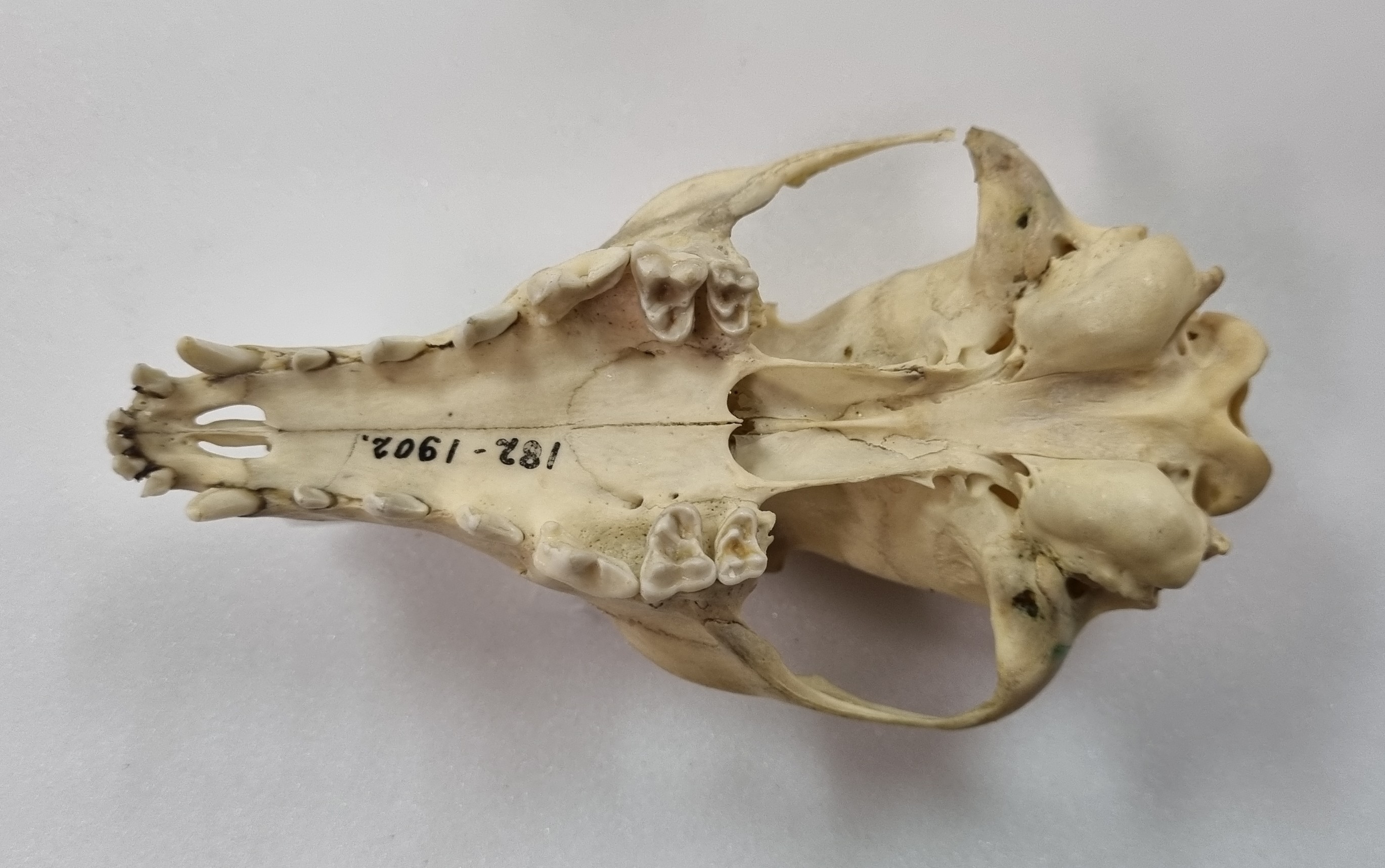
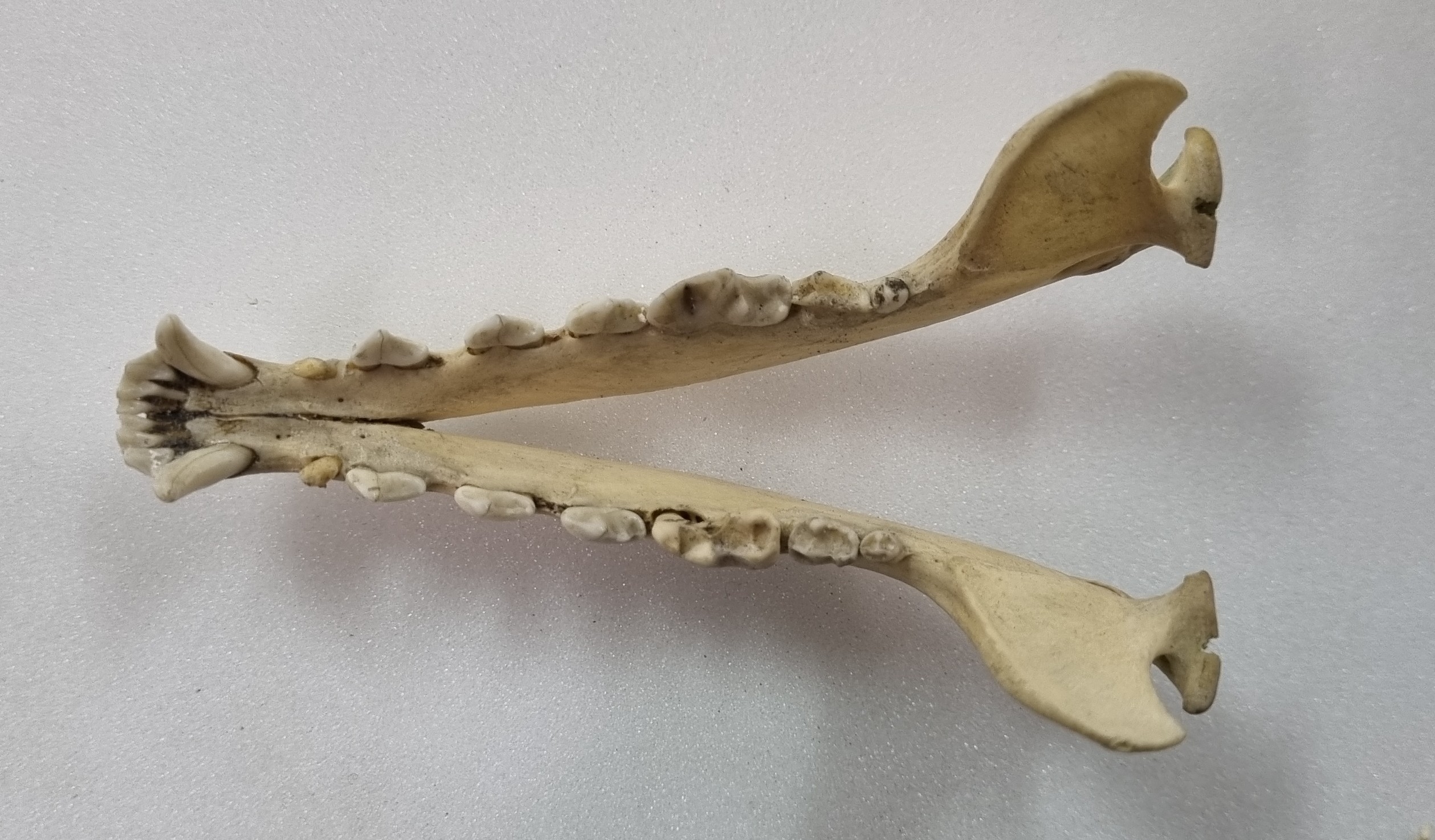
Last week I gave you this unidentified skull from the collections of the Dead Zoo:

I say it was unidentified, but in a strange quirk of coincidence I actually did identify this skull three years ago, just a month before the start of the Covid Pandemic (which might explain why I never had a chance to update the record).

Not only did I identify it, the specimen also made it into the blog exactly 100 mystery objects ago.

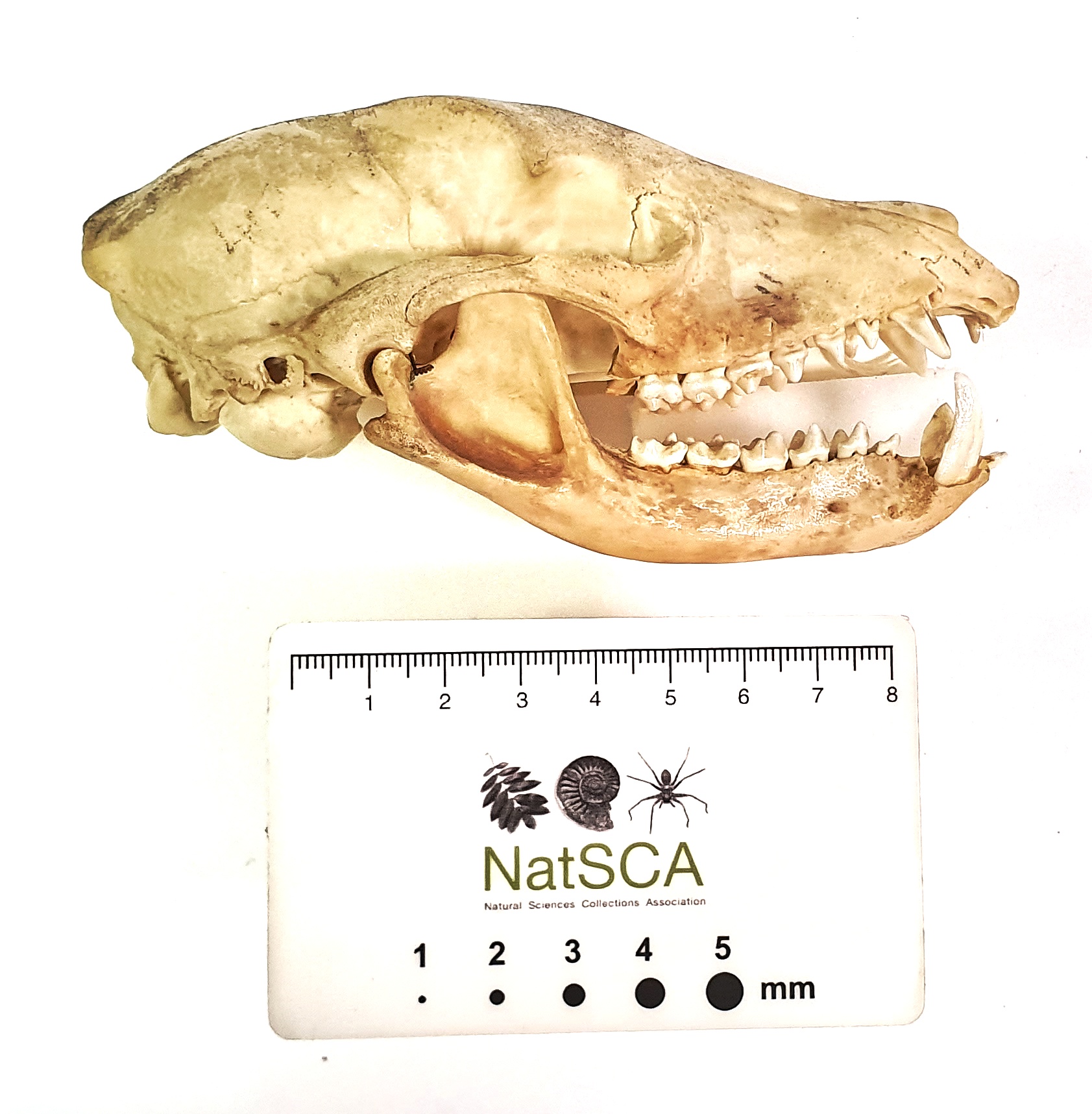
I think the specimen is most likely to be the skull of a White-nosed Coati Nasua narica (Linnaeus, 1766), for the reasons I outlined back in 2020. So well done to Leon and Chris for recognising this cousin of the Raccoon from South and Central America and the southern parts of some North American states .

White-nosed coati (Nasua narica), Tikal, Peten, Guatemala. Image by Charles Sharp, 2023.

Coatis have quite distinctive upper canine teeth, that look almost like short tusks. These are useful for defence from other Coatis, but they are not very well adapted for subduing larger prey. This isn’t really a problem for Coatis, since they mainly feed on invertebrates, fruit and small vertebrates that they undcover during their energetic foraging.

So I apologise to everyone for repeating a specimen – this is the first time this has happened (and hopefully the last)!

Friday mystery object #474

For the first time in quite a while, I managed to escape from my desk and spend a little time in the collections of the Dead Zoo. The main reason was to facilitate access for researchers doing some really cool projects, but it also gave me a chance to spend a little time exploring the collections I’m responsible for.

In one of the cabinets I spotted this skull, and I thought it might make a good mystery object:

So, do you have any thoughts on what this might be? As ever, you can leave your questions, observations and suggestions in the comments section below. I hope you enjoy this specimen as much as I did!

Friday mystery object #473 answer

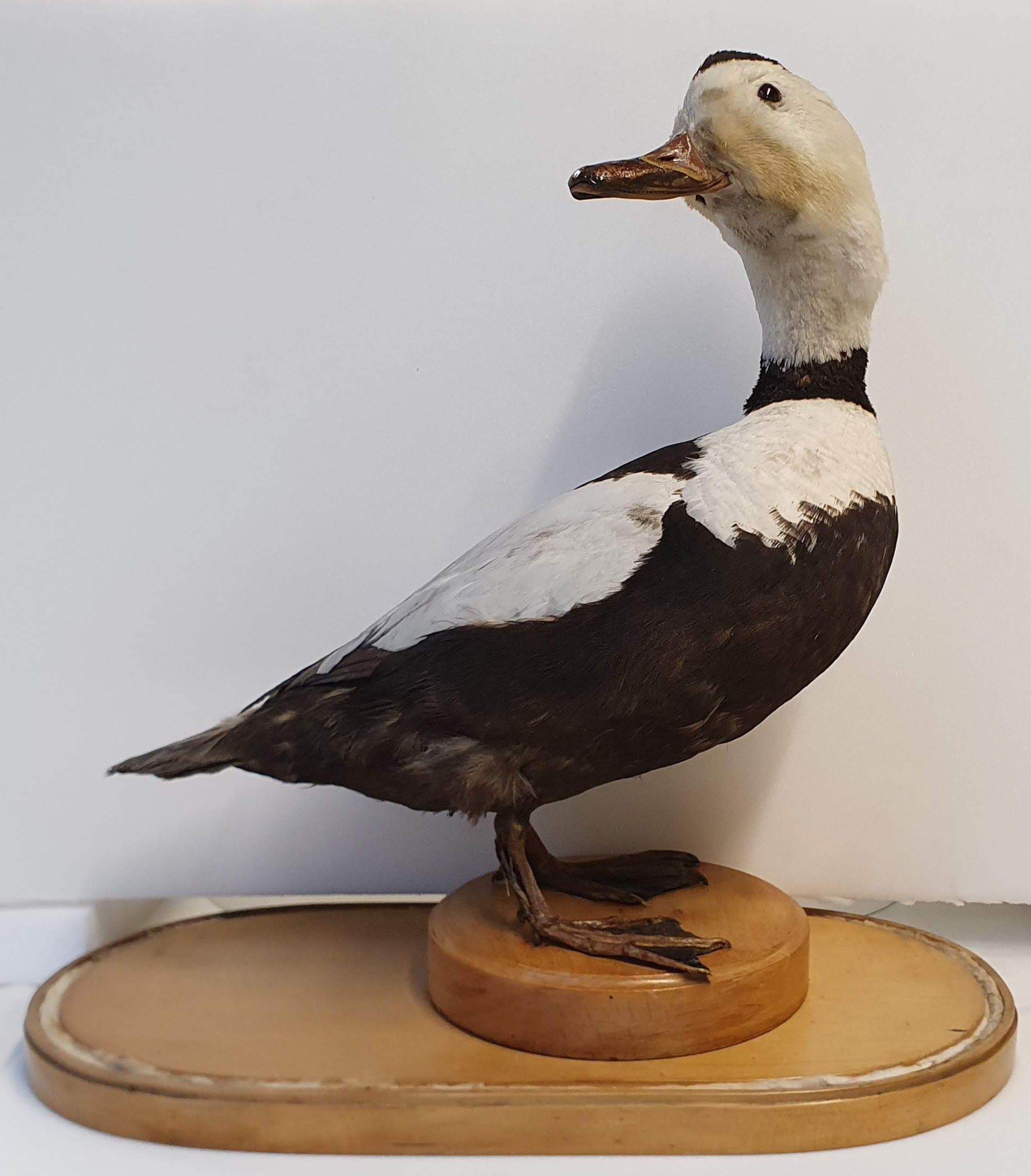
Last week I gave you this specimen from the Dead Zoo to have a go at identifying:

Evidently it was a bit too easy, since everyone who commented not only worked it out, but took the time to come up with clever cryptic clues to reveal the identity. The first was Tony Irwin with:

I suppose that a pencil sketch of this would qualify as a labradoodle?

Tony Irwin November 10, 2023 at 9:34 am

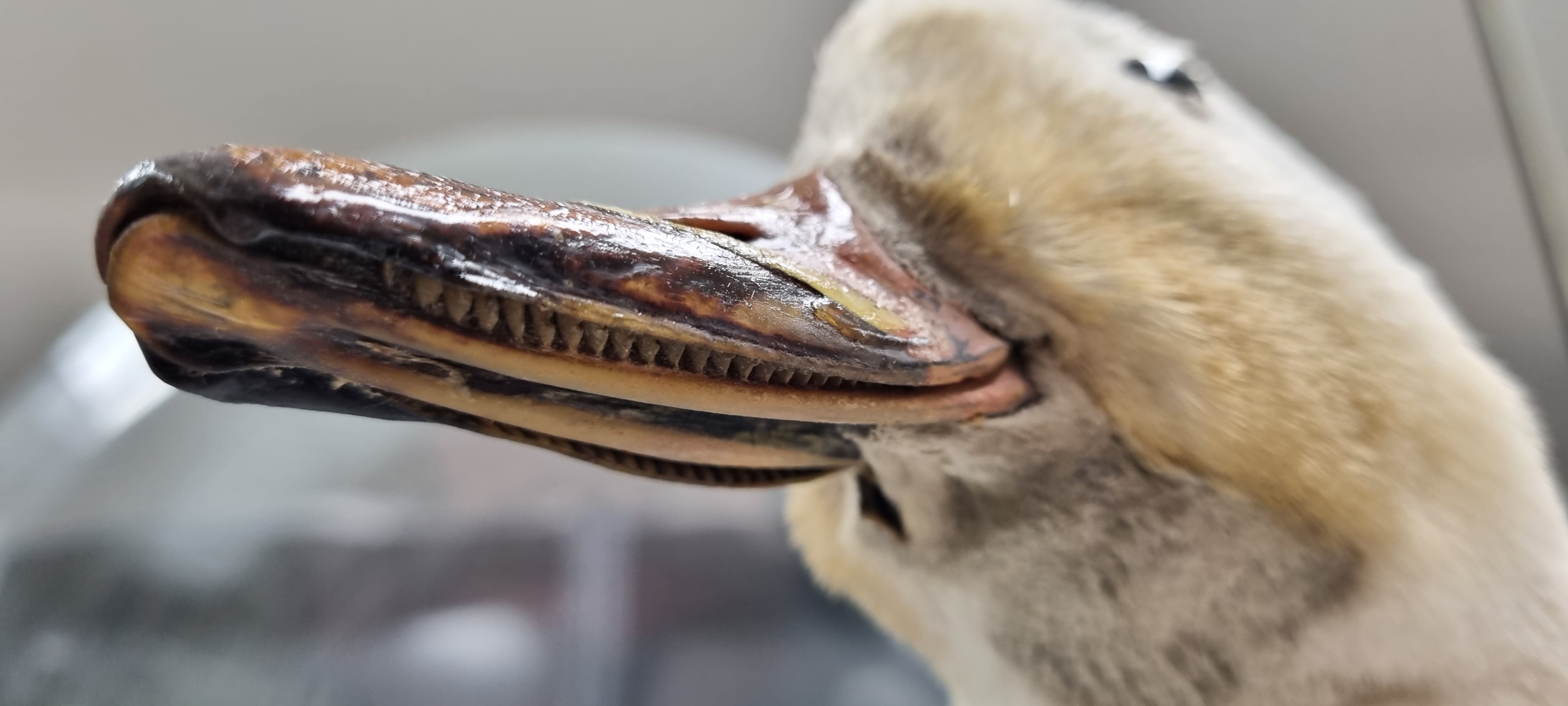
This is a specimen of Labrador Duck Camptorhynchus labradorius (Gmelin, JF, 1789), an endemic North American duck that has the dubious honour of being the first American species to be pushed into extinction following the European invasion of the continent. The exact reasons for the extinction are unsure, but between the adult birds being shot or caught on fishing lines, their eggs being over-exploited as a food source by settlers, and competition with humans for mussels and other marine molluscs, the already small populations were quickly reduced to nothing.

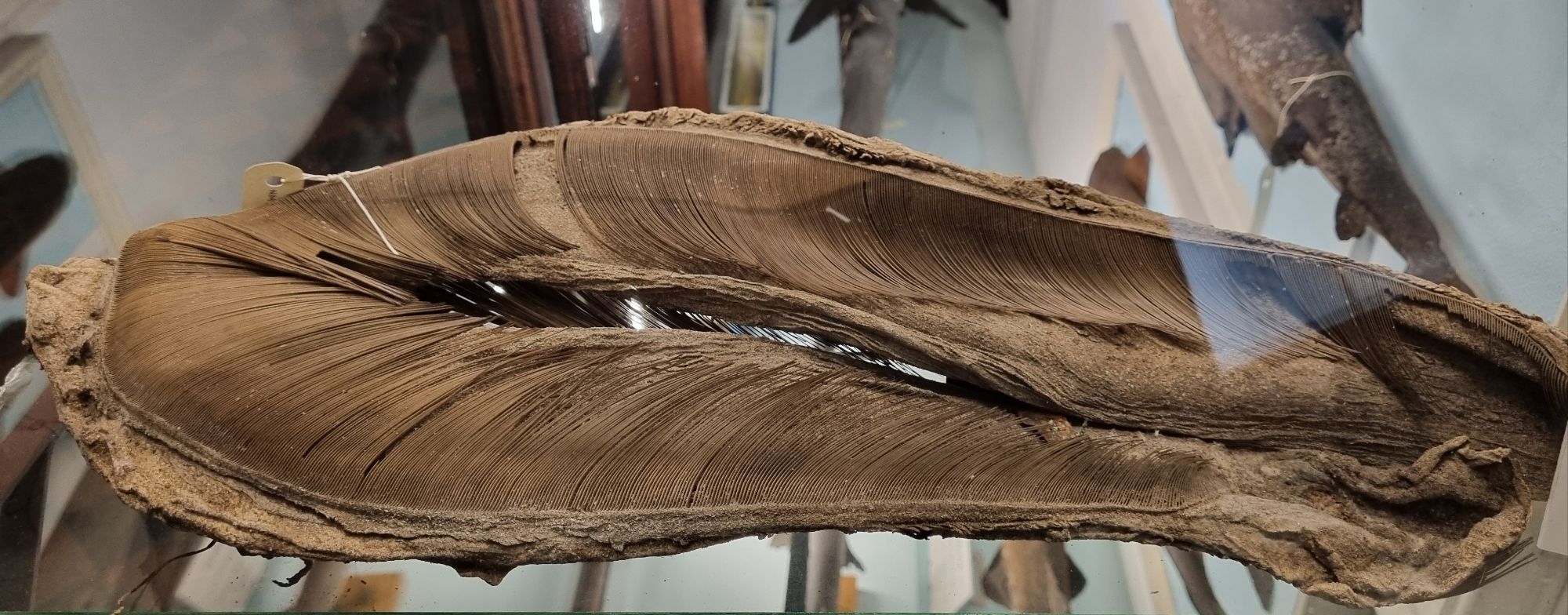
Lamellae in the bill of the Labrador Duck.

The last sighting was in 1878, but the museum bought this specimen in 1892 for the princely sum of £30-0-0 (that’s the equivalent of about €5,376 in today’s money). It had passed through a few pairs of hands before the Museum got hold of it, but we’re fortunate in knowing that the specimen was brought to Ireland in August 1838 from New York by Lt. W. Swainson R.N. who was in command of The Royal William, a paddle steamer in the service of the City of Dublin Steam Packet Co.

Only 55 specimens of Labrador Duck are known from museums around the world, so all information about them is valuable, especially when you consider how scarce and irreplacable they are. Specimens like this really hammer home the responsibility we have as museum professionals who are responsible for their care.

Friday mystery object #472 answer

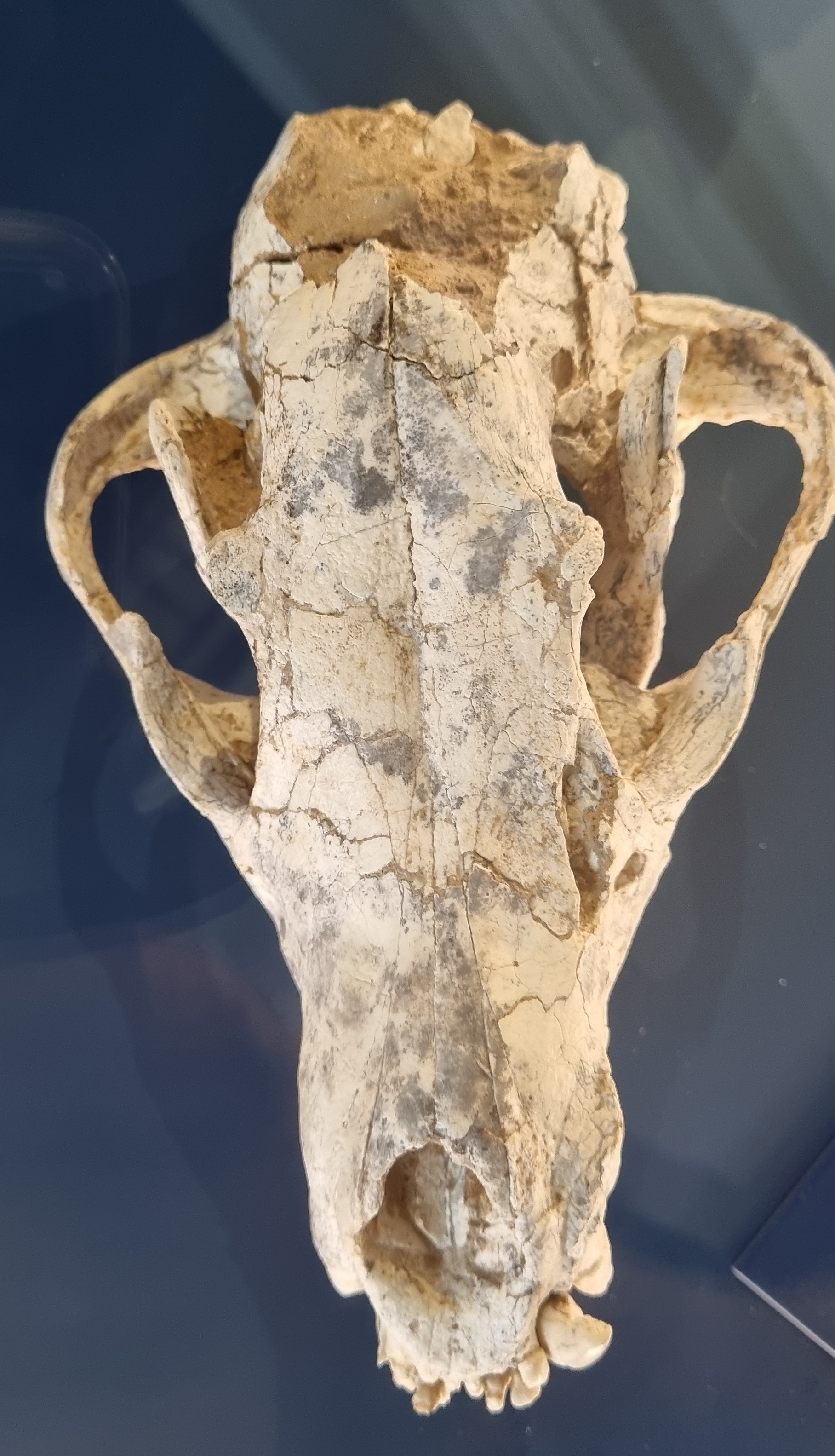
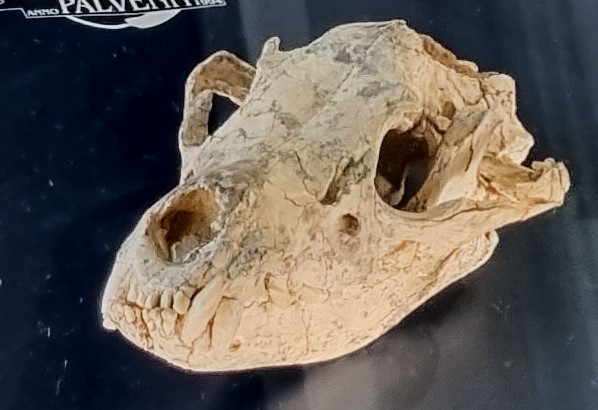
Last week I gave you this 6 million year old fossil skull to have a go at identifying:

The specimen is on display in the geology galleries of the Natural History Museum at the University of Oslo (which is well worth a vist). However, this did mean the photos provided weren’t quite as good as I’d like, particularly notable being the lack of a scale bar (sorry!)

Even without a scale, consensus shifted towards this being some kind of hyena, thanks to the curved mandible and (hint of) robust molars and shorter toothrow than you might expect to see in a canid. The broad and flat profile of the frontals between the eye sockets probably helped too:

Hyenas have an interesting evoloutionary history, branching off from the basal feliforms around 22 million years ago and adapting to fill a terrestrial carviore niche in Eurasia and becoming quite diverse. In America the canids were filling that same niche, which led to some competition when the canids made it to Eurasia (spoiler alert – the hyenas lost that competition, leaving us with just three highly specialised bone crushers and the decidedly weird Aardwolf living today).

Four live specimens of hyenas (clockwise from top left): spotted hyena (Crocuta crocuta), brown hyena (Parahyaena brunnea), aardwolf (Proteles cristata), striped hyena (Hyaena hyaena). Image by Termininja, 2020 CC BY-SA 4.0

The mystery specimen was labelled as Thalassictis wongii (Zdansky, 1924), a species described from China and originally placed in the genus Icititherium, but reassessed by Kurtén (1985). A cladistic treatment of the Hyaenidae by Werdelin & Solunias (1991) later placed it in the genus Hyaenotherium, but that may not have been accepted by the curatorial team in Oslo without an accompanying formal taxonomic treatment.

These are the sorts of decisions that need to be made when considering something as simple as a label stating a species name, so you can imagine my sense of trepidation as we are about to embark on a major project at the Dead Zoo, which will allow us to reassess the information with our 10,000 or so display specimens. Fun times ahead!

Friday mystery object #472

This week I have a mystery object for you from a recent visit to Oslo:

I apologise for the poor image quality – I was using my phone and this specimen was behind glass, so it was tricky getting a decent photo without a lot of reflections. Given the poor images I’ll drop in a clue – this is a fossil specimen from around 6 million years ago.

Any thoughts on what it could be? As ever, you can leave a comment down below. Have fun working this one out!

Friday mystery object #470 answer

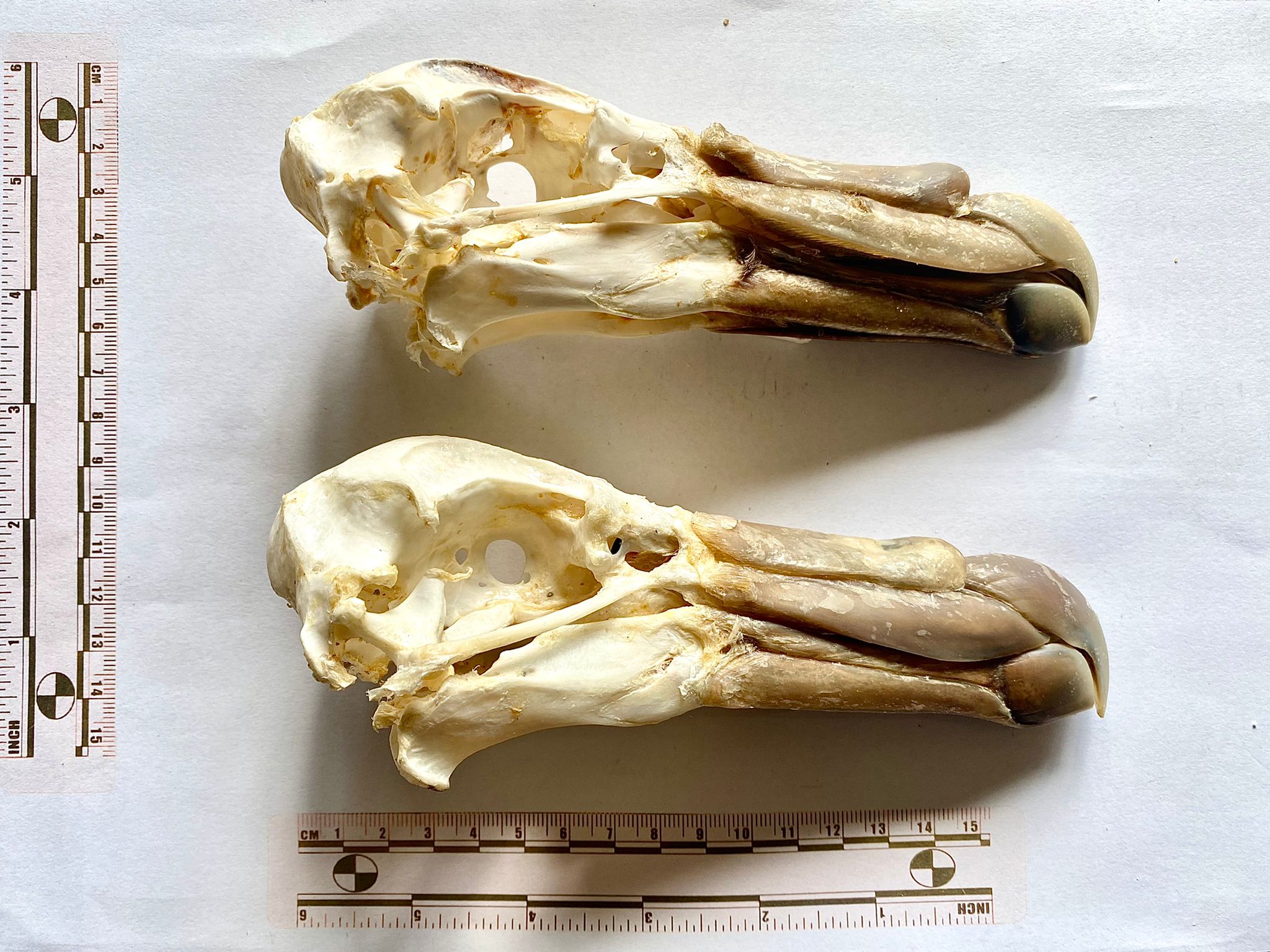
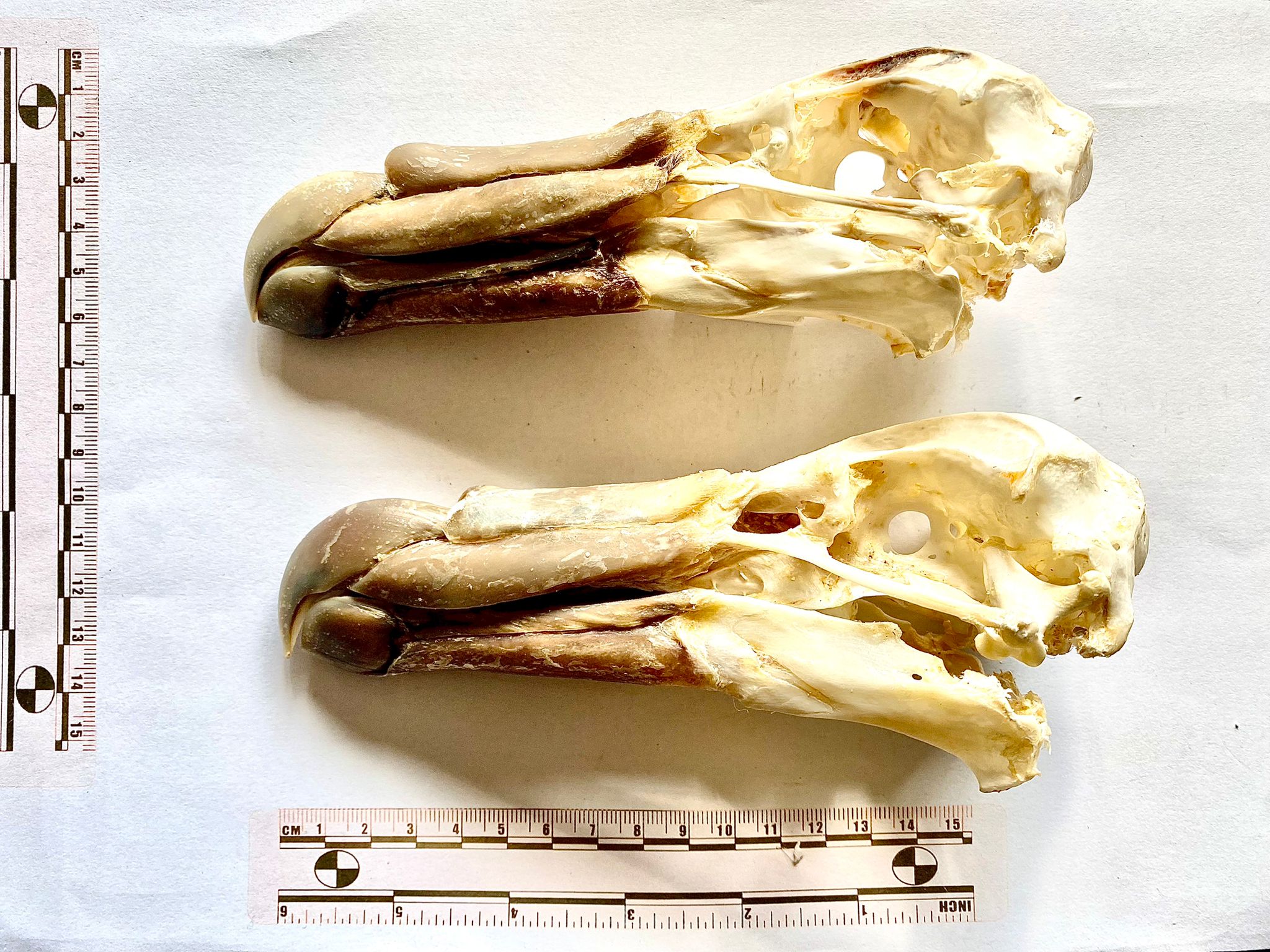
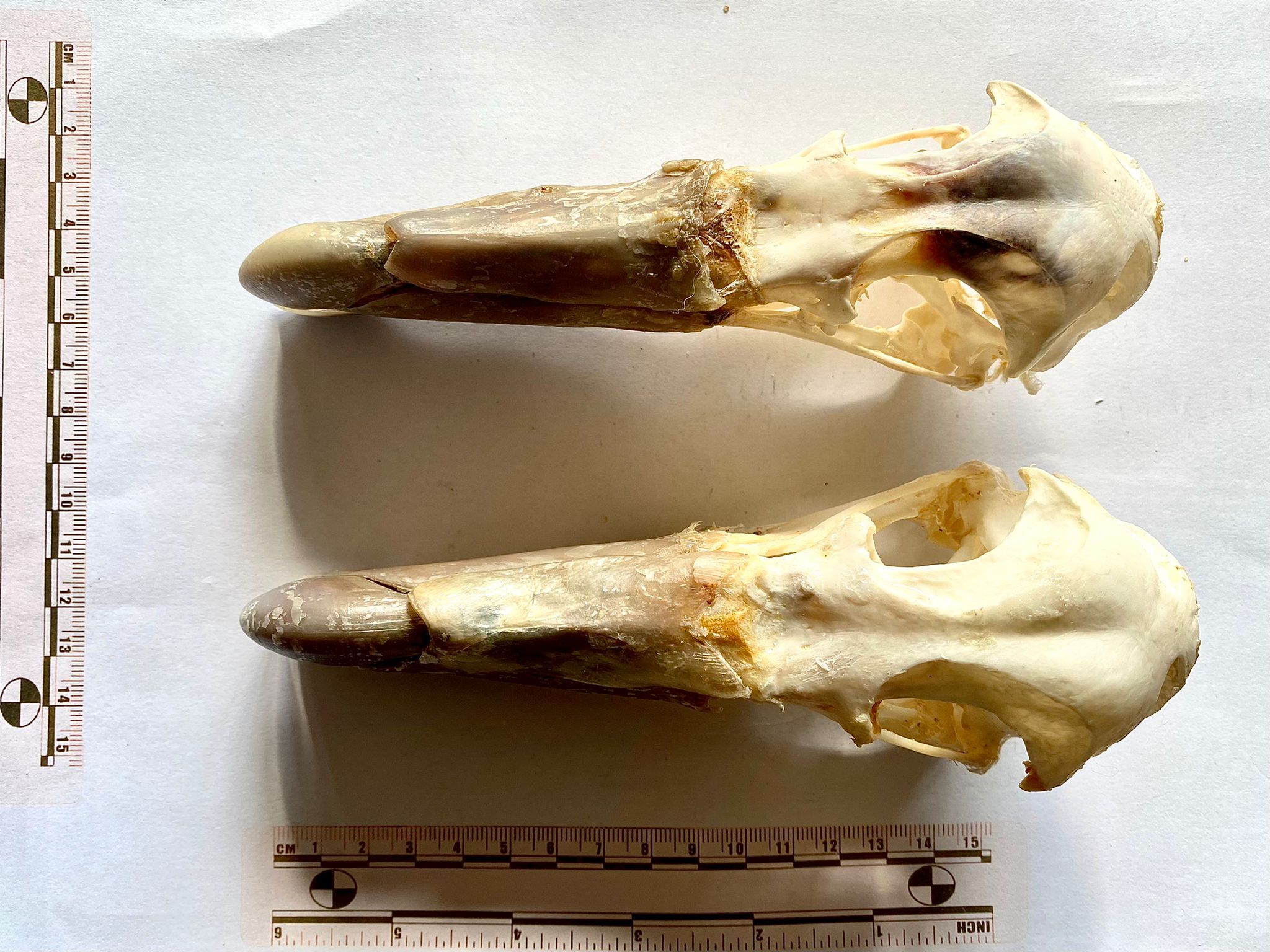
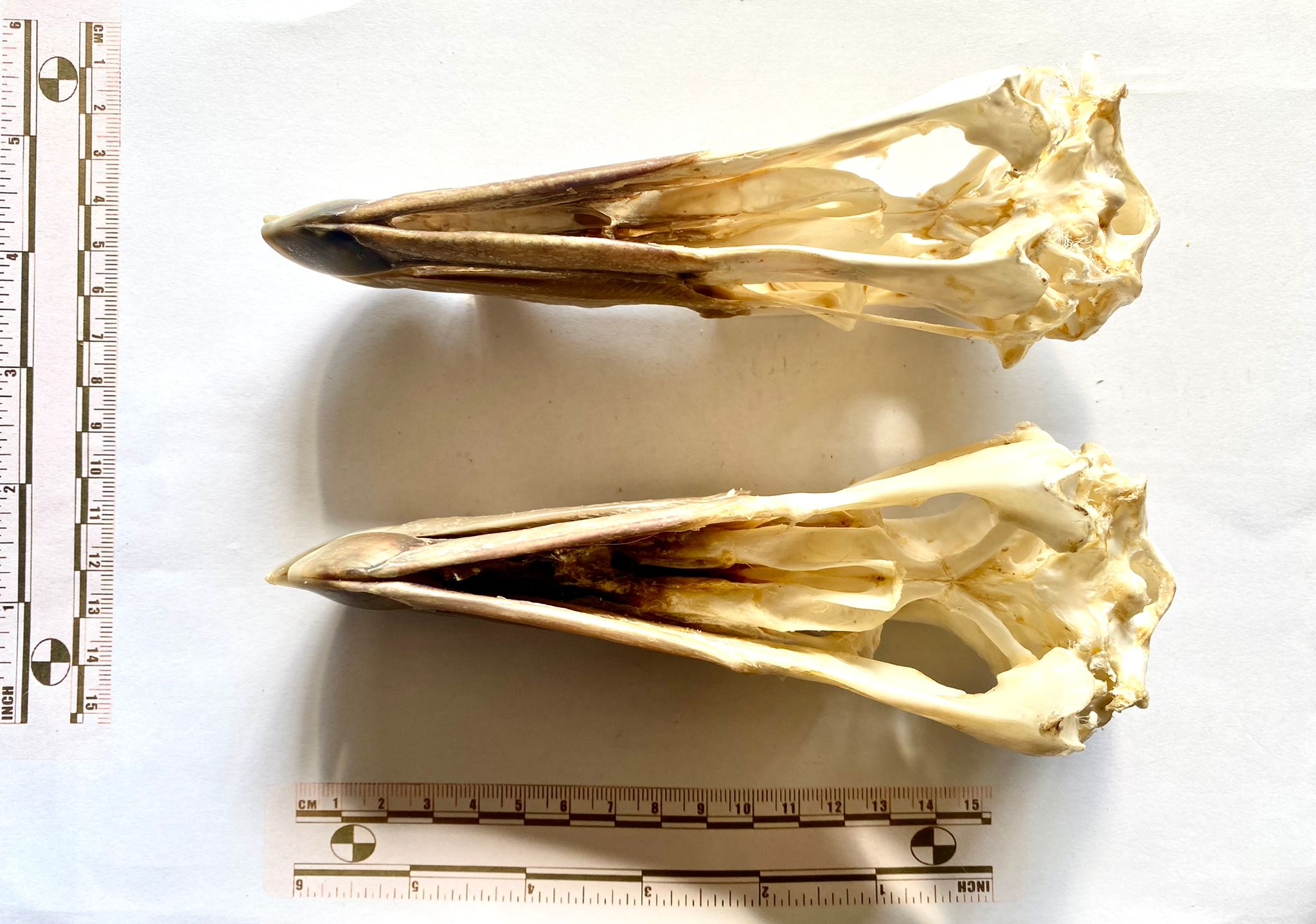
Last week we had these two skulls from Andy Taylor, FLS to have a go at identifying:

Everyone recognised that these are the skulls of Tube-nosed birds in the Order Procellariiformes – very large Tube-nosed birds.

Usually, you’d think of albatrosses when considering large Procellariiformes, but they have proportionally longer bills than this and while they have the nose-tube characteristic of the group, the tube is quite small and to the sides and rear half of the bill. In the mystery specimens, the tube is large and located on the top, and in the front half of the bill.

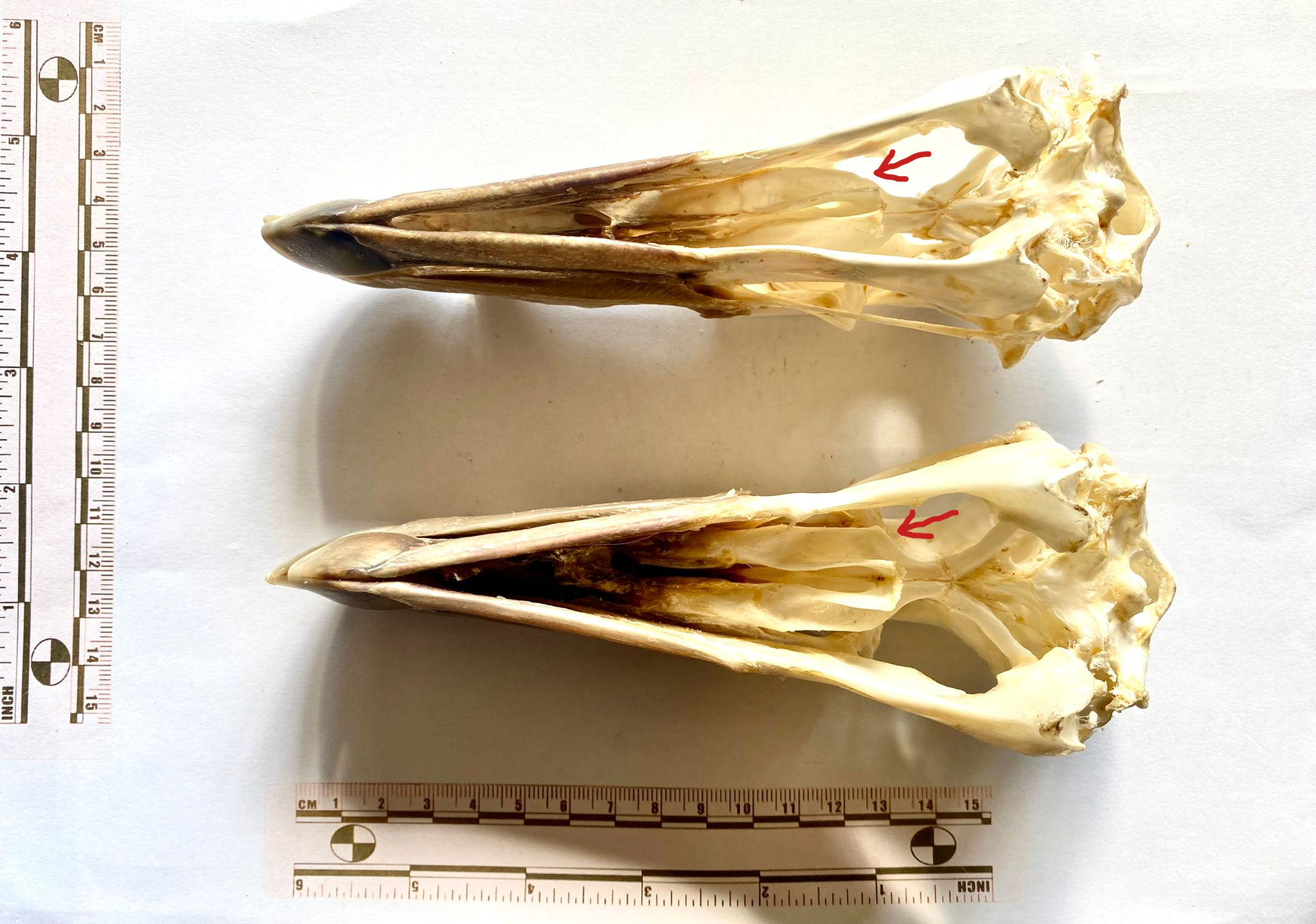
As Wouter van Gestel recognised, these skulls are from Giant Petrels in the Genus Macronectes. They actually represent both species in the Genus – the top one is the Southern Giant Petrel Macronectes giganteus (Gmelin, 1789) and the lower one is the Northern Giant Petrel Macronectes halli Mathews, 1912.

They’re quite hard to tell apart, and the best feature I noticed for distinguishing them is the shape of the palatine, with the Southern having a very gentle curve to the rear section – as indicated below (in a very rudimentary way):

Andy has already written up some information about these birds on his Instagram account, which is well worth checking out:

Thanks for all your observations and thoughts on these rather impressive specimens!

Friday mystery object #470

This week I have a guest mystery object – or two – for you to test your skills on:

I’d love to hear your thoughts on the identification of the skulls here – keeping in mind that any differences could be due to individual variation, sexual dimorphism or they may even be different species. Looking forward to hearing your thoughts!

Friday mystery object #469 answer(ish)

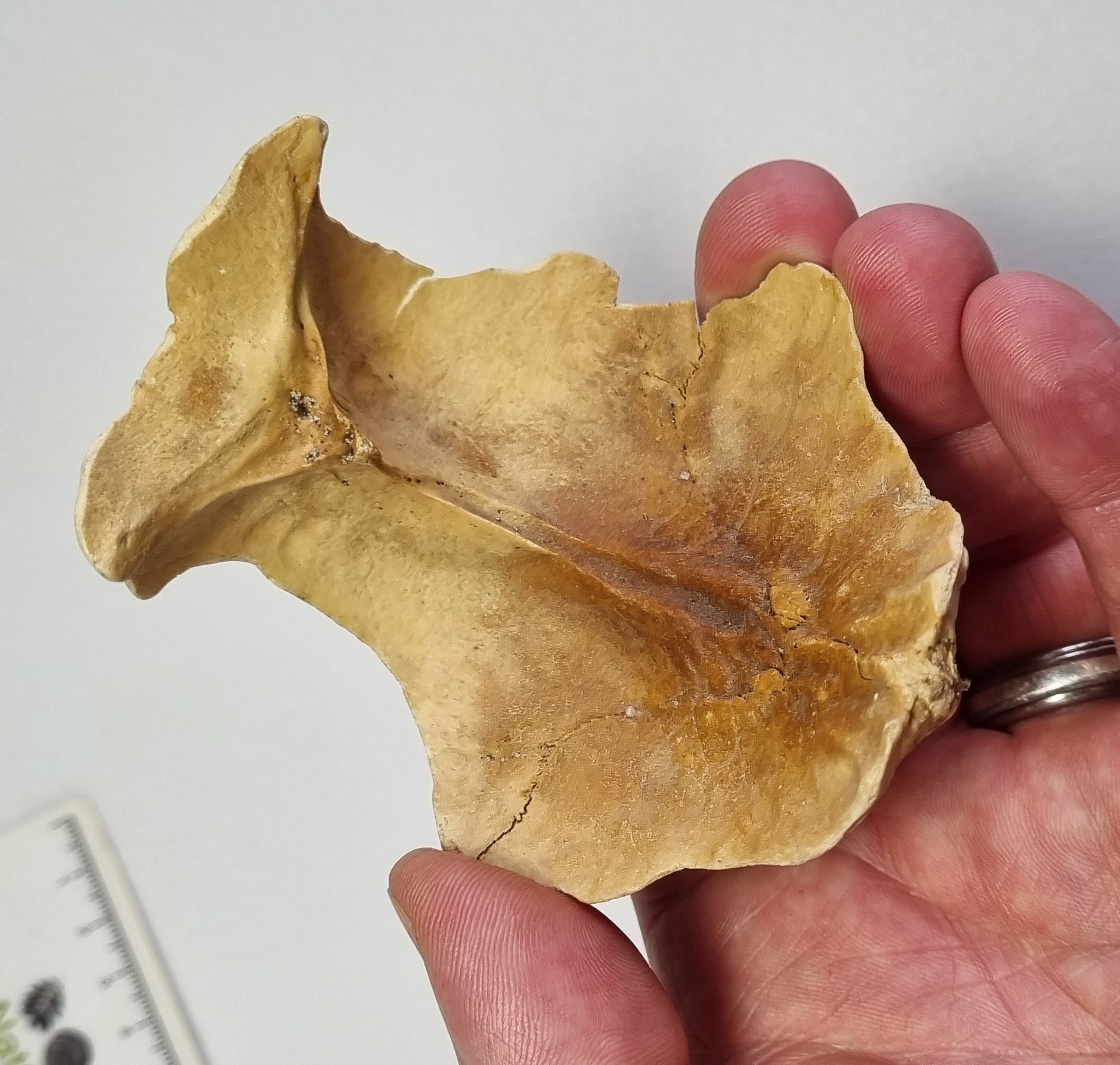
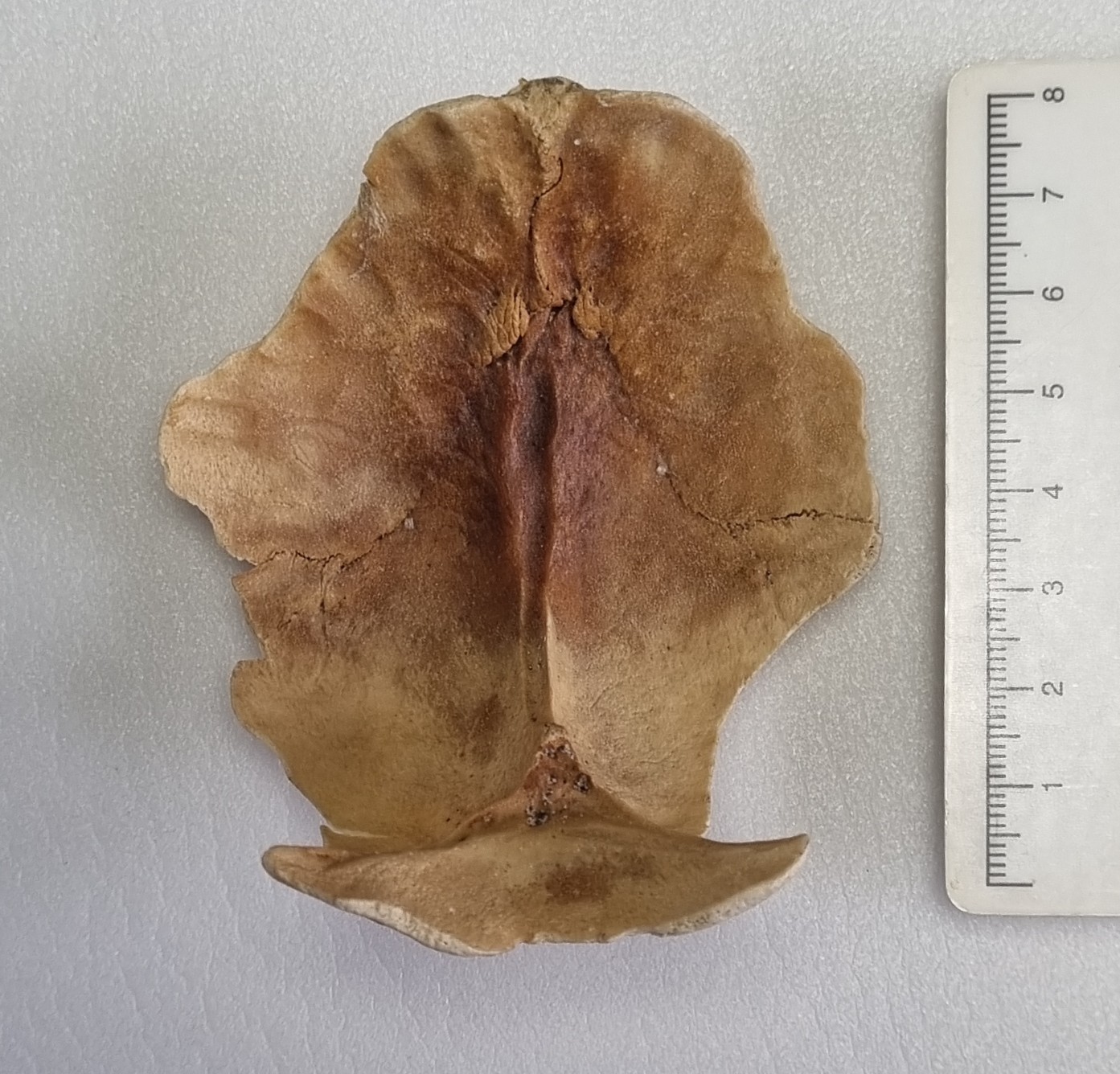
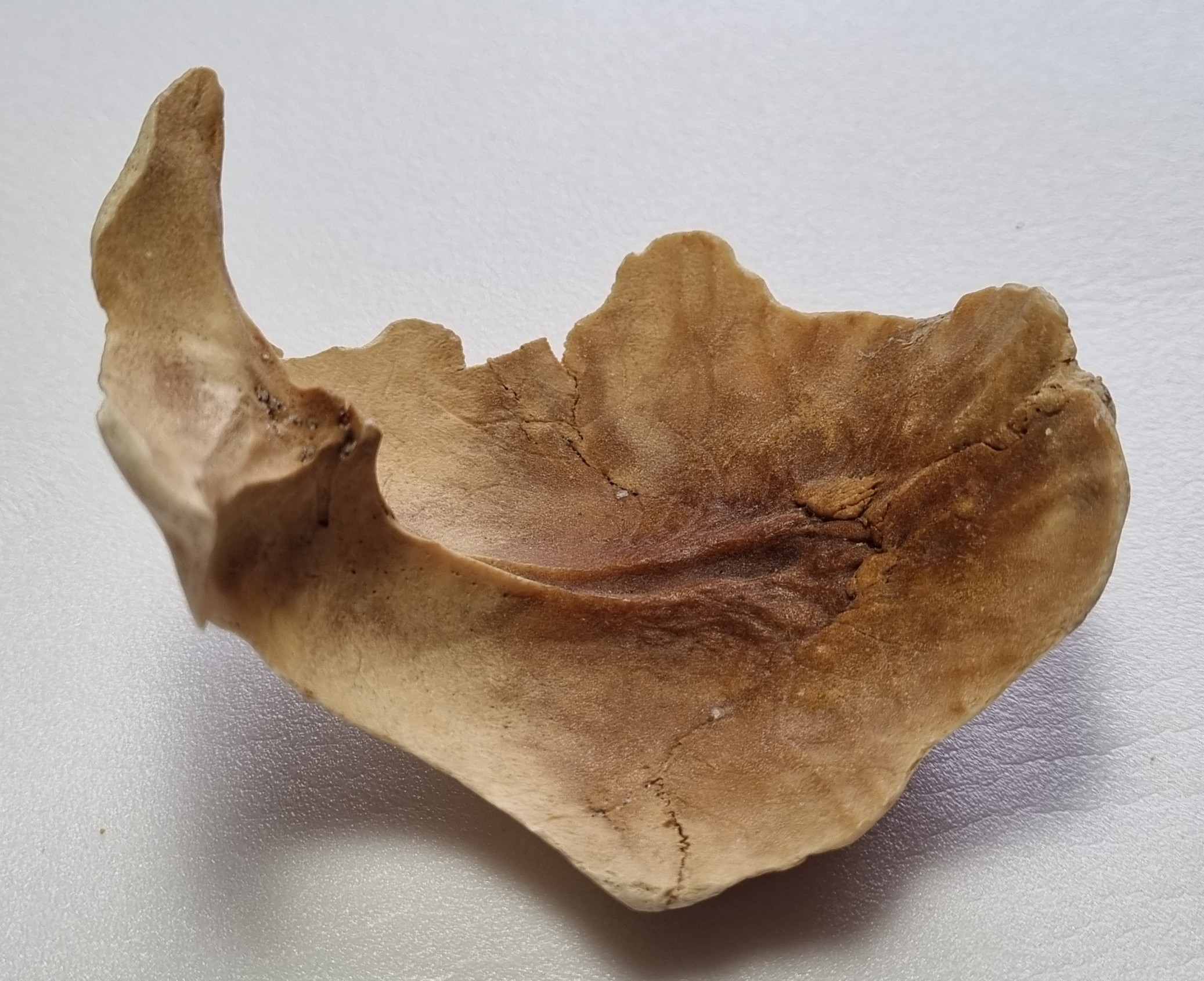
Last week, I gave you this devilishly difficult genuine mystery object to have a go at identifying:

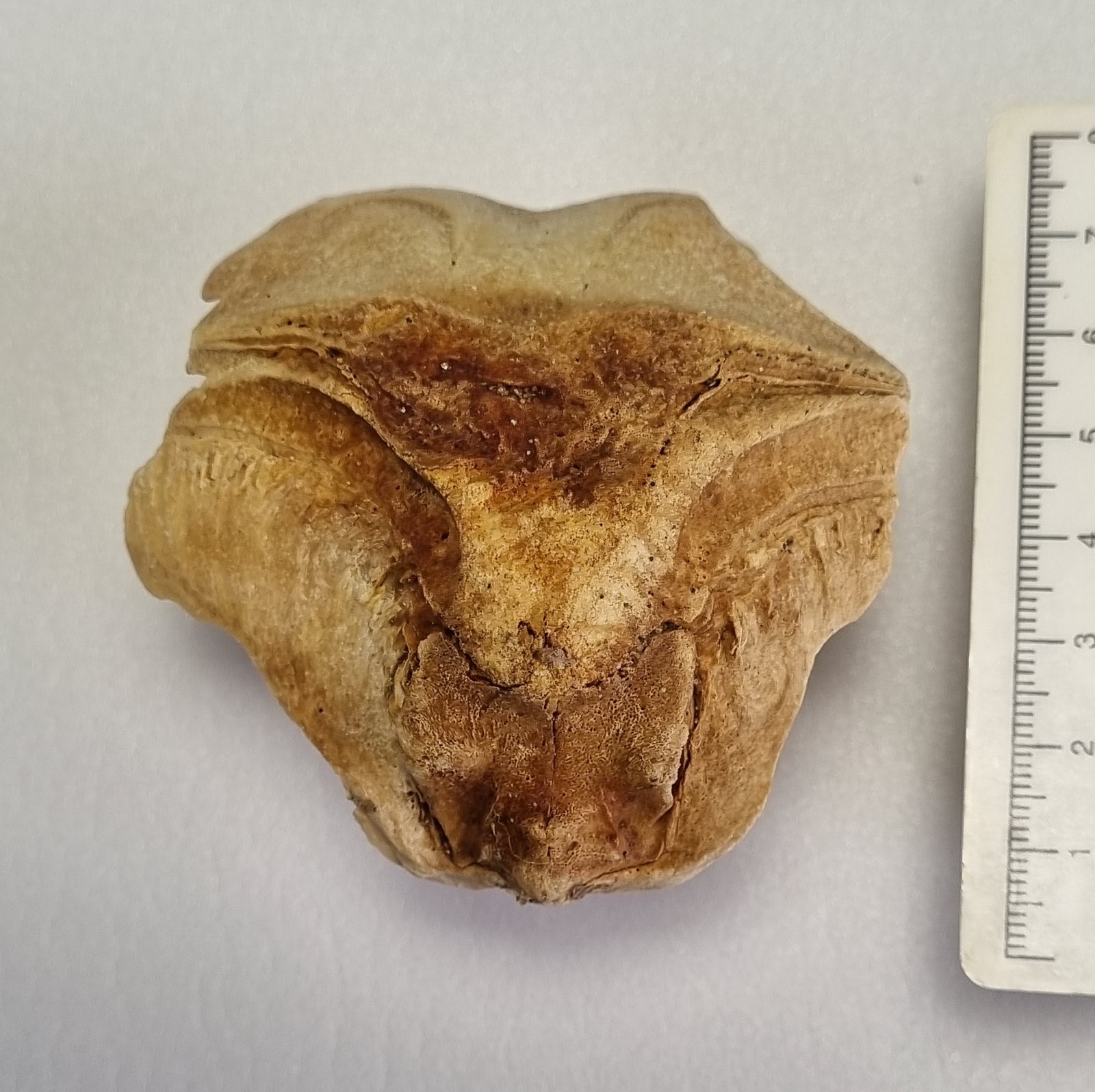
At first glance, it looks like it should be the occipital (the bone at the very back of the skull) of an Ostrich, or other very large bird. The bone is thin and dense (typical for a bird) and the overall shape and size looks like it might fit. However, none of the details of the bony sutures fit that possibility, for any large bird. Also, this came in as an enquiry, and was almost certaily found in Ireland, making a big bird even less likely,

With birds ruled out, I looked into the mammals. Generally it’s helpful to start with common species, to start ruling out the more frequently encountered species. There are some unfused sutures, so I began with looking at some common large mammals, keeping in mind the developmental differences that occur, making the skulls of juveniles appear quite different to adults of the same species. This is especially the case in relation to skull shape and presence of unfused sutures that can vanish in adults.

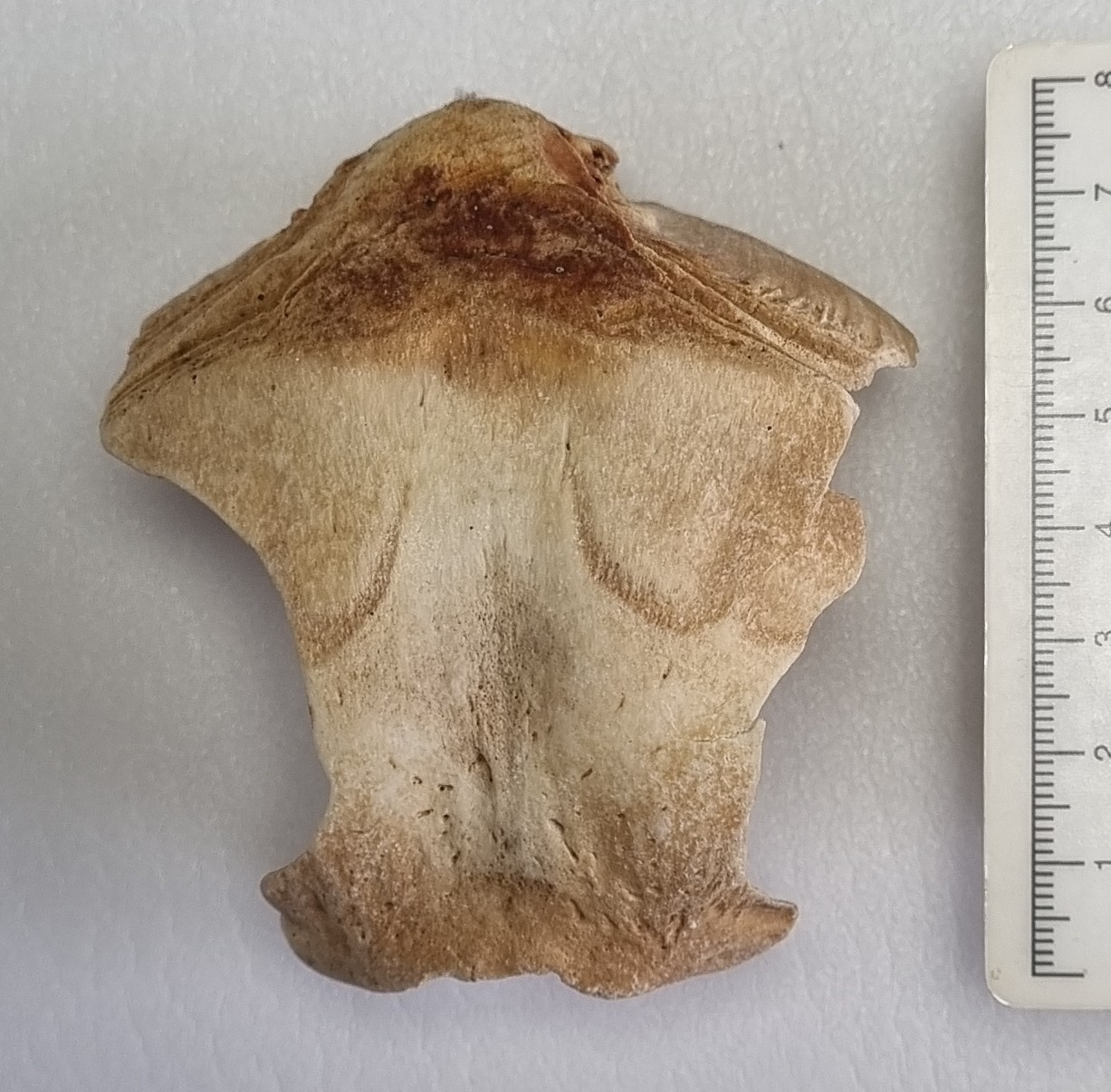
Sticking with the occipital, since the shape looks right and several people converged on the same idea (although the species suggested varied quite considerably), for me, the nuchal crest (the area of bone where the ligaments for the neck muscles attach to the back of the head) is very similar in shape to that of a sheep:

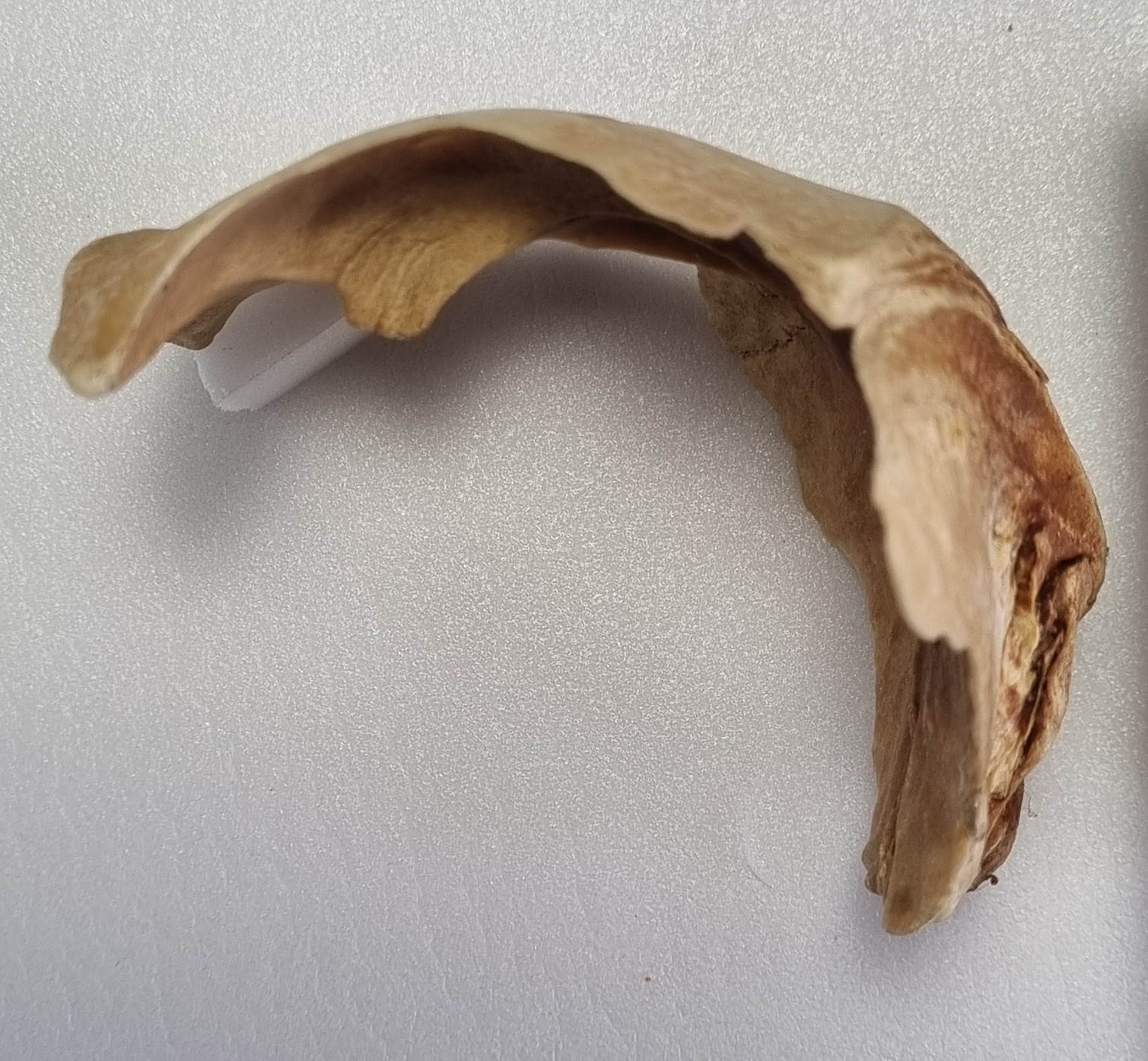
Mystery object

This would have been a nice and simple way to wrap things up, but unfortunately I’m still unsure. Mainly this is because the shape doesn’t match so well from other angles:

Of course, this may simply be an artefact of comparing a juvenile animal skull to an adult – so I’ll need to check with a range of specimens of different ages to be more certain.

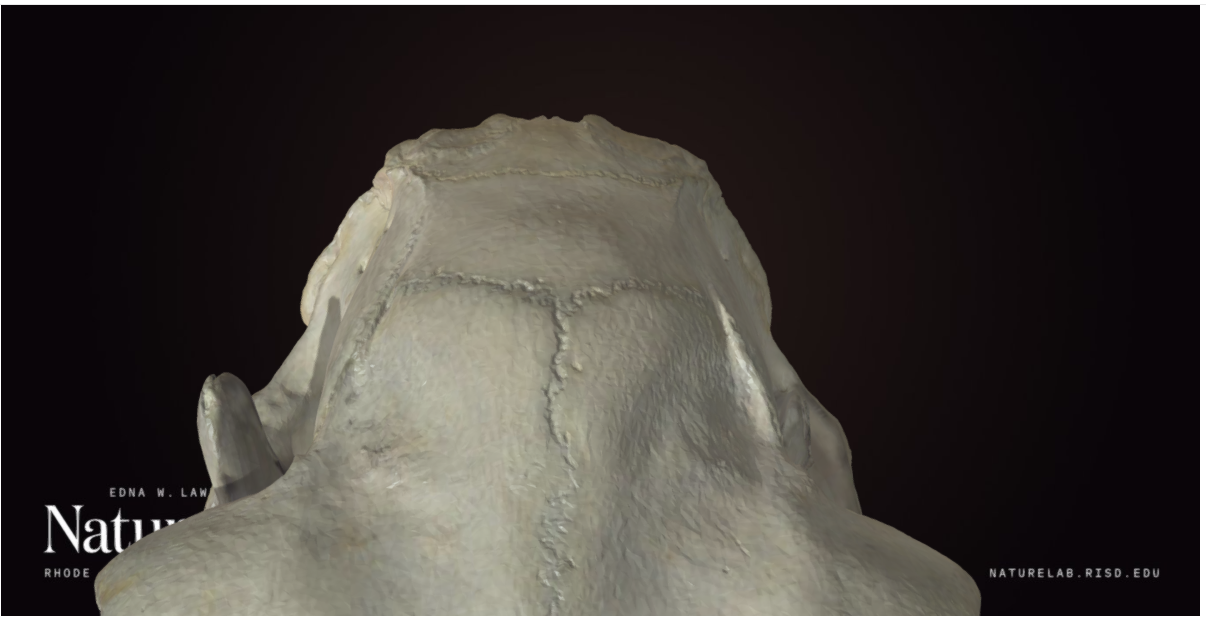
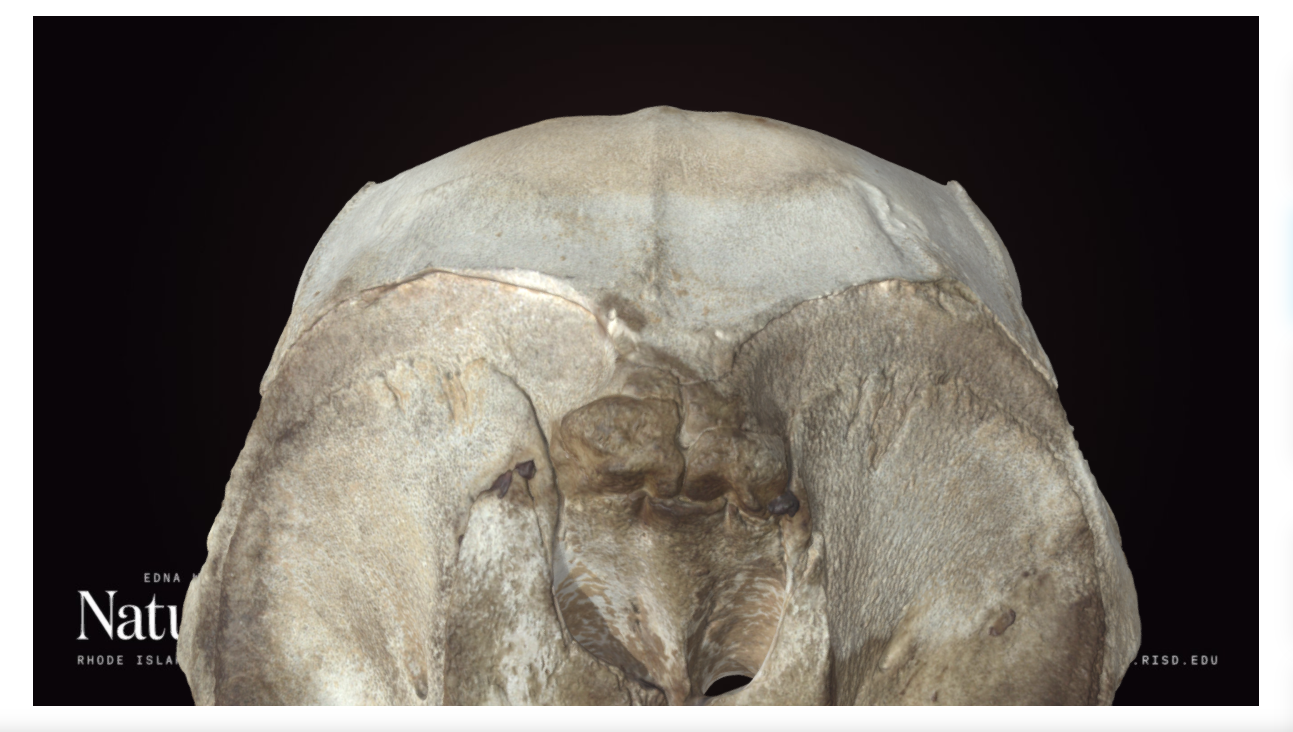
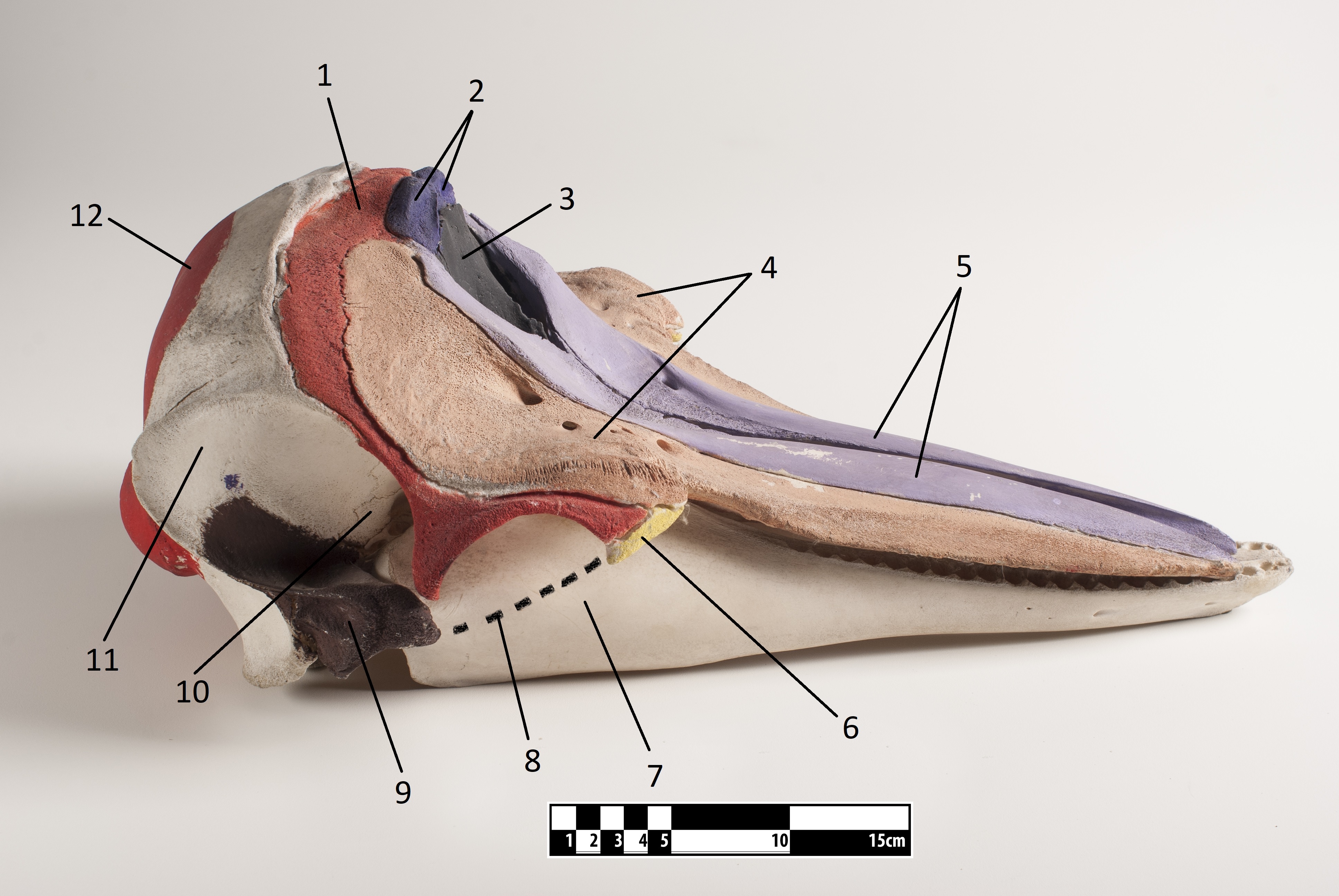
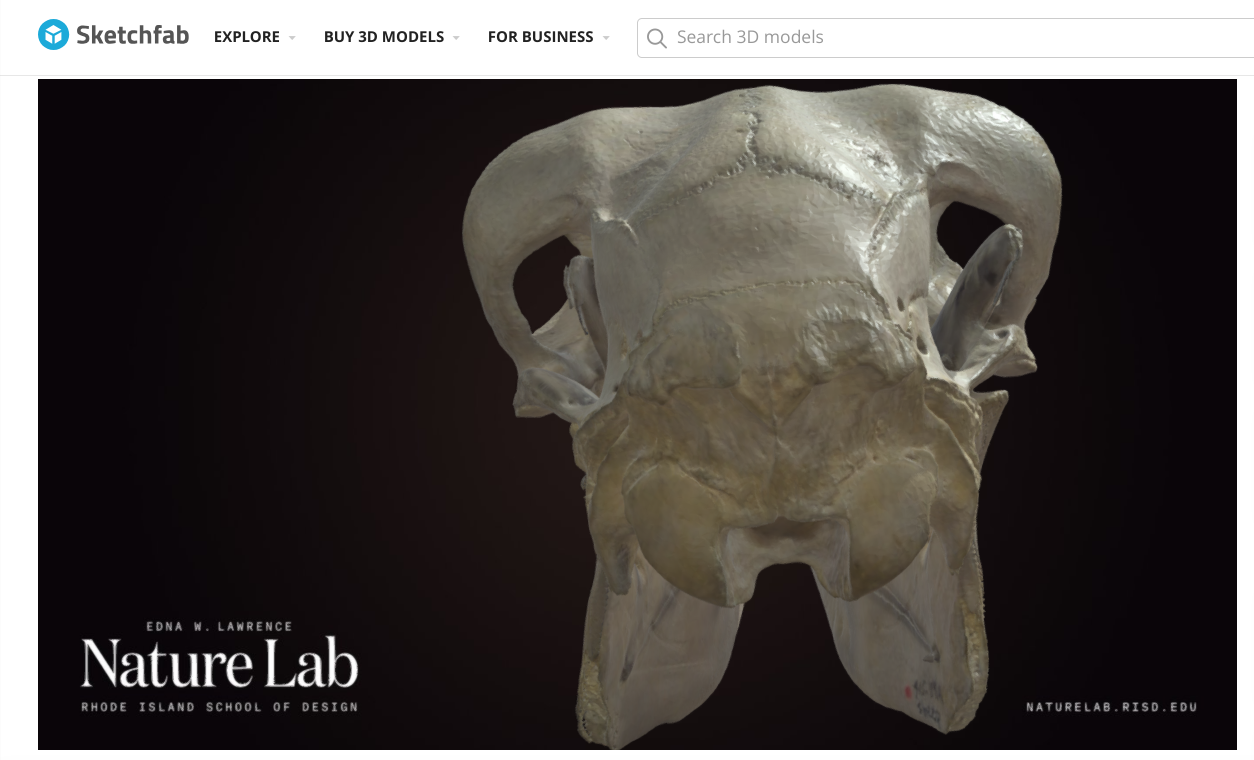
However, there was also a suggestion of Porpoise (or other cetacean) by Adam Yates and Kat Edmonson came up with an intriguing suggestion that I am quite taken by. It is possible that the raised region is not the nuchal region at all (in Porpoises and many other cetaceans there’s actually a depression rather than a raised ridge in that area of the back of the skull), it may actually mark the junction between two very short nasal bones, a very compressed frontal region and the occipital at the back of a cetacean skull:

Dolphin cranium scan on Sketchfab. CC-BY-4.0 The Edna Lawrence Nature Lab at Rhode Island School of Design, 2020.

Just to help clarify, check out the area labelled 1, 2 and 3 in the image below:

So it may be that I was looking at the bone upside down the whole time. I’ll need to do some more comparisons to narrow down species if that is what it is, but huge thanks to Kat for getting me to see this object from a new perspective!

Friday mystery object #469

This week I have a weird mystery object for you to have a go at identifying:

This is a specimen that I came across from a small selection of enquiries I inherited.

I’m still not 100% certain what it is, although I have my suspicions. I’d be keen to know what you think!

You can leave your suggestions in the comments section below – I’m looking forward to hearing your thoughts.

Friday mystery object #468 answer

Last week I gave you this mystery object to have a go at identifying:

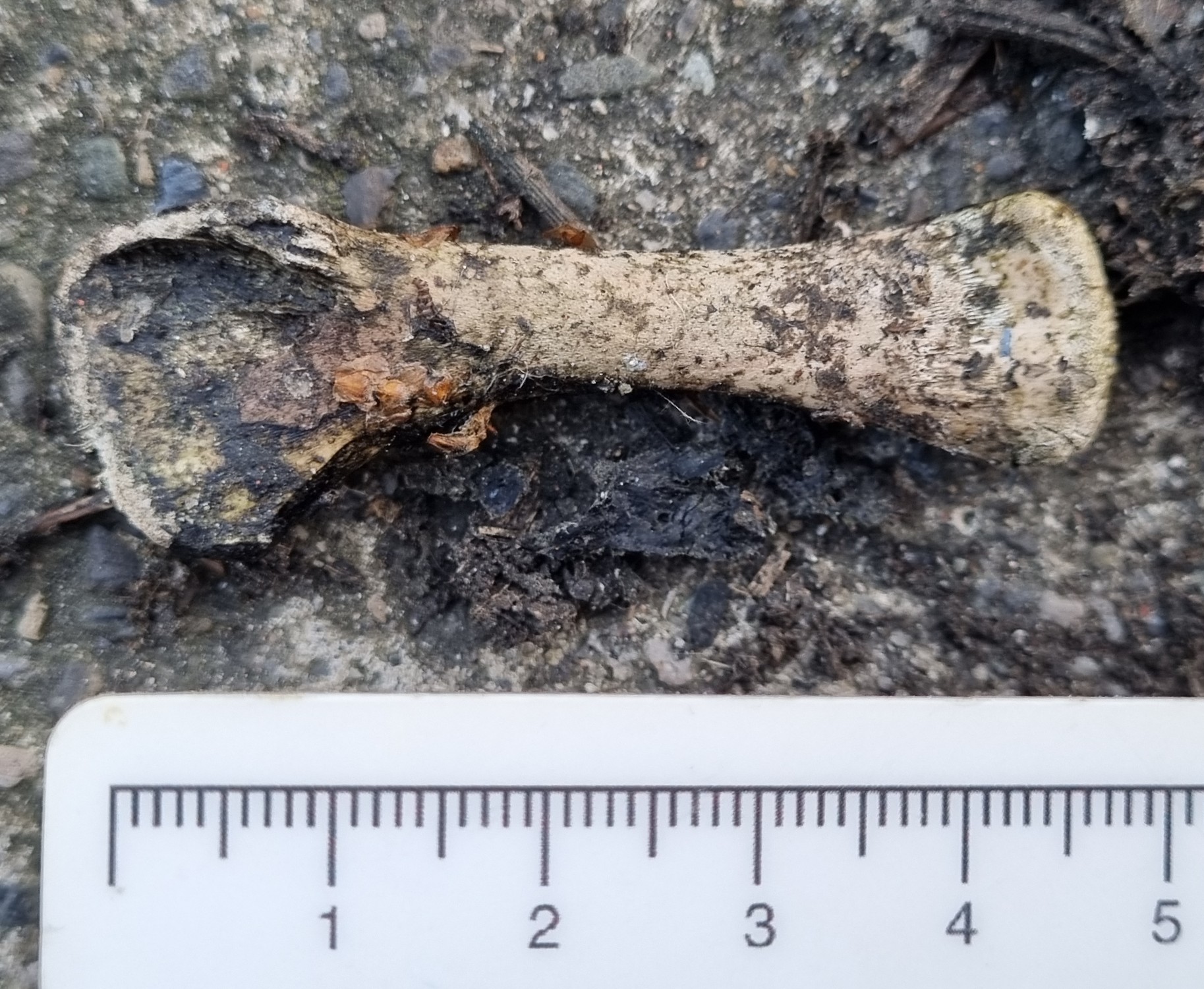
Not the prettiest object perhaps, but I did find it in the gutter on my street, so I think that’s excusable.

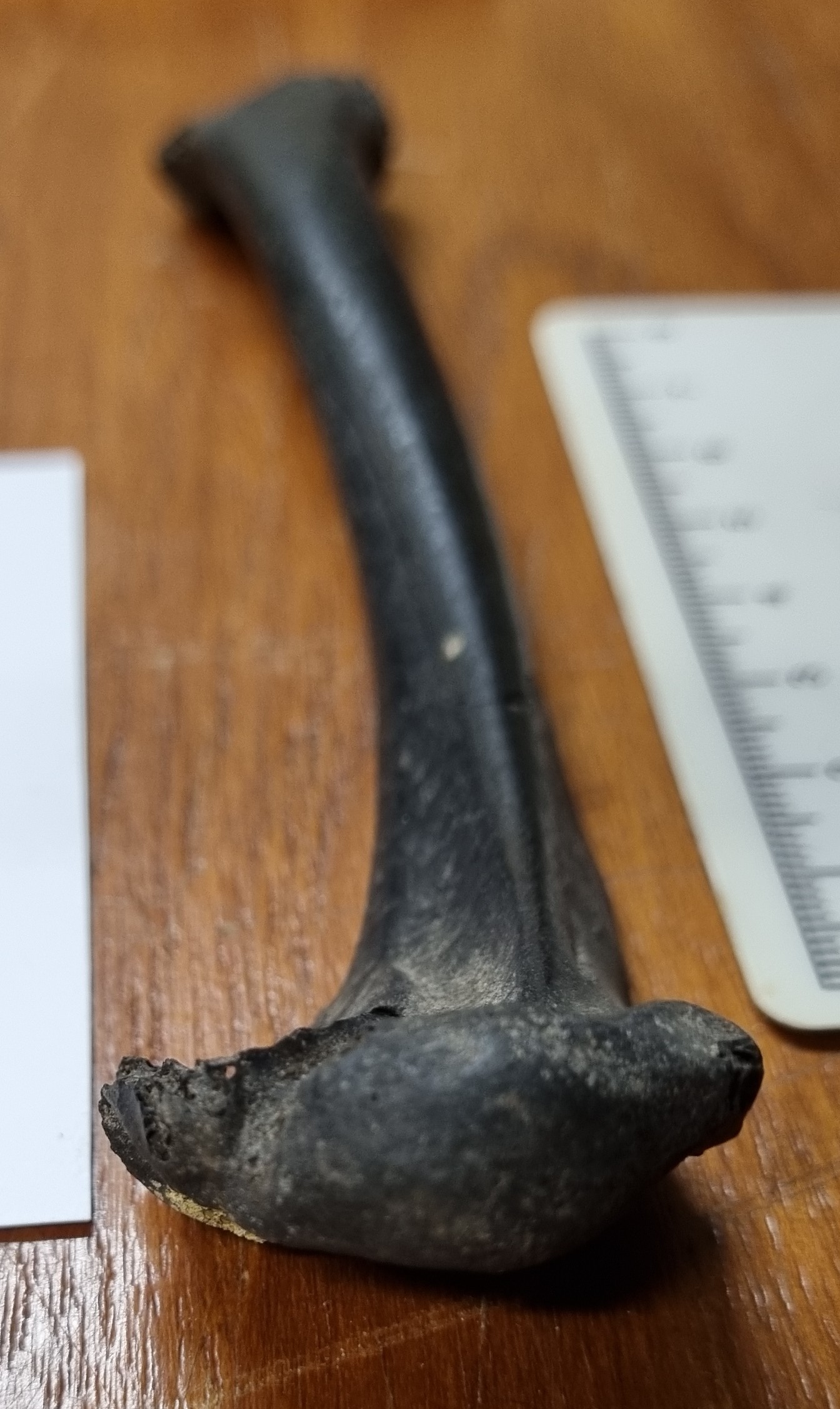
This isn’t the most difficult specimen to identify – in fact, I think pretty much everyone should be familiar with it, since it’s probably one of the most commonly found bones in the world.

Chris was the first reply, within 23 minutes of the blog being posted. I was lucky enough to see Chris in Oxford this week, and he confirmed that most of that time was spent coming up with a suitable cryptic clue. And it was a spot on:

Foul! You should of cleaned it first, Paulo (although it is quite funny!)

Chris says: September 1, 2023 at 8:23am

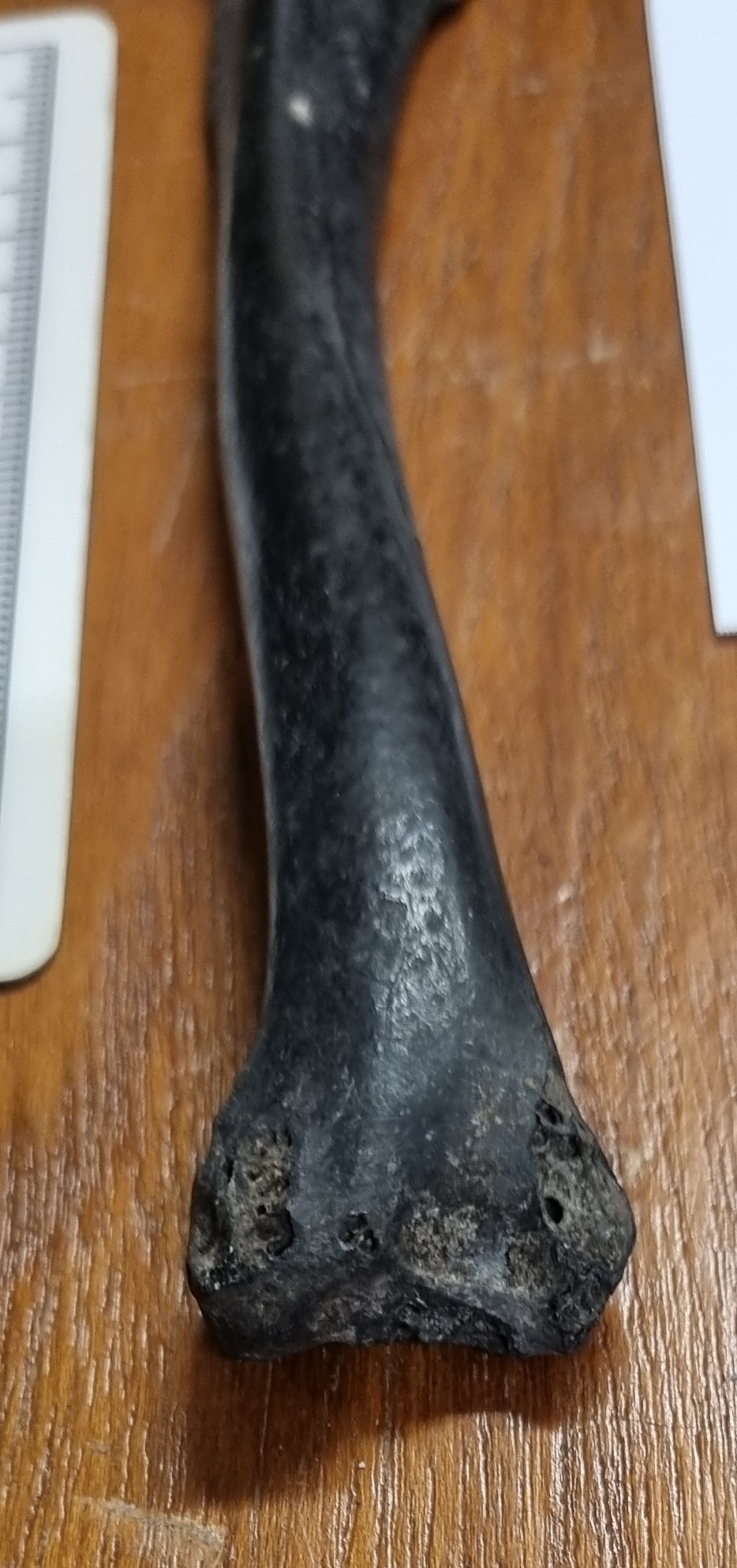
As Chris hinted, this is of course the humerus of a Chicken Gallus domesticus (Linnaeus, 1758).

As I mentioned, this is probably the single most commonly encountered bone you’ll find. There are an estimated 34 billion Chickens alive at any given time, with around 74 billion being slaughtered for food each year, so it’s no surprise that their leg and wing bones accumulate wherever you find people.

In fact, the presence of a high density of Chicken bones in sediments is considered to be one of the features that will help to define the Anthropocene period.

The high density bit is important, since the Red Jungle Fowl has been around for 4-6 million years in Asia at low densities, but with the domestication taking place over 3,500 years ago, Chickens have travelled the globe with Humans, providing eggs and meat for a huge range of cultures.

But it’s not until huge numbers started being reared commercially in the 20th Century that landfills started containing vast numbers of bones from these birds.

Image from the George F. Landegger Collection of Alabama Photographs in Carol M. Highsmith’s America, Library of Congress, Prints and Photographs Division. 2010.

Alongside a variety of other materials generated by human activity, from soot to radiactive isotopes dispersed around the globe by nuclear testing, chicken bones are providing a diagnostic features for geologists of the future to recognise the start of the Anthropocene.

So, bravo to Chris, and be sure to remember what this bone looks like, as I’m sure you’ll see plenty of them in future!

Friday mystery object #467 answer

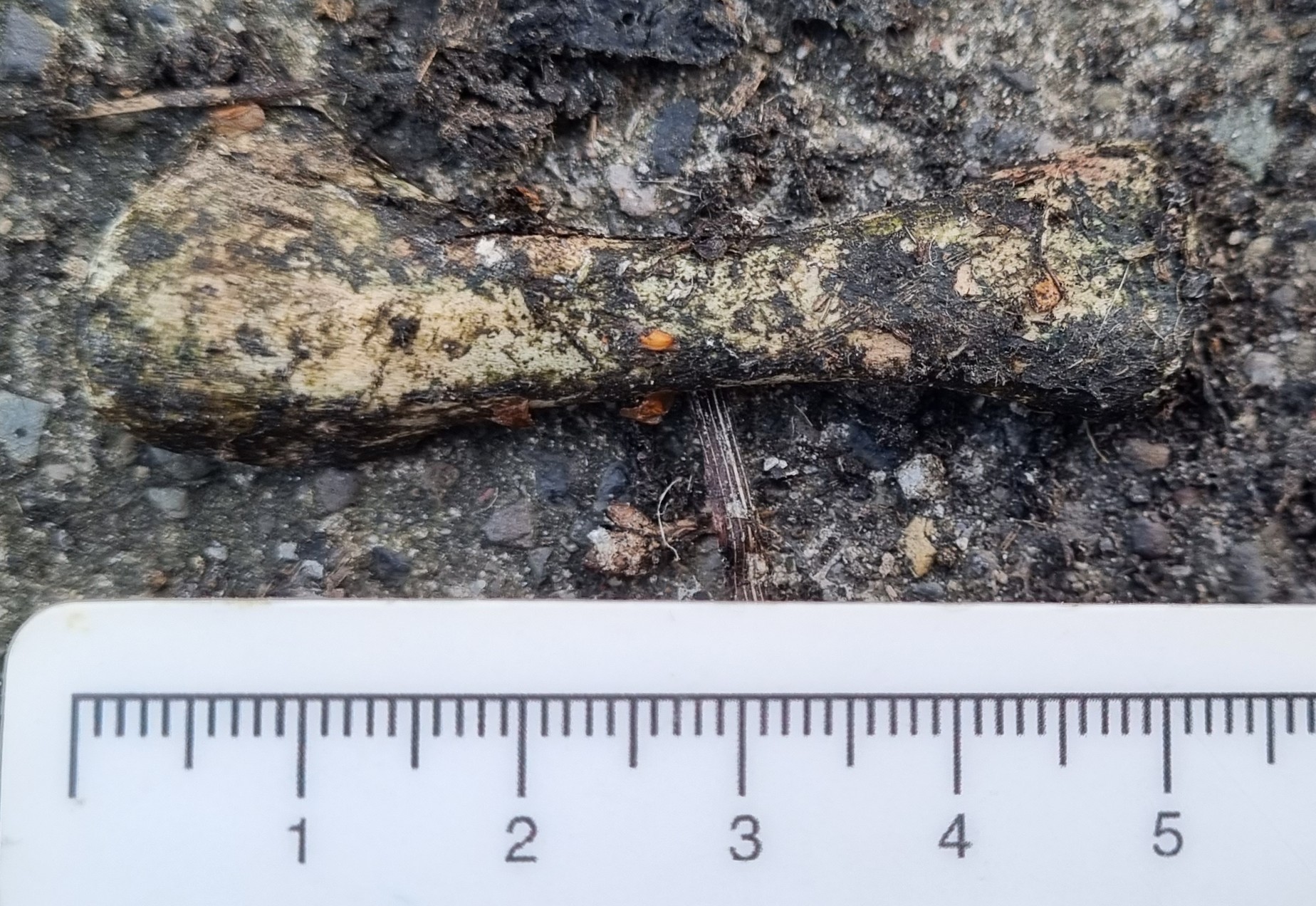
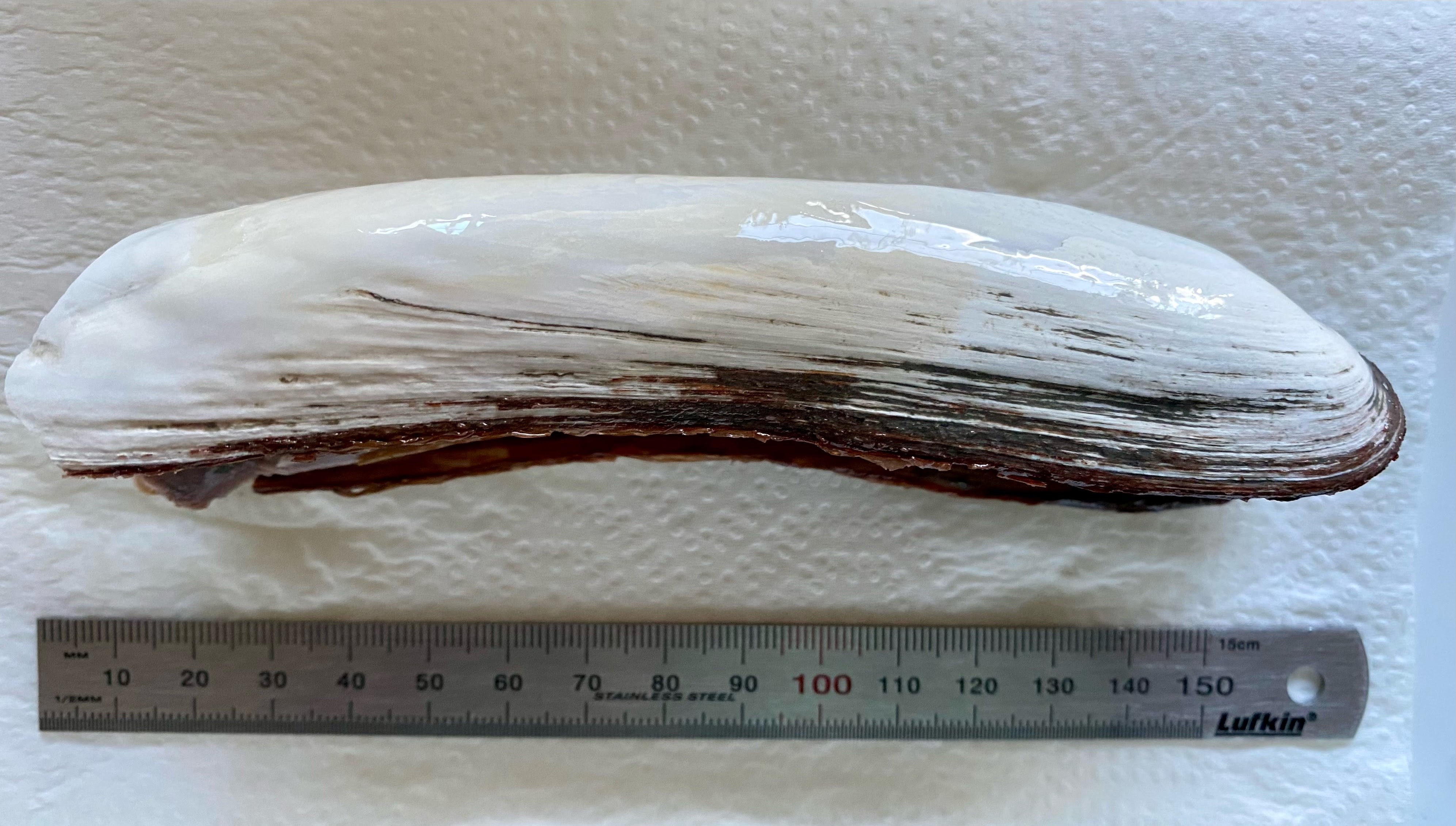
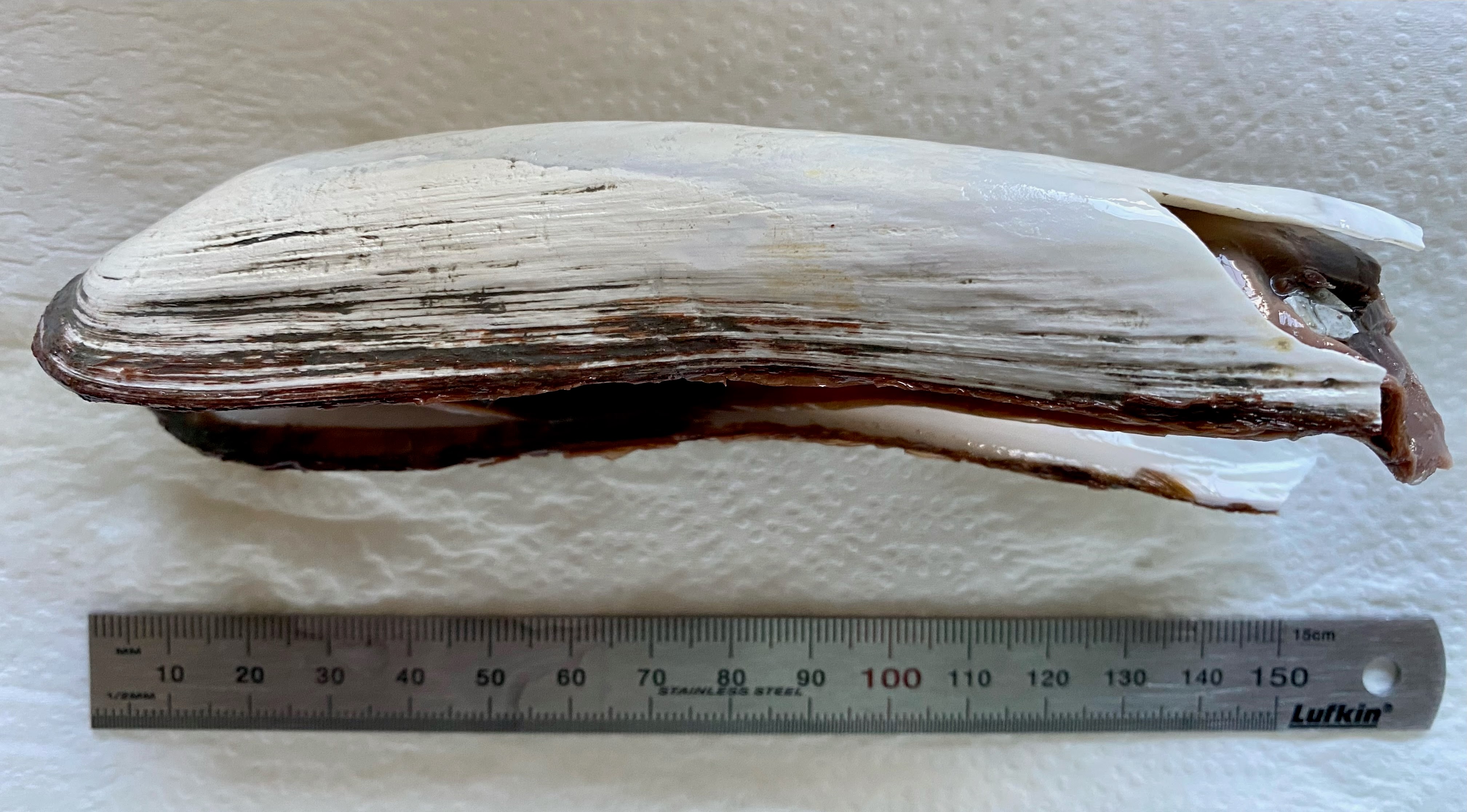
Last week we had a very difficult guest mystery object (or objects, as there were two specimens). These are from the collections of Andy Taylor, FLS:

Image by Andy Taylor, 2023
Mystery object #467 Image by Andy Taylor, 2023
Image by Andy Taylor, 2023

The general consensus in the comments was that they are a type of mollusc, and due to the elongated nature there were a few suggestions of something in the Razor Clam area of the crunchy-yet-squishy zone of the tree of life.

But these are a bit more unusual than that, and unfortunately nobody seems to have picked up on my ever so cryptic clue:

You may need to delve into the depths of the internet to work it out

This refers to the fact that this species is one of the denizens of the deepest parts of the world’s oceans.

This combined with the characteristically elongated shell shape does help to narrow it down, although it takes a lot of work – or a degree of familiarity to work it out.

Remarkably, Dennis C. Nieweg on LinkedIn did manage to figure it out to the previous generic name of Calyptogena, which is hugely impressive for such an unusual and generally unfamiliar specimen.

These are specimens of Abyssogena (was Calyptogena) phaseoliformis (Métivier, Okutani & Ohta, 1986). They are very deep living bivalves in the Order Venerida, that survive around deep-water vents and seeps in the Abyssal zone and which were first described when submersibles were developed that could sample at great depths – opening up a whole new realm of discovery.

The details provided by Andy are as follows:

First specimen is from the Japan Trench and was collected at a depth of 6347m in 1997 by ’Shinkai 6500’ DSV (Deep Submergence Vehicle) operated by JASTEC (Japan Agency for Marine and Earth Science). 

This second specimen was collected from the Aluetian Trench at a depth of 4776m – 44949m in 1994. This specimen was collected by the ‘RV Sonne’ with a remote submersible and TVG (TV guided grab). 

Andy Taylor, FLS on 17 Aug 2023

So these specimens represent some of the deepest living organsims on Earth, which we’ve only known about the existence of for about 40 years. That’s pretty cool in my book!

Friday mystery object #466 answer

Last week I gave you this genuine mystery object from Rohan Long, curator of the comparative anatomy collection of the Harry Brookes Allen Museum of Anatomy and Pathology at the University of Melbourne:

Image by Rohan Long, 2023

This specimen may have been collected by Frederic Wood Jones, a British comparative anatomist who headed up the Anatomy Department at the University of Melbourne in the 1930s. This may mean it could have come from almost anywhere, given Wood Jones’ links with other anatomists.

So all we really have to go on is the morphology of the object.

It’s clearly made from long section of quite highly vascularised bone:

It seems to be missing the smooth surface normally seen on bone, but that can be caused by a variety of factors, from disease and infection in the live animal to weathering after it’s been dead for a while.

The ends of the bone don’t have any indications of an articular surface:

The larger end has a bit of a hollow, but the smaller end appears to be broken and you can see a hollow core to the bone.

Overall, the shape is not really reminiscent of any long bone I can think of. It lacks a normal articular surface at the unbroken end and it has no crests or ridges that I would normally expect muscles to attach to. It tapers quite consistently and has a slight curve.

My first thought was shared by others in the comments, with Chris Jarvis getting in first with the simple but effective pun:

Oooh! Sick!

Chris Jarvis August 4, 2023 at 12:37 pm

This is of course a reference to Oosik, which is the name in Native Alaska Languages for the baculum or os penis of a Walrus Odobenus rosmarus (Linnaeus, 1758).

There are some differences between this specimen and some of the other Walrus bacula I’ve seen and which show up in an image search, but there are a variety of possible explanations for that.

One is simply that Walrus bacula are quite variable. They can vary significantly through the life of the animal as it develops, but it can also vary quite a lot between individuals. If you spend as long looking at Walrus penis bones on the internet as I have (what on Earth happened to my life?!) then you’ll notice that some have a strong double curve while others can be almost straight, others are thick and some are quite thin.

This variability is also seen in other pinnipeds with a high degree of sexual dimorphism, like Sealions and Elephant Seals.

So while it’s hard to be 100% certain of the identification, I think it is the most likely solution to this mystery.

I hope you had fun with this one!

Friday mystery object #466

This week I have a guest mystery object for you courtesy of Rohan Long, curator of the comparative anatomy collection of the Harry Brookes Allen Museum of Anatomy and Pathology at the University of Melbourne. Here’s some context about the collection from Rohan, it may help with an identification:

Our comparative anatomy collections date from the earliest 20th century and are predominantly native Australian mammals and domestic animal species. However, the academics at the University have always had international networks, and there are species represented in the collection from all over the world. Many have been prepared in a lab for class specimens, many have been collected in the field. The latter are assumed to have been associated with Frederic Wood Jones, a British anatomist with a fondness for comparative anatomy and island collecting trips who was head of our Anatomy Department from 1930 to 1937.

Image by Rohan Long, 2023

Do you have any ideas what this might be? As ever, you can leave your questions, insights and suggestions in the comments box below. Have fun with this one!

Friday mystery object #465 answer

Last week I gave you an entomological mystery to solve, in the triangular(ish) shape of this moth:

For the real insect aficionados out there, this probably wasn’t too much of a challenge (I’m looking at you Tim), but for the rest of us it wasn’t quite so easy.

The overall appearance of this moth, with its size, shape (especially wing position), and fuzzy wing fringes is what you expect from a member of the family Noctuidae – the Owlet Moths. However, it’s a big family, with almost 12,000 species. A lot of the species also look similar to each other and some have a wide variety of different colour morphs – just to make things more complicated.

Context helps us out here, since although there are of lot of Noctuidae species in the world, there are far fewer found in Ireland and there are helpful resources that illustrate them.

Even with helpful visual resources, with good photos of the different Irish species, it can be hard to work out what the diagnostic features might be. For some species of moths you have to get into the fine detail of the genitals, but thankfully there are wing patterns that are distinctive in this instance.

In this case, the wing pattern of interest is the small triangular black mark on the lower portion of the leading edge of the upper wing.

That’s it.

The rest of the colour and pattern of the upper wing is very variable in this species, so you can’t rely on any of those features as a reliable indicator. Of course, if the specimen was alive and had its wings open, it would be a much easier identification:

This is, of course, a Large Yellow Underwing Noctua pronuba (Linnaeus, 1758), which is pretty obvious once the underwing is visible. So well done to everyone who worked it out from just the upper wings.