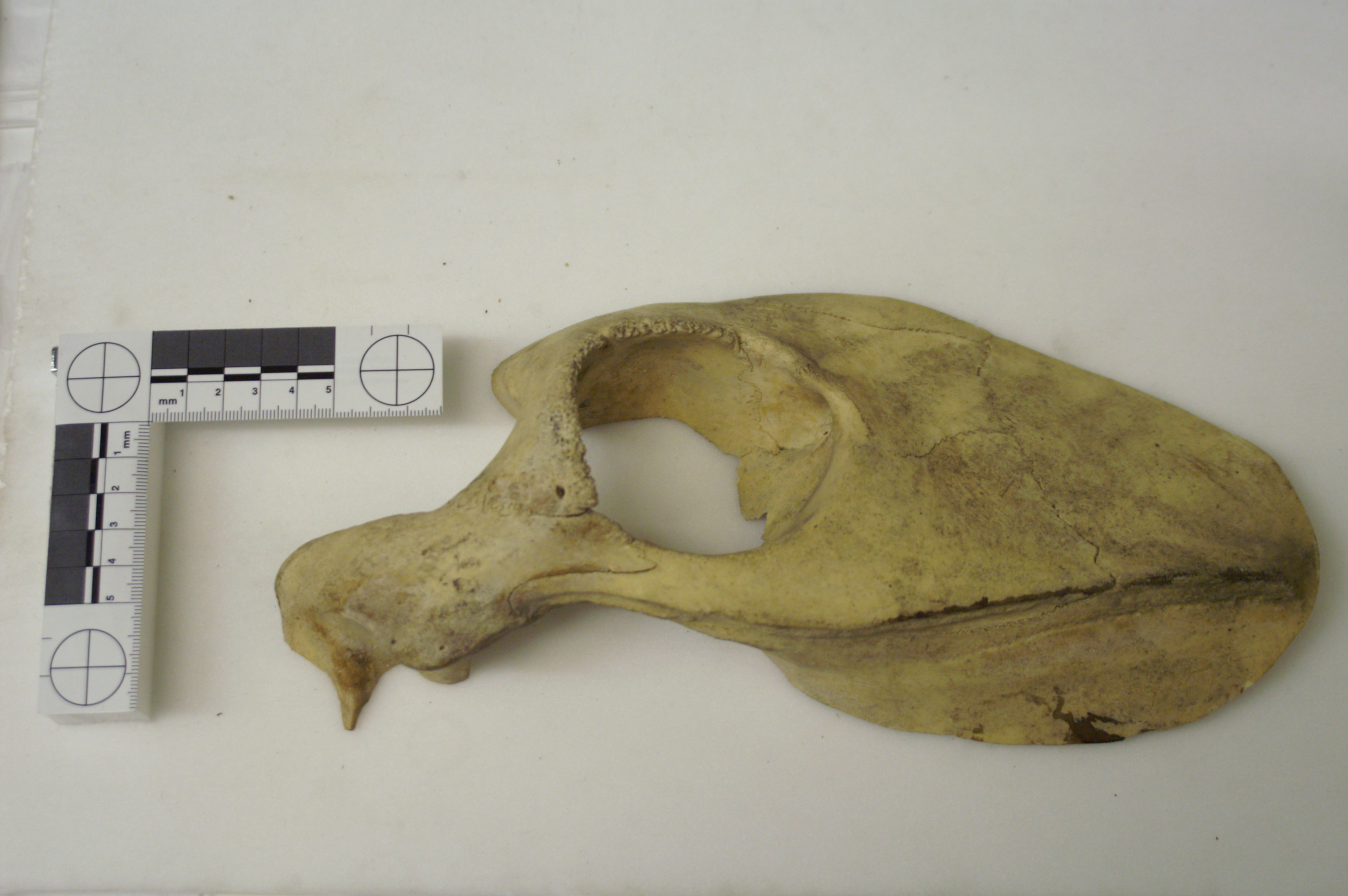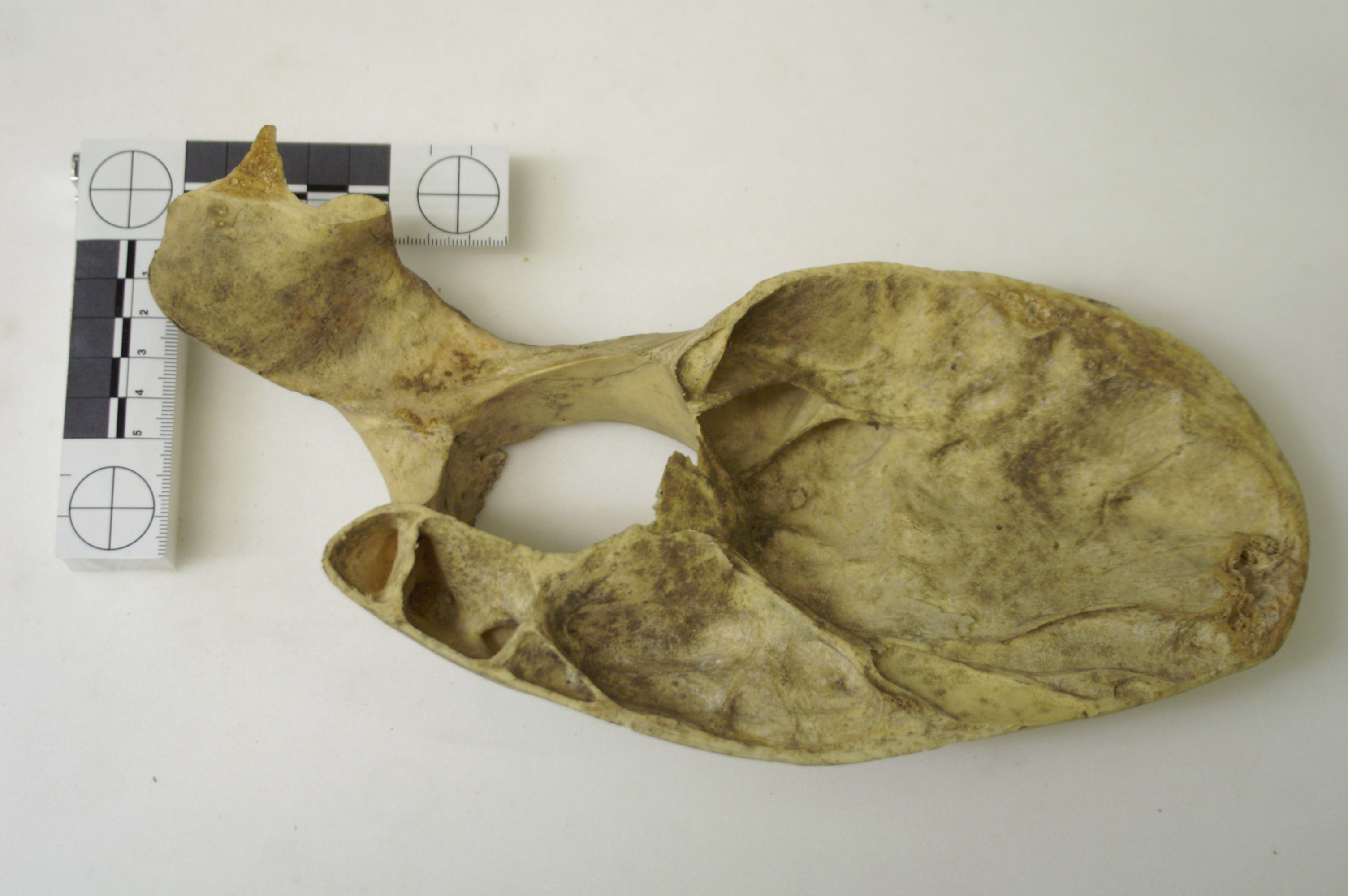
Friday mystery object #70

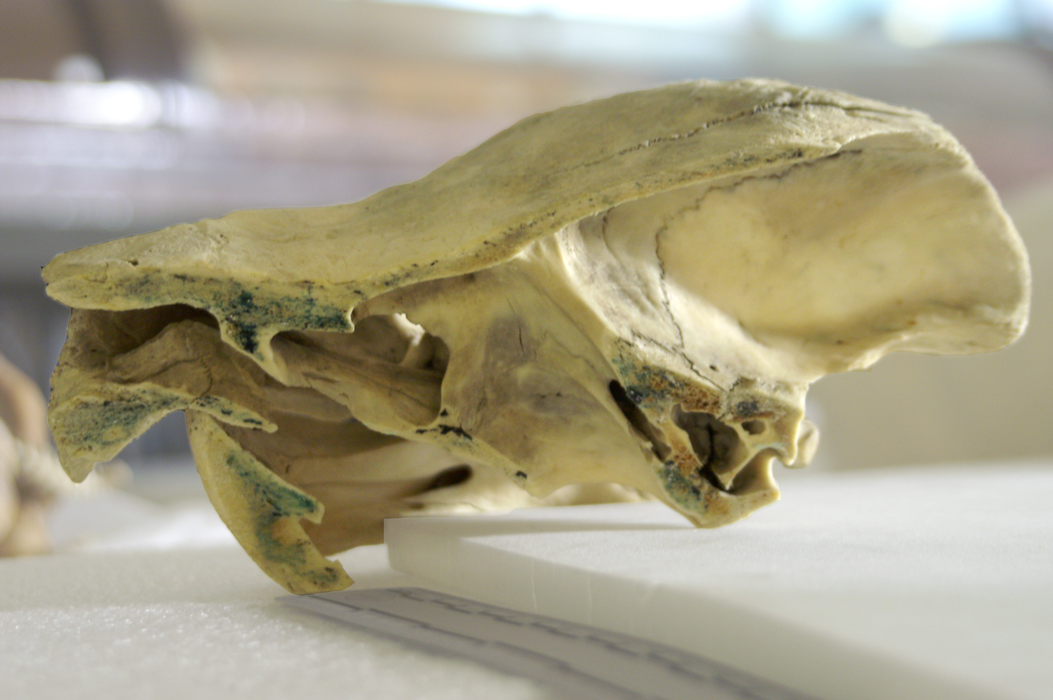
This Friday I am not going to provide any scale bar with the object. This is something that I have to deal with quite often, when members of the public email a photo of something for identification. Sometimes it’s not a big problem, particularly if the whole organism is in view and it’s has distinctive morphology (shape), but in some instances (particularly with bones) it can make identification very tricky indeed. Let’s see how you do:

Any idea what this might be?

Put your questions, comments and suggestions below and I’ll do my best to provide answers (except about size). Good luck!

Maneaters

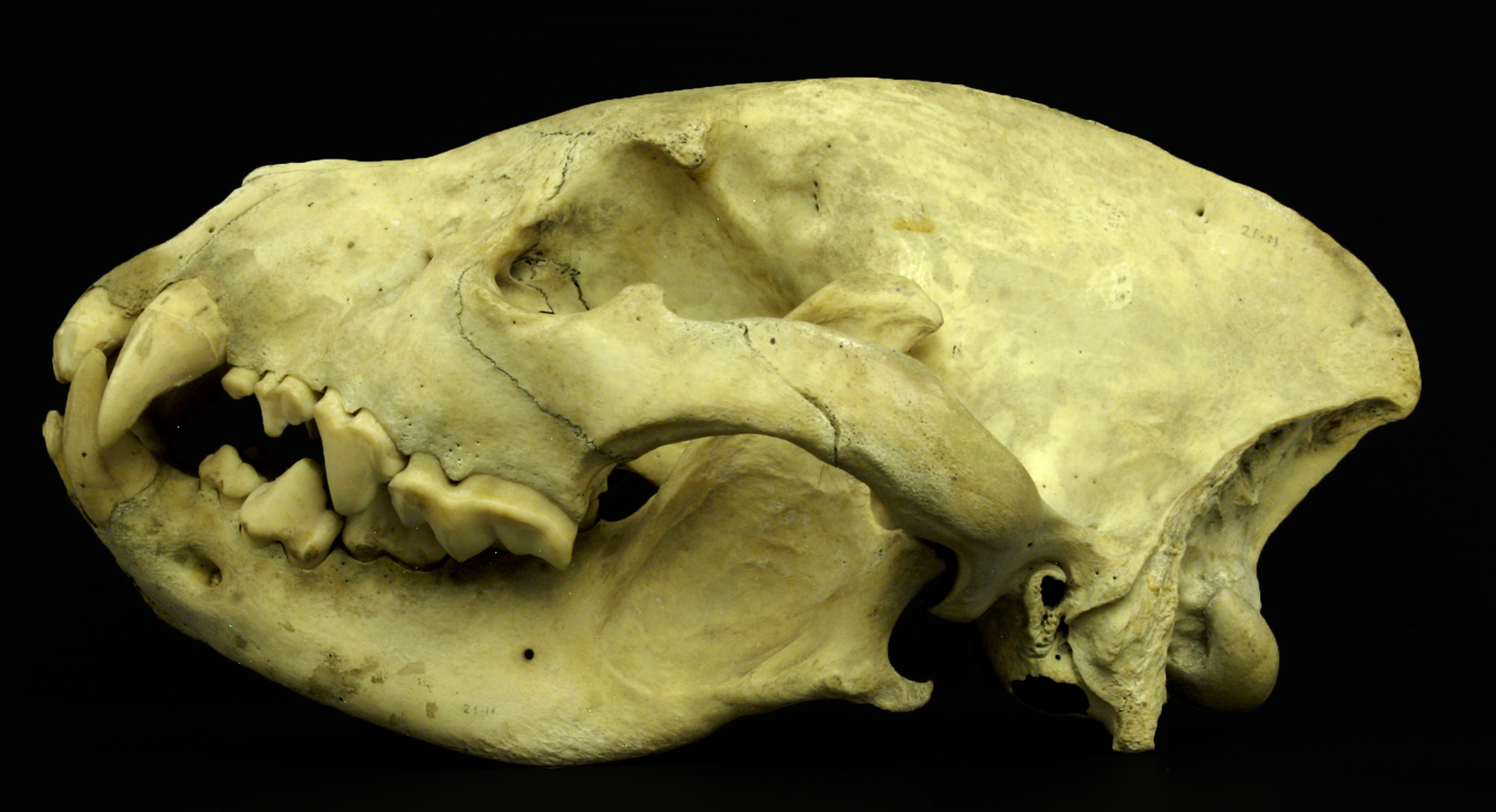
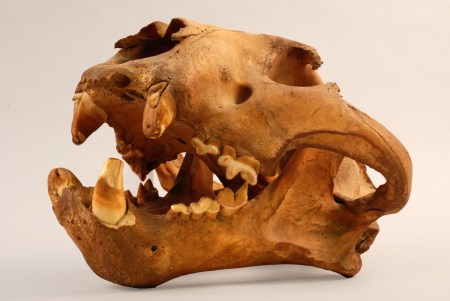
Skull of maneating tiger, Horniman Museum NH.74.11.19

Tool use, technology and cooperation have allowed humans to claw their way to the top of the predatory heap. As a species we can and do kill anything and everything. Sometimes we kill for food, sometimes for profit and sometimes for fun. Very occasionally we also kill for self protection.

Humans have been largely off the menu for quite some time – and although people are still killed and eaten by large predators with some regularity (perhaps a hundred or so a year), humans are not the first prey of choice for any species of carnivore – it’s just that some individuals within a species will develop a taste for human. When there are attacks on people it will usually be because there has been a blurring of borders between a human habitat and the habitat of the predator. The most obvious example of this is when humans are occasionally taken by sharks whilst in the sea or by crocodiles in lakes and rivers.

Staying on land, the blurring of borders between predators and people is linked with habitat loss  and the encroachment of human development, agriculture and habitation, with the associated issues of deforestation and re-purposing of land. The development of infrastructure brings humans into wilderness, such as with the Tsavo bridge project in Kenya, where a pair of lions terrorised construction workers for ten months in 1898, eating about 35 and possibly killing around 135.

As habitat is lost, predators are faced with fewer natural prey and they are thrust into close proximity with domesticated animals – with obvious consequences.  Where you have livestock being killed you also have people trying to protect their livelihood and this is where the conflict really heats up, taking its toll on both the people and the predators. There can be no winners. Continue reading

Friday mystery object #54 answer

On Friday I gave you this skull to identify:

I was impressed by the efficiency with which the possibilities were whittled down and the correct species identified, since this isn’t an animal that’s very well known by most people (in the UK at least). Dave Godfrey immediately recognised this as being a member of the Carnivora and a dog-like one at that, an opinion supported by Matthew Partridge’s observations.

This line of investigation was somewhat derailed by Gimpy’s suggestion that this was a Tasmanian devil skull, an observation that was incorrect, yet very pertinent, since there are quite striking similarities between this and a Tasmanian devil skull as a result of convergent evolution. It’s strange to think that two species can look so similar and yet be separated by at least 124 million years of divergence (check out the placental-marsupial divergence node using the awesome University of Bristol Date-a-Clade webpage). That’s what similarities in environment and lifestyle will do to organisms with similar ancestral skeletal bodyplans.

Debi Linton then came to the rescue with some astute observations about the teeth of this animal and after trawling the Skulls Unlimited site (which appears to be much-used by people hunting for the answer to the FMO) she hit upon the correct answer of Continue reading

Friday mystery object #54

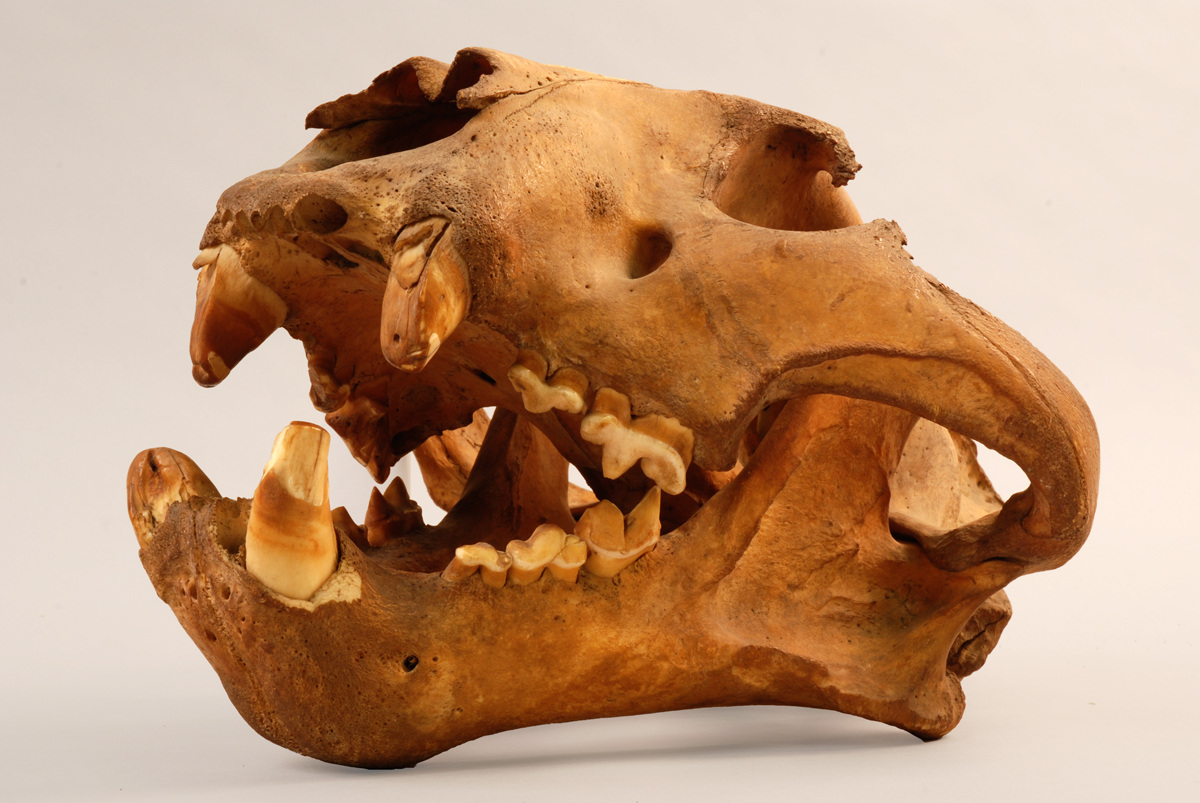
The Friday mystery object for this week is a skull specimen from the Horniman collections. Some weeks ago I suggested that I put together a guide to help with identifying skulls, which I have been doing as the opportunity arises (it should be ready soon). Since this guide will hopefully make it easier for you to identify skulls I thought I should make the most of my last opportunity to get one past you. So here it is:

As usual, you can put your suggestions, questions and general musings in the comments section below and I’ll do my best to respond. Meanwhile I will be thinking of a more anthropological object for next week (in line with suggestions made last week – see I was listening).

Good luck!

Friday mystery object #52 answer

On Friday I gave you a different mystery object to the one I had originally planned, after my memory stick let me down. Nonetheless, it seems to have been an interesting one given the number of questions.

The first correct identification by Robert Grant was cleverly phrased, so as not to give the game away. Indeed, it seems as though the allusion to the song Alouette led many people off down the wrong track, due to its reference to skylarks. This combined with the object’s similarity to the shape of a whistle, identified early on by Jake, brought many of you to the conclusion that the object was a used as a musical instrument, whistle or game calling device. The string attached to the specimen certainly offers support that this object served a functional role for humans, although it may simply be part of the mounting for the original display of this object.

As it turns out, the reference to Alouette was a phonetic rendering of the taxonomic name for the genus to which this specimen belongs, which is Continue reading

Friday mystery object #50 answer

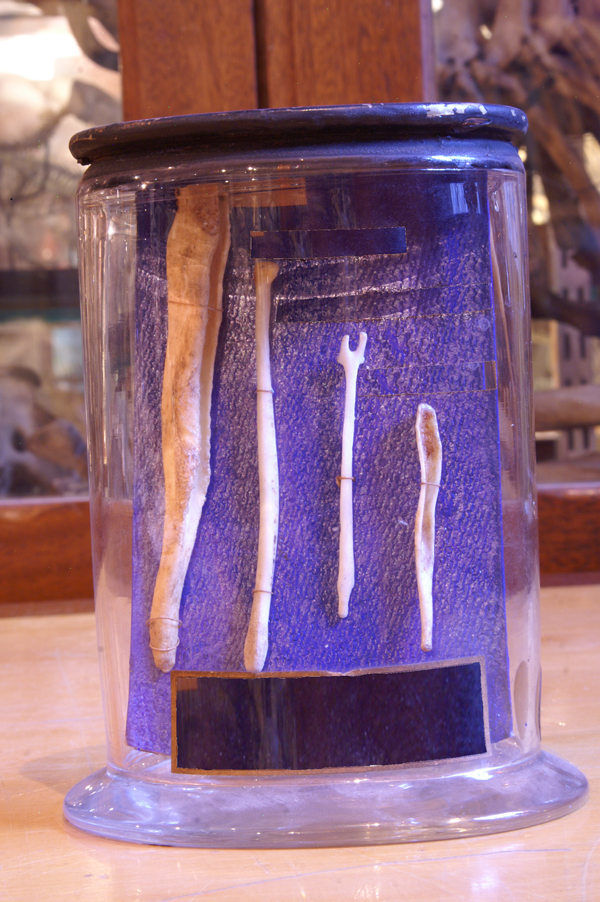
On Friday I gave you a multipart mystery object from the wonderful Grant Museum of Zoology:

This was easy in part and horribly difficult in part. The bones themselves were quickly identified as being bacula (plural of baculum) or os penes (penis bones) by Shane and SmallCasserole, but then there was confusion about which species they might  belong to. Matthew Partridge got one right, but after that the guesses went a bit wide. Here’s an unedited image that has the labels attached: Continue reading

Friday mystery object #49 answer

On Friday I gave you one of the specimens on display at the Horniman Museum, photographed from an unusual angle, as the mystery object:

I thought it might prove tricky, but jonpaulkaiser managed to identify it within 16 minutes of it being posted. Impressive stuff! Matt King also managed to spot what general type of beastie this bit of bone belonged to; a Continue reading

Friday mystery object #49

The Natural History Gallery at the Horniman has been undergoing a bit of a spring clean. The lighting in the cases has been upgraded and during the process the cases and specimens have been dusted (very carefully mind). During the process I’ve spotted a few of our display specimens from unusual angles and out of their usual context. Here is an example of a nice one that I thought might make a nice mystery object:

So any ideas what this is?

Put your suggestions and questions in the comments section below and I will do my best to point you in the right direction without giving too much away. Have fun with it!

Friday mystery object #48 answer

On Friday I gave you this lovely skull to identify:

It seems to have been a bit more tricky than I had expected. It was immediately identified as a carnivore, which is spot-on, but from there it got a bit murky. I must admit that I could have been a bit more generous with clues, particularly when David Craven asked if this was a viverrid (the family containing the civets) – I took the question at the family level, so I said ‘no’, but I should probably have asked for clarification since this skull belongs to a member of a family that falls into the infraorder Viverroidea (according to some sources).

This is in fact the skull of a Continue reading

Friday mystery object #48

This Friday I’ve taken bit more effort than usual to get a decent picture of a specimen for the mystery object. It’s amazing the difference it makes when you use a tripod and allow a good long exposure. I’m sure you’ll all identify this in no time, but hopefully you’ll enjoy the image while you’re at it – there are few things quite as beautiful as bones:

Feel free to ask questions, make suggestions or just leave your thoughts in the comments section below – I’ll do my best to answer or drop hints as the day goes on. Good luck and I hope you enjoy!

Friday mystery object #47

It’s Friday again (huzzah!) so that means it must be time for my mystery object. This week I’m going to give you something that is being moved from the Natural History offices at the Horniman to our Study Collection Centre, where our reserve collection is housed. The delicate bony structure of this object really caught my eye and I hope you find it as interesting as I do (click on image for higher resolution):

As always, feel free to ask questions about the object or make suggestions about what you think it looks like – I’ll do my best to answer or respond, although I’m at a conference, so apologies if my answers are sporadic and perhaps a little brief. Good luck!

Friday mystery object #29

Friday again and I am ready to show you some of the stuff I have found buried deep in the stores building of the Horniman Museum as I work to identify, organise and document our osteological (that’s bone) collections. Any idea what this odd looking thing is?:

As usual answers below in the comments section and feel free to ask questions – I will do my best to respond!

Friday mystery object #28

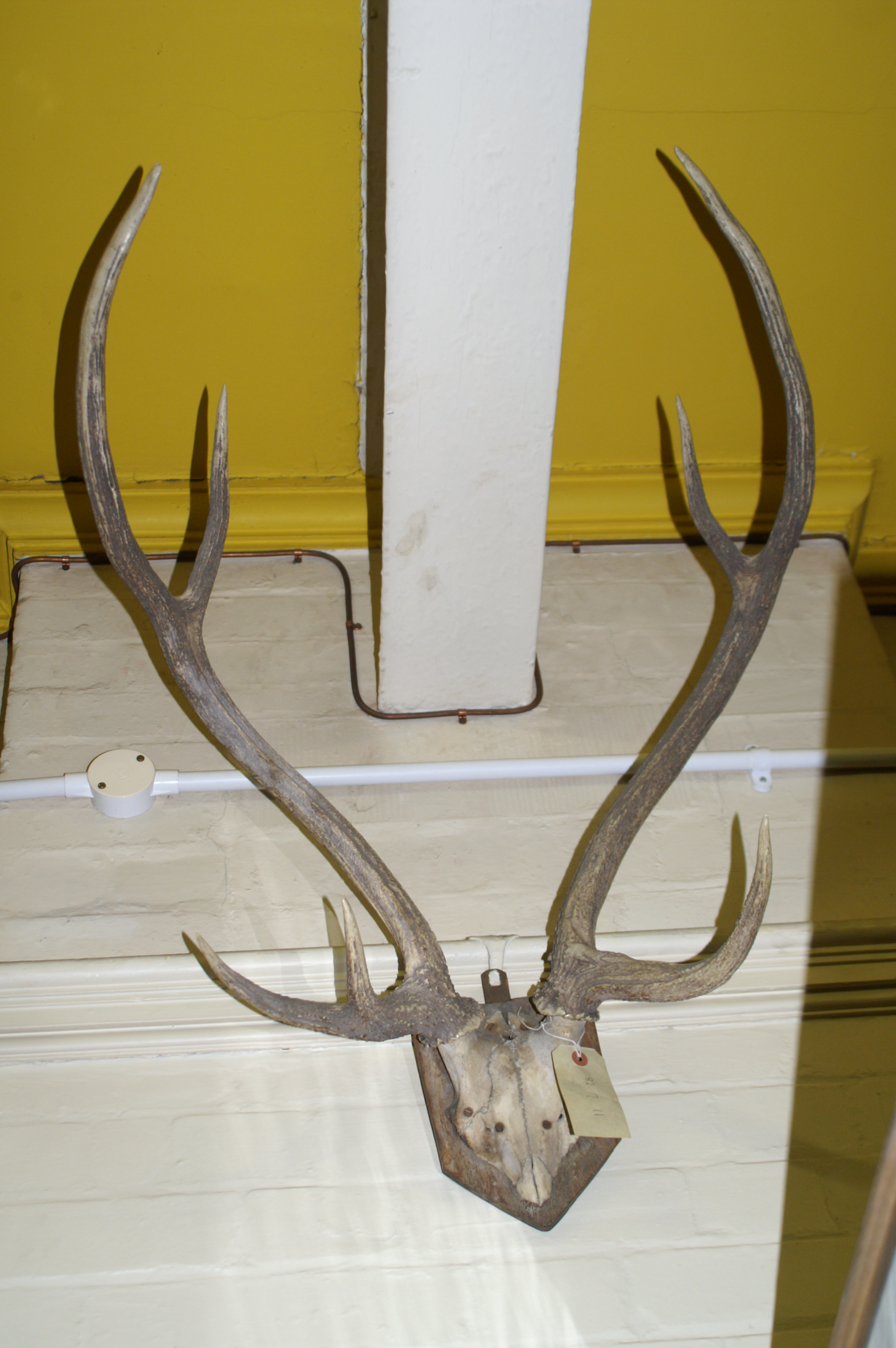
It’s Friday again, so that means it’s time for a mystery object! Any idea what this is?

I’ve recently been through the process of identifying, organising and remounting the antlers and game heads in the Horniman’s stores building (it looks really good now!). It turns out that most of the deer antlers we have belong to one species – the one pictured above in fact. Can you identify it and do you notice anything unusual about the one in the picture?

Put your answers and any questions in the comments section below. Good luck!

Friday mystery object #27 answer

On Friday I gave you this scrawny looking bird to identify:

The beak (and feet) gave away that it is a parrot (or psittaciform as the parrots are known to ornithologists and the taxonomically minded), which was immediately recognised by SmallCasserole shortly followed by Debi Linton. SmallCasserole suggested “parakeet” which I suppose could be accepted as a correct identification since they are called “parakeets” by Americans, but it took Jim to identify it more specifically – it is of course a Continue reading

Friday mystery object #9

It’s Friday again, we all know what that means – Mystery Object time!

Last week I gave you a really tricky one, that you managed to work out with some clues. I liked the Q&A format, but unfortunately I am between ISP’s at the moment, so I don’t think I will have the chance to have as much input this week. Instead there is a poll (although comments are always welcome!) and I will return to my favourite objects – skulls.

mystery9a

So, what is this the skull of? Choose an answer from the poll below (don’t forget to hit “vote”): Continue reading