Friday mystery object #467 answer

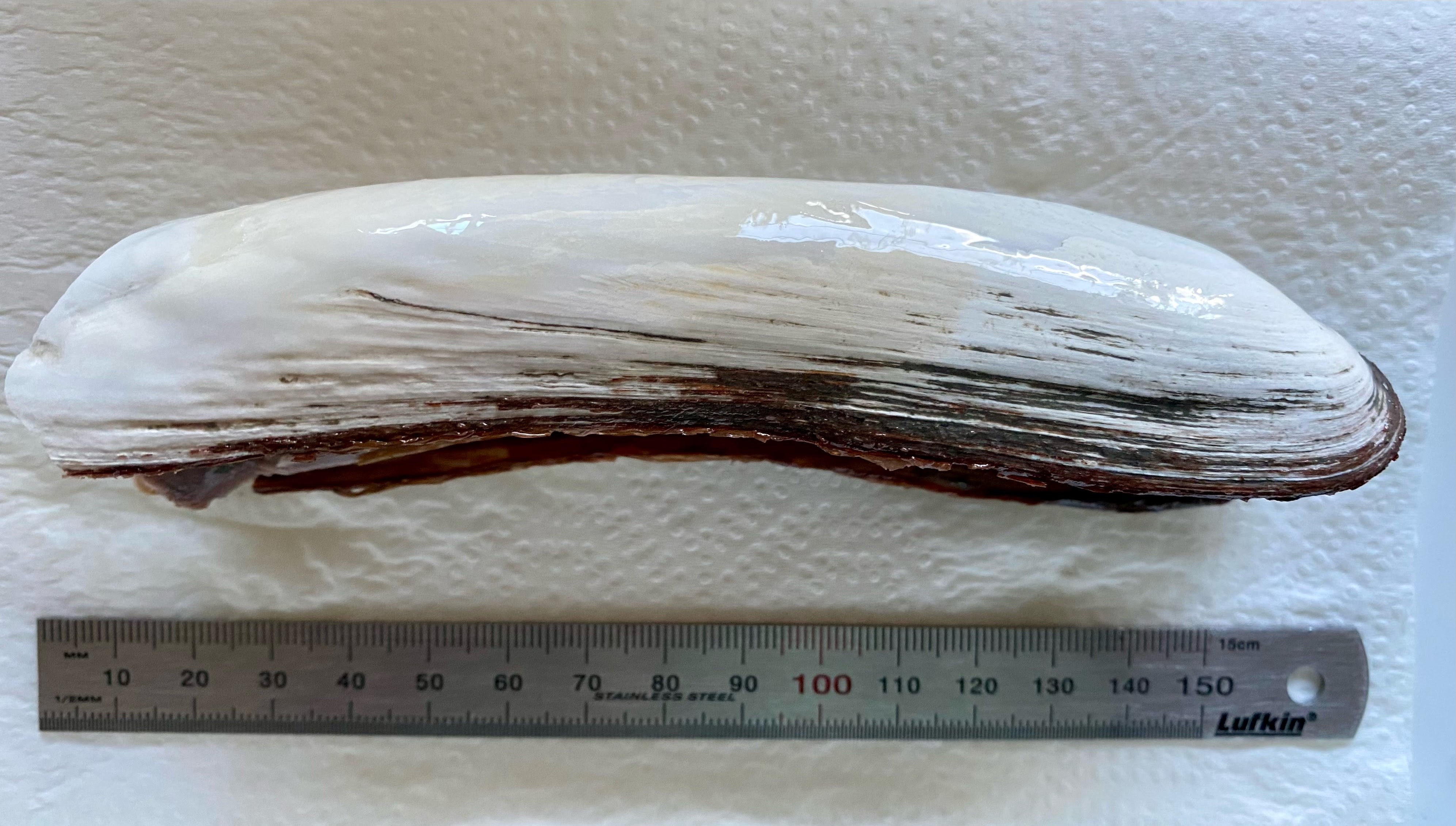
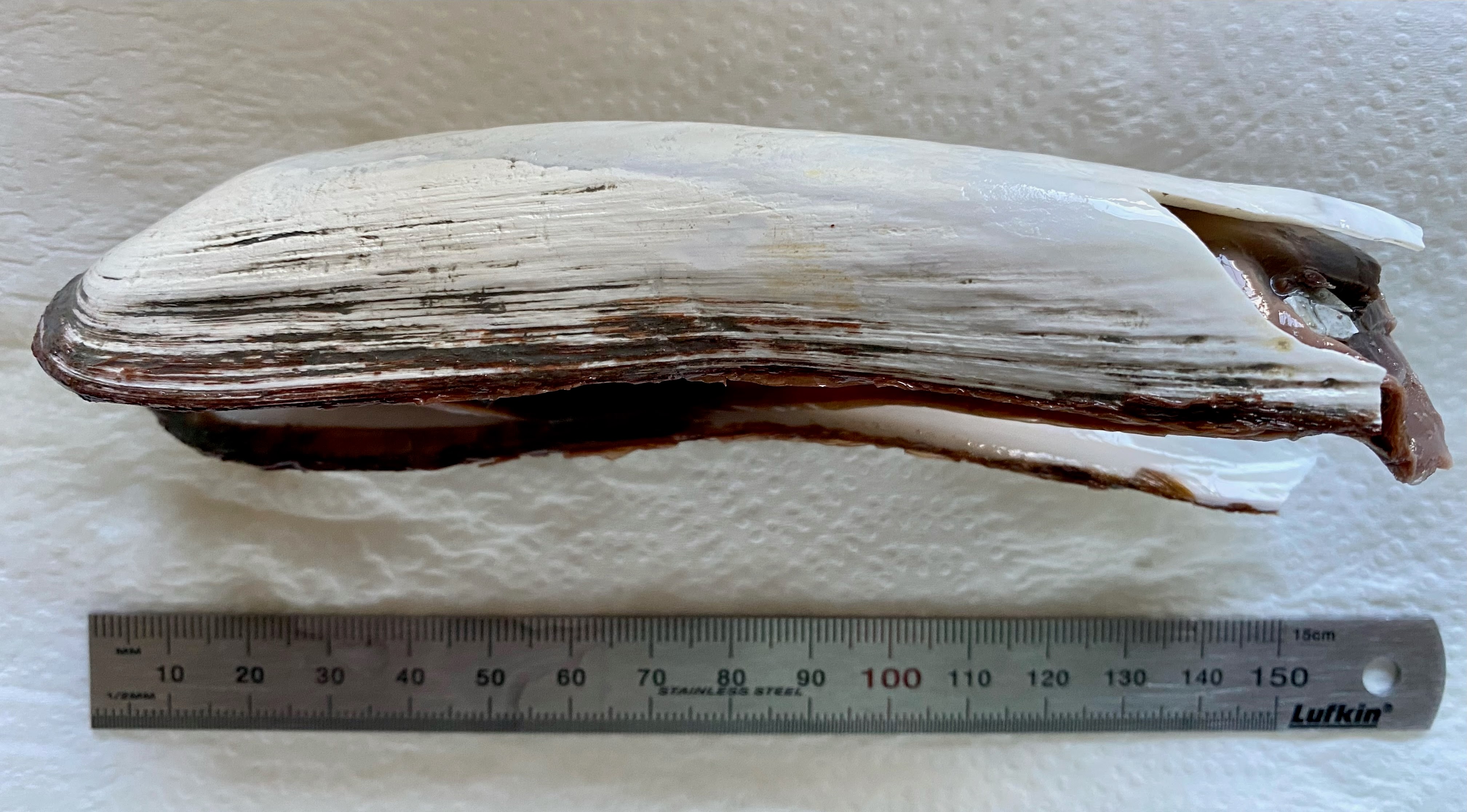
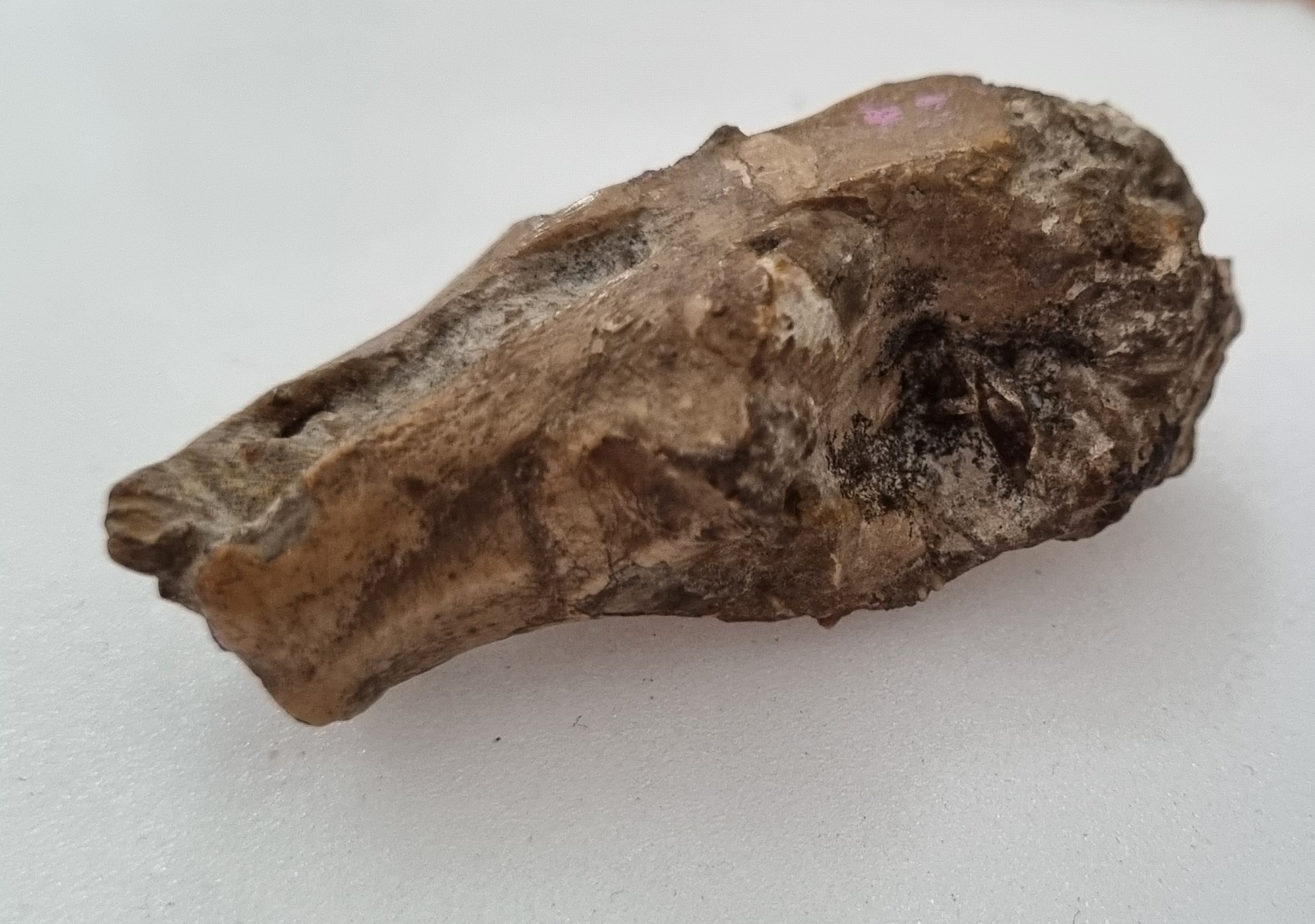
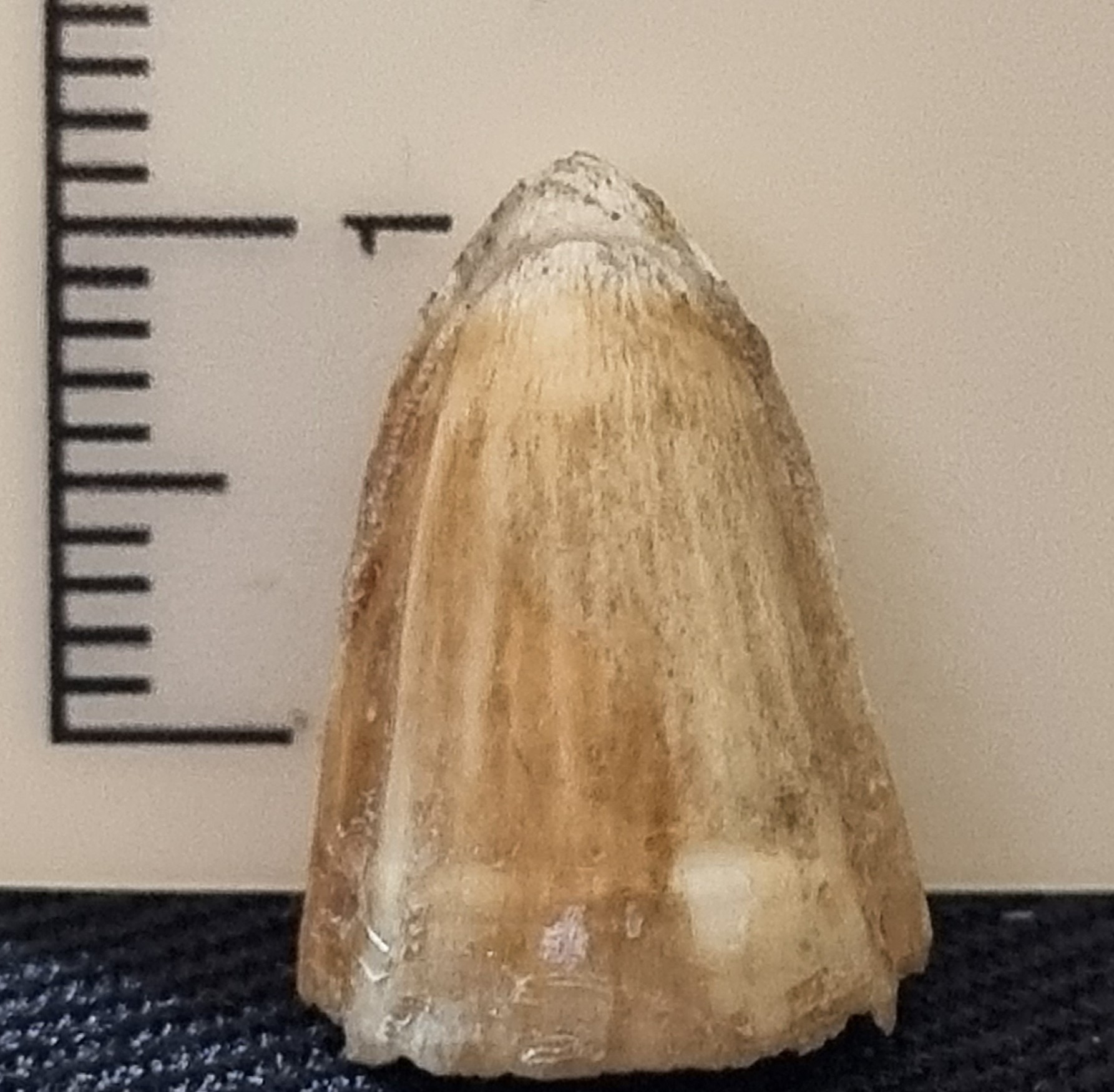
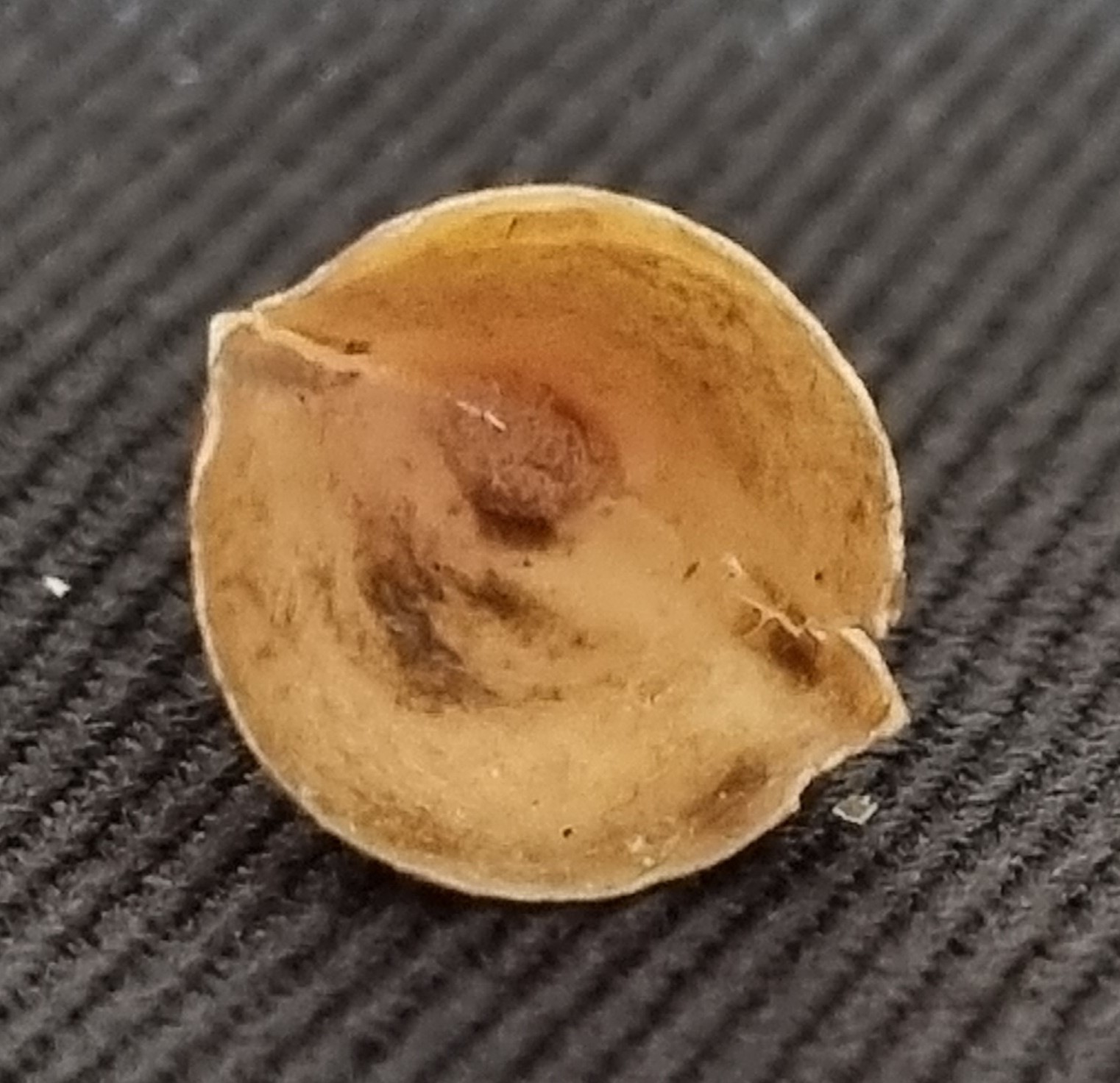
Last week we had a very difficult guest mystery object (or objects, as there were two specimens). These are from the collections of Andy Taylor, FLS:

Image by Andy Taylor, 2023
Mystery object #467 Image by Andy Taylor, 2023
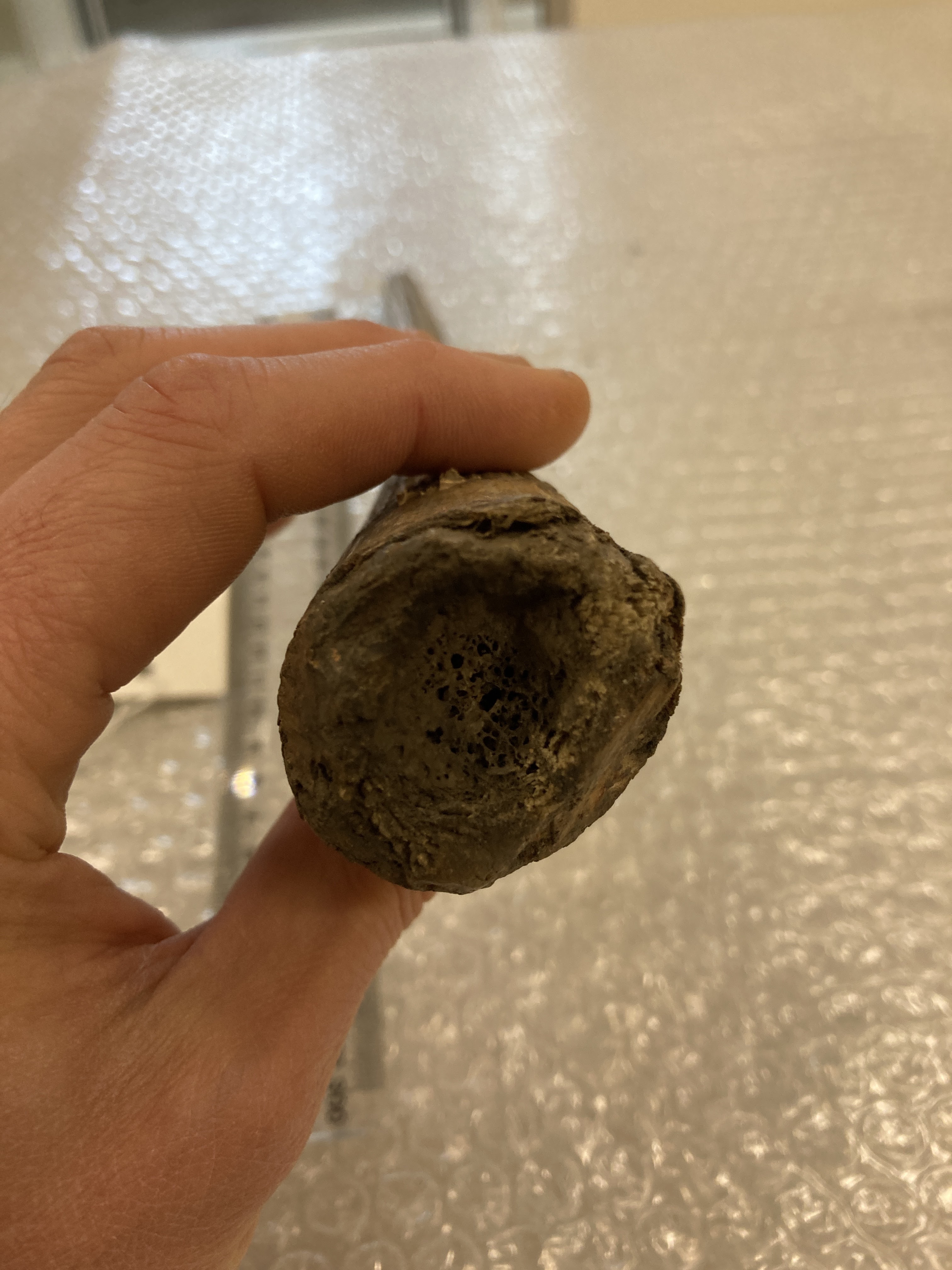
Image by Andy Taylor, 2023

The general consensus in the comments was that they are a type of mollusc, and due to the elongated nature there were a few suggestions of something in the Razor Clam area of the crunchy-yet-squishy zone of the tree of life.

But these are a bit more unusual than that, and unfortunately nobody seems to have picked up on my ever so cryptic clue:

You may need to delve into the depths of the internet to work it out

This refers to the fact that this species is one of the denizens of the deepest parts of the world’s oceans.

This combined with the characteristically elongated shell shape does help to narrow it down, although it takes a lot of work – or a degree of familiarity to work it out.

Remarkably, Dennis C. Nieweg on LinkedIn did manage to figure it out to the previous generic name of Calyptogena, which is hugely impressive for such an unusual and generally unfamiliar specimen.

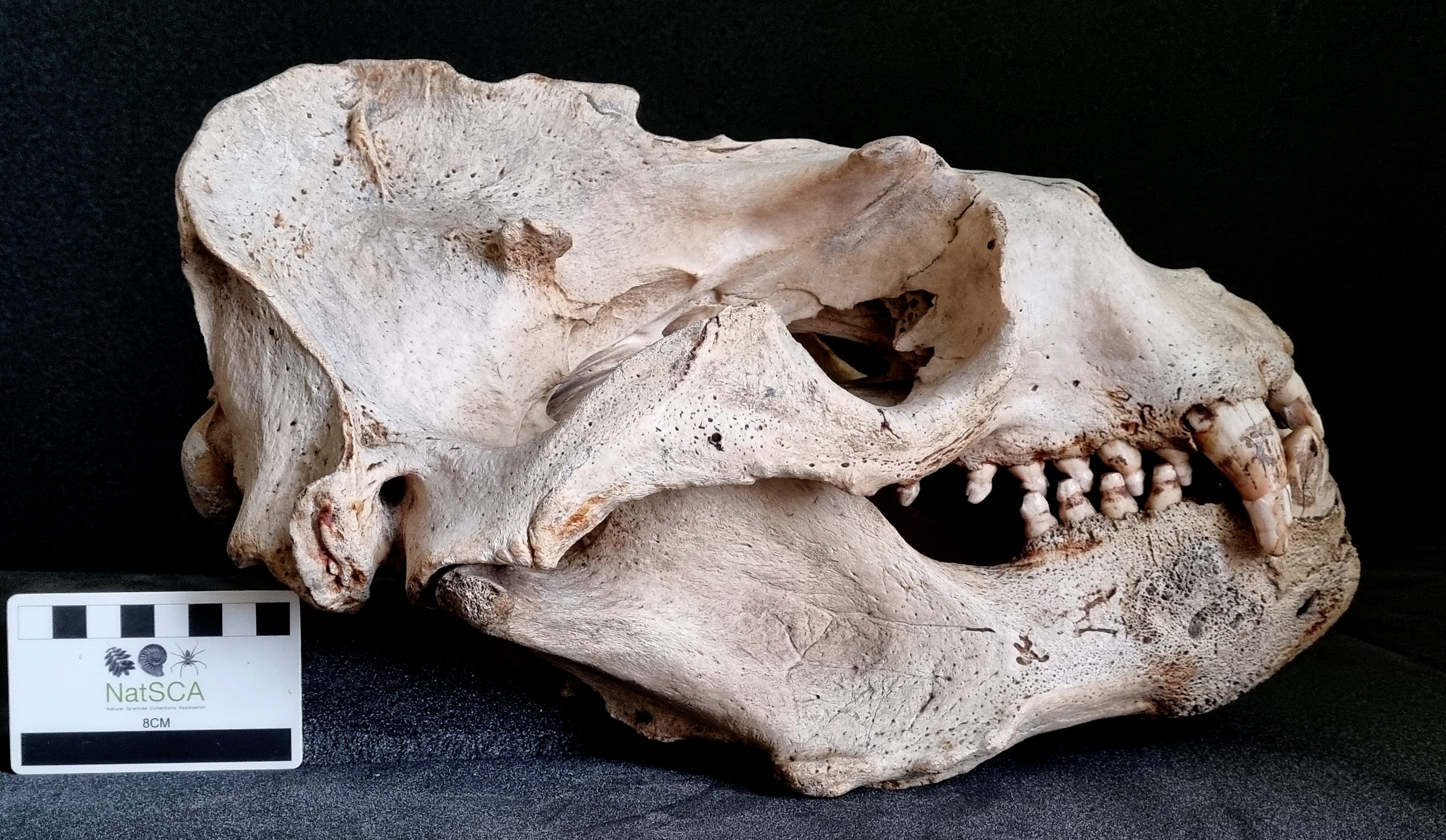
These are specimens of Abyssogena (was Calyptogena) phaseoliformis (Métivier, Okutani & Ohta, 1986). They are very deep living bivalves in the Order Venerida, that survive around deep-water vents and seeps in the Abyssal zone and which were first described when submersibles were developed that could sample at great depths – opening up a whole new realm of discovery.

The details provided by Andy are as follows:

First specimen is from the Japan Trench and was collected at a depth of 6347m in 1997 by ’Shinkai 6500’ DSV (Deep Submergence Vehicle) operated by JASTEC (Japan Agency for Marine and Earth Science). 

This second specimen was collected from the Aluetian Trench at a depth of 4776m – 44949m in 1994. This specimen was collected by the ‘RV Sonne’ with a remote submersible and TVG (TV guided grab). 

Andy Taylor, FLS on 17 Aug 2023

So these specimens represent some of the deepest living organsims on Earth, which we’ve only known about the existence of for about 40 years. That’s pretty cool in my book!

Friday mystery object #466 answer

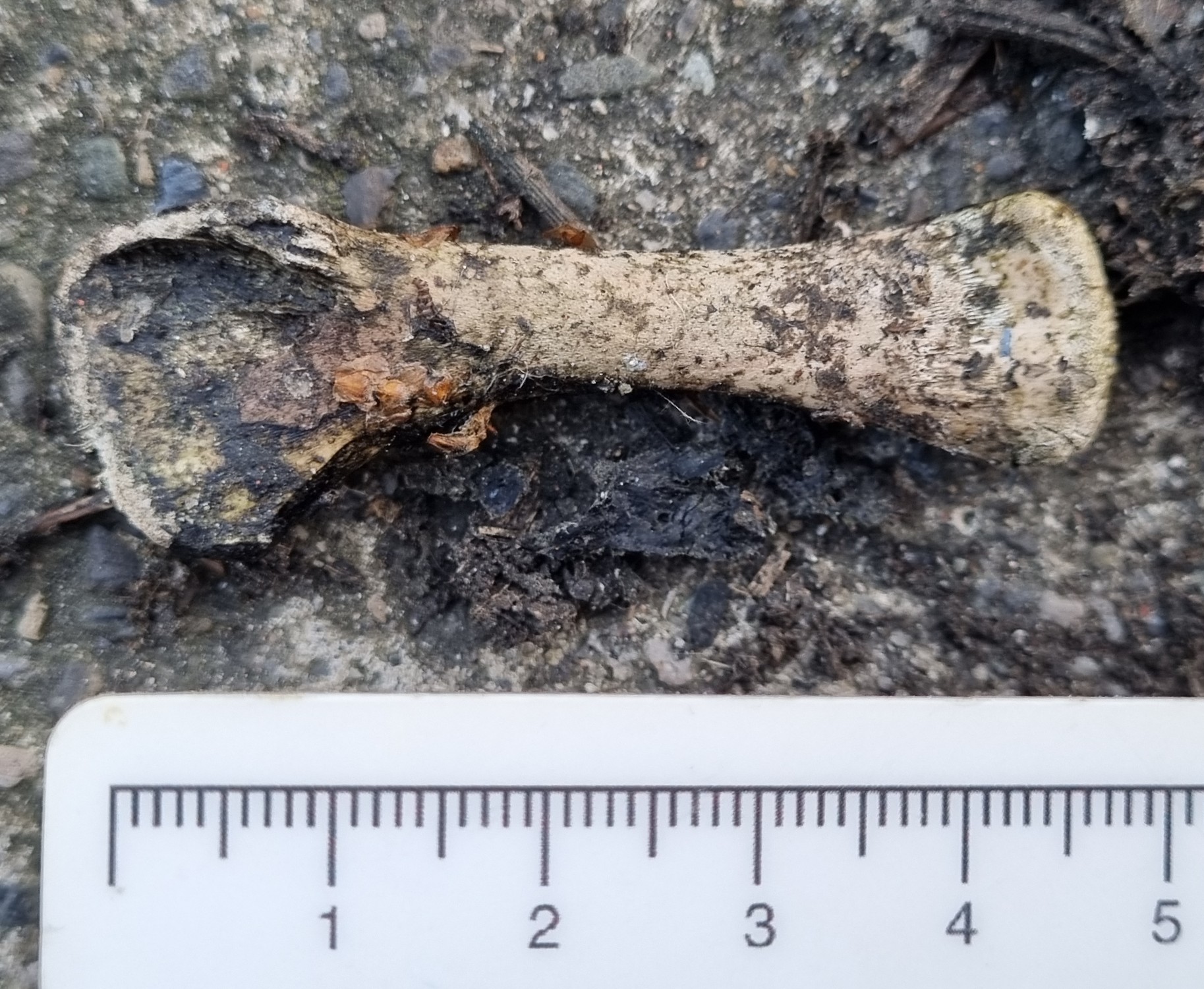
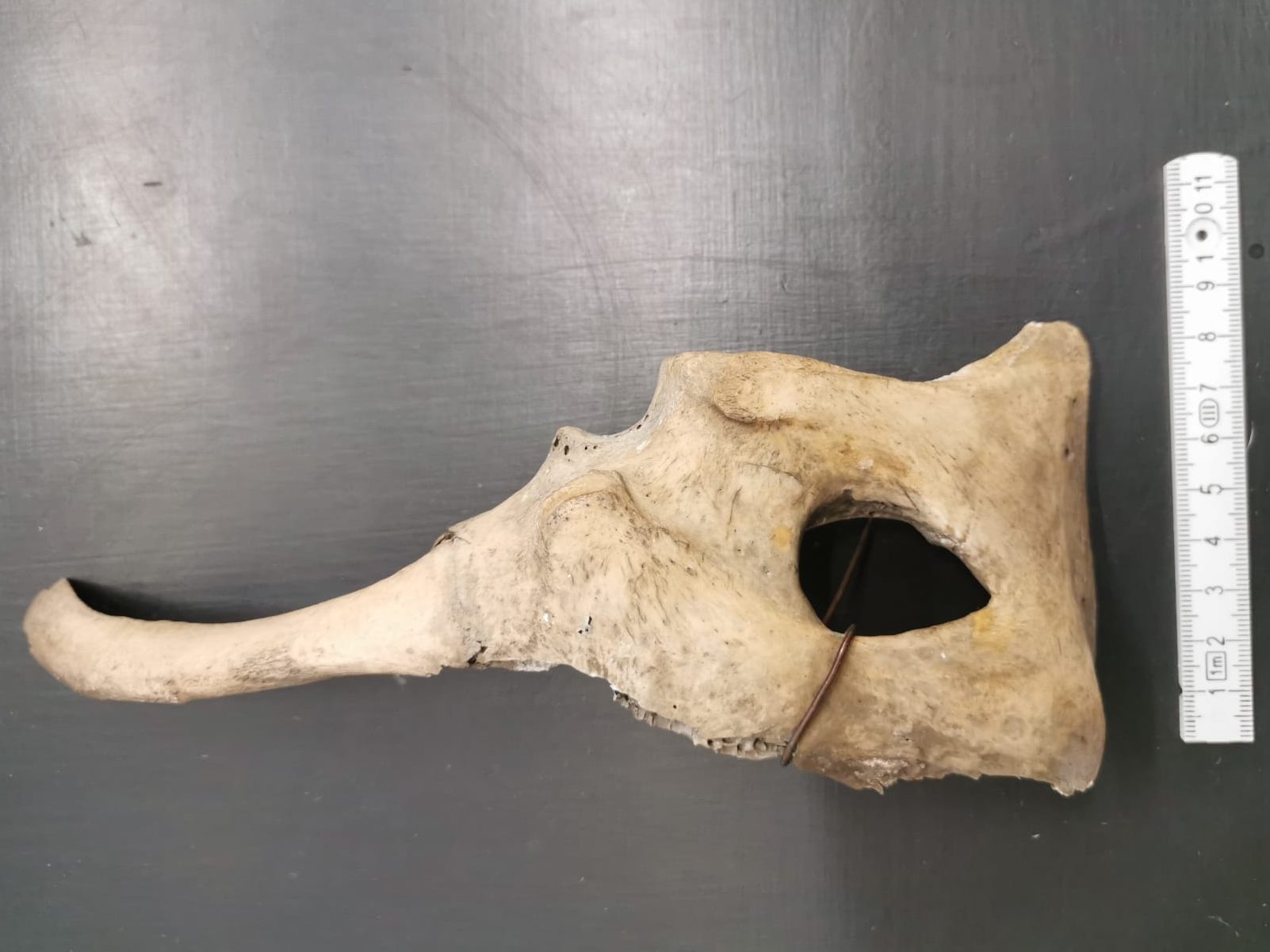
Last week I gave you this genuine mystery object from Rohan Long, curator of the comparative anatomy collection of the Harry Brookes Allen Museum of Anatomy and Pathology at the University of Melbourne:

Image by Rohan Long, 2023

This specimen may have been collected by Frederic Wood Jones, a British comparative anatomist who headed up the Anatomy Department at the University of Melbourne in the 1930s. This may mean it could have come from almost anywhere, given Wood Jones’ links with other anatomists.

So all we really have to go on is the morphology of the object.

It’s clearly made from long section of quite highly vascularised bone:

It seems to be missing the smooth surface normally seen on bone, but that can be caused by a variety of factors, from disease and infection in the live animal to weathering after it’s been dead for a while.

The ends of the bone don’t have any indications of an articular surface:

The larger end has a bit of a hollow, but the smaller end appears to be broken and you can see a hollow core to the bone.

Overall, the shape is not really reminiscent of any long bone I can think of. It lacks a normal articular surface at the unbroken end and it has no crests or ridges that I would normally expect muscles to attach to. It tapers quite consistently and has a slight curve.

My first thought was shared by others in the comments, with Chris Jarvis getting in first with the simple but effective pun:

Oooh! Sick!

Chris Jarvis August 4, 2023 at 12:37 pm

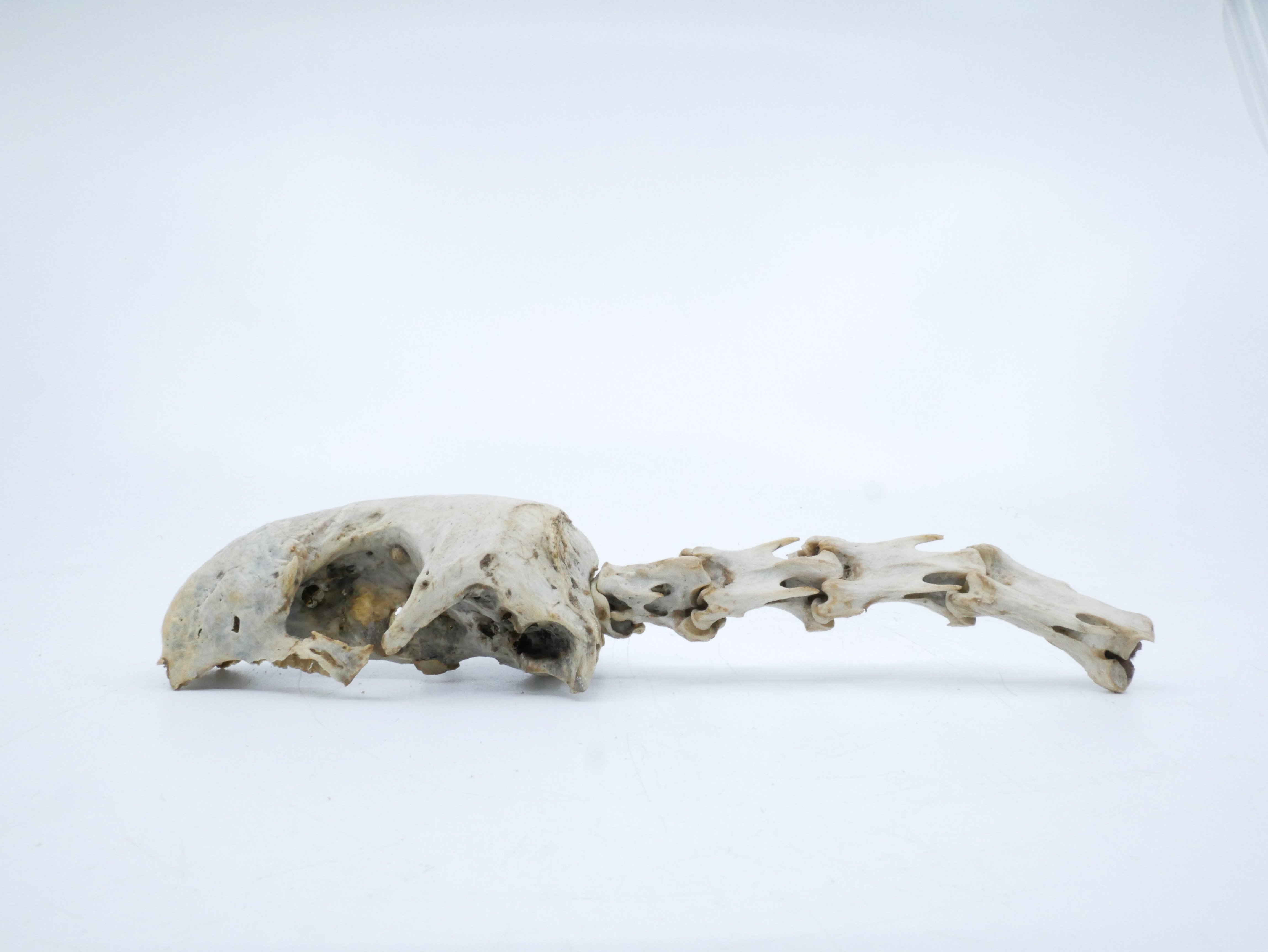
This is of course a reference to Oosik, which is the name in Native Alaska Languages for the baculum or os penis of a Walrus Odobenus rosmarus (Linnaeus, 1758).

There are some differences between this specimen and some of the other Walrus bacula I’ve seen and which show up in an image search, but there are a variety of possible explanations for that.

One is simply that Walrus bacula are quite variable. They can vary significantly through the life of the animal as it develops, but it can also vary quite a lot between individuals. If you spend as long looking at Walrus penis bones on the internet as I have (what on Earth happened to my life?!) then you’ll notice that some have a strong double curve while others can be almost straight, others are thick and some are quite thin.

This variability is also seen in other pinnipeds with a high degree of sexual dimorphism, like Sealions and Elephant Seals.

So while it’s hard to be 100% certain of the identification, I think it is the most likely solution to this mystery.

I hope you had fun with this one!

Friday mystery object #465 answer

Last week I gave you an entomological mystery to solve, in the triangular(ish) shape of this moth:

For the real insect aficionados out there, this probably wasn’t too much of a challenge (I’m looking at you Tim), but for the rest of us it wasn’t quite so easy.

The overall appearance of this moth, with its size, shape (especially wing position), and fuzzy wing fringes is what you expect from a member of the family Noctuidae – the Owlet Moths. However, it’s a big family, with almost 12,000 species. A lot of the species also look similar to each other and some have a wide variety of different colour morphs – just to make things more complicated.

Context helps us out here, since although there are of lot of Noctuidae species in the world, there are far fewer found in Ireland and there are helpful resources that illustrate them.

Even with helpful visual resources, with good photos of the different Irish species, it can be hard to work out what the diagnostic features might be. For some species of moths you have to get into the fine detail of the genitals, but thankfully there are wing patterns that are distinctive in this instance.

In this case, the wing pattern of interest is the small triangular black mark on the lower portion of the leading edge of the upper wing.

That’s it.

The rest of the colour and pattern of the upper wing is very variable in this species, so you can’t rely on any of those features as a reliable indicator. Of course, if the specimen was alive and had its wings open, it would be a much easier identification:

This is, of course, a Large Yellow Underwing Noctua pronuba (Linnaeus, 1758), which is pretty obvious once the underwing is visible. So well done to everyone who worked it out from just the upper wings.

Friday mystery object #464 answer

Last week I gave you this really difficult, but incredibly cool mystery object to identify:

Definitely not a simple one for the uninitiated, but most of you got impressively close.

It looks a bit like ancient chewed gum at first glance (hey, it’s a thing!):

However, on closer inspection, some of the features start to emerge – including teeth:

Obviously, this is the fossilised skull or some critter, but what kind of critter is harder to determine.

The length suggests it’s something about the size of a rabbit:

And if you’re looking for a good fossil rabbit, you can’t beat Palaeolagus:

Palaeolagus skull. Image by Smithsonian Institution, 2019
Not Palaeolagus skull.

As you can see, the mystery object has a few differences, but due to the various missing parts, it’s a little hard to be confident exactly how different they are – although the shape of the orbital margin (the front of the eyesocket) gives a bit of a hint.

But, even more useful, is the curve in the maxilla (the upper jaw bone) that traces the root of the first incisor. In lagomorphs (rabbits, hares and even pikas), the incisor roots terminate with quite a big gap before the orbital margin, often with a triangular fenestrated region of cancellous bone (a sort of window of bony struts) in between.

The mystery specimen doesn’t have that – in fact the end of the incisor root is very close to the orbital margin. This is something you see in rodents.

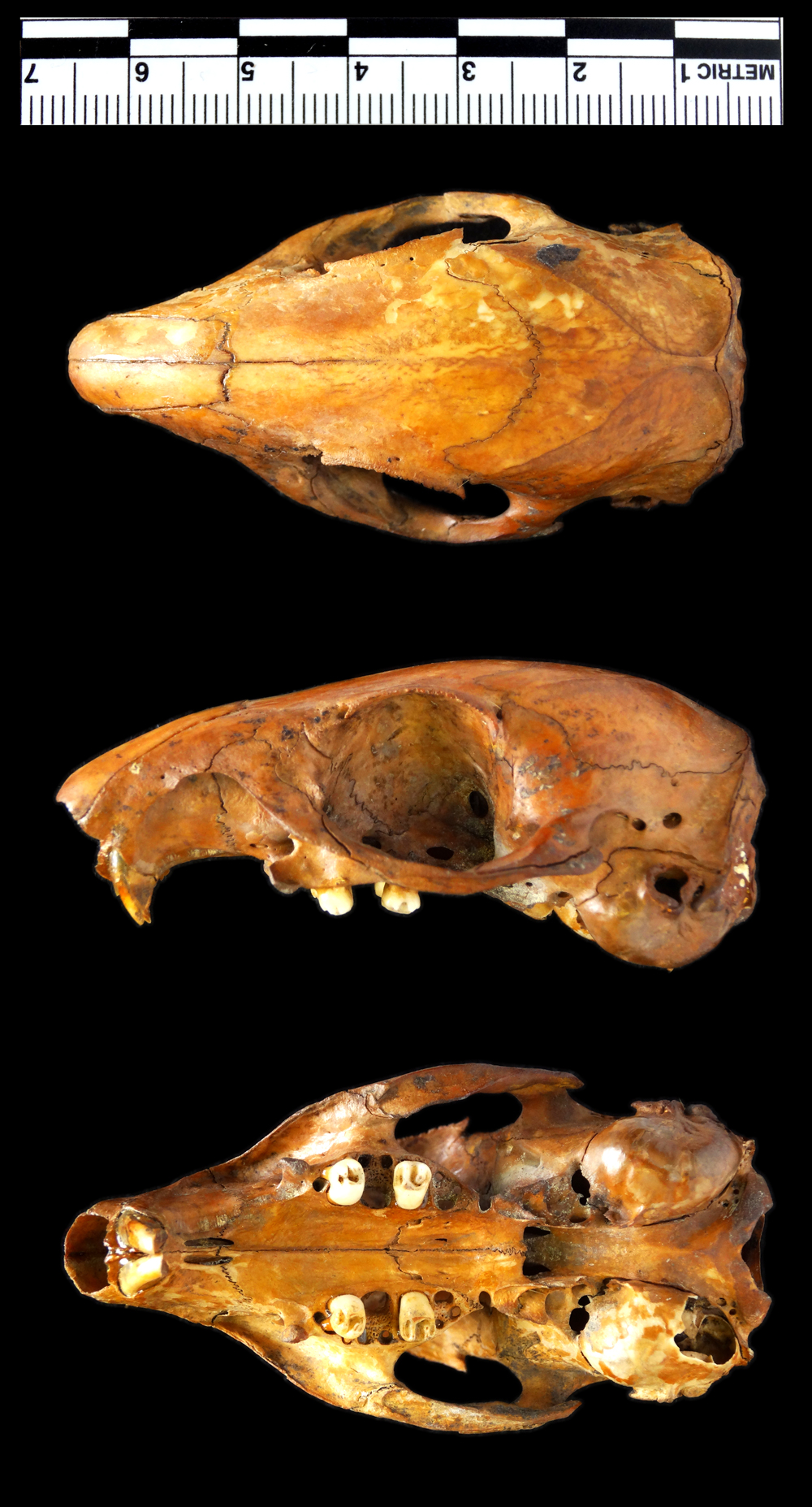
I would have been impressed if you got that far, since the overall shape and size of this specimen definitely gives off a rabbity vibe, but believe it or not, this a dormouse. More specifically, it’s the Gigantic Dormouse Leithia miletensis (Adams, 1863) or if you want to go with the commonly used and more technically accurate, but nomenculatorily incorrect, L. melitensis, since Adams made a spelling error in his original description.

In fact, this is one of the specimens collected and figured by Adams in that original work describing the species, making this part of the type series for the species (although the holotype is more likely to be a very well preserved half mandible from the same site).

The fact that this is a fairly large and intact part of the type series means that it is of great interest to researchers. The reason I had this specimen to hand for the mystery object, is because I was preparing it for a research loan to some of my old colleagues in UCL, where it’s being MicroCT scanned.

This research will help refine an understanding of the morphology of the Gigantic Dormouse and offer some clues to what happens on islands that leads to the development of giants, building on work that they’ve been doing on this fascinating species, which is an interesting read that you can find here (you may even recognise Fig. 1B).

Virtual Cranial Reconstruction of the Endemic Gigantic Dormouse Leithia melitensis (Rodentia, Gliridae) from Poggio Schinaldo, Sicily, By Jesse J. Hennekam , Victoria L. Herridge, Loïc Costeur, Carolina Di Patti, Philip G. Cox – CC BY 4.0, https://commons.wikimedia.org/w/index.php?curid=92037373

Friday mystery object #463 answer

Last week I gave you a somewhat tricky object to identify:

It’s only about 14mm long, it’s hollow and it has a seam down either side:

These features seemed to raise more questions than answers for many of you – and I’m not surprised, since this really does require some experience with the object to identify it.

Fortunately, some of you clearly had the necessary experience. Chris Jarvis and Adam Yates and Kat Edmonson all chimed in with some very useful suggestions, observations and discussion.

It’s a tooth from a Mugger Crocodile Crocodylus palustris (Lesson, 1831), in fact, if you want to be specific, it’s a newly emerging tooth from the 3rd socket from the rear in the left maxillary row.

I really wasn’t expecting anyone to figure out the exact species, but I was impressed that several of you figured out it was from the genus Crocodylus rather than Alligator.

There isn’t much published on dental morphological characteristics of extant crocodilians – a point noted in the one paper I was able find that tried to figure out what’s going on with crocodile tooth shape – although this one would more or less match up to M12 in this figure from that paper.

So well done to everyone who figured out the crocodilian source of this mystery object!
Friday mystery object #461 answer

Last week I gave you a guest mystery object from Catherine McCarney, the manager of the Dissection Room at the UCD School of Veterinary Medicine:

The first question I normally try to answer when undertaking an identification is “what kind of bone is this?”, but in this instance it’s not immediately obvious.

There is a broad section with articulation points, a foramen (or at least something that looks like a hole, which might be a foramen) and a flattish section that looks like it probably butts up against something with a similar flat section. This would normally put me in mind of the ischium of a pelvis.

But it’s not a pelvis as the articulations are all wrong and the shape of the skinny piece of bone that projects off doesn’t fit any functional ilium shape that I’m aware of.

The pectoral girdle has a similar set of structural features and this object starts to make more sense with that in mind. Things like turtles and whales may have a structure like this, but there’s something to keep in mind: despite being fairly large, this object only weighed in at 26g.

Turtles and whales have dense bone that helps reduce buoyancy, to make remaining submerged less energetically demanding, but this bone must be full of air spaces – which offers a clue as to likely type of animal it came from. A bird – as Joe Vans noted in the comments.

Considering the size of this object there are very few possible candidates. Most birds are pretty small and this object is pretty big, so we just need to look at some of the Ratites.

The comparisons I managed to find have led me to the conclusion that this is most likely part of the pectoral girdle of an Ostrich Struthio camelus Linnaeus, 1758.

Pectoral girdle of an Ostrich by Uwe Gille, 2006.

More specifically, I think it’s the coracoid (#2 on image), clavicle (#3 on image), and scapula (#4 on image) from the left hand side of the pectoral girdle of an Ostrich.

I was delighted to see that Wouter van Gestel agreed with this assessment in the comments, since he knows more about bird bones than I could ever hope to learn!

Finally I’d like to thank the fatastic Catherine McCarney for sharing this mystery object from the depths of the Vet School’s collections. I hope you all enjoyed this challenge!

Friday mystery object #456 answer

Last week I gave you this rugged skull, from a rugged place, to have a go at identifying:

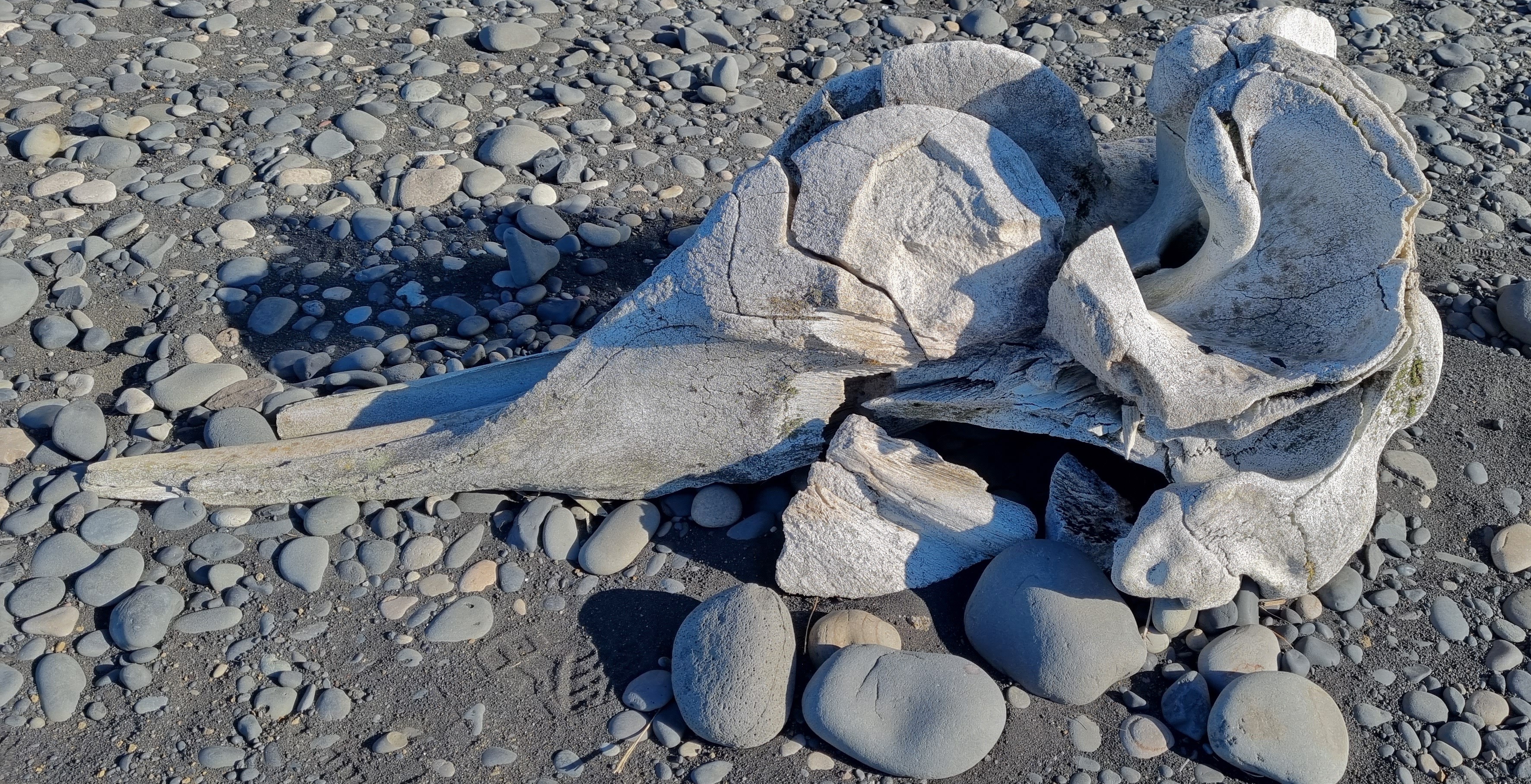
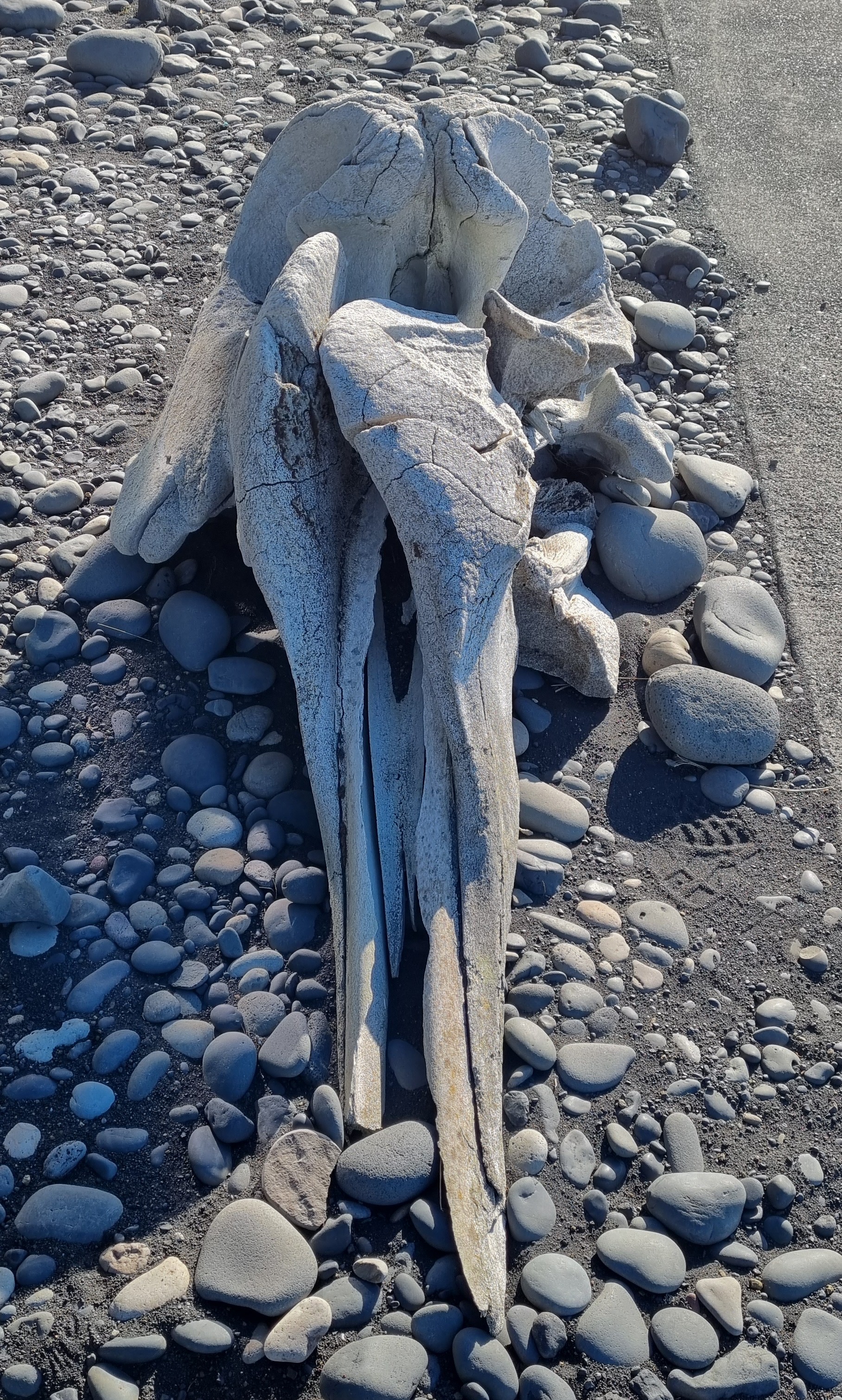
As everyone spotted, this is a whale of some sort (what else has a skull that weird-looking?), but the question is, which species?

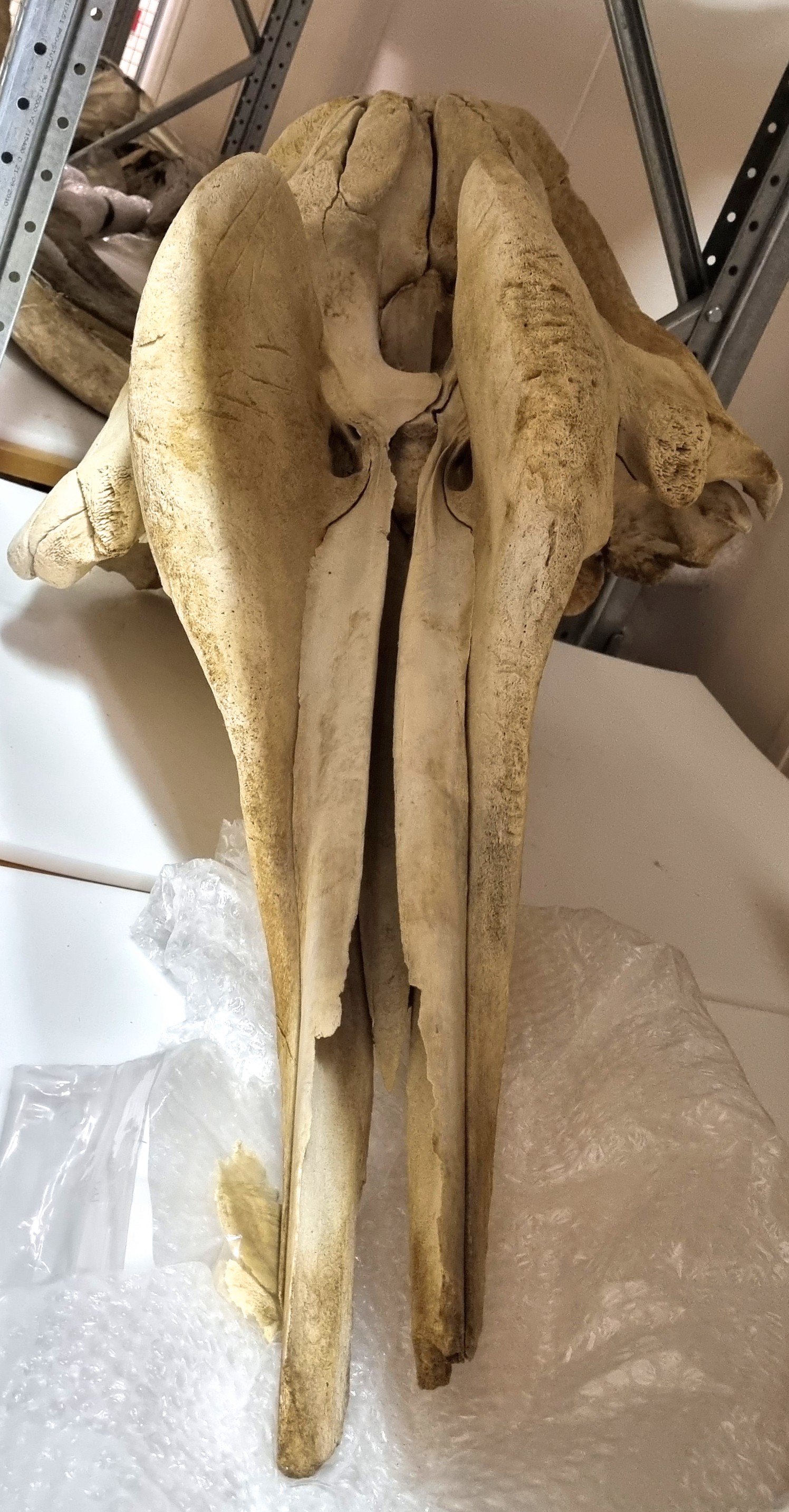
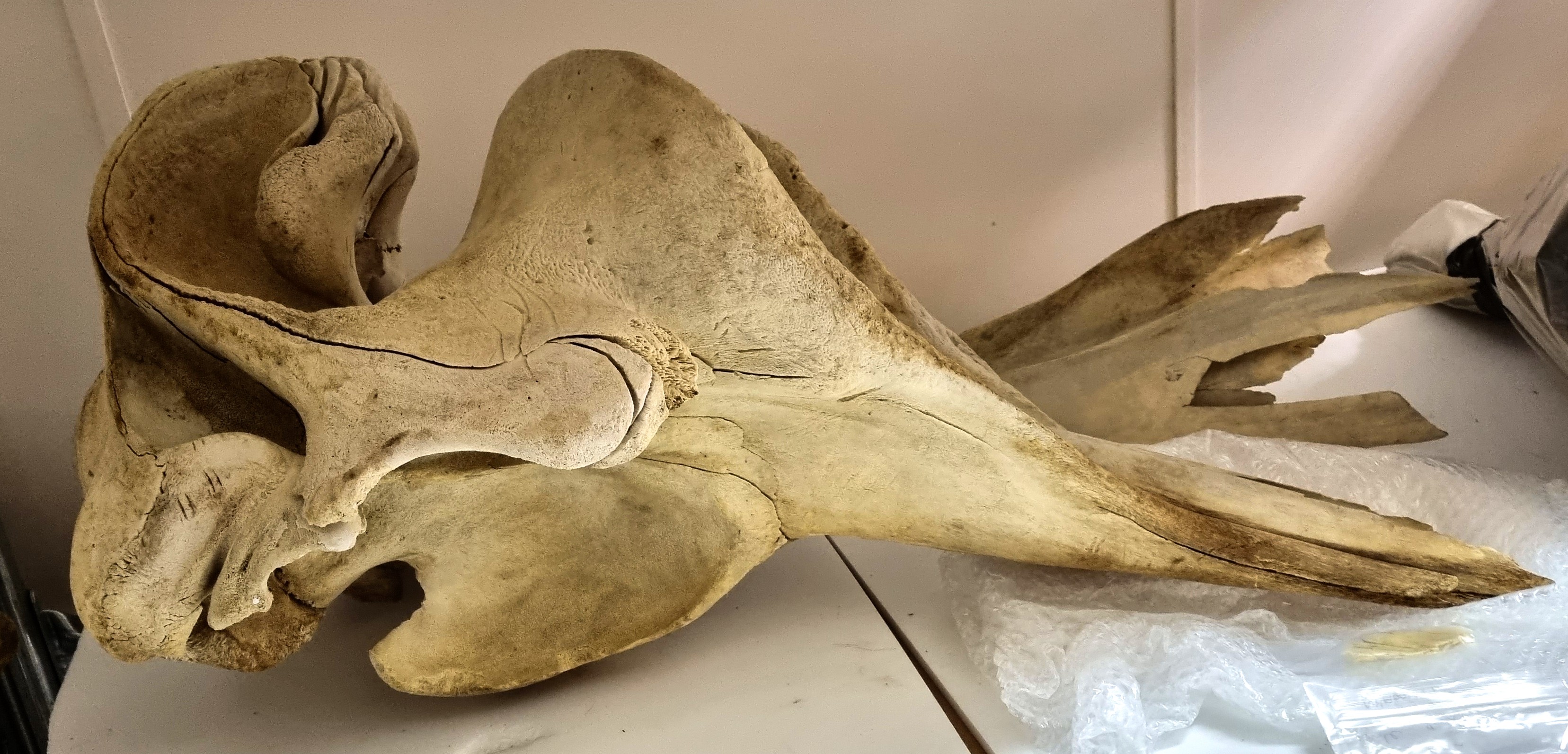
The location led to a few suggestions of Arctic / sub-Arctic species like Narwhal or Beluga, but they have a much flatter top section of the skull. In fact, those huge vertical lobes of the maxillae seen here is pretty unusual and quite distinctive (even if it is a ittle weathered and broken):

This reminded me of a specimen in the collections of the Dead Zoo and which I had to check, just to be sure of my identification:

As spotted immediately by Chris and not too long afterwards by Adam Yates and Wouter van Gestel, this is the skull of a Northern Bottlenose Whale Hyperoodon ampullatus (Forster, 1770).

This sub-Arctic species has a distribution across much of the North Atlantic. They tend to stick to quite deep water, which makes sense in the case of the specimen I shared from Iceland, since the Reynisfjara beach is infamously dangerous because it shelves off very steeply into very deep water, making the waves that break along the beach behave in an unusual (and frankly terrifying) way.

Occasionally this species will come into shallower waters, in one (somewhat tragic) case a female Bottlenose Whale swam up the Thames (and is now in NHM, London). Our specimen came from an animal stranded on the Irish coast and there are theories that maritime sound pollution is connected to them being driven into shallower waters.

Well done to everyone who worked out which species this skull is from – hope you’re ready for another mystery next week!

Friday mystery object #455 answer

Last week I gave you a challenge to get your teeth into:

As I suspected, everyone managed to figure out what type of animal this is, since these teeth are quite distinctive (as mammal teeth often are).

To start with, there are canines and incisors in the premaxilla (the top jaw). These are missing from things like cows, sheep and deer. So it’s not one of them. The premolars are adapted to grinding rather than cutting, so it’s not some kind of pig or carnivore.

The molar teeth are low-crowned, unlike the teeth of grazers like horses which are high crowned, to cope with the wear and tear of silica-toughened grasses. This suggests an animal that browses on softer vegetation. Also, the lophs (those ridges of enamel that join the tooth cusps) are well defined and quite distinctive in their shape. That rules out most other herbivores, including the camels and their relatives.

It turns out that this is a species that I’ve featured on the blog before (although it was almost 11 years ago!) Not a Baird’s Tapir as most people thought, but a Malayan Tapir Tapirus indicus Desmarest, 1819.

I think it’s understandable that nobody got the correct species, since the specimen is a subadult (check out the molar in the jaw that’s still developing) which will somewhat alter the proportions compared to an an adult – especially considering the photos I gave you were restricted to the teeth and missed all the useful features of the rest of the skull.

So well done to everyone who worked out that the teeth belonged to a tapir!

Friday mystery object #454 answer

Last week I gave you this nice robust skull to have a go at identifying:

It proved a little bit more of a challenge than I originally expected, at least in terms of getting a species level identification.

So despite a somewhat ursine (bear-like) overall appearance, that may have confused a few people at first, this has all the features you’d expect to see in a male sea lion. In that it’s big, craggy, has huge open sinuses opening into the orbital region (nobody wants their eyes to be overly pressurised when they’re diving) and the teeth are relatively undifferentiated in the back part of the mouth, but they’re well adapted for fighting up front.

However, it turns out that there aren’t a huge number of resources online to see and compare the skulls of these beasties (and the ones that do exist aren’t necessarily the easiest to navigate). So while almost everyone figured out the sea lion bit, the species choice went a bit off track.

Most people plumped for the Steller’s Sea Lion, which (it must be admitted) looks very similar. But this is actually the skull of a Southern Sea Lion Otaria flavescens (Shaw, 1800).

I talked about this species before on Zygoma (many years ago now), with a specimen from the Horniman Museum, where I provided some links to the Marine Species Identification Portal. Sadly, that resource has been retired, but fortunately Naturalis Biodiversity Centre rescued the content and has kept it available online. It provides drawings of the skulls of both Steller’s and Southern Sea Lions and if you take a look at few key features you’ll spot the differences.

One major indication is the length and shape of the palate. The Southern Sea Lion has a very long palate, which terminates almost in line with the mandibular articulation, whereas the Steller’s terminates further forward. There are a few other features, but that one is the most immediately obvious.

So, a hearty congratulations to a variety of folks on Twitter who spotted that this was the Southern Sea Lion, but there’s no shame in not getting the correct species if you picked Steller’s, given how few resources there are that allow a really good comparison. I hope you enjoyed the challenge!

Friday mystery object #452 answer

Last week I gave you this guest mystery object from the comparative anatomy collection of the Harry Brookes Allen Museum of Anatomy and Pathology at the University of Melbourne, courtesy of Rohan Long:

Image by Yijie Cheng, 2023

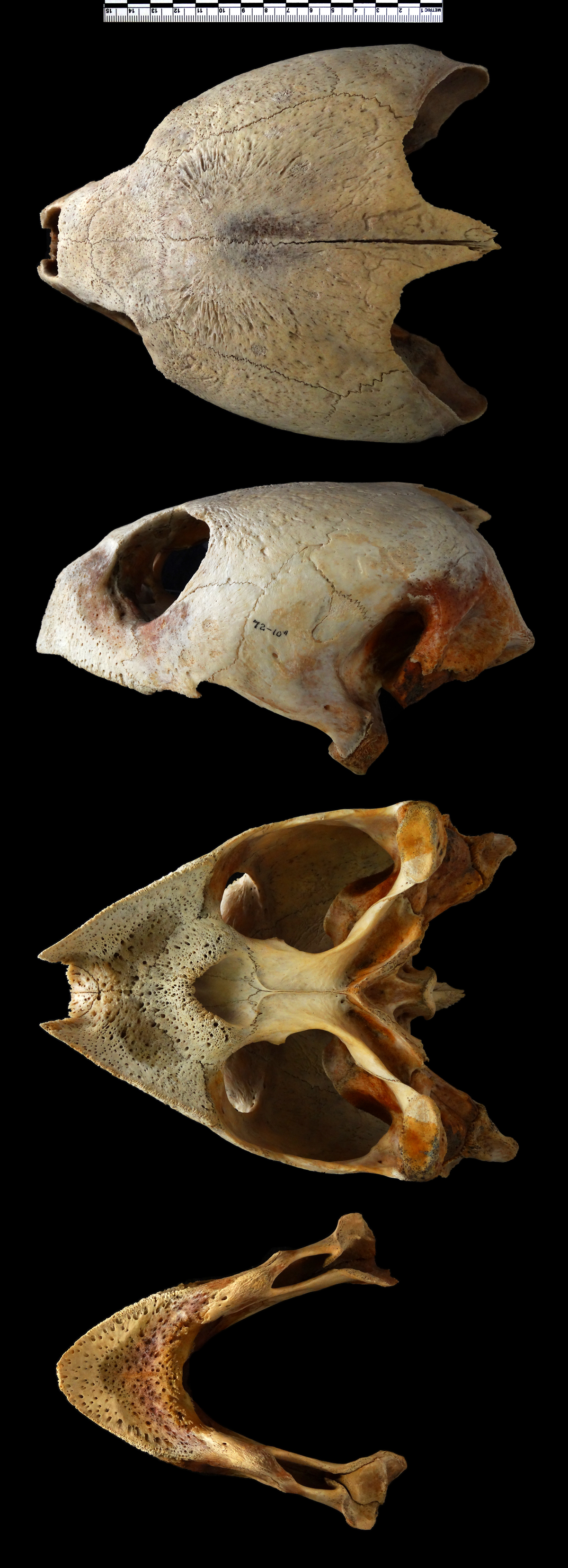
This is one of those specimens that it can take a while to get your head around, as most of the key features are entirely missing. From the top, the skull almost looks mammalian. Perhaps a little like a large rodent missing part of its zygomatic arches:

Skull of a Striped Ground Squirrel

Even from the side there are some similarities, although it looks a bit more like a turtle:

Image of mystery bones by Yijie Cheng, 2023
Image by Yijie Cheng, 2023
Skull of a Loggerhead Turtle

If you look closely at the underside of the skull, you’ll notice that it has a single occipital condyle, which is something you see in reptiles and birds, but that view of the underside also becomes clear that the front section of the mystery object doesn’t taper to create a bill, like you’d see in a turtle:

Image by Yijie Cheng, 2023

In fact, a bill is the most diagnostic feature that’s missing, and that’s because it’s fallen off.

Those cervical vertebrae are quite distinctively avian – and from a long-necked avian at that. Once you realise that this is the braincase of a fairly large long-necked bird, the next task thing is to look at birds with a bulbous and cleft region on the head, just at the base of the bill (most bird skulls taper down to the bill).

For me that indicates one species above all others – the Mute Swan Cygnus olor (Gmelin, JF, 1789).

Mute swan skulls “Cygnus olor”. Technique of bone maceration on display at the Museum of Veterinary Anatomy, FMVZ USP.

I’d like to offer a hearty ‘bravo’ to Adam Yates, who was the first to comment and correctly identify this with a great cryptic clue:

It is an anseriform for sure the large oval basipterygoid articulations are a give away. With that profile, i’d lose my voice while trying to say the name of a certain Western Australian River.

Adam YatesJanuary 20, 2023 at 8:45 am Edit

This was backed up the ever-knowledgable Wouter van Gestel who runs SkullSite, which is the single most useful online resource I know of for bird skull identifications. Speaking of useful online resources, Rohan has been working on a project to make the collections of the Harry Brookes Allen Museum of Anatomy and Pathology available online – so be sure to check it out!

Friday mystery object #451 answer

Last week I gave you this bird specimen to have a go at identifying:

In the ornithological community, birds like this are sometimes referred to as an LBB / LBJ (Little Brown Bird / Job), because they are small, brown and hard to identify (especially in the field) due to the large number of similar looking species.

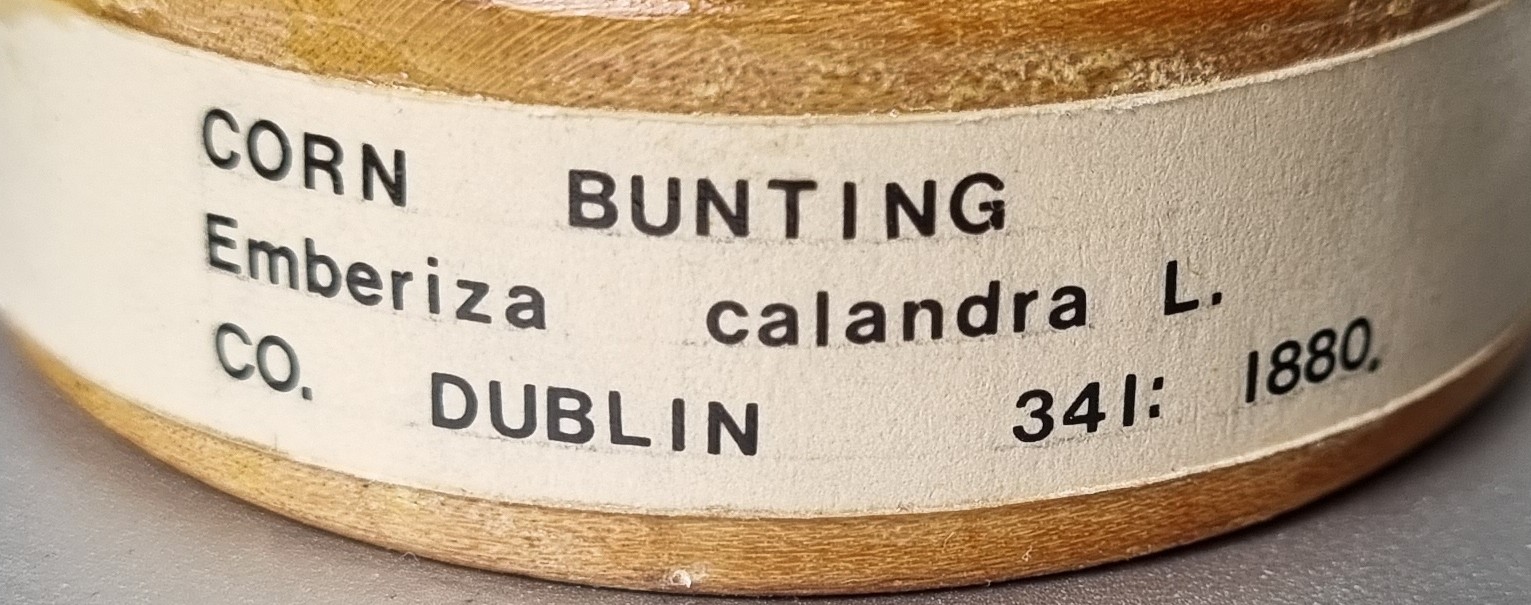
This specimen has a robust, conical bill and grey-streaked breast, which led some of you to think it could be a juvenile Crossbill or perhaps a female Grosbeak. However, as indicated by Wouter van Gestel in an excellent cryptic clue (and by Tim Dixon in a rather rude one), this is a Corn Bunting Emberiza calandra Linnaeus, 1758. It was collected in County Dublin and donated to the Dead Zoo in 1880.

These seed-eating passerines were widespread in arable farmland across Ireland in the 19th and early 20th centuries. However, changing land use practices reduced the available habitat until they became locally extinct as a breeding species in the late 1990s – well within living memory for many people.

The Irish name for the Corn Bunting is Gealóg bhuachair and an interesting fact about these birds is that their populations are remarkably sedentary, allowing them to develop unique dialects in their breeding area. This means that even if this species is reintroduced to Ireland – assuming farming practices become better suited to their survival – the landscape will never again ring with quite the same song that these birds would have sung in the past.

Friday mystery object #446 answer

Last week I gave you this mystery object from the collection of the late Dr Don Cotton to have a go at identifying:

It led to some really interesting discussion in the comments, which converged on this being a whale vertebra. More exactly, one of the cervical (neck) vertebrae from the neck of a smallish to medium-sized whale.

Whale necks are very short and the bones are a bit odd, as in they can be fused together in the adults and sometimes in juveniles (but not always), and depending on the species they might not fuse at all. This one is not fused, but you can see facets just above the solid centrum section, where the vertebra in front of this one would have snugly nestled.

It looks like the lateral processes (bits that stick out to the side) that would have extended from the facets, but have broken off, presumably due to the action of the waves on the shore where this specimen washed up. This makes it even harder to identify which of the cervical vertebrae this is or the species that it came from. However, the squared centrum and spur-like lower processes make me think that this is probably from one of the cervicals nearer the thoracic (chest) region – my guess would be cervical number 6 (cervical 7 often lacks the lower processes while 3,4 and 5 tend have better developed lower processes).

In the comments the discussion focussed on large dolphins, like the Beluga or Narwhal, but the shape reminds me more of the cervicals I’ve seen from baleen whales like the Fin Whale, although the size is all wrong. However, there is a much smaller member of the Balaenoptera species complex that inhabits Irish waters: the Northern Minke Whale Balaenoptera acutorostrata Lacépède, 1804 – which is what I think this mystery object probably came from.

I could be wrong and this could possibly be from a large dolphin that occurs around Ireland, like an Orca or Long-finned Pilot whale, but these have extensive fusion of the neck vertebrae, so I’m going to stick my neck out with the Northern Minke.

Northern Minke Whales are well documented in the waters around Ireland, especially during the spring and summer months. Don Cotton was a founding member of the excellent Irish Whale and Dolphin Group, which is the source of much of the information we have about the occurrance of these otherwise enigmatic animals in Irish waters.

Friday mystery object #430 answer

Last week we had a second guest mystery object from Rohan Long, who is based at the Harry Brookes Allen Museum of Anatomy and Pathology at the University of Melbourne.

Image by Gavan Mitchell, 2022

It was a genuine mystery object and it certainly proved quite tricky. There were quite a few suggestions of gibbon, but the proportions of the long bones aren’t right, with gibbon radius and ulna bones proportionally far longer in relation to the humerus or any of the the bones of the legs than what we see above. The skull does look quite gibbony gibbonesque gibbon-like, but generally gibbons have an auditory bulla (the region on the underside of the skull that houses the hearing apparatus) that strongly curves, almost like a boomerang, whereas here the feature is much straigher.

Image by Gavan Mitchell, 2022

The teeth tell us that the mystery object is from one of the Cercopithecidae (Old World Monkeys) since there are only two premolars instead of the three that you find in the Platyrrhini (New World Monkeys). That helps a bit, but there are still over 150 species in the Cercopithecidae to consider.

Some can be ruled out fairly easily, such as members of the Papionini, like baboons and macaques, which have adults that are more prognathic (their jaws jut forward) that this specimen. This is less true for juveniles (jaws jut more as the animal grows and matures), but we can ignore that here, since the mystery specimen has well-fused sutures and visible wear on the teeth, so we know it’s an adult.

Image by Gavan Mitchell, 2022

One thing that can be useful to consider when trying to identify primate skulls is the shape and position of the nasal opening. This can vary within species and it can be a feature sensitive to the angle at which a photograph is taken (making it more difficult to assess from images), but overall it can help narrow down possibilities without having to get into too much fine detail early in the identification process.

Image by Gavan Mitchell, 2022

The Mammalian Crania Picture Archive has well standardised images, including a reasonable variety of primates with males, females and animals of different ages represented. They also provide some measurements for each specimen, that may be useful when making comparisons. The primate page is here in case you’re not familiar with this very valuable resource.

Over the last week I’ve taken a look through a wide variety of skulls from different primate taxa and I’m confident that the mystery specimen is from the Colobinae. I think the position of the nasal opening (especially the top part of the opening in relation to the eyesockets) is helpful in distinguishing possible species within the subfamily. This makes sense when you consider that a third of the genera in the Colobinae are in a group known as the “odd-nosed monkeys”.

In this specimen the nasal opening forms a shield shaped hole with a flat top that starts quite high in relation to the eye sockets. In most species it starts lower, sometimes well below the line of the bottom margin of the eye socket. The Red Colobus is superficially quite similar, but when you look at other features it doesn’t look right – for example, if you look at the underside of the skull it has several different features, include a differently shaped incisor arcade and the pterygoids (the wing-shaped bits of bone that spread to either side, just behind the palate) are a different shape.

However, I did find a species which matches much better, so I am tentatively suggesting that the mystery object may be a Black-crested Sumatran Langur (AKA Mitred Leaf Monkey or Sumatran Surili) Presbytis melalophos (Raffles, 1821). If not that species I think the mystery specimen will be in the same Genus. There will undoubtedly be additional species with similar skulls that I’ve not seen, but within the limits of the resources at my disposal I don’t think I can do any better than that.

Oddly enough, I have had a skull of this species as a mystery object before, but it appears to be from a much younger individual, so at first glance it looks quite different, but the general features of the nose still remain:

My thanks to everyone for your suggestions and many thanks to Rohan for sharing this mystery object. It’s been an interesting one and has reinforced my conclusion that primate skull identification can be REALLY difficult!

Friday mystery object #429 answer

Last week I gave you this taxidermy specimen from the Dead Zoo to have a go at identifying:

It turned out to be easier than I suspected, because an image of this specimen just so happens to be used on the Wikipedia page for the species. This was a bit of a give-away for anyone who even got close to the type of animal this is. So let’s figure out what general type of animal we are dealing with.

First of all, it’s fairly clearly a rodent when you look at those incisors. I suppose incisors like that could be found in one of the lagomorphs (rabbits, hares and pikas) but they all have much larger ears in relation to their bodies (even the relatively shorter eared pikas have much bigger ears than the mystery specimen).

There are a lot of rodents, but this one is quite large, which helps narrow things down. The majority of large rodents are either semiaquatic (like Capybara, Beaver and Coypu – and it’s not one of them) or spiky (a variety of unrelated porcupines from the Old and New Worlds). Then there are the maras, agoutis, and pacas (plus relatives), but they all tend to have almost absent tails and quite long legs compared to the mystery object.

There is another group that has some moderately large members though – the hutias. There are 10 species living on various Caribbean Islands, with a relatively wide variety of adaptations thanks to island effects. In particular their tails vary from being almost absent to being quite long, thick and prehensile. Checking tails should pretty much seal the identification. Of course, it’s much easier to spot when there’s a photo of the same specimen, on it’s quite distinctive base, with a label:

Image by Illustratedjc, 2015

So well done to everyone who figured this out that this is the Bahamian Hutia Geocapromys ingrahami (J.A. Allen, 1891), especially if you didn’t spot the Wikipedia entry!

Friday mystery object #423 answer

Last week I gave you this fishy looking critter to identify:

It wasn’t an overly difficult one for most of you, since it is a very distinctive and somewhat unusual animal with some immediately recognisable features. Most obvious are the gills.

Bony fish only have one visible external opening on either side of their head where water exits after it’s flowed over the gills, and this is well hidden when the gill flap (or operculum) is closed. So this is clearly not a bony fish.

Most modern sharks have 5 external visible gill slits, but this one has six. That makes it a bit of an evolutionary anachronism. There are only seven species of shark with more than 5 gills and they are all in the Order Hexanchiformes, which narrows down the possibilities considerably. Of those, two have seven gills, leaving just five possible species.

Those five species sit in just two families – the Cow Sharks and the Frilled Sharks. These can be separated based on a variety of features, but the most obvious is that the Cow Sharks have fusiform (or spindle-like) body shapes with a very pointed nose to help them move efficiently through the water by minimising drag. The Frilled Sharks have more anguilliform (eel-like) bodies with a blunter head and mouth set further forward in relation to the eyes – a feature about the mystery object picked up on by Allen Hazen.

There are only two species of Frilled Shark to choose between and I’m not sure I could tell the difference between them based on the photo provided. However, one species is only found off the coast of South Africa, and in last week’s post I dropped a (hopefully) helpful clue – this specimen was caught off the coast of Ireland.

That means this can only be the Frilled Shark Chlamydoselachus anguineus Garman, 1884. Well done to Adam Yates for being the first to get it spot on. This specimen was caught off the coast of County Donegal at a depth of 390 fathoms (or 713 metres in standard units) just over 21 years ago. A special mention to Pete Liptrot on Twitter who managed to identify this mystery object to the actual specimen – not just the species!

Friday mystery object #409 answer

Last week I gave you this toothy specimen from the Dead Zoo to have a go at identifying:

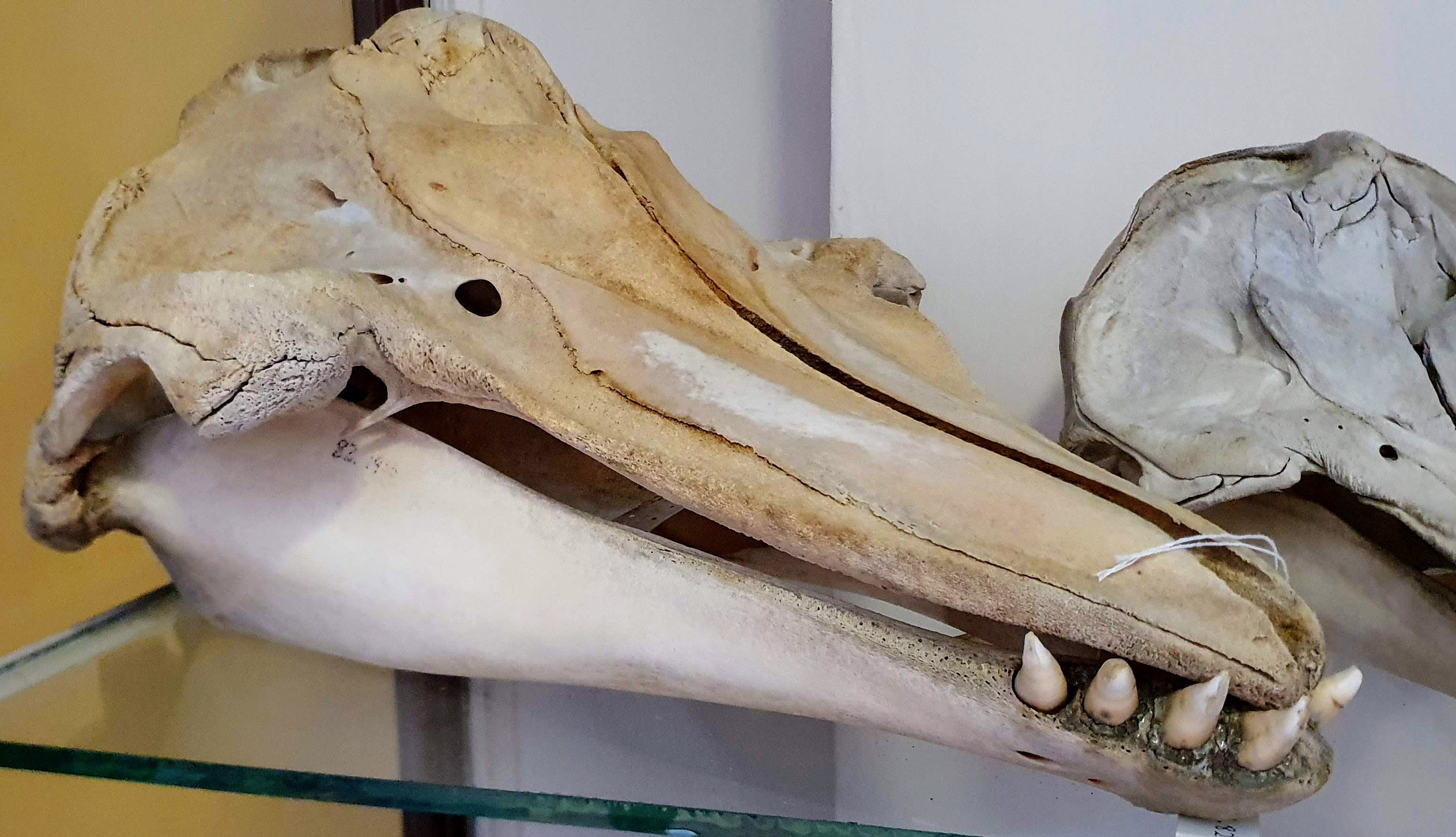
Everyone spotted that this is the skull of a toothed whale (or large dolphin), but after that, things got a little bit more confusing. In particular, the arrangement of the four pairs of teeth in only the front section of the lower jaw, seems to have thrown a lot people off.

There were several suggestions of Beluga whale, but they have around 40 teeth between the upper and lower jaws and clearly this doesn’t (and even if teeth had fallen out, you’d expect to see some empty sockets in the mandible). There were also suggestions of Narwhal, but they have a maximum of 4 teeth only in the upper jaw and one – or very occasionally two – form the Narwhal’s unmistakeable tusk(s). This is neither a Beluga whale nor a Narwhal.

However, the similarity of this skull to these two species did lead to speculation about whether this might be a hybrid between Beluga and Narwhal – one of the infamous Narlugas (or more accurately Belwhals). Ed Yong wrote about these real, but very rare, animals in the Atlantic a couple of years ago and I recommend having a read. If you do, you’ll discover that only one specimen is known and this is most definitely not it. As disappointing as this will no doubt be for some, we live in a world where hopes and dreams are routinely dashed against the rocks of reality, so let’s get ready to rock.

There are around 30 species of Oceanic dolphin, ranging in size from 50kg to 10,000kg. You can see that this one is a bit bigger than the specimen next to it and it has much broader and more chunky ‘cheeks’ (for want of a better term). This is something I normaly associate with the bigger dolphins that are usually referred to as whales – things like Pilot whales, Killer whales and the species in the Monodontidae that I mentioned earlier.

Most of the Delphinoidea have a lot of teeth to assist with prey capture, but this mystery object has got creative with just 4 pairs in the lower jaw (although obviously not as creative as the Narwhal). This limits the possibilities significantly, since it’s a fairly unusual condition. The other type of whales that only have a small number of teeth in just the lower jaw are the beaked whales, which primarily feed on soft-bodied cephalopods and have repurposed their teeth for competition. The mystery species has, perhaps unsurprisingly, done the very same. So, we’re left with the question of which of the bigger dolphins feeds on cephalopods and has an unusual arrangement of teeth?

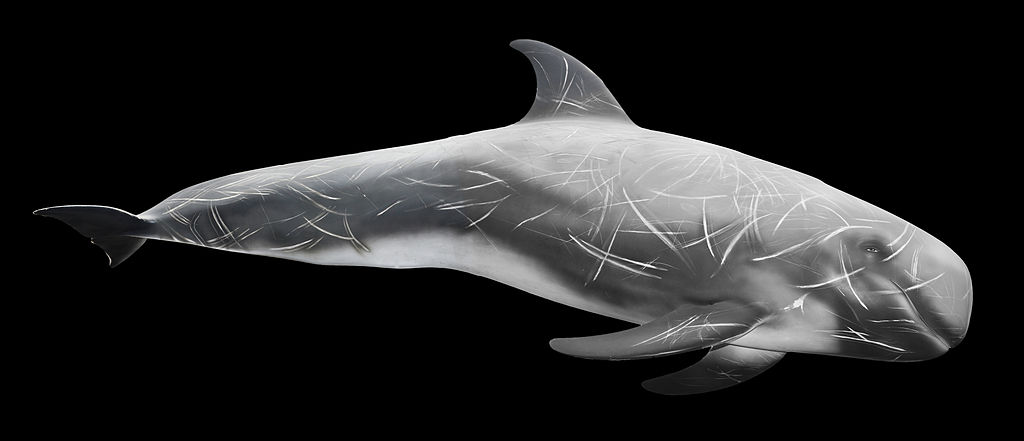
The answer, as Adam Yates was the first to share, is the Grampus or Risso’s Dolphin Grampus griseus (G. Cuvier, 1812). They have between 7 and 2 pairs of teeth in their lower jaw and none in the upper. The live animals are quite heavily scarred from their interactions with those teeth.

Grampus illustration by Citron / CC-BY-SA-3.0

Stay tuned for another mystery object next week!

Friday mystery object #408 answer

Last week I gave you this skull from the Dead Zoo to have a go at identifying:

Obviously the horns let us know that it’s some kind of bovid, but as has been noted before, there are a LOT of bovids. Overall horn configuration is a useful indicator of which general part of the bovid family tree to consider and I always find myself needing to check references to make sure I remember the general configurations.

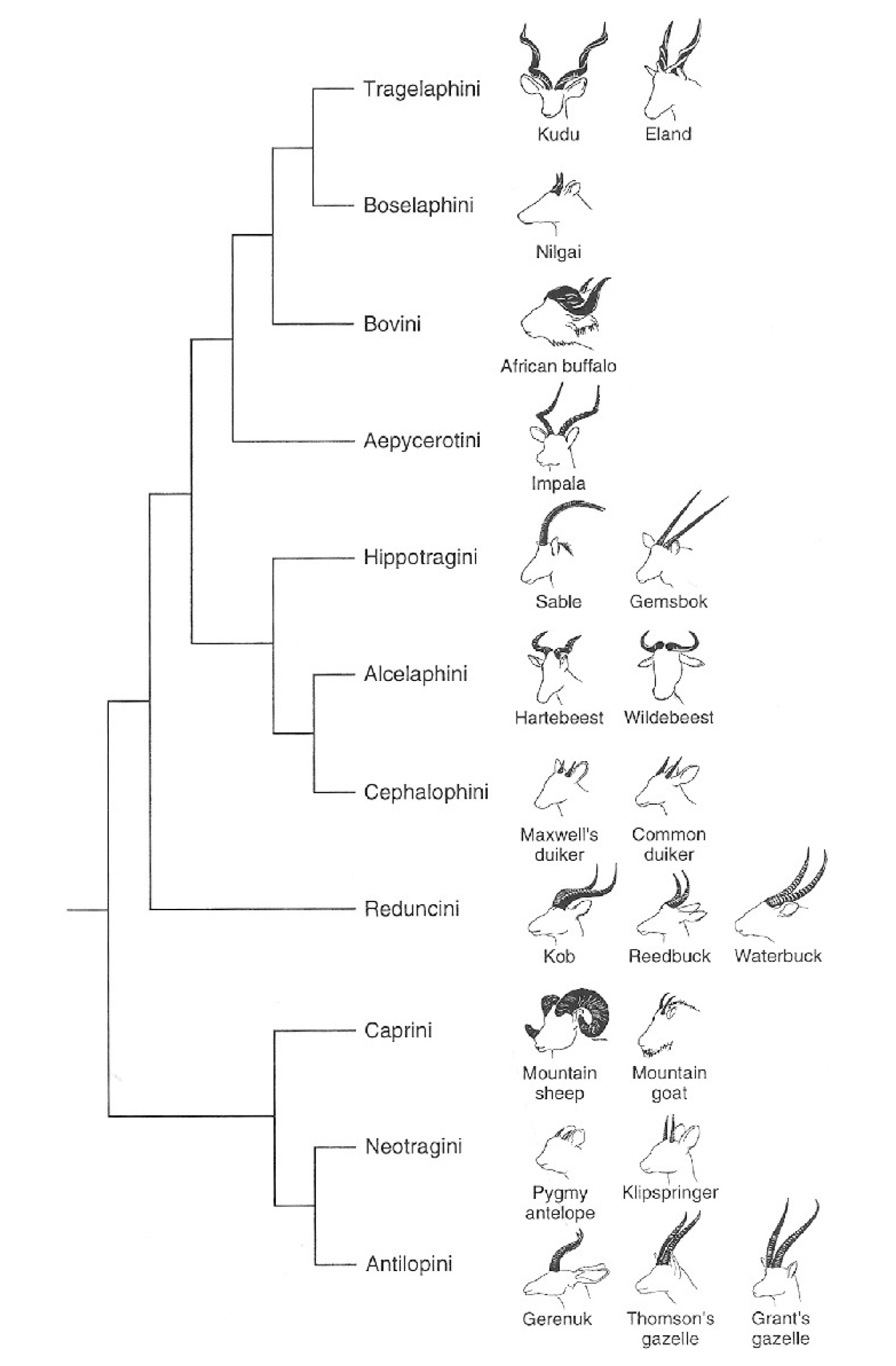
A very helpful overview of horn morphology for the main subfamilies within the Bovide is illustrated by M. Van Bolt in a paper by Barbara Lundrigan from 1996*

Horn morphology in the main subfamilies within the Bovide. Illustrated by M. Van Bolt in Lundrigan, 1996*

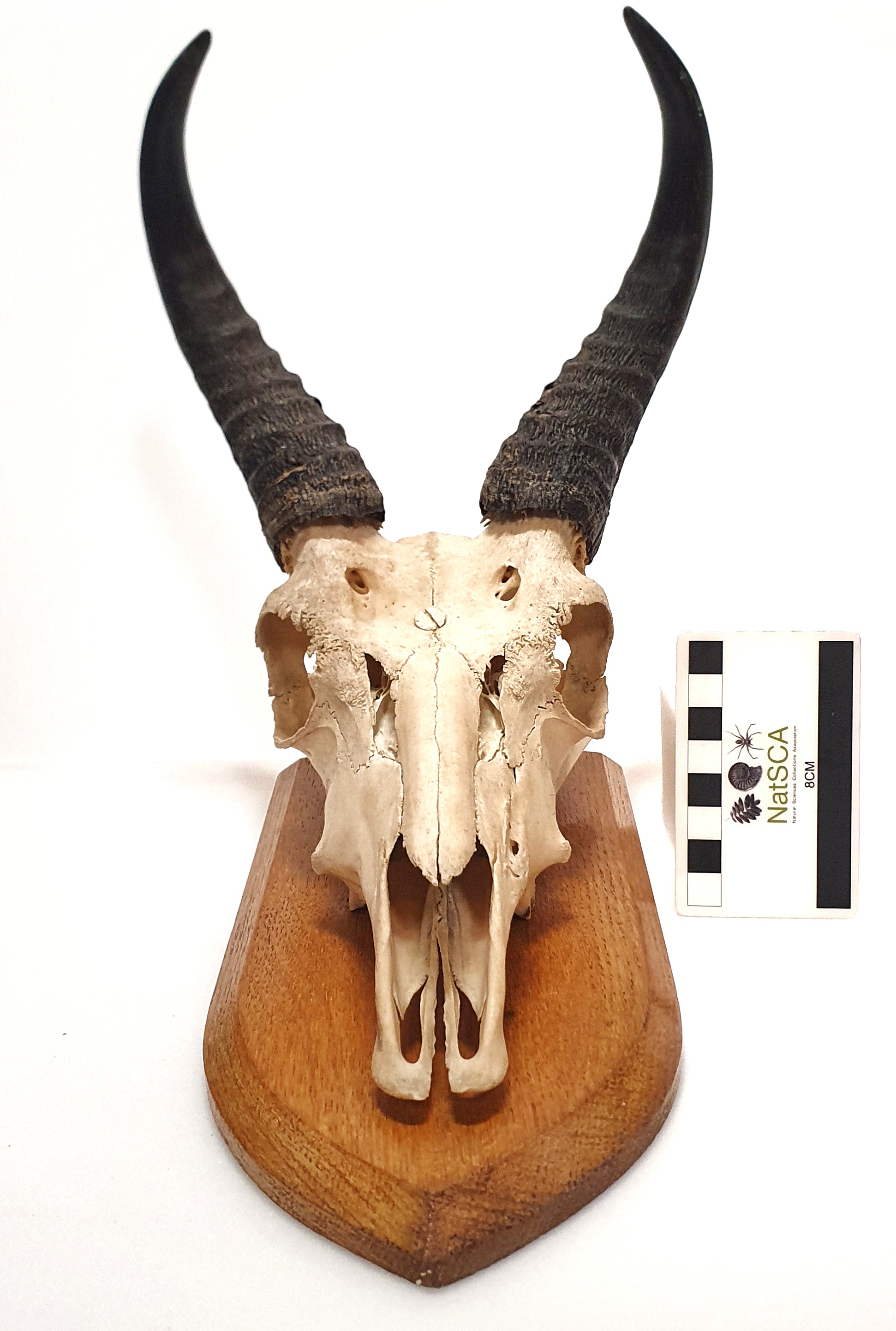
Capturing the horn angle accurately in a photograph can be quite tricky, which is why I provided more than one angle:

A quick check shows that the horn shape of this specimen is distinctively Reedbuck. There are three species in the Genus Redunca, with fairly clear differences in things like the proportions of the maxilla and the shape of the orbit, but again the horns offer a clue.

Mountain Reedbucks have short horns, only in the region of about 15cm, a bit on the short side for this specimen, where they look to be around 25cm or so. The Southern Reedbuck has much longer horns in the range of 35-45cm, a bit bigger than this specimen. That leaves one Goldilocks species with horns 25-35cm long – the Bohor Reedbuck Redunca redunca (Pallas, 1767).

So well done to everyone who recognised this as a Reedbuck and special props to Goatlips who suggested Bohor Reedbuck. Hopefully the illustrated phylogeny I shared will help with future identifications.

*Journal of Mammalogy, 77(2):462-475, 1996

Friday mystery object #407 answer

Last week I finally got a chance to share a nice skull from the Dead Zoo for you to identify:

Bird skulls are always an interesting challenge, because the bill can give away some useful clues and there is a fantastic online resource available to help with their identification, in the form of SkullSite, run by Zygoma regular Wouter van Gestel. Perhaps unsurprisingly Wouter tends to be one of the first to get a correct answer when the mystery object is avian – and this one was no exception.

One of the useful features on SkullSite is the ability to do a custom search, which allows you to restrict the size range of skulls and the bill shapes to search through. This allows easy comparison between the skulls of possible taxa, making identification more straightforward, once you get your eye trained to recognise useful features.

In this case there are a few species in the same size range with similar shaped bills. The closest species in size and shape (that’s not a close relative) is the Great Bustard. However, the Great Bustard has much longer nares (the fancy name for nose-holes) than the mystery object and the bustard’s lacrimal bones (the small bones that flare out just to the front of, and above, the eye sockets) are much smaller and less pronounced than what we see in the mystery specimen.

That leaves the two species in the Family Cariamidae (or Seriemas) to pick from. The size of the specimen alone makes that fairly straightforward, as there’s around 15mm difference in the skull length between the two. However, if you want a morphological feature, the mandibular fenestra (the ‘window’ visible in the side of the lower jaw slightly back from the midway point) is proprtionally a lot larger in the Black-legged Seriema compared to that of the Red-legged Seriema.

The fenestra is small in the mystery object, while the skull is large, making this a specimen of the Red-legged Seriema Cariama cristata (Linnaeus, 1766).

A Red-legged Seriema in Reserva Ambiental, Piraju, São Paulo, Brazil. Image by Dario Sanches, 2010

I tend to think of Seriemas as the South American equivalent of the Secretarybird, since they are ground-hunting predators in scrubby environments that have a fondness for venomous snake snacks.

Both have long legs and small feet, neither fly much and both have eyelashes, as pointed out by Goatlips on Twitter:

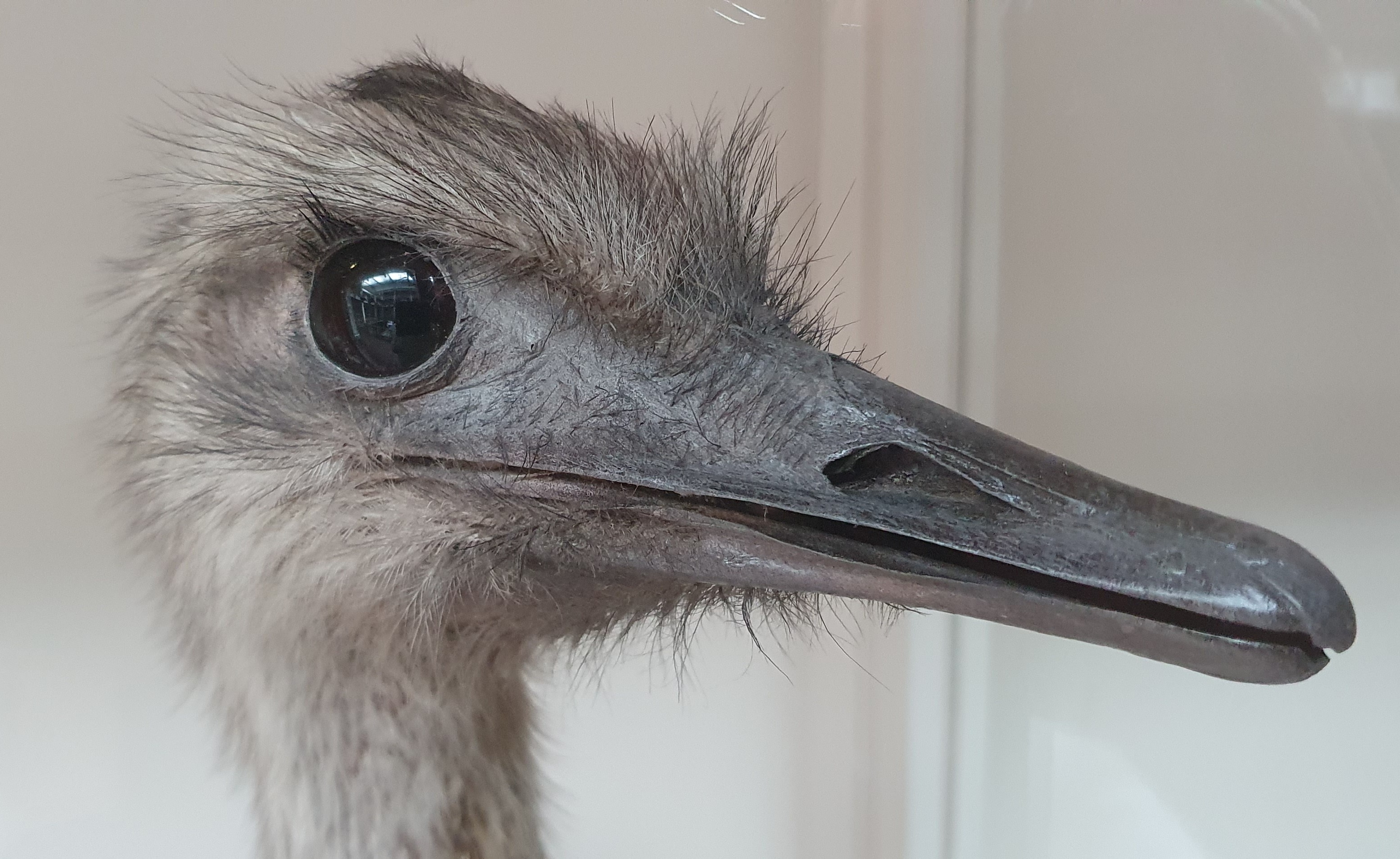
I’d never really consider the bird eyelashes thing and it makes perfect sense for terrestrial birds foraging on the ground in arid environments to have some extra eye protection from sun and dust afforded by filamentous feathers around the eyes. It turns out this holds true for birds like Ostriches, Emus, Cassowarys, Rheas, Road-runners and the Ground Hornbills.

However, some other Hornbills that live in very different environments also have eyelashes as do those odd arboreal Hoatzins, so there must be something else going on with those lovely lashes that I’m missing.

I hope you enjoyed this bony challenge – please feel free to add your thoughts on the eyelash situation and perhaps mention any species you’ve noticed this feature in before. You never know, together we might figure out what those lashes are all about.

Friday mystery object #406 answer

Last week I gave you this mystery object from the Dead Zoo:

Usually I don’t give you clues, but for this one I thought it might be helpful in narrowing down possibilities since this specimen is faded and is probably lacking a lot of the colour features that might help with an identification. The clue wasn’t hugely helpful however, just a reference to the collector – one Major St. Leger Moore.

Palfreyman1414 and salliereynolds made the inital observation that this is an ungulate, but there are very many ungulates and that doesn’t narrow it down by much. Goatlips went on a bit of an adventure with Major St. Leger Moore and found some useful information – the Major served in the 9th Lancers who were posted to India during his service, in which time he picked up polo (which he was apparently involved in appropriating for Britain) and most likely this particular trophy.

With this information it becomes a bit easier to start narrowing down likely possibilities – there are around 21 species of bovid in India and only one of them looks anything like this – the Chinkara or Indian Gazelle Gazella bennettii (Sykes, 1831), which Goatlips hinted at with a cryptic reference to a cricketer. Of course, there are plenty of gazelle species in Africa, which Major St. Leger Moore may have visited outside his time in the military, since he was a keen sportsman and recognised as being able to “shoot straight”.

Checking the features of the Chinkara helps to add confidence to the identification. According to the ADW the Chinkara is:

…characterized by a sandy, yellowish and red colored fur with a pale white ventral region. Facial markings are well developed: they have a dark brown or black forehead and a light face with dark stripes and a noticeable nose spot. Fur color varies seasonally. In the winter, Indian gazelles are a dark grayish sandy color, and there is a distinct brown band edging the white ventral area of the torso. In the summer, the fur is a darker brown.

Indian gazelles have straight horns with prominent rings and tips that are slightly out-turned. Horns are found on both males and females, although they are relatively shorter in females. Sub-adult males are hard to distinguish from females because of their intermediate horn length. Horns can reach lengths of 250 to 350 mm in adult males. Female horns are usually half the length of and thinner in width than male horns and have less prominent rings. Average male horn length of the subspecies Gazella bennetti fuscifrons and G. b. shakari is 256.6 mm. Females of these subspecies have an average horn length of 184.7 mm.

McCart, D. 2012. “Gazella bennettii” (On-line), Animal Diversity Web. Accessed April 22, 2021 at https://animaldiversity.org/accounts/Gazella_bennettii/

While the colours preserved on the specimen aren’t quite good enough to provide much assurance, the details of the horns (especially when compared to other gazelle species, that often have much longer and more lyrate horns) correspond very well with the Chinkara. Not a certain identification, but pretty convincing.

So well done to Goatlips for some nice detective work!

Friday mystery object #405 answer

Last week I gave you this mystery object from the Dead Zoo to have a go at identifying:

There was no scale and admittedly there’s not much of the specimen visible, but I didn’t think that would pose much of a problem. And I was right. Tony Irwin immediately indicated the identity of this rather rare specimen with the anagram:

Maybe found it – in rosy pea?

The “in rosy pea” unscrambles to Aepyornis which is the generic name for the Elephant Bird.

Of course, this isn’t a complete Elephant Bird, it’s only an egg (had to get some Eastery link in there somehow). Elephant Birds have been extinct for about 1,000 years, so surviving eggs are very rare, hence the special fancy box. Here’s the actual egg:

The total length is just shy of 1 foot at 29.6cm, making this one of the largest eggs ever laid by any animal. There are other Elephant Bird eggs that are a bit bigger (up to 34cm), but no other type of animal ever laid a bigger egg, even the vast sauropod dinosaurs laid eggs that were smaller than this.

I’m not going to tell the story of this specimen here, since it’s already on the National Museum of Ireland’s website. If you have a read of that, you’ll see that this specimen is from the southern end of Madagascar (the island on which these birds lived) and that plus the particularly large egg size suggests that this is from Aepyornis maximus I. Geoffroy Saint-Hilaire 1851.

This is not the first time I’ve dealt with Elephant Bird eggs, since I borrowed one from David Attenborough for an exhibition at the Horniman Museum about 5 years ago, which I talked about here.They are remarkable objects and it’s strange to think of something as fragile and seemingly ephemeral as an egg surviving intact for over a thousand years.

So well done to everyone who worked out what this mystery was – eggcelent work!