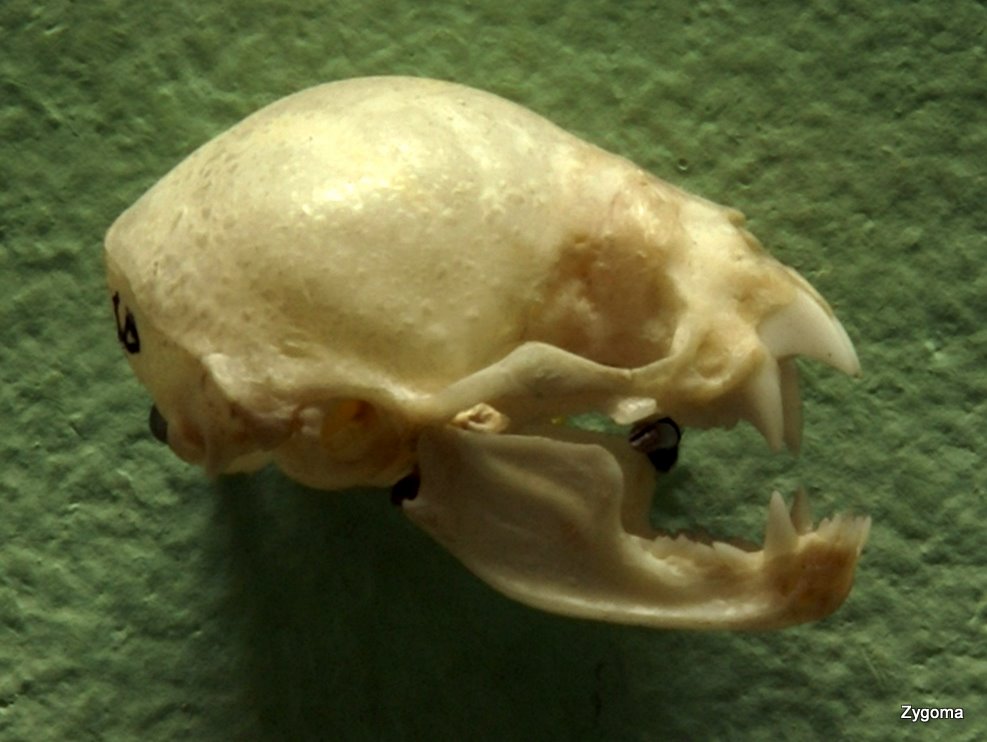
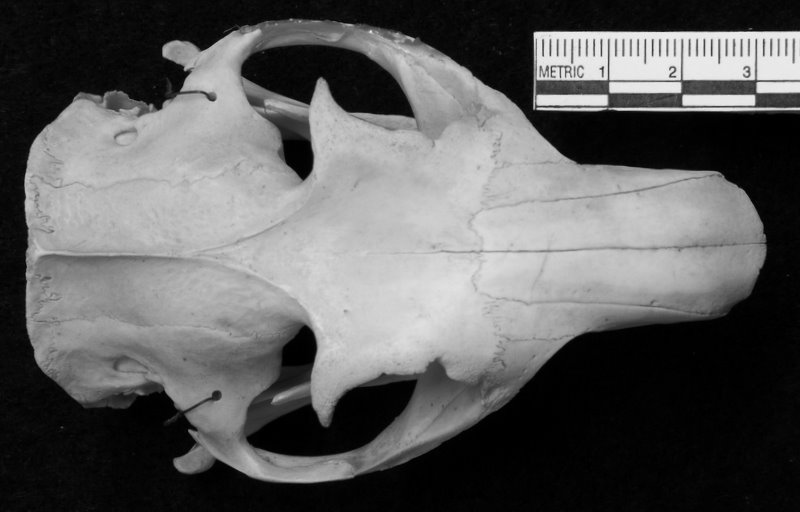
Friday mystery object #161 answer

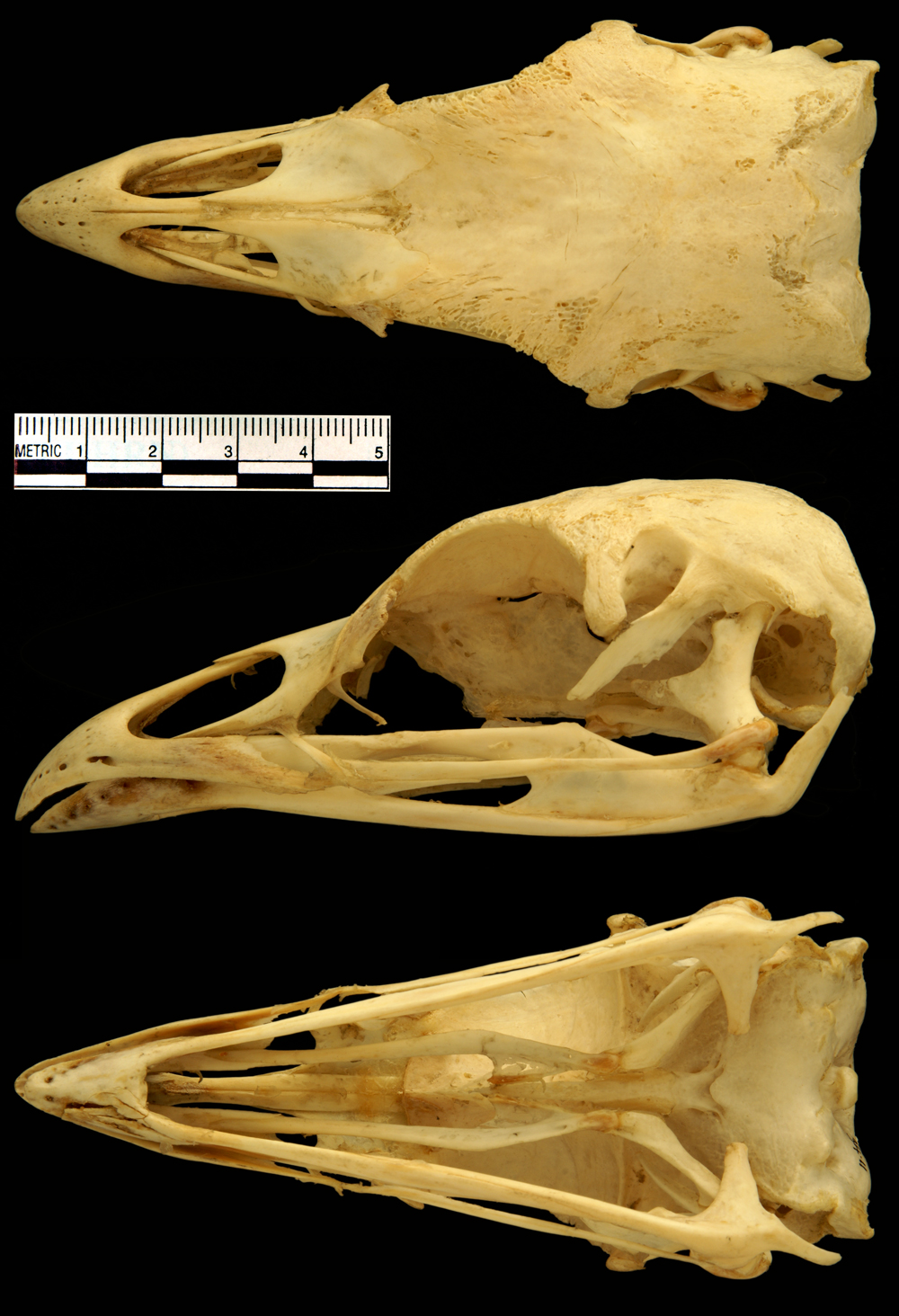
On Friday I gave you this bird skull to identify:

Most of you managed to identify it pretty easily – Robin suggested something in the right family, while Ric Morris, henstridgesj, Matthew King and Jake all managed to work it out to species. This is the skull of a  Continue reading

Friday mystery object #154 answer

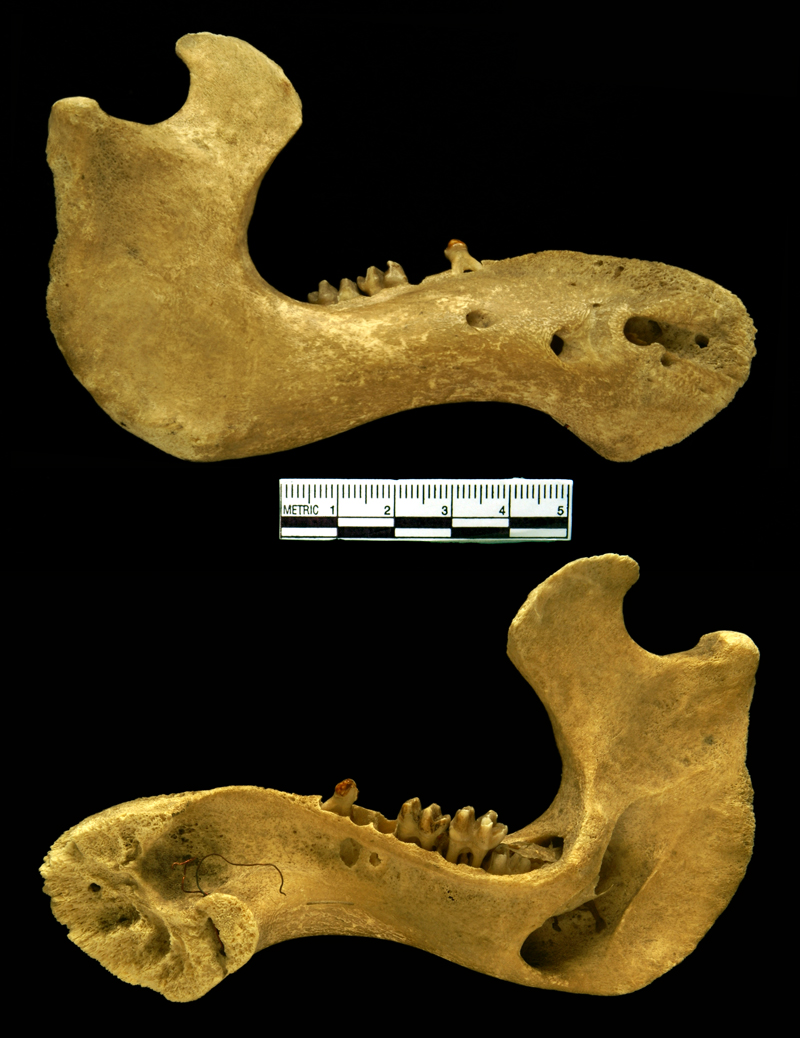
On Friday I gave you this very distinctive object to identify:

As I suspected, everyone correctly worked out it was a half mandible from a Sirenian – probably a Manatee. So well done to Barbara Powell, henstridgesj, Robin, Ric Morris, Rhea, rachel, Jake, Andrea and Jamie Revell for getting the main identification.

Of course, it got a bit more difficult when it came to making a species level identification, as is often the case. There are three well recognised species of Manatee – the West African, West Indian and Amazonian. There is also the Dwarf Manatee, which is a potential species in its own right or perhaps subspecies of the Amazonian Manatee.

Several people plumped for the Amazonian species or the Dwarf Manatee based on the fact that the jaw doesn’t look robust enough for the other species. However, this mandible is from a juvenile, so that was a bit misleading. Based on the hook of the coronoid process (the highest bit of the lower jaw where the temporalis muscle attaches) and the angle of the mandibular symphyseal region (the bit where the two halves of the lower jaw would have joined together) I think this is most likely to be what Barbara Powell first suggested, the  Continue reading

Friday mystery object #153 answer

On Friday I gave you this fragment of an object to identify:

Many of the key features we look for when making an identification of a skull are in the facial region. The teeth are the most useful feature, but the relative proportions of the rostrum (muzzle) in the context of the whole skull and the particulars of the various elements that interconnect to make a skull all contain useful information.

It’s rather similar to recognising a person in fact – it’s much easier when you can see their face than it is when all you can see is the back of their head.

So how did everyone do? Well, there were various suggestions as to what it might be, but it was basically a guessing game, relying mainly on scale, gross morphology and the shape of the auditory bullae (aka the bulbous bit containing the ear bones). Most guesses focussed on the carnivores although there were some large rodents suggested.

I thought henstridgesj might have worked it out when he asked ‘Are the bullae double-chambered? Possibly, I can’t really tell, but if they are then it’s in the suborder Feliformia‘ and I answered in the affirmative, but the most obvious answer was somehow missed.

This object is almost certainly the rear part of the skull of a  Continue reading

Friday mystery object #153

This week I am delving into a box of bits to provide a genuine mystery object. I expect I will be doing a few items from this box in the coming weeks, since I am reaching the end of my curatorial review of the Horniman’s mammal osteology collections and I have been left with just a few boxes of random odds and ends that have been on display or have been cut up and the other part put on display.

These items have no information with them at all, so each is a genuine mystery that I hope to solve – a process that starts with identification. Any idea what this might be?

As usual you can put your thoughts, suggestions and observations below and I’ll do my best to reply. Good luck!

Friday mystery object #151 answer

On Friday I gave you this object to identify:

There were fewer comments than usual, but those comments were impressively observant.

Lena got stuck in, identifying the element as a long, thin ungulate humerus and narrowing it down to a camelidMikolaj Lisowski noticed the low proximal epiphysis (the end of the bone that is connected to the shoulder) and suggested that it might belong to a  Continue reading

Friday mystery object #149 answer

On Friday I gave you a bit of a spot-the-difference with these two skulls, wanting to know if they were two individuals from the same species or if they were from two different species:

I must say that it was a bit of a tricky identification without the added complexity of a between specimen comparison, yet you all did remarkably well.

As usual Jake was the first to comment, correctly identifying that the specimens are both rodents and squirrels at that. He also recognised that both were adult animals, although one was probably older than the other when it died, based on the degree of wear on the teeth (assuming the diet was similar). The squirrel identification was also supported by Will, henstridgesj, Dave Godfrey, Jamie Revell and Barbara Powell.

Barbara also picked up on the feature that made me consider that these specimens may have been from different species – the sutures between the premaxilla, maxilla, nasals and frontal bones that make up the rostrum (the nosey bit). This is something that Lena and Jamie Revell also commented upon.

The position of the sutures (or junctions) between the various bones that make up the rostrum can certainly be useful in diagnosing differences between species – it’s a handy one for distinguishing between Lions and Tigers for example:

Lion vs Tiger sutures

However, in this case I don’t think that the differences between the sutures are all that diagnostic, I think the differences may simply be down to either sexual dimorphism (that’s where males and females of the same species develop differently) or differences between the ages of the individuals. In fact, given that the specimen with the more heavily worn teeth is smaller and less robust than the other specimen I wouldn’t be surprised if it was an older female and younger male of the same species that are being compared.

One of the reasons I don’t think the sutures are diagnostic comes down to timing of their fusion. According to Wilson & Sánchez-Villagra, 2009 the pattern of closure of the cranial sutures in rodents follows a fairly standard pattern, with the rostral elements being amongst the last to fuse. This suggests that those sutures are more likely to vary between animals of different ages and between animals with different life histories. That said, there are geographical variations in this species, so these specimens may represent individuals of different subspecies from different parts of the range – something I can’t check because there is no locality information with them (at least not that I’ve found yet).

With the spot-the-difference dealt with, I will leave you with the correct species identification as made by henstridgesj, these are the skulls of  Continue reading

Rhinos at risk

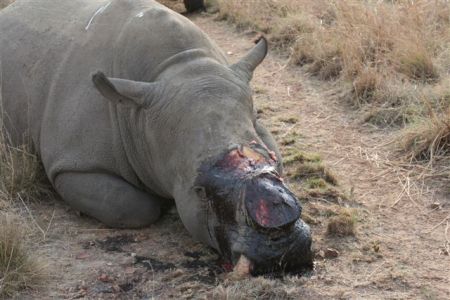
I know I’ve discussed the situation regarding rhino horn before, but I recently had an article published in NatSCA News that goes into a bit more detail about the thefts of rhino horn from collections in Europe, the current status of rhino populations in the wild and the huge increase in levels of poaching. I thought it might be useful to share the article a bit more widely by making it available here: The Horns of a Dilemma: The Impact of the Illicit Trade in Rhino Horn.

rhino-dehorned via everything.co.za


Normally NatSCA News articles are published online a year or so after they are published in hard copy, but the article I wrote will be out of date by then and I will have to spend the next year or so getting annoyed by newspaper articles talking about the market for horn as an aphrodisiac (which is nonsense), without being able to easily share the results of my research into the subject.

One element of my research has been a map that shows the places in Europe from which rhino horn has been stolen in the last 18 months or so (I will keep updating it):

The situation for rhinos is bad and it’s getting worse.

Friday mystery object #144 answer

On Friday I gave you another genuine mystery object from the Horniman’s collections:

It was in a box of unidentified and unlabelled bones which I’m pretty sure came from the King’s College teaching collection in the 1980s, when King’s merged with Chelsea College. Quite a large amount of material came to the Museum and unfortunately much of it was jumbled up, missing labels and quite often different parts from the same specimen had become separated.

I have been kept busy trying to make sense of it all, which is no small task, as the collection was mainly used for comparative anatomy meaning it is very diverse. The specimens in the collection could be from anything and from anywhere in the world – which makes it rather difficult to narrow down the options.

This specimen was a bit of a puzzle, since although it is clearly from a fairly large animal, it is quite hard to work out what the full adult size would be, as this bone is from a juvenile (as spotted by Kevin). This is apparent from the unfused ends of the bone (called the epiphyses).

One possibility that occurred to me (and Rhea) was that it may be the bone of an aquatic mammal, such as a seal. However, in aquatic mammals the humeri need to rotate, meaning that they tend to be flattened in two different planes at the proximal and distal ends. This bone is just flattened in one plane, meaning it wouldn’t be great for use in swimming efficiently and it wouldn’t be great for bearing large amounts of weight/force during locomotion – a more rounded cross-section of bone is better for that.

In fact, the general shape of the bone is wide and flat with large tuberosities for muscle attachment – almost like the humerus of a mole:

This is something that  Richard Forrest seems to have picked up on when he suggested that it is the humerus of a fossorial [digging] animal. This narrows down the options quite nicely, as there are only a few large fossorial animals.

The Pangolin was suggested by Dave Godfrey, but the bone is too large. Dave also suggested the Aardvark, which is a good contender, although not quite right. I personally have a different animal in mind –  Continue reading

Friday mystery object #143 answer

On Friday I gave you another skull to identify from a box of unlabelled material dating from 1974:

At first glance it looks quite similar to the skull of a small dog or fox, but the muzzle area seems a bit short, the braincase too small and the teeth aren’t quite right for a canid – in fact the teeth look more like those of a mustelid (as Jake pointed out). However, mustelids tend to have quite broad and blocky skulls and this one seems a bit elongate and gracile.

Clare P made a very good suggestion when she suggested the Asian Palm Civet Paradoxurus hermaphroditus, although this animal is somewhat smaller than the species that this specimen came from. Size aside, the dentition matches pretty well (if you can work out which tooth sockets belong to each tooth):

Asian palm civet skull and dentition by Paul Gervais (1816-1879)

So it looks like this is the skull of a viverrid. There are still lots of candidates out there and location could help narrow down possible species, but without any labels it can be hard to work out locality information. However, last week’s object was from the same collection and it was an African species, suggesting that Africa would be a good place to start looking for a species match.

Jamie Revell did just that when he suggested the Giant Forest Genet Genetta victoriae, which is a viverrid of about the right size from Africa. Although I already thought I knew what the specimen was, I took Jamie’s suggestion very seriously, as I hadn’t considered that particular species and it fit with most of the features of the specimen.

In the end an online French viverrid identification resource I’d not seen before provided me with the information I needed to exclude the Giant Forest Genet. Mainly it came down to whether the premaxillary bones made contact with the frontal bones – they do in the Giant Forest Genet, but they don’t in this specimen. Also, the area where the temporalis muscle attached is too narrow in this specimen.

In light of these observations and with reference to specimens in the Horniman’s collections (including one that I used as a mystery object a year ago) I am fairly confident in identifying this as  Continue reading

Friday mystery object #132 answer

On Friday I gave you these objects to identify:

I expected you to work out what these came from pretty easily – and you proved me right. In fact, I think this was probably the easiest mystery object so far, given that everyone managed to get a correct identification of  Continue reading

Friday mystery object #127 answer

Apologies for a somewhat belated answer to last week’s mystery object – Christmas and all that…

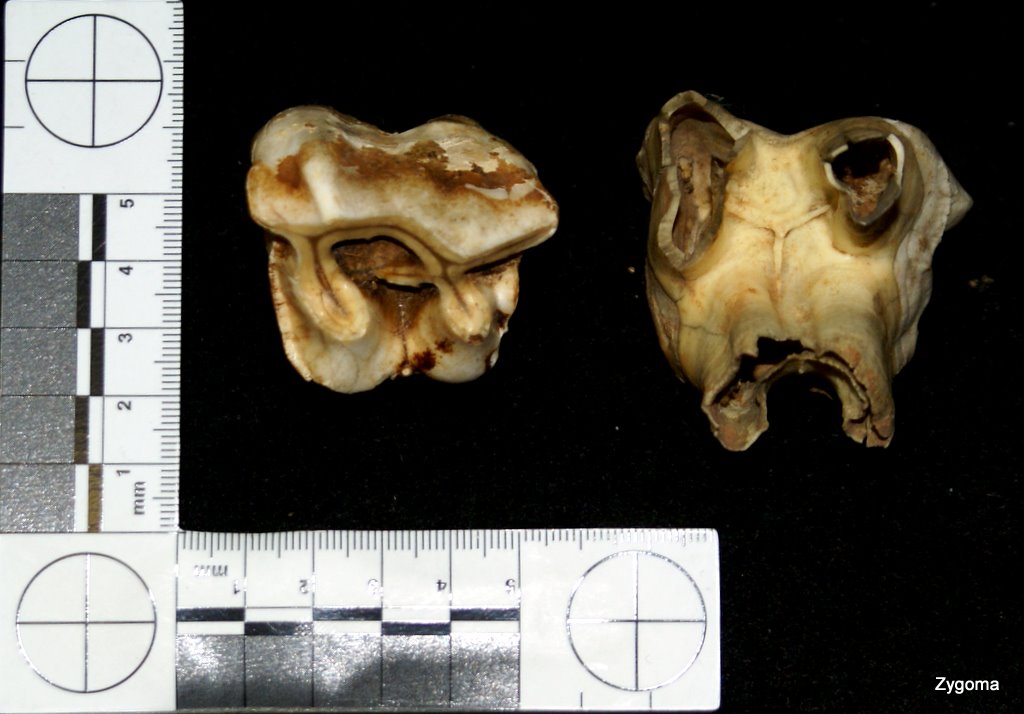
I gave you these two unidentified objects from the Horniman Museum collections, so you could have a go at identifying them:

I was not disappointed either – Jake recognised that they were upper molars or premolars from a grazing animal and Rhea identified the animal in this cryptic clue:

If the owner of these teeth could market and sell a coffee, would it be interested in a label with a *unicorn* mascot that comes in the sumatran or javan blends? Continue reading

Friday mystery object #120 answer

As promised, last Friday’s mystery object turned out to be easy:

The very first reply by Gerry gave the correct species and every subsequent suggestion was for the same animal.

With those huge razor-like incisors and canines what could this be other than a  Continue reading

Friday mystery object #102 answer

On Friday I gave you this skull to identify:

I was impressed by the speed with which everyone recognised this as being a large member if the squirrel family – the Sciuridae.

There were several hints of Groundhog, but this is actually the skull of a European member of the same genus, the  Continue reading