
Last week I gave you this skull to try your hand at identifying:
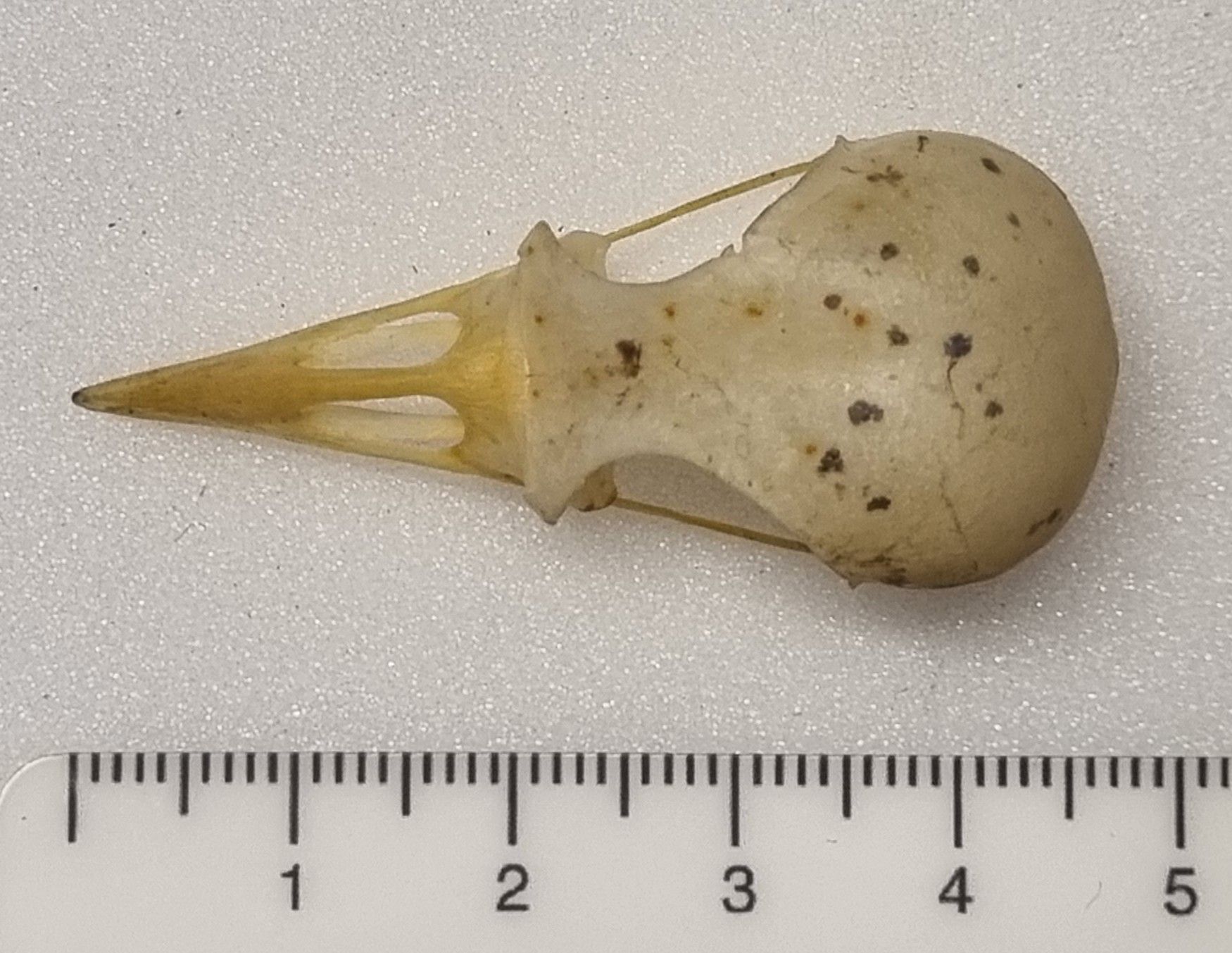
It’s not the easiest of tasks, as there are quite a lot of birds in this general size range and with this general shape of skull, so the overall outline from the top only helps narrow things down a little. It is worth noting that general proportions all suggest some kind of Passeriform.
The exact length of this specimen is 49mm, but as with all species, there is a bit of variation depending on subspecies, age, sex, quality of diet and other environmental factors. I suspect this one is a little on the small side for the species.
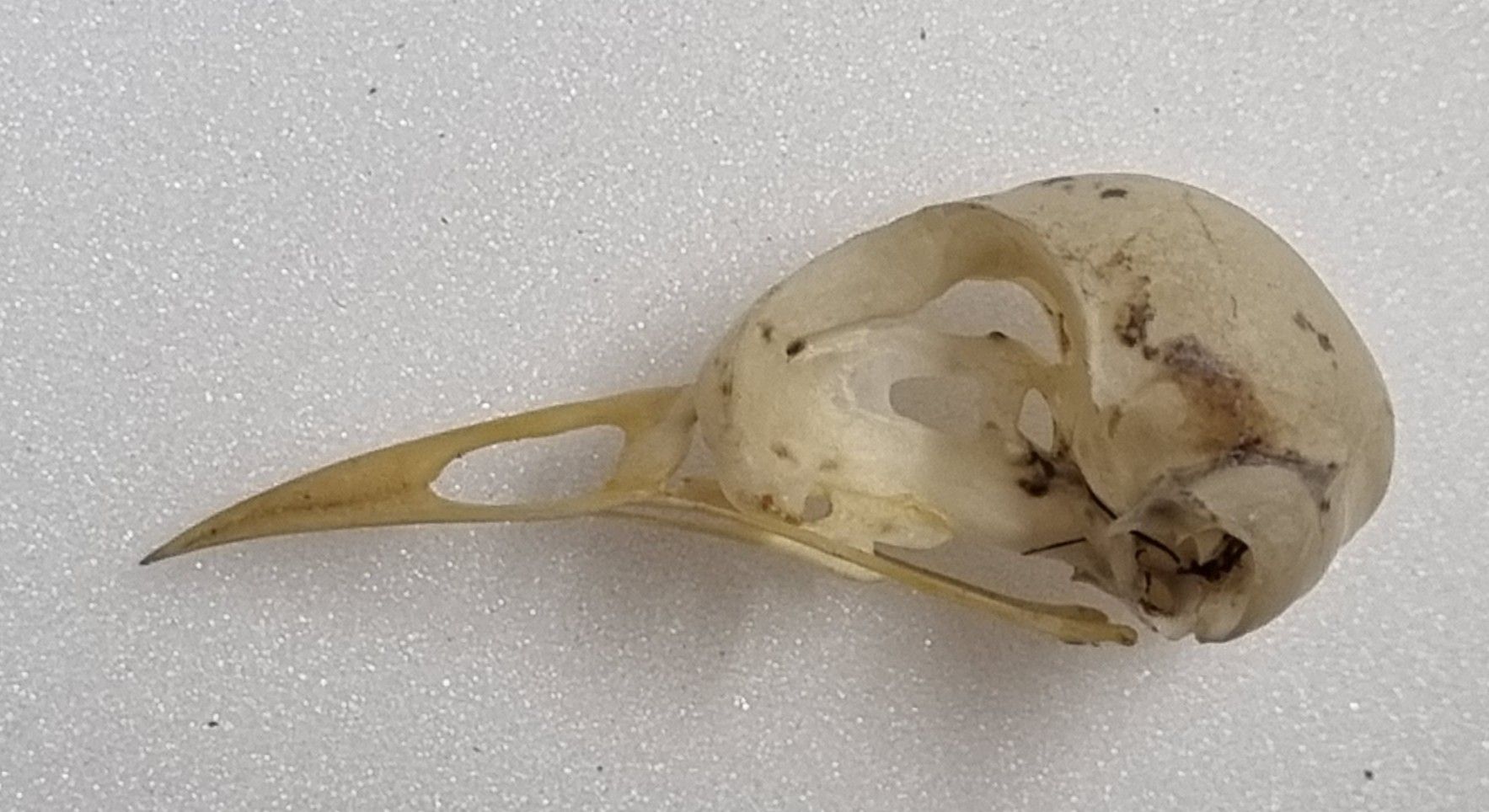
The side view offers another perspective on the bill morphology, which is looks quite generalist, perhaps a little on the gracile side, but not overly skinny. Given the size that puts me (and many who left a comment) in mind of something in the Thrush family.
It’s also worth noting that the bill sheath, while not very apparent, is still present (if it wasn’t you’d see small holes along the side of the bill, which are the blood vessels that supply the tissues that secrete the keratin of the bill sheath). This is a big clue, as the bill sheath is yellow.
For me that immediately put in my mind a very specific type of Thrush – the male Common Blackbird Turdus merula Linnaeus, 1758.
This can be checked with reference to the excellent Skullsite resource, which provides a fantastic range of bird skulls with images from several different angles. Take a look at the underside of this specimen:
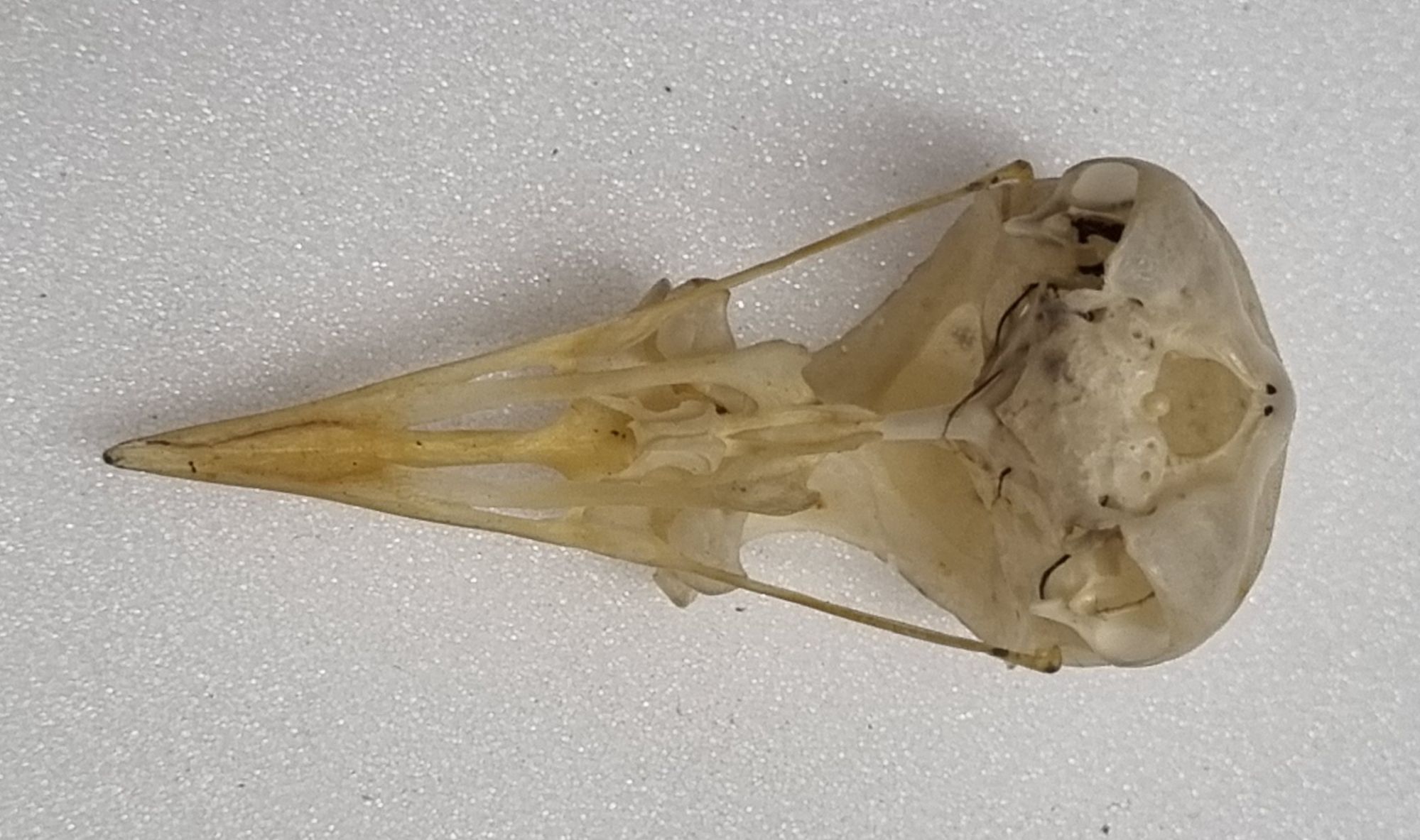
The posterior region of the palatine bones have quite a distinctive shape – flared and with a broad shallow notch at the posteriormost margin. If you compare this to other skulls in the genus Turdus, you’ll notice that the notch is almost absent in the Redwing, it has a much sharper outer angle in the Songthrush, it’s a lot deeper in the American Robin, it’s deeper and sharper in the Fieldfare, and so on. The important thing is that the palatine of the Blackbird on the Skullsite is still consistent with that of the mystery object.
While this feature takes a while to get familiar with, it can be quite helpful when narrowing down similar skulls like these. I hope that pointer proves useful!
Finally, I offer up congratulations to Adam Yates who not only got the correct identification, he also left a great cryptic clue to share that information. Bravo!

