Friday mystery object #376 answer

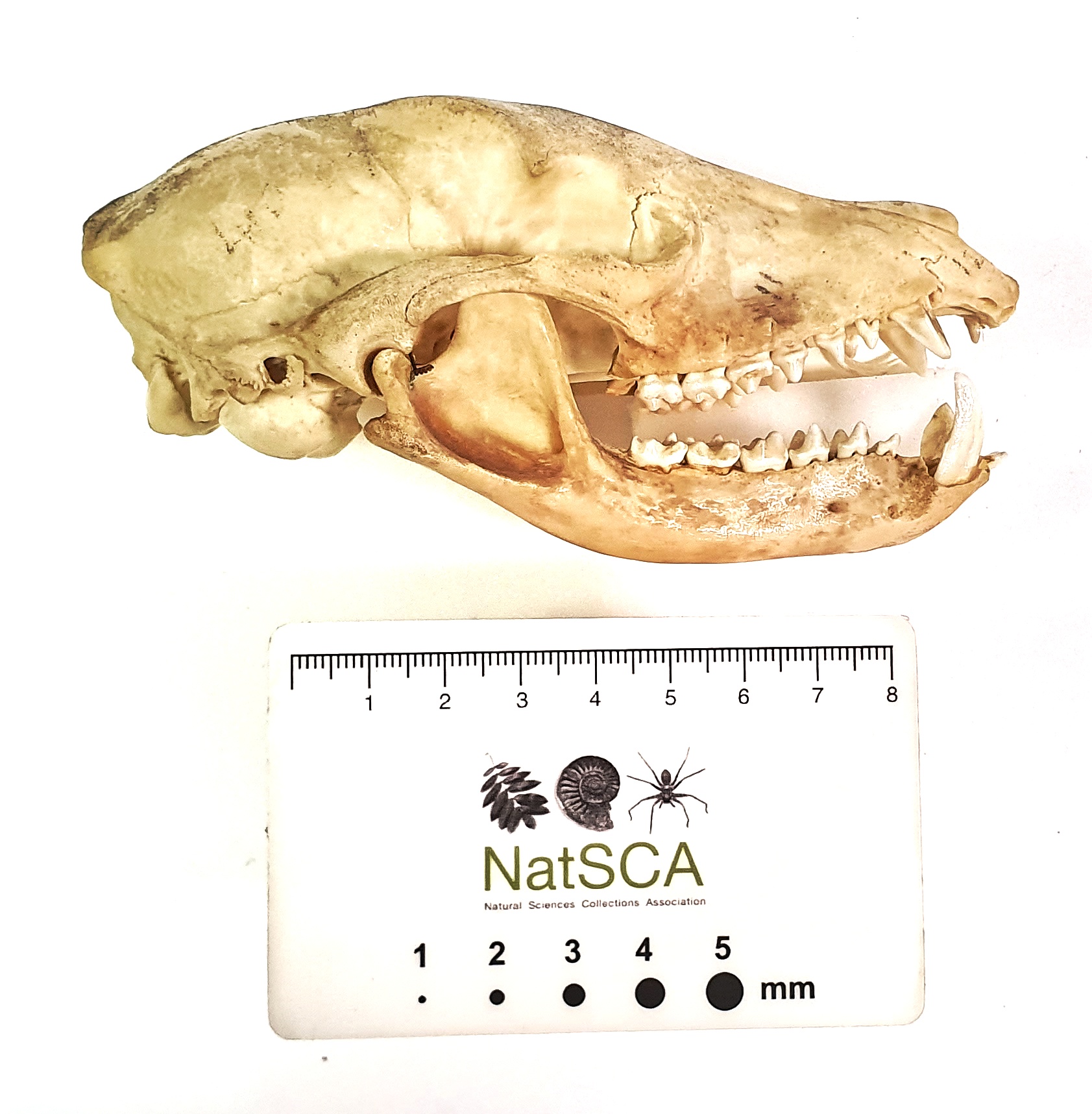
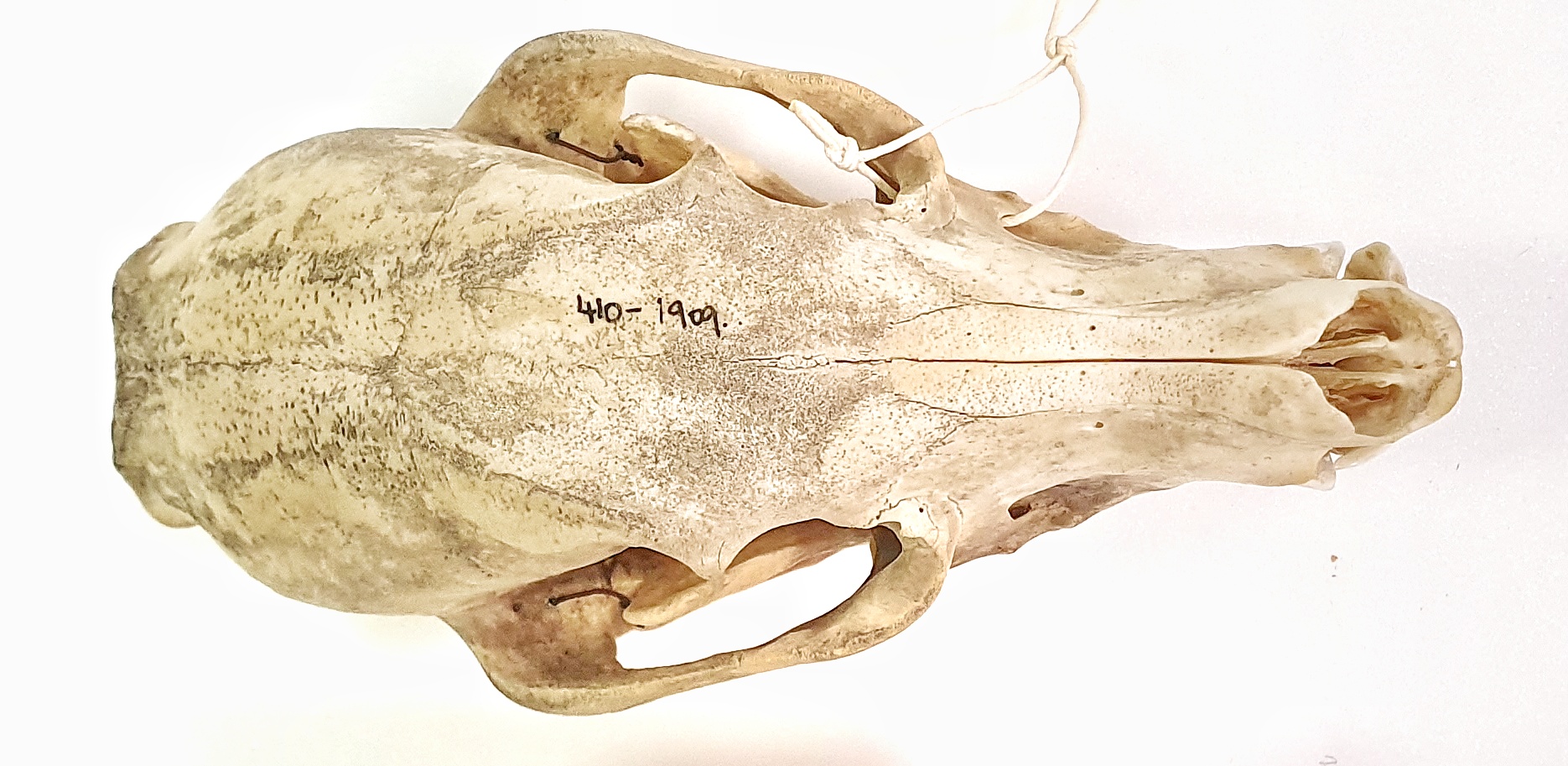
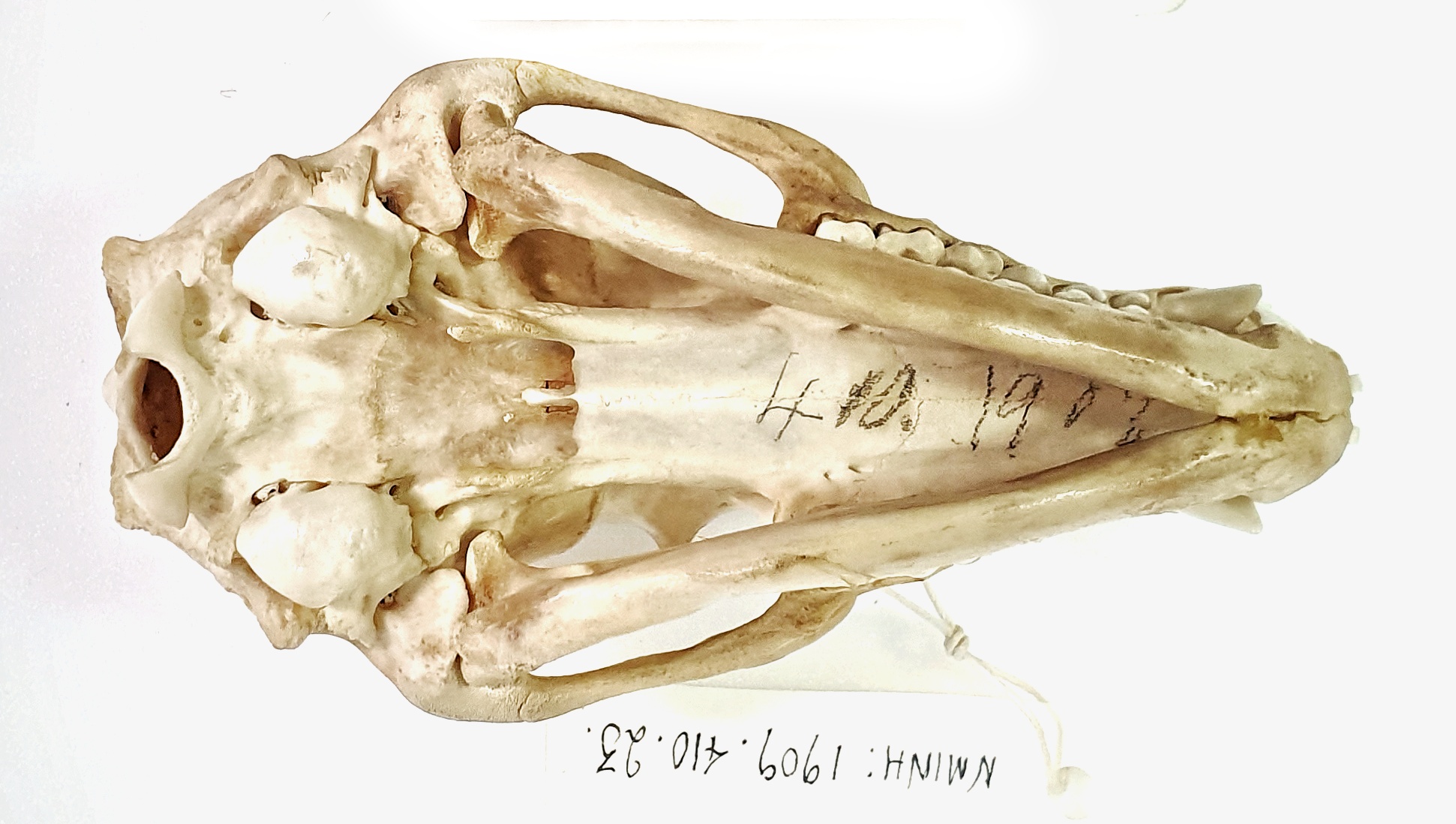
Last week I gave you this guest mystery object from the Museum of Life Sciences at King’s College London:I thought it would prove tricky, as the specimen is from a juvenile animal, which always complicates things.

However, it didn’t take long for you to work out what it was and, if I’m honest, you beat me to it, so well done on that and thanks for your contributions!

Clearly it’s a carnivore as it has well-developed carnassial teeth. However, immature animals with a mix of deciduous and permanent teeth can be confusing. It also doesn’t help when the skull shape is still forming.Fortunately, to help narrow it down there is the auditory bulla and that molar tooth just behind the carnassial. The shape of these features suggest that it’s a mustelid.

There was some discussion about badgers and otters, but Bob Church settled it by providing a very useful reference containing this image:

Figure from Long, Charles A. 1965 Comparison of Juvenile Skulls of the Mustelid Genera Taxidea and Meles, with Comments on the Subfamily Taxidiinae Pocock. American Midland Naturalist 74(1)225-232.

As you can see, this is an excellent match for the mystery specimen, both in dental morphology, auditory bulla shape and even scale, allowing us to make a confident identification of juvenile American Badger Taxidea taxus (Schreber, 1777).

So well done to Jeanie, katedmondson, Bob Church and Rémi, and my thanks to you all for your help in identifying this tricky specimen.

Friday mystery object #376

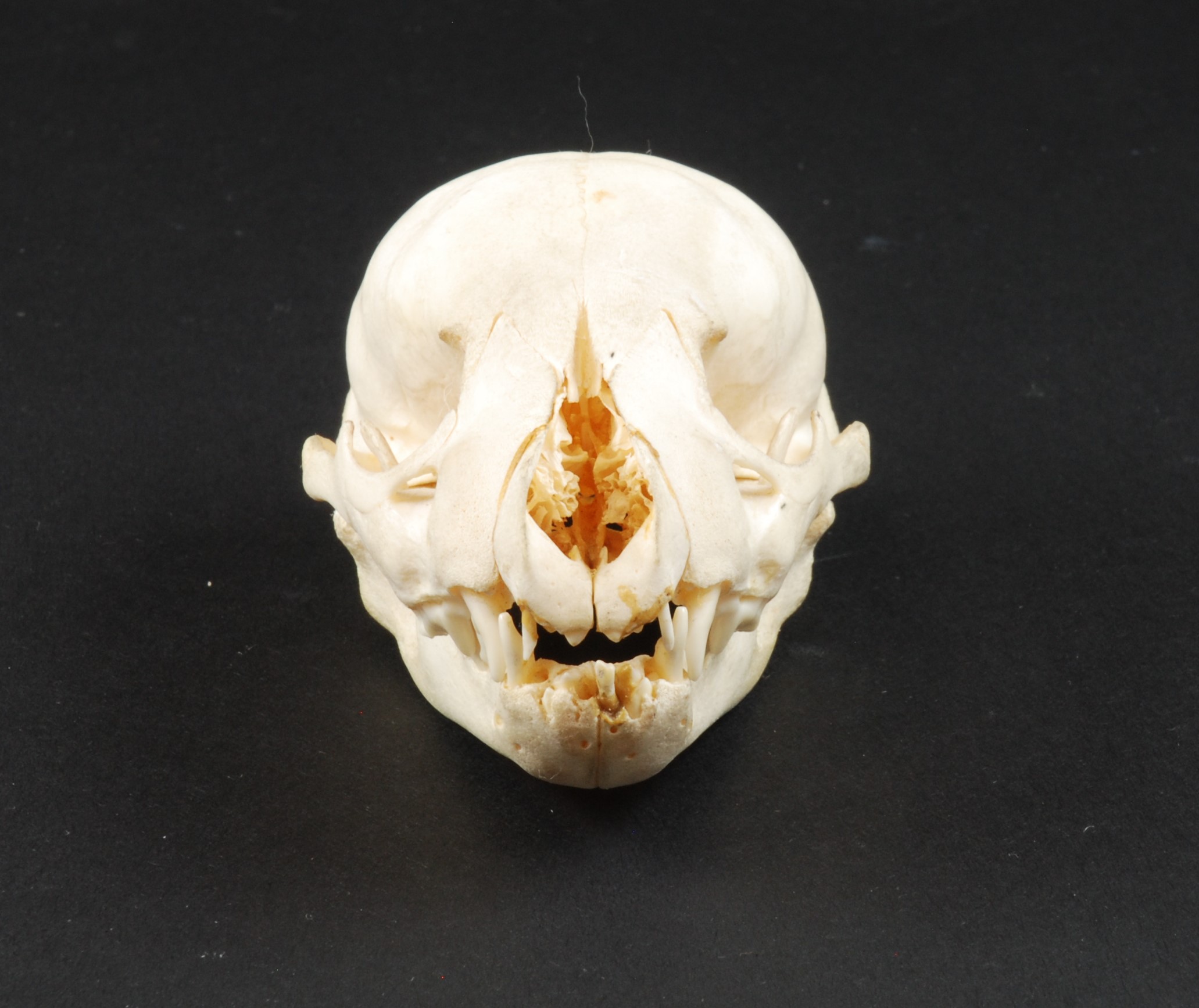
This week I have a fantastic guest mystery object from Jill Sales the Museum of Life Sciences at Kings College London for you to have a go at identifying:

mystery376_1mystery376_3mystery376_4mystery376_2mystery376_5mystery376_6

The skull is 98mm long and 58mm across at its widest point.

These great photos were taken by Steve Ryder, who has been working on getting an identification on this specimen. I think Steve’s thoughts on the species are right, but it’s not an easy one, so no need for cryptic clues – this is a real test of your skills, so show us what you’ve got!

Friday mystery object #375 answer

Last week I gave you this unidentified skull from the collections of the Dead Zoo in Dublin to have a go at identifying:

wp-1581017326202.jpg

I wasn’t sure how difficult this would be – I know carnivore skulls can be a bit of a challenge, but this is a critter that’s come up as a mystery object a couple of times before. As such, I did expect a few of the regulars to recognise this, but it proved more difficult than I thought.

That said, nobody got it. Well, somebody got it, but that person was nobody with the simple statement:

I’m guessing coati 🤔

Of course, there’s more than one kind of coati, in fact there are four: the Ring-tailed, the White-nosed (or Coatimundi), the Eastern mountain and the Western mountain.

The mountain coatis are in the Genus Nasuella and they have a very narrow and gracile rostrum (that’s the muzzle area) – so this is not one of them. The other two are in the Genus Nasua and they are recognisable by their upward tilted nasal area and their upper canines which are very tusk-like – projecting forward and triangular. The mature adults of both species have a big sagittal crest, which this lacks, but that’s probably because it’s not a mature adult.

Differentiating between the two species can be tricky, but the region around the auditory bullae can be useful in this. The Animal Diversity Web has some very useful images that can help.

The slightly more inflated auditory bullae and the angle of the mastoid process (where the muscles that control the movements of the outer part of the ear attach to the skull) tells me that this is most likely to be the White-nosed coati Nasua narica (Linnaeus, 1766).

I hope that helps in case you need to identify another of these any time soon.