Friday mystery object #250 answer

For my 250th mystery object I gave you this object from the collections of the Horniman Museum & Gardens to identify:

mystery250

It gave me a bit of a challenge, but eventually I managed to work it out – and it looks like something similar happened in the comments!

We went from ribs, to hind limbs to jaws, which is where it started getting close to the mark. The suggestion of “Part of the zygomatic arch of something large?” by henstridgesj was on the money.

Allen Hazen broke down the observation a bit further, with an astute observation about the components of the zygomatic arch that are present “The jugal and squamosal components of the zygomatic arch (I’d say its the squamosal that has been cut open here)“. Allen also speculated that it may be from a Dugong – which was my preferred identification for a while.

However, Crispin and henstridgesj worked out that it was from an Asian Elephant Elephas maximus Linnaeus, 1758 – the same species that I had also concluded that it belonged to.

By narrowing down the identification to species I was able to search through the museum’s collections management database to find out whether this sliced-off piece of bone might be part of another object. As it turns out, it was!
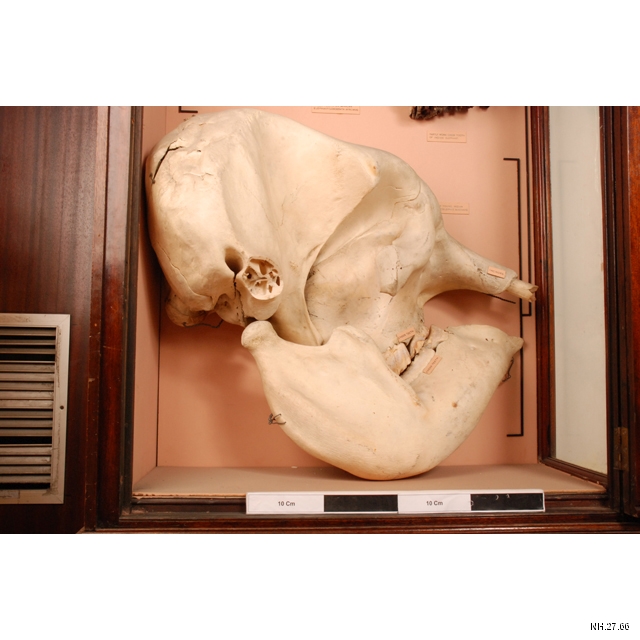
NH.27.66 Elephas maximus on display at the Horniman

NH.27.66 Elephas maximus on display at the Horniman

So by being able to identify this piece of bone it could be reassociated with the specimen that it originally came from and now there is a record for it in our database, so that if the skull ever comes off display it can be reunited with its cheekbone.

It also made an apt object for my 250th mystery object for Zygoma!
Friday mystery object #250

This week I have a mystery object for you that had me stumped for a little while recently, after it didn’t match the comparative material I had to hand. I managed to work out what it is, but I thought that it might make for a fun challenge as the 250th Friday mystery object:

mystery250

Any idea what this is and what species it comes from?

As usual you can leave your (preferably cryptic) observations, questions and suggestions in the comments section below. Have fun!

Friday mystery object #249 answer

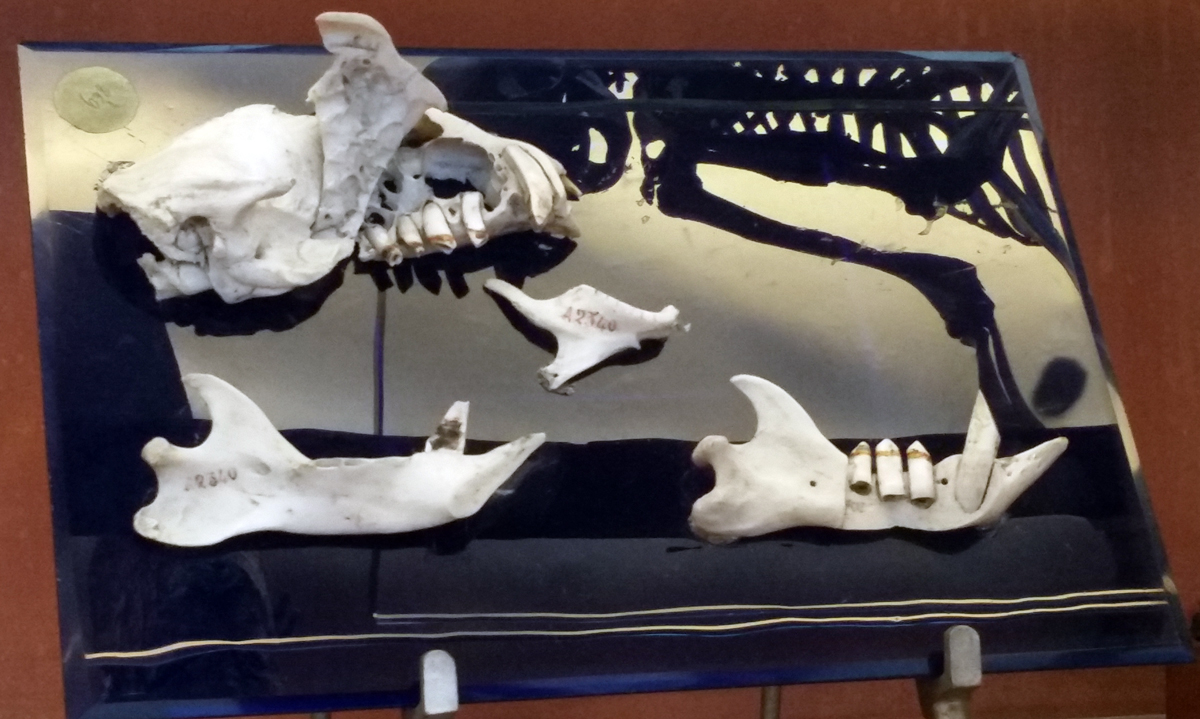
Last Friday I gave you this exploded skull from the incredible Galerie d’anatomie comparée et de Paléontologie in Paris:

mystery249

As I suspected, it was a bit of an easy one for many of you, but that provided the chance for some cryptic clue fun.

So my thanks to Agata Stachowiak, Chris, Allen Hazen, henstridgesjClaire Miles and witcharachne who all hinted at an identification of Sloth, more specifically a Two-toed Sloth, I think of the species Choloepus hoffmanni Peters, 1858 as opposed to C. didactylus Linnaeus, 1758, which appears to have a smaller angular process on the mandible and a less broad zygomatic region.

A two-toed sloth (Choloepus hoffmanni) at La Selva Biological Station, Sarapiqui, Costa Rica. By Geoff Gallice

A two-toed sloth (Choloepus hoffmanni) at La Selva Biological Station, Sarapiqui, Costa Rica. By Geoff Gallice

The teeth of Sloths are fascinating, due to their fairly simple rooting and their impressively sharp premolars that look like canines.

These Sloths have an interesting feature of their hair, which has a groove to help support algae, which help keep the Sloth camouflaged. This is pretty handy given the Sloth’s notorious lack of speed with which to escape predators. This may help explain the need for those sharp premolars as well!