Friday mystery object #158 answer

On Friday I gave you this small bird skull to identify:
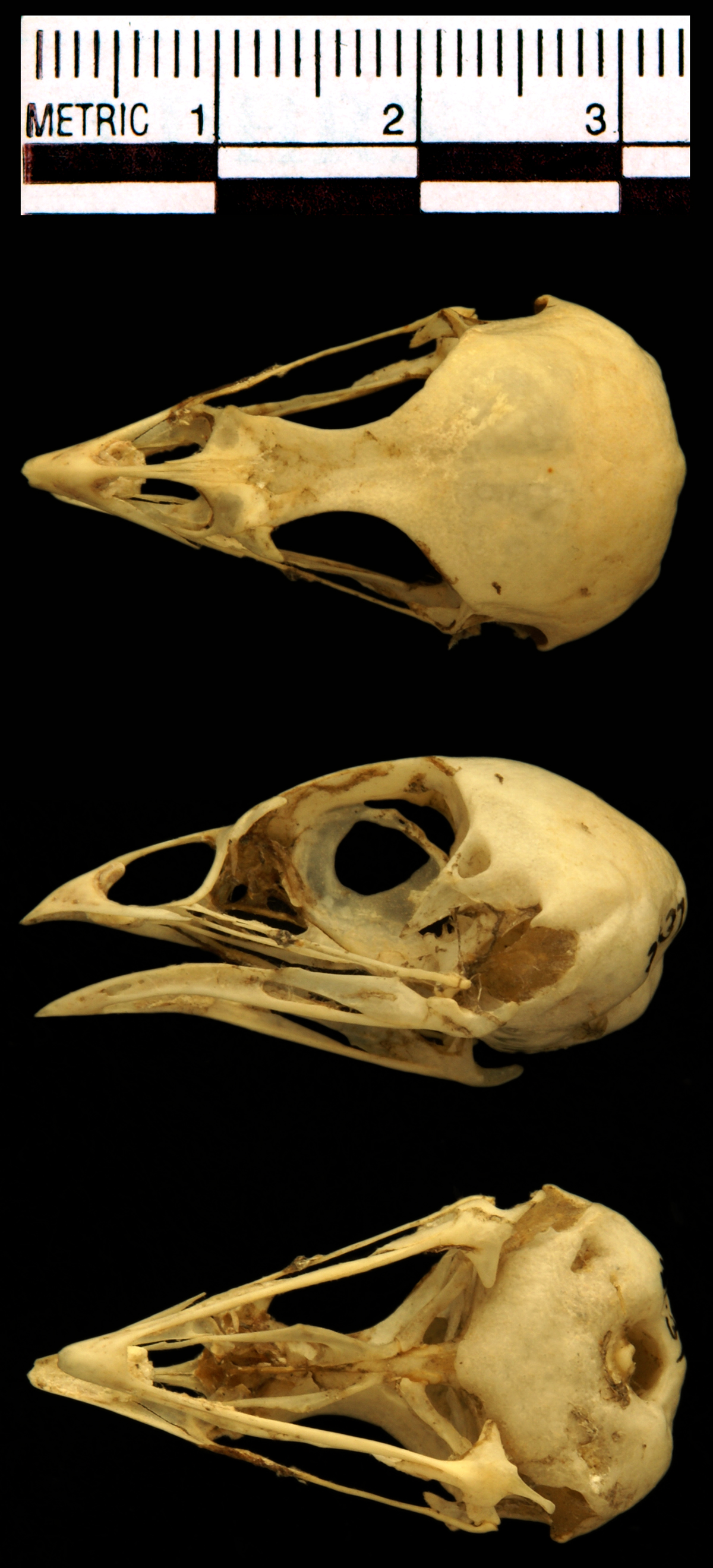
I though that the small size might lead you into thinking it was from a songbird – and there were a couple of you who were caught out by my cheap trick, with suggestions of Meadow Lark and Dunnock.

However, as you’ve probably worked out, it isn’t actually a songbird skull. Rhea misread the scale as being inches rather than centimetres and thought that this was a Chicken skull – which although wrong is in the right family (just a lot bigger!). The distinctive profile than Rhea spotted, combined with the small size meant that Ric Morris, palaeosam and Robin all managed to recognise this as the skull of a  Continue reading

Friday mystery object #157 answer

Apologies for a late and rather short answer to last week’s mystery object, I was in Scotland for the wedding of a very good friend this weekend and haven’t had much time for writing.

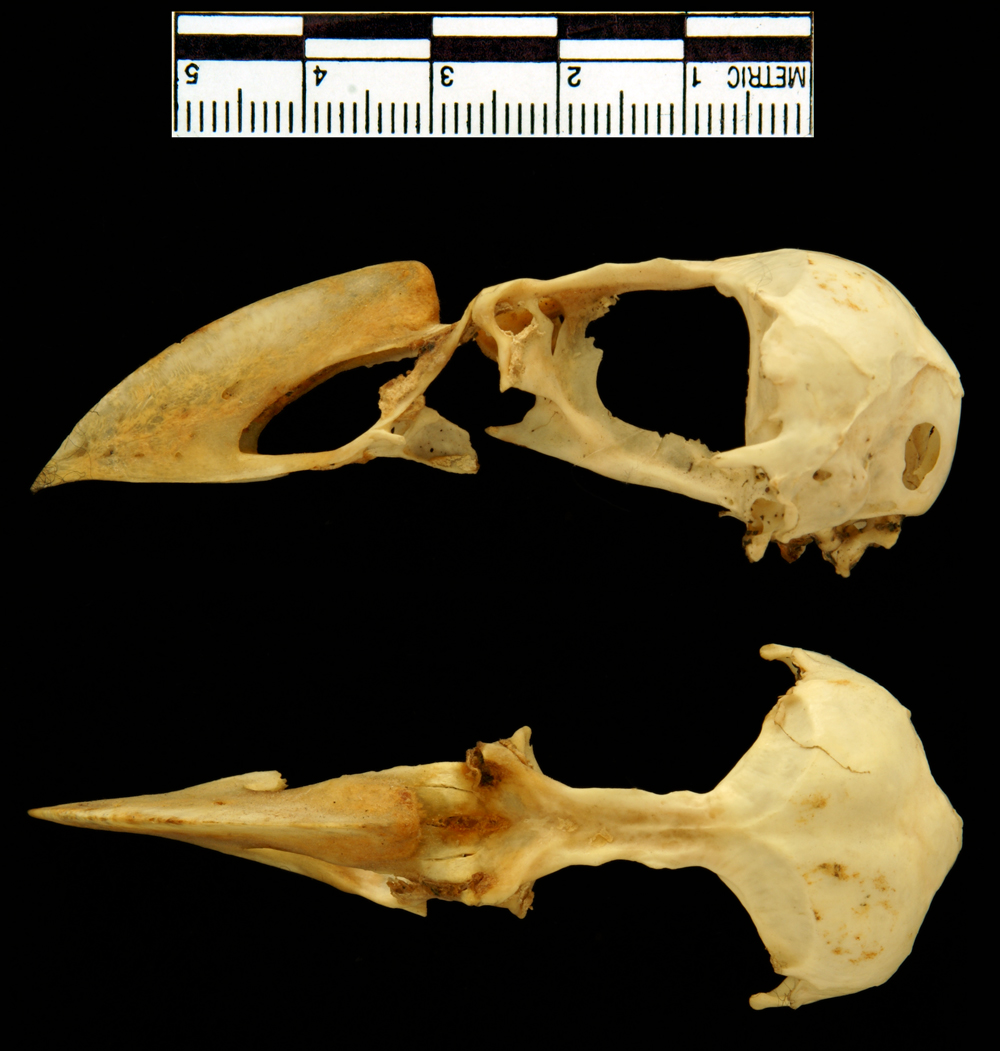
On Friday I gave you this skull to identify:

It’s pretty distinctive and I wasn’t surprised to see the correct identification popping up in short order. The big scars above the eye sockets indicate that this bird had large glands for extracting excess salt, which means it was a marine bird. The shape of the bill, particularly the mandible, is also quite characteristic and the wide triangular pterygoid bones of the palate are a give-away for this group.

Pterygoid region highlighted

Pterygoid bones highlighted

Ian managed to get the correct species identification within the first hour with Barbara Powell and Robin reaching the same conclusion after some comparison at the very useful Seabird Osteology website. This is the skull of a  Continue reading

Friday mystery object #157

Over the last week or so I’ve been going through some of the bird skulls in the Horniman’s collection. Here’s a nice one that you might enjoy identifying:

As usual you can put your suggestions, comments and questions below and I’ll do my best to answer. Good luck!

Friday mystery object #156 answer

On Friday I gave you this mystery object to identify:

It proved a bit more tricky that I had expected, but given its fragmentary nature I suppose I should’ve expected it to pose a challenge.

As it turns out henstridgesj managed to identify it on the basis of it looking like roadkill – an unusual diagnostic feature, but in this case it was spot on. Robin, biologycurator and Jamie Revell also agreed with the identification of  Continue reading

Friday mystery object #155 answer

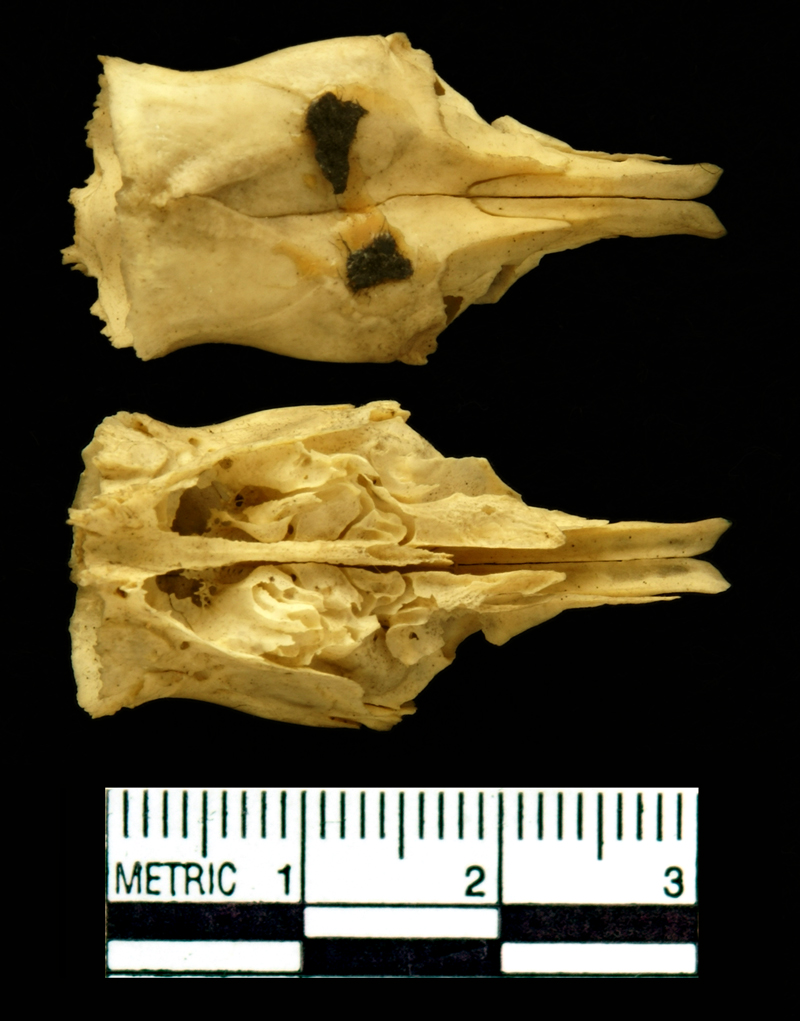
On Friday I gave you this mystery skull to identify:

It’s not particularly complete, but the bill is very distinctive so most of you got the correct identification. Well done to Ric Morris, Barbara Powell, Jake, biologycurator, henstridgesj and Robin for spotting that this is the skull of a  Continue reading

Friday mystery object #154 answer

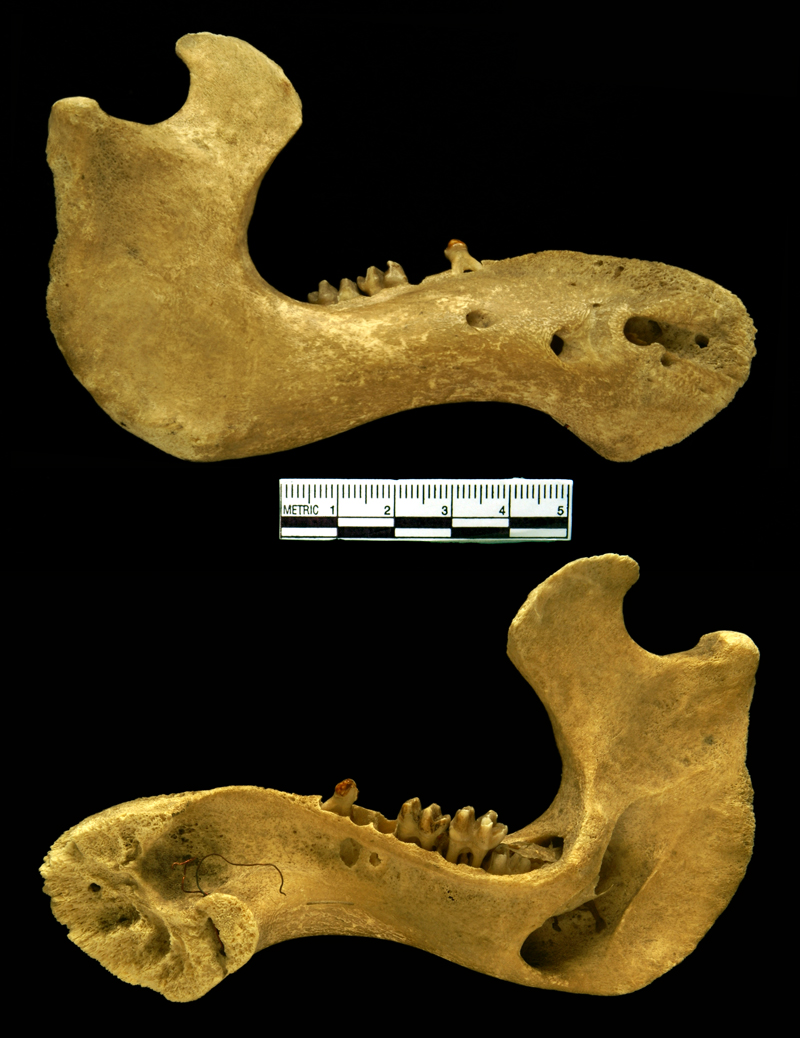
On Friday I gave you this very distinctive object to identify:

As I suspected, everyone correctly worked out it was a half mandible from a Sirenian – probably a Manatee. So well done to Barbara Powell, henstridgesj, Robin, Ric Morris, Rhea, rachel, Jake, Andrea and Jamie Revell for getting the main identification.

Of course, it got a bit more difficult when it came to making a species level identification, as is often the case. There are three well recognised species of Manatee – the West African, West Indian and Amazonian. There is also the Dwarf Manatee, which is a potential species in its own right or perhaps subspecies of the Amazonian Manatee.

Several people plumped for the Amazonian species or the Dwarf Manatee based on the fact that the jaw doesn’t look robust enough for the other species. However, this mandible is from a juvenile, so that was a bit misleading. Based on the hook of the coronoid process (the highest bit of the lower jaw where the temporalis muscle attaches) and the angle of the mandibular symphyseal region (the bit where the two halves of the lower jaw would have joined together) I think this is most likely to be what Barbara Powell first suggested, the  Continue reading